
What Is Furi-Copy? Copying the Choreography at Concerts, With Manners
Furi-copy 振りコピ · Choreography copy
The chorus kicks in and the fans around you break into the same choreography. You think, “I want to learn that too.” Here’s what furi-copy means, how to learn it, and what to watch for when you move in a venue.
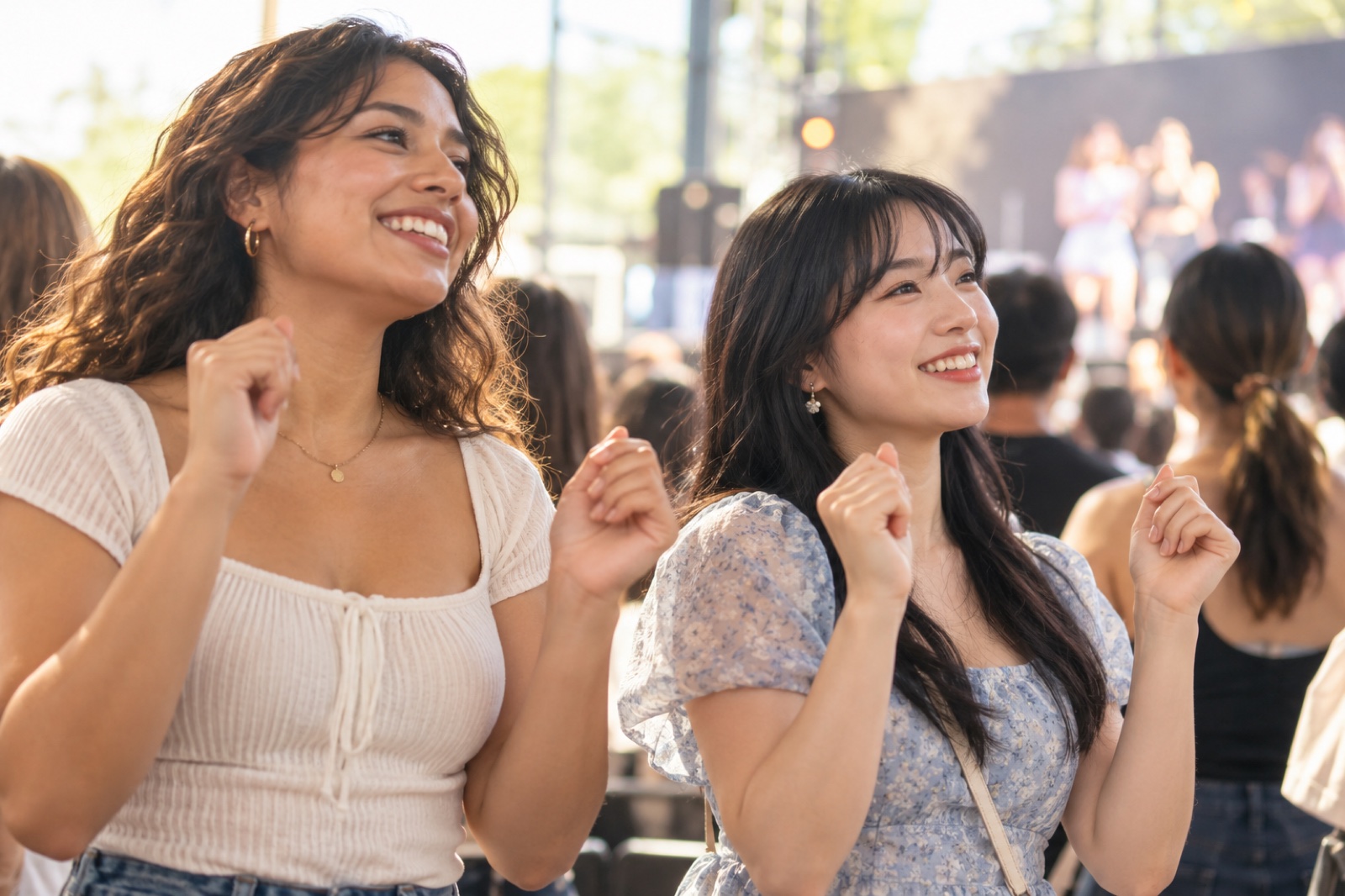
What Furi-Copy Means
Furi-copy (振りコピ) is short for “choreography copy”: mimicking a performer’s dance from your seat as you watch. How deep you go varies from person to person. You might do only the chorus, only the hand movements, or dance along with set shout-outs. It doesn’t mean recreating the moves as precisely as someone who takes dance lessons. It’s used for enjoying the parts you love with your body.
Where the Word Comes From and How It Spread
“Copy” originally meant playing someone else’s song in band culture. The word moved over to songs with dance, and the short form furi-copy, for copying body movements, was born. Two things helped it spread: official channels started releasing choreography videos, and fans got into the habit of filming vertical dance videos on their phones to share. It was common to learn the moves by watching the backs of senior fans at the genba, the live venue; now they can be rewound at home as many times as you like. The word also widened the range of people who can take part, because learning got easier.
How It Differs From Similar Terms
Furi-copy isn’t the only way to move your body in the audience. Sort the options by what is being copied, and they’re harder to confuse.
| Term | What is being copied | Where the movement comes from |
|---|---|---|
| Furi-copy | The performers’ dance itself | The song’s choreography |
| Ota-gei | Forms developed by the fans | Audience culture |
| Call | The timing of voices and beats | Audience custom or official instruction |
| Penlight color changes | Cues for the staging | Direction from organizers or performers |
All four can run at once within one song, and which you choose depends on how much room your seat has and how much energy you have.
One songAll can run at once
- Furi-copyThe performers' own dance
- Ota-geiForms developed by fans
- CallTiming of voices and beats
- Penlight colorsCues from the staging
Which you choose depends on your seat's room and your energy.
Examples
- “Practicing furi-copy along with the official dance video. I want to be able to do at least the chorus!”
- “At today’s concert, the best moment was getting to do the choreography together with my oshi.”
- “Tried filming a furi-copy video, but left and right were reversed, so I had to reshoot.”
- “The seats were cramped, so I only used my hands today. It was still plenty to keep up.”
- “I stumble at the lead-in to the chorus every time. Going to run that one part again.”
When Do Fans Do Furi-Copy?
Many people learn the repeated chorus moves from music videos and official dance videos. At a show, it starts naturally during staple songs where everyone around you moves at once, when a performer invites the audience to join in, and in the simple choreography of an encore. If it’s your first time, don’t try to learn everything from the intro. Try just the chorus clap, and you’re less likely to lose your place in the song.
How to Learn It
- Watch the official video through once — Don’t start copying right away; just get a sense of where the movement peaks are across the whole song
- Stop your feet and check only your hands — Slowly follow the height and direction of your hands, and you’ll halve the amount you have to remember
- Watch out for left-right reversal — Practicing in a mirror flips the direction, so say out loud once the difference between the direction as seen from the audience and as seen from the performer, and you won’t get confused on the day
- Check how you use reference footage — If you use kirinuki (clips) or someone else’s tutorial, check the rules on secondary use, and don’t redistribute official footage without permission
- Only do a short review the day before — There’s no need to cut into your sleep to perfect it. How you feel the next day matters more for how much fun you have
- 01Watch onceFind the peaks of the whole song
- 02Hands onlyHalve what you have to remember
- 03Check left-rightMirrors reverse the direction
- 04Check the rulesReference footage has usage limits
- 05Short reviewThe day before, without losing sleep
Learning the chorus is enough to take part.
You Can Move Within “Your Seat’s Width, From Chest to Shoulder”
The basics of furi-copy are to move in a small way within your own seat, mostly at chest-to-shoulder height. Jumping, big overhead arm swings, and leaning into the next seat may be banned by the venue’s rules. Also consider the seating situation: whether the person in front is short, whether there’s an aisle behind you, whether the seats are assigned. Keep the hand holding a penlight separate from the hand you dance with, and stop right away if you risk dropping it or bumping someone.
When Your Tempo Differs From Those Around You
Sometimes you’re the only one who knows the moves, or no one around you is dancing. There’s no need to urge people to “dance with me” or to correct the person next to you. If you feel you’re blocking someone’s view, adjust: lower the movement to in front of your waist, switch to clapping, or rest for the length of the song. Even if someone behind you says they can’t see, making your movements smaller for a moment protects the atmosphere of the venue better than arguing.
SmallerBigger
- RestSit out the song
- ClapStay with the beat
- In front of waistIf someone's view is blocked
- Chest to shoulderThe basic range
The basic range is your own seat's width, chest to shoulder.
Not Dancing Is Still Taking Part in the Show
Maybe you don’t have time to learn the choreography, maybe your health or a wheelchair means you can’t move big, or maybe you want to take in the staging. You can take part in other ways: matching the color of your penlight, clapping, listening to the song, or writing your thoughts after the show. Fans who don’t do furi-copy aren’t less passionate. A concert isn’t an exam where the whole audience makes the same moves; it’s a place where everyone receives the same time in their own body.
Common Misunderstandings
- You don’t have to get the choreography perfect to take part — Even part of the chorus, a clap or just eye contact is enough to enjoy it
- Bigger movement doesn’t always mean more support — Moves the performers can see and moves that take away the view of people around you are two different things
- You don’t necessarily have to dance in the same direction as the official version — Put the venue’s instructions and the performers’ calls first, and match them within a safe range
Notes From The Oshi Lab: Widening the Entry Point at Almost No Cost
Being able to dance “just the eight bars of the chorus” works for a fan like a ticket into the work. Body memory comes back faster than lyrics; even with a song you haven’t heard in years, your hands move first. Furi-copy tends to last across generations because this bodily memory keeps the sense that “I was here, at the same time as this song” for a long time. A single movement is enough to turn an audience member from a receiver into a participant.
From the point of view of organizers and companies, furi-copy is also one of the few routes that widens the entry point for participation at almost no added cost. A short choreography video from the official side, or advance notice of how much you may move at each venue, visibly reduces the hesitation of first-timers. On the other hand, if movement that is meant to be optional turns into an unspoken obligation, it takes away the place of people who can’t move because of health or seating. Creating a visible sense of togetherness while welcoming the choice not to move with the same warmth: whether both can hold at once looks like the condition for a scene that lasts even as the faces in the audience change.
Related Terms
FAQ
What is furi-copy?
It's when fans in the audience copy the choreography performers dance at a live show or in a music video, moving along as they watch.
Do I have to learn the choreography?
No. You can choose the way of cheering that suits you, whether that's clapping, waving a penlight or watching quietly.
Is it okay to dance big?
Follow the venue's rules and the sightlines of the people around you first. A good guide is not swinging your arms beyond shoulder width and not blocking the view or face of the person behind you.
Is it embarrassing to get the moves wrong?
Audience choreography isn't graded. If you don't know a part, go back to a small clap and enjoy yourself without forcing it.


