
Why Heisei Retro Became a 2026 Oshi-Katsu Trend: Tamagotchi, Purikura and Sailor Moon
Baggy loose socks, decorated phones, Tamagotchi, purikura photo booths, 90s music. Right now, even people who never lived through the Heisei era (1989 to 2019) are enjoying its culture as a fresh kind of love.
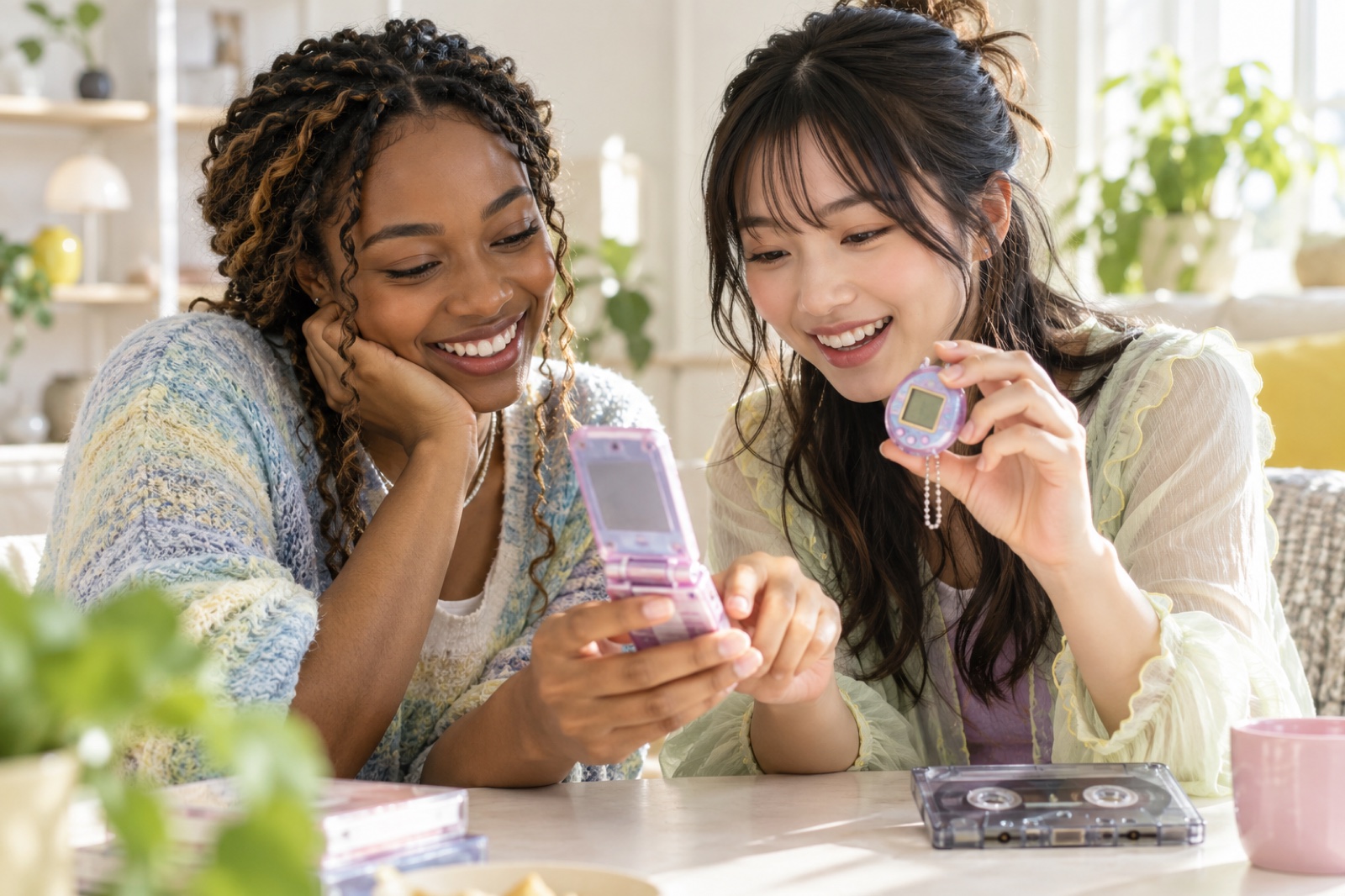
This is not just a wave of nostalgia. People don’t simply buy old products back. They wear them, photograph them, share them on social media and connect with others who love the same things. Heisei retro has become an activity of “oshi-ing” past culture with present-day methods.
Background to this article: In episode 52 of The Oshi Lab podcast (also on YouTube, in Japanese), “Heisei Retro and Oshi-Katsu,” we looked at the re-evaluation of Tamagotchi, purikura, Sailor Moon and 90s music. This article reworks that episode for the blog, focusing on cultural structures that will last rather than on figures and event details that change quickly.
In 2025, the toy maker Bandai announced that Tamagotchi had reached 100 million units shipped across the series, helped by Heisei retro and by Gen Z using it as an “oshi-katsu item” (Bandai announcement, August 28, 2025, in Japanese). In 2026, the 30th anniversary, the brand actually rolled out a commemorative exhibition, nationwide pop-ups and a “Reiwa reissue” of a 2011 product (announcement of the 30th anniversary projects / official Tamagotchi site, 2026 reissue information, both in Japanese). When this article says “2026 oshi-katsu,” it means reading this kind of recirculation through The Oshi Lab’s lens.
- 100 million
- Units shipped across the series
- 1996
- Year the first Tamagotchi went on sale
- 2026
- The 30th anniversary year
Bandai credits Heisei retro and Gen Z oshi-katsu use for the milestone.
Sources: Bandai announcement, August 28, 2025 (in Japanese); Official Tamagotchi site (in Japanese); Bandai 30th anniversary projects (in Japanese)
Heisei Retro Isn’t Only for the Nostalgic
There are two main ways in.
| Way in | How they enjoy it |
|---|---|
| The generation that lived it | Enjoying childhood and teenage memories again, with adult buying power |
| Later generations | Discovering a past culture, learned about through social media or family, as an unfamiliar style |
For the first group it’s a reunion. For the second it’s a discovery. The same product carries a different kind of time for each.
When both groups move at once, the reach is bigger than with a reissue aimed only at longtime fans. A child falls for a character their parent knows, and the parent, seeing the child’s post, picks the product up again. Memory travels back and forth between generations, and that is Heisei retro’s strength.
The generation that lived it
- Childhood and teenage memories
- Adult buying power
Later generations
- Learned through social media or family
- Seen as an unfamiliar style
Memory travels back and forth between generations.
Tamagotchi: An Oshi Relationship That Starts With Care
According to the official Tamagotchi site (in Japanese), the first Tamagotchi went on sale in 1996. Feeding a creature on a tiny screen, playing with it and watching it grow is, in today’s words, close to raising your oshi while receiving a steady daily supply (“supply” being fan slang for a steady stream of new content from your oshi).
Back then, kids compared their results at school and among friends. Now they turn them into photos and videos, post them on social media, and share how they raise their pet and how attached they are to it even with people far away. The device is small, but the circle of fans it connects has grown enormously.
What stands out is that it doesn’t end with looking at a screen. You press buttons, watch the clock, and accept the consequences when you forget to care for it. That effort, which runs the opposite way from convenience, is what builds attachment.
Purikura: From a Record to “A Shot With My Oshi”
Purikura, the print-sticker photo booths, spread in the 1990s as a way to keep time with friends. In its 2025 campaign for the 30th anniversary of purikura, Sega Fave, together with Furyu, also looked back on its history and the features that support “self-expression” and “connection” (Sega official announcement, in Japanese). Sticking prints into a planner, writing on them and trading them was far more physical than photo sharing today.
At the heart of purikura today is still taking home a shape for a time you loved. But the subject is no longer just you and your friends. People take shots with their oshi’s merchandise, pick booths that collaborate with a franchise, and scribble in their oshi color. Purikura has widened its role into a recording device for oshi-katsu.
In an age when you can take as many digital photos as you like, a sticker of limited size is what remains. That limit is exactly what makes “this one shot” special.
Sailor Moon: Returning Fans and Handing Down a Franchise
Long-running works like the magical-girl franchise Sailor Moon, with its 30th Anniversary Project (in Japanese), reach fans through many touchpoints besides the anime itself: exhibitions, fashion, cosmetics.
Viewers who watched it in real time can meet it again as adults, in products with a different quality and price range. At the same time, people who never knew the series enter its story through the designs and collaboration products. This twin engine of returning fans and new entrants keeps a long-running franchise from becoming just a work of the past.
For companies, too, putting an old logo on a product is not enough. The question is whether you can protect the world that the original fans want to keep while giving new fans an easy way in.
90s Music: “Being Able to Listen” Isn’t the Same as “Owning It”
Video and subscription services have made rediscovering music easy. A song from before you were born can find you overnight through a short video.
Yet being able to stream a song is not the same as owning the recording. Rights and contract changes can alter what is available. Part of the renewed value of CDs and cassettes is not just sound quality or looks but the feeling of wanting to keep what you love in your hands.
That feeling is shared with today’s oshi-katsu of collecting acrylic stands and trading cards. You meet things digitally and confirm the bond physically. Heisei retro makes that round trip easy to see.
- 01Meet onlineA short clip or a song
- 02Fall for it"I found it today"
- 03Get it in handBuy the toy, sticker or CD
- 04Share itPhotos, posts, conversation
Digital discovery and physical ownership feed each other.
Why Can You Oshi a Past You Never Experienced?
1. Social media put the past on the same timeline
Today, old commercials, music, fashion and street footage appear on one screen regardless of release year. The time gap between new and old fades, and “I found it today and fell for it” beats “it’s old, so I don’t know it.”
2. For digital natives, physical effort is new
Caring for a pet with buttons, sticking on stickers, swapping CDs. Purely on efficiency, a smartphone wins, but that effort sharpens the outline of the experience. Oshi-katsu works the same way. Building a saidan (fan altar) or carrying merchandise on a seichi junrei (anime pilgrimage) is a kind of deliberate “going out of the way” that creates memories.
3. You can enter a finished world with confidence
Characters and products loved for decades already have stories and a fan culture. New fans can read the records of the past and choose their own way in. A long history isn’t a barrier to entry. It’s a deep supply to explore.
- 01A finished worldStories and fan culture already exist
- 02Physical effortButtons, stickers and discs feel new
- 03One shared timelineOld and new appear on the same screen
Social media is the base; the finished world is the reward.
Three Mistakes Companies Should Avoid With Reissues
- Borrowing only the look: Recreating colors and logos without the original experience and context ends up as temporary decoration
- Looking only at longtime fans: If it’s explained only through insider memories, someone encountering it for the first time can’t join in
- Rushing people with limited editions: Combining nostalgia with scarcity to stoke heavy competition turns goodwill into fatigue
What matters is not reproducing the past perfectly. It’s not hurting the memories of people who have loved it for years, while letting people who just fell for it add their own story.
Notes From The Oshi Lab: Retell the Past and It Becomes a New Oshi
What Heisei retro shows is that oshi-katsu isn’t only about chasing what’s new. Past culture becomes a new oshi the moment it’s brought into present-day life, retold and shared with someone.
Strong long-running franchises don’t just sell the same product again and again. They prepare a different way to take part for each generation. When the memories of those who lived it, the discoveries of the young, and conversations between parents and children or among friends all overlap, a reissue turns from a brief boom into the handing down of a culture.
Summary
- Two ways in: Heisei retro is a reunion for those who lived it and a discovery for later generations
- Effort becomes attachment: Tamagotchi and purikura build attachment through effort and physical records
- Across generations: A long-running franchise can welcome returning fans and new entrants at once
- Digital and physical, back and forth: Meeting things online and keeping them in hand is shared with today’s oshi-katsu
- Respect for memory: A successful reissue respects old memories while creating new ways to take part
It doesn’t matter whether you knew the Heisei era or not. Start from the feeling of “I fell for it today,” and a new time for that culture begins.
Related articles: What is oshi-katsu? / History of oshi-katsu: acrylic stands / What is oshi color?
FAQ
What is Heisei retro?
It's a movement to enjoy again, with today's sensibility, the fashion, toys, music and photo culture that people loved during the Heisei era (1989 to 2019). The culture of the 1990s and early 2000s gets the most attention.
Why is Heisei retro popular with people who never lived through the era?
Social media makes it easy to stumble on old footage and music. And physical experiences like pressing a button, keeping a sticker or owning a CD feel fresh in a life built around digital.
What do Heisei retro and oshi-katsu have in common?
In both, people collect what they love, wear it, photograph it, record it and share it with others. Old toys and music are now enjoyed as things to "oshi," bringing fans together.
What does a company need to make a Heisei retro campaign work?
Don't just reissue the look. Respect the memories the original fans have treasured, and design a new way in for younger people to take part, take photos and share.

