
Heisei Retro in 2026: Tamagotchi, Photo Stickers and the Joy of Discovering the Past
Loose socks, Tamagotchi, purikura photo stickers, sticker albums and CD covers. Things that once seemed ordinary are being discovered by people who have never seen them before. Part of the appeal of Heisei retro is that the same object can make one person think “I remember that” and another think “What is that?”
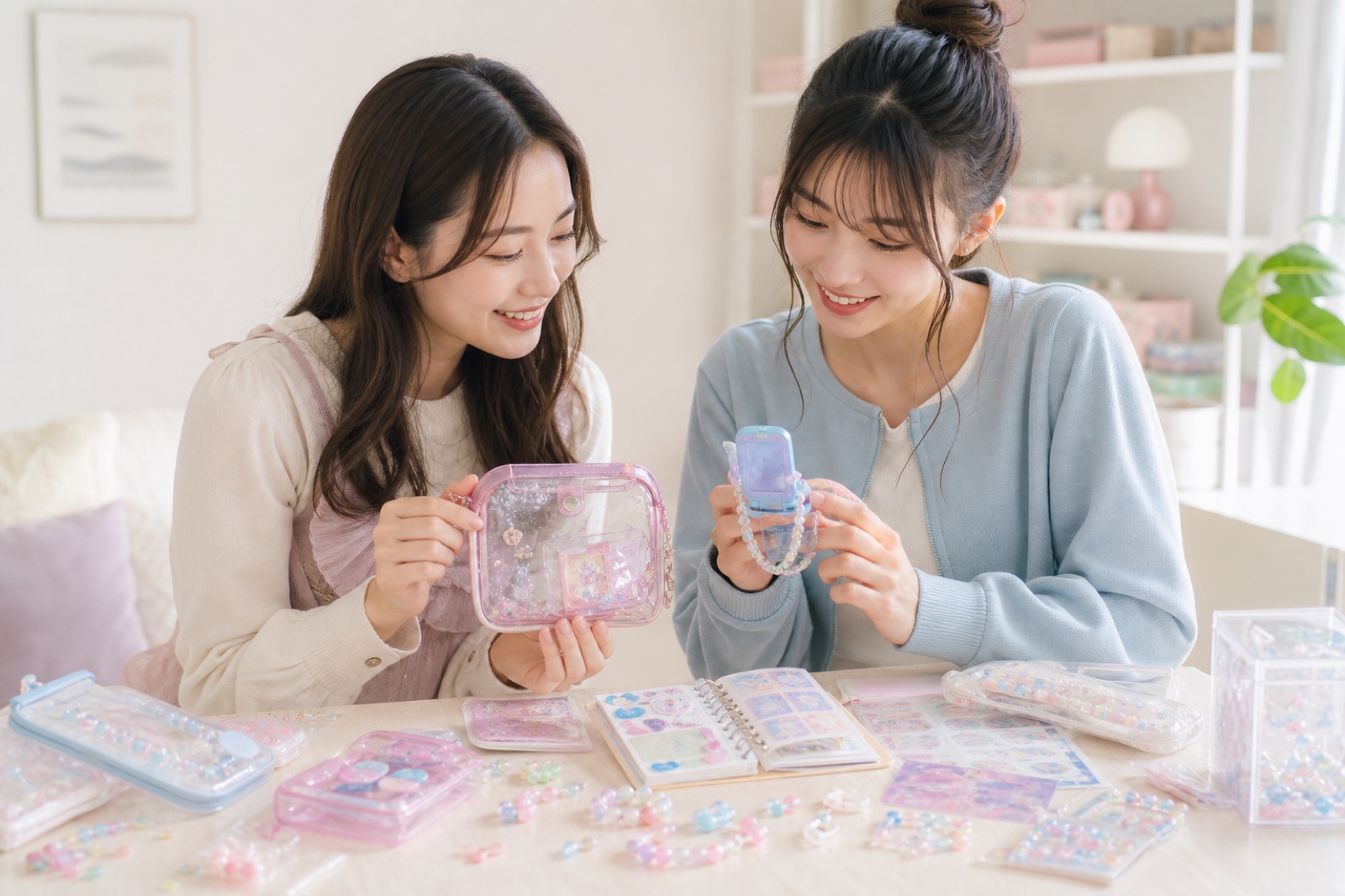
In fandom, the year you discover a work does not have to match the year it was released. You might stream an older anime, choose a reissued piece of merchandise and take a favorite character out with you. Bringing Heisei-era culture into your life today overlaps with many familiar forms of oshi-katsu, the activities through which Japanese fans enjoy and support what they love.
Background: This article builds on episode 52 of The Oshi Lab podcast and YouTube series, about Heisei retro and fandom, with product histories and examples of reissues. Product announcements are treated as historical records. For purchases or event visits, check the current information on the relevant official website.
Where Heisei Retro and Y2K Overlap
The Heisei era lasted from 1989 to 2019. However, the objects and years that “Heisei retro” brings to mind differ from person to person. Some think of 1990s photo booths and handheld games. Others remember sticker albums or decorated mobile phones from the 2000s.
Y2K is often used for fashion and design associated with the turn of the millennium. It overlaps with Heisei retro, but one outfit or color scheme cannot represent the entire Heisei era. Another Japanese expression, “Heisei girls’ culture,” draws attention to toys and stationery associated with childhood. Asking whose memories a campaign refers to, and from which years, makes these distinctions easier to understand.
SHIBUYA109 lab.’s report on changes in retro culture (in Japanese) distinguishes Western 2000s-inspired fashion in 2022, Japanese Harajuku culture and toys in 2023, and subcultural influences in 2024. These are youth trends observed by that research organization. They do not represent everyone’s preferences across all generations.
| Expression | Objects and experiences it may refer to | A useful distinction for articles and campaigns |
|---|---|---|
| Heisei retro | Toys, photography, music, clothing and other Heisei-era culture | Which part of the Heisei era is being discussed? |
| Y2K | Fashion and design recalling the turn of the millennium | Is the reference Japanese fashion or trends from elsewhere? |
| Heisei girls’ culture | Stickers, stationery, virtual pets and character merchandise | How does a remembered childhood experience differ from the current product? |
The table separates ways of enjoying this culture. It does not restrict participation by age or gender. Knowing the original products, or owning one from the time, should not be a requirement for taking part.
People who remember it
- Recognize a design or a familiar way of playing
- May want a product that preserves those details
People discovering it now
- Find something they have never experienced
- Need an explanation of what it is and how to begin
Source: The Oshi Lab’s interpretation of the examples in this article
Tamagotchi: Caring for a Pet Means Different Things in Different Models
Bandai released the original Tamagotchi on November 23, 1996. It was a virtual-pet toy in which you fed a creature, cleaned up after it and watched it grow on a small screen. The time its owner spends caring for it is part of the play experience. That makes it different from simply watching something on a screen.
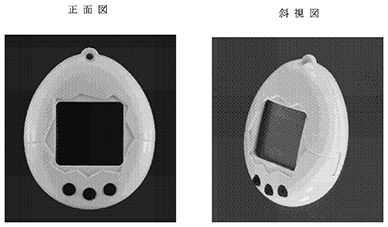
The drawings show a small screen and three buttons together inside an egg-shaped body. Being able to attach it to a bag made it something to think about throughout the day, rather than a device taken out only when you wanted to play. Bandai’s anniversary announcement also explains how the concept changed from a watch-style device to something worn on a ball chain.
When choosing a model today, it helps to look beyond the idea of “the same Tamagotchi as before.” Do you want something close to the original experience, a model that communicates with a friend’s device, or a new way of raising a pet? Even when the bodies look similar, the main activities can differ.
For example, Tamagotchi Paradise, released in July 2025, lets players turn a dial to change the scale at which they observe their pets. The official video below introduces Orange Tropics and White Glacier, additions to the range in 2026. This is a presentation of newer products, rather than footage from 1996.
Showing a friend the pet you have raised, or attaching a favorite device to your bag, has something in common with enjoying fan merchandise today. That does not mean owners in the 1990s called it oshi-katsu. Interpreting older play through present-day language is different from documenting the words people used at the time.
Tamamori Stickers: A Reissue Can Bring Back More Than the Artwork
Stickers are about more than looking at a picture. You decide where to put them, change the combinations and show someone what you have made. For some people, those actions are part of the memory.
According to the official Tamagotchi reissue announcement (in Japanese), Tamamori stickers first went on sale in 2011. Stickers and sticker albums were reissued in January 2026. These removable stickers let users layer accessories over characters and arrange them to suit their own tastes.
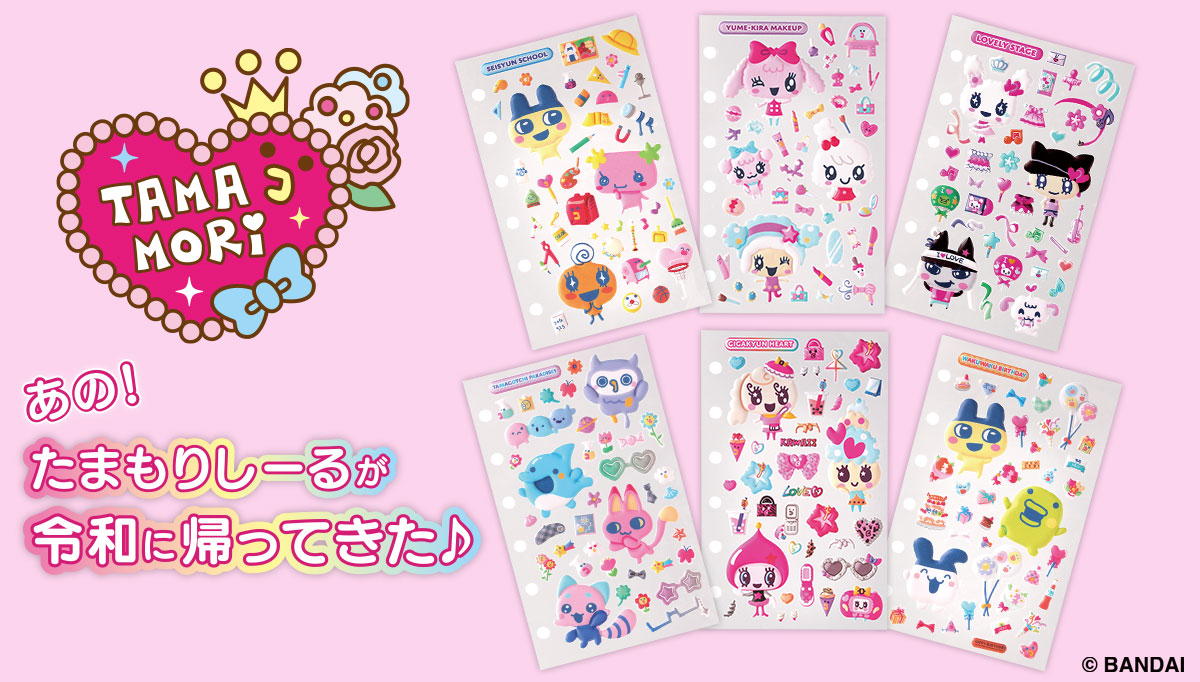
The official image displays accessories alongside the characters. It shows that the product offers the activity of choosing combinations, as well as completed pictures. The action involved differs from buying a collaboration product with an older design printed on it.
Present-day fans also decorate photocard cases, choose accessories in an oshi color or arrange an acrylic stand against a background for a photo. We cannot assume that all of these activities developed directly from older sticker play. Still, they share the pleasure of making small changes to create an arrangement that feels like your own.
What the 2026 Revival Offers Beyond Selling an Older Product Again
In its August 2025 announcement (in Japanese), Bandai said cumulative worldwide shipments of the Tamagotchi series had passed 100 million units by the end of July that year. This is a cumulative figure for the whole series. It is neither the number sold in Japan in 2026 nor the size of the overall Heisei retro market.
Bandai’s November 2025 anniversary announcement included a permanent store in Harajuku and an exhibition touring from 2026. Reissued stickers, new virtual-pet devices, in-store activities and an exhibition about the series’ history run alongside one another. There are several ways to encounter the franchise, both for people who remember earlier products and for newcomers.
For businesses, the useful point extends beyond an anniversary date. Separating ways to participate—buying a product, playing with it or learning its history in an exhibition—lets a first-time visitor choose an experience that suits them. These examples do not, by themselves, prove sales growth or repeat visits. They do provide concrete ways to think about contact with fans.
Anyone planning a visit should distinguish an announcement from current venue information. Finding an old exhibition date in an article does not mean the same venue is open for it today. Articles about memories still need to keep historical information separate from practical information a reader can use now.
Purikura: From Exchanging Stickers to Keeping Digital Photos Too
Print Club, introduced in 1995, was a photo-sticker machine jointly developed by Atlus and Sega. Users selected a frame on the screen, had their photo taken and took the resulting stickers home. Compared with instantly sending smartphone photos today, cutting out a physical sticker to give a friend was a distinctive part of the experience.
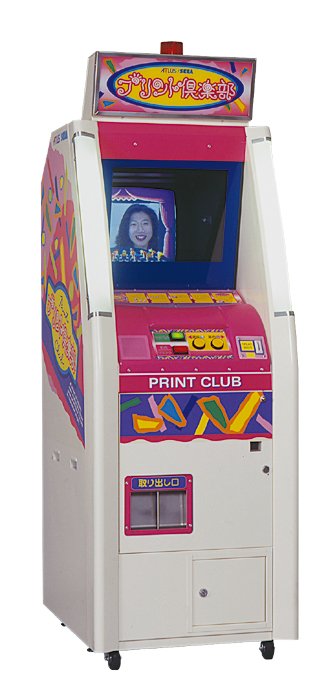
Looking at the original machine, you can see a camera system and a device for producing take-home photos combined in one cabinet. Friends gathered at the same shop, waited for the finished sheet and divided the stickers. The time spent going there could become part of the memory, alongside the image itself.
The 30th-anniversary material published by Sega Fave and FuRyu in 2025 (in Japanese) also describes later changes. Photography, editing features and ways of receiving digital images have changed. Using a machine today therefore does not reproduce the experience of 1995 exactly.
If you want to take photos with fan merchandise, check the machine and shop’s rules first. You can choose a background, pick colors for the decorations and decide where to put the finished stickers in an album. Those decisions continue after the photo is taken. They connect the activity with the enjoyment of editing your own record of a concert or trip.
Before posting a picture of someone else on social media, check what they are comfortable with. Exchanging a sticker with a friend and publishing a photo where anyone can see it involve different audiences. A memory that “everyone shared these” does not establish permission to share someone’s image publicly today.
Sailor Moon: People Can Enter the Same Franchise at Different Times
According to Toei Animation’s series information, the first Sailor Moon television anime began broadcasting in March 1992. It was based on Naoko Takeuchi’s manga. For some viewers, transformation items, character colors or costumes can bring a particular scene to mind as soon as they see a related product.
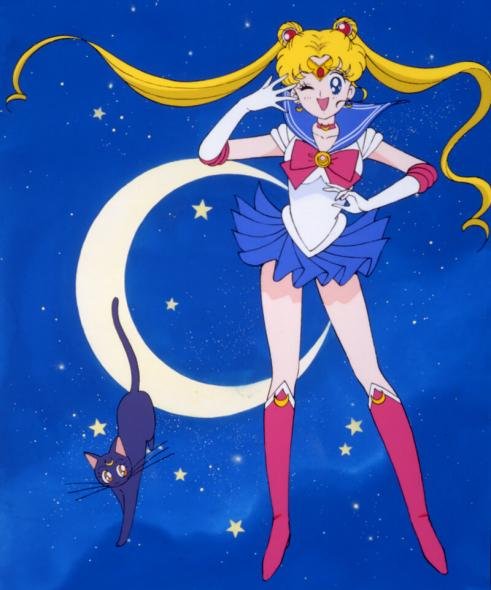
The costumes and colors in this artwork provide recognizable details for people familiar with the series. They can also help a product planner consider which details make a character recognizable. Merchandise that merely uses similar colors must be distinguished from official products using characters with permission.
The official Sailor Moon website (in Japanese) carries information on screen adaptations, stage productions and merchandise. Someone who watched as a child can return as an adult and choose products with different uses or price points. A newcomer can start with a current product or adaptation, then explore older series.
A long-running franchise may represent the same character through original manga art, older television animation and newer screen adaptations. Saying “I like the old Sailor Moon” does not necessarily identify the artwork a person wants. A revival campaign can make the choice easier by stating which period and which medium its products represent.
Games: Collecting the Hardware and Playing the Work Are Different Pleasures
Nintendo released the Game Boy in 1989. Its corporate history (in Japanese) records the handheld’s arrival at the beginning of the Heisei era. Carrying a device with its own screen, buttons and cartridges is an experience worth considering when discussing Heisei retro.
One way to enjoy older games is to find original hardware and software. Another is to play titles made available through current official services. Even for a game with the same title, these options require different preparation and spending. Original hardware needs a condition check; current services have membership requirements and supported devices to consider.
If owning the original object is the point, its shape and the feel of its buttons can be reasons to choose it. Someone who wants to experience the story or gameplay may prefer a route available on equipment they already use. In fandom, wanting to own the same object and wanting to experience a work are related, but distinct, wishes.
Ignoring that distinction in a campaign or shop can create misunderstandings: someone buys a game to play but has no compatible system, or expects a faithful reissue and finds different specifications. Stating the year alone is not enough. Explaining what a product can do in a reader’s current setup helps first-time buyers make sense of it.
1990s Music: The Same Song Can Be a Discovery or a Memory
Television broadcasts and CDs from the original release period are no longer the only ways to discover an older song. Officially released recordings and video let someone enjoy a track without knowing when it first came out. A child might find a song a parent used to play through a different route, giving them something specific to talk about together.
TRF’s “BOY MEETS GIRL,” for example, is listed as a 1994 release in Apple Music’s catalog. The recording on the official TRF artist channel is identified as coming from a best-of album released in 2007. The year a song first appeared, the release date of an album containing it and its YouTube publication date are separate pieces of information. That distinction matters when introducing official uploads of older music.
It also matters when choosing a CD. An original single, a later album, a new recording and a live album may contain different versions. Finding a familiar song title on the track list is a starting point. The contents and edition deserve a look too.
Streaming makes a song easy to find. A CD also offers a cover and lyric booklet to hold and examine. Neither has to be the only authentic way to enjoy music. Listening first, falling for a song and then deciding you want something to keep is a natural sequence in fandom today.
Why Can People Love a Past They Never Experienced?
Explaining Heisei retro only through nostalgia leaves out the fans who were not there. For them, an older object can be a discovery precisely because they have never encountered it.
1. You Can Encounter an Older Work Today
Release order and personal viewing order are different. Someone may begin with a new collaboration, read the original work and then explore earlier installments. Newcomers need an explanation of where they can begin today, rather than an account that assumes they already know how popular something once was.
2. What You Make Can Stay in Your Hands
Layering stickers, cutting out photos and carrying a device involve actions that leave something to revisit. Your choices and arrangements remain, so the same product can become a different record for each owner. Making a fan altar or decorating a notebook can offer a similar pleasure in present-day fandom.
3. An Object Gives Different Generations Something Specific to Discuss
People may disagree about a sweeping statement such as “The Heisei era was better.” It is easier to share differences when the conversation is about a particular sticker someone owned or a character they raised. The person discovering it does not have to be only a learner. A new way of using an object may also give a longtime fan something to try.
For Companies, Start by Separating the Experiences a Revival Can Offer
A revival can reproduce a product, put older artwork on something with a new use, or introduce past culture through an exhibition or store. Those approaches do not all have the same effect. A planner first needs to decide what participants should take away from the experience.
| Type of project | What a fan may want | Information the planner should provide |
|---|---|---|
| Reissue of an older product | A familiar shape, feel, operation or way of playing | What was reproduced and what was changed |
| Collaboration with a new use | A favorite design in everyday life today | The artwork’s source, specifications and version of the work |
| Exhibition or experience-led store | Historical context, photos or a personal record | Dates, admission conditions and photography rules |
| Re-release of music or video | An introduction to a work, or a chance to revisit it | The official publisher, edition and viewing or listening conditions |
Be careful about turning nostalgia into pressure to buy immediately. Even a limited product can come with clear information about the sales period, purchase limits and where to look for restock announcements. A campaign should consider people who remember being unable to buy something, rather than simply asking them to compete for it again.
It is also worth avoiding claims such as “Every girl had one.” Childhood experiences differ by region, household and personal taste. Explaining a product so that people who never owned it, or have just learned about it, can take part makes more room for new fans of a long-running work.
- 01Define the experienceIs this a faithful reissue, a new product, an exhibition or a media re-release?
- 02Explain the differencesIdentify the original version and what has changed.
- 03Make participation clearState sales, admission, compatibility and photography conditions where relevant.
- 04Separate design from resultsA campaign announcement alone does not prove sales growth or repeat visits.
Source: The Oshi Lab’s planning interpretation of the examples above
Three Checks When Choosing Something Today
Do you want an original, a reissue or a newer product? Products with the same name may belong to different generations or have different specifications. Compare the official photos and descriptions, including the main device, accessories and compatible equipment.
Do you want to play, display or keep a record? Choosing one thing you want to do can help you begin without collecting everything at once. The size of a collection does not have to prove how much you enjoy a new interest.
Who do you want to share it with, and how widely? Something to show a friend, a social media photo and a collection enjoyed at home do not have to look the same. When using a work or someone else’s photo, check the rights holder’s guidance and the wishes of anyone pictured.
If you want to compare products, you can search Amazon Japan for Original Tamagotchi or search Amazon Japan for Tamamori stickers. Results may include different generations and used items. Compare the official product information with the seller, condition and price before choosing.
The Oshi Lab’s View: Your Own Discovery Is a Valid Starting Point
Heisei retro brings together people who remember a product and people who learned about it today. Owning an original Tamagotchi, or having watched the 1992 broadcast, is not a qualification you need in order to enjoy being a fan now.
Companies have two tasks: understanding the forms and activities longtime fans want preserved, and explaining what a newcomer needs to know. Fans can explore older records while choosing the objects and works that appeal to them personally.
You might stick a reissued sticker into an album for the first time, or listen to an older song on your way home today. Discovering something from the past can begin whenever it becomes part of your life.
Related reading: What is oshi-katsu? / A history of acrylic stands / What is an oshi color?
FAQ
What is Heisei retro?
It means enjoying fashion, toys, music, photo culture and other things associated with Japan’s Heisei era, 1989–2019, through a present-day perspective. The 1990s and early 2000s receive particular attention.
Why does Heisei retro appeal to people who never lived through the era?
Officially released older music and video, alongside reissued products, offer ways to discover these works. Decorating with stickers, caring for a virtual pet or owning a CD can also be new experiences for someone who did not encounter them at the time.
What do Heisei retro and oshi-katsu have in common?
Both involve collecting, wearing, photographing, recording and sharing what you love. Older toys and music can become the focus of present-day fan activities and help people with shared interests connect.
What should companies consider when planning a Heisei retro campaign?
Understand the designs and play experiences that longtime fans value, while explaining how newcomers can take part. Be clear about changes in a reissue, sales conditions and which version of a work it represents. Distinguish the campaign’s design from its measured results.

