
How to Choose and Enjoy Oshi Plushies: Reading Official Photos, Plushie Outfits, Storage, and Industry Trends

Displaying a plushie modeled after a favorite character or person in your room, picking out tiny outfits for it, or bringing it along on a trip—an oshinui (oshi plushie, a plush doll of the character or idol you support) is a piece of merchandise you can continue adapting to your everyday life long after you buy it.
At the same time, no one wants to run into frustrating mismatches, like buying a carrying pouch based on the listed overall height only to find the plushie does not fit inside, or assuming you could dress it up in different clothes only to discover the original outfit is sewn down in place. In this article, we organize everything from how to read official product photos and prepare for plushie photography and home storage, to important caveats when reading corporate financial results from companies in the plushie sector. For related background, feel free to check our glossary guides on nuikatsu (plushie fan activities) and nuidori (plushie photography).
What to Read from Official Images and Specifications: The Example of the Bloodborne “Plushie: The Doll”
When fans prepare to welcome a new oshi plushie home—or when they start looking at storage cases, carrying pouches, and nuifuku (plushie clothes) afterward—the very first things most people look at on a product page are the “overall height” measurement and the product photographs. However, height numbers alone do not determine whether accessories and storage supplies will actually fit. By looking closely at an actual official product listing, let us consider which visual details to examine and what specifications to verify.
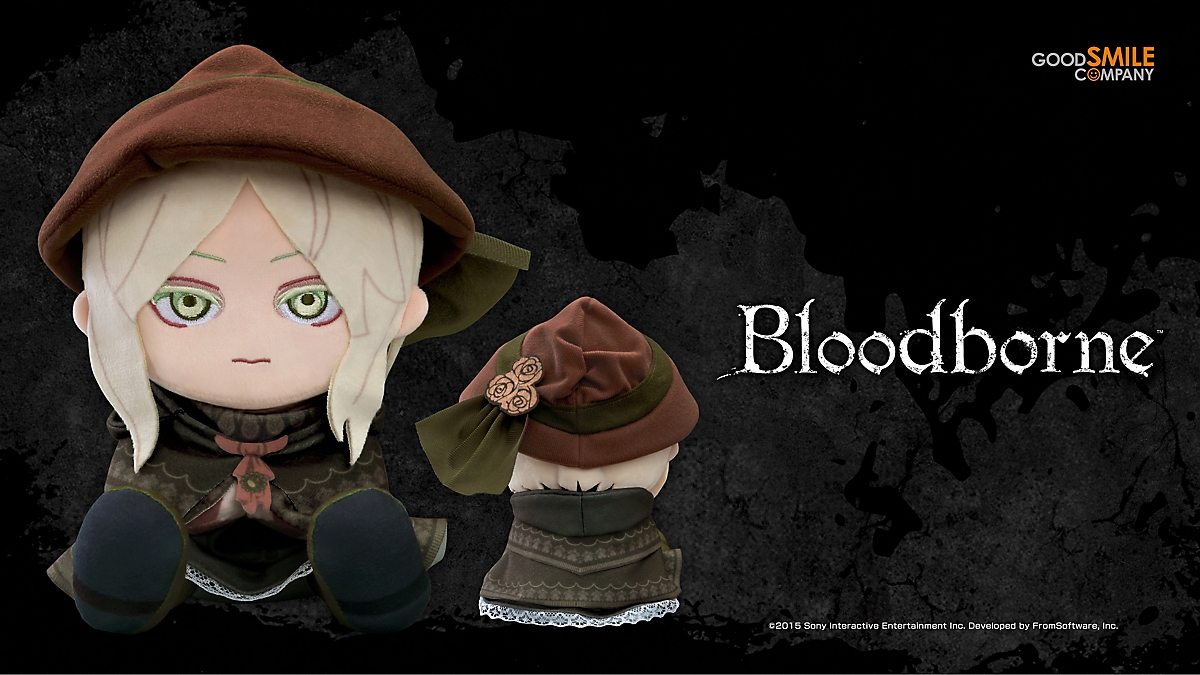
The image above is an official product photo of “Plushie: The Doll” (distributed by Good Smile Company), a plushie based on “The Doll” from the video game Bloodborne, as featured on the PlayStation official licensed product page. On that page, the product was listed with an overall height of approximately 170 mm, a pre-order window from February 26 to March 25, 2026, and a scheduled shipping date of August 2026 (note that these details reflect the schedule announced at the time of listing; please check the official link separately for actual shipping status and current ordering availability).
In this image, the front and back views of the plushie in a seated posture are shown side by side. From the front, you can see the embroidered eyes, the three-dimensional sculpting of the hat and hair, and the outfit covering the neck and shoulders; from the back, you can see the cape covering the entire back and the layered lace along the hem.
If you plan to match a display case or plushie clothes to a plushie like this, you need to look not only at its vertical height, but also at where its three-dimensional shape bulges outward:
- The relationship between a seated posture and front-to-back depth: A plushie that measures 170 mm while standing upright and one that measures approximately 170 mm while seated have different head-to-toe proportions and require different amounts of front-to-back depth. Because a seated plushie’s legs extend forward, if you plan to place it inside a slim plushie pouch (nui pouch), you also need to check whether its feet or face will press against the front panel.
- Extra width and head circumference from hats, hair, and capes: As the front and back views make clear, details like the hat brim and ornaments, the cape over the back, and the lace at the hem add substantial width and thickness around the head and shoulders. When measuring the interior dimensions of a display case, you need to look at the width and depth of the widest, most protruding parts—not just the plushie’s height.
- Specifications you cannot tell from photos alone: Even when a cape, hat, or delicate lace looks distinctly three-dimensional in a photograph, you cannot tell from the image alone whether those pieces are removable from the body or sewn down permanently in place. Similarly, a photo cannot tell you whether the materials and internal construction allow for hand-washing or laundering with water.
In practical terms, then, official product photos are useful not only for appreciating the appeal of a plushie’s sculpting, but also as clues for spotting where the plushie carries extra thickness and which specific details require double-checking in the written product specifications.
Preparing According to How You Spend Time Together—at Home and on the Go
At Home: Think About Display Space and Care First
When setting up a place to display your plushie, make sure you have enough width and depth so that hats or capes are not squashed against walls or shelves. When choosing an acrylic case or display box, check not only the overall height, but also whether the widest protruding parts fit comfortably inside. The principles for storing plushies over the long term share much in common with general oshi merchandise storage.
For cleaning and care, always read the care tags and instruction manual for each specific product. Even if a plushie looks soft and washable in photos, there is no way to know by sight whether it can safely get wet. Because plushies involve not only fabric but also layered costumes and glued-on parts, avoid washing a whole plushie in water on your own judgment if no washing instructions are provided. Even when gently brushing off dust, check what tools and handling methods are safe for that specific item.
Going Out: Separate Travel Protection from Photography Etiquette
While you are in transit, place your plushie where it will not rub against keys, metal hardware, or rough items inside your bag. If you use a plushie pouch, check not only whether the plushie fits inside the main body of the pouch, but also whether it can pass smoothly through the zipper opening and whether the pouch closes without crushing its hat or outfit. If you hang the pouch from the outside of a bag, make sure to inspect the condition of the strap and clasp hardware as well.
Whether you can take photos at a destination depends on the rules of each shop or facility. Even in venues where photography is permitted, basic consideration is essential: avoid occupying walkways or tables for long stretches of time, and choose camera angles that keep other customers and passersby out of the frame. Rather than walking around trying to force a photo opportunity, adapt to the situation around you—such as keeping your plushie tucked safely away during busy hours.
Taking an oshi plushie outside or dressing it up in custom outfits is by no means mandatory. Displaying a single plushie at home in its original official outfit or taking seasonal photos in your own room are equally wonderful ways to enjoy it. There is no need to compare your love for a work or character based on how many plushies you own or how much money you spend on accessories.
Enjoying Plushie Outfits and Handmade Crafts
Even when commercially sold plushie clothes are labeled “for 15 cm plushies” or “for 20 cm plushies,” those size labels do not guarantee a proper fit for every plushie of that height. Always check the head circumference, torso width, whether the arms can pass through the sleeve openings, and whether the plushie’s original outfit is designed to be removable in the first place. Never pull on parts that are not explicitly described as removable, and never force tight clothing over a plushie’s head or limbs.
If you hand-make plushies or outfits modeled after a character and want to post photos of them online or distribute them to others, be sure to check the official derivative works guidelines for that intellectual property. Do not lump private enjoyment at home together with public posting on social media or selling items for money; instead, read the specific terms that apply to the exact activity you plan to do.
- 01Check the shape and specsInspect front and back views for protruding parts, and read the rules on removable clothing and care
- 02Decide where your plushie will spend timeConsider a shelf at home, a protective travel pouch, or appropriate places for taking photos
- 03Match with the items you already haveVerify that the plushie fits comfortably within the width, depth, and opening of your case or pouch
- 04Pick only the accessories you truly needDecide whether to add extra outfits or supplies based on your own personal style of enjoyment
Source: Compiled by The Oshi Lab from the verification points in this article
Where the Plushie Business Stands Today: Reading Financial Data from 34 Related Companies
Notable movement can also be seen in the financial performance of companies that handle plush toys. When looking at these figures, it is important to verify the exact scope of the survey so we do not confuse broad company revenues with sales generated exclusively by fan activities (oshikatsu).
In a study published by Tokyo Shoko Research on June 13, 2026, the firm extracted 34 companies from its corporate database whose primary business involves the sale of plush toys and related services, and compiled their financial results (Source: Tokyo Shoko Research (in Japanese)).
| Metric (Scope: 34 extracted plushie-related companies) | 2021 | 2025 | Comparison and Breakdown (2021 to 2025) |
|---|---|---|---|
| Combined Total Sales | 50.4 billion yen | 84.9 billion yen | Combined sales across the 34 companies expanded |
| Combined Net Profit | 2.8 billion yen | 5.4 billion yen | Combined net profit also grew |
| 2025 Profit/Loss & Profit Growth Breakdown | — | 30 profitable / 4 in the red | 15 companies recorded profit growth |
When reading this data, we need to keep the exact boundaries of what the numbers represent clearly separated. The 84.9 billion yen figure is the combined financial total of the 34 extracted related companies; it does not represent the overall size of the “entire oshi plushie market” across Japan. Furthermore, because the business operations of the surveyed companies also include general character plush toys, conventional toys, and related services, this number is not a standalone sales total isolating “purchases made strictly for oshikatsu purposes.”
While combined total sales and combined net profits both grew between 2021 and 2025, the number of companies that recorded profit growth in 2025 was 15 out of the 34. Growth in the aggregate total is not the same thing as every individual company increasing its profits. Nor can we use this aggregate data alone to narrow down the reason for the growth to any single specific character property or single way of enjoying plushies.
What We Can Tell About the 34 Surveyed Companies
- The combined total sales and combined net profits of the 34 companies in 2021 and 2025
- The number of profitable companies, loss-making companies, and companies with profit growth in 2025
What Cannot Be Determined from This Aggregate Data Alone
- The total market size of the entire nationwide oshi plushie market across Japan
- Standalone sales figures isolating only purchases made specifically for oshikatsu purposes
Source: Compiled by The Oshi Lab based on the scope of the Tokyo Shoko Research survey
The Oshi Lab Note: Bringing Post-Purchase Questions Back into Product Listings
For companies planning and releasing plush merchandise, product listings work best when they anticipate how buyers will actually use and care for the item after it arrives. Providing horizontal width, front-to-back depth, and photos from angles other than the front—alongside overall height—makes it much easier for buyers to compare a plushie against their shelves, display cases, and carrying pouches at home. Whether outfits and hats can be removed, as well as specific care and cleaning conditions, are also details that companies should state clearly rather than leaving buyers to guess from photos.
When brands roll out dedicated pouches or plushie clothing lines, specifying the exact compatible series and body dimensions helps prevent mismatches. Thoughtful product pages guide both fans who want to display a single plushie as-is and fans who enjoy taking their plushie out or dressing it up, allowing each person to choose only what they actually need.
For pre-order items, show the order acceptance window separately from the estimated shipping schedule, and tell buyers where to check if the schedule changes. On a single product page, brands can bridge photographs that convey the appeal of buying the plushie with practical information that helps fans care for it once they bring it home.
For a broader look at how we evaluate market statistics across Japanese fandom, see our guide to Measuring the Oshikatsu Market Size. For inquiries regarding merchandise planning and oshikatsu-friendly business services, please reach out to KAZAORI Inc. (in Japanese). And if you would like to reflect on your own style of fan life, you can also try our free quiz.
FAQ
If two plushies have the exact same overall height, can they automatically share commercially sold plushie clothes and pouches?
You cannot tell from the overall height number alone. How a plushie fits depends on whether it is in a sitting or standing posture, differences in head circumference and depth caused by hats, capes, or hairstyles, and whether its original outfit is permanently fixed to the body in the first place. Before bringing a plushie home or choosing related accessories, you need to check the specification details and actual measurements for each individual product.
When an oshi plushie gets dirty, is it okay to wash the whole thing at home?
Not every plushie is washable. Because plushies can include outfits and glued-on parts, you should check the care labels and instruction manuals for each specific product, and avoid washing the entire plushie based on your own judgment when no washing instructions are provided.
Does the '84.9 billion yen' figure from Tokyo Shoko Research represent the size of the entire oshi plushie market?
No, it does not represent the size of the entire nationwide oshi plushie market. It is the combined 2025 sales total of 34 companies selected from Tokyo Shoko Research's corporate database whose primary business involves plushie sales and related services, and it also includes general plushie operations unrelated to oshikatsu (fan activities).
Is it okay to post photos of handmade plushie clothes or handmade plushies on social media, or to sell them?
How fan-made creations and outfits modeled after characters are treated depends on the derivative works guidelines established by each rights holder. Because rules often differ between enjoying items privately at home, posting images on social media, and distributing or selling items for money, always check the official guidelines for the specific work before making or sharing anything.
Can you only enjoy oshi plushies if you take them outside or collect a large number of them?
There is no single right way to enjoy them, and your dedication as a fan is never measured by how many plushies you own or how often you take them out. Some fans carefully display a single plushie on a shelf at home to avoid dirt and wear, while others take seasonal photos at home—you can continue enjoying them at whatever pace and distance suits your own lifestyle.


