
Oshikatsu and Municipalities: Lessons from Numazu and Kamakura

Public initiatives that connect anime or media works with local communities take many forms: thank-you gifts for hometown tax donations (furusato nozei—Japan’s system of donations to local governments that can qualify for tax deductions under specified conditions and limits), on-site exhibitions, residential relocation consultations, and proactive traffic and community management in areas where visitors concentrate. While all of these represent collaborations between passionate fans (oshi) and municipal governments, the public responsibilities involved and the appropriate methods for measuring outcomes vary significantly across each setting.
In this article, we examine two initiatives launched by Numazu City alongside a visitor guidance demonstration conducted by Kamakura City. We analyze these case studies as practical reference points for municipal project leads seeking to distinguish between product concepts, civic objectives, and the administrative burdens placed on public spaces.
First, Clarify Exactly What the Initiative Aims to Achieve
The number of products sold, the volume of residential relocation consultations, and the staffing required to manage on-site pedestrian congestion each measure fundamentally different operational realities. When organizers clearly define each project’s primary objective one by one, the relevant municipal departments and the preparations they need to undertake become far easier to organize.
Planning Return Gifts
- Link local community resources and public utility programs with the creative work
- Verify specifications, quantities, application windows, and actual donation records
Connecting PR and Consultations
- Combine casual exhibition walk-ins with administrative public consultation desks
- Keep perk distribution figures distinct from the number of completed consultations
Safeguarding Public Spaces
- Provide on-site guidance regarding photography, pedestrian flow, and trash disposal
- Assess municipal staff allocation and the operational burden placed on resident life
If all of these distinct undertakings are labeled merely under the broad umbrella of “regional revitalization,” it becomes ambiguous who bears operational responsibility for which task and what results need to be verified. Is the initiative creating an official hometown tax return gift, hosting an outreach event to raise awareness of civic consultation desks, or managing street congestion? Stating the concrete challenge being addressed in the very first sentence of the project proposal is essential.
Numazu City Waterworks Bureau: Manhole-Pattern Water Bottles as Hometown Tax Gifts
In an official announcement released on December 23, 2025 (in Japanese), the Numazu City Government announced that it would add a reusable personal water bottle, developed in collaboration between its Waterworks Bureau and the anime Love Live! Sunshine!!, to its lineup of hometown tax return gifts.
The stated parameters at the time included a designated donation tier of 12,000 yen, a 570 ml capacity, and an application window scheduled through the end of January 2026. The water bottle features the design of a real artistic utility manhole cover installed within the city. The city noted that when a previous version was offered for general retail sale in June 2025, all 180 units sold out in just one minute.
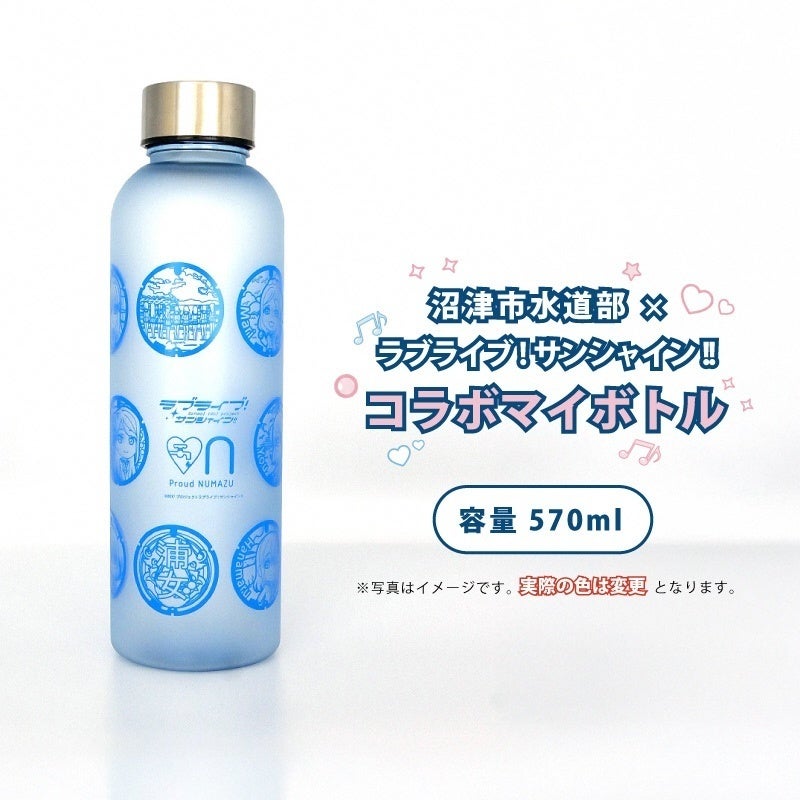
In addition to the manhole cover design, the announcement image clearly shows the phrase “Proud NUMAZU” alongside the official logo of the Waterworks Bureau. This merchandise effectively transfers an authentic urban fixture found on local streets onto an everyday portable item. What sets this case study apart is how visibly it connects not just with the creative work, but directly with the city’s civil infrastructure and municipal water utility operations.
At the same time, the pale blue color seen in the promotional photograph cannot be presented as the confirmed color of the final tax return gift. The original promotional material includes an explicit note that the color was subject to change. Furthermore, the donation amount and acceptance deadline reflect the conditions announced at that time, rather than an active ongoing application guide. When referencing past promotional goods as case studies, planners must verify exactly which production run or sales batch a given photograph represents.
Track Retail Sell-Outs and Donation Receipts Under Separate Headers
The direct retail sales record from June and the hometown tax gift registration announced in December operate under completely different administrative frameworks. A figure like “180 units sold out in one minute” cannot simply be translated into anticipated tax donation totals or broader municipal economic impact.
When project leads assemble project plans or post-event reports, they should record general retail units sold, the number of hometown tax gift applications, and total donation revenues as separate line items. If an underlying civic goal is to educate the public on the city’s municipal water services, the report should also record where and what specific educational information was distributed. Avoiding the temptation to evaluate commercial product popularity and civic public relations using the exact same numeric metric is the true starting point for meaningful program analysis.
Numazu Station Outreach: Placing Tax Gift PR and Relocation Desks in the Same Room
On June 29, 2025, Numazu City set up a combined hometown tax PR and residential relocation consultation booth (in Japanese) inside a conference room within the JR Numazu Station building. The free-admission event was scheduled to coincide with JR Central’s popular “Sawayaka Walking” regional walking tour.
The event announcement outlined an on-site photo spot, exhibits, and a postcard giveaway limited to the first 800 visitors who bookmarked designated hometown tax return gifts in their online donation portal. In the very same room, municipal staff opened consultation desks to address inquiries regarding local housing, employment, and relocation to the city.
This format allowed visitors to enjoy the exhibits and take photos while learning about available hometown tax gifts, with the option to consult city staff about living and working in Numazu if they were interested. Structurally, it represents an effort to overlay municipal administrative services onto a pre-existing travel occasion that brought visitors into the city.
When local governments plan similar joint events, it is vital not to assume that people viewing the exhibition, people bookmarking hometown tax gifts, and people seeking residential relocation advice all belong to the exact same audience. An individual who travels to a town out of affection for an anime work is not automatically contemplating moving there permanently. A well-designed floor plan provides dedicated quiet spaces and staffed desks for those who wish to discuss relocation, while still allowing fans who do not wish to consult to freely enjoy the exhibits at their own pace.
Quotas for Promotional Perks Do Not Measure Relocation or Donation Success
The figure “first 800 visitors” simply represents the maximum quota of novelty postcards prepared for distribution. It does not indicate the actual number of postcards handed out, the number of people who ultimately made a tax donation, or the number of people who decided to relocate to the municipality.
When conducting a post-event review, organizers should separate bookmark participation, individual consultation counts, and subsequent donations or relocations to the extent that each can be reliably tracked. Precisely because photo displays and consultation desks share the same venue, municipal team members should align in advance on what data each administrative counter will collect, making subsequent reporting clearer and more defensible.
Around Kamakura-Kōkō-Mae Station: Safeguarding Daily Life Alongside Visitor Promotion
In locations where massive crowds already gather, the priority shifts from designing promotions that attract even more visitors to implementing field management that protects pedestrian safety, traffic flow, and residential peace.
From September 13 to 16, 2025, Kamakura City conducted a four-day field demonstration project to maintain public order (in Japanese) in the immediate vicinity of Kamakura-Kōkō-Mae Station. The city designated a temporary photography zone and waste disposal station at the nearby Koshigoe Racco Park, while directing foot traffic around the station perimeter. Approximately 12 municipal staff members were deployed on-site each day to guide visitors and discourage roadside photography, unauthorized parking or idling, and trespassing on private residential property.
In this initiative, city officials did not merely post lists of prohibited behaviors; they actively signposted designated areas where visitors could safely take photographs and dispose of trash. Deciding where visitors may pause, how to separate foot traffic from vehicles, and how many field personnel must be deployed to manage the perimeter are all integral components of this policy measure.
It is important to emphasize that the designated photography zone and waste station were installed exclusively for the duration of this four-day trial. They cannot be cited as evidence that visitors may currently take photos freely in that specific park area. Moreover, conducting an operational test does not mean that every congestion issue was permanently resolved thereafter. When referencing past public trials in articles or reports, writers must clearly specify the exact dates and designated geographic boundaries of the project.
Look Beyond Headcounts to Quantify the Human Resources Required for Field Management
Whenever a municipality encourages fans to visit on-site pilgrimage spots, it must simultaneously investigate the tangible impacts on daily vehicular traffic and residential neighborhoods. Planners must assess photo-taking choke points, local neighborhood roads, waste collection logistics, and property boundary lines, alongside estimating the staffing levels and operating budgets required for guidance and sanitation.
Kamakura City’s deployment of approximately 12 staff members per day reflects the dedicated human resources required solely for on-site management across those four days. When such operational staffing data is analyzed alongside visitor headcounts and collected trash volumes, organizers gain a clear view not only of the scale of local excitement, but also of the actual administrative labor required to accommodate it safely. Rather than extrapolating a four-day field test into an annualized civic success metric, local governments should treat these operational records as concrete planning benchmarks when staffing and scheduling guidance for the next peak travel season.
Four Essential Items to Align in Proposals and Post-Project Reports
- 01Formulate the Civic Goal in a Single SentenceIdentify the primary challenge, such as adding tax gifts, promoting relocation desks, or managing public safety
- 02Confirm Venues and Assigned ResponsibilitiesClarify physical site conditions across venues, roadways, or parks, and assign partner departments and staffing needs
- 03State Terms, Timeframes, and Limitations ExplicitlyInclude application deadlines, quantities, visual change notes, and trial dates in all public guidance
- 04Review Outcomes by Segmenting Key MetricsSeparately track retail sales, tax donations, online bookmarks, consultations, and on-site staff deployments
During the project planning phase, clarify precisely which action is being requested from whom. Educating visitors about a hometown tax return gift requires completely different staffing, guidance, and venue arrangements than conducting residential relocation interviews. In areas that already attract heavy visitor traffic, protocols for preserving pedestrian access and shielding neighborhood living conditions must be established before launch.
During the post-project reporting phase, always accompany quantitative data with details on when, where, and what was counted. Instead of rolling retail sell-out quantities, promotional perk limits, consultation numbers, and on-site staff deployments into a single aggregate “success,” record each datapoint in discrete units that can inform future operational improvements. Accumulating clear, segmented records is what ultimately produces municipal initiatives that can be transparently justified to local residents, partner organizations, and city hall alike.
Related Articles: What Is Oshikatsu Marketing? / Case Studies in Oshikatsu Marketing Failures / How to Plan Oshikatsu Events / Oshikatsu Market Size (2026 Edition)
FAQ
When a municipality plans a collaborative tax gift with an anime or franchise, how does that differ from normal merchandise sales?
Sales revenue from general merchandise, donated amounts received through hometown tax donations (furusato nozei), and broader citywide economic spillover effects must all be treated as separate metrics. Even when linking everyday items to local manhole cover designs visible on city streets—such as the collaboration water bottle announced by Numazu City's Waterworks Bureau in December 2025—the original sales record and the acceptance of tax donations as a thank-you gift have entirely different operational conditions and civic objectives.
What is the goal of pairing hometown tax promotion with relocation consultations at an on-site event?
The primary aim is to bridge an initial visit into connections with multiple municipal administrative counters. At the event hosted by Numazu City in a JR Numazu Station conference room in June 2025 alongside a walking tour, organizers set up a photo spot and offered novelty gift perks for bookmarking specified hometown tax items, while simultaneously offering housing and career consultations in the very same room. However, tracking requires caution so that the number of promotional perks distributed or social media posts is not conflated with an actual increase in relocated residents or total donation revenue.
What kind of on-site measures become necessary in locations that experience surging visitor numbers from anime pilgrimages?
Beyond simply attracting crowds, municipalities must design crowd guidance that actively preserves the living environment of local residents and ensures traffic safety. In a four-day field trial conducted by Kamakura City around Kamakura-Kōkō-Mae Station in September 2025, the city designated a photo zone and a waste station at a nearby park and deployed approximately 12 municipal staff members each day to prevent photography in roadways, vehicle parking or stopping, and trespassing on private property.
What metric conflations should municipalities avoid when setting performance indicators for anime collaborations?
Avoid lumping merchandise sales volume, received donation amounts, promotional perk quotas, actual relocation inquiries or settled residents, overall visitor headcounts, and collected trash volumes into a single umbrella outcome. Each metric must be recorded separately within observable bounds, explicitly noting when, where, and what was counted.


