

ASIAN KUNG-FU GENERATION Pilgrimage: 14 Enoden Stations and Concert Venues
Ride the Enoden from Fujisawa toward Kamakura, stopping at stations whose names also appear in songs. ASIAN KUNG-FU GENERATION’s Surf Bungaku Kamakura is an album whose song titles come from stations along the line. The 2008 release had 10 tracks; a 2023 Complete Edition added songs for five more stations.
This guide covers 14 places: all 10 Enoden stations named in the album, plus concert venues in Yokohama, Kamakura, and Tokyo. Alongside the band’s live history through its 30th anniversary in 2026, follow the station names that became song titles and the scenery along the coast.
The 10 Enoden stations and four concert venues in Yokohama, Kamakura, and Tokyo
1. Fujisawa Station
The Enoden’s starting point and the station named in the album’s opening track, “Fujisawa Loser.”
Explore Fujisawa Station2. Enoshima Station
The station named in “Enoshima Escar.” A new music video came out in 2023.
Explore Enoshima Station3. Koshigoe Station
The station named in “Koshigoe Crybaby.” The Enoden runs in the street between here and Enoshima Station.
Explore Koshigoe Station4. Kamakura-koko-mae Station
“Hizaka Downhill,” added on the Complete Edition. The station was originally called Hizaka Station.
Explore Kamakura-koko-mae Station5. Shichirigahama Station
“Shichirigahama Skywalk.” A surfing coast and Mt. Fuji at sunset.
Explore Shichirigahama6. Inamuragasaki Station
“Inamuragasaki Jane.” A cape with views of Mt. Fuji and Enoshima.
Explore Inamuragasaki7. Gokurakuji Station
“Gokurakuji Heartbreak.” Opened in 1904; selected among the 100 best stations in the Kanto region.
Explore Gokurakuji Station8. Hase Station
“Hase Sands.” The closest station to Hasedera Temple and Kotoku-in, home of the Great Buddha.
Explore Hase Station9. Yuigahama Station
“Yuigahama Kite.” A five-minute walk to Yuigahama Beach.
Explore Yuigahama Station10. Kamakura Station
The Enoden’s terminus and the title of the album’s final track, “Kamakura Goodbye.”
Explore Kamakura Station11. Kamakura Performing Arts Center
Final shows of the Surf Bungaku Kamakura tour, November 22 and 23, 2023.
Explore Kamakura Performing Arts Center13. Yokohama Stadium
Anniversary concerts for the band’s 10th major-label anniversary, September 14 and 15, 2013.
Explore Yokohama Stadium14. Ariake Arena
Thirty Revolutions, a 30th-anniversary concert, April 4 and 5, 2026.
Explore Ariake ArenaThe Enoden began running between Fujisawa and Katase, now Enoshima, on September 1, 1902. The line was extended in stages and reached Kamakura on November 4, 1910. Today, 15 stations connect Fujisawa and Kamakura across about 10 kilometers. Before the Complete Edition came out, artist photos for the album were released one station per day. We’ll follow the album’s track order from Fujisawa to Kamakura.
1. Fujisawa Station | “Fujisawa Loser” and the Enoden’s starting point
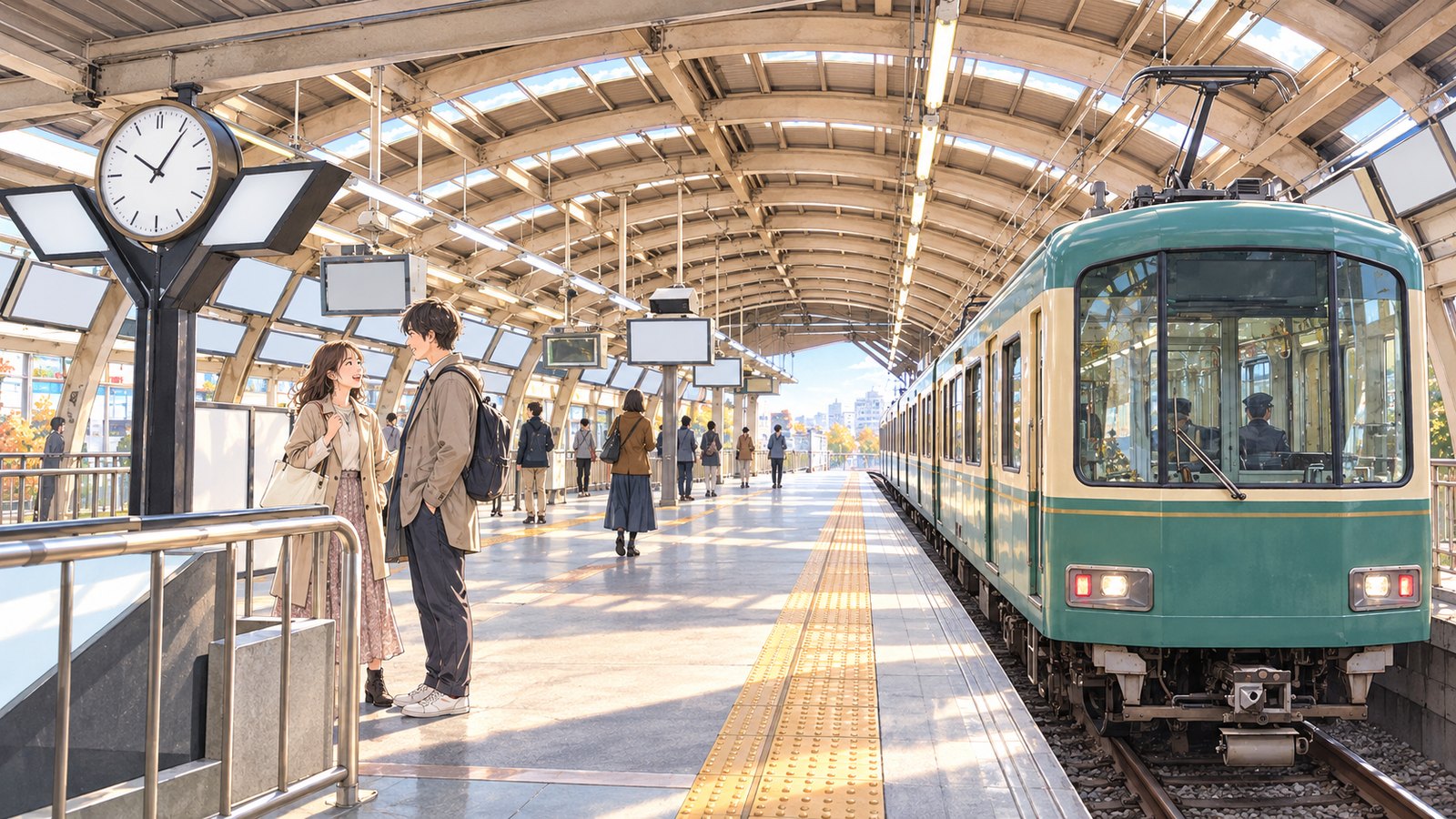
The Enoden’s Fujisawa Station is on the second floor of the ODAKYU Shonan GATE shopping complex, across from the south exit of JR Fujisawa Station. It is the line’s starting point, and trains heading from Fujisawa to Kamakura are outbound. Travel guides to the rail line are also available at the station. The first section to open, on September 1, 1902, ran from Fujisawa to Katase, now Enoshima.
The album opens with “Fujisawa Loser.” First released as a single on October 15, 2008, it led into the album released the following month. It also opens the Complete Edition, so the album’s journey begins at this station.
The songs for Ishigami Station and the next stop, Yanagikoji Station, were newly added to the Complete Edition: “Ishigami Hills” and “Yanagikoji Parallel Universe.” If you want to walk a little farther from Fujisawa Station, Yugyoji Temple is about a 15-minute walk from JR Fujisawa Station.
- Address
- Fujisawa City, Kanagawa (second floor of the ODAKYU Shonan GATE shopping complex, opposite the south exit of JR Fujisawa Station)
- Connection to the band
- “Fujisawa Loser,” the album’s opening track (released as a single October 15, 2008)
- Nearest station
- A short walk from JR and Odakyu Fujisawa stations
Sources: Sony Music — Surf Bungaku Kamakura (Complete Edition) special site (in Japanese) / Sony Music — ASIAN KUNG-FU GENERATION profile (in Japanese) / All About — Enoden Fujisawa Station (in Japanese) / Nippon Tabimaga — History of the Enoden (in Japanese) / Enoshima Electric Railway — Fujisawa Station information (in Japanese)
2. Enoshima Station | “Enoshima Escar” and the gateway to the island
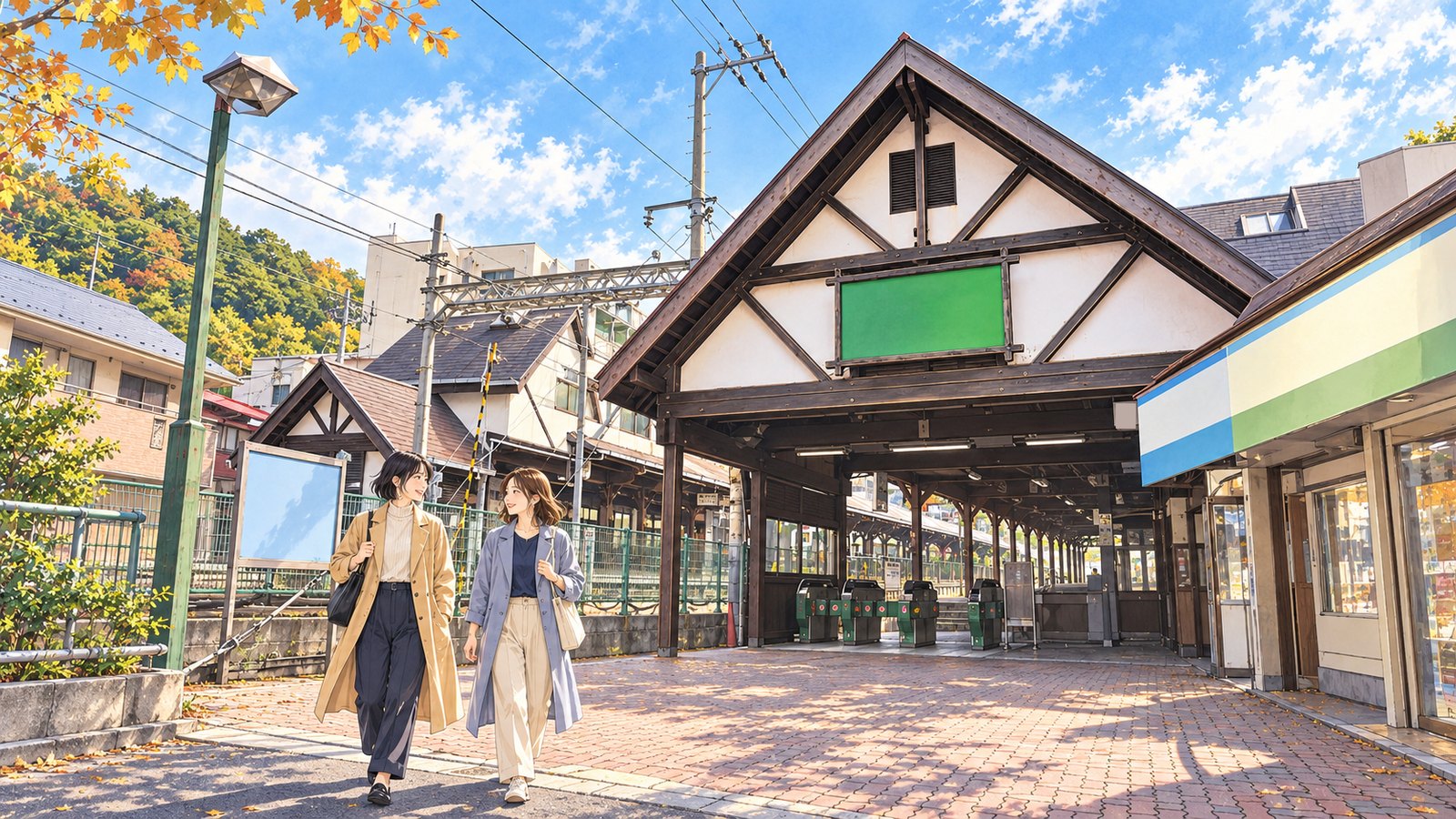
Enoshima Station in Katasekaigan, Fujisawa, is where visitors get off to go to Enoshima. The island is about a 10-minute walk across the bridge from the station. Ryukoji and Jorakuji temples are about three minutes away on foot, and Enoshima Shrine is about 15 minutes away. The song “Enoshima Escar” follows “Kugenuma Surf” for Kugenuma Station and “Nishikata Coast Story” for Shonankaigankoen Station.
The “Escar” in the song title refers to Enoshima Escar, an outdoor escalator that carries visitors up the island. Built in 1959, it was Japan’s first outdoor escalator. The climb that takes about 20 minutes on stone steps can be done in about four minutes by riding its four escalator sections. It was rebuilt in 2001 and 2003.
On July 5, 2023, the release date of the Complete Edition, a new music video for “Enoshima Escar” came out. Directed by Naoto Iba, it stars actor Ken Mitsu and Kirara Inori. A Band Edition featuring only the four members performing by the seaside was released in August.
- Address
- 1-4-7 Katasekaigan, Fujisawa, Kanagawa
- Connection to the band
- “Enoshima Escar”; a new music video was released July 5, 2023
- Nearby
- About three minutes on foot to Ryukoji and Jorakuji temples; about 15 minutes to Enoshima Shrine
Sources: Enoshima Electric Railway — Enoshima Station information (in Japanese) / Mynavi News — History of Enoshima Escar (in Japanese) / Official ASIAN KUNG-FU GENERATION YouTube — “Enoshima Escar” music video / Official ASIAN KUNG-FU GENERATION YouTube — “Enoshima Escar” Band Edition
3. Koshigoe Station | “Koshigoe Crybaby” and the street-running section
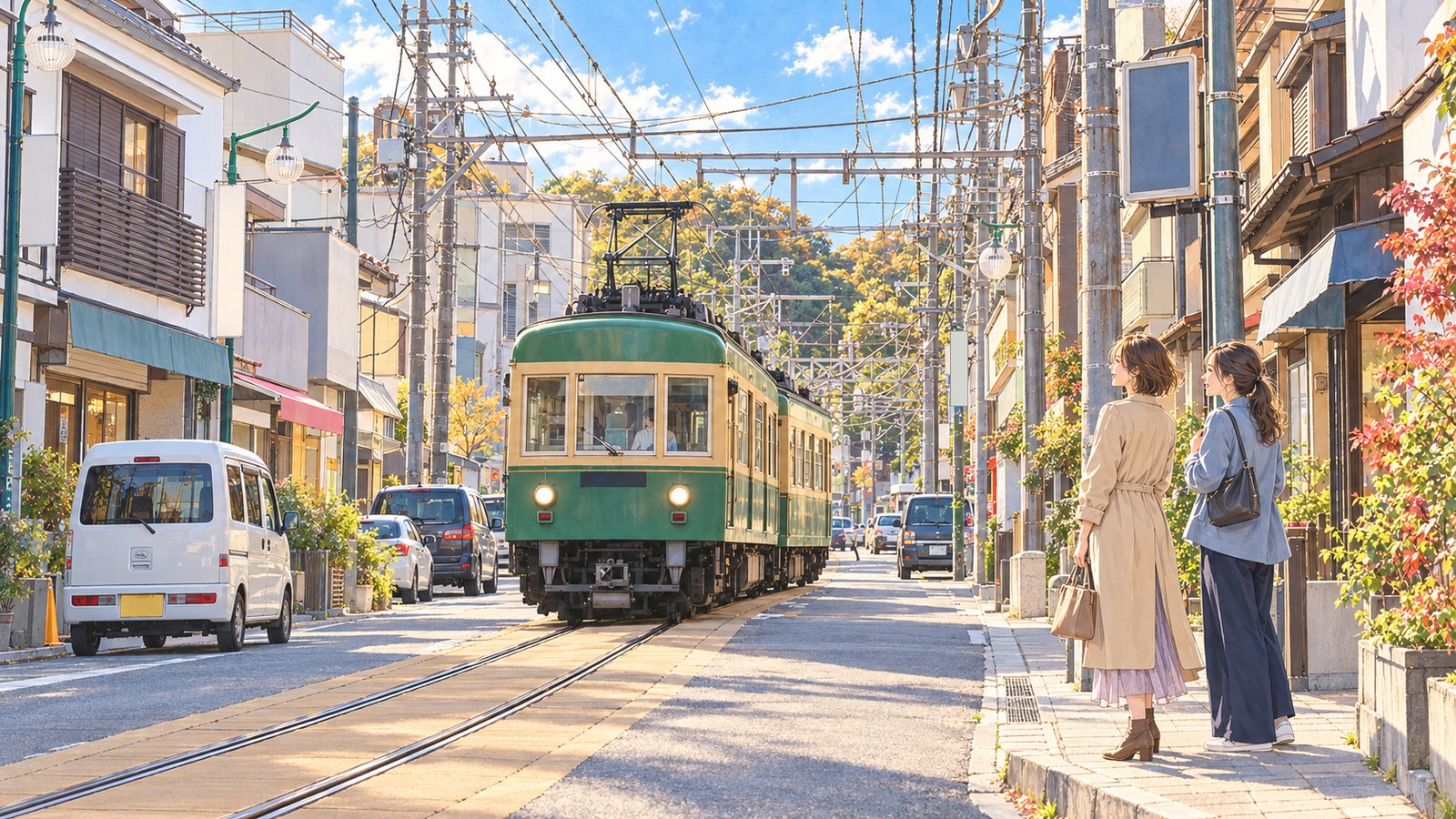
Between Enoshima Station and Koshigoe Station, the Enoden runs down the middle of the road alongside cars. This street-running section begins near the intersection in front of Ryukoji Temple and continues to the intersection at Kobe Bridge. The curve at Ryukoji-mae intersection has a radius of 28 meters and is considered the sharpest curve on a conventional railway in Japan.
The Enoden has been selected as a Civil Engineering Heritage site by the Japan Society of Civil Engineers, and a commemorative plaque is installed at the Ryukoji-mae intersection. Manpukuji Temple, about a three-minute walk from Koshigoe Station, is another place to visit nearby.
Along the street-running section, watch the trains from the sidewalk. Do not step into the roadway or stop in a way that blocks the flow of people.
- Address
- Koshigoe, Kamakura, Kanagawa
- Connection to the band
- “Koshigoe Crybaby”
- Nearby
- About a three-minute walk to Manpukuji Temple; the Enoden runs in the street between here and Enoshima Station
Sources: Nippon Tabimaga — Enoden street-running section (in Japanese) / Nippon Tabimaga — Gokurakuji Station and Civil Engineering Heritage plaque (in Japanese) / Enoshima Electric Railway — Koshigoe Station information (in Japanese)
4. Kamakura-koko-mae Station | “Hizaka Downhill,” named for the station’s former name
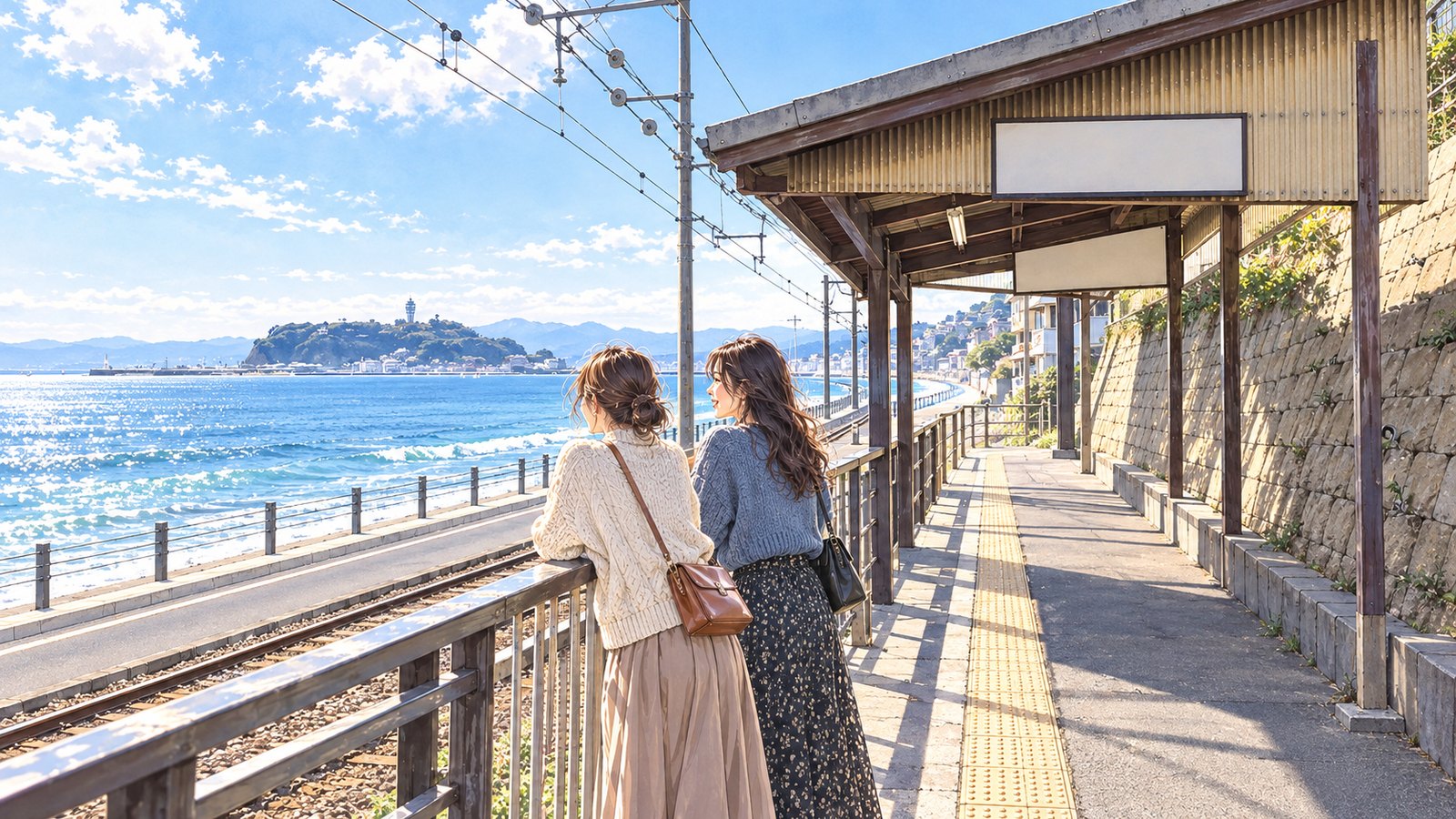
Kamakura-koko-mae Station opened on June 20, 1903, under the name Hizaka Station. It took its current name on August 20, 1953. “Hizaka Downhill,” added to the Complete Edition, takes its title from the station’s former name.
The station opens onto a broad view of the Shonan sea. It was selected among the 100 best stations in the Kanto region on October 14, 1997. It is one of only two Enoden stations selected, along with Gokurakuji. The slope called Hizaka begins at a railway crossing about 100 meters east of the station. The name is said to come either from the “Nitta Slope,” where Nitta Yoshisada’s forces passed, or from the slope’s sunny exposure.
On a clear day, the silhouette of Izu Oshima can be seen offshore directly beyond the crossing. This is also one of the stations with a Civil Engineering Heritage plaque.
The crossing is also known as the location that appears at the beginning of the anime SLAM DUNK, and many visitors come from Japan and abroad. The crossing is close to the road, so stay on the sidewalk when taking photos and avoid obstructing pedestrians or vehicles.
- Address
- Koshigoe, Kamakura, Kanagawa
- Connection to the band
- “Hizaka Downhill” (added on the 2023 Complete Edition; the station was formerly called Hizaka)
- Highlights
- The sea in front of the platform; selected among the 100 best Kanto stations in 1997
Sources: Nippon Tabimaga — Kamakura-koko-mae Station (in Japanese) / Nippon Tabimaga — Kamakura-koko-mae No. 1 crossing and Hizaka (in Japanese) / Official ASIAN KUNG-FU GENERATION YouTube — New songs on the Complete Edition
5. Shichirigahama | “Shichirigahama Skywalk,” a surfing beach with sunset views of Mt. Fuji
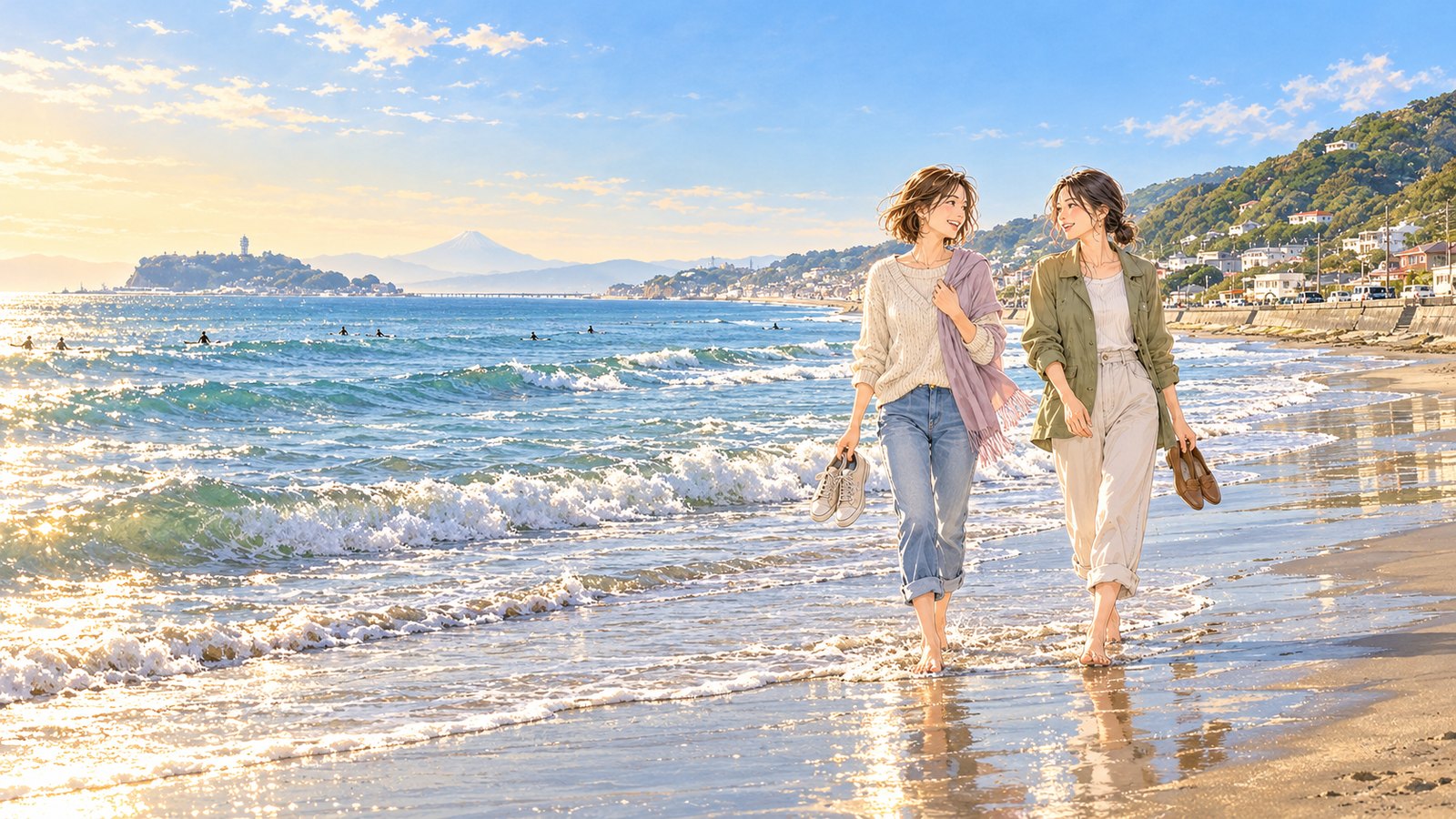
From Shichirigahama Station, it is about a two-minute walk to Shichirigahama Beach. Known for surfing, the coast draws people who enjoy marine sports throughout the year. Ukiyo-e artists Katsushika Hokusai and Utagawa Hiroshige both depicted Mt. Fuji against the sunset here.
The local band Southern All Stars also celebrated this beach in songs and films, helping make its name known throughout Japan. You can see the Shichirigahama coast from the Enoden, too. The area has many cafes and restaurants, and the coastal road is a classic Shonan drive. For a walk by the water, a clear evening is especially lovely.
- Address
- Shichirigahama, Kamakura, Kanagawa
- Connection to the band
- “Shichirigahama Skywalk”
- Nearest station
- About a two-minute walk from Shichirigahama Station on the Enoden
Source: Kanagawa NOW Tourism — Shichirigahama (in Japanese)
6. Inamuragasaki | “Inamuragasaki Jane” and the cape overlooking Mt. Fuji and Enoshima
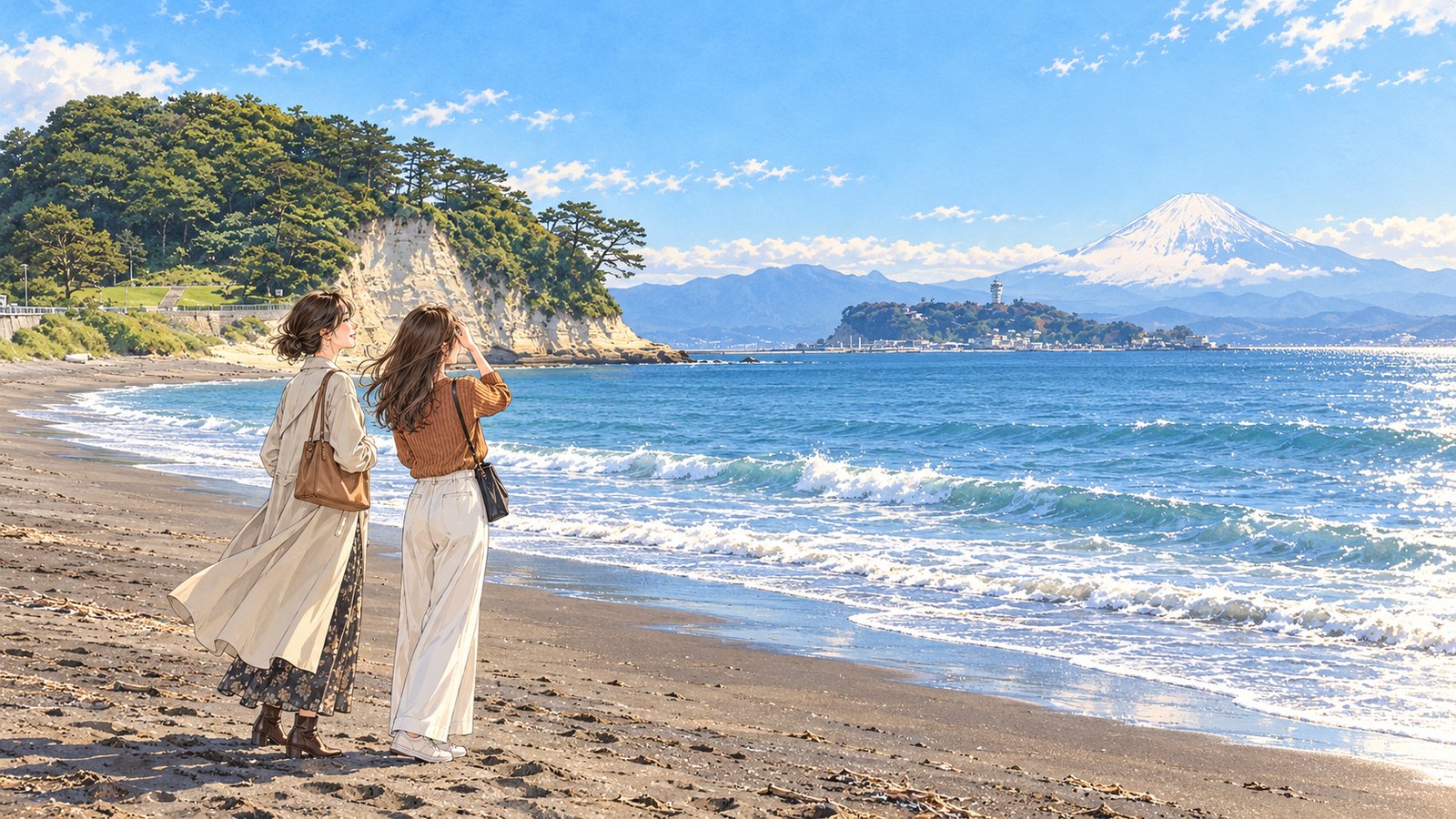
Inamuragasaki is a cape jutting out between Yuigahama and Shichirigahama. Selected as one of Kanagawa’s 50 Scenic Spots, it is known for its beautiful sunsets. From the observation deck in the Inamuragasaki district of Kamakura Seaside Park, visitors can see Izu Oshima to the south and Mt. Fuji and Enoshima to the west on clear days. One highlight is watching the sun set over the Izu mountains across Sagami Bay.
The cape is also where Nitta Yoshisada attacked the Kamakura shogunate, and is designated a national historic site as the “Legendary Crossing of Nitta Yoshisada.” The official channel has released footage of “Inamuragasaki Jane” performed at the final show of the band’s 2023 tour.
- Address
- Inamuragasaki, Kamakura, Kanagawa
- Connection to the band
- “Inamuragasaki Jane”
- Nearest station
- Inamuragasaki Station on the Enoden
Sources: Kanagawa NOW Tourism — Inamuragasaki (in Japanese) / Kamakura City Tourism Association — Kamakura Seaside Park (in Japanese)
7. Gokurakuji Station | “Gokurakuji Heartbreak” and a small station amid greenery
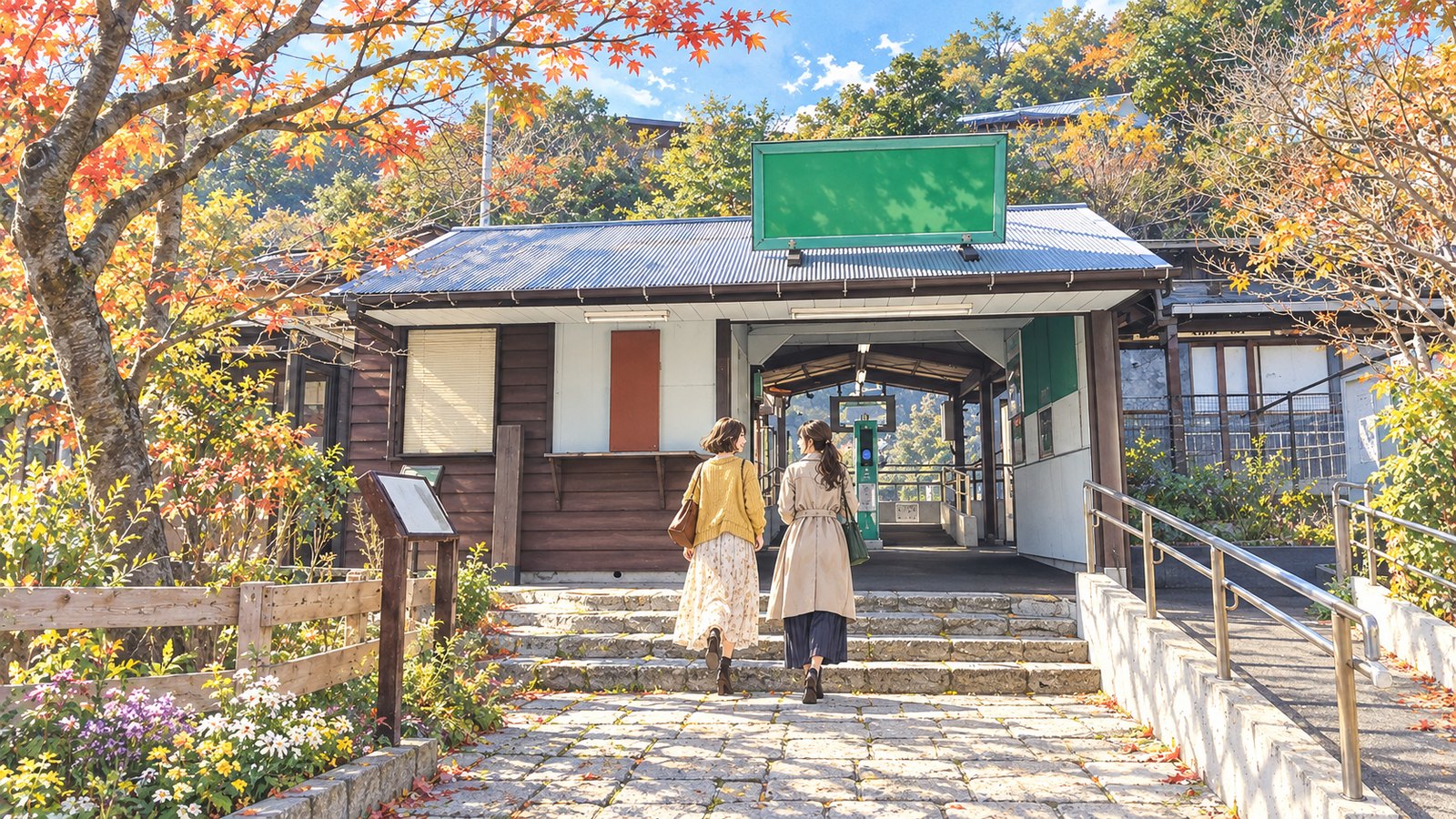
Gokurakuji Station opened on April 1, 1904. Its name comes from nearby Gokurakuji Temple and the Gokurakuji-zaka Kiridoshi pass. In 1907, a brick tunnel called Gokurakudo was built on the Kamakura side, extending the line to Omachi in Kamakura.
Like Kamakura-koko-mae, the station was selected among the 100 best Kanto stations. The selection citation described it as “a station whose old-fashioned atmosphere amid greenery and quiet brings a sense of charm and tranquility.” Civil Engineering Heritage plaques are installed at both the station and Gokurakudo tunnel.
Gokurakuji Temple, a two-minute walk from the station, is a Shingon Risshu Buddhist temple said to have been founded in 1259 by Hojo Shigetoki. In 1267, Ninsho became its founding abbot. In front of the main hall remain a medicine mortar and tea millstone that Ninsho, known for his medical knowledge, is said to have used to grind medicinal herbs. The wooden standing statue of Shakyamuni, the principal image, is shown to the public only from April 7 to 9. The 1976–77 TV drama Ore-tachi no Asa was set around this temple.
- Address
- 3-7-4 Gokurakuji, Kamakura, Kanagawa
- Connection to the band
- “Gokurakuji Heartbreak”
- Nearby
- About a two-minute walk to Gokurakuji Temple and five minutes to Jojuin Temple
Sources: Nippon Tabimaga — Gokurakuji Station (in Japanese) / Nippon Tabimaga — Gokurakuji Temple (in Japanese) / Enoshima Electric Railway — Gokurakuji Station information (in Japanese)
8. Hase Station | “Hase Sands,” closest station to Hasedera and the Great Buddha
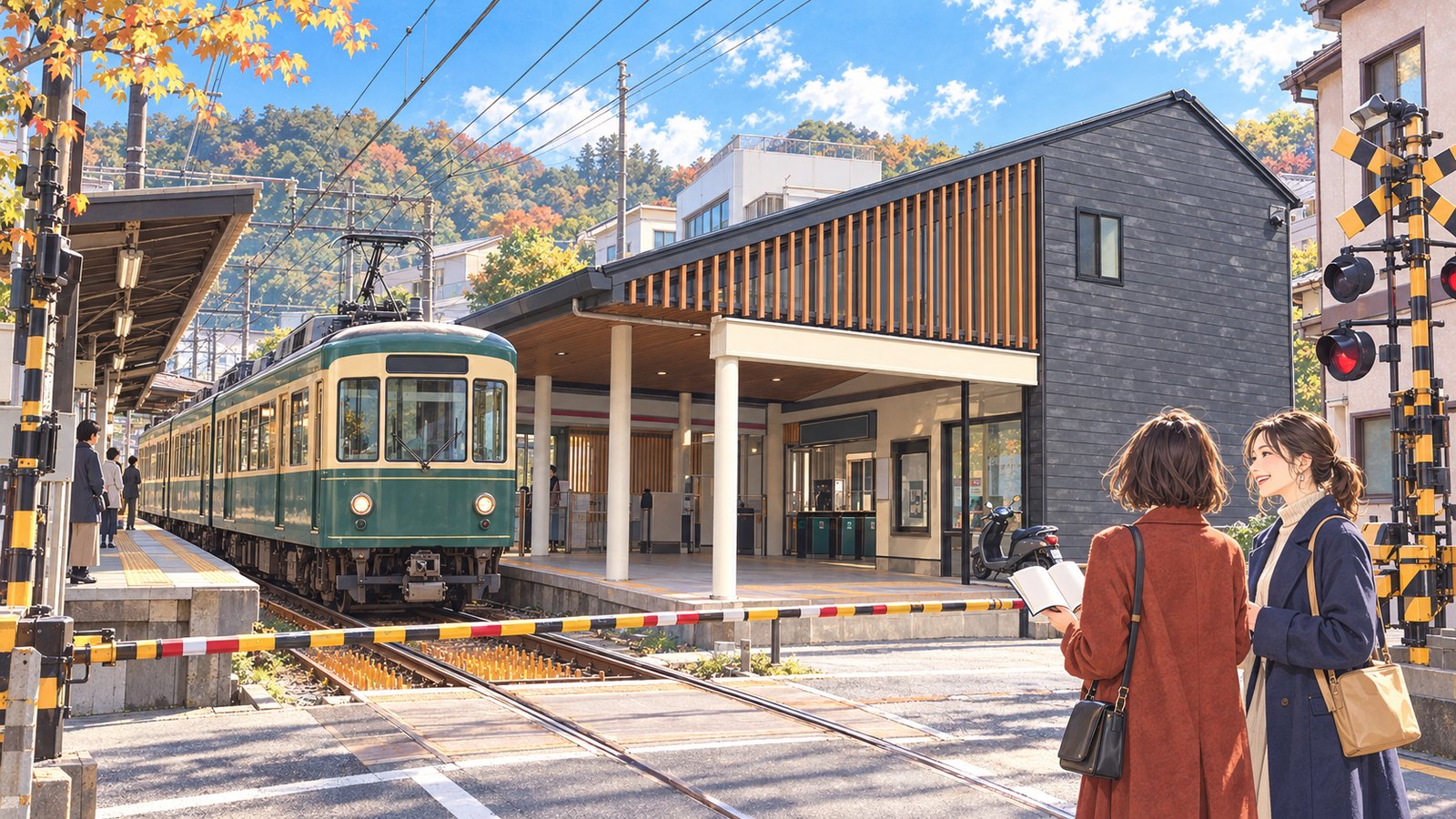
Hase Station is where visitors get off to see Kamakura’s Great Buddha and Hasedera Temple. Hasedera is about a five-minute walk away, and Kotoku-in, home of the Great Buddha, is about 10 minutes away.
Kotoku-in and Hasedera are not the only sites nearby: Kosokuji Temple is about a seven-minute walk away, and Goryo Shrine and Amanawa Shinmeigu Shrine can also be reached on foot from the station. This is a popular station, so allow extra time when visiting on weekends and holidays.
- Address
- Hase, Kamakura, Kanagawa
- Connection to the band
- “Hase Sands”
- Nearby
- About five minutes on foot to Hasedera Temple, seven minutes to Kosokuji Temple, and 10 minutes to Kotoku-in (Great Buddha)
Source: Enoshima Electric Railway — Hase Station information (in Japanese)
9. Yuigahama Station | “Yuigahama Kite,” five minutes on foot from the beach
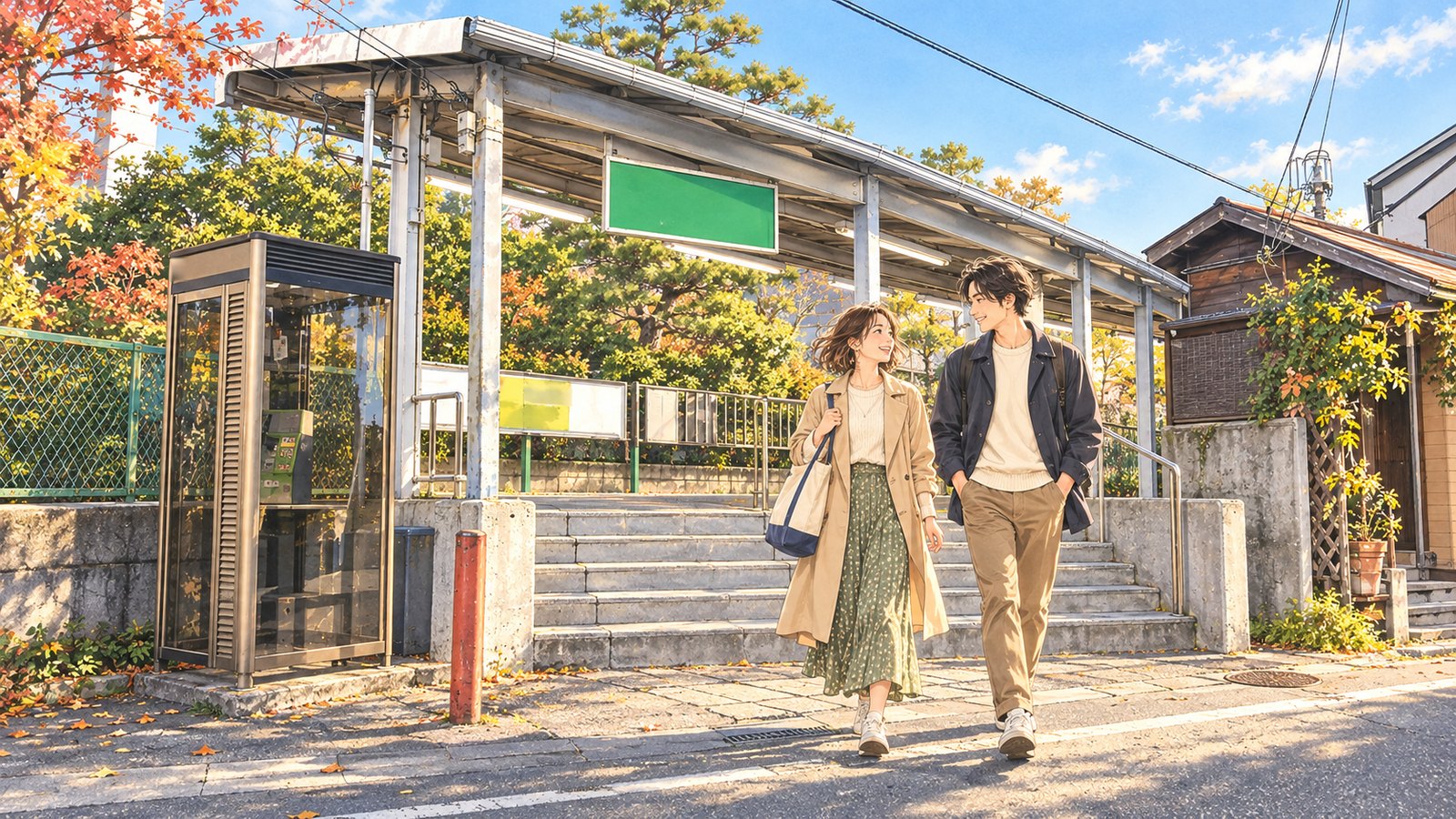
From Yuigahama Station, it is about a five-minute walk to Yuigahama Beach. A swimming area opens there in summer; Wadazuka and Hase stations are about the same distance away. The beach has a lifeguard station, first-aid station, and three free public showers.
The Yuigahama district of Kamakura Seaside Park, along the coast, was completed in 1988 and covers 21,000 square meters. From its grassy plaza, visitors can look out over the sea, and it preserves an old Enoden train car nicknamed Tankoro. The park is about a seven-minute walk from Yuigahama and Wadazuka stations.
The song for the next station, Wadazuka, is “Wadazuka Wonders,” added to the Complete Edition.
- Address
- Yuigahama, Kamakura, Kanagawa
- Connection to the band
- “Yuigahama Kite”
- Nearby
- About five minutes on foot to Yuigahama Beach and seven minutes to the Yuigahama district of Kamakura Seaside Park
Sources: Kamakura City Tourism Association — Directions to Yuigahama Beach (in Japanese) / Kamakura City Tourism Association — Kamakura Seaside Park (in Japanese)
10. Kamakura Station | “Kamakura Goodbye,” the terminus that closes the album
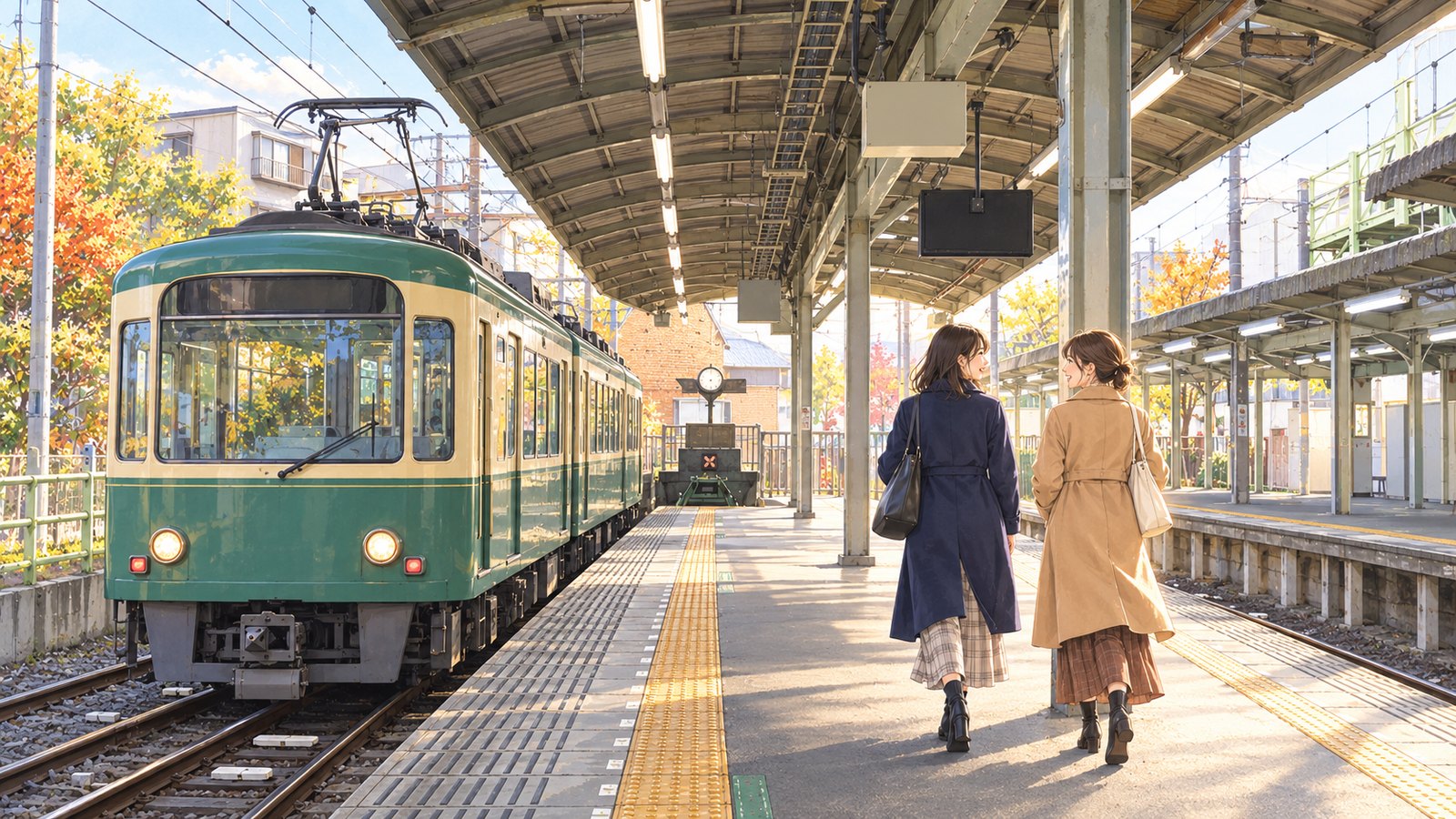
The Enoden’s terminal, Kamakura Station, connects with the JR Yokosuka Line. The Enoden’s full line to Kamakura opened on November 4, 1910; trains began serving the current Kamakura Station on March 1, 1949.
The album’s final track is “Kamakura Goodbye.” Both the 2008 original and the 2023 Complete Edition close with a song named for the line’s terminus. If you board in Fujisawa, the journey of about 10 kilometers ends here.
When it opened in 1902, the Enoden was essentially a streetcar operating under the Tramway Act. Today the entire line is a railway under the Railway Business Act, including the street-running section in Koshigoe.
- Address
- Komachi, Kamakura, Kanagawa
- Connection to the band
- “Kamakura Goodbye,” the album’s closing track
- Nearest station
- Transfer to the JR Yokosuka Line at Kamakura Station
Sources: Nippon Tabimaga — Enoden history (in Japanese) / All About — A journey through the Enoden’s stations along its 10-kilometer route (in Japanese) / Enoshima Electric Railway — Kamakura Station information (in Japanese)
11. Kamakura Performing Arts Center | 2023 tour finale
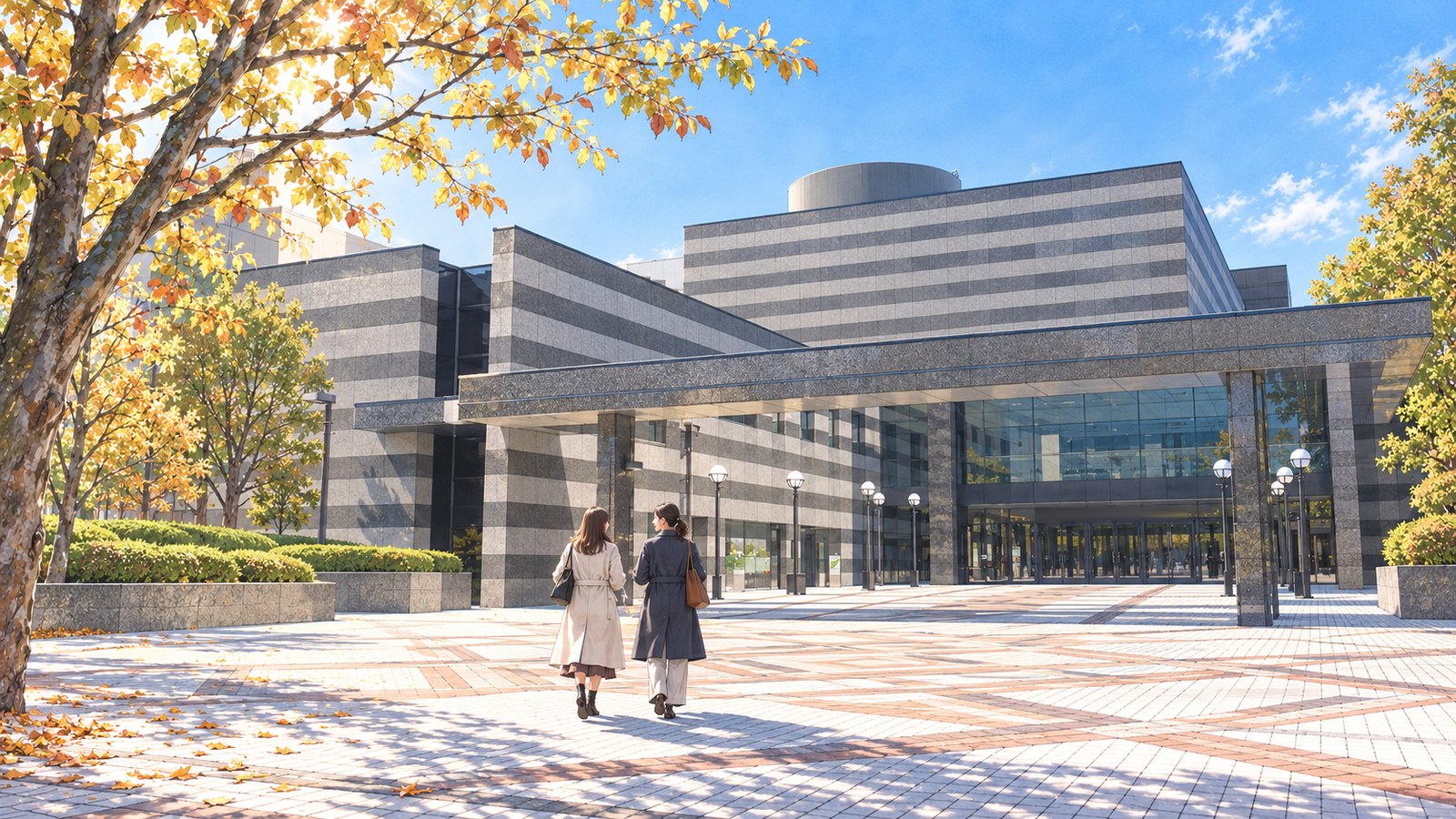
Kamakura Performing Arts Center, near Ofuna Station, hosted the final two shows of ASIAN KUNG-FU GENERATION Tour 2023 “Surf Bungaku Kamakura” on November 22 and 23, 2023. The tour began September 29 at Zepp Fukuoka and covered eight cities in 14 shows, with live houses in the first half and concert halls in the second.
The tour also introduced U-23 Support Tickets, a discount for people age 23 and under. On the day, attendees showed their ticket and a student ID or an official photo ID to verify their age at the venue. Seven acts—The Tiva, WurtS, No Buses, Lovely Summer Chan, NOT WONK, GOING UNDER GROUND, and imai—appeared as opening acts at the live-house shows.
The November 23 show was included in the video release 20th Video Collection, released September 25, 2024. The band described it as a memorable concert in a place deeply connected to the album. The set opened with “Fujisawa Loser,” then moved through “Ishigami Hills” and “Kugenuma Surf,” in an order close to the stations’ sequence. Other songs, including “Arano o Aruke” and “Hometown,” came between the station-themed tracks before the set continued with “Enoshima Escar,” “Shichirigahama Skywalk,” and “Koshigoe Crybaby.”
- Address
- 6-1-2 Ofuna, Kamakura, Kanagawa
- Connection to the band
- Final shows of the Surf Bungaku Kamakura tour, November 22 and 23, 2023
- Nearest station
- About an eight-minute walk from Ofuna Station on the JR Yokosuka Line
Sources: THE FIRST TIMES — 2023 tour dates (in Japanese) / THE FIRST TIMES — Opening acts on the 2023 tour (in Japanese) / Official ASIAN KUNG-FU GENERATION YouTube — “Inamuragasaki Jane” at Kamakura Performing Arts Center / Kamakura City Arts and Culture Foundation — Access (in Japanese)
12. Yokohama Arena | Home of the band’s NANO-MUGEN FES.
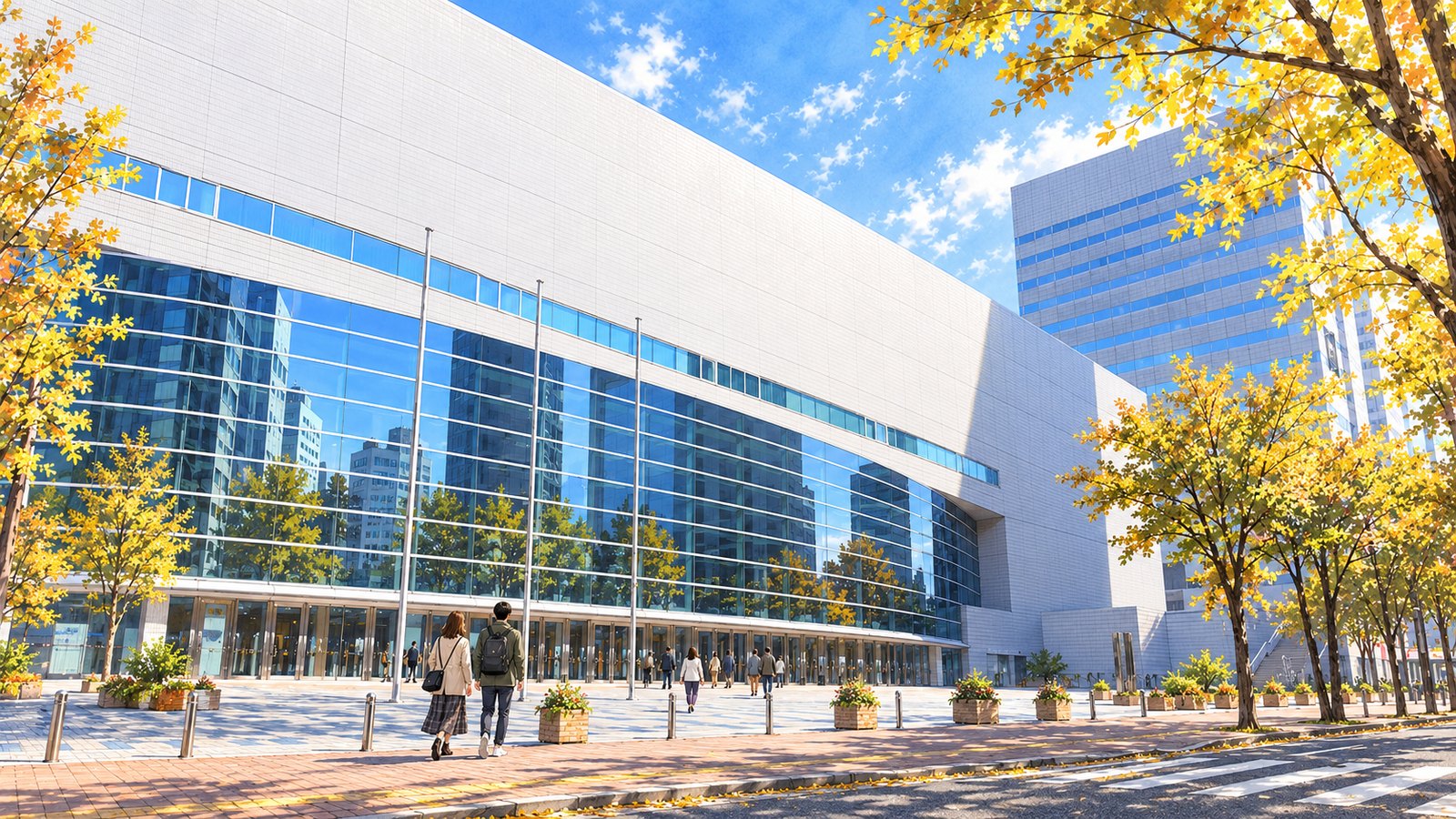
When ASIAN KUNG-FU GENERATION formed in 1996, the band performed original songs with English lyrics, mainly at school and around its hometown of Yokohama. In 2001, it organized its own event at Yokohama CLUB24.
The band launched its own festival, NANO-MUGEN FES., in 2003. After a 2004 edition at Nippon Budokan, the festival moved to Yokohama Arena on July 9, 2005. That year, four Japanese bands and four British bands performed across two stages. A compilation CD, NANO-MUGEN COMPILATION, featuring songs by all eight acts was also released.
The festival returned to Yokohama Arena in 2006, 2008, 2009, 2011, 2012, and 2014. In 2009, pre-festival shows were also held at Daikanyama UNIT, Namba Hatch, and Zepp Nagoya. The festival invited international acts such as WEEZER and MANIC STREET PREACHERS, introducing fans to a wide range of music. The 2025 NANO-MUGEN FES. took place at K-Arena Yokohama.
- Address
- 3-10 Shinyokohama, Kohoku Ward, Yokohama, Kanagawa
- Connection to the band
- Venue for the band’s NANO-MUGEN FES. from 2005 through 2014
- Nearest stations
- Five-minute walk from the north exit of Shin-Yokohama Station on the JR Yokohama Line; four minutes from Exits 7 and 8 of Shin-Yokohama Station on the Yokohama Municipal Subway Blue Line
Sources: Sony Music — ASIAN KUNG-FU GENERATION profile (in Japanese) / Sony Music — Surf Bungaku Kamakura (Complete Edition) special site (in Japanese) / Real Sound — NANO-MUGEN FES. 2025 at K-Arena Yokohama (in Japanese) / Yokohama Arena — Access (in Japanese)
13. Yokohama Stadium | 10th-anniversary concerts for the major-label debut
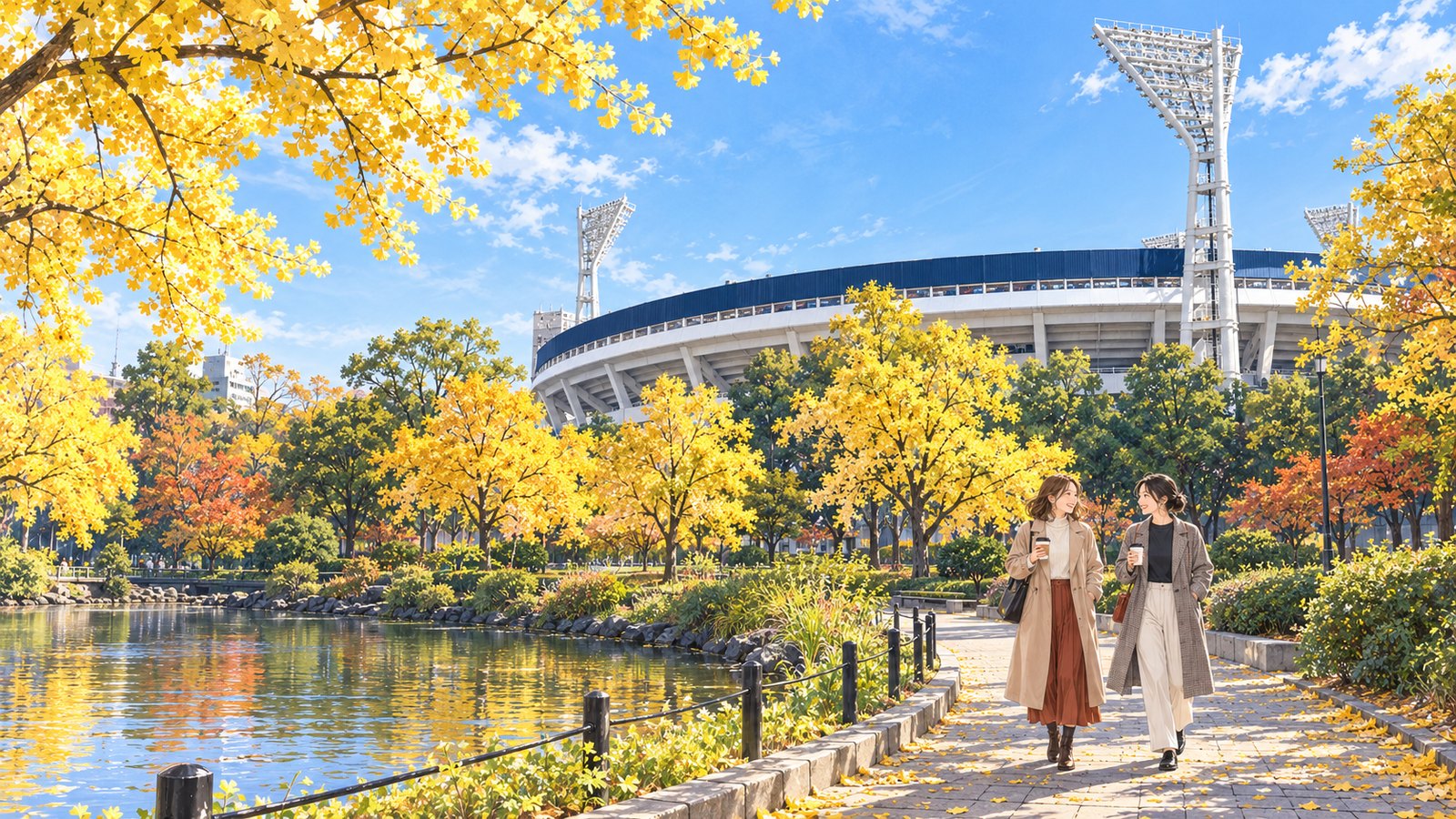
In 2013, the 10th anniversary of ASIAN KUNG-FU GENERATION’s major-label debut, the band held commemorative concerts at Yokohama Stadium on September 14 and 15. The first night was called Fan Appreciation Day and the second All-Star Appreciation Day. The two concerts were released separately on March 12, 2014, as 9th Video Collection and 10th Video Collection.
A little earlier, on August 23, the band threw the ceremonial first pitch at a professional baseball game held at the stadium. That spring, Tower Records Shibuya also hosted a 10th-anniversary exhibition. It was a two-day celebration of a decade of music in the band’s hometown of Yokohama.
- Address
- Yokohama Park, Naka Ward, Yokohama, Kanagawa
- Connection to the band
- 10th-anniversary concerts for the major-label debut, September 14 and 15, 2013
- Nearest stations
- About a two-minute walk from the south exit of JR Kannai Station; about three minutes from Nihon-odori Station on the Minatomirai Line
Sources: Sony Music — ASIAN KUNG-FU GENERATION profile (in Japanese) / akippa — How to get to Yokohama Stadium (in Japanese)
14. Ariake Arena | 30th-anniversary concert
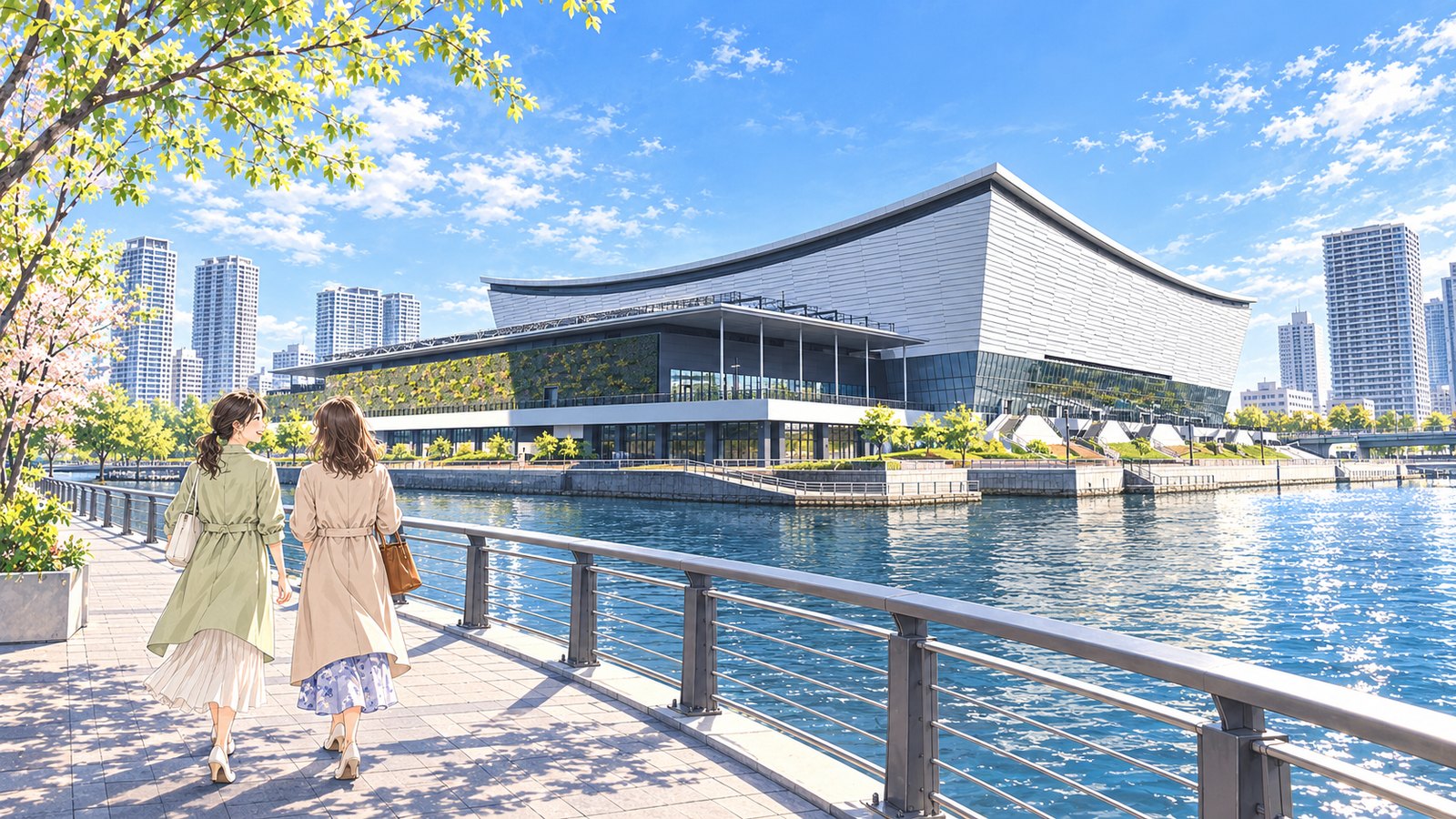
On April 4 and 5, 2026, ASIAN KUNG-FU GENERATION held ASIAN KUNG-FU GENERATION 30th Anniversary Special Concert “Thirty Revolutions” at Ariake Arena in Tokyo. The shows opened the anniversary year, marking 30 years since the band formed in 1996. The title draws on RPM, or revolutions per minute, and evokes the band’s journey of continuing to turn with music.
After these shows, the band performed in Jakarta, Indonesia, in April, then toured Latin America from June to July. From October to November, it is scheduled to play 12 live-house shows at six venues on the Midage Fanclub tour. A 21-show hall tour across 19 cities is planned for January through March 2027, followed in April by arena shows at GLION ARENA KOBE and Pia Arena MM.
Ariake Arena is surrounded by residential neighborhoods and schools. The venue asks visitors to be considerate of nearby residents. On concert days, avoid shouting nearby or blocking streets and sidewalks.
- Address
- 1-11-1 Ariake, Koto City, Tokyo
- Connection to the band
- Thirty Revolutions, a 30th-anniversary concert, April 4 and 5, 2026
- Nearest stations
- About an eight-minute walk from Shin-Toyosu or Ariake-Tennis-no-Mori stations on the Yurikamome Line
Sources: Real Sound — Announcement of Thirty Revolutions (in Japanese) / Real Sound — 30th-anniversary concerts and upcoming tours (in Japanese) / Ariake Arena — Access (in Japanese)
The story of ASIAN KUNG-FU GENERATION
From a university club to the live houses of Yokohama
ASIAN KUNG-FU GENERATION formed in 1996 in a university music club. For Masafumi Gotoh, Kensuke Kita, and Takahiro Yamada, it was the first band they had ever joined. Kiyoshi Ijichi, an active drummer in the same club, later joined to complete the four-member lineup.
After the indie radio program aired “Konayuki,” the first song they wrote with Japanese lyrics, they began incorporating Japanese into their songwriting. In November 2002, they released the mini-album Houkai Amplifier; it was reissued by Ki/oon Records on April 23, 2003, marking their major-label debut. The following month, they held their first one-man concert at Shimokitazawa SHELTER.
Vocalist and guitarist Masafumi Gotoh is from Shimada, Shizuoka. In March 2026, a 130-year-old tea warehouse in neighboring Fujieda was renovated and opened as MUSIC inn Fujieda, a residential recording studio. It is operated by the nonprofit organization Gotoh founded and supports young musicians’ creative work. Four songs recorded there by the band were released as the Fujieda EP on March 25. As the facility is intended for musicians, it is not included as a visitor destination in this guide.
From “Rewrite” to the Enoden album
The band released the single “Rewrite” in August 2004; its second album, Sol-fa, followed in October and reached No. 1 on the album chart for two consecutive weeks. That autumn, the band toured, including its first one-man concert at Nippon Budokan. Surf Bungaku Kamakura, released in 2008 as its fifth album, begins with the earlier single “Fujisawa Loser.”
On November 30, 2016, the band released Sol-fa (2016), a newly recorded version of its second album. Around the same time, it toured to mark its 20th anniversary, and the Nippon Budokan concert was released on video. The band celebrated its 25th anniversary in 2021 and the 20th anniversary of its major-label debut in April 2023; that year, it completed Surf Bungaku Kamakura (Complete Edition). A 50th-birthday party for Masafumi Gotoh is also scheduled for December 2, 2026, at Ryogoku Kokugikan in Tokyo.
The four members and the Enoden
Masafumi Gotoh
Vocals and guitar. From Shimada, Shizuoka, he writes and composes songs for Surf Bungaku Kamakura, including “Enoshima Escar.” In 2026, he opened a recording studio in Fujieda.
Kensuke Kita
Guitar and vocals. From Kanagawa Prefecture. Like Gotoh and Yamada, ASIAN KUNG-FU GENERATION was the first band he had ever joined.
Takahiro Yamada
Bass and vocals. Also from Shizuoka Prefecture, like Gotoh. He joined Gotoh and Kita in their first band through their university music club.
Kiyoshi Ijichi
Drums. From Kanagawa Prefecture, he joined the band after establishing himself as a drummer in their university club.
Major milestones in the group’s history
- 1996Formed in a university music club.Milestone
- 2001Organized its own event at Yokohama CLUB24.Concert
- April 23, 2003Major-label debut with Houkai Amplifier.Music
- 2004“Rewrite,” Sol-fa, and first one-man concert at Nippon Budokan.Music
- July 9, 2005NANO-MUGEN FES. 2005 at Yokohama Arena.Concert
- October 15, 2008“Fujisawa Loser” single released.Music
- November 5, 2008Surf Bungaku Kamakura, an album of 10 Enoden station songs.Music
- September 14, 201310th-anniversary concert for their major-label debut at Yokohama Stadium.Concert
- July 5, 2023Surf Bungaku Kamakura (Complete Edition), with songs for all 15 stations.Music
- November 23, 2023Tour finale at Kamakura Performing Arts Center.Concert
- 2025NANO-MUGEN FES. 2025 at K-Arena Yokohama.Concert
- March 25, 2026Fujieda EP, recorded at the Fujieda studio.Music
- April 4, 202630th-anniversary concert at Ariake Arena.Concert
- October 2026Midage Fanclub live-house tour.Concert
Research memo | A business perspective: turning station-name songs into a guide to the line
Surf Bungaku Kamakura uses Enoden station names as song titles, and the first-press limited edition of the Complete Edition included a walking map. Before its release, the band also revealed artist photos taken at each station. Music, photographs, and a map were tied together along the same railway line, giving listeners a way to walk through the real places after hearing the album.
The 2023 tour also ended with a show at Kamakura Performing Arts Center. The album’s themes, its accompanying guide, and the concert venue were connected to one another. When developing regional music projects, it helps to go beyond using a place name in a song title: consider what parts of the work visitors can experience on location. That makes a concrete link between buying the music and visiting the town.
FAQ
What kind of album is Surf Bungaku Kamakura?
It is an album whose song titles are the names of Enoden stations. The original release, with 10 songs for 10 stations, came out on November 5, 2008. On July 5, 2023, a Complete Edition added tracks for all 15 stations.
Which songs correspond to which stations?
The Complete Edition follows the stations in order: Fujisawa Station, “Fujisawa Loser”; Ishigami Station, “Ishigami Hills”; Yanagikoji Station, “Yanagikoji Parallel Universe”; Kugenuma Station, “Kugenuma Surf”; Shonankaigankoen Station, “Nishikata Coast Story”; Enoshima Station, “Enoshima Escar”; Koshigoe Station, “Koshigoe Crybaby”; Kamakura-koko-mae Station, “Hizaka Downhill”; Shichirigahama Station, “Shichirigahama Skywalk”; Inamuragasaki Station, “Inamuragasaki Jane”; Gokurakuji Station, “Gokurakuji Heartbreak”; Hase Station, “Hase Sands”; Yuigahama Station, “Yuigahama Kite”; Wadazuka Station, “Wadazuka Wonders”; and Kamakura Station, “Kamakura Goodbye.”
Which songs were added for the Complete Edition?
“Ishigami Hills,” “Yanagikoji Parallel Universe,” “Nishikata Coast Story,” “Hizaka Downhill,” and “Wadazuka Wonders.” The band also re-recorded all 10 songs from the 2008 album.
What is the “Escar” in “Enoshima Escar”?
It is an outdoor escalator that carries visitors up Enoshima. Built in 1959, it was Japan’s first outdoor escalator.
Where is Hizaka, from “Hizaka Downhill”?
Kamakura-koko-mae Station was originally called Hizaka Station when it opened. The slope that rises from a nearby railway crossing is also called Hizaka.
Where was the final show of the 2023 tour?
At Kamakura Performing Arts Center in Kamakura on November 22 and 23, 2023. The November 23 show is included in 20th Video Collection.
What is NANO-MUGEN FES.?
A festival launched by ASIAN KUNG-FU GENERATION in 2003. It was held mainly at Yokohama Arena from 2005 to 2014 and has invited international acts. The 2025 edition took place at K-Arena Yokohama.
Where did the band hold its 30th-anniversary concert?
Thirty Revolutions took place at Ariake Arena in Tokyo on April 4 and 5, 2026. A live-house tour followed in October and November, with hall and arena tours planned for 2027.


