
The Ensei Packing Checklist: Everything to Bring When You Travel for a Live Show
You have the ticket. You booked the hotel. Still, the night before, that feeling starts: “I think I’m forgetting something.”
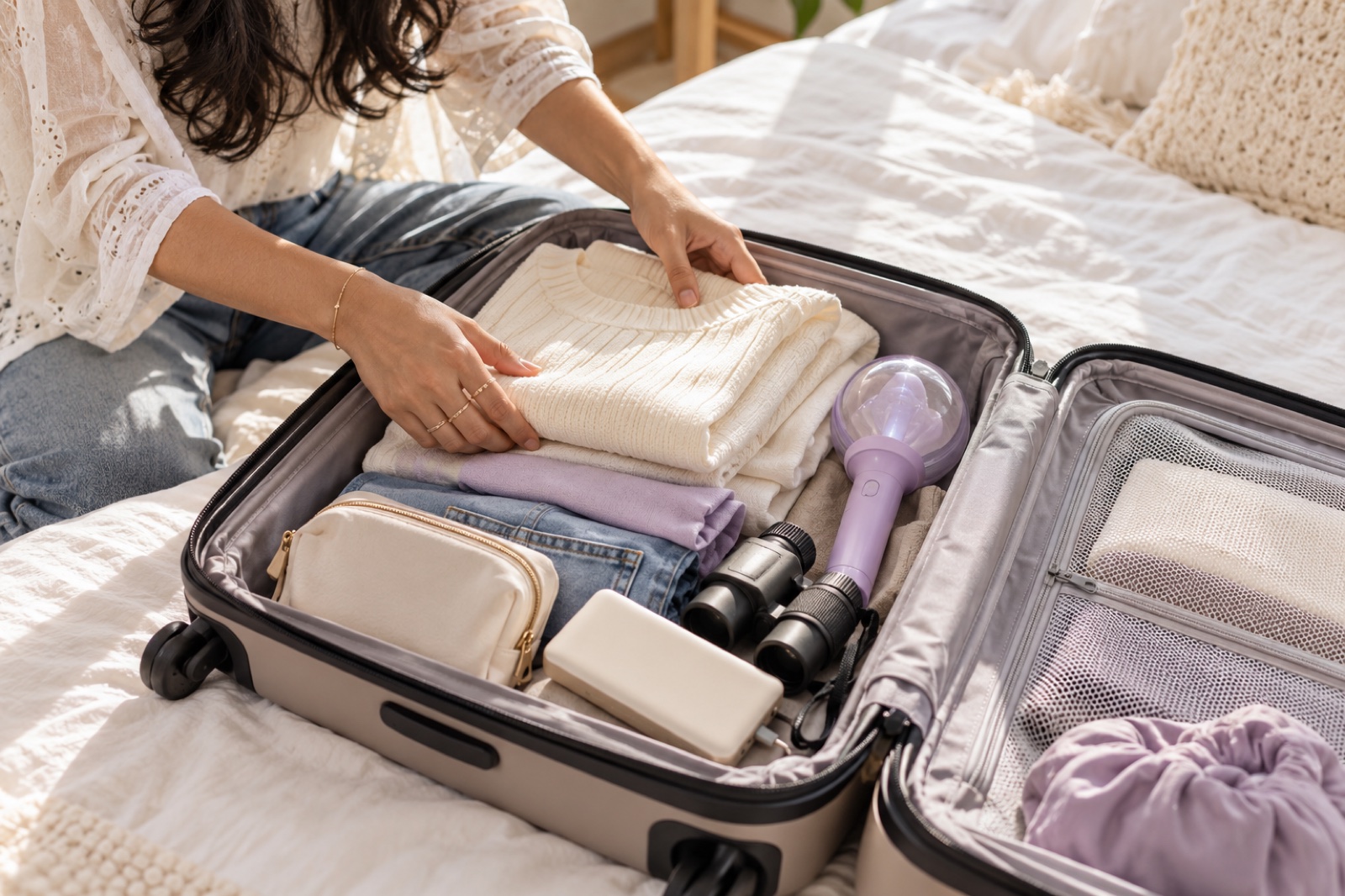
This article sorts what you need for an ensei, a trip to see your oshi at a live show, stage play or event, in order of how much it hurts if you forget it. You don’t have to bring everything. Turn it into your own checklist to fit the show’s rules, how you’re getting there and how many nights you’re staying.
First, These Five Go in the Bag You Keep With You
If you’re unsure what to pack, start by gathering these five in one place.
- A smartphone that can display your ticket
- ID
- Wallet and payment methods
- Portable battery and charging cable
- Regular medication and any medical supplies you need
Don’t put these five in a suitcase or checked luggage. Keep them in a small bag you wear while traveling, and even when you’re with someone, each person carries their own.
How e-tickets are displayed varies by show. Some won’t let you in on a screenshot, so check the official guidance and try logging in to the app and pulling up the ticket by the day before.
Valuables bagSmall, worn while traveling
- SmartphoneAble to display your ticket
- IDWhatever the organizer specifies
- WalletCash and payment methods
- Battery and cablePortable charger
- MedicationRegular and medical supplies
Even with a companion, each person carries their own.
Ensei Packing Checklist
Essentials for Entry and Travel
- Smartphone
- Login details for the e-ticket app
- Paper ticket (for shows that use them)
- ID specified by the organizer
- Wallet, cash, and payment methods such as credit cards
- Transit IC card, tickets, information needed for boarding
- Confirmation screens for lodging and transport bookings
- Portable battery, charging cable
- Keys you need for home, your suitcase and your lodging
- Regular medication, and a medication notebook or information needed in an emergency
Don’t keep booking information only on your smartphone. Note the reservation numbers and your lodging’s contact details on paper or another device too, so you can still check them if your phone acts up.
If you fly, there are limits on carrying and checking portable batteries and spare batteries. Before departure, check the Ministry of Land, Infrastructure, Transport and Tourism’s guidance (in Japanese) and your airline’s latest rules, including capacity and how to pack them.
What You Use at the Venue
- Penlight and spare batteries (check usage rules)
- Support uchiwa and boards (check size rules)
- Binoculars
- Towel, handkerchief, tissues
- A drink (check carry-in rules)
- Small trash bags and zip bags
- A foldable bag for merchandise
- A case to protect ginte (silver tape streamers) and similar items
- Rain gear, a hat, a layer and other protection for the day’s weather
You’re no less of a fan without a penlight or uchiwa. If you do use them, check the rules on official items only, size, lighting and decoration. For your first show, the First Live Concert Guide is a useful reference too.
What You Need for Lodging
- Change of clothes, underwear, socks
- Sleepwear (check whether your lodging provides it)
- Toiletries and skincare
- Contact lenses, glasses, and storage supplies
- Chargers for devices other than your smartphone
- Tomorrow’s clothes and shoes for the trip home
- A bag to separate used clothes
- Makeup remover and hair products as needed
Shampoo, toothbrushes, towels and the like are sometimes provided at your lodging. Check the amenities list, and simply not bringing what’s already there makes your luggage lighter.
Extras for People Who Carry Merchandise
- Acrylic stand, base and protective case
- Plushie and a pouch for nui-katsu
- Hard cases for trading cards and photos
- A rain cover for your ita-bag
- Small props for photos
- Trade items, sleeves and packing supplies
Put your treasured merchandise in hard cases that won’t be crushed in transit. Choose your first-string items ahead of time instead of carrying the whole collection, which cuts both loss and weight.
Divide Your Luggage Into Three
On an ensei trip, where you put things matters as much as what you bring.
| Luggage | What goes in | How to handle it |
|---|---|---|
| Valuables bag | Ticket, ID, wallet, smartphone, medication | Always with you, even while traveling |
| Venue bag | Penlight, binoculars, drink, towel | Match the venue’s carry-in rules and your seat space |
| Large luggage | Changes of clothes, toiletries, things for tomorrow | Leave at your lodging, a locker or a cloakroom |
Don’t assume you can bring a large suitcase into the venue. Check ahead whether lockers or a cloakroom exist, their hours, and any luggage size limits. If you’ll leave bags with your lodging, confirm whether they can take them before check-in and after check-out.
Valuables bag
- Ticket, ID, wallet, phone, medication
- Never checked or left behind
Venue bag
- Penlight, binoculars, drink, towel
- Sized to venue rules and your seat
Large luggage
- Clothes, toiletries, tomorrow's items
- Lodging, locker or cloakroom
Where you put things matters as much as what you bring.
Extras by Season
Hot Weather
- A drink and something for salt replenishment
- A towel or sheets for sweat
- A hat or parasol to block the sun (used outside the venue)
- A thin layer for air conditioning
- A bag to protect tickets and merchandise from sweat and rain
If you feel unwell, don’t force yourself to stay in line. Ask venue staff or people nearby for help early.
Cold Weather
- Warm clothes that can handle waiting outside the venue
- Gloves, a scarf, disposable heat packs
- Clothing that’s easy to put on and take off inside
- Shoes that handle snow and rain, and spare socks
Even if it’s warm inside the venue, merchandise lines and entry queues may be outdoors. Clothes you can adjust separately for travel and waiting and for the show itself come in handy.
Rainy Days
- A raincoat that keeps both hands free
- A folding umbrella and an umbrella bag
- A bag to separate wet things
- Waterproof bags for merchandise and electronics
- Spare socks
Many shows don’t allow open umbrellas at your seat. Keep the umbrella bag or a plastic bag somewhere easy to reach so you can put it away before entering.
Pack Three Times: When Announced, One Week Before, the Night Before
- Secure and recordTransport, lodging, cancellation terms
- Read and testLatest rules, weather, chargers, penlight
- ConfirmE-ticket, charge, ID, routes
Each pass has a different job.
Once the Show Date Is Set
- Secure transport and lodging
- Save the terms for changing or canceling your reservations
- Check your route home after the show
- Check any ID that has an expiry date
Don’t plan your trip home around the scheduled end time alone; allow for staggered exits and crowds between the venue and the station. If you’re worried about making the last train or flight, switching to a safer plan that includes an overnight stay is an option.
One Week Before
- Read the organizer’s latest guidance and carry-in rules
- Check the weather forecast and temperatures
- Look at the positions of the venue, lodging and station on a map
- Check lockers, cloakroom and your lodging’s luggage storage
- Test your penlight, binoculars and charger once
Something that was fine at a previous show may not be allowed under this one’s rules. Put the official guidance from the organizer, venue and transport operators ahead of social media roundups.
The Night Before
- I can display my e-ticket
- I’ve charged my smartphone and portable battery
- I put my ID in the valuables bag
- I’ve checked my transport and lodging reservations
- I’ve set an alarm and a departure time
- I’ve saved the routes from home to the station, station to venue, and venue to lodging
- I’ve packed the medication I need until I’m home
- I’ve adjusted clothes and items for the weather
Put only the large luggage by the front door at the end. Keep the valuables bag where you can see it, and check its contents once more the morning of.
Priorities If You Forget Something
Even if you notice something is missing, you don’t need to buy everything again.
- Check that you can get in: Ticket and ID come first. Follow the organizer’s help desk guidance
- Protect your health and your way home: Secure medication, wallet, charge and transport
- Separate what you can buy on site: Daily necessities and clothes can be picked up on the way to the venue
- Let go of what you can attend without: You can enjoy the show itself without a penlight or photo props
Don’t try to solve it with unofficial ticket deals, lending or borrowing ID, or bringing items the rules don’t allow. If you’re in trouble, talk to the organizer or venue staff.
Reducing “Ensei Anxiety” on the Company and Venue Side
For people traveling to a show, worries about what to bring come from a lack of information. If organizers, venues and lodgings put the following in one place, the hurdle for first-timers drops.
- What’s needed at entry, and which forms of ID are accepted
- Carry-in rules for bags, suitcases and support goods
- Where lockers, cloakrooms and luggage storage are, and their hours
- How to exit after the show, and the routes to stations and transport
- Places to rest near the venue, and facilities open late
- Contacts for lost items, illness and disasters
Luggage storage before and after check-in at hotels, extra services and crowding notices from transport operators, and information on restaurants open after the show from local communities all support the ensei experience. People who travel to a show are both audience and visitors who stay, move and eat in that town.
Notes From The Oshi Lab: A Good Genba Starts Before the Show
An ensei packing list is more than handy travel information. It is also a checklist that reexamines a whole series of experiences from the fan’s side: displaying the ticket, checking ID, storing luggage and getting home after the show.
If companies and venues go beyond “please remember to bring this” and spell out when, where and what is needed, fans can concentrate on the show itself. A design that keeps first-timers and people from far away from getting lost is comfortable for repeat visitors too. A good genba starts before the show does.
Summary
For ensei packing, bringing a lot isn’t the answer. First protect your ticket, ID, wallet, smartphone, charge and medication, then separate venue gear from lodging items. That alone goes a long way toward easing the worry of forgetting something.
Open this page the day before and check only the items you need. For the costs and booking of the trip as a whole, see What Is Ensei?, and if you’re heading to your first show, see the First Live Concert Guide too.
FAQ
What must I never forget on an ensei trip?
A smartphone that can display your ticket, ID, your wallet, a portable battery and any regular medication. Keep these five out of your checked luggage and put them in a small bag you carry with you while traveling.
How should I divide my luggage?
Split it into three: a valuables bag you carry throughout the trip, a venue bag you bring into the show, and a larger bag with changes of clothes that stays at your lodging. Keep the venue bag small enough for your seat and the venue's carry-in rules.
Is a screenshot of my e-ticket enough?
For some shows it isn't. You may need a moving screen or verification over the network, and a screenshot won't get you in. Check how to display the ticket in the official guidance, and by the day before, log in to the app, pull up the ticket and charge your phone.
Do I always need a penlight or uchiwa?
No. If you do use them, rules on official items only, size and light color differ by show, so check the organizer's notes before you bring them.
Any tips for packing lighter?
Check your lodging's amenities and rental items, choose clothes you can mix and match, and keep anything you won't use at the venue out of your venue bag. Even when you travel with someone, each person should carry important items such as medication and tickets.


