
Protecting Fan Merchandise: Choosing Hard Cases, Sleeves and OPP Bags
Trading cards and pin badges are protected with sleeves, hard cases and OPP bags. Which one you pick depends on the size of what you are storing and on whether it will sit at home or travel with you.

When you shop, you check the standard (B8 or B7, named after Japan’s B-series paper sizes), the diameter of the goods a product fits, and the thickness of the film. This article explains how to read those dimensions and how the products are built.
Choose by the Item and How You Will Use It
Size labels are a starting point. A generic B8 case, a sleeve designed for a particular card size and a fitted character case may have different intended uses. Measure the item you actually own, then check the product’s usable dimensions and opening.
You can combine a sleeve, rigid case and outer pouch, but three layers are not a requirement or a guarantee. A tight combination can press on the card or make removal difficult. More layers also increase the thickness that a binder or bag must accommodate.
| Product | Main purpose | Check before combining |
|---|---|---|
| Sleeve | Reduce direct handling and surface rubbing | Card dimensions, opening, film and fit |
| Rigid case | Help retain shape and reduce bending | Internal space, opening and pressure on the item |
| Outer pouch or binder | Organize and carry items | Contact with other goods and ease of removal |
- 01Outer storageAllow for the full thickness and other belongings
- 02Rigid caseCheck usable space and the opening
- 03SleeveFit the actual card without force
Extra layers are optional and cannot guarantee freedom from damage.
The Standards in One Table
| Item | Main standard | Typical use |
|---|---|---|
| Hard case B8 | Example: internal dimensions 66 x 94 mm | Check each product against the card with its sleeve on |
| Hard case B7 | Dimensions vary by product | Compare with photos and other larger items |
| Trading card, standard | 63 mm wide x 88 mm tall | Japanese-release Pokémon cards, etc. |
| Trading card, small | 59 mm wide x 86 mm tall | Mini size. Easy to choose the wrong sleeve |
| Sleeve | Dimensions and thickness vary by product | Check actual card size, material and ease of use |
| Pin badge cover | 32 / 44 / 57 / 65 / 75 mm | Fits the standard pin badge sizes |
| OPP bag | Allow space for the item’s width, thickness and insertion | For packaging and reducing direct dirt or contact; not a waterproof seal |
The two card sizes are where most people first trip. In these examples the width differs by 4 mm and the height by 2 mm. Even a small difference can mean that a card does not fit its sleeve or moves around inside it (SUPRINT, in Japanese).
63 x 88 mm
- Japanese-release Pokémon cards, etc.
- Compare the sleeved card with the case’s internal dimensions
59 x 86 mm
- Mini size
- Easy to buy the wrong sleeve
Measure the card before you buy anything.
B8 is one option discussed in this Soredoko guide (in Japanese). For example, Daiso’s horizontal B8 case specifies internal dimensions of 94 x 66 mm. Products with the same B8 name may present specifications differently. When comparing them with products from Hapila (in Japanese), check the internal dimensions and opening against the item you want to insert, rather than relying on the size name alone.
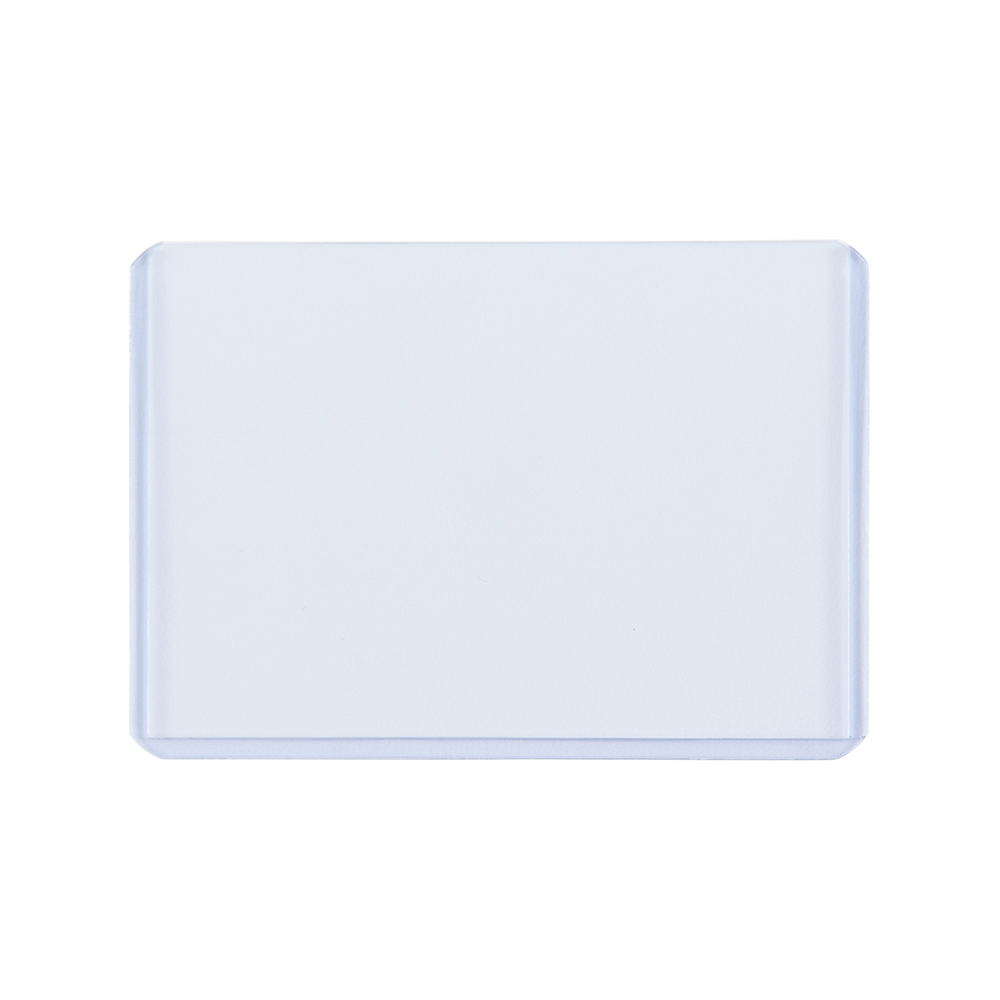
Hapila’s official image shows how a rigid transparent case supports a card’s shape while keeping the artwork visible. The company identifies PVC as the material for model FM309. The material and appearance alone do not establish UV protection or suitability for long-term storage. Read the manufacturer’s intended-use information and first try one sleeved card, checking whether it fits without being forced into the case.
OPP bags are made from biaxially oriented polypropylene film. Used as packaging materials, they can also hold bonus items or protect goods during a fan trade (bag maker Sugimoto’s explanation, Japanese). Allow for thickness and room for insertion as well as height and width, following the maker’s guidance. Water can enter through an opening, so an open bag is not protection against submersion.
Packaging and Protective Cases Meet Different Needs
OPP bags and rigid cases can be used together, but they serve different purposes. A film bag does not provide the same support against bending as a rigid case. A clear rigid case does not necessarily block UV light, while an open edge is not a waterproof seal.
Choose a combination by the situation: sorting cards in a drawer, carrying a badge in a bag or preparing a traded item for posting. For a mailed item, read the delivery service’s packaging conditions and allow for pressure from other parcels. Do not assume that a case suitable on a shelf is sufficient shipping protection.
Keep Trading-Card Statistics Separate From Supply Sales
Card sales can provide context for potential storage needs, but they do not measure sales of sleeves, cases or packaging. Someone may reuse an existing case, store several cards in one binder or choose supplies for photographs rather than trading cards.
To estimate demand for a protective product, define the product group and intended use, and examine sales quantities, repeat-purchase intervals and package counts. A rise in card prices does not, by itself, prove that buyers choose thicker protection. Broader market estimates are discussed in The Size of the Oshi-Katsu Market.
Who Makes Them
The makers and shops answering this demand fall into three broad groups.
- Makers dedicated to oshi-katsu: COADE Co., Ltd. offers pin badge covers by shape (round, square, heart) and rounds out a dedicated range with sleeves, stock boxes for pin badges, ita-bag sheets, and pouches and stands for plushies (COADE, in Japanese). Its distinguishing feature is that it designs everything from protecting to displaying and carrying as one continuous line
- Stationery and office supply makers: They manufacture and wholesale cases, including hard card cases, as standard stationery-distribution items. Compare clarity, thickness, dimensions and intended-use information for each product. The manufacturer category alone does not establish suitability for long-term storage
- 100-yen shops: Rigid card cases and related products are available in stores and through official online shops. Pack quantities and dimensions vary. Even at the same price, check whether a particular product suits the intended use.
Specialist makers, stationery companies and 100-yen shops are three places to begin a search. They are not a progression that ranks fans by experience or products by quality. Decide whether you want to try a small quantity, standardize dimensions or enjoy decorating the case, then compare usability and the features you actually need.
100-yen shops
- Check pack quantities, dimensions and intended use.
Stationery makers
- Compare the specifications of the individual product.
Oshi-katsu specialists
- Look for products designed for particular merchandise and activities.
The retailer alone does not establish quality or suitability for storage.
How to Choose: A Guide for When You’re Undecided
Start with the item and its use, regardless of where you buy supplies.
- Measure the actual item. Include a sleeve if one will remain on it; photocards and instant photos do not all follow the two common game-card sizes.
- Check both dimensions and the opening. A nominal B8 or B7 size does not promise a fit. Look for enough room to insert and remove the item without rubbing or force.
- Do not infer performance from a name. “Hard” and “very hard” do not establish a shared specification between makers. Read material and thickness information for each product.
- Allow for thickness in OPP bags. A flat card and a domed pin badge of the same width need different space. Make sure an adhesive flap cannot touch the collectible.
- Separate scratch protection from light protection. A badge cover may reduce rubbing; UV blocking is a separate feature that must be specified.
- Review storage conditions. Follow care guidance, avoid wet or humid storage and check desiccant instructions if using one.
- Test a small quantity first. Check insertion, removal and the condition of surfaces before buying a matching set.
The whole picture linking protection and storage is in Oshi Merch Storage Ideas. How to use a hard case and mailing etiquette are in the glossary, and combining protection with decoration is covered in Toreca Deco.
Official Example: Protective Products Can Also Be Character Merchandise
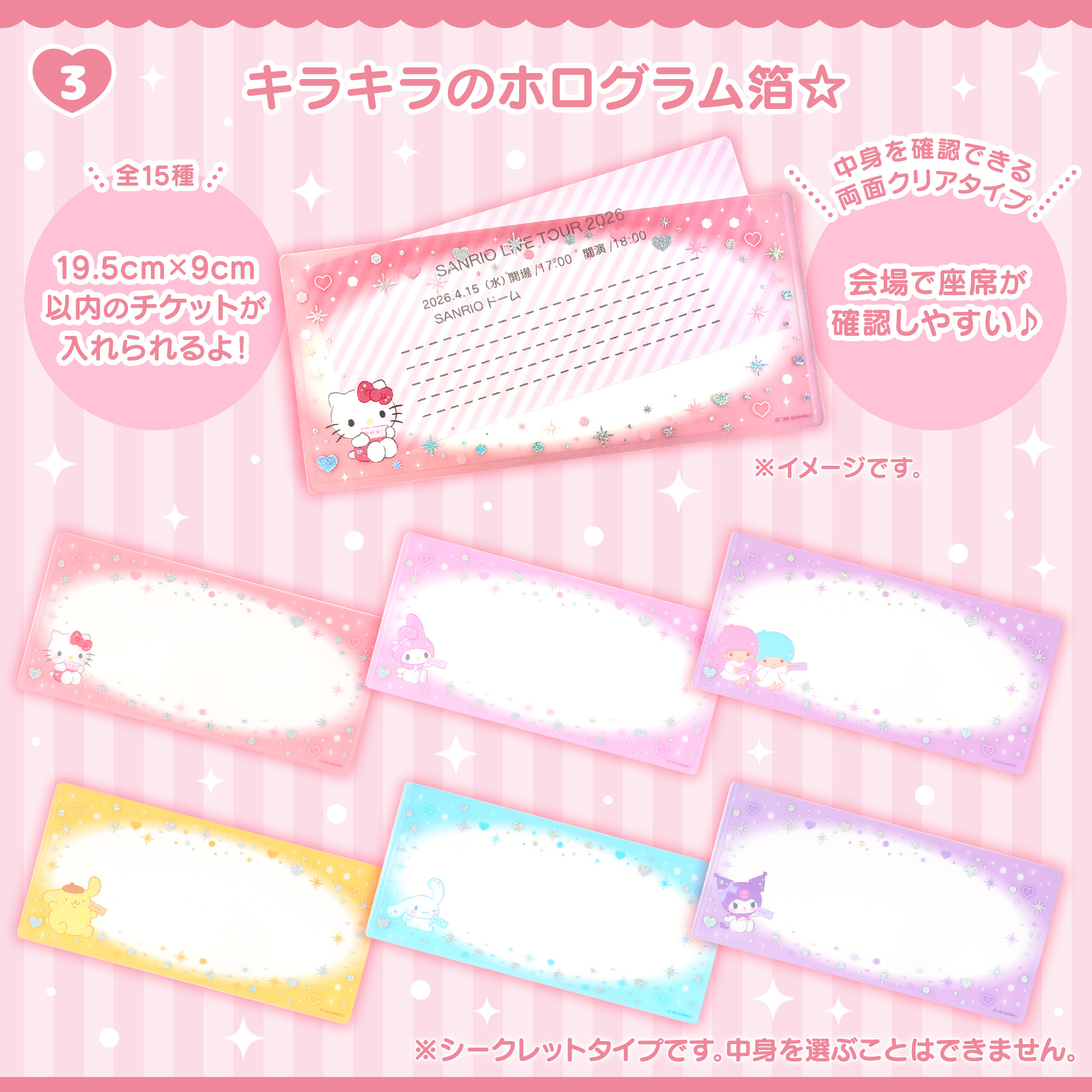
Sanrio’s March 2026 Enjoy Idol Series announcement lists trading-card holders with cream-soda-inspired colors and secret-design rigid ticket cases. The latter has 15 designs and is sold with hidden contents. The official notice also explains a complete-set option, subject to store and stock conditions (official product announcement, Japanese).
The image specifies tickets up to 19.5 × 9 cm and shows information visible through the clear section with decorative characters around it. The pictured ticket is a usage illustration, not evidence of an actual performance. A transparent case is useful for reading information, but before sharing a photograph of a real ticket, check whether it reveals a name, seat number or admission code.
This example combines keeping a ticket visible inside a clear case with enjoying a character design on the case itself. It is not a reason to assume every decorated case has the same dimensions or protective performance. Check the supported dimensions and protective performance, as well as whether the design can be selected before purchase.
For sellers, this means storage needs and the enjoyment of choosing a character or color can both matter. Keep functional specifications and the random-sale conditions equally clear.
Notes From The Oshi Lab: Explain How the Merchandise Will Be Kept
Protective supplies suggest practical questions for merchandise planners: will buyers display the item, carry it or keep it in a binder? Those uses call for different packaging and guidance. Sales of cases alone do not establish that the original merchandise was poorly designed.
One option is to include a suitable sleeve or protective bag. Another is to publish dimensions and tested organizer combinations. For a 50-design card series, for example, a seller could explain how many refills are needed to store 50 cards, including any sleeves. Test the actual combination rather than recommending a binder solely from its stated page capacity.
If offering related supplies, separate what is included, what is sold separately and what has been tested. Clear dimensions, material information and use instructions help a buyer choose supplies that suit the particular item. Market-wide totals remain a different question from those product-level needs.
For consultations on merch planning and sales design, contact KAZAORI Inc. (in Japanese). You can also try the Oshi Level Check (free diagnostic).
Related articles: What Is a Hard Case? (Glossary) / What Are Trading Cards? / What Are Pin Badges? / Oshi Merch Storage Ideas
FAQ
Should I choose a B8 or a B7 hard case?
B8 is a candidate for trading cards, while B7 can accommodate larger items such as printed photos. Internal dimensions and openings vary between products sharing a size name. Measure your card with its sleeve on and check that there is enough room to insert and remove it without force.
Are all trading cards the same size?
No. Examples used in card games include standard (regular) cards measuring 63 mm wide by 88 mm tall and small (mini) cards measuring 59 mm by 86 mm. Photo cards and purchase bonuses may have other dimensions. Rather than assuming there are only two sizes, measure the card you own before choosing a sleeve.
How do I choose the size of an OPP bag?
Allow for the item’s height, width and thickness, plus room to insert and remove it. Follow the bag maker’s sizing guidance. Keep adhesive flaps away from the collectible, and do not treat an open bag as waterproof.
How big is the market for protective goods?
Check whether a figure covers hard cases and sleeves alone or the entire trading card market. The value of the trading card market cannot be presented as the size of the protective goods market.
How do 100-yen-shop protective goods differ from stationery-maker products?
The retailer and price alone do not establish quality or suitability for storage. Compare internal dimensions, materials, thickness, ease of use and the manufacturer’s intended-use guidance. If you need a feature such as UV protection, check whether the manufacturer explicitly specifies it.


