
What Does "Hako" Mean? Venue or Whole Group, and What "Good Hako" Means
Hako 箱 · Venue / Group
Someone says, “The hako was great today,” and for a second you can’t tell whether they mean the venue or the group. Hako has two meanings fans use often. Here is how to tell them apart by context, and what to look for when you’re choosing a venue.
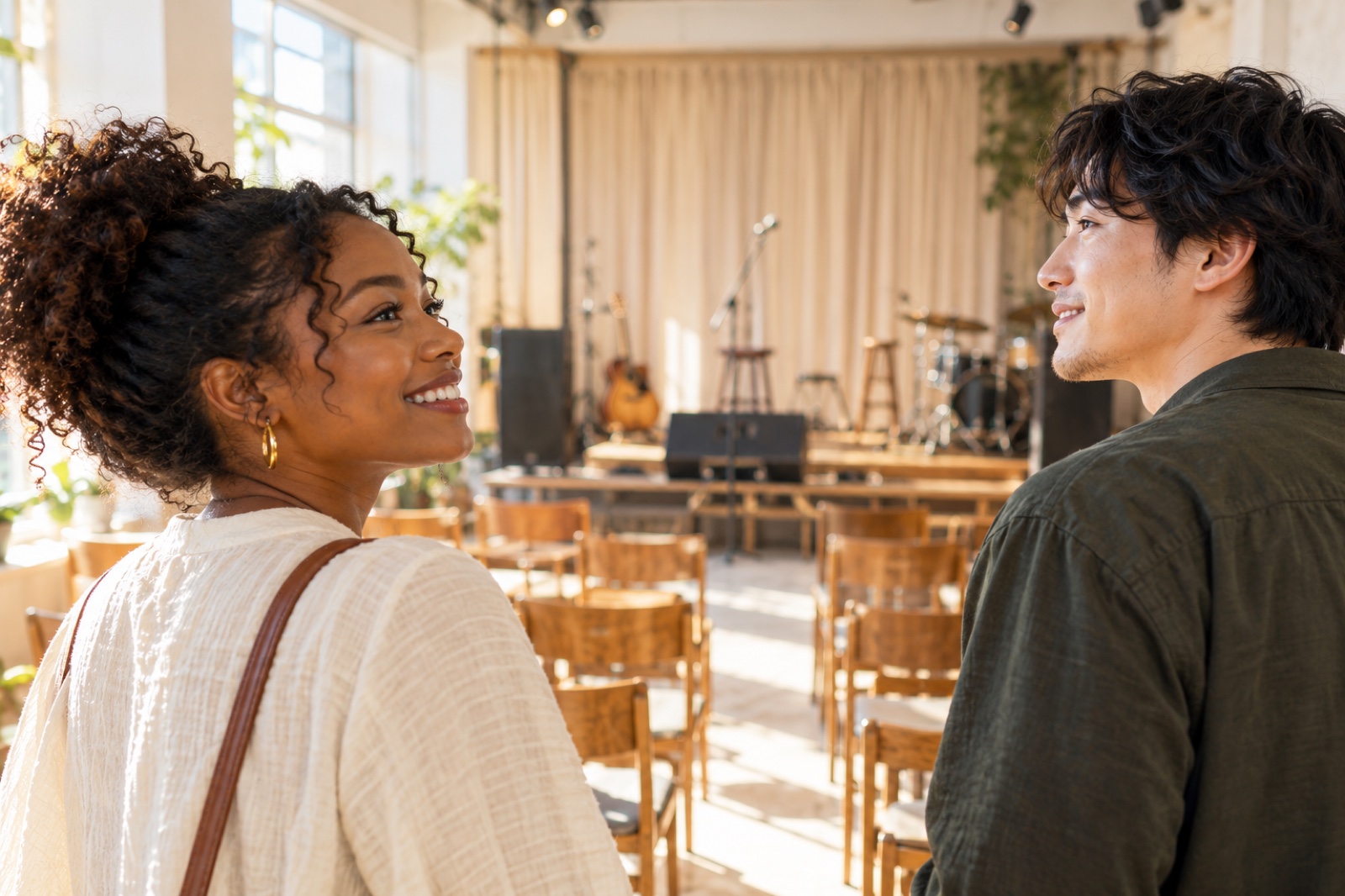
In most cases it refers to a live house or a performance venue, but it is sometimes used to mean an idol group or the group as a whole. This article sorts out the differences by context.
“Hako” Has Two Main Meanings
1. A Live House or Venue
At music and idol genba (live events), a live house or a performance venue is called a hako (箱, literally “box”). It’s often paired with kyapa (“capacity,” the number of people a place holds) to check the size, as in “about how many does this hako hold?”
Even in the same building, the impression changes with whether it’s standing or seated and where the equipment is. That is exactly why talk about a hako tends to be about the experience rather than the address.
2. A Group or Team as a Whole
The other use treats an idol group or team as a single unit rather than its individual members.
This sense of hako also appears in the word hako-oshi, supporting a group as a whole. It’s a style of cheering in which you love not just one particular person but the atmosphere and the relationships of the group as a whole.
A venue
- A live house or performance space
- Paired with capacity (kyapa)
A group
- An idol group or team as one unit
- The root of hako-oshi
Sightlines and sound mean the venue; relationships and vibe mean the group.
Examples
- “Today’s hako is a three-minute walk from the station, so getting out after the show should be a lot easier.”
- “It’s a small hako so I can see the stage well. Being able to catch their expressions makes me so happy.”
- “Next time I want them to play a bigger hako. I want to see that staging under a big ceiling.”
- “Yesterday’s hako had great sound, which made the show even more fun.”
- “I’ve been getting into this hako lately. The distance between the members feels just right.”
Why a Venue Is Called a “Box”
Calling a live venue a “box” is said to come from slang used in the theater and music industries for live houses and theaters, and it spread among performers, staff and fans. The usual explanation is the image of a space enclosed by four walls that holds people and sound.
It is not a word everyone will understand, though. When inquiring about a venue or explaining to someone you’ve just met, “live house” or “venue” gets the message across better.
“Good Hako” Changes Meaning With Context
The expression “good hako” can be read at least two ways.
| Context | Meaning |
|---|---|
| Talking about a venue | Good sound, sightlines, access, atmosphere and so on |
| Talking about a group | The relationships among the members and the overall vibe are good |
For example, “Yesterday’s hako had great sound” is about the venue. On the other hand, “I’ve been getting into this hako lately” may be pointing at the whole group.
When you can’t tell, check whether the talk is about a venue name or a show, or about the members. A practical rule: if a setlist or seats came up just before, it’s the venue; if the conversation has been about interactions between members, it’s the group.
- 01Listen for cluesA venue name, a show, or the members
- 02Setlist or seats came upThen it's the venue
- 03Talk about interactionsThen it's the group
Look at what the conversation has been about.
How Hako Size Changes the Show Experience
A venue’s scale affects not just the size of the crowd but also your distance from your oshi and how you enjoy the show.
| Size | What the experience is like | Preparation that pays off in advance |
|---|---|---|
| Small hako (tens to hundreds of people) | The stage is close, and voices and expressions reach you directly | Admission number, where to leave your things |
| Medium hako (hundreds to about 2,000) | Easy to balance staging with closeness | Checking whether it’s seated or standing |
| Large hako (several thousand or more) | You can take in large-scale staging including lights and video | Binoculars, how it looks from seats other than a kamiseki (dream seat) |
Neither is better. A show you enjoy for its closeness and a show you enjoy for its scale and staging have entirely different charms. Some people keep going for the unity of a small hako, while others travel far for staging that only works in a large one.
Close and intimateBig and spectacular
- SmallTens to hundreds of people
- MediumHundreds to about 2,000
- LargeSeveral thousand or more
A small hako brings voices and expressions; a large one brings lights and video.
What to Check at a New Hako
When you go to a venue for the first time, reading the official site or the organizer’s guidance in this order helps you avoid gaps. If the venue itself is new to you, get the overall flow of the day first from the first-timer’s guide to attending a live show, and it will be clearer what these five checks are for.
- The nearest station and the entrance. At venues with several entrances in the same building, the meeting point can be specified in detail.
- Whether there are lockers or a cloakroom. If they’re limited, it bears directly on when you plan to arrive.
- Drink charge and payment methods. Some venues are cash-only, which easily causes a scramble at the entrance.
- Admission number and entry order. How numbers are called differs by venue.
- Rules on photos, penlights and support fans (uchiwa). Size limits and brightness specifications can change from show to show.
Even at the same venue, how things run can change from show to show. Read this time’s guidance rather than assume “it was fine last time.”
- 01Station and entranceSeveral entrances may exist
- 02LockersOr a cloakroom, if available
- 03Drink chargeSome venues are cash-only
- 04Entry orderNumbers are called differently
- 05Show rulesPhotos, penlights, uchiwa
Read this time's guidance rather than assume "it was fine last time."
Notes From The Oshi Lab: Venue Design Is Part of the Experience of Loving Someone
What makes the word “hako” interesting is that it points to both a place and a community. At oshi-katsu events, the relationship between performers and fans temporarily gathers in a physical container called a venue. When fans say “it was a good hako,” that assessment mixes in not just the building’s specs but the flow on the day, the warmth of the staff’s guidance and the distance from the person next to you. Talk about the container and talk about the relationship have been called by the same word, probably because, in the experience of the people there, the two aren’t separate.
From the side of those who run venues, this overlap is suggestive. Numbers such as sound equipment and seat counts are easy to compare, but what stays in visitors’ memories are the details: how clear the entrance is, where to put your belongings, how long it takes for the crowd to clear after the show. In recent years, more venues are being chosen for things apart from the show itself, such as guest rooms where decoration is allowed and added lockers. A good hako isn’t a luxurious building; it’s a place with clear guidance where people can stay safe and where performers and audience can easily share the same time. If you think of venue design as part of the experience of loving someone, there still seems to be a lot that the container side can do.
Related Terms
Hako-oshi / Genba / Admission number / Sansen
FAQ
What does hako mean at live shows?
It mainly refers to a live house or a performance venue. It's used when talking about a venue's size or character, as in "today's hako is small."
What does "good hako" mean?
Depending on context, it can mean a venue with good sightlines, sound or atmosphere, or a group whose overall relationships and charm are good. Judge by the conversation around it.
Are "hako" and "hako-oshi" the same thing?
They're related but not the same. Hako means the venue or the whole group, while hako-oshi is the style of supporting a whole group rather than one particular member.
How do I tell "hako" and "capacity" apart?
Hako is the venue itself, and capacity (*kyapa*) is the number of people it can hold. You can talk about the container and its limit as a set, as in "how many people does this hako hold?"
Will venue staff understand me if I say "hako"?
It's often understood within the industry, but it isn't common in guidance for visitors. When inquiring or explaining to someone you've just met, it's safer to say "venue" or "live house" instead.


