

Momoiro Clover Z Pilgrimage: From Their Debut to Haru no Ichidaiji and Momokosai
Walk along the zelkova-lined avenue where they performed street shows. See a mural moved from a venue where they once dreamed of performing. Look for manhole covers and four-colored roses left in different towns. Momoiro Clover Z’s journey is connected with streets and parks that you can still visit today.
Momoclo is now a four-member idol group. Since their first appearance in 2008, they have gone through a six-member era and performed as five at the former National Stadium. Since 2017, they have worked with local governments through the live event Haru no Ichidaiji. In 2026, their fall Momokosai festival was held in Chosei Village, Chiba Prefecture.
This guide follows the group’s early starting points and milestones in its live shows, then visits the host communities from 2017 to 2019 and the locations of every annual event from 2022 through 2026. It introduces 14 places you can see or walk through today. It also explains how to visit former buildings seen from outside, facilities open by reservation, and exhibits to enjoy alongside an overnight stay.
From Momoclo’s beginnings to memorials and places to visit around Japan
1. Kawasaki Azalea, 2008
Underground shopping center directly connected to Kawasaki Station, where the group made its first appearance. Their connection continued at its 40th anniversary in 2026.
Explore this place2. Yoyogi Park, B Area, 2008 and 2010
Visit the zelkova-lined avenue where they held street shows and the park where they performed outdoors.
Explore this place3. Nakano Sunplaza exterior, 2011
A turning point: Akari Hayami graduated and the group added “Z” to its name. Visit the exterior of the now-closed building.
Explore this place4. Mural relocated from the former National Stadium, 2014
A mosaic mural moved from the former stadium, where the group performed, to beneath the southwest deck of the current stadium.
Explore this place5. Nissan Stadium, 2013, 2014, and 2016
Venue for the first stadium concert and Momokosai. Reservation-only facility tours are now available.
Explore this place6. Ecopa Stadium, 2015
Venue for Momokosai in Shizuoka, where Kanako Momota is from. Explore the park or book a facility tour.
Explore this place7. Nambata Castle Park, Former Osawa Family House, 2017
Reni Takagi and then-member Momoka Ariyasu visited in 2017. They ate udon in the parlor at the rear of the Former Osawa Family House.
Explore the Former Osawa Family House at Nambata Castle Park8. Nunobiki Green Stadium, Ozora Plaza, 2018
Venue for Haru no Ichidaiji 2018. A replica of the concert stage sign is displayed at Ozora Plaza by the entrance.
Explore Ozora Plaza at Nunobiki Green Stadium9. Hotel Kurobe, Mononofu Corner, 2019
Hotel where the group stayed while filming a video for their 2019 concert. The interior has an exhibit corner created by fans and the hotel president.
Explore Hotel Kurobe at Unazuki Onsen10. J-Village, 2022
Venue for a joint event by Naraha, Hirono, and Namie. Today, visitors can freely see the history exhibit on the first floor and observation room on the fourth.
Explore the J-Village Center House11. Four-colored roses at Chuo Park, 2023
Shiori Tamai and Ayaka Sasaki planted the roses. Pink, red, yellow, and purple varieties connected with Fukuyama are planted here.
Explore the Momoclo roses at Chuo Park12. Momoclo manhole cover in front of Nango Park, 2024
A manhole cover with an original logo, installed in May 2025 to mark the 2024 event and the city’s 70th anniversary.
Explore the Momoclo manhole cover in front of Nango Park13. Momoclo manhole cover beside Zoshunkaku at Higashi Park, 2025
A character-style design featuring all four members, commemorating Haru no Ichidaiji 2025. It is beside Zoshunkaku at Higashi Park.
Explore the Momoclo manhole cover by Zoshunkaku at Higashi Park14. Amagadai General Park, 2026
Venue for the 2026 fall Momokosai. Kanako Momota and Ayaka Sasaki also visited before the event.
Explore Amagadai General Park
The 2008 beginnings | From their first appearance in an underground mall to street shows in a park
Kawasaki Azalea, 2008 | A connection to Momoclo’s first stage in an underground mall by the station
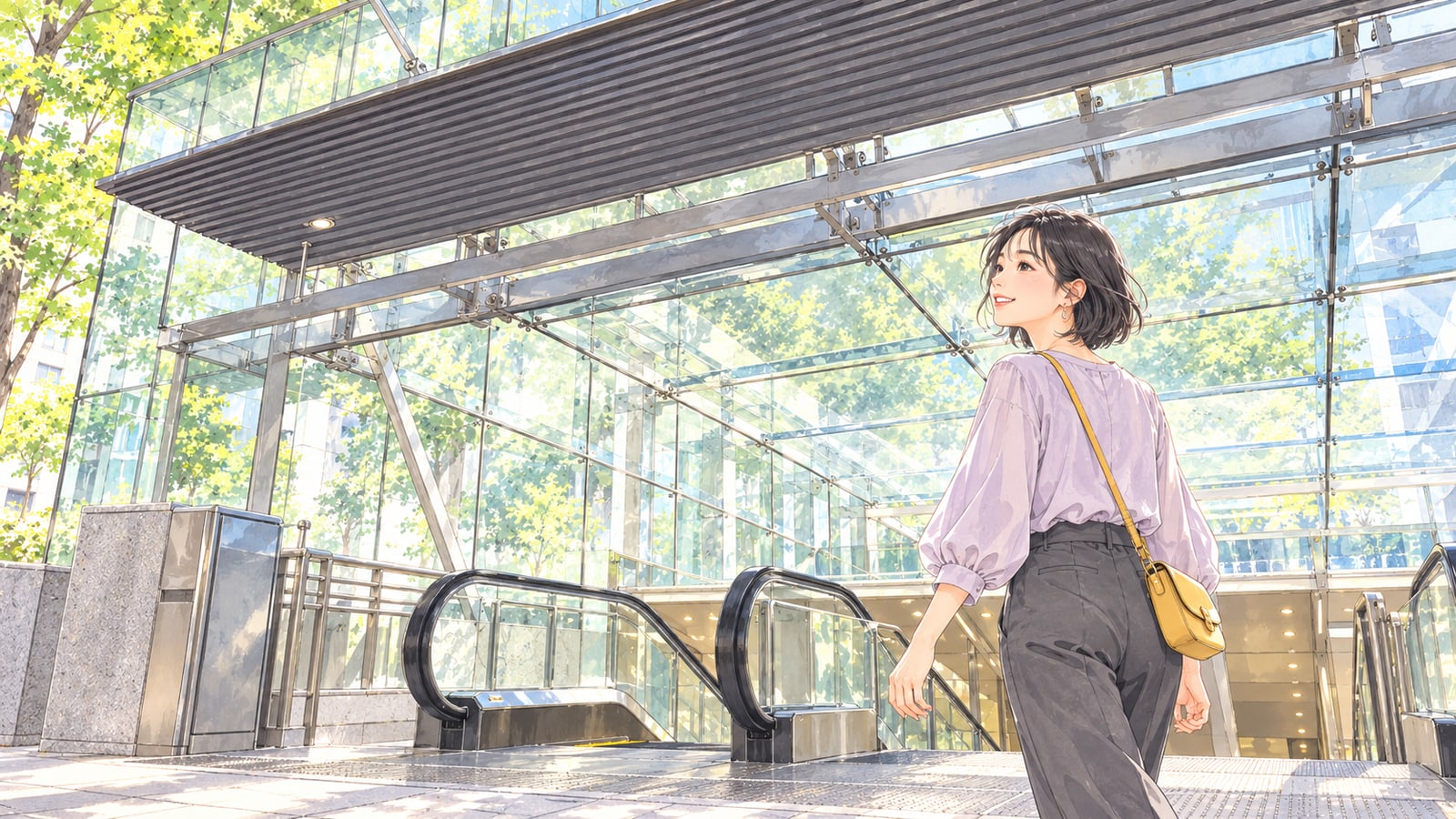
Kawasaki Azalea is an underground shopping center connected to Kawasaki Station. Now a place for shopping and dining, it is also where Momoclo first appeared as a group. You can trace their starting point before they performed in major stadiums in this shopping center, which is still open today.
On May 17, 2008, the six members at the time made their first appearance at an audition event held by Stardust Promotion’s Section 3. They sang “Ano Sora e Mukatte” (“Toward That Sky”). The lineup that day included Kanako Momota, Shiori Tamai, and Reni Takagi, who are still active in the group. Ayaka Sasaki joined in November that year.
For Azalea’s 40th anniversary in 2026, an event featuring Reni Takagi as a guest was held at Sunlight Plaza on October 3. It marked an ongoing connection with the facility 18 years after Momoclo’s first stage.
The 40th-anniversary program also included posters displayed inside the mall with handwritten messages from the members. This was not a permanent exhibit, and no end date was announced. If you are visiting to see the posters, check with the facility about whether they are still on display. Use the mall as a regular shopping center and follow event guidance on event days.
- Address
- 26-2 Ekimae Honcho, Kawasaki Ward, Kawasaki, Kanagawa Prefecture
- Visiting conditions
- Open underground shopping center. Follow the hours of individual shops and events. The 40th-anniversary event has ended.
Sources:Momoclo official — First appearance and early activities / Momoclo official — Return event for Azalea’s 40th anniversary / Kawasaki Azalea — Current mall guide / Kawasaki Azalea — 40th-anniversary event
Yoyogi Park B Area, 2008 and 2010 | From the zelkova avenue to the outdoor stage
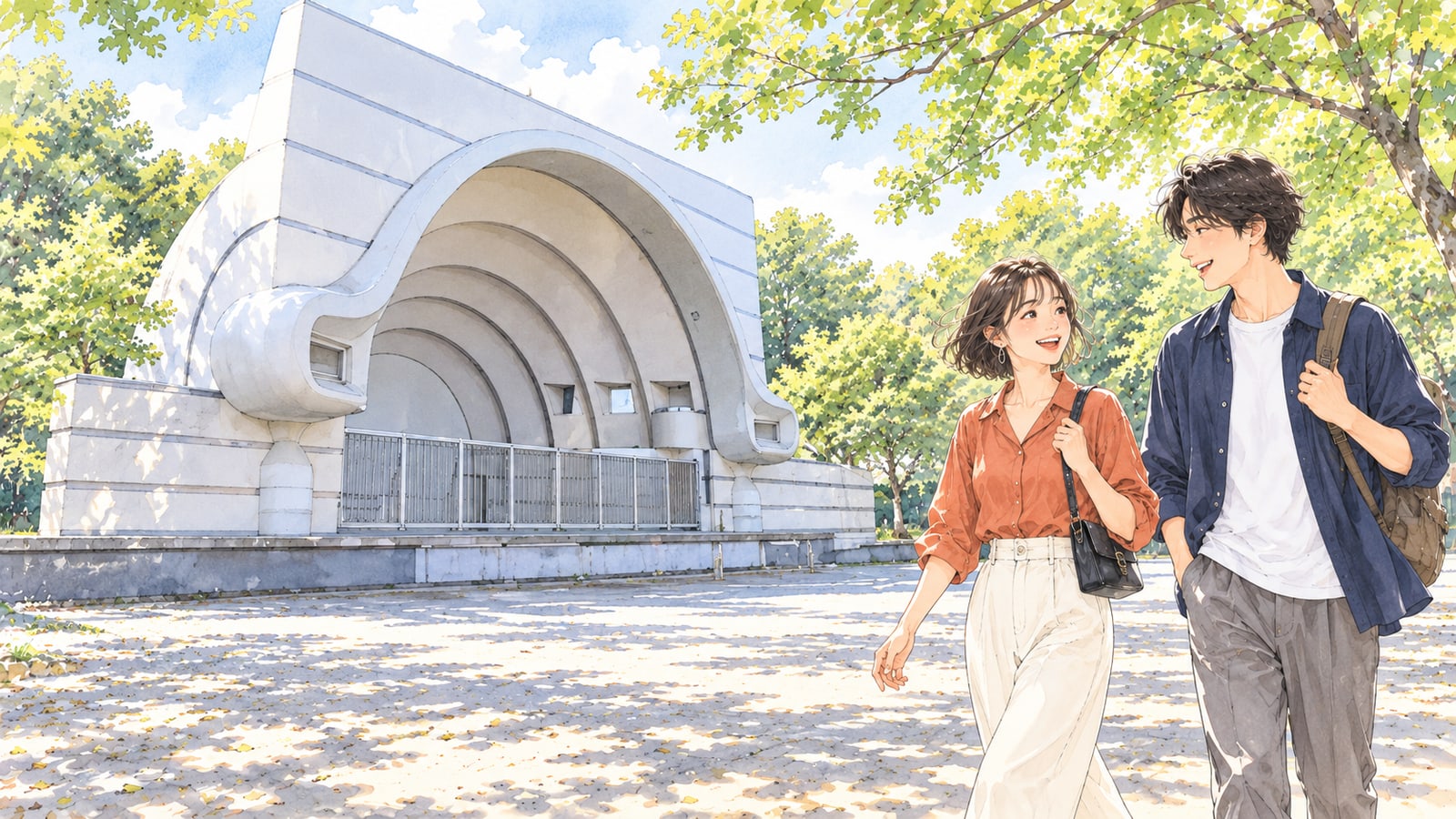
Yoyogi Park’s B Area has a zelkova-lined avenue and an outdoor stage. Paths wind between the trees, and the plaza hosts a range of events. This is where Momoclo spent time performing street shows.
The group’s official timeline records that they began street performances on Zelkova Avenue in Yoyogi Park from July to September 2008. They handed out homemade flyers and sang songs including “Ano Sora e Mukatte.” Walk around the zelkova avenue in B Area, where these activities took place.
On November 23, 2010, they held the final show of their tour at the same Yoyogi Park. The concert at the outdoor stage was titled “The Cats Have Returned: From the Street to the Stage of Our Dreams.” Its name reflects the group’s return to the place where they performed on the street to hold a free concert.
The park is open at all times and free to enter (some facilities charge admission). How B Area is used varies with events. Check which areas are open for walking, and do not enter the stage or managed event areas without permission.
- Address
- Yoyogi Park B Area, 2-chome Jinnan, Shibuya, Tokyo
- Visiting conditions
- The park is open at all times and free to enter (some facilities charge fees). Watch for event-use areas.
Sources:Momoclo official — Street shows and the 2010 concert / Tokyo Metropolitan Parks Association — Yoyogi Park / Tokyo Metropolitan Parks Association — B Area facilities / Oricon News — On-site report from November 23, 2010
Haru no Ichidaiji, 2011–2014 | A turning point toward “Z” and the former National Stadium
Nakano Sunplaza, 2011 | Trace the turning point to “Z” from the outside of a closed concert hall
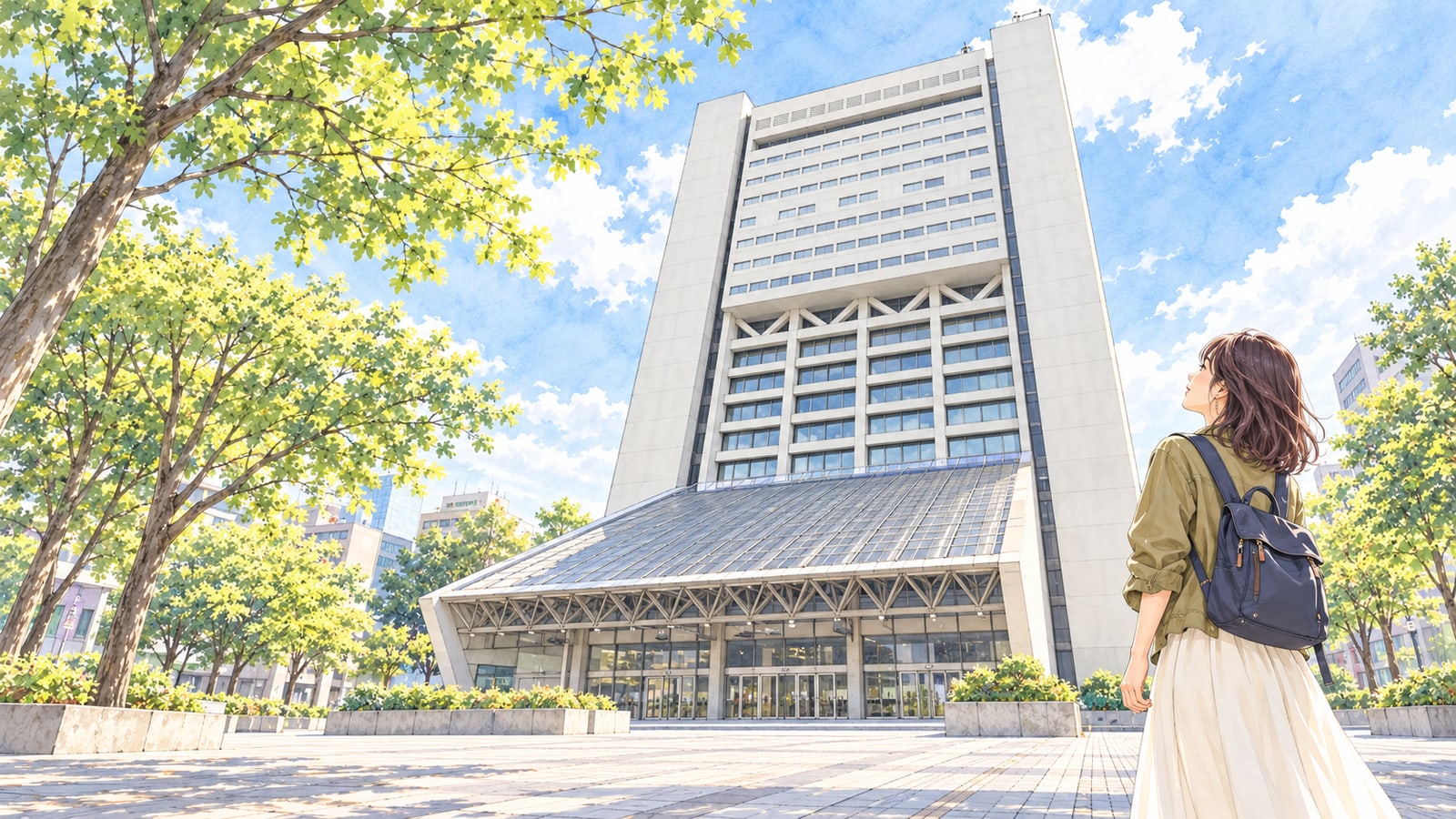
Nakano Sunplaza stood near the north exit of Nakano Station and closed in 2023. As of October 2026, the building remains and its walls are used for advertising. Visitors can now see the building’s exterior.
On April 10, 2011, the hall hosted “Momoclo Haru no Ichidaiji: You Were There Amid the Dazzling Light.” It was the first year of Haru no Ichidaiji and Akari Hayami’s graduation concert. The members sang “A Song for Akari,” and after the show announced that they would add “Z” to the group’s name.
The six-member group became five and began the “Seven Trials” the next day. Nakano is where the group turned from “Momoiro Clover” into “Momoiro Clover Z.”
The south plaza is open as a public space where residents and visitors can stop by. Follow event and management guidance while viewing the exterior. Indoor visits are not offered, and the building’s appearance has changed since the concert, including through advertising displays.
- Address
- 4-1-1 Nakano, Nakano, Tokyo
- Visiting conditions
- Closed. View the exterior from the south plaza and follow event and management guidance. Indoor visits are not offered.
Sources:Momoclo official — 2011 Nakano concert and the name change to Z / KING RECORDS — Haru no Ichidaiji began in 2011 / Nakano City — The building’s use after closing, as of 2026 / Nakano City — Current use guide for the south plaza
Mosaic murals from the former National Stadium, 2014 | See works preserved from the concert venue of their dreams
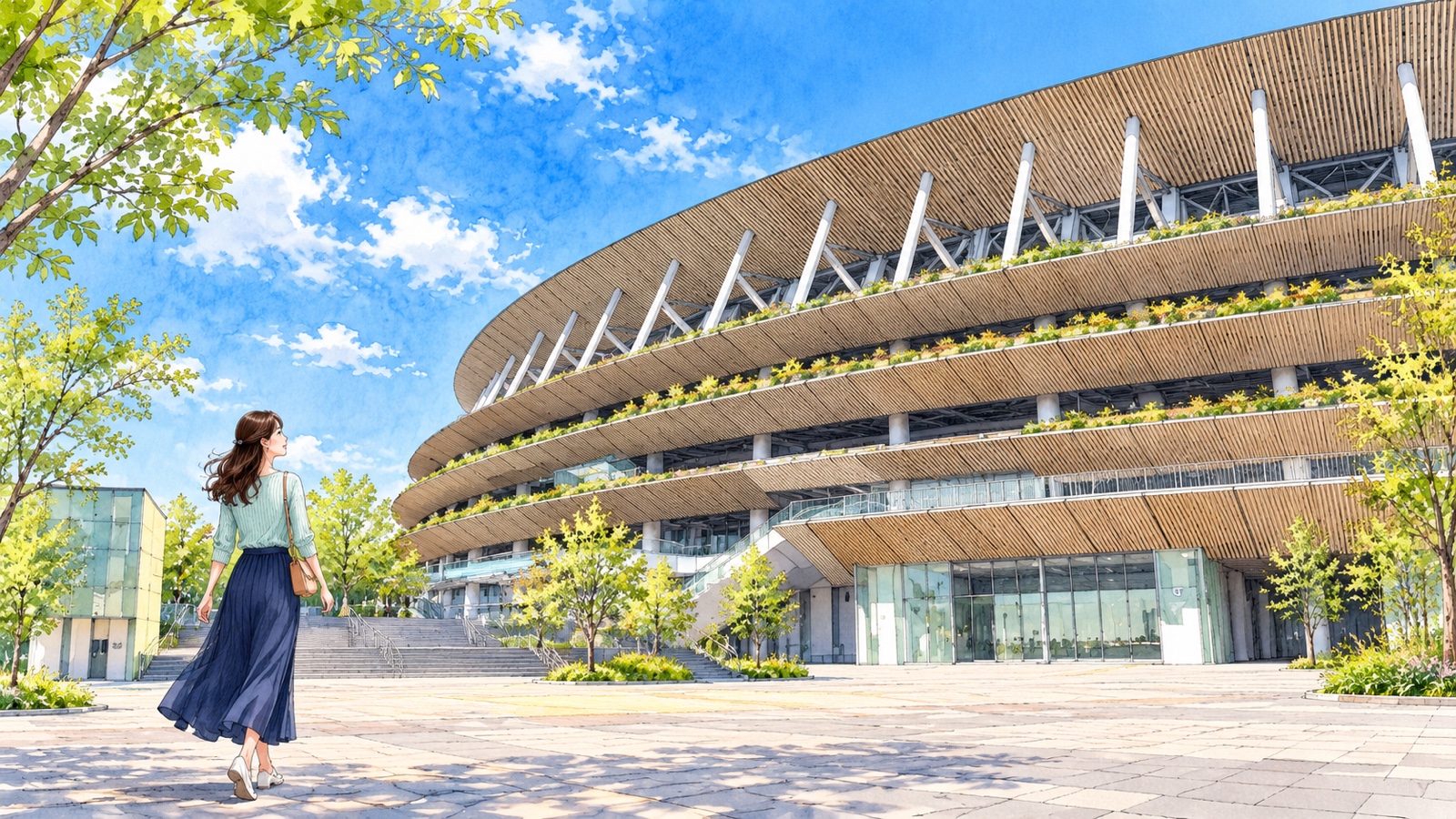
Beneath the southwest deck of the current National Stadium (MUFG Stadium) are large murals moved from the former stadium. The 11 works are made of glass and tile mosaics. The building where Momoclo performed in 2014 is gone, but visitors can see original pieces from the old stadium in the mural area outside the new one.
On March 15 and 16, 2014, Momoclo held “Haru no Ichidaiji 2014: National Stadium Concert — Never-Ending Adventure: Beyond the Dream.” Performing at the former National Stadium had been a goal since their debut. They became the first female group to hold a solo concert at the venue.
After Nakano, Haru no Ichidaiji expanded to two days at Yokohama Arena in 2012 and two days at Seibu Dome in 2013. Their first dome concert was at Seibu Dome in summer 2012. The former National Stadium show followed their path from halls to arenas and domes.
Demolition of the former stadium was completed in 2015, and the current building was completed in 2019. The murals described here were moved in late September 2022. They are preserved as works commemorating the former stadium, not as a memorial to a Momoclo concert. Visit to see the works that were passed on, rather than treating the current stands as the same venue as in 2014.
The tourism association lists the mural area as a one-minute walk from Kokuritsu-Kyogijo Station and a five-minute walk from Shinanomachi Station. Check the current stadium’s guidance for restrictions around events and competitions.
- Address
- 10-1 Kasumigaokamachi, Shinjuku, Tokyo
- Visiting conditions
- The former venue has been demolished. Visit murals relocated to the grounds of the current stadium. Check official guidance for event restrictions.
Sources:Momoclo official — From Yokohama to Seibu and the National Stadium / Momoclo official — 2014 concert / Shinjuku City Tourism Association — Murals relocated from the former stadium / Japan Sport Council — Demolition of the former stadium completed / Japan Sport Council — Current stadium completed in 2019 / MUFG Stadium — Current visitor information
Summer Momokosai | Nissan Stadium and Ecopa in Shizuoka
As Haru no Ichidaiji progressed toward the former National Stadium in spring, Momoclo created Momokosai, a summer concert themed around a festival. Follow that story through two venues: Nissan Stadium and Ecopa.
Nissan Stadium, 2013, 2014, and 2016 | The first stadium concert and home of the summer Momokosai
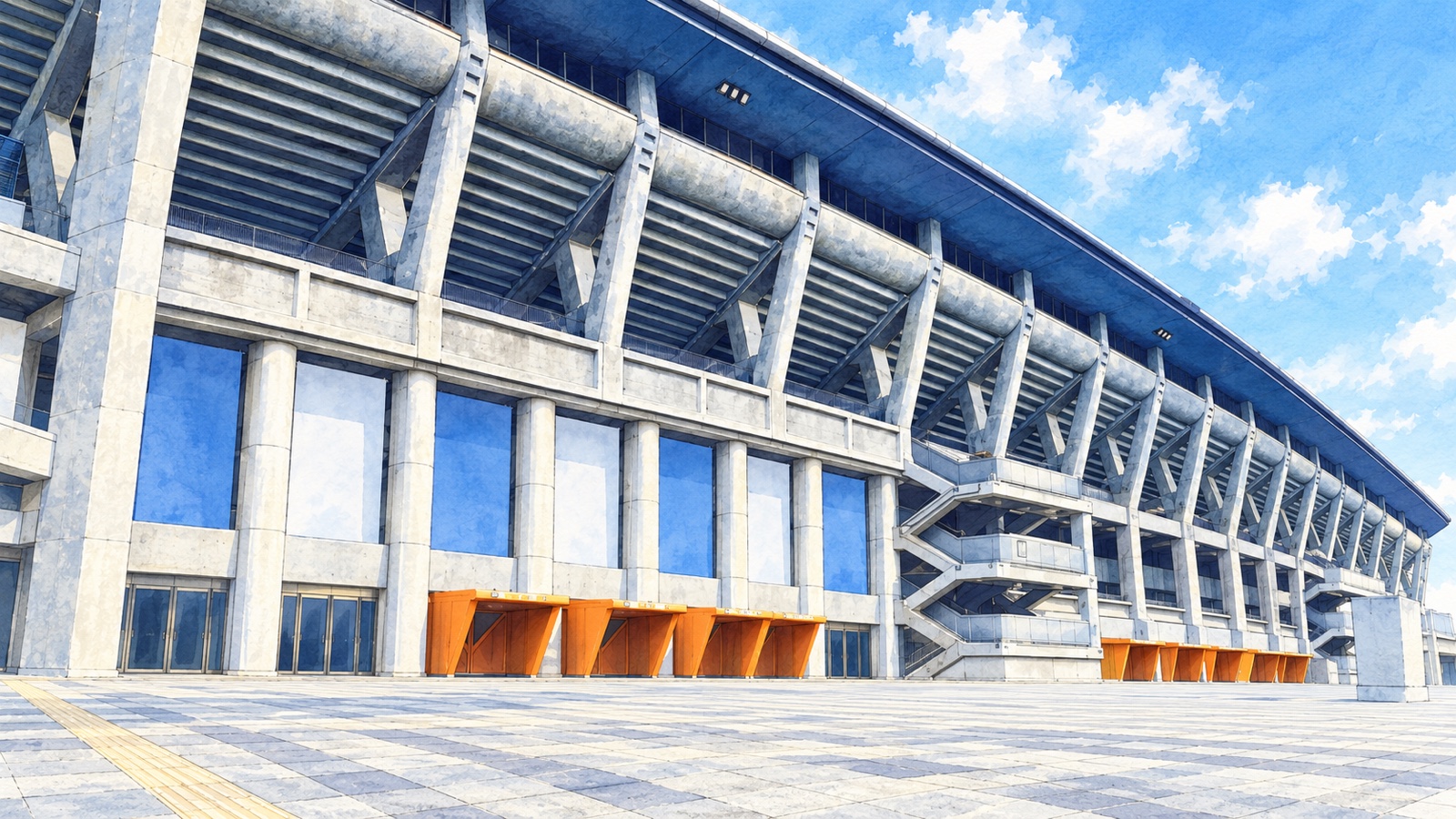
Nissan Stadium offers reservation-only tours on scheduled dates, including the stands, player facilities, and areas near the field. It is a chance to walk through a major sports venue. For Momoclo, it was the site of their first solo stadium concert and their summer Momokosai shows.
The first concert was “Natsu no Bakasawagi: World Summer Dive” on August 4, 2013. On July 26 and 27, 2014, they held Momokosai, staging a summer festival with a giant shrine and food stalls. Momokosai 2016 followed on August 13 and 14. Alongside their spring journey toward the former National Stadium through Haru no Ichidaiji, they developed a festival format at this venue in summer.
The shrine and mikoshi from those concerts were stage decorations, not permanent memorial exhibits. Current tours include commemorative items in the main hall, the players’ locker rooms, and field-level areas. Visitors cannot enter the grass, and the route may change depending on events.
Tours last about 60 minutes and require advance reservations. Check the official website for available dates and openings before booking. Visit to experience the scale of the stadium and its sports facilities.
- Address
- 3300 Kozukue-cho, Kohoku Ward, Yokohama, Kanagawa Prefecture
- Visiting conditions
- Indoor tours are held on limited dates, paid, and require advance reservations. No entry to the grass; route may change.
Sources:Momoclo official — First stadium concert and 2014 Momokosai / Nissan Stadium — 2016 event record / Nissan Stadium — Current stadium tour / Nissan Stadium — Access
Ecopa Stadium, 2015 | Momokosai in Kanako Momota’s home prefecture
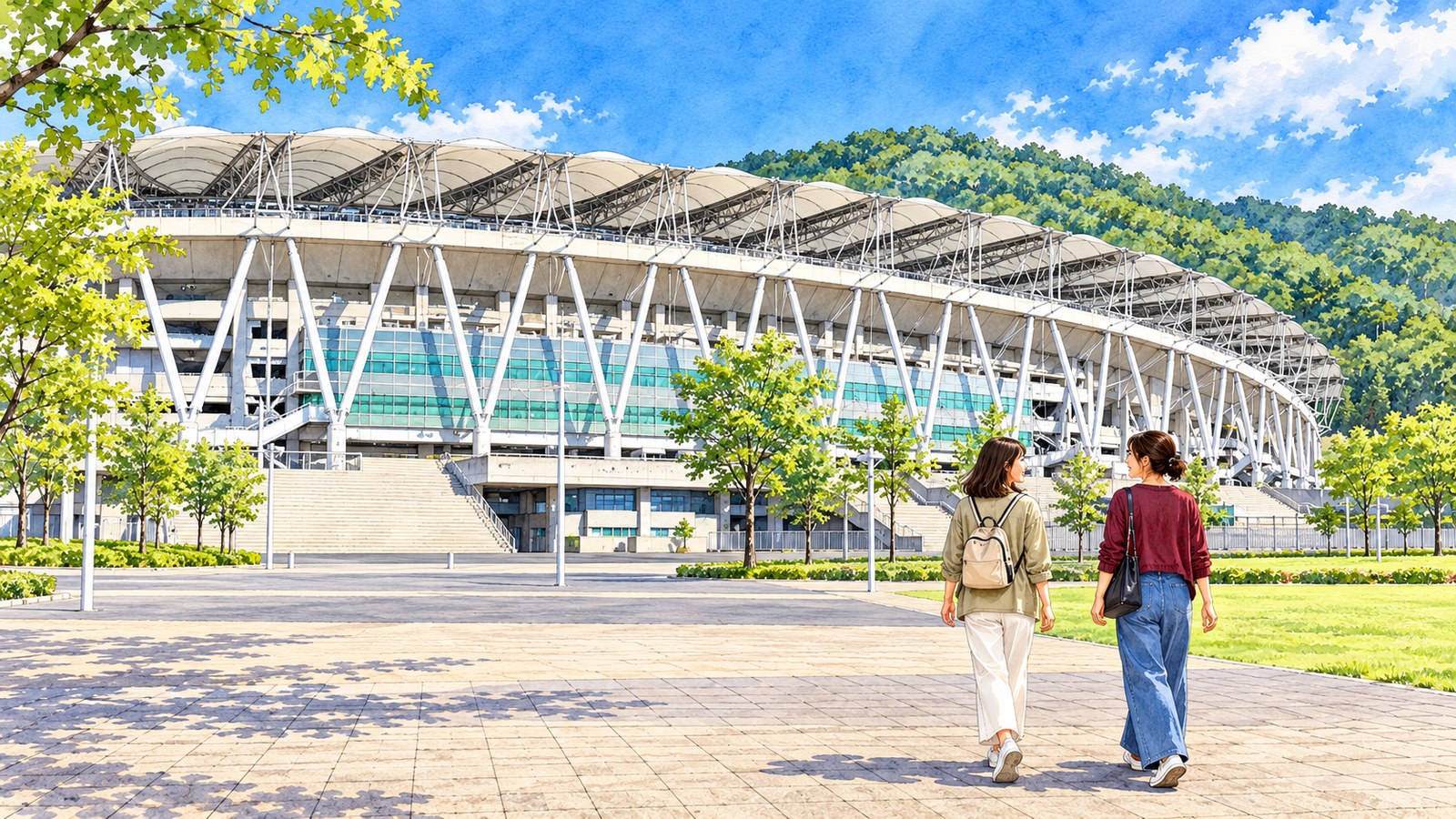
At Ogasayama Sports Park Ecopa in Shizuoka Prefecture, a stadium and plazas spread across the hills. It is about a 15-minute walk from the south exit of JR Aino Station, along an uphill route. In addition to walking in the park, visitors can book a stadium interior tour in advance, including on some non-event days.
Momokosai 2015 was held at Ecopa Stadium on July 31 and August 1. Shizuoka Prefecture is Kanako Momota’s home prefecture, and the group’s official timeline describes it as a homecoming concert. On the second day, they also announced a five-major-dome tour for the following year.
Facility tours may include the locker rooms, stands, and areas close to the pitch. Routes can change depending on events and facility conditions. Confirm the terms for individual visitors with the facility and book in advance.
The sports museum on the stadium’s first floor is free, but it focuses on facilities such as soccer and rugby and is not presented as a Momoclo exhibit. Plan around your time, whether walking from Aino Station through the park or booking a tour inside the stadium.
- Address
- 2300-1 Aino, Fukuroi, Shizuoka Prefecture
- Visiting conditions
- Park walks and indoor visits are separate. Indoor tours require advance reservations, including on some non-event days; content may change.
Sources:Momoclo official — Momokosai 2015 / Momoclo official — 2015 concert special site / Ecopa — Stadium event records / Ecopa — Public visits and access / Ecopa — Current stadium tour
2017–2019 | Haru no Ichidaiji becomes a concert that visits local communities
Starting in 2017, Haru no Ichidaiji changed to a format that solicited offers from local governments nationwide and was held in partnership with each community. First, visit places and commemorative signs left in Fujimi, Higashiomi, and Kurobe.
Source:KING RECORDS — Local-government partnerships starting in 2017
Nambata Castle Park and Former Osawa Family House, 2017 | Historic house and moat-side park visited by two members before the concert
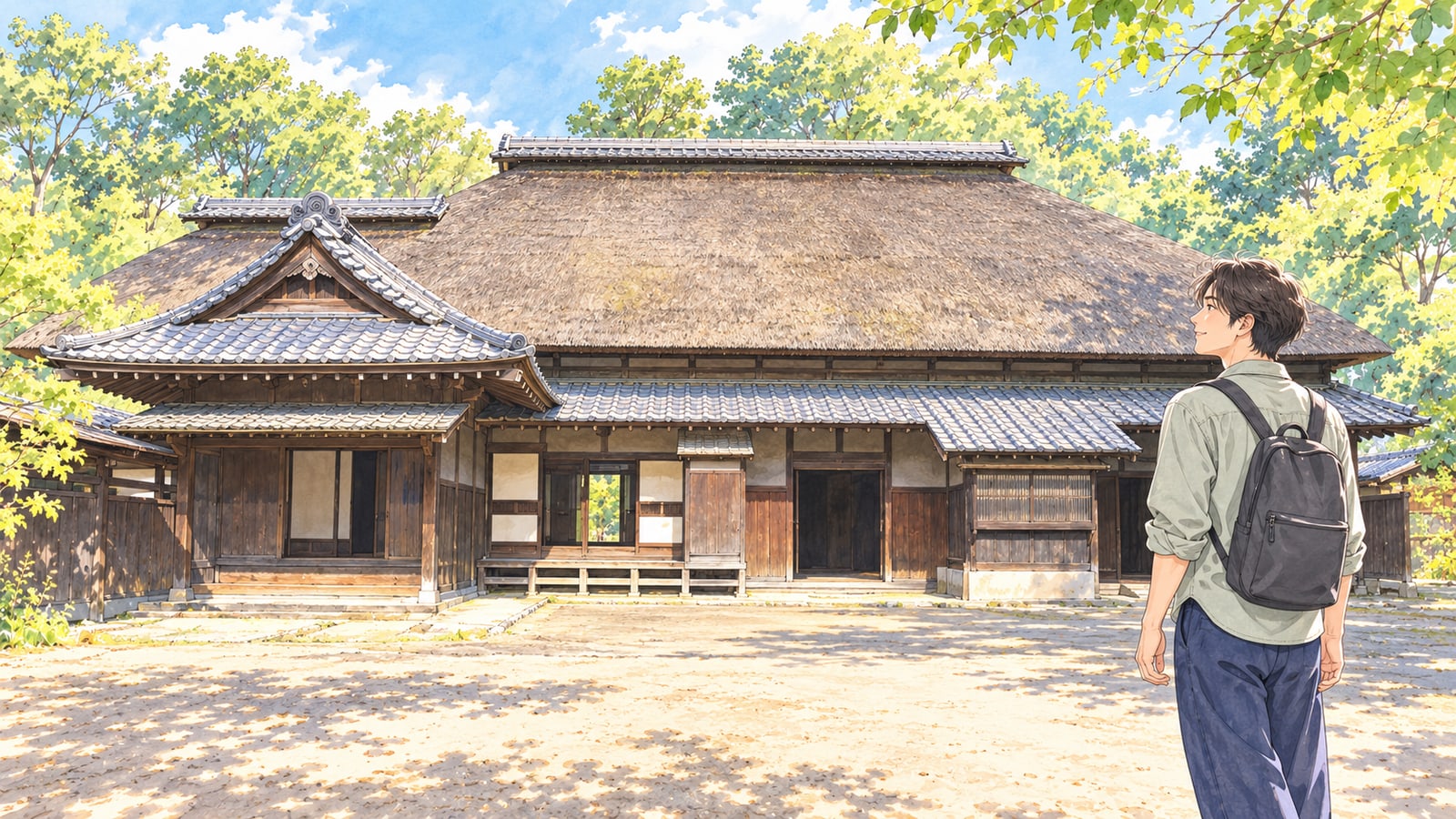
Beside the castle ruins, with reconstructed moats and earthen ramparts, is a cluster of old houses. Fujimi’s Nambata Castle Park is a historic park where you can walk through both the castle-ruins and old-house areas. The Former Osawa Family House preserves the layout of a village headman’s home, including the formal entrance and rear parlor.
On February 15, before Haru no Ichidaiji 2017 in Fujimi, Reni Takagi and then-member Momoka Ariyasu visited the park. They took photos in the field in front of the Nagayamon gate and ate udon in the rear parlor of the Former Osawa Family House. Fujimi City’s “Nambata Castle Park Guide for Mononofu” records their visit.
The commemorative exhibit and stamp rally held alongside the concert have ended. Visitors can now see the old house and paths the two members visited.
The museum and old houses are open 9:00 a.m.–5:00 p.m. and closed Mondays except holidays, the day after holidays except Saturdays, Sundays, and holidays, and over the New Year period. The park is open year-round, until 5:00 p.m. October–March and 6:00 p.m. April–September. Admission to the park and museum is free. From the east exit of Tsuruse Station, take the city loop bus to the stop right in front of Nambata Castle Park.
- Address
- 568-1 Shimonanbata, Fujimi, Saitama Prefecture
- Event location
- Fujimi, Saitama Prefecture, 2017
- Visiting conditions
- Old houses and museum open 9:00 a.m.–5:00 p.m.; closed Mondays and other days. Park open year-round, with seasonal closing times. Commemorative exhibit and stamp rally have ended.
Sources:Fujimi City — 2017 visit locations and end of commemorative exhibit / Fujimi City — Facility overview, including old houses / Fujimi City — Opening hours and closing days / Fujimi City — Current transportation information
Nunobiki Green Stadium and Ozora Plaza, 2018 | Replica of a stage sign remains in the plaza by the entrance
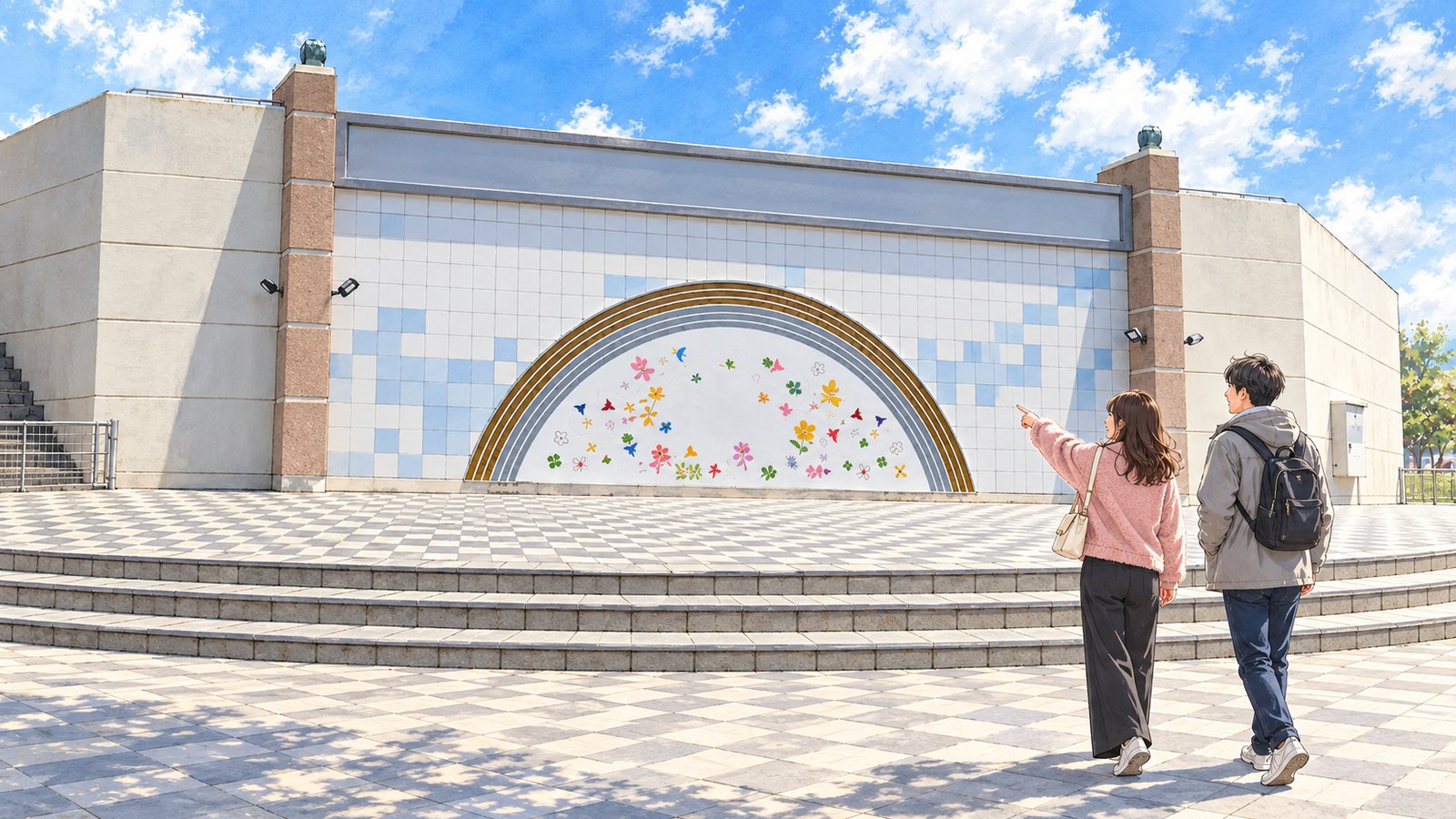
At Ozora Plaza by the stadium entrance, visitors can see a replica of the special sign for Haru no Ichidaiji 2018. The design of the sign displayed on stage on concert day was preserved at the entrance after the event.
Haru no Ichidaiji was held at Nunobiki Green Stadium in Higashiomi, Shiga Prefecture, on April 21 and 22, 2018. Higashiomi was selected through an open call to local governments nationwide, following the 2017 event in Fujimi. The sign at the venue entrance recalls that year’s concert.
The place to visit is Ozora Plaza at the entrance. The stadium field and interior stands are managed separately as sports facilities. It is about a 20-minute walk from Daigakumae Station on the Ohmi Railway. Check the general sports park’s guidance before visiting for current plaza and facility access.
- Address
- 1503 Shibaharacho, Higashiomi, Shiga Prefecture
- Event location
- Higashiomi, Shiga Prefecture, 2018
- Visiting conditions
- Replica sign at Ozora Plaza by the entrance. Stadium interior use is managed separately. About a 20-minute walk from Daigakumae Station.
Sources:Higashiomi Tourism Association — Memorial sign at Ozora Plaza / Higashiomi City — 2018 event / Higashiomi General Sports Park — Facility guide
Hotel Kurobe and the Mononofu Corner, 2019 | Momoclo goods and fan donations at an onsen inn
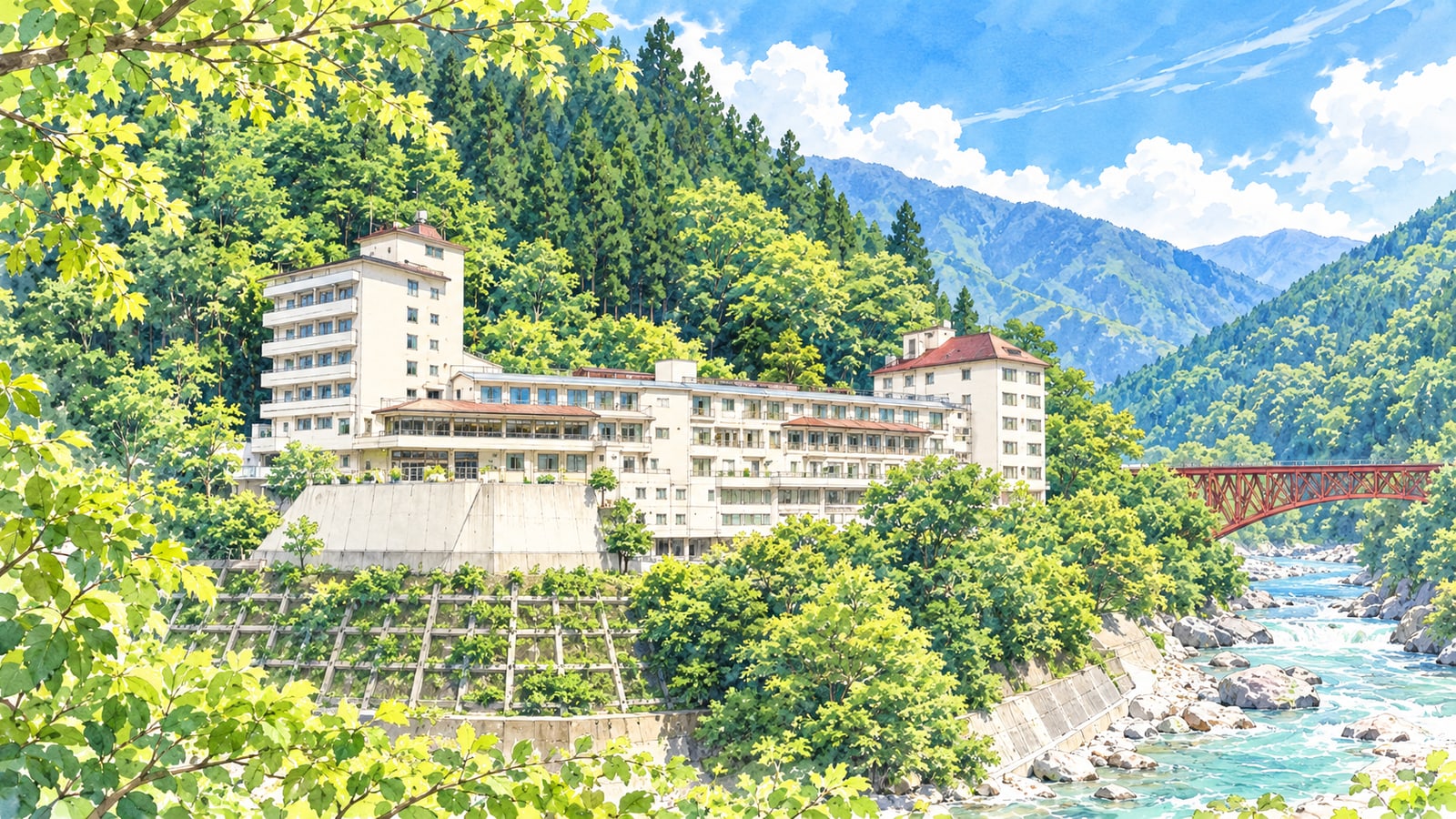
Hotel Kurobe at Unazuki Onsen has a “Mononofu Corner” displaying Momoclo goods. Mononofu is the name for the group’s fans. The exhibit includes items collected by the hotel president and pieces donated by fans from across Japan. It is listed in the hotel’s current official guide to its facilities.
The connection between the hotel and Momoclo began in 2019. According to a TV Asahi POST article about the show Momoclo Chan, the members stayed at the hotel while filming an opening video for Haru no Ichidaiji in Kurobe. In 2023, Reni Takagi and Ayaka Sasaki returned to record a radio program and visited the lobby exhibit.
From the hotel terrace, you can also see the trolley train on the Yamabiko Bridge side and scenery toward Unazuki Dam.
This is a place to enjoy the exhibit as part of an overnight stay. Check the hotel’s official website for lodging reservations and conditions for using its facilities, and follow the inn’s guidance when viewing the exhibit.
- Address
- 7 Unazuki Onsen, Kurobe, Toyama Prefecture
- Event location
- Kurobe, Toyama Prefecture, 2019
- Visiting conditions
- Visit as part of an overnight stay. Check the hotel’s official website for reservations and facility conditions. Walk-in visits to the exhibit alone are not offered.
Sources:Hotel Kurobe — Current Mononofu Corner / TV Asahi POST — Why the group stayed in 2019 and returned in 2023 / Hotel Kurobe — Location and access
2022–2026 | From a joint event by three towns to the fall Momokosai
From the Fukushima event held after a postponement to Fukuyama, Kameoka, Shibata, and Chosei, this section follows the recent host communities year by year. Along with local flowers and manhole covers, it explains how to visit current event venues.
J-Village, 2022 | See the facility’s history and expansive views at the joint event venue for three towns
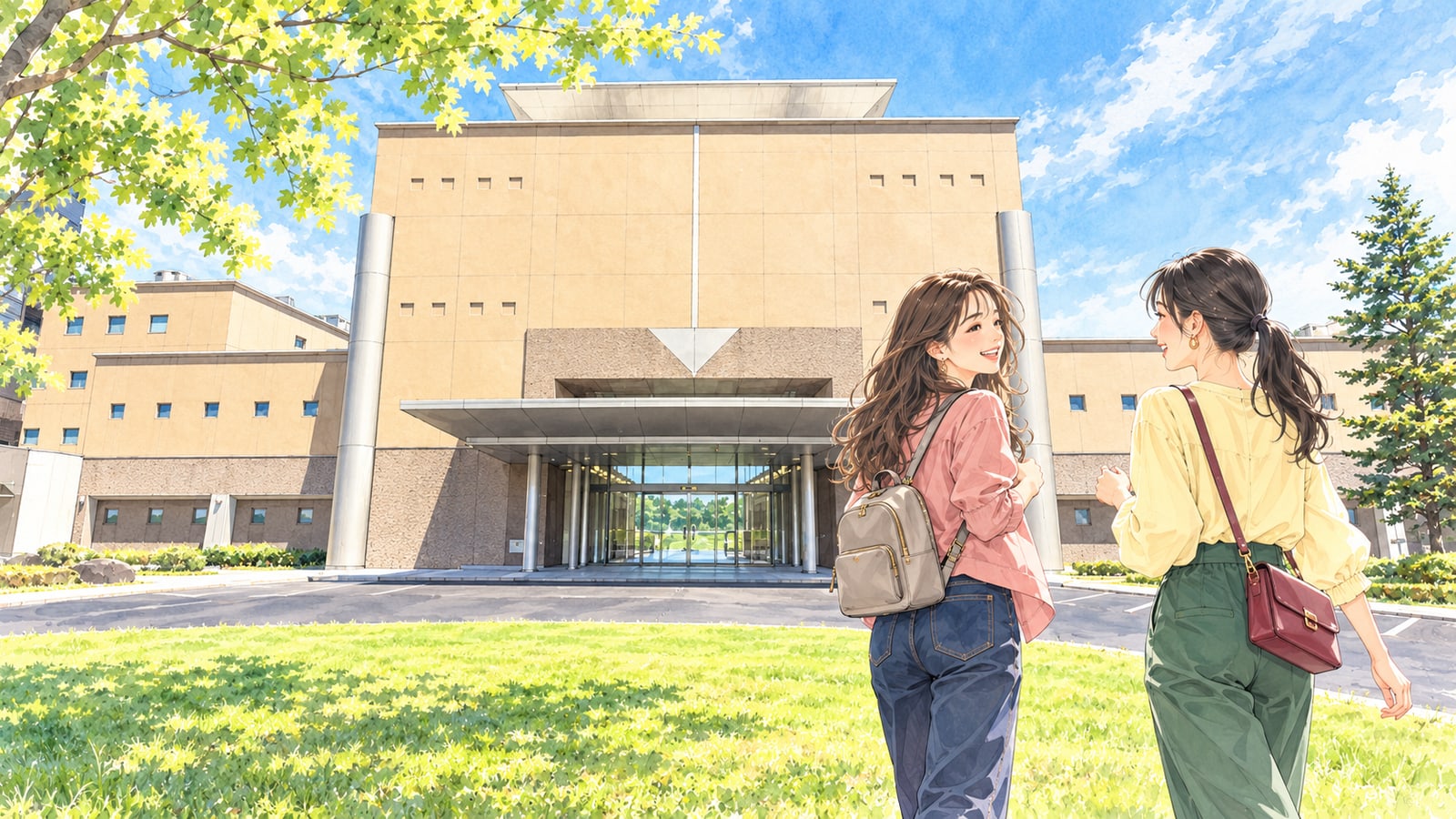
J-VILLAGE STREET on the first floor of the Center House has an exhibit along a wall about 60 meters long. It introduces J-Village’s history and displays signed uniforms from top athletes who have visited. There is also an observation room on the fourth floor. The facility says anyone may visit these two areas freely.
J-Village hosted Haru no Ichidaiji 2022, a joint event by Naraha, Hirono, and Namie. The concerts were held on April 23 and 24. Originally scheduled for 2020, they were postponed and postponed again because of the spread of COVID-19, then held in 2022.
The history exhibit and observation room are open to visitors; use of the fields requires separate confirmation.
It is a five-minute walk from JR Joban Line J-Village Station. General visitors may also use the restaurant and shop. Visit the facility that hosted the concert, see its exhibits, and stay for a meal or shopping. Check the official guidance for facility use and conditions on event days.
- Address
- 8 Utsukushimori, Yamaoka, Naraha, Futaba District, Fukushima Prefecture
- Event location
- Naraha, Hirono, and Namie, Fukushima Prefecture, 2022
- Visiting conditions
- J-VILLAGE STREET on the first floor of the Center House and the fourth-floor observation room are open for free visits. Field use has separate conditions.
Sources:Momoclo official — Joint event by three towns / KING RECORDS — Report on the 2022 concert / J-Village — Guide for general visitors / J-Village — J-Village Street and facility information / J-Village — Access
Four-colored roses at Chuo Park, 2023 | Four member colors represented by Fukuyama rose varieties
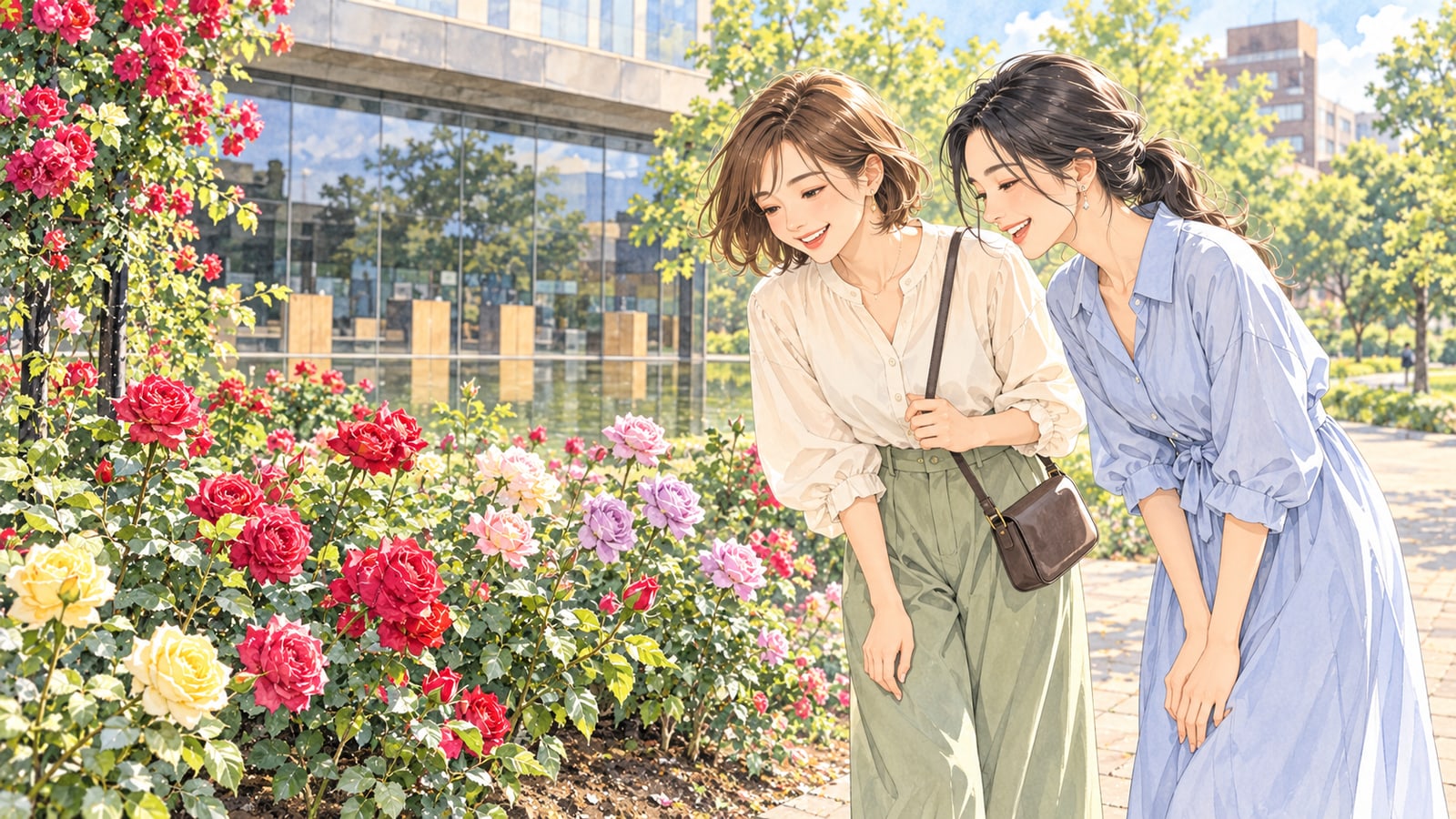
At Chuo Park, look for the “Momoclo roses” in pink, red, yellow, and purple. Each variety has its own name: “Rose Fukuyama” in pink, “Beautiful Fukuyama” in red, “Princess Fukuyama” in yellow, and “Fukuyama Castle” in purple. The members’ colors are linked with varieties from Fukuyama, a city known for its roses.
On February 18, 2023, ahead of Haru no Ichidaiji 2023, Shiori Tamai and Ayaka Sasaki visited Chuo Park and planted roses. Tamai planted the yellow “Princess Fukuyama,” and Sasaki planted the pink “Rose Fukuyama.” The city’s current rose guide also features these four colors.
The main flowering seasons are early to late May in spring and late October to early November in fall. Blooming depends on the year and weather, so all four colors may not be in bloom at once. The park is open at all times, with no regular closing days or admission fee. It is about a 10-minute walk from the south exit of JR Fukuyama Station.
- Address
- 1-10 Kasumi-cho, Fukuyama, Hiroshima Prefecture
- Event location
- Fukuyama, Hiroshima Prefecture, 2023
- Visiting conditions
- Open at all times, year-round, and free. Rose season: early–late May and late October–early November.
Sources:Fukuyama City — Momoclo roses at Chuo Park / Fukuyama City — Record of the members’ visit
Momoclo manhole cover in front of Nango Park, 2024 | Commemorative logo to find on foot from Kameoka Station
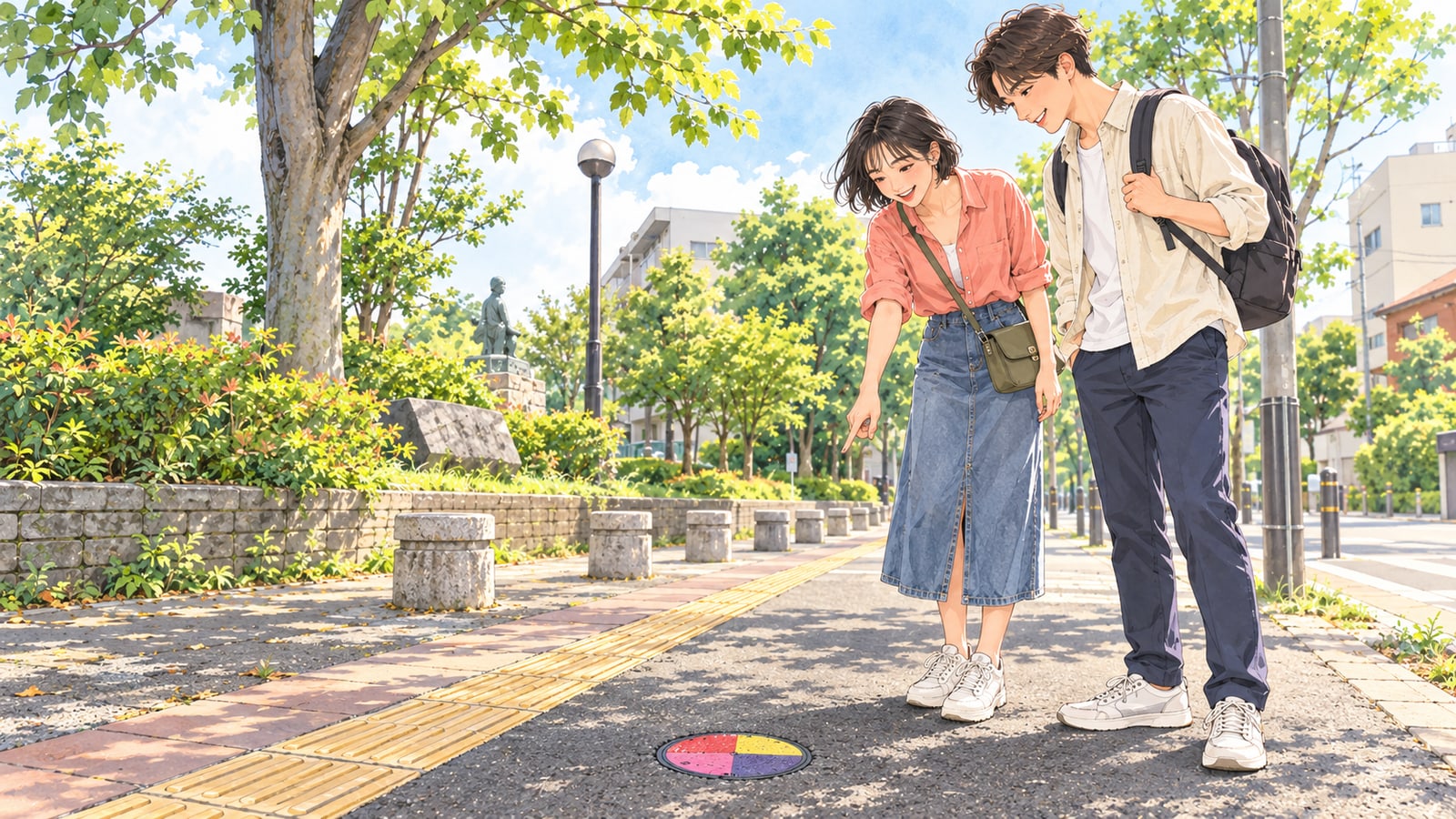
About a three-minute walk from the south exit of JR Kameoka Station, a manhole cover with Momoclo’s original logo is embedded in the sidewalk in front of Nango Park. It is permanently installed outdoors and can be seen at any time.
The cover was created to commemorate Haru no Ichidaiji 2024 in Kameoka and the 70th anniversary of Kameoka City. It was installed the following year, on May 17, 2025.
Because it is in the sidewalk, please look from a spot where you will not obstruct pedestrians when taking photos.
- Address
- Near Tani-suji, Oiwake-cho, Kameoka, Kyoto Prefecture (sidewalk in front of Nango Park)
- Event location
- Kameoka, Kyoto Prefecture, 2024
- Visiting conditions
- Permanently installed on the sidewalk in front of Nango Park; viewable 24 hours. About a three-minute walk from the south exit of JR Kameoka Station.
Source:Kameoka City — Manhole cover history and permanent installation
Momoclo manhole cover beside Zoshunkaku at Higashi Park, 2025 | Commemorative design featuring all four members, found underfoot
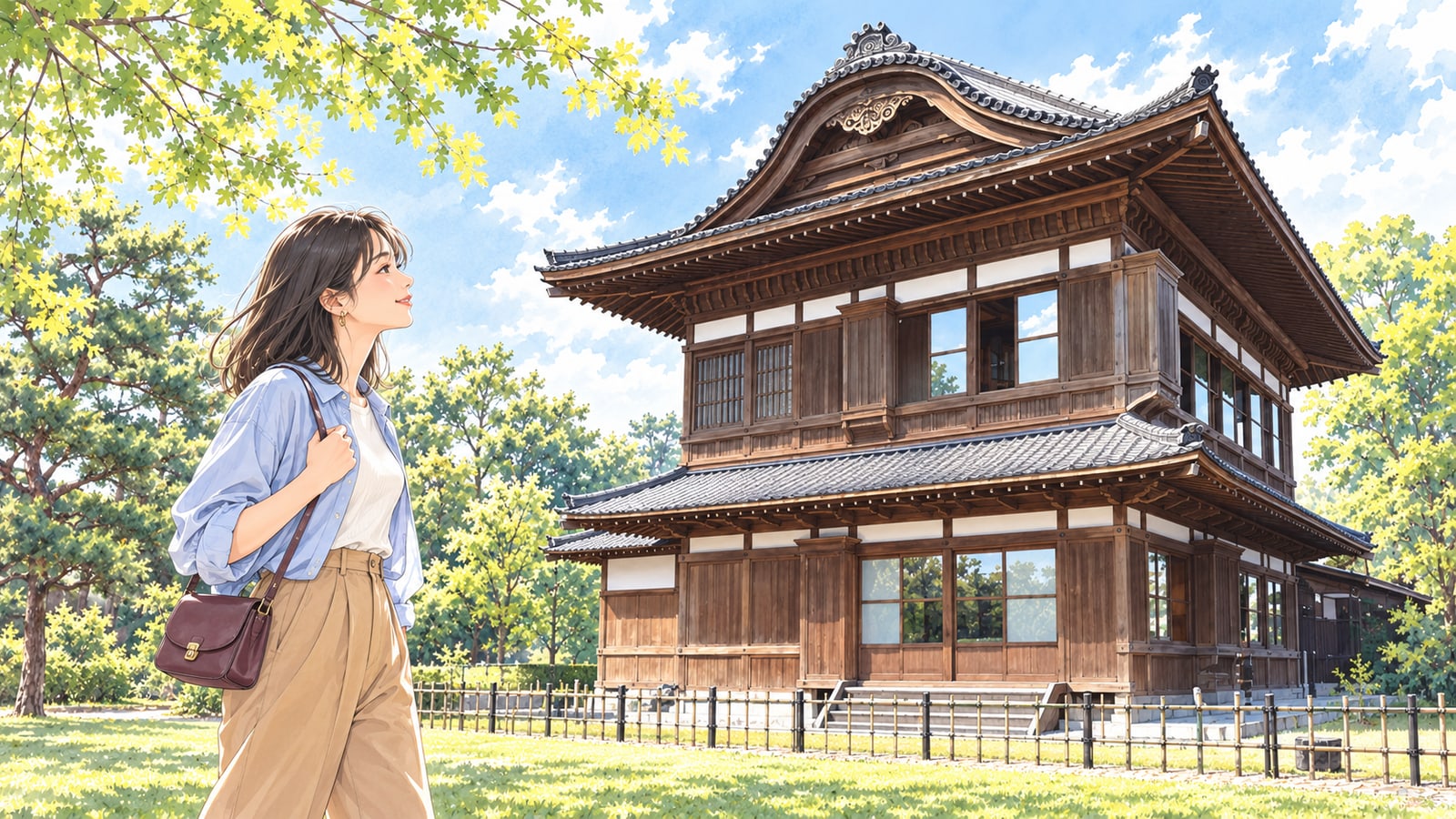
A three-minute walk from the west exit of JR Shibata Station, the manhole cover featuring all four Momoclo members is beside Zoshunkaku at Higashi Park. The members are drawn in a character-like style on the cover, which commemorates Haru no Ichidaiji 2025 in Shibata.
The 2025 concert was held on April 12. Day 2, April 13, was canceled because of strong winds that began in the morning. The manhole cover commemorates the event year. Of the three designs installed in Shibata, the one with all four members is at Higashi Park.
Manhole cards have been distributed for free at nearby Zoshunkaku since April 24, 2026. One per visitor, on site only; reservations and mailing are not available. Check the city’s notice for current availability.
Zoshunkaku is the former villa of businessman Kihachiro Okura, relocated to Higashi Park. Viewing the outdoor manhole cover and visiting the building are separate activities. The interior requires paid admission and is normally open 9:00 a.m.–4:00 p.m.; closed Thursdays (or the following day when Thursday is a holiday) and over the New Year holidays. There may also be private events or temporary closures, so check opening status on the day you plan to visit, including for card pickup.
- Address
- Near 1-9-20 Suwa-cho, Shibata, Niigata Prefecture (Higashi Park, beside Zoshunkaku)
- Event location
- Shibata, Niigata Prefecture, 2025
- Visiting conditions
- Installed outdoors at Higashi Park. One free manhole card per visitor at Zoshunkaku (no reservations or mailing). Separate admission for the building.
Sources:Shibata City — Manhole cover and card distribution / Shibata City — Installation locations and designs (pages 4–5) / Shibata City — Zoshunkaku visitor information / Shibata City — Notice of cancellation of Day 2
Amagadai General Park, 2026 | Park with a clock tower and flower beds, venue for the fall Momokosai
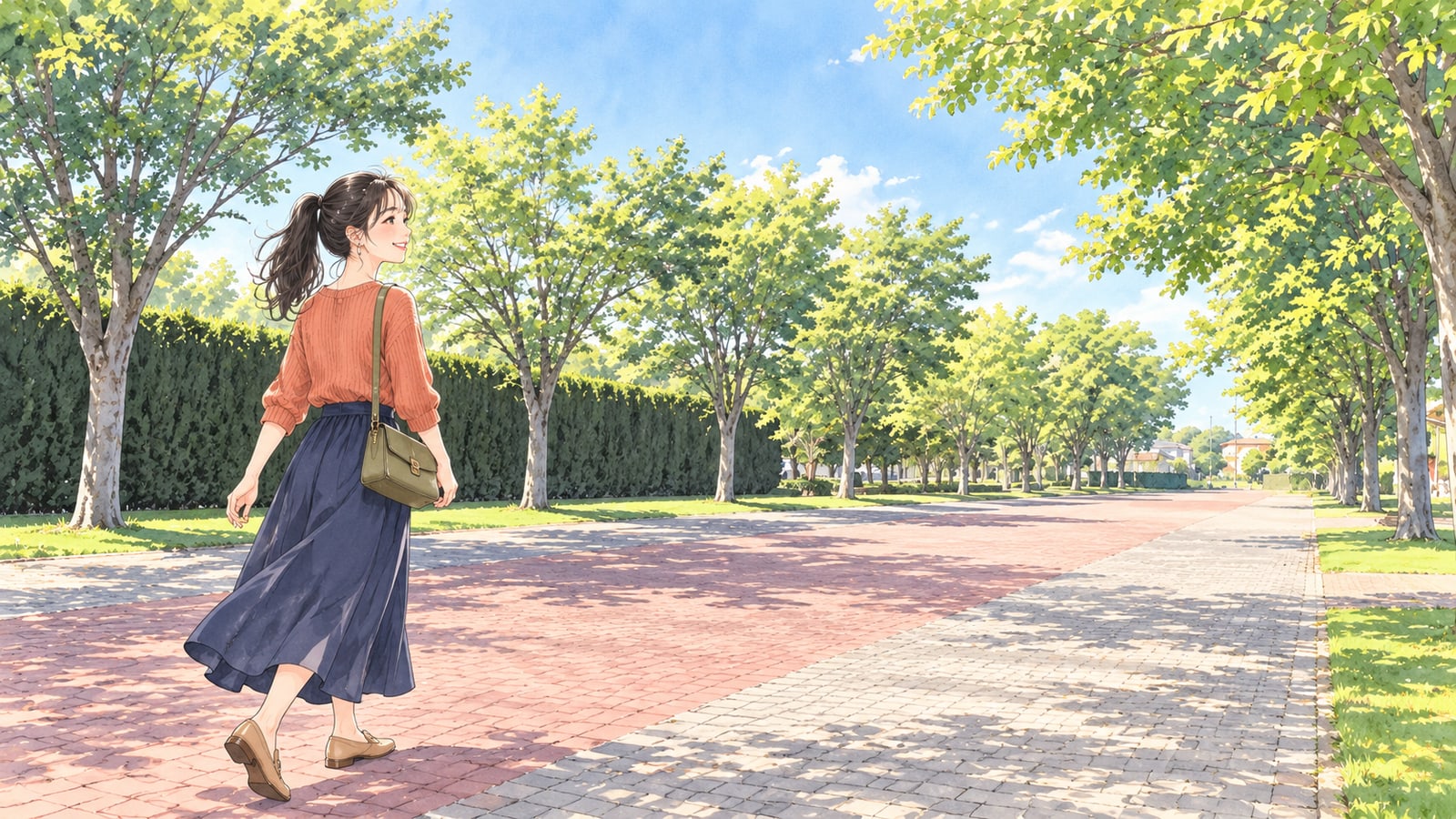
Walking paths run through the park among its clock tower, flower beds, and stream. Amagadai General Park in Chosei Village, Chiba Prefecture, hosted Momoiro Clover Z Fall Momokosai 2026 on October 17 and 18.
After its years of partnering with local communities, Haru no Ichidaiji moved to fall in 2026 and was held as Fall Momokosai.
Before the concert, Kanako Momota and Ayaka Sasaki also visited the park. Chosei Village’s tourism information on the concert’s official website describes how they visited village facilities separately before heading to the park together. This is a visit to the latest concert location.
Be aware of entry restrictions while the concert site is being dismantled. The village says that access to some areas of the park is restricted from October 20 to 30. The dates may shift depending on work progress, so check the village’s restriction notice before visiting and follow directions on site.
Regular opening hours are 8:30 a.m.–5:00 p.m., until 4:30 p.m. in December and January. Sports facilities in the park have separate conditions for use. A commemorative museum associated with the concert has not been confirmed as open to the public, so it is not included as a visitor destination.
- Address
- 5366-1 Hongo, Chosei, Chosei District, Chiba Prefecture
- Event location
- Chosei, Chiba Prefecture, 2026
- Visiting conditions
- Venue for Fall Momokosai 2026. Some park areas are scheduled to be restricted through October 30; dates may change with work progress.
Source: Official Momoclo: change to an autumn 2026 date / Official Momoclo: Autumn Momokosai 2026 / Official Chosei Village: visit / Chosei Village: park information / Chosei Village: extended access restrictions
See the four members’ colors in local designs
The current lineup has four members: Kanako Momota, Shiori Tamai, Ayaka Sasaki, and Reni Takagi. Fans are called Mononofu. Their colors are red for Momota, yellow for Tamai, pink for Sasaki, and purple for Takagi.
The Shibata manhole features all four members, while Fukuyama’s roses represent all four colors. Momoclo visited Fujimi in 2017, when the lineup was different. Momoka Ariyasu, who visited the former Osawa House with Takagi, was a member at the time.
- Red · Kanako Momota
Beautiful Fukuyama
A red rose planted in Chuo Park.
- Yellow · Shiori Tamai
Princess Fukuyama
A yellow rose planted in Chuo Park.
- Pink · Ayaka Sasaki
Rose Fukuyama
A pink rose planted in Chuo Park.
- Purple · Reni Takagi
Fukuyama Castle
A purple rose planted in Chuo Park.
Source: Official Momoclo: member profiles / Fukuyama City: four rose colors and the members’ visit / Fujimi City: the two members’ 2017 visit
From the old National Stadium to Haru no Ichidaiji across Japan, through concert footage
What you can see at these locations is different from the concert stage itself. Two officially released videos trace a milestone at the old National Stadium and Haru no Ichidaiji as it expanded to communities around Japan.
2014 National Stadium concert | ‘Beyond the Dream’ trailer
The official live history features this trailer in its entry for the 2014 National Stadium concert. The show took place at the old National Stadium, before the current building was constructed. You can watch the official concert footage before or after visiting the relocated mural.
‘Iku Haru Kuru Haru’ | A STAGE MIX connecting concerts from 2017 to 2024
The stage mix of ‘Iku Haru Kuru Haru’ combines footage from Haru no Ichidaiji concerts held between 2017 and 2024. Through the same song, you can trace six concerts held in partnership with local governments. It offers an entry point to the live performances behind the commemorative signs, roses, and manhole covers at each location.
Source: Official Momoclo: National Stadium concert footage / KING RECORDS: announcement of the STAGE MIX release
Field notes | Following the group’s live history through today’s towns
In Kawasaki and Yoyogi, early activity sites remain part of everyday life in an underground shopping center and a public park. The Nakano hall has closed, and the old National Stadium building is gone. Yet its mural has been preserved, while manhole covers, roses, and commemorative signs across Japan have become places fans can visit after a concert. Understanding how each site has endured reveals connections between the group and local communities that a list of venue names alone cannot show.
The display at Hotel Kurobe, the traditional house in Fujimi, and venues still used for concerts each have different conditions for visitors. When introducing a community project, it helps both hosts and visitors to explain what remains, who manages it, and which areas are open to the public.
Sources
- Nakano City: current use information for the south plaza
- ORICON NEWS: report on the 2010 outdoor-stage concert
- Official Momoclo: first performance and early activities
- Official Momoclo: return visit for Azalea’s 40th anniversary
- Kawasaki Azalea: current directory
- Kawasaki Azalea: 40th-anniversary event
- Tokyo Metropolitan Park Association: Yoyogi Park
- Tokyo Metropolitan Park Association: facilities in Area B
- KING RECORDS: Haru no Ichidaiji began in 2011
- Nakano City: building use after closure and plans for 2026
- Official Momoclo: 2014 concert
- Shinjuku Tourism Association: mural relocated from the old stadium
- JSC: demolition of the old stadium completed
- JSC: current stadium completed in 2019
- MUFG Stadium: visitor information
- Nissan Stadium: 2016 concert record
- Nissan Stadium: current stadium tours
- Nissan Stadium: directions
- Official Momoclo: 2015 concert site
- Ecopa: stadium event record
- Ecopa: general visitor information and directions
- Ecopa: current facility tours
- Hirono Town Development Corporation: postponement and second postponement
- Official Momoclo: Autumn Momokosai 2026
- Official Momoclo: visit to Chosei Village
- Chosei Village: park information
- Chosei Village: extended access restrictions
- Shibata City: manhole cover and card distribution
- Shibata City: installation locations and designs (pp. 4–5)
- Shibata City: Zoshunkaku visitor information
- Shibata City: notice of Day 2 cancellation
- Kameoka City: manhole cover background and continued installation
- Fukuyama City: Momoclo roses in Chuo Park
- Fukuyama City: records of the members’ visit
- Official Momoclo: joint event with three towns
- KING RECORDS: 2022 concert report
- J-Village: general visitor information
- J-Village: information on the Street and other facilities
- J-Village: directions
- Hotel Kurobe: current Mononofu corner
- TV Asahi POST: the reason for the 2019 stay and 2023 return visit
- Hotel Kurobe: location and directions
- Higashiomi Tourism Association: commemorative sign at Ozora Plaza
- Higashiomi City: 2018 concert
- Higashiomi General Sports Park: facility information
- Fujimi City: 2017 visit locations and end of the commemorative exhibit
- Fujimi City: traditional house and other facility information
- Fujimi City: opening days and closures
- Fujimi City: current transportation information
- Official Momoclo: local-government partnerships and date of the three-town joint event
- Official Momoclo: member profiles
Event dates, opening hours, and ticket information reflect the time of writing. Check each official website for the latest information before your visit.
FAQ
Which eras and places does this guide cover?
The 14 locations begin with Kawasaki Azalea and Yoyogi Park in 2008, then trace Nakano, the relocated mural from the old National Stadium, Nissan Stadium, Ecopa, regional sites from 2017 to 2019, and the annual concert regions from 2022 to 2026. Closed facilities are presented as exterior visits; current stadium visits follow today’s visitor conditions.
Can visitors freely explore the Chosei Village concert venue now?
Amagadai General Park has announced access restrictions in part of the park from October 20 through 30 for venue removal. The dates may shift depending on the work, so check the village’s latest notice. We could not confirm that the memorial hall is open to the public.
Are the Shibata and Kameoka manhole covers the same one?
No. They commemorate different concerts. In Shibata, the cover depicting all four members commemorates the 2025 concert and is beside Zoshunkaku in Higashi Park. In Kameoka, the original-logo cover commemorating the 2024 concert is on the sidewalk in front of Nango Park.
When do the four rose varieties in Chuo Park bloom?
Fukuyama City lists early to late May and late October to early November as the best viewing periods. Timing varies by year and weather, and all four varieties may not be in bloom at once. The park itself is open year-round and free.
Does J-Village have a permanent Momoclo exhibit?
The J-VILLAGE STREET featured here presents the facility’s history; it is not described as a permanent Momoclo exhibit. The facility says the street on the first floor of Center House and the fourth-floor observation room are generally open for visitors to explore freely.
Can I visit the Hotel Kurobe display without staying overnight?
This article presents it as a place to visit as part of an overnight stay. The hotel does not advertise unrestricted day visits just to see the display. Check the hotel’s official site for lodging reservations and conditions for using the building.
Why are there no concert locations for 2020 and 2021?
The three-town joint event planned for Fukushima Prefecture was postponed and postponed again because of the COVID-19 pandemic, and was held on April 23–24, 2022. We do not count 2020 and 2021 as separate concert locations.
Did the 2025 Shibata concert take place over two days?
The April 12 concert went ahead, but Day 2 on April 13 was canceled because of strong winds that morning. The manhole cover commemorates the 2025 concert.
Can I still see the Momoclo commemorative exhibit at Nambata Castle Park?
The 2017 commemorative exhibit and stamp rally have ended. Visitors can see the former Osawa House, which Reni Takagi and then-member Momoka Ariyasu visited, and walk the park paths in accordance with its visitor rules.
Can visitors tour the inside of Nakano Sunplaza?
It closed in 2023. As of October 2026, the building remains, and the south plaza is open as a public space where visitors can stop by. You can visit the exterior while following event and management notices, but indoor tours are not offered.
Is today’s National Stadium the same building as the one used in 2014?
No. The old stadium was demolished, and the current stadium was completed in 2019. This article features the mosaic mural relocated from beneath the old stadium’s southwest deck. The mural is not a Momoclo concert monument.
Can visitors enter Nissan Stadium or Ecopa freely?
Indoor tours have advance-booking or event-day conditions. Nissan Stadium tours are paid and offered on limited dates; what visitors can see at Ecopa also varies with events and facility conditions. Plan walks in the surrounding park separately from indoor tours.


