
Oshi-Katsu Business Awards 2026: The Fan Businesses That Defined Japan's Year, Picked by The Oshi Lab
Oshi-katsu is no longer a pastime only for the most devoted fans. In Japan, the word (推し活, literally “oshi activity”) describes the everyday practice of supporting a favorite idol, character, team, or creator. The trip to see a favorite, the time spent choosing merchandise, the ways fans turn their support into something tangible: each of these is slowly changing through systems that companies and local communities have built.
In 2026, roughly one in four people in Japan were doing oshi-katsu, and the market was estimated at about ¥4.1 trillion (roughly $27 billion) (PR TIMES). Mejirushi charms, small ornaments people clip onto umbrellas and bags, shipped 120 million units from Bandai alone. Chiikawa the Movie took ¥17.95 billion (roughly $120 million) at the box office in its first 81 days, and Monaki, a group just eight months past its debut, was confirmed for its first appearance on NHK Kohaku Uta Gassen, the national broadcaster’s New Year’s Eve song contest. 2026 was a year that stood out for how quickly new favorites emerged and spread into everyday life.

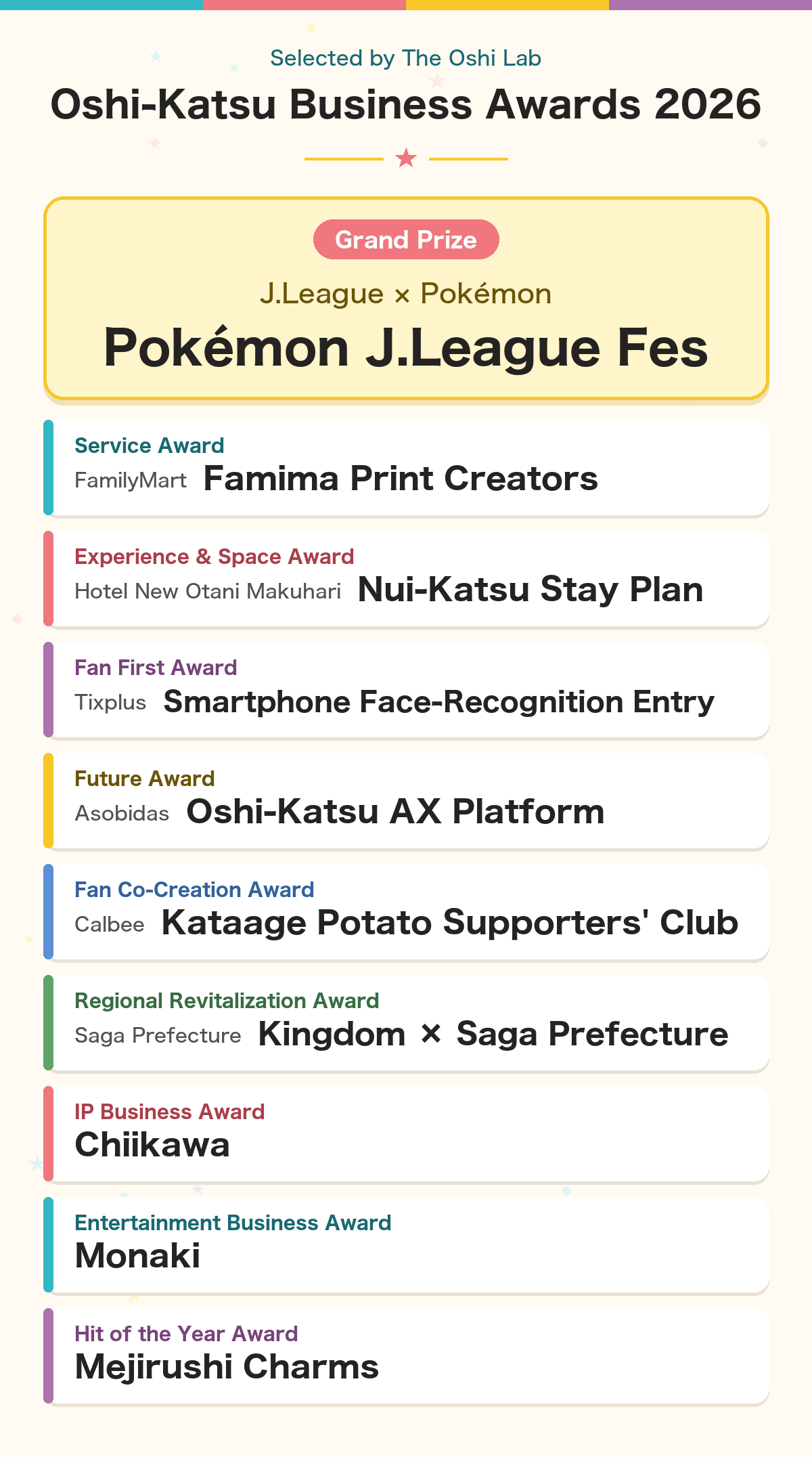
Behind that spread, what did companies and communities notice about what fans wanted to do, and how did they respond? To share the initiatives that answered that question, The Oshi Lab is launching the Oshi-Katsu Business Awards this year. For this first edition, we drew on the 549 stories covered in our Weekly Oshi-Katsu News between the January 2 and November 13, 2026 issues, along with topics from The Oshi Lab podcast. From those, we chose 33 nominees and settled on ten awards: a grand prize and nine category awards.
- 01549 news storiesWeekly Oshi-Katsu News, January 2 to November 13, 2026 issues
- 0233 nomineesChosen together with topics from the podcast
- 03Ten awardsOne grand prize and nine category awards
How We Chose
The awards cover initiatives by companies and local governments that were announced between January and November 12, 2026. We focused on initiatives like these.
- Ones that created new ways to enjoy oshi-katsu
- Ones that solved a problem fans face
- Ones that actually moved large numbers of fans and local residents
The Winners
Oshi-Katsu Business Grand Prize: J.League × Pokémon, “Pokémon J.League Fes”
On July 6, 2026, the J.League, Japan’s professional soccer league, announced a tie-up with Pokémon. All 60 clubs, from the top-tier J1 down to J3, would each hold their own “Pokémon J.League Fes” (J.League official site, in Japanese).
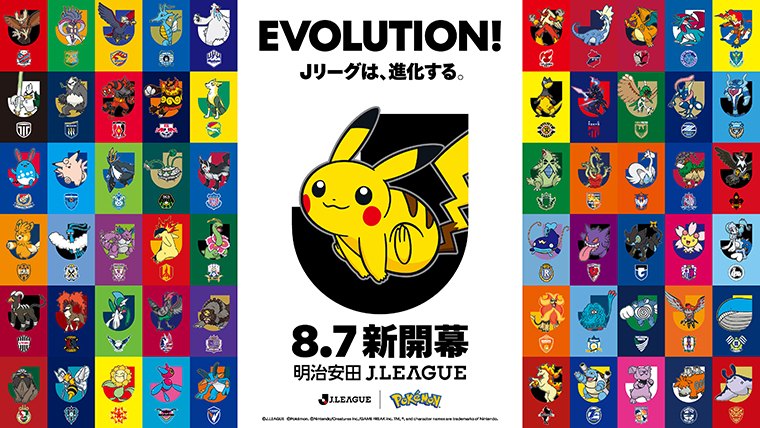
The key visual released with the announcement puts Pikachu in the center. Lined up on the left and right are designs that pair each club’s emblem with a Pokémon.
Every club was assigned a different Pokémon of its own. At designated home games in August and September, clubs were to hand out an eco bag called the “EVO BAG,” printed with Pikachu and that club’s Pokémon, to people who came to the stadium. Across all clubs, the planned giveaway totaled enough bags for one million people. Tokyo Verdy told fans it would hand out bags to 50,000 people at its August 14 match (Tokyo Verdy, in Japanese). Zweigen Kanazawa likewise told fans it would hand out bags to the first 7,000 people through the gates at its August 15 match (Zweigen Kanazawa, in Japanese).
This was also the year the J.League moved the start of its season from spring to August. According to the trade publication AdverTimes., only a little over ten percent of people knew about the new opening date. To mark the opening, the league rolled out more than 20 initiatives, including free invitations for 220,000 people and television commercials (AdverTimes., in Japanese).
Lab note: Limited-edition goods are usually sold by keeping the quantity small and letting fans compete for them. The Pokémon J.League Fes was a plan to give bags away to one million people for free. We read it as a project aimed at people who love Pokémon but have never watched a match. Because the bags go to people who come to the game, you have to travel to the stadium to get one.
The opening round, held from August 7 to 9, drew a combined 476,112 people across J1 to J3, a new record for a single round. The ten J1 matches drew 304,292, also a record for a single round. The August 7 match between Yokohama F. Marinos and Kashima Antlers drew 63,960, the most in J.League history (Soccer King, in Japanese).
The Japan Football Association (JFA) and the J.League also published an estimate of how many people watched the national team or the J.League, either on screen or in person. The figure rose from 10.71 million in February 2026 to 16.44 million in July (JFA, in Japanese). Both the opening-round attendance and the viewing estimate, however, are the result of the effort as a whole, including free invitations and advertising. They are not numbers that show what the Pokémon J.League Fes achieved on its own.
A figure focused on the Pokémon tie-up was given at a press conference after the August 25 board meeting. Shogo Suzuki, the J.League’s executive officer, said the league’s analysis was that handing out eco bags to one million people brought an estimated 170,000 to 180,000 people to a stadium for the first time. Official posts by Pokémon, the J.League, and the clubs were viewed close to 70 million times, and fans posted close to 200,000 times on social media (J.League official site, in Japanese). At the time of the press conference, the data was described as still in progress, so these are mid-season preliminary figures.
Oshi-Katsu Service Award: FamilyMart, “Famima Print Creators”
On January 27, 2026, the convenience-store chain FamilyMart launched a service that lets individual creators sell their work through the multifunction copy machines inside its stores (Impress Watch, in Japanese). Its defining feature is that creators can sell their work at about 16,000 FamilyMart stores nationwide without holding inventory or paying any upfront costs (ITmedia NEWS, in Japanese). In Japan, these machines do far more than copy documents. Shoppers already use them to print photos and to buy official prints of idols and anime characters.

Any individual aged 18 or older can register. A creator applies through a dedicated website, and sales begin once identity verification and a review of the work are complete. Up to 30 works can be registered, priced from ¥300 to ¥700. Each work is on sale for 30 days, and there are 11 paper formats to choose from, including the standard L photo size and a square format. Part of the sales is paid to the creator as a royalty.
This is not the first way to sell independent creators’ work from a convenience-store copy machine. The electronics maker Sharp and pixiv, the company behind a major illustration-sharing site, started “FANBOX Print” in September 2024 (PHILE WEB, in Japanese). FamilyMart itself had revamped Famima Print in March 2025 into a form that made it easier for creators to sell their work (Netshop Tantosha Forum, in Japanese). This time it went a step further: a convenience-store company now offers, as a service of its own, a window through which individuals can register and sell by themselves.
Lab note: What we valued is how easy it is to start and how wide the sales floor is. Making and selling merchandise used to require money to hold inventory and a place to sell it. With this service, once the data for a work is ready, convenience stores across the country become the sales floor, and because each sheet is printed one at a time, nothing is left unsold. For fans, too, it adds a way to buy an oshi’s work at a nearby store, starting from a single sheet.
Nominees
- 7-Eleven, “IP & Content Strategy Department”: In June 2026 the chain created a department dedicated to intellectual property, and on November 13 it began a large-scale fair with Tamagotchi. In the first half of fiscal 2026, its toy sales were about 2.5 times what they were five years earlier (AdverTimes., in Japanese).
- Suntory, “TAG-LIVE!”: A service that sells cans with anime and idol labels through vending machines; in 2026 it added a feature that plays your oshi’s voice or music when you press the button. Sales have reportedly been growing at about three times a year since 2024 (Gendai Business, in Japanese).
- JCB, “Oshi-Katsu Cancellation Insurance”: It covers the cancellation fees on travel costs for an ensei (遠征, traveling to see your oshi) when a show is canceled or transportation is delayed. For the domestic version, a trip costing ¥30,000 can be insured for a premium of ¥900 (PR TIMES, in Japanese).
Experience & Space Award: Hotel New Otani Makuhari, “Nui-Katsu Stay Plan”
Nui-katsu (ぬい活) means taking a favorite plushie out with you and enjoying photographing it. On August 4, 2026, Hotel New Otani Makuhari, located near Tokyo, announced the “Nui-Katsu Stay Plan: A Dream Sleepover With Your Oshi Plushie” (Hotel New Otani Makuhari, in Japanese).
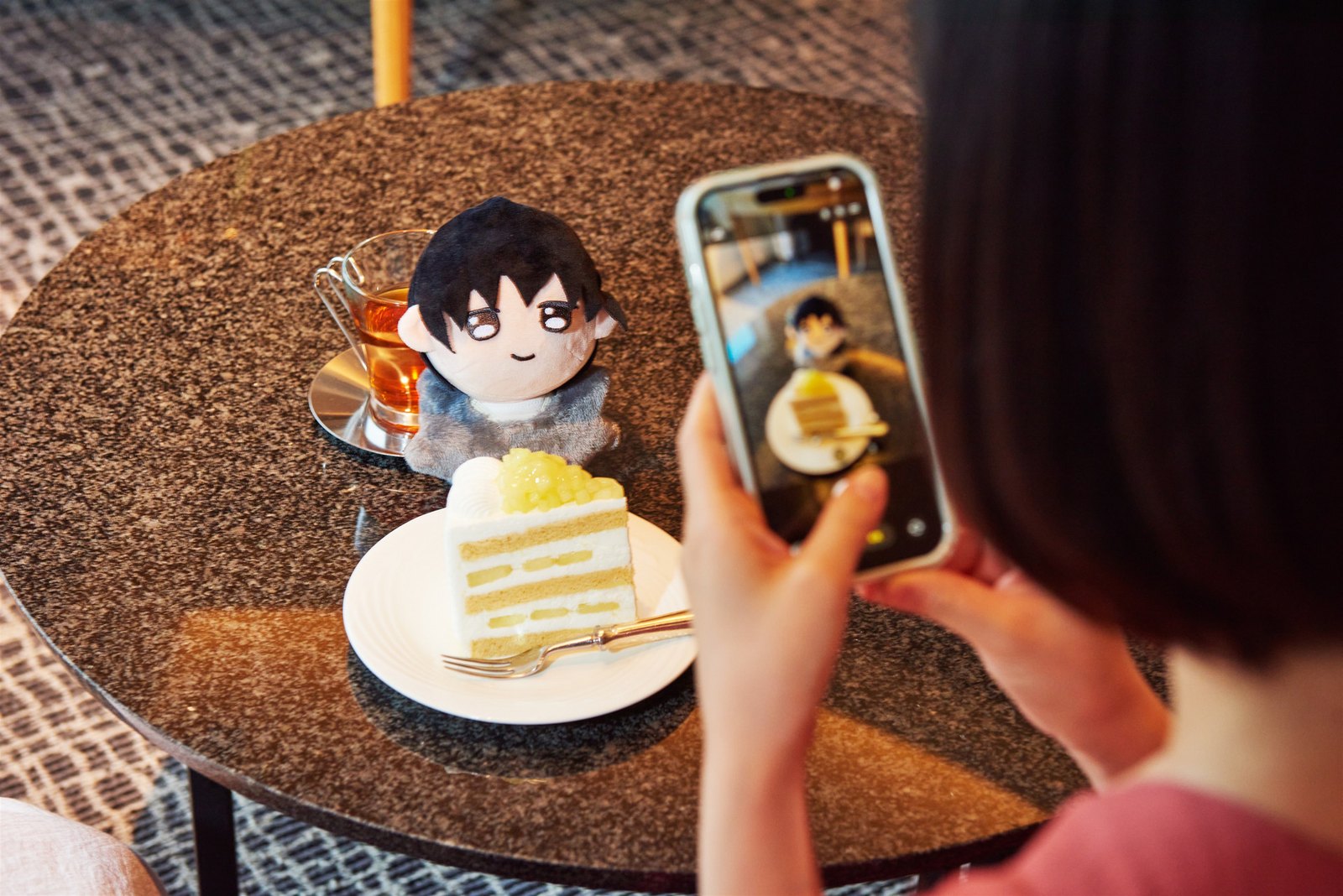
The photo in the announcement shows a plushie and a slice of cake set out on a table and being photographed with a smartphone. A set of one regular-size cake and one bite-size cake can be ordered as an extra.
The room is furnished with a miniature bed for the plushie, bearing the hotel’s logo. Eye masks come in two sizes, one for the guest and one for the plushie, in five colors. The plan also includes a drink ticket for the lounge, where guests choose one of five colors of cream soda.
Sales are limited to five rooms a day, and the plan runs from August 8, 2026 to March 31, 2027. Prices start at ¥33,800 for two guests.
Lab note: Letting guests pick the color of the extras means they can take photos coordinated in their oshi color, the color associated with the person or character they support. We think the time spent deciding “which color should I pick?” before the stay has become part of the experience too.
Nominees
- Hotel Mikazuki × Oshicoco, “Nui-Gurui Hocance”: From June 1, a hotel in Kisarazu, Chiba Prefecture, offered a plan that welcomes a plushie as one guest. It adds ¥2,750, tax included, to a regular stay plan (PR TIMES, in Japanese).
- JR Central, “Oshi-Tabi”: The railway distributes voice dramas and talk segments that can be heard only on board the Tokaido Shinkansen bullet train. Its project with the singer-songwriter Yumi Matsutoya continues in five installments through March 31, 2027 (JR Central, in Japanese).
Fan First Award: Tixplus, “Smartphone Face-Recognition Entry”
On April 28, 2026, the electronic ticketing service Tixplus (known in Japan as Chikepura) announced the introduction of face recognition that verifies a ticket holder’s identity using nothing but a smartphone. It was used for the arena tour of the idol group ≠ME, for shows from May 4 to July 18 (PR TIMES, in Japanese).
Attendees register photos of their face in advance from four directions: up, down, left, and right. On the day, the ticket screen is locked, and when attendees point the smartphone at their own face, AI checks it against the registered photos. The entry screen opens only when the two match.
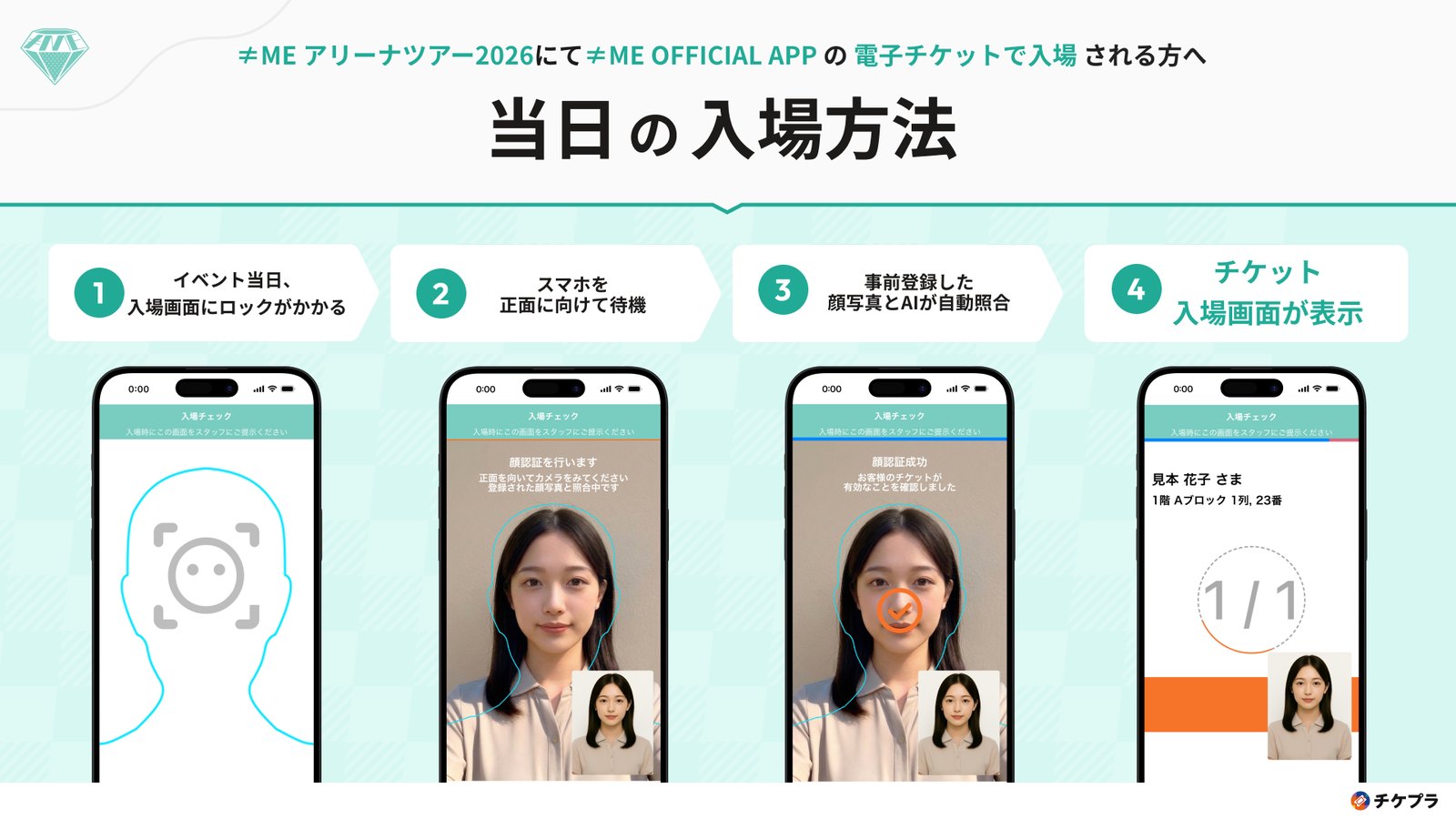
Tixplus’s diagram shows the procedure on the day in four screens. It starts with the locked screen, and the ticket appears on the fourth.
With this method, there is no need to set up dedicated tablets at the venue. Verification also works in places where the connection is poor. According to the announcement, Tixplus’s electronic tickets have been used by more than 1,000 artists in total.
Tixplus’s face-recognition entry was also adopted for other shows in 2026. These include ≒JOY’s concert at the Nippon Budokan on March 13 (Ticketplus, in Japanese), =LOVE’s concerts at the Japan National Stadium on June 20 and 21 (PR TIMES, in Japanese), UVERworld’s fan-club-only shows in June and July (PR TIMES, in Japanese), and Ado’s shows at Yoyogi National Gymnasium First Gymnasium on October 24 and 25 (PR TIMES, in Japanese). =LOVE’s two days at the National Stadium drew 132,000 people. These announcements, however, do not say whether the matching uses only the smartphone or also equipment at the venue.
- ≒JOYNippon Budokan
- ≠MEArena tour (smartphone-only method)
- =LOVEJapan National Stadium, two days
- UVERworldFan-club-only shows
- AdoYoyogi National Gymnasium First Gymnasium
Lab note: When someone else gets in on a resold ticket, there is one seat fewer for a fan who wanted to buy at face value. Face recognition is a way to prevent that, but if it needs dedicated equipment, the number of shows that can adopt it is limited. Our view is that a method needing only a smartphone is easier to extend to mid-size venues.
Nominees
- McDonald’s and Mercari’s anti-resale measures: On the first day of its Happy Meal featuring the character series Chiikawa, McDonald’s sold it only to people holding a purchase right distributed through its app (Inside, in Japanese). The flea-market app Mercari banned listings, and it was reported that almost no matching listings were seen after the release (AdverTimes., in Japanese).
- The Pokémon Company’s identity verification: From August, it introduced identity verification using the Digital Agency’s “Digital Authentication App” for lottery sales of the Pokémon Trading Card Game (Inside, in Japanese).
- Cover’s response to defamation: Cover, the agency behind the VTuber group hololive, reported on its actions in fiscal 2025. It took legal action in 149 cases and had posts removed from social media in 1,411 cases (Mogura VR, in Japanese).
Oshi-Katsu Future Award: Asobidas, “Oshi-Katsu AX Platform”
Asobidas is a company set up by the talent agency Asobisystem and the investment firm Midas Capital. GENDA, which operates game arcades among other businesses, has also invested, and the company announced the start of its business on February 3, 2026 (THE BRIDGE, in Japanese).
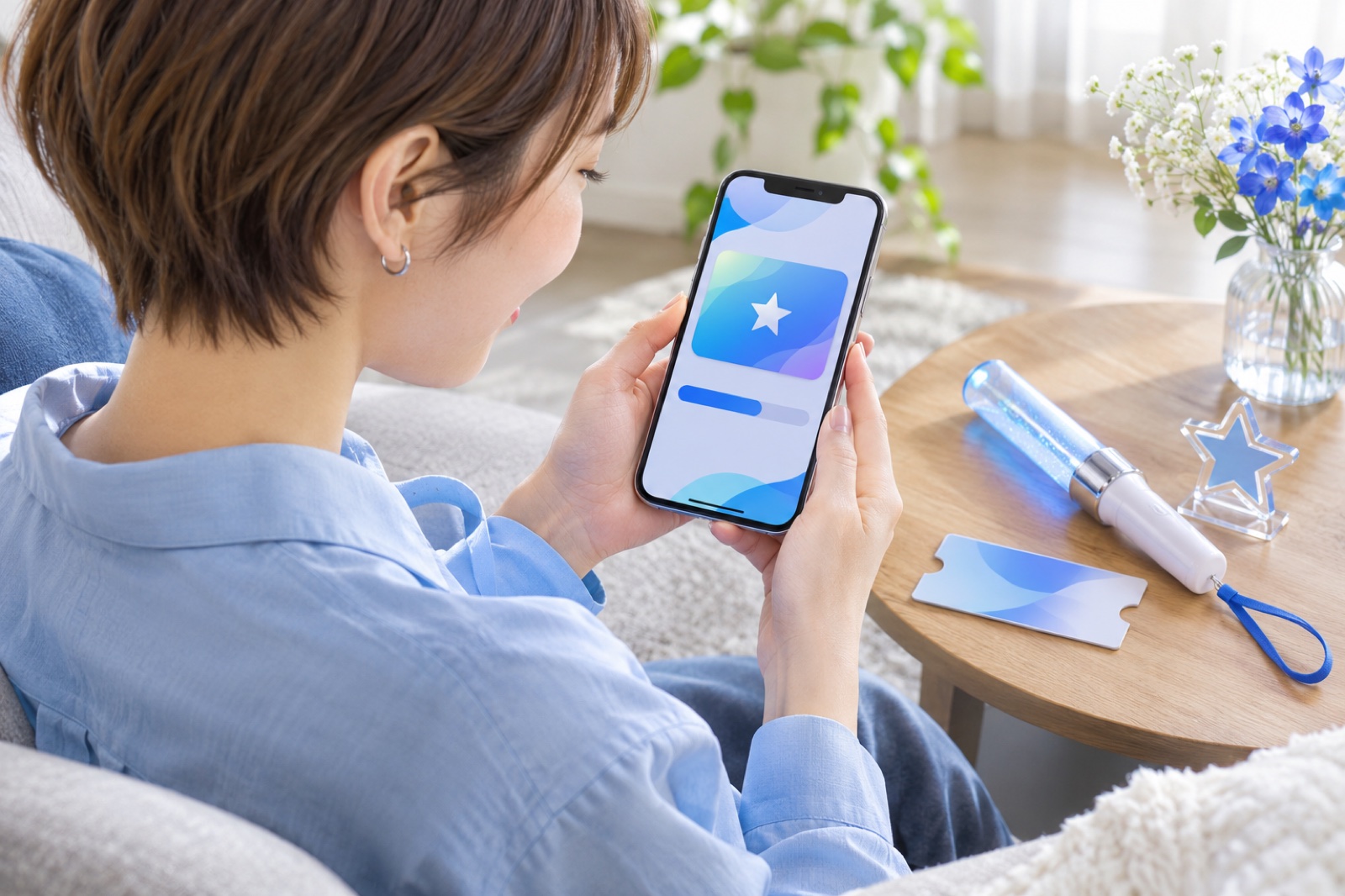
The “AX” that the company puts forward means transforming a business with AI. The problem the company points to is that the IDs for tickets, merchandise, and fan clubs are separate and the data is not connected. It says it will provide a foundation that links those IDs and uses AI to analyze records of purchases and participation. It also aims to screen out accounts whose purpose is resale and to give priority on tickets to fans who are genuinely supporting an artist.
The platform is called “win2win,” and its features include online autograph sessions, online meet-and-greets, online lotteries, and an online store. On October 21, a deferred payment option also became available, letting people without a credit card pay the following month (PR TIMES, in Japanese).
According to THE BRIDGE’s article, its target is ¥30 billion (roughly $200 million) in revenue in 2030. In October, it began providing the official fan club for the esports team REJECT. The rank of a member’s digital membership card changes according to how long they have been a member and how much they have paid (PR TIMES, in Japanese).
Lab note: Even someone who has belonged to a fan club for years can be treated the same as a first-timer in a ticket lottery. Once the records are connected, it becomes possible to recognize people who have kept supporting an artist. On the other hand, if treatment changes with the amount paid, fans who have less to spend may drift away. We will be watching how the system decides what to record and what to reward.
Nominees
- DeNA’s Pococha and OSHIAI integration: In November, it officially launched a feature that lets fans chat or talk by voice with an AI approved by a livestreamer. The AI is created only after the streamer has given consent (DeNA, in Japanese).
- Sony, “Fan Sync”: When a dedicated card is scanned, the smartphone’s wallpaper and the design around its clock switch to those of a particular series (Sony, in Japanese).
Fan Co-Creation Award: Calbee, “Kataage Potato Supporters’ Club”
On October 22, 2026, the snack maker Calbee announced a product made together with its fan community, the “Kataage Potato Supporters’ Club” (堅あげポテト応援部). Kataage Potato is the company’s line of thick, kettle-style potato chips, and the new product is called “Kataage Potato Luxurious Seafood Dashi Flavor” (PR TIMES, in Japanese).
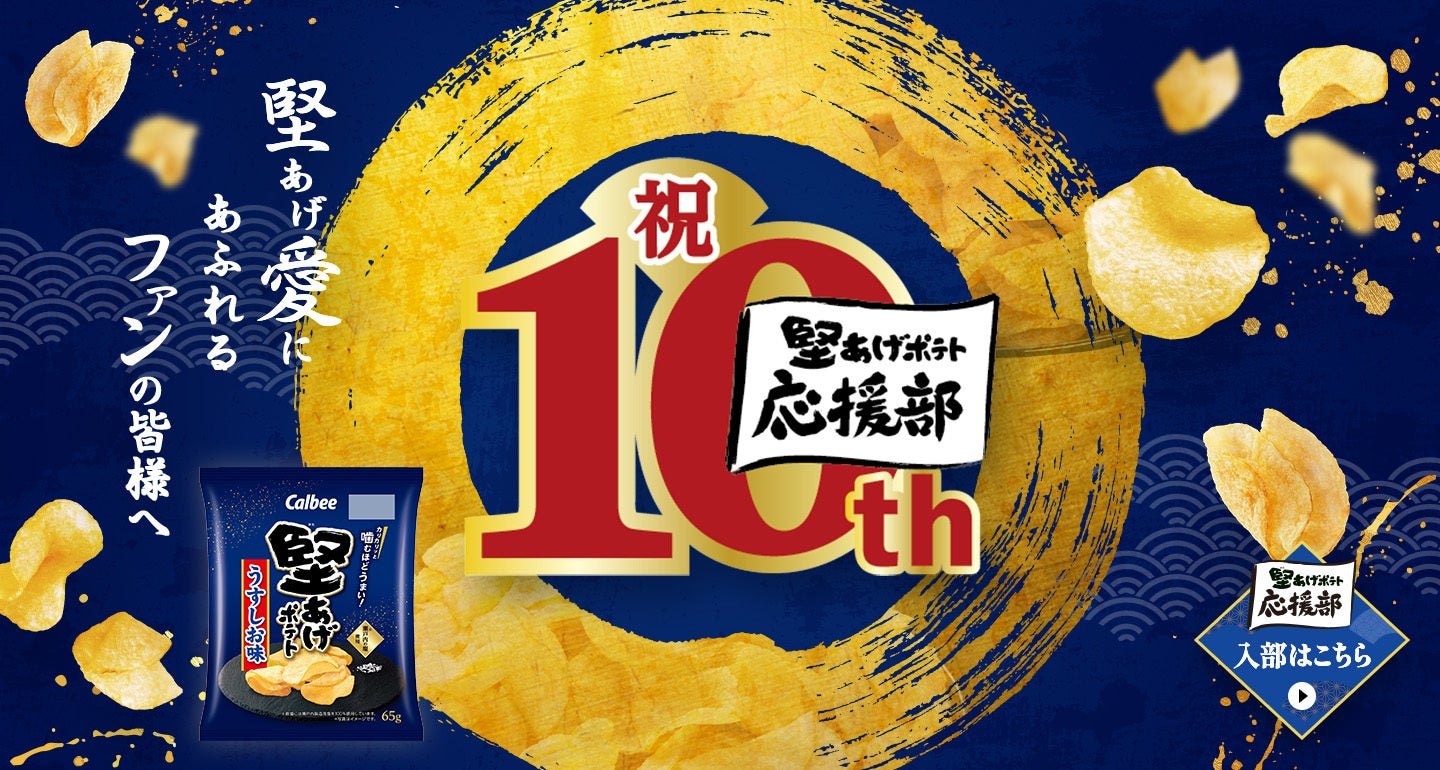
The 10th-anniversary visual carries a line that reads, in our translation, “To all our fans, overflowing with love for Kataage.” In the lower right is a button inviting people to join the club.
The club began in July 2016, and about 68,000 people had joined as of September 2026. This time, it collected flavor ideas on the theme of “a celebratory flavor worthy of the 10th anniversary” and decided the flavor in a final vote. The package was designed from an illustration drawn by a member, and that too was chosen by vote. The product went on sale first at convenience stores on November 2 and at other stores on November 9.
Lab note: When both the flavor and the package are decided by vote, the product on the shelf is the result of what members chose. It is a project that was possible because the community has lasted ten years.
Nominees
- Ajinomoto, “Amino Vital ONE”: It was developed jointly with a fan community of more than 1,400 people who enjoy sports. There were more than 100 prototypes (PR TIMES, in Japanese).
- BANDAI SPIRITS, “Gunpla Resale Council”: In the official app for Gunpla, the Gundam plastic model kits, users can vote for kits they want to see sold again. Voting rights increase with a user’s activity in the app (AdverTimes., in Japanese).
Regional Revitalization Award: Saga Prefecture, “Kingdom × Saga Prefecture”
From January 20 to September 30, 2026, Saga Prefecture, in Japan’s southwestern Kyushu region, ran a collaboration with the manga Kingdom titled “Kingdom × (Kakeru) Saga Prefecture.” According to its November 16 announcement, visitors over the roughly eight months came to a cumulative total of about 500,000. Of those, 78.6% came from outside the prefecture (PR TIMES, in Japanese).
- About 500,000
- Cumulative visitors
- 78.6%
- Share from outside the prefecture
- About ¥7.93 billion
- Estimated economic ripple effect within the prefecture
Source: Saga Prefecture announcement, PR TIMES (in Japanese)
The biggest draws were the decorated “Saga Kingdom Airport,” with a cumulative 254,000 visitors, and the “Kingdom Reading Embankment,” with a cumulative 219,000. For the embankment, every page of all 78 volumes of the manga was put on display along a breakwater on the Ariake Sea, and it was certified as a Guinness World Record (PR TIMES, in Japanese).
The economic ripple effect within the prefecture was about ¥7,931,600,000 (roughly $53 million), according to an estimate by the Kyushu Economic Research Center. Among the 43 collaboration projects Saga Prefecture has run to date, this one drew the most participants.
Lab note: To read every volume, you end up walking the breakwater from one end to the other. The project combined the experience of reading the series with a reason to visit the place, and close to 80% of its visitors came from outside the prefecture. We think that extending it beyond the original schedule to the end of September is also one reason the numbers grew.
Nominees
- Shizuoka Prefecture, “Three Arrows of Oshinomics”: In the “Regional Industry Cluster Plan” it announced on November 4, the prefecture positioned promoting oshi-katsu tourism, developing creative talent, and promoting the content industry as its three arrows. It expects a total of ¥13 billion (roughly $87 million) in investment over five years (Shizuoka Shimbun, in Japanese).
- Funahashi Village, Toyama Prefecture, “Oshi Yu-fuda”: It sold a set for ¥4,980 that combines a digital bath token designed by the VTuber Takeshizuku Mai with an electronic ticket for the village’s public bathhouse. The bath ticket has no expiration date (PR TIMES, in Japanese).
IP Business Award: Chiikawa
Chiikawa is a series about small, cute characters that has become one of Japan’s most popular character properties. In 2026 it widened its reach to movies, restaurants, airports, and an exhibition overseas. Drawing on data from the research firm GEM Partners, Nikkei Cross Trend analyzes that Chiikawa’s fans have grown to the scale of one million people (Nikkei Cross Trend, in Japanese).
Chiikawa the Movie: The Secret of Mermaid Island, released on July 24, recorded 1,508,538 admissions and ¥2,240,333,500 at the box office in its first three days (Anime! Anime!, in Japanese). Thirty days after release, its box office had passed ¥10 billion (roughly $67 million) (Anime! Anime!, in Japanese). In its first 81 days, it reached ¥17.95 billion at the box office and 12.29 million admissions (Oricon News, in Japanese).
- ¥17.95 billion
- Box office
- 12.29 million
- Admissions
Source: Oricon News (in Japanese)
According to the research firm GEM Standard, the number of people who name Chiikawa as their oshi roughly doubled after the movie’s release compared with the monthly average for the year before it. The analysis does not, however, isolate the effect of the movie alone (GEM Standard, in Japanese).
New initiatives continued beyond the movie. In Hong Kong, the large special exhibition “CHIIKAWA ARTIVERSE” was held from August 1 to September 6, with a giant merry-go-round appearing on the waterfront (TOY PEOPLE, in Japanese). In October, ANA Trading announced merchandise commemorating the launch of the specially painted “Chiikawa Jet” aircraft (ANA Trading, in Japanese). The anti-resale measures by McDonald’s and Mercari that we listed among the Fan First Award nominees were also carried out for the Chiikawa Happy Meal.
Lab note: While gaining fans through its movie, Chiikawa widened the places where people can encounter the series, from restaurants and airports to an exhibition overseas. The more popular something becomes, the more likely it is to run into problems such as resale, which leave some people unable to buy. We rated it as an IP business because its efforts extended to how the products are sold.
Nominees
- Pokémon’s 30th anniversary: It created a 30th-anniversary logo for each of all 1,025 Pokémon and put up outdoor advertising in five cities across Japan (AdverTimes., in Japanese). With the three NEXCO expressway companies, it is running a stamp rally at 234 service areas and parking areas nationwide (GAME Watch, in Japanese).
- Sanrio: The total number of votes in the “2026 Sanrio Character Ranking” was a record 70,647,379 (Anime! Anime!, in Japanese). In April, it also announced the launch of “Sanrio Games,” its first in-house game brand (Famitsu.com, in Japanese).
- Detective Conan: In 2026, the 30th anniversary of the TV anime, the film Detective Conan: Fallen Angel of the Highway recorded ¥3,502,137,800 at the box office in its first three days (Anime! Anime!, in Japanese). To coincide with the release, the city of Yokohama and partners signed a cooperation agreement and ran a stamp rally around 10 locations in the city (AdverTimes., in Japanese).
Entertainment Business Award: Monaki
Monaki is a four-member group produced by Kazuyoshi Sakai of the kayokyoku (Japanese pop ballad) chorus group Junretsu. It came out of the “Second Chance Audition” that Sakai launched and was formed on November 26, 2025. The members’ average age is 33, and the group debuted on April 8, 2026, with the single “Honma Yade ☆ Nande Yanen ☆ Shirankedo” (THE FIRST TIMES, in Japanese).

In the image on the official site, the four members wear jackets in different colors: orange, yellow, pink, and light blue. On November 13, about eight months after their debut, their first appearance on the 77th NHK Kohaku Uta Gassen was announced (Monaki official site, in Japanese).
What caught our attention in Monaki’s business is that the stage of getting people to know the group and the stage of getting people to pay to support it were designed separately.
The first stage was discovery before the debut. The group released a video of its debut song in advance, and the “#HonmayadeDance” spread on TikTok. Related videos passed a cumulative 700 million plays before the debut. On June 30, TikTok Japan named Monaki the grand prize winner of the “TikTok First-Half Trend Awards 2026,” citing the creation of a community that cuts across generations (PR TIMES, in Japanese).
In the next stage, places were ready for people who had watched the videos to move on to. The debut single, released on April 8 by Nippon Crown, came in two versions, Type A and Type B, with different coupling songs, and both include karaoke tracks (Monaki official site, in Japanese). The debut event drew 2,500 people, and in August the group toured Zepp venues in Osaka, Nagoya, and Tokyo. It also opened its fan club, “Monaki Family Club” (THE FIRST TIMES, in Japanese). Plays of related videos passed 1.7 billion as of July.
- FormedFrom the Second Chance Audition
- DebutRelated videos at 700 million plays before the debut
- TikTok First-Half Trend AwardsGrand prize
- Zepp tourOsaka, Nagoya, Tokyo
- Kohaku Uta GassenFirst appearance confirmed
Still, people who discover a group through videos do not necessarily become supporters. In a survey of 333 high school students nationwide conducted by Wakamono Research in April, 52.9% knew Monaki and 31.4% had danced to the debut song’s choreography. Only 20.7%, however, said they wanted to support Monaki as an oshi (PR TIMES, in Japanese).
Lab note: Short videos that can be watched for free are an entry point for getting known. What generates revenue are CDs, live shows, and the fan club, and Monaki had those receptacles ready in order from the moment of its debut. Releasing two versions of a CD and including karaoke tracks is a sales approach often seen with enka and kayokyoku CDs. We valued the way the group reached both younger generations who found it on TikTok and the generation that grew up listening to kayokyoku.
Nominees
- Toho, “TOHO-ONE”: Toho made it possible to use the TOHO Cinemas movie theaters, the theater ticketing service Toho Navi Serve, an online store, and more through a single membership service. It launched on March 3 and passed three million members in about seven months (PR TIMES, in Japanese).
- M!LK: In a monthly survey by the research firm GEM Partners, the number of people who named the boy group M!LK as their oshi rose from about 301,000 in February to about 782,000 in July (Nikkei Cross Trend, in Japanese).
- Hoshimachi Suisei’s personal agency: In March, the VTuber Hoshimachi Suisei announced the founding of her personal agency, “Studio STELLAR.” Her YouTube channel has more than 2.8 million subscribers (AdverTimes., in Japanese).
- =LOVE: In June 2026 the idol group played two days at MUFG Stadium (the Japan National Stadium), selling out both and drawing a total of 132,000 people (PR TIMES, in Japanese).
- FRUITS ZIPPER: On February 1, 2026, the idol group held “ENERGY,” its first solo concert at Tokyo Dome (TOWER RECORDS ONLINE, in Japanese).
Hit of the Year Award: Mejirushi Charms
A mejirushi charm (目印チャーム, “marker charm”) is a small ornament attached to an umbrella or a bag with a silicone ring. People use it as a marker to tell their own belongings apart.

The magazine Nikkei Trendy chose mejirushi charms as number one in its “Top 30 Hit Products of 2026.” The magazine’s analysis is that low-priced products made in collaboration with characters won support for the value of being tied to an oshi (Nikkei Cross Trend, in Japanese). Bandai’s products were reported to have shipped 120 million units (Oricon News, in Japanese).
In a survey by Taito, which operates game arcades, the number-one oshi-katsu item that respondents felt was trending in 2026 was likewise “mejirushi mascots and charms.” The result comes from asking 500 people in their teens through thirties who have an oshi (PR TIMES, in Japanese).
Lab note: Acrylic stands and pin badges are goods that people carry around for the purpose of oshi-katsu. A mejirushi charm goes on an umbrella or a water bottle, so your oshi is in view during the commute to work or school as well. From a capsule-toy machine it costs a few hundred yen, which also makes it an easy product to choose as a first item.
Nominees
- Bonbon Drop Stickers: They placed third in Nikkei Trendy’s “Top 30 Hit Products of 2026.” They have topped 45 million sheets in total (Nikkei Cross Trend, in Japanese).
Lab Note: Oshi-Katsu Business in 2026
Lab note: Looking back on oshi-katsu business in 2026, three major currents come into view.
The first is that the places for oshi-katsu have multiplied close to everyday life. Convenience-store copy machines, vending machines, and cancellation insurance for fan travel all made the list of nominees. People can come across products related to oshi-katsu without going to a concert venue or a specialty shop.
The second is that mechanisms to protect fans were announced. Face recognition, purchase rights, and identity verification were all methods for preventing resale and increasing the number of people who can buy at face value. One company also published the number of cases in which it acted against defamation.
The third is that there are more moments in which fans decide. Calbee settled its flavor and its package by vote. In the official Gunpla app, fans vote for the kits they want to see sold again. We think the hotel extras that come in a choice of colors belong to the same current.
Closer to everyday life
- Convenience-store copy machines
- Vending machines
- Cancellation insurance for fan travel
Protecting fans
- Face recognition
- Purchase rights
- Identity verification
Fans decide
- Votes on flavor and package
- Votes on which kits to sell again
- Extras in a choice of colors
FAQ
How were the Oshi-Katsu Business Awards 2026 chosen?
The awards cover initiatives announced between January and November 12, 2026. From the 549 stories covered in our Weekly Oshi-Katsu News and the topics discussed on The Oshi Lab podcast, we picked 33 nominees, focusing on initiatives that created new ways to enjoy oshi-katsu, solved problems fans face, and actually moved large numbers of people.
Why did the Pokémon J.League Fes win the grand prize?
All 60 clubs handed out eco bags to a combined one million people who came to the stadium, which also gave people who had never watched a soccer match a reason to go. The design was the opposite of limited-edition goods, where the quantity is kept small, and the J.League estimates that 170,000 to 180,000 people came to a stadium for the first time as a result.
Which ten initiatives won?
The grand prize went to the Pokémon J.League Fes. The category winners are FamilyMart's Famima Print Creators, Hotel New Otani Makuhari's nui-katsu stay plan, Tixplus's smartphone face-recognition entry, Asobidas's Oshi-Katsu AX Platform, Calbee's Kataage Potato Supporters' Club, Saga Prefecture's Kingdom × Saga Prefecture, Chiikawa, Monaki, and mejirushi charms.


