
Studio Ghibli Pilgrimage Guide: Ghibli Museum Mitaka, Ghibli Park, Seiseki-Sakuragaoka & Dogo Onsen
If you want to walk the hillside slopes that inspired Whisper of the Heart, head to Seiseki-Sakuragaoka in Tokyo; if you want to step inside the antique shop 'Chikyuya' and see its violin workshop, head to Ghibli Park in Aichi Prefecture. Locations connected to Studio Ghibli span both real neighborhoods referenced by the filmmakers and dedicated facilities built to recreate the houses and exhibits of the films.
At Ghibli Museum, Mitaka, visitors can explore animation desks and watch exclusive short films, while outside Tokorozawa Station stands a monument of Totoro, Satsuki, and Mei, and in the nearby Sayama Hills visitors can walk public trails alongside woods preserved by the Totoro Fund.
Visiting Recreated Film Houses, Museum Exhibits, and the Real Towns That Inspired the Scenery
① Ghibli Museum · 1-1-83 Shimorenjaku, Mitaka, Tokyo
Permanent filmmaking exhibits, original short films, and the rooftop Robot Soldier; advance timed reservation required.
Read the Complete Pilgrimage Guide & Access Notes for Ghibli Museum, Mitaka (1-1-83 Shimorenjaku, Mitaka, Tokyo)② Ghibli Park · 1533-1 Otsu, Ibaragabasama, Nagakute, Aichi
Five themed areas; interior building access varies by advance-reservation ticket type.
Read the Complete Pilgrimage Guide & Access Notes for Ghibli Park (1533-1 Otsu, Ibaragabasama, Nagakute, Aichi)③ Seiseki-Sakuragaoka · Tama, Tokyo
Station neighborhood that served as a visual reference for the streetscapes of Whisper of the Heart.
Read the Complete Pilgrimage Guide & Access Notes for Seiseki-Sakuragaoka Station West Exit & Youth Postbox (Tama, Tokyo)④ Irohazaka Slope · Sakuragaoka, Tama, Tokyo
Hillside road connected to Whisper of the Heart, viewed from the public sidewalk.
Read the Complete Pilgrimage Guide & Access Notes for Irohazaka Slope (Sakuragaoka, Tama, Tokyo)⑤ Tokorozawa Totoro · Tokorozawa, Saitama
Municipal 70th-anniversary monument created with Studio Ghibli's cooperation on the East Exit rotary.
Read the Complete Pilgrimage Guide & Access Notes for Tokorozawa Station East Exit Totoro Monument (Tokorozawa, Saitama)⑥ Totoro's Forest #1 · Zakoiri, Kamiyamaguchi, Tokorozawa, Saitama
Woodland in the Sayama Hills—one of the models for Totoro—viewed from public walking paths.
Read the Complete Pilgrimage Guide & Access Notes for Totoro's Forest Tract No. 1 (Zakoiri, Kamiyamaguchi, Tokorozawa, Saitama)⑦ Kurosuke's House · 3-1169-1 Mikajima, Tokorozawa, Saitama
Historic farmhouse serving as the Totoro Fund's conservation base; advance reservation required.
Read the Complete Pilgrimage Guide & Access Notes for Kurosuke's House (3-1169-1 Mikajima, Tokorozawa, Saitama)⑧ Dogo Onsen Honkan · 5-6 Dogoyunomachi, Matsuyama, Ehime
One of the historic hot spring bathhouses whose architectural elements were incorporated into Aburaya in Spirited Away.
Read the Complete Pilgrimage Guide & Access Notes for Dogo Onsen Honkan (5-6 Dogoyunomachi, Matsuyama, Ehime)⑨ Kodakara-yu · 3-7-1 Sakuracho, Koganei, Tokyo
Preserved 1929 Tokyo bathhouse in the East Zone that inspired setting Spirited Away's bathhouse in a shopping street.
Read the Complete Pilgrimage Guide & Access Notes for Edo-Tokyo Open Air Architectural Museum — Kodakara-yu (3-7-1 Sakuracho, Koganei, Tokyo)
1Ghibli Museum, Mitaka: The Desks Where Films Are Born and Exclusive Short Films
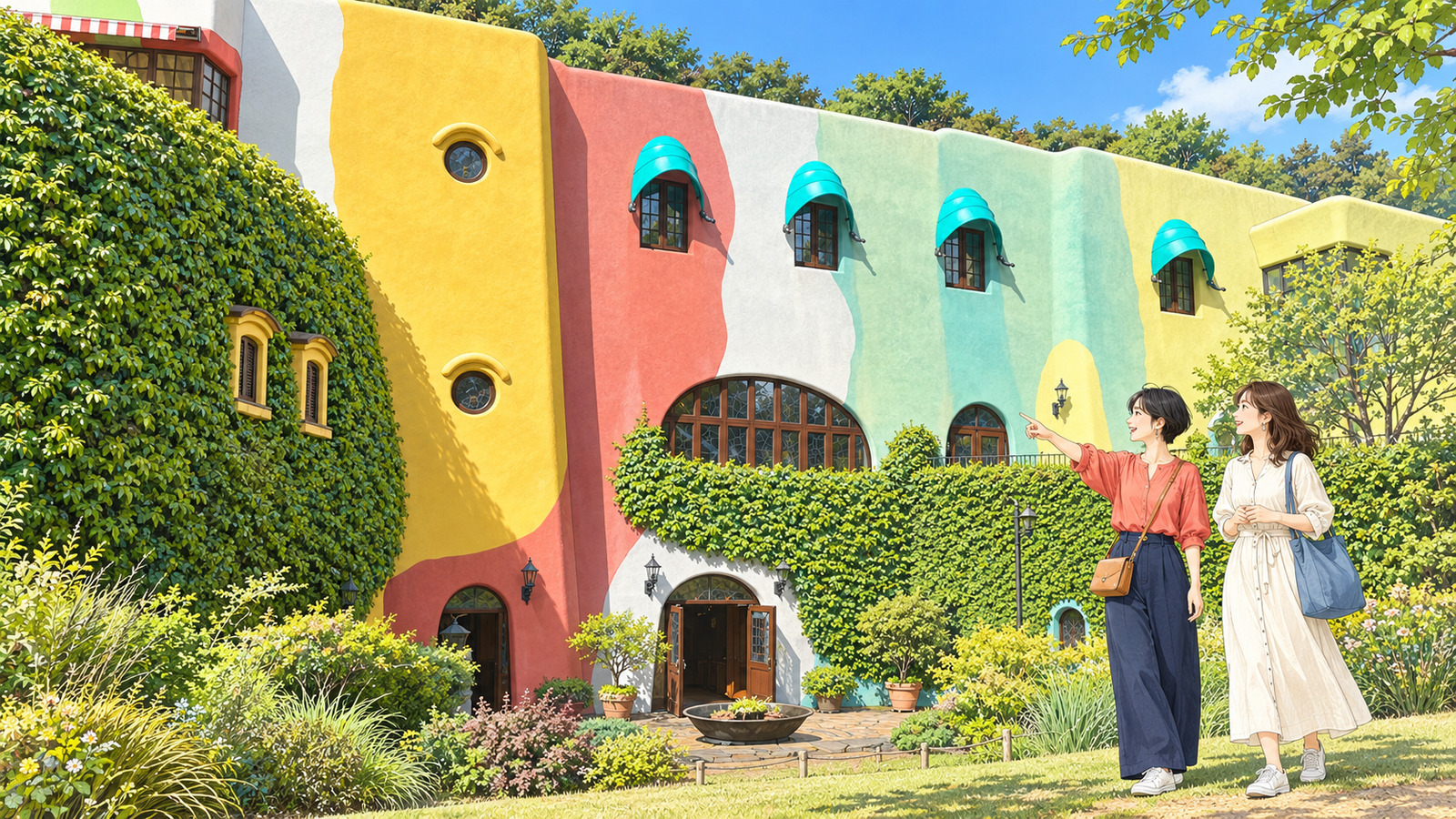
Ghibli Museum, Mitaka is a museum dedicated to exhibiting the craft of making drawings move and creating animated films. Its central hall rises as an open atrium from the basement to the 2nd floor linked by a spiral staircase and aerial walkways, crowned by a glass dome painted with a yellow whale and Ponyo.
The permanent exhibition 'Where a Film Is Born' unfolds across five interconnected rooms filled with books, sketches, model airplanes and pteranodons, and animators' desks holding half-finished drawings—showing how a single spark of inspiration grows into a completed feature film.
On the basement level, the roughly 80-seat 'Saturn Theater' (Doseiza) screens original short films created exclusively for the museum; from October 1 to November 3, 2026, the theater screens Kujiratori ('The Whale Hunt,' approximately 16 minutes), based on an episode from the children's book Iyaiyaen, with one screening included per museum admission.
Running from November 19, 2025 through May 2027, the special exhibition 'Yuriko Yamawaki's Workroom' recreates the studio of illustrator Yuriko Yamawaki (illustrator of Iyaiyaen) and introduces the works by author Rieko Nakagawa and Yamawaki that director Hayao Miyazaki long wished to adapt into animation.
On the 2nd floor, elementary school children and younger can play on the plush Catbus, while a roughly 5-meter-tall Robot Soldier from Castle in the Sky stands on the rooftop garden above a courtyard with a hand-pump well. All museum admission is by advance timed reservation only, with no same-day ticket sales at the window.
Located at 1-1-83 Shimorenjaku, Mitaka, Tokyo inside the West Garden of Inokashira Park (accessible on foot along the Tamagawa Josui canal or by Mitaka City Bus from the South Exit of JR Mitaka Station), the museum is normally open from 10:00 to 18:00 and closed on Tuesdays; indoor photography and video recording are not permitted.
Sources: Access to Ghibli Museum / Museum Visitor Rules
Sources: Ghibli Museum — Permanent Exhibition / Saturn Theater Screening Schedule / Yuriko Yamawaki's Workroom / Ticket Reservations
2Ghibli Park: Film Houses and Towns Spread Across Five Distinct Areas
Ghibli Park comprises five distinct areas—'Ghibli's Grand Warehouse,' 'Hill of Youth,' 'Dondoko Forest,' 'Mononoke Village,' and 'Valley of Witches'—each offering different experiences ranging from full-scale recreations of houses and workshops from the films to production archives and a short-film cinema.
All tickets require advance reservation: the 'O-Sanpo Day Pass Premium' includes entry to all five areas and the interiors of all major buildings; the 'O-Sanpo Day Pass Standard' covers Ghibli's Grand Warehouse, Mononoke Village, and Valley of Witches (with separate tickets sold for three building interiors in Valley of Witches); and visitors can also choose single-area passes or the 'Satoyama Sanpo Pass' covering the Dondoko Forest hilltop, Mononoke Village, and Valley of Witches exteriors.
Located inside Expo 2005 Aichi Commemorative Park (Moricoro Park) in Nagakute, Aichi Prefecture—right outside Ai-Chikyuhaku-Kinen-Koen Station on the Linimo line or reachable by direct bus from Meitetsu Bus Center at Nagoya Station—the park is open from 10:00 to 17:00 on weekdays and 9:00 to 17:00 on weekends and holidays (closed mainly on Tuesdays; no dedicated Ghibli Park parking lot).
Sources: Access to Ghibli Park / Operating Calendar
Source: Ghibli Park — Ticket Types & Included Areas
Ghibli’s Grand Warehouse: Iconic Scene Installations and Art & Production Exhibits
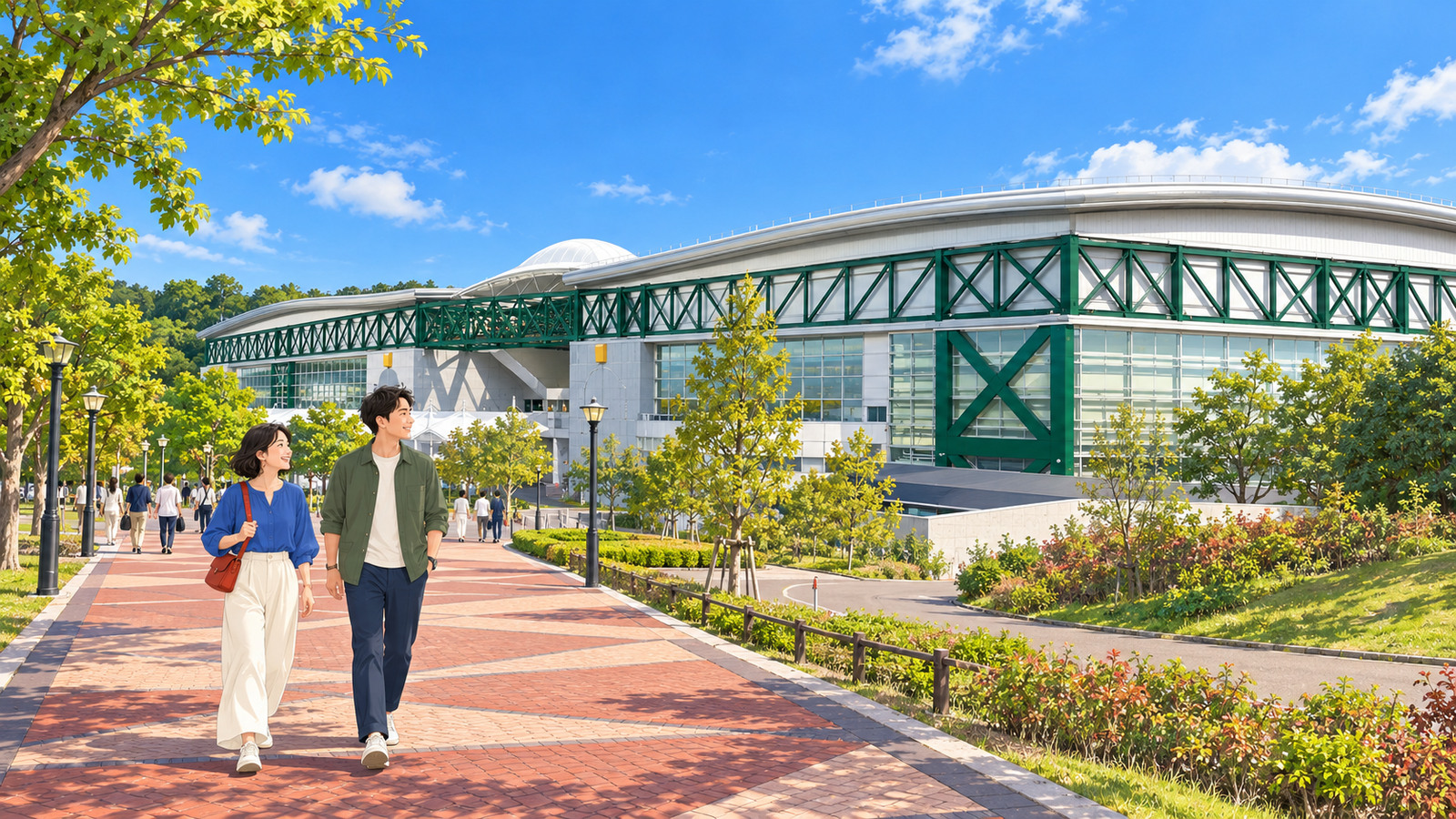
Inside Ghibli's Grand Warehouse, 'Becoming Characters in Memorable Ghibli Scenes' recreates scenes from 14 films—letting visitors sit beside masked No-Face aboard the sea-railway train from Spirited Away—alongside Yubaba's office ('Director's Room'), the 'Garden in the Sky' with the Robot Soldier from Castle in the Sky, and Arrietty's 'House Below the Floorboards and Little People's Garden.'
The 'Panorama Box Exhibition' displays 31 multi-layered dimensional illustrations Newly drawn by Hayao Miyazaki spanning works from Nausicaä of the Valley of the Wind to The Boy and the Heron, while the 'Ghibli's Giant Warehouse Exhibition' showcases handwritten planning and promotional materials by producer Toshio Suzuki alongside an adult-accessible Catbus at its entrance.
At the roughly 170-seat 'Cinema Orion' screening room, the original ~14-minute short film Night in the Valley of Witches—conceived and directed by Goro Miyazaki with co-director Akihiko Yamashita and set in Ghibli Park itself—began screening on July 8, 2026 and is scheduled to run through around June 2027.
Sources: Ghibli's Grand Warehouse — Exhibits & Screenings / Toho — Yubaba Character Profile / Studio Ghibli — Arrietty Profile
Hill of Youth: The Violin Workshop of Chikyuya and the Cat Bureau
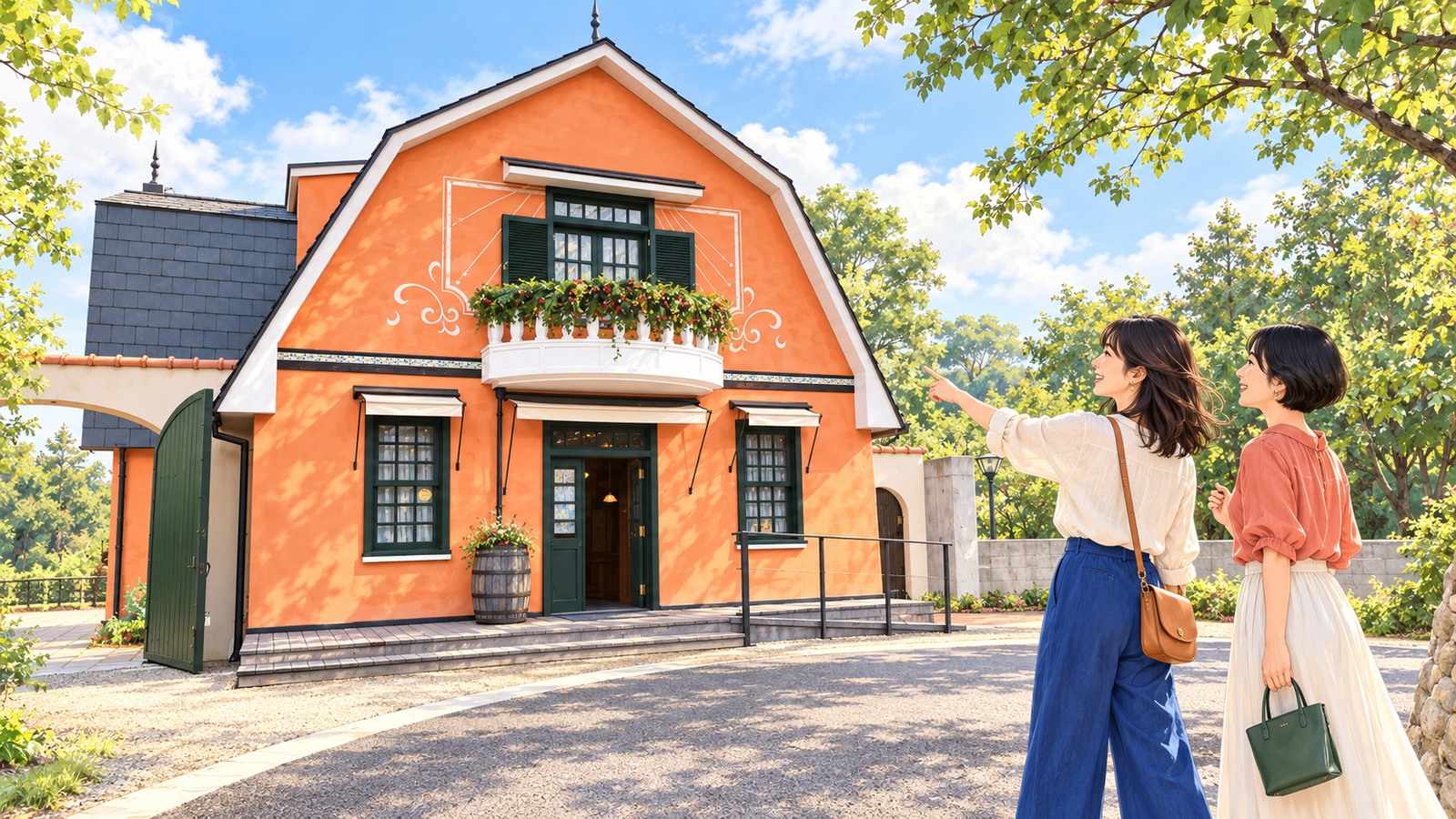
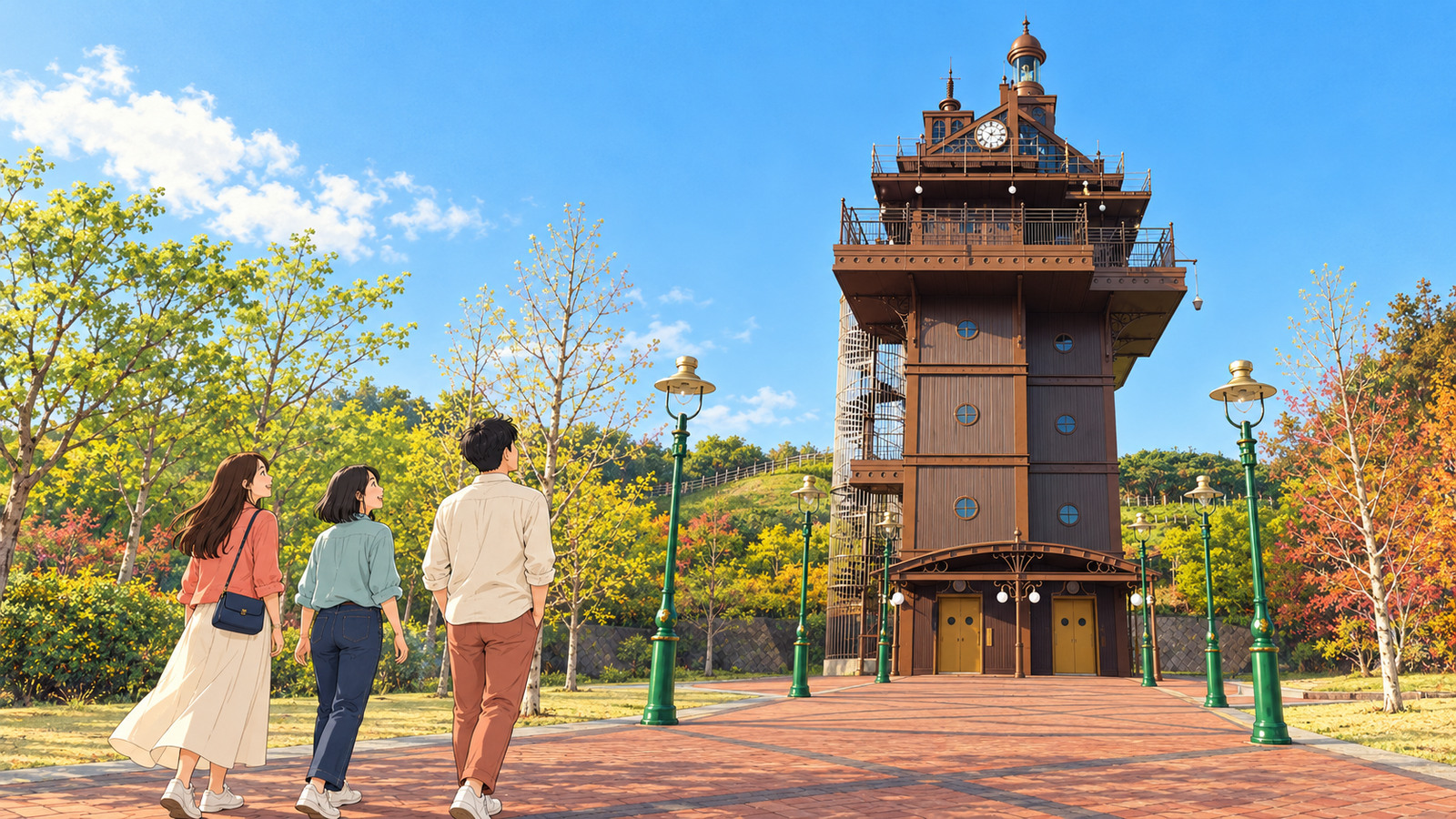
On the Hill of Youth, the antique shop 'Chikyuya' from Whisper of the Heart displays a mechanical clock and wooden horse on its 2nd floor while recreating the 1st-floor violin-making workshop where Seiji Amasawa studies, with a balcony overlooking the park.
Beside it stands the 'Cat Bureau' from The Cat Returns—a cat-sized single-story wooden building inside which Baron and Muta sit surrounded by miniature furniture—while the rotary in front of Chikyuya features a Himalayan cedar tree and a postbox where visitors can mail postcards purchased with stamps inside the shop (the nearby Elevator Tower is a shared park facility open to all park visitors).
Sources: Hill of Youth — Chikyuya & Cat Bureau / Studio Ghibli — Baron in The Cat Returns
Dondoko Forest: A Full-Scale Recreation of the House Where Satsuki and Mei Lived
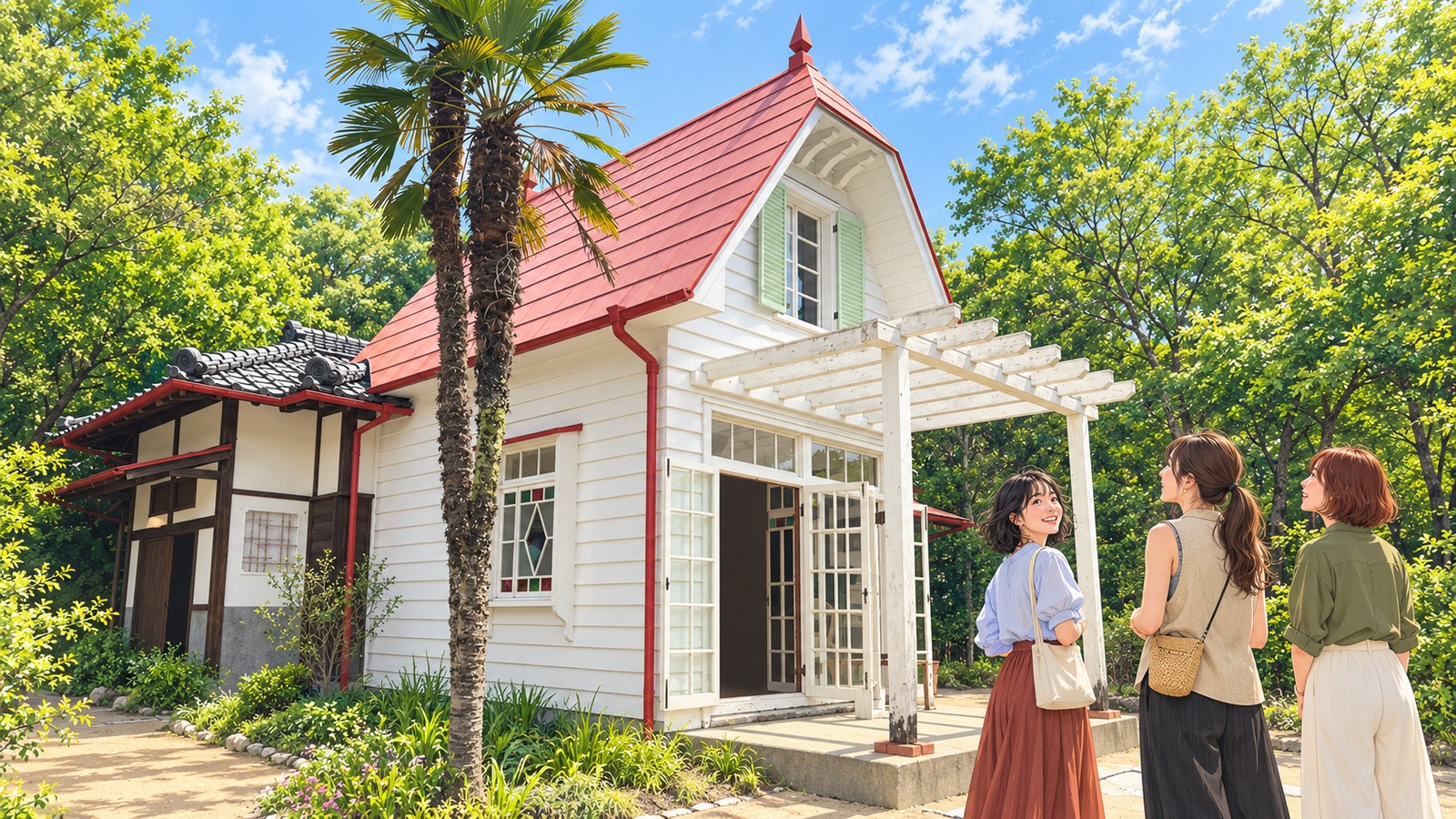
In Dondoko Forest, 'Satsuki and Mei's House' faithfully recreates the Kusakabe family home from My Neighbor Totoro—combining a traditional kitchen, bath, and tatami room with a Western-style study—and visitors holding tickets that include interior entry can step inside the house.
Atop the hill behind the house stands 'Dondoko-do,' a roughly 5-meter-tall wooden play structure that elementary school children and younger can climb inside; the 'Dondoko-go' slope car linking the foot and summit gives priority to wheelchair and stroller users, while the 'Dondoko-dokoro' rest stop along the trail is open to general park visitors.
Source: Dondoko Forest — House & Hilltop Facilities
Mononoke Village: Irontown (Tatara-ba) and the Lord Okkoto Slide
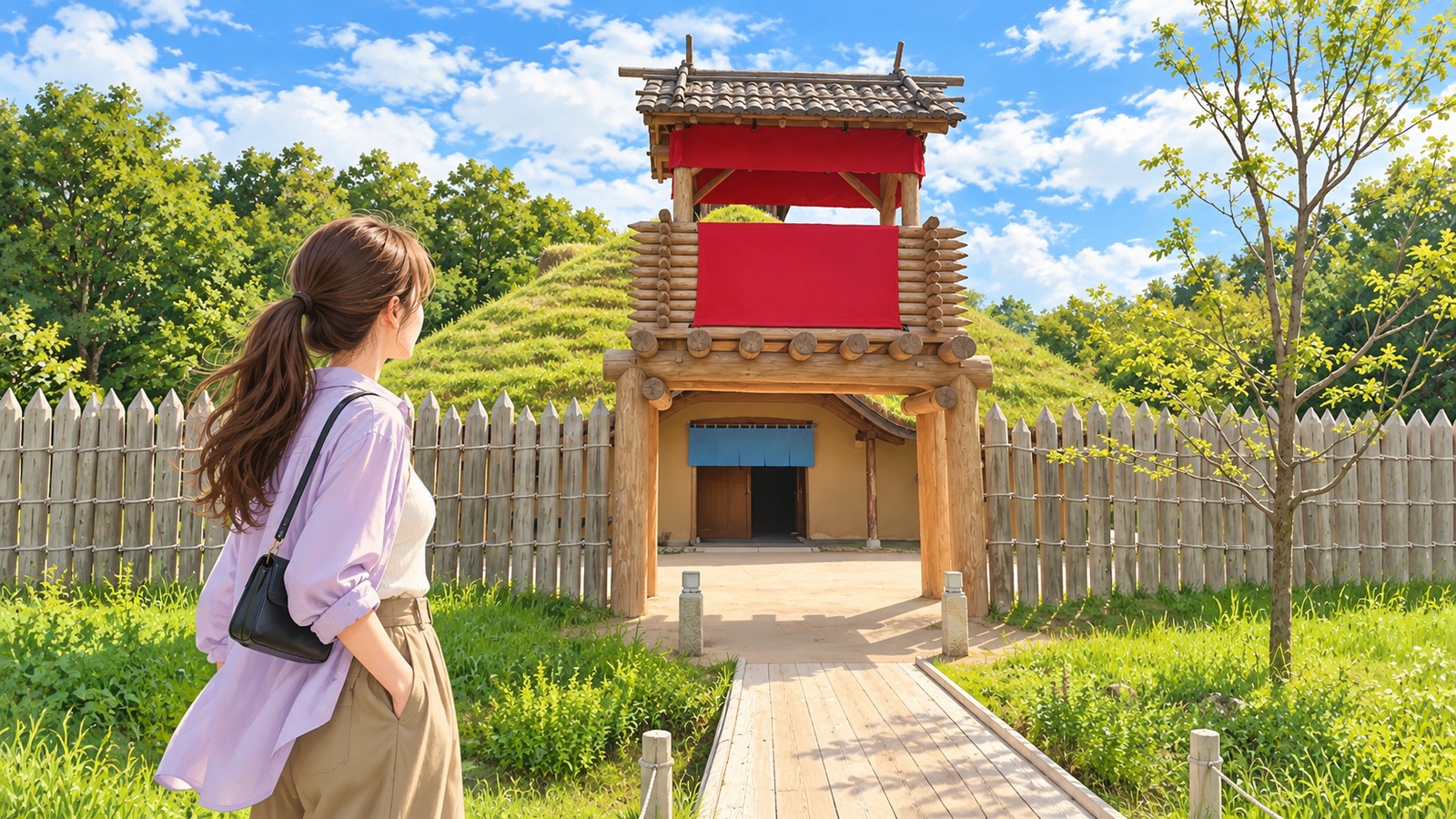
Inspired by the mountain village landscapes of Princess Mononoke, Mononoke Village features the turf-roofed Tatara-ba (Irontown) building, a sculpture of the Demon God (Tatari-gami), an Emishi watchtower, and a slide shaped like the boar god Lord Okkoto covered in white tile and river-stone fur.
Inside the Tatara-ba learning center, visitors aged 10 and older can grill traditional gohei-mochi rice cakes over charcoal braziers for an additional fee (children aged 12 and under must be accompanied by a guardian); the Lord Okkoto slide may close in rainy weather, while the Demon God sculpture and Emishi watchtower are viewed from ground level.
The area's rest house relocates and repurposes the administration building that stood next to Satsuki and Mei's House during the 2005 Aichi Expo, updated with a stone-weighted roof to blend into Mononoke Village.
Source: Mononoke Village — Structures & Hands-On Experiences
Valley of Witches: From Kiki’s Family Home to the Moving Howl’s Castle
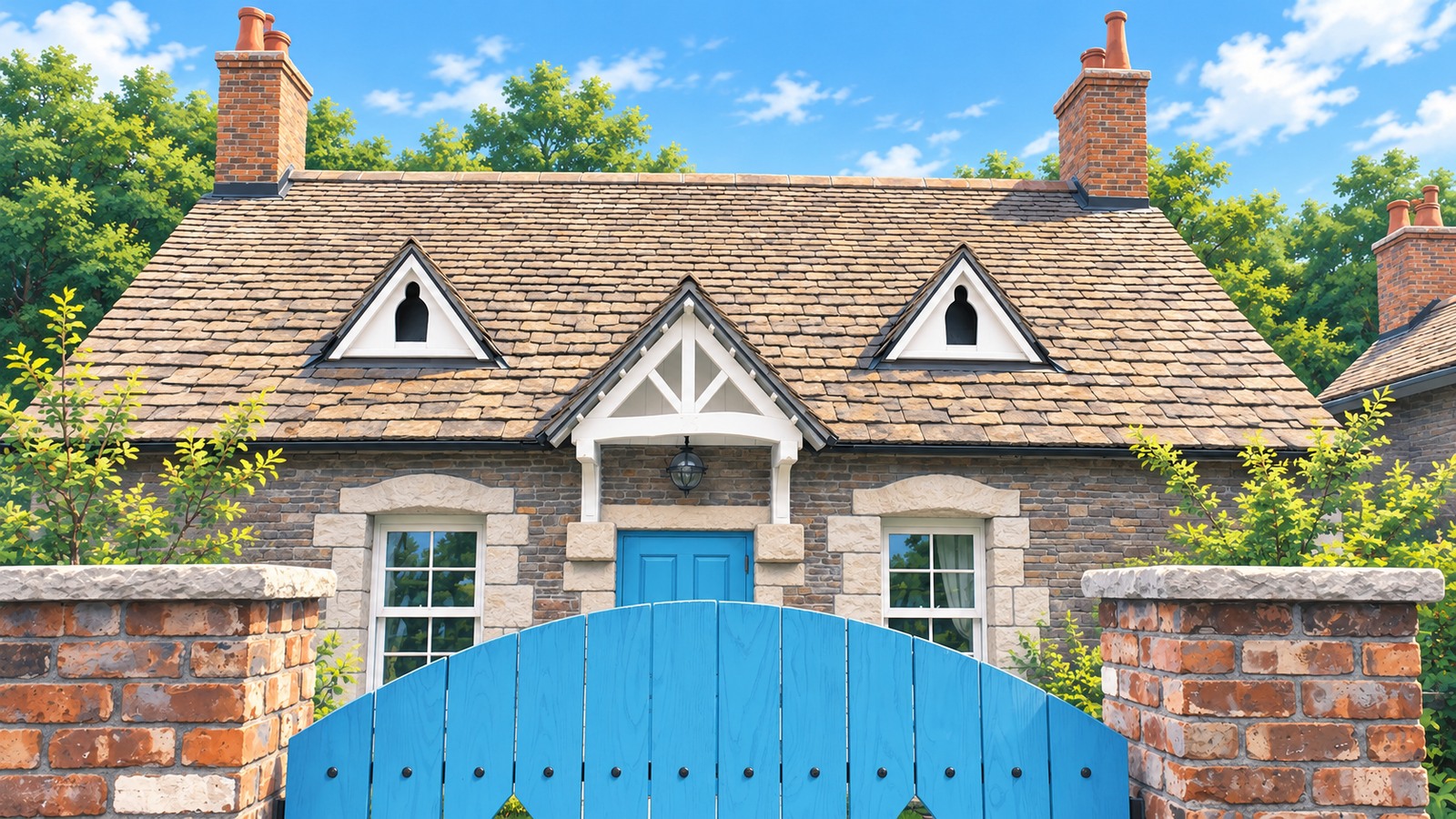
In Valley of Witches, 'The Okino Residence'—where 13-year-old witch Kiki lived before departing on her training in Kiki's Delivery Service—features her mother Kokiri's potion shop on the 1st floor and Kiki's bedroom and her father's study on the 2nd floor, while at 'Guchokipanya Bakery' visitors can buy freshly baked bread and view Kiki and Jiji's attic room from the back stairs.
Rising roughly 20 meters high, 'Howl's Castle' from Howl's Moving Castle moves parts of its exterior and emits smoke several times an hour; inside, the 1st floor houses fire demon Calcifer's hearth and Sophie's room alongside 'Hatter Hat Shop' outside, while the 2nd floor recreates Howl's bedroom.
'The House of Witches' from Earwig and the Witch recreates witch Bella Yaga's cluttered workroom and 10-year-old assistant Earwig's bedroom; entering the interiors of the Okino Residence, Howl's Castle, and the House of Witches requires a ticket type covering those buildings, while outdoors a paid carousel decorated with creatures and vehicles from the films turns to the melody of 'Merry-Go-Round of Life.'
Source: Valley of Witches — Building & Castle Interiors
3Seiseki-Sakuragaoka Station West Exit: Whisper of the Heart and the Postbox for Mailing Your Dreams
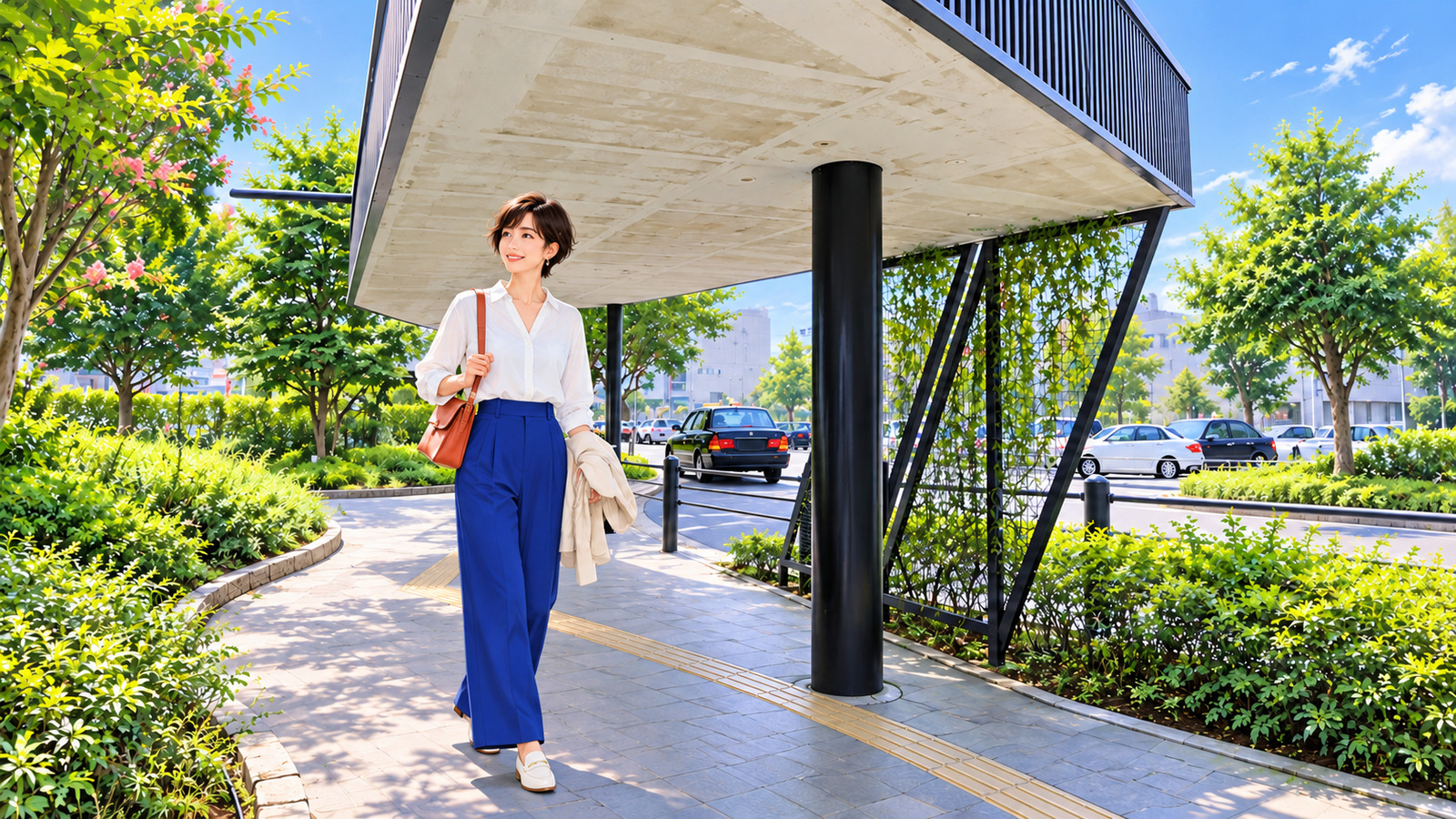
Whisper of the Heart drew extensively on the neighborhood around Seiseki-Sakuragaoka Station on the Keio Line in Tama City, Tokyo, where the local merchants' association and fans installed the 'Youth Postbox' (Seishun no Post) outside the West Exit.
Created as a place where visitors can drop letters written with their own dreams and goals, the postbox stands beside a neighborhood walking-map signboard and a commemorative stamp stand.
At Seiseki-Sakuragaoka Station itself, the film's theme song 'Take Me Home, Country Roads' serves as the train approach melody, using different phrases on the inbound and outbound platforms.
Sources: Studio Ghibli — Reference Locations / Tama City — Youth Postbox & Station Melody
4Irohazaka Slope: The Winding Road Climbing from the Oguri River to the Hilltop Neighborhood
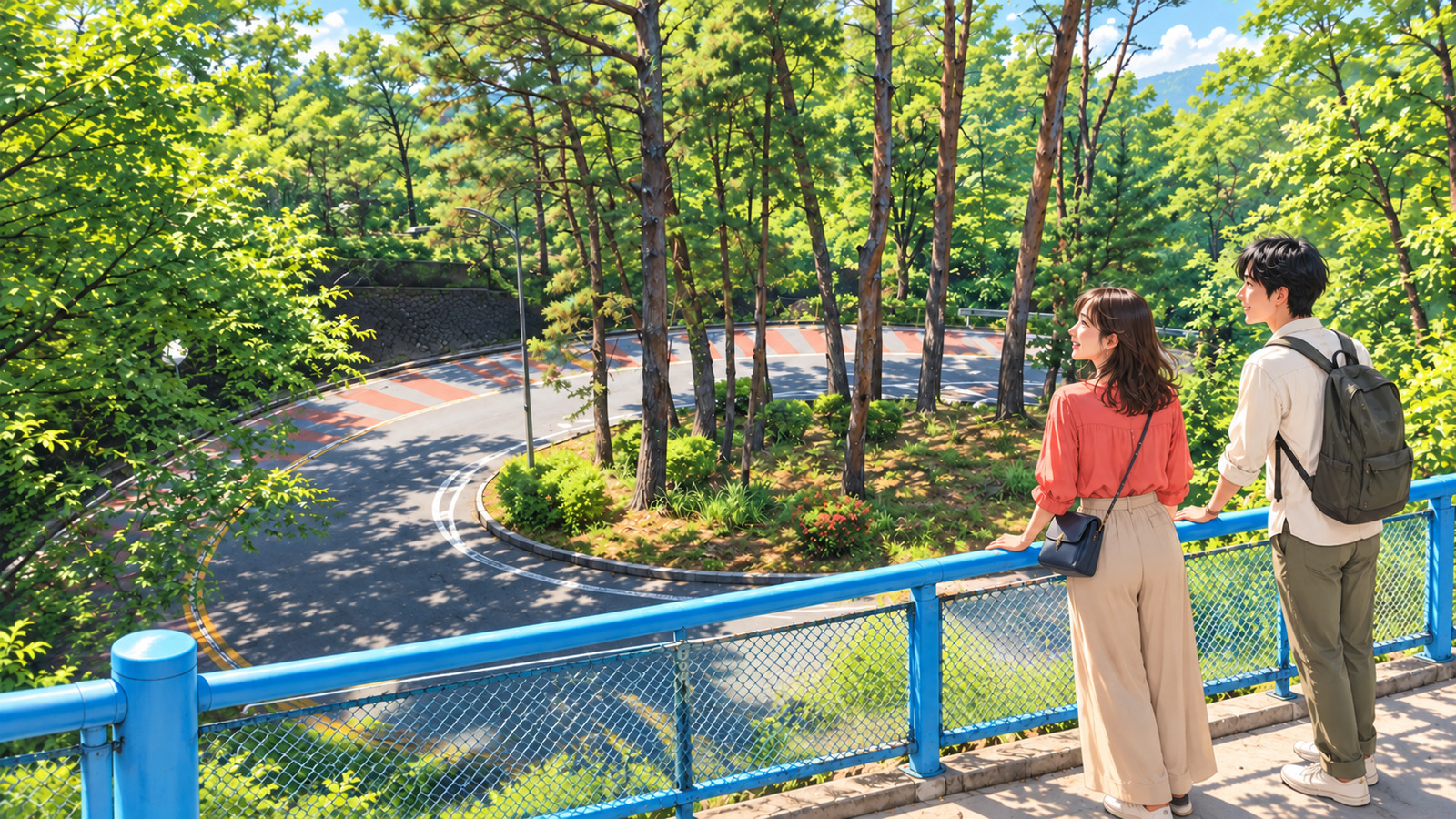
Crossing the Oguri River from Seiseki-Sakuragaoka Station and climbing in switchbacks toward the Sakuragaoka residential neighborhood is Irohazaka Slope, featured on Tama City's official tourism map as a landmark connected to Whisper of the Heart.
Walking up the public sidewalk along the slope offers views looking back over the station district and up toward the hilltop neighborhood home to Konpira Shrine and Haramine Park.
Sources: Tama City — Irohazaka Slope / Tama City Tourism Map
5Tokorozawa Station East Exit: The Monument of Totoro, Satsuki, and Mei

Because My Neighbor Totoro is set in the outskirts of Tokorozawa City, Saitama Prefecture, the city installed an official Totoro monument outside the East Exit of Tokorozawa Station to celebrate the 70th anniversary of Tokorozawa's municipal incorporation, created with the cooperation of Hayao Miyazaki and Studio Ghibli.
Standing in front of the Seibu Dai-2 Building inside the East Exit rotary without surrounding fences, the monument features Totoro, Satsuki, and Mei alongside a commemorative plaque that visitors can view up close from the plaza.
Sources: Studio Ghibli — Setting of Totoro / Tokorozawa City — Monument Installation & Unveiling
6Totoro’s Forest Tract No. 1: The Sayama Hills Deciduous Woods Protected by Donations
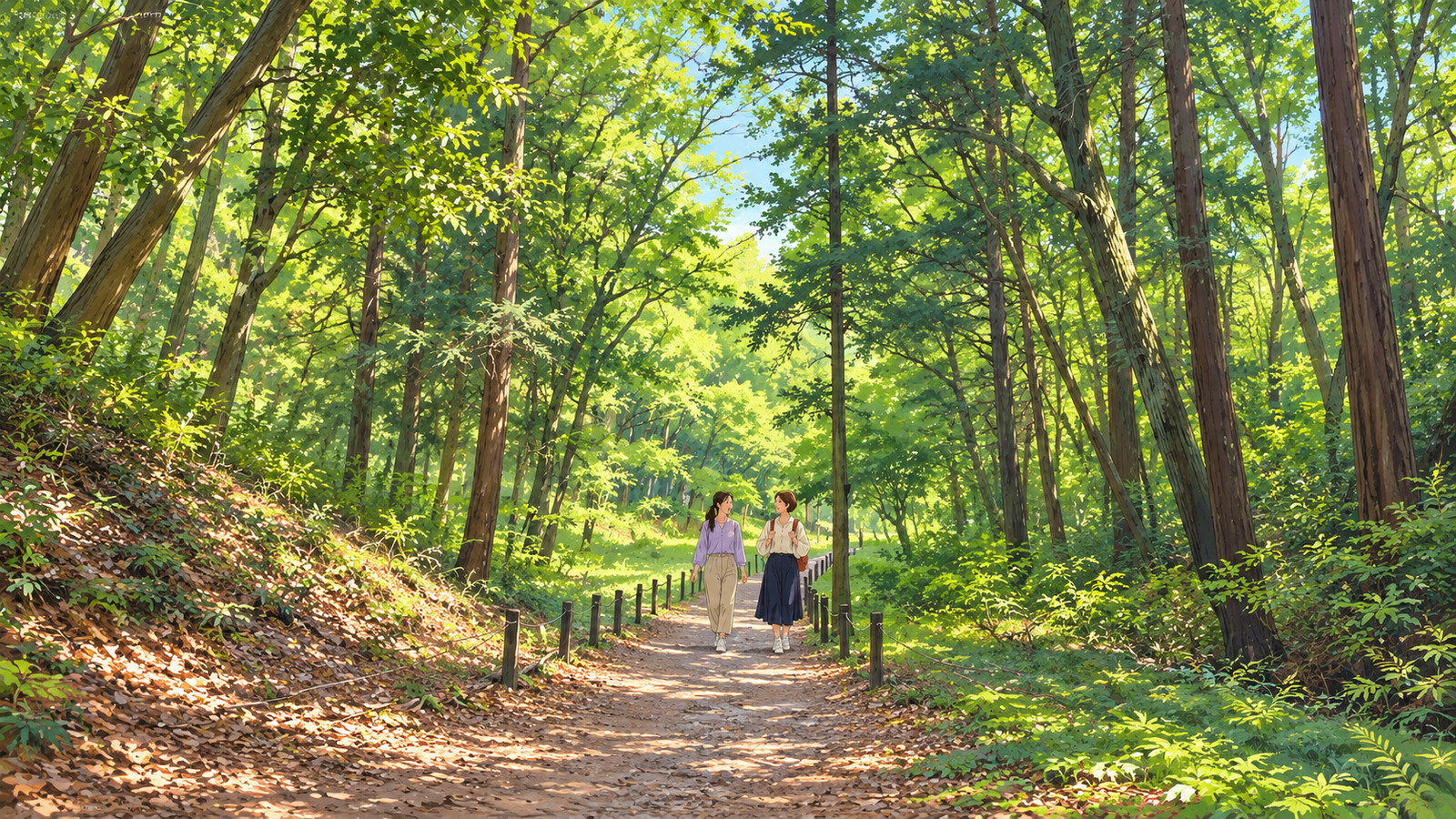
Across the Sayama Hills—one of the regional models for My Neighbor Totoro—the Totoro Fund (Totoro no Furusato Foundation) has been purchasing and preserving woodland tracts through public donations since 1990, acquiring 'Totoro's Forest Tract No. 1' on August 8, 1991 and expanding its protected network to 67 forest tracts as of June 2026.
Located in Zakoiri, Kamiyamaguchi, Tokorozawa City, Tract No. 1 is a coppice woodland of konara oak and cedar that visitors can admire from the designated public walking path.
Visitors must stay on the public trail without stepping inside the off-trail conservation forest, and there is no parking lot on site.
Sources: Totoro Fund — Forest Conservation & Walking Etiquette / Totoro's Forest Tract No. 1
7Kurosuke’s House: The Traditional Farmhouse Serving as the Base for Forest Conservation
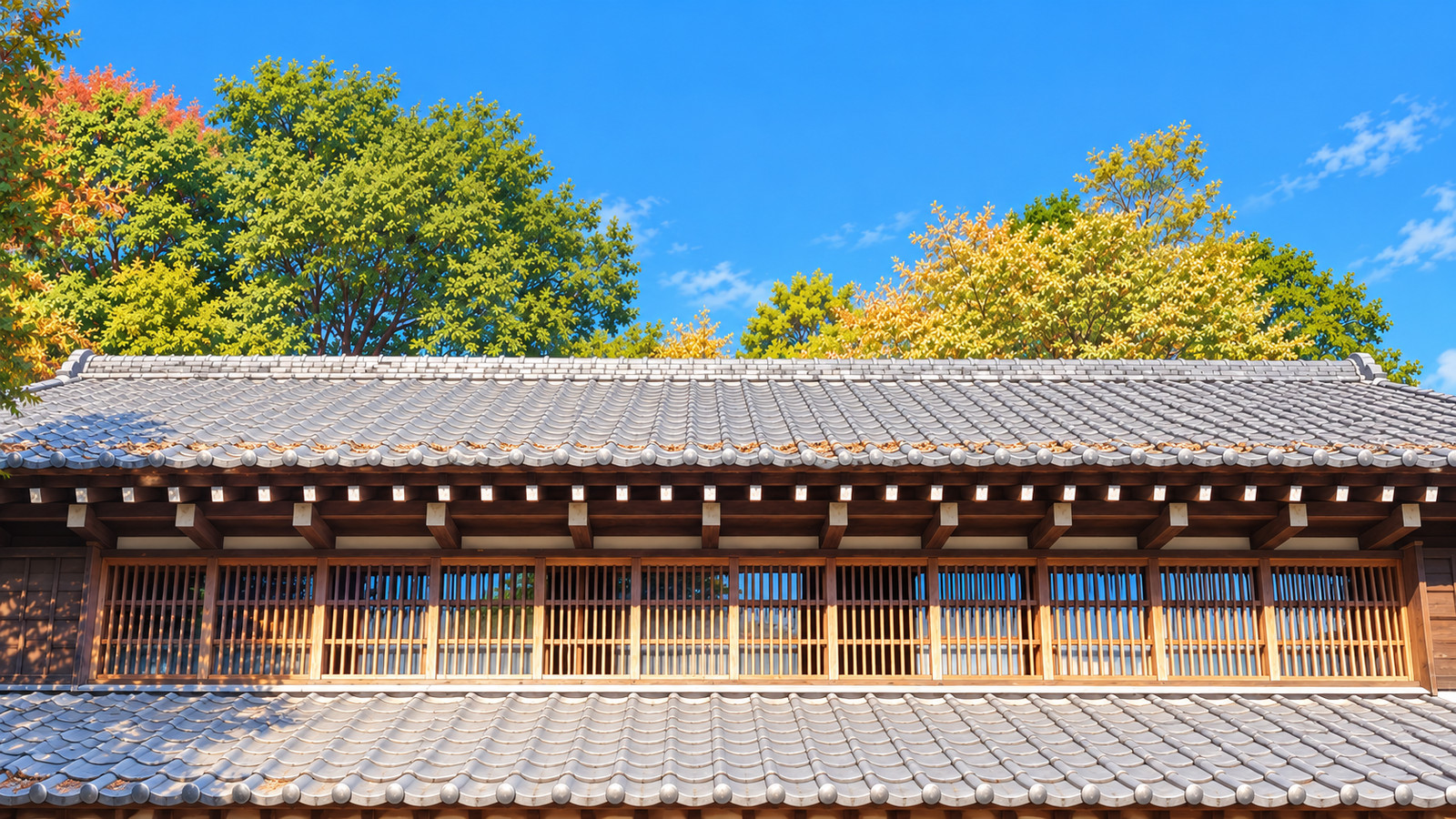
'Kurosuke's House' is a historic traditional farmhouse compound serving as the Totoro Fund's conservation headquarters, whose main house, storehouse, and tea-processing factory were designated Registered Tangible Cultural Properties of Japan in 2013.
Visits are strictly by advance reservation only during two time slots (10:00–12:00 and 13:00–15:00) on Tuesdays, Wednesdays, and Saturdays (closed on holidays and during temporary closures), with a 500-yen cash admission fee for elementary school students and older.
Located at 3-1169-1 Mikajima, Tokorozawa City (no parking lot), the house is reached by taking a bus bound for Dainichido from Kotesashi Station and walking from the bus stop.
Source: Totoro Fund — Kurosuke's House Visitor Guide
8Dogo Onsen Honkan: The Historic Hot Spring Bathhouse Incorporated into Spirited Away’s Aburaya
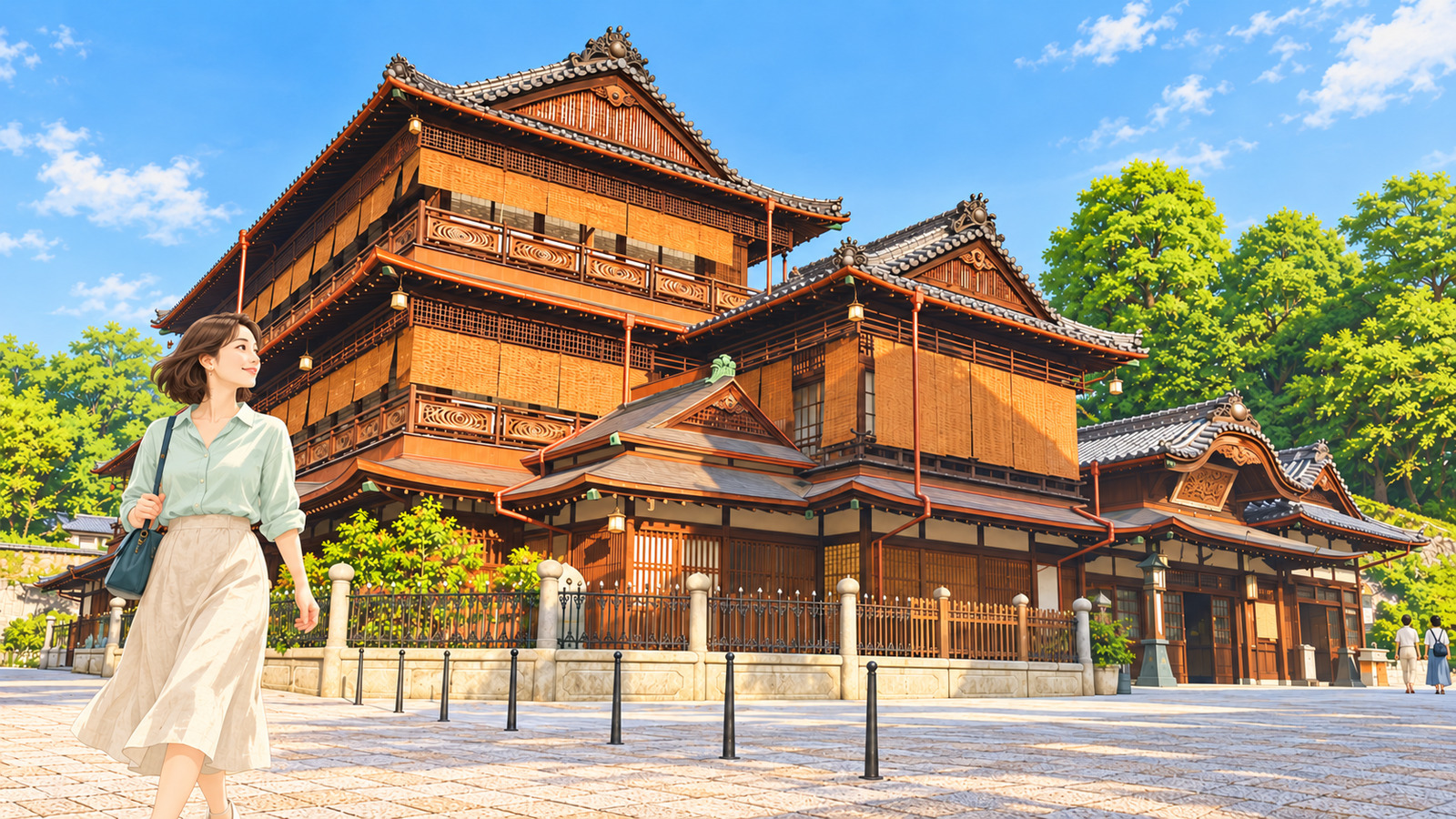
In Matsuyama, Ehime Prefecture, Dogo Onsen Honkan is one of the real-world hot spring bathhouses whose architectural elements were incorporated when creating the bathhouse 'Aburaya' in Spirited Away.
Designated in 1994 as the first public bathhouse in Japan to become an Important Cultural Property, Dogo Onsen Honkan houses the 'Kami-no-Yu' and 'Tama-no-Yu' baths beneath its rooftop Shinrokaku pavilion crowned by a white heron statue; after viewing the multi-tiered wooden roofs from outside, visitors can choose from bathing and upstairs rest-room courses.
Following preservation and repair work that began in 2019, the entire building resumed full operations on July 11, 2024 and completed all restoration work on December 20, 2024; located at 5-6 Dogoyunomachi, Matsuyama City, hours and rest rooms vary by course.
Sources: Ghibli PR Journal — Inspiration for Aburaya / Dogo Onsen Honkan — Architecture & Bathing Guide / Preservation Project & Full Reopening
9Edo-Tokyo Open Air Architectural Museum — Kodakara-yu: The Bathhouse That Sparked the Idea of a Bathhouse in a Shopping District
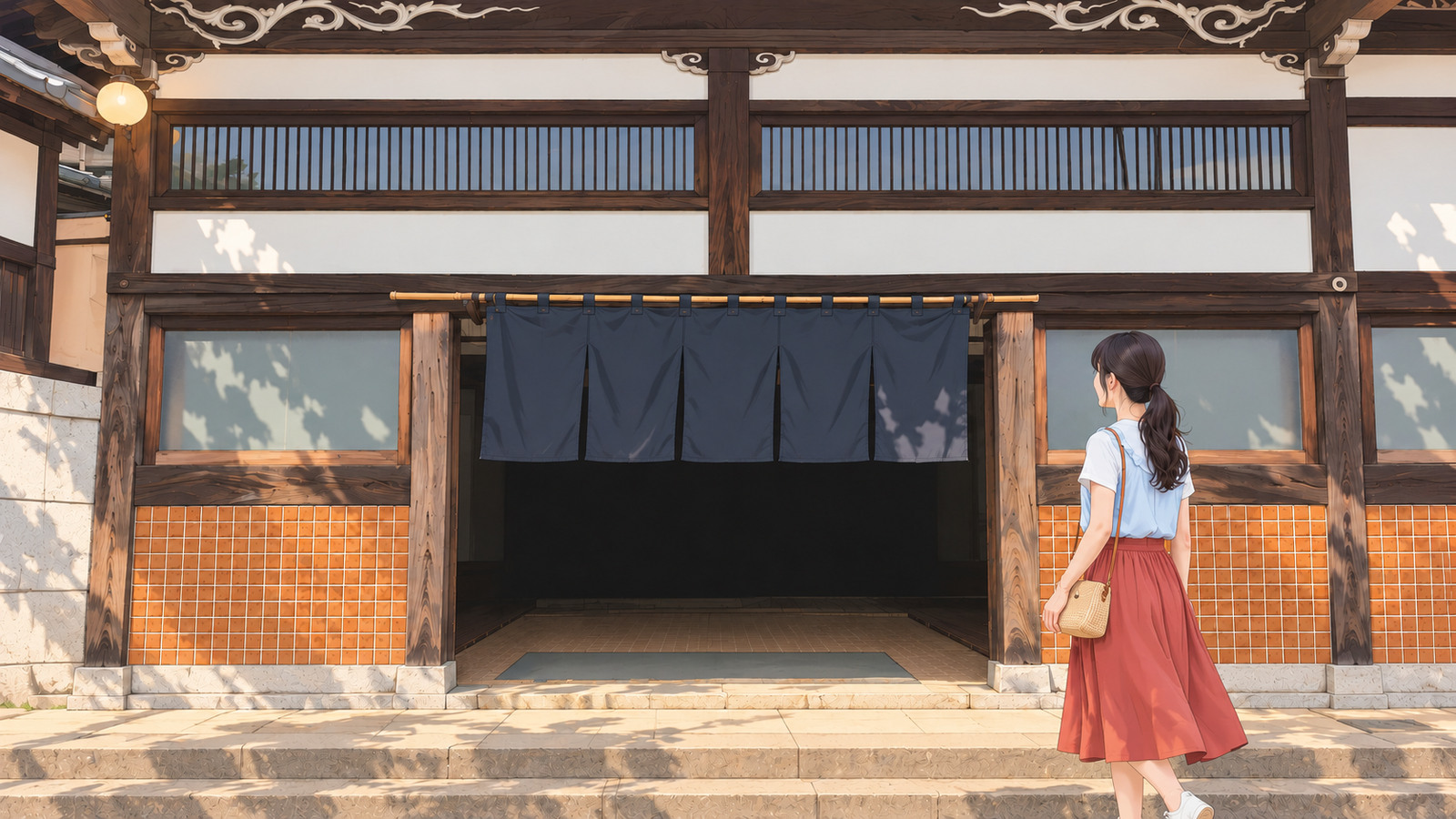
Preserved inside the Edo-Tokyo Open Air Architectural Museum in Koganei, Tokyo, the historic public bathhouse Kodakara-yu provided major inspiration for placing the bathhouse in Spirited Away along a traditional shopping street (in the film, 'yuya' refers to the bathhouse business type while 'Aburaya' is the shop's name).
Originally built in 1929 in Senju-Motomachi, Adachi Ward and relocated to the museum's East Zone, Kodakara-yu lets visitors step inside to examine Showa-era bathhouse architecture up close—including the karahafu curved gable and Seven Lucky Gods carvings above the entrance, the coffered dressing-room ceiling, and the tiled bath hall with its Mount Fuji mural.
Located inside Koganei Park at 3-7-1 Sakuracho, Koganei City, the museum is open from 9:30 to 16:30 (October–March) and 9:30 to 17:30 (April–September, last entry 30 minutes before closing; closed Mondays or Tuesday if Monday is a holiday), offering both advance date-specified online tickets and same-day tickets.
Sources: Ghibli PR Journal — Kodakara-yu & the Bathhouse Concept / Architectural Museum — Kodakara-yu Architecture / Bathhouse Interior & Mural / Hours & Closed Days / Admission Tickets
Deeper into Studio Ghibli Works: Stories Behind the Towns and Buildings
Here we connect the real neighborhoods and recreated buildings introduced above to the characters' lives—beginning with Shizuku and Seiji in Whisper of the Heart.
Whisper of the Heart: Shizuku and Seiji’s Story Beginning with Names on Library Checkout Cards
In Whisper of the Heart, book-loving third-year junior high school student Shizuku Tsukishima repeatedly notices the name 'Seiji Amasawa' written ahead of hers on the paper checkout cards inside the books she borrows from the school and municipal libraries—an unexpected encounter mediated through library books that sets the entire story in motion.
Seiji is earnestly studying the craft of violin making with the dream of training in Cremona, Italy, and fans exploring Whisper of the Heart today can experience both the real Tokyo hillside town referenced for the film's everyday streetscapes and the recreated antique shop and violin workshop inside Ghibli Park.
- Tama City, Tokyo
Slopes & Station
Walk the real hillside streets, switchback slopes, and station neighborhood referenced for the film.
- Ghibli Park, Aichi
Chikyuya
Step inside the furnished antique shop and view the 1st-floor violin-making workshop up close.
Adapted from the shojo manga originally serialized by Aoi Hiiragi, the 1995 animated theatrical feature was written, storyboarded, and produced by Hayao Miyazaki and marked the feature-length directorial debut of key animator Yoshifumi Kondo.
Sources: Ghibli Publishing — Whisper of the Heart / Film Production Credits / Chikyuya Violin Workshop
My Neighbor Totoro: Building the Kusakabe Family House in Real Life
Written and directed by Hayao Miyazaki with an orchestral score by Joe Hisaishi, the 1988 feature film My Neighbor Totoro is set in the rural outskirts of Tokorozawa, connecting the story directly to the station monument and the long-running Sayama Hills woodland conservation movement.
Satsuki and Mei's House was first built as a real, full-scale wooden house for the 2005 World Expo in Aichi under Hayao Miyazaki's overall supervision and Goro Miyazaki's architectural direction, relying on authentic early-Showa Japanese carpentry and joinery techniques to construct the Kusakabe family home that now anchors Dondoko Forest at Ghibli Park.
Sources: My Neighbor Totoro Credits / Ghibli Timeline — The 2005 Expo House / Ghibli Publishing — Building the House
Kiki and Sophie: Changing Lives and Callings in the World of Witches
Kiki's Delivery Service follows 13-year-old apprentice witch Kiki as she settles into a seaside town, launches a flying delivery service, and temporarily loses her ability to fly on her broom and converse with her black cat Jiji while learning to live on her own; in Valley of Witches, both her childhood family home and her bakery attic room are recreated in full detail.
Sources: Ghibli Publishing — Story of Kiki's Delivery Service / Valley of Witches — Kiki's Two Homes
In Howl's Moving Castle, 18-year-old hat-shop worker Sophie is transformed into a 90-year-old woman by the Witch of the Waste's curse and begins living as the live-in cleaning lady inside the wizard Howl's walking castle alongside the fire demon Calcifer—who powers the castle from its hearth—and Howl's young apprentice Markl.
Hayao Miyazaki began production on the film by sketching the moving castle itself—drawing its turrets, cannons, roofs, and chimneys while talking with producer Toshio Suzuki and deciding that chicken legs should carry the giant structure across the landscape—a distinctive design brought to physical life at Valley of Witches.
Sources: Studio Ghibli — Kiki & Jiji / Nippon TV — Sophie's Story & Castle Design
Princess Mononoke: The Demon God and San, Raised by the Wolf God
In Princess Mononoke, young Emishi warrior Ashitaka is struck by a deadly curse after defending his village from a giant boar turned into a rampaging Demon God (Tatari-gami) and journeys west to uncover the root of the curse, meeting San—a human girl raised by the mountain wolf god Moro—in the middle of the fierce conflict between the ironworks community of Tatara-ba and the ancient gods of the forest.
Except for a handful of digital compositing cuts, the writhing black tentacles of the Demon God were drawn almost entirely by hand by key animators, requiring 1 year and 7 months of production work just to complete the opening 2 minutes and 10 seconds of the film; meanwhile, the blind boar god Lord Okkoto—recreated as a large slide in Mononoke Village—is set in the story as a 500-year-old deity leading his clan from Chinzei in Kyushu.
Sources: Nippon TV — Story of Ashitaka & San / Studio Ghibli Q&A — Animating the Demon God & Lord Okkoto
Earwig and the Witch: A Girl Made a Witch’s Assistant and Studio Ghibli’s First Full 3DCG Feature
In Earwig and the Witch, 10-year-old orphan girl Earwig (Aya) grows up happily inside St. Morwald's Home for Children in England before being adopted by the eccentric witch Bella Yaga and the towering Mandrake to serve as a live-in witch's assistant—inside the exact cluttered workroom and bedroom recreated in Valley of Witches.
Based on the children's novel by British author Diana Wynne Jones, planned by Hayao Miyazaki, and directed by Goro Miyazaki as Studio Ghibli's first full-length 3DCG animated feature, the film first aired on NHK General TV on December 30, 2020 before opening in movie theaters nationwide with newly added animation cuts on August 27, 2021.
Sources: Studio Ghibli — Story of Earwig and the Witch / Theatrical Version Production & Release
From Project-by-Project Teams to a Studio Crafting Both Feature Films and Permanent Exhibits
The Studio in Kichijoji Born from the Success of Nausicaä of the Valley of the Wind
Following the critical and box-office success of the 1984 theatrical film Nausicaä of the Valley of the Wind, publishing house Tokuma Shoten founded Studio Ghibli in June 1985 on a single rented floor of a commercial building in Kichijoji, initially assembling roughly 70 production staff members on contract per film and disbanding the team as soon as each movie was completed.
On the new studio's first theatrical feature film Castle in the Sky (1986), Isao Takahata served as producer while Hayao Miyazaki wrote the original story, screenplay, and directed.
Source: Founding & Early Production System of Studio Ghibli
1988: Producing My Neighbor Totoro and Grave of the Fireflies Simultaneously as a Double Feature
In April 1988, the studio simultaneously produced and released Hayao Miyazaki's My Neighbor Totoro and Isao Takahata's Grave of the Fireflies in cinemas as an ambitious theatrical double feature; as licensed plush Totoro toys later grew popular across Japan, Totoro was adopted as the studio's official corporate emblem.
Following the major box-office success of Kiki's Delivery Service in 1989, Studio Ghibli transitioned in November 1989 from per-project contracts to a permanent salaried staff employment system with in-house training for newly hired animators, and relocated to its purpose-built studio headquarters in Koganei City in August 1992.
Sources: Studio Ghibli — 1988 Double Feature & Salaried Staff Transition / Studio & Headquarters Timeline
Digital Paint on Princess Mononoke and Exhibiting the Filmmaking Process at the Museum
On the 1997 blockbuster release Princess Mononoke, Studio Ghibli introduced digital paint and compositing technology for the first time in its history and subsequently established a full-scale in-house CG unit.
In 2001, the studio released Spirited Away in July and opened Ghibli Museum, Mitaka on October 1; designed from the ground up by Hayao Miyazaki himself, the museum's permanent gallery rooms turn the studio's real hand-drawn animation workflow into tactile exhibits for visitors.
Sources: Studio Ghibli Production Technology & Museum / October 2001 Museum Diary
Performing Character Voices and Animating the Motion of Cooking
Actress Yuriko Ishida, who voiced both San and Kaya in Princess Mononoke under repeated takes and detailed direction from Hayao Miyazaki in the recording booth, later visited Ghibli Park in person and spotted the white wolf gods mounted on the Valley of Witches carousel—affectionately calling out to them as San's younger brothers.
During production on Howl's Moving Castle, the key animator assigned to draw the scene of Sophie frying thick-sliced bacon and eggs over Calcifer's hearth videotaped real cooking at home as a live-action motion reference—and visitors today can see that very hearth recreated on the 1st floor of Howl's Castle inside the park.
Sources: Yuriko Ishida — Recording Memories & Park Visit / Ghibli Production Diary — Reference Footage for the Cooking Scene
From Theatrical Releases to the Museum and Five Park Areas
- Mar 1984Nausicaä of the Valley of the Wind opens in theatersFeatured Work
- Jun 1985Studio Ghibli is founded in KichijojiProduction
- Aug 1986Castle in the Sky opens in theatersFeatured Work
- Apr 16, 1988My Neighbor Totoro and Grave of the Fireflies open as a double featureFeatured Work
- Jul 1989Kiki's Delivery Service opens in theatersFeatured Work
- Nov 1989Salaried staff system and new-animator training launchProduction
- Aug 1992Studio relocates to new headquarters in KoganeiProduction
- Jul 15, 1995Whisper of the Heart directed by Yoshifumi Kondo opensFeatured Work
- Jul 1997Princess Mononoke opens in theatersFeatured Work
- Jul 2001Spirited Away opens in theatersFeatured Work
- Oct 1, 2001Ghibli Museum, Mitaka opensRelated Facility
- Oct 2002Museum short film Mei and the Kittenbus debutsVideo & Film
- Mar 2005Satsuki and Mei's House opens at Expo 2005 AichiRelated Facility
- Dec 30, 2020Full-3DCG feature Earwig and the Witch airs on NHKFeatured Work
- Aug 27, 2021Expanded theatrical cut of Earwig and the Witch opensFeatured Work
- Nov 1, 2022First three areas of Ghibli Park openRelated Facility
- Nov 1, 2023Mononoke Village opens at Ghibli ParkRelated Facility
- Mar 16, 2024Valley of Witches opens, completing all five areasRelated Facility
- Jul 8, 2026Screening of short film Night in the Valley of Witches beginsVideo & Film
From the 2005 Expo House to All Five Areas Completing Ghibli Park in 2024
Ghibli Park opened its first three areas—Ghibli's Grand Warehouse, Hill of Youth, and Dondoko Forest (built around the preserved 2005 Expo Satsuki and Mei's House)—on November 1, 2022 inside Expo 2005 Aichi Commemorative Park.
Mononoke Village opened one year later on November 1, 2023, followed by Valley of Witches on March 16, 2024 to complete all five planned areas of the park.
Sources: Aichi Official Tourism — Opening of the First Three Areas / Opening of Mononoke Village & Valley of Witches
Aichi Tourism Film Produced by Studio Ghibli: ‘Become the Wind, Let’s Play.’
'Become the Wind, Let's Play.' (Kaze ni Natte, Asobou.) is an official tourism promotional video produced by Studio Ghibli that pairs sweeping aerial footage of Aichi Prefecture's natural landscapes and historic towns with Ghibli visuals.
Source: Aichi Now — Tourism Video Produced by Studio Ghibli
Covering All Five Areas: New Edition: Ghibli Park Official Guidebook
Published on June 28, 2024, the New Edition: Ghibli Park Official Guidebook is an 184-page A5 full-color guide edited by Studio Ghibli, published by Ghibli Park, and distributed in bookstores by Tokuma Shoten covering all five park areas through Valley of Witches alongside interviews with Hayao Miyazaki and Goro Miyazaki.
Featuring original illustrations drawn by Katsuya Kondo, Akihiko Yamashita, Yoji Takeshige, and Takeshi Honda, the guidebook introduces the architecture and highlights of each building and exhibit while visitors check the official Ghibli Park website for current ticket categories and short-film screening schedules.
Sources: Ghibli Park — New Edition Guidebook Contents / Tokuma Shoten — Bibliography
Lab Note | From a Business Perspective: Creating Distinct Experiences Through Real Streetscapes and Recreated Architecture
For Whisper of the Heart, Tama City offers real hillside switchback slopes and station streetscapes while Ghibli Park offers the recreated interior and violin-making workshop of Chikyuya—showing how a single animated film can inspire both open-air neighborhood walks and visits to architectural museum exhibits.
Because visiting conditions differ sharply between an unfenced station rotary monument, an advance-reservation museum, and a volunteer-preserved conservation forest trail, pairing each location's story connection with clear reservation rules and open public areas helps travelers prepare properly before setting out.
Official Sources & Primary References
- Studio Ghibli — Works & Locations Q&A
- History of Studio Ghibli
- Studio Ghibli Timeline
- Ghibli Museum, Mitaka
- Ghibli Park
- Tama City Whisper of the Heart Locations
- Tokorozawa Totoro Monument
- Totoro Fund (Totoro no Furusato Foundation)
Exhibition dates, opening hours, admission fees, and ticket details are current at the time of writing. Always check the official websites for the latest schedule updates before setting out on your pilgrimage visit.
FAQ
Which town inspired the streetscapes of Whisper of the Heart?
The neighborhood around Seiseki-Sakuragaoka Station in Tama City, Tokyo served as a major visual reference for the film, featuring the 'Youth Postbox' outside the West Exit and the winding Irohazaka slope ascending the hill.
Which locations are connected to My Neighbor Totoro?
The film is set in the outskirts of Tokorozawa City, Saitama Prefecture, where a Totoro monument created with Studio Ghibli's cooperation stands outside the East Exit of Tokorozawa Station and the Totoro Fund preserves forest tracts across the Sayama Hills.
Does Ghibli Museum, Mitaka require advance reservations?
Yes. All admission is by advance date-and-time reservation only, with no same-day ticket sales at the museum window. Each admission ticket includes one screening of an original short film inside the Saturn Theater.
Is there a ticket that covers all five areas of Ghibli Park?
Yes. The O-Sanpo Day Pass Premium covers all five areas of Ghibli Park as well as admission inside all major buildings; other advance-reservation ticket types cover different combinations of areas and building interiors.
Can visitors enter inside Satsuki and Mei's House at Ghibli Park?
Yes. Located in Dondoko Forest, Satsuki and Mei's House can be toured inside with ticket types that include interior building entry, allowing visitors to see the recreated kitchen, bath, tatami sitting room, and Western-style study.
How is Dogo Onsen Honkan connected to Spirited Away?
The bathhouse 'Aburaya' in Spirited Away was drawn by combining elements from multiple historic hot spring bathhouses, and Dogo Onsen Honkan in Matsuyama is one of those official inspirations; visitors can choose from bathing and rest courses inside.
Can visitors walk freely inside Totoro's Forest Tract No. 1?
To protect the woodland ecosystem, visitors cannot step inside the off-trail conservation zone itself and instead view the forest from the public walking paths; note that Tract No. 1 has no parking lot.
How can I visit Kurosuke's House in Tokorozawa?
Visits are strictly by advance reservation only on Tuesdays, Wednesdays, and Saturdays (excluding national holidays), with a 500-yen cash admission fee for elementary school students and older.
Can visitors bathe in Kodakara-yu at the Edo-Tokyo Open Air Architectural Museum?
No. Kodakara-yu is a preserved 1929 public bathhouse relocated to the open-air museum as an architectural exhibit, where visitors can step inside to admire its carved gable, coffered dressing-room ceiling, and Mount Fuji bath mural.
More in Pilgrimage

Weathering With You Pilgrimage Guide: Tabata Slopes, Shiba Park, Weather Shrine & Kozushima Ferry

Suzume Pilgrimage Guide: Bungo-Mori Roundhouse, Orikasa Station & Michi-no-Eki Oya Coast
