
Suzume Pilgrimage Guide: Bungo-Mori Roundhouse, Orikasa Station & Michi-no-Eki Oya Coast
From Orikasa Station—which appears near the end of the film—and the seaside rest stop Michi-no-Eki Oya Coast where Suzume and her companions stop to eat, to Bungo-Mori Roundhouse Park in Oita Prefecture, known as the real-world motif for the fan-shaped locomotive depot, this guide traces the journey of Suzume through real railway stations and coastal landmarks.
The story begins when 17-year-old Kyushu high school student Suzume Iwato crosses paths with Souta Munakata, a young man traveling across Japan to lock mysterious doors. Here we visit the real-world locations connected to their journey alongside the replica door built in Yamada Town after the film's release.
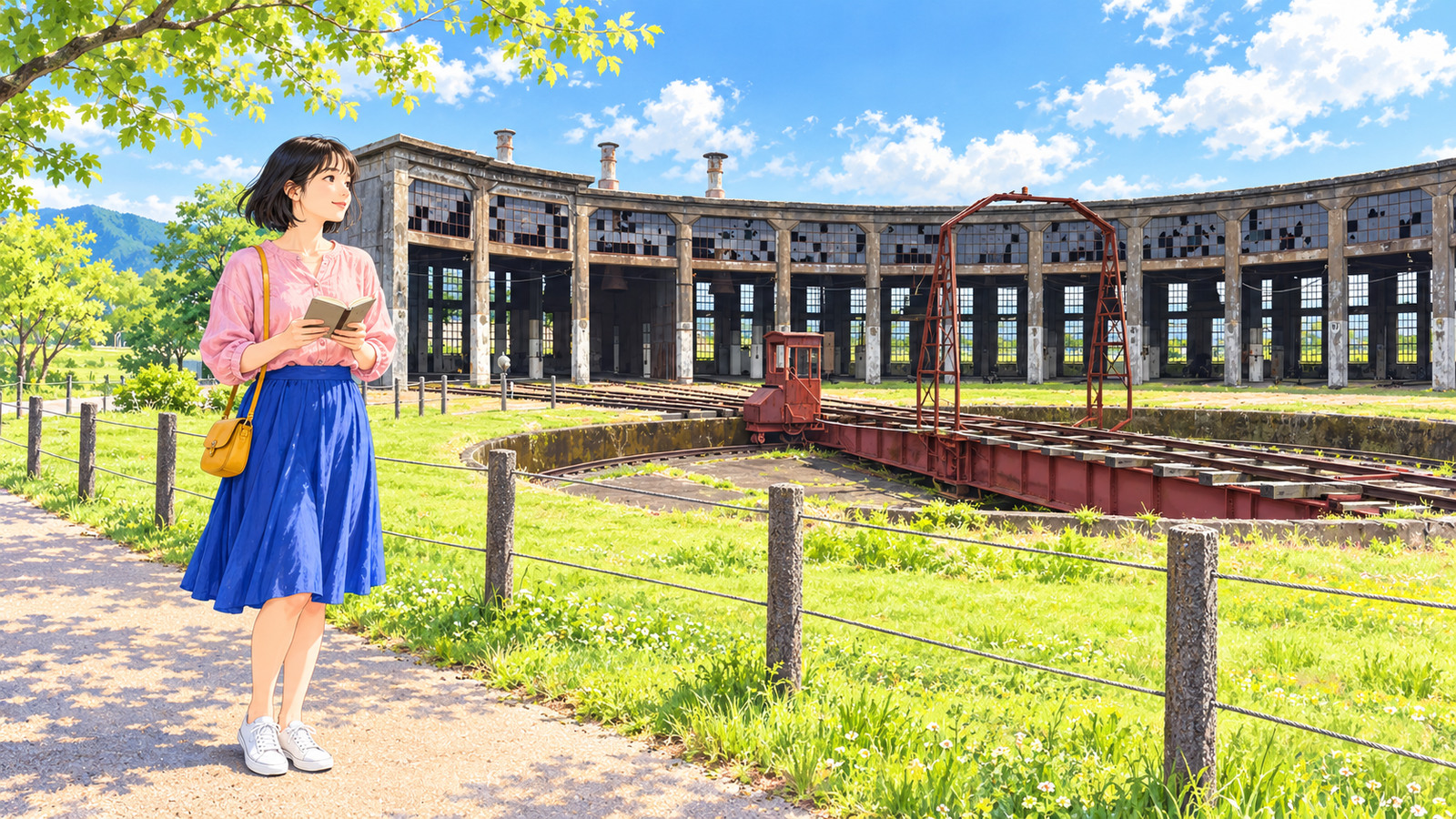
Visiting the Locomotive Roundhouse, Sanriku Railway Station, and Coastal Roadside Station
① Bungo-Mori Park · Kusu Town, Oita
A registered tangible cultural property recognized as the motif for the fan-shaped locomotive depot, featuring a turntable and preserved steam locomotive.
Read the Complete Pilgrimage Guide & Access Notes for Bungo-Mori Roundhouse Park (Kusu Town, Oita)② Orikasa Station · Yamada Town, Iwate
A Sanriku Railway station relocated after the 2011 earthquake that appears in the closing chapters of the film.
Read the Complete Pilgrimage Guide & Access Notes for Orikasa Station (Yamada Town, Iwate)③ Yamada Bay Deck · Yamada Town, Iwate
A hilltop viewpoint overlooking Yamada Bay where a replica door was installed after the film's release.
Read the Complete Pilgrimage Guide & Access Notes for Yamada Bay Observation Square (Yamada Town, Iwate)④ Oya Coast Station · Kesennuma, Miyagi
The seaside roadside station where Suzume and her companions take a break, offering local dining and shopping.
Read the Complete Pilgrimage Guide & Access Notes for Michi-no-Eki Oya Coast (Kesennuma, Miyagi)⑤ Ochanomizu Stn. · Chiyoda Ward, Tokyo
The railway station featured in the Tokyo sequence (note that the release-period decorative photo spot has ended).
Read the Complete Pilgrimage Guide & Access Notes for Ochanomizu Station (Chiyoda Ward, Tokyo)
1Bungo-Mori Roundhouse Park: The Fan-Shaped Locomotive Depot and Turntable
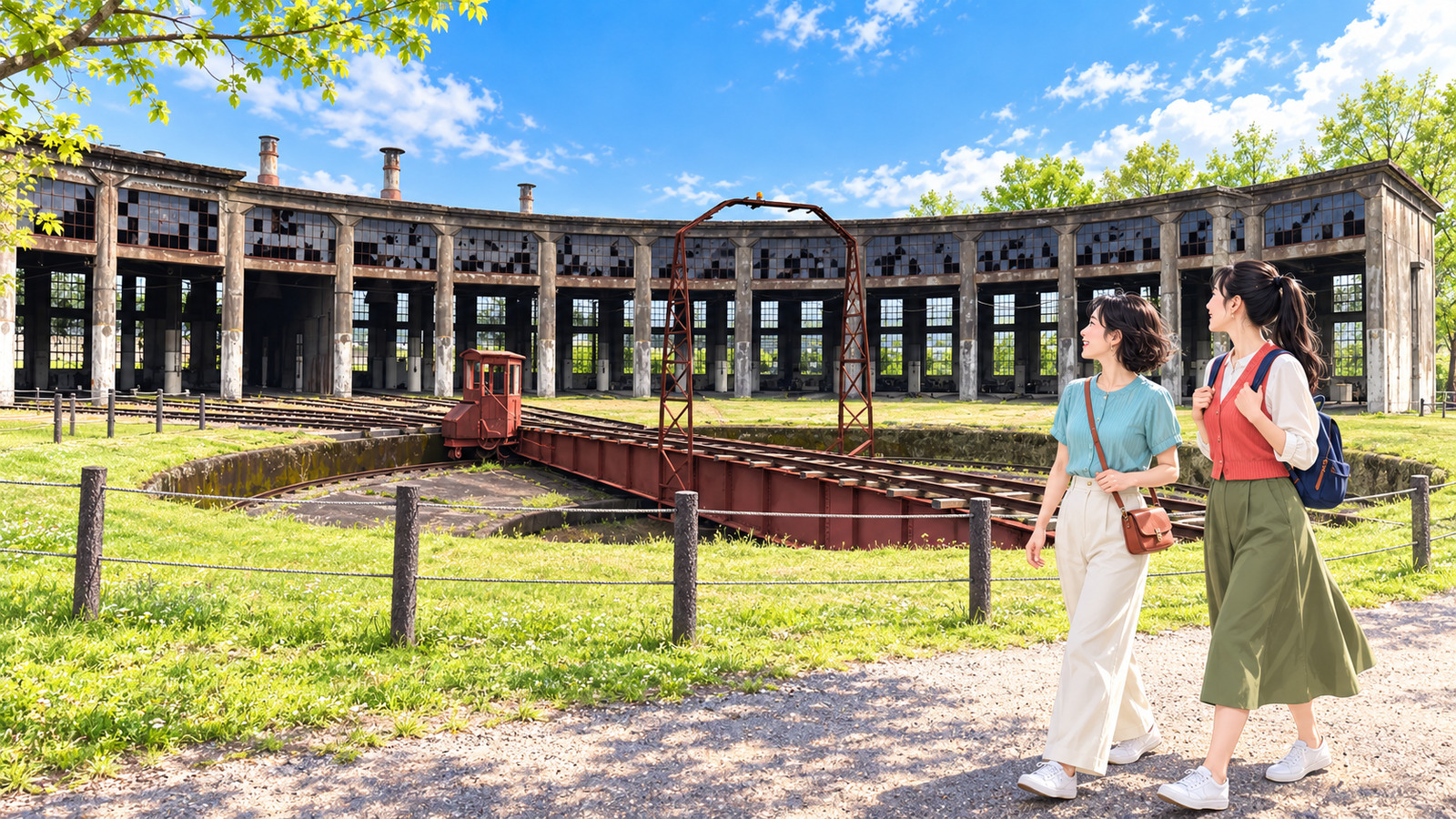
At Bungo-Mori Roundhouse Park in Kusu Town, Oita Prefecture, a fan-shaped concrete locomotive roundhouse and a central turntable for rotating steam engines still stand intact—widely recognized as the real-world motif for the abandoned roundhouse featured in Suzume.
A roundhouse is a specialized railway facility built to house, inspect, and service locomotives. Using the central turntable to rotate each engine to the proper angle, crews moved locomotives onto the radiating storage tracks inside the fan-shaped building. Measuring 18.5 meters in diameter, the turntable and the roundhouse are both designated Registered Tangible Cultural Properties of Japan, and visitors can view their exterior structure from the open public park grounds.
When the Kyudai Main Line opened along its entire route in 1934, the Bungo-Mori Locomotive Depot was established on this site to replenish coal and water and to attach or switch helper locomotives for trains climbing the steep mountain gradient of Mizuwake Pass. At its peak in 1948, 25 steam locomotives were stationed here and 217 railway employees worked at the depot, before the nationwide transition away from steam traction led to the depot's closure in 1971.
Bullet marks from wartime strafing by aircraft on August 4, 1945 still remain visible on the exterior walls of the structure, and preserved steam locomotive No. 29612 stands on the park grounds so visitors can view the fan-shaped concrete depot, the turntable, and an actual steam engine all together in one place.
On the same site stands the Bungo-Mori Roundhouse Museum, which introduces the history of the locomotive depot alongside railway carriage designs, sketches, and reference materials by industrial designer Eiji Mitooka. Located at 36-15 Iwamuro, Kusu Town, Kusu District, Oita Prefecture, the park is within walking distance of JR Bungo-Mori Station.
The museum is normally open from 10:00 to 16:00 and closed on Mondays (or the following weekday if Monday is a national holiday) as well as over the New Year holidays; viewing the exterior of the roundhouse in the park is separate from entering the museum, where admission is 100 yen for junior high school students and older.
Sources: Kusu Town Tourist Association — Bungo-Mori Roundhouse Park / Kusu Town — Bungo-Mori Roundhouse Museum
2Orikasa Station: The Sanriku Railway Station in Yamada Town
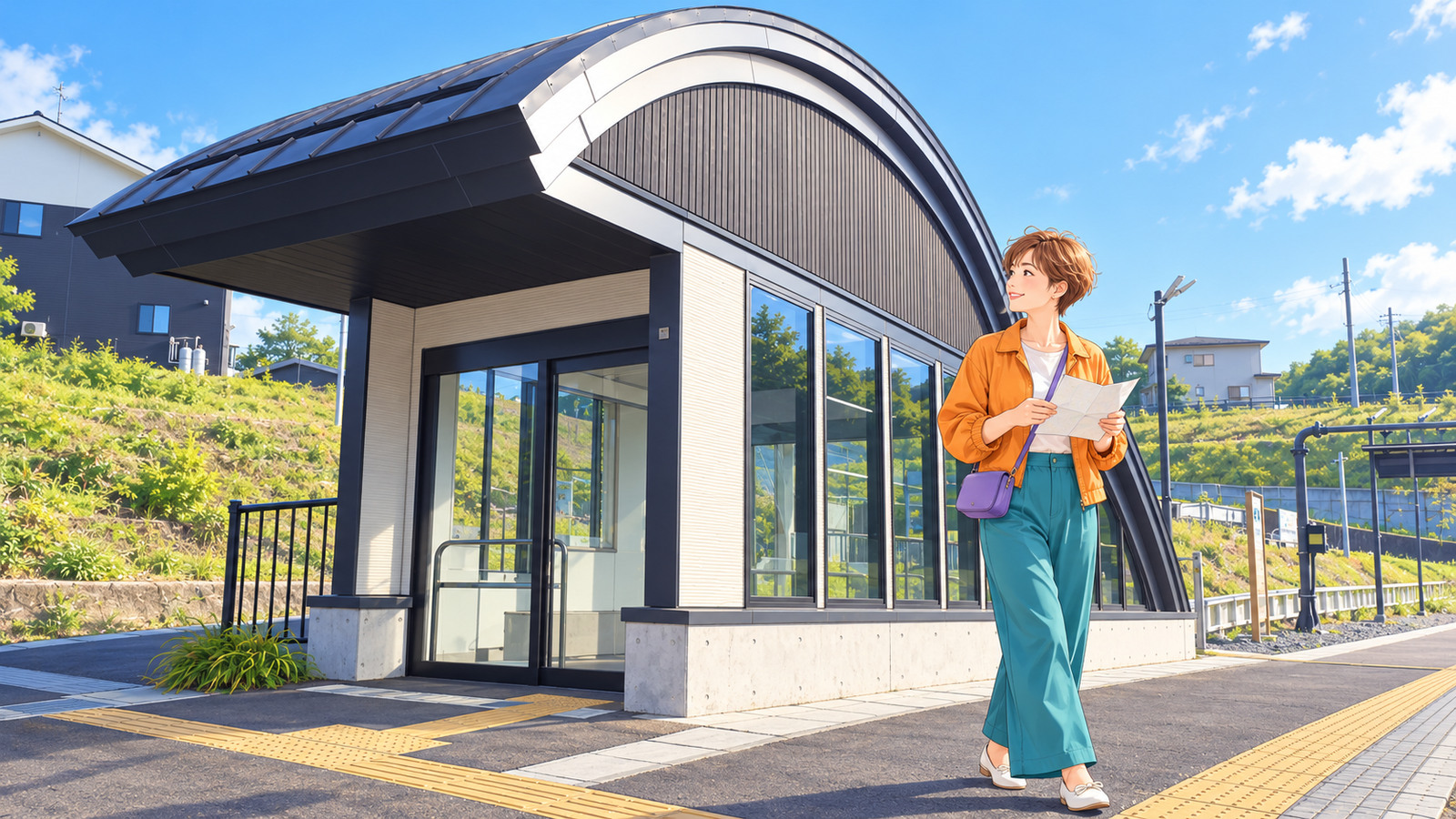
Located in Yamada Town, Iwate Prefecture, Orikasa Station appears in the closing chapters of the film, which faithfully depicts the station building exterior and the station name sign on screen.
An unstaffed station on the Sanriku Railway Rias Line, Orikasa Station was relocated approximately 1 kilometer north of its original location after the former station building was destroyed in the 2011 Great East Japan Earthquake, supporting everyday rail travel for residents living in the nearby post-reconstruction housing complex.
On March 23, 2019, the former JR Yamada Line section between Miyako and Kamaishi was transferred to Sanriku Railway, uniting the northern and southern coastal sections into the through-running Rias Line that serves Orikasa Station today. The station has a barrier-free access ramp and a small number of free parking spaces, though there is no public restroom on site; if you visit by train, check the Sanriku Railway timetable for return train times in advance.
Sources: Yamada Town Tourism Association — The Film & Town Scenery / Kesennuma Official Tourism — Director Shinkai's Screening Comments / Sanriku Railway Official Site / Opening of the Rias Line
3Yamada Bay Observation Square: A Replica Door Built to Welcome Visiting Fans

At Yamada Bay Observation Square stands a freestanding replica of the film's 'Back Door' (Ushirodo), installed after the film's theatrical release by the Yamada Town Tourism Association to welcome fans visiting Orikasa Station and the surrounding coast. Visitors can physically open and close the door, framing the calm waters of Yamada Bay beyond the open doorframe.
From the wooden observation deck, visitors can also look out across the bay toward Oranda Island, enjoying a hilltop coastal panorama of sea and islands paired with a door inspired by the story.
Located at 111-9 Orikasa Dai-11 Chiwari, Yamada Town, the observation square provides parking spaces for cars and can also be reached on foot from Orikasa Station.
Sources: Yamada Town Tourism Association — Yamada Bay Observation Square / Background on Installing the Replica Door
4Michi-no-Eki Oya Coast: The Seaside Rest Stop Where Suzume and Friends Share a Meal
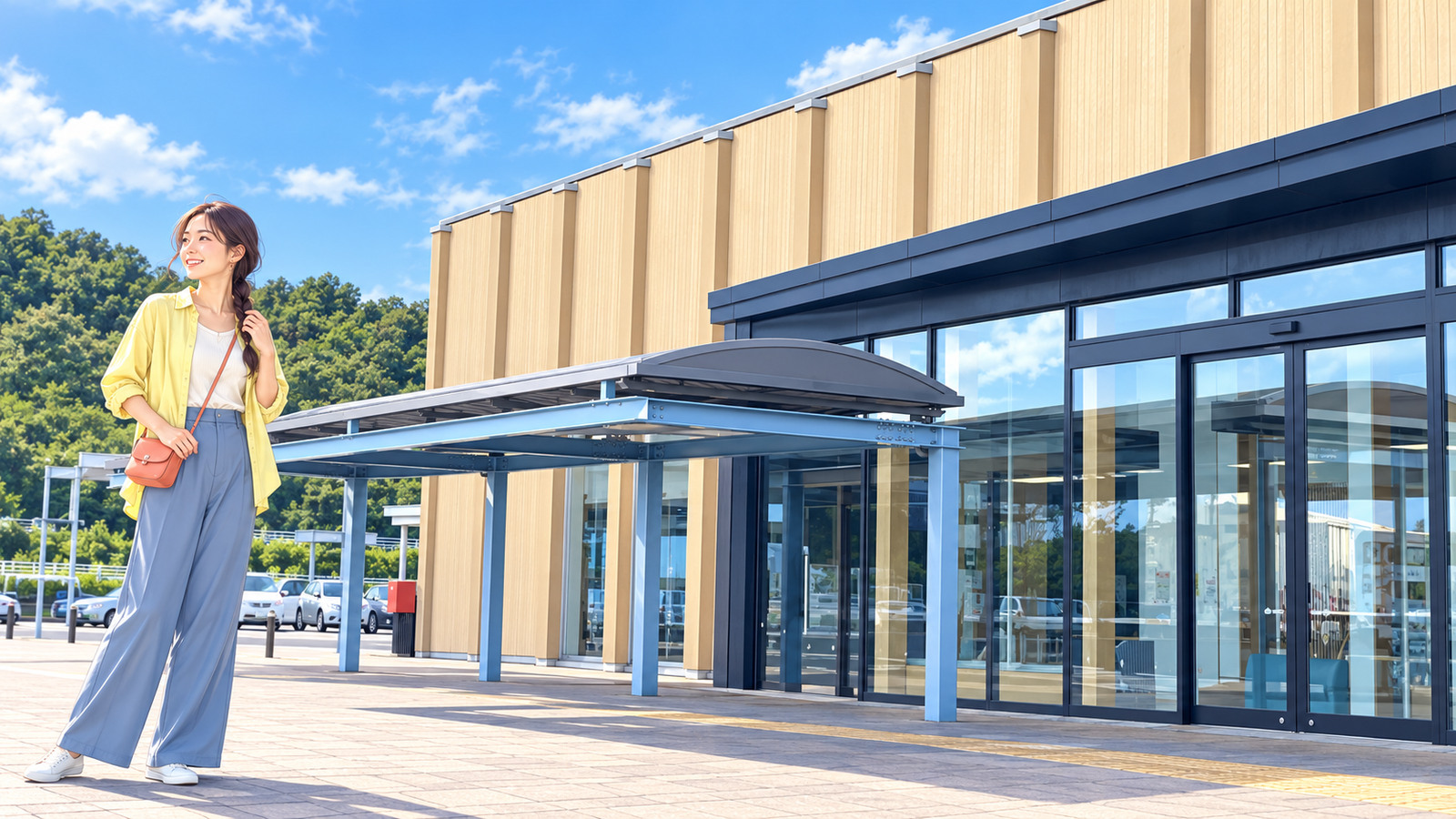
Located in Kesennuma, Miyagi Prefecture, Michi-no-Eki Oya Coast is the seaside roadside station where Suzume and her companions stop to rest and eat in the final act of the film. Director Makoto Shinkai chose this facility for the scene because it had been newly rebuilt as a community hub after the 2011 earthquake, and the ramen and soft-serve ice cream shown on screen are modeled directly after real menu items served on site.
During location scouting for the film, Director Shinkai himself ate ramen and soft-serve ice cream at the roadside station, while assistant director Yoko Miki searched for a distinctive local food item and proposed the peanut-cream sandwich bread that also appears in the rest-stop scene—incorporating both the real building and the local foods the crew encountered during research.
After the original roadside station was completely destroyed in the 2011 tsunami, staff resumed temporary operations in July of that year and continued serving travelers from interim buildings before opening the newly reconstructed permanent facility on March 28, 2021—ten years after the disaster.
Inside the current building, visitors will find an arched corridor inspired by fish bones and warm interiors crafted from Miyagi timber, along with ocean sunfish projection mapping and a 2nd-floor oceanview terrace where guests can relax in addition to shopping at the local produce and seafood market.
Along the corridor in front of the tourist information counter inside the building, chairs are arranged in a layout closely resembling the film's rest scene—though the crane game seen in the film actually stands near the entrance in real life. Note that the covered parking space resembling the rain-shelter scene is a designated 'Omoiyari Parking' space reserved for visitors with mobility needs and must never be used to park cars for staged photography.
Housing a farmers' and seafood market, cafeteria, and fast-food counter at 9 Mishima, Motoyoshi-cho, Kesennuma City, the facility is accessible via Oya-Kaigan Station on the JR Kesennuma Line BRT or by car via the Oya-Kaigan Interchange on the Sanriku Expressway.
Standard operating hours are 9:00 to 18:00 for the farmers' market, 10:00 to 16:00 for the cafeteria, and 9:00 to 16:00 for the fast-food counter; because shopping and dining hours differ, visitors coming specifically to try the foods from the film should time their arrival for dining hours and check same-day menu availability on site.
Sources: Kesennuma Official Tourism — Director Shinkai's Screening Comments / Michi-no-Eki Oya Coast in the Film / Michi-no-Eki Oya Coast Facility Guide / Kesennuma City Newsletter — 2021 Reopening
5Ochanomizu Station: The Riverside Railway Station Featured in the Tokyo Sequence
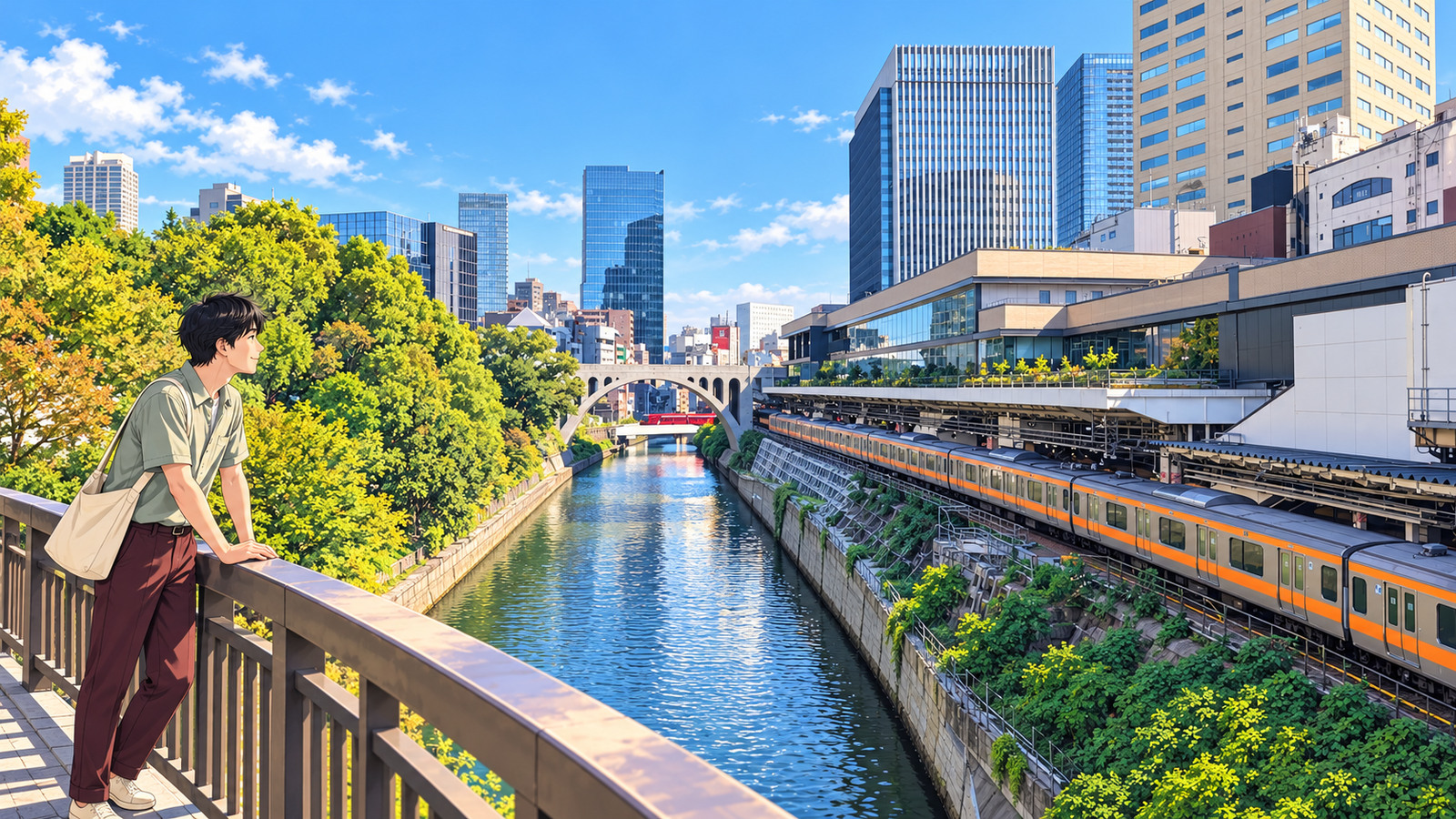
In Tokyo, JR Ochanomizu Station appears in the film's pivotal capital sequence, with railway platforms running along the steep Kanda River gorge and two main exits: the Ochanomizubashi Exit and the Hijiribashi Exit.
Following the film's theatrical release, the newly rebuilt Hijiribashi Exit station building entered service on December 3, 2023, and on March 31, 2025 an approximately 500-square-meter station plaza opened in full with stairs leading directly up from the plaza to Hijiribashi Bridge.
Spanning the gorge right beside the station, Hijiribashi Bridge was completed in 1927 as a post-Great Kanto Earthquake reconstruction bridge. Designed by architect Mamoru Yamada, it combines a grand concrete arch crossing the Kanda River with smaller arches over the railway tracks and street, taking its name ('Holy Bridge') from the two religious sanctuaries on either bank: Yushima Seido and Nikolai-do.
From atop Hijiribashi Bridge visitors can look down over the Kanda River and Ochanomizu Bridge, while the station platforms frame the underside of Hijiribashi's arch—creating the signature Ochanomizu landscape where riverbanks, bridges, and riverside train lines intersect.
During the film's initial theatrical run from November 2022 to early January 2023, special promotional decorations and a door photo spot were installed at the Ochanomizubashi Exit for a limited time.
Sources: JR East — Ochanomizu Station in the Film & Release Campaign / Hijiribashi Exit Station Building Opening / Station Plaza Completion / Chiyoda Ward — Architecture & Views of Hijiribashi
Deeper into the Work: The Journey and Characters of Suzume
Here we explore what the freestanding doors and three-legged chair represent in the story starting from Suzume and Souta's first encounter, alongside the people who help them across Japan and the voice acting and music that shaped their journey.
A High School Girl in Kyushu and the ‘Closer’ Who Locks Doors
Written, created, and directed by Makoto Shinkai, Suzume (Suzume no Tojimari) is an animated feature film whose protagonist is 17-year-old high school student Suzume Iwato, who lives with her aunt in a quiet port town in Kyushu and crosses paths on her way to school with a young traveler named Souta Munakata searching for a door.
Souta's calling is that of a 'Closer' (Tojishi)—someone who travels to abandoned places across Japan to lock freestanding doors before disaster can spill out from the other side. Drawn to a weathered door standing upright in a mountain ruin, Suzume reaches out to open it and is swept into a nationwide chain of events.
When a talking white cat named Daijin appears and transforms Souta's body into a small yellow chair—the three-legged childhood chair Suzume has treasured since she was a little girl—Suzume sets off across Japan together with the running chair-shaped Souta to lock doors one by one.
Spanning Kyushu, Shikoku, Kansai, Tokyo, and Tohoku, Suzume's journey carries her by ferry, train, and car as warmhearted people she meets in each region lend a hand to help her and Souta close the doors.
The People Who Support Suzume’s Daily Life and Journey Across Japan
Tamaki Iwato | The Aunt Who Raised Suzume
Suzume's aunt who lives with her in Kyushu and works at a local fishery cooperative; worried when Suzume abruptly leaves home on her journey, she sets out after her. She is the younger sister of Suzume's late mother Tsubame.
Chika Amabe | A Girl of the Same Age Met in Ehime
A cheerful girl of the same age whom Suzume meets along her journey in Ehime Prefecture, where Chika's family runs a local guesthouse.
Rumi Ninomiya | A Mother Running a Snack Bar in Kobe
A warmhearted mother raising young twins while running a snack bar in Kobe, who helps Suzume and welcomes her into her shop and family routine.
Hitsujiro Munakata | The Grandfather Who Trained Souta
Souta's grandfather and master Closer, hospitalized in Tokyo, who strictly trained and guided his grandson in the duties of locking doors.
Tomoya Serizawa | Souta's Friend Who Joins the Trip in a Red Car
Souta's university friend (voiced by Ryunosuke Kamiki). Though rough in speech and manner, he cares deeply for his friend and joins Suzume's journey behind the wheel of his red sports car.
Tsubame Iwato | Suzume's Late Mother
Suzume's late mother and Tamaki's older sister (voiced by Kana Hanazawa). Skilled at cooking and woodworking, she raised young Suzume, and memories of their early years together unfold along the journey.
Nanoka Hara voices Suzume—selected from an audition of more than 1,700 applicants—while Hokuto Matsumura voices Souta Munakata, portraying a character who is both a human young man and, for much of the trip, a small moving chair, combining vocal expression with the chair's physical movements to bring their conversations to life.
Source: Official Movie Website — Story, Characters & Cast
Acting as a Three-Legged Chair and the Music Driving the Journey
Turning Souta into a Chair and Crafting the Duo’s Conversations
Although Souta first appears before Suzume as a handsome young man, transforming him early in the story into a small three-legged chair was a deliberate choice by Director Shinkai to pair lighthearted comedy with an underlying sense of poignancy—making the image of a young man turned into a chair traveling from ruin to ruin the central axis of the film's staging.
For voice actress Nanoka Hara, the quiet scenes aboard Shinkansen bullet trains and local trains where Suzume whispers with Chair-Souta remained deeply important even when recording the heavy dramatic scenes in the latter half of the film; whenever she felt tense in the recording booth, watching footage of those gentle train conversations helped calm her heart.
Source: Toho — November 11, 2022 Opening-Day Stage Greeting
During voice recording sessions, Hara and Hokuto Matsumura stood side by side at the microphones while Director Shinkai gave direction from the booth across the glass. Before recording began, both actors were given a complete video storyboard (V-con) in which Shinkai himself had temporarily recorded every character's voice, allowing the cast to build their performances atop an animatic that already carried screen motion and dialogue timing.
At the May 27, 2023 closing-run stage event, a special live dubbing session presented an original epilogue written by Director Shinkai—with Hara performing Suzume, Matsumura performing Souta, and Shinkai himself voicing Serizawa, creating a brand-new direct conversation between Souta and Serizawa that never occurs in the main film.
Source: Toho — May 27, 2023 Closing-Run Event Report
Doors Appearing in Abandoned Places and Keys Shaped Like a Dragon
Left behind in abandoned places, the freestanding doors separate the everyday world where Suzume lives from the world beyond; a journey that begins when she opens a single door transforms into a journey to lock doors together with Souta.
To lock those doors, Souta uses an intricate key incorporating the form of a dragon. As a visual starting point, Director Shinkai drew on older Japanese folklore imagining the archipelago resting atop a giant dragon-like creature whose movements cause earthquakes—layering onto the Closers the image of those who quell that dragon and weaving earthquake folklore directly into the tools used to lock the doors.
When selecting real-world models for the film's backgrounds, Director Shinkai also placed special weight on places born after the 2011 earthquake. Visiting the Kesennuma area around 2021 and looking at several roadside stations, he chose the newly reconstructed Michi-no-Eki Oya Coast for the final act, just as Orikasa Station—which appears at the end of the film—is a station relocated after the disaster.
Source: Kesennuma Screening — Director Makoto Shinkai Production Talk
Music Created by RADWIMPS, Kazuma Jinnouchi, and Toaka
The film's music was co-composed by rock band RADWIMPS—marking their third consecutive collaboration with Director Makoto Shinkai following Your Name. and Weathering With You—and film music composer Kazuma Jinnouchi, with vocalist Toaka singing the theme song 'Suzume.'
RADWIMPS frontman Yojiro Noda received the initial music offer around spring 2020, beginning songwriting upon receiving the screenplay draft and shaping the score alongside the animation over more than two years of production as Toaka and Jinnouchi joined the team.
Orchestral score recording took place at Abbey Road Studios in London.
Source: Official Movie Website — Staff & Music Production Comments
Released on November 11, 2022—the same day the film opened in theaters—the 29-track soundtrack album lines up pieces named after locations and events in the story, including 'Abandoned Resort,' 'Abandoned School,' 'Drive,' 'Sky Over Tokyo,' 'Ever-After,' and 'Closing the Door.' 'Abandoned School' and 'Drive' were composed by Jinnouchi, 'Sky Over Tokyo' by RADWIMPS, and 'Abandoned Resort,' 'Ever-After,' and 'Closing the Door' were co-composed by both.
Bringing together the vocal theme songs 'Suzume feat. Toaka' and 'Kanata Haruka' with the instrumental score tracks that underscore the characters' conversations and actions, the single album traces the entire musical arc of the film.
Source: RADWIMPS / Kazuma Jinnouchi — Soundtrack & Composer Credits
Toaka's voice was first discovered on TikTok: a singer who had been recording vocals on an iPhone inside her home closet visited RADWIMPS' studio for an audition and sang into a studio microphone for the very first time, and her opening vocal breath became the first sound heard in the film's initial teaser trailer.
During the final stage of sound production, Yojiro Noda and Kazuma Jinnouchi worked hands-on to balance dialogue, orchestral music, and sound effects, fine-tuning how the orchestral score blended with on-screen sound on the dubbing stage right up until the premiere screening.
The soundtrack album also includes two pieces not used in the theatrical cut—'Tamaki' and 'Tears of Suzume'—and actress Eri Fukatsu, who voiced Suzume's aunt Tamaki Iwato, listened to 'Tamaki' while preparing for her role.
Source: RADWIMPS — November 11, 2022 Production Diary
The Key Staff Behind the Character Designs, Animation, and Background Art
Character design—shaping the visual look of every person on screen—was handled by Masayoshi Tanaka, animation direction by Kenichi Tsuchiya (who previously served as co-animation director on Children Who Chase Lost Voices), and art direction by Takumi Tanji (a veteran of Shinkai's films since The Place Promised in Our Early Days).
At the touring exhibition held after the film's release, original planning proposals, storyboards, key animation drawings, and background paintings were displayed to trace how the story progressed from initial concept and shot composition to character acting and background art—alongside a photo spot recreating the chair pinned into the 'Mimizu,' the massive subterranean energy accumulation visible only to Suzume and Souta.
Sources: Official Movie Staff / Makoto Shinkai Official Exhibition Guide / Director Shinkai on the Mimizu Concept
From Theatrical Release to ‘Welcome Home’ Screenings and Regional Tie-Ins
Preceded by Makoto Shinkai's own original novelization, Suzume opened in theaters on November 11, 2022 and expanded after release to international film festivals, regional screenings, and home video editions.
- Spring 2020 (approx.)Music production offer extended to Yojiro NodaProduction
- Dec 15, 2021Teaser visual is unveiledOfficial Announcement
- Apr 9, 2022New key visual and theatrical release date are announcedOfficial Announcement
- Apr 10, 2022Teaser trailer is releasedVideo & Film
- Jul 15, 2022Main theatrical trailer is releasedVideo & Film
- Aug 24, 2022Original novel written by Makoto Shinkai is publishedPrint Book
- Nov 2, 202247-prefecture 'Nihon no Tojimari Project' launchesLocal Region
- Nov 11, 2022Nationwide theatrical release of SuzumeTheatrical Release
- Feb 23, 2023Screened in Competition at the Berlin International Film FestivalInternational Film Festival
- Mar 10, 2023RADWIMPS & Kazuma Jinnouchi win Best Music at the Japan Academy Film PrizeAward & Honor
- May 27, 2023Standard domestic theatrical run concludesTheatrical Release
- Sep 20, 2023Blu-ray & DVD released; 'Welcome Home' encore screenings beginVideo & Film
- Apr 5, 2024First terrestrial TV broadcast on Friday Road ShowTV Broadcast
In February 2023 the film was selected for the Competition section of the Berlin International Film Festival and screened locally on February 23; at the Japan Academy Film Prize that March, RADWIMPS and Kazuma Jinnouchi won Best Music while Souta voice actor Hokuto Matsumura won the Popularity Award in the Actor category, earning honors for both music and voice performance.
Souta’s Added Line in the ‘Welcome Home’ Encore Screenings
After concluding its standard domestic theatrical run on May 27, 2023, the film returned to cinemas from September 20 to October 5, 2023 for special 'Welcome Home' (Okaeri) screenings featuring a re-edited version of the ending that added Souta's spoken line 'I'm home' ('Tadaima') to Suzume.
Those encore screenings also offered a secondary audio commentary track by Director Makoto Shinkai and Assistant Director Yoko Miki, allowing theatergoers to listen to the two filmmakers discuss the production alongside the main feature.
September 20, 2023 also marked the release date of the Blu-ray and DVD editions, bringing the cinema encore screenings and the home video release together on the exact same day.
Source: Official Movie Website — 2023 Closing Run, Welcome Home Screenings & Home Video
Refining 273 cuts from the original theatrical version, the main feature on both the Standard and Collector's Edition Blu-ray and DVD releases includes the audio commentary by Director Shinkai and Assistant Director Miki, while the Collector's Edition adds extensive bonus footage documenting the production process.
Included in the Collector's Edition are Director Shinkai's complete video storyboard, a visual commentary featuring Nanoka Hara and Hokuto Matsumura talking while watching the film, an approximately two-year production documentary, voice audition and recording footage, a music roundtable with Shinkai, Yojiro Noda, and Kazuma Jinnouchi, and a special dialogue between Shinkai and journalist Takako Zemba reflecting on March 11—making it the definitive edition for exploring how the visuals and sound were crafted before completion.
Source: Official Movie Website — Blu-ray & DVD Edition Specifications
The ‘Nihon no Tojimari Project’ Uniting Companies Across All 47 Prefectures
Launched on November 2, 2022 ahead of the theatrical premiere, the 'Nihon no Tojimari Project' brought together companies from all 47 prefectures of Japan to link their local products and services with the film—creating a nationwide promotional campaign involving shops, transport operators, and tourism facilities across the entire country rather than only the towns shown on screen.
Participating regional partners included Miyazaki Car Ferry in Miyazaki Prefecture, Hatada Honpo Confectionery in Ehime Prefecture, Hotel New Awaji in Hyogo Prefecture, and Kasho Sanzen in Miyagi Prefecture.
In December 2022 after release, a special promotional tie-in with KDDI titled 'Suzume Sanpo' also launched to introduce regional scenery and sightseeing spots along the route.
Sources: Nihon no Tojimari Project — Participating Companies / Official Movie Regional Collaboration Guide
Reading Suzume and Souta’s Journey in Makoto Shinkai’s Own Prose
Novel: Suzume no Tojimari is the original novel written by the film's director Makoto Shinkai himself and published by KADOKAWA under the Kadokawa Bunko imprint on August 24, 2022—a 384-page paperback that lets readers experience Suzume and Souta's journey in the filmmaker's own prose.
Sources: KADOKAWA — Novel: Suzume no Tojimari / Official Movie Trailer Release
Lab Note | From a Business Perspective: Creating a Destination with a Replica Door
In Yamada Town, as fans who had seen the film began visiting Orikasa Station and the surrounding area, the local tourism association installed a freestanding replica door at Yamada Bay Observation Square—an example of a community responding to visiting fans by preparing a dedicated place to take photographs.
For businesses and local facilities, Suzume shows the value of connecting a work's on-screen presence to concrete on-site experiences: visitors can enjoy dining and shopping at the roadside station or explore cultural-property railway architecture and history at the roundhouse park, giving travelers a clear purpose when using each facility.
Official Sources & Primary References
- Official Movie Site — Story, Characters, Staff & Music
- Official Movie Site — Announcements & Release Archive
- Director & Assistant Director Comments at Kesennuma Screening
- Yamada Town Tourism Association — Film & Local Scenery
- Kusu Town Tourist Association — Bungo-Mori Roundhouse
- Michi-no-Eki Nango — Deck Renovation Closure Notice
- KADOKAWA — Original Novel
Exhibition dates, opening hours, admission fees, and ticket details are current at the time of writing. Always check the official websites for the latest schedule updates before setting out on your pilgrimage visit.
FAQ
Who created and directed Suzume?
Makoto Shinkai wrote, directed, and authored the original story for the animated feature film released on November 11, 2022, following 17-year-old Suzume Iwato and the Closer Souta Munakata as they travel across Japan locking doors.
Does Orikasa Station appear in the film?
Yes, it appears near the conclusion of the film. Rebuilt approximately 1 kilometer north of the original station destroyed in the 2011 Great East Japan Earthquake, the current station is served by the Sanriku Railway Rias Line.
What is the door at Yamada Bay Observation Square?
It is a replica door installed after the film's release by the Yamada Town Tourism Association to welcome visiting fans, framing views of Yamada Bay through the open doorway.
Can I tour inside Bungo-Mori Roundhouse?
Visitors can view the exterior of the roundhouse and turntable from the public park grounds, while the adjacent museum displays railway history and design materials by Eiji Mitooka.
What can visitors do at Michi-no-Eki Oya Coast?
The roadside station features a farmers' and seafood market, cafeteria, and fast-food counter. In the film, ramen, soft-serve ice cream, and peanut-cream bread appear; check the facility's current menu before visiting.
Is the commemorative door photo spot still at Ochanomizu Station?
No. The promotional photo spot at the Ochanomizu Bridge exit ran for a limited time from November 2022 to early January 2023, though the station itself and Hijiribashi Bridge can be visited anytime.
Can I visit the door at Michi-no-Eki Nango in Miyazaki?
The wooden deck where the door stands is scheduled to be closed for renovation work from September 1 to October 31, 2026, with possible extensions; check the facility's latest official notices before visiting.
Which book is the original novelization of the film?
Suzume no Tojimari (Novel), written by director Makoto Shinkai himself and published as a 384-page Kadokawa Bunko paperback by KADOKAWA on August 24, 2022.
What was the 'Nihon no Tojimari Project'?
A nationwide promotional collaboration launched ahead of the film's release in which 47 companies—one from each prefecture of Japan across transport, confectionery, and lodging—connected their local products and services with the film.
More in Pilgrimage

Your Name. (Kimi no Na wa.) Pilgrimage Guide: Hida Furukawa, Suga Shrine & Cafe La Boheme

Weathering With You Pilgrimage Guide: Tabata Slopes, Shiba Park, Weather Shrine & Kozushima Ferry
