
Your Name. (Kimi no Na wa.) Pilgrimage Guide: Hida Furukawa, Suga Shrine & Cafe La Boheme
In the animated feature film Your Name. (Kimi no Na wa.), Tokyo high schooler Taki Tachibana sets out by train to find the mountain town of Mitsuha Miyamizu, the girl with whom he has been mysteriously swapping bodies in his dreams. Scattered across Hida City in Gifu Prefecture are the real-world model locations from Taki's search—including JR Hida-Furukawa Station, Hida City Library, the stone steps of Keta Wakamiya Shrine, and Ochiai Bus Stop.
At Hida Furukawa Sakura Bussankan, visitors can braid their own silk kumihimo cords—the key motif connecting the two protagonists—on a traditional marudai stand or by hand, while in Tokyo fans can visit the Otokozaka staircase at Suga Shrine in Yotsuya and dine at Cafe La Boheme Shinjuku Gyoen, the Italian restaurant that inspired Taki's after-school job. Marking the 10th anniversary of the film's 2016 release, Hida City also launched commemorative bookmarks and revived original displays at the library in 2026. Below, we guide you through all 7 locations across Hida and Tokyo.
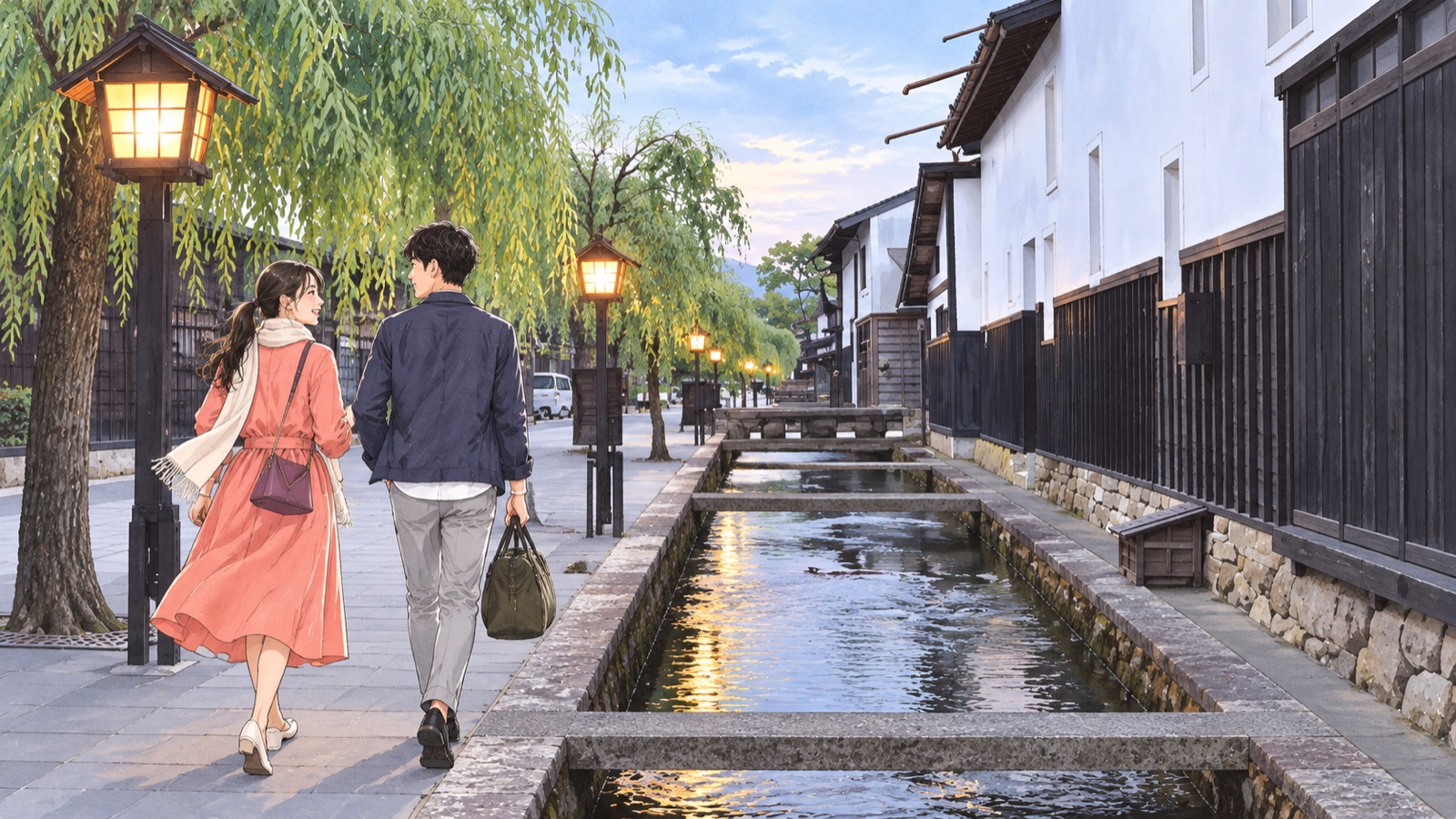
Visiting the Model Locations in Hida and the Staircase & Restaurant in Tokyo
JR Hida-Furukawa Station, Hida City Library, the steps of Keta Wakamiya Shrine, and Ochiai Bus Stop all correspond directly to scenes from Taki Tachibana's journey searching for clues to Mitsuha Miyamizu's hometown. Together with Hida Furukawa Sakura Bussankan—where you can try making a braided kumihimo cord—the Otokozaka stairs at Suga Shrine in Yotsuya, Tokyo, and Cafe La Boheme Shinjuku Gyoen, these 7 stops trace the footsteps of the story.
① Hida-Furukawa Stn. · Hida City, Gifu
Recall Taki's arrival in Hida from the station building, bus rotary, and overpass windows—the gateway to Hida Furukawa.
Read the Complete Pilgrimage Guide & Access Notes for JR Hida-Furukawa Station & Rotary (Hida City, Gifu)② Hida City Library · Hida City, Gifu
The public library that inspired the scene where Taki researches Itomori; obtain a photo permit at the counter before taking pictures.
Read the Complete Pilgrimage Guide & Access Notes for Hida City Library (Hida City, Gifu)③ Keta Wakamiya · Hida City, Gifu
The stone approach steps recalling Taki's search for clues, home to a sacred sawtooth oak tree struck by lightning in the Meiji era.
Read the Complete Pilgrimage Guide & Access Notes for Keta Wakamiya Shrine (Hida City, Gifu)④ Ochiai Bus Stop · Hida City, Gifu
Model for the roadside shelter where Taki and his friends wait after coming up empty-handed, located in Miyagawa-cho Ochiai.
Read the Complete Pilgrimage Guide & Access Notes for Ochiai Bus Stop (Hida City, Gifu)⑤ Sakura Bussankan · Hida City, Gifu
Connects the film's kumihimo motif with hands-on silk braiding; check the facility's latest reception guide before visiting.
Read the Complete Pilgrimage Guide & Access Notes for Hida Furukawa Sakura Bussankan (Hida City, Gifu)⑥ Suga Shrine · Shinjuku Ward, Tokyo
The red-railed Otokozaka staircase in Yotsuya that brings Taki and Mitsuha's story vividly to mind in the middle of Tokyo.
Read the Complete Pilgrimage Guide & Access Notes for Suga Shrine & Otokozaka Stairs (Shinjuku Ward, Tokyo)⑦ La Boheme Gyoen · Shinjuku Ward, Tokyo
The Italian restaurant facing Shinjuku Gyoen that served as the model for protagonist Taki Tachibana's part-time job.
Read the Complete Pilgrimage Guide & Access Notes for Cafe La Boheme Shinjuku Gyoen (Shinjuku Ward, Tokyo)
1JR Hida-Furukawa Station: Station Building, Bus Rotary, and Overpass Bridge
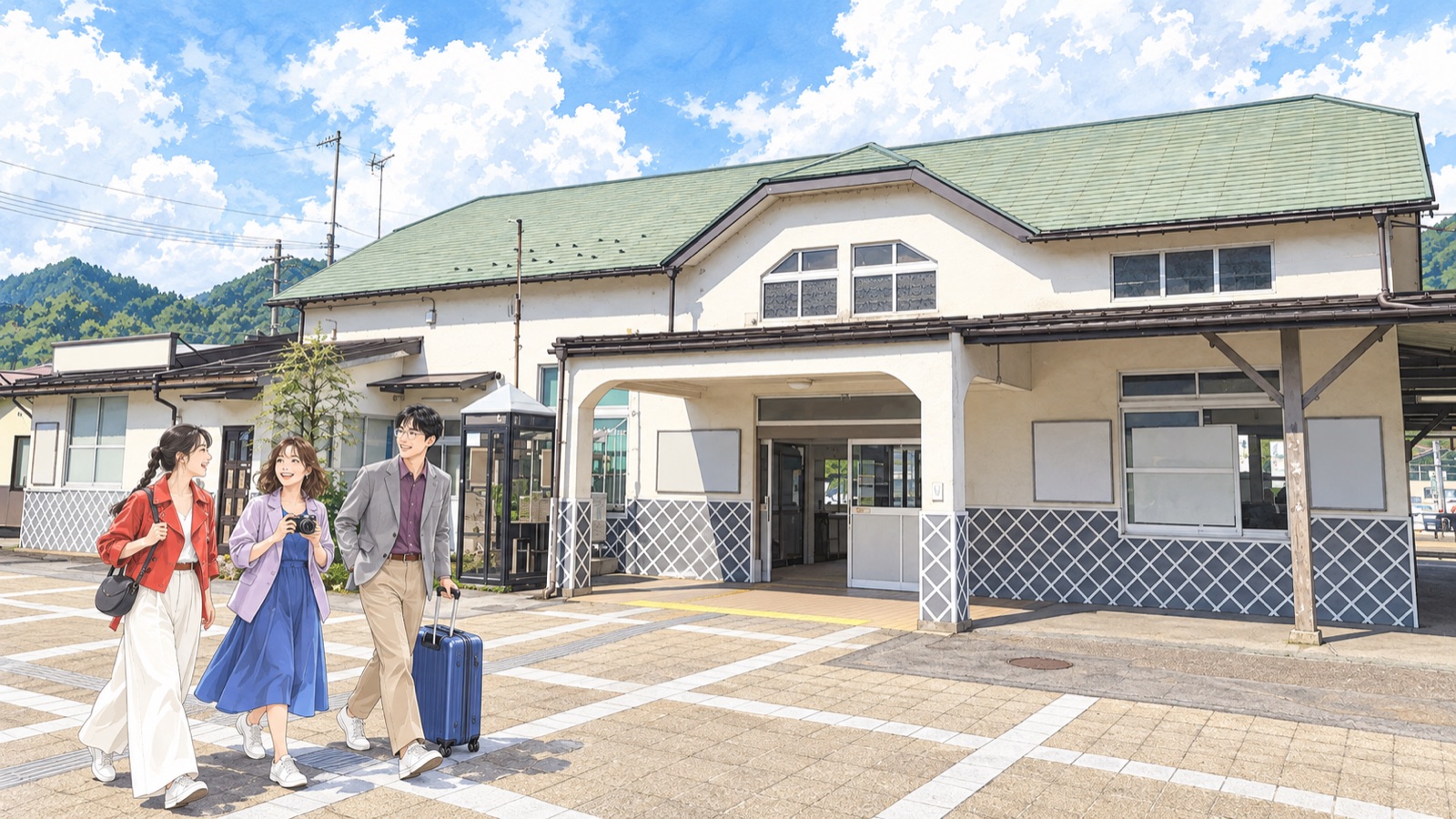
At JR Hida-Furukawa Station, the station building, the bus rotary outside the exit, and the pedestrian overpass looking down onto the tracks preserve the exact scenery depicted during Taki's trip. The bus rotary to the right as you exit the station building is the model for the scene where Taki questions local taxi drivers, while the overpass windows look down across Platforms 1 and 2—where, as of August 2026, two trains line up on both tracks just like in the film once a day at 9:57 AM. Because railway timetables are subject to revision, check the latest train schedule before your visit.
Source: Hida City Official Tourism Site: JR Hida-Furukawa Station
2Hida City Library: Model for the Scene Researching Itomori Town
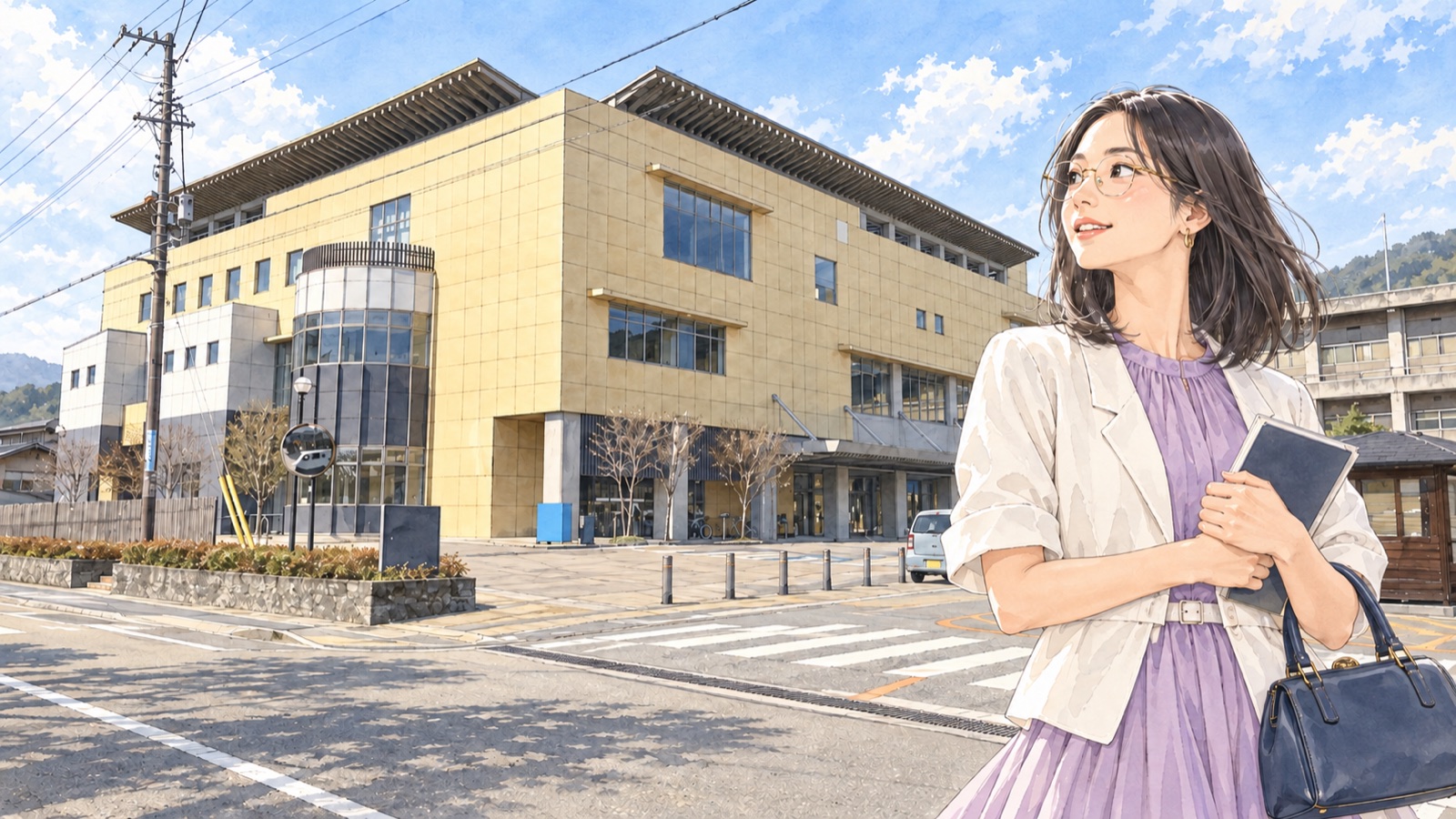
Located at 2-22 Furukawa-cho Honmachi, Hida City Library is the municipal public library that served as the model for the scene in which Taki researches the history of Mitsuha's town of Itomori. When taking photographs inside the library, you must first register at the counter to receive a photography permit badge and take care never to capture other library users in your frame (photography is not permitted after 17:00).
Inside the library's dedicated Your Name. corner, visitors will find municipal pilgrimage maps and leaflets alongside guestbooks where fans from Japan and abroad leave messages and record their hometowns. In 2026, marking the 10th anniversary of the film's release, the library also revived its original wall displays from 2016.
Sources: Hida City Official Tourism Site / Hida City Library Photography FAQ / Hida City Library Facility Guide
Post-Release Visitors and Film Materials Preserved as Regional Archives
Although Hida City Library had welcomed interior photography even before the film opened, the surge of visitors after release prompted the staff to prepare multilingual etiquette signs and clear guidelines. Library visits rose to 134,077 in fiscal 2016—up sharply from 104,456 the previous year—while Hida City hosted local screenings attended by 3,785 residents, produced official posters and flyers, and ran a wrapped highway bus from late February 2017 through March 2018.
The library preserves film-related publications as part of its local history collection, and the hometown cards filled out by visitors have continued over the years in the form of notebooks and world maps. Library staff have warmly noted that seeing protagonist Taki use books to uncover the history of a town represents the very essence of what a public library is for.
Sources: Hida City Library FAQ & Regional Collection Guide (Updated December 2025) / Hida City Record of Regional Reception Initiatives
3Keta Wakamiya Shrine: The Stone Approach Steps Where Taki Asks for Clues
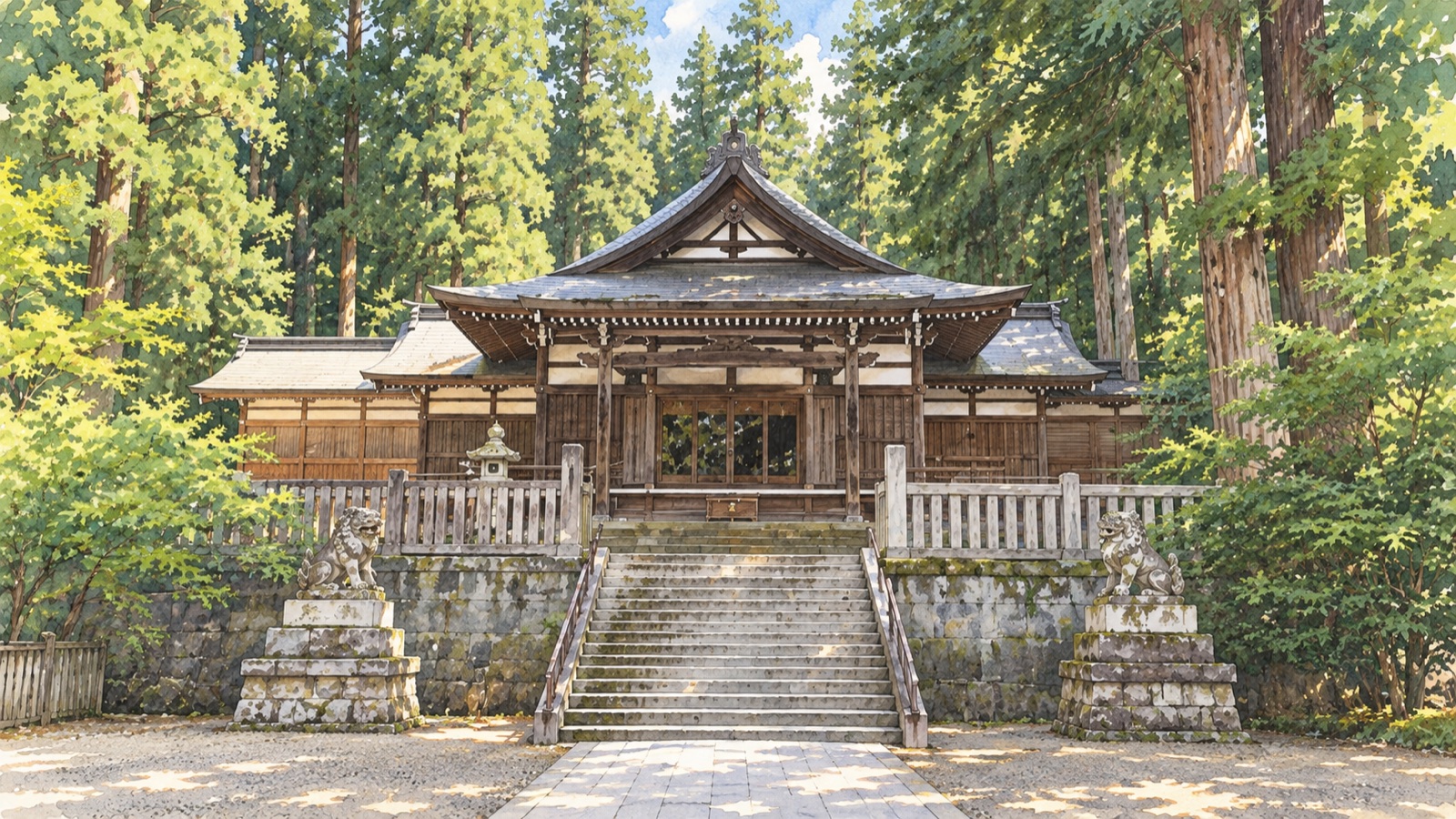
Roughly a 14-minute walk from JR Hida-Furukawa Station at 1297 Furukawa-cho Kamiketa, Keta Wakamiya Shrine stands on elevated ground overlooking the town of Furukawa. Its stone approach stairs are known as the model for the scene where Taki asks local residents for clues about Itomori, and to the left just before the worship hall stands a sacred sawtooth oak tree (okunugi) whose upper trunk was snapped by lightning during the Meiji era.
Serving as the guardian shrine for the surrounding Furukawa town districts, Keta Wakamiya Shrine holds its annual grand festival—the UNESCO Intangible Cultural Heritage 'Furukawa Festival'—every April 19 and 20. Pairing the dynamic nighttime 'Okoshi Daiko' rousing drum procession with the serene daytime parade of intricately decorated festival floats ('Yatai Gyoretsu'), the festival selects its presiding district duty officers each year through a sacred lot-drawing ritual at the shrine.
Furukawa Festival: When the Shrine’s Annual Festival Fills the Entire Town
Visitors who wish to see the festival floats outside of April can stop by the Hida Furukawa Festival Exhibition Hall at 14-5 Furukawa-cho Ichinomachi, which displays three of the town's nine floats year-round alongside a 4K theater presentation, karakuri mechanical puppet demonstrations, and hands-on Okoshi Daiko drum practice.
Sources: Hida City: Events of the Furukawa Festival / Hida City: Hida Furukawa Festival Exhibition Hall / Hida City Official Tourism Site: Keta Wakamiya Shrine / Hida City Official Guide to the Annual Festival & Sacred Oak Tree
4Ochiai Bus Stop: Model for the Shelter Where Taki and Friends Wait for a Bus
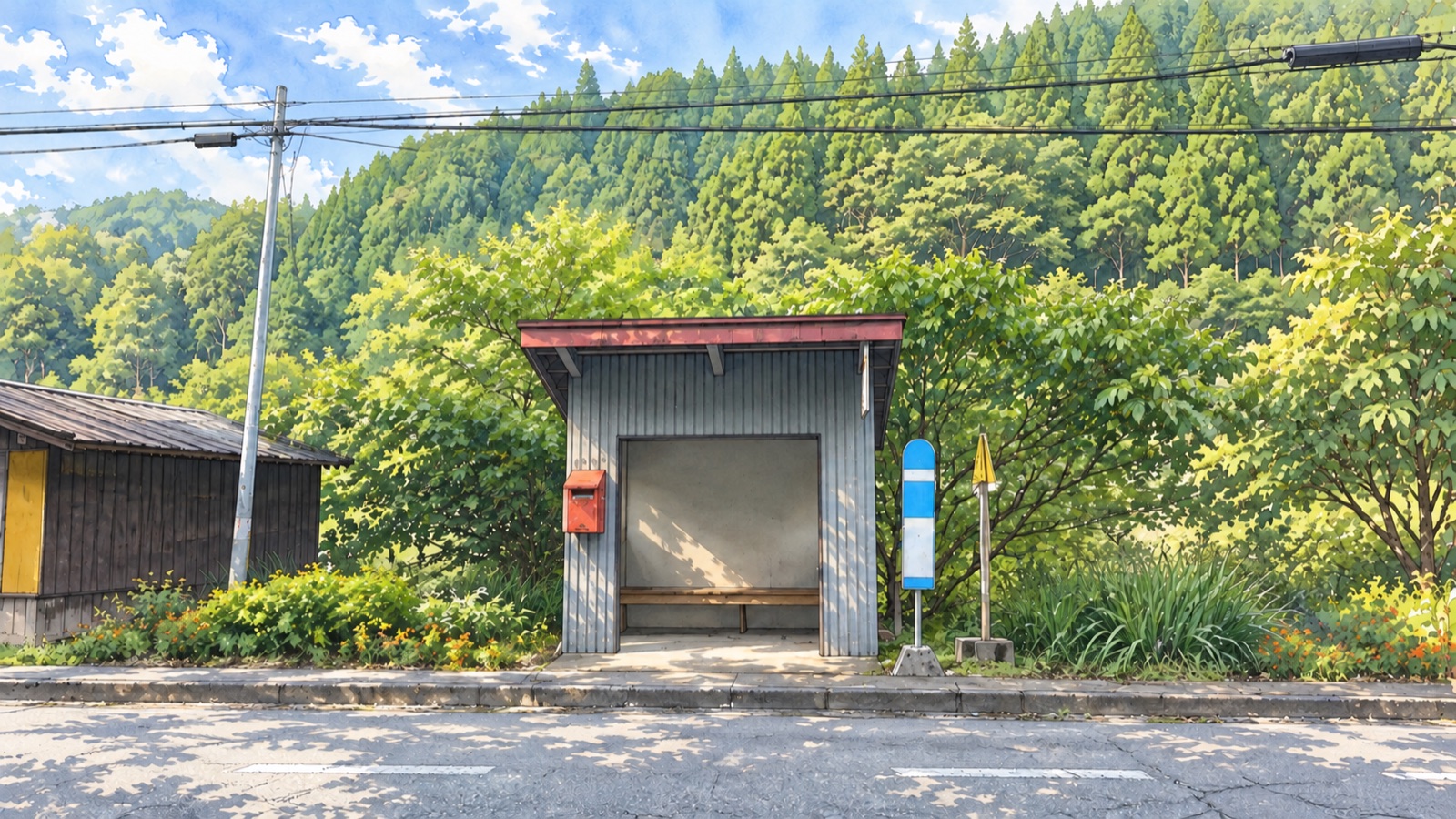
Located in Miyagawa-cho Ochiai in Hida City, Ochiai Bus Stop is the real-world model for the roadside shelter where Taki and his companions sit waiting for a bus after failing to find leads on Itomori. Following the film's release, the bus stop signage was spruced up, and it remains in active use today as a stop on the municipal loop bus.
Source: Hida City Official Tourism Site: Ochiai Bus Stop
5Hida Furukawa Sakura Bussankan: Discovering Traditional Craft Through Kumihimo Braiding
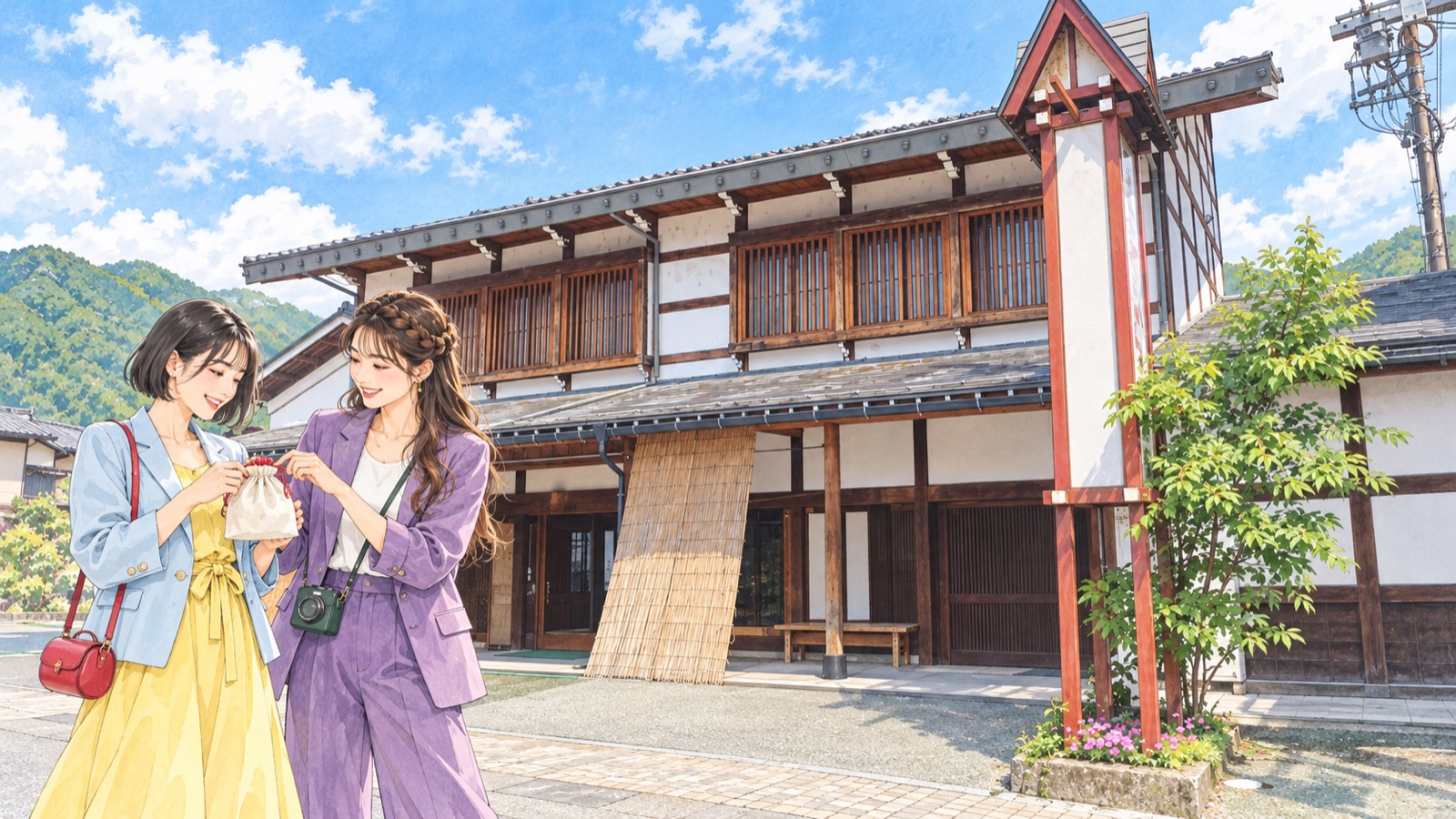
At Hida Furukawa Sakura Bussankan (2-20 Furukawa-cho Sannomachi; closed Thursdays and New Year holidays), visitors can braid their own 'kumihimo' silk cord—depicted in the film as the precious bond linking Taki and Mitsuha. Choosing your favorite silk thread colors and weaving them on a circular marudai stand or by hand with staff guidance, you can finish your cord as a bracelet or keychain (for ages 3rd grade and up; 40+ minutes; 2,200 yen). The center also offers traditional Japanese candle painting, and for the 10th anniversary in May 2026 it released original keychains and unveiled archived 'Memory Pilgrimage Notebooks' from the craft center and Ochiai Bus Stop.
Sources: Hida City Official Tourism Site: Sakura Bussankan / Workshop Eligibility & Duration Guide / Sakura Bussankan Kumihimo Workshop Page / May 2026 10th-Anniversary Campaign
How Braided Kumihimo Cords Inspired Mitsuha’s Character Design
Kumihimo braided cords were also central to the film's character design: character designer Masayoshi Tanaka has explained that he began designing heroine Mitsuha Miyamizu first after receiving the director's request for 'a hairstyle inspired by a braided kumihimo cord.' When Hida City set up a kumihimo workshop corner for its 2017 exhibition after the film's release, municipal staff traveled to Iga City in Mie Prefecture—renowned for traditional Iga Kumihimo—to learn proper braiding techniques before welcoming fans. By fiscal 2019, its third year, 1,994 visitors took part in the 30-to-40-minute braiding experience, and staff subsequently learned advanced patterns from Iga artisans so repeat visitors could try new designs.
Sources: Hida City Kumihimo Cultural Exchange Project Record / Official Movie Interview with Character Designer Masayoshi Tanaka / Hida City 2017 Kumihimo Workshop Archive
6Otokozaka at Suga Shrine: The Stone Staircase with Red Handrails in Yotsuya
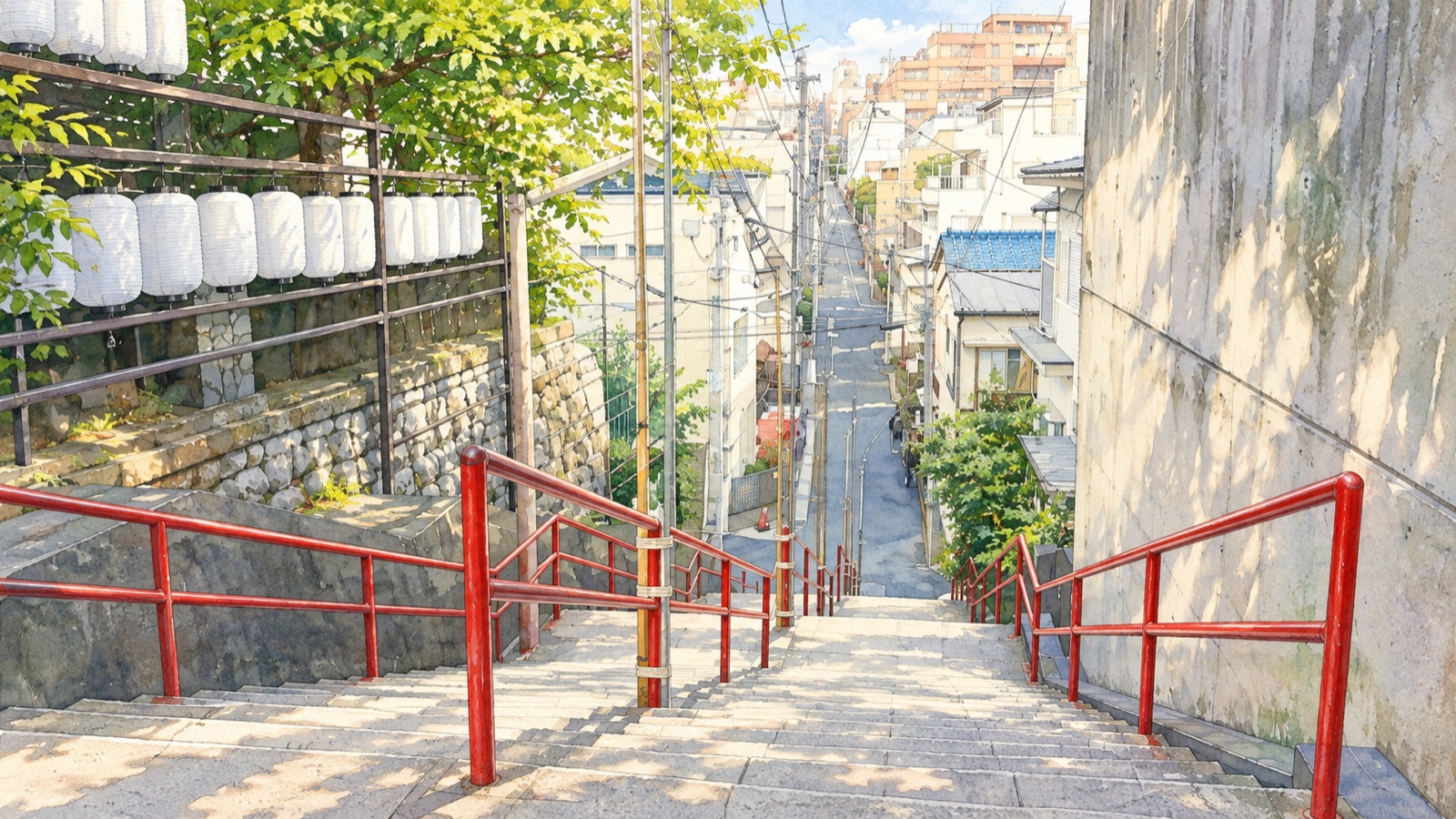
Located in Suga-cho, Shinjuku Ward, Tokyo, the 'Otokozaka' stone staircase of Suga Shrine—lined with its distinctive red handrails since the Meiji era—appears in the unforgettable closing scene of the film and draws fans from around the world. Revered since the early Edo period as the guardian shrine of Yotsuya (with its current sanctuary completed in 1960), the shrine remains a quiet neighborhood place of worship, so always yield to worshippers and local residents and avoid blocking the stairs when taking photos.
Source: JR East 'Chuo Line ga Suki da.' Official Feature on Suga Shrine
7Cafe La Boheme Shinjuku Gyoen: Model for the Restaurant Where Taki Works Part-Time
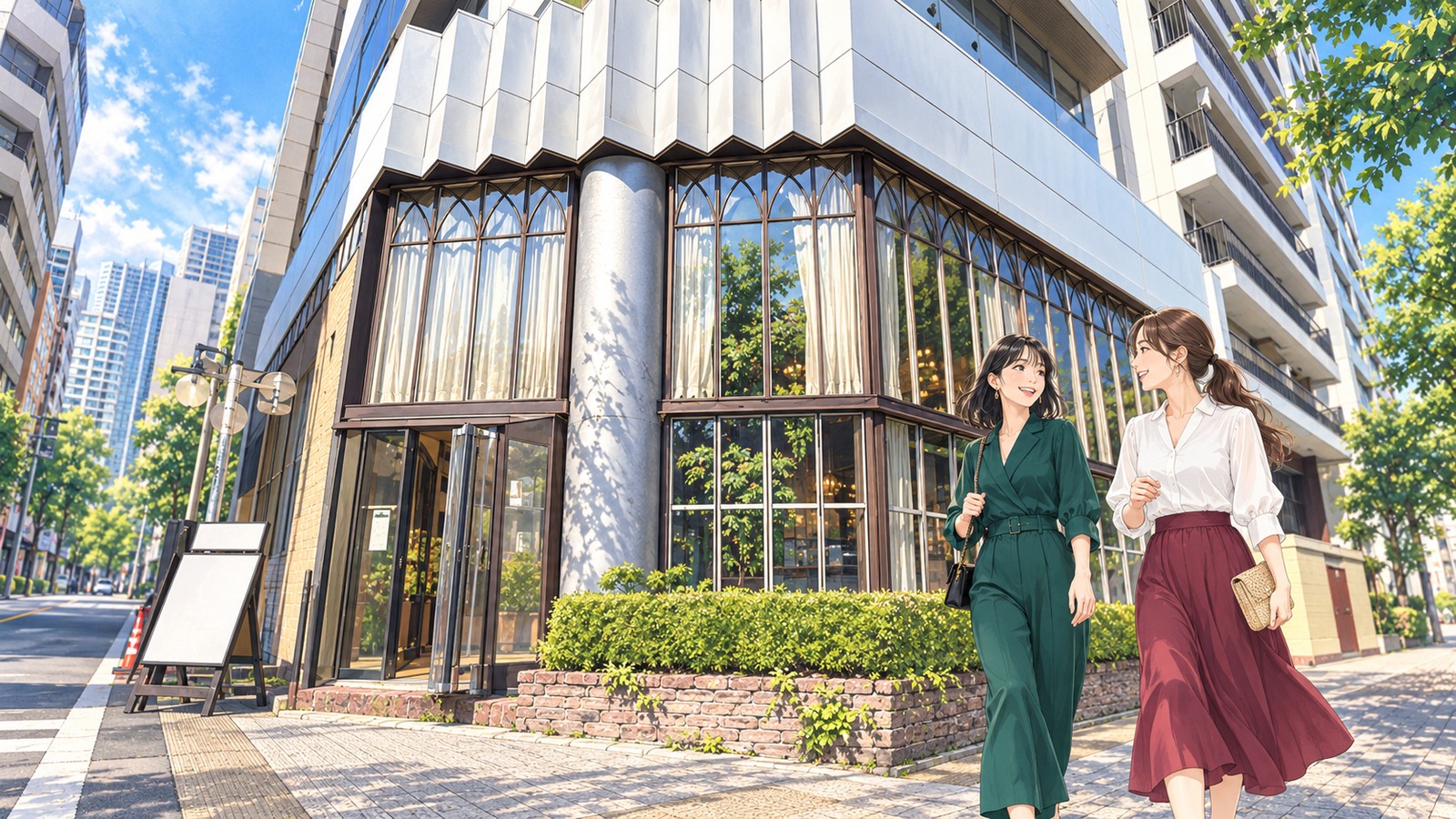
Located at 1-1-7 Shinjuku in Shinjuku Ward, Tokyo, 'Cafe La Boheme Shinjuku Gyoen' is the real-world model for the Italian restaurant where protagonist Taki Tachibana works his after-school part-time job (the operating company cooperated with production without listing the restaurant's name in the end credits). Featuring tall ceilings and expansive glass windows looking out onto the trees of Shinjuku Gyoen National Garden, the restaurant offers window tables, sofa seating, and a bar counter, and accepts dining reservations through its official website. Hours are 11:30–23:30 on weekdays and 11:00–23:30 on weekends and holidays; after 17:00 on weekdays and all day on weekends and holidays, a minimum food-and-drink charge of 1,100 yen (tax included) per person applies.
Sources: withnews Interview with the Operating Company on the Model Restaurant / Cafe La Boheme Shinjuku Gyoen Official Information & Reservations
10th-Anniversary Commemorative Bookmarks: Four Designs and Distribution Spots
On August 26, 2026—ten years to the day after the film's theatrical release—Hida City began distributing free 10th-anniversary commemorative bookmarks in four designs featuring JR Hida-Furukawa Station, Hida City Library, Ochiai Bus Stop, and Keta Wakamiya Shrine. Visitors can choose one bookmark per person at either the Your Name. corner inside Hida City Library or the Hida Furukawa Town Tourist Information Center (8-3 Furukawa-cho Ichinomachi) while supplies last.
Source: Hida City Official Notice on the 10th-Anniversary Commemorative Bookmarks
Taki and Mitsuha’s Body-Swapping and the Family Supporting Them
Tokyo high school boy Taki Tachibana and mountain-town high school girl Mitsuha Miyamizu begin experiencing a mysterious phenomenon: while asleep, they wake up in each other's bodies in places they have never seen. At first assuming they are only dreaming, the two soon realize from the reactions of people around them and missing hours in their days that they are truly swapping bodies, and begin leaving notes on their smartphones to help navigate each other's daily lives—Taki's mind living inside Mitsuha's body in the mountains, and Mitsuha's mind living inside Taki's body in central Tokyo.
One day, however, the body swaps abruptly stop. Realizing how precious their bond has become, Taki sets out to find Mitsuha's town relying solely on sketches drawn from memory. While Mitsuha's hometown of 'Itomori' is fictional, the railway station where Taki steps off the train, the public library where he researches local records, and the shrine steps and bus stop where he asks residents for clues all exist in Hida City.
Stations & Transit
Appears during Taki's search for clues to Mitsuha's town, from stepping off the train at Hida-Furukawa Station to waiting at Ochiai Bus Stop.
Research & Clues
At Hida City Library and Keta Wakamiya Shrine, Taki pieces together memory sketches and local records to draw closer to the town he saw in his dreams.
Local Crafts
Turns the film's braided-cord motif into a hands-on craft experience weaving silk threads at Hida Furukawa Sakura Bussankan.
Sources: Official Movie Website / Hida City Official Tourism Site: Model Location Guide
Read the story synopsis and character profiles on the official movie website
Explore Deeper: Two Lives Across Tokyo and the Mountains
Taki Tachibana
A high school boy living in Tokyo with an interest in architecture and art who sets out through the body swaps to find a town and girl he has never met in person.
Mitsuha Miyamizu
A high school girl living in the mountain basin town of Itomori who yearns for life in Tokyo while helping with her family's Shinto shrine rituals.
Itomori Town
The fictional town depicted in the film, set in a mountain basin around a lake where Mitsuha, her family, and her friends live.
Kumihimo Braided Cord
The traditional braided silk cord passed down at Miyamizu Shrine and worn by Mitsuha to tie her hair; visitors can braid their own cord at Sakura Bussankan.
Mitsuha’s Shrine Household with Her Grandmother Hitoha and Sister Yotsuba
Mitsuha lives with her elementary-school-age younger sister Yotsuba and her grandmother Hitoha. After her father left the priesthood to serve as town mayor following her mother's death, Hitoha—the current head priestess of Miyamizu Shrine—raised both granddaughters while Mitsuha and Yotsuba assist with the shrine's traditions.
Source: Official Movie Character Profiles: Mitsuha, Hitoha, and Yotsuba
Makoto Shinkai’s Original Concept and the Craft of Animation, Voice, and Music
Planning for the film began in autumn 2013 after the release of The Garden of Words and coalesced in July 2014 into a proposal titled 'If I Knew It Was a Dream (Working Title) — A Tale of Two Swapped Lives.' Inspired by Ono no Komachi's classic waka poem ('Had I known it was a dream, I would never have awakened'), the story wove together a boy and girl meeting in dreams before ever meeting in life with the motifs of a comet and braided cords—already naming the fictional town of Itomori, Taki Tachibana, and Mitsuha Miyamizu at the proposal stage.
Source: Official Movie Feature: Director Makoto Shinkai on the Origins of the Story
Masayoshi Tanaka served as character designer and Masashi Ando as animation director. Designing Taki after Mitsuha required multiple rounds of revisions with Director Shinkai to balance earnestness with a slightly playful side so that Taki's expressions and gestures would also look natural when Mitsuha's mind was inside his body. Starting from the first screenplay draft in October 2014, Shinkai charted the emotional pacing across six drafts—carefully placing comedic beats before the story's dramatic second half—and assembled a full video storyboard (V-con) voiced with dialogue and sound effects that Ryunosuke Kamiki (Taki) and Mone Kamishiraishi (Mitsuha) studied before recording their body-swapped performances.
Joining the project once the screenplay was completed, the rock band RADWIMPS created four theme songs ('Zenzenzense,' 'Sparkle,' 'Yumetourou,' and 'Nandemonaiya') alongside 22 instrumental score tracks. Director Shinkai has shared that while Taki and Mitsuha originally communicated only through smartphone notes in the script, listening to RADWIMPS' early demo of 'Sparkle' while drawing the storyboards inspired him to have the characters write directly onto each other's hands and faces.
Sources: Cinema Today Interview with Director Makoto Shinkai / Official Movie Production Guide to Planning, Animation, Music & Casting
Live Orchestra Concert Performed in Sync with the Complete Film
On December 4 and 5, 2017, a live orchestra concert at the Tokyo International Forum screened the entire film while RADWIMPS and the Tokyo Philharmonic Orchestra performed the score and songs live on stage. The Blu-ray and DVD editions released on April 18, 2018 capture the December 5 performance alongside rehearsal and backstage documentaries, encore footage, and the full printed score for 'Zenzenzense (movie edit.).'
Source: Official Movie Announcement of the Orchestra Concert Home Video Release
Ten Years Since Release and Exhibitions of Production Materials
- Autumn 2013Planning launches for Makoto Shinkai's next feature filmPlanning
- Jul 2014Initial proposal 'If I Knew It Was a Dream (Working Title)' compiledPlanning
- Oct 2014First screenplay draft completed and first meeting held with RADWIMPSProduction
- Jun 18, 2016Original novel 'Your Name.' written by Makoto Shinkai published under KADOKAWA BunkoPrint Book
- Aug 26, 2016Theatrical release of 'Your Name. (Kimi no Na wa.)' across JapanTheatrical Film
- Jan 7 – Feb 19, 2017Hida City Museum of Art exhibits roughly 300 production materials from the filmLocal Exhibit
- Jan 13, 2017Limited two-week IMAX screening run beginsTheatrical Screening
- Jul 26, 2017Blu-ray and DVD editions released in JapanHome Video Release
- Nov 11 – Dec 18, 2017'Makoto Shinkai Exhibition' held at the National Art Center, TokyoSpecial Exhibition
- Dec 4–5, 2017Full-film live orchestra concert held with RADWIMPS and the Tokyo Philharmonic OrchestraMusic Release
- Apr 18, 2018Orchestra concert Blu-ray and DVD releasedHome Video Release
- May 202610th-anniversary keychains and archived pilgrimage notebooks unveiled at Sakura BussankanLocal Region
- Aug 26, 2026Distribution of 10th-anniversary commemorative bookmarks begins in Hida CityLocal Region
Written and directed by Makoto Shinkai, animated by CoMix Wave Films, and distributed by TOHO, Your Name. opened nationwide on August 26, 2016 and sparked an immediate wave of pilgrimage travel to Hida City—with municipal estimates recording roughly 155,000 pilgrimage visitors to Hida City between the film's release and the end of fiscal 2018.
Sources: Official 2013–2014 Production History / KADOKAWA Original Novel Release Date / TOHO Home Video Release Date / Makoto Shinkai Portal Release Record / Hida City Pilgrimage Visitor Estimates
2017 Hida City Museum of Art Exhibition of 300 Production Materials
From January 7 to February 19, 2017, the Hida City Museum of Art hosted a special exhibition of roughly 300 production materials from Your Name.—including the original proposal, storyboards, and animation layout drawings—welcoming 10,170 visitors during its run (exhibition now concluded) and showing how each frame of the film was built.
Source: Hida City Archive of the 2017 Film Production Materials Exhibition
The Makoto Shinkai Exhibition Archive, Original Novel, and Visual Guide
In Roppongi, Tokyo, the National Art Center, Tokyo also held the 'Makoto Shinkai Exhibition — From Voices of a Distant Star to Your Name.' from November 11 to December 18, 2017, tracing fifteen years of filmmaking across storyboards, artwork, and video. Fans can also explore the film's world in print through Makoto Shinkai's own novelization and the official visual guide.
Sources: National Art Center, Tokyo: Makoto Shinkai Exhibition Record / Official Movie Related Publications Guide
Lab Notes | Business Perspective: Balancing Everyday Library Use with Film Pilgrimage Visitors
By issuing photography permit badges at the counter, restricting photography after 17:00, and posting clear multilingual signs, Hida City Library successfully welcomed film fans from around the world while preserving a quiet reading and research environment for local residents—archiving fan message notebooks and film publications as local history records that later supported the 2026 10th-anniversary displays and commemorative bookmarks.
Setting clear photography hours and permit rules within existing counter operations protects everyday public library use while turning accumulated visitor records into long-term community assets.
Related Oshi Lab report: Municipal Collaboration Case Studies
Official Sources & Primary References
- Your Name. (Kimi no Na wa.) Official Website
- Hida City Official Tourism Site: 10 Years Since Release in the Model Town
- Hida City: 10th-Anniversary Commemorative Bookmarks
- Hida City Library Photography FAQ
- National Art Center, Tokyo: Makoto Shinkai Exhibition Archive
- Makoto Shinkai Works Portal: Release Record
Exhibition dates, opening hours, admission fees, and ticket details are current at the time of writing. Always check the official websites for the latest schedule updates before setting out on your pilgrimage visit.
FAQ
Can visitors dine at the restaurant that inspired Taki's part-time job?
Yes. Cafe La Boheme Shinjuku Gyoen is an active Italian restaurant where you can dine and book reservations via the official website. Note that after 17:00 on weekdays and all day on weekends and holidays, a minimum food-and-drink order of 1,100 yen (tax included) per person applies.
Does the town of Itomori exist in real life?
Itomori is a fictional town created for the story, but Hida City in Gifu Prefecture is home to the real-world station, municipal library, shrine steps, and bus stop that served as models for Taki's search for Mitsuha's town.
Can I take photographs inside Hida City Library?
Yes, provided you register at the service counter first to receive a photography permit badge and follow library rules. Photography is not permitted after 17:00, and visitors must take care never to include other library patrons in their photos.
Can I still see two trains lined up side by side at Hida-Furukawa Station like in the film?
Train schedules change with timetable revisions, so check the latest timetable before visiting; as of August 2026, trains line up on both tracks once daily at 9:57 AM.
Is Ochiai Bus Stop a film set or an active bus stop?
It is an active stop served by the municipal loop bus in Miyagawa-cho, Hida City, preserving the shelter where Taki and his friends sit waiting in the film.
How is Suga Shrine in Tokyo connected to the film?
Its red-railed Otokozaka stone staircase—dating back to the Meiji era—appears in the iconic closing scene of the 2016 film where Taki and Mitsuha pass each other in Tokyo.
Are the 10th-anniversary commemorative bookmarks still available?
Free distribution began on August 26, 2026 (one bookmark per person chosen from four designs) and continues only while supplies last; check current availability at Hida City Library or the Hida Furukawa Town Tourist Information Center.
Do I need a reservation for the kumihimo braided-cord workshop?
Reception methods and group rules can change, so check the latest visitor guide for Hida Furukawa Sakura Bussankan before your trip to experience weaving silk kumihimo cords.
Is the Makoto Shinkai Exhibition at the National Art Center, Tokyo still open?
No. The National Art Center exhibition discussed in the article was held in late 2017 and has concluded; check official portals for any current exhibitions.
More in Pilgrimage

5 Centimeters per Second Pilgrimage Guide: Tanegashima Coast & Nagano Live-Action Stations

Suzume Pilgrimage Guide: Bungo-Mori Roundhouse, Orikasa Station & Michi-no-Eki Oya Coast
