
Gen Z Oshi-Katsu Spending in Japan: What the Data Shows and How Brands Should Respond
“Gen Z spends money on oshi-katsu.” “They find things on social media and buy right away.” Explanations like these are easy to grasp, but they hide large differences within the generation.
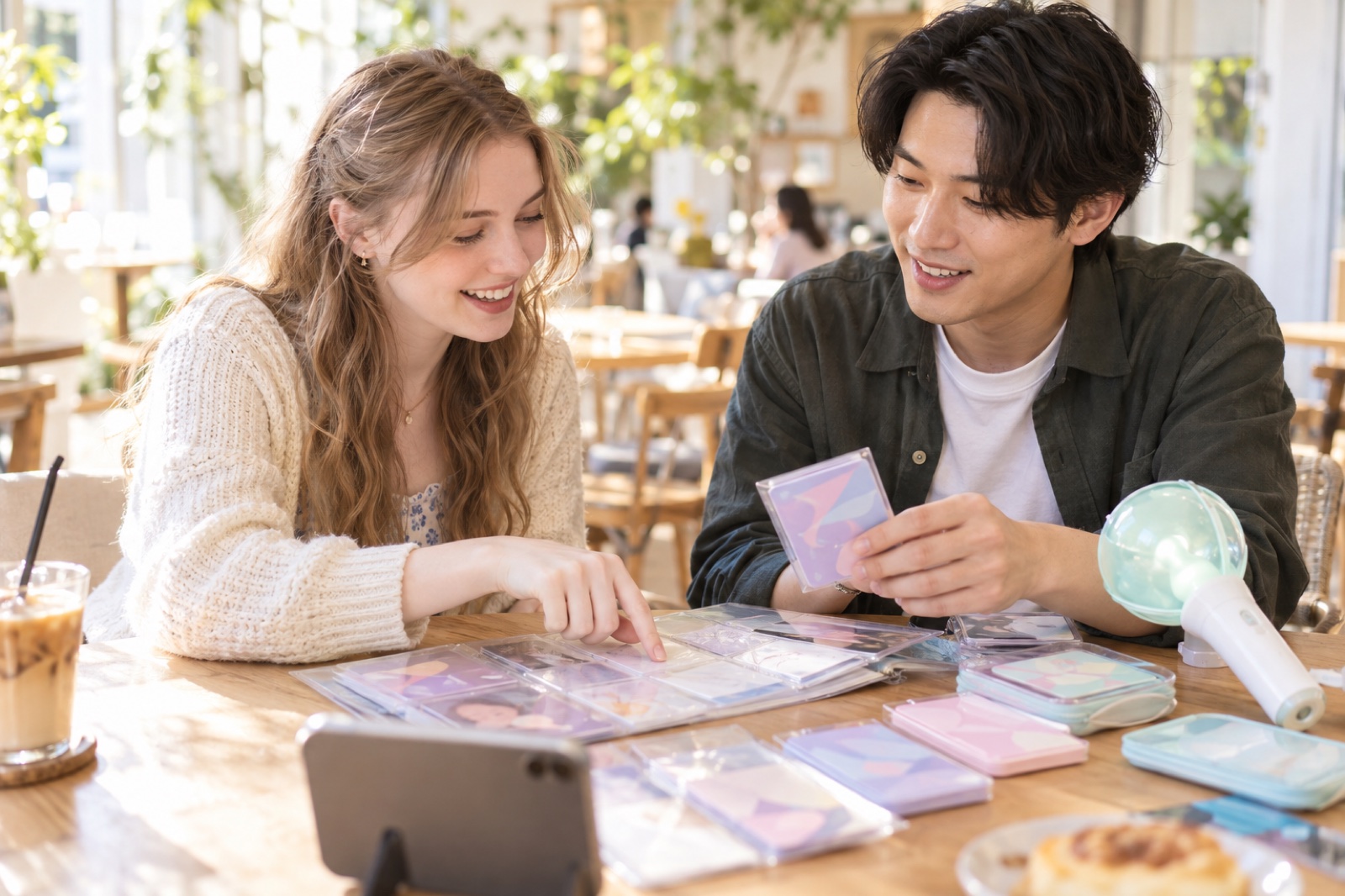
Real oshi-katsu, the everyday work of supporting a favorite idol, character or creator, is not only buying goods. Looking up information, listening to songs, making things, going to live events alone, sharing with friends and sometimes stepping back to rest all move back and forth within a single person’s life.
This article draws only on primary sources that the survey organizations published themselves, and sorts out what they show about Gen Z and oshi-katsu spending. It also looks at how corporate teams can turn that into projects without lumping young people together.
First, a Caution: “Gen Z” Means Different Ages in Different Surveys
Even surveys on “Gen Z” don’t always target the same ages. When you read a number, check whom they asked, when and how before you trust the generational label.
The youth marketing organization SHIBUYA109 lab., for example, mainly surveys people aged 15 to 24, whom it calls “around20.” The survey by Oshibana, an oshi-katsu app, covers users aged 10 to 50-plus, and many of the answers come from teens. Both are clues about young people, but neither directly represents Japan’s Gen Z as a whole.
This article doesn’t add up figures from different surveys or compare them while ignoring who was asked. Companies that use these numbers in their own projects should start with the same habit.
Data 1: An Oshi Drives Daily Behavior, Not Just Purchases
The SHIBUYA109 lab. report on how oshi-katsu has changed (in Japanese) re-edits several surveys of 15- to 24-year-olds conducted since 2018. In the web survey from May 2022 (in Japanese) that the report draws on, more than 80% of 525 female students aged 15 to 24 in Tokyo and its three neighboring prefectures said they “have an oshi.” The report also includes answers saying that their oshi changed the music they listen to, and comments from interviewees who developed an interest in languages or in their future path.
Oshi-katsu spending, then, is not a one-off purchase. It is an act that gives meaning to life choices.
- Looking up what the oshi uses or talks about
- Arranging schedules and travel to see the oshi
- Choosing clothes and belongings to match the oshi’s worldview
- Telling someone why you like them
- Making support items or creations yourself
A company that thinks only about “what to sell” misses this breadth. Products, information, places, records and interaction have to be seen as one experience.
- 01Look it upWhat the oshi uses or talks about
- 02Plan the tripSchedules and travel to meet them
- 03Dress the partClothes and belongings match the worldview
- 04Tell someoneExplain why you like them
- 05Make somethingSupport items or creations
Buying is only one step in a chain of small, meaningful choices.
Data 2: Buying and Making Are Linked
The same SHIBUYA109 lab. report traces how “creative oshi-katsu” spread after the pandemic: oshi glasses, decorated hard cases, message fans and decorated penlights. Fans no longer just buy a finished product. Customizing it for their own oshi becomes the experience itself.
For companies, the lesson is to leave room for fans to make things their own instead of handing over a single finished answer.
| A design that hands things over one way | A design with room to participate |
|---|---|
| Colors and combinations are fixed | Fans can choose oshi colors and parts |
| Shows only the official finished sample | Also presents fans’ own arrangements |
| The experience ends with the purchase | Making, photographing and sharing continue |
| Limits the “correct” way to enjoy | Welcomes multiple ways to use it |
That room doesn’t mean leaving fans to do production or promotion for free. The official side should lay the groundwork for confident participation by spelling out how materials may be used, the rules for derivative works and what to watch for when posting.
Handed over
- Colors and combinations are fixed
- Only the official finished sample is shown
- The experience ends with the purchase
Room to take part
- Fans choose oshi colors and parts
- Fans' own arrangements are presented too
- Making, photographing and sharing continue
The room works only if rights and posting rules are clear.
Data 3: Social Media Isn’t One Thing: Discovery, Expression and Interaction
SHIBUYA109 lab.’s “Latest Trends in Gen Z Social Media Use 2025” (in Japanese) combines a July 2025 web survey of 413 female students aged 15 to 24 in Tokyo and its three neighboring prefectures with separate interviews. Asked where they find places and experiences to go out to, they named Instagram at 64.6%, TikTok at 39.0%, X at 35.1%, video streaming services at 30.5% and search engines at 28.8%.
These numbers come from a narrow group, women aged 15 to 24, but they help companies stop thinking in terms of “social media or search.” The first discovery may happen on social media, yet the final check of opening hours, prices, terms and access happens on the official site or through search.
- 64.6%
- 39.0%
- TikTok
- 35.1%
- X
- 30.5%
- Video streaming
Search engines followed at 28.8%.
The same survey also showed that people choose different platforms depending on what they post and whom they connect with, and that they favor posts that disappear quickly and closed communities. Count only public posts and conclude “no response,” and you overlook saves, sharing among friends and conversations in private accounts.
It helps to give each touchpoint its own role:
- Discovery — Short videos or images that convey the worldview and the reason to join at a glance
- Confirmation — An official page with price, dates, stock, rights and venue rules
- Participation — A place to take part at your own pace, through voting, choosing, messages or making
- Record — Ways to make photos easy to take, and to keep a record without showing your face or personal information
- Return — A path that leads without confusion to the next information or a look back
Data 4: Excitement Together and Enjoyment Alone Can Coexist
The Booklista “Solo Oshi-Katsu” survey (in Japanese) was an online survey of 250 oshi-katsu users across Japan, run on the Oshibana app from February 13 to March 16, 2026. Of the respondents, 50.4% were teens, and 59.2% said they “basically do oshi-katsu alone.” Asked why, in a multiple-answer question, 91.7% of the solo fans chose “I can move at my own pace.”
This is a survey of app users, not a result for young people as a whole. Even so, it shows why events and stores shouldn’t be designed on the assumption that people come with friends.
- Make the reception signs easy to walk into alone
- Let people ask staff to take their photo, or provide phone stands
- Separate the paths for people who want to socialize and those who want to enjoy things quietly
- Don’t offer bonuses only to pairs
- Make wait times checkable even for someone alone
Building a community is not the same as forcing interaction. Offering both the freedom to connect and the freedom to be alone widens the door to participation.
- 59.2%
- Basically do oshi-katsu alone
- 91.7%
- Of solo fans: I can move at my own pace
- 50.4%
- Of respondents were teens
An app-user survey, not a result for all young people.
Source: Booklista survey on Oshibana, Feb-Mar 2026 (250 users)
Data 5: The Hotter the Passion, the More Fans Need Room to Rest
Booklista’s oshi-katsu motivation survey (in Japanese) was an online survey of 277 oshi-katsu users across Japan, run on the Oshibana app from February 13 to March 19, 2026. Teens made up 52.9% of respondents. Of the total, 70.8% had experienced a drop in oshi-katsu motivation and 55.1% had experienced oshi fatigue.
This result also carries the bias of app users, but it cautions against two assumptions: that fans who love something are glad to see more of it, and that the most devoted fans will buy again and again. When information, limited items, rankings and purchase bonuses pile up, support can start to feel like an obligation.
Our article on oshi-katsu fatigue covers the causes in more detail. Companies can do more than stoke enthusiasm further:
- State sales periods, total cost and bonus conditions early
- Line up free, low-cost and high-value ways to take part
- Make the experience work even if you don’t collect everything
- Communicate clearly your policy on sell-outs and additional sales
- Design information so fans can easily come back after stepping away
How Companies Should Respond: Five Principles
1. Look at Behavior and Background, Not Generation
“For Gen Z” is too broad a target. Break it down by the oshi’s genre, how long someone has been a fan, where they can travel from, their budget, and whether they go alone or with company. Before planning, ask the fans themselves, even just a few, and correct the assumptions inside your company.
2. Offer Ways to Take Part Other Than Buying
Watch, choose, make, send a message, take photos on site. The more steps of participation you offer, the more people with different budgets and distances can join. From a fan marketing perspective, design so the relationship continues after the purchase.
3. Pair Room to Customize With Official Reassurance
Let fans choose oshi colors and layouts, but spell out rights, prohibited acts, personal information and the scope of reposting. Freedom and safety should come as a set; together they support creativity.
4. Don’t Let Social Media Carry Everything
Social media is strong at discovery, but key conditions buried inside posts breed distrust. Set up an official page that gathers the details, so every post leads to the same source of truth.
5. Measure Short-Term Sales and Long-Term Trust Separately
Look at sales, participation, repeat participation, saves and shares, inquiries and reasons for satisfaction side by side. Even a project that sold well isn’t a long-term success if fatigue or a sense of unfairness lingers. The purpose of oshi-katsu marketing is not to use up fans’ passion but to keep living up to it.
A Checklist for Before You Plan
| What to check | Question for the person in charge |
|---|---|
| Survey conditions | Did you check the age range, gender, sample size, timing and recruitment method? |
| Understanding fans | Have actual fans seen the plan? |
| Range of participation | Are there options to just watch, plus free, low-priced and paid ones? |
| Solo participants | Can someone enjoy it without confusion even with no companion? |
| Source of truth | Can people check price, dates and terms in one place? |
| Rights and safety | Are your policies clear on image use, photography, personal information and resale? |
| Not wearing fans out | Have you piled on too many limited items and too much purchase competition? |
| Review | Is there a way to hear voices beyond sales figures and to track repeat participation? |
A Note From The Oshi Lab: Young People Are Not a Target to Conquer
The point of understanding Gen Z oshi-katsu is not to find ways to open young people’s wallets. It is to learn what they value through their oshi, and at what distance they can take part comfortably.
Data is not the answer to a project. It is material for forming good questions to ask the fans themselves. The more firmly you declare “this is how Gen Z is,” the less you see the fans in front of you. Read the survey conditions, correct them with fans’ own voices, and protect even their freedom to rest. That attitude is what earns a company trust.
Summary
Gen Z oshi-katsu spending, as the primary surveys show it, has several sides: closeness to daily life, room for creation, distinct uses of social media, solo activity and oshi fatigue. You can’t pick out just one and declare “this is how young people behave.”
Companies shouldn’t try to conquer a generation. They should build places where people can choose how to take part. For market-wide figures and definitions, see The Oshi-Katsu Market Size (2026 edition). For help with survey design for young fans or oshi-katsu projects, contact KAZAORI Inc. (in Japanese).
FAQ
What ages does "Gen Z" cover?
It depends on the survey. Each time, this article gives the age range and conditions the survey set, so figures from different groups are never treated as results for the same population.
Does every Gen Z fan spend money on oshi-katsu?
No. Whether someone has an oshi, how much they can spend and how they like to take part all vary from person to person. Oshi-katsu isn't only buying, either. It also means watching, listening, making things, posting and going to live events.
What matters most in oshi-katsu projects aimed at Gen Z?
Don't rely on a generational stereotype. Observe the actual fans you are targeting and let them choose how to take part. Offer steps from free ways to watch up to paid special experiences, and protect the freedom not to buy.
Which social media platform should we use?
Rather than picking one, it is more realistic to give each platform a role: discovery, detailed checking, interaction or record-keeping. Don't just follow what's trending. Run a small survey to learn what your own target fans look at, and where.
Is sales alone enough to judge an oshi-katsu project?
No. Also look at participation rate, repeat participation, saves and shares, the reasons for satisfaction in free-form comments, and what prompts inquiries and drop-offs. Short-term purchase amounts can't measure a relationship in which fans keep supporting you over the long term.


