
What Is a Zaitaku Otaku? Being a Stay-at-Home Fan, and How to Enjoy Fandom Without Going to Events
Zaitaku otaku 在宅オタク · At-home fan
You don’t go to concerts much, but you enjoy watching streams and writing up your impressions at home. This article covers what zaitaku otaku means, how it differs from chanoma and online sansen, ways to support from home and how to set up your viewing environment.
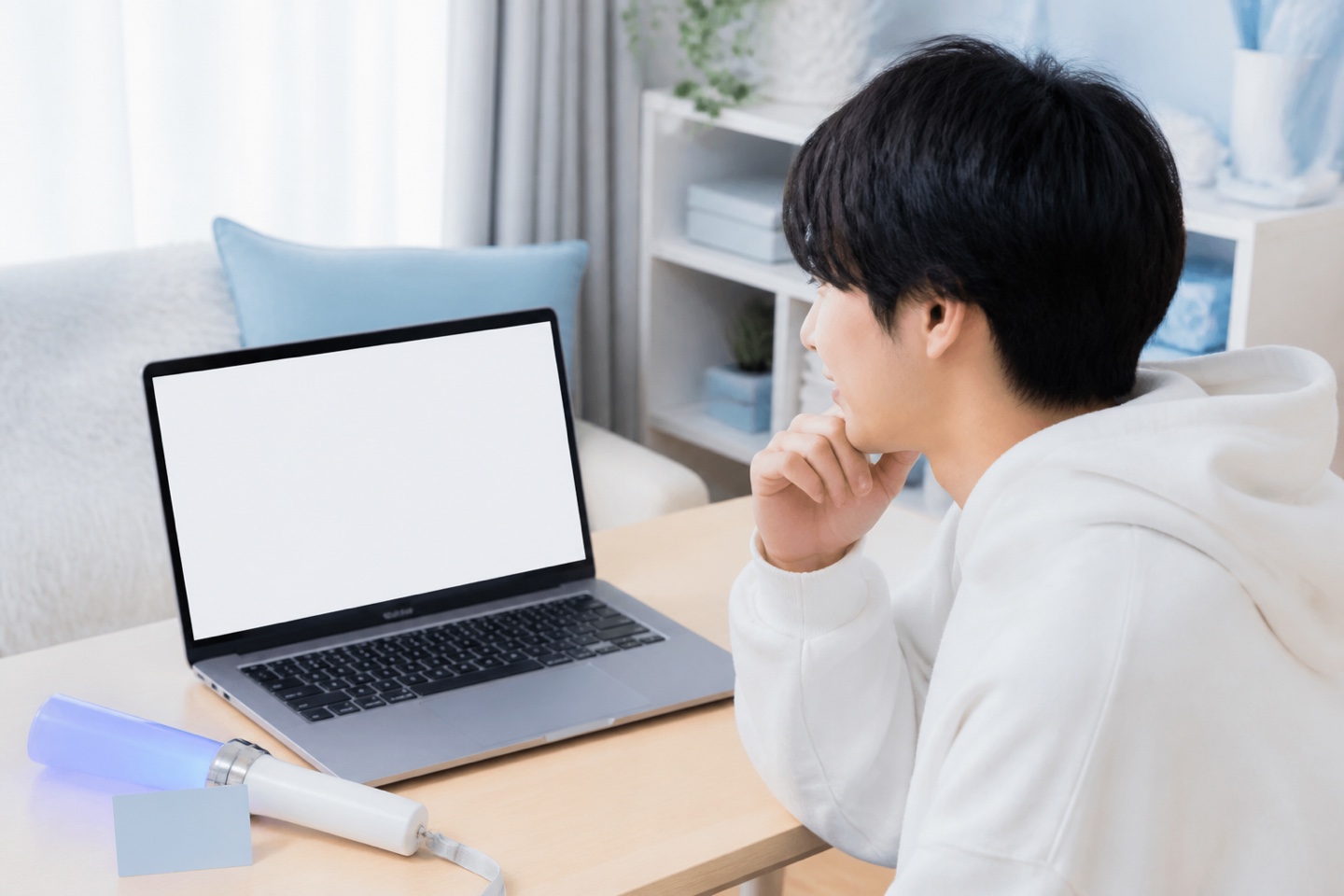
What Zaitaku Otaku Means
A zaitaku otaku (在宅オタク, literally “at-home otaku”) is a fan whose oshi-katsu centers on watching, viewing and online interaction at home, rather than on the genba, the venue where the event happens. People use it both as a self-label and as a way of describing a period when they are attending fewer events.
Zaitaku style
- Streams, replays, subscriptions
- Subtitles and rewinds where available, notes
Genba style
- Live sound and the crowd
- One moment, no pause or rewind
Neither is a shortfall; they are choices of place.
Examples
- “I live in Hokkaido, so I’m basically a zaitaku otaku, and I’ve decided on one trip a year.”
- “This month I took a break from the genba and made it a period of catching up on past tour footage at home.”
- “Watching a stream at the same time as everyone lets me take part even while doing housework, which is a blessing.”
- “Even at home, I always buy the replay stream legitimately and want to leave proper impressions.”
- Social media post: “A morning as a zaitaku fan. I listen to the new song three times before heading to work.”
How the Name Changed
Zaitaku is originally an ordinary word for being at home. For a time it was a label others applied to fans who didn’t come to the genba, and it did carry an implication of “not enough enthusiasm.”
What changed its ring is that ways to show support now line up inside the home too: subscription music and video services, paid live streams, mail-order-only merch, digital membership cards, online fan meetings. Once all the official routes for support were available without going to a venue, introducing yourself as “I’m a zaitaku otaku” spread. What rewrote the meaning of the name was not people’s feelings but the environment.
- A label applied by othersFans who didn't come to the genba
- Support at homeSubscriptions, paid streams, mail-order merch
- A self-introductionI'm a zaitaku otaku
What rewrote the name was the environment, not people's feelings.
How It Differs From Chanoma and Online Sansen
| Term | What it expresses |
|---|---|
| Zaitaku otaku | An everyday style in which your home is the base of your activity |
| Chanoma (literally the family living room) | A distance at which you enjoy things centered on TV and publicly available information |
| Online sansen | The action on a given day of watching a specific concert or match by stream |
| Rokugazei | A way of viewing: watching afterward via archive |
A zaitaku otaku isn’t defined by whether you have genba experience. People who used to go often may move to staying home as their lives change, and people who started at home may stand in a venue for the first time years later. Pinning “zaitaku” on someone else as a sign of low enthusiasm mixes up these four. Reasons for not being able to go to a venue can’t be seen from outside, and the value of support isn’t measured by distance traveled.
Ways to Support From Home
- Watch through legitimate routes. Official streams, replay streams, playback on subscription services. Unauthorized reposts do not add views to the official video; some may generate revenue for rights holders through Content ID
- Buy. Discs, music, mail-order merch, e-books. Buying right after release sometimes has meaning in the tallies
- Take part with numbers. Join the concurrent viewers, leave likes, post impressions with the official tag
- Give directly. Paid memberships such as supacha (Super Chat) and member-only content (men-gen)
Add up the monthly items so you can keep track. Reviewing regularly whether to continue in the months you couldn’t watch spares you the assumption that it’s cheaper because it’s online. A stream’s comment section moves fast, so pay attention to personal information, spoilers and repeated posting.
- 01Watch legitimatelyOfficial and replay streams
- 02BuyDiscs, music, merch, e-books
- 03Take part in numbersViewers, likes, official tags
- 04Give directlySupacha and member-only content
Unauthorized reposts do not add views to the official video; some may generate revenue for rights holders through Content ID.
Don’t Rank Support by How Often You Attend
Distance traveled, health, work pattern, family circumstances, sensory sensitivity, cost. There are as many reasons for not going to a venue as there are people. Counting attendance to rank people, or insisting that “if you don’t go to meet them it isn’t support,” looks at none of these. When you read a report from someone who went in person, the minimum line is not to ask for content where photography is banned or for the contents of limited content.
For records at home, noting the date you watched, the title, the scenes that stayed with you and the official URL lets you see your viewing add up. Going to a venue later, or staying home for good, is up to you. Staying home is not a shortfall of support but a choice of place that fits your life.
Turning Your Room Into a “Seat”
Decide in advance the hours when notifications are off, the volume, the screen brightness, when to take breaks and your payment limit. For online performances, finish logging in and a playback test before the start, and if you share your connection or room with family, tell them the time slot so it’s easier on both sides.
At home you can show subtitles or rewind a section between songs you missed when the service and performance allow. You can also take notes partway through and lie down when tired. These are freedoms you can’t choose at a venue. Rather than counting the difference between home and the venue as a shortfall, stretching the parts you can take in deeply precisely because you’re at home makes the same amount of time richer.
Notes From The Oshi Lab: Demand Not Tied to Where You Live
With streams and, depending on the performance, on-demand archives available, staying home has become an independent viewing environment, not a substitute for the genba. What draws our attention is that at-home fans’ spending is not “cheaper by the amount of travel and lodging” but shifted to other line items. Audio equipment, connectivity, paid streams, mail-order shipping, multiple subscriptions. What isn’t spent on the venue flows toward raising the experience inside the home.
From the sender’s side, this segment is demand that isn’t tied to where people live. People in rural areas or overseas, people who only have time at night, people whose health goes in waves can join the same program if schedules, eligible territories and access conditions allow. Conditions such as how long replay streams stay up, whether there are subtitles or multiple cameras, and rebroadcast slots for regions in different time zones directly determine how many people can take part. The design question of how to take in the portion beyond the venue’s capacity is beginning to be discussed with metrics other than attendance, and there we can see the shape of a new market.
Related Terms
FAQ
What is a zaitaku otaku?
A fan whose oshi-katsu centers on enjoying works, streams, music and social media at home rather than attending concerts and events.
How is it different from chanoma?
The two are close, but chanoma ("living room") grew out of a TV-centered viewing culture, while zaitaku otaku broadly covers online activities such as streams and games.
Does it not count as support unless I go to the genba?
It does. Watching official streams, buying works and posting your impressions are all ways of supporting from a distance.
Is there any point in joining a fan club if I mostly stay home?
Yes. Many perks do not require attending in person, such as newsletters, digital content, advance notice of streams and priority slots for mail-order sales. They differ by organization, so check the published list of perks before joining.


