
Finance Meets Fan Culture: Official Case Studies in Cards, Bank Cards, and Trip Insurance

Whether it is a card featuring artwork of one’s favorite celebrity or character (one’s oshi) or insurance designed to guard against cancellation fees when traveling for concerts and events (ensei), these offerings represent vital touchpoints connecting fans with financial institutions. However, credit cards, bank ATM cash cards, and insurance policies each involve entirely different application procedures and fee structures.
By examining four official Japanese case studies, this article clarifies the essential points fans should verify before applying, as well as the clear conditions and specifications that companies ought to present transparently when planning and promoting such products.
Mirrativ Oshi-Katsu Epos Card: Image Approval and Credit Screening Are Separate
The Mirrativ Oshi-Katsu Epos Card (in Japanese) is a credit card that lets users feature “Emomo,” the customizable 3D streaming avatars from the live-streaming platform Mirrativ, on their card face.
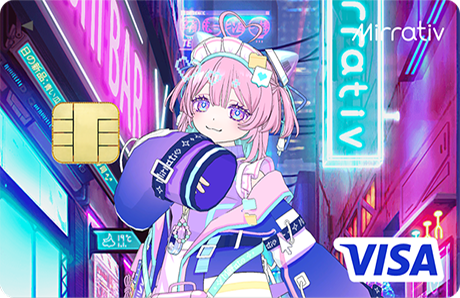
The sample card face features an Emomo avatar alongside the card’s integrated IC chip and the official Visa and Mirrativ logos. This product design demonstrates a direct effort to integrate the digital avatars fans interact with during live broadcasts into their everyday offline payment cards.
Cardholders can only use eligible Emomo avatar images selected directly through the Mirrativ mobile app. The program is limited to designated streamers, and official authorization from both Mirrativ and the individual streamer is required. This is not a service that allows just anyone to freely upload personal photographs or illustrations of their favorite artists. Furthermore, the guidelines clearly state that even eligible avatar images cannot be edited, collaged, or supplemented with custom text.
Here, it is vital to differentiate between the design screening process and the financial credit card enrollment screening. The card carries no annual fee and is available to applicants aged 18 and older, excluding high school students. The baseline reward rate is 1 point per 200 yen spent (including tax), with certain transaction exceptions. Meeting the eligibility conditions for a chosen avatar design does not mean your credit card application has been approved; they remain two distinct hurdles.
For those who already hold a standard Epos Card, switching to this design incurs a card-switching fee of 1,100 yen (including tax). The official terms explicitly outline that the card number will change upon reissue and that cardholders cannot carry over premium perks or tiered account features from existing accounts, such as Epos Gold Card status. When businesses draft customer communications, it is crucial to clearly separate terms for first-time applicants from conversion conditions for existing cardholders.
Reading the “2,000” Reward Unit and How Support Reaches Streamers
The enrollment bonus of “2,000 coins” granted upon new sign-up refers to complimentary in-app coins designed exclusively for use within Mirrativ. It is not equivalent to 2,000 yen in cash or a direct statement credit applied against card billings.
The program also features a continuous patronage mechanism where Mirrativ awards coins to designated streamers based on the cardholder’s routine card spending. This reward pool is calculated solely from retail shopping charges; cash advances are excluded. This structure must be carefully distinguished from a direct cash remittance where the user’s total payment amount is sent straight to the streamer’s personal bank account.
When companies announce and explain promotions of this nature, they can make terms significantly easier for consumers to understand by detailing precisely who is awarding what to whom, under what specific criteria—clearly delineating “cardholder credit card points,” “in-app user coins,” and “streamer-allocated reward coins.”
Ado Co-Branded Card: Separating Application Start Dates from Actual Issuance Dates
In a press release dated July 7, 2026 (in Japanese), Visa announced that applications for “SAISON CARD Digital
While the standard SAISON CARD Digital is widely marketed for its instant digital card issuance capability in as little as five minutes, the Ado-branded collaboration does not follow the same identical timetable. The official press release explicitly clarifies in a separate note that review and sequential card issuance for the Ado edition were scheduled to begin in mid-August 2026.
Consumers should not assume that the label “digital card” automatically means an account applied for today can be used immediately for shopping that same afternoon; verifying the specific timeline for the collaboration tier is essential. On the business side, marketing teams that repurpose informational copy from their flagship products must prioritize placing edition-specific issuance timelines in prominent, hard-to-miss positions.
The enrollment incentive for the card offers 2,000 yen in cash back, conditioned on spending a cumulative total of at least 10,000 yen (including tax) on shopping purchases by the end of the month following card opening. This benefit is fundamentally different from Mirrativ’s in-app complimentary coins. Because published terms reflect the conditions in place at the time of the initial press release, prospective applicants should always confirm current campaign durations and eligibility criteria directly on the official product landing page prior to applying.
- 01Review Eligible Designs and Application EligibilityConfirm whether you can use custom images or must choose from pre-authorized designs
- 02Separate Design Verification from Credit ScreeningBeing able to select a design does not guarantee credit card approval
- 03Check Issuance Timing and Card-Switching TermsVerify collaboration rollout schedules, reissue fees, card number changes, and non-transferable perks
- 04Read the Reward Units and Earning ConditionsDistinguish cash, points, and in-app coins, checking expiration windows and spending thresholds
Source: The Oshi Lab’s summary of the article
Oita Bank × Sanrio: An ATM Cash Card Issued Strictly at Bank Counters
A press release published by Sanrio on November 12, 2024 (in Japanese) introduced a fresh card visual featuring My Melody and Kuromi for Oita Bank. This product is an ATM cash card tied to a general ordinary savings account. Even though it displays beloved licensed characters, its fundamental financial mechanics are entirely distinct from a credit card.
The published onboarding instructions state that customers can obtain this design through only two paths: by opening a new ordinary savings account in person at a physical branch counter, or by switching an existing cash card at the counter. The announcement specifically notes that customers opening an account via the internet cannot select this character design. For both new openings and card switches, an issuance fee of 1,100 yen (including tax) is charged.
If consumers initiate an online account application from their smartphones solely because they were drawn in by the character art, they may discover too late that their desired design is unavailable. Users must verify both the eligible transaction venue and associated administrative costs. For financial institutions, placing conditions such as “In-Person Branch Only,” “Unavailable via Online Account Opening,” and “Issuance Fee Applies” in close visual proximity to the card artwork allows potential applicants to make an informed decision before starting the process.
It is also important to read announcements for past time-deposit campaigns separately from updates regarding new cash card visuals. Even when the same character intellectual property is utilized across multiple initiatives, the promotional windows and underlying financial instruments are rarely identical.
Mysurance × JCB: Introducing Fan Trip Insurance at the Point of Travel Booking
According to a joint press release from Mysurance and JCB dated July 7, 2026 (in Japanese), enrollment for dedicated fan trip (oshi-katsu) cancellation insurance became available through the “JCB no Hoken” portal inside the MyJCB app starting on June 30. Available in both domestic and international travel editions, this product addresses event-related spending through an approach distinct from branded card artwork.
According to the announcement, Mysurance recognized a structural challenge: creating an effective touchpoint to introduce cancellation insurance precisely when fans book their transportation and lodging after finding out whether they won concert lottery tickets (touraku). The distribution partnership via MyJCB was framed as an initiative to present insurance options at the exact moment consumers make those travel commitments. The challenge was aligning where and when to offer guidance with the consumer’s travel booking behavior; the release did not state that the company previously lacked customer touchpoints altogether.
Distinguishing Illustrative Premium Quotes from Actual Policy Coverage
The press release explains that the insurance reimburses cancellation penalties incurred for trip expenses—up to the scheduled coverage limit—if triggered by events such as concert cancellations or postponements, transit delays or cancellations, or sudden outpatient hospital visits or inpatient hospitalizations. The materials highlight an illustrative scenario offering 30,000 yen in domestic trip cancellation coverage for an insurance premium of 900 yen.
However, this figure is strictly a sample rate under specific conditions. It does not mean every policy contract will carry the exact same premium, nor does it imply that cancellations resulting from any arbitrary cause are unconditionally covered. For instance, how the absence or cancellation of an individual performer is handled cannot be determined solely from a single summary sentence in a press announcement.
When evaluating coverage in practice, consumers must cross-reference the official product documentation, full policy wording, and Important Matters Explanation sheet for the following critical criteria:
- The eligible enrollment window (such as within a set number of days following booking, or up to a fixed number of days prior to departure)
- Eligible trip types and covered expenditures (domestic vs. international, transit vs. accommodations)
- The precise legal definition of covered events and explicit policy exclusions
- Maximum insurance benefit amounts, payout caps, and necessary supporting claim documentation
When fans book event tickets, hotels, and transportation on different days, laying out the respective reservation dates and cancellation fee deadlines side by side makes verification significantly easier. For product designers, pairing timely contextual prompts with direct, visible navigation to full coverage terms is a key point for consideration.
Designing Customer Guidance That Clarifies Product Differences Before Application
Credit Cards
- Separate visual design conditions from financial credit screening
- Check collaboration issuance timelines, switching fees, and reward units
Bank Cash Cards
- Confirm that the procedure is for a bank savings account
- Check in-person branch requirements and card issuance fees
Fan Trip Cancellation Insurance
- Verify enrollment timing windows and eligible trips and travel expenses
- Read covered causes, maximum payout limits, and policy exclusions
Source: The Oshi Lab’s summary of the article
These four case studies highlight that financial providers must convey the excitement of selecting fandom designs alongside the serious contractual terms of financial products at the exact same time. Whether an incentive offering “2,000” refers to Japanese yen or in-app virtual currency, whether promotional launch coincides with instant card issuance, and whether an application can be finished entirely on a smartphone are all specific, decisive questions consumers ask before signing up.
When enterprises design fandom campaigns, they should ensure these core conditions are visible right from the initial promotional stage where designs and perks are showcased, rather than burying them solely in fine-print footnotes or post-application confirmation screens. In turn, fans can evaluate products with confidence by reviewing the required application channel, timeline, and associated fees against their own personal fandom schedules.
Related Articles: What Are Oshi-Katsu Credit Cards and Fandom Reward Points? / What Is Oshi-Katsu Marketing? / Oshi-Katsu Market Size (2026 Edition) / How to Keep an Oshi-Katsu Budget and Spending Log
FAQ
Can I make an oshi-themed design card using any photo of my favorite artist that I like?
No, you cannot freely use any image. For example, with the Mirrativ Oshi-Katsu Epos Card, you can only choose from eligible Emomo avatar images via the Mirrativ app, requiring explicit permission from both Mirrativ and the individual streamer. Furthermore, screening for the visual design and credit card enrollment screening are handled as entirely separate processes.
Can anyone get the Ado-design SAISON CARD Digital issued in as little as 5 minutes upon application?
No. Issuance in as little as five minutes is the standard feature for regular SAISON CARD Digital accounts. According to the July 7, 2026 announcement, applications for the Ado design version opened on July 4, 2026, with screening and card issuance scheduled to proceed sequentially starting in mid-August 2026. Applicants must carefully read footnote terms separately from standard product features.
Is the Oita Bank My Melody and Kuromi design card a credit card? Can I apply for it online?
No. The product announced by Sanrio on November 12, 2024, is an ATM cash card for a general ordinary savings account. It is available only when opening an account in person at a bank branch counter or by switching an existing cash card; it cannot be selected when opening an account online, and an issuance fee of 1,100 yen applies.
Does fan trip (oshi-katsu) cancellation insurance cover all cancellations?
No. Coverage is subject to specific qualifying events, benefit payout caps, and policy conditions. While official announcements cite examples such as performance cancellations, postponements, transportation delays, flight cancellations, and sudden hospital visits or admissions, this does not mean every cancellation reason is unconditionally compensated. You must verify enrollment timeframes, eligible travel and expenses, and exclusion criteria through each product's official documentation, terms of service, and Important Matters Explanation sheet.
When financial institutions plan and promote fandom-related products, what information needs to be clearly distinguished?
They must clearly separate intellectual property rights licensing and visual design reviews from financial credit screening and procedural requirements; explain the gap between regular product launch schedules and collaboration edition timelines; specify reward units (cash yen vs. in-app coins); clarify branch-counter restrictions and reissue fees; and clearly state eligible insurance causes versus benefit limits. To prevent misunderstandings prior to application, systems should be designed to present these contrasting details side by side within the same screen or onboarding flow.


