
Concert Penlights: Compare Glow Sticks, Multicolor LEDs, and Sound-Synced Lights
When a song begins, the entire audience may glow in a single unified color, and in another moment, each fan chooses a favorite shade of their own. A concert penlight is both a tool for enjoying light and a piece of merchandise that lets audience members take part in a performance. Today, snap-to-glow chemical sticks, handheld multicolor lights that you switch yourself, and devices synchronized with stage productions all exist side by side.

Before buying one, the number of colors is not the only thing you want to know. Can you use it at the concert you are attending? What kind of batteries does it take? Does it work with the show’s synchronized lighting effects? Looking closely at official product photos and event guidelines, this guide organizes how penlights work and how to choose the right one.
From Chemical Luminescence to Multicolor LEDs and Show-Synced Lights
Snap-to-activate chemical glow sticks (often called chemilights or cyalumes in Japanese fan culture) work on a fundamentally different mechanism from battery-powered LED lights. Once you bend a chemical glow stick and start its reaction, you cannot flip a switch to turn it off and reuse it the next day. By contrast, LED models offer power switches and handheld color-changing controls on many units, letting fans combine multiple colors into a single wand.
One of the Japanese companies known for illuminated cheering goods is LUMICA Corporation, established on February 10, 1979. On the company’s corporate profile page (in Japanese), its chemical luminescence business and LED business are listed side by side, with flagship products including Chemihotaru (chemical fishing lights), Lumica Light, and Daisenko (high-intensity glow sticks). This lineup shows how products have been developed for different settings that rely on light, from night fishing to live concerts.
However, chemical glow sticks, manual multicolor LEDs, and show-synced models did not simply replace one another in a single uniform sequence. Which type gets used depends on a concert’s staging, venue bring-in rules, and individual fan preferences. The arrival of newer systems does not mean older types of lights can no longer be used at any venue.
| Type | How It Lights Up | What to Check Before Buying |
|---|---|---|
| Chemical glow stick (chemilight) | Chemical luminescence triggered by mixing internal liquid solutions | Permitted products and brightness levels, plus storage and disposal instructions |
| Manual LED penlight | Powered by batteries or similar sources and operated with physical buttons | Battery type, how colors are switched, and physical body dimensions |
| Show-synced penlight | Compatible hardware responds automatically to the concert production’s control system | Compatible concerts, supported product models, and pre-show setup steps |
This table is a reference for telling the technical mechanisms apart. When reading event announcements, you need to separate commercial categories like “official merchandise” versus “commercially sold general goods” from technical categories like chemical luminescence, manual LED, and show-synchronized control.
Chemical Glow Stick
- Lights up by mixing chemical solutions inside the tube
- Cannot be switched off to reuse the next day once activated
- Check permitted brightness, storage, and disposal instructions
Manual LED Light
- Powered by batteries and controlled by buttons in your hand
- Combines multiple colors and on/off switching in a single unit
- Check battery size, color-switching sequence, and dimensions
Show-Synced Light
- Responds to control signals prepared by the concert production
- Requires a matching combination of supported hardware and show system
- Check event compatibility, model numbers, and setup rules
Source: The Oshi Lab’s summary of the article
Comparing Multicolor LED Tubes and Handles in Official Photos
On Ruifan Japan’s “KING BLADE X10 V” product page (in Japanese), official photographs show three variations with different tube shapes.
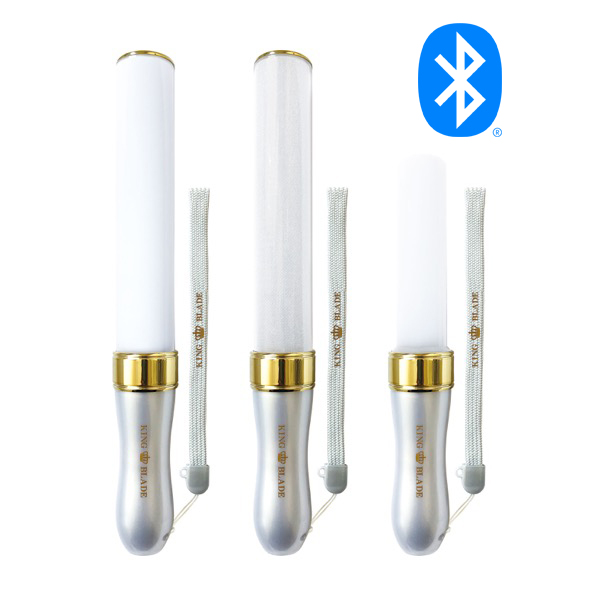
In the photograph, you can see the distinct parts of the unit: the glowing light tube, the handle grip, the connecting collar joining them together, and the strap that loops around the wrist. Even under the exact same series name, the length of the tube and the visual finish of its surface are not identical across variations. Along with the visual impression from photos, always verify the exact dimensions of the version you choose in the product specifications table.
The product information for this model lists 15 default colors, options for customizing colors and their display order, and power supplied by three AAA batteries. The Bluetooth mark on this product refers to a feature used for tuning and customizing colors; simply having a Bluetooth logo does not mean a penlight can join the synchronized venue-wide lighting effects at any concert.
What specifications matter most to you will change depending on whether you want to fine-tune a shade to closely match a specific color, switch rapidly between songs, or repeat familiar button operations. Rather than picking a light based on color count alone, reading through the operating steps and picturing how you plan to use it during a show makes it much easier to spot practical differences.
Think of Acoustic Sync as a Pairing of Light and Sound Source
Alongside penlights that you control manually by pressing buttons in your hand, there are also products that synchronize with audio tracks prepared by the concert production. In its product guide for acoustic-synced penlights (in Japanese), Evixar introduces a system that embeds control signals directly into an audio source.
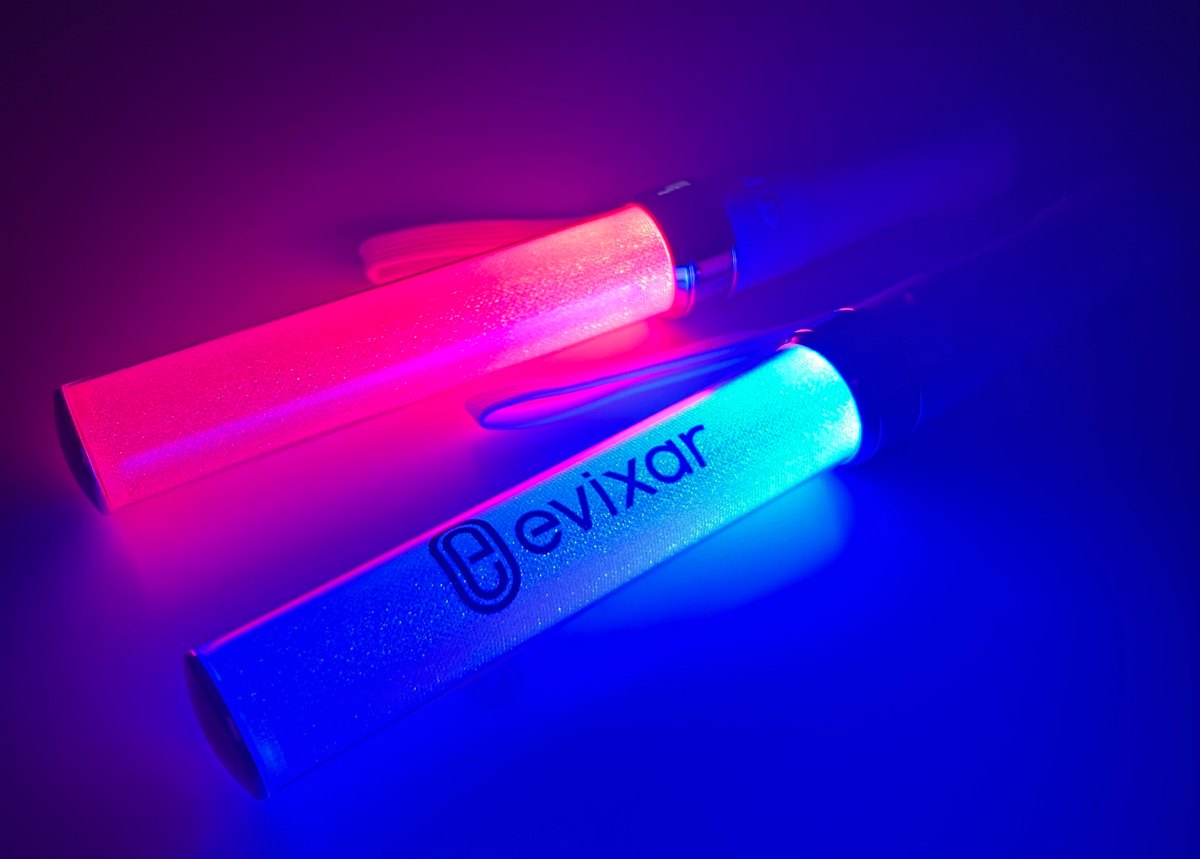
Looking only at the photograph, the exterior resembles a standard manual LED penlight. However, you cannot tell from the outside alone what a penlight reacts to inside a concert venue. You have to verify the specific pairing of a compatible light and a prepared audio source; it does not work in a way where playing an everyday music track at home will make just any penlight react the same way.
On the event planning side, organizers distinguish between moments when synchronized stage effects play automatically and moments when fans operate their lights manually. Visitors also want to know whether the light is sold as merchandise or loaned out at the venue, whether pre-show setup is required before the curtain rises, and how the unit should be handled after the performance ends. Showing a brief guide on how to use the light at that specific concert alongside promotional preview videos makes preparation much easier for first-time attendees.
Do Not Judge Venue Eligibility by Length Numbers Alone
In hololive production’s event participation rules published on September 2, 2026 (in Japanese), lights exceeding 27 cm in length are restricted, while an exception is provided for past official hololive merchandise that has not been modified from its original retail state. The rules also specify a usage limit of up to one item per hand.
This announcement applies specifically to that company’s concerts. It is not a universal industry standard guaranteeing that any light 27 cm or shorter will be permitted at concerts hosted by other companies. Beyond overall length, always read the specific rules for the show you are attending, including requirements for official event merchandise only, brightness limits, bans on modifications, maximum number of lights held, and how lights may be waved.
The safe position for holding a light without blocking the view of people around you also changes depending on your seat location and the stage production. Even during moments when the entire auditorium unites in a single color, other audience members are sitting in front of, behind, and beside you. Rather than trying to make your own light look as big or prominent as possible, prioritize following the venue’s instructions and enjoying the performance together.
Separate Your Checks Into Pre-Purchase, the Day Before, and Show Day
- 01Before BuyingMatch product names and model numbers against the specific concert's rules, and verify whether tubes and batteries are included when ordering online.
- 02By the Day BeforeCheck battery types and polarity, test power and color switching, follow manual storage rules, and pack matching spare batteries.
- 03At the Venue (and Travel)Follow setup guides and staff instructions without disassembling lights in your seat; check airline rules by lighting mechanism when flying.
Source: The Oshi Lab’s summary of the article
Before buying is the stage for confirming compatibility between the concert you plan to attend and the product you want to purchase. Rather than relying solely on stories like “a friend was able to use this at another live show,” look directly at the product name and model number and compare them against that concert’s official rules. When shopping online, read the item description carefully to check whether the listing includes only the handle body or also comes with the light tube and batteries.
By the day before the show, verify the required battery type and insertion orientation, and test the light to make sure it turns on and switches colors properly. For handling batteries and storing the unit when it will not be used for a long period, follow the manual provided with that specific product. When packing spare batteries, do not assume a new light uses the exact same battery standard as an older model you already own; select spares that match the unit you are bringing.
At the venue, check the on-site setup instructions and follow directions from event staff. Even if the light does not display the color you expected, do not take the unit apart in your audience seat or switch it to a brightness level that disrupts other attendees’ viewing experience; instead, handle the issue using the methods provided in the official guide.
If you are traveling by airplane for a concert trip (ensei), check the guidelines issued by your airline for the specific item you are carrying, such as Japan Airlines’ FAQ on chemical glow sticks and cyalumes (in Japanese). Rather than asking about chemical glow sticks and battery-powered LED lights as if they were the exact same object, stating the specific lighting mechanism of your product makes it much easier to confirm the rules accurately.
The Oshi Lab Note: Designing Lighting Productions and User Guidance Together
Choosing your own color by hand and watching the entire crowd unite in a single synchronized shade are both wonderful reasons to enjoy using a penlight. There is no need to decide which style of cheering is superior. Understanding the ways fans value and use their lights gives concert organizers helpful clues when designing stage productions and official merchandise.
What event planners can prepare is unified guidance where visitors can read both the appeal of a product and its usage conditions in the exact same place. Good documentation keeps fans from having to hunt across multiple pages to find compatible concerts, model numbers, battery sizes, initial setup steps, and in-venue rules. When exceptions are granted for older official merchandise, the wording also needs to be clear to longtime fans who have carefully kept their past goods.
Beyond counting how many units were sold, organizers can also record where attendees hesitated during preparation, which moments were awkward to operate during the show, and what questions came up most often in customer inquiries. Reflecting those findings in the next instruction manual and visitor guide is part of the craft of shaping the fan experience after a piece of merchandise is purchased.
For inquiries regarding live stage production and cheering goods design, please contact KAZAORI Inc. (in Japanese). Related articles: What Is a Penlight? / What Is an Oshi Color? / What Are Venue-Limited and Pre-Sale Goods? / Concert Travel Packing Guide
FAQ
What is the difference between a chemical glow stick and an LED penlight?
A chemical glow stick produces light through a chemical reaction between liquid solutions, whereas an LED penlight is an electric device powered by batteries or similar power sources. Even among LED models, available colors and operating methods vary from product to product, so you should check the instructions for your specific model.
If a penlight supports Bluetooth, will it sync with the stage production at any concert?
No. On the product introduced in this article, Bluetooth is a feature used for tuning and customizing colors. Whether a light works with synchronized venue-wide stage effects must be checked separately for each specific combination of concert event and product.
If a penlight is 27 cm or shorter, can I use it at any live show?
That is not a universal standard across all events. While hololive production's guidelines restrict lights exceeding 27 cm and provide an exception for unmodified past official merchandise, usage rules vary by event, so you should check the guidelines for each concert you attend.
What should I check before buying a penlight?
Check the concert where you plan to use it, compatible model numbers, body dimensions, battery specifications, operating instructions, and package contents. Read the information on stage synchronization compatibility separately from the venue's bring-in and usage rules.


