
What Is a Chant? Learning J.League Cheering Songs and Stadium Etiquette
Chant チャント · Songs sung from the stands
In the stadium the same song keeps repeating, and before you know it you’re humming along. That song is called a chant. Here is how it differs from calls and cheering songs, where the word comes from, and how to join in for the first time.
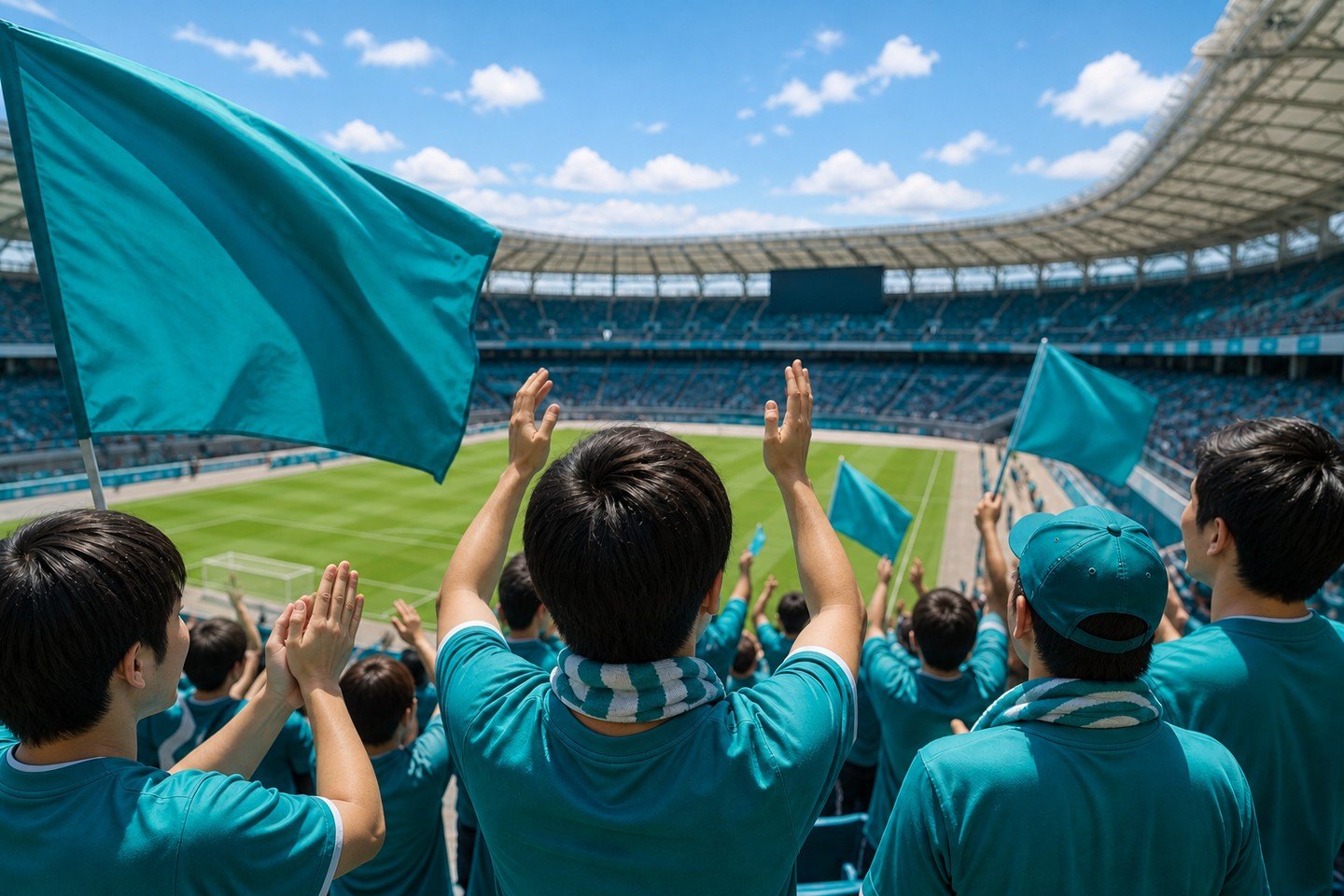
What Chant Means
A chant (チャント) is a cheering song or shout that supporters sing over and over in a soccer stand. The English word “chant” means reciting a short phrase in a steady rhythm. In Japan the term sometimes stretches beyond songs with melodies to cover the repetition of just a few words.
Some fire up the whole club, some call for a goal, and some are player chants that weave in your favorite player’s name. The roles vary, and the same melody may carry entirely different lyrics at different clubs.
Chant
- Sung throughout the match
- Lyrics tied to the club or player
Call
- Player introductions
- Turning points in the match
Hand clap
- Only the clapping pattern
- A way to join quietly
Each is a way to take part; none is a volume contest.
Origins and How Chants Are Passed On
The word chant is related to the verb “to sing,” and it has been used widely, from religious recitation to choruses in stadiums. In Japanese stadiums the term took root as supporter culture spread. Even when a melody is built on an existing song, the lyrics are usually rewritten to fit the history of the club or the player.
Some songs stop being sung when a player transfers or retires, while others are handed to the next generation with just the name swapped out. Learn only from old footage on video sites and you may mix up lyrics no longer in use or unofficial parodies, so put this season’s guidance and the calls on site first.
How It Differs From Calls, Cheering Songs and Player Songs
| Term | Form | When it is mostly heard |
|---|---|---|
| Chant | A song with melody and repetition | Throughout the match, as the flow calls for it |
| Call | A shout of short words in unison | Player introductions, turning points |
| Cheering song (oenka) | A general Japanese term | Broad, covering everything from club anthems to school songs |
| Individual cheering song (kojin oenka) | A melody prepared for each batter or pitcher | Each at-bat or appearance on the mound in pro baseball |
| Hand clap | Only the clapping pattern | When you want to join without using your voice |
A baseball player’s cheering song plays during the set time of an at-bat, while a soccer player chant rises naturally out of the flow of the match. Both are “songs for each player,” yet the way their timing is decided is completely different.
Examples
- “My favorite player’s chant was officially announced. I’ll learn just the chorus by the weekend.”
- “I didn’t know the lyrics, so I started by matching the hand claps.”
- “Near the end, the chant across the whole stand got louder.”
- “I can’t use my voice today, so I’ll take part with applause and a towel.”
- “The person next to me taught me the lyrics, and I could sing along from the second half.”
How to Join for the First Time
- Choose your position — The back or edges of the goal-ura, the stand behind the goal, let you see the whole scene and follow what people around you are doing
- Start with the clapping — Just matching the beat is enough to count as being part of the unity
- Pick up the repeated part — The few words that keep coming back are the first to reach your lips
- Add the player’s name — The name is short and the easiest part to memorize
Don’t learn the lyrics by ear alone; check the versions presented by the club or officially recognized supporter groups. Content that hurts opposing players or a particular group of people is not cheering. The J.League spectator rules and manners (in Japanese) also clearly prohibit discriminatory or insulting words and behavior.
- 01Choose your positionBack or edges of the goal-ura
- 02Start with clappingMatch the beat
- 03Pick up the refrainThe few words that repeat
- 04Add the player's nameShort sounds, easy to learn
Check the club-approved version, not only old videos.
Days You Don’t Sing Are Cheering Too
A chant is not a volume competition. There are countless reasons not to use your voice: your throat, sensitivity to sound, small children with you, your mood that day. Clapping, towels, applause and simply following the match with your eyes all support the team. Choose at the ticket stage between an area where people stand throughout and a seated one, and you won’t strain yourself or those around you.
Holding up a gefura (game flag) or a player towel is another way to take part, delivering the name without your voice. It’s not uncommon for your favorite player’s song not to exist yet, but rather than pushing for one or spreading an unofficial parody, it’s wiser to sing what has been formally shared.
When you check lyrics on a smartphone, don’t hold the screen up high, and lower the brightness. Even after you’ve learned them, listen to the tempo around you and don’t come in ahead of the people leading; that is what ends up creating unity. At events where recording and filming are restricted, the venue’s guidance takes priority even for chants.
Notes From The Oshi Lab: A Design That Supports Learning Through Repetition
The charm of a chant lies less in its lyrics than in a repetitive structure that can make learning easier. The melody is short, the repetition is heavy, and first-time visitors can join in gradually. Repetition can help many people coordinate their voices. The moment a favorite player’s name rides that structure, private affection turns into a shared chorus.
The mechanism works outside the stadium too. In any campaign where you want fans to do something together, reducing what fans need to remember, increasing repetition and leaving room to jump in midway may make participation easier. But a design that assumes everyone will be in sync also makes the people who can’t sync stand out. Can spectators who don’t use their voices be comfortable in the same seats? Are there several ways to take part? The more an event sells togetherness, the more it will be judged on how it handles these two points.
Related Terms
FAQ
What is a chant?
A cheering song or shout that spectators in a soccer stand perform together, with voices and hand claps in unison.
Can I go to the goal-ura if I don't know the chants?
Yes, as long as you follow the official rules for your ticket type. At first, clapping alone or singing just the chorus is perfectly fine.
When are player chants sung?
During player introductions, when a player turns the game around with a play, after goals and so on. Follow the people leading the cheering and those around you for the actual timing.
Where can I check the lyrics?
Go by the versions announced by the club or an officially recognized supporter group. Old footage on video sites may include lyrics that aren't used this season.
Why doesn't my favorite player have a chant?
The reasons vary: playing time, how long the player has been at the club, how far along the people leading the cheering are in preparing one. Not having a song doesn't mean the player is rated low.


