
Why Clear Files Became Fan Merchandise: Campaigns, Giveaway Rules and Storage
At a convenience store, you choose some sweets and receive a clear file featuring artwork you like. Back home, you might put documents inside or display it still in its bag. The same piece of stationery can be a practical tool or merchandise that preserves a connection with a favorite work.

Clear files offer a relatively large space for artwork, a thin object to carry home and the option of distribution as a purchase bonus. Those features make them worth considering as merchandise and promotional items. Low manufacturing cost does not, however, make every giveaway permissible, and a storage product labeled “A4” will not necessarily fit the file itself. Official campaign and storage examples help identify what planners and owners should check.
A Document Holder Becomes an Object for Enjoying Artwork
The merchandise commonly called a clear file in Japan is often a thin document holder open along the top and one side. Stationery manufacturers also use similar names for bound books containing multiple transparent pockets. Check photographs and specifications rather than relying on the product name alone.
Putting paper inside a character-themed document holder may change the appearance of its transparent areas. A product with different artwork on the front and back offers two sides to enjoy. The same item can serve different purposes for someone carrying paperwork and someone preserving an illustration.
It is therefore unhelpful to assume that fans rarely use them. Some keep separate copies for everyday use and preservation; others use the one copy they own. Planners can support those decisions by stating the material, dimensions, front and back designs, and whether a bag is included, rather than deciding how owners will use the item.
Official Campaigns Combine a Grocery Purchase With Character Artwork
The Demon Slayer: Kimetsu no Yaiba anime’s official announcement of August 11, 2025 introduced a Seven-Eleven campaign starting at 7 a.m. on August 14. Buying two eligible products together qualified customers for a limited giveaway, while supplies lasted. We discuss it here as a completed campaign.
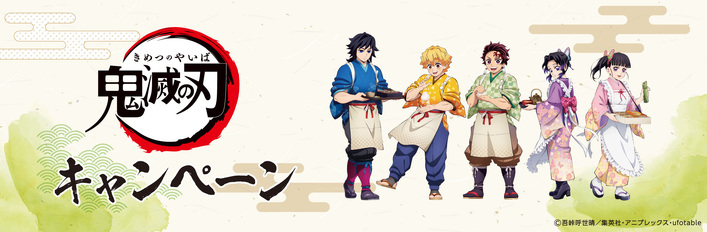
The announcement visual presents five characters in coordinated Japanese clothing. Alongside the work’s name, it shows the particular appearances associated with this campaign. To establish which giveaways were offered and how to obtain them, customers still needed to read the eligible-product and giveaway information rather than infer everything from the illustration.
A separate example explicitly documenting clear-file distribution is Lawson’s official Lotte × Puppet Sunsun campaign information. From 7 a.m. on February 3 through February 16, 2026, customers purchasing two eligible sweets could receive one original clear file on a first-come, limited-quantity basis. It also ended when supplies ran out.
Choosing two products and choosing giveaway artwork become parts of one shopping visit. The announcements establish those conditions, but do not by themselves establish increased sales or newly acquired fans. The number distributed and whether recipients remain interested in the work or store are separate questions.
Manufacturing Cost and a Giveaway’s Regulatory Value Are Different
Manufacturing costs vary with the number ordered, dimensions, material thickness, printing method, white ink, individual bags and delivery. A printer’s public quote needs its quantity, specifications and lead time attached. Depending on the project, licensing permission, design, proofing and distribution to stores may add further costs.
Regulatory treatment under Japan’s Act against Unjustifiable Premiums and Misleading Representations needs a separate assessment. The Consumer Affairs Agency’s explanation of non-lottery premiums sets a maximum premium value of ¥200 for a transaction below ¥1,000, and two-tenths of the transaction value for transactions of ¥1,000 or more. These rules are relevant when considering gifts given to purchasers without a lottery.
A premium’s value is not simply its procurement cost. Question 76 in the agency’s premium Q&A explains that where the same item is sold commercially, the basis is the price recipients would normally pay to buy it. For items not sold commercially, the calculation considers factors such as acquisition cost and the market price of comparable goods.
| Figure used in planning | What to establish |
|---|---|
| Manufacturing and procurement cost | The quantity, printing, packaging, delivery and other costs covered by the quote |
| Value of the premium | A calculation based on what a consumer would normally pay to acquire it |
| Transaction value | The amount corresponding to the purchase conditions for receiving the gift |
| Permitted maximum premium value | An assessment under the rules applicable to the campaign’s format |
The type of merchandise alone cannot establish that a clear file is compliant while an acrylic stand exceeds the limit. Planners need the distribution format, eligible products and a supported valuation of the gift. We discuss convenience-store promotions more broadly in Oshi-Katsu and Convenience Stores.
Campaign budget
- Printing, licensing, design, packaging and distribution
- Use the actual project specifications
Premium valuation
- Assess what a consumer would normally pay
- Follow the agency's method and the applicable campaign rules
A low production quote alone does not establish regulatory compliance.
Official Storage Example: A4 Paper and an A4 Document Holder Have Different Dimensions
The holder itself is larger than the paper it accommodates. A pocket or frame for A4 documents will therefore not necessarily accommodate the entire clear file.
LIHIT LAB.’s myfa Clear Holder Collection File, N-3323, is designed to store the document holders themselves. The manufacturer specifies 20 pockets, usable pocket dimensions of approximately 317 × 242 mm and capacity for two A4 clear holders in one pocket.
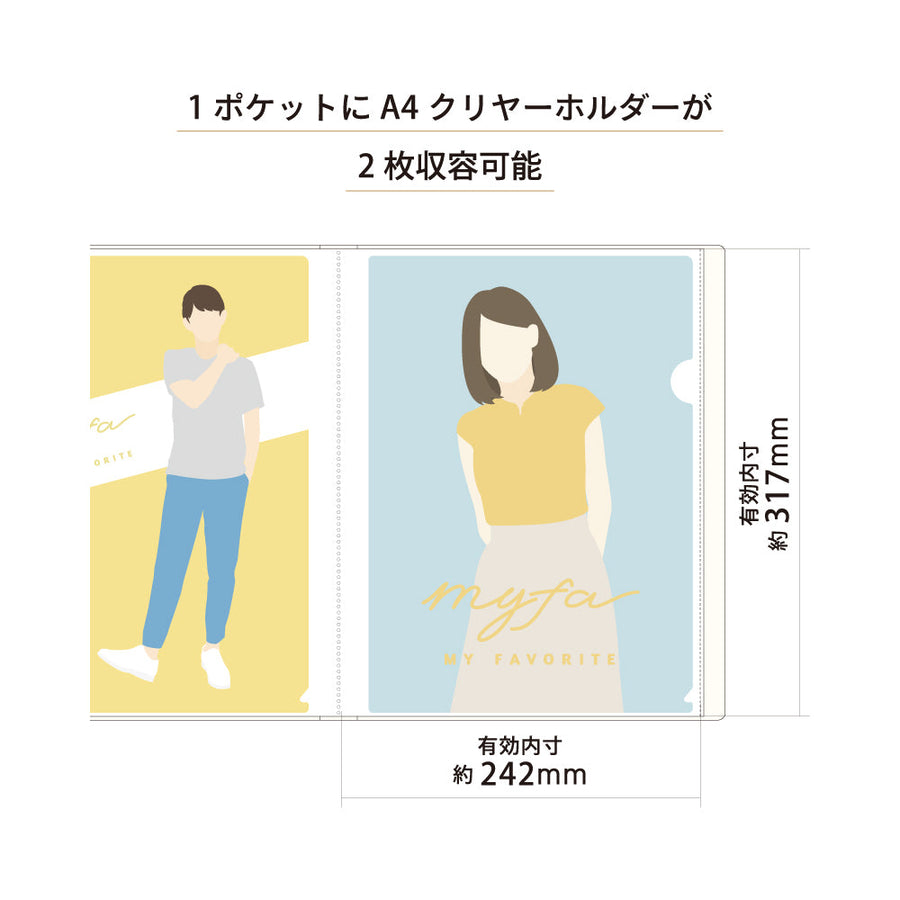
The diagram shows the holder that normally accommodates paper placed inside a larger transparent pocket. That outer pocket becomes a tool for storing and viewing the artwork. The 317 × 242 mm measurements describe this product’s usable pocket space, not a universal standard for every clear file.
If you keep the original bag, measure that too. Even where the manufacturer specifies two holders per pocket, thicker products, unusual shapes and excess packaging may fit differently. Test one first: does it pass through the opening, do the corners catch, and can the pages close without pressure?
To look for the same model, you can search Amazon Japan for LIHIT LAB. myfa N-3323. Check the seller, color, quantity and shipping, and do not select a different product solely because it says “A4.” Check current prices and availability with the seller.
Organize a Manageable Part of Your Collection First
Start with a few files on your desk or another amount you can finish. You do not have to take everything out at once or decide what to part with while organizing.
- Use: Keep everyday items accessible, separate from copies you want to protect from rubbing or creases.
- Store: Measure the file and outer bag, select a suitable pocket, and avoid forcing or overfilling it.
- Display: Choose a frame or display accessory that fits the whole item, away from direct sunlight and strong lighting.
- Undecided: Put these aside for now. Organizing and deciding to trade, give away or discard are separate tasks.
For upright storage, consider support so the files do not sag at the end of a shelf. For stacked storage, watch for pressure and caught corners. In either arrangement, follow the product instructions and check whether force is being applied to the pages or files.
A transparent bag or case cannot prevent fading or every other form of deterioration. Avoid windows and places that become hot, and check the items occasionally. Our merchandise storage guide covers organizing these alongside other goods.
- 01Measure the whole itemInclude the original bag if keeping it
- 02Test one pocketCheck the opening, corners and closing pressure
- 03Choose a locationConsider support, light and heat
The printed paper size does not establish the dimensions of its holder or packaging.
Plan for Receiving the Giveaway and Taking It Home
A limited giveaway may not reach everyone who wants it. Put the start date and time, eligible products, required purchase quantity, design choices, per-person limits and out-of-stock policy somewhere easy to find. Stating which stores participate and what inventory information can be checked can also reduce misunderstandings between staff and visitors.
There are useful decisions after distribution too. Will placing it in a bag with purchased products bend it? Can its corners survive the journey home? Can owners find its material and dimensions? Where useful, explain what a compatible storage accessory needs to accommodate. Rather than assuming more copies distributed is always better, bring recipients’ difficulties into the next campaign’s planning.
Notes From The Oshi Lab: Leave Room for Practical Use and Display
What makes clear files interesting is how an everyday purchase can connect with enjoying a favorite work, while leaving owners a choice afterward. They can use it for documents, preserve its artwork or put it on display. There is no need to decide which use makes someone a proper fan.
Organizers have the task of explaining receipt conditions and product specifications as well as presenting attractive artwork. Buyers can choose designs and uses they want and decide how many to collect. Alongside ease of distribution, considering ease of ownership is one way to create merchandise people want to keep.
For merchandise and promotion-planning inquiries, contact KAZAORI Inc.. You can also try our free support-readiness assessment (in Japanese).
Related Articles
Oshi-Katsu and Convenience Stores / Merchandise Storage / 100-Yen Shops and Fan Goods / Tokuten: Purchase and Attendance Bonuses
FAQ
Why are clear files used as fan merchandise?
They offer a relatively large area for artwork, are thin to carry home and can be sold or offered as purchase bonuses. Owners can choose practical use, preservation or display. The costs and effects of each campaign still need a separate assessment.
Can a giveaway be distributed if it costs less than ¥200 to manufacture?
Manufacturing cost alone does not determine this. Premium valuation is based on what consumers would normally pay, with comparable market prices and other factors considered for non-commercial items. The distribution format, transaction value and applicable limit also matter.
Can I use it to carry documents?
If it is made as a document holder, that is an intended use. To preserve artwork, consider rubbing and creases; keeping separate everyday and preserved copies is one option. The owner chooses how to use it.
Will an A4 pocket or frame fit it?
A4 paper and a holder for A4 paper have different dimensions. Measure the item and outer bag, then check the storage product’s usable space, opening and thickness when closed.
How should I organize the files I have collected?
Start with a manageable amount and sort by use, storage, display or undecided. You can keep undecided items and separate organizing from choosing to part with them. Avoid pressure and forced fits, and consider sunlight and heat.


