
Nogizaka46 Pilgrimage Guide: Nogizaka Station, Nogi Shrine, Jingu Stadium & Art Museums from Music Videos
The debut studio album by female idol group Nogizaka46 is Toumei na Iro ('Transparent Color'), whose jacket photographs were shot directly on the platform and ticket gates of Nogizaka Station. For their second album, Sorezore no Isu, the members posed in striking red and blue costumes against the curving glass architecture of The National Art Center, Tokyo, connected directly to the station.
Tied closely to the group's live concert history are Meiji Jingu Baseball Stadium—where Nogizaka46 has staged signature summer concerts since 2014—and Tokyo Dome, where they held their first solo dome concerts in 2017. Meanwhile, music video filming locations extend out to the MOA Museum of Art in Atami, the Shizuoka Prefectural Museum of Art, the Kudo Yoko Museum of Art in Yamanashi, and the Nobeyama Radio Observatory in Nagano. Below, we introduce all 14 locations along with the songs filmed there and what visitors can see on site today.

Visiting the Neighborhood of the First Album, Summer Stadium Venues, and Music Video Filming Locations
① Nogizaka Station · Minato Ward, Tokyo
Jacket filming location for Toumei na Iro and Time flies; adopted 'Kimi no Na wa Kibou' as its departure melody in 2016.
Read the Complete Pilgrimage Guide & Access Notes for Nogizaka Station (Minato Ward, Tokyo)② Nogi Shrine · Minato Ward, Tokyo
Shinto shrine featured in the Toumei na Iro booklet and known for hosting members' Coming-of-Age ceremonies.
Read the Complete Pilgrimage Guide & Access Notes for Nogi Shrine (Minato Ward, Tokyo)③ Nogi Park · Minato Ward, Tokyo
Booklet photography location for Toumei na Iro, where visitors can view the exterior of the historic residence and garden.
Read the Complete Pilgrimage Guide & Access Notes for Nogi Park & Former Nogi Residence (Minato Ward, Tokyo)④ National Art Center · Minato Ward, Tokyo
Jacket photography site for the second album Sorezore no Isu, offering striking architecture and art exhibitions.
Read the Complete Pilgrimage Guide & Access Notes for The National Art Center, Tokyo (Minato Ward, Tokyo)⑤ Jingu Stadium · Shinjuku Ward, Tokyo
The outdoor ballpark hosting the group's signature Midsummer National Tour concerts; interior entry requires a game or concert ticket.
Read the Complete Pilgrimage Guide & Access Notes for Meiji Jingu Baseball Stadium (Shinjuku Ward, Tokyo)⑥ Tokyo Dome · Bunkyo Ward, Tokyo
Venue for the group's first solo Tokyo Dome concerts in 2017 and Mizuki Yamashita's graduation concerts in 2024.
Read the Complete Pilgrimage Guide & Access Notes for Tokyo Dome (Bunkyo Ward, Tokyo)⑦ Miyashita Park · Shibuya Ward, Tokyo
One of the real-world Shibuya locations used for filming the music video for 'Wilderness world.'
Read the Complete Pilgrimage Guide & Access Notes for Miyashita Park (Shibuya Ward, Tokyo)⑧ Cruise Terminal · Koto Ward, Tokyo
Filming location for Erika Ikuta's graduation solo song 'Saigetsu no Wadachi.'
Read the Complete Pilgrimage Guide & Access Notes for Tokyo International Cruise Terminal (Koto Ward, Tokyo)⑨ Tove Jansson Park · Hanno, Saitama
The storybook park where the unit song 'Hakumai-sama' was filmed; visitors can explore its wooden buildings and greenery.
Read the Complete Pilgrimage Guide & Access Notes for Tove Jansson Akebono Children's Forest Park (Hanno, Saitama)⑩ Kujiragaoka · Hitachiota, Ibaraki
Historic shopping street that cooperated across the entire town to film the music video for 'Heikousen.'
Read the Complete Pilgrimage Guide & Access Notes for Kujiragaoka Shopping Street (Hitachiota, Ibaraki)⑪ MOA Museum of Art · Atami, Shizuoka
Music video location for 'Hito wa Yume wo Nido Miru,' celebrated for its art collection and ocean-view architecture.
Read the Complete Pilgrimage Guide & Access Notes for MOA Museum of Art (Atami, Shizuoka)⑫ Shizuoka Art Museum · Shizuoka, Shizuoka
Filming location for the 5th-generation song 'Kangaenai You ni Suru,' where visitors can view Rodin sculptures.
Read the Complete Pilgrimage Guide & Access Notes for Shizuoka Prefectural Museum of Art (Shizuoka, Shizuoka)⑬ Kudo Yoko Museum · Hokuto, Yamanashi
Yamanashi art museum where 'Atarashii Sekai' was filmed; check opening days in advance to view the exhibitions.
Read the Complete Pilgrimage Guide & Access Notes for Kudo Yoko Museum of Art (Hokuto, Yamanashi)⑭ Nobeyama Observatory · Minamimaki Village, Nagano
Filming site for 'Atarashii Sekai,' where visitors can view the 45-meter radio telescope from the public walking path.
Read the Complete Pilgrimage Guide & Access Notes for Nobeyama Radio Observatory (Minamimaki Village, Nagano)
1Nogizaka Station: The Platform and Ticket Gates Featured on the Cover of Toumei na Iro
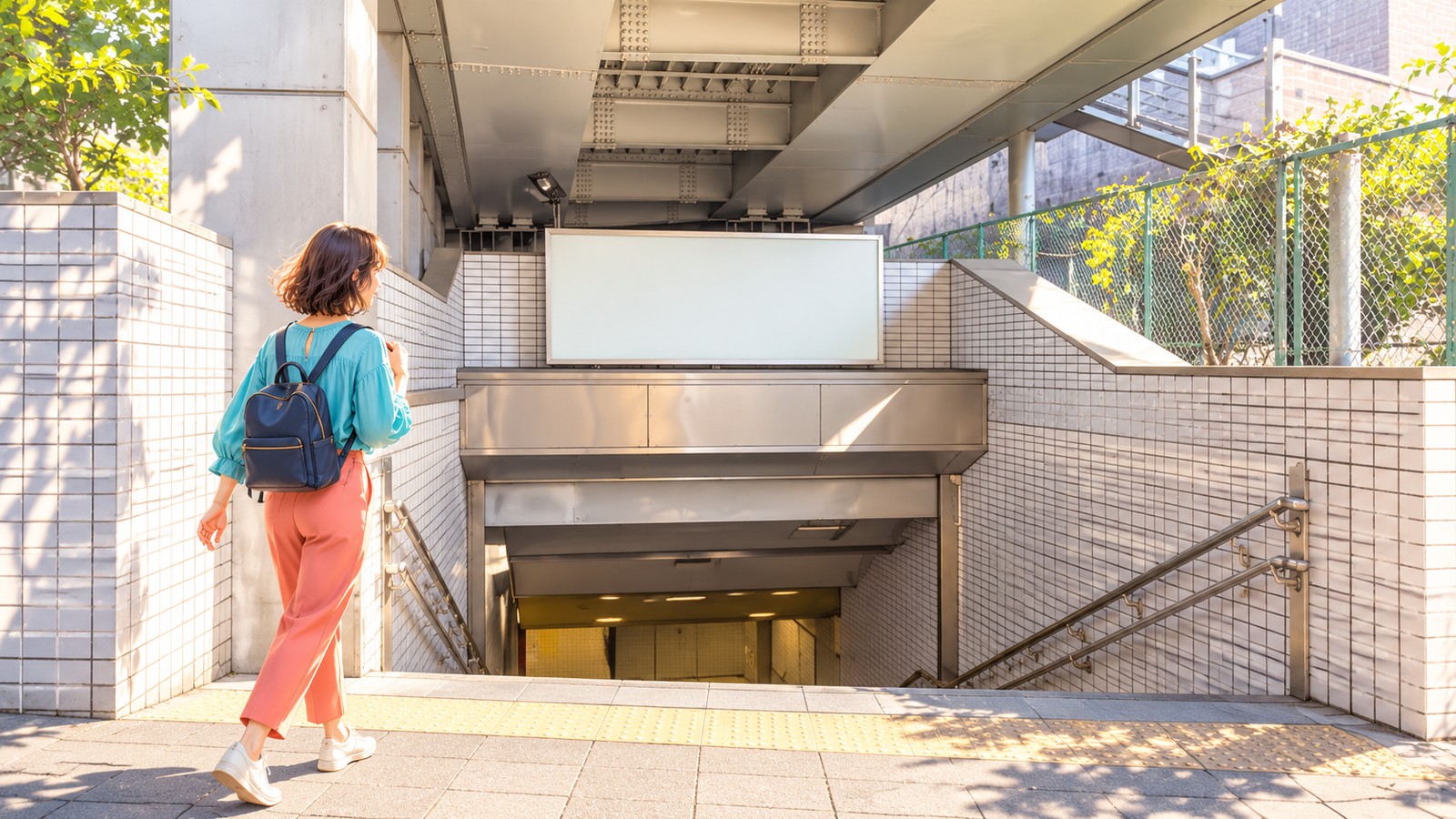
Nogizaka Station on the Tokyo Metro Chiyoda Line served as the jacket photography location for the group's first studio album, Toumei na Iro. Released in January 2015, the album used different photographs across its Type-A, Type-B, and Type-C editions, capturing the members standing on the underground train platform and in front of the station ticket gates with full on-site cooperation from Tokyo Metro.
For the 10th-anniversary best album Time flies in 2021, Nogizaka Station once again took center stage on the album jacket. Working during the brief overnight window between the last train at night and the first morning train, photographer Yoshiharu Ota photographed historical single stage costumes lined up along the platform and school-style uniforms arranged near the ticket gates—placing 10 full years of signature costumes in the exact spots where the members themselves had stood for the first album.
Source: Nogizaka46 Official — Time flies Jacket Production
Since March 26, 2016, Nogizaka Station has used 'Kimi no Na wa Kibou' as its platform departure melody, featuring a gentle piano phrase performed by then-member Erika Ikuta following a public request campaign conducted by Tokyo Metro.
Source: Tokyo Metro — Introduction of the Nogizaka Station Departure Melody
Located at 1-25-8 Minami-Aoyama, Minato Ward, Tokyo, the station lets visiting fans see the station name signs and ticket gates during regular train travel—but remember that platforms and concourses are active transit spaces for everyday commuters, so visitors should never block waiting lines, linger in narrow passageways, or stage group formations that obstruct passengers.
Sources: Nogizaka46 Official — First Album Filming Locations / Tokyo Metro — Nogizaka Station Guide
2Nogi Shrine: A Place of Worship Featured in the Album Booklet and Coming-of-Age Ceremonies
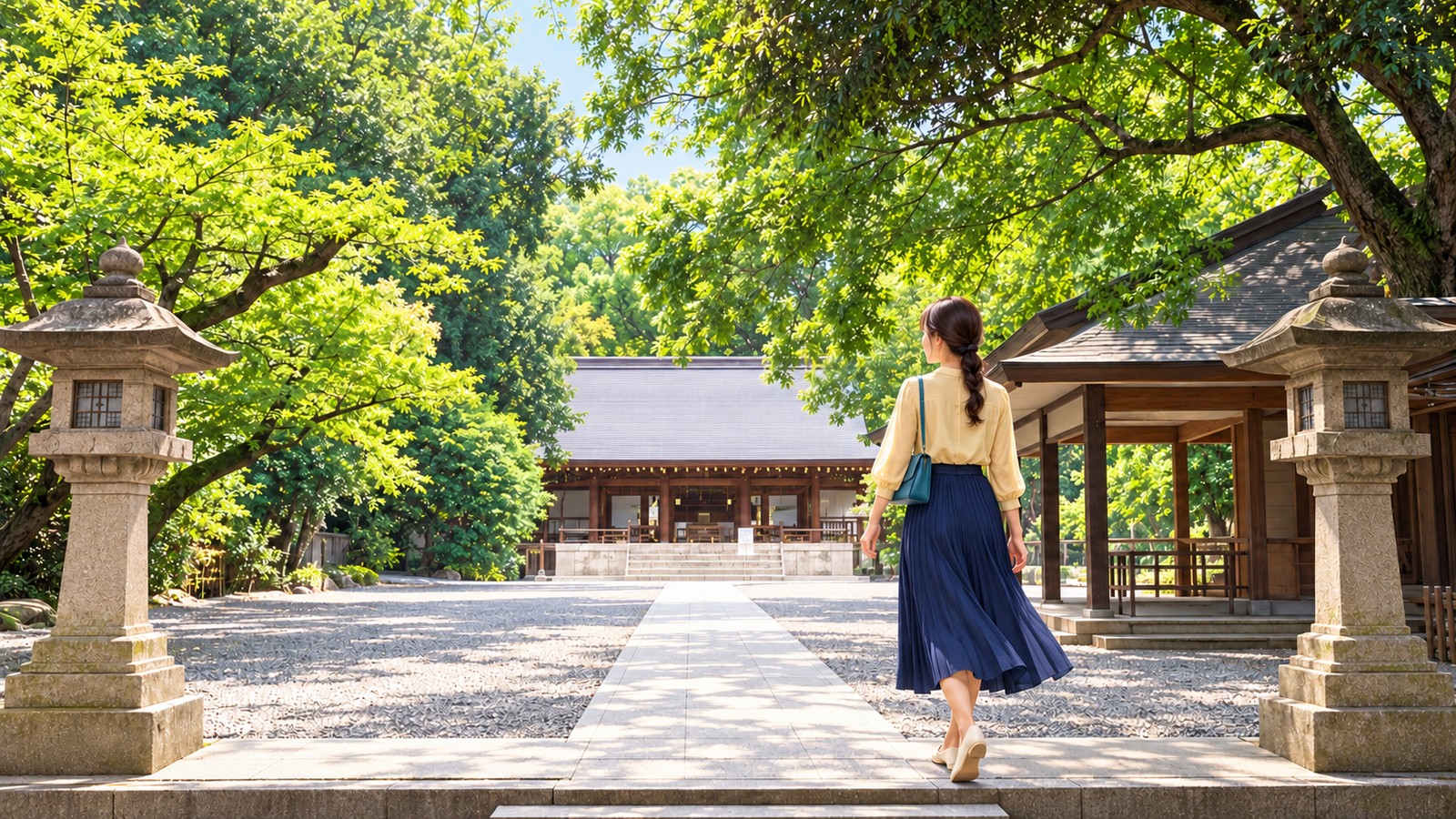
Located at 8-11-27 Akasaka, Minato Ward, Nogi Shrine is one of the neighborhood locations photographed for the booklet of Toumei na Iro, pairing photographs taken at the shrine grounds and adjacent park near the station with the underground platform cover shots to capture the neighborhood that gave the group its name.
Nogi Shrine is also where members mark their Coming-of-Age milestone each January: in January 2013, Mai Shiraishi, Nanami Hashimoto, Sayuri Matsumura, and Misa Eto visited the shrine in furisode kimono to receive prayers and blessings, beginning an annual tradition that records the members' own growth alongside their music.
Source: Nogizaka46 Official — 2013 Coming-of-Age Ceremony Report
The shrine grounds are open for worship from 6:00 to 17:00 daily, while the amulet counter and prayer reception desk operate from 9:30 to 17:00 on weekdays and from 9:00 to 17:00 on weekends and national holidays.
Sources: Nogizaka46 Official — Booklet Filming Locations / Nogi Shrine Official Website / Worship Hours & Photography Etiquette
3Nogi Park & Former Nogi Residence: The Black-Clapboard Residence from the Album Booklet
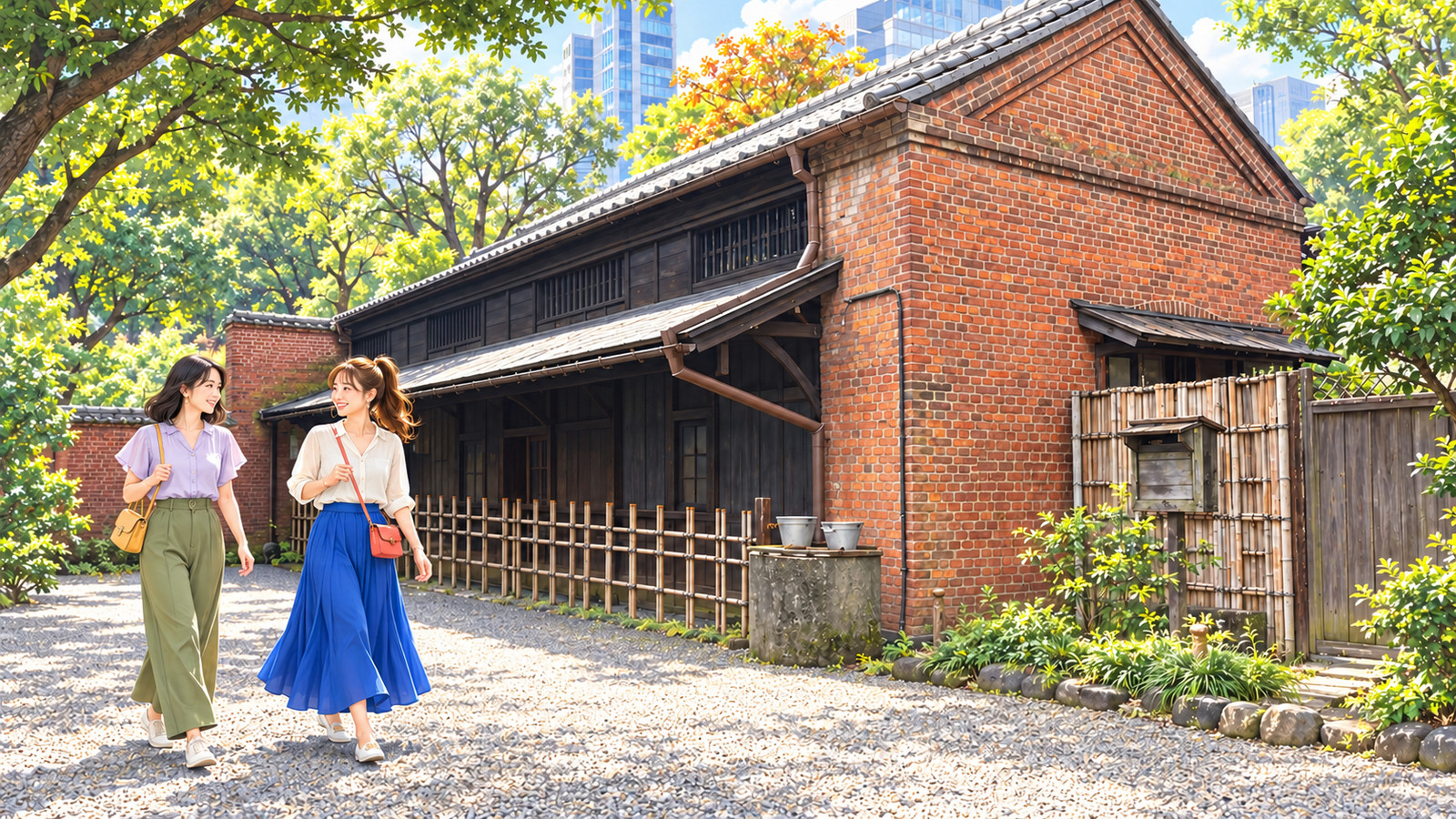
Adjacent to the shrine at 8-11-32 Akasaka, Minato Ward, Nogi Park was also used as a photography location for the Toumei na Iro album booklet. Facing Gaien-Higashi Dori avenue and the sloped street of Nogizaka, the municipal park combines a historical heritage zone preserving the Former Nogi Residence and brick stables with shaded rest areas and benches.
The Former Nogi Residence was the home where Meiji-era Army General Maresuke Nogi lived with his family. Rebuilt in 1902, the wooden main house features black-painted weatherboard siding while the adjoining stables are built of red brick; visitors can view the exteriors of both historic buildings and stroll through the surrounding garden, as well as two stepped rest plazas on the south side of the park featuring large cherry trees and a metal pipe monument.
The heritage zone around the Former Nogi Residence is open from 9:00 to 16:00 daily and closed over the New Year holidays. While the interior of the residence is normally viewed from the exterior perimeter walkway, the rooms inside—along with personal artifacts belonging to the Nogi family—are opened to the public three times a year on dates announced by the park administration.
Sources: Nogizaka46 Official — Booklet Filming Locations / AKASAKA PARKS — Nogi Park & Former Nogi Residence
4The National Art Center, Tokyo: Where Sorezore no Isu Was Photographed in Red and Blue Costumes
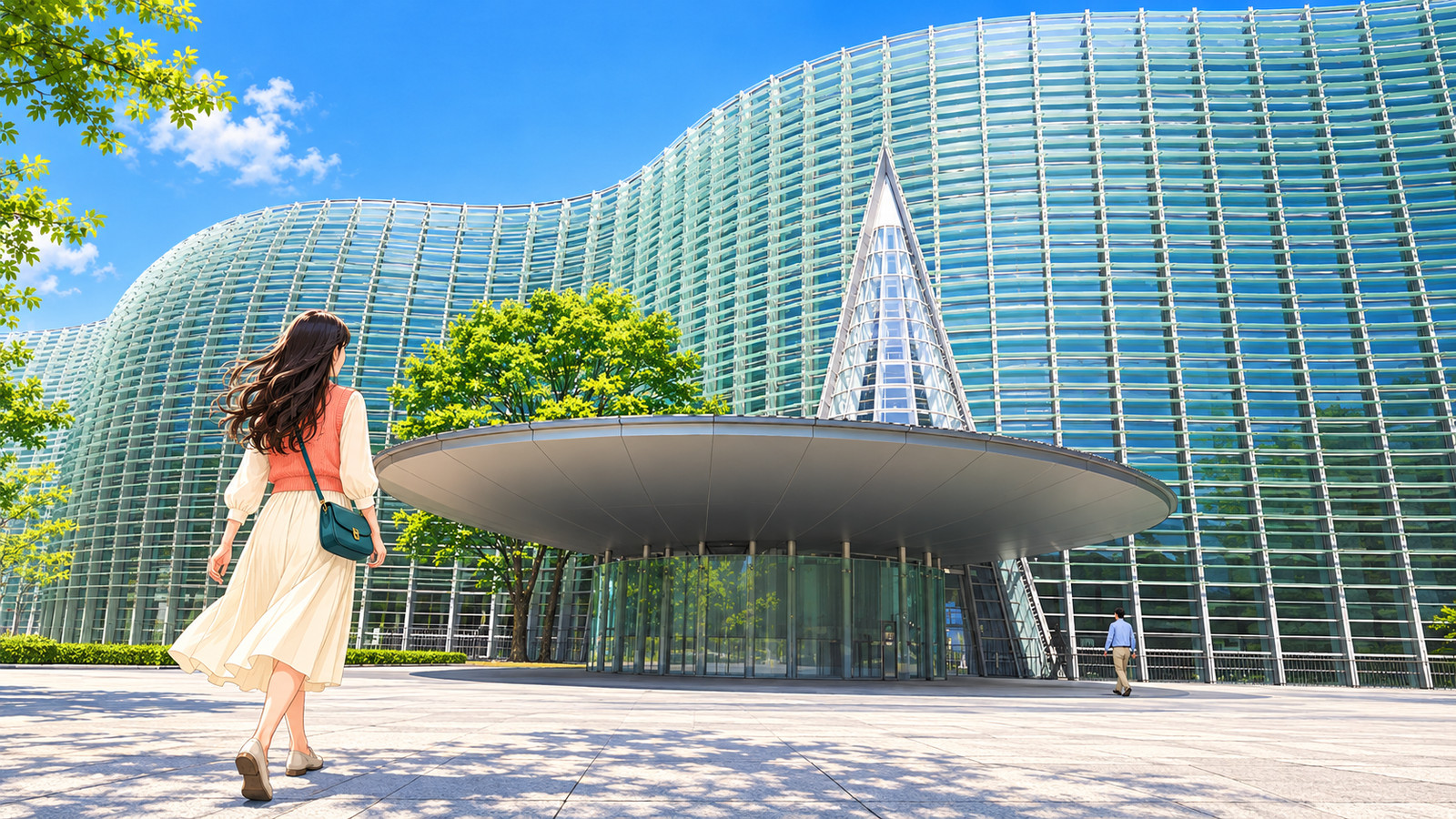
The jacket photographs for Nogizaka46's second studio album, Sorezore no Isu (released in May 2016), were shot at The National Art Center, Tokyo. Connected directly to Nogizaka Station, the art museum was chosen to symbolize the group stepping forward from the station where they had photographed their debut album.
In the cover photographs, the members wear vivid red and blue outfits—based on the visual concept that mixing red and blue creates purple, the group's signature color—with individually tailored silhouettes expressing each member's distinct personality.
Designed jointly by architect Kisho Kurokawa and Nihon Sekkei, the museum building is renowned for its sweeping, wave-like glass curtain wall and conical atrium cones. Inside, visitors can use the cafes, restaurant, and museum shop even without an exhibition ticket; admission to the building lobby itself is free of charge, while individual exhibitions require separate tickets.
Located at 7-22-2 Roppongi, Minato Ward, the museum connects directly to Exit 6 of Nogizaka Station on the Tokyo Metro Chiyoda Line and is normally closed on Tuesdays (or the following weekday if Tuesday falls on a national holiday).
Sources: Nogizaka46 Official — Sorezore no Isu Jacket / Official Interview with Mai Shiraishi & Nanase Nishino / The National Art Center, Tokyo — Visitor Guide
5Meiji Jingu Baseball Stadium: The Home of Nogizaka46’s Annual Summer Concerts
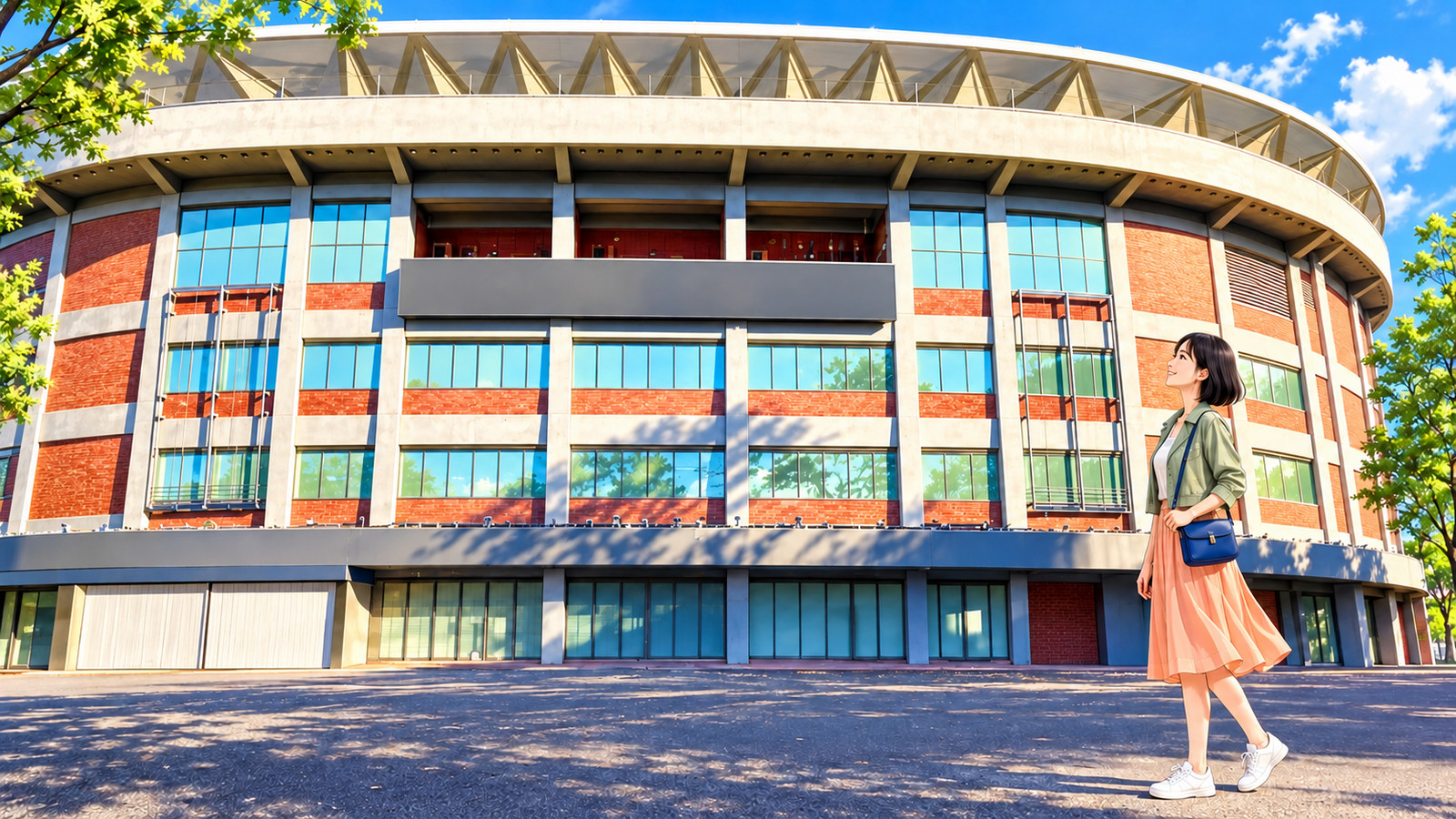
Meiji Jingu Baseball Stadium hosted the Tokyo stop of Nogizaka46's 'Midsummer National Tour 2014' on August 30, 2014, and has since become a sacred home venue where the group returns year after year for signature summer outdoor concerts.
In 2015 the group held their first two-day run at Meiji Jingu Baseball Stadium; their 2024 national tour staged three consecutive concerts there from September 2 to 4, and their 2026 tour concluded with a four-day finale at the stadium from August 20 to 23.
Completed on October 22, 1926, the historic ballpark is located at 3-1 Kasumigaokamachi, Shinjuku Ward, Tokyo, within the Meiji Jingu Gaien district, a short walk from Exit 3 of Gaienmae Station on the Tokyo Metro Ginza Line.
Entering inside the stadium bowl requires a ticket for a scheduled professional or collegiate baseball game or concert; on days without scheduled events, visitors can view the exterior of the ballpark.
Sources: Nogizaka46 Official — 2014 Jingu Concert / 2022 Jingu Concerts / 2015 Jingu Concerts / 2024 Jingu Concerts / Meiji Jingu Baseball Stadium — History / Access Guide
6Tokyo Dome: Site of the First Solo Dome Concerts and Mizuki Yamashita’s Graduation Concert
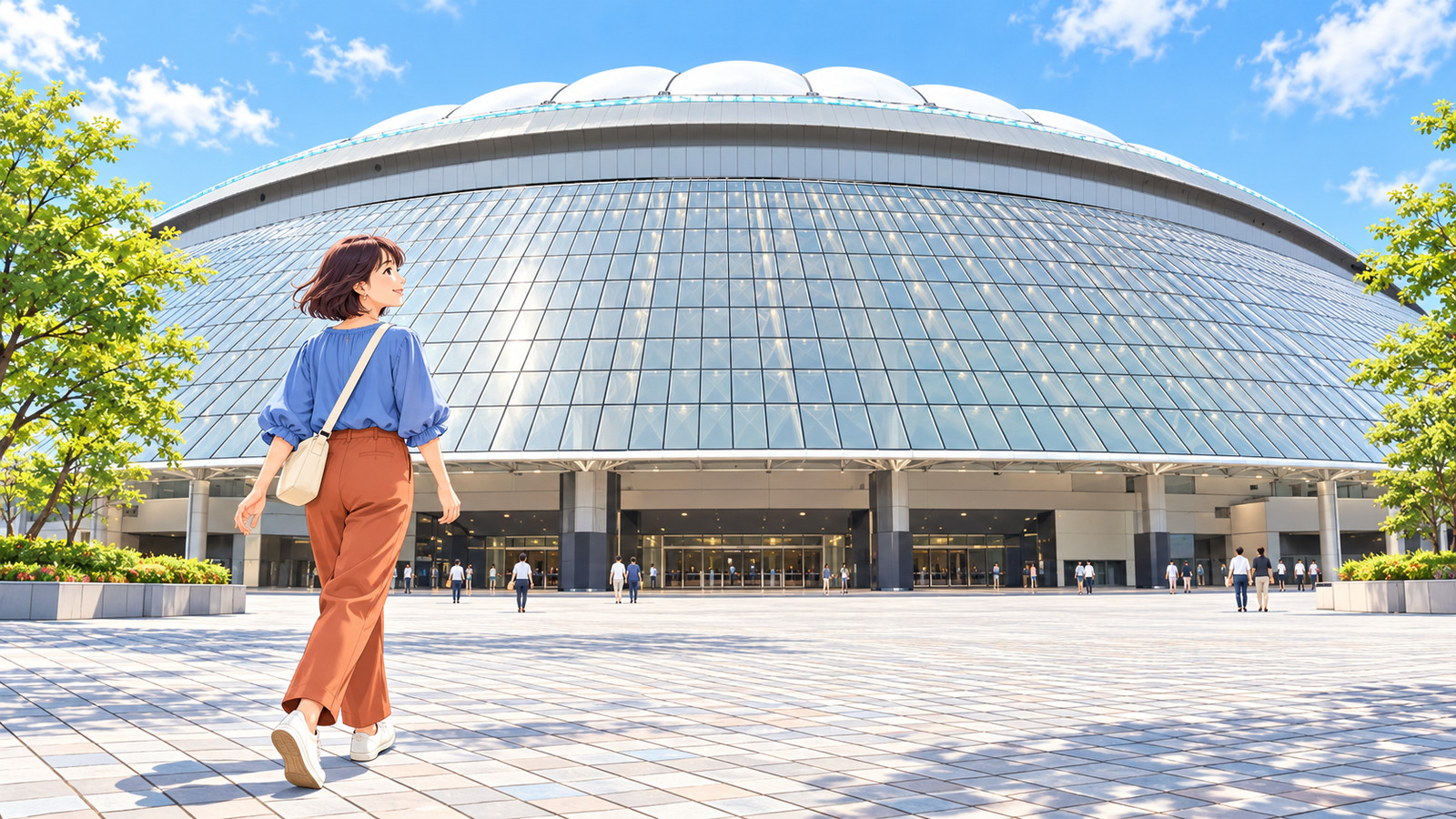
Nogizaka46 held their first solo concerts at Tokyo Dome across two days on November 7 and 8, 2017, drawing a combined audience of 100,000 fans for the grand finale of their national tour and the final stage appearances of graduating members Marika Ito and Himeka Nakamoto.
On May 11 and 12, 2024, the group returned to Tokyo Dome to stage Mizuki Yamashita's two-day graduation concert.
Located at 1-3-61 Koraku, Bunkyo Ward, Tokyo, the dome can be entered with a concert or baseball game ticket, or through advance-ticketed Tokyo Dome guided facility tours, which include courses exploring backstage areas used by performing artists and players.
Sources: First Tokyo Dome Concerts / 2017 Tokyo Dome Home Video Release / Mizuki Yamashita Graduation Concert / Tokyo Dome — Guided Tours
7Miyashita Park: Real-World Shibuya Scenery Featured in ‘Wilderness world’
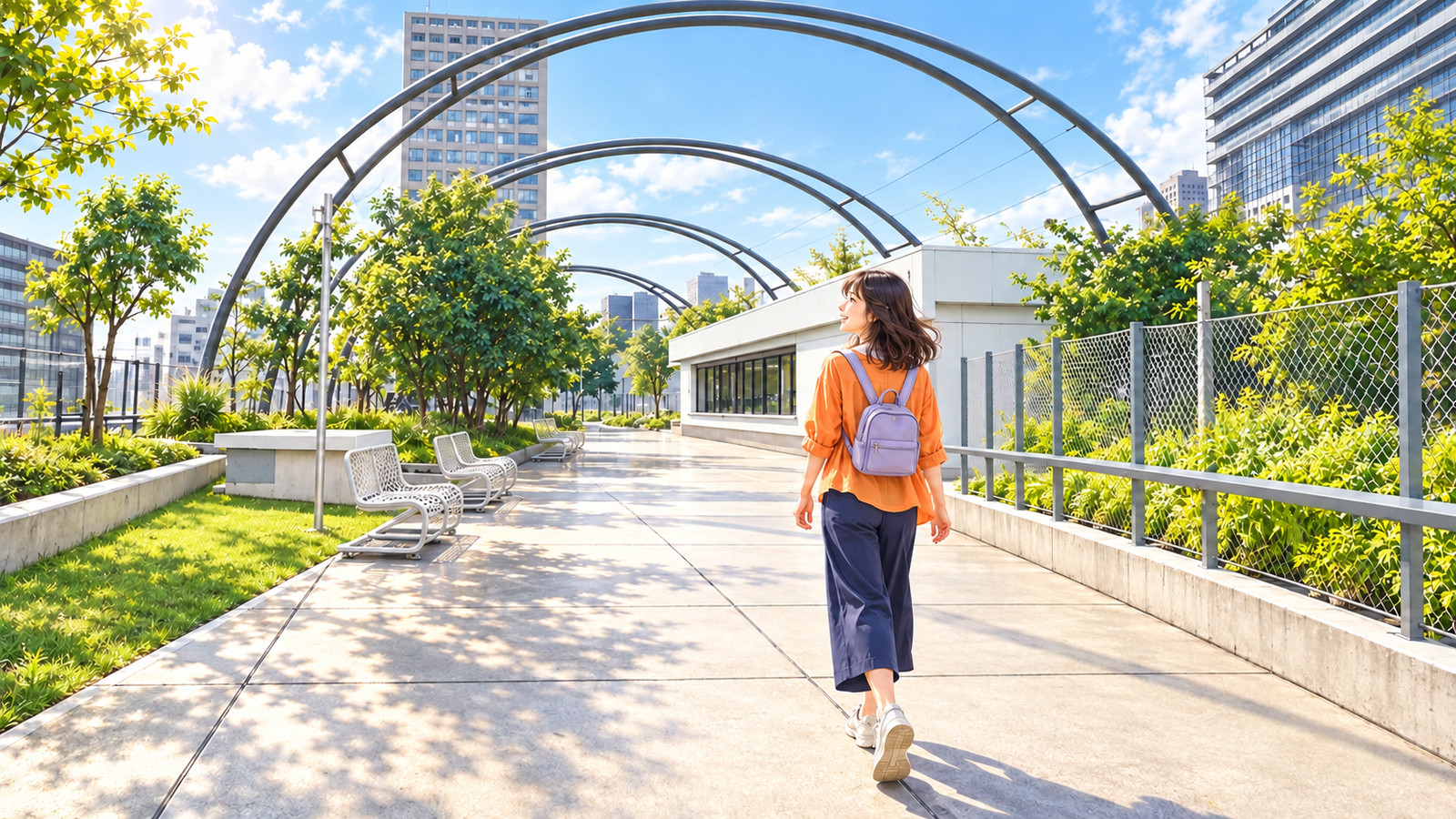
Miyashita Park in Shibuya is one of the real-world urban locations where the music video for 'Wilderness world' was filmed in October 2020. Situated atop a multi-level retail complex, the municipal rooftop park also features a skate park, bouldering wall, and open lawn.
Located at 1-26-5 Shibuya, Shibuya Ward, the rooftop park is normally open daily from 8:00 to 23:00 (closed over the New Year holidays) and can be visited freely while shopping or dining in Shibuya.
Sources: 'Wilderness world' MV Production / Miyashita Park Official Visitor Guide
8Tokyo International Cruise Terminal: Erika Ikuta’s Graduation Solo ‘Saigetsu no Wadachi’
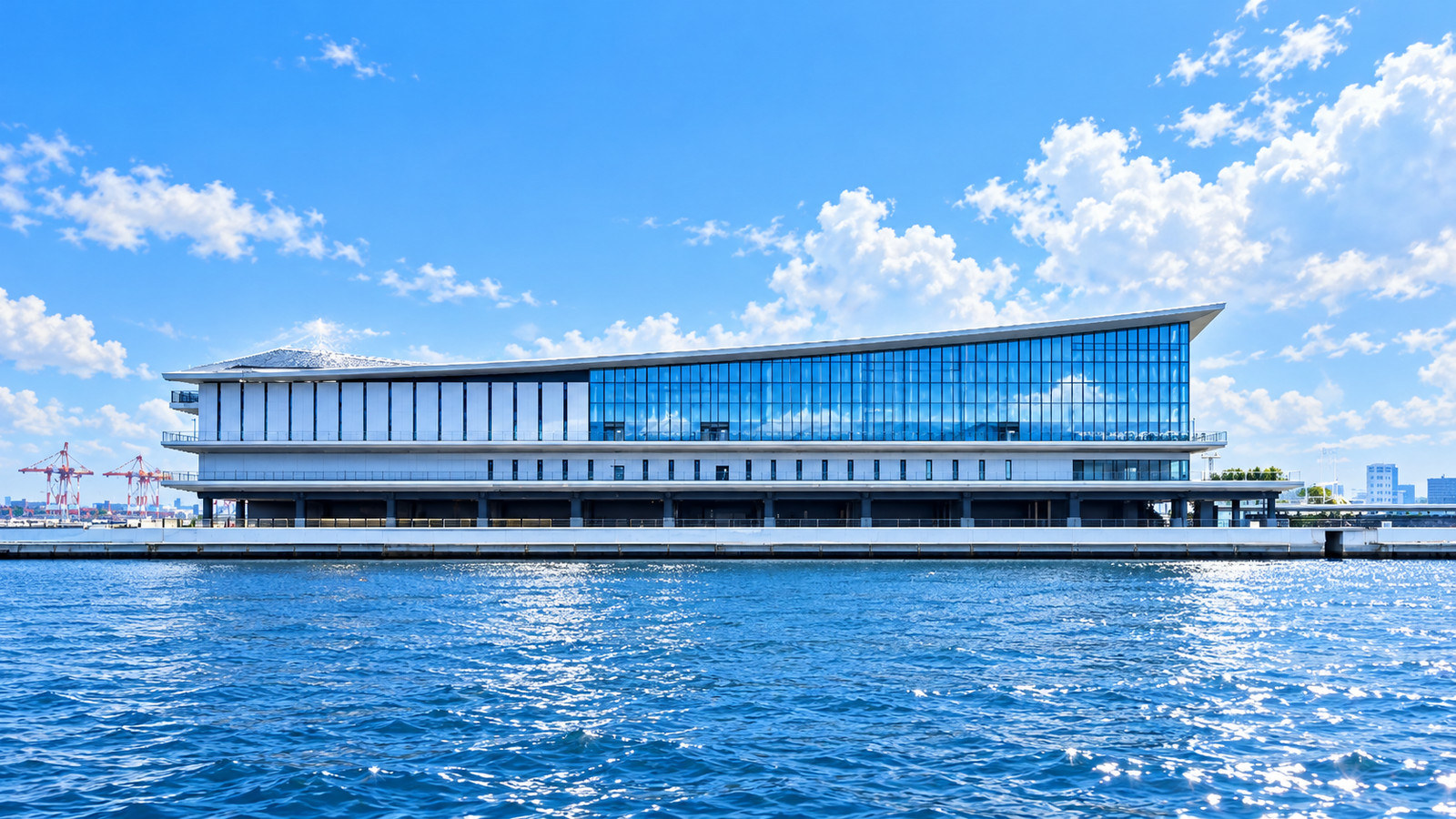
'Saigetsu no Wadachi' is the solo song created for Erika Ikuta's graduation from the group. Filmed in late October 2021 at the Tokyo International Cruise Terminal around the visual theme of 'Departure' from a maritime gateway, the music video used the very first take of Ikuta playing the piano and singing as tears welled up in her eyes.
Near the end of filming, a retrospective video she had been told she would watch on screen switched unexpectedly to surprise selfie video messages recorded by her fellow members, capturing her tearful nods on camera.
Located in Aomi, Koto Ward, Tokyo, the terminal welcomes international passenger cruise ships and is normally open to visitors from 9:00 to 17:00 (closed over the New Year holidays), though accessible floors and hours may change on days when cruise ships dock.
Check the Tokyo Port Terminal Corporation's access notices for open viewing areas and operating hours on the day of your visit.
Sources: 'Saigetsu no Wadachi' MV Production / Tokyo Port Terminal — Cruise Terminal Visitor Guide
9Tove Jansson Akebono Children’s Forest Park: Filming Location for ‘Hakumai-sama’
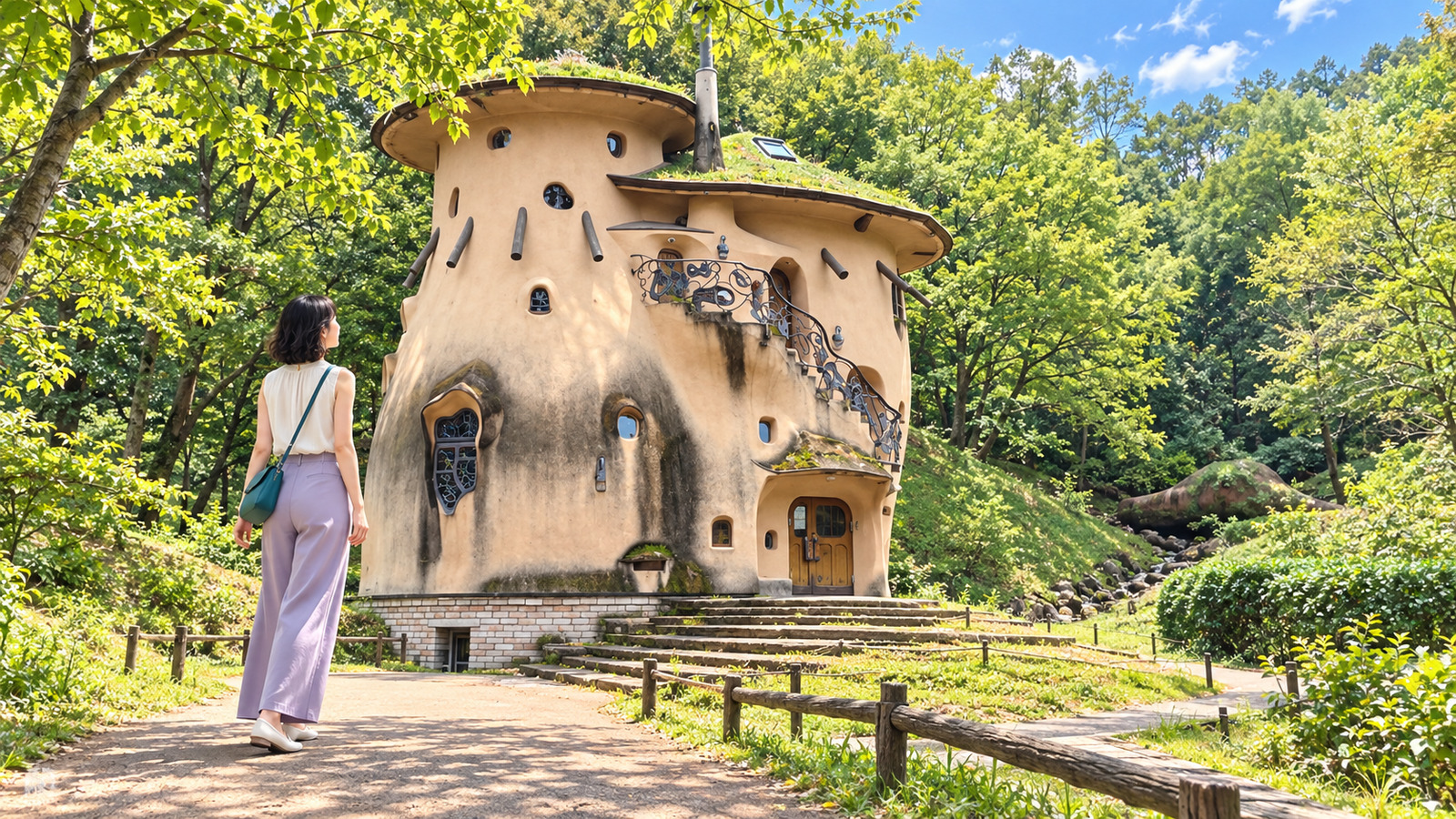
Located in Hanno, Saitama Prefecture, Tove Jansson Akebono Children's Forest Park (known at the time of filming in 2016 as Akebono Children's Forest Park) is the filming site for 'Hakumai-sama,' performed by the unit 'Sayuringo Gundan' (Sayuri Matsumura, Kotoko Sasaki, Ranze Terada, and Karin Ito). Framed as a playful activity report by the four members, the video shows them walking pet rocks on leashes and posing with grains of cooked white rice on their cheeks.
Inside the forest park, the 'Mushroom House' features a ground-floor hall with a fireplace and winding upstairs rooms, while the 'Children's Theater' is crowned by a dome roof built from over-100-year-old hinoki cypress timber; visitors remove their shoes at the entrance to explore the warm wooden interiors.
Located at 893-1 Azu, Hanno City, the park offers free admission and is normally open from 9:00 to 17:00 (last park entry at 16:40; building entry until 16:30).
Starting in April 2026, the park is trialing a seasonal schedule that closes on Mondays during peak seasons and on Mondays, Tuesdays, and Wednesdays during off-peak seasons; check Hanno City's official calendar before visiting.
Sources: 'Hakumai-sama' MV Production / Hanno City — Park Guide / Park Buildings / 2026 Opening Calendar
10Kujiragaoka Shopping Street: The Historic Town Where Five Members Swap Places in ‘Heikousen’
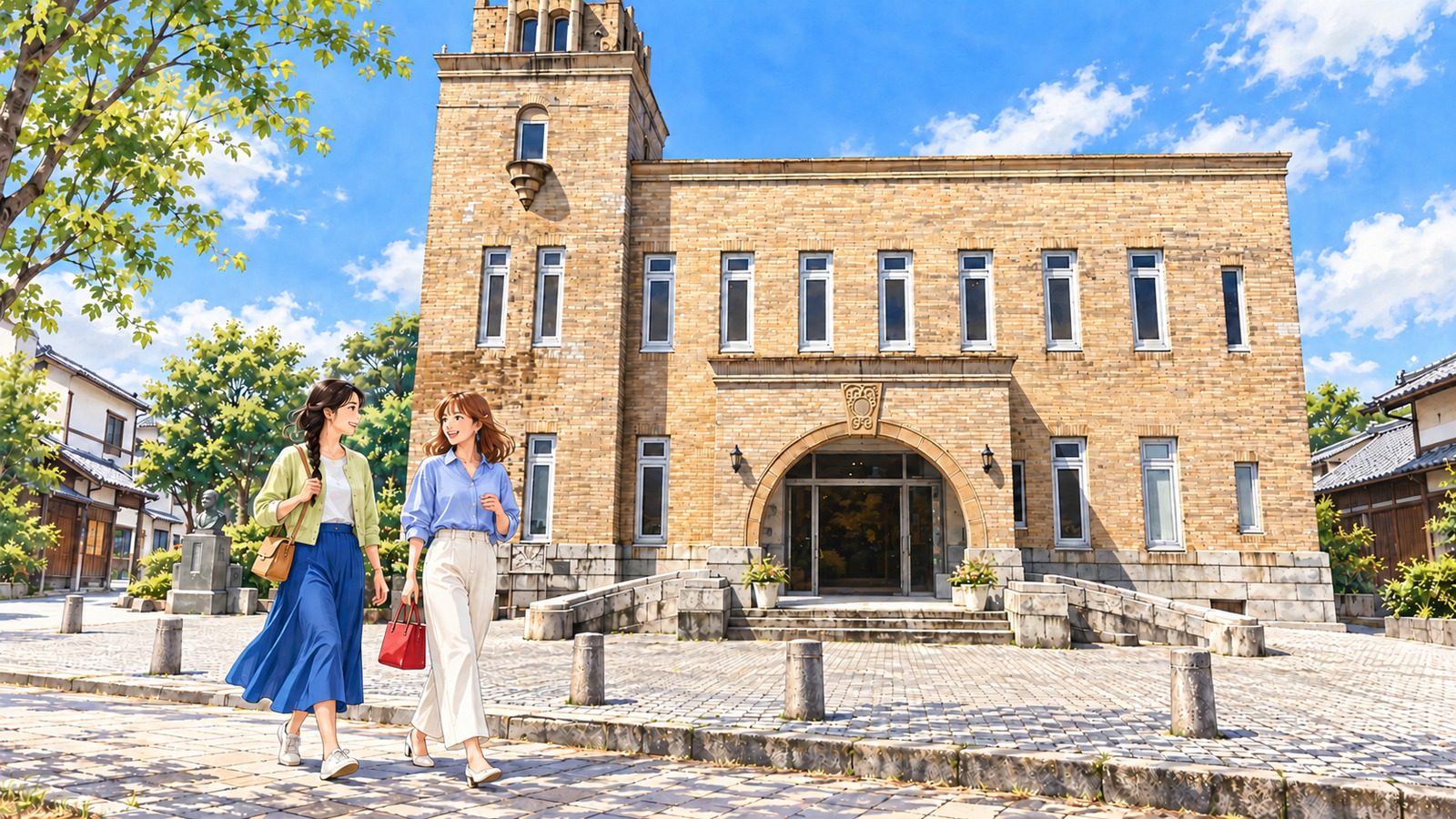
In April 2019, the music video for 'Heikousen'—starring Renka Iwamoto, Momoko Ozono, Shiori Kubo, Tamami Sakaguchi, and Yuki Yoda—was filmed along Kujiragaoka Shopping Street in Hitachiota, Ibaraki Prefecture. Telling a whimsical story in which characters swap bodies one after another upon bumping into each other on the street (Ozono into Yoda, Yoda into a townsman, Kubo into a doctor), the shoot was realized with the full cooperation of the local shopping association.
Stretching roughly 600 meters along a historic hilltop ridge, Kujiragaoka Shopping Street lets visitors walk the exact streetscapes seen in the video while browsing active shops, cafes, and heritage buildings.
The map pin marks Umezu Kaikan, a tiled 1936 western-style building that served as Hitachiota City Hall until 1978 and now operates as a municipal folk museum alongside historic neighborhood landmarks like the red-brick storehouse of the former Inadaya.
Source: Hitachiota Tourism & Products Association — Kujiragaoka Walking Guide
Sources: 'Heikousen' MV Production / Ibaraki Official Tourism — Kujiragaoka Shopping Street
11MOA Museum of Art: Filming Location for ‘Hito wa Yume wo Nido Miru’ Overlooking the Sea
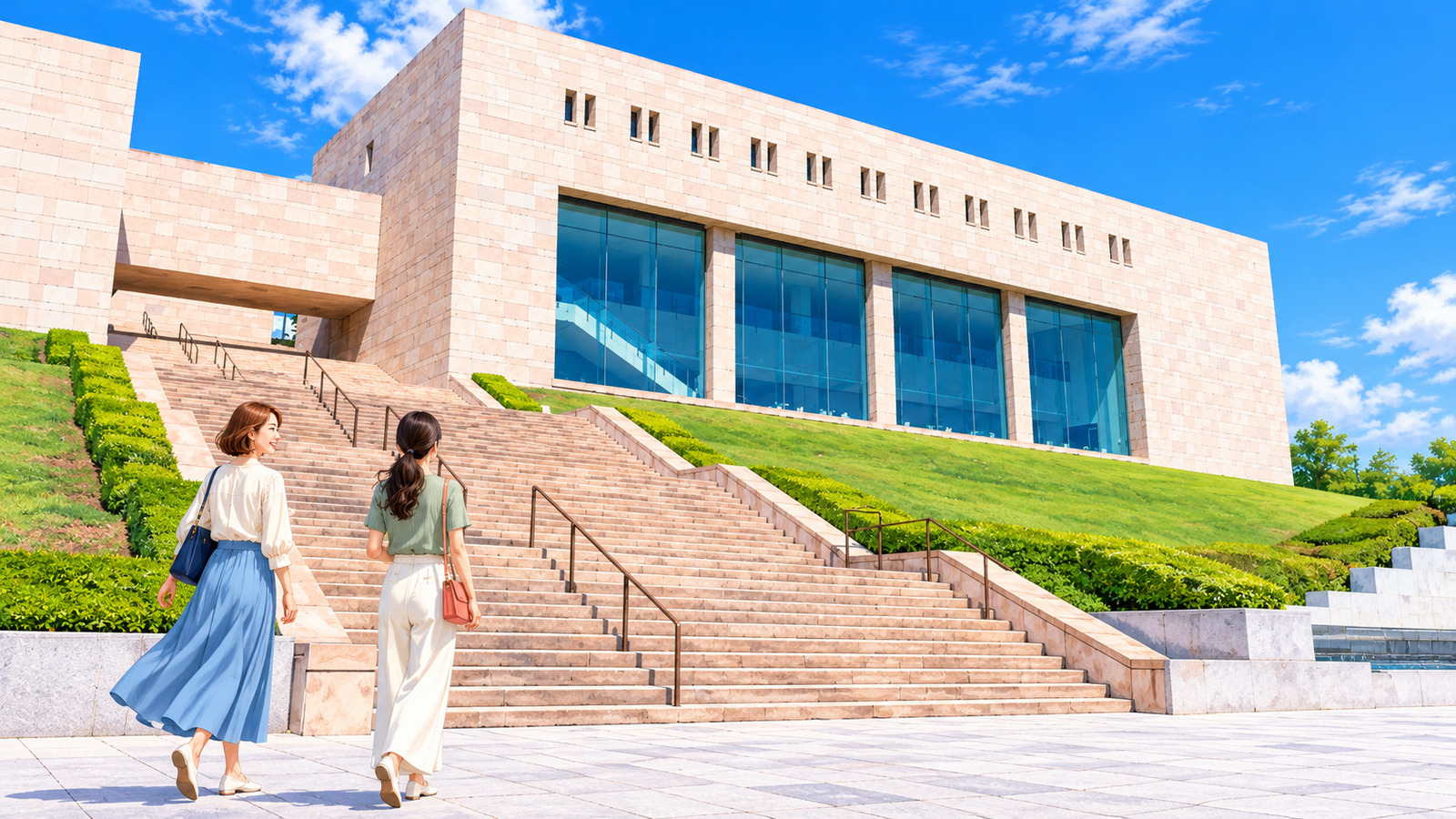
At the MOA Museum of Art in Atami, Shizuoka Prefecture, the group filmed the 2023 music video for 'Hito wa Yume wo Nido Miru,' featuring Shiori Kubo and Mizuki Yamashita as double centers in a story about people who had lost sight of their dreams finding companions and renewed hope for the future (with additional scenes filmed in Shinjuku Golden Gai and Tokyo studios).
Perched on a hilltop 270 meters above sea level, the museum's glass-walled main lobby commands sweeping views over Sagami Bay, while the escalator approach from the entrance passes through a 20-meter-diameter circular hall whose domed ceiling displays a giant kaleidoscope projection.
The museum's collection centers on Japanese and East Asian paintings, calligraphy, and crafts—most famously Ogata Korin's National Treasure folding screens Red and White Plum Blossoms—with exhibits rotating by season alongside traditional Japanese gardens and architectural galleries.
Located at 26-2 Momoyamacho, Atami (accessible by bus from JR Atami Station), the museum is open from 9:30 to 16:30 (last entry at 16:00) and closed on Thursdays (unless Thursday is a holiday) and during exhibit changes; individual visitors do not need advance timed reservations.
Sources: Nogizaka46 Official — MV Filming Locations & Background / MOA Museum of Art — Architecture / Atami Tourism Association / MOA Museum of Art — Visitor Info
12Shizuoka Prefectural Museum of Art: ‘Kangaenai You ni Suru’ and Rodin’s Sculptures
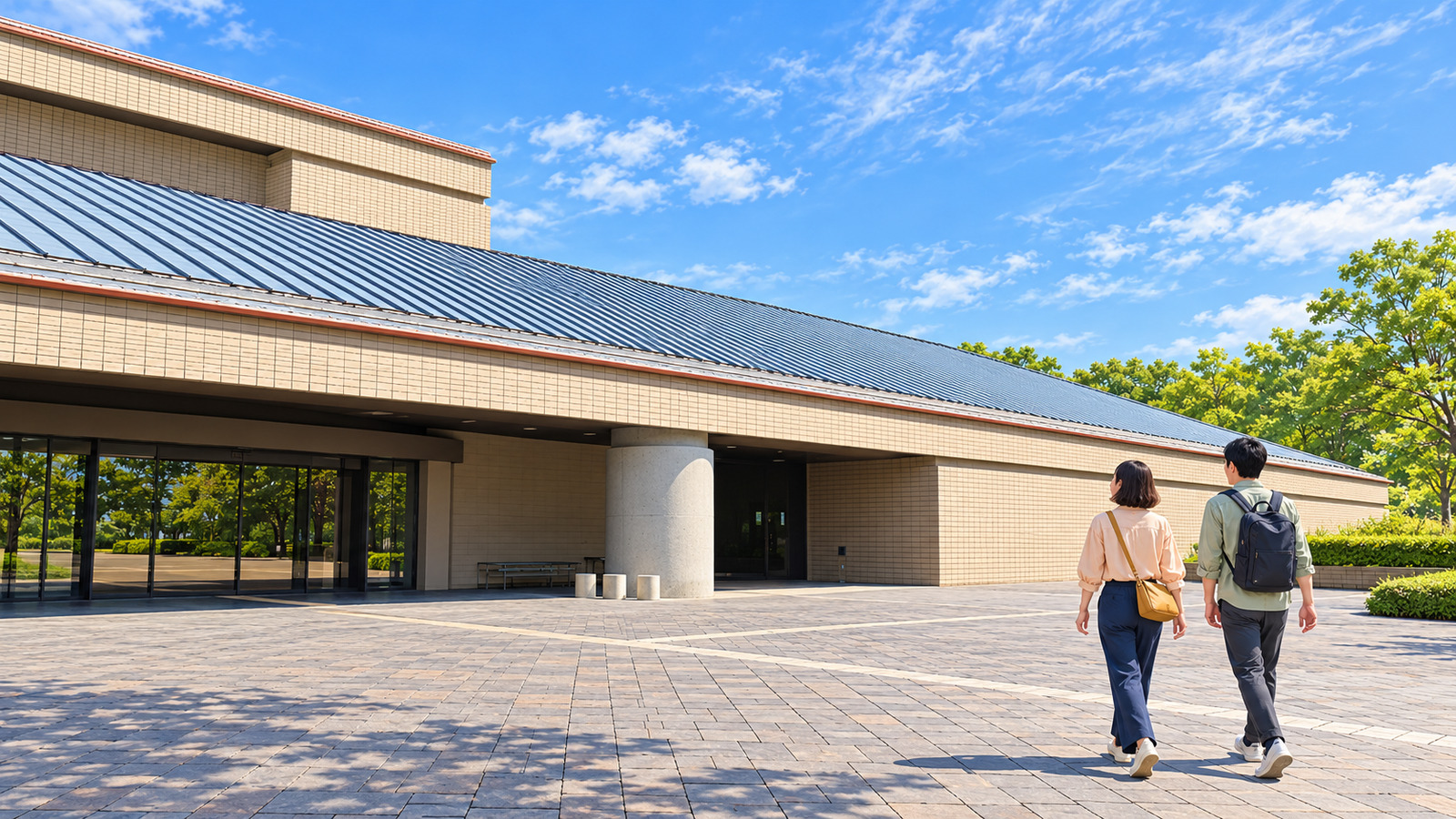
'Kangaenai You ni Suru' is a 5th-generation song included on the 2023 single 'Ohitorisama Tengoku,' featuring Nao Tomisato in her first center role and filmed on location at the Shizuoka Prefectural Museum of Art.
Built around the delicate tension between trying not to overthink and inevitably getting lost in thought, the video was filmed with special permission by director Takuro Okubo amidst Auguste Rodin masterpieces including The Thinker and The Gates of Hell.
Opened in 1994 and reached via a bridge gallery from the 2nd floor of the main museum building, the Rodin Wing permanently displays 32 Rodin sculptures beneath a skylit glass roof, allowing visitors to view the expressive bronze figures from every angle.
Located at 53-2 Yada, Suruga Ward, Shizuoka City, admission to the Rodin Wing is included in the standard museum collection ticket; hours are 10:00 to 17:30 (gallery entry until 17:00), closed on Mondays (or Tuesday if Monday is a national holiday).
Sources: Nogizaka46 Official — 'Kangaenai You ni Suru' MV / Shizuoka Prefectural Museum of Art — Rodin Wing / Rodin Wing Architecture & Collection
13Kudo Yoko Museum of Art: The Yamanashi Museum Featured in ‘Atarashii Sekai’
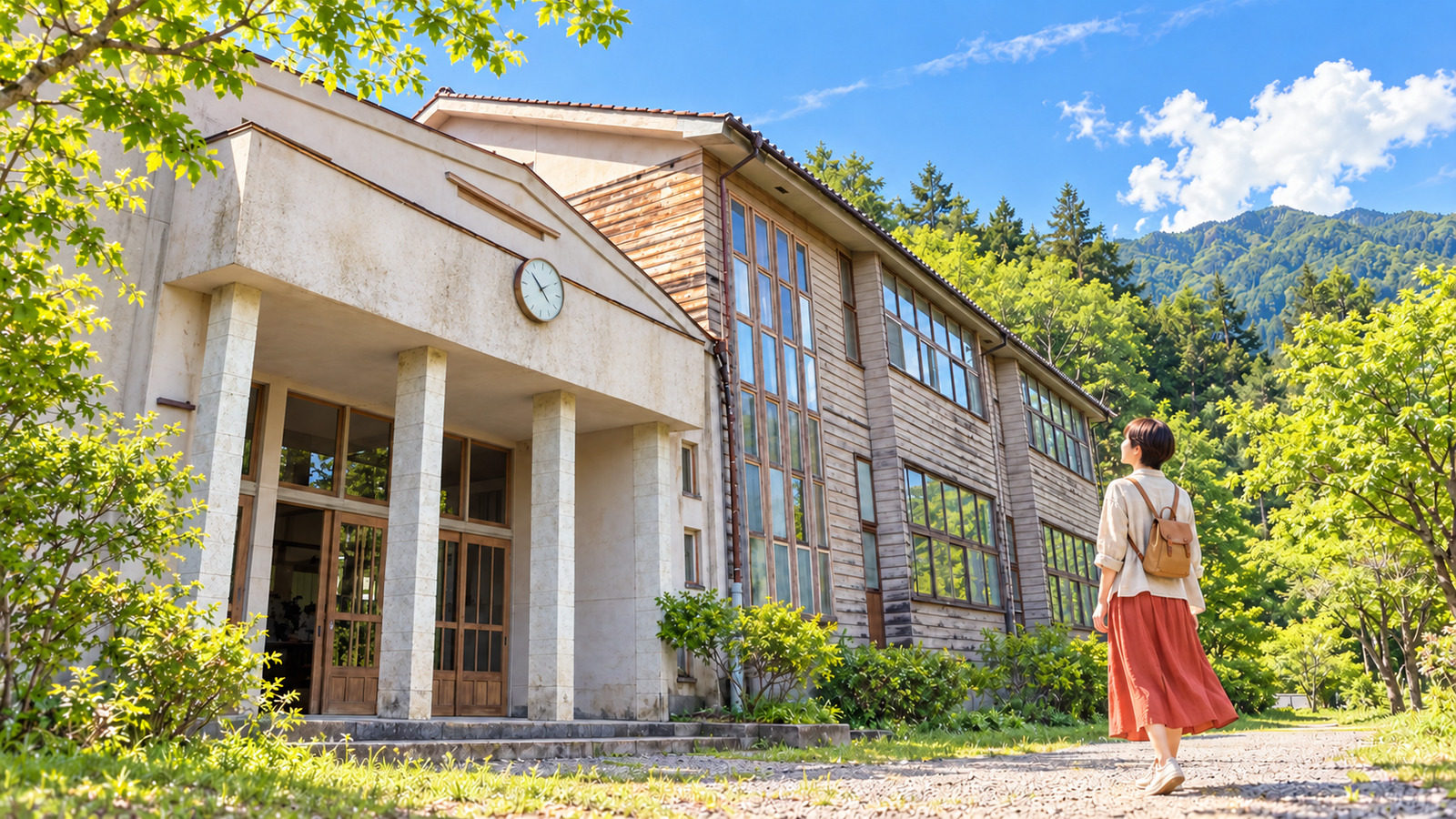
Located in Hokuto, Yamanashi Prefecture, the Kudo Yoko Museum of Art served alongside the Nobeyama Radio Observatory in Nagano as a filming location for the late-February 2018 shoot of 'Atarashii Sekai,' uniting two distinct highland facilities inside a single music video.
Directed by Mitsunori Yokobori and centered by Ayane Suzuki, the video depicts girls striving to send a message out to a new world, intercutting quiet interior scenes at the art museum with exterior shots beside the giant observatory antenna.
Located at 1448 Obi, Sudama-cho, Hokuto, Yamanashi Prefecture, the museum is open Tuesday through Sunday from 10:00 to 17:00 (closed Mondays); because it sits in a quiet mountain valley, confirm current exhibition dates with the museum before visiting.
Sources: Nogizaka46 Official — 'Atarashii Sekai' Filming Locations / Kudo Yoko Museum of Art Official Site
14Nobeyama Radio Observatory: The Giant Antenna from ‘Atarashii Sekai’ Exploring the Universe

In Minamimaki Village, Nagano Prefecture, the NAOJ Nobeyama Radio Observatory served as the companion filming site for 'Atarashii Sekai'—an Under-member track on Type-B of the 2018 single 'Synchronicity' centered by Ayane Suzuki ('Under' refers to members performing on dedicated tracks and concerts distinct from the main single selection).
Portraying girls yearning for a new world and transmitting their message into the distance, the crew filmed on location beside active radio telescopes—where radio-emitting devices are strictly prohibited, requiring production staff to run on foot between positions to communicate during the shoot.
Visitors walking the public course can view the 45-meter radio telescope up close, learning how the parabolic dish collects faint cosmic radio waves invisible to the human eye while experiencing the highland landscape featured in the video.
Self-guided admission is free of charge and normally open from 8:30 to 17:00 daily (closed over the New Year holidays and during severe weather warnings; accessible from JR Nobeyama Station). Visitors must switch off smartphones and Wi-Fi near the antennas.
Sources: Nogizaka46 Official — 'Atarashii Sekai' MV Production / NAOJ Nobeyama Radio Observatory — Visitor Guide
Deeper into Nogizaka46: Origins of the Group and Their Music Videos
Here we look at why the neighborhood of Nogizaka appears on the group's albums starting from the origin of their name, followed by a song-by-song look at the stories, roles, and choreography in their music videos.
The Meaning Behind the Name ‘Nogizaka46’ and Their First Album
Formed on August 21, 2011 and produced by Yasushi Akimoto, Nogizaka46 made their CD debut on February 22, 2012 with 'Guruguru Curtain,' expanding from music and concert performances into television variety programs, stage plays, films, and fashion magazines.
The name 'Nogizaka46' comes from the SME Nogizaka Building where their final audition was held, while the number '46' expressed their founding resolve not to lose even with fewer members than AKB48.
Released roughly three years after their debut, the first studio album Toumei na Iro featured Nogizaka Station, Nogi Shrine, Nogi Park, and the streets around the SME Nogizaka Building across its jacket and booklet—preserving the neighborhood where their journey began alongside their early discography.
DISC 1 of the album compiles every single title track from their debut 'Guruguru Curtain' through their 10th single 'Nandome no Aozora ka?' plus the concert opening anthem 'OVERTURE.'
Sources: Sony Music — Founding Announcement / Nogizaka46 Official — 10th Anniversary / Toumei na Iro Tracklist
Song by Song: Stories and Filming Locations Behind the Music Videos
In Nogizaka46, the member standing at the focal center of a song's vocal and dance formation is called the 'center.'
‘Koko ni wa Nai Mono’: Asuka Saito’s Solo Station Dance and the Flower-Filled Rooftop Stage
Released in 2022 as the group's 31st single and Asuka Saito's final single before graduation, 'Koko ni wa Nai Mono' casts Saito as an apparel shop clerk who rekindles her nearly abandoned dream of becoming a fashion designer.
Her solo dance was filmed on the underground platform of Shibuya Station on the Tokyo Metro Ginza Line—the first station-platform dance shoot in the group's history—while the full-group dance transformed the Roppongi Hills rooftop helipad into a blooming field of grass and flowers.
Directed by Keiichi Kobayashi over three days in late October and early November 2022, the rooftop Sky Deck permanently closed its public operations on April 19, 2024 and can no longer be entered by visitors.
Sources: Nogizaka46 Official — 'Koko ni wa Nai Mono' MV Production / Tokyo City View — Sky Deck Closure Notice
‘Hito wa Yume wo Nido Miru’: Double Centers and Choreography Reaching for a Dream
On the 32nd single 'Hito wa Yume wo Nido Miru' (2023), Shiori Kubo and Mizuki Yamashita served as double centers—marking Kubo's first center role on a single title track—in a story about rediscovering hope through new companions.
Filmed from late February to early March 2023 at the MOA Museum of Art in Atami, Shinjuku Golden Gai, Saitama Prefecture, and Tokyo studios, the video showcases the art and coastal architecture of the MOA Museum of Art.
Directed by Takeshi Maruyama (director of the documentary film Sadness How to Forget) with choreography by yurinasia, the final upward reach of the hands symbolizes grasping one's dream.
Source: Nogizaka46 Official — 'Hito wa Yume wo Nido Miru' MV Production
‘Kaerimichi wa Toomawari Shitaku Naru’: Two Parallel Lives Portrayed by Nanase Nishino
Centered by Nanase Nishino on the 22nd single (2018), 'Kaerimichi wa Toomawari Shitaku Naru' portrays two parallel lives branching from small everyday coincidences—such as whether she misses a bus or continues drawing.
Written by creative director Yoshimitsu Sawamoto and directed by Kazuaki Seki, the video was filmed on location in Tochigi and Gunma prefectures as well as at studios in Tokyo.
Source: Nogizaka46 Official — 'Kaerimichi wa Toomawari Shitaku Naru' MV Production
‘Wilderness world’: Combining Real Shibuya Locations with a Full-Scale Crossing Set
Created in collaboration with the online game Knives Out (Kouya Koudou), the music video for 'Wilderness world' features action scenes with Asuka Saito wielding a sniper rifle, Erika Ikuta dual pistols, Sayuri Matsumura a shotgun, and Minami Umezawa a bowgun.
Alongside location shooting in Shibuya including Miyashita Park, the scramble-crossing dance scenes were filmed at the Ashikaga Scramble City Open Set in Ashikaga, Tochigi Prefecture, blending real Shibuya locations with a full-scale outdoor replica set.
Source: Nogizaka46 Official — 'Wilderness world' MV Production
From Debut to a History Preserved Across Neighborhood Streets and Concert Venues
Viewed through geography, Nogizaka46's history radiates outward from the founding neighborhood of Nogizaka to their summer home at Meiji Jingu Baseball Stadium and music video locations across Japan—with albums and concert Blu-rays preserving each generation's bond with those places.
- Jun 29, 2011Group formation plan and auditions are announcedArtist Group
- Aug 21, 2011Nogizaka46 is officially formedArtist Group
- Feb 22, 2012CD debut with single 'Guruguru Curtain'Featured Work
- Jan 2013Members coming of age visit Nogi Shrine in furisodeLocal Region
- Aug 30, 2014First Meiji Jingu Baseball Stadium concert on Midsummer National Tour 2014Live Performance
- Jan 7, 2015First album Toumei na Iro—photographed at Nogizaka Station—is releasedFeatured Work
- Mar 26, 2016'Kimi no Na wa Kibou' is adopted as Nogizaka Station's departure melodyLocal Region
- May 25, 2016Second album Sorezore no Isu—photographed at The National Art Center, Tokyo—is releasedFeatured Work
- Nov 7–8, 2017First solo concerts at Tokyo DomeLive Performance
- Apr 16, 2018Music video for 'Atarashii Sekai' filmed at Nobeyama and Kudo Yoko Museum is releasedFeatured Work
- Dec 15, 202110th-anniversary best album Time flies—photographed at Nogizaka Station—is releasedFeatured Work
- Nov 19, 2022Music video for 'Koko ni wa Nai Mono' is releasedFeatured Work
- Mar 22, 2023Music video for 'Hito wa Yume wo Nido Miru' is releasedFeatured Work
- Aug 18, 2023Music video for 'Kangaenai You ni Suru' is releasedFeatured Work
- May 11–12, 2024Mizuki Yamashita Graduation Concert is held at Tokyo DomeLive Performance
- Jul–Sep 2024First dome tour in five years concludes at Meiji Jingu Baseball StadiumLive Performance
- Feb 6, 2025Announcement of 11 new 6th-generation members beginsArtist Group
- Jun–Aug 20268-region national tour (including first Fukui concerts) concludes with four days at Jingu StadiumLive Performance
Chosen by Fan Vote: The Second Disc of Toumei na Iro
The coupling tracks included on DISC 2 of Toumei na Iro were chosen by fan vote, with results announced at 'Merry X'mas Show 2014' at Ariake Coliseum in December 2014: 1st place went to 'Hoka no Hoshi kara,' 2nd to 'Watashi no Tame ni Dareka no Tame ni,' and 3rd to 'Sekkachi na Katatsumuri.'
Compiling the top 10 fan-voted B-side coupling tracks alongside the main single hits on DISC 1, the album lets listeners hear both widely broadcast title songs and beloved concert favorites.
Sources: Nogizaka46 Official — Merry X'mas Show 2014 Report & Vote Results / Toumei na Iro Tracklist
An Album Bringing Together Early Singles and the Neighborhood Where It All Began
The Type-C cover of Toumei na Iro captures the members lined up in front of the ticket gates at Nogizaka Station. While Type-C is a single-CD edition featuring DISC 1, the fan-voted coupling tracks on DISC 2 are included with Type-A and Type-B.
Type-A also includes a bonus DVD containing the opening 60 minutes of 'Midsummer National Tour 2013 FINAL!' held at Yoyogi National First Gymnasium on October 6, 2013, letting listeners choose an edition based on whether they want audio only or early concert footage.
Sources: Nogizaka46 Official — Toumei na Iro Edition Details / Type-C Product Page
Lab Note | From a Business Perspective: When an Album Cover Becomes a Gateway to a Neighborhood
For Toumei na Iro, the production teamed up with Tokyo Metro to shoot the cover inside Nogizaka Station while photographing the surrounding shrine and park for the booklet—linking separately managed neighborhood landmarks through a single album.
When introducing filming locations to visitors, pairing the scene context with how each facility is used in everyday life—riding the train at the station, worshipping quietly at the shrine, and viewing exhibitions at the art museums—helps guide respectful visits aligned with each venue's purpose.
Official Sources & Primary References
- 2026 National Tour
- 6th Generation Announcement
- 2024 National Tour
- Nogizaka46 Founding Anniversary
- Toumei na Iro
- Sorezore no Isu
- Time flies
- Nogizaka Station Melody
- Atarashii Sekai
- Kangaenai You ni Suru
Exhibition dates, opening hours, admission fees, and ticket details are current at the time of writing. Always check the official websites for the latest schedule updates before setting out on your pilgrimage visit.
FAQ
Does the group name Nogizaka46 come from Nogi Shrine?
No, the group was named after the SME Nogizaka Building, which served as the venue for their final audition. Nogi Shrine is closely connected to the group through album booklet photography and members' Coming-of-Age ceremonies.
Does the number 46 represent the number of members in the group?
No. The number 46 was chosen at the group's founding to express their determination not to lose even with fewer members than AKB48, and does not indicate the active roster size.
Which albums feature Nogizaka Station on their covers?
The first album Toumei na Iro (2015) and the 10th-anniversary best album Time flies (2021). For Time flies, historical stage costumes and uniforms were lined up along the platform and ticket gates between the last and first trains.
Which song is used as the departure melody at Nogizaka Station?
'Kimi no Na wa Kibou' was adopted on March 26, 2016, using a piano phrase performed by then-member Erika Ikuta.
Can I enter inside the Former Nogi Residence?
In everyday operation, visitors view the building exterior, garden, and brick stables from outside. The interior of the residence is opened to the public three times a year on dates announced by the park management.
Does The National Art Center, Tokyo charge admission to enter the building?
Entering the museum building itself is free of charge; separate exhibition tickets are required only when viewing specific exhibitions inside the galleries.
Can I visit the rooftop where 'Koko ni wa Nai Mono' was filmed?
No. The Roppongi Hills Sky Deck rooftop observation area where the dance scene was filmed permanently closed to the public on April 19, 2024.
Can I tour inside Meiji Jingu Baseball Stadium on days without concerts?
Entering inside the stadium bowl requires a ticket for a scheduled baseball game or concert; on non-event days, visitors can view the stadium exterior.
Can I take smartphone photos near the antennas at Nobeyama Radio Observatory?
Near the radio telescope antennas, visitors must turn off smartphones, Wi-Fi, and other radio-emitting devices to prevent interference with astronomical observations. Follow posted on-site rules for designated photography zones.
More in Pilgrimage

Hinatazaka46 Pilgrimage Guide: Miyazaki Spots & 'JOYFUL LOVE' / 'Mitakotonai Mamono' MV Locations

Sakurazaka46 Pilgrimage Guide: From the Awaji Yumebutai MV to Tokyo Dome & National Stadium
