Book Review: Rin Usami's Idol, Burning, Reread Five Years On: "My Oshi Is My Backbone"
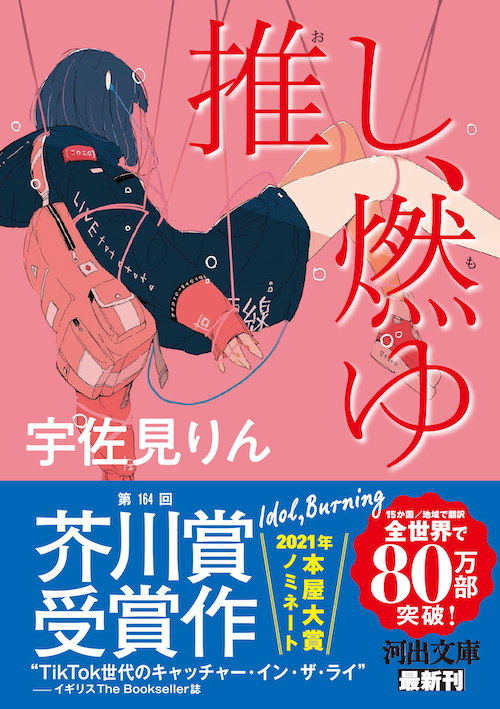
“My oshi went up in flames” (our translation). A novel that opens with this line won the Akutagawa Prize in January 2021. Since then, Idol, Burning (Rin Usami, Kawade Shobo Shinsha) has been the decisive push that made the word “oshi-katsu” stick in society.
More than five years after publication, in an era when oshi-katsu is called a ¥4 trillion market (roughly $27 billion), we reread this novel.
About the Book
The protagonist is Akari, a high school girl who keeps backing the idol Masaki after he draws backlash for allegedly punching a fan. With no place for herself at school or at home, interpreting her oshi and writing about it on her blog is her only circuit to the world.
The famous line is “my oshi is my backbone.” It is still quoted as a phrase that captures, with unmatched precision, how oshi-katsu can become not entertainment but the pillar you live by.
Oshi as backboneA pillar you live by
- InterpretationPutting the oshi into words
- The blogHer circuit to the world
- Safe distanceLove that expects no return
- Shows and CDsReal but not the core
- VulnerabilityLosing it is a life crisis
The novel treats oshi-katsu as a way of holding up a life.
The story opens at the scandal, then follows Akari’s daily life alongside her oshi-katsu: school that isn’t going well, a part-time job, distance from her family. The pleasure of reading lies less in the ups and downs of the plot than in prose that conveys, through Akari’s bodily sensations, the weight and urgency of a life with an oshi. We’ll keep the big turning point near the ending under wraps.
Usami has spoken about the distance between her protagonist and the oshi.
Precisely because no reply or return is promised, you can pour out love without directly shouldering the other person’s life. For Akari, that safe remoteness is a support unlike real human relationships.
A Point That Stayed With Us: Akari’s Oshi-Katsu Is Not “Consumption”
Akari buys CDs and goes to shows, but at the center of her oshi-katsu is interpretation. She listens closely to her oshi’s words, researches the context and writes it up in her own words on her blog. That practice alone works, for her, as a way to understand the world.
This is strikingly faithful to what oshi-katsu really is. From the outside it looks like “spending money,” but for the people in it the core is finding meaning in the world through their oshi. The spending is merely a result.
Spending money
- CDs, shows, merchandise
- The visible part
Finding meaning
- Interpreting the oshi's words
- Writing it up in her own words
- Spending is only the result
Losing her oshi means losing her way of interpreting the world.
That is why losing her oshi doesn’t mean Akari loses a hobby. It means losing her very way of interpreting the world. The urgency of this novel is concentrated in that one point.
The Editor-in-Chief’s View
We talk about oshi-katsu in the language of consumption and markets for a living, and this novel straightens my posture every time.
In marketing terms, Akari’s way of backing someone would be “a high-LTV premium fan,” a customer worth a great deal over the lifetime of the relationship. But what this story confronts us with is that the substance of that passion is the urgency of her life itself. “Backbone” is not a metaphor. There really are many people who can’t stand if their oshi disappears.
That is why, when we work with companies on oshi-katsu, our watchword is “fans’ passion is not a resource but something entrusted to us.” A way of being backed, or of having people back you, that isn’t aware it is holding someone’s backbone will someday break a person. We think people in the oshi-katsu business should read this novel before any market-size report.
Notes From The Oshi Lab: The Core of Oshi-Katsu Is “Interpretation”
- The core of oshi-katsu is “interpretation” — At the center of Akari’s oshi-katsu are neither merchandise nor shows but the act of interpreting her oshi and putting it into words. The essence of oshi-katsu is making meaning, not consumption
- A “backbone” is both a blessing and a vulnerability — Precisely because it is the pillar you live by, losing your oshi becomes a crisis in your life. Oshi loss is no laughing matter
- Oshi-katsu in the age of backlash — We back people in an era when an oshi can “go up in flames.” The value of a fan’s safety net, such as community and multiple places to belong, will only rise
- 01CommunityA place to talk safely
- 02Multiple places to belongMore than one support
- 03The oshiA backbone, but not the only one
The value of a fan's safety net will only rise.
Who It Will Resonate With
- People who have an oshi — You will meet yourself on some page. Since it may hit too hard, we recommend reading it when you have some emotional room
- People who don’t “get” oshi-katsu — The shortest route to understanding, as a felt experience rather than by logic, how anyone can get so absorbed
- People involved in fan business — To learn what is happening inside the phrase “highly engaged premium fan”
If you open it expecting a bright story of oshi-katsu overflowing with light, it will be a heavy read. Still, it remains the landmark of “oshi-katsu literature” because it draws the shadow fully and never once mocks the urgency of the one who backs someone.
Book Information
| Title | Idol, Burning |
| Author | Rin Usami |
| Publisher | Kawade Shobo Shinsha |
| Published | September 2020 (hardcover) / July 2023 (Kawade Bunko paperback) |
| Award | The 164th Akutagawa Ryunosuke Prize |
Buy it here: Amazon (Kawade Bunko) / Rakuten Books (both Japanese-language stores)
Reading It Alongside Our Other Content
What Is Enjou? lays out how an oshi’s trouble can become a crisis for the fans themselves. It’s a guide for reading the opening event of the story without reducing it to condemnation or defense.
Making your oshi a support in daily life and protecting the boundary with the real person are compatible. Read Distance From Your Oshi and Oshi Loss together, and you can consider the meaning of having more than one support, without reducing Akari’s urgency to personal weakness.
Three Books to Read Next
| Title | Why we recommend it |
|---|---|
| Kaka (Rin Usami) | Her debut and winner of the Mishima Yukio Prize. The origin of Idol, Burning’s prose style |
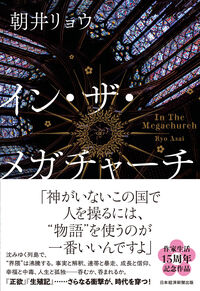
| In the Megachurch (Ryo Asai) | The opposite shore from an individual’s urgency in Idol, Burning: the structure on the side that gathers passion (review here) |
| The Technique of Putting Your “Like” Into Words (Kaho Miyake) | A practical book for doing Akari’s interpretive oshi-katsu yourself (review here) |
Summary
Idol, Burning looks squarely at the shadow side of oshi-katsu’s light and shadow, but what remains after reading is not negation but respect for the urgency of backing someone. If oshi-katsu rings even slightly true for you, you will meet yourself on some page.
In Oshi-Katsu x Bookshelf, we take a deeper look at books on oshi-katsu and fan culture, one at a time.
FAQ
What kind of novel is Idol, Burning?
It's the story of Akari, a high school girl who keeps backing an idol even after he draws online backlash for allegedly punching a fan. Rin Usami's winner of the 164th Akutagawa Prize (Kawade Shobo Shinsha, 2020), it is regarded as the landmark work of "oshi-katsu literature."
What does "my oshi is my backbone" mean?
It's a line in the novel expressing that for the protagonist Akari, her oshi is not entertainment but the very pillar she lives by. Interpreting her oshi and putting it into words is portrayed as almost the only circuit connecting her to the world.
Can I read it if I don't do oshi-katsu?
Yes. The depiction of oshi-katsu is meticulous, but at heart it's the story of someone who can't stand unless they have something to lean on. It also reaches readers who want to understand a close friend's or relative's passion, or who know the fear of losing their support.