Book Review: Ryo Asai's In the Megachurch, and the Line Between Backing Someone and Believing in Them
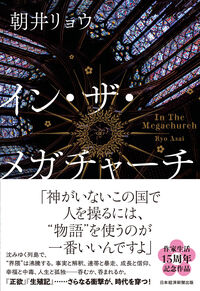
There are plenty of novels about oshi-katsu, but almost none that take in both “the one being backed” and “the mechanisms that make people back them.” Ryo Asai’s In the Megachurch (Nikkei BP, published September 2025; no English edition yet) walks straight into that gap.
About the Book
Published to mark his 15th year as a writer, this novel drew so much attention that a reprint was decided before it even went on sale. Its setting is the fandom economy, which is to say the very “world of oshi-katsu” we all live in every day.
The viewpoints of three narrators of different generations and circumstances cross, and out of that the question rises: what moves people’s hearts today?
The multiple narrators serve a clear purpose. The same fever looks completely different from the side of the person backing someone and from the side of the person building the system. With a single viewpoint, this material could have leaned toward “a moving story of support” or toward “a cold story of exploitation.” The novel shows it in three dimensions through several pairs of eyes. Each time the chapter changes, you find yourself looking from the outside at the enthusiasm you were just sympathizing with. That reading experience is the book’s central device.
The title’s “megachurch” means a church that has grown enormous. Where does backing someone part ways with believing in them? By the time you finish, your own oshi-katsu looks a little different.
Asai has described how choosing oshi-katsu as his subject changes how far the novel can travel.
You start reading it as a story about a familiar kind of love, and further in you find faith, politics, advertising and the heat of crowds. That is a concise statement of why the book doesn’t stop at explaining oshi-katsu.
A Point That Stayed With Us: The Feeling of “I Chose This Myself”
What made me stop again and again while reading was how the entrance to fervor always looks like “my own will.”
Nobody forced it on you. If anything, you feel that you found it yourself and chose it yourself. That is exactly why the passion is real, and also why it’s hard for outsiders to stop. This structure is common to faith and to oshi-katsu.
- 01You discoverNobody forces you
- 02You chooseIt feels like your own will
- 03The passion is realBecause it is yours
- 04It's hard to stopOutsiders can't easily halt it
Self-motivation is both the strongest source of heat and the thing that needs the most care.
The novel neither condemns this structure nor makes a fairy tale of it. Self-motivation is the strongest source of heat, and also the thing that most needs careful handling. The book’s power lies in letting you experience both sides as a story rather than an explanation.
The Editor-in-Chief’s View
Read from our perspective, as people who study oshi-katsu as a business, this novel is both “a story about fans” and “a story about designers.”
At The Oshi Lab, we use OSHI-MAP® to diagnose companies’ “oshi-ability” along seven axes, and one of them is “design that doesn’t exhaust people.” The mechanisms that move people’s hearts can work in a direction that supports fans or one that adds to their burden. This novel shows, as a story, where the line between the two falls.
Is it a design that “uses” passion, or one that “responds to” it? The same mechanism means something entirely different depending on which way it faces. The book confirmed once more our premise that fans’ passion is not a resource but something entrusted to us.
Uses passion
- Passion treated as a resource
- The same mechanism can add to the burden
Responds to passion
- Passion treated as entrusted
- The same mechanism can support fans
The same mechanism means something entirely different depending on which way it faces.
Notes From The Oshi Lab: The Mechanisms That Heat People Up Look Alike Across Fields
- The mechanisms that heat people up resemble each other across fields. There are many hints for designing support outside your own industry.
- Self-motivation is the strongest design element. Feeling “I chose this myself” creates passion, which is exactly why it takes care to handle.
- Healthy support needs room to breathe. Whether the freedom to step away and rest is protected is what divides relationships that last.
Designing supportLessons from the book
- Similar mechanismsHints exist outside your industry
- Self-motivationThe strongest element, handled with care
- Room to breatheFreedom to step away and rest
Fan passion is entrusted to us; it is not a resource.
Who It Will Resonate With
- Oshi-katsu participants. When you want to step back and look at what kind of system your own “love” sits inside.
- People who run communities and fan clubs. You can experience, through story, the responsibility and the fear of being entrusted with people’s passion.
- Corporate staff involved in fan marketing. It depicts the landscape beyond “going too far” that never appears in a campaign proposal.
Conversely, if you read it hoping for a clear answer or an easy villain, you may feel let down. This novel doesn’t pass judgment; it hands you questions to keep thinking about.
Book Information
| Title | In the Megachurch |
| Author | Ryo Asai |
| Publisher | Nikkei Publishing (Nikkei BP) |
| Published | September 2025 |
Buy it here: Amazon / Rakuten Books (both Japanese-language stores)
Reading It Alongside Our Other Content
What Is Oshi-Katsu Marketing? lays out the basic structure for connecting fans’ passion to business. Read together with the novel, it lets you consider where a design that encourages participation tips into burden or dependence.
Another guide is What Is Fandom?. Confirm in words how one person’s “like” turns into a community’s norms and an economic sphere, then return to the novel, and the differences in what the three narrators see stand out more sharply.
Three Books to Read Next
| Title | Why we recommend it |
|---|---|
| Seiyoku (Ryo Asai) | Asai’s signature work, which cuts into how hard the word “diversity” is. A story from the “designing society” side, written before In the Megachurch. No English edition |
| Idol, Burning (Rin Usami) | The urgency of the one who backs someone, seen through an individual’s eyes. A counterpart to In the Megachurch |
| Introduction to the Fandom Economy (Kurotori-sha) | An introduction that lets you sort the “fandom economy” you felt in the novel into concepts and cases. No English edition |
Summary
This book sums up oshi-katsu neither in the one word “precious” nor in the one word “criticism.” It uses the power of story to walk you through the wide gray zone between. If you work in corporate fan marketing, we recommend reading it alongside What Is Oshi-Katsu Marketing?.
In Oshi-Katsu x Bookshelf, we take a deeper look at books on oshi-katsu and fan culture, one at a time.
FAQ
What kind of novel is In the Megachurch?
It is a novel marking Ryo Asai's 15th year as a writer (Nikkei BP, published September 2025). Set in the fandom economy, it follows three narrators of different generations and circumstances and asks what moves people's hearts today.
Can I enjoy it without knowing anything about oshi-katsu?
Yes. The setting is the fandom economy, but the question it explores is a universal one: why do people believe in something and root for it? For readers with no oshi-katsu experience, it can also be a way in to understanding, from the inside, the passion of someone close to them.
Who is it especially recommended for?
Oshi-katsu participants, of course, but also people who run fan communities and corporate staff involved in fan marketing. Few oshi-katsu novels show the side of those who gather that passion, so the more your work involves people's enthusiasm, the more you'll take from it.