
Pro Baseball and Oshikatsu: 27.18M Attendance in 2026 and Touchpoints for Teams, Players, and Collabs
Choosing a jersey, learning cheering songs, and heading to the ballpark excited to see your favorite player take the field—Japanese professional baseball offers both the joy of rooting for a club and the fun of supporting an individual player. When businesses examine pro baseball through the lens of oshikatsu (dedicated fan activities supporting a favorite team, player, or character), a key reference point is how teams connect watching the game, discovering players, buying merchandise, and spending time at the stadium.

In this article, we look at official attendance figures from Nippon Professional Baseball (NPB) alongside the 2026 Pokémon collaboration across all 12 teams. When reading these numbers, an important takeaway is to avoid judging the effectiveness of oshikatsu initiatives or individual visit frequency based on overall attendance growth alone.
2026 Regular Season Attendance Reached a Cumulative 27.18 Million
NPB’s official 2026 statistics (in Japanese) show that upon completion of the full Central and Pacific League regular season schedule, cumulative attendance stood at 27,177,247 across 858 games, for an average of 31,675 spectators per game. Comparing those figures with the final 2025 statistics (in Japanese) gives the following breakdown:
| Season | Central & Pacific League Regular Season Attendance | Games | Average per Game |
|---|---|---|---|
| 2025 | 27,040,286 | 858 | 31,515 |
| 2026 | 27,177,247 | 858 | 31,675 |
The difference is an increase of 136,961 spectators, or roughly 0.5% year-over-year. Because this is a cumulative attendance figure, it counts repeat visits by the same person multiple times. It does not represent the number of unique individual fans or the total spending of everyone who attended. Furthermore, attendance for events such as the Japan Series is not included in this table.
- 27,177,247
- Cumulative regular season attendance across both leagues
- 858
- Total regular season games played in 2026
- 31,675
- Average attendance per game (up ~0.5% from 31,515 in 2025)
- +136,961
- Year-over-year cumulative increase compared with 2025
Source: The Oshi Lab’s summary of NPB 2025 and 2026 attendance statistics
Stadium attendance is tied to multiple factors, including ballpark capacity, game dates, team standings, special events, and weather conditions. From this aggregate total alone, we cannot definitively conclude causal claims such as “existing fans increased their visit frequency” or “merchandise for favorite players drove higher turnout.”
Touchpoints for Both Team Supporters and Player-First Fans
In baseball, some fans become interested through a team’s uniforms or cheering songs, while others start watching because of a specific player’s on-field performance or interviews. There is no need to treat transitioning from one to the other as a mandatory stage of growth as a fan.
| What the Fan Wants to Enjoy | Examples of Information a Team Can Provide |
|---|---|
| Watching the team’s games | Game schedules, opponents, seat categories, and stadium viewing rules |
| Getting to know players | Player profiles, jersey numbers, highlight videos, and interviews |
| Joining in the cheering | Cheering sections, rules for vocal cheering and cheering gear, and consideration for surrounding spectators |
| Taking home souvenirs | Player-specific and team-wide merchandise, purchase conditions, and shipping options |
| Spending time at the ballpark | Food and drink options, rest areas, and facility operating hours |
Rather than pushing every single product or fan club membership tier onto a first-time visitor all at once, teams can structure their guidance so visitors can choose the information that matches what they came to enjoy. Even when a player is traded, transfers, or retires, good design leaves room for the fan to decide for themselves how they want to continue their support.
Pro Baseball Fan Touchpoints
- Watching the Team's GamesSchedules, opponents, seat types, and viewing rules
- Getting to Know PlayersProfiles, jersey numbers, highlight clips, and interviews
- Joining in the CheeringCheering zones, voice and gear rules, and etiquette toward others
- Taking Home SouvenirsPlayer and team merch, purchase terms, and shipping methods
- Spending Time at the BallparkStadium food and beverages, rest spots, and facility guides
Source: The Oshi Lab’s summary of the article
Official Case Study: A Collaboration Connecting Pokémon and All 12 NPB Teams
An official Pokémon announcement on February 27, 2026 (in Japanese) introduced the 30th-anniversary project “Pokémon Baseball Festa 2026.” The initiative combined special themed games across all 12 NPB clubs, original merchandise, and tie-in events with Pokémon GO.
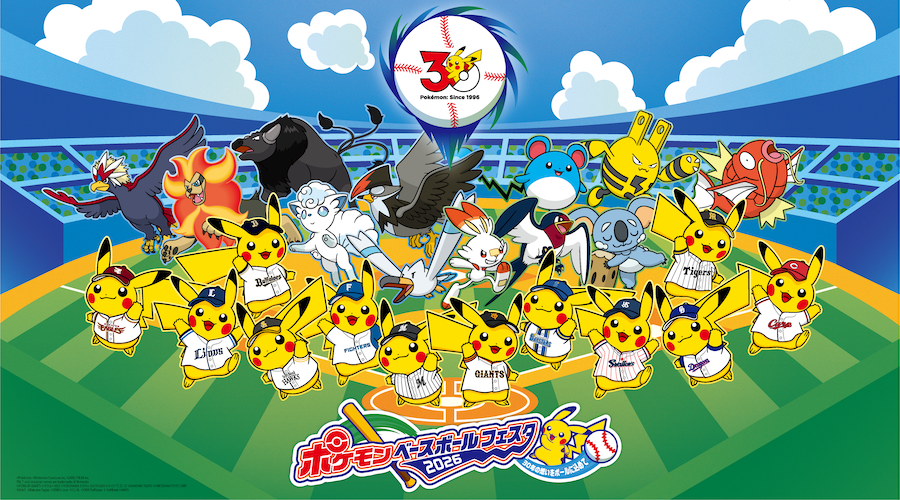
In this key visual, people who already know Pokémon can compare how different Pokémon are paired with each baseball club through their uniforms and emblems. It is a way of designing an entry point so that even people who do not follow baseball closely have something familiar that catches their eye. At the same time, the announcement of this initiative alone is not a basis for concluding that actual first-time stadium attendance increased.
Product Images Communicate What Fans Can Hold and Wear to Cheer
In the product lineup for the Hokkaido Nippon-Ham Fighters included in the same official announcement, an acrylic keychain featuring pitcher Hiromi Itoh appears alongside a baseball shirt and twin cheering bats.
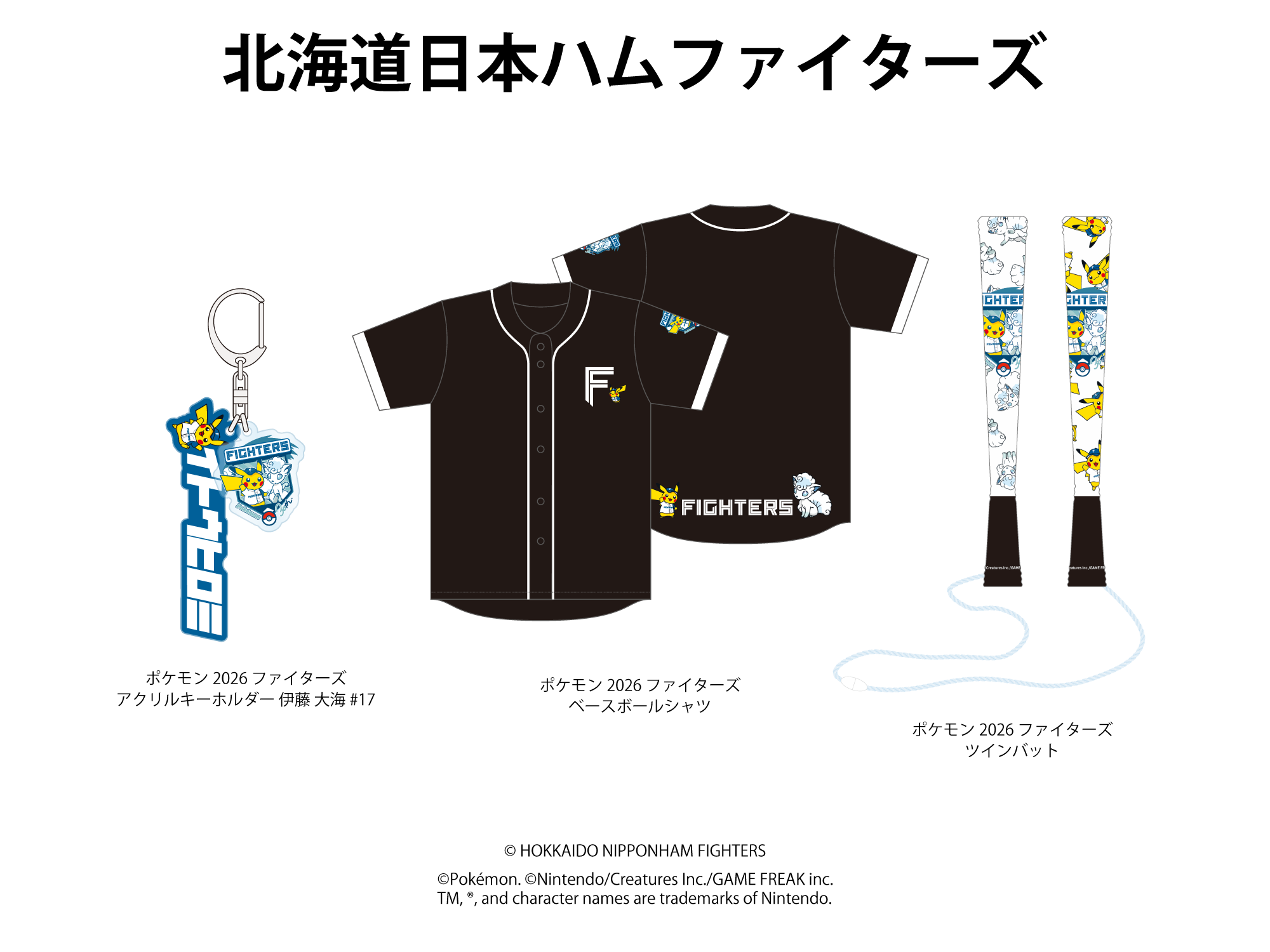
Depending on the item—whether it is something to wear, something to carry around daily, or something to use actively while cheering in the stands—each product offers a different way to participate. When businesses showcase merchandise, presenting not only the appeal of the illustration but also the intended usage occasion, dimensions, and stadium bring-in rules makes it much easier for fans to choose.
Sales locations, sales periods, and exact product lineups should be verified with each individual team. In addition, even when cheering props are sold as official merchandise, restrictions on how they can be used may apply depending on the seating category or specific game. Always read the local stadium’s viewing regulations beforehand.
Guide Fans Through Cheering Culture Alongside Local Stadium Rules
Cheering songs (ouenka), rally towels, and replica uniforms serve as shared touchpoints for enjoying the atmosphere together with the crowd around you. On the other hand, a first-time visitor will not necessarily know every song or unwritten custom. Good guidance makes room for people to choose a participation style that suits them—including simply watching the game quietly.
Never treat the customs of one specific ballclub as a universal rule across all 12 NPB teams. Rules regarding home and visitor cheering sections, photography and video recording, items held up in the stands, food and drink, and baggage handling must be checked via the official information for the specific ballpark and game being attended. Just like preparing for your first live event, knowing the conditions on the day of the event leads to peace of mind.
When Reviewing an Initiative, Ask Why Visitors Came
Alongside overall attendance numbers, gathering the following kinds of information makes it much easier to evaluate what actually helped fans:
- Whether this was their first time attending a game or if they have attended before
- What prompted their visit this time—such as the team, a specific player, an IP collaboration, or a companion who invited them
- Anything that was confusing or hard to navigate regarding seating, stadium entry, or buying merchandise
- What left a strong impression during the game or around the ballpark
- What information they would like to know next, or what guidance they would need to visit again
Use records within the scope of what can be properly handled, such as voluntary survey responses or member data where consent for usage has been obtained. Do not treat social media post volume or rapid merchandise sellouts as identical metrics to fan satisfaction or long-term retention.
Professional baseball offers multiple entry points: the club, individual players, the game itself, and the ballpark experience. Regardless of which doorway brings someone in, the goal is to clearly present what they can enjoy next. When incorporating oshikatsu into a business strategy, teams and brands can think concretely about how these pieces of guidance connect.
For consultations regarding oshikatsu initiatives for professional baseball clubs and sports organizations, please contact KAZAORI Inc. (in Japanese). Related articles: J.League and Oshikatsu / B.League and Oshikatsu / Fan Marketing
FAQ
What is the attendance for professional baseball in Japan?
According to official Nippon Professional Baseball (NPB) statistics, total attendance across the Central and Pacific League regular seasons in 2026 reached 27,177,247 across 858 games at the end of the full schedule, averaging 31,675 spectators per game. This figure represents cumulative attendance and does not include postseason events such as the Japan Series.
Should I support a team as a whole or focus on an individual player?
You can enjoy pro baseball from either starting point. Every fan has their own entry point—whether that is a specific team, an individual player, the excitement of the game itself, or simply spending time at the ballpark. There is no need to treat moving from one style of support to the other as a required stage of fandom.
Are the Pokémon collaboration goods still available for purchase?
The images shown in this article are examples of merchandise announced in 2026 and do not reflect current inventory. Please check the official announcements from each team for sales locations, dates, and product lineups.


