
B.League and Oshi-Katsu: Fan Experiences Before, During and After the Game
The arena goes dark, a player’s name appears on the screen, and fans clap along with the music. When your favorite player scores, the people beside you cheer too. Japan’s B.League offers the pleasure of watching basketball alongside the shared experience of supporting a player or club in person.

Rising attendance alone cannot tell us which presentation or social media campaign worked. Using official league announcements and the Kawasaki Brave Thunders’ spectator guide, this article considers the journey from a first visit to following a club between games.
Background: In April 2025, The Oshi Lab discussed sport and oshi-katsu in Podcast Episode 4 and a note article, how sports teams turn spectators into devoted fans (in Japanese). This article has been rewritten using official 2026 data and spectator information.
5.48 Million Admissions: What the Figures Do and Do Not Tell Us
The B.League’s July 14, 2026 briefing reported 5,480,168 admissions for the 2025–26 season. That was 635,059 more than the previous season, or 113% of the previous total, and a new season record.
The same announcement gave average attendance of 5,171 in B1 and 3,071 in B2. A season total and an average per game measure different things. Nor do 5.48 million admissions mean 5.48 million distinct fans: someone who attends several games is counted each time.
| Official figure | How to interpret it |
|---|---|
| 5,480,168 season admissions | Cumulative entries, not a count of unique individuals |
| 113% of the previous season | A comparison of admissions, not growth in merchandise revenue or profit |
| B1 average 5,171; B2 average 3,071 | Division averages, not the attendance of every club or game |
Attendance has demonstrably increased. Those numbers alone cannot isolate the effects of player performances, opponents, venues, scheduling, ticket sales or publicity. Establishing that an oshi-katsu initiative caused growth would require other evidence, such as reasons for attending and return visits after a first game.
- 5,480,168
- Season admissions
- +635,059
- Increase from the previous season
- 113%
- Attendance relative to the previous season
Cumulative admissions do not identify how many different people attended.
Source: B.League briefing, July 14, 2026
Official Photos Show How Newcomers Can Join In
The Kawasaki Brave Thunders’ spectator guide, version 2025–26, is organized into preparation, game day, during the game and after the game. We discuss it as a historical example from the 2025–26 season. Check the official information for the game you plan to attend for current opening times and activities.
Demonstrating the Cheers at the Arena
The guide introduces a pregame opportunity to practice cheers by following the club’s cheerleaders, IRIS. For a first-time visitor, that offers something more specific than an instruction to get excited: it shows what to do and when.
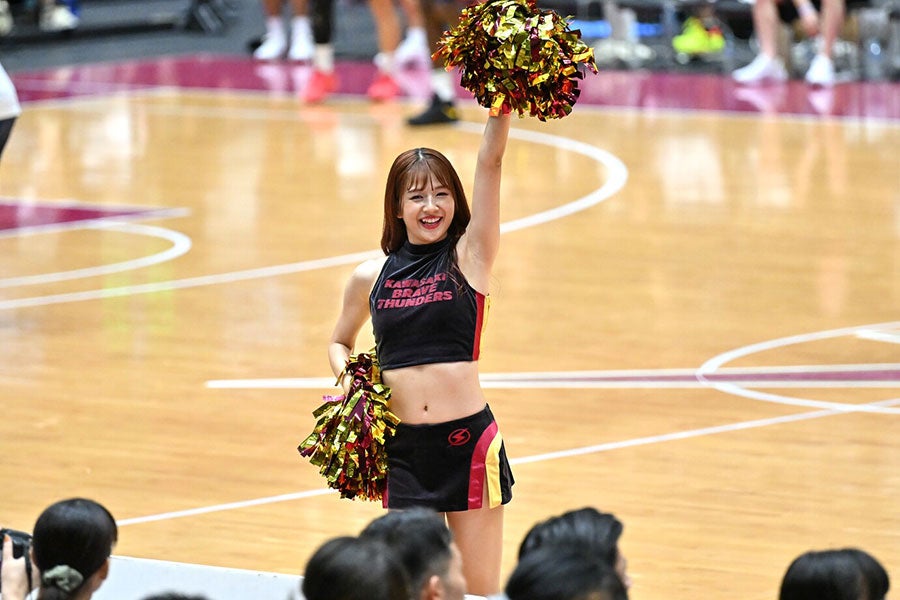
The photograph shows a pompom held high toward the spectators. The example is communicated through a visible movement. Everyone need not shout or raise their arms in the same way, however. People who prefer to watch quietly should also have room to participate at their own pace.
For a club preparing a newcomer page, a cheering video could sit alongside advice about where to put bags, what to consider when leaving a seat, and whom to ask for help. Information that regulars take for granted may be unfamiliar to a first-time visitor.
Introducing Players and Plays on the Big Screen
The guide’s photograph of the center-hung video screen prominently displays a player’s face, number and name. The accompanying official explanation says the screen also shows replays and explains fouls.
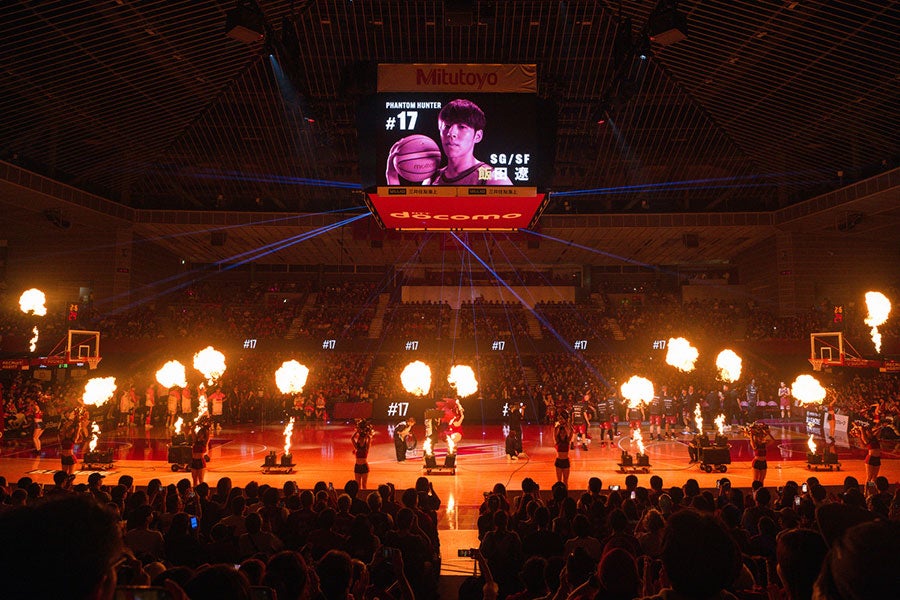
For someone still learning the roster, seeing a face and name together is useful in itself. It may also prompt a visit to the official player profiles after the game. The photograph does not establish audience satisfaction or a sales effect. What it does show is the information being presented and how it is displayed.
Official Video Offers a Connection Between Games
The spectator guide links to an official Special Dance Video for the club’s “Dance Dance Thunders” theme song. This is a music and dance video associated with the club, rather than an explanation of basketball rules.
If a club posts only results, people unfamiliar with the sport may struggle to understand their significance. Music, player introductions and arena food offer other interests through which to discover the club and prepare for a visit. Whether video viewers actually attend must be investigated separately from the number of views.
Where watching a video and buying a ticket happen in different places, descriptions and official profiles can help visitors find dates, venues and booking instructions. The task is to make the next useful piece of information easy to find as well as to publish more posts.
B.LEAGUE PREMIER Also Assesses Business and Venue Conditions
Launched for the 2026–27 season, B.LEAGUE PREMIER moved from promotion and relegation based on sporting results to entry through licensing. Revenue, attendance and arena conditions are among the considerations.
It would be inaccurate to reduce the rules to an identical requirement that every club must meet ¥1.2 billion in revenue, 4,000 average spectators and 5,000 seats. The official initial licensing criteria specify different assessment stages. The seasons assessed, timing of decisions and deadlines for arena improvements also matter.
A current example is the Sendai 89ERS announcement of October 20, 2026. Reporting the continuation of its license for 2028–29, the club cited average attendance of 4,275 in 2025–26, revenue of approximately ¥1.745 billion and compliance with home-arena requirements. These are Sendai’s reported results, not averages for the league.
The Lab’s interest is in a system that considers the conditions for continuing to run a club alongside sporting competition. Revenue and seating capacity do not measure the quality of an experience directly, and a license guarantees neither satisfaction nor profit. Ease of arrival and departure, sightlines and clear instructions still need to be assessed in day-to-day operations.
A sustainable clubSporting competition and business operations
- RevenueReview the applicable assessment period
- AttendanceCheck the relevant criteria and stage
- ArenaCheck requirements and completion deadlines
- Daily operationsAssess information, access and sightlines
A license does not by itself establish customer satisfaction or profitability.
What Clubs Can Check From a First Visit to a Return Visit
The following is the Lab’s proposed checklist for newcomer information, rather than an official league-wide standard.
| Stage | Questions for information and operations |
|---|---|
| Before purchase | Can visitors understand the view from the seat, total price, age conditions, booking and entry method? |
| Before arrival | Can they find the route from the station, opening time, restrictions on belongings and the journey home? |
| During the game | Is the experience comfortable for people who do not know the cheers or prefer to watch quietly? |
| After the game | Can they find player profiles, official highlights and information about the next game? |
It also helps to make clear that visitors need not own official merchandise before attending. They can decide whether to buy a jersey after experiencing a game. For photography, cheering equipment and food, direct visitors to current league, venue and game-specific instructions rather than assuming that customs from a concert venue apply.
Evaluation could combine cumulative admissions with newcomer surveys, return-visit information and common questions at help desks. Someone who enjoyed the music, someone drawn to a player’s performance and someone looking for a family outing may have different reasons for wanting to return.
Notes From The Oshi Lab: Leave Room for Different Reasons to Support a Team
Some people begin with a favorite player and come to support the whole club; others attend because it is their local team. Hako-oshi, support for the group as a whole, can coexist with support for an individual. That does not require interpreting every spectator’s behavior through idol fandom.
The useful lesson from these official examples is the connection between information before a game, ways to participate at the venue and video afterward. Reduce the things that confuse newcomers, one by one, while giving people who become fans ways to continue supporting the club at a comfortable level. Those repeated operational choices deserve attention when considering oshi-katsu in sport.
For inquiries about oshi-katsu initiatives for sports teams and arenas, contact KAZAORI Inc..
Related Articles
The J.League and Oshi-Katsu / Pro Baseball and Oshi-Katsu / Oshi-Katsu Marketing / A First-Timer’s Concert Guide
FAQ
Is B.League attendance growing?
The official July 14, 2026 announcement reported 5,480,168 admissions in 2025–26, or 113% of the previous season. This is a count of cumulative entries, not the number of distinct fans.
What is B.LEAGUE PREMIER?
The new top division launched for 2026–27. Entry is based on licensing, including assessments of revenue, attendance and arenas. Requirements depend on the assessment timing and applicable conditions, so consult the official materials for the relevant season.
What should a first-time spectator check?
Check seat types, booking and entry methods, opening times, directions, and photography and belongings rules. Club game information also explains cheering and activities. You can choose whether to buy official merchandise after attending.


