
How Capsule Toys Became a ¥100 Billion Market: The Front Line of Oshi-Katsu Gacha
Capsule toys have spread from a handful of machines in a corner of a shopping center to specialty stores where visitors browse long rows of them. The subjects range from nostalgic characters and miniatures of real products to original creations by artists.

The Japan Capsule Toy Association (JACTA) estimated the 2025 market at approximately ¥196 billion in a report released in February 2026. This article explains how to read that number, examines planning choices visible in official product photographs, and considers what buyers and sellers need to know. It covers physical capsule toys rather than smartphone-game gacha.
What Does the ¥196 Billion Market Measure?
JACTA’s 2025 survey interviewed 41 manufacturers and estimated a manufacturer-shipment-based market using suggested retail prices and other sales conditions. The estimate rose 39.0% from approximately ¥141 billion in the previous survey (JACTA’s 2025 market report, Japanese).
| Year identified in the survey | Market estimate | How to read the published figure |
|---|---|---|
| 2022 | Approximately ¥72 billion | Previous-survey comparison in the 2023 report |
| 2023 | Approximately ¥115 billion | Estimated from 34 responding manufacturers and other information |
| 2024 | Approximately ¥141 billion | Previous-survey comparison in the 2025 report |
| 2025 | Approximately ¥196 billion | Estimated from 41 responding manufacturers and other information |
The 2022 and 2023 values come from the association’s 2023 report, Japanese. The increase from approximately ¥72 billion to ¥196 billion is about 2.7 times. It is not necessarily a comparison of exactly the same companies over identical accounting periods.
In particular, the word “fiscal” in a report’s Japanese title should not automatically be read as April through the following March. The 2025 report notes that its latest-one-year collection periods vary with respondents’ accounting years and other circumstances. It covers products made for capsule toy machines in Japan, excluding items such as event merchandise and companies’ own goods sold in capsule form.
A shipment estimate using suggested retail prices is not a direct measurement of what customers paid at the till. Before comparing it with another organization’s toy statistics or one manufacturer’s revenue, align the scope and method. These totals alone cannot establish a company’s share or a store’s profit.
- ¥196 billion
- JACTA’s 2025 shipment-based estimate
- 41
- Manufacturers interviewed
- +39.0%
- Change from the previous survey
Suggested-retail-price inputs and differing collection periods are important qualifications.
Source: JACTA, February 2026 (Japanese)
Unit Prices and Store Growth Have More Than One Cause
JACTA’s 2025 survey gives ¥400 and ¥500 products a combined share of 48.1%. The same report counts more than 900 specialty stores as of January 31, 2026. Price changes and retail expansion have progressed together.
The report does not establish that raising prices necessarily makes a large store profitable. A higher price may reduce purchase frequency, while more machines bring rent, stock and replenishment work. Product planning and store expansion need cost analysis as well as sales figures.
For illustration, 100 machines each selling three ¥400 items in a day would generate ¥120,000 in gross sales. That is an invented example, not an actual store result or profit figure. It ignores differences between machines, sold-out products, unsold stock, purchasing costs and location charges. Machine counts alone cannot tell us whether a store pays its way.
An Official Store Photo Shows Browsing as Part of the Experience
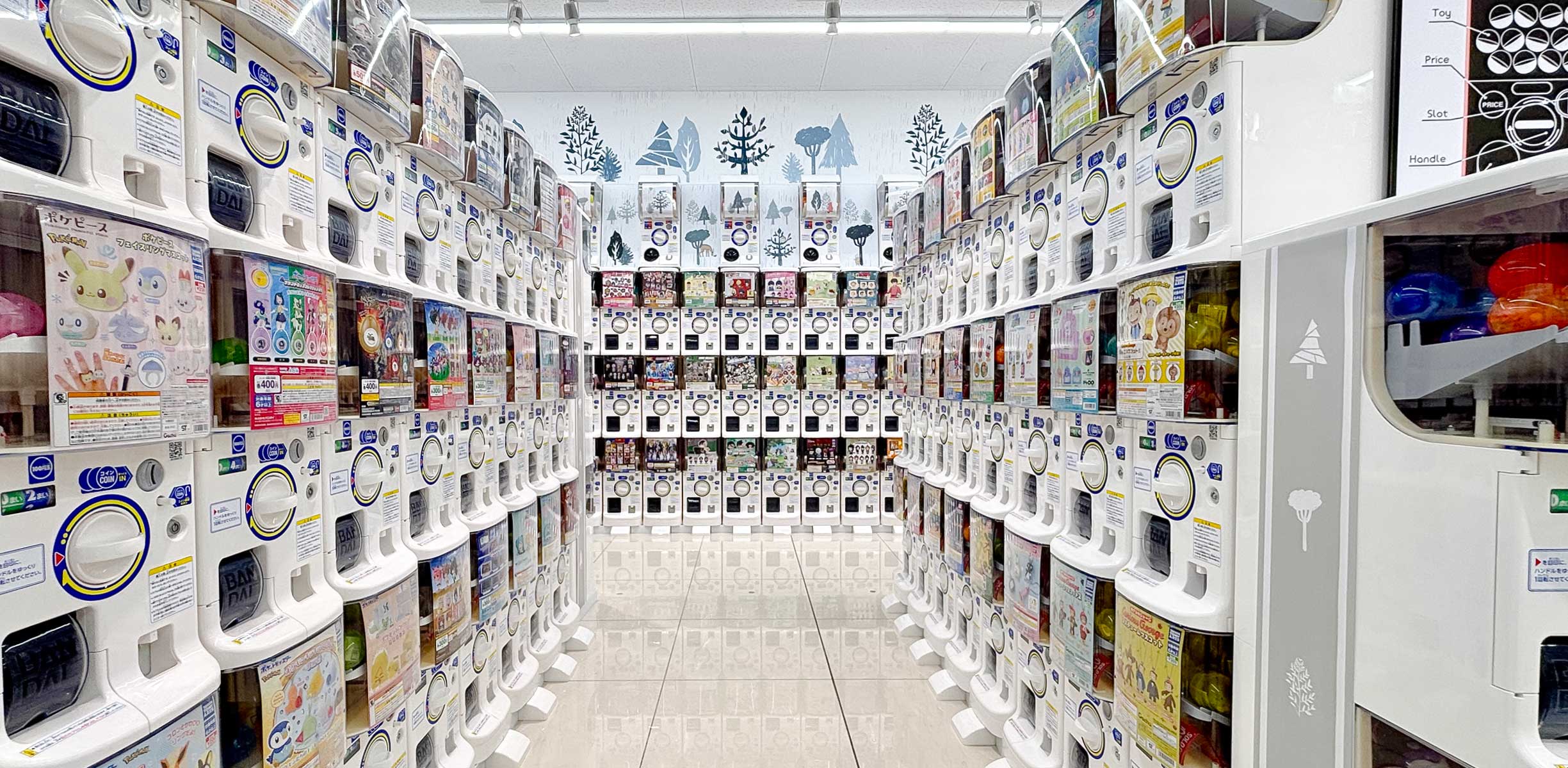
In this official photograph, machines are stacked vertically along both sides of the aisle and at the back. Each displays product pictures, allowing visitors to browse subjects as they walk. The photograph does not reveal the store’s size or sales, but it shows a different way of discovering products from stopping at one particular machine.
Retailers can guide browsing by franchise, maker or subject, such as miniatures and animals. Clear prices and lineup counts help both visitors seeking new releases and those discovering an unfamiliar item.
With more machines, visitors may spend longer looking for an out-of-stock product or miss another display of the same franchise. Stock information and help finding products deserve a place in operations alongside replenishment.
An Official Product Example: Carrying Nostalgia in Miniature
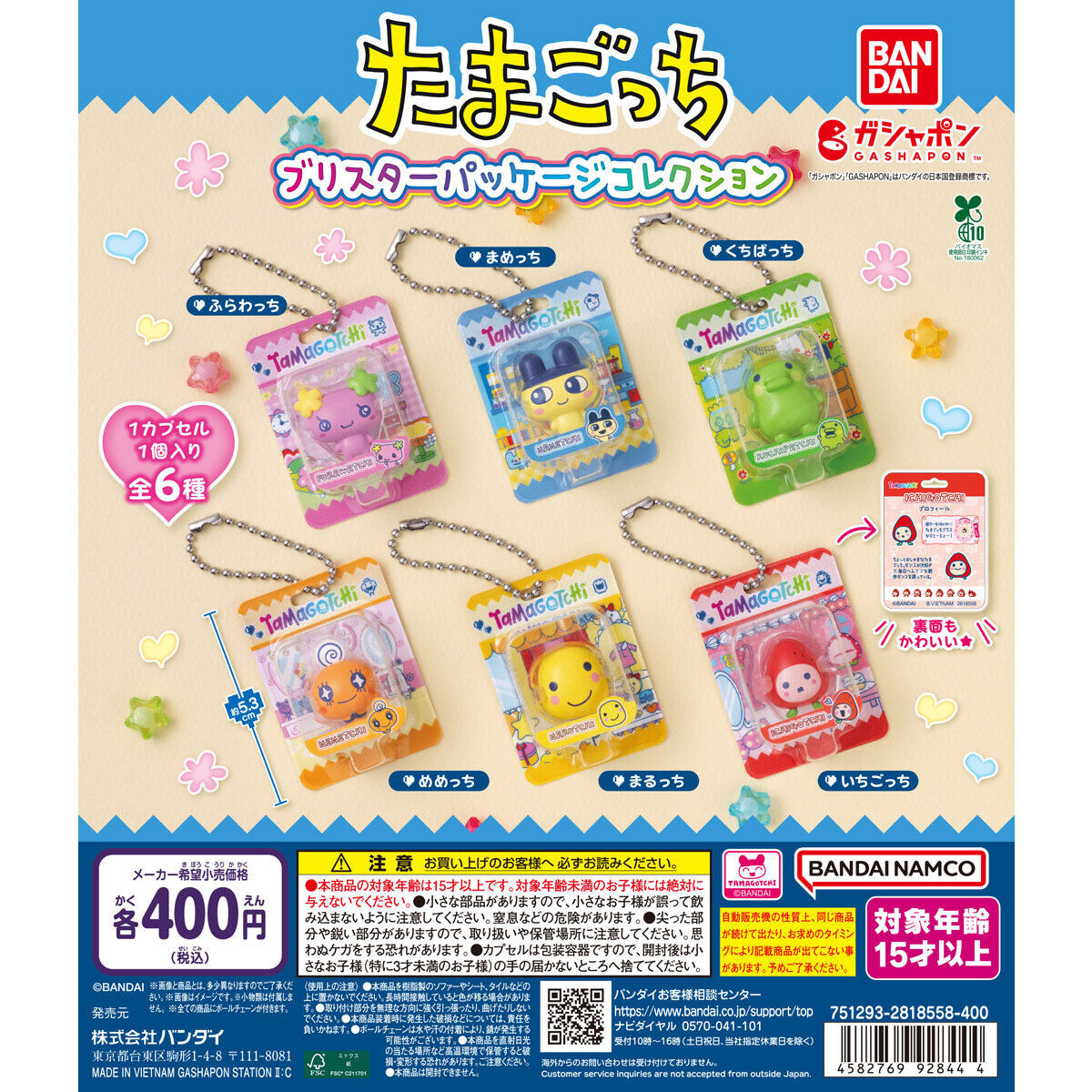
The official page lists a release in the second week of January 2026, ¥400 per turn, six designs and an age rating of 15 and above. These are not electronic Tamagotchi devices: they are small three-dimensional characters in packages with ball chains. Release timing and availability vary by store.
The photograph invites attention to the backing cards and clear packaging as well as the characters. Colors, lettering and the appearance of a shop product become something to carry. It illustrates an approach to Heisei retro beyond simply reproducing an old item: change its size and its use.
Nostalgia works differently for different people. Someone who played with an older product may remember its packaging; a newcomer may enjoy the miniature-shop-product appearance itself. Avoid assuming every age group shares the same memories, and explain how the current item can be enjoyed today.
Miniatures, Character Merch and Travel Souvenirs Meet Different Wishes
People want capsule toys for different reasons. Miniatures of real furniture or food can be enjoyed for their small-scale recreation and arrangement. A character fan may want a particular design or outfit. Travelers may choose something portable that recalls a destination.
For example, Kenelephant introduces its Miniature Collection on its official website. Reading about a series and its connection to real objects before visiting a store can reveal details beyond its small, cute appearance.
Planning should distinguish these preferences. Someone seeking one specific character may experience a lineup differently from someone happy to display any result together. Pictures will not necessarily explain every condition to international visitors either. Give separate information on price, accepted coins, age rating, random selection and contact details.
The Price of One Turn Is Not the Cost of Getting a Particular Item
At ¥400 a turn, five turns cost ¥2,000 and ten cost ¥4,000. This calculates spending, not whether a desired design will appear. A six-design lineup does not mean that six turns complete the set.
When contents are hidden, duplicates can occur. Unless official information specifies probabilities or packing conditions, do not assume equal odds or that another purchase is bound to produce the missing item. Even if aiming to pull a complete set yourself, stay within a budget chosen beforehand.
- Set an amount and a turn limit together. Read the price and calculate the number of turns affordable within today’s limit.
- Check the desired lineup. Read the product name to avoid confusing similar items, rereleases and another series.
- Plan space for duplicates. Do not increase the budget on the assumption that trading or resale will succeed.
- Keep trading optional. Shipping, packaging and communication take money and time; trading is not guaranteed to be cheaper. Handle personal information and transaction terms carefully.
- Plan the journey home. Separate chains and small protruding parts from other goods and cards to prevent scratches.
- 01Read the price¥400 per turn in this example
- 02Set the spending limit¥2,000 would allow five turns
- 03Accept the random resultFive turns do not promise a desired design
This is a spending example, not a probability calculation.
As a collection grows, review storage and protective supplies. Deciding whether an item will sit on a desk, travel with you or stay in storage makes small goods easier to manage.
Notes From The Oshi Lab: Grow Store Scale and Ease of Choosing Together
Capsule toys allow an interested visitor to buy a product on the spot. That does not mean they are cheaper than every other fan product or always available without a queue. Explain both the accessibility of a single purchase costing a few hundred yen and the total from repeated random purchases.
A company planning a product can begin with what it hopes people will enjoy: detailed sculpting, nostalgic packaging or the chance to carry a favorite character. Let that intention guide the lineup size, physical dimensions, price and display.
After launch, look beyond the speed of a sellout. Which products did people choose? Could staff manage replenishment and inquiries? Did the signs create confusion about prices or the number of designs? Combining sales records with visitors’ comments can identify improvements. We hope to grow both the number of machines in specialty stores and ease of choosing for shoppers side by side.
For consultations on retail planning and capsule toy product design, contact KAZAORI Inc. (Japanese). You can also try the Oshi Score Check (Japanese).
Related articles: What Is Gacha? / What Is Ichiban Kuji? / Pulling It Yourself and Completing a Set / Fan Activities at Game Centers
FAQ
How big is the capsule toy market?
JACTA’s 2025 survey, released in February 2026, estimates a shipment-based market of approximately ¥196 billion. It draws on interviews with 41 manufacturers and other information, rather than directly measuring consumer spending at tills.
How common are ¥400 and ¥500 capsule toys?
In JACTA’s 2025 survey, these two price points have a combined share of 48.1%. Prices vary by product; read the displayed price before buying.
How many specialty stores are there?
The association’s 2025 report counts more than 900 across Japan as of January 31, 2026. That is a survey-date figure; use operators’ current store listings when planning a visit.
Will six turns complete a six-design lineup?
Not necessarily. Random products may repeat. The number of designs does not guarantee how many purchases will complete a set. Set spending and turn limits in advance.
Is trading duplicates always cheaper?
No. Postage, packaging and communication have costs, and a trading partner is not guaranteed. Do not increase a purchase budget on the assumption that trading or resale will succeed.


