

Soccer Pilgrimage: National Stadium, 2002 World Cup Venues, and blue-ing!
On May 15, 1993, 59,626 people gathered at the old National Stadium to witness the J.League's first match. In 2002, Japan earned its first-ever World Cup point in Saitama and its first victory in Yokohama. The Brazilian national team, which won that year's tournament, left its signatures in the locker room in Yokohama.
The current National Stadium, Saitama Stadium 2002, and Nissan Stadium offer tours of player areas and pitchside. At blue-ing! in Tokyo Dome City, you can see national-team uniforms and boots and try soccer experiences using video. Of Japan's four 2002 World Cup matches, the other two were held at Nagai in Osaka and Miyagi Stadium. At Ecopa in Shizuoka, free tours let visitors see the locker rooms used by England and Brazil. At the Sapporo Dome, outdoor natural grass is brought inside for soccer matches.
National Stadium and 2002 World Cup venues, plus soccer experiences
1. National Stadium
At the current stadium, visitors can watch matches and tour the interior. The opening J.League match in 1993 was held at the former National Stadium.
More about National Stadium② blue-ing!
A venue with national-team exhibits, interactive digital archives, and hands-on activities. The cafe and shop are also open to visitors.
More about blue-ing!3. Saitama Stadium
Hosted Japan vs. Belgium and a semifinal at the 2002 World Cup. Tours may include the players' locker room, the Troussier Stairway, and pitchside.
More about Saitama Stadium4. Nissan Stadium
Venue for Japan's first victory at the 2002 World Cup and the final. A highlight is the exhibit recreating Brazil's locker room.
More about Nissan Stadium5. Nagai
The venue where Japan beat Tunisia at the 2002 World Cup and secured its first-ever place in the knockout stage.
More about Nagai6. Miyagi
The venue for the rainy Round of 16 match between Japan and Turkey at the 2002 World Cup.
More about Miyagi8. Sapporo Dome
A pitch where natural grass from outdoors is brought inside the dome. It hosted three matches at the 2002 World Cup.
More about Sapporo Dome
1National Stadium | Tour the timber eaves and player areas
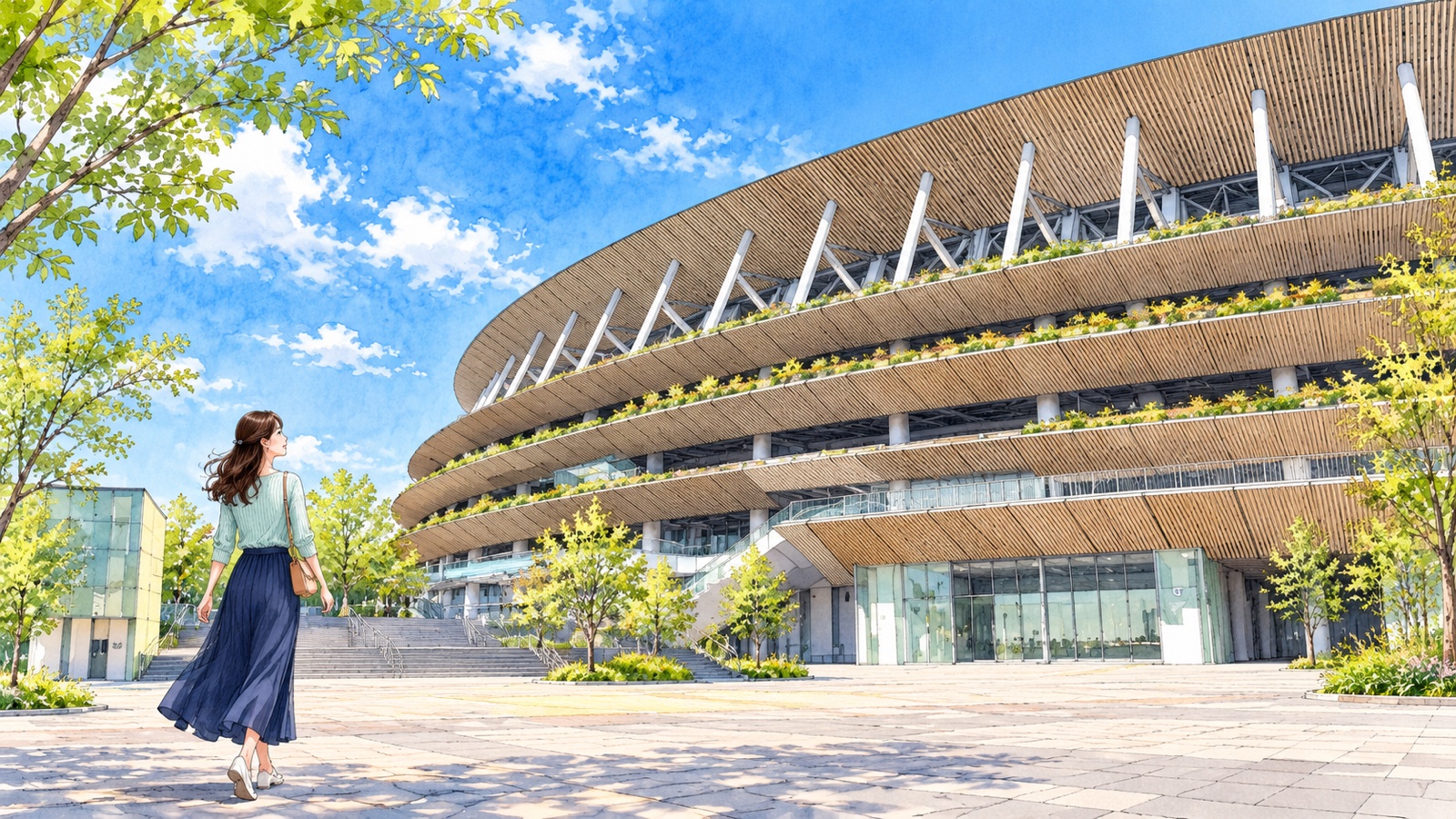
The National Stadium in Kasumigaokamachi, Shinjuku, is also known today as MUFG Stadium. Completed on November 30, 2019, it was designed and built by a joint venture of Taisei Corporation, Azusa Sekkei, and Kengo Kuma & Associates. It is also a familiar venue for the Emperor's Cup and the All Japan High School Soccer Tournament.
The exterior is ringed by layers of deep eaves made with timber. On a site surrounded by the trees of the Jingu Gaien area, the horizontal lines of the eaves shape the large building's outline. Three tiers of seating surround the field. White, yellow-green, gray, deep green, and dark brown seats combine in a palette inspired by sunlight filtering through a forest.
The guided tour lasts about 90 minutes. The route can include the observation deck, VIP rooms and lounge, player entrance and exit, locker rooms, track, and field. Instead of viewing the venue only from the stands, visitors walk the passage used by players and look up at the seating from field level. Tours are operating alongside facility renovations in fiscal 2026, so the areas open to visitors vary by session.
Admission is ¥3,200 for adults and ¥1,600 for high school students and younger on weekdays. On Saturdays, Sundays, and holidays, it is ¥3,500 for adults and ¥1,750 for high school students and younger. General tickets can be purchased starting one month before dates confirmed on the official calendar. Meet at NTT Docomo Gate E (Gaien Gate) 15 minutes before the tour starts.
Murals and an Olympic cauldron inherited from the former stadium remain around the grounds. Two works to look for in addition to the tour are the Nominosukune statue and the Greek Goddess statue by Aoyama Gate. These two mosaic murals were created for the 1964 Tokyo Olympics and are on view around the stadium grounds alongside other sculptures.
- Location
- 10-1 Kasumigaokamachi, Shinjuku, Tokyo
- Connection to soccer
- A stadium completed in November 2019 that hosts the Emperor's Cup and the All Japan High School Soccer Tournament
- Tour prices
- Weekdays: ¥3,200 adults / ¥1,600 high school students and younger; weekends and holidays: ¥3,500 adults / ¥1,750 high school students and younger
- Meeting point
- Meet at NTT Docomo Gate E (Gaien Gate) 15 minutes before the start; tour lasts about 90 minutes
Sources: MUFG Stadium · Stadium tours · Japan Sport Council (JSC) — Facility overview
2blue-ing! | Experience national-team uniforms and interactive soccer
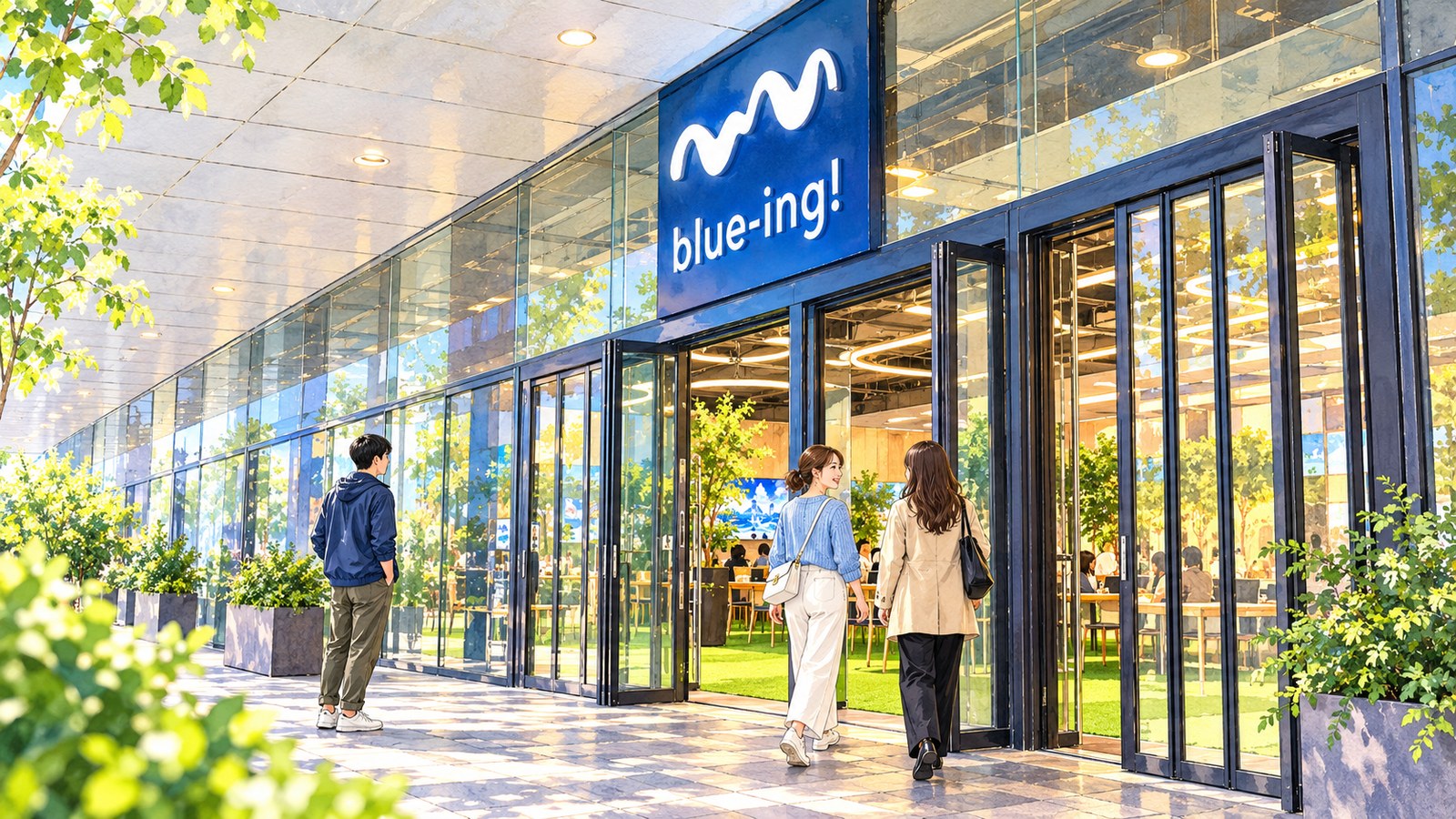
blue-ing!, the JFA Soccer Culture Creation Hub, opened at Crystal Avenue in Tokyo Dome City on December 23, 2023. Operated by the Japan Football Association, it includes DISCOVERY, a paid interactive exhibit; PARK, a synthetic-turf plaza; a cafe and bar; and a shop.
DISCOVERY's VIRTUAL FIELD offers experiences such as projection-mapped air soccer. DIGITAL COLLECTION displays historic artifacts and collection items as three-dimensional data that visitors can rotate to inspect in detail. GALLERY hosts special exhibitions of physical objects.
In July 2026, a World Cup exhibition opened in the DISCOVERY area, featuring tournament photographs, uniforms and boots worn by players, and pennants exchanged before matches. The special Kirin Cup Soccer exhibition is also being held from September 19 to November 23. It is a place to encounter past national-team matches and objects used by players in those games.
Another photo spot is a life-size figure of manager Hajime Moriyasu. One figure, shown giving a substitution instruction, is in the free PARK area; another, taking notes on a bench, is in the paid DISCOVERY area. The limited-time display began on September 16, 2026, and its end date has not been announced.
Regular admission to DISCOVERY is ¥800 for adults, ¥600 for junior and senior high school students, and ¥500 for elementary school students; preschool children enter free. Discounts are available to members of the JFA's official app. Timed tickets can be purchased online up to two weeks ahead or from the ticket machines on site. You do not need a DISCOVERY ticket to use the cafe or shop.
- Location
- Crystal Avenue, Tokyo Dome City, 1-3-61 Koraku, Bunkyo, Tokyo
- Connection to soccer
- A soccer culture hub operated by the Japan Football Association
- Interactive exhibit admission
- DISCOVERY: ¥800 adults / ¥600 junior and senior high school students / ¥500 elementary school students / free for preschool children
- Highlights
- National-team uniforms and boots, the three-dimensional DIGITAL COLLECTION, and a life-size figure of manager Hajime Moriyasu
Sources: JFA — Opening announcement · DISCOVERY · Tickets · 2026 World Cup exhibition · Kirin Cup special exhibition · Manager Moriyasu figure
3Saitama Stadium 2002 | Dedicated soccer seating and players’ benches
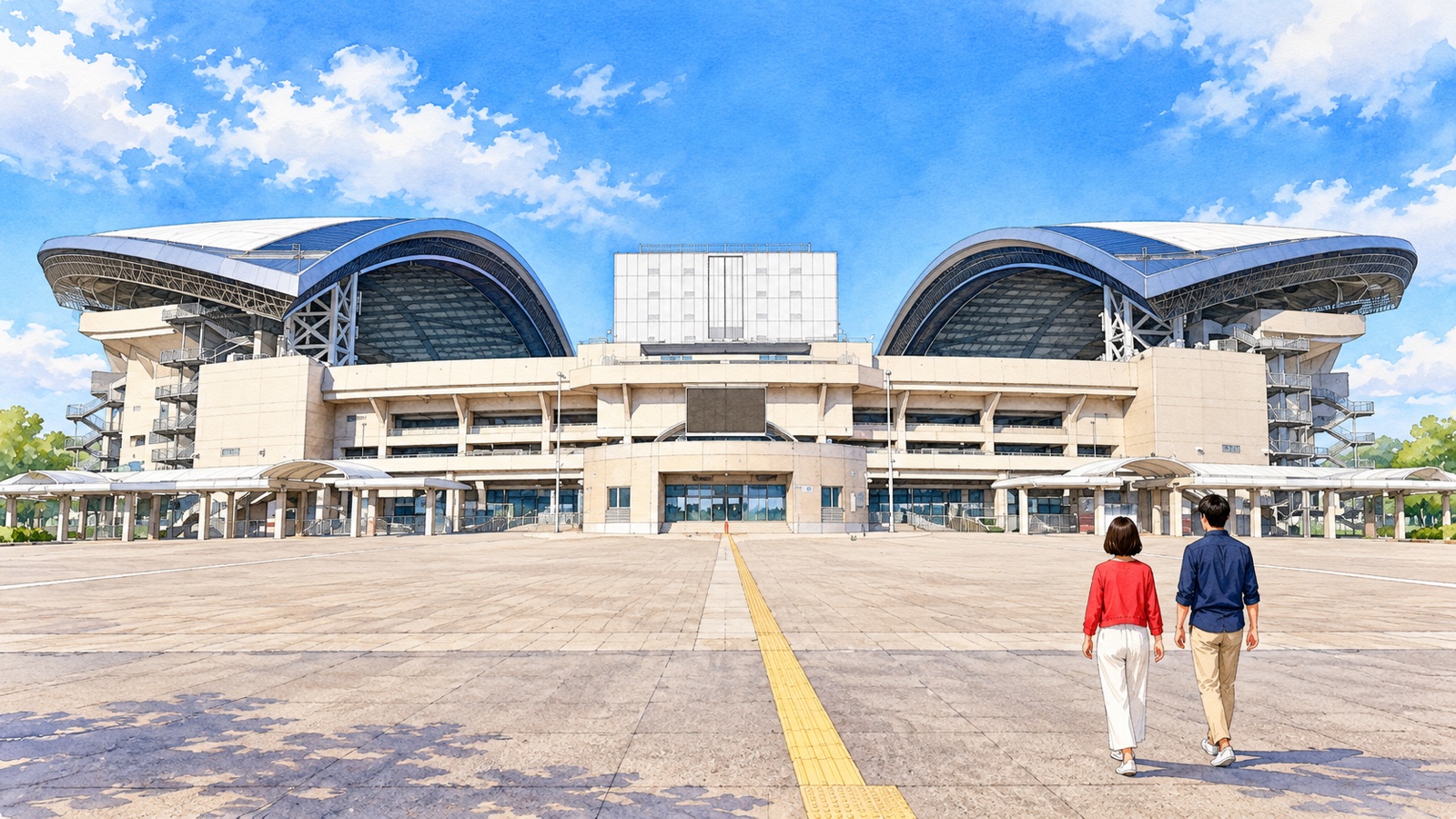
Saitama Stadium 2002 in Misono, Midori Ward, Saitama, is a soccer-specific stadium where no athletics track separates the pitch from the stands. The closest seats are about 14 meters from the field. Large roofs cover the main and back stands, while the areas behind the north and south goals are open to the sky.
An opening event was held on October 6, 2001, and 60,553 people attended the Urawa Reds vs. Yokohama F. Marinos match on the 13th. That was the J.League's highest attendance at the time. Stadium tours began three days later, on October 16. The following year, the venue hosted four World Cup matches, including Japan vs. Belgium.
The standard tour takes about 60 minutes and visits the players' locker room, warm-up room, Troussier Stairway, pitchside, players' benches, main stand, and more. The flash-interview area seen on TV before and after matches is another stop in the player area. Check in in front of the Rest Plaza on the northwest side of the park.
The regular general tour costs ¥800 for junior high school students and older, ¥400 for elementary school students, and is free for preschoolers. Reservations are available for individuals, and tours are generally held once a month on the last Sunday. Dates and booking details are announced in Saisuta News. The separate Pitch-In Special Tour, which lets visitors step onto the main pitch grass, costs from ¥1,500 for junior high school students and older and from ¥1,000 for elementary school students.
The grass in front of the players' benches was completely replaced in March 2023 for the first time in 22 years. The pitch combines cool-season grasses and has pipes beneath the ground to circulate hot or cold water.
- Location
- 2-1 Misono, Midori Ward, Saitama, Saitama
- Connection to soccer
- A soccer-specific stadium where Japan earned its first World Cup point in 2002
- Tour price
- Regular tour: ¥800 for junior high school students and older, ¥400 for elementary school students, free for preschoolers
- Schedule and check-in
- Generally held once a month on the last Sunday; about 60 minutes; check in in front of the Rest Plaza on the northwest side of the park
Sources: Stadium history · Stadium tours · Official brochure · About the grass
4Nissan Stadium | The locker room where Brazil left its signatures
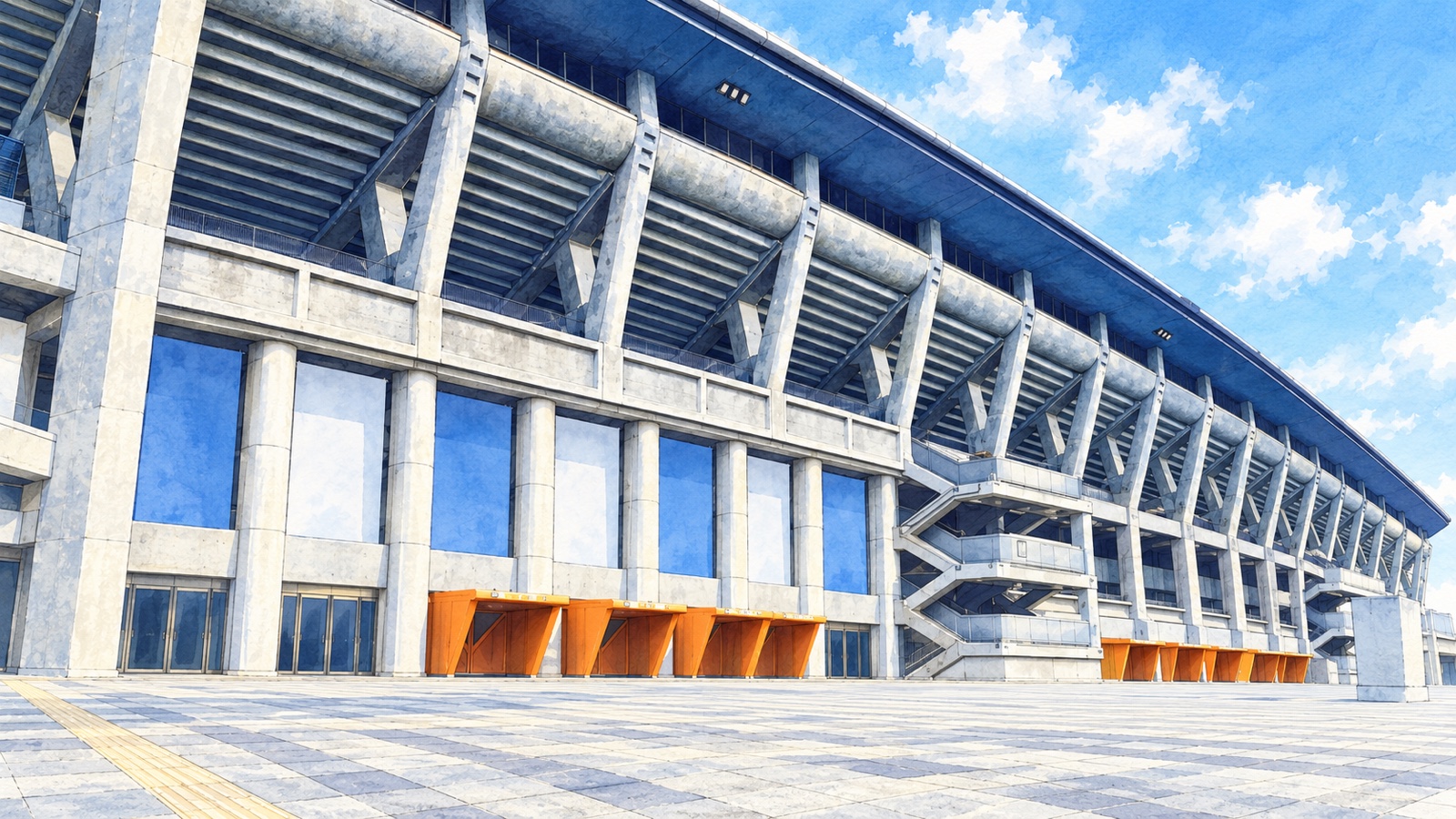
Nissan Stadium in Kohoku Ward, Yokohama, hosted the 2002 World Cup final. Germany and Brazil met here on June 30, and Brazil won the tournament 2–0. Earlier that month, on June 9, Japan beat Russia 1–0 to claim its first-ever World Cup victory.
On the stadium tour, visitors can enter the Brazil national team's locker room, recreated as it looked on the day of the 2002 final. The exhibit includes signatures left by players, replica uniforms, and a whiteboard. The tour also visits the warm-up room and Victory Road, where the entrance music from the time is played.
At Monument 2002, you can see the footprints of Brazil captain Cafu and the handprint of Germany captain and goalkeeper Oliver Kahn. A floor relief records the results of every match from the qualifiers, which began in March 2000, through the final. The floor of the final's venue brings together not only that one championship night but also the qualifiers played around the world.
The tour takes 60 minutes. Individual admission is ¥1,500 for adults, ¥800 for junior high school students and younger, and free for preschoolers; payment is cash on the day. Reservations are accepted through a dedicated form from ten days before the tour until the day before.
The stadium also hosted the finals of Rugby World Cup 2019 and soccer at the Tokyo 2020 Olympics. The Final Museum on the tour covers all three tournaments. The regular tour does not enter the grass; visitors go from the stadium stairs to the side of the pitch.
- Location
- 3300 Kozukuecho, Kohoku Ward, Yokohama, Kanagawa
- Connection to soccer
- Venue for Japan's first World Cup victory and the Brazil vs. Germany final at the 2002 tournament
- Tour price
- Individual admission: ¥1,500 adults / ¥800 junior high school students and younger / free for preschoolers; pay in cash on the day
- Reservations and duration
- Book through the dedicated form from ten days before the tour until the day before; tour lasts 60 minutes
Sources: Nissan Stadium — Tours · 2002 World Cup memories
5Yanmar Stadium Nagai | Morishima’s opening goal sends Japan to its first knockout round
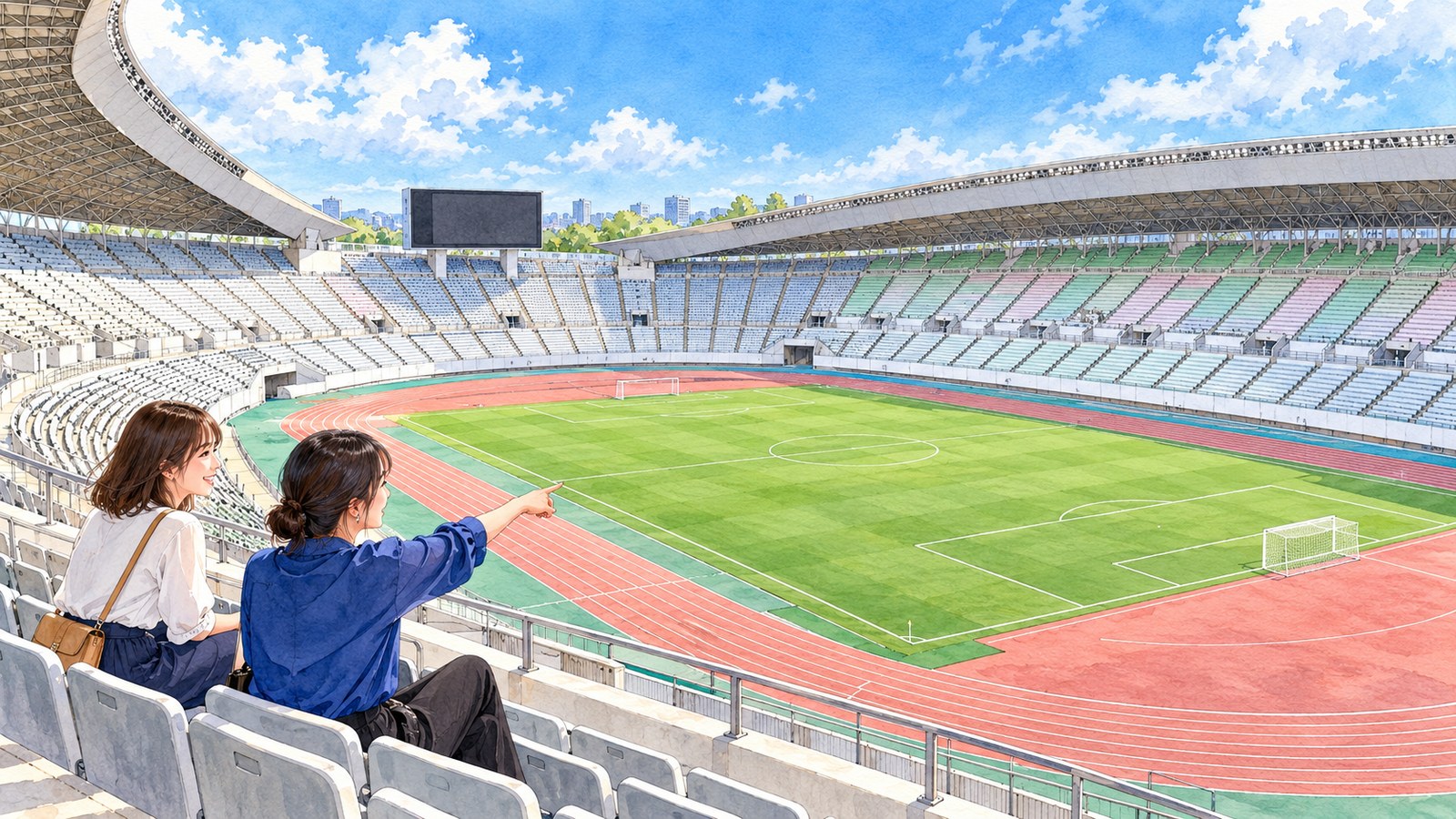
Yanmar Stadium Nagai in Nagai Park, Higashisumiyoshi Ward, Osaka, is a Japan Association of Athletics Federations Class 1 certified track-and-field stadium. The five-story venue holds 50,000 people. Its curved roof has no pillars, leaving the field and track visible from every seat.
On June 14, 2002, Japan played Tunisia here. A draw or better would send Japan to the knockout stage for the first time. At halftime, coach Philippe Troussier substituted Junichi Inamoto and Atsushi Yanagisawa for Hiroaki Morishima and Daisuke Ichikawa. Morishima scored in the 48th minute; in the 75th, Hidetoshi Nakata headed in a cross from Ichikawa to make it 2–0.
The Japan Football Association's record calls Morishima's opening goal “fateful.” At the time, Nagai was the home ground of Cerezo Osaka, Morishima's club. He scored that goal at his own club's home stadium.
The stadium also hosts the Osaka International Women's Marathon each year. Exit 3 at Nagai Station on the Midosuji subway line is right by the park entrance.
- Location
- 1-1 Nagai Park, Higashisumiyoshi Ward, Osaka, Osaka
- Connection to soccer
- Venue where Japan beat Tunisia at the 2002 World Cup and reached the knockout stage for the first time
- Nearest station
- Right by Exit 3 of Nagai Station on the Midosuji subway line
- Highlights
- Stands for 50,000 under a sweeping, pillar-free curved roof
Sources: JFA — World Cup history, 2002, Match 3 vs. Tunisia · Nagai Park — Yanmar Stadium Nagai · Nagai Park — Access
6Q&A Stadium Miyagi | The rainy Round of 16 match
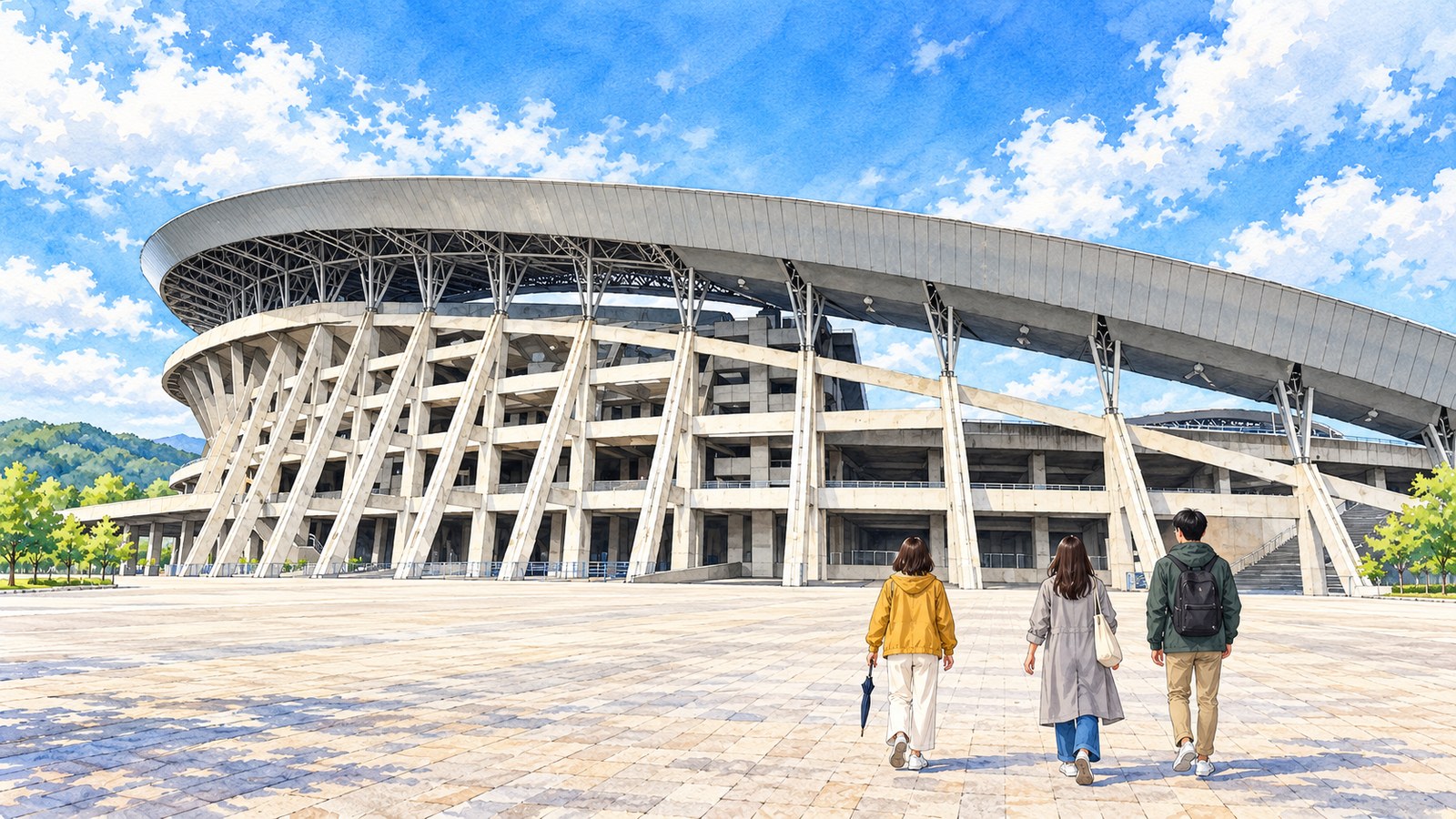
Miyagi Stadium is in Miyagi Prefectural Sports Park (Grandy 21) in Rifu, Miyagi. Completed in March 2000, it is one of the largest stadiums in Tohoku, with a capacity of 49,000. Its crescent-shaped roof covers two-thirds of the seats and was inspired by the crest on the helmet of Date Masamune, founder of the Sendai domain. The 300-meter-long arch, 46 meters high, is supported without pillars.
On June 18, 2002, Japan, having advanced as group leaders, played Turkey here in the Round of 16. In the rain, Umit Davala headed in a corner in the 12th minute to put Turkey ahead 1–0. Just before halftime, Alessandro Santos's free kick struck the crossbar. Japan's 2002 tournament ended with this match.
The stadium had been closed during restoration work following the March 2022 earthquake off the coast of Fukushima, among other repairs. Track use resumed in February 2025. The stadium's nickname, Q&A Stadium Miyagi, is scheduled to remain in use through March 2030.
- Location
- 40-1 Tatega, Sugaya, Rifu, Miyagi District, Miyagi, inside Miyagi Prefectural Sports Park
- Connection to soccer
- Venue for Japan's Round of 16 match against Turkey at the 2002 World Cup
- Capacity
- 49,000
- Highlights
- A 300-meter crescent-shaped roof inspired by the crest on Date Masamune's helmet
Sources: JFA — World Cup history, 2002, Match 4 vs. Turkey · Miyagi Prefecture — Q&A Stadium Miyagi · Miyagi Prefecture — Partial reopening announcement · Miyagi Prefecture — Naming rights agreement renewed
7Ecopa Stadium | The locker rooms used by England and Brazil
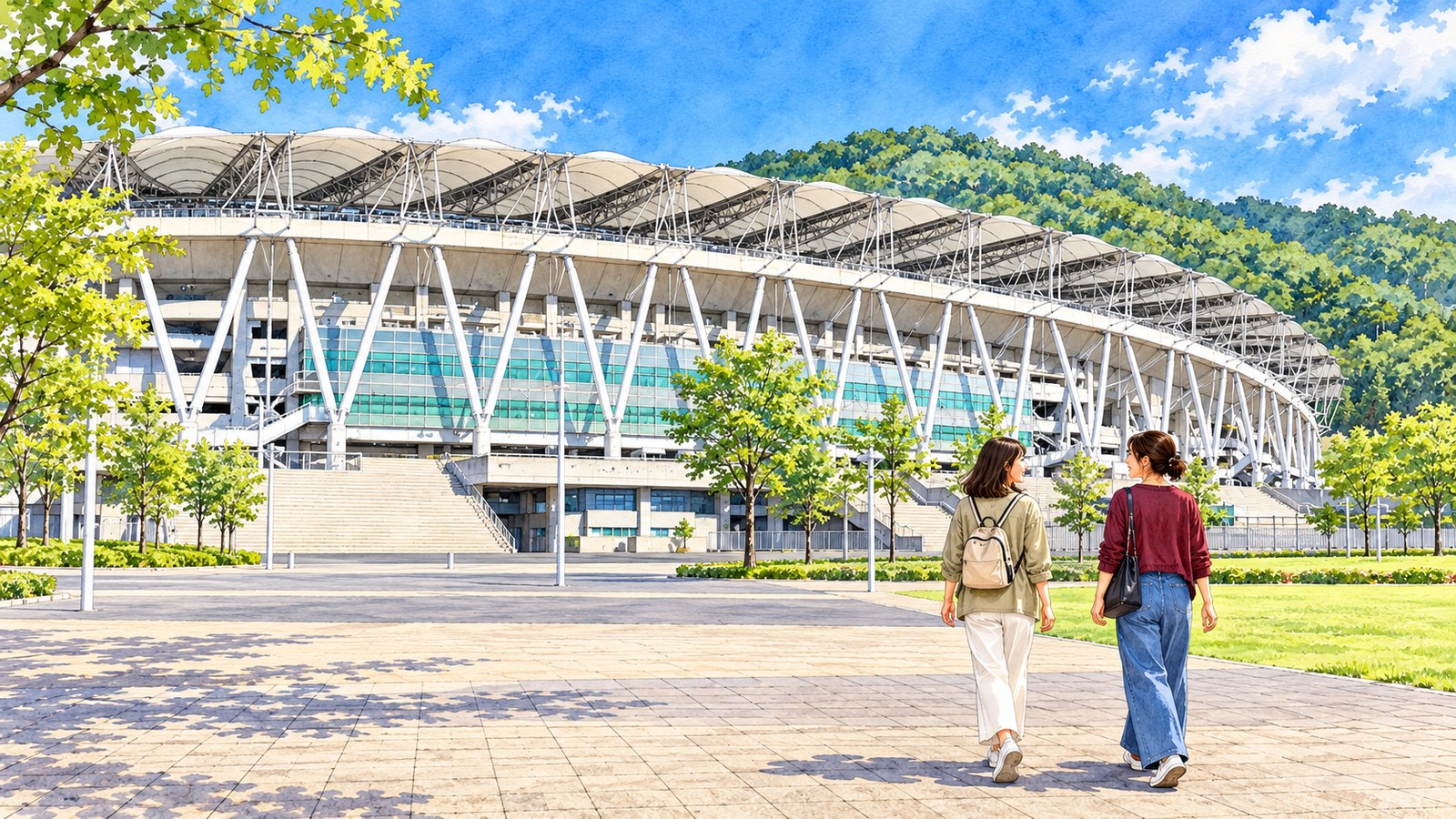
Ecopa Stadium, officially Shizuoka Stadium, is in Ogasayama Sports Park in Fukuroi, Shizuoka. It opened in May 2001 as the prefecture's largest multipurpose stadium, with a capacity of 50,889. Its large roof, inspired by the Ogasayama mountain range, covers all fixed seats. Three matches were held here at the 2002 World Cup.
The stadium offers free guided tours by advance reservation on days without events or tournaments. Apply by emailing or faxing the site-visit application form, then tour with guidance from volunteer Ecopa Supporters or staff.
The tour enters the locker rooms used during the 2002 tournament by England, led by Beckham, and Brazil, whose squad included Ronaldo and Ronaldinho. The tactical board and massage room also remain. The Ecopa Sports Museum in the first-floor entrance hall displays a World Cup official match ball, a bronze medal from the 1968 Mexico Olympics, and Ryūichi Sugiyama's uniform.
- Location
- 2300-1 Aino, Fukuroi, Shizuoka, inside Ogasayama Sports Park
- Connection to soccer
- Shizuoka Stadium, host of three matches at the 2002 World Cup
- Stadium tour
- Free, advance reservation required; 8:30 a.m.–5:00 p.m. on days without events; meet in front of the ticket office
- Nearest station
- About a 15-minute walk from Aino Station on the JR Tokaido Main Line
Sources: Ecopa — Ecopa Stadium · Ecopa — Stadium tours · Ecopa — Access
8Daiwa House Premist Dome | The natural-grass pitch brought in from outdoors
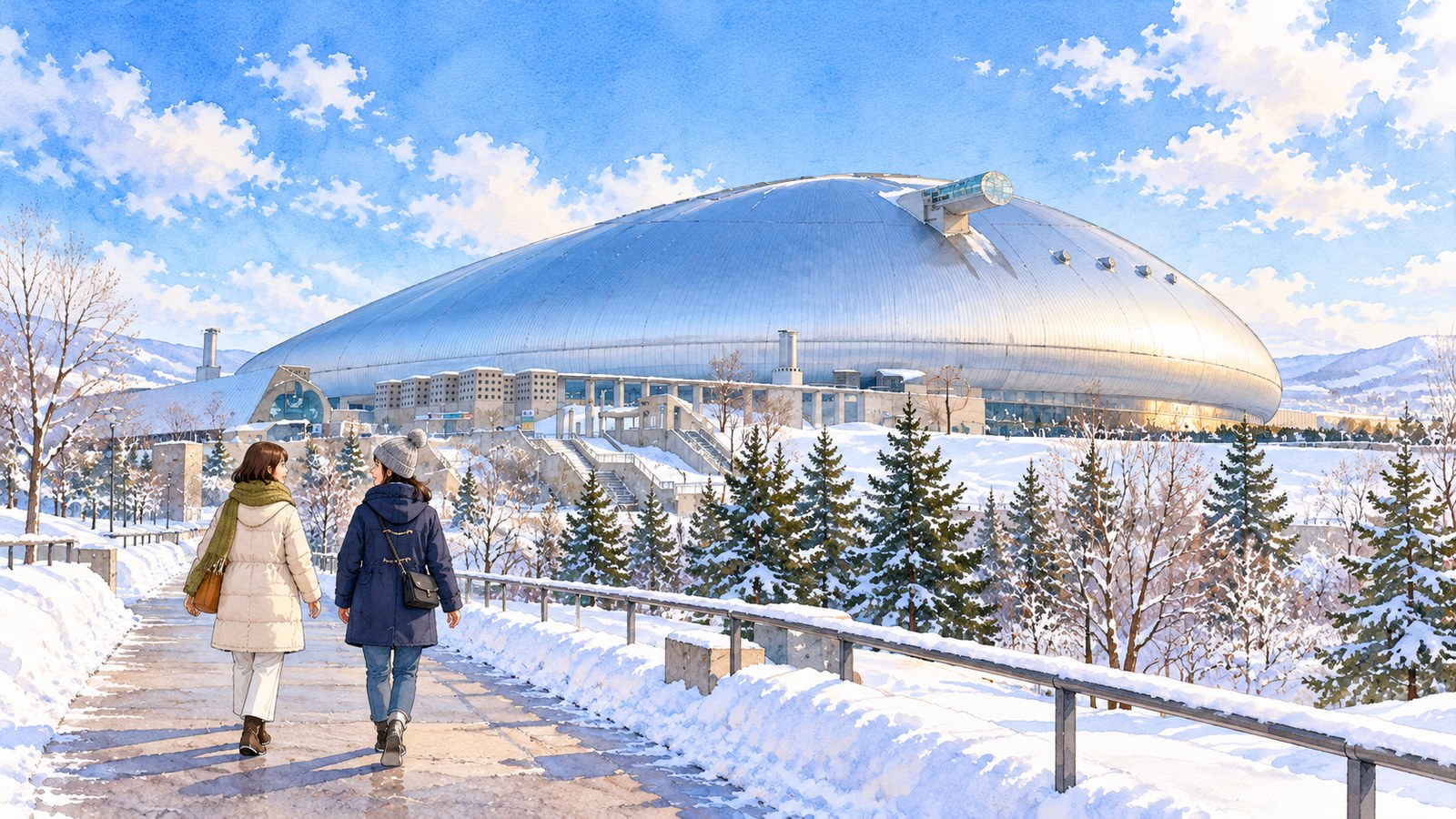
Sapporo Dome, in Toyohira Ward, Sapporo, opened in June 2001 as a large covered venue. It is now known as Daiwa House Premist Dome. It hosted three matches at the 2002 World Cup. On June 7, England shut out Argentina, with David Beckham scoring from the penalty spot.
Soccer is played on a natural-grass field normally kept outdoors. For a match, the field is floated on air pressure and moved inside the dome. This “Hovering Soccer Stage” made it possible, for the first time in Japan, for professional soccer and professional baseball teams to share a home stadium.
The dome tour lasts about 50 minutes. After an explanation from the stands and a video showing the conversion from a baseball field to a soccer field, the tour visits normally restricted underground areas, including the players' locker room, manager's room, and bullpen. Individuals do not need to reserve; buy tickets on the day at the information desk next to North Gate 3 on the first floor. Outside the gate, the first-floor Memorial Corner is free to visit and displays memorabilia from Japan national-team matches and signed items from Hokkaido Consadole Sapporo players.
- Location
- 1 Hitsujigaoka, Toyohira Ward, Sapporo, Hokkaido
- Connection to soccer
- A dome that hosted three 2002 World Cup matches and brings a natural-grass field indoors
- Dome tour
- About 50 minutes; ¥1,800 adults / ¥1,000 elementary and junior high school students / ¥700 ages 4 through preschool; no reservation required for individuals
- Nearest station
- A 10-minute walk from Exit 3 of Fukuzumi Station on the Toho subway line
Sources: Sapporo City — Daiwa House Premist Dome (Sapporo Dome) · Dome tours · Memorial Corner · Hokkaido Shimbun — Beckham appears at the World Cup
Five matches to remember alongside the venues
The signatures left in locker rooms and the memories attached to the name National Stadium: markings on locker-room walls and items in display cases are closely tied to records of matches that decided tournament qualification or championship titles.
Kazuyoshi Miura
On May 15, 1993, he played as a forward for Verdy Kawasaki in the J.League's first match. He scored 20 goals that season and was named MVP for the inaugural champions.
Koji Nakata
He played for Kashima Antlers in the second leg of the 2000 Championship at National Stadium. In Japan's 2002 match against Russia, he sent the ball in from the left that led to Junichi Inamoto's winning goal.
Takayuki Suzuki
The forward who scored the equalizer against Belgium at Saitama Stadium 2002 on June 4, 2002. He ran onto Shinji Ono's long ball and poked it in with his toe.
Junichi Inamoto
The midfielder was with Arsenal at the time. At the 2002 tournament, he scored with his left foot against Belgium and his right against Russia, securing Japan's first World Cup victory.
Noriaki Fujimoto
The forward scored Vissel Kobe's second goal in the Emperor's Cup final on New Year's Day 2020, the first official match at the new National Stadium. He had risen through the divisions from the JFL to J3, J2, and J1.
At the old National Stadium in 1993 | Meyer scores first, then Marinos come back
The first J.League match was Verdy Kawasaki vs. Yokohama Marinos on May 15, 1993. The official record lists kickoff at 7:29 p.m. The venue was the former National Stadium in Kasumigaoka, and 59,626 people watched.
In the 19th minute, Verdy's Meyer scored the opener. After halftime, Everton scored in the 48th minute and Diaz in the 59th, giving Yokohama Marinos a 2–1 win.
At the time, the J.League was split into first and second stages, with each stage's winner competing for the annual title. Verdy became the inaugural annual champion. Bismarck, who joined for the second-stage NICOS Series, strengthened the attack, and the team won nine straight near the end of the season. In the Championship after New Year's, Verdy beat Kashima 3–1 on aggregate over two matches. Verdy's Kazuyoshi Miura scored 20 goals that season and was named MVP.
Sources: J.League — Official opening-match record · J.League history — 1993
At the old National Stadium in 2000 | Koji Nakata remembers the two-color stands
One player who has spoken about the old National Stadium is Koji Nakata, who played for Kashima Antlers. In the JFA's “Memorable scenes at National Stadium,” he recalled the second leg of the Championship against Yokohama F. Marinos on December 9, 2000. The first leg ended 0–0, and the annual title would be decided in this match.
What Nakata remembers vividly is the atmosphere created by the two teams' supporters. In a national-team match, the stands would be nearly all blue; in a club showdown, they were divided between two sets of fans. He had played at National Stadium in the high school tournament, for Kashima, and for Japan, and describes the pressure from the packed stands.
Before the match, Nakata discussed with Koji Kumagai, his midfield partner, and Yokohama's Shunsuke Nakamura how to keep Nakamura from having the ball. Kashima's Takayuki Suzuki scored first, then Akira Nanjo volleyed in a ball from a chest trap after a pass by Yutaka Akita. The result was 3–0. Nakata recalls how evenly matched the two teams felt, something the score alone could not convey.
Source: JFA — Koji Nakata recalls the 2000 Championship
At Saitama in 2002 | Takayuki Suzuki’s toe and Junichi Inamoto’s left foot
On June 4, 2002, Japan played Belgium at Saitama Stadium 2002. The teams went into halftime at 0–0, and Belgium scored first in the 57th minute. Just two minutes later, Japan equalized.
Forward Takayuki Suzuki ran onto Shinji Ono's long ball upfield. He stretched out his leg behind the defender and poked it in with his toe. In the 67th minute, Junichi Inamoto dribbled forward and struck with his left foot to put Japan ahead 2–1. Japan took the lead at a World Cup for the first time.
Belgium equalized in the 75th minute, and the match ended 2–2. For Japan, which had lost all three matches at the 1998 World Cup in France, this was its first-ever World Cup point. Suzuki was with Kashima, Ono with Feyenoord, and Inamoto with Arsenal when they represented Japan.
Saitama also hosted England vs. Sweden, Cameroon vs. Saudi Arabia, and the semifinal between Brazil and Turkey during that tournament.
Sources: JFA — Japan vs. Belgium match report · JFA — Players and match records · Saitama Stadium 2002 — History
At Yokohama in 2002 | Yanagisawa sets up Inamoto’s winning goal
For Japan's match against Russia on June 9, Tsuneyasu Miyamoto anchored the defense and Tomokazu Myojin started on the right. Coach Philippe Troussier made two changes to the starting lineup, bringing in Miyamoto for Ryuzo Morioka, who had been injured and substituted in the opening match.
The winning goal came in the 51st minute of the second half. Koji Nakata sent the ball forward from the left into the penalty area. Atsushi Yanagisawa let it run, and Junichi Inamoto arrived to shoot with his right foot. After scoring with his left against Belgium, he found the net with his right this time.
Japan later brought on Masashi Nakayama, Toshihiro Hattori, and Takashi Fukunishi and held onto its one-goal lead. The defense, anchored by goalkeeper Seigo Narazaki, kept Russia from scoring, and the final score was 1–0. Yokohama International Stadium became the site of Japan's first World Cup victory.
Nissan Stadium's official site has 2002 World Cup Memories, a photo record of the matches played there. It gathers images from all four matches held at the venue, including Japan's match and the final.
Sources: JFA — 2002 match report, Japan vs. Russia · Nissan Stadium — Tournament photos
At the new National Stadium in 2020 | Kobe’s first title and Villa’s final match
The first official sporting event at the new National Stadium was the Emperor's Cup final on January 1, 2020. Vissel Kobe beat Kashima Antlers 2–0 to win the club's first title.
Kobe built its attacking rhythm through passes from Andrés Iniesta. In the 18th minute, a goalkeeper parried a shot from Lukas Podolski, who had cut in from the left, and the ball deflected off a defender for the opening goal. In the 38th minute, the opposition could not deal with Daigo Nishi's cross from the right, and Noriaki Fujimoto turned it in with his left foot.
Fujimoto had climbed through the divisions from the Japan Football League (JFL) to J3, J2, and J1. The JFA match report preserves his comment about how happy he was to reach the point of scoring in the final at the new National Stadium.
David Villa, who was retiring after this match, also came on late in the game. Iniesta, his teammate on Spain's national team, was glad that Villa could end his career with a victory. The new stadium's first official match, Kobe's first title, and Villa's final game as a player all came together on the same New Year's Day.
Official video: JFATV — 99th Emperor's Cup final highlights
Sources: JFA — Kobe wins the first title in club history
The history of soccer venues and exhibition spaces
- 1958The old National Stadium is completedNational Stadium
- 1964The old National Stadium is the main venue for the Tokyo OlympicsNational Stadium
- May 15, 1993The J.League's opening match is held at National StadiumMatch
- 1996Japan and South Korea are selected to co-host the 2002 World CupTournament
- March 2000Miyagi Stadium is completedVenue
- May 2001Ecopa Stadium opens with its first eventVenue
- June 2001Sapporo Dome opensVenue
- October 2001Saitama Stadium 2002 opensSaitama
- June 4, 2002Japan earns its first World Cup point in SaitamaMatch
- June 9, 2002Japan wins its first World Cup match in YokohamaMatch
- June 14, 2002Japan reaches the knockout stage for the first time at NagaiMatch
- June 18, 2002Japan loses to Turkey in MiyagiMatch
- June 30, 2002Brazil wins the World Cup final in YokohamaMatch
- December 2003Japan Football Museum opensExhibition
- 2019The current National Stadium is completedNational Stadium
- January 1, 2020The first official sporting event at the new National Stadium: Emperor's Cup finalMatch
- February 26, 2023The former Japan Football Museum closesExhibition
- December 23, 2023blue-ing! opens in Tokyo Dome CityExperience
- April 2025The National Stadium's operator changesNational Stadium
The National Stadium was rebuilt, while the venues from 2002 continued to host club matches and international tournaments. The artworks preserved around the grounds, roof structures, and pitch-renewal work each reflect the history of their venues.
Murals and sculptures return to the grounds around National Stadium
During the rebuilding of the old National Stadium, plans were made to preserve its commemorative artworks. The collection was assembled with donor support between the stadium's completion in 1958 and the 1964 Tokyo Olympics. Rather than being discarded when the stadium was demolished, the works were carried over to the new grounds.
Two large statues by Aoyama Gate depict Victory, representing Nomi no Sukune, regarded as the founder of sumo, and Glory, representing a Greek goddess. They were installed in hopes of success at the 1964 Games. The JSC walking map shows the statues facing one another and the Olympic cauldron from that era nearby.
Under the deck by Gaien Gate are murals including Yoshio Miyamoto's Higher. The mosaics that once colored the stadium walls depict physical movement such as running and jumping. Apart from the view of the field and stands, this is also a place to see how artists of the 1960s represented sport.
Other works around the grounds include Fumio Asakura's Youth, Seibo Kitamura's Health and Beauty, and Jiro Amemiya's Javelin Thrower. The JSC National Stadium Walking Map shows each work's name and location on one page. It is useful when walking the perimeter from the stadium-side station as well.
Sources: JSC — Preservation of commemorative artworks · National Stadium walking map
Timber eaves sourced from across Japan and wood in the steel roof
The eaves at National Stadium use certified timber sourced from all 47 prefectures. The wood is arranged according to its region of origin, surrounding the stadium from north to south. Timber is used not only in the eaves around the perimeter but also in the large roof's framework.
The roof projects about 60 meters and is supported by a combination of steel and timber. Steel forms the main structure, while larch and cedar help limit deformation from earthquakes and strong winds. Steel and wooden members sit side by side in the roof framework overhead.
The seating colors also vary from top to bottom. Darker colors are concentrated nearer the field and lighter ones nearer the roof, with five colors arranged at random. The timber eaves, plantings, and changing tones of empty seats help the building blend into the surrounding grove.
Kengo Kuma's book Tokyo TOKYO includes photographs of National Stadium alongside the Meiji Jingu Museum and Nezu Museum, also in the Aoyama and Jingu Gaien area.
Sources: JSC — National Stadium facility overview · KADOKAWA — Tokyo TOKYO
Hot and cold water pipes beneath the grass at Saitama
The large roof at Saitama Stadium 2002 rises to about 58 meters above the main and back stands. At the same time, the pitch receives only about 55 percent of the sunlight that an unroofed location would get on average. Keeping the surface green requires measures specific to a stadium with extensive shade.
The stadium uses three cool-season grasses: Kentucky bluegrass, tall fescue, and perennial ryegrass. Different varieties are mixed, and pipes buried under the pitch regulate its temperature. Hot water circulates in cold seasons and chilled water in hot seasons.
The grass varieties for the full replacement in 2023 were selected after advance testing and expert review. The new turf grows over a layer of sand that ensures drainage. Beneath the pitch visitors see on a tour are systems that manage water and temperature.
Source: Saitama Stadium 2002 — Turf management
The Yokohama field sits on about a thousand pillars
Shin-Yokohama Park, home to Nissan Stadium, is also a multipurpose flood basin that takes in water when the Tsurumi River rises. The stadium is elevated and supported by about 1,000 pillars. If the river overflows, water can also flow beneath the venue.
The elevated field is hollow underneath. As a result, its ground temperature changes more readily than that of a typical soil field, while the surrounding roof affects sunlight and airflow. The operations staff's Turf Observation Diary explains the challenges of maintaining the grass under these architectural conditions.
Turf management also differs from Saitama's. Yokohama uses warm-season grass as its base, then sows cool-season grass in autumn to keep the field green through winter and spring. From the following spring into early summer, staff weaken the cool-season grass and transition back to warm-season turf. They call this changeover “transition.”
Sources: Nissan Stadium — Turf Observation Diary, Episode 128 · Nissan Stadium and Shin-Yokohama Park information
Exhibits preserving national-team history and how to spend time at blue-ing!
What remains at the stadiums are locker rooms, stands, and player signatures. Soccer museums and exhibit spaces have also collected clothing and equipment used in tournaments. From the Japan Football Museum, which opened in 2003, to blue-ing!, which opened in 2023, the ways of making the collection public have continued to evolve.
Visit the former Japan Football Museum on screen
The Japan Football Museum opened in December 2003 to commemorate the 2002 co-hosted World Cup in Japan and South Korea. It welcomed about 710,000 visitors before the former facility closed on February 26, 2023. Today, its exhibition rooms can be viewed through a virtual tour on the JFA website.
What has been preserved online is 3D data of the facility. You can move through the exhibition rooms and trace the arrangement and layout of the exhibits as they were at the time. The tour was released in December 2023; open “Virtual Tour (VR Data)” from the museum's top page.
The JFA website also features the Japan Football Hall of Fame. It recognizes people who have contributed to soccer in Japan and includes records not only of national-team players but also coaches and people involved in the sport's administration. The exhibition-room data and personal records remain available after the former museum closed.
Sources: Japan Football Museum
DIGITAL COLLECTION displays 3D data and match artifacts
blue-ing!'s DIGITAL COLLECTION is an exhibit where visitors can manipulate three-dimensional data of artifacts. Rotate an item on screen to view its sides and back as well as its front. ROAD TO 2050 is a timeline connecting the JFA's goal of winning the World Cup by 2050 with records of past international tournaments.
The 2026 World Cup exhibit includes uniforms and boots worn by players and pennants exchanged with opponents. Match equipment that is hard to distinguish from the stands takes center stage here. You can see match photographs and objects actually worn by players in one venue.
DREAM THEATER, featured in the video when the facility opened, ended on October 31, 2025. MOVIE ACTION! also stopped operating as of March 25, 2026.
Official video: JFATV — blue-ing! opening
Sources: DISCOVERY · 2026 tournament exhibit · Facility announcements
Samurai Blue Dogs and the synthetic-turf PARK
The cafe and bar menu includes items named for Japan's national soccer teams. The Samurai Blue Dog costs ¥770; SAMURAI BLUE Squash and Nadeshiko Pink Squash are ¥550 each. Rice dishes include Golden Japan Katsu Curry and a salmon-avocado bowl.
Kids' curry and soft-serve ice cream are also available, making it a place to take a break with children. Last orders are taken 30 minutes before closing.
The adjacent PARK is a synthetic-turf plaza with a large video screen. It hosts public viewings of national-team matches and talks with people in soccer. The shop carries Japan national-team goods and original merchandise for the venue. After seeing the DISCOVERY exhibits, you can move right on to a meal or shopping.
Source: CAFE&BAR · PARK · Visitor information
Oshi Lab note | A business perspective: Preserve what can be shared after the match
Nissan Stadium incorporated the winning team's signatures and locker room from 2002 into its tour. The former Japan Football Museum has made its closed exhibition rooms available as 3D data. It has changed how it presents its records depending on whether the building remains in use or has closed.
For sports venues, tours are built on deciding during an event which spaces and objects should be made available afterward and preserving them. Records that are difficult to recreate later—such as a room with player signatures or data that preserves the arrangement of an exhibit—are especially valuable to keep sharing.
Sources and official visitor information
FAQ
Where does the National Stadium tour meet?
The MUFG Stadium tour meets at NTT Docomo Gate E (Gaien Gate). Arrive 15 minutes before the start; the tour lasts about 90 minutes. General tickets can be purchased on the official site.
Where were Japan's four matches at the 2002 World Cup held?
The Belgium match was at Saitama Stadium 2002; Russia, at Nissan Stadium (Yokohama International Stadium); Tunisia, at Nagai Stadium in Osaka; and the Round of 16 match against Turkey, at Miyagi Stadium.
Do I need to reserve a tour at Ecopa Stadium?
Yes. Apply by emailing or faxing the site-visit application form. Admission is free, and tours are available from 8:30 a.m. to 5:00 p.m. on days without events or tournaments.
Can I still visit the Japan Football Museum?
The former facility closed on February 26, 2023. The JFA website offers a virtual tour using 3D data of its exhibition rooms. At Tokyo Dome City, you can visit the exhibits and experiences at blue-ing!.
Can I join the Saitama Stadium tour by myself?
The regular tour accepts advance reservations for individuals. It lasts about 60 minutes and costs ¥800 for junior high school students and older, ¥400 for elementary school students, and is free for preschoolers. Dates and booking details are announced in Saisuta News on the official site.
When can I book the Nissan Stadium tour?
Individual reservations are accepted through a dedicated form from ten days before a tour until the day before. Admission is ¥1,500 for adults and ¥800 for junior high school students and younger, payable in cash on the day.
Can I walk on the grass during a tour?
The regular Nissan Stadium tour does not enter the grass. Saitama may offer a separate Pitch-In Special Tour apart from its general tour. Choose and book that specific program if you want to step onto the pitch.
Do I need an exhibit ticket to use the cafe at blue-ing!?
The cafe and bar, shop, and PARK are available without a ticket to the paid DISCOVERY exhibit. The figure of manager Hajime Moriyasu giving instructions is in the free PARK area; the figure taking notes is in the paid DISCOVERY area.
Was the 1993 J.League opening match held in the current National Stadium?
The 1993 opening match was held at the former National Stadium in Kasumigaoka, before it was rebuilt. The current building was completed in 2019, and its first official sporting event was the Emperor's Cup final on New Year's Day 2020.


