

Rugby Pilgrimage: 10 Sites from Hanazono to Yokohama and Kamaishi
Higashiosaka Hanazono Rugby Stadium in Osaka Prefecture was completed in 1929 as Japan’s first stadium built specifically for rugby. It has hosted the National High School Rugby Tournament since 1963; the tournament itself is often called “Hanazono.” The 106th tournament is scheduled to open on December 27, 2026, with the final on January 7, 2027. The Hanazono Rugby Museum inside the stadium is also open to visitors on Fridays and Saturdays.
Chichibunomiya Rugby Stadium in Tokyo’s Jingu Gaien was completed in 1947. Construction is underway on its north side for a roofed rugby stadium scheduled to open in 2030. Yokohama has a monument to the “Birthplace of Rugby” commemorating a club founded in 1866. The Nissan Stadium in Yokohama is where Japan defeated Scotland at the 2019 Rugby World Cup. Ten locations range from Shimogamo Shrine in Kyoto to stadiums in Toyonaka, Kumagaya, Sugadaira, and Kamaishi, including the latter’s site built on the grounds of schools devastated by the tsunami.
10 Rugby Pilgrimage Sites: From Hanazono, Toyonaka, and Shimogamo Shrine to Chichibunomiya, Yokohama, Kumagaya, Sugadaira, and Kamaishi
Visit monuments and shrines commemorating the beginnings of rugby in Japan, stadiums with a long tournament history, a venue from the 2019 Rugby World Cup, and a highland summer-training destination. Many sites can be visited on non-match days to see monuments, stadium exteriors, and exhibits inside.
① Hanazono Rugby Stadium
Opened in 1929 as Japan’s first purpose-built rugby stadium. It has hosted the National High School Rugby Tournament since 1963, and its museum is open on Fridays and Saturdays.
Learn more about Hanazono Rugby Stadium② Toyonaka: Birthplace of High School Rugby
The first Japan Football Championship was held at Toyonaka Ground in January 1918. A monument commemorating the tournament’s 80th edition stands in the plaza in front of the station.
Learn more about the birthplace of high school rugby in Toyonaka③ Shimogamo Shrine and Saita Shrine
In September 1910, students at the Third Higher School first kicked a rugby ball in Tadasu no Mori. Saita Shrine, revered as the deity of rugby, stands beside the monument.
Learn more about Shimogamo Shrine and Saita Shrine④ Chichibunomiya Rugby Stadium
Completed in 1947 as Tokyo Rugby Stadium, it was renamed in 1953. Construction is underway to the north for a new indoor, all-weather rugby stadium scheduled to open in 2030.
Learn more about Chichibunomiya Rugby Stadium⑤ Yamashita-cho Park
A monument commemorating the Yokohama Football Club, founded in Yamashita-cho in 1866, was unveiled on September 5, 2019.
Learn more about Yamashita-cho Park⑥ Nissan Stadium
Japan defeated Scotland here on October 13, 2019, and the Rugby World Cup final was held here on November 2. Stadium tours also include a visit to the players’ locker rooms.
Learn more about Nissan Stadium⑦ Kumagaya Rugby Stadium
Opened in 1991, it hosted three matches at the 2019 Rugby World Cup. Sakura Oval Fort, home of the Saitama Panasonic Wild Knights, is next door.
Learn more about Kumagaya Rugby Stadium⑧ Sugadaira Kogen
A “sacred place for sports camps” with 101 pitches at privately run lodgings. Rugby teams from around Japan come here for summer training camps.
Learn more about Sugadaira Kogen⑨ Kamaishi Unosumai Memorial Stadium
This stadium stands on the former site of elementary and junior high schools damaged by the Great East Japan Earthquake and tsunami. A total of 14,025 people attended a Rugby World Cup match here on September 25, 2019.
Learn more about Kamaishi Unosumai Memorial Stadium⑩ Kamaishi Local Memorial Hall (Inochi wo Tsunagu Mirai-kan)
A disaster memorial facility near the station closest to the stadium. Admission is free, and it offers local-experience programs that include a stadium visit.
Learn more about Inochi wo Tsunagu Mirai-kan
1Higashiosaka Hanazono Rugby Stadium | The “Hanazono” High School Tournament and Its Friday–Saturday Museum
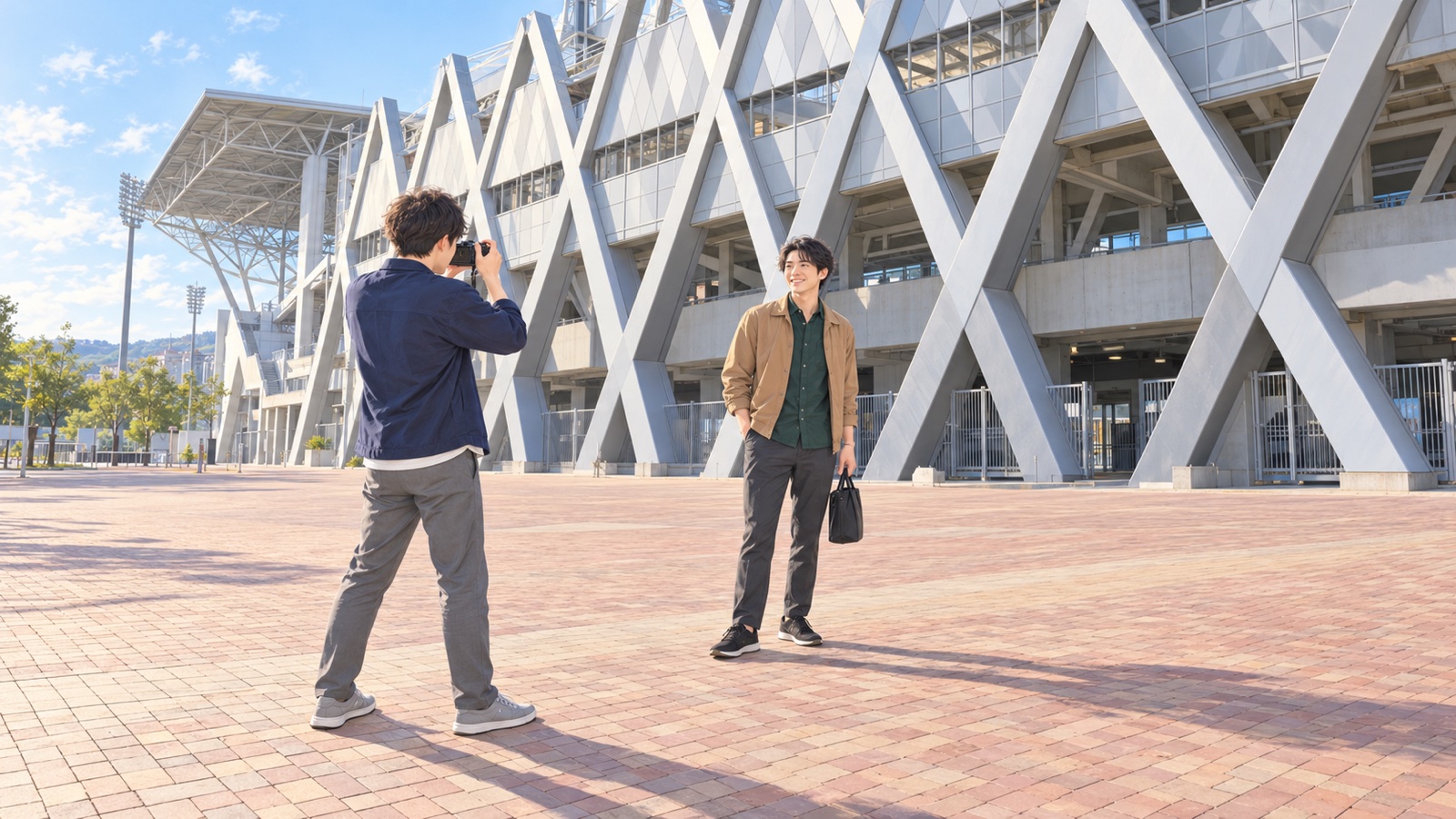
The origins of Hanazono Rugby Stadium are connected with Prince Chichibu, the younger brother of Emperor Showa, who was known as the “Prince of Sports.” In October 1928, he was traveling by train to Kashihara Jingu on the Osaka Electric Tramway—the railway now known as Kintetsu. During the trip, he encouraged the company’s executives to build a rugby ground along its line. The company approved construction on December 10 that year, and Japan’s first purpose-built rugby stadium was completed on November 22, 1929.
A temporary station, Rugby Undojo-mae, was opened for match days when the stadium opened. It became the permanent Higashi-Hanazono Station in 1967 and remains the closest station to the stadium. An international match between Japan and Canada was held here in 1932. In 1943, the roof of the main stand was removed under the Metal Collection Order, and the stadium was later requisitioned by Allied forces for a time after the war.
The stadium became the venue for the National High School Rugby Tournament in 1963. The tournament usually opens around December 27, and schools representing regions across Japan compete for the championship through the final around January 7. Higashiosaka declared itself a “Rugby Town” in 1991. After renovations in 2018, the stadium hosted four matches at the 2019 Rugby World Cup. The first was Italy versus Namibia on September 22; the last, the United States versus Tonga on October 13. Argentina versus Tonga and Georgia versus Fiji were also played here. The stadium’s current capacity is 27,345.
The 105th tournament ran from December 27, 2025, through January 7, 2026, with 56 schools competing. Toin Gakuen of Kanagawa won its sixth championship and third in a row. On August 8, 2026, the stadium also hosted a test match between Japan and Australia.
The 106th tournament is scheduled for seven days: December 27, 28, and 30, 2026, and January 1, 3, 5, and 7, 2027. Matches will be played at Hanazono Rugby Stadium and the neighboring Higashiosaka Multipurpose Ground.
The Hanazono Rugby Museum inside the stadium is open to the public Fridays and Saturdays from 10 a.m. to 3 p.m. Admission is 500 yen for adults, 200 yen for junior and senior high school students, and free for elementary school students and younger children. Its audiovisual exhibits include an introduction to the game for beginners, the history of Hanazono, and highlights from National High School Rugby Tournament finals. On public-opening days, visitors can access the South Stand, South Concourse, and museum.
On days without a tournament, stadium tours are also available by reservation for groups of four or more and last 40–50 minutes. Fees are 1,000 yen for adults, 500 yen for junior and senior high school students, and 200 yen for elementary school students. The stadium is at 1-1-1 Matsubara-minami, Higashiosaka City, an eight-minute walk north of Higashi-Hanazono Station on the Kintetsu Nara Line.
- Location
- 1-1-1 Matsubara-minami, Higashiosaka City, Osaka Prefecture
- Connection to the sport
- Japan’s first stadium built specifically for rugby, opened in 1929; venue for the National High School Rugby Tournament
- Museum hours
- Fridays and Saturdays, 10 a.m.–3 p.m.; last admission at 2:30 p.m.
- Access
- An eight-minute walk north of Higashi-Hanazono Station on the Kintetsu Nara Line
Sources:List of official materials and visitor information
280th-Tournament Memorial near Hankyu Toyonaka Station | Toyonaka Ground, Venue of the First Tournament and “Birthplace of High School Rugby”

The National High School Rugby Tournament, often called “Hanazono,” began in Toyonaka, Osaka. The first Japan Football Championship was held at the Toyonaka Ground on January 12 and 13, 1918. It was organized by the Osaka Mainichi Shimbun; the Japan Rugby Football Union had not yet been established.
The competition had two divisions: “association football,” or soccer, and “rugby football.” Three teams entered the rugby division: Third Higher School, All Doshisha, and Kyoto First Commercial School. All Doshisha won, defeating Third Higher School 19–0 and Kyoto First Commercial School 31–0. All Keio withdrew.
In recognition of the tournament, Toyonaka City calls itself the “Birthplace of High School Rugby.” The Kitashin Toyonaka Plaza outside Toyonaka Station on the Hankyu Takarazuka Line has an 80th National High School Rugby Tournament memorial. Its stone base supports a sculpture depicting a rugby ball and a player.
The Toyonaka Ground was in Tamai-cho. In 1915, it also hosted a tournament that was a forerunner of the national high school baseball championship held in summer. The former ground is now maintained as a park commemorating the birthplace of high school baseball.
- Location
- Kitashin Toyonaka Plaza in front of Hankyu Toyonaka Station, Toyonaka City, Osaka Prefecture
- Connection to the sport
- The first Japan Football Championship was held at Toyonaka Ground in 1918.
- What to see
- 80th National High School Rugby Tournament memorial
- Nearest station
- Toyonaka Station on the Hankyu Takarazuka Line
Sources:Japan Rugby Digital Museum: First Japan Football Championship, 1917 fiscal year / Toyonaka City: Recommended places to visit in Toyonaka (Birthplace of High School Rugby)
3Shimogamo Shrine’s Saita Shrine | The “First Kick” Monument Where Third Higher School Students First Kicked a Ball
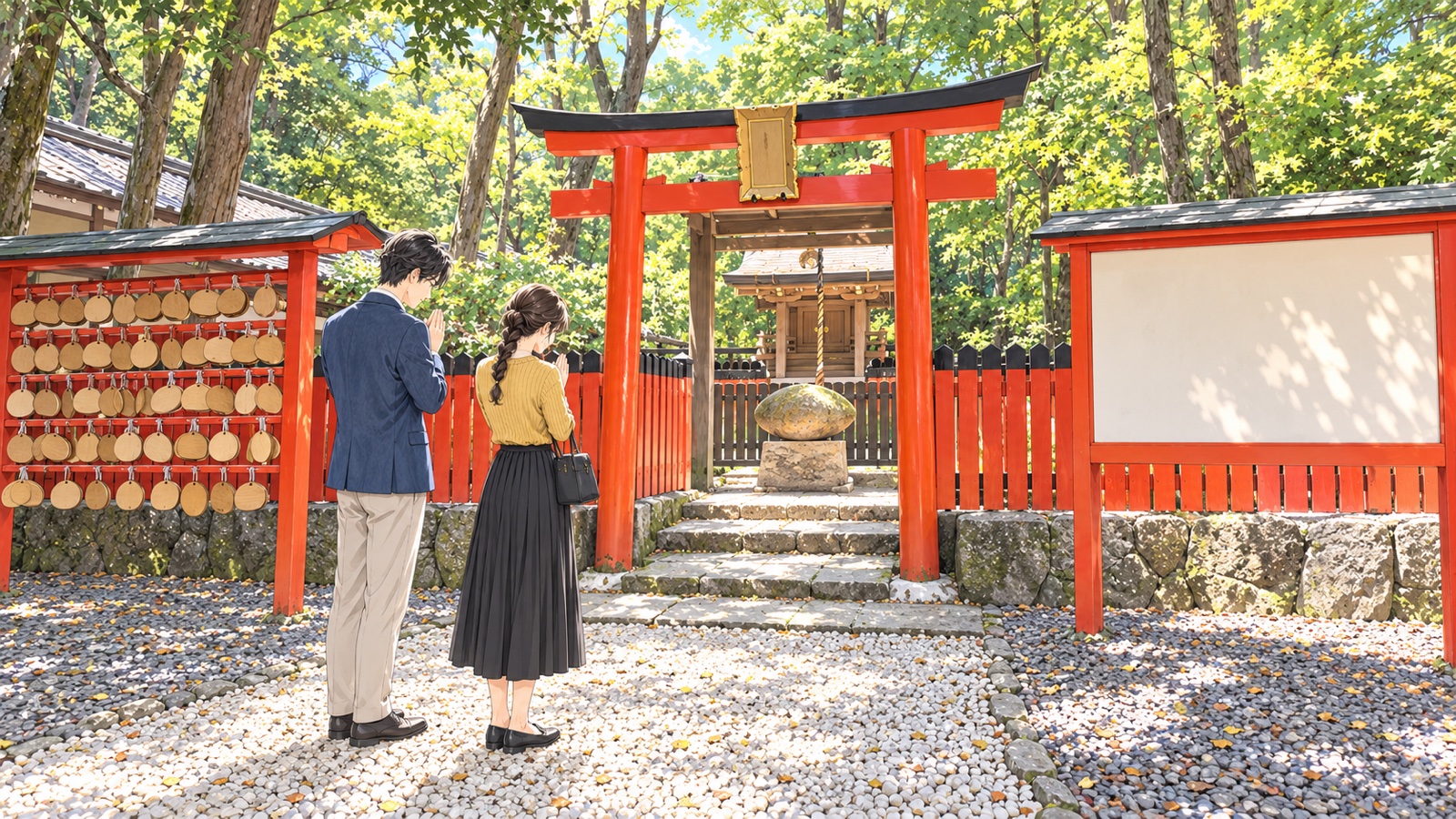
Shimogamo Shrine, formally called Kamo Mioya Shrine, is in Sakyo Ward, Kyoto City, and its grounds include Tadasu no Mori. A small stone monument inscribed “The Place of the First Kick” stands at the western edge of the forest. The shrine identifies Tadasu no Mori as the “Birthplace of Rugby in Kansai.”
It began with a ball. Susumu Majima, a member of Keio University’s football club, brought one to the lodging of his relative, Ukichi Horie. The two began kicking it around in the grounds of Shimogamo Shrine. The back of the monument records that in September 1910, Horie and three other students from Third Higher School kicked a ball here. Around 30 Third Higher School dormitory residents gathered for their first practice on the 23rd of that month. The monument was erected by volunteers from the school’s rugby alumni association.
During spring break in 1911, Keio’s captain arranged for three players to travel to Kyoto as coaches. On April 8, Keio and Third Higher School played at the Mita Tsunamachi Ground in Tokyo, and Keio won 39–0. Third Higher School’s club history describes it as the first match between Japanese teams.
Beside the monument stands Saita Shrine, dedicated to Kamumitama-no-Mikoto, the deity of rugby. The shrine was rebuilt in fall 2017 as if watching over the “Place of the First Kick,” and a relocation ceremony was held. A rugby-ball-shaped offering box is also set in front of the shrine.
On May 10, 2017, the draw for the 2019 Rugby World Cup was held at the Kyoto State Guest House. Before the draw, kemari—a traditional ball game—was demonstrated at Shimogamo Shrine. Representatives from participating countries also visited the shrine in connection with the draw. The area inside the tower gate is open from 6:30 a.m. to 5 p.m.
- Location
- Western edge of Tadasu no Mori, Shimogamo Shrine, 59 Izumikawa-cho, Sakyo Ward, Kyoto City
- Connection to the sport
- The birthplace of rugby in Kansai, where Third Higher School students first kicked a rugby ball in September 1910
- What to see
- The “Place of the First Kick” stone monument and Saita Shrine, dedicated to the deity of rugby
- Gate hours
- The area inside the tower gate is open 6:30 a.m.–5 p.m.
Sources:Shimogamo Shrine and the First Kick Rugby Memorial Association / Shimogamo Shrine: Location and opening hours / Japan Rugby Digital Museum: History of Daisan High School Rugby Football Team / Japan Rugby Digital Museum: 1910, 12th season / Japan Rugby Digital Museum: Keio versus Third Higher School, the first match between Japanese teams / Keihan Railway: Kyoto and Sports (Saita Shrine)
4Chichibunomiya Rugby Stadium | Tokyo Rugby Stadium Built by Rugby Supporters and Construction of a New Stadium to the North
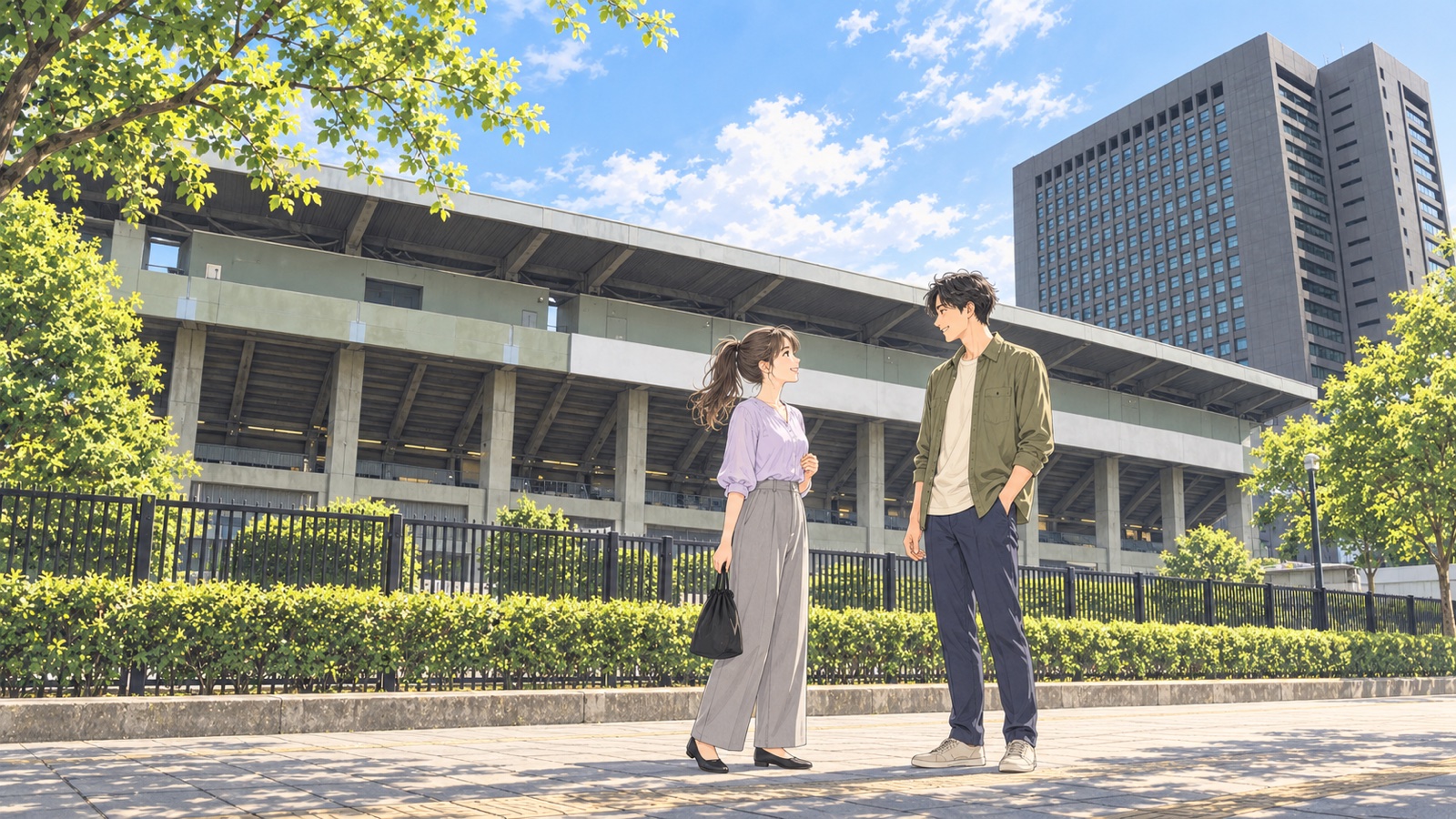
Chichibunomiya Rugby Stadium is at 2-8-35 Kita-Aoyama, Minato Ward, Tokyo, in Jingu Gaien. After the war, the Meiji Jingu Stadium was requisitioned, and the Kanto Rugby Football Union was looking for a dedicated ground. It chose the burned-out site of the former Gakushuin girls’ school, which had become a parking lot for U.S. forces.
Construction was funded through fire-insurance compensation received by then-chairman Shigeru Kayama for war damage, along with donations from university alumni. Players also volunteered on the project, and “Tokyo Rugby Stadium” was completed in November 1947. Prince Chichibu died in January 1953, and that same year the stadium was renamed Chichibunomiya Rugby Stadium in his memory.
The stadium was transferred to the Japan Sport Council in October 1962 and served as a soccer venue during the 1964 Tokyo Olympics. At a test match against England in September 1971, the crowd overflowed the stands and the grass seating was opened as well. The sellout led to major renovations, centered on the main stand and completed in 1976.
The stadium’s current capacity is 24,871, including 30 wheelchair spaces. Every seat in the West Stand facing Stadium Avenue and the East Stand by the ginkgo avenue is an individual seat. The North Stand on the Jingu Stadium side has standing room and an electronic scoreboard above it. Tifton grass is used in summer and perennial ryegrass in winter to keep the field green throughout the year.
Construction of a new rugby stadium began on February 3, 2026, north of the current site in Kasumigaoka-machi, Shinjuku Ward, next to the National Stadium. It is scheduled to open in 2030. The current stadium hosts international matches, Japan Rugby League One, and Kanto university rugby. It is a five-minute walk from Gaiemmae Station.
- Location
- 2-8-35 Kita-Aoyama, Minato Ward, Tokyo
- Connection to the sport
- A dedicated stadium completed as Tokyo Rugby Stadium in 1947 and renamed in 1953
- New stadium plan
- Construction began in February 2026 in Kasumigaoka-machi, Shinjuku Ward, to the north; opening is scheduled for 2030.
- Access
- A five-minute walk from Gaiemmae Station on the Tokyo Metro Ginza Line
Sources:Japan Sport Council: History of Chichibunomiya Rugby Stadium / Japan Sport Council: Chichibunomiya Rugby Stadium facilities / Japan Sport Council: Chichibunomiya Rugby Stadium / Japan Sport Council: Access to Chichibunomiya Rugby Stadium / Chichibunomiya Rugby Stadium Co. and others: Construction begins on the new Chichibunomiya Rugby Stadium (February 12, 2026)
5Yamashita-cho Park | A Monument to Rugby’s Birthplace Honoring the Yokohama Football Club of 1866
The first rugby club in Japan—and Asia—was founded in 1866. British soldiers stationed in Yokohama’s foreign settlement established the Yokohama Football Club in Yamashita-cho. At the time, “football” had not yet split into rugby and association football. Surviving illustrations and records indicate that the matches were closer to rugby.
An article in the January 26, 1866 issue of the Japan Times reporting the club’s founding was discovered at the Yokohama Archives of History around 2009. The April 18, 1874 issue of the British magazine The Graphic also included an illustration of a match in Yokohama. In 2015, a historian at the Yokohama Country & Athletic Club (YC&AC) contacted the World Rugby Museum, which recognized it as the oldest rugby club in Asia.
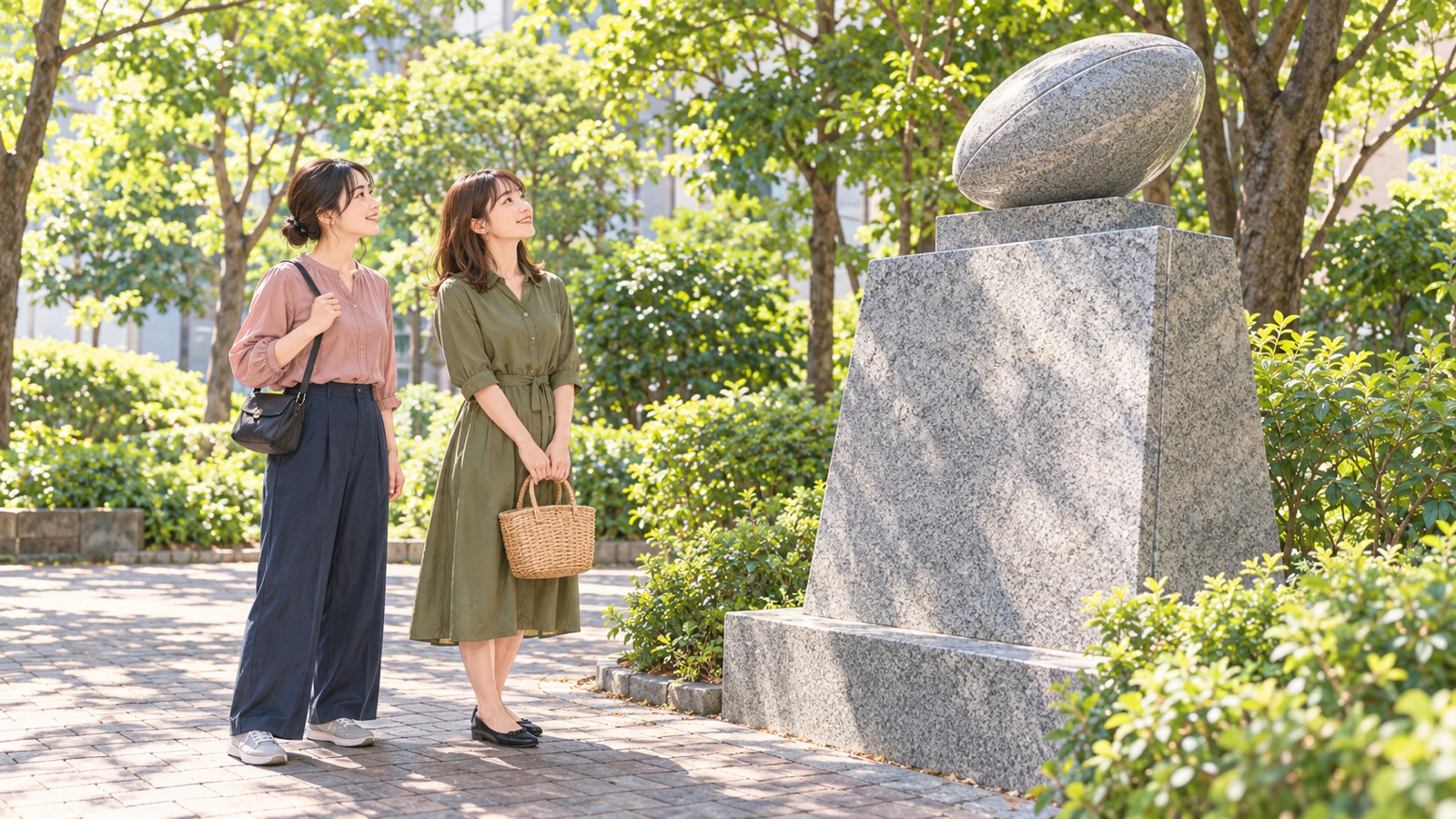
On September 5, 2019, ahead of the World Cup’s opening, a monument was unveiled at Yamashita-cho Park in Yokohama Chinatown. Its inscription identifies Yokohama as the birthplace of rugby and includes an illustration of a match played in Yokohama in 1873. The monument is on the right-hand side of the park entrance, making it easy to stop by while walking through Chinatown.
Yokohama is also said to be where Japanese people first played a rugby match. On December 7, 1901, Keio played YC&AC at Yokohama Park, on the site of today’s Yokohama Stadium. Keio lost 5–41, but in Clark’s recollection Kenjiro Shioda scored the first try by a Japanese player. Yokohama Park’s cricket ground was Japan’s first grass sports field and also hosted the country’s first international baseball and football matches.
- Location
- Yamashita-cho, Naka Ward, Yokohama, within Yokohama Chinatown
- Connection to the sport
- A place associated with the Yokohama Football Club, founded in 1866 and recognized as Asia’s oldest rugby club
- What to see
- The monument to the birthplace of rugby, unveiled on September 5, 2019
Sources:Yokohama City, Naka Ward: Illustrated map exploring Naka Ward’s history—The arrival of Western sports / Waraku Web: The rugby birthplace monument in Yokohama / Japan Rugby Digital Museum: The first match and first try in Japan
6Nissan Stadium | Plaques Commemorating Japan’s Win over Scotland and the World Cup Final, Plus Stadium Tours
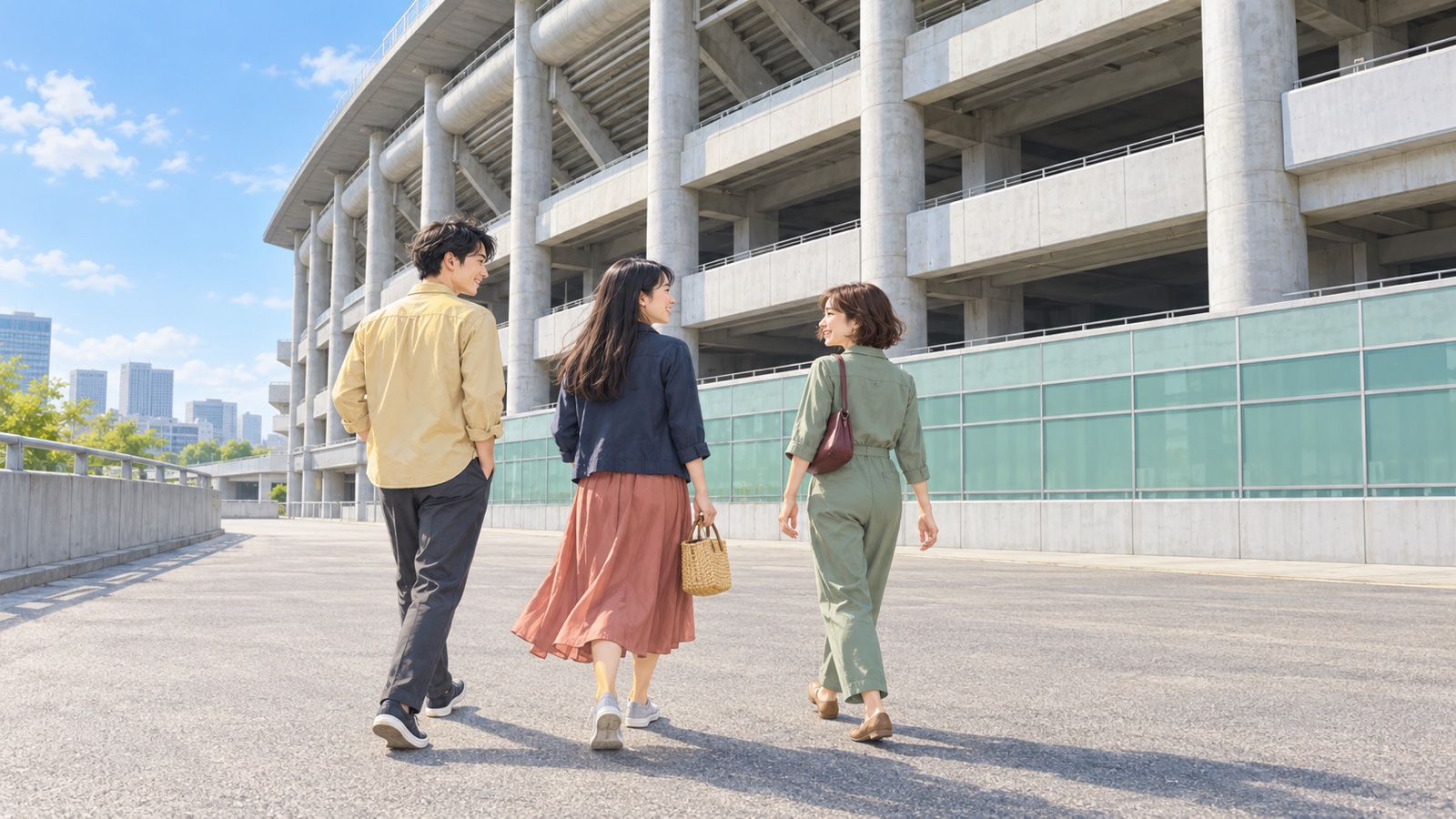
Yokohama International Stadium, commonly known as Nissan Stadium, is at 3300 Kozukue-cho, Kohoku Ward, Yokohama. It hosted six matches at the 2019 Rugby World Cup, including the final and two semifinal matches. The tournament opened here with the New Zealand team’s haka, and Japan’s match—held despite the threat of cancellation from Typhoon Hagibis—was also played at the stadium.
Japan’s match against Scotland on October 13, 2019, was confirmed on the morning of the game because of the typhoon and kicked off at 7:45 p.m. Japan won 28–21 and advanced to the knockout stage for the first time. In the final on November 2, South Africa beat England to claim its third title. Attendance of 70,103 set a tournament record and a record for the stadium.
In 2022, plaques commemorating the 2019 Rugby World Cup final and the Tokyo 2020 Olympic football final were installed at the East Gate, which already had a monument to the 2002 FIFA World Cup. Nissan Stadium became the first stadium in the world to host finals for three major tournaments. The year before the Rugby World Cup, the Bledisloe Cup between New Zealand and Australia was held in Yokohama for the first time on October 27, 2018, drawing 46,143 spectators.
A 60-minute stadium tour takes visitors through the rugby locker room, where signatures from participating teams are displayed, and the Final Museum, which presents the finals of three major tournaments. It also includes Victory Road, where visitors walk onto the field surrounded by the teams’ entrance music. Tickets cost 1,500 yen for adults and 800 yen for junior high school students and younger. The next tours are scheduled for October 30 and November 8, 2026.
- Location
- 3300 Kozukue-cho, Kohoku Ward, Yokohama
- Connection to the sport
- Venue for Japan versus Scotland and the final at the 2019 Rugby World Cup
- What to see
- The 2019 Rugby World Cup final plaque at the East Gate and the rugby locker room on the stadium tour
Sources:Kanagawa Prefecture and Yokohama City: Record of the 2019 Rugby World Cup / Yokohama City: Record of the 2019 Rugby World Cup and 2018 Bledisloe Cup / Japan Rugby Digital Museum: The ninth Rugby World Cup, 2019 / Yokohama City: Installation of stadium plaques and renewal of exhibition facilities at Nissan Stadium / Nissan Stadium: Stadium tours
7Kumagaya Rugby Stadium | Three World Cup Matches and Sakura Oval Fort, the Wild Knights’ Home Next Door
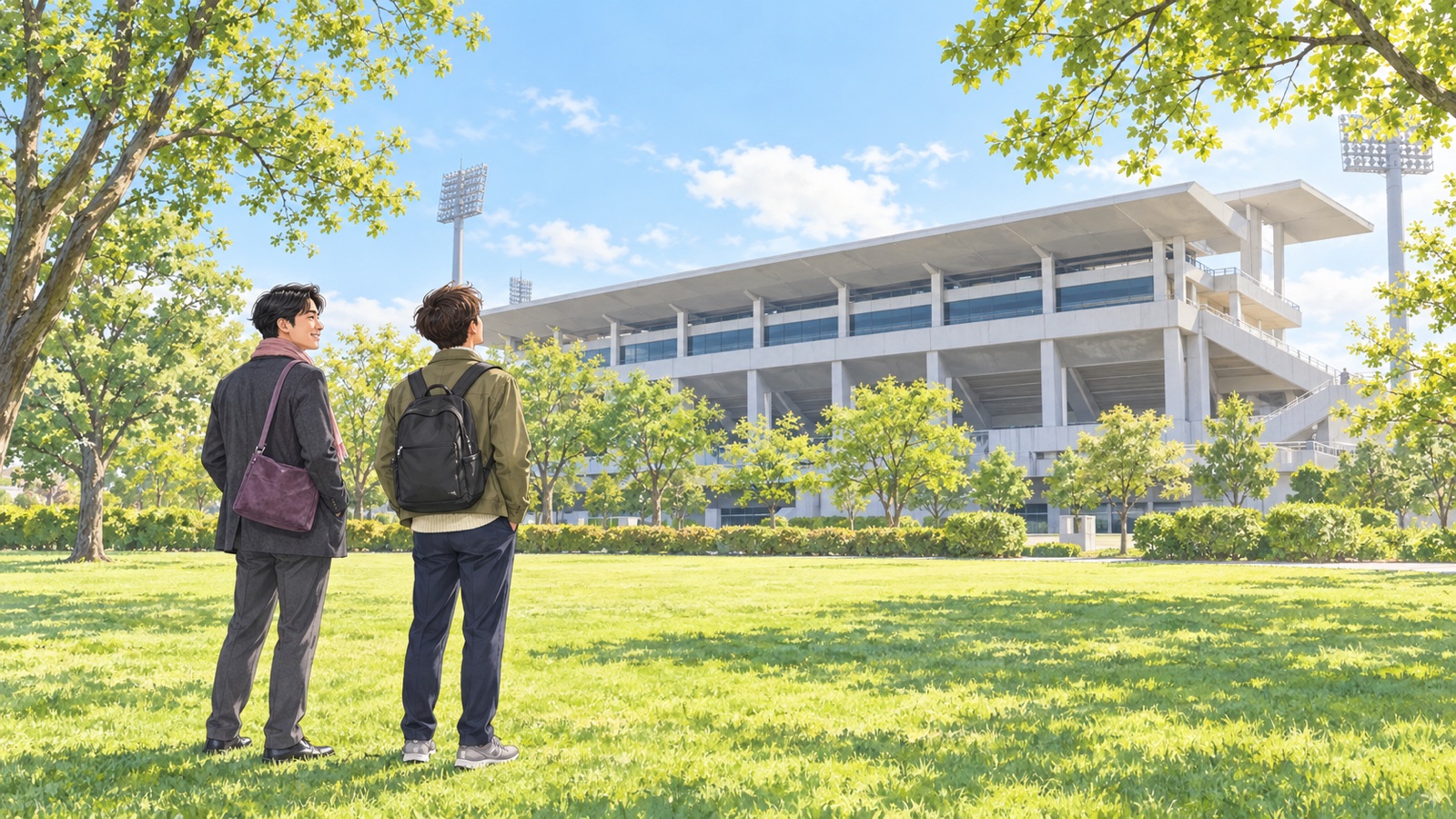
Kumagaya Sports Culture Park, at 300 Kamikawakami, Kumagaya City, Saitama Prefecture, opened in 1991 as a complex centered on its rugby stadium. An athletics stadium and the Sainokuni Kumagaya Dome were added in 2003. From the north exit of Kumagaya Station, take a Kokusai Juo Bus and get off at a stop such as Kumagaya Sports Culture Park.
On September 6, just before the 2019 Rugby World Cup, Japan played a send-off match here and lost 7–41 to South Africa. The stadium hosted three matches during the tournament. Georgia versus Uruguay on September 29 drew 24,895 people, the largest crowd in the history of a rugby stadium. Samoa versus Russia and Argentina versus the United States were also played here.
Sakura Oval Fort opened in the park in September 2021. Japan’s first multipurpose complex centered on rugby, it is the base for Japan Rugby League One’s Saitama Panasonic Wild Knights, who moved their home from Ota City in Gunma Prefecture. The facility includes the team’s training ground and clubhouse. Fans can watch regular practice up close, and the first floor of the administration building houses the Forte Bleu cafe and restaurant.
The Kumagaya Sports Hotel Park Wing in the lodging building can accommodate up to 264 guests. A team merchandise shop is in the same building. Kumagaya Rugby Stadium continues to host League One matches and also offers stadium tours.
- Location
- Within Kumagaya Sports Culture Park, 300 Kamikawakami, Kumagaya City, Saitama Prefecture
- Connection to the sport
- Host of three matches at the 2019 Rugby World Cup, with the Saitama Panasonic Wild Knights’ base next door
- Facilities on site
- Sakura Oval Fort and Kumagaya Sports Hotel Park Wing
- Access
- From the north exit of Kumagaya Station, take a Kokusai Juo Bus to Kumagaya Sports Culture Park.
Sources:Saitama Prefecture: Kumagaya Sports Culture Park / Saitama Prefecture: Results of the 2019 Rugby World Cup and other events / Panasonic: Sakura Oval Fort / Saitama Prefecture: Management of Kumagaya Sports Culture Park
8### Sugadaira Kogen | A Highland Training Destination with 101 Lodge-Owned Pitches
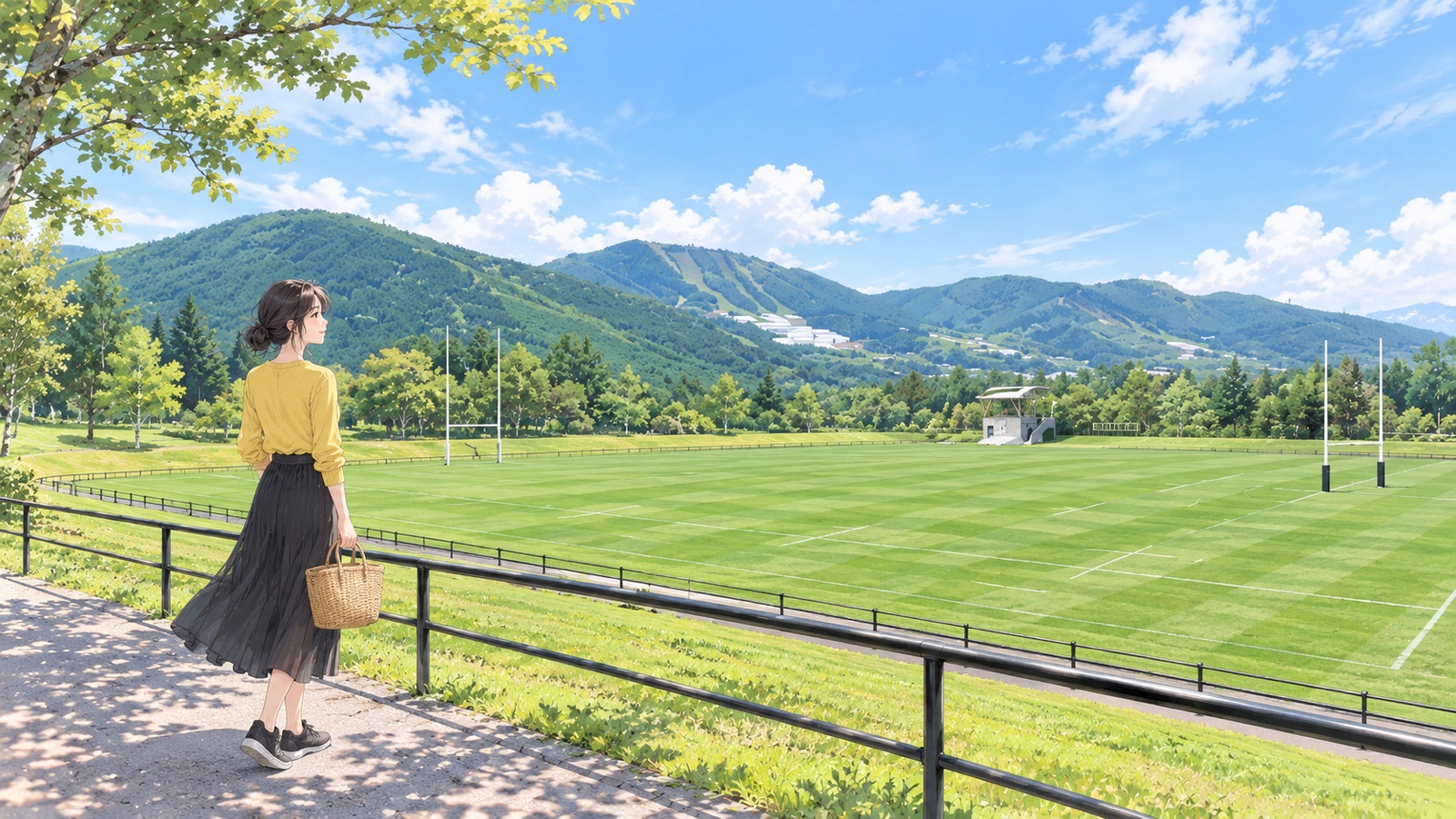
Sugadaira Kogen in Ueda City, Nagano Prefecture, is known as a “sacred place for sports camps” for rugby, skiing, and soccer. In summer, rugby teams from across Japan come here for training camps and practice on the grass fields operated by local lodgings.
Private lodgings operate 101 pitches: 88 with natural grass and 13 with artificial turf. The area has around 30 hotels and 60 inns, among other accommodations, and pitch use is included in the lodging fee. Reservations for training camps open every year on April 1 through a dedicated form on the Sugadaira Kogen Tourism Association website.
Sania Park Sugadaira in Ueda has five multipurpose fields—one main field and four sub-fields—as well as an athletics stadium with a 400-meter track. The main field’s grass seating holds 5,000 spectators. Each summer, the tourism association prepares a camp schedule. The 2026 edition went on sale July 8; the rugby schedule cost 200 yen per copy. It was also available at the Sugadaira Kogen Resort Center.
- Location
- Sugadaira Kogen, Ueda City, Nagano Prefecture
- Connection to the sport
- A summer training-camp hub where private lodgings operate 101 pitches
- Main facilities
- Five multipurpose fields and an athletics stadium at Sania Park Sugadaira
Sources:Sugadaira Kogen Tourism Association / Nagano Prefecture: Training camps and facilities in Ueda City / Sugadaira Kogen Tourism Association: Sania Park Sugadaira / Sugadaira Kogen Tourism Association: 2026 Summer Training Camp Schedule
9### Kamaishi Unosumai Memorial Stadium | A World Cup on the Site of Tsunami-Damaged Schools, with Seats Made from Trees Lost to Wildfire
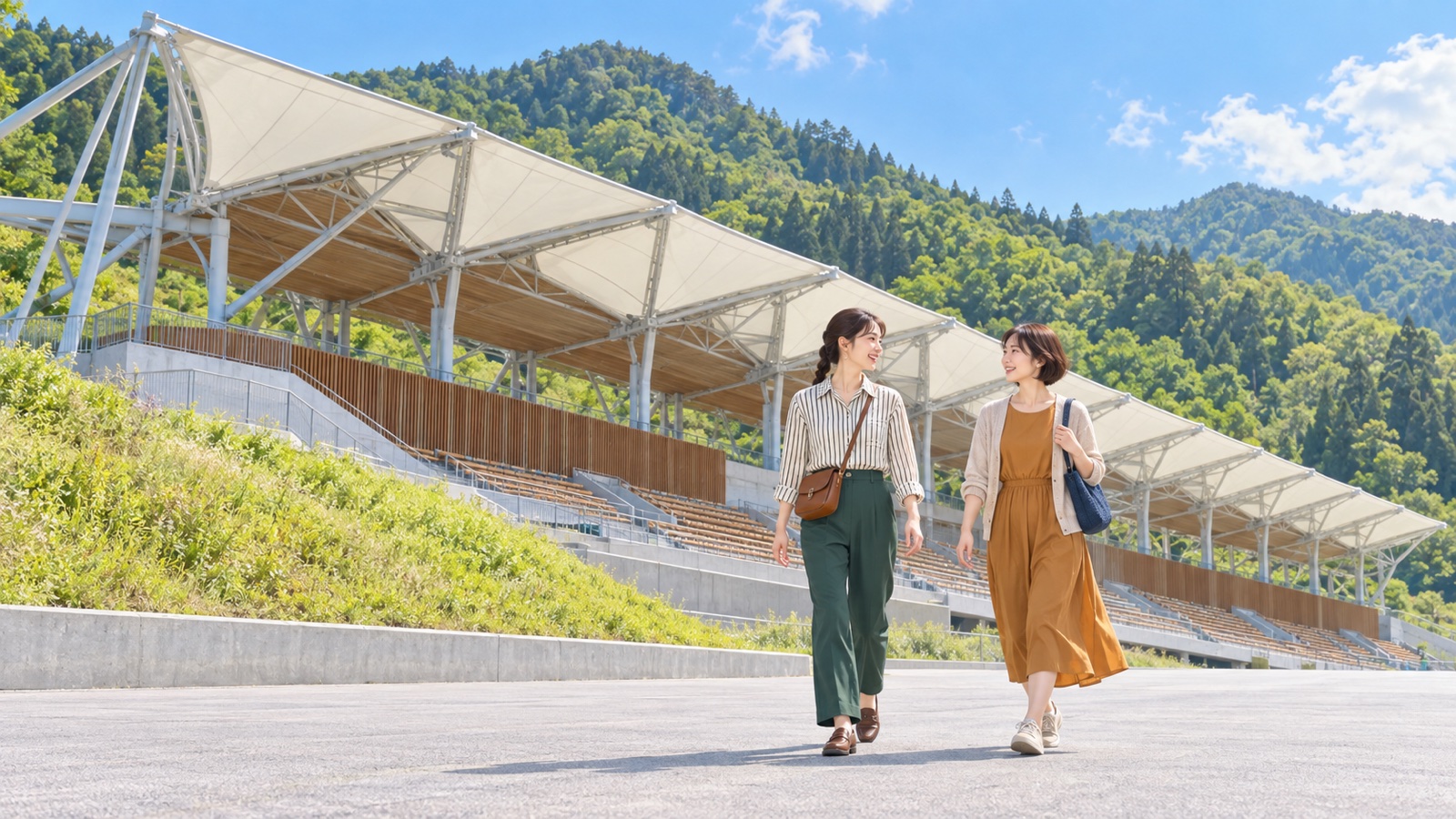
Kamaishi Unosumai Memorial Stadium in Kamaishi City, Iwate Prefecture, stands on the former sites of Kamaishi Higashi Junior High School and Unosumai Elementary School. During the 2011 Great East Japan Earthquake, around 600 elementary and junior high school students, including children from both schools, escaped by holding hands and survived. Their initiative in evacuating was reported around the world.
Kamaishi is the hometown of the Nippon Steel Kamaishi rugby team, which won the Japan Championship seven years in a row and was nicknamed the “Iron Men of the North.” The city was selected in March 2015 as a host city for the 2019 Rugby World Cup. It was the only one of Japan’s 12 host cities without a stadium, so this new stadium was built as part of the recovery effort. It opened on August 19, 2018, with goals that included passing on the memory of the disaster and knowledge of disaster preparedness, as well as preserving the legacy of the team’s seven consecutive championships and the World Cup.
A total of 14,025 people attended Fiji versus Uruguay on September 25, 2019; Uruguay won 30–27. Namibia versus Canada, scheduled for October 13, was canceled because of Typhoon Hagibis.
The seats include lumber from about 800 Japanese cedar trees damaged in the Ozaki Peninsula wildfire in Kamaishi in May 2017. There are 4,990 wooden seats. The 600 blue “Kizuna Seats” in the front row of the main stand were donated by Kitakami City—which received seats from the former National Stadium—Kumamoto Prefecture, and Tokyo Dome.
The stadium has 6,000 permanent seats and was expanded to 16,000 for the World Cup with 10,000 temporary seats. Behind the west parking lot is an emergency evacuation site at an elevation of 20 meters above sea level. On September 19 and 20, 2026, the city held “Rugbig Dream: Kamaishi Kizuna Day” to commemorate hosting the World Cup. Nippon Steel Kamaishi Seawaves, the League One team formed in 2001 with Kamaishi as its home and carrying on the legacy of Nippon Steel Kamaishi, played a Kizuna Match on the 19th.
Anyone can apply for an inspection or visit. Tours start at 11 a.m., 2 p.m., and 4 p.m.; submit an application to the Kamaishi City Culture and Sports Division. The address is 5-1, 18th Chiwari, Unosumai-cho, Kamaishi City.
- Location
- 5-1, 18th Chiwari, Unosumai-cho, Kamaishi City, Iwate Prefecture
- Connection to the sport
- A stadium built on the former school sites for the 2019 Rugby World Cup
- What to see
- 4,990 wooden seats made from wildfire-damaged trees and 600 Kizuna Seats
- Visiting
- Tours at 11 a.m., 2 p.m., and 4 p.m.; apply in advance to the Kamaishi City Culture and Sports Division.
Sources:Kamaishi Unosumai Memorial Stadium: Story / Kamaishi Unosumai Memorial Stadium: Facilities guide / Kamaishi Unosumai Memorial Stadium: Inspections and visits / Iwate Prefecture: 2019 Rugby World Cup in Iwate and Kamaishi / Kamaishi Unosumai Memorial Stadium: Rugbig Dream 2026 / Nippon Steel Kamaishi Seawaves: Team introduction
10### Kamaishi Local Memorial Hall (Inochi wo Tsunagu Mirai-kan) | Exhibits on the Disaster in Unosumai, Across from the Stadium’s Nearest Station
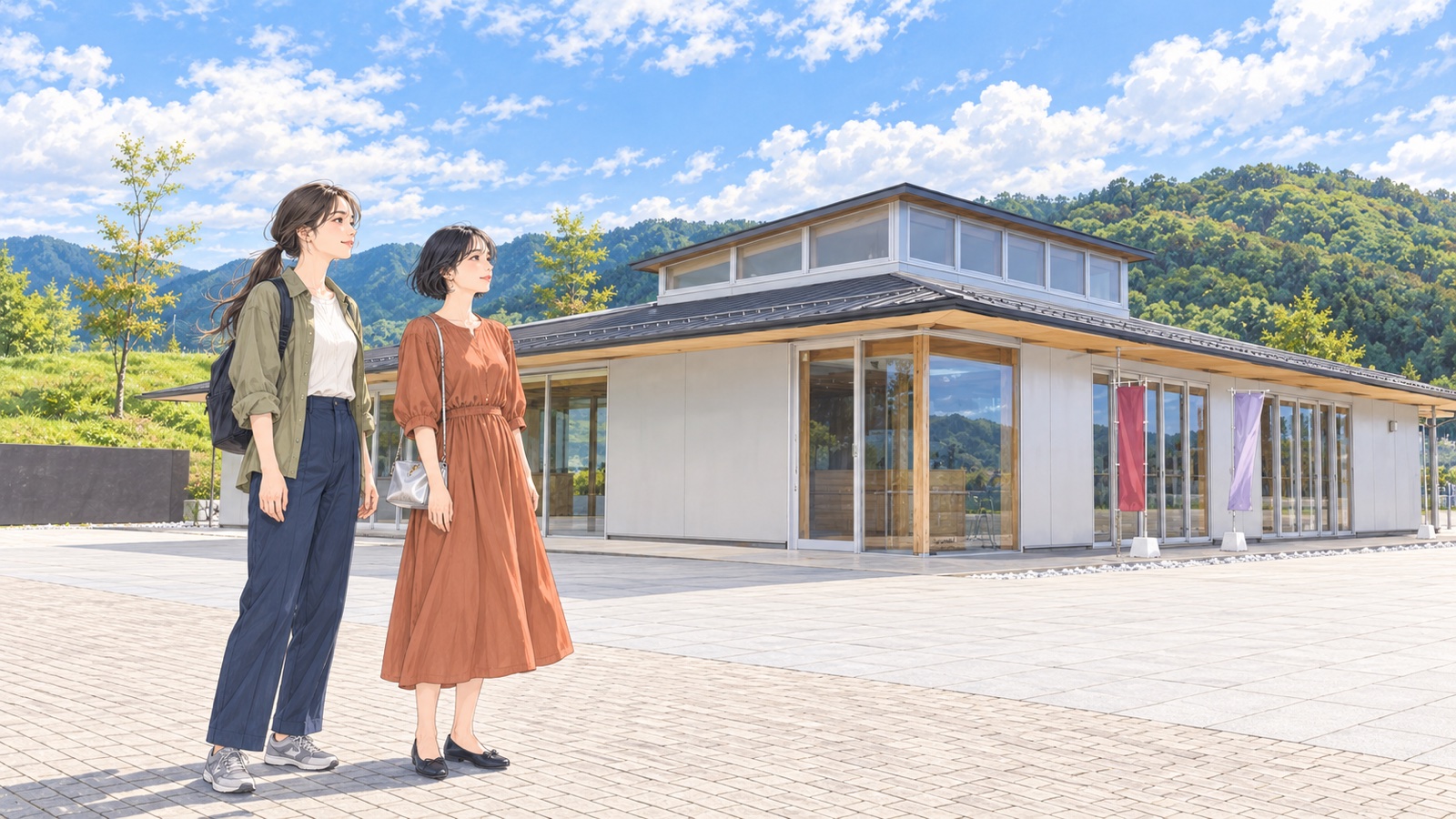
Across from Unosumai Station on the Sanriku Railway Rias Line are three facilities known as Unosumai Tomosu: Inochi wo Tsunagu Mirai-kan, a disaster memorial facility; Kamaishi Inori no Park, which commemorates those who lost their lives; and Unosato Koryukan, a tourism and community center. The address is 4-901-2 Unosumai-cho, Kamaishi City.
The exhibit rooms at Inochi wo Tsunagu Mirai-kan introduce the events and lessons of the Great East Japan Earthquake and Kamaishi’s disaster-preparedness education. The materials library offers books about the disaster and donated photographs. The center is open 9:30 a.m.–5:30 p.m., or until 5 p.m. from November through February. It is closed Wednesdays and during the year-end and New Year holidays. Admission is free.
With an advance reservation, visitors can take a free 30-minute guided tour of the exhibits. Storytellers who experienced the disaster also share their accounts. The local-experience programs offer a walk retracing evacuation routes, a stadium visit, or a visit to a floodgate and seawall. Participants walk through tsunami-affected areas while hearing personal accounts. Programs last 90 minutes or two and a half hours, and reservations are required at least one week in advance.
- Location
- Inside Unosumai Tomosu, 4-901-2 Unosumai-cho, Kamaishi City, Iwate Prefecture
- Connection to the sport
- A facility across from the stadium’s nearest station that presents the disaster and recovery in Unosumai
- Opening hours and closing days
- 9:30 a.m.–5:30 p.m.; until 5 p.m. November–February. Closed Wednesdays and during the year-end and New Year holidays.
- Admission
- Free. Local-experience programs require a reservation at least one week in advance.
Sources:Unosumai Tomosu / Unosumai Tomosu: Inochi wo Tsunagu Mirai-kan
Learn More About Rugby’s Origins | From Yokohama, Keio, and Kyoto to the “Hanazono” High School Tournament
Many of the 10 locations connect with the path rugby took from its beginnings in Meiji-era Yokohama through Keio to schools in Kyoto and Osaka. Here is an overview of the people involved and the history of the high school tournament held each winter.
People Who Spread Rugby in Japan
Edward Bramwell Clarke
Born in Yokohama in 1874, Clarke studied at schools including Victoria Public School in the foreign settlement. He earned a degree from the University of Cambridge and joined Keio Gijuku as an instructor in 1899. In 1903, as club president, he brought the rugby club into the university’s athletic association. He died in 1934 and is buried at the Kobe Municipal Foreign Cemetery.
Ginnosuke Tanaka
Clarke’s close friend from Cambridge. In fall 1899, he and Clarke taught rugby to students at Keio Gijuku.
Prince Chichibu
The younger brother of Emperor Showa, he was known as the “Prince of Sports.” He helped inspire the construction of Hanazono Rugby Stadium, and his name lives on in Chichibunomiya Rugby Stadium.
Susumu Majima and Ukichi Horie
Keio rugby club member Susumu Majima brought a ball to the lodging of his relative, Ukichi Horie, a student at Third Higher School. The two kicked it around in the grounds of Shimogamo Shrine, leading to the formation of the school’s rugby club.
Shigeru Kayama
Chairman of Tokyo Rugby Stadium’s construction committee. He put his fire-insurance compensation for war damage toward construction of the stadium, laying the foundation for what is now Chichibunomiya Rugby Stadium.
Kenjiro Shioda
A Keio Gijuku player said to have scored the first try by a Japanese player, in a match against YC&AC at Yokohama Park on December 7, 1901.
Sources:Keio University: Items associated with E. B. Clarke, the father of Japanese rugby / Japan Rugby Digital Museum: The year rugby began in Japan / Japan Sport Council: History of Chichibunomiya Rugby Stadium / Japan Rugby Digital Museum: History of the Third Higher School rugby club
From Practice at Sendai-ga-hara to the First Match at Yokohama Park
In fall 1899, English instructor Edward Bramwell Clarke and his classmate Ginnosuke Tanaka began teaching rugby to Keio Gijuku students, who had little to do during the autumn and winter. This is considered the beginning of rugby in Japan. Because the Mita athletic ground was hard and cramped, the first practice sessions took place on the grassy plain of Sendai-ga-hara in Azabu.
Keio University’s Rugby Football Club marked its 125th anniversary in 2024 with a ceremony in Hiyoshi on November 24. Keio considers the club a “root school” of Japanese rugby. In 2025, Keio received items associated with Clarke from someone who had been in contact with Clarke’s granddaughter.
The donated items include a graduation cap bearing the pelican crest of Corpus Christi College, Cambridge. They also include the oldest surviving rugby club patch, dated “1902–04,” and a bronze ball believed to be a 1931 commemorative item marking 30 years since rugby was introduced to Japan. The items were displayed at the Keio University History Museum on the Mita Campus through March 2, 2026.
Sources:Japan Rugby Digital Museum: The year rugby began in Japan, 1899 fiscal year / Keio University: Ceremony marking the rugby club’s 125th anniversary / Keio University: Items associated with Clarke
From the First Tournament in Toyonaka to the 106th at Hanazono
The tournament began in Toyonaka and has continued at Hanazono Rugby Stadium since 1963. The 106th tournament is organized by the All Japan High School Athletic Federation, Japan Rugby Football Union, Osaka Prefecture and its Board of Education, and the Mainichi Shimbun. The executive committee’s tournament office will be located inside Hanazono Rugby Stadium during the event.
Participating schools are determined through prefectural qualifiers. On September 20, 2026, Sapporo Yamanote defeated Ritsumeikan Keisho in the South Hokkaido final, earning its 23rd Hanazono appearance and first in two years.
Sources:All Japan High School Athletic Federation: 106th tournament / Rugby Republic: 106th tournament, South Hokkaido qualifier
The New Chichibunomiya’s Design and a Day of the World Cup in Kamaishi | A Roofed Rugby Stadium and the Record of a Match at the Recovery Stadium
A new stadium is under construction on the north side of Chichibunomiya Rugby Stadium, completed in 1947. This section covers the design of the new Chichibunomiya, which is aiming to open in 2030, and a day when the Rugby World Cup was held at Kamaishi Unosumai Memorial Stadium.
The New Chichibunomiya Rugby Stadium | Twin Main Stands and a Scrum-Inspired Pillar Symbol
The new Chichibunomiya Rugby Stadium will be an eight-story building above ground and one story below, standing 46.25 meters high. It will hold about 15,000 people for rugby matches and up to about 25,000 for concerts and other events. Its “twin main stands” will have matching east and west sides. Plans also include a “Rugby Tower” to watch play from a corner of the field and a “Field Bar” at field level.
The bow-shaped roof carries forward the design of the current stadium’s seating. Its eaves will be kept around the same height as those of the National Stadium and the Meiji Memorial Picture Gallery. The large video board inside will be 50 meters wide and 12 meters high.
The “Scrum Arch,” the symbol created for the stadium’s opening, is based on the curve of the entrance facade. The pillars standing together represent players forming a scrum. The five spaces between them are shaped like rugby balls and symbolize the sport’s core values: integrity, passion, solidarity, discipline, and respect.
The project company, Chichibunomiya Rugby Stadium Co., is formed by four companies: Kajima Corporation as the representative company, Mitsui Fudosan, Tokyo Tatemono, and Tokyo Dome. The facility will be transferred to the Japan Sport Council, while the project company will operate it for 30 years. Sumitomo Mitsui Financial Group is the top partner, and the sub-name “SMBC Olive SQUARE” is scheduled to be used from the start of operations in May 2030.
A museum on the north side will also present the history of Japanese sports. The Chichibu Memorial Sports Museum has been closed since 2014 during reconstruction of the National Stadium. In 2022, the Japan Sport Council announced plans to reopen it inside the new rugby stadium.
Sources:Chichibunomiya Rugby Stadium Co. and others: Construction begins on the new Chichibunomiya Rugby Stadium / New Chichibunomiya Rugby Stadium: SMBC Olive SQUARE / Japan Sport Council: Closure and reopening of the Chichibu Memorial Sports Museum / Japan Sport Council: Draft basic plan for the new Chichibunomiya Rugby Stadium
September 25 in Kamaishi | A Match Before 14,000 Fans and the Canceled Game on October 13
On September 25, 2019, the Crown Prince and Crown Princess Akishino, the tournament’s honorary patrons, attended Fiji versus Uruguay in Kamaishi. Before the match, local children who had been invited held message flags expressing gratitude for recovery support and sang “Letters of Thanks.” After the teams entered, the crowd observed a moment of silence, and spectators waved large traditional fishing flags alongside the two nations’ flags. The Blue Impulse aerobatic team also performed overhead.
The fan zone at Kamaishi Civic Hall welcomed 5,323 visitors on match day. Two months earlier, on July 27, 2019, Japan had beaten Fiji 34–21 at the Pacific Nations Cup, which also served as a test event, before a crowd of 13,135.
On October 13, as Typhoon Hagibis approached, a heavy-rain emergency warning was issued at 12:40 a.m. and the match was canceled at 5:30 a.m., six hours and 45 minutes before kickoff. Canada’s team volunteered to remove mud in the city, while Namibia’s team held an exchange event to encourage residents of disaster-stricken Miyako City.
From 2022 to 2023, Kamaishi City released an official video on its “Rugby Town Kamaishi” channel looking back at Nippon Steel Kamaishi’s seven consecutive championships and matches at the Recovery Stadium.
Sources:Iwate Prefecture: 2019 Rugby World Cup in Iwate and Kamaishi / Kamaishi Unosumai Memorial Stadium: Promotional videos
From Yokohama’s Club to the New Chichibunomiya | A History of Rugby’s Sacred Sites in Japan
A timeline from the founding of the Yokohama Football Club in 1866 and the start of play at Keio in 1899 to the opening of Hanazono and Chichibunomiya, the 2019 Rugby World Cup in Japan, and plans for the new Chichibunomiya Rugby Stadium.
- 1866
British troops stationed in Japan establish the Yokohama Football Club in Yamashita-cho.Yokohama - 1899
Fall Clarke and Ginnosuke Tanaka teach rugby to students at Keio Gijuku.Keio - 1901
December 7 Keio plays YC&AC at Yokohama Park; Kenjiro Shioda is said to have scored the first try by a Japanese player.Yokohama - 1910
September Third Higher School students first kick a ball in Tadasu no Mori.Kyoto - 1911
April 8 Keio plays Third Higher School; the latter’s club history calls it the first match between Japanese teams.Keio / Third Higher School - 1918
January 12 The first Japan Football Championship opens at Toyonaka Ground.Toyonaka - 1929
November 22 Hanazono Rugby Stadium, Japan’s first purpose-built rugby stadium, is completed.Hanazono - 1947
November Tokyo Rugby Stadium is completed on the former site of the Gakushuin girls’ school.Chichibunomiya - 1953
Tokyo Rugby Stadium is renamed Chichibunomiya Rugby Stadium.Chichibunomiya - 1963
The National High School Rugby Tournament moves to Hanazono Rugby Stadium.Hanazono - 1991
A complex centered on a rugby stadium opens at Kumagaya Sports Culture Park.Kumagaya - 2015
March Kamaishi City is selected as a host city for the 2019 Rugby World Cup.Kamaishi - 2017
May 10 The draw for the 2019 Rugby World Cup is held at the Kyoto State Guest House.Kyoto - 2018
August 19 Kamaishi Unosumai Memorial Stadium opens.Kamaishi - 2019
September 5 A monument to Yokohama’s rugby origins is unveiled at Yamashita-cho Park.Yokohama - 2019
October 13 Japan defeats Scotland in Yokohama; the match in Kamaishi is canceled because of the typhoon.Rugby World Cup - 2019
November 2 South Africa wins the Rugby World Cup final in Yokohama.Rugby World Cup - 2021
September Sakura Oval Fort opens in Kumagaya.Kumagaya - 2026
January 7 Toin Gakuen wins its third consecutive title at the 105th National High School Rugby Tournament.Hanazono - 2026
February 3 Construction begins on the new Chichibunomiya Rugby Stadium.Chichibunomiya - 2026
August 8 Japan plays Australia at Hanazono.Hanazono - 2026
December 27 The 106th National High School Rugby Tournament is scheduled to open at Hanazono.Hanazono - 2030
May The new indoor, all-weather Chichibunomiya Rugby Stadium is scheduled to begin operations.Chichibunomiya
Sources:List of official materials and visitor information
Lab Notes | A Business Perspective: Hanazono Built Along a Railway and Kamaishi Seats Made from Wildfire-Damaged Trees
Hanazono Rugby Stadium was built by the Osaka Electric Tramway along its railway line. The temporary station that opened only on match days became the permanent Higashi-Hanazono Station in 1967. In Kamaishi, around 800 local cedar trees burned in a wildfire were made into seats, and “Kizuna Seats” donated from around Japan were installed in the front rows.
Hanazono and Kamaishi share a connection to local history in the very way their stadiums came about, including the creation of a nearest station and the use of locally sourced cedar. Kamaishi explains the stadium’s origins on its official website and offers a contact point for visit requests, helping visitors learn the story even on days without a match.
Related Lab Notes article:Travel agencies and tourism product design
Sources
- Osaka Convention & Tourism Bureau: Japan’s Rugby Mecca (Hanazono Rugby Stadium)
- Mitsui Sumitomo Trust Real Estate: Exploring history along the Kintetsu Nara Line
- Higashiosaka Hanazono Rugby Stadium: Overview
- Higashiosaka Hanazono Rugby Stadium: Rugby Museum and stadium tours
- Higashiosaka Hanazono Rugby Stadium: Access
- nippon.com: Higashiosaka Hanazono Rugby Stadium
- All Japan High School Athletic Federation: 2026 tournament information (106th National High School Rugby Football Tournament)
- Yokohama City: Report on Toin Gakuen’s victory at the 105th National High School Rugby Football Tournament
- Rugby Republic: 106th National High School Tournament, South Hokkaido qualifier
- Osaka Prefecture: Lipovitan D Challenge Cup 2026, Japan versus Australia
- Toyonaka City: Recommended places to visit in Toyonaka
- Japan Rugby Football Union: Japan Rugby Digital Museum
- Japan Rugby Digital Museum: The year rugby began in Japan, 1899 fiscal year
- Japan Rugby Digital Museum: The first match and first try in Japan
- Japan Rugby Digital Museum: Keio versus Third Higher School, the first match between Japanese teams
- Japan Rugby Digital Museum: First Japan Football Championship
- Japan Rugby Digital Museum: History of Daisan High School Rugby Football Team
- Japan Rugby Digital Museum: 1910, 12th season
- Japan Rugby Digital Museum: History of the Rugby World Cup
- Shimogamo Shrine and the First Kick Rugby Memorial Association
- Shimogamo Shrine (Kamo Mioya Shrine)
- Keihan Railway: Kyoto and Sports
- Japan Sport Council: Chichibunomiya Rugby Stadium
- Japan Sport Council: History of Chichibunomiya Rugby Stadium
- Japan Sport Council: Chichibunomiya Rugby Stadium facilities
- Japan Sport Council: Access to Chichibunomiya Rugby Stadium
- Chichibunomiya Rugby Stadium Co., Kajima Corporation, Mitsui Fudosan, Tokyo Tatemono, and Tokyo Dome: Construction begins on the new Chichibunomiya Rugby Stadium (February 12, 2026)
- New Chichibunomiya Rugby Stadium: SMBC Olive SQUARE
- Japan Sport Council: Draft basic plan for the new Chichibunomiya Rugby Stadium
- Japan Sport Council: Chichibunomiya Memorial Sports Museum outreach exhibition
- Yokohama City, Naka Ward: Illustrated map exploring Naka Ward’s history—The arrival of Western sports
- Waraku Web: The beginnings of rugby in Japan and the Yokohama monument
- Kanagawa Prefecture and Yokohama City: Record of the 2019 Rugby World Cup
- Yokohama City: Record of preparations for the 2019 Rugby World Cup
- Yokohama City: Installation of stadium plaques and renewal of exhibition facilities at Nissan Stadium
- Nissan Stadium: Stadium tours
- Saitama Prefecture: Kumagaya Sports Culture Park
- Saitama Prefecture: Results of the 2019 Rugby World Cup and other events
- Saitama Prefecture: Management of Kumagaya Sports Culture Park
- Panasonic: Sakura Oval Fort
- Sugadaira Kogen Tourism Association
- Nagano Prefecture: Training camps and facilities in Ueda City
- Kamaishi Unosumai Memorial Stadium
- Kamaishi Unosumai Memorial Stadium: Story
- Kamaishi Unosumai Memorial Stadium: Facilities guide
- Iwate Prefecture: 2019 Rugby World Cup in Iwate and Kamaishi
- Kamaishi Unosumai Memorial Stadium: Rugbig Dream—Kamaishi Kizuna Day 2026
- Nippon Steel Kamaishi Seawaves: Team introduction
- Unosumai Tomosu: Inochi wo Tsunagu Mirai-kan
- Keio University: Ceremony marking the rugby club’s 125th anniversary
- Keio University: Items associated with E. B. Clarke, the father of Japanese rugby
Event dates, opening hours, and ticket information are current as of writing. Check each official website for the latest information before your visit.
FAQ
Why is the National High School Rugby Tournament called “Hanazono”?
Higashiosaka Hanazono Rugby Stadium has hosted the tournament since 1963. Matches are held there from late December through around January 7. The 105th tournament ran from December 27, 2025, through January 7, 2026, at Hanazono Rugby Stadium and the neighboring Higashiosaka Multipurpose Ground, with 56 schools competing.
When is the 2026 National High School Rugby Tournament?
The 106th tournament is scheduled for seven days: December 27, 28, and 30, 2026, and January 1, 3, 5, and 7, 2027. Matches will be held at Higashiosaka Hanazono Rugby Stadium and the Higashiosaka Multipurpose Ground.
When and why was Hanazono Rugby Stadium built?
In October 1928, Prince Chichibu encouraged executives of the Osaka Electric Tramway—the company now known as Kintetsu—while traveling by train to Kashihara Jingu to build a rugby stadium. The company approved the project on December 10 that year, and Japan’s first purpose-built rugby stadium was completed on November 22, 1929.
When can I visit the Hanazono Rugby Museum?
It is open to the public Fridays and Saturdays from 10 a.m. to 3 p.m., with last admission at 2:30 p.m. Admission is 500 yen for adults, 200 yen for junior and senior high school students, and free for elementary school students and younger. Opening dates are announced on the Hanazono Rugby Stadium schedule.
Can I still watch matches at Chichibunomiya Rugby Stadium?
The current stadium is used for international matches, Japan Rugby League One, and Kanto university rugby. Construction of a new stadium began to its north on February 3, 2026, and the new venue is scheduled to open in 2030.
What kind of facility will the new Chichibunomiya Rugby Stadium be?
It is planned as Japan’s first indoor, all-weather rugby stadium, with capacity for about 15,000 at rugby matches and up to about 25,000 at concerts and other events. Plans include matching east and west “twin main stands” and a 50-meter-wide video board. Its sub-name will be “SMBC Olive SQUARE.”
Where did rugby in Japan begin?
In 1866, British troops stationed in Yokohama formed the Yokohama Football Club in Yamashita-cho. Rugby for Japanese players is said to have begun in fall 1899, when E. B. Clarke, an English instructor at Keio Gijuku, and Ginnosuke Tanaka taught students the game. In September 1910, students from Third Higher School kicked a ball in Tadasu no Mori in Kyoto, helping rugby spread in Kansai.
Can I visit Kamaishi Unosumai Memorial Stadium?
Anyone can apply for an inspection or visit. Tours start at 11 a.m., 2 p.m., and 4 p.m.; send an application to the Kamaishi City Culture and Sports Division. Inochi wo Tsunagu Mirai-kan in front of the station also offers local-experience programs that include a stadium visit, with reservations required at least one week ahead.
More in Pilgrimage

From the North Country Pilgrimage: 10 Places in Furano and Rausu

Southern All Stars Pilgrimage Guide: 9 Locations in Chigasaki, Yokohama & Enoshima Tied to Songs & Film
