

From the North Country Pilgrimage: 10 Places in Furano and Rausu
In the forests of Rokugo, Furano, you can visit the log cabin built by Goro Kuroita. Houses made from stone and discarded objects are also open as filming sites from From the North Country. Their windows, walls, and materials reveal the homes where Goro lived with his children Jun and Hotaru.
Alongside the houses, this guide introduces 10 places, from Furano’s station, shrines, and restaurants to Jun’s Banya, a recreation in Rausu. The facilities in Rokugo close in winter, so the season of your visit matters.
Ten Places to Trace the Homes, Town, and Lives
Public attractions in the Rokugo area of Furano close for winter from late November and have seasonal hours. The 10 places include the three house attractions in Rokugo, restaurants, a shrine and station in central Furano, a lavender field in Nakafurano, and Jun’s Banya in Shiretoko’s Rausu area. These are current visitor sites, distinct from places whose access has changed, such as Fukiage Open-Air Bath, which is closed, and the former Nunobe Station, where train service has been discontinued.
① Rokugo Forest
This attraction preserves Goro’s log cabin, which he began building in Episode 17 of the TV series and completed, as well as the third house, where Jun installed a wind turbine to generate electricity.
Explore Rokugo Forest② Goro’s Stone House and the First House
This open-air attraction includes the home Goro built by stacking stones from the fields after spending his money on an event involving Jun, and a reconstruction of the Kuroita family’s first home.
Explore Goro’s Stone House and the First House③ The House He Picked Up — And the Town
Visitors can see the house Goro built for Yukiko from scrap and unwanted materials in 2002: Testament, as well as the homes built for Jun and Yui after the series ended.
Explore The House He Picked Up — And the Town④ Onoda Soba
A soba restaurant in Rokugo that served as an izakaya and banquet hall in the drama and also provided props. Visitors can still enjoy meals such as chicken soba.
Explore Onoda Soba⑤ Kumagera
A local-cuisine restaurant in central Furano where Seikichi promises Goro a drink in Episode 15 of the TV series, and where the family discusses Hotaru’s wedding in ’98 History.
Explore Kumagera⑥ Jun’s Banya
A seaside restaurant recreating the fishermen’s hut featured in the Rausu storyline of 2002: Testament, serving seafood set meals distinctive to Rausu.
Explore Jun’s Banya⑦ Torinuma Park
A spring-fed park where Jun and Shu spend time together in a boat in ’98 History. Visitors can stroll the paths and look out over the clear pond and surrounding trees.
Explore Torinuma Park⑧ JR Furano Station
Furano’s gateway, which serves as a setting for farewells and reunions throughout the series, including Shokichi’s send-off, Hotaru changing trains, and Goro chasing a train.
Explore JR Furano Station⑨ Furano Shrine
A shrine in central Furano where Shokichi and Hotaru hold a Shinto wedding in ’98 History, and where Jun speaks to Yui in 2002: Testament.
Explore Furano Shrine⑩ Farm Tomita
A tourist farm in Nakafurano, known as the filming location where Reiko, Jun, and Hotaru walk through lavender fields when the mother visits Furano in the TV series.
Explore Farm TomitaRokugo Forest | Goro’s log cabin and Jun’s wind turbine
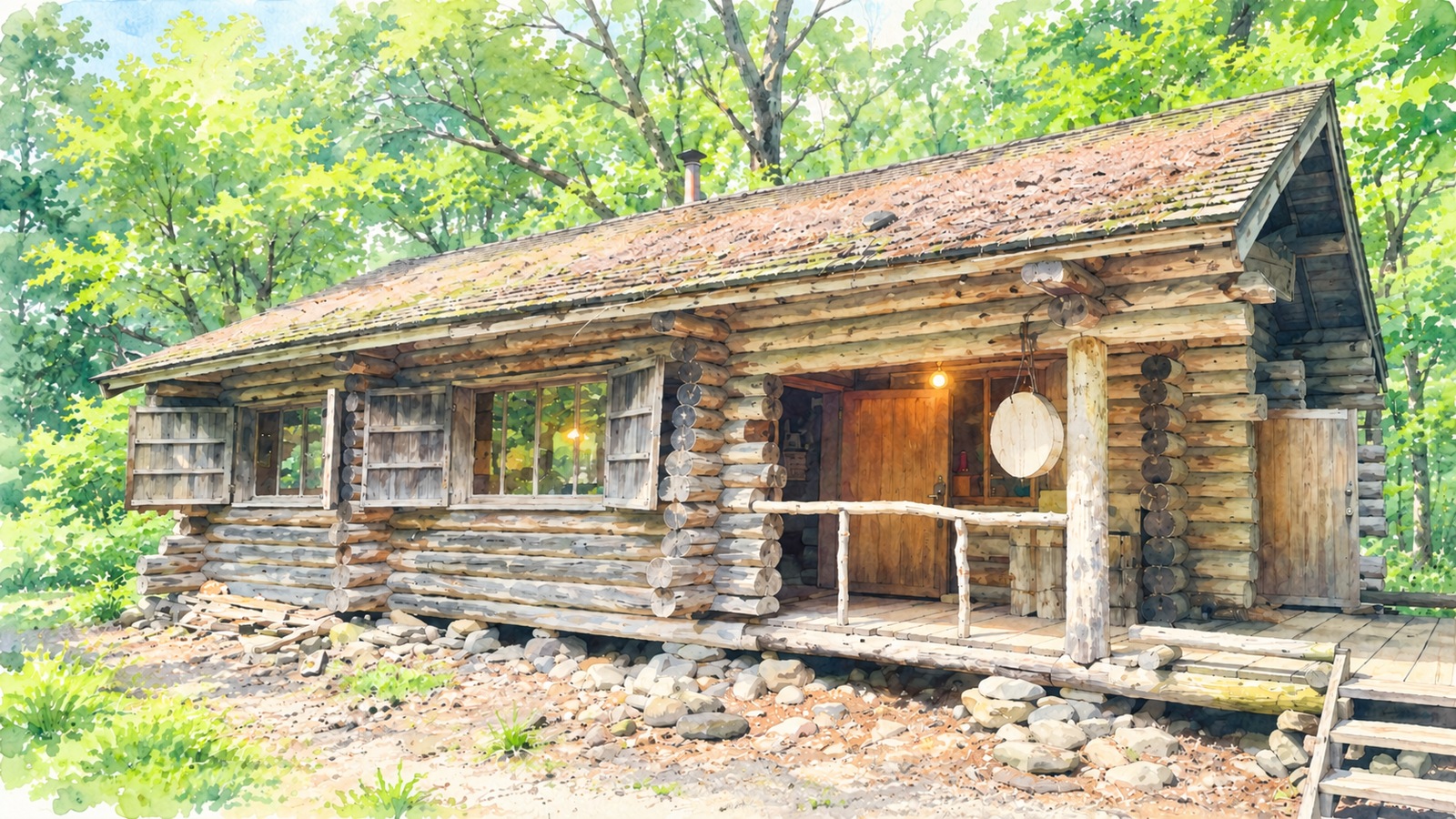
Rokugo Forest has the log cabin Goro built. He began work on it in Episode 17 of the TV series and completed it in Episode 24. After learning how he gathered materials and built a place to live with his own hands, the cabin’s logs take on the weight of a father’s time spent trying to support his family.
The official filming-location guide explains that the fire scene was filmed by burning a separate cabin built for that purpose. This is a place where visitors can distinguish events shown on screen from what was done for filming.
The third house is also on the grounds. It recalls the life in which Jun built a wind turbine as a birthday present for Goro. The father built a home for his children, and the child tried to improve his father’s life in return. Comparing the two houses shows that the family relationship was not one-sided.
The address is 1-1 Higashi-Rokugo, Furano, Hokkaido. In 2026, the site is scheduled to remain open through November 29; from October onward, hours are 9:30 a.m.–4 p.m. It closes for winter, and visitors cannot view the grounds from outside during the closure. Admission is ¥500 for adults and ¥300 for elementary school students. A combination ticket with the other two attractions is available; cash only.
- Location
- 1-1 Higashi-Rokugo, Furano, Hokkaido
- Connection to the work
- The attraction preserves Goro’s log cabin, built from Episode 17 onward, and the “third house,” where Jun installed a wind turbine to generate electricity.
- Season and admission
- Mid-April through late November (from October, 9:30 a.m.–4 p.m.; closed in winter); ¥500 adults, ¥300 elementary school students (cash only)
Sources: Furano Tourism Association (in Japanese) / Furano Tourism Association (in Japanese)
Goro’s Stone House and the First House | Why the stones were stacked
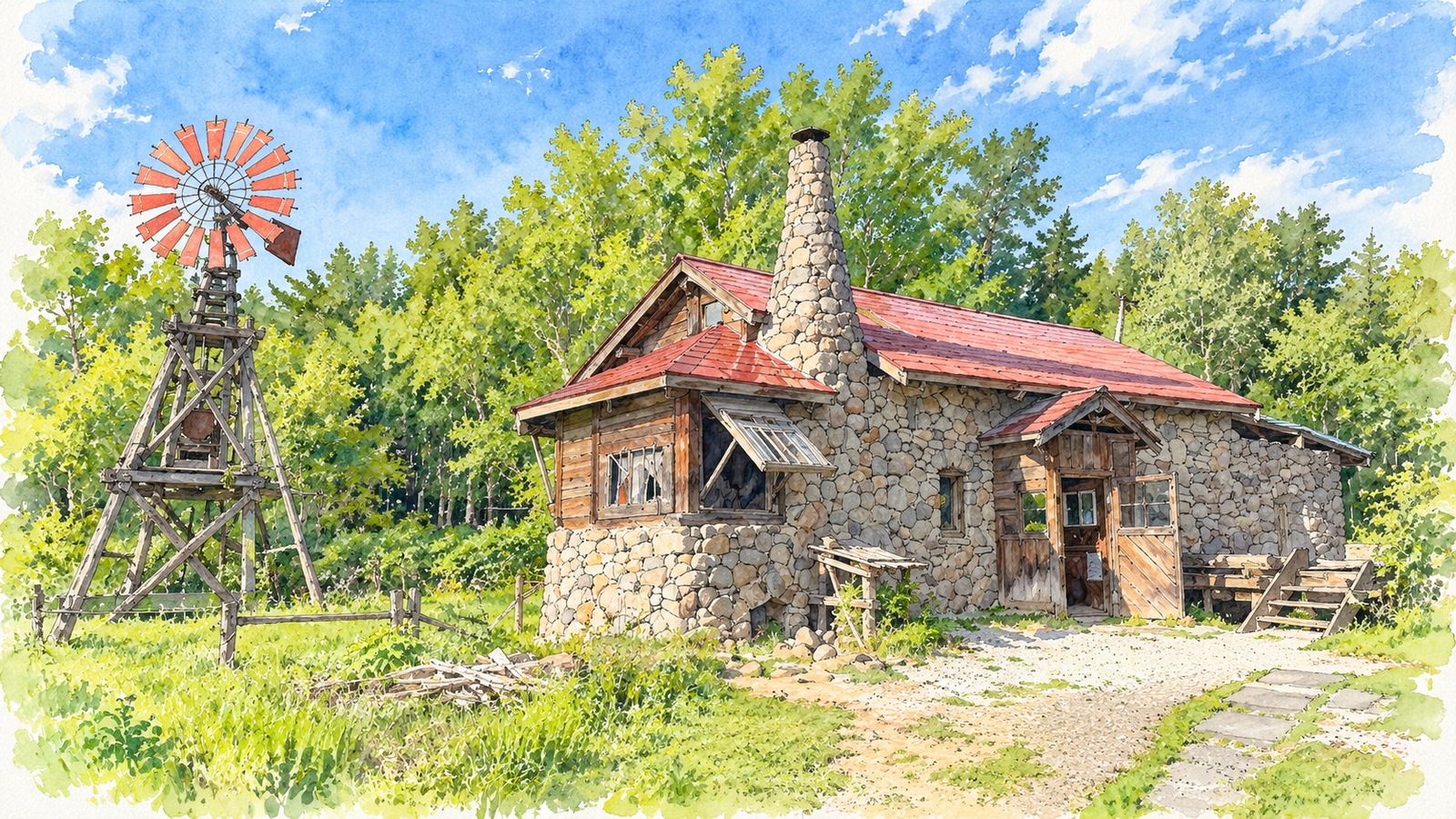
Goro’s Stone House was built after he changed his plan to use logs. In ’89: Homecoming, he considered building a log cabin, but an event involving Jun and Tamako in ’92: Departure meant he needed money to show his sincerity. Goro abandoned the house plan and chose to stack stones he could obtain.
Seeing this only as a beautiful home made from natural materials leaves out its background. The house gives form to a father’s feelings as he faces his son’s responsibility and decides how to spend limited money. When looking at its walls, consider not only the colors and textures of the materials but also why he chose them.
A reconstruction of the home where the family first lived is on the same grounds. Visitors can compare their early life with the stone house Goro chose years later. In one visit, the two homes bring together the family’s life in the TV series and the father’s choices as he faces Jun growing up.
The address is in Higashi-Rokugo, Furano. In 2026, the attraction is scheduled to remain open through November 29; from October onward, hours are 9:30 a.m.–4 p.m., open daily during the season. Admission is ¥500 for adults and ¥300 for elementary school students. Visitors can enter the open-air sets, but the area closes for winter and cannot be entered out of season.
- Location
- Higashi-Rokugo, Furano, Hokkaido
- Connection to the work
- An open-air attraction with the “Stone House” Goro built from fieldstones and a reconstruction of the Kuroita family’s first home in Furano
- Season and admission
- Mid-April through late November (from October, 9:30 a.m.–4 p.m.; closed in winter); ¥500 adults, ¥300 elementary school students
Sources: Furano Tourism Association (in Japanese) / Furano Tourism Association (in Japanese)
The House He Picked Up — And the Town | A home for Yukiko made from discarded things
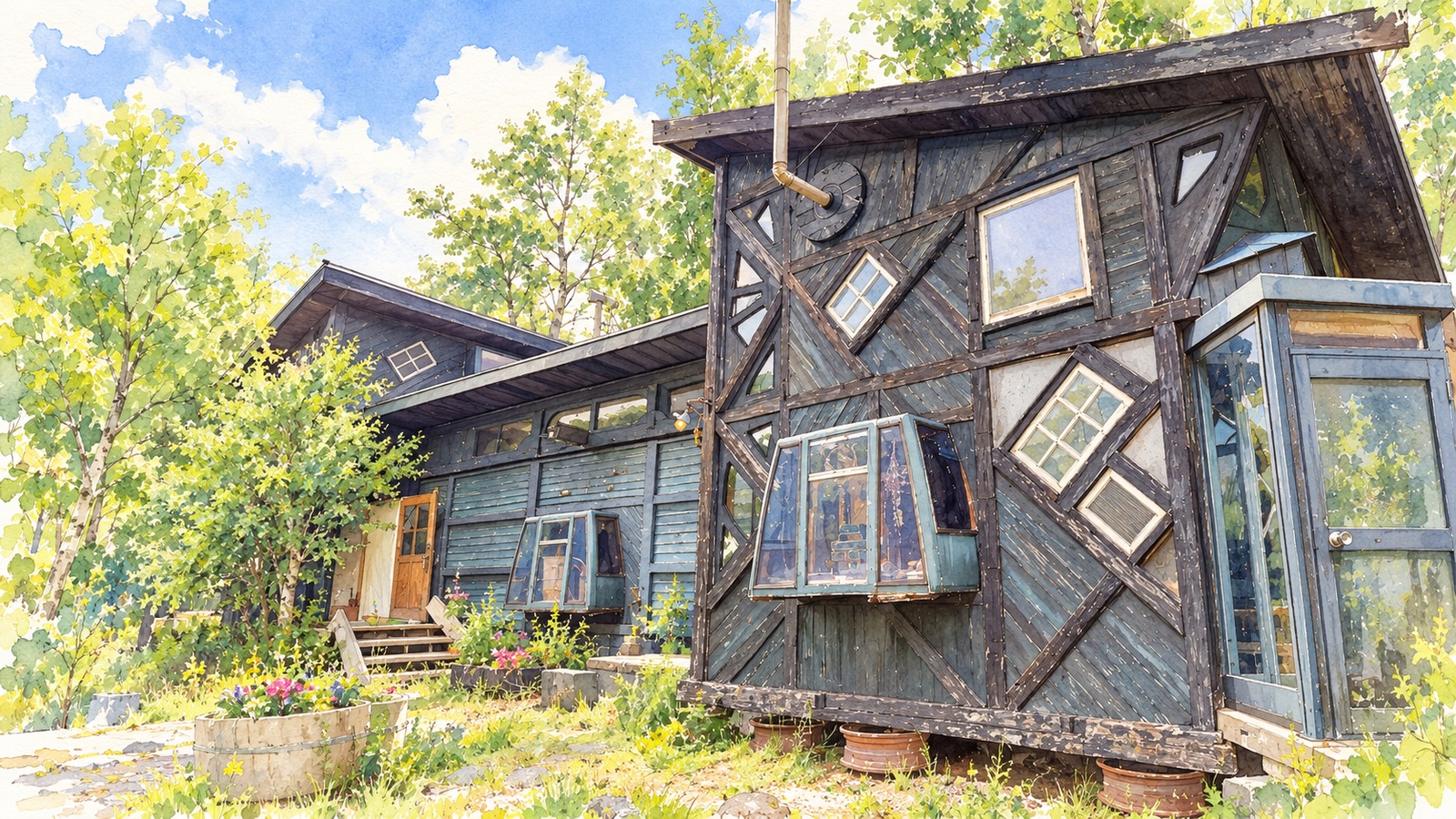
In 2002: Testament, Goro builds a home for Yukiko from scrap materials. The House He Picked Up — And the Town shows how he turned unwanted objects into things for daily life. The official guide presents it as a house that questions a society that throws so much away.
Compared with the log and stone houses, the difference is not only in how the buildings look. Visitors can consider who Goro wanted to provide a home for and how he chose to use what he had. The house carries the history of its materials, unlike a home furnished with newly purchased goods.
The homes of Jun and Yui, completed in 2004, are also in this area. Their display invites visitors to imagine what life might have been like after the story ended.
The address is in the Rokugo town area of Furano. The attraction is scheduled to remain open through November 29, 2026, from 9:30 a.m. to 6 p.m. (last admission 5:30 p.m.). Admission is ¥500 for adults and ¥300 for elementary school students. A combination ticket for all three attractions costs ¥1,200 for adults and ¥600 for elementary school students. Winter operation varies by year; check the latest information from the Furano Tourism Association.
- Location
- Rokugo town area, Furano, Hokkaido
- Connection to the work
- An open-air attraction with the house Goro built from reused materials for Yukiko in the final chapter, 2002: Testament, as well as the homes of Jun and Yui
- Hours and admission
- 9:30 a.m.–6 p.m. (last admission 5:30 p.m.; check winter operations); ¥500 adults, ¥300 elementary school students (three-site combination ticket: ¥1,200 adults)
Sources: Furano Tourism Association (in Japanese) / Furano Tourism Association (in Japanese)
Onoda Soba | Visit the banquet hall as a working restaurant
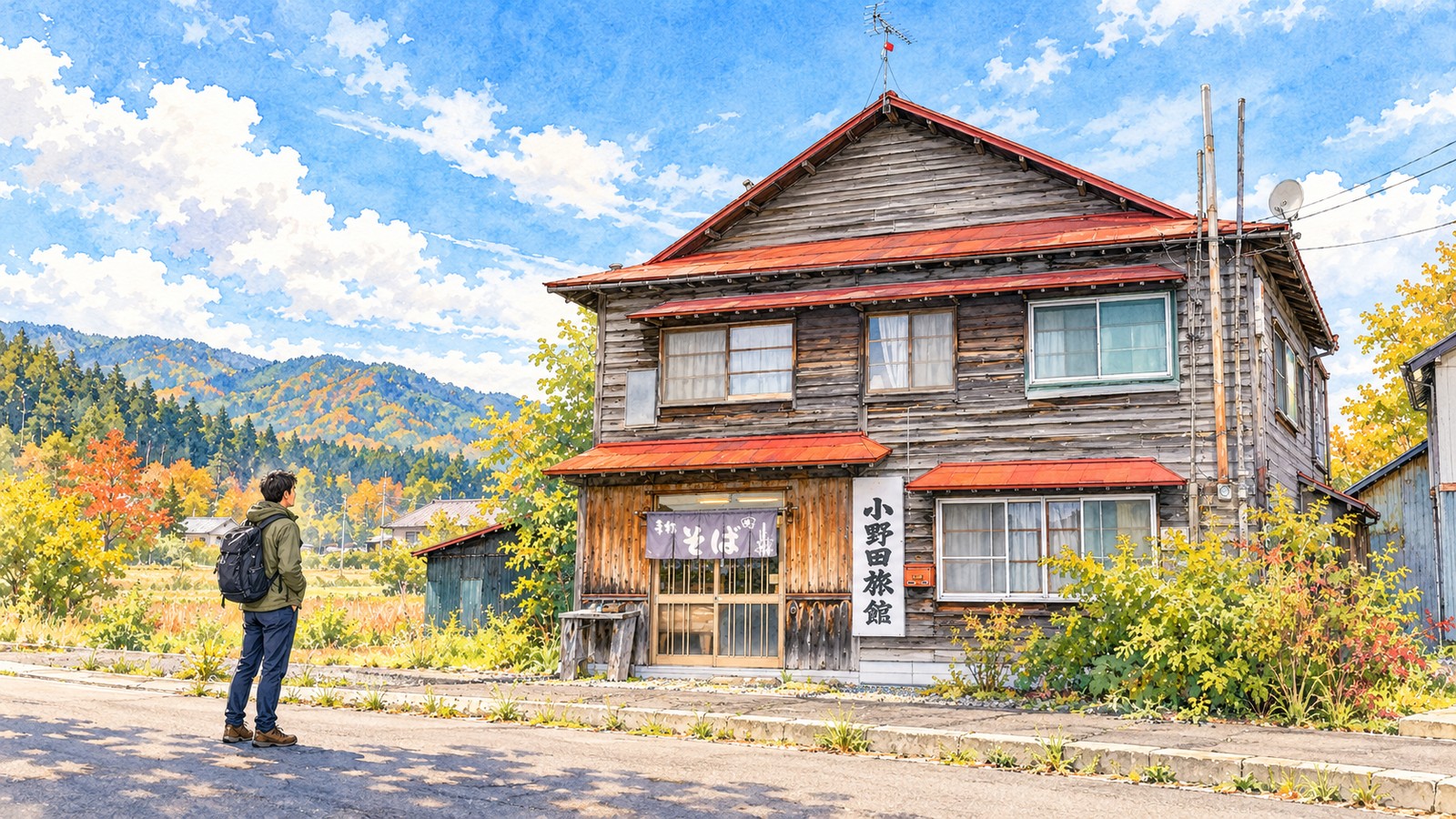
Onoda Soba served as an izakaya and banquet hall in the drama. The official Rokugo guide notes that the restaurant also loaned well-worn props for filming. Unlike the house sets, this is a place where the space and objects of an operating restaurant helped bring the drama’s daily life to the screen.
Visitors can order chicken soba, zaru soba, and other meals. Sit down as a customer at the present-day restaurant and spend time in a space also used for filming. Ask the restaurant before taking photos inside; dining guests have priority.
There is no need to guess which scene took place at a particular table without confirmation. The official information says the restaurant was used as an izakaya and banquet venue. Recall the scenes where the characters gathered to talk as you enjoy the atmosphere of a dining room that is still open today.
The address is 3 Rokugo town, Furano. The tourism association lists hours as 11 a.m.–6 p.m. from April through October and 11 a.m.–5 p.m. from November through March; closed on the second and fourth Tuesdays. The restaurant is near the public attractions in Rokugo and is primarily open around lunchtime.
- Location
- 3 Rokugo town, Furano, Hokkaido
- Connection to the work
- A soba restaurant in Rokugo that served as an izakaya and banquet hall in the drama and also provided props
- Hours and closing days
- April–October, 11 a.m.–6 p.m.; November–March, 11 a.m.–5 p.m.; closed on the second and fourth Tuesdays
Sources: Furano Tourism Association (in Japanese) / Furano Tourism Association (in Japanese)
Kumagera | Remember Seikichi’s promise and Hotaru’s wedding plans
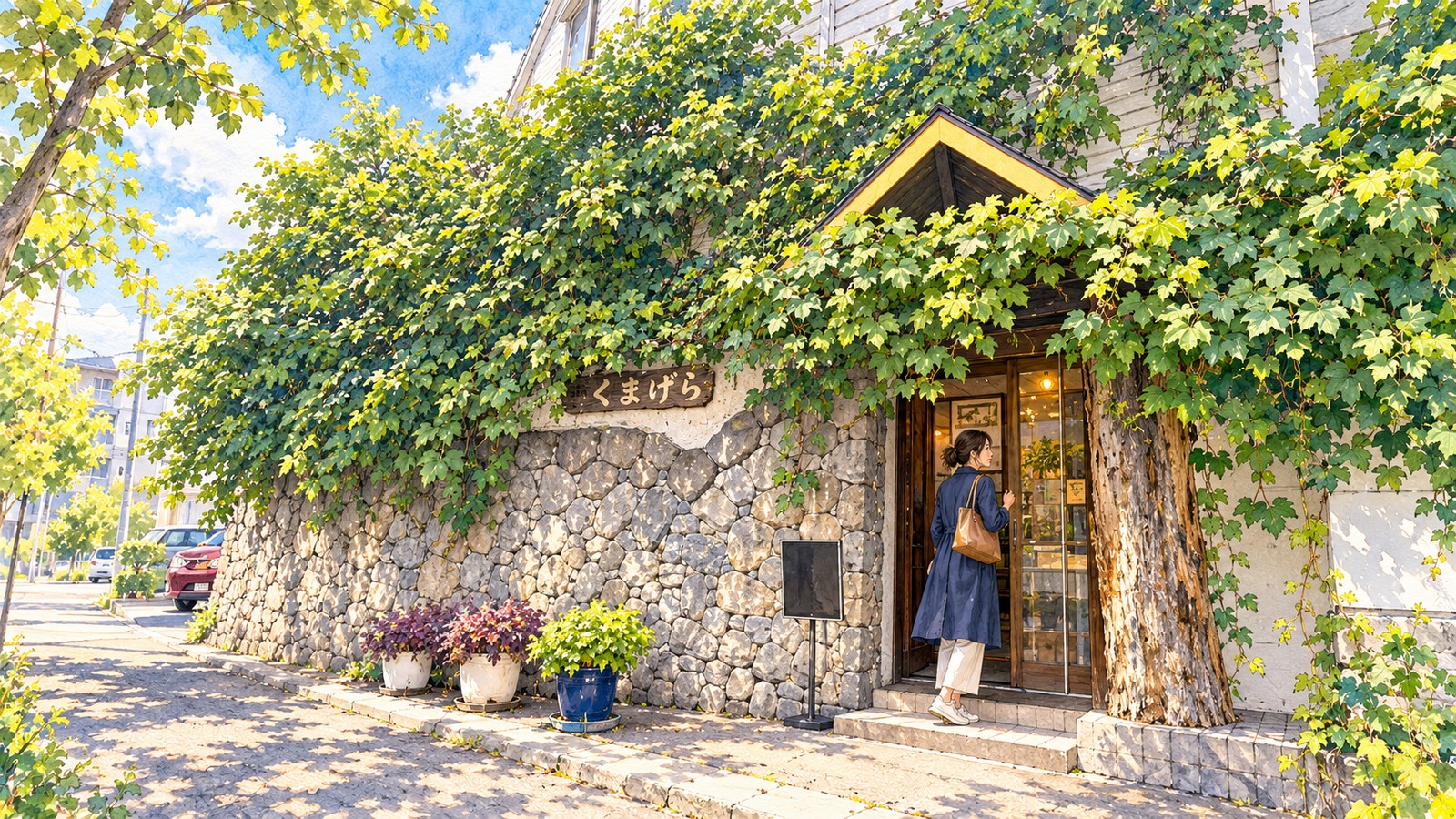
Kumagera in central Furano is the restaurant where Seikichi promises to have a drink with Goro in Episode 15 of the TV series. In ’98 History, it also becomes a place where Jun and the family discuss Hotaru’s wedding. The same restaurant connects family events from different periods in the long series.
Thinking of the early relationship between Goro and Seikichi alongside the grown children’s wedding plans shows how the same restaurant carries the changes of time.
According to the tourism association, the restaurant opened while filming for the first series was underway. Avoid treating an anniversary number in an old description as the number of years it has been open today. As a restaurant long associated with the work, it is a place to order a meal and enjoy its current service.
The address is 3-22 Hinode-cho, Furano. Current tourism information lists hours as 11:30 a.m.–9:30 p.m., with last orders at 9 p.m.; closed Wednesdays. It is open for both lunch and dinner and is intended for dining.
- Location
- 3-22 Hinode-cho, Furano, Hokkaido
- Connection to the work
- A local-cuisine restaurant where Seikichi promises to drink with Goro in Episode 15 of the TV series and where Hotaru’s wedding is discussed in ’98 History
- Hours and closing day
- 11:30 a.m.–9:30 p.m. (last order 9 p.m.); closed Wednesdays; about a five-minute walk from JR Furano Station
Sources: Furano Tourism Association (in Japanese) / Furano Tourism Association (in Japanese)
Jun’s Banya | Relive the Rausu story at a recreated restaurant
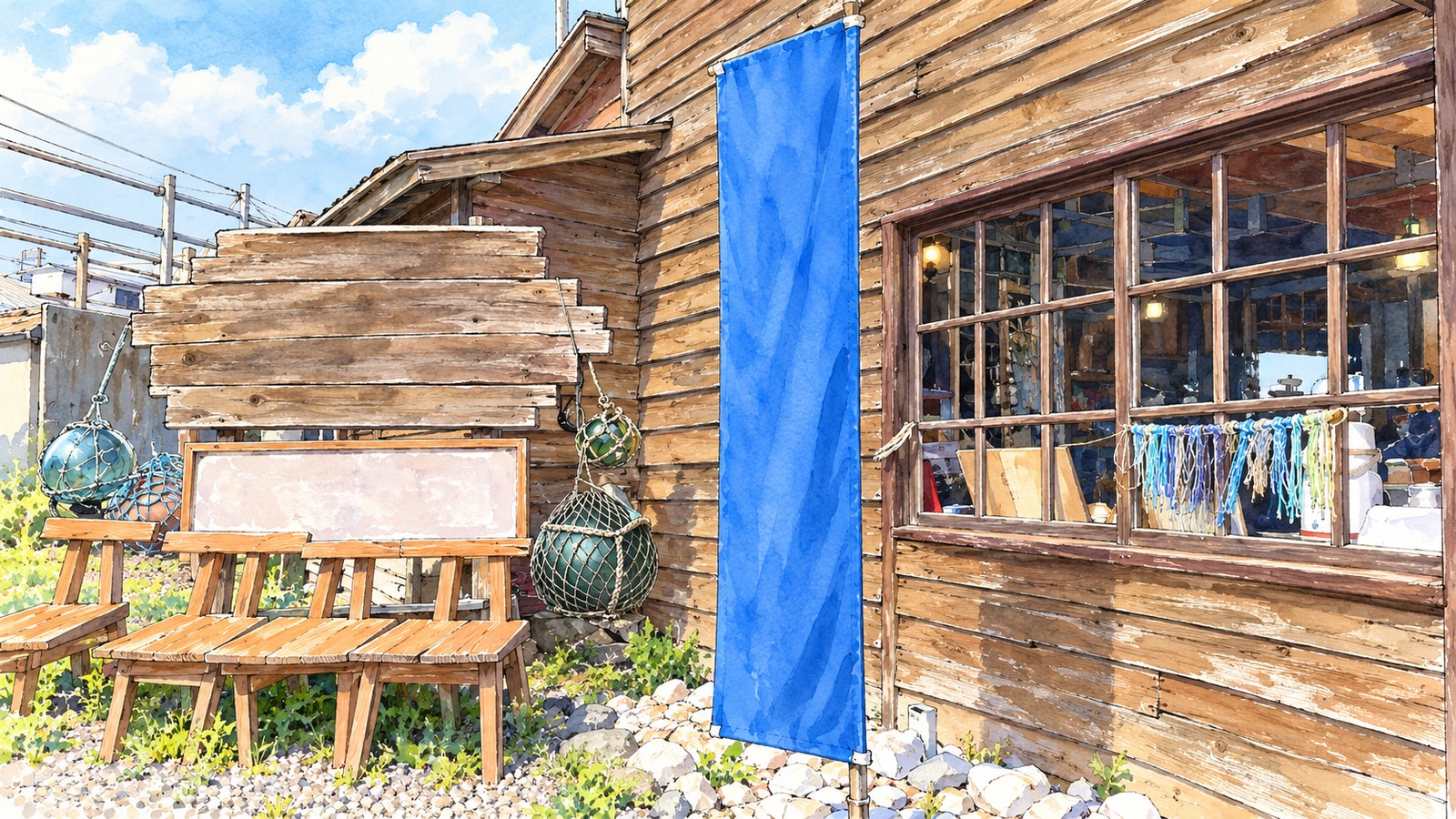
Jun’s Banya in Rausu is a restaurant recreating the fishing hut featured in the Rausu storyline of 2002: Testament. It is not the original building used for filming. Visitors can enjoy a meal in a place created to evoke that part of the drama while experiencing the coastal town.
In 2002: Testament, Jun works in waste management in Rausu. He meets Yui there and begins to think about their future, but Yui is married to Hiroshi. Moving to a new place does not make every past problem disappear. The landscape around the banya carries memories of a period when Jun was trying to rebuild his life.
The dining room serves a “From the North Country set meal,” seasonal salmon, simmered kinki rockfish, and other seafood from Rausu, depending on the catch and season. It is an entry point to the story’s move from Furano’s houses and fields to a very different coastal town.
The address is 2-8 Rebun-cho, Rausu, Menashi District, Hokkaido. The tourism association’s information, updated in July 2026, lists hours from 9 a.m. to 4 p.m. from late April through late October; irregular closing days apply. The restaurant is closed from November through April, so check especially carefully if visiting near the end of autumn.
- Location
- 2-8 Rebun-cho, Rausu, Menashi District, Hokkaido
- Connection to the work
- A seaside restaurant recreating the fishing hut featured in the Rausu storyline of 2002: Testament
- Season and hours
- Late April through late October, 9 a.m.–4 p.m. (irregular closing days; closed for winter from November through April)
Sources: Shiretoko-Rausu Tourism Association (in Japanese) / Fuji Television (in Japanese)
Torinuma Park | From Jun and Shu’s boat ride to a waterside walk
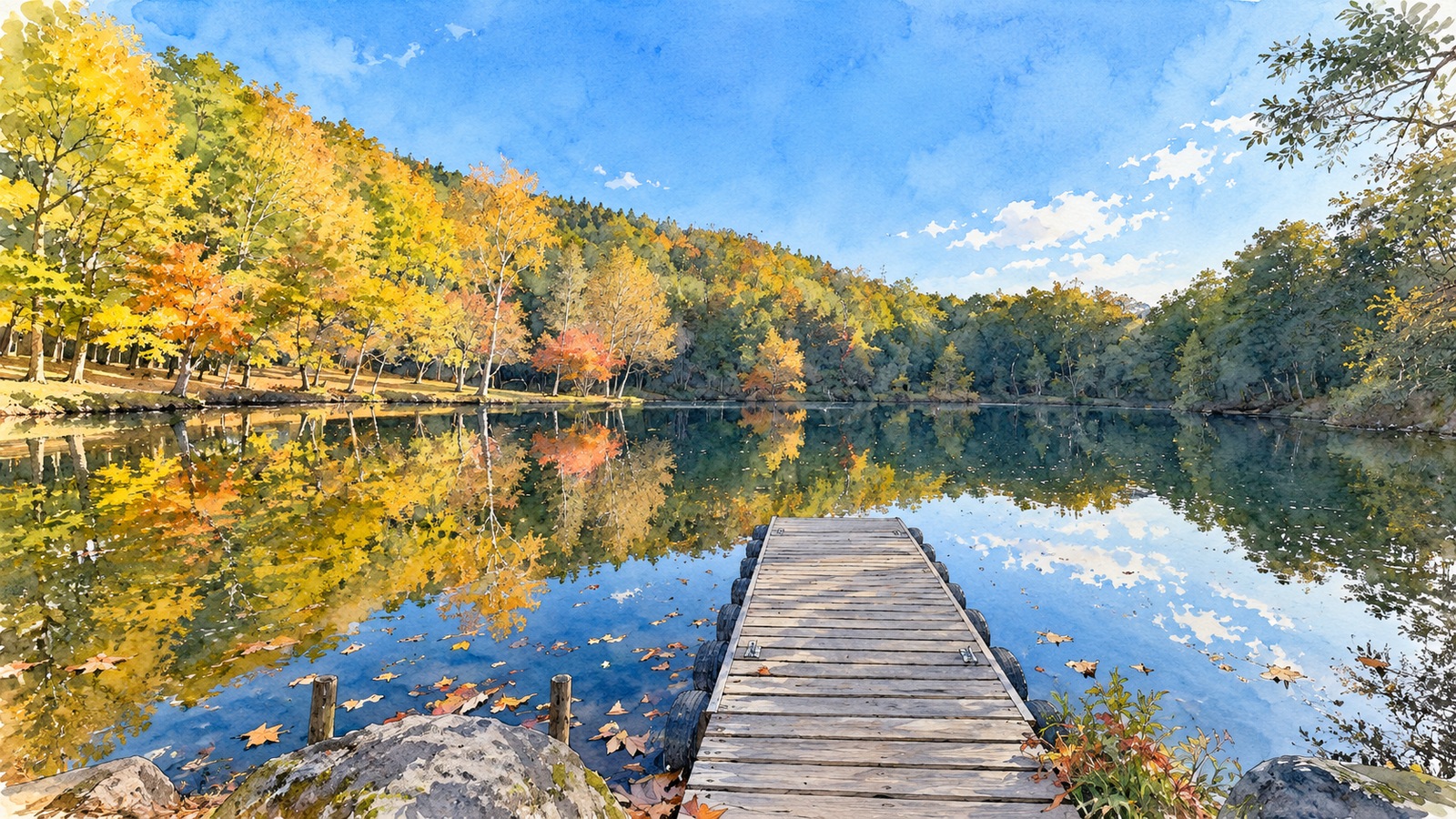
In ’98 History, Torinuma Park is where Jun and Shu go on a date by boat. Shu is played by Rie Miyazawa. Unlike the family home or workplace, this is a waterside place to recall time spent with a romantic partner.
The clear spring-fed pond and trees reflected on its surface are highlights of a visit today. Drama scenes linger in the memory not only for the characters’ actions but also for the quiet around them. After rewatching the scene with Jun and Shu, enjoy the difference between the water as the boat glides across it and the view from the shore.
Boat service is generally scheduled from mid-June to early October (through October 9 in 2026). Outside that period, visitors can mainly stroll along the water.
The park is in Torinuma, Furano, Hokkaido. Respect the waterside environment and other visitors. Enjoy the view from public paths; do not enter restricted shoreline areas for photos or take shortcuts through private farmland.
- Location
- Torinuma, Furano, Hokkaido
- Connection to the work
- A spring-fed park where Jun and Shu spend time together in a boat in ’98 History
- Visitor information
- The paths are open for walking (boat service generally runs from mid-June through early October)
Sources: Furano Tourism Association (in Japanese) / Furano Tourism Association (in Japanese)
JR Furano Station | A place of repeated reunions and farewells
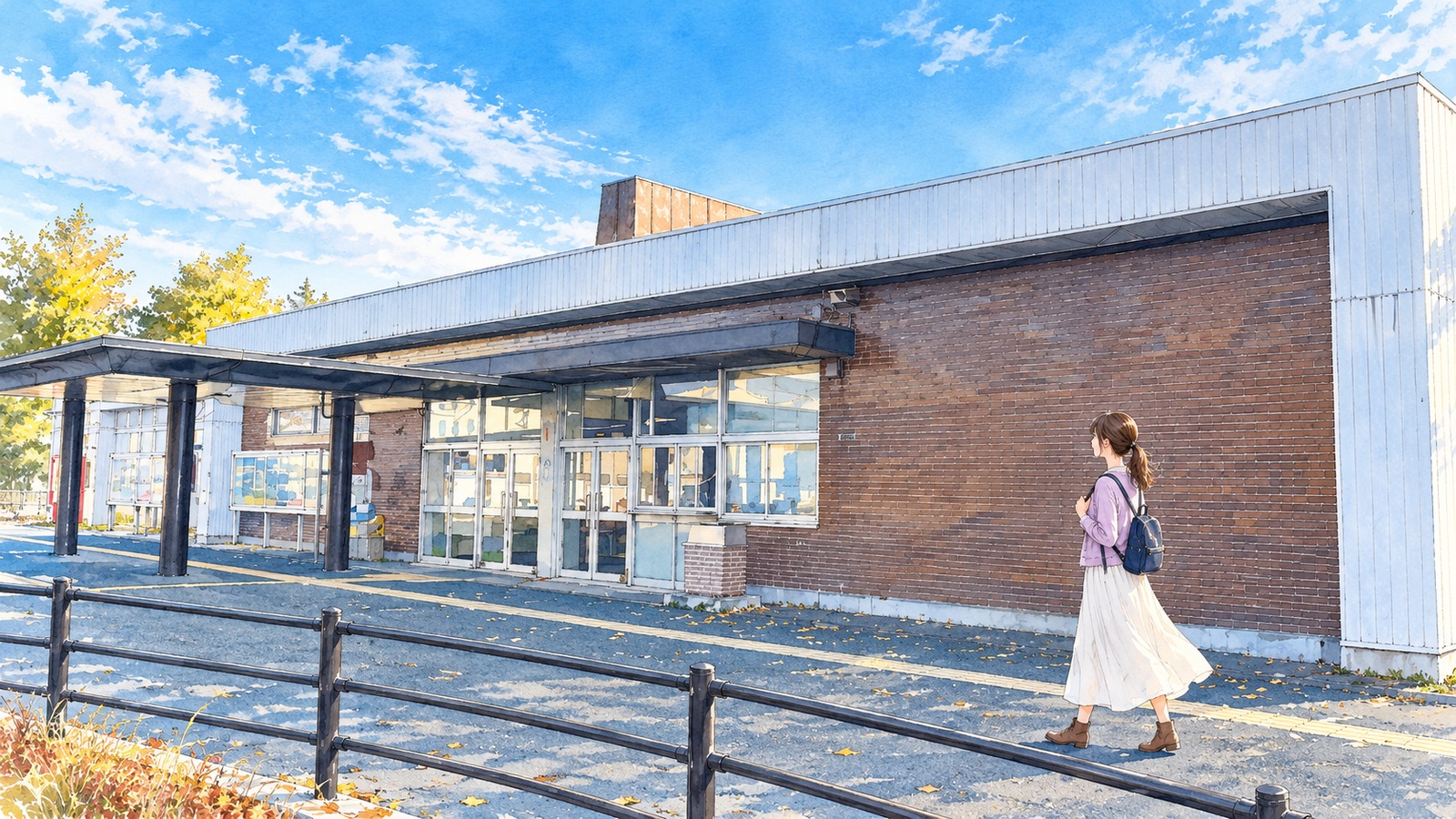
Furano Station is associated with scenes including Shokichi’s farewell, Hotaru changing trains to meet Yuji, and Goro chasing a train. The official filming-location map presents it as a place of reunions and farewells.
The house sets show the accumulation of everyday life, while the station recalls moments when someone decides to leave. A person is seen off, someone goes to meet another, or sometimes runs after a train. When viewed as a place where the characters’ feelings connect with the movement of trains, even waiting outside the station can bring back the drama.
The station is still in service, so visitors generally see the station building and the open plaza in front. A ticket or platform admission ticket is required to enter the platforms. The tracks and train routes shown in older footage differ from the current service network.
The approximate address is near 1 Hinode-cho, Furano. The section of the Nemuro Main Line east of Furano has been discontinued, so plan travel using current JR information. By distinguishing memories of the drama from today’s train service, visitors can see this active station without confusion.
- Location
- Near 1 Hinode-cho, Furano, Hokkaido
- Connection to the work
- The station where numerous reunions and farewells were filmed, including Shokichi’s send-off, Hotaru changing trains, and Goro chasing a train
- Visitor information
- The station building and plaza are open to visitors; a train ticket or platform admission ticket is required to enter the platforms.
Sources: Hokkaido Railway Company (JR Hokkaido) (in Japanese) / Furano Tourism Association (in Japanese)
Furano Shrine | Shokichi and Hotaru’s Shinto wedding, and Jun’s meeting with Yui
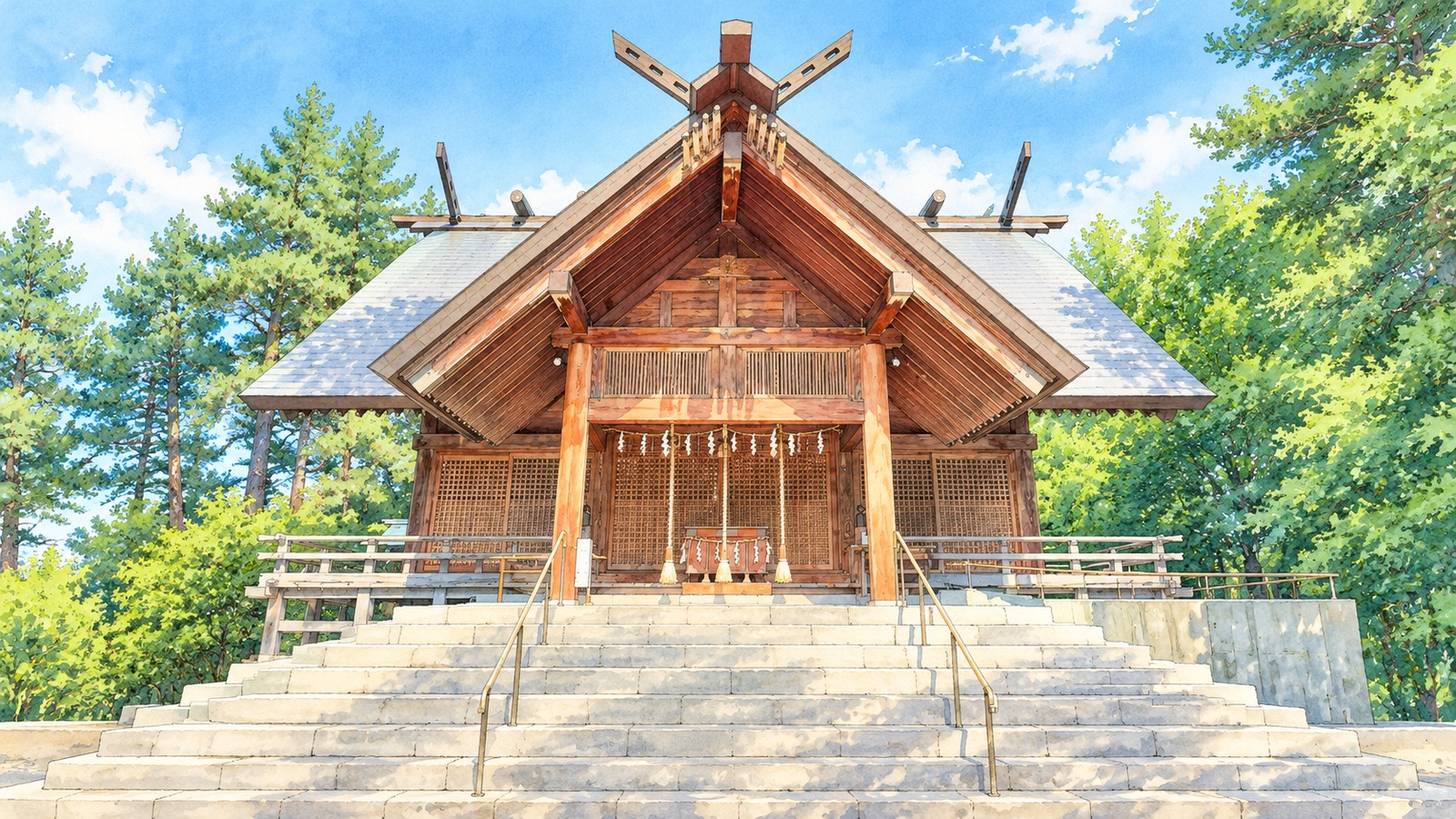
Furano Shrine is where Shokichi and Hotaru hold a Shinto wedding in ’98 History. In 2002: Testament, there is also a scene where Jun speaks to Yui when she visits. Family milestones and the beginning of a new relationship meet in the same shrine grounds.
Recall both the wedding preparations discussed at Kumagera and the ceremony at the shrine, and the sequence becomes clear: people talk, prepare, and then reach an important event. This is a place that invites visitors to revisit what the characters thought and who was involved before focusing on the memorable ceremony itself.
The shrine remains a place for worship and ceremonies. Visitors should view the shrine buildings and follow normal worship practices.
The address is 17-6 Wakamatsu-cho, Furano. The shrine’s official information includes current festivals and services such as Shichi-Go-San. It is both a filming location and a shrine where local people worship and mark milestones in their lives.
- Location
- 17-6 Wakamatsu-cho, Furano, Hokkaido
- Connection to the work
- The shrine where Shokichi and Hotaru hold a Shinto wedding in ’98 History and where Jun speaks to Yui in 2002: Testament
- Visitor information
- The grounds are open for worship (follow on-site guidance during ceremonies and services)
Sources: Furano Shrine (in Japanese) / Furano Tourism Association (in Japanese)
Farm Tomita | The fields where Reiko walked with her children
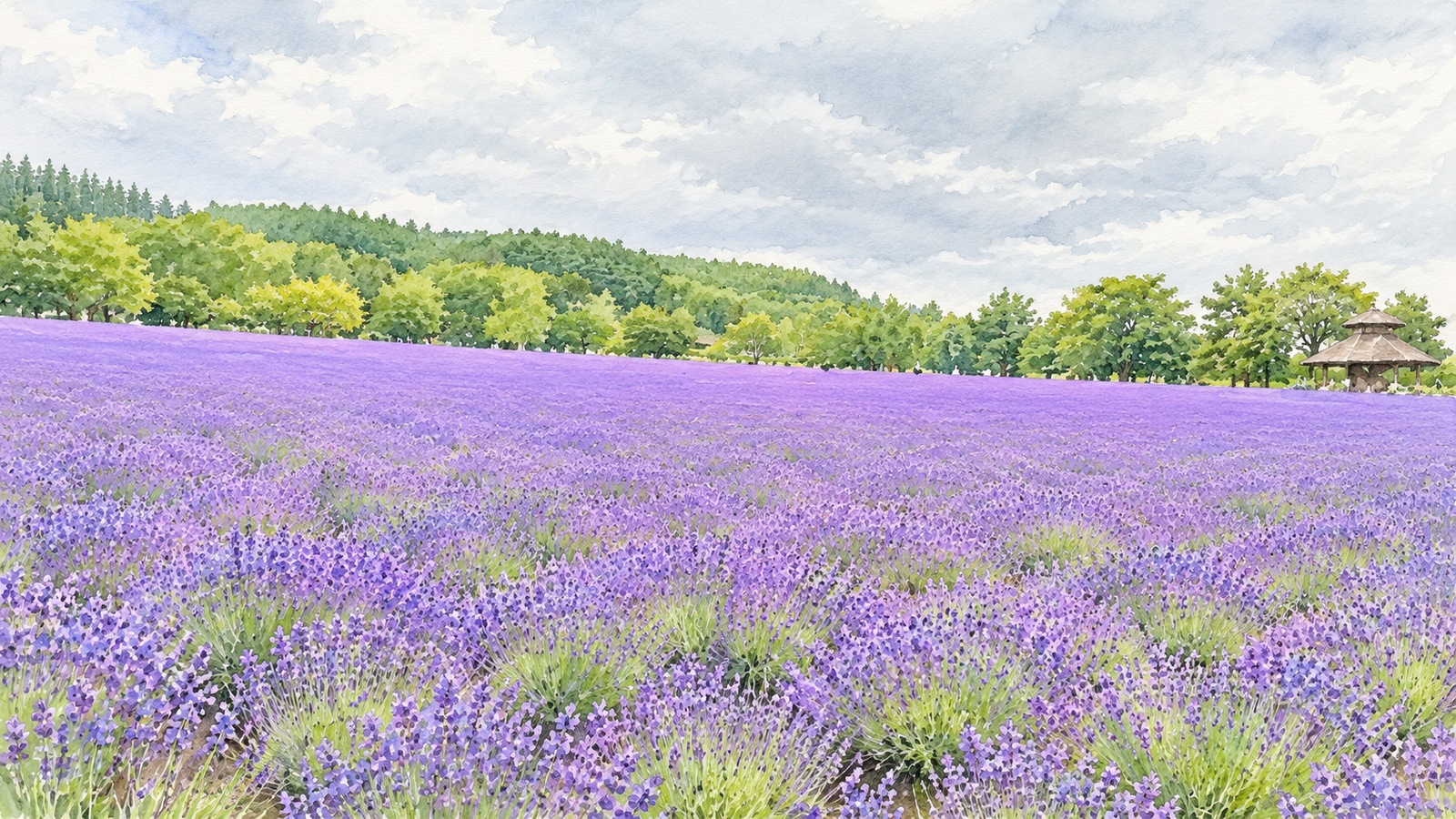
Farm Tomita appears on the official map as the place where Reiko visits Furano and walks through the lavender fields with her children. Reiko is played by Ayumi Ishida. This place adds time spent with the mother to a trip focused on the father and children’s homes.
After learning about the family’s circumstances and living apart, the scenes in the flower fields leave more than a beautiful impression. Visitors can reflect on the importance of time spent together and who the children are thinking about. The broad landscape holds the feelings of the people within it.
If visiting in autumn, enjoy the flowers and greenhouses that are open that day. Instead of searching too hard for the same colors seen in the drama, there is also pleasure in seeing the fields as they are in the current season, years later.
The address is 15 Kisen Kita, Nakafurano, Sorachi District, Hokkaido. In October, hours are generally 9:30 a.m.–4:30 p.m.; the opening hours of shops and facilities vary by season. The farm closes outside its operating hours, so plan a walk through the fields and greenhouses during opening times.
- Location
- 15 Kisen Kita, Nakafurano, Sorachi District, Hokkaido
- Connection to the work
- A tourist farm where Reiko walks through lavender fields with Jun and Hotaru when she visits Furano in the TV series
- Hours and admission
- Hours vary by season (typically 9:30 a.m.–4:30 p.m. in October); free admission
Sources: Farm Tomita (in Japanese) / Furano Tourism Association (in Japanese)
Learn More About From the North Country | A father building homes and children moving on
Visiting the houses and restaurants reveals Goro’s efforts to build a life and the children’s desire to move out into the wider world. Returning home is not a destination that resolves everything. Even after the family returns to Furano, concrete issues—relationships, work, money, and illness—continue to shake their lives.
The three actors who played Goro, Jun, and Hotaru
Kunie Tanaka plays Goro Kuroita, Hidetaka Yoshioka plays Jun, and Tomoko Nakajima plays Hotaru. The 24-episode TV series began in 1981, followed by eight specials: ’83 Winter, ’84 Summer, ’87 First Love, ’89 Homecoming, ’92 Departure, ’95 Secret, ’98 History, and the 2002 finale, 2002: Testament. The children grow from elementary school into adulthood as their father ages, with real years passing alongside the story. Comparing the first home with the stone house also recalls the 21 years the family lived through.
In Episode 1 of the TV series, six months have passed since Reiko left home, and Goro and the children begin living in a derelict house they repaired. Jun struggles with life without water or electricity. In Episode 2, Hotaru, entrusted with a letter saying Jun wants to return to Tokyo, gets lost on her way into town.
The family does not all welcome life in nature from the start. Their story begins with the gap between the father’s choice and the children’s wishes. When visiting the reconstructed first house, remember both Goro’s ingenuity and Jun’s sense of inconvenience.
A world with Reiko, Yukiko, and Seikichi
Ayumi Ishida plays Reiko, the mother of Jun and Hotaru. Keiko Takeshita plays her younger sister, Yukiko Miyamae. Yukiko also struggles with a relationship with a boyfriend in Tokyo, bringing an adult world into the story that does not revolve only around Goro and his children.
Shuji Otaki plays Seikichi, who asks Jun whether he is going to run away and makes him confront his desire to return to Tokyo. Interactions with adults around him also influence Jun’s decisions. Thinking of Seikichi and Goro’s relationship at Kumagera brings into view the people surrounding the family.
Koichi Iwaki’s Sota Kitamura and Takeo Chii’s Kazuo Nakahata are also among the people around the family. Jun eventually loses the ranch he inherited from Sota and heads to Rausu. The long series carries weight in the way relationships with people who cared for the children continue into their adult work and responsibilities.
Money and making amends, preserved in the house materials
The log cabin, stone house, and house made from found objects do not simply show three versions of a nature-oriented lifestyle. The fire at the log cabin follows Jun and Shokichi’s carelessness with fire, while the stone house is tied to Jun’s responsibility and the family’s financial situation. The buildings’ changes cannot be separated from what happens to the family.
Goro stacking stones expresses a father’s feelings as he changes his plans for his son. The house made from scrap reflects the idea of using discarded things again. Across the three sites, consider whom Goro was trying to help and what he chose for that person.
The fact that a separate cabin was built to burn for filming and that the home of Jun and Yui was completed after the broadcast are facts about the work of production. Separating what Goro did in the story from what was done for production and exhibits allows visitors to appreciate the drama’s emotions while understanding the surviving sites accurately.
The futures each character faces in 2002: Testament
In 2002: Testament, Jun is in debt and living in Rausu. He meets Yui Takamura, played by Yuki Uchida. Yui has a husband, Hiroshi, played by Goro Kishitani. The story is about considering the future while facing not only romance but also work, money, and existing relationships.
Hotaru keeps working as a nurse while waiting with her three-year-old son, Kai, for her missing husband. Goro faces concerns about his health and medical tests, and begins to think about his testament. The siblings who were children must now support their own lives as adults.
Rather than rushing through the banya in Rausu and the homes in Furano on one itinerary, first consider the characters’ circumstances before visiting each place. This makes visible not only the distance on a map but also the distance in the story—why Jun moved there.
So Kuramoto’s scripts and the people behind the images and music
So Kuramoto wrote the original story and screenplay. The TV series was directed by Takiji Tominaga, Shigemichi Sugita, and Yoshiaki Yamada; Yoshiyuki Takekoshi was the cinematographer, and Nobuyuki Fujimori handled art direction. Alongside the actors’ performances, the work of framing the houses and landscapes supported the impression of the series.
Toshio Nakamura and Takiji Tominaga produced the TV series. For 2002: Testament, Yoshiaki Yamada and Izumi Sasamoto served as producers, Kenji Nemoto designed the production, and Masanori Umeda handled art direction. The production team changed over the long run of the series. After visiting a house, checking the credits can also bring attention to the people who created the lives seen on screen.
It is also interesting to compare the impression of a room in person with how it looks on screen. At the site, visitors choose where to look; in the drama, cinematography and direction choose whose expression to show and from what distance. Visiting an open set offers more than the pleasure of entering the story: it is a chance to think about how the story is presented.
The music is by Masashi Sada. Alongside the familiar humming theme “From the North Country — From the Faraway Land,” there are themes for Jun and Hotaru. Hearing the music as something that accompanies the characters, rather than only the vast landscapes, can change the emotions that come to mind in the same scenery.
A concert marking the series’ 45th anniversary was also planned for 2026, with Toshiyuki Watanabe as music director and Tomoko Nakajima as a special guest. The beloved melodies continue in orchestral arrangements. Alongside the TV series on home video or streaming, visitors can follow the work’s history through its music.
- 1981–1982
Log Cabin (Rokugo Forest)
Goro began building his first substantial log house in Episode 17 and completed it in Episode 24, creating a place for his family to live with his own hands.
- 1989–1992
Goro’s Stone House
In ’92: Departure, Goro uses the money planned for a log home to make amends for Jun’s actions, then builds the house by stacking stones from the fields.
- 2002
The House He Picked Up — And the Town
Goro’s home for Yukiko, built in 2002: Testament from discarded materials such as a bus and a ski-lift gondola.
Source: Official materials and visitor information
Milestones from the TV series to the homes left behind
From the TV series’ start in autumn 1981 to the 2002 finale, 2002: Testament, the Kuroita family’s story aired over 21 years. This timeline brings together the eight special dramas and milestones in the public sites preserved in Furano after the broadcasts.
- October 1981–March 1982The 24-episode TV series airs. A father and his children leave Tokyo and begin their life in Rokugo.Broadcast
- March 24, 1983’83 Winter airs. The special-drama series begins, following the same family after the TV series.Drama
- September 27, 1984’84 Summer airs. The series continues to follow Jun and Hotaru as they grow up and the seasons and years change.Drama
- March 27, 1987’87 First Love airs. ’89 Homecoming follows on March 31, 1989, adding Goro’s plans for a new house to the story.Drama
- May 22–23, 1992’92 Departure airs. The questions of Jun’s responsibility and money affect Goro’s house-building plans.Drama
- June 9, 1995’95 Secret airs. The series depicts the adult relationships of characters viewers have known since childhood.Drama
- July 10–11, 1998’98 History airs. Shokichi and Hotaru’s Shinto wedding and Jun and Shu’s date at Torinuma Park are among the events set in Furano’s landscapes.Drama
- September 6–7, 20022002: Testament airs. It depicts Jun in Rausu, Hotaru as a mother, and Goro thinking about the future.Finale
- 2004The home of Jun and Yui is completed after the series. It is added to the public attractions, inviting visitors to imagine life after the story.Building
- January 21, 2009The Blu-ray of 2002: Testament is released, allowing viewers to revisit both parts at home.Home video
- 2025Fuji TV announces a terrestrial rebroadcast of all 24 episodes of the TV series. In 2026, a concert marking the series’ 45th anniversary is also announced, offering new ways to return to the work through video and music.Project
- September 30, 2026The Furano Tourism Association notes the death of So Kuramoto and announces a memorial altar at the Furano Drama Museum. The notice invites visitors to remember the screenwriter’s stories alongside the land and exhibits.In memoriam
Source: Official materials and visitor information
What to watch before or after your trip | The first two episodes and 2002: Testament
The following lineup includes home video and official footage from Episode 1 and Episode 2, when the Kuroita family moves to Rokugo in Furano, as well as the finale 2002: Testament, featuring Rausu and The House He Picked Up.
The first TV volume and the 2002: Testament finale on Blu-ray
For a first introduction to the series, start with Episodes 1 and 2 to learn why Goro brought his children to Furano and why Jun wants to return to Tokyo. The official From the North Country Vol. 1 DVD contains these two episodes on one disc, about 90 minutes in total. Choose it separately from a box set containing all 24 episodes.
If you are interested in Rausu, the Stone House, or The House He Picked Up, it is useful to revisit the character relationships that lead into the long series’ final chapter, 2002: Testament.
The Blu-ray of From the North Country 2002: Testament (catalog no. PCXC-50008) was released on January 21, 2009. This two-disc set contains about 280 minutes of the feature, with Japanese subtitles. Watch it before or after visiting Rokugo Forest, Goro’s Stone House and the First House, or The House He Picked Up — And the Town, and the development of Goro’s home-building—from the first derelict house to the house made from scrap—comes into sharper focus.
The story behind the theme song and streaming the series
Fuji TV’s official page also links to viewing the series on its streaming service FOD. Viewing conditions differ from the free preview videos, so check current availability and subscription terms. It is also a convenient way to choose and revisit episodes featuring places you plan to visit, from the TV series through the specials.
Masashi Sada’s official YouTube channel has also posted concert-stage footage in which he recounts the story behind the From the North Country theme and his conversations with So Kuramoto. After returning from your trip, revisiting the footage and music can make the buildings and landscapes you saw feel closer to the characters—the time spent with a partner at Torinuma, a milestone at the shrine, or a conversation in a restaurant.
Source: Official materials and visitor information
Research note | A business perspective: show the homes through both story and materials
Goro’s houses differ in their materials—logs, stone, and scrap—and each is connected to events in the family’s life. Visiting them in sequence becomes a way to trace changes in the buildings and the time the characters lived there. The filming houses, a separate cabin built for a fire scene, and a home constructed after the series each have a different history.
When preserving filming sets, one approach is to record not only photographs of the exterior but also why the materials were chosen and how they were used in specific scenes. At a house made from scrap, an exhibit could identify the objects’ previous uses. Recording the history of each building can deepen a visit from seeing several similar homes to learning about reuse and production work.
Source: Official materials and visitor information
Sources
- Furano Tourism Association — Furano Drama Museum (in Japanese)
- Farm Tomita (in Japanese)
- Furano Tourism Association — Rokugo Forest (From the North Country filming location / log cabin and Goro’s third house) (in Japanese)
- Fuji TV — From the North Country (in Japanese)
- Fuji TV — This summer, a classic returns: the From the North Country TV series to be rebroadcast on terrestrial television (in Japanese)
- Kamifurano Tokachidake Tourism Association (in Japanese)
- Hokkaido Railway Company (JR Hokkaido) (in Japanese)
- Shiretoko-Rausu Tourism Association (in Japanese)
- Furano Tourism Association — Kumagera (in Japanese)
- Furano Tourism Association — Notice about a memorial altar for Professor So Kuramoto at the Furano Drama Museum (in Japanese)
- Furano Tourism Association — TV drama filming locations (in Japanese)
- Furano Tourism Association — From the North Country filming-location map (in Japanese)
- Fuji TV e!Shop — From the North Country merchandise (in Japanese)
- Furano Tourism Association — The House He Picked Up — And the Town (in Japanese)
- Furano Tourism Association — Furano, home of From the North Country: Rokugo and Furebetsu map and guide (in Japanese)
- Furano Shrine (in Japanese)
- Furano Tourism Association — Goro’s Stone House and the First House (in Japanese)
- Furano Tourism Association — Torinuma Park (in Japanese)
- Fuji TV e!Shop — From the North Country Vol. 1 DVD (in Japanese)
- Fuji TV e!Shop — From the North Country 2002: Testament Blu-ray (Sale) (in Japanese)
- Pony Canyon (in Japanese)
- Fuji TV — From the North Country (rerun) (in Japanese)
- Fuji TV — Masashi Sada appears: revisit the beloved From the North Country music with archival footage and orchestral performances; the concert in Furano is available on FOD pay-per-view for the series’ 45th anniversary (in Japanese)
Dates, hours, and ticket prices are current as of writing. Check each official website for the latest information before your visit.
FAQ
Was the log cabin destroyed by the fire in the drama?
The official filming-location guide explains that a separate cabin was built and burned for the fire scene. The log cabin currently open to visitors is the original building preserved on site.
Is Jun’s Banya in Rausu the actual filming building?
No. It is a restaurant recreated around the banya featured in 2002: Testament, built separately from the filming set. It serves seafood from Rausu.
Can I visit all the houses in Rokugo during winter?
Rokugo Forest and Goro’s Stone House and the First House generally close from late November until around mid-April. Winter operations at The House He Picked Up — And the Town vary by year; check the Furano Tourism Association’s latest information.
Can I ride a boat at Torinuma Park?
Boat service is seasonal and generally runs from mid-June through early October. Outside that period, visitors can stroll along paths around the spring-fed pond.
When is the lavender at Farm Tomita in bloom?
Lavender is generally at its best in summer, especially July. In spring or autumn, visitors can explore the seasonal flower fields, greenhouses, and other areas open that day.
How long does it take to visit the three houses in Rokugo?
The three sites are spread across the Rokugo area. Allow about two to three hours to drive between them and explore. A combination ticket for all three is also available.
Can I visit Nunobe Station, where the Kuroita family arrives in Episode 1?
The Furano–Shintoku section of the JR Nemuro Main Line closed in April 2024, and the former Nunobe Station is no longer an active railway station. Visitors can view its exterior only from the public road in areas where access is permitted.


