
We Made a Beautiful Bouquet Pilgrimage Guide: Chofu's Bookstore, Station Plaza & Tama River
Waiting in front of the station with a paperback in hand, browsing a department store bookshop together, and walking along the Tama River carrying a bouquet and bakery pastries—'We Made a Beautiful Bouquet' (Hanataba Mitaina Koi wo Shita) chronicles the five years from when college students Mugi Yamane and Kinu Hachiya meet to their life living together.
Starring Masaki Suda as Mugi and Kasumi Arimura as Kinu, the film shot many of its central everyday scenes in Chofu City, Tokyo, across local train stations, a bookstore, and the riverside promenade. Today, the newly renovated plaza outside Chofu Station also features pavement illustrations created by Peko Asano, the artist who drew Mugi's illustrations in the film.
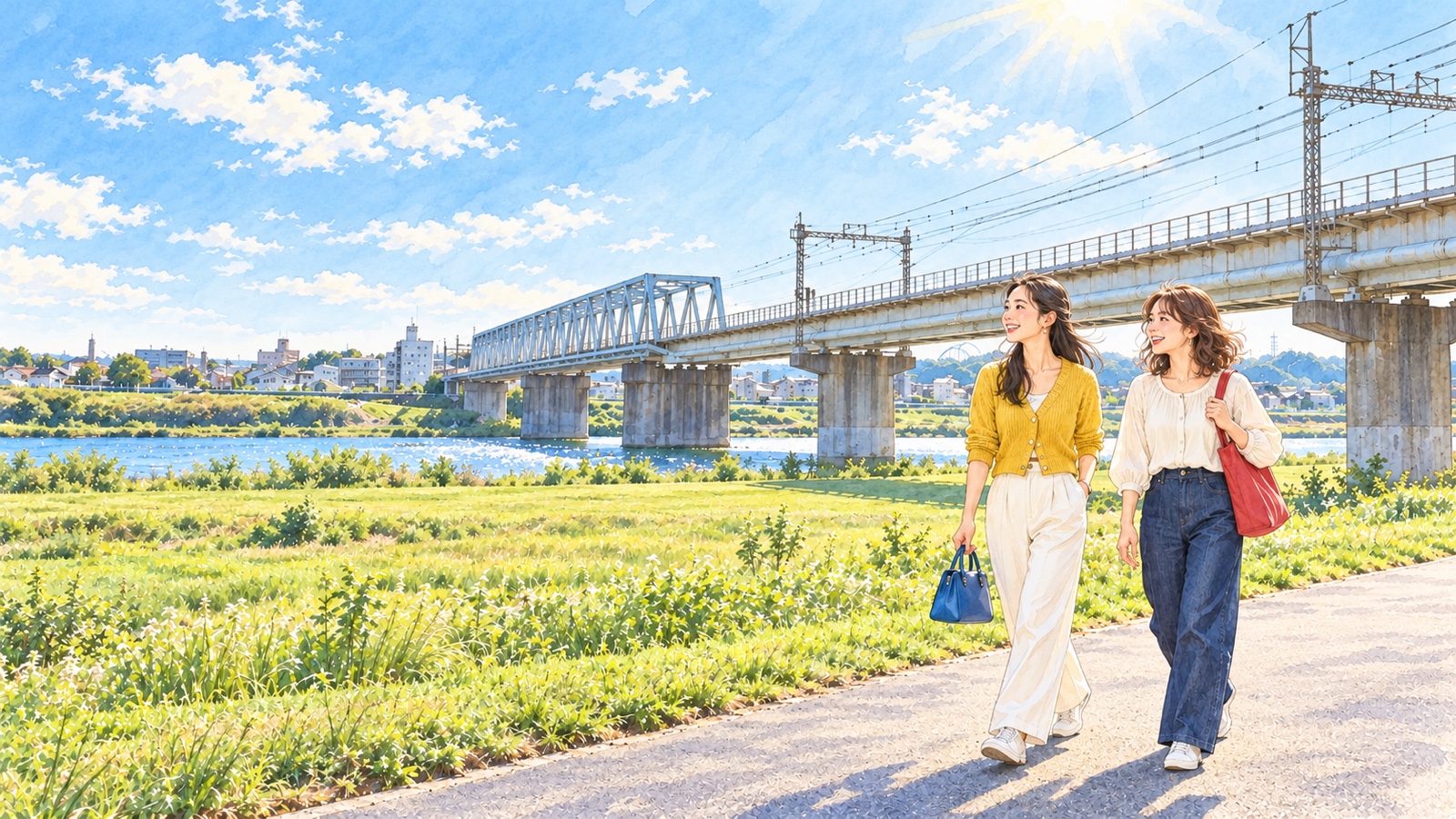
To Chofu’s Stations, Bookstore, Riverside Path, and the Cast Autograph Display
① Tobitakyu Station & South Exit Bus Stop · Tobitakyu, Chofu, Tokyo
Station platform where Kinu appears in the opening and the bus stop on her way home.
Read the Complete Pilgrimage Guide & Access Notes for Tobitakyu Station & South Exit Bus Stop (Tobitakyu, Chofu, Tokyo)② Chofu Tama River Osanpo Road · Tamagawa, Chofu, Tokyo
Riverside path where Mugi and Kinu walk carrying a bouquet and bakery pastries.
Read the Complete Pilgrimage Guide & Access Notes for Chofu Tama River Osanpo Road (Tamagawa, Chofu, Tokyo)③ Chofu Station Plaza & North Exit Intersection · Fuda, Chofu, Tokyo
Where Mugi waits reading a book and the two hold hands crossing the street.
Read the Complete Pilgrimage Guide & Access Notes for Chofu Station Plaza & North Exit Intersection (Fuda, Chofu, Tokyo)④ Chofu PARCO & PARCO Book Center · 1-38-1 Kojimacho, Chofu, Tokyo
Destination of their late-night walk and the 5F bookstore where they browse books.
Read the Complete Pilgrimage Guide & Access Notes for Chofu PARCO & PARCO Book Center (1-38-1 Kojimacho, Chofu, Tokyo)⑤ Otozakabashi Intersection · Near 1-28-2 Jindaiji-Motomachi, Chofu, Tokyo
Filming location of Mugi and Kinu's first kiss; viewed from the public sidewalk.
Read the Complete Pilgrimage Guide & Access Notes for Otozakabashi Intersection (Near 1-28-2 Jindaiji-Motomachi, Chofu, Tokyo)⑥ Road North of Tsutsujigaoka Station · 3 Nishi-Tsutsujigaoka, Chofu, Tokyo
Street where Mugi is captured on Street View in the film.
Read the Complete Pilgrimage Guide & Access Notes for Road North of Tsutsujigaoka Station (3 Nishi-Tsutsujigaoka, Chofu, Tokyo)⑦ Chofu City Hall 2F Autograph Display · 2-35-1 Kojimacho, Chofu, Tokyo
Autographs of Masaki Suda and Kasumi Arimura; public corridor open on weekday business hours.
Read the Complete Pilgrimage Guide & Access Notes for Chofu City Hall 2F Autograph Display (2-35-1 Kojimacho, Chofu, Tokyo)
1Tobitakyu Station | The Platform Where Kinu Stands in the Opening Scene

Tobitakyu Station on the Keio Line is where Kinu appears at the very beginning of 'We Made a Beautiful Bouquet,' filmed on Platform 1. Outside the South Exit, the bus stop appears in the scene where Kinu gets off the bus when returning from Mugi's home.
Together, the train platform and the station-front bus stop frame Kinu's daily commutes in the story. Entering the station platform requires a valid train ticket or IC fare card, while the South Exit bus stop stands along the open public sidewalk.
Sources: Chofu City — Official Filming Location Map / Chofu City Tourist Association — Filming Locations
2Chofu Tama River Osanpo Road | The Path They Walked Carrying a Bouquet and Bakery Bread
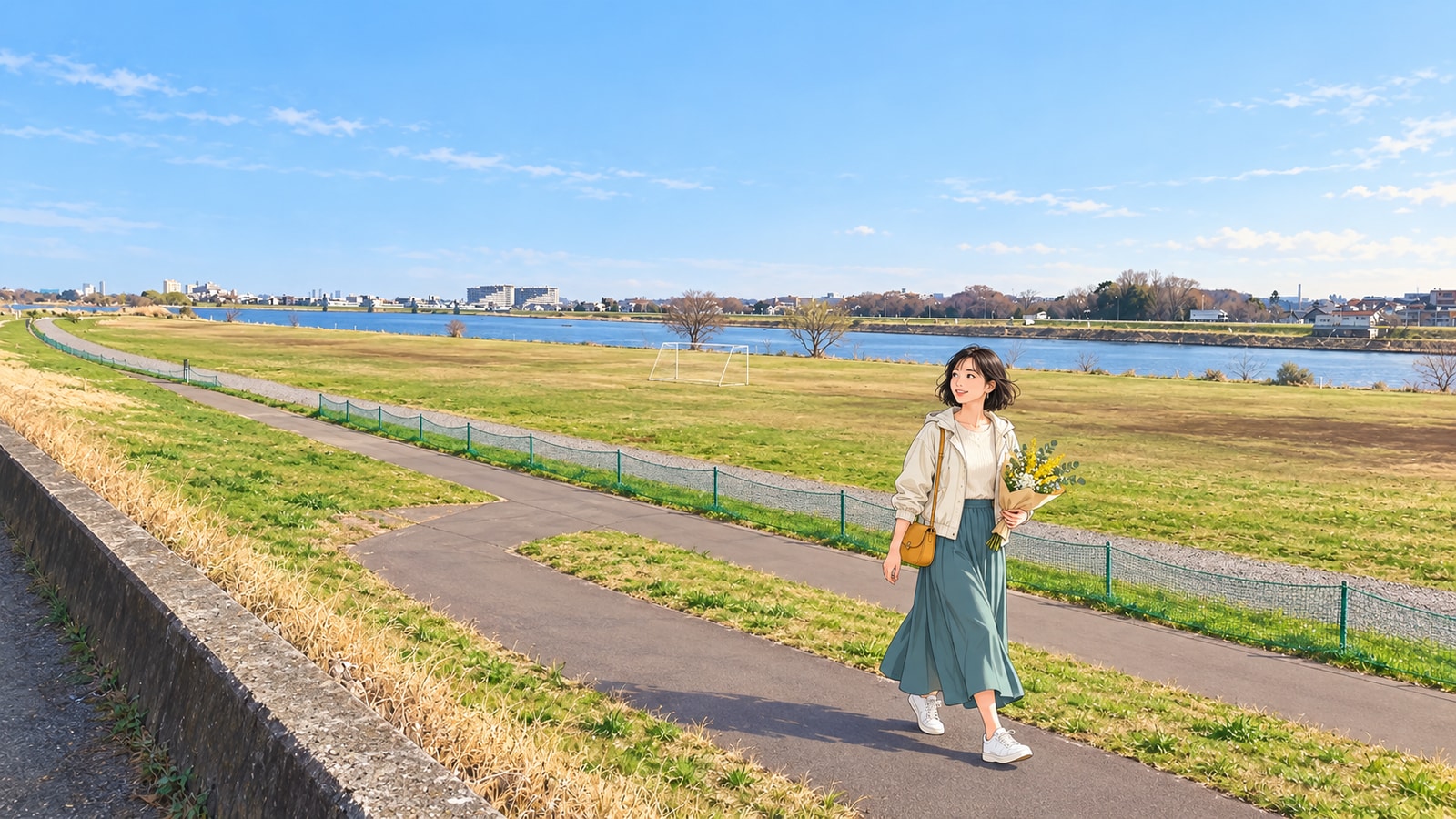
The scene in which Mugi and Kinu walk along the river holding a bouquet of flowers and eating bakery bread was filmed on the path beside the Tama River. Today the path is officially named 'Chofu Tama River Osanpo Road' (Strolling Road), having been renamed from its older nickname 'Tama River Cycling Road' to make clear that pedestrians have priority.
The exact riverside filming spot is plotted alongside Tamagawa Sakura Green Space on Chofu City's official filming location map.
Sources: Chofu City — Tama River Filming Spot / Chofu City — Path Renaming & Pedestrian Priority
3Chofu Station Plaza | Where Mugi Waits for Kinu While Reading a Book
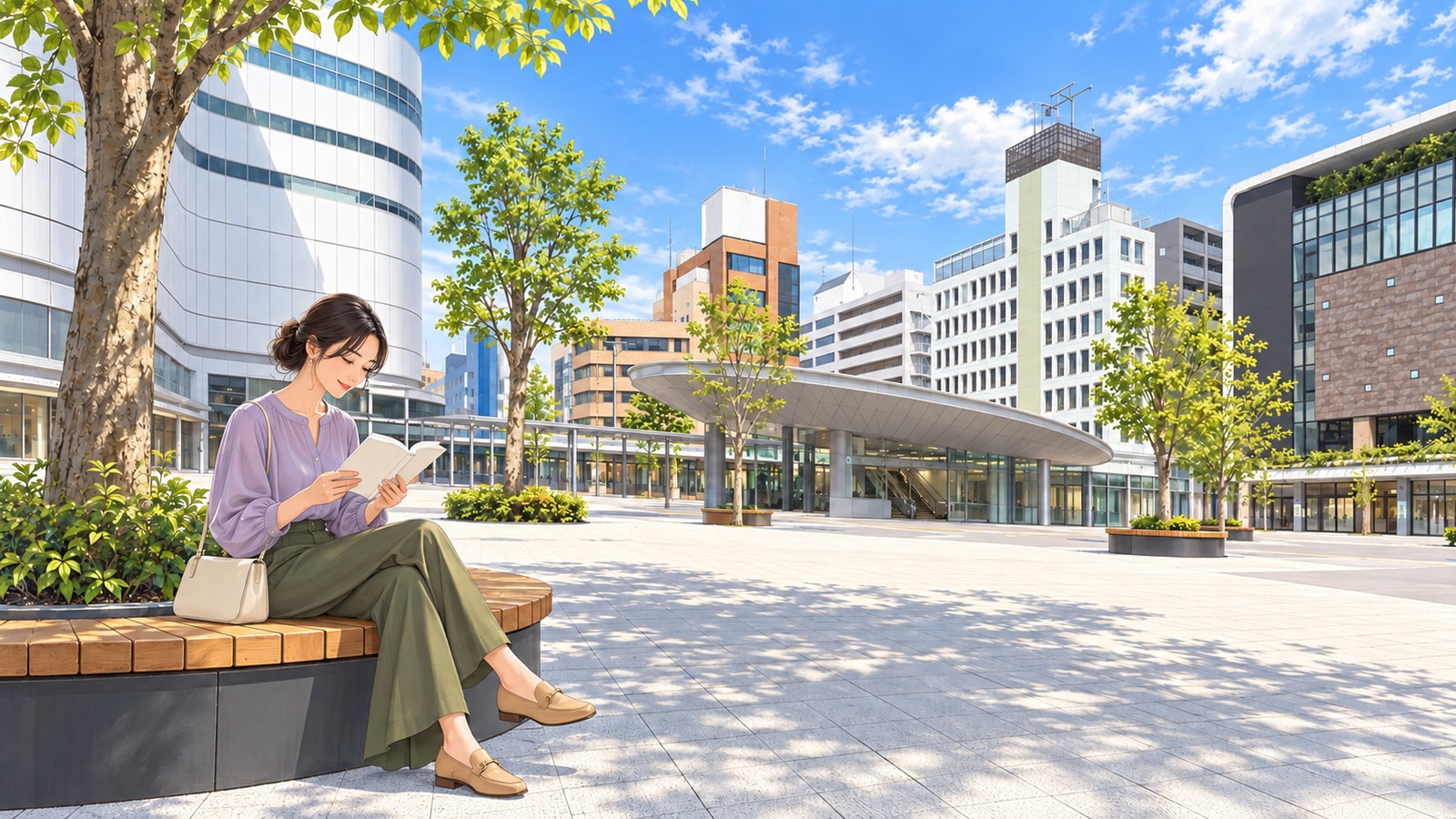
Chofu Station Plaza was used for the scene where Mugi reads a book while waiting for Kinu and returns a shared bicycle before greeting her, while the North Exit scramble crossing is where the two cross the street hand in hand.
Rapid redevelopment around Chofu Station also shaped how the scenes were framed on camera. Because the station plaza changed dramatically between 2015 and 2020—the five years depicted in the story—director Nobuhiro Doi tightened camera angles on the plaza, whereas the area directly in front of Chofu PARCO had changed relatively little and allowed wider framing.
Comprehensive redevelopment of Chofu Station Plaza was completed in March 2026 and officially unveiled in May 2026.
Visitors to the station plaza today can also spot artwork by Peko Asano, the illustrator who created Mugi's drawings inside the movie. Installed in the pavement on the south side of Trie Keio Chofu Buildings B and C are new 'Chofu, City of Film' illustration blocks drawn by Asano, adding a lasting piece of the film's art team to the station streetscape.
Sources: Chofu City — Station Plaza Filming Scenes / 2026 Station Plaza Completion / Peko Asano Illustration Blocks / Director Nobuhiro Doi on Station Changes & Framing
4Chofu PARCO | The Goal of Their Late-Night Walk and the Bookstore Where They Choose Books

On the night they miss the last train and walk for hours, Mugi and Kinu finally arrive in front of Chofu PARCO. On the fifth floor, PARCO Book Center served as the filming location for the scene where Mugi browses business books while Kinu searches the literature shelves.
Located at 1-38-1 Kojimacho, Chofu City, the bookstore continues to operate on the fifth floor and also hosts gallery pop-up events. Visitors can view the building exterior from the station sidewalk and browse inside during regular department store hours.
Sources: Chofu City — PARCO & Bookstore Scenes / PARCO Book Center — 2026 Events / Chofu PARCO Facility Guide
5Otozakabashi Intersection | Where Mugi and Kinu Share Their First Kiss

Otozakabashi Intersection is the filming location where Mugi and Kinu share their first kiss. Situated near 1-28-2 Jindaiji-Motomachi, Chofu City, the scene uses the intersection immediately adjoining the bridge.
During filming, the production team made sure to match the real-world behavior of the traffic light, which switches to a push-button pedestrian signal late at night. Not only the geometry of the intersection, but even the way the traffic signal governs how long the two pause together, was built around the actual location.
Visitors view the intersection and bridge from the public pedestrian sidewalk.
Sources: Chofu City — First Kiss Filming Location / Chofu City Tourist Association — Intersection Address / Line Producer on Filming at the Intersection
6North Side of Tsutsujigaoka Station | The Street Where Mugi Was Caught on Street View

Just north of Tsutsujigaoka Station runs the street used to film the scene where Mugi discovers himself captured on Google Street View.
Keio Line Tsutsujigaoka Station is located at 3-35-1 Nishi-Tsutsujigaoka, Chofu City, and the exact road segment is marked on the north side of the station on Chofu City's location map.
Sources: Chofu City — Street View Filming Location / Chofu City Tourist Association — Station Address
7Chofu City Hall | The Public Corridor Displaying Masaki Suda and Kasumi Arimura’s Autographs
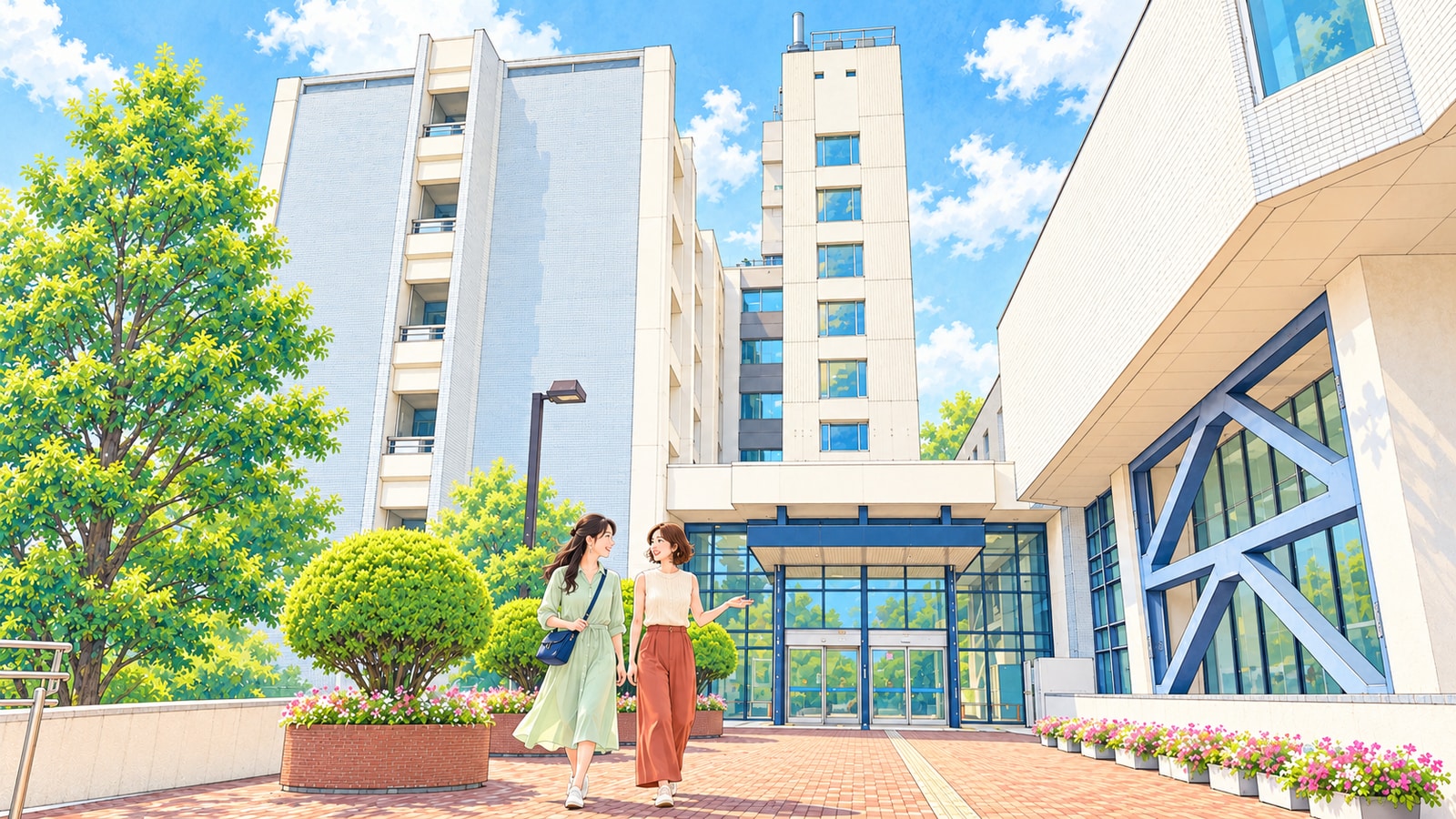
Having supported the production on location, Chofu City exhibits cast autographs and movie posters on the second floor of Chofu City Hall. On the wall beside the elevator hang the autographs of 'We Made a Beautiful Bouquet' stars Masaki Suda and Kasumi Arimura.
Located at 2-35-1 Kojimacho, Chofu City, the display is situated in the second-floor public corridor and can be viewed during weekday city hall hours from 8:30 to 17:15 (closed weekends, national holidays, and the New Year period). The display rotates and updates in step with films supported by the city.
Source: Chofu City — Autograph Exhibition & City Hall Hours
Deeper into the Work | The Two Protagonists of ‘We Made a Beautiful Bouquet’
Here we look back at the five years Mugi and Kinu spent after meeting at Meidaimae and making a home together in Chofu—examining how their relationship shifts along the very same streets and tables, and how the screenplay, production design, and music brought their daily life to the screen.
Mugi Yamane and Kinu Hachiya: Two College Students Who Missed the Last Train
The protagonists of 'We Made a Beautiful Bouquet' are Mugi Yamane, played by Masaki Suda, and Kinu Hachiya, played by Kasumi Arimura. Their relationship begins the night they both miss the last train at Meidaimae Station; discovering that they share the exact same tastes in music, books, and cinema, they spend the long night talking and soon begin dating.
Upon graduating from university, the two work part-time while moving into an apartment together along the Tama River. They visit their favorite local bakery, adopt an abandoned kitten, and spend their days surrounded by the culture they love across a five-year span.
Before long, both embark on full-time job hunting. For two people who fell in love as college students bonding over shared subculture tastes, choosing careers and sustaining a household brings gradual changes—crystallized in the Chofu PARCO bookstore scene where Mugi reaches for self-help business books while Kinu browses fiction.
Sources: Official Movie Site — Story & Leads / Distributor — A Five-Year Story / Chofu City — The Bookstore Scene
The five years shared by Mugi and Kinu, played by Masaki Suda and Kasumi Arimura, are previewed in the official 140-second movie trailer.
Yakisoba Bread, New Year’s Shrine Visits, and the Family Restaurant They Frequented Together
As Mugi and Kinu stroll along the Tama River, they eat yakisoba bread from their favorite in-story bakery, 'Kimuraya.' Buying pastries from a beloved neighborhood shop and walking beside the river embodies their shared life in Chofu, just as their first New Year's shrine visit (hatsumode) to Dosho Shrine in Tobitakyu leads them to rescue the stray kitten they name Baron.
The family restaurant Jonathan's also recurs throughout the film. What begins as a booth where the newly met couple talks excitedly about their future becomes, near the end of their five years, the setting for a painful conversation—showing how the words exchanged across the exact same table transform over time.
Sources: Theatrical Release Filming Location Report / Cast Interview with Masaki Suda & Kasumi Arimura
Real-Life Film Directors and Bands Participating in the World of Their Favorite Things
Shared tastes in film and music form the foundation of Mugi and Kinu's bond from the very first night. Acclaimed animation director Mamoru Oshii makes a cameo appearance as himself in the film, and the real-life band Awesome City Club also appears, with vocalist PORIN playing a waitress.
Awesome City Club's hit song 'Wasurena' was born as an inspired song for the film. After appearing in the movie and watching the completed cut, the band members themselves volunteered to write a song inspired by the story; working with the producers' blessing, they brought the track near completion just in time for it to be selected for the theatrical trailer.
In 'Wasurena,' atagi sings the first verse and PORIN sings the second, structured like two people exchanging letters across a subtle emotional distance, with a guitar solo placed before the second chorus. A song born from watching the film in turn became the music that introduced the movie to audiences nationwide through its trailer.
Source: Awesome City Club — How 'Wasurena' Was Written and Sung
Sources: Official Movie Site — Cast / Distributor — Role of 'Wasurena'
Nobuhiro Doi Directs Yuji Sakamoto’s Original Screenplay
Their First Feature Film Collaboration After the Drama ‘Quartet’
Written by screenwriter Yuji Sakamoto and directed by Nobuhiro Doi, the film marks the duo's first feature film collaboration following their acclaimed television drama 'Quartet.' Sakamoto penned the story as a wholly original screenplay for the screen.
It also marked the first co-starring feature film for Masaki Suda and Kasumi Arimura, who portray the same two characters from their college meeting through graduation and working adulthood.
Source: Official Movie Site — Screenwriter, Director & Co-Stars
Writing Mugi and Kinu Specifically with Suda and Arimura in Mind
The project originated when Masaki Suda told Yuji Sakamoto that he wanted to act in a full-fledged love story. From the very beginning, Sakamoto wrote the screenplay envisioning Suda and Kasumi Arimura in the two roles.
In Suda, Sakamoto saw an actor capable of expressing contradictory emotions simultaneously; in Arimura, he admired an elusive presence that resists easy categorization. Rather than fitting actors into pre-existing archetypes, Mugi and Kinu were written by picturing Suda and Arimura inhabiting every scene.
To prepare for her role, Arimura listened to songs by Kinoko Teikoku and Awesome City Club and read novels by Natsuko Imamura. Between takes on set, she talked about music with Suda and played picture-shiritori word games—building natural rapport off-camera so they could inhabit five years of shared history across a six-week shoot.
In the scene where Kinu visits Mugi's apartment for the first time, the rain brings out the curl of her perm. While filming the moment where Mugi dries her hair with a hairdryer, Suda took care not to flatten the curls—capturing the tender proximity of two people just before their shared life begins.
Source: Kasumi Arimura on Role Preparation and On-Set Rapport
Sources: Opening Day Remarks by Yuji Sakamoto / Co-Stars on Project Origins & Filming Schedule
Crafting Inner Monologues from Five Years of Character Diaries
When Yuji Sakamoto initially struggled for several months to move the script forward with his first character drafts, a producer suggested that he write five years' worth of daily diary entries for Mugi and Kinu. Completing those diaries unlocked the screenplay, and passages from the diaries were woven directly into the film's voiceover monologues.
The growing distance between the two surfaces sharply during their argument over Kinu's career change. When Mugi scoffs at the philosophy of her prospective new employer, Kinu lets out a brief laugh. While the script indicated that she laughs, Arimura's performance layered flash anger with instinctive concern for Mugi—a moment Sakamoto later cited as an example where an actor's expression astonished him.
Source: Yuji Sakamoto on Writing the Diaries and the Career-Change Argument
Around 80 Filming Locations and Summer Scenes Shot in the Middle of Winter
Principal photography began on January 11, 2020 and wrapped on February 26, 2020. Line producer Tomoo Doi coordinated roughly 80 filming locations—working alongside director Nobuhiro Doi as the production lead responsible for securing and managing real-world sites.
Because the screenplay specified that Kinu's family home was in Tobitakyu and Mugi's apartment was near Chofu, the location team scouted sites matching that exact geography. For the night the two miss the last train, the crew prioritized the authentic atmosphere created by having the actors walk through real city streets.
Outside Chofu, the Times Avenue underground passage in Nishi-Shinjuku was used for the scene where Mugi meets an exhausted Kinu during her job hunt. Although filming took place on a winter night between 20:00 and 22:00, the scene is set in summer, so Suda wore a T-shirt and shorts—matching wardrobe and location to the season inside the story.
Sources: Three-Way Talk with the Line Producer & City Film Commission / Director Nobuhiro Doi on Filming the Night Walk
Capturing a Five-Year Span and the Streets of Chofu in 2020
Cinematographer Yoichi Kamakari aimed for visuals that would let audiences physically feel the passage of five years, taking care to film everyday places like station plazas and riverbanks without distorting how they feel to people who pass through them daily. As a result, the film also preserves a visual record of Chofu as it looked in early 2020.
Director Nobuhiro Doi himself walked the entire three-and-a-half-hour route from Meidaimae that Mugi and Kinu take after missing the last train. Crew members also proposed route segments, and at Tsutsujigaoka Station they waited until after the final train departed to film on an empty platform—using the nighttime railway station alongside the north-side street where Mugi appears on Street View.
Early in development, the working title of the project was 'Last Train Chronicle' (Shuden Chronicle). Determined from the outset to depict not just a romantic meeting but the full arc through separation, Director Doi focused on observing young people living in 2015 rather than projecting his own student memories from thirty years earlier.
Sources: Cinematographer Yoichi Kamakari on Filming / Director Nobuhiro Doi on Walking the Route & Station Filming / Director Nobuhiro Doi on the Working Title & Era
The Room Overlooking the Tama River | Combining a Rooftop Balcony with a Studio Interior
The screenplay required an apartment about a 30-minute walk from Chofu Station with a view of the Tama River. Because no single existing apartment satisfied every filming requirement, production designer Ryo Sugimoto built one home split across two locations: a building rooftop and a soundstage studio.
- Continuous View Toward the River
Building Rooftop
Constructed the balcony and part of the interior on a real rooftop so the apartment-viewing scene could pan continuously from inside the room out to the Tama River.
- Daily Life Inside the Room
Studio Soundstage
Built the full apartment interior on a studio stage with a photographic backdrop of the Tama River outside the window, moving LED lights along the horizon line at night to simulate passing car headlights.
Painted in pale blue, the apartment interior was dressed with furniture imagined as pieces the young couple picked up at neighborhood secondhand shops, including a bed frame made from wooden pallets as a DIY project.
For the scene where the two hang curtains together, set decorator Yutaka Mogi sourced fabric with a soft purple gradient—seamlessly linking the outdoor river view with the personal belongings of two young people starting their life together.
Sources: Director Nobuhiro Doi on Apartment Requirements & Filming / Production Designer Ryo Sugimoto on Building the Set
The Bookshelf and Movie Ticket Stubs Used as Bookmarks
Every item in Mugi and Kinu's room—starting from the specific titles named in Sakamoto's script—was selected and arranged by the directing and art teams to reflect the characters' tastes and the years they lived through, right down to how books were ordered on the shelves.
In the scene where they use movie ticket stubs as bookmarks, even the film titles on the stubs were specified in the script: Mugi's stub is for 'Venus in Fur' (Kegawa no Venus) and Kinu's is for 'Hill of Freedom' (Jiyugaoka de), expressing their shared love of cinema through tiny paper keepsakes.
The script also includes a conversation about a shop in Asagaya known only to the two of them; Director Doi and Sakamoto valued how that shared reference connected Mugi and Kinu even if not every viewer recognized the shop's name.
Sources: Director Nobuhiro Doi on Books & Movie Ticket Stubs / Conversations Shared Only by the Two
Discovering the Kitten and the Spontaneous Reaction Created on Set
The scene where Mugi and Kinu find the abandoned kitten preserves a genuine, unscripted reaction by Masaki Suda and Kasumi Arimura on set. The screenplay simply noted that they open the box and find a kitten, with no dialogue written; when the two opened the box and burst out laughing at the exact same instant, that spontaneous laugh became Mugi and Kinu's reaction in the finished film.
Rather than locking down every gesture before stepping onto set, Suda and Arimura built their performances in response to each space, filming largely in chronological order.
Arimura later reflected that Director Doi's staging and editing leave room for actors to think and feel in real time, while Suda noted how the editing balances sharp cuts with lingering pauses—preserving wordless reactions and silences across the couple's five years.
Sources: Masaki Suda & Kasumi Arimura on Filming / Co-Stars on Director Doi's Staging & Editing
The seaside sequence where the couple takes their first trip out of town was filmed on the coast of Makinohara City in Shizuoka Prefecture, while the extended climatic conversation inside the family restaurant took two full days to shoot—combining Chofu's everyday streets with a seaside excursion and a two-day restaurant shoot to span five years.
Source: Director Nobuhiro Doi on Filming the Beach & Finale Restaurant Scenes
A Structure Weaving Inner Monologues and Everyday Conversations
Sakamoto's screenplay alternates between brief one-line moments and multi-page dialogue scenes. Director Doi shaped that diary-like progression of short and long entries into the rhythmic flow of a feature film.
Throughout the first half, the interplay between inner voiceover monologues and spoken back-and-forth dialogue sets the tempo, layering unhurried conversations with quick vignettes as the couple moves from first meeting to living under one roof.
Sources: Director Nobuhiro Doi on Scene Lengths & Monologues / Tokyo Theatres Official — 140-Second Trailer
From Theatrical Release to Location Maps and New Street Art in Chofu
The 2021 Release and Ongoing Local Initiatives in Chofu
- Jan 8, 2021Chofu City launches location map distribution, promotional video, and display panels.Regional Collaboration
- Jan 29, 2021Theatrical release; online edition of the Chofu location puzzle rally begins.Theatrical Release
- March 22–30, 2021On-site Chofu filming location puzzle walking rally held.Local Tie-Up Project
- Jul 14, 2021Standard Edition DVD and home video packages released.Video & Film
- Autumn 2021TAMA Film Awards honors the cast and crew with Special Award and Suda & Arimura with Best Actor/Actress.Award & Honor
- Mar 11, 2022Kasumi Arimura wins Outstanding Performance by an Actress in a Leading Role at the Japan Academy Film Prize.Award & Honor
- Mar 8, 2023Chofu City Tourist Association and Chikyu no Arukikata publish an 11-spot multilingual guide.Local Guide
- Autumn 2023Multilingual edition added to Chofu City's official filming location map.Map
- Oct 2024Chofu City announces a new location puzzle rally running through January of the following year.Local Tie-Up Project
- Mar 2026Full redevelopment of Chofu Station Plaza completed and unveiled in May.Local Evolution
Sources: Chofu City Newsletter — Pre-Release Local Initiatives / Chofu City — Project Implementation Report / TAMA Film Awards Report / Japan Academy Film Prize / 2023 Multilingual Tourism Guide / Multilingual Location Map / 2024 Puzzle Rally Announcement
Chofu’s Filming Location Guide Created Ahead of the Movie’s Premiere
Chofu City began distributing its official filming location map in January 2021 ahead of the movie's theatrical release, printing 12,000 copies alongside a promotional video and five tourist display panels. An online puzzle-solving event launched on opening day, January 29, followed in March by an on-site walking rally across the filming spots.
In autumn 2023, the city published a multilingual edition of the location map pairing film stills with on-site photographs and scene descriptions. Visitors checking exact spot locations before heading out can open the PDF directly from Chofu City's Filming Location Map Distribution Page.
Sources: Chofu City — Initial Campaign Implementation Record / 2023 Multilingual Map Publication
Standard Edition DVD Containing the Feature Film
Released on July 14, 2021, the Standard Edition DVD (catalog number TCED-5745) is a single-disc package containing the 124-minute feature film plus approximately 2 minutes of trailers, equipped with Japanese audio description and barrier-free Japanese subtitles.
Source: TC Entertainment — Standard Edition DVD Specifications
Lab Note | From a Business Perspective: Communicating Everyday Living Spaces as Filming Locations
Meeting outside a train station, choosing books on a department store floor, and walking along a riverbank—the places filmed in this work are not closed studio attractions, but active stations, shops, and public paths woven into daily life. By linking each spot to a concrete moment in Mugi and Kinu's five years, Chofu City's location map turns memories of the film into a walkable neighborhood route.
Updating the original pre-release map into a multilingual edition and installing Peko Asano's new pavement blocks in the newly completed station plaza show how the city continues to care for the film's legacy. Presenting both how the town looked during the 2020 shoot and how the plaza has evolved today gives even returning visitors fresh details to discover.
Official Sources & Primary References
- Official Film Website & Guide
- Chofu City Filming Location Map
- Chofu City Tourist Association — Filming Locations
- Distributor — Standard Edition DVD
Exhibition dates, opening hours, admission fees, and ticket details are current at the time of writing. Always check the official websites for the latest schedule updates before setting out on your pilgrimage visit.
FAQ
Did Mugi and Kinu first meet at Tobitakyu Station?
In the story, the two first meet at Meidaimae Station after missing the last train. Tobitakyu Station served as the filming location for the opening platform scene and the bus stop where Kinu alights.
Which bookstore in Chofu appears in the film?
It is PARCO Book Center on the fifth floor of Chofu PARCO, where the scene of Mugi browsing business books while Kinu looks at literature was filmed. The bookstore continues to operate on the fifth floor.
Where is the location where Mugi and Kinu share their first kiss?
It was filmed at the Otozakabashi Intersection in Jindaiji-Motomachi, Chofu City. Visitors can view the bridge and intersection from the public pedestrian sidewalk.
Are the Tama River Cycling Road and the Osanpo Road different paths?
They are the same riverside path: the former 'Tama River Cycling Road' was officially renamed 'Chofu Tama River Osanpo Road' (Strolling Road) to emphasize pedestrian priority. It is where Mugi and Kinu walk holding a bouquet and yakisoba bread.
Is there a place where visitors can see the lead actors' autographs?
Yes, autographs signed by Masaki Suda and Kasumi Arimura are displayed beside the elevator on the second floor of Chofu City Hall. Visitors can view them in the public corridor during weekday office hours (excluding national holidays and the New Year period).
Is the movie based on an original novel?
No, it is an original screenplay written specifically for the cinema by screenwriter Yuji Sakamoto and directed by Nobuhiro Doi, marking their first feature film collaboration after the television drama 'Quartet.'
Does the standard DVD edition include behind-the-scenes making-of footage?
The standard single-disc DVD (catalog number TCED-5745) contains the 124-minute feature film and approximately 2 minutes of trailers. Making-of documentaries and conversations between the screenwriter and director are exclusive to the Deluxe Edition.
When was the Chofu filming location map created?
Chofu City began distributing its official filming location map in January 2021 ahead of the theatrical release and published a multilingual edition in autumn 2023. The current map can be viewed on the city's official website.
More in Pilgrimage

Film "Kokuhou" Pilgrimage Guide: Izushi Eirakukan, Biwako Otsukan, Kyoto Kaburenjo Theaters & Dojo-ji Temple

5 Centimeters per Second Pilgrimage Guide: Tanegashima Coast & Nagano Live-Action Stations
