
Amachan Pilgrimage Guide: Kuji's Kosode Coast, Costume Exhibits & Sanriku Railway Filming Stations
From the waters of Kosode Coast where Amachan protagonist Aki Amano trained to become an ama free-diver to the Sanriku Railway stations where she sang alongside her best friend Yui Adachi and sold sea urchin rice bowls, Kuji City and the neighboring coastal towns of Iwate Prefecture preserve the real stations and shorelines where the drama was filmed.
Following high school student Aki Amano as she arrives in Kitasanriku with her mother Haruko Amano and falls in love with the sight of her grandmother Natsu Amano diving into the sea, visitors today can pair the outdoor filming locations with screen-used costume displays at YOMUNOSU and cultural exhibits at the Kosode Ama Center.
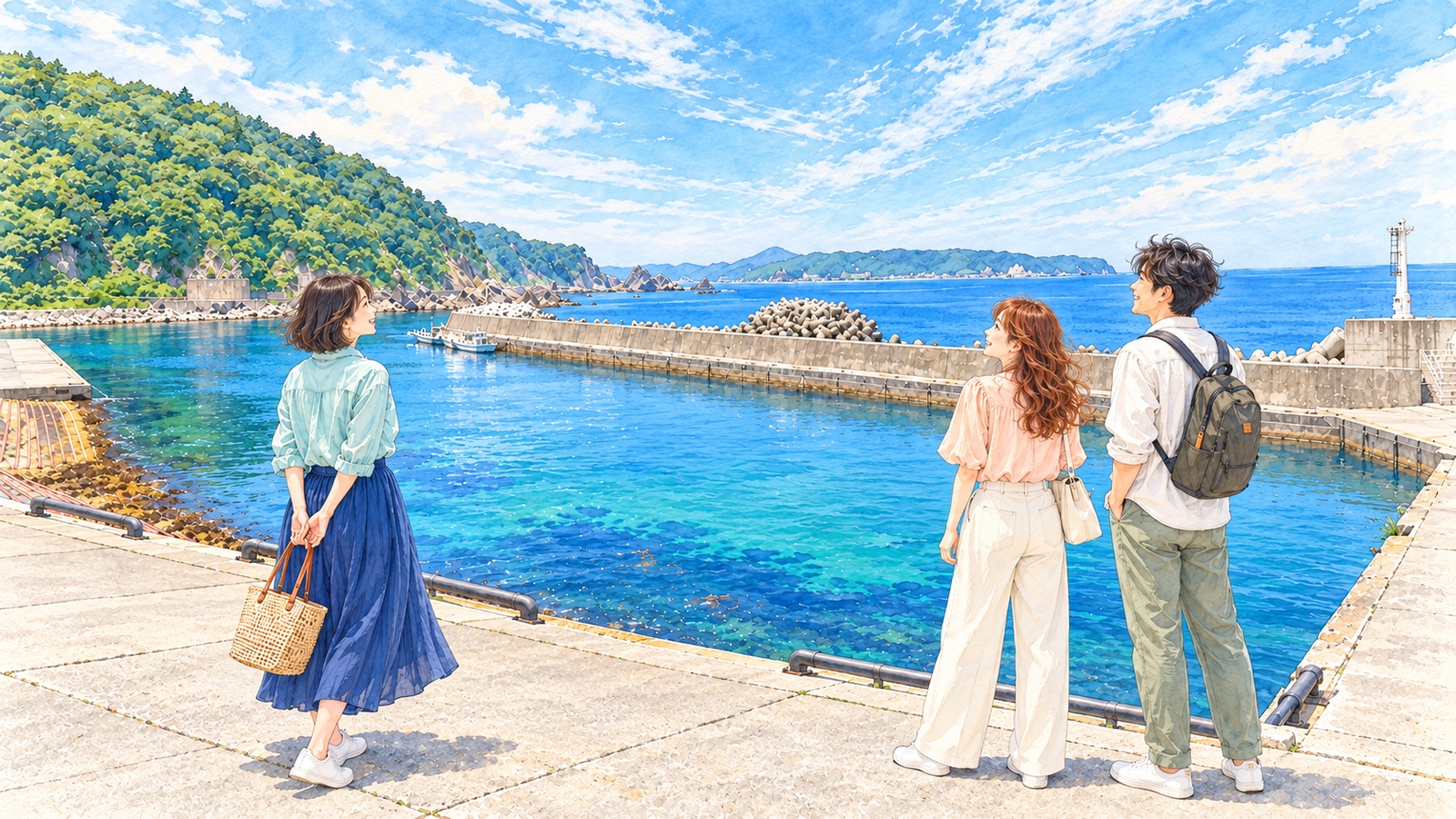
Visiting the Sea of Kosode, the Exhibits in Kuji, and the Filming Stations Along the Sanriku Railway
① Kuji Station · 3-38-2 Chuo, Kuji, Iwate
Station building and platform for Kitasanriku Station; filming location guideboard at Itsukushi Plaza outside the station.
Read the Complete Pilgrimage Guide & Access Notes for Sanriku Railway Kuji Station (3-38-2 Chuo, Kuji, Iwate)② Kosode Coast · Kosode, Ube-cho, Kuji, Iwate
Filming site for ama free-diving, the white lighthouse, Meoto-iwa rocks, and the coastal road descending to the port.
Read the Complete Pilgrimage Guide & Access Notes for Kosode Coast & Kosode Fishing Port (Kosode, Ube-cho, Kuji, Iwate)③ Kosode Ama Center · 24-110-2 Ube-cho, Kuji, Iwate
Exhibits on the history of the Northernmost Ama, reopened after interior renovations in August 2026.
Read the Complete Pilgrimage Guide & Access Notes for Kosode Ama Center (24-110-2 Ube-cho, Kuji, Iwate)④ YOMUNOSU · 3-58 Chuo, Kuji, Iwate
Station-front cultural complex displaying screen-used costumes, dioramas, and Ama-e artwork.
Read the Complete Pilgrimage Guide & Access Notes for YOMUNOSU Tourist Exchange Center (3-58 Chuo, Kuji, Iwate)⑤ Judan-dori Street · Judan-dori Shopping Street, Kuji, Iwate
Shopping street where Boutique Konno and Yayoi's interactions with fans were filmed.
Read the Complete Pilgrimage Guide & Access Notes for Judan-dori Shopping Street (Judan-dori Shopping Street, Kuji, Iwate)⑥ Kuji Riverbank · Dai-26 Chiwari Hatada, Kuji, Iwate
Riverside path used for scenes of Aki and her classmates cycling to high school.
Read the Complete Pilgrimage Guide & Access Notes for Kuji Riverbank (Dai-26 Chiwari Hatada, Kuji, Iwate)⑦ Noda-Tamagawa Stn. · Noda Village, Iwate
Station where Aki and Yui sell sea urchin bowls, with Pacific Ocean views from the inbound platform.
Read the Complete Pilgrimage Guide & Access Notes for Noda-Tamagawa Station (Noda Village, Iwate)⑧ Horinai Station · Fudai Village, Iwate
Filming location for Sodegahama Station, where Yui shouts her dream of becoming an idol from the platform.
Read the Complete Pilgrimage Guide & Access Notes for Horinai Station (Fudai Village, Iwate)⑨ Osawa Bridge View · 104-13 Shirai, Dai-19 Chiwari, Fudai Village, Iwate
Viewpoint near Rest House Ushio along Route 45 overlooking Osawa Bridge, where Natsu waved the big-catch flag.
Read the Complete Pilgrimage Guide & Access Notes for Osawa Bridge Viewpoint near Rest House Ushio (104-13 Shirai, Dai-19 Chiwari, Fudai Village, Iwate)⑩ Tanohata Station · Tanohata Village, Iwate
Filming location for Hatano Station, featured when Koichi Taneichi departs for Tokyo.
Read the Complete Pilgrimage Guide & Access Notes for Tanohata Station (Tanohata Village, Iwate)⑪ Ueyama Amber · 17-32-2 Osanai-cho, Kuji, Iwate
The filming tunnel is at a separate site in Ube-cho; book in advance with the operator and meet at the designated reception point.
Read the Complete Pilgrimage Guide & Access Notes for Ueyama Amber Crafts (Tunnel Tour Reception) (17-32-2 Osanai-cho, Kuji, Iwate)
1Sanriku Railway Kuji Station: The ‘Kitasanriku Station’ Building and the Reopening Ceremony Platform
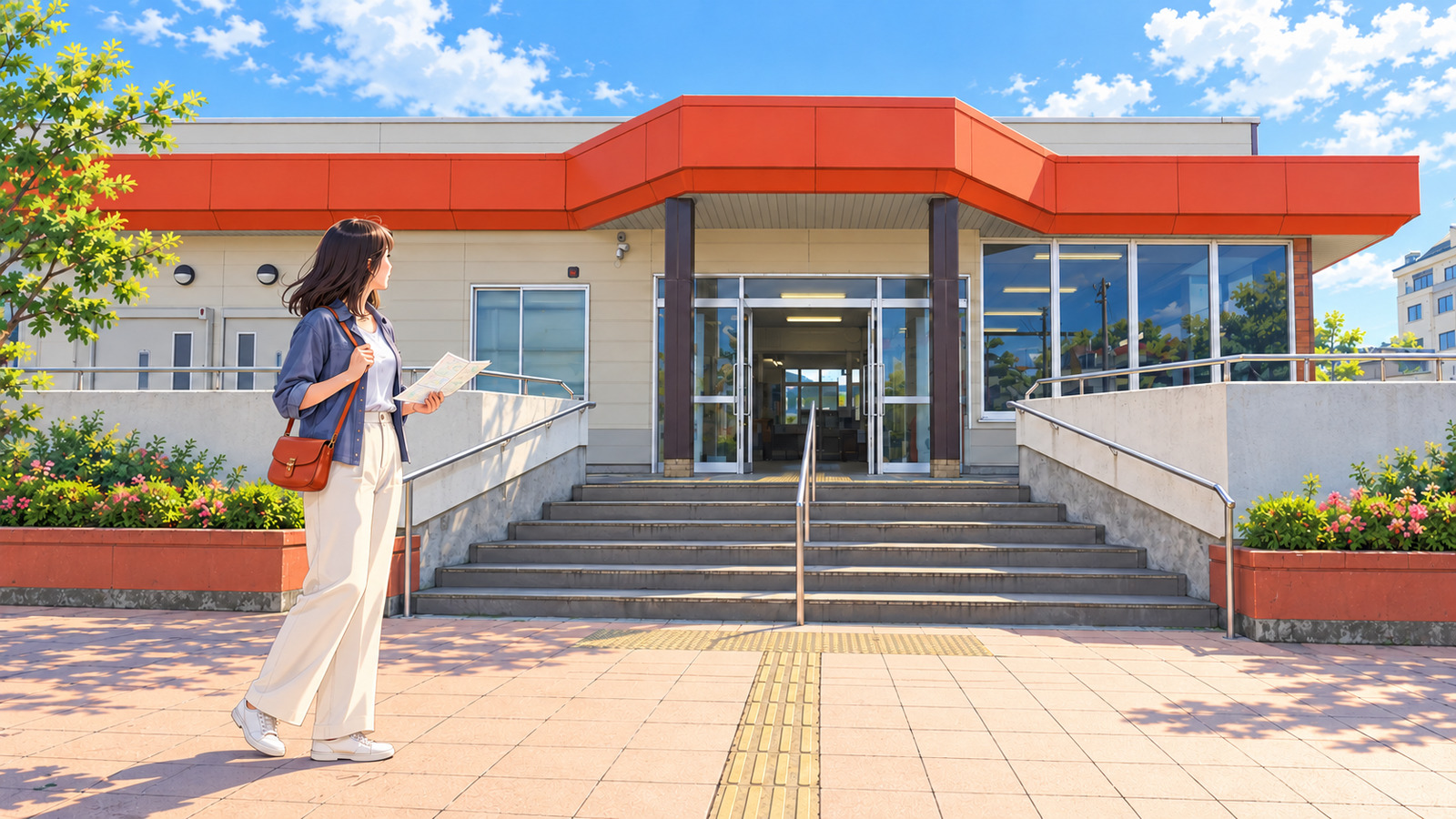
Sanriku Railway's Kuji Station served as 'Kitasanriku Station' in the drama, with both its orange triangular-gabled station building and its train platforms appearing on screen; local citizens of Kuji also participated as extras in the scene breaking open the celebratory kusudama ball for the railway's reopening ceremony.
Inside the current station building are a tourist information desk and station shop, where the counter 'Rias-tei' sells soba noodles, rice balls, and the famous sea urchin bento (uni bento) in limited daily quantities. The ticket window operates from 7:30 to 18:30, and visitors cross the overhead footbridge to the platform in accordance with train departure times and admission rules.
Standing in Itsukushi Plaza right outside the station is a municipal guideboard introducing the drama's filming locations. Because the aging former station-front building used as the Tourism Association building in the drama is now surrounded by safety barricades, visitors can check the guideboard in the plaza and view the drama costumes and memorabilia inside nearby YOMUNOSU.
Located at 3-38-2 Chuo, Kuji City, Iwate Prefecture, the station has paid parking nearby, and Sanriku Railway publishes its current timetable revised on March 14, 2026.
Sources: Kuji City — Drama Filming Locations / Sanriku Railway — Kuji Station Guide / Kuji City — Former Station Building & Location Sign / Sanriku Railway Timetable
2Kosode Coast & Kosode Fishing Port: The Sea of the Ama Divers and the White Lighthouse
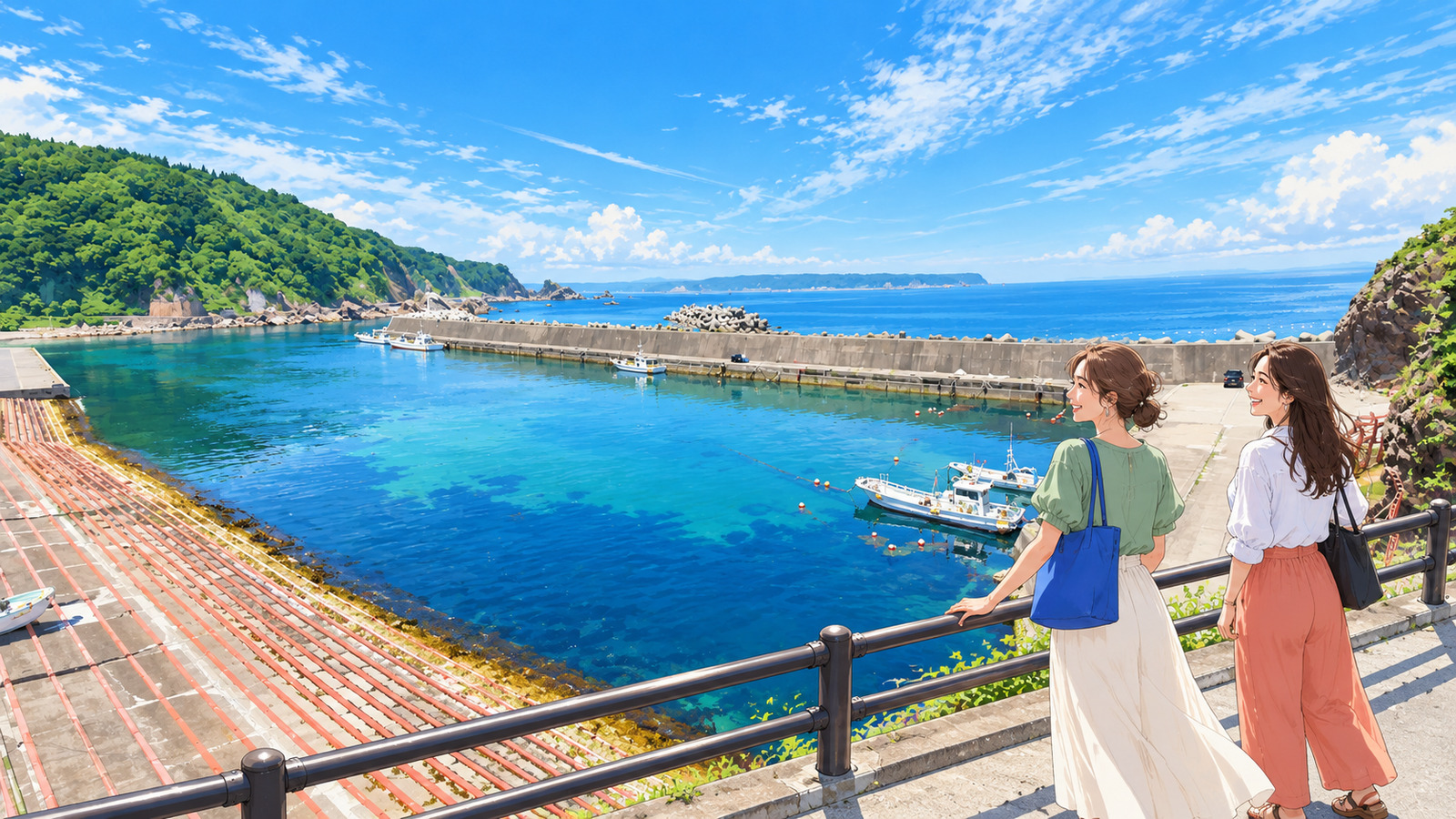
Kosode Coast is the real-world coastline where the drama's ama free-diving scenes were filmed—serving both as the sea where the divers plunge beneath the waves and as the opening location where Aki's grandmother 'Natsu-bappa' first appears, while the white Kosode Port North Breakwater Lighthouse features prominently in the opening title sequence.
Offshore, the twin rocks known as Meoto-iwa mark the spot where grandmother Natsu pushes Aki off a boat into the sea, while along the coastal road descending toward the port the crew filmed the scenes where mother Haruko mails a letter and where Aki parts ways with her father Masamune Kurokawa.
Around the fishing port stand the lookout hut where Yui's older brother Hiroshi Adachi works part-time and the filming shed used as the Sodegahama Fishery Cooperative—which also served in the story as the 'Ama Café' and the concert venue for legendary actress Hiromi Suzuka; visitors can view the coastal scenery from the publicly accessible areas of the fishing port.
Because the road directly in front of the Kosode Ama Center is closed to general vehicles, visitors arriving by car should park in the designated tourist parking lot.
Sources: Kuji City — Kosode Scenes & Filming Spots / Kosode Ama Center & Parking / NHK — Aki's Father Masamune / NHK — Yui's Brother Hiroshi
3Kosode Ama Center: Exhibits Exploring the History of the Northernmost Ama Divers

The Kosode Ama Center introduces the living history of the 'Northernmost Ama' (Hokugen no Ama) who have dived in these waters for generations; built in 2015 to replace the former facility lost in the 2011 tsunami, the center reopened on August 29, 2026 after completing interior renovations.
The 1st floor houses a tourist information counter and local specialty shop while the 2nd and 3rd floors present exhibits on the history of the ama divers; admission is free of charge, offering visitors a deeper look into the real maritime livelihood and community life behind the diving scenes in the drama.
Live ama free-diving demonstrations are held seasonally: in 2026 they ran from July through September and have concluded as of October, so check the center's official announcements for the next demonstration schedule.
Located at 24-110-2 Ube-cho, Kuji City, the center is normally open from 9:00 to 17:00 (closed January 1, with earlier closing hours in winter); rather than driving directly in front of the building, park in the tourist parking lot and walk to the entrance.
Source: Kuji City — 2026 Center Renovation & Visitor Guide
4YOMUNOSU: Screen-Used Costumes and Drama Dioramas
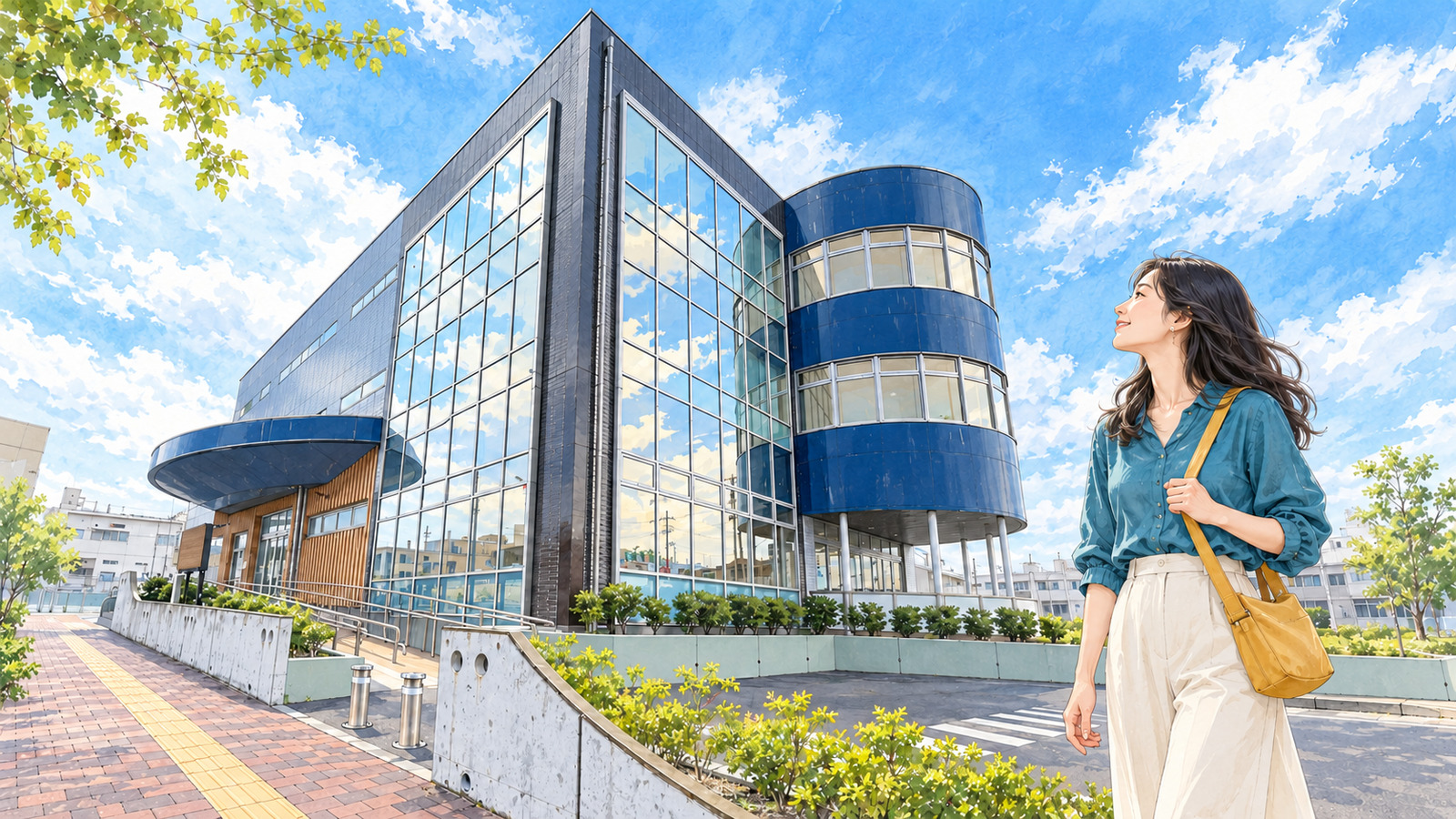
At the civic complex YOMUNOSU right outside Kuji Station, visitors can explore a dedicated Amachan exhibition inside the 1st-floor Tourist Information and Exchange Center, featuring costumes actually worn during filming, detailed drama dioramas, 'Ama-e' illustrations by manga artist Toshinao Aoki, and group character artwork.
Also displayed on the 1st floor is 'Yomu no Mushi,' an original 162 cm by 112 cm painting by lead actress Non depicting a girl reading a book adorned with a three-dimensional ribbon—named after the 'bookworm' (hon no mushi) spirit of a facility housing the municipal library and unveiled on March 29, 2021 as a symbolic guardian of the building.
Source: Kuji City — Non's Painting 'Yomu no Mushi'
Even the furniture and counters inside YOMUNOSU incorporate local Kuji craftsmanship—with sofas upholstered in traditional kasuri fabric worn by ama divers and amber embedded into the information counter—and visitors are welcome to take photographs of the drama exhibits freely.
Located at 3-58 Chuo, Kuji City, the Tourist Information and Exchange Center is open from 9:00 to 21:30 daily (closed January 1).
Source: YOMUNOSU — Tourist Exchange Center Exhibits & Visitor Guide
5Judan-dori Shopping Street: Boutique Konno and Scenes with the Townsfolk
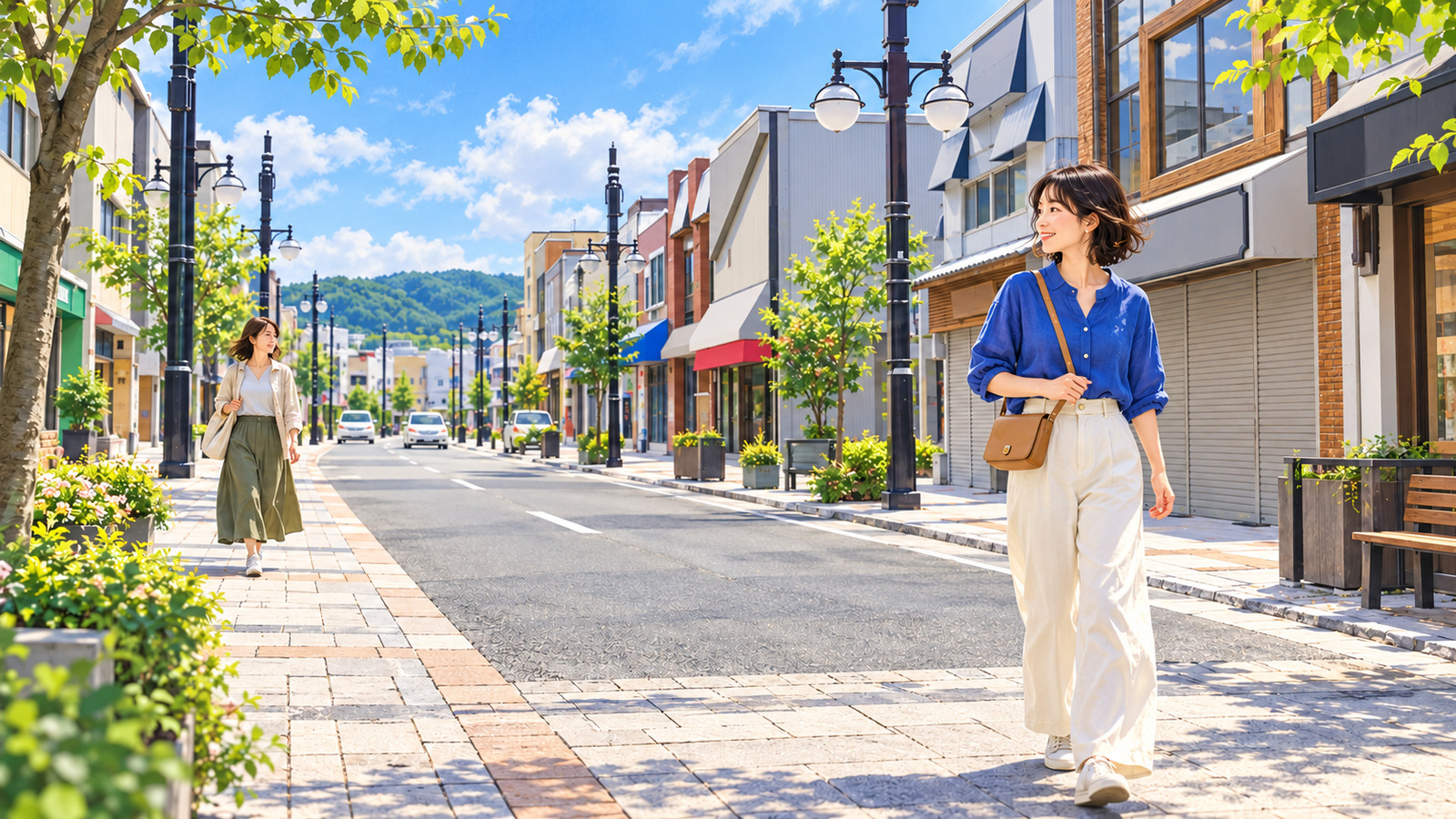
Judan-dori Shopping Street in downtown Kuji served as the street setting for 'Boutique Konno,' run by Mr. and Mrs. Konno, as well as the location where ama diver Yayoi Konno (played by Eri Watanabe) interacts with visiting fans.
Downtown Kuji also served as the filming site for the drama's 'Kitasanriku Autumn Festival,' modeled after the real Kuji Autumn Festival held each September when towering festival floats parade through the streets.
Source: Kuji City — Shopping Street & Autumn Festival Filming
6Kuji Riverbank: The Riverside Path Where Aki and Friends Cycle to School
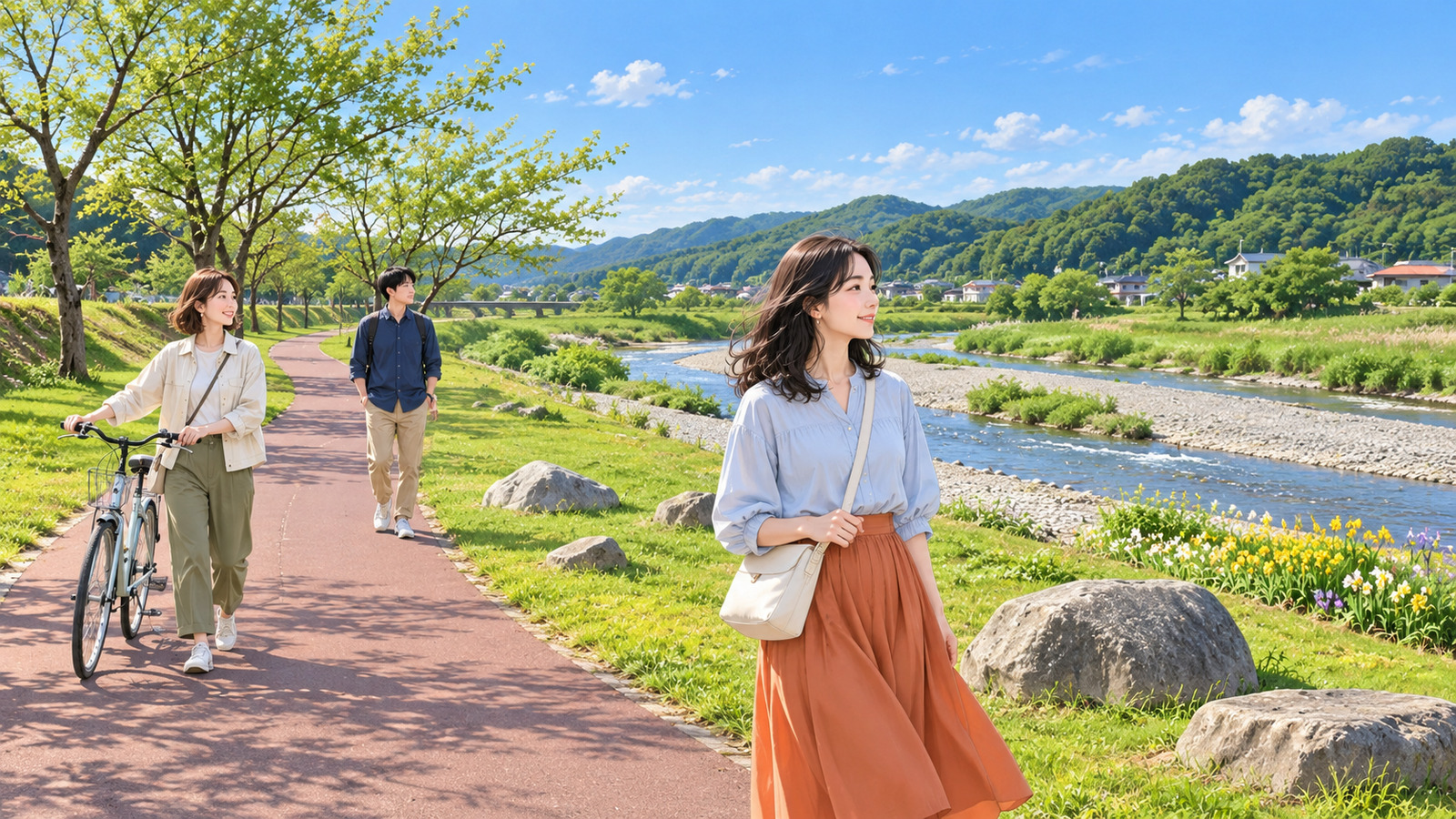
Along the Kuji Riverbank at Dai-26 Chiwari Hatada in Kuji City, the crew filmed the everyday scenes of Aki and her friends riding their bicycles to Kitasanriku High School along a riverside path still used by local walkers and runners today.
Looking up to her high school senior Koichi Taneichi, Aki decides to transfer into the school's Civil Engineering Diving Course—learning helmet diving at school alongside her free-diving training as an ama in the sea.
Sources: Kuji City — Riverbank Filming Location / NHK — Episode 28 Synopsis
7Noda-Tamagawa Station: Where Aki and Yui Sold Sea Urchin Rice Bowls
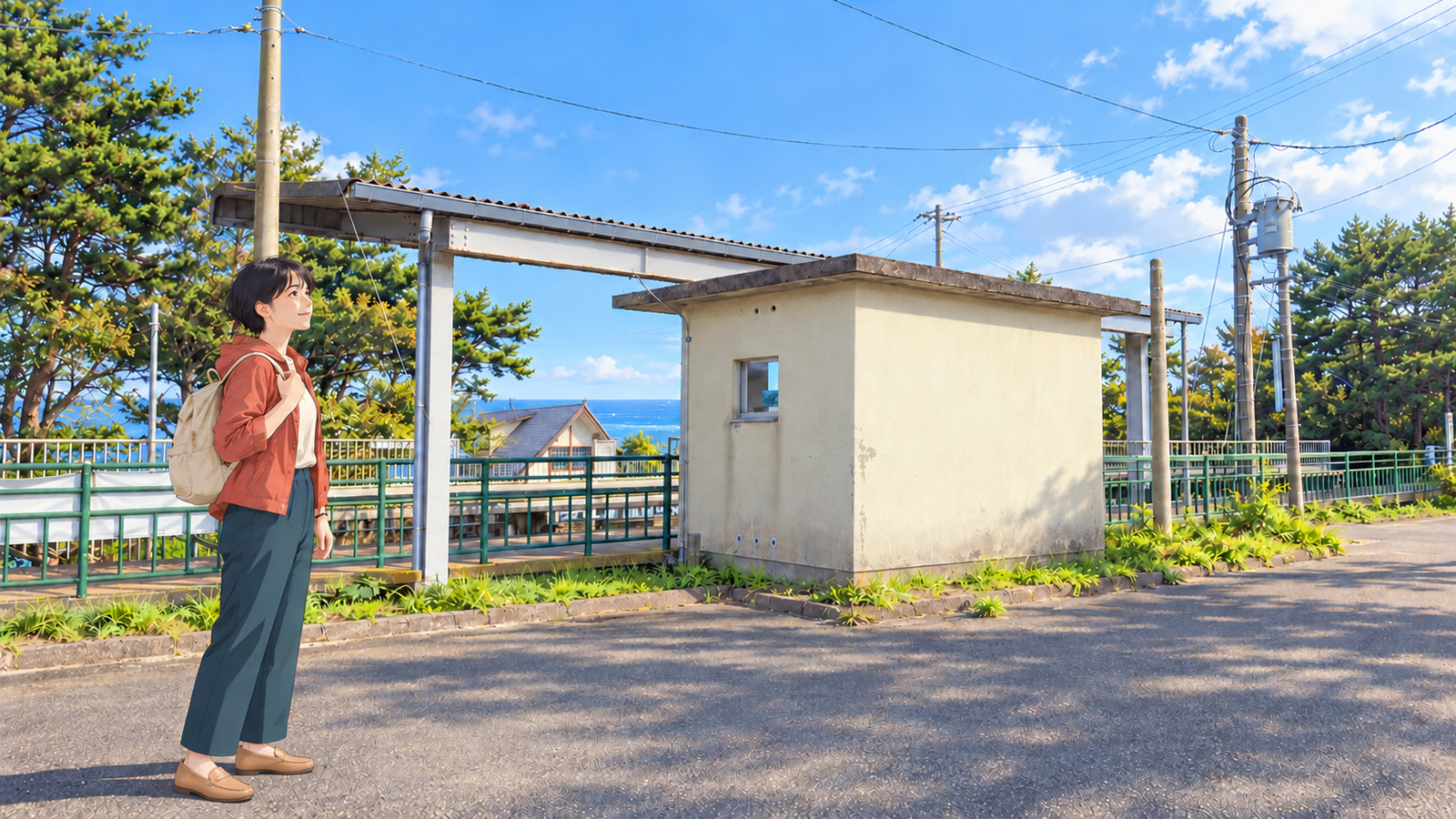
Located in Noda Village, Noda-Tamagawa Station is the railway station where the crew filmed Aki and Yui Adachi selling sea urchin rice bowls (uni-don) as the hometown idol duo 'Shiosai no Memories.'
In the drama, the two girls sing aboard a tatami-floored excursion train celebrating the 25th anniversary of the Kitasanriku Railway while selling sea urchin bowls and handmade friendship bracelets, bringing lively crowds to the station-front cafe as the railway and stations become the stage for their idol activities.
Today Noda-Tamagawa Station is an unstaffed station offering sweeping views of the Pacific Ocean from its inbound platform; it is equipped with a restroom and barrier-free ramp (no parking lot), so check the Sanriku Railway timetable when visiting by train.
Sources: Kuji City — Selling Uni-don Scene / NHK — Episode 53 Tatami Train / Sanriku Railway — Noda-Tamagawa Station
8Horinai Station: ‘Sodegahama Station,’ Where Yui Shouts Her Dream
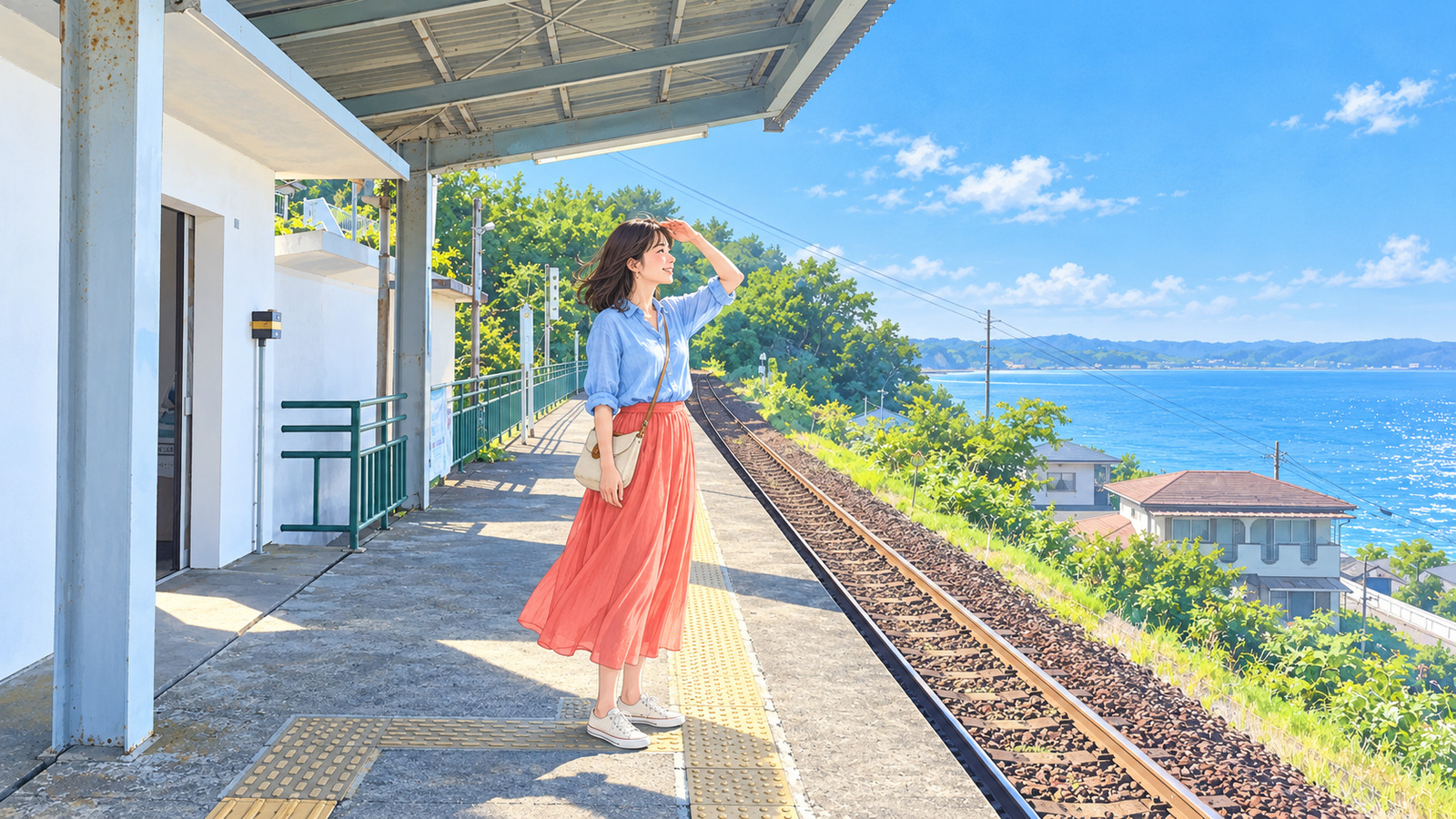
In Fudai Village, Horinai Station stood in as 'Sodegahama Station' in the drama—most famously for the scene where Yui shouts her dream of becoming an idol from the platform, combining coastal shots filmed at Kosode in Kuji with station scenes filmed here at Horinai to create the fictional Sodegahama.
Perched on high ground overlooking the coast, the unstaffed station has a single platform, a small waiting room, and a public restroom (no parking lot); visitors should time their platform visit around scheduled train arrivals and departures.
Sources: Kuji City — Sodegahama Station Scenes / Sanriku Railway — Horinai Station & Surroundings
9Near Rest House Ushio: Looking Out at Osawa Bridge Where Natsu Waved the Big-Catch Flag
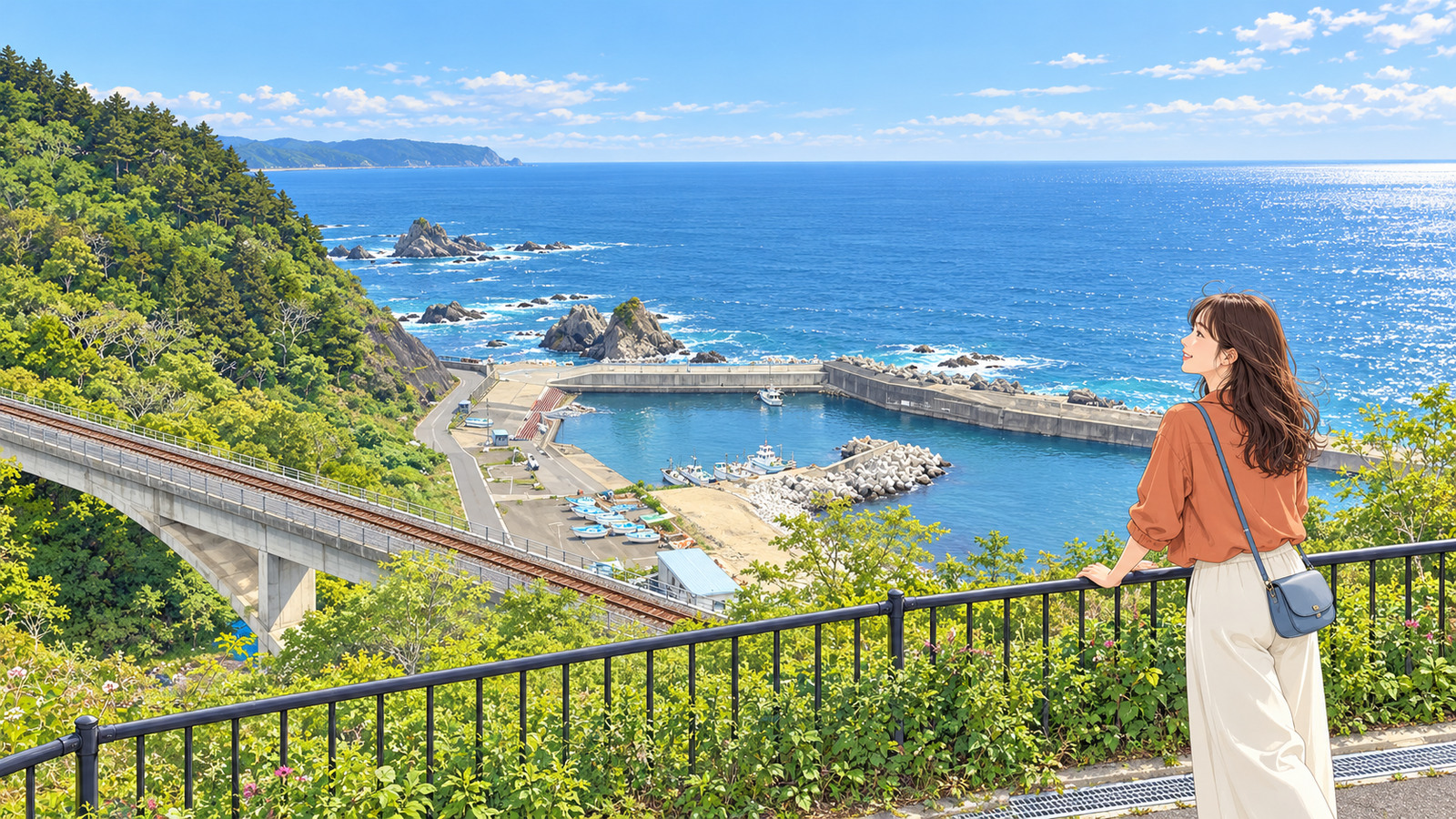
Osawa Bridge (Osawa Kyoryo) is the railway bridge where grandmother Natsu waves a colorful big-catch fisherman's flag (tairyo-bata) from beneath the bridge to send off the train carrying Haruko and Aki.
The vantage point for watching Sanriku Railway trains cross Osawa Bridge against the sea is located near Rest House Ushio, roughly a 5-minute walk from Horinai Station along National Route 45 at 104-13 Shirai, Dai-19 Chiwari, Fudai Village, where a 20-car parking lot is available.
Sources: Kuji City — Big-Catch Flag Scene / Fudai Village Tourism — Osawa Bridge Viewpoint / Fudai Village — Rest House Ushio
10Tanohata Station: ‘Hatano Station,’ Where Taneichi Departs for Tokyo
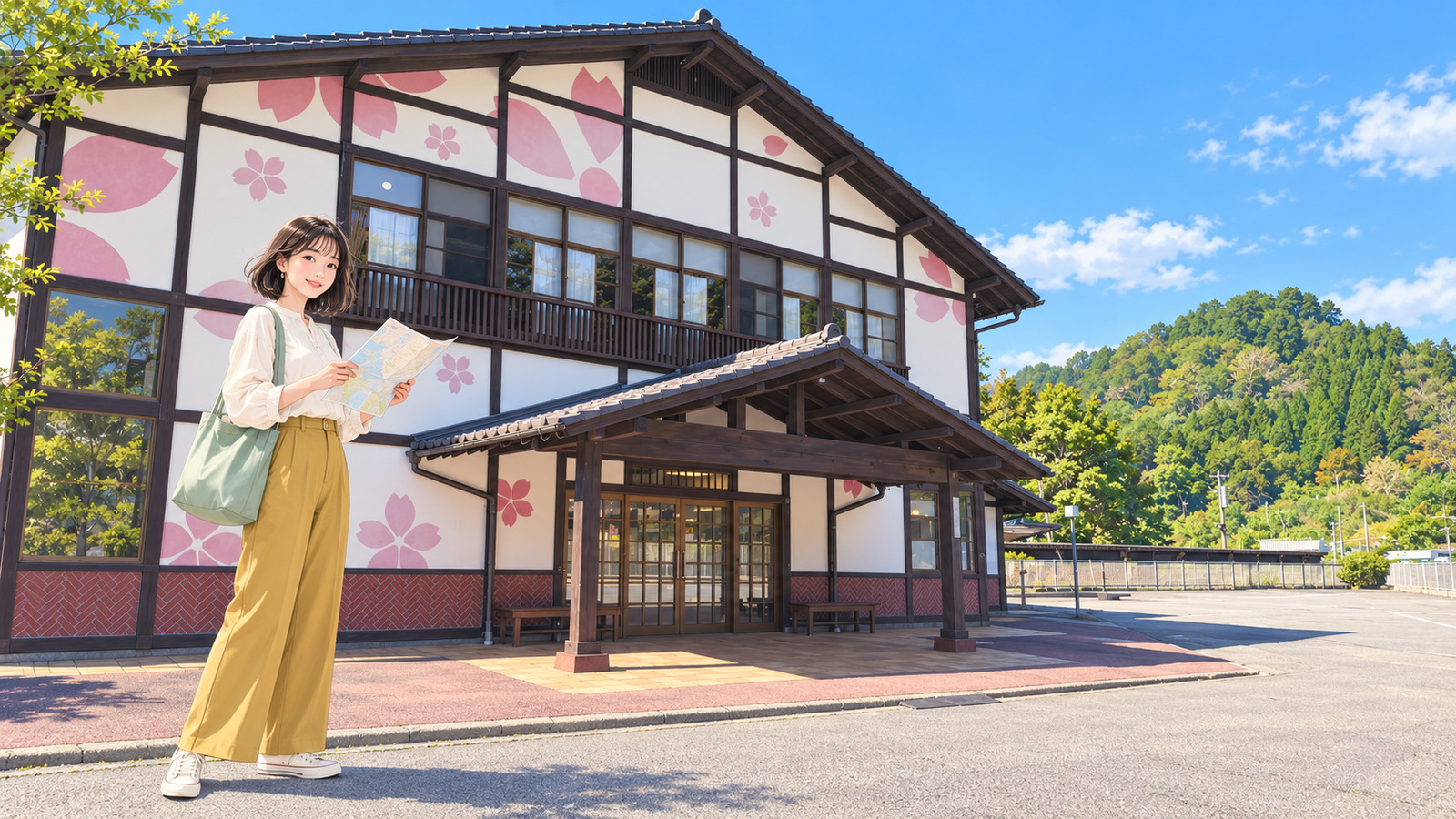
Tanohata Station served as 'Hatano Station' in the drama, appearing in the scene where Aki's admired senior Koichi Taneichi (played by Sota Fukushi) boards the train to head for Tokyo.
Nicknamed 'Campanella,' the station features a shop, restroom, and free parking lot, with ticket counter hours from 7:30 to 16:00 on weekdays and 8:30 to 15:00 on weekends and holidays.
Sources: Kuji City — Taneichi's Departure Scene / NHK — Story of Taneichi & Aki / Sanriku Railway — Tanohata Station
11Ueyama Amber Crafts Tunnel Tour: The Mining Tunnel Where Aki and Yui Shouted Their Feelings

Inside an amber mining tunnel in Ube-cho, Kuji City, the crew filmed the scene where Aki and Yui shout their bottled-up feelings into the cavern, and Ueyama Amber Crafts accepts advance reservations for guided tunnel tours and amber-digging experiences.
The real-life model for the drama's amber craftsman 'Ben-san' was Kikutaro Ueyama, who founded Ueyama Amber Crafts in 1979; today his son Akihiko carries on the work from mining narrow mountain tunnels—pumping out groundwater to reach a roughly 50-centimeter-thick amber-bearing stratum—through polishing and sales.
Touring the tunnel requires an advance reservation with the company (reception office at 17-32-2 Osanai-cho, Kuji City, separate from the filming tunnel in Ube-cho); confirm the meeting place and tour details when booking, and note that accessory-making workshops require reservations at least one week in advance.
Sources: Kuji City — Amber Tunnel Filming Site / Kuji Tourism Guide — Reserved Tours / Iwate Official Tourism — Ueyama Amber Crafts / Ueyama Amber Crafts — Artisans & Mining
Deeper into the Work: The Story of Family and Idols in Amachan
Here we look back at the story of Aki—who dreams of becoming an ama diver—and Yui, who dreams of Tokyo, tracing their idol journey alongside the songs and theme music recorded for the series.
Encountering Her Grandmother’s Calling in Her Mother’s Hometown
Broadcast in 2013 as an NHK morning television drama (Asadora), Amachan begins when second-year high school student Aki Amano is brought to Kitasanriku by her mother Haruko and meets her grandmother Natsu—an active ama diver whose figure plunging into the sea inspires Aki to begin diving training herself.
Wanting to become an ama does not mean she can immediately harvest sea urchins: in Episode 14, Aki breaks her promise to Natsu and dives alone during a dangerous time of day.
Aki Amano | High School Girl Inspired to Become an Ama Diver
The protagonist who discovers the work of ama diving in her mother's hometown and becomes a local idol after video of her diving spreads online. Played by Rena Nonen, who now works under the name Non.
Haruko Amano | Aki's Mother Who Returns to Her Hometown
Aki's mother, who returns to Kitasanriku with Aki to live once again with her mother Natsu, confronting her own past dreams of Tokyo alongside her daughter's future. Played by Kyoko Koizumi.
Natsu Amano | Grandmother Who Continues Diving into the Sea
Aki's grandmother and Haruko's mother, an active ama diver affectionately called 'Natsu-bappa,' who teaches Aki both the pride of working the sea and its strict dangers. Played by Nobuko Miyamoto.
Sources: Kuji City — NHK Synopsis & Cast / NHK — Episode 14 Ama Training / Non Official — Lead Role Profile
‘Shiosai no Memories’ Singing Aboard the Train and at the Ama Cafe
Together with Yui Adachi (played by Ai Hashimoto)—who dreams of becoming an idol in Tokyo while Aki blossoms in Kitasanriku—Aki forms the hometown singing unit 'Shiosai no Memories' and takes the local stage.
In Episode 53, the two sing aboard the tatami excursion train celebrating the 25th anniversary of the Kitasanriku Railway, selling out sea urchin bowls and friendship bracelets and filling Café Rias with energy.
Meanwhile in Tokyo, producer Aramaki ('Futomaki') launches the regional idol group GMT47 and talent scout Mizuguchi recruits Aki and Yui; when Yui loses her chance to travel for the audition, Aki works to revive their duo at home, leading to their joint stage at the Ama Café event 'Ama-Sonic.'
Sources: NHK — Episode 53 / NHK — Reviving the Duo / NHK — GMT47 & Scouting
GMT47 in Tokyo: Starting Out as Understudies for a Senior Idol Group
When Aki joins GMT47 in Tokyo, the group is still a five-member unit starting out as the 'shadow' (understudy) for their senior group Ameyoko Jogakuen—requiring Aki, who had been a star duo member back home, to begin anew from the bottom rung.
While the hometown chapters unfold across the sea, railway stations, and town events, the Tokyo chapters follow Aki learning the entertainment trade inside an idol agency and group—paralleling her mother Haruko's youthful trip to Tokyo with Aki's own journey across two generations.
Sources: NHK — Episode 73 Starting in Tokyo / Episode 71 Mother and Daughter's Trips to Tokyo
Haruko’s Singing Voice and Hiromi Suzuka’s Concert
Another catalyst for Aki's idol dream is her mother Haruko's singing voice: Haruko had once gone to Tokyo herself to become a singer, carrying the painful memory that her mother Natsu never accepted her choice.
Legendary actress Hiromi Suzuka (played by Hiroko Yakushimaru) shares a secret past with Haruko, who once sang as Suzuka's uncredited ghost vocalist—leading to the emotional climax in Episode 154 when Suzuka performs her own live concert in Kitasanriku.
In filming, the Fishery Cooperative shed at Kosode was used as the Ama Café concert venue.
Sources: NHK — Episode 71 Haruko's Song / NHK — Episode 154 Suzuka's Concert / Kuji City — Kosode Filming Shed
The Post-Earthquake Railway and the Town Where the Duo Sings Again
The drama also directly portrays the Great East Japan Earthquake of March 11, 2011: in Episode 133, the earthquake strikes the day before GMT's debut concert and the Kitasanriku Railway suffers tsunami damage, postponing the concert and raising the urgent question of whether the local railway can survive.
Traumatized after being trapped inside a stopped train car during the disaster, Yui remains in Kitasanriku with her dream of going to Tokyo unfulfilled, while damage to Sodegahama's sea urchin beds challenges the town to rebuild both its ocean livelihood and its railway.
In the closing chapters, Aki and Yui revive their unit 'Shiosai no Memories' and the townspeople rebuild the Ama Café by hand—depicting the two girls' choice to sing in Kitasanriku alongside the community's work to restore its daily life.
Sources: NHK — Episode 133 / Episode 139 / Episode 143 / Episode 147 / Episode 151
From Field Research in Kuji to Music Crafted with Live Ensemble Players
Written by screenwriter Kankuro Kudo with music composed by Yoshihide Otomo, all 156 episodes trace Aki's life in Kitasanriku and her years pursuing her idol dream in Tokyo.
Source: Kuji City — Drama Production Credits
How Yoshihide Otomo Created the Opening Theme Song
Composer Yoshihide Otomo visited Kuji and the Kitasanriku coast for field research at the end of August 2012 before drafting sketches for the opening theme song, building the final track through three recording stages with ensembles of different sizes.
- Sep 11, 2012
10-Player Demo
Recorded two initial demo versions.
- Nov 2012
6-Player Re-Recording
Re-recorded with a rearranged six-player ensemble.
- Jan 16–17, 2013
~40-Player Final Version
Recorded the broadcast theme song with roughly 40 musicians.
During broadcast, the long version displaying full staff credits aired on Mondays, while the standard version aired on the remaining days of the week.
Source: Victor Entertainment — Yoshihide Otomo on Creating the Theme Song
Building Performances in the Studio from Melody and Chord Sketches
Rather than writing out rigid full scores, Otomo brought melody and chord sketches into the studio so the brass and rhythm musicians could shape the ensemble arrangements together on site.
Screenwriter Kankuro Kudo also joined the recording sessions on electric guitar.
Source: Victor Entertainment — Yoshihide Otomo on Ensemble Recording
The 35-Track Soundtrack Compiling Yoshihide Otomo’s Music
Released on June 19, 2013 (catalog number VICL-64041), the Amachan Original Soundtrack compiles 35 instrumental tracks accompanied by track-by-track commentary written by composer Yoshihide Otomo.
The album includes both the standard and long versions of the opening theme, while the companion vocal compilation Amachan Song Album (Uta no Album) followed on August 28, 2013.
Sources: Victor — Original Soundtrack / Song Album
Nine Months of Filming Across the Kitasanriku and Tokyo Chapters
Drama filming began in October 2012, and NHK Publishing's official heroine photobook followed lead actress Rena Nonen across nine months of production with photographs and interviews from both the Kitasanriku and Tokyo chapters.
Ahead of the broadcast premiere, NHK Drama Guide Part 1 was published on March 25, 2013 as a 112-page guide featuring cast and Kankuro Kudo interviews alongside a tour of Kuji filming locations.
Sources: NHK Publishing — Nine-Month Heroine Photobook / NHK Drama Guide Part 1
From the 2013 Broadcast to Kuji’s Ongoing Bond with the Series
- Late Aug 2012Yoshihide Otomo conducts field research in Kuji and KitasanrikuProduction
- Oct 2012Drama filming beginsProduction
- Jan 16–17, 2013Opening theme recorded with ~40 musiciansMusic Release
- Mar 25, 2013NHK Drama Guide Part 1 is publishedPublication
- Apr 1, 2013NHK morning drama Amachan begins broadcastTV Broadcast
- Jun 19, 201335-track Original Soundtrack is releasedMusic Release
- Aug 28, 2013Vocal compilation Amachan Song Album is releasedMusic Release
- Sep 28, 2013156th and final episode airsTV Broadcast
- 2013'Jejjejje!' wins the Grand Prize at the New Words and Buzzwords AwardsImpact
- Apr 6, 2014Sanriku Railway resumes full-line operations after the earthquakeLocal Region
- Apr 2015Rebuilt Kosode Ama Center opensLocal Region
- Mar 29, 2021Non's painting 'Yomu no Mushi' is unveiled at YOMUNOSUSpecial Exhibition
- Apr 3, 2023Rebroadcast begins on NHK BS Premium and BS4KTV Broadcast
- Sep 23, 202310th-anniversary concert is held in KujiLive Performance
- Aug 29, 2026Kosode Ama Center reopens following interior renovationsLocal Region
Kitetsu in the Story and the Real-Life Resumption of the Sanriku Railway
The final episode of the drama aired on September 28, 2013: set on July 1, 2012 inside the story, it celebrates the partial reopening of the Kitasanriku Railway and the summer opening of the sea as Aki and Yui sing once again aboard the tatami train.
In real life, Sanriku Railway resumed full-line service across all tsunami-damaged sections on April 6, 2014—the spring after the broadcast ended, reconnecting the coastal stations by rail.
At Kosode Coast, the newly rebuilt Kosode Ama Center opened in April 2015 to replace the facility lost in the tsunami.
Sources: NHK — Final Episode / History of Sanriku Railway / Kuji City — Rebuilding the Kosode Ama Center
‘Koyomi no Ue de wa December’ Returning to Kuji in 2023
On September 23, 2023—marking 10 years since the original broadcast—a 10th-anniversary concert was held at Kuji City Cultural Hall (Amber Hall), bringing Non, Yoshihide Otomo's band, and Nobuko Miyamoto together on stage in Kuji.
With lyrics by Kankuro Kudo and music co-composed by Sachiko M, Naoko Eto, Yasuo Takai, and Yoshihide Otomo, 'Koyomi no Ue de wa December' was performed live at the anniversary concert and released on Non's official YouTube channel.
Sources: Kuji City PR — 10th Anniversary Concert / Non Official — Live Performance in Kuji
Lab Note | From a Business Perspective: Linking Filming Locations with a Hub That Preserves Production Materials
In Kuji, active railway stations and working fishing ports that appeared on screen are complemented by YOMUNOSU—a civic facility where visitors can view costumes and dioramas indoors, pairing everyday local infrastructure with a dedicated exhibition space.
When the former station-front building used in filming aged and required safety barricades, the city guided visitors instead to the location signboards at Itsukushi Plaza and the exhibition inside YOMUNOSU—illustrating how transferring displays and visitor guidance to a permanent public hub sustains long-term pilgrimage tourism even as town buildings change.
Sources: Kuji City — Station-Front Building & Visitor Guidance / YOMUNOSU Exhibition
Official Sources & Primary References
- Kuji City — Drama Filming Locations
- Kuji City — Synopsis & Cast
- YOMUNOSU Exhibition
- Kosode Ama Center
- Sanriku Railway Stations & Operations
- 2021 Unveiling of 'Yomu no Mushi'
- 2023 Rebroadcast
- Yoshihide Otomo Music Production Notes
- Soundtrack Bibliography
- Non — Kuji 10th Anniversary Performance
Exhibition dates, opening hours, admission fees, and ticket details are current at the time of writing. Always check the official websites for the latest schedule updates before setting out on your pilgrimage visit.
FAQ
Where is Kitasanriku City from the drama located in real life?
Kitasanriku City is a fictional town created for the drama. The hometown chapters were filmed primarily in Kuji City, Iwate Prefecture, along with the neighboring coastal municipalities of Hirono Town, Noda Village, Fudai Village, and Tanohata Village.
Where were Kitasanriku Station and Sodegahama Station filmed?
Kitasanriku Station was filmed at Sanriku Railway's Kuji Station, while Sodegahama Station was filmed at Horinai Station in Fudai Village; the coastal scenery of Sodegahama was filmed along Kosode Coast in Kuji City.
Can visitors see costumes actually worn during filming?
Yes. The 1st-floor Tourist Information and Exchange Center inside YOMUNOSU right outside Kuji Station displays screen-used costumes, drama dioramas, and 'Ama-e' illustrations, all of which may be photographed freely.
How much is admission to the Kosode Ama Center?
Admission is free of charge. The 1st floor houses tourist information and local produce, while the 2nd and 3rd floors present exhibits on the history of the 'Northernmost Ama' free-divers; the center reopened on August 29, 2026 following interior renovations.
Can visitors watch live ama free-diving demonstrations year-round?
No, the diving demonstrations are seasonal. In 2026 they ran from July through September and have concluded as of October; check the facility's official notices for the next season's schedule.
Which bridge appears in the scene where Natsu waves a big-catch flag at the passing train?
Osawa Bridge (Osawa Kyoryo). The viewpoint overlooking trains crossing the bridge is located near Rest House Ushio, roughly a 5-minute walk from Horinai Station.
Can I buy the sea urchin bento (uni bento) at Kuji Station?
Yes, Rias-tei inside the Sanriku Railway Kuji Station building sells the famous sea urchin bento in limited daily quantities; check the shop's daily counter notices for availability.
Can visitors enter the former station-front building used as the Tourism Association in the drama?
No. Protective barricades surround the aging former station-front building used during filming; visitors can view filming location guideboards at Itsukushi Plaza outside Kuji Station and explore drama memorabilia inside nearby YOMUNOSU.
Can I tour the amber mining tunnel where Aki and Yui shouted their feelings?
Yes, Ueyama Amber Crafts (Ueyama Kohaku Kogei) accepts advance reservations for guided tunnel tours; because the reception office is in Osanai-cho while the filming tunnel is in Ube-cho, confirm the meeting point when booking.
More in Pilgrimage

Film "Kokuhou" Pilgrimage Guide: Izushi Eirakukan, Biwako Otsukan, Kyoto Kaburenjo Theaters & Dojo-ji Temple

We Made a Beautiful Bouquet Pilgrimage Guide: Chofu's Bookstore, Station Plaza & Tama River
