
VIVANT Filming Locations Guide: 10 Real-World Spots from Kanda Myojin & Gifu to Shimane
In the TBS Sunday Theatre drama VIVANT, Kanda Myojin (officially Kanda Shrine) in Chiyoda Ward, Tokyo is the sanctuary where protagonist Yusuke Nogi stops to pray as part of his everyday routine—and where a red steamed bun placed at the small stone shrine beside the sacred ginkgo tree signals an emergency summons for the covert defense unit Beppan. Meanwhile, Fuda Tenjinsha Shrine in Chofu City, Tokyo hosted the scenes where Nogi's superior, Commander Satomi Sakurai, prays in the shrine precincts near the sacred bronze ox, and historic government buildings in Gunma and Ibaraki along with the modern Gifu Prefectural Office anchored high-stakes scenes set both in Japan and abroad.
In Okuizumo Town, Shimane Prefecture, the historic Sakurai Residence appeared on screen as the ancestral family home of the Nogi clan. Nearby Oni no Shitaburui Gorge provided the dramatic backdrop for flashbacks of Nogi's father, Suguru Nogi, studying by the river in his youth; Izumo Taisha's Kaguraden Hall hosted his parents' wedding ceremony; and Matsue Castle Otemae framed Nogi's conversation over canned coffee with his colleague Yamamoto. In the 2026 sequel, the coastline around Izumo Hinomisaki Lighthouse stood in for the coast of Cyprus as Nogi conversed with his inner alter ego 'F.' Here is a complete guide to 10 domestic filming locations from Tokyo, the Kanto region, and Gifu to Shimane, along with their featured episodes and visitor highlights.
10 Domestic Filming Locations from Kanda Myojin and Gifu to Shimane
From Kanda Myojin—which serves as Beppan's covert contact point—and Fuda Tenjinsha—where Commander Sakurai prays—to the prefectural capitol buildings of Gunma, Ibaraki, and Gifu, and the samurai-ironmaster estate, shrines, castle town, and lighthouse of Shimane Prefecture where the roots of the Nogi family rest, real landscapes across Japan supported pivotal moments throughout the story. Use the episode references and visitor notes below to explore each filming location.
① Kanda Myojin · Chiyoda Ward, Tokyo
The historic Tokyo shrine where Nogi prays as part of his routine and checks the small shrine beside the sacred ginkgo tree for emergency Beppan summons; official Beppan Manju buns are also sold on the shrine grounds.
Read the Complete Pilgrimage Guide & Access Notes for Kanda Myojin (Kanda Shrine) (Chiyoda Ward, Tokyo)② Fuda Tenjinsha · Chofu, Tokyo
The filming location in Chofu where Nogi's superior, Beppan Commander Satomi Sakurai, prays inside the shrine precincts beside the sacred bronze ox statue.
Read the Complete Pilgrimage Guide & Access Notes for Fuda Tenjinsha Shrine (Chofu, Tokyo)③ Gunma Showa Building · Maebashi, Gunma
A 1928 Registered Tangible Cultural Property in Maebashi that was filmed in Season 1 Episode 5 to portray a military facility in the Republic of Balka.
Read the Complete Pilgrimage Guide & Access Notes for Gunma Prefectural Government Showa Building (Maebashi, Gunma)④ Ibaraki Sannomaru · Mito, Ibaraki
Completed in 1930 as the former Ibaraki Prefectural Capitol in Mito, featuring scratch-tile walls and Western architectural symmetry used as a VIVANT filming location.
Read the Complete Pilgrimage Guide & Access Notes for Ibaraki Prefectural Government Sannomaru Building (Mito, Ibaraki)⑤ Gifu Capitol · Gifu City, Gifu
The prefectural capitol where the natto-eating scene in Sequel Episode 12 was filmed inside the 1st-floor foyer; features an outdoor monument and public photo spot.
Read the Complete Pilgrimage Guide & Access Notes for Gifu Prefectural Government Office (1F Foyer) (Gifu City, Gifu)⑥ Sakurai Residence · Okuizumo, Shimane
Filmed as Nogi's ancestral family home in Okuizumo, allowing visitors to experience the tatara ironmaking history and traditional garden of the Sakurai family.
Read the Complete Pilgrimage Guide & Access Notes for Sakurai Residence & Kabeya Shuseikan Museum (Okuizumo, Shimane)⑦ Oni no Shitaburui · Okuizumo, Shimane
The mountain gorge used for Nogi family flashback scenes, where a riverside boardwalk overlooks giant granite boulders and rushing rapids in Okuizumo.
Read the Complete Pilgrimage Guide & Access Notes for Oni no Shitaburui Gorge (Okuizumo, Shimane)⑧ Izumo Taisha · Izumo, Shimane
Where the wedding ceremony of Nogi's parents was filmed, pairing memories of his young parents with the grand shrine building and its massive sacred straw rope.
Read the Complete Pilgrimage Guide & Access Notes for Izumo Taisha Kaguraden Hall (Izumo, Shimane)⑨ Matsue Castle · Matsue, Shimane
The castle-town filming location by the moat of Matsue Castle where Nogi and his colleague Yamamoto talk with canned coffee in hand.
Read the Complete Pilgrimage Guide & Access Notes for Matsue Castle Otemae Plaza (Matsue, Shimane)⑩ Hinomisaki Lighthouse · Izumo, Shimane
The scenic Shimane coastline and white stone lighthouse that stood in on screen for an overseas beach along the coast of Cyprus.
Read the Complete Pilgrimage Guide & Access Notes for Izumo Hinomisaki Lighthouse Coast (Izumo, Shimane)
1Kanda Myojin (Kanda Shrine): The Red Manju Summons for Beppan and Tokyo’s Historic Guardian Shrine
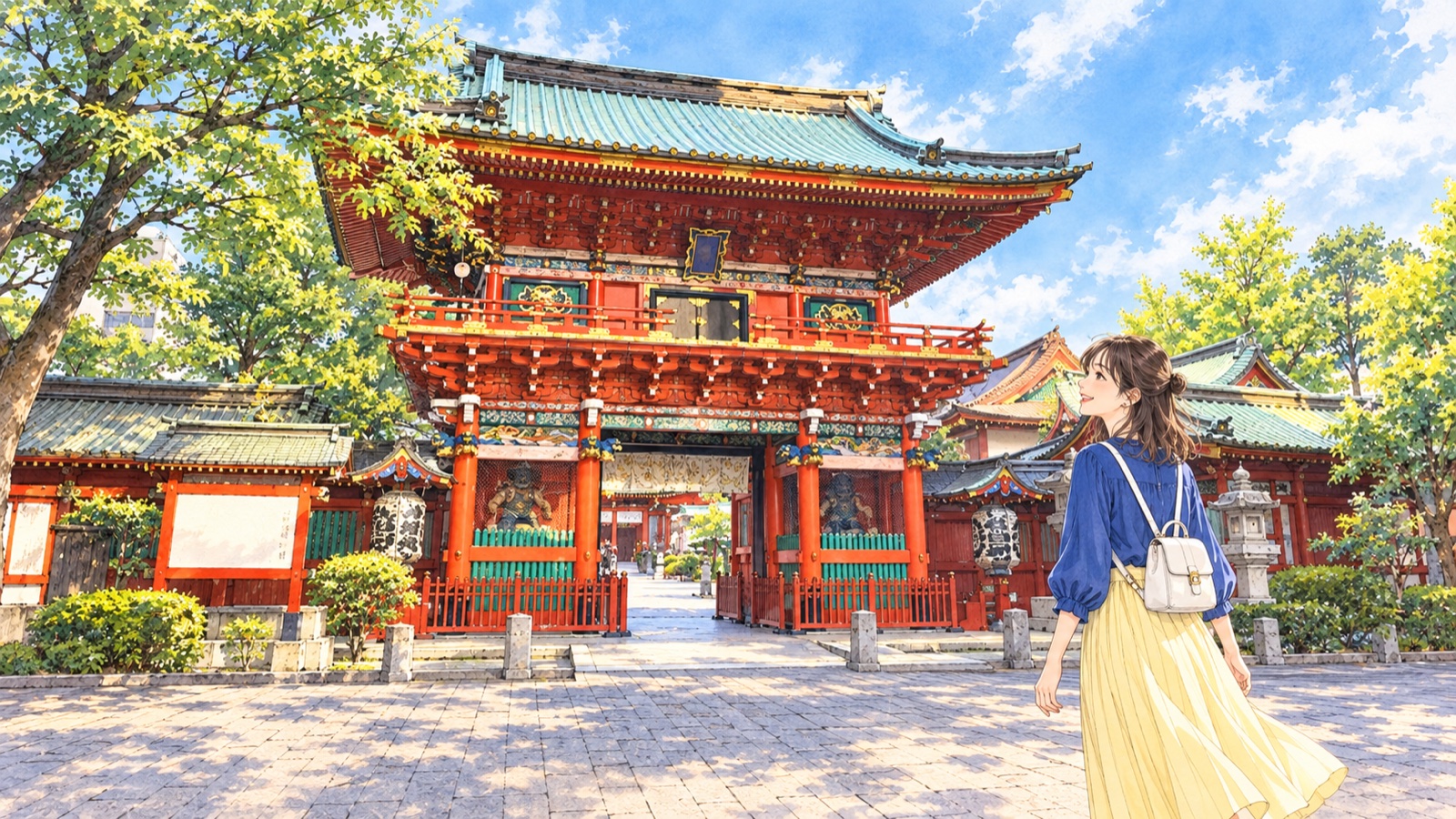
Located at 2-16-2 Sotokanda in Chiyoda Ward, Tokyo, Kanda Myojin (officially Kanda Shrine) is the shrine where Yusuke Nogi stops to pray in his business suit as part of his daily routine. Peering into the small stone shrine at the base of the sacred ginkgo tree (a towering maidenhair tree), he knows an emergency Beppan summons has been issued whenever a red steamed bun ('Beppan Manju') has been placed inside as an offering. From Season 1 right through the opening scene of Episode 11 in the 2026 sequel, the shrine appears repeatedly as the starting point where the story sets into motion.
Traditionally founded in the second year of the Tenpyo era (730) as the guardian shrine of Edo, Kanda Myojin welcomes visitors through its all-cypress two-story Zuishinmon Gate to the vermilion Gongen-style main sanctuary completed in 1934 (a Registered Tangible Cultural Property of Japan). When visiting, you can admire the carvings on the Zuishinmon Gate and the sacred ginkgo tree standing to the right of the main sanctuary, and purchase official 'Beppan Manju' buns at the shop inside the EDOCCO cultural exchange complex on the shrine grounds (about a 5-minute walk from JR Ochanomizu Station Hijiribashi Exit, Tokyo Metro Shin-Ochanomizu Station, or Suehirocho Station).
Sources: Kanda Myojin Official Website / Chiyoda City Tourism Association: Kanda Myojin (Kanda Shrine) / TBS Official Online Shop: VIVANT Beppan Manju / ASCII.jp Domestic Filming Location Feature (Kanda Myojin)
Sources: TBS Official Domestic Location Tour Guide / Club Tourism: Filming Scenes at Kanda Myojin, Fuda Tenjinsha, and Jindaiji Temple
2Fuda Tenjinsha Shrine: The Ancient Chofu Sanctuary Where Commander Sakurai Prays
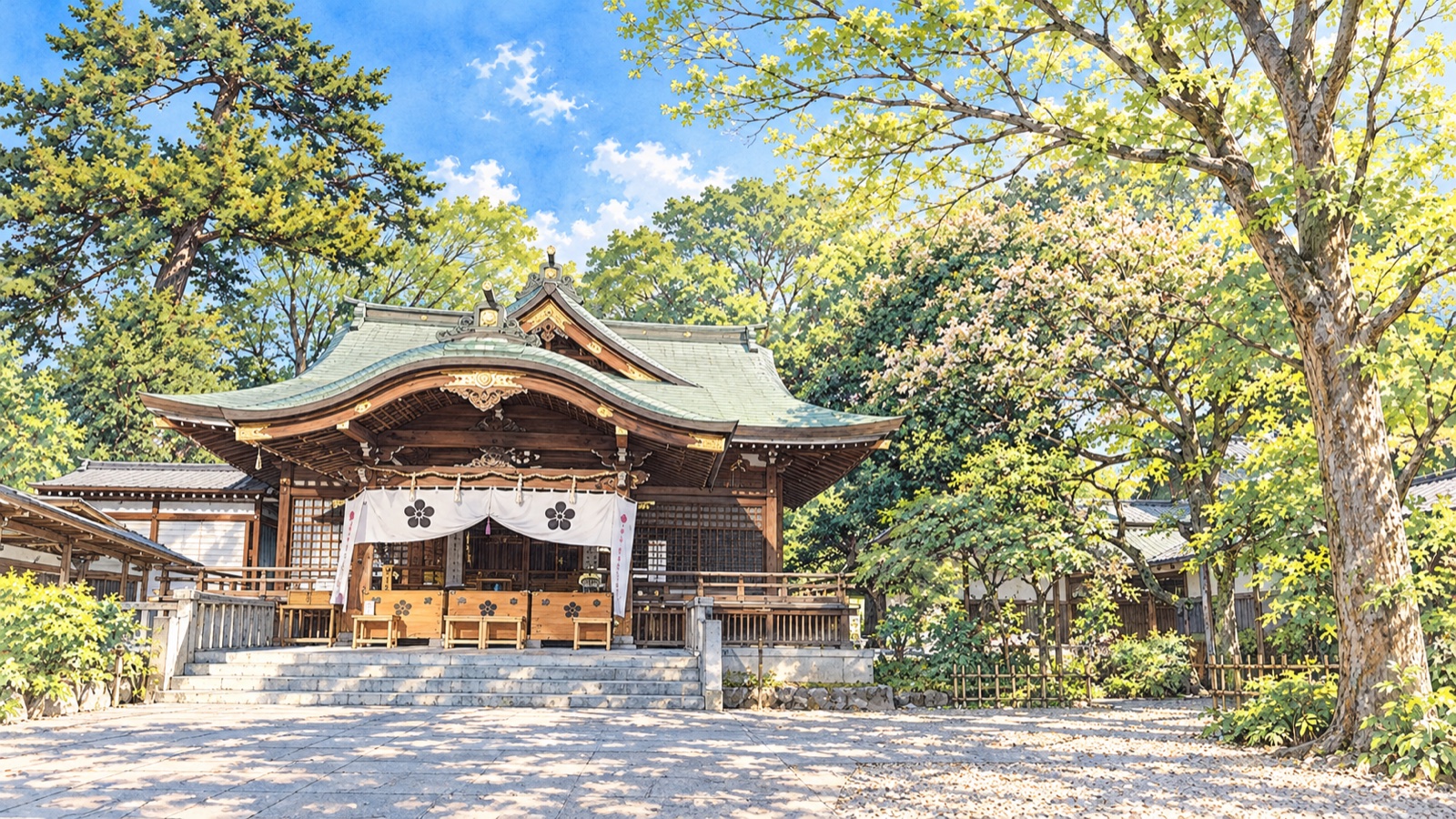
Fuda Tenjinsha Shrine at 1-8-1 Chofugaoka in Chofu City, Tokyo served as the filming location for the scene in which Yusuke Nogi's superior, Beppan Commander Satomi Sakurai, prays inside the shrine grounds beside the reclining sacred bronze ox statue. In addition, the storefront of the soba restaurant Yaoki at nearby Jindaiji Temple was used to film the scene in which Nogi receives direct operational orders from Commander Sakurai.
Listed in the Engishiki Jinmyocho register of shrines compiled in the fifth year of the Engi era (927), Fuda Tenjinsha is one of the most venerable shrines in the Tama region and enshrines both Sukunahikona-no-Mikoto and Sugawara no Michizane. Situated only a 5-minute walk north of Chofu Station on the Keio Line with convenient access from central Tokyo, its tranquil approach shaded by zelkova and camphor trees offers a peaceful setting to visit the wooden worship hall and the sacred bronze ox.
Sources: Chofu City Tourism Association: Guide to Fuda Tenjinsha Shrine / ASCII.jp Feature on Fuda Tenjinsha and Surrounding Filming Scenes
Sources: TBS Official Domestic Location Tour Guide / Club Tourism: Filming Scenes at Kanda Myojin, Fuda Tenjinsha, and Jindaiji Temple
3Gunma Prefectural Showa Building: A 1928 Western-Style Civic Landmark Standing In for Balka
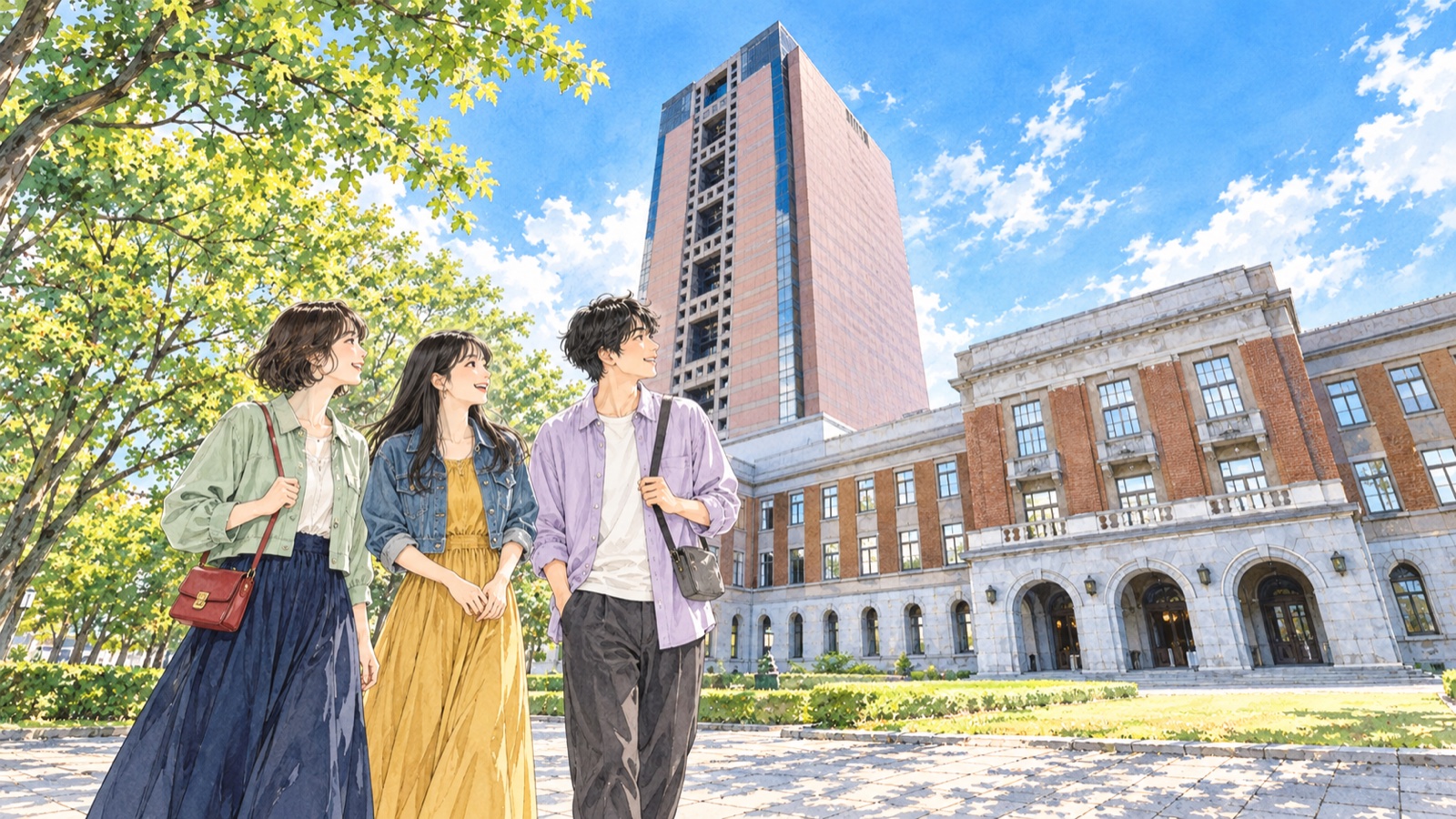
Located at 1-1-1 Otemachi in Maebashi City, Gunma Prefecture, the historic 'Showa Building' of the Gunma Prefectural Government was filmed in Season 1 Episode 5 to portray a military facility in the fictional Republic of Balka. Designed by architect Koichi Sato and completed in 1928 (Showa 3), this three-story reinforced concrete civic building is a Registered Tangible Cultural Property of Japan.
With cast-stone tilework and a triple-arched main entrance on the first floor, brown scratch tiles across the second and third stories, and high ceilings and classic wooden staircases preserved inside, the interior and exterior create a weighty atmosphere that convincingly stood in for a facility in Balka on screen. Today the building remains open to the public with exhibition rooms, meeting halls, and a cafe, and can be visited alongside the free 32nd-floor observation hall in the adjacent main prefectural capitol tower (about 6 to 10 minutes by bus from JR Maebashi Station, getting off at Kencho-mae).
Sources: Gunma Film Commission: Episode 5 Filming Support Record / Gunma Prefecture Official Location Map
Source: Gunma Prefecture Official Location Map: Balka Military Facility
4Ibaraki Sannomaru Building: Tile-and-Stone Architecture of the 1930 Former Prefectural Capitol
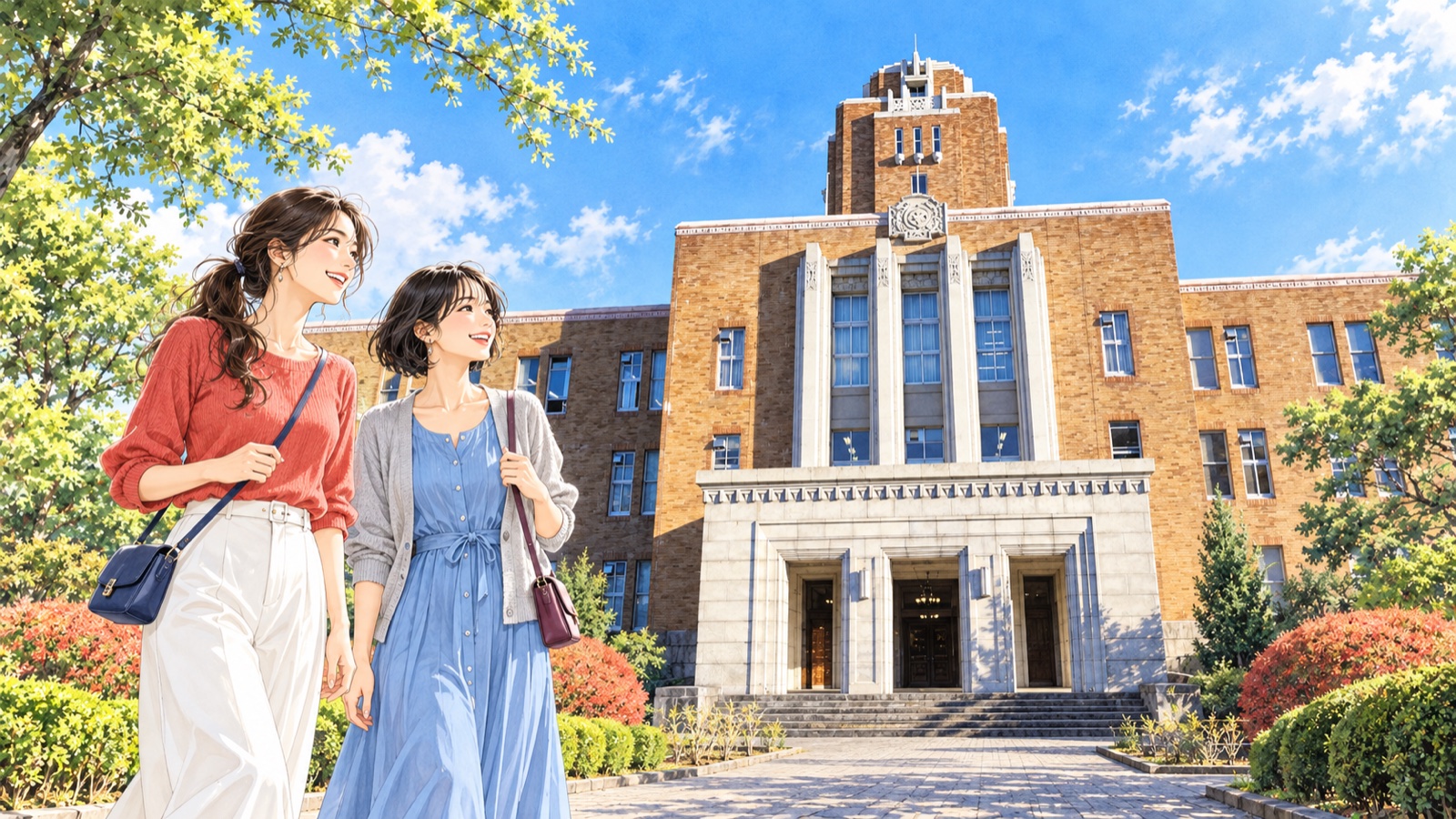
Located at 1-5-38 Sannomaru in Mito City, Ibaraki Prefecture, the 'Ibaraki Prefectural Government Sannomaru Building' is the former main prefectural capitol building used as a filming location for VIVANT. Designed by architect Akira Okishio and completed in 1930 (Showa 5) in a Collegiate Gothic style, the three-story reinforced concrete landmark catches the eye with its central turret tower, white granite porte-cochere, and symmetrical scratch-tile exterior walls.
Standing on grounds immediately adjacent to the historic moat of Mito Castle's Sannomaru bailey, the building can be reached on foot in about 12 minutes from the North Exit of JR Mito Station. Because the building currently operates as a public complex housing prefectural service counters and a lifelong learning center, please be considerate of visitors and administrative work when strolling around the exterior and open public areas.
Sources: Ibaraki Film Commission: VIVANT Production Support / Ibaraki Prefecture Official Website
5Gifu Prefectural Office: Sequel Filming Spot with an Official Monument and Photo Corner
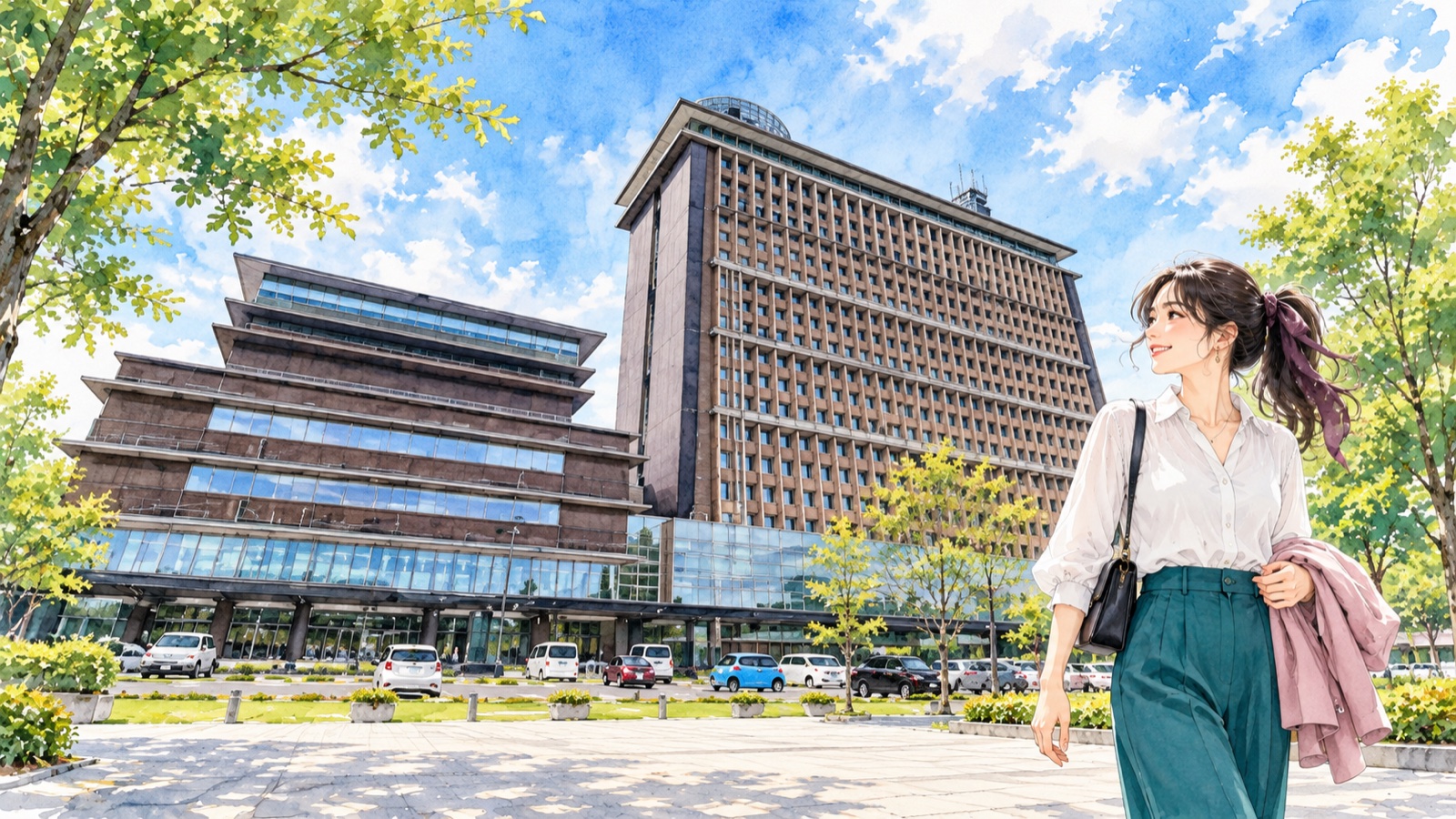
The Gifu Prefectural Government Office at 2-1-1 Yabuta-Minami in Gifu City (the current capitol building opened in 2023) served as a filming location for the 2026 sequel (Season 2). The scene in Episode 12 in which the characters eat natto together was filmed inside the 1st-floor foyer.
To coincide with the broadcast, Gifu Prefecture installed an official VIVANT monument in front of the main entrance starting August 31, 2026 and opened an official photo spot inside the 1st-floor foyer recreating the scene from the drama—complete with a corner where visitors can pose for photos holding replica natto food samples crafted in Gujo City. Both the 1st-floor foyer and the 20th-floor observation lobby are open to the public free of charge, and the observation lobby commands sweeping views of Mount Kinka topped by Gifu Castle, the Nagara River, and Mount Ibuki (about 20 minutes by bus from JR Gifu Station or Meitetsu Gifu Station, getting off at Kencho).
Sources: Gifu Prefecture Official Guide to the Sunday Theatre VIVANT Monument & Photo Spot / Gifu Governor Press Conference on Episode 12 Filming Scenes / ASCII.jp Feature on Gifu Prefectural Office Filming Scenes & Observation Lobby
Iwamura Castle Town in Ena City and the Akechi Railway Wrapped Train
Elsewhere in Gifu Prefecture, driving scenes for Sequel Episode 11—including shots passing in front of the historic Kimura Residence along the main street—were filmed in Iwamura Castle Town in Ena City, a designated Important Preservation District for Groups of Traditional Buildings. Furthermore, the local Akechi Railway running between Ena Station and Akechi Station is operating an official VIVANT wrapped train adorned with the program logo through the end of March 2027, and visitors can walk the historic castle-town streets about 10 minutes on foot from Iwamura Station.
Sources: Ena City Tourism Association Iwamura Branch: Iwamura Castle Town / Akechi Railway Official Website
6Sakurai Residence & Kabeya Shuseikan: The Shimane Estate Holding the Memories of Nogi’s Family
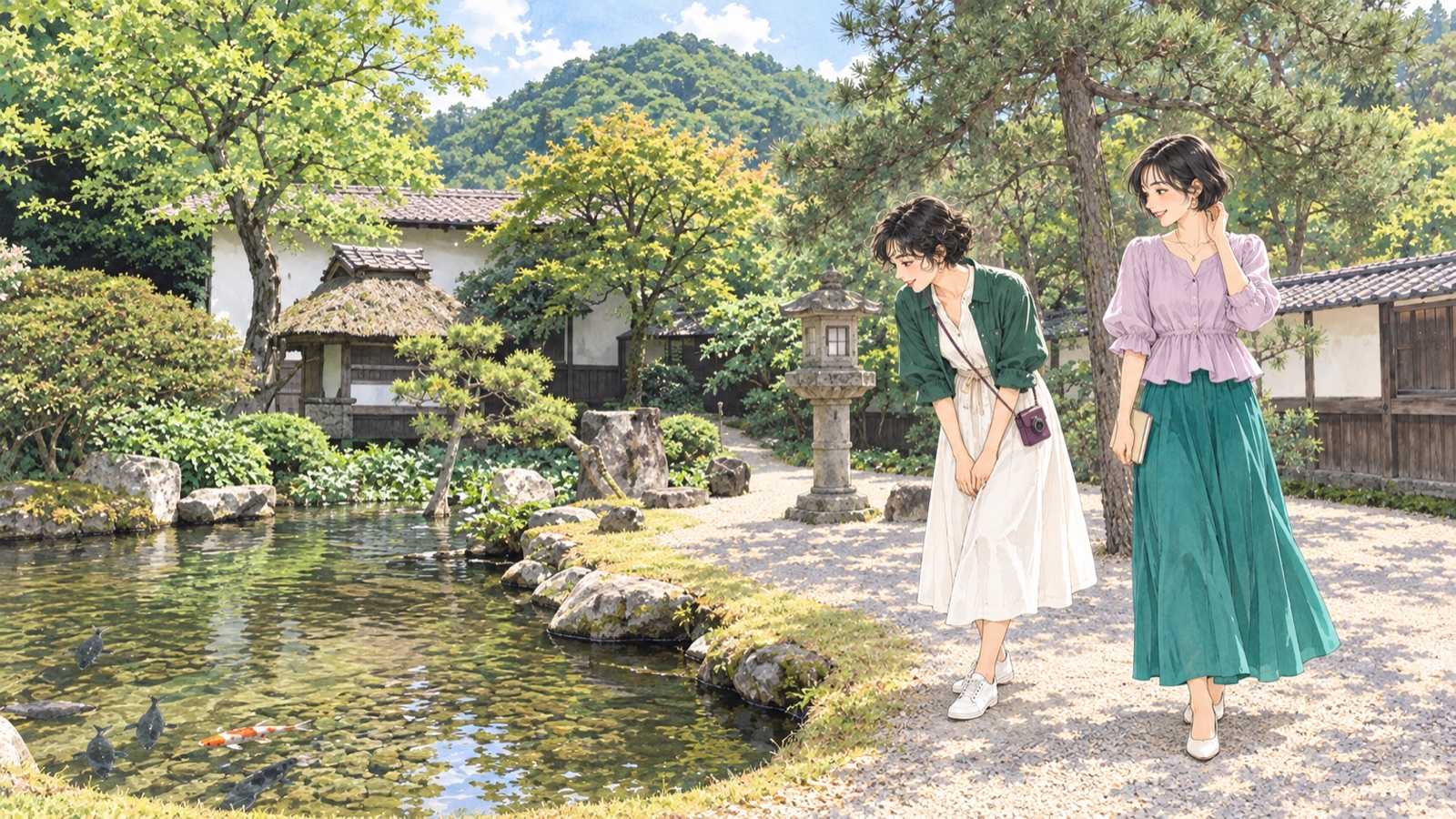
Located in Kami-Ai, Okuizumo Town, the Sakurai Residence and Kabeya Shuseikan Museum served as the filming location for Yusuke Nogi's ancestral family estate. Featured in Season 1 Episodes 5 and 9, the estate hosted the scene where Public Security officer Nozaki questions Nogi's uncle Hiromichi, as well as flashback scenes of high-school-age Yusuke and his young parents.
Built in 1738, the main residence is designated as a National Important Cultural Property of Japan, while the adjacent Kabeya Shuseikan Museum houses roughly 4,500 family artifacts passed down through the Sakurai household. The regular open season runs from late March through early December, with the complex closed on Mondays and throughout winter. Both combined tickets covering the museum and garden and individual tickets for each section are available, so check the open dates and ticket types that match the areas you wish to see.
'Kabeya' was the traditional house trade name of the Sakurai family, who led tatara ironmaking in Okuizumo during the Edo period and served as chief ironmasters (tetsushi todori) to the Matsue Domain. Having begun iron production in Kami-Ai in 1644, the family preserved samurai armor, household furnishings, fine decorative arts, and historical documents on ironmaking that are now displayed in the museum. According to family tradition, the Sakurai clan descends from Sengoku-period warrior Ban Dan'emon; after the Summer Campaign of Osaka, his descendants adopted their maternal surname and established their ironmaking enterprise in Okuizumo, linking a samurai lineage to centuries of regional industry.
The estate's formal garden also holds a distinguished history of its own. Laid out in 1803 to welcome Matsue Domain lord Matsudaira Harusato (the famed tea master Lord Fumai), the garden features a 15-meter natural waterfall that was given the name 'Iwanami' ('Rock Waves'). Together with Iwanami Falls, the borrowed scenery (shakkei) of Mount Juho rising beyond the estate grounds completes the composition, blending the garden seamlessly into the green mountain slopes when you look across the grounds.
Source: Shimane Prefecture Tourism Federation: Tatara Ironmaking & the Sakurai Residence
Sources: Shimane Prefecture Tourism Federation Location Guide: Sakurai Residence / Shimane Tourism Navi: Kabeya Shuseikan Museum
Touring the Museum & Garden and Booking a Matcha Hospitality Session with the Sakurai Family
The residential compound comprises the main house along with the kitchen hall (kamaya), rear reception rooms, earthen storehouses, and stables. The formal reception rooms of the main house are built in the shoin-zukuri style with tokonoma alcoves, staggered shelves, and built-in writing bays, accented with refined sukiya-style details. Regular admission covers the museum and garden, and in autumn the maple trees around the residence turn vivid shades of crimson.
For visitors who would like to hear the history of the Sakurai family in depth, a reservation-only hospitality program is available in which the lady of the Sakurai household serves matcha green tea and shares stories passed down in the family. The session lasts roughly 60 minutes and is offered from late March through early December for groups of three or more at 3,500 yen per person. Because this program is separate from regular museum admission, please inquire in advance with the local tourism desk regarding available dates and reservations.
Sources: Agency for Cultural Affairs: Architecture of the Sakurai Residence / Shimane Prefecture Tourism Federation: Autumn Foliage at the Sakurai Residence / Okuizumo Town Tourism Guide: Sakurai Family Matcha Experience
7Oni no Shitaburui Gorge: The Okuizumo Valley Behind the Flashback Scenes
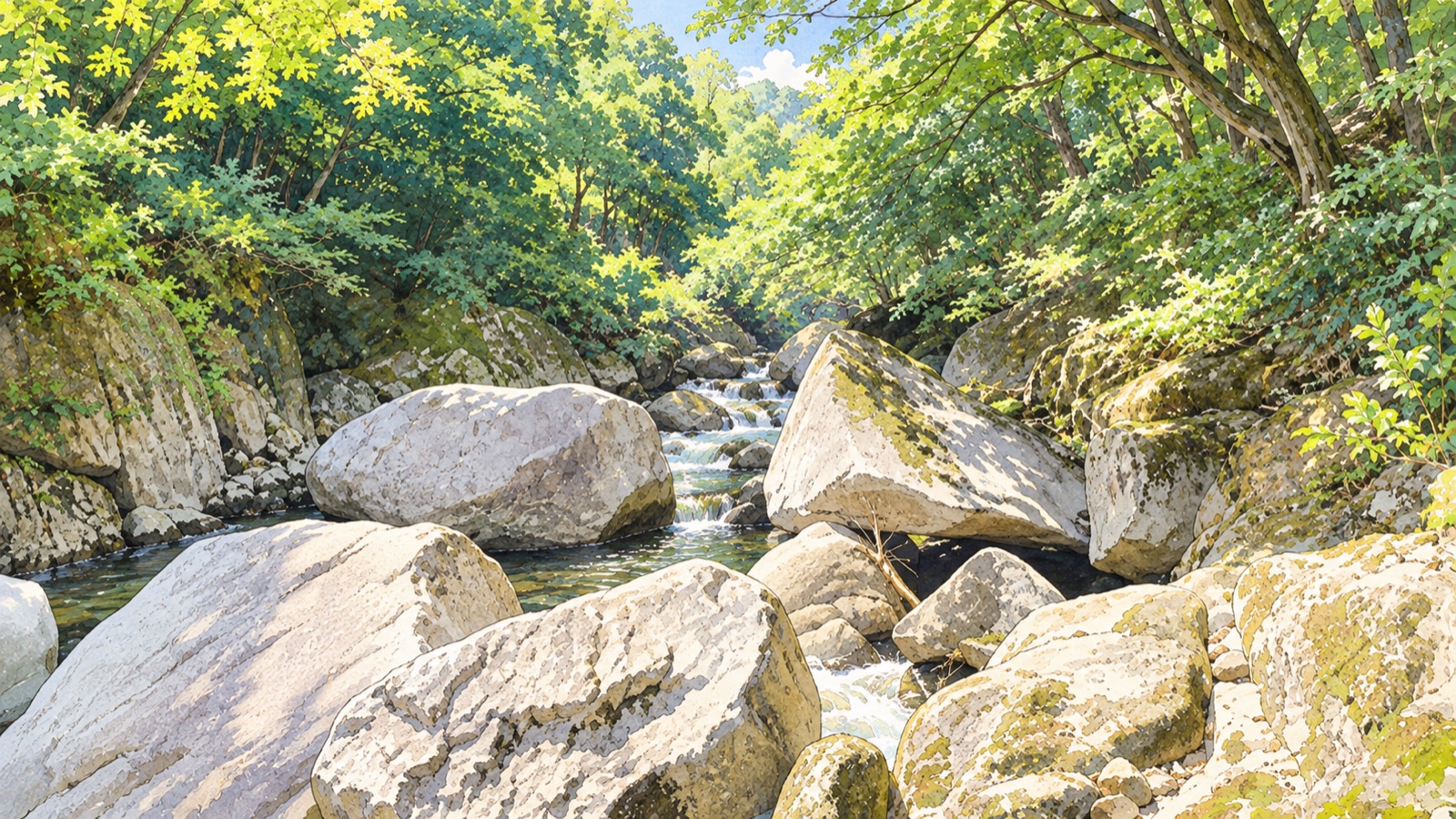
Oni no Shitaburui is a celebrated scenic gorge in Okuizumo where towering granite boulders meet a rushing mountain stream. In Season 1 Episode 9, the flashback scene of Yusuke Nogi's father, Suguru Nogi, reading by the river during his student days was filmed here.
Stretching roughly 2.3 kilometers in length, the gorge features a well-maintained boardwalk trail from which visitors can admire the rock formations and rushing rapids. Because the drama's riverside filming was conducted down on the boulders under special permit, visitors exploring the gorge should enjoy the scenery safely from the designated walkway.
Oni no Shitaburui is a V-shaped gorge carved over eons by the rapid currents of the Omaki River, a tributary of the Hii River. Towering rock faces such as Daitengu-iwa and Kotengu-iwa rise along the valley walls, while whirlpools have sculpted numerous potholes of varying sizes into the riverbed. Distinctive rock formations named Hando-iwa, Kame-iwa, and Senjojiki dot the stream, and in 2013 the 45-meter-high, 160-meter-long Shitaburui 'Koi' Suspension Bridge was completed across the gorge.
The unusual place name 'Oni no Shitaburui' comes from an ancient legend recorded in the Izumo no Kuni Fudoki chronicle: a river shark (wani) who fell in love with the local goddess Tamahime trembled in fear ('wani no shitafu') when she blocked the river with boulders to refuse him, a phrase that later evolved into its modern characters. Walking the gorge lets you experience both the drama's flashback setting and the striking rock formations tied to ancient Izumo folklore.
Source: Shimane Tourism Navi: Geology and Legend of Oni no Shitaburui
Sources: Shimane Prefecture Tourism Federation Location Guide: Oni no Shitaburui / Shimane Tourism Navi: Oni no Shitaburui
The riverside boardwalk trail measures just under two kilometers, taking roughly 60 minutes for a leisurely round-trip walk, and colors the valley with fresh green leaves from spring into early summer and vibrant foliage in autumn.
8Izumo Taisha Kaguraden Hall: Where Nogi’s Parents Held Their Wedding Ceremony
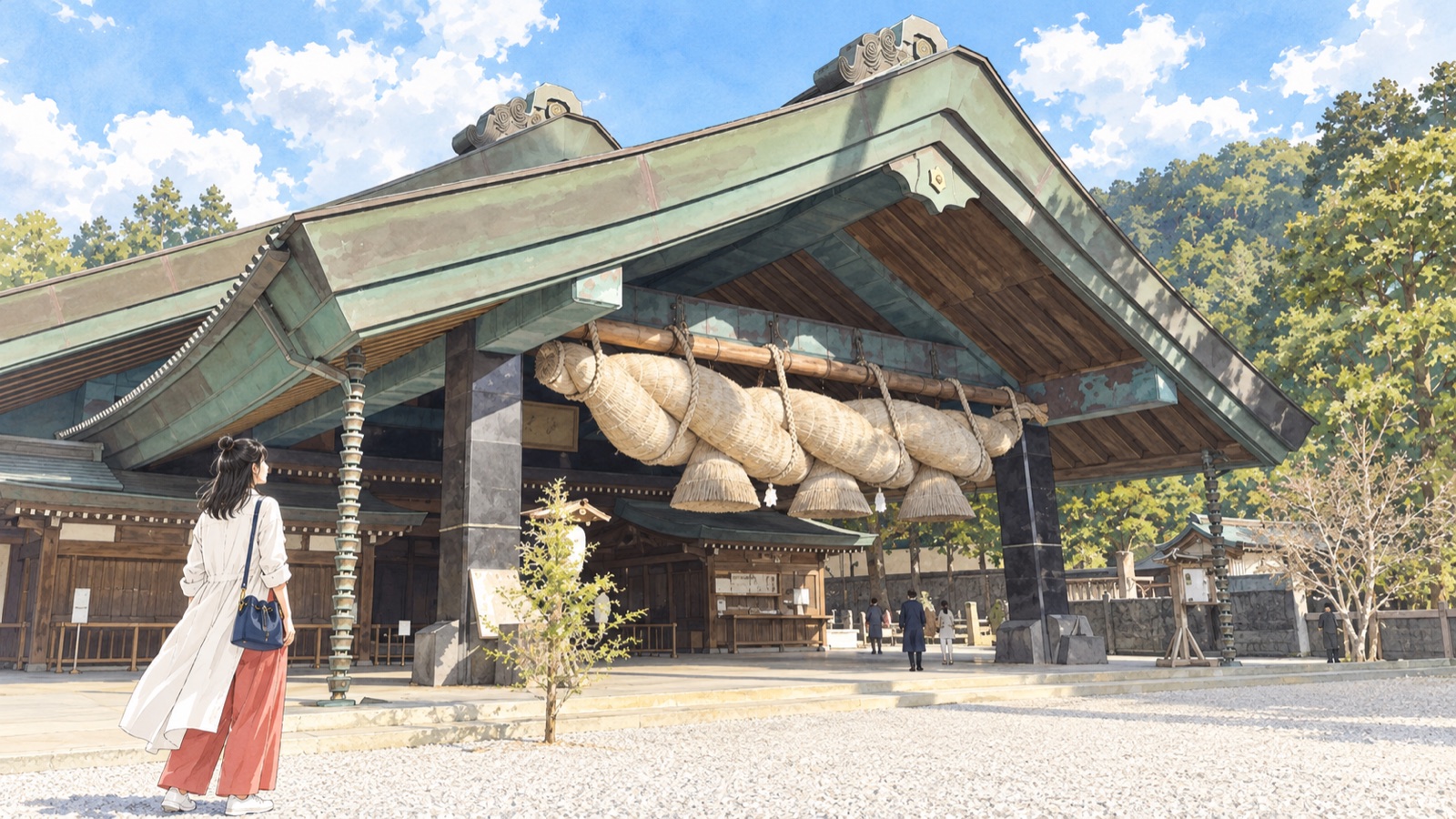
The Kaguraden Hall of Izumo Taisha Shrine was used in Season 1 Episode 9 to film the wedding ceremony of Yusuke Nogi's parents, with Kento Hayashi portraying his father Suguru Nogi in his youth and Rin Takanashi portraying his mother Akemi.
The Kaguraden originated as 'Fuchokan,' the grand reception hall of the Senge chief-priest family of Izumo Taisha. Today its main hall spans 270 tatami mats, and its front gable is fitted with stained glass—an uncommon detail in Shinto shrine architecture. After admiring the massive sacred straw rope below, be sure to look up toward the roofline to spot the colorful glass set into the wooden gable.
Suspended across the front of the hall is a giant sacred straw rope (oshimenawa) measuring roughly 13 meters in length and weighing 5.2 tons, which is replaced with a newly woven rope every few years. In the forecourt stands a 47-meter flagpole flying a national flag measuring 8.7 by 13.6 meters—equivalent in area to 75 tatami mats—while guardian shrines dedicated to ancestral deities of the chief-priest family and Tenmangu stand behind the hall and the Harae-no-Yashiro and Kotohira-gu shrines stand to the south.
Source: Izumo Taisha: Architecture and History of the Kaguraden Hall
Sources: Shimane Prefecture Tourism Federation Location Guide: Kaguraden / Izumo Taisha Official Website
Completed in its current form in 1981 (Showa 56), the Kaguraden hangs its sacred shimenawa rope with the thick root end on the left and the tapering tip on the right—the opposite of most Shinto shrines in Japan—following Izumo Taisha's ancient custom of honoring the left side as the seat of higher rank.
Sources: Izumo Taisha: Kaguraden & Replacement of the Great Shimenawa / Izumo Taisha: About the Shimenawa Tradition
Today the Kaguraden continues to serve as an active ceremonial hall for prayers, Shinto weddings, and shrine rituals—meaning real couples celebrate their weddings inside the very building where Nogi's parents were married on screen—and during the annual Kamiari Festival it also hosts evening kagura prayers (Yokagura Kito).
Sources: Izumo Taisha: Role of the Kaguraden / Izumo Taisha: Evening Kagura Prayers During the Kamiari Festival
9Matsue Castle Otemae: The Castle-Town Street Where Nogi and Yamamoto Talk
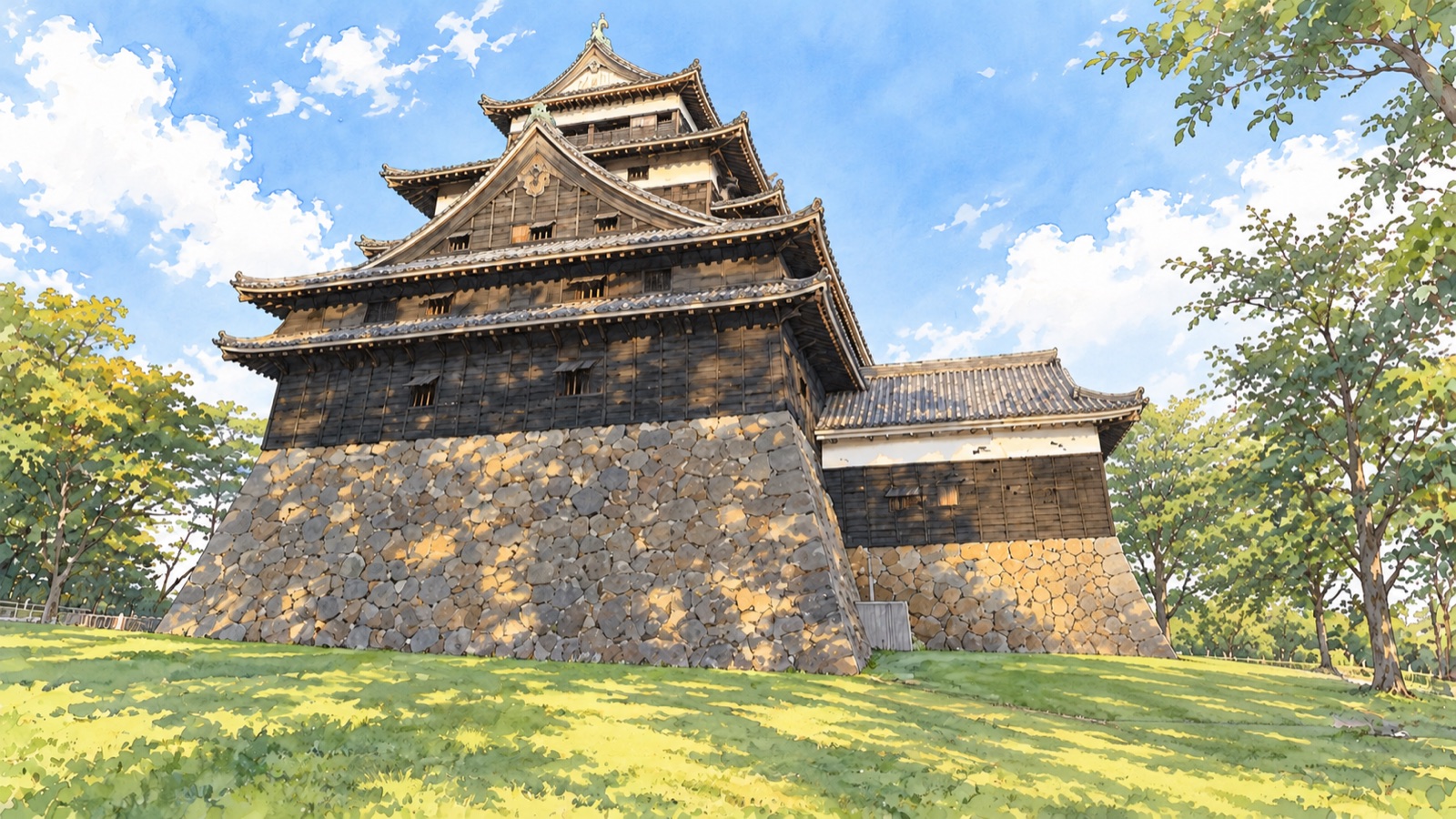
Matsue Castle Otemae is the filming location where Yusuke Nogi and his colleague Yamamoto talk with canned coffee in hand in Season 1 Episode 3. Filmed in a corner of the castle town stretching from Otemae Plaza toward the Shimane Prefectural Government Office, the scene can be recalled directly from the public streetscape overlooking the moat and wooded castle hill without needing to enter a building.
Source: Shimane Prefecture Tourism Federation: Matsue Filming Locations
From Otemae Plaza, visitors can also look directly up at the National Treasure keep of Matsue Castle. Stepping inside the wooden keep reveals structural through-pillars spanning two full stories and replica prayer plaques (kitofuda) documenting the year of its completion, while the top-floor watchtower (boro) features open balustrades with no outer walls, offering an unobstructed 360-degree view across the castle town of Matsue.
Sources: Matsue Castle: Watchtower and Shachihoko / Matsue Castle: Baileys and Stone Walls
Source: Matsue Castle Official Guide: Through-Pillars, Wrapping Planks, and Prayer Plaques
Source: Matsue Castle Official Guide: Basement Level, Interior Well, and Stone-Drop Shelves
10Around Izumo Hinomisaki Lighthouse: Where the Coast of Shimane Becomes the Mediterranean
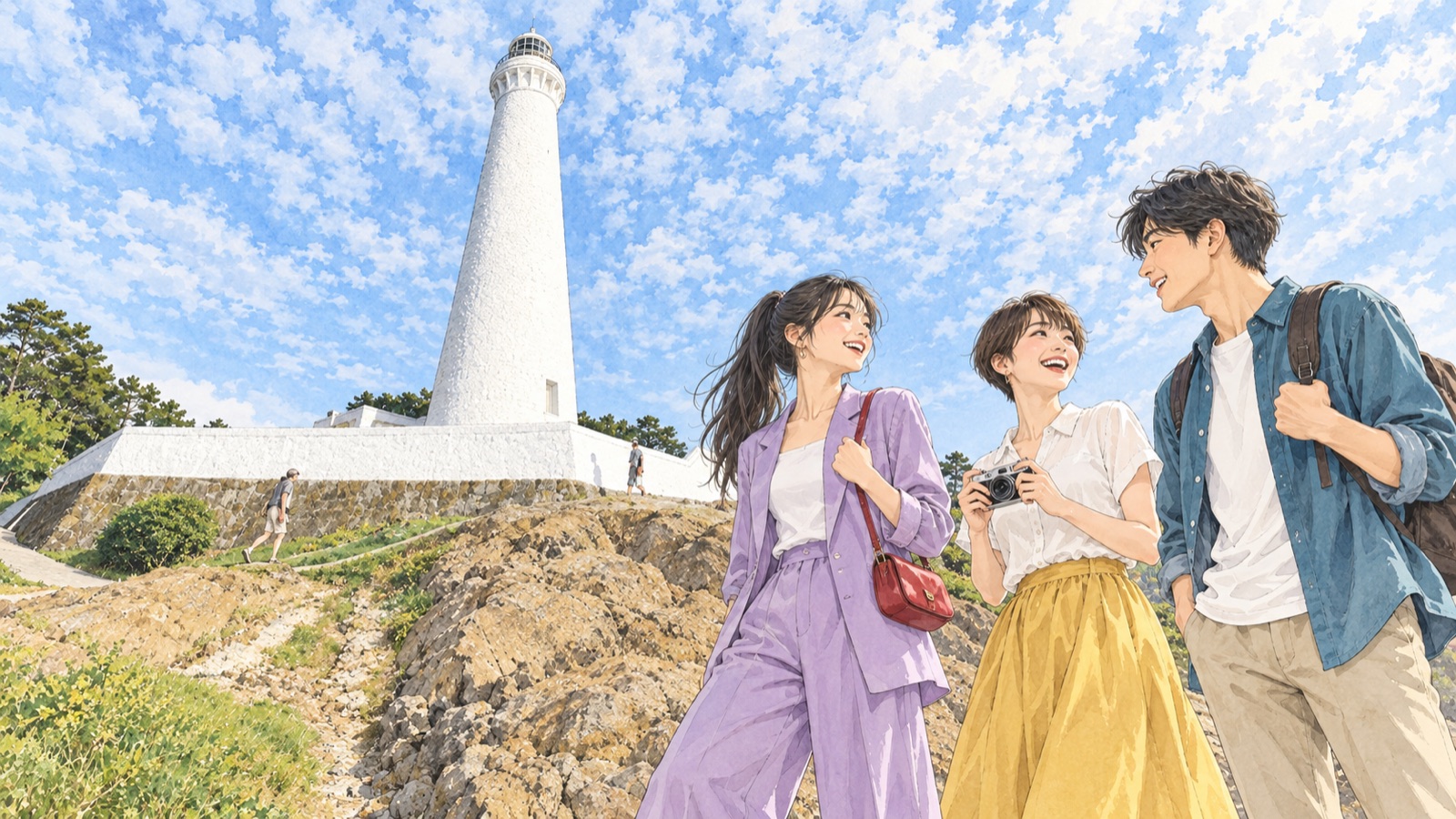
Around Izumo Hinomisaki Lighthouse, Sequel Episode 12 filmed the coastal scene in which Yusuke Nogi converses on the shore with 'F,' the alter ego who periodically surfaces within him. Although the scene appears in the story as a lighthouse coast in Cyprus, the actual filming location is in Izumo City, Shimane Prefecture.
First lit on April 1, 1903, the chalk-white stone lighthouse rises 43.65 meters from the ground at the western tip of the Shimane Peninsula, where it has guided ships at sea for more than a century. The white tower seen on screen as an overseas Mediterranean coast carries over a hundred years of maritime history in Izumo.
The tower is constructed with a double-shell masonry structure lining an outer stone wall with an inner brick wall. Climbing the 163 steps of its interior spiral staircase brings visitors to an observation deck commanding a 360-degree panorama of the Sea of Japan and the surrounding mountains—letting you pair the rocky shore seen in the drama with an elevated view over the Shimane Peninsula.
Source: Shimane Prefecture Tourism Federation: Structure & View of Izumo Hinomisaki Lighthouse
Source: Shimane Prefecture Tourism Federation: Hinomisaki Filming Location Guide
Source: Japan Coast Guard: Izumo Hinomisaki Lighthouse First Lighting Date & Dimensions
Learning How the Lighthouse Works at the Exhibition Room by the Entrance
Just before the entrance to the lighthouse stands an adjoining exhibition room displaying scale models of the tower, introductions to lighthouses across the San'in coast, explanatory graphics, and dioramas that illustrate how lighthouses work.
At the top of Hinomisaki Lighthouse, a historic first-order Fresnel lens—one of only five still in active service across Japan—continues to shine its beam across the water, bringing home how the white tower that stood in for Cyprus on screen actively safeguards ships along the Izumo coast.
Sources: Tokokai: Izumo Hinomisaki Lighthouse Exhibition Room / Tokokai: Exhibit Highlights / Sea and Lighthouse Project: First-Order Fresnel Lens
Exploring More San’in Filming Spots with the Official Shimane Location Map
Across Shimane Prefecture, many additional filming locations have been publicized—including Ichibata Yakushi Temple in Izumo City (used for Marubishi Corporation dining scenes in Season 1), the Sakai Suido Bridge linking Matsue City and Sakaiminato City (filmed as a bridge scene in Bangkok in Sequel Episode 14), and the Tanabe Family Storehouses in Yoshida-cho, Unnan City (featured in Episodes 14 and 15 where Public Security officer Tojo hides out). In neighboring Tottori Prefecture as well, Yonago Kitaro Airport, Tottori Sand Dunes Conan Airport, and JR Shoyama Station were used to film scenes for the sequel.
The official VIVANT Location Map published by the Shimane Prefecture Tourism Federation compiles location photos, place names, episode numbers, and scene descriptions in a single chart. Because travel distances between mountain towns like Okuizumo and Unnan, the castle town of Matsue, and the Izumo coastline are considerable, selecting spots in advance and grouping them by region makes for a comfortable itinerary.
Sources: VIVANT × Shimane Prefecture Season 1 & Sequel Location Portal / ASCII.jp San'in Area Location Guide
Explore Deeper: Missions and Family Bonds in VIVANT
Whereas Kanda Myojin anchors Nogi's covert Beppan missions, the samurai estate and Kaguraden Hall in Shimane trace his family roots. Below, we review the character relationships of Season 1 and look behind the scenes at the overseas shoots, acting approach, and musical score.
From a 13-Billion-Yen Wire Transfer Error to a Mission Pursuing His Father
Season 1 begins when Marubishi Corporation employee Yusuke Nogi travels to the Central Asian Republic of Balka to recover a 13-billion-yen wire transfer error. Mistakenly accused by local authorities of a bombing incident, Nogi crosses paths with Public Security police officer Mamoru Nozaki and physician Kaoru Yuzuki as the three attempt a desperate escape across the border.
Before long, another face of Yusuke Nogi comes to light behind his persona as a mild-mannered trading-company clerk: he is an elite intelligence operative of Beppan, an unacknowledged covert unit reporting directly to the Self-Defense Forces, sent to pursue the international terrorist organization Tent while approaching the same mystery from a different side than Nozaki.
Tent's charismatic leader, Beki, turns out to be Nogi's biological father, Suguru Nogi—revealing that the young father seen in the Shimane flashbacks and the head of Tent are the very same man, and tying the present-day mission directly to the past of father and son.
Sources: TBS Official Season 1 Synopsis / TBS Channel Season 1 Overview / Shimane Prefecture Tourism Federation Episode & Scene Location Map
Yusuke Nogi and the Characters Connected by Mission and Blood
Yusuke Nogi
Played by Masato Sakai; a trading-company employee who travels overseas to resolve a wire-transfer crisis and confronts his family's past as a covert Beppan operative.
Suguru Nogi
Yusuke Nogi's father; portrayed in his youth by Kento Hayashi in the Shimane riverside and Izumo Taisha Kaguraden wedding flashbacks.
Mamoru Nozaki
Played by Hiroshi Abe; a sharp Public Security police investigator who escapes Balka alongside Nogi while carefully weighing Nogi's actions and true motives.
Kaoru Yuzuki
Played by Fumi Nikaido; a dedicated physician working in Balka whose commitment to saving lives grounds the tense escape across the desert.
Shun Kurosu
Played by Tori Matsuzaka; Nogi's fellow Beppan operative whose bond with Nogi tests the boundaries of trust and suspicion among covert agents.
Source: TBS Production Roundtable on Creating the Fictional Republic of Balka
How Landscapes Across Tokyo, Regional Cities, and San’in Build the World of VIVANT
Airing on TBS's flagship Sunday Theatre slot, VIVANT revolves around trading-company employee Yusuke Nogi as a multi-billion-yen wire transfer error entangles domestic and international organizations, connecting his family's memories directly to his present-day mission.
From Kanda Myojin and Fuda Tenjinsha in Tokyo to heritage prefectural buildings in Gunma, Ibaraki, and Gifu and the ancestral estate and Hinomisaki Lighthouse of Shimane, real landscapes across Japan support distinct scenes within a single sweeping drama.
Beppan Signal
Kanda Myojin serves as Nogi's Beppan contact shrine, while Fuda Tenjinsha is where Commander Sakurai prays inside the precincts beside the sacred bronze ox.
Family Memories
The Sakurai Residence and Izumo Taisha Kaguraden in Shimane are tied directly to Nogi's ancestral home and the past of his parents.
Doubling for Overseas
The Gunma Prefectural Showa Building was filmed as a military facility in Balka, while Izumo Hinomisaki Lighthouse represented the coast of Cyprus.
Sources: TBS VIVANT Official Website / Shimane Prefecture Tourism Federation Location Map
Filming in Mongolia and the Craft of Acting, Screenwriting, and Music
Starring Masato Sakai as protagonist Yusuke Nogi, VIVANT was created, directed, and produced by Katsuo Fukuzawa as an original television drama with no prior source material, driven by the interplay between characters of clashing loyalties including Hiroshi Abe as Mamoru Nozaki and Fumi Nikaido as Kaoru Yuzuki.
Director Fukuzawa's bond with Shimane Prefecture began years earlier during the filming of the television drama adaptation of Vessel of Sand (Suna no Utsuwa). Having fallen in love with the scenery and local cuisine of Okuizumo, he recalled how town tourism staff traveled all the way to his film set in Kyoto when scheduling difficulties nearly forced a location change; moved by their dedication, he returned to Okuizumo, savored rice balls made with local Nita rice, and later returned to Shimane to film productions such as the movie I Want to Be a Shellfish.
Source: San-in Broadcasting: Director Fukuzawa on His Longstanding Bond with Shimane
Two Months on Location in Mongolia and Entrusting Character Nuances to the Cast
Season 1's Balka sequences were filmed on location in Mongolia, where Director Fukuzawa stayed for roughly two months. Although filming in unfamiliar terrain proved even more demanding than anticipated, work on set with the cast proceeded smoothly: after communicating the core direction of each scene at the outset, the director entrusted the detailed choices of performance to each actor.
Staging a Relentless Escape Before Revealing Nogi’s True Identity
In structuring the story, Director Fukuzawa also chose not to reveal Nogi's identity as a Beppan operative at the start. Although he initially considered showing Nogi's true role in Episode 1, he changed course so viewers could not predict where the plot was heading—foregrounding relentless running, hiding, and breakthroughs across Episodes 1 to 3 before unveiling Nogi's identity in Episode 4.
At the same time, visual clues pointing toward later developments were carefully planted on screen early on—such as scenes where hidden listening devices have been placed and moments where Nogi looks into a mirror when speaking to his alter ego 'F.'
Source: TBS Interview with Director Katsuo Fukuzawa on Season 1 Filming & Structure
Commissioning the Main Theme from Composer Akira Senju
Composer Akira Senju recalled on a 2024 radio program that while he normally reads the scripts before beginning to compose, for VIVANT's main theme Director Fukuzawa gave him only a brief request—'Please write a piece that anyone will immediately recognize as this work'—before departing straight for Mongolia.
Source: TOKYO FM: Akira Senju on Composing the VIVANT Main Theme
Preparing Overseas Locations in Azerbaijan and Thailand for the 2026 Sequel
For Season 2 in 2026, overseas location shooting took place in Azerbaijan and Thailand. Advance production staff who entered Azerbaijan ahead of the main unit stayed locally for three and a half to four months—inspecting art locations, arranging picture vehicles, and building working systems with local crews before welcoming the filming team.
Source: TBS Production Report on Season 2 Overseas Location Preparation
The 2026 sequel connects directly to the closing scene of Season 1, setting the story back into motion from an urgent change at Kanda Myojin and leading to Nogi's confrontation with 'F' along the rocky shore of Hinomisaki.
Alongside Season 2, TBS also produced two side stories depicting the childhoods of popular characters: 'Drum: VIVANT THE ORIGIN STORY' and 'Chinggis: VIVANT THE ORIGIN STORY.' Tracing how Nozaki's trusted partner Drum and Balka police officer Chinggis spent their early years, the Chinggis story also explores his upbringing during an era of poverty in Balka and why he came to revere Beki.
Both origin stories were filmed entirely in Japan. The child actor playing young Drum practiced raising his eyebrows and standing with an upright posture side by side in front of a mirror with the adult Drum actor, while for Episode 4's sheep scene the crew borrowed 35 sheep from a ranch, studied their flocking instincts in advance, and built custom pathways inside the set.
Source: TBS Production Note on Filming the Childhood Spin-Off Stories in Japan
VIVANT won the Grand Prix in the Continuous Drama category at the Tokyo Drama Awards 2024.
Source: TBS Official Cast & Crew Overview
Broadcast Timeline and Tie-In Works from Season 1 to the Sequel
- Summer 2023Season 1 broadcasts on TBS Sunday TheatreDrama
- Aug 30, 2023Official novelization Part 1 publishedPrint Book
- Sep 7, 2023Official JTB Shimane filming-location tour announcedLocal Tie-Up Project
- Sep 15, 2023'Nogi Family Cookies' bearing the Sakurai family crest releasedLocal Goods
- Sep 21, 2023Official novelization Part 2 publishedPrint Book
- Dec 27, 2023Complete Director's Cut Blu-ray & DVD box sets releasedHome Video Release
- Jun 11, 2025Sequel continuing directly from Season 1 officially announcedSequel
- Jun 20, 2025Audiobook edition of the novelization narrated by Kensho Ono releasedAudiobook
- Jul 23, 2026Complete 10-episode Season 1 screenplay book publishedPrint Book
- Jul 26, 2026Season 2 begins broadcast on TBSDrama
- Aug 31, 2026Official VIVANT monument and foyer photo spot installed at the Gifu Prefectural OfficeLocal Tie-Up Project
Because broadcast catch-up and streaming windows vary by platform, check current availability periods before watching.
Sources: TBS Official Program Page / TBS Home Video, Regional Tie-Up & Sequel Announcements / TBS Sequel Broadcast Guide / Gifu Prefecture Official Portal / Shimane Prefecture Tourism Federation
Official Guidebooks and Merchandise from TBS and Kanda Myojin
Official merchandise such as Beppan Manju buns and Vivant-chan items can be purchased via the TBS Official Online Shop and the shop at Kanda Myojin Shrine; check sales periods and stock for each item before visiting.
Lab Notes | Business Perspective: Using Scene Stills to Connect Fictional Settings with Real Filming Locations
Shimane Prefecture's official location map and the Gifu Prefectural Office's foyer photo spot exhibition allow fans to verify filming locations alongside actual scene stills and episode numbers. When the Gunma Prefectural Showa Building appears as a military facility in Balka or Izumo Hinomisaki Lighthouse doubles as the coast of Cyprus, viewers cannot tell where a scene was filmed from the story setting alone—making thoughtful municipal and tourism guides invaluable for linking memories of the drama with real places.
Equally instructive for other regions is how these guides present on-screen scenes side by side with what visitors can actually experience on site: worshiping and purchasing Beppan Manju at Kanda Myojin, or touring the museum and waterfall garden at the Sakurai Residence with the option of a reserved matcha hospitality session. Distinguishing dramatic staging and restricted filming areas from regular public access while highlighting each facility's authentic heritage serves visitors and local communities alike.
Related Oshi Lab report: How Travel Agencies & Destinations Design Pilgrimage Products
Official Sources & Primary References
- TBS Sunday Theatre 'VIVANT' Official Website
- Kanda Myojin Shrine Official Website
- Chofu City Tourism Association: Fuda Tenjinsha Shrine
- Gifu Prefecture Official: Tourism Promotion Tied to Sunday Theatre 'VIVANT'
- Gunma Film Commission: Episode 5 Filming Support Record
- Ibaraki Film Commission: Supported Productions Archive
- Shimane Prefecture Tourism Federation: Official VIVANT Location Map
- Shimane Prefecture Tourism Federation: Location Map PDF
- TBS Official Feature Article on the VIVANT Sequel
- Izumo Taisha Shrine Official Website
Exhibition dates, opening hours, admission fees, and ticket details are current at the time of writing. Always check the official websites for the latest schedule updates before setting out on your pilgrimage visit.
FAQ
Which scenes of VIVANT were filmed at Kanda Myojin Shrine?
Kanda Myojin is where protagonist Yusuke Nogi prays regularly and checks the small shrine beside the sacred ginkgo tree for a red bun (Beppan Manju) signaling an emergency Beppan summons. It appears repeatedly from Season 1 through the opening of Season 2 Episode 11, and official Beppan Manju buns are sold at the shrine shop.
What can visitors see at Kanda Myojin?
Highlights include the cypress Zuishinmon Gate, the vermilion main sanctuary, and the sacred ginkgo tree where Nogi checks for the signal, as well as the EDOCCO cultural complex shop where official VIVANT Beppan Manju buns are sold.
Are the Gifu Prefectural Office filming spot and photo display open on weekends?
The 1st-floor foyer photo spot, 20th-floor observation lobby, and outdoor VIVANT monument in front of the main entrance are open to the public free of charge during open hours. Check the official Gifu Prefecture website for weekend opening hours and special event dates.
Which filming locations can I visit in Shimane Prefecture?
Key Shimane locations include the Sakurai Residence (Kabeya Shuseikan), Oni no Shitaburui Gorge, Izumo Taisha Kaguraden Hall, Matsue Castle Otemae, Izumo Hinomisaki Lighthouse, and the Tanabe Family Storehouses in Unnan City—bringing to life Nogi's ancestral home, flashbacks of his parents, and his conversation with Yamamoto.
Where was Nogi's ancestral family estate filmed?
It was filmed at the Sakurai Residence and Kabeya Shuseikan Museum in Okuizumo Town, Shimane Prefecture, a designated Important Cultural Property of Japan; check seasonal opening dates and hours before visiting.
Were all of the overseas scenes filmed outside Japan?
Not necessarily: while major sequences were shot on location in Mongolia, Azerbaijan, and Thailand, domestic landmarks also stood in for overseas settings—such as the Gunma Prefectural Showa Building representing a facility in Balka and the coast at Izumo Hinomisaki Lighthouse standing in for Cyprus.
What kind of scenery can I enjoy at Oni no Shitaburui Gorge?
A 2.3-kilometer V-shaped gorge lined with towering granite boulders and rushing rapids. Walking along the maintained boardwalk trail lets you enjoy Okuizumo's nature while recalling the Season 1 flashback of Nogi's father, Suguru Nogi, studying by the river.
What scene was filmed at Matsue Castle Otemae?
In Season 1 Episode 3, Nogi and his colleague Yamamoto talk while holding canned coffee along the moat and castle-hill streetscape of Matsue Castle Otemae.
Are the filming locations the same between Season 1 and the 2026 sequel?
In addition to returning locations in Tokyo, Gunma, Ibaraki, and Shimane from Season 1, the 2026 sequel adds the Gifu Prefectural Government Office, Iwamura Castle Town in Ena City, and new San'in locations in Yasugi and Unnan.
Where can I purchase official VIVANT merchandise?
Official goods—including Beppan Manju buns and Vivant-chan items—are available through the TBS Official Online Shop and the shop at Kanda Myojin Shrine; check each store for current stock and sales periods.
More in Pilgrimage

Film "Kokuhou" Pilgrimage Guide: Izushi Eirakukan, Biwako Otsukan, Kyoto Kaburenjo Theaters & Dojo-ji Temple

Amachan Pilgrimage Guide: Kuji's Kosode Coast, Costume Exhibits & Sanriku Railway Filming Stations
