

Bayside Shakedown Pilgrimage: Odaiba, Rainbow Bridge, and the Official Museum Tour
Fuji TV’s Odaiba headquarters has Hachitama, a spherical observation room about 100 meters above ground. The announcement of the drama Bayside Shakedown was made here in December 1996, with a view over the waterfront subcenter. The building itself witnessed the series’ beginnings.
This guide introduces seven destinations, including Odaiba’s views of Rainbow Bridge and a touring exhibition of costumes and props. The summer 2026 exhibition at Hachitama has ended. The show is now in Osaka through November 23 and is scheduled to travel to Sapporo in December.
Seven places in Odaiba and venues for the official exhibition
① Hachitama
Observation room where the series was announced in December 1996. Normally open 10 a.m.–6 p.m.; closed Mondays.
More about Hachitama② Rainbow Bridge
The bridge named in the second film’s title. A roughly 1.7-kilometer promenade connects the Shibaura and Daiba sides.
More about Rainbow Bridge③ Odaiba Seaside Park
A park with a beach and walking paths overlooking Rainbow Bridge and the inlet.
More about Odaiba Seaside Park④ Osaka ATC
The Osaka venue for Bayside Shakedown: THE MUSEUM. Open through November 23.
More about Osaka ATC⑤ Sapporo Factory
The revised venue is on the second floor of the Ichijo-kan building, beside Lawson and United Cinemas.
More about Sapporo Factory⑥ Ginza Mitsukoshi
The exhibition’s second venue, where new merchandise was introduced.
More about Ginza Mitsukoshi⑦ the SOHO
The building that appeared as the Wangan Police Station in the film Bayside Shakedown: THE FINAL.
More about the SOHO
1Fuji TV’s Hachitama | Where the series was first announced
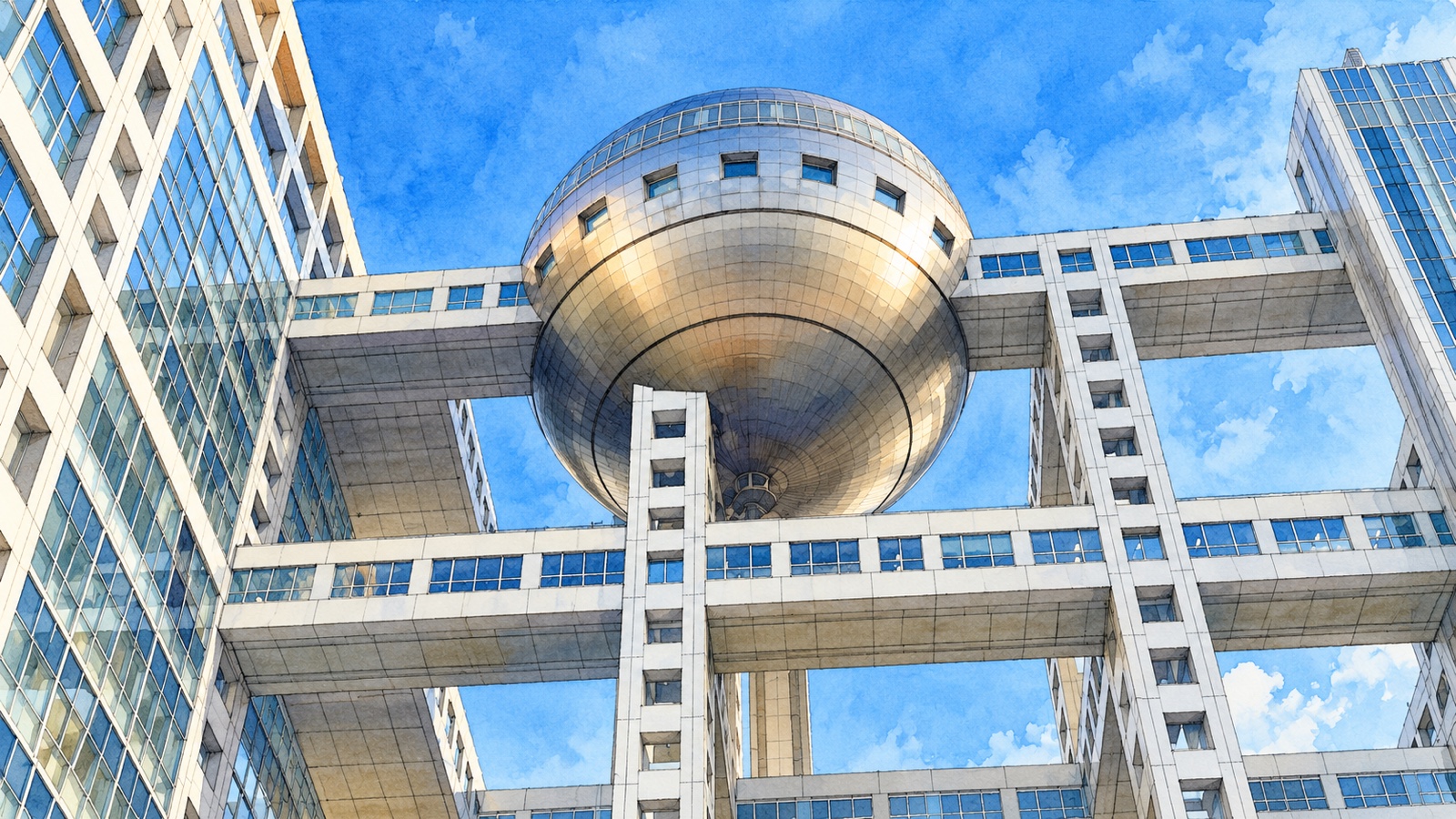
Fuji TV’s Odaiba headquarters is home to Hachitama, a spherical observation room on the 25th floor. Its connection to Bayside Shakedown goes beyond its role as the broadcaster’s building. According to the official museum guide, the drama’s production was announced here in December 1996.
Hachitama sits about 100 meters above ground and offers a 270-degree view of the waterfront subcenter. The Bayside Shakedown museum exhibition ran from July 25 to August 23, 2026, as a summer event. That exhibition has now ended.
Regular hours are 10 a.m.–6 p.m., with last admission at 5:30 p.m. It is closed on Mondays; when Monday is a public holiday, it closes on the next weekday. Admission is ¥800 for high school students and older, ¥500 for elementary and junior high students, and free for preschool children. On weekdays, high school students pay ¥640 on presentation of a student ID.
The entrance is on the seventh floor, and a dedicated elevator takes visitors to the 25th floor. An elevator also connects the first-floor Fuji TV Mall to the seventh floor, so the facility says visitors using wheelchairs can reach the observation room. Accessible restrooms are on the first, seventh, and 25th floors.
- Location
- 25th floor, Fuji TV headquarters, 2-4-8 Daiba, Minato-ku, Tokyo
- Connection to the series
- Venue for the drama’s production announcement in December 1996 and the official summer 2026 museum exhibition
- Hours
- 10 a.m.–6 p.m.; last admission 5:30 p.m.; closed Mondays, or the next weekday if Monday is a public holiday
- Admission
- ¥800 for high school students and older; ¥500 for elementary and junior high students; free for preschool children
Sources:Bayside Shakedown: THE MUSEUM | Background to the exhibition
Fuji TV | Current visitor information
2Rainbow Bridge | Walk across the bridge that gave the film its title
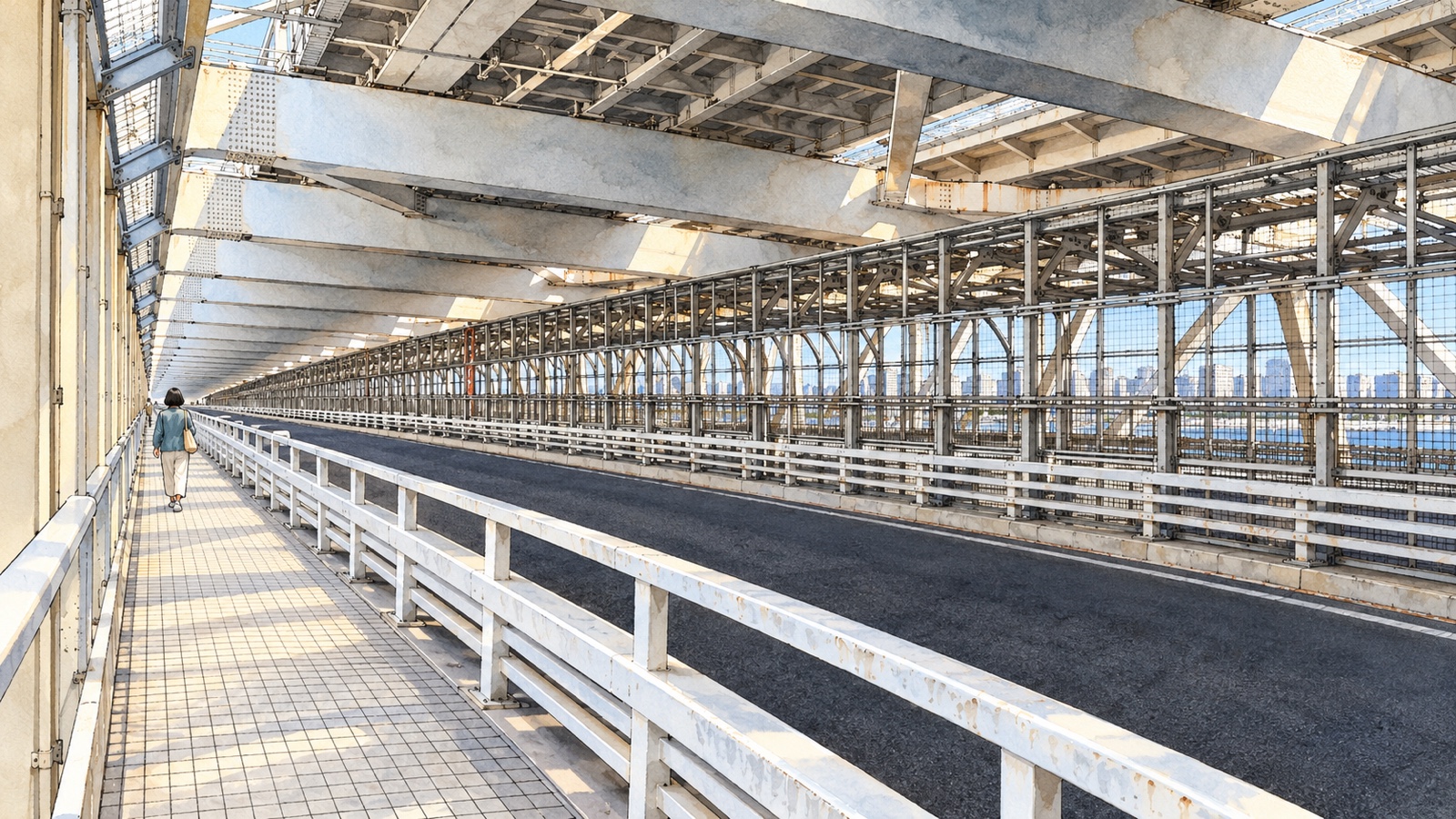
The subtitle of the second film is Bayside Shakedown 2: Block the Rainbow Bridge! The bridge, which opened in August 1993, gave its name to the film released 10 years later. The story makes a real transportation link between the waterfront subcenter and central Tokyo its major setting.
Pedestrians can use a walkway separated from the roadway. It runs about 1.7 kilometers from the Shibaura side to the Daiba side, and the manager estimates a 20- to 30-minute walk. Unlike the view of the whole bridge from Odaiba, the route offers a look over the waterfront from above the sea.
The walkway is open from 9 a.m. to 9 p.m. April through October and from 10 a.m. to 6 p.m. November through March. Last entry is 30 minutes before closing. It is closed on the third Monday of each month, or the following day if that Monday is a public holiday. Severe weather or inspections may also close it.
There is no parking lot at the walkway, and restrooms are on the Shibaura side. Bicycles cannot be ridden across, but may be pushed using a special rental stand or carried after being disassembled or folded and placed in a dedicated bag. Because of the steep slopes, the manager advises wheelchair users to have an accompanying helper.
- Location
- From Shibaura Anchorage, 3-33-19 Kaigan, Minato-ku, Tokyo, to the entrance on the Daiba side
- Connection to the series
- The bridge featured in the second film, Bayside Shakedown 2: Block the Rainbow Bridge! and named in its title
- Opening hours
- 9 a.m.–9 p.m. April–October; 10 a.m.–6 p.m. November–March; last entry 30 minutes before closing
- Closing day
- Third Monday of each month; the following day if Monday is a public holiday
Sources:Fuji TV | Information about the second film
Tokyo Metropolitan Government Bureau of Port and Harbor | Rainbow Bridge promenade
3Odaiba Seaside Park | Take time to enjoy the waterfront scenery
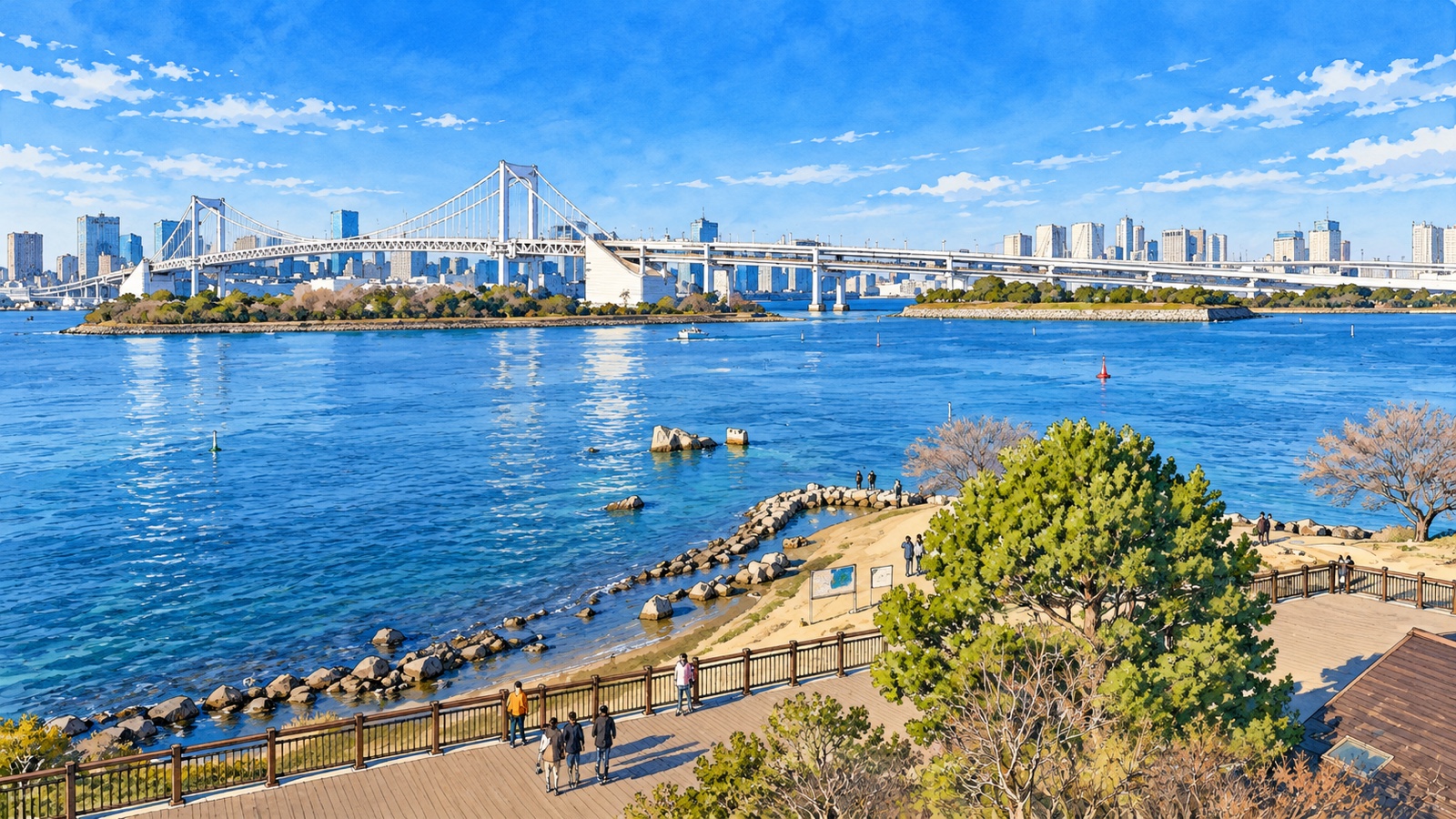
Together with Daiba Park, which occupies the Third Daiba, Odaiba Seaside Park surrounds an inlet. Its waterfront viewpoints include a beach, rocky shore, lawns, an observation deck, and a skywalk.
Even in Odaiba, the modern city depicted in Bayside Shakedown, the landforms of the Daiba fortifications built at the end of the Edo period remain. The Third Daiba has the remains of gun batteries, barracks, and a powder magazine; neighboring Sixth Daiba is closed to visitors for conservation. Stone walls and greenery seen across the beach speak to a history older than the reclaimed-land city.
Odaiba Seaside Park opened in December 1975, while Daiba Park opened in July 1928. By the time the television drama aired, the seaside park was already part of the city.
- Location
- Daiba 1-chome, Minato-ku, Tokyo
- Connection to the series
- A park overlooking Odaiba’s waterfront and Rainbow Bridge, settings in the jurisdiction of the fictional Wangan Police Station
- Highlights
- The beach and observation deck, the skywalk, and remains of a gun battery in adjacent Daiba Park
Sources:Kaiyo Koen Navi | Odaiba Seaside Park
Fuji TV | About the television drama
4Osaka ATC | Bayside Shakedown: THE MUSEUM, open through November 23
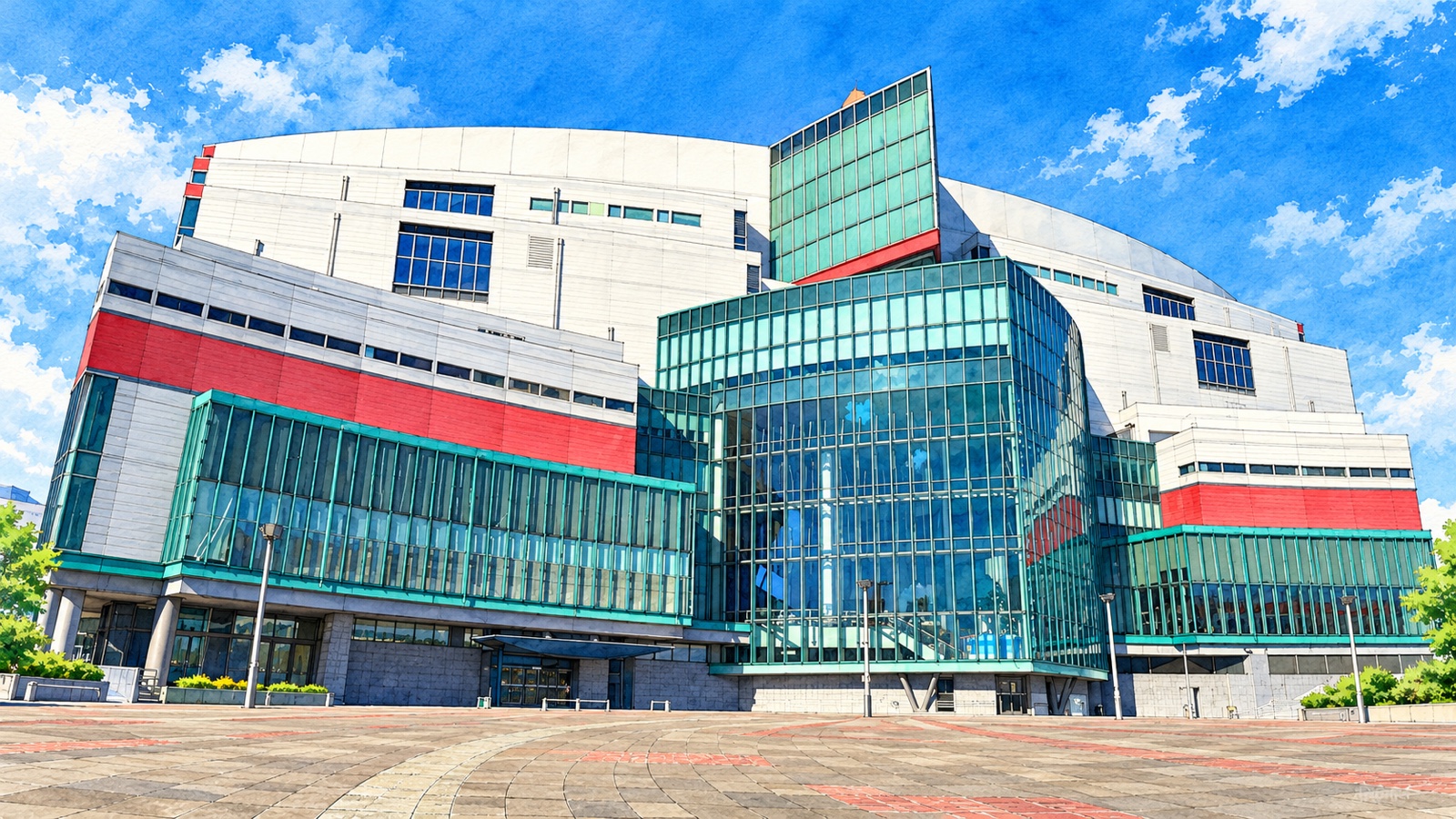
In Osaka, Bayside Shakedown: THE MUSEUM: The Case Is at ATC! is on view in a special exhibition space on the fourth floor of the ITM Building at ATC. It runs from October 17 through November 23, 2026.
Hours are 1–6 p.m. on weekdays and 10 a.m.–5 p.m. on weekends and public holidays. Last entry is 30 minutes before closing each day. Same-day tickets cost ¥2,000 for adults and university students, and ¥1,600 for junior and senior high school students. Tickets are sold through Asoview!
The Osaka venue is part of a traveling exhibition that followed Odaiba and Ginza Mitsukoshi. Along with Aoshima’s desk, costumes, and props connected to the story, the exhibition announcement says new merchandise first introduced at the Ginza venue is also available. The display looks back at the earlier series and extends to Aoshima in N.E.W., now transferred to the First Investigation Division.
From Trade Center-mae Station on the New Tram, leave the ticket gates and turn left to reach the connecting bridge to the second floor of the ITM Building. From the Osaka Metro Chuo Line, transfer to the New Tram at Cosmosquare Station.
- Location
- Special exhibition space on the fourth floor of the ATC ITM Building, 2-1-10 Nanko-kita, Suminoe-ku, Osaka City
- Connection to the series
- Osaka venue of Bayside Shakedown: THE MUSEUM
- Exhibition dates
- October 17–November 23, 2026; 1–6 p.m. weekdays and 10 a.m.–5 p.m. weekends and public holidays
- Admission
- Same-day tickets: ¥2,000 for adults and university students; ¥1,600 for junior and senior high school students
Sources:ATC | Access from the station
Fuji TV | THE MUSEUM Osaka venue
5Sapporo Factory | Scheduled venue for the tour beginning December 5
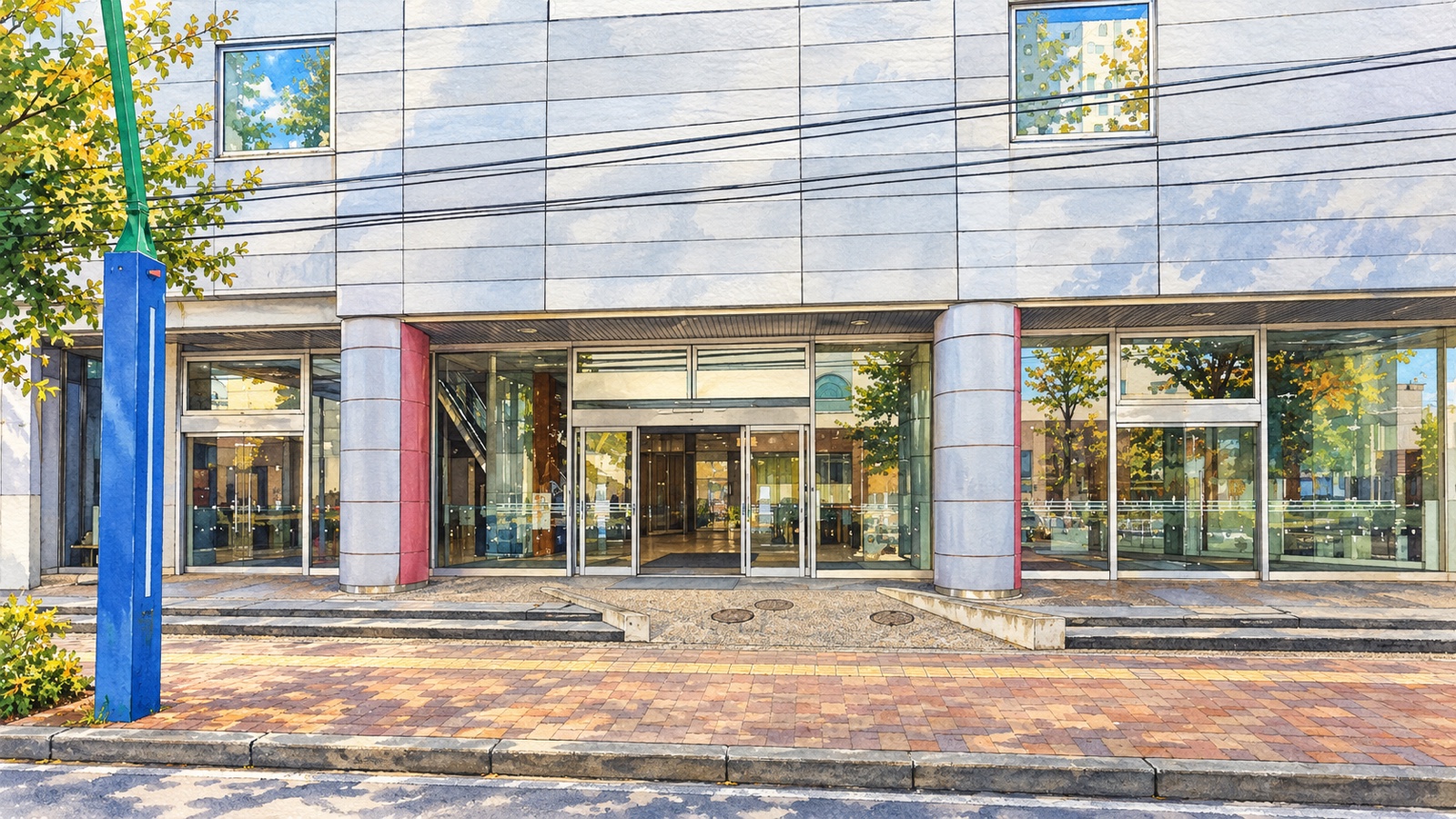
In Hokkaido, the museum exhibition is scheduled to take place in a special venue on the second floor of Sapporo Factory’s Ichijo-kan building. The dates are December 5, 2026, through January 11, 2027. The organizer says the venue was changed from the originally announced fourth floor of Nijo-kan.
The revised venue is on the second floor of Ichijo-kan, next to Lawson and United Cinemas Sapporo. Since the organizer explicitly announced the venue change, visitors should go to Ichijo-kan rather than relying on the earlier information that listed the fourth floor of Nijo-kan.
Opening hours are 1–5:30 p.m. on weekdays, 11 a.m.–6 p.m. on Saturdays and days before public holidays, and 11 a.m.–5:30 p.m. on Sundays and public holidays. Last entry is 30 minutes before closing in each case. The general tour schedule lists December 31 and January 1 as closed.
Admission is ¥2,000 for adults and university students and ¥1,600 for junior and senior high school students; advance tickets purchased by December 4 are ¥200 less in each category. Up to two elementary school-age children or younger may enter free with each paying adult. Each ticket is valid for one visit during the exhibition, and from December 5 tickets are scheduled to be sold both through ticket agencies and at the venue. One accompanying caregiver enters free when accompanying a paying visitor with a disability certificate.
The planned Sapporo exhibits include Aoshima’s coats from different eras, props used in filming, dioramas of the former and new Wangan Police Station, a recreation of the smoking area, and costumes and props from the new N.E.W. series. Exhibition-exclusive merchandise is also planned.
The facility estimates a three-minute walk from Exit 8 of Bus Center-mae Station on the Tozai subway line. By bus, the nearest stop is Sapporo Factory.
- Location
- Special exhibition venue on the second floor of Ichijo-kan, Sapporo Factory, Kita 1-jo Higashi 4-chome, Chuo-ku, Sapporo, Hokkaido
- Connection to the series
- Scheduled Sapporo venue for the touring Bayside Shakedown: THE MUSEUM
- Exhibition dates
- December 5, 2026–January 11, 2027; closed December 31 and January 1
- Nearest station
- Three-minute walk from Exit 8 of Bus Center-mae Station on the Tozai subway line
Sources:Sapporo Factory | Access by public transportation
Hokkaido venue | Exhibition information
THE MUSEUM | Tour venue list
6Ginza Mitsukoshi | “The Case Is at Ginza Mitsukoshi”
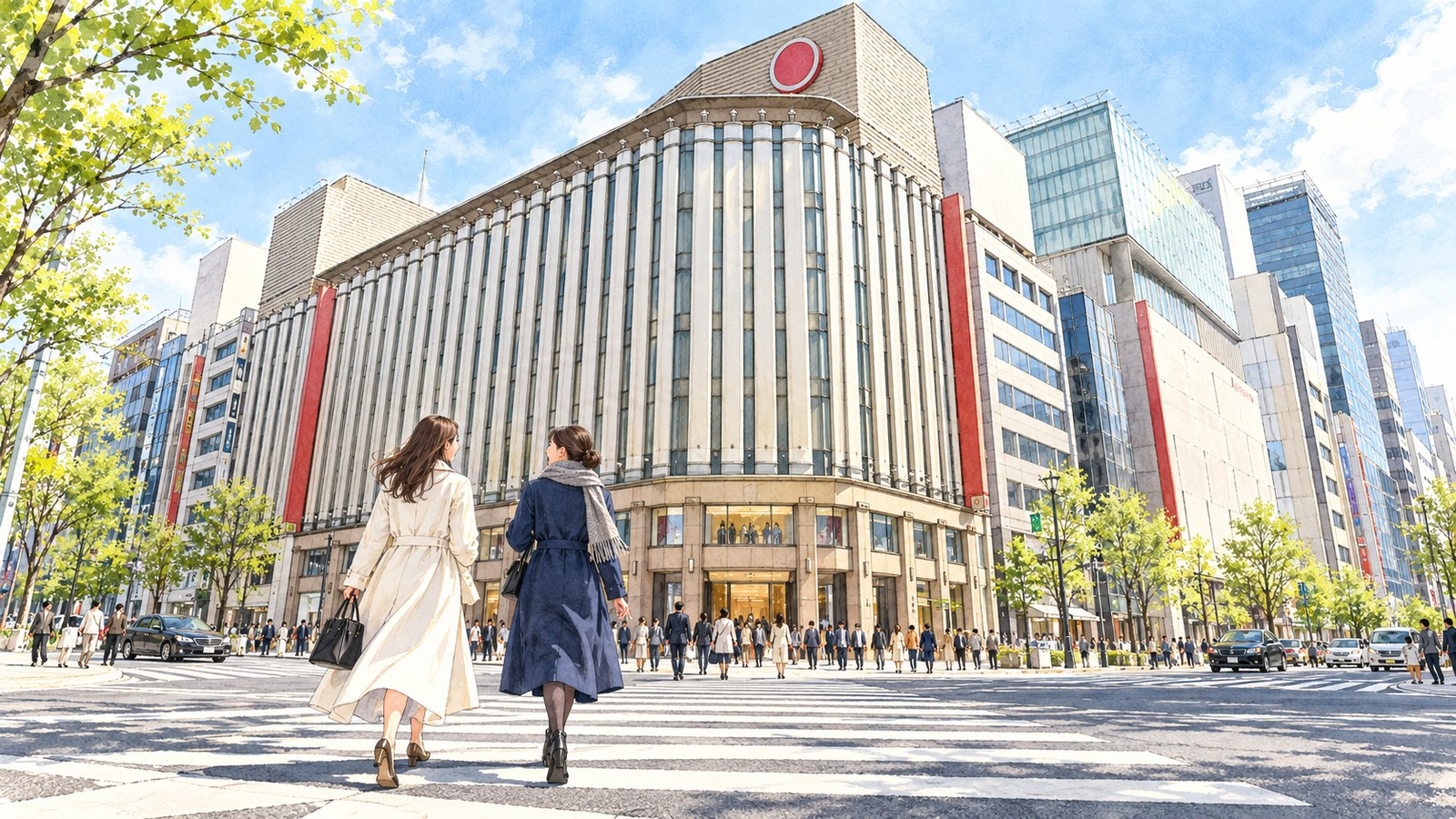
The second stop on the tour after Odaiba was the seventh floor of Ginza Mitsukoshi’s New Building. It ran from September 9 to October 12, 2026, under the title “The Case Is at Ginza Mitsukoshi.” The announcement said that new merchandise introduced at this venue would also be available at the following Osaka venue.
- Location
- Seventh floor, New Building, Ginza Mitsukoshi, 4-6-16 Ginza, Chuo-ku, Tokyo
- Connection to the series
- Ginza venue for Bayside Shakedown: THE MUSEUM, September 9–October 12, 2026
- Current status
- Exhibition has ended
Sources:Bayside Shakedown: THE MUSEUM | Announcements 、Mitsukoshi Isetan | Events at Ginza Mitsukoshi
7the SOHO | The building used as the Wangan Police Station in THE FINAL
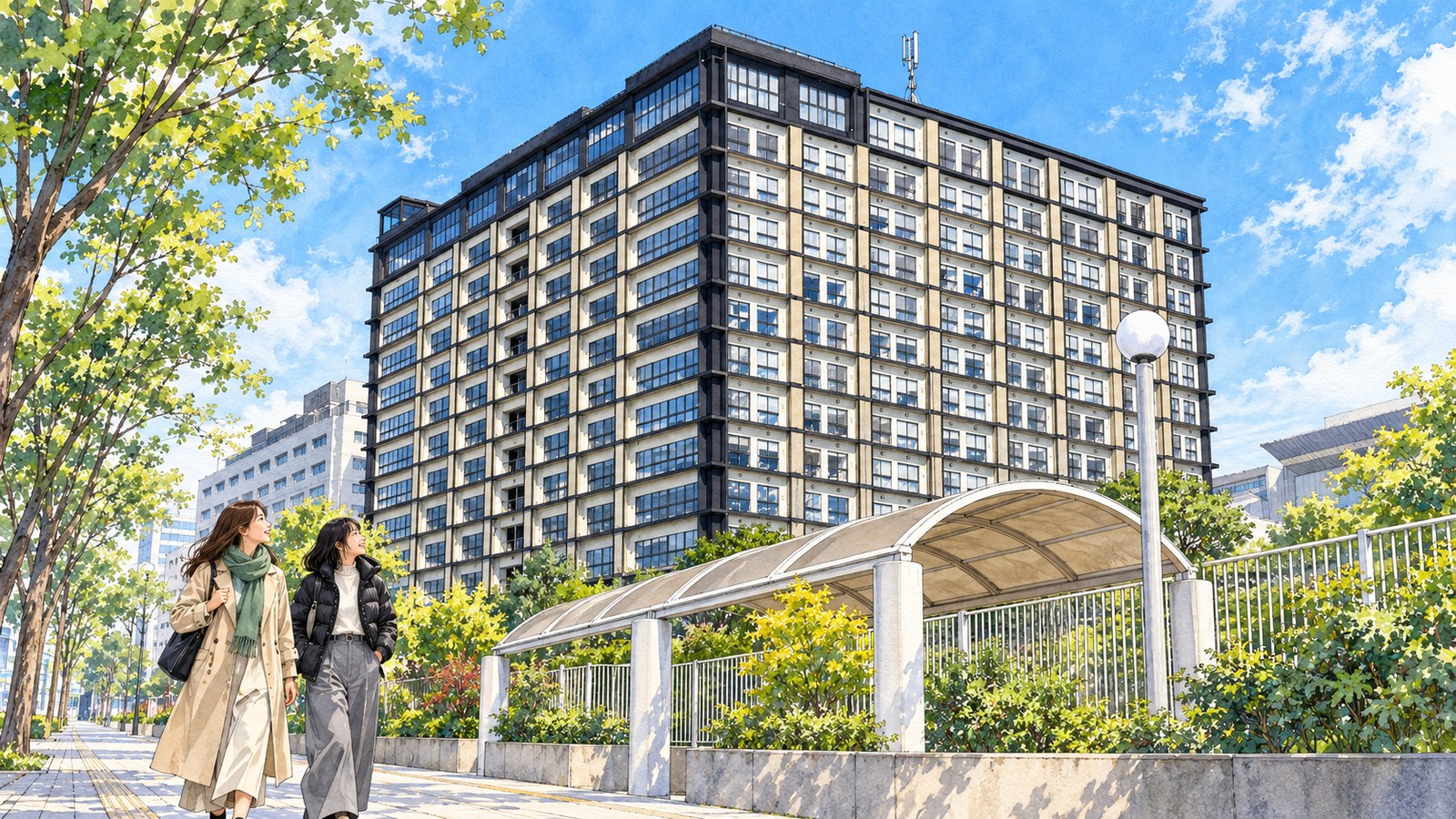
the SOHO in Aomi, Odaiba, appeared as the Tokyo Metropolitan Police Department’s Wangan Police Station in the 2012 film Bayside Shakedown: THE FINAL: A New Hope. The Tokyo Location Box describes it as “the last Wangan Police Station in the Bayside Shakedown series.” It is about a five-minute walk from either Fune-no-kagakukan or Telecom Center Station on the Yurikamome Line. Because the building houses offices, visitors can view its exterior from the street only.
- Location
- 2-7-4 Aomi, Koto-ku, Tokyo
- Connection to the series
- Appeared as the Wangan Police Station in the 2012 film THE FINAL
- Nearest stations
- About a five-minute walk from Fune-no-kagakukan or Telecom Center Station on the Yurikamome Line
- Visiting
- Exterior only
Sources:Tokyo Location Box | The last Wangan Police Station in the Bayside Shakedown series
Stories of people and institutions at the Wangan Police Station
Odaiba as the workplace of Aoshima and his colleagues
In Bayside Shakedown, the police organization is framed like a company: the Metropolitan Police Department is “head office,” while local precincts are “branch offices.” When Aoshima tries to pass on what he has learned in the field to headquarters, rank and the chain of command stand in his way. Investigating cases unfolds alongside the work of getting a message through the organization.
Aoshima faces more than suspects. Muroi makes decisions from his position at headquarters; Waku draws on years of experience in the field; and Sumire makes decisions on the spot. Since their duties and positions differ, they do not immediately agree even when confronting the same case. Their conflicts arise from the roles each person has within the organization.
Sources:Fuji TV | About the television series Bayside Shakedown
Before becoming a detective, Aoshima worked for a company
Aoshima was not someone who had always set out to become a detective. The Drama Academy Awards’ series introduction explains that after graduating from college, he worked for an electronics manufacturer. Seeking a change from his uneventful routine, he took the Metropolitan Police Department entrance exam. After working at a police box, he finally became a detective and was assigned to Wangan Police Station.
After leaving the company, Aoshima went on to work as part of another large organization. The new job he chose in search of excitement brought rank, reporting requirements, and coordination with superiors. The gap between the joy of becoming a detective and the way he expected the job to be sets the story in motion.
Sources:The Television | Drama Academy Awards series introduction
Place characters with different positions around the protagonist
Yuji Oda’s Aoshima, Toshirō Yanagiba’s Muroi, Chosuke Ikariya’s Waku, and Eri Fukatsu’s Sumire Onda represent different positions: a young detective and a veteran, a local precinct and headquarters.
In a WOWOW conversation, producer Chihiro Kameyama said the early concept paired a young person with a veteran, with The Seven in mind, and that Chosuke Ikariya was cast after Yuji Oda. At that stage, the character who became Waku was Sumire’s father, and the plan also included a story about the household where Aoshima lodged. The concept eventually moved away from a whodunit-centered structure and became a workplace drama about police officers.
Yuji Oda
Oda played protagonist Shunsaku Aoshima. After college, Aoshima worked for an electronics manufacturer, then joined the Metropolitan Police Department in search of excitement. He was assigned to the detective division at Wangan Police Station.
Toshirō Yanagiba
Yanagiba played Shinji Muroi, who directs investigations from the headquarters side. In the 2005 film Muroi Shinji, Muroi is the central character as he is arrested and held responsible.
Eri Fukatsu
Fukatsu played Sumire Onda, a detective at Wangan Police Station who makes decisions at the scene of an incident.
Chosuke Ikariya
Ikariya played Heihachiro Waku, a veteran detective with long experience in the field. He was cast after Oda during the early planning to pair a younger actor with a veteran.
Yusuke Santamaria
Santamaria played Masayoshi Mashita. In the 2005 film Negotiator: Mashita Masayoshi, he takes the lead role and negotiates with a criminal over a hijacked experimental subway train.
Sources:Fuji TV | Cast and staff
WOWOW | Chihiro Kameyama and Katsuyuki Motohiro recall the project
Fuji TV | Film series synopses
The name “Wangan Police Station” and the real building
The Tokyo Location Box identifies the building that appeared as Wangan Police Station in THE FINAL as the SOHO. The name of the police station shown on screen differs from the real building’s name. A filming-location listing does not mean that the building is open for ordinary interior visits.
For a look inside the Wangan Police Station, the current museum exhibition includes models and recreated displays of both the old and new precincts. At Hachitama, part of the old precinct’s detective division was recreated, including the desk layout and piles of written reports of misconduct.
Sources:Tokyo Location Box | Exterior of the Wangan Police Station in THE FINAL
Official museum | Re-creation of the detective division
How Bayside Shakedown was made: humor and props
The green coat was chosen at a costume fitting
Aoshima’s green coat was chosen during a costume fitting. They say that when he first tried on a single-breasted coat, he looked like Kanchi, the character Oda had played in Tokyo Love Story. Oda suggested a mod coat, and after trying on one worn by the stylist, Aoshima’s look was set.
According to Chihiro Kameyama, after the coat was settled, they came up with the idea that Aoshima preferred military surplus and wore an army-style watch. Rather than starting with a fully developed character and choosing clothes to match, this is an example of the character taking shape from how an outfit looked in a fitting.
Source:WOWOW | Interview with Katsuyuki Motohiro and Chihiro Kameyama
The screenwriter’s beginnings: humor amid the tension
Screenwriter Ryoichi Kimizuka got his start in a scriptwriting competition for Taiyo ni Hoero! that he entered while at university. About two of his scripts were selected, but he recalled that professionals revised them and hardly any of his dialogue remained. Later, Kinichi Hagimoto invited him to work as a writer for variety shows, where he gained about 10 years of experience.
On variety shows, the performers’ spontaneous lines can be funny, while a detailed script can restrict their movement. Kimizuka gradually began telling people around him that he wanted to write dramas. A producer who had transferred from the variety-show team to the drama team gave him a chance to return to scriptwriting.
Kimizuka has said that the humor he learned in that work also informed Bayside Shakedown. The series moves between the tension of an investigative meeting and slightly absurd conversations at the precinct, with the same characters in both. It carries traces of his experience before writing drama.
Source:Shosetsumaru | Ryoichi Kimizuka, “How to Make a Story”
Cars and people from the public helped film the second movie’s road scenes
Scenes in THE MOVIE 2 involving the bridge were filmed on an expressway borrowed before it opened. Issue 3 of the Shiga Location Office News, published on July 10, 2003, shows vehicles lined up on the road during filming. Its report says that nearly 100 registered local supporters in total took part in the mid-March shoot, bringing their own cars.
The office cited the opportunity for local residents to participate in filmmaking and the expectation that about 300 cast and crew members in total would stay in the prefecture over three days. Participants’ comments in the newsletter recall radio instructions on set, crew working in the cold, and the impressive scale of cranes and steadicams.
To create a view of Tokyo in the film, a road, cars, and people from another region were involved. This record connects a visit to the Rainbow Bridge promenade with a look back at the roads prepared for filming.
Source:Shiga Location Office News No. 3, July 2003, page 1
Tracing the series over time through props and production materials
Aoshima’s coats from different eras and the recreated detective division
The Odaiba exhibition brought together Aoshima’s coats from the television series, THE MOVIE films 1, 2, and 3, and THE FINAL. The official guide highlighted details and wear marks from each era. The moss-green look ties the series together, while the differences from one coat to the next document each installment.
The exhibition went beyond costumes to include scripts and props owned by the production team and collector’s items kept by director Katsuyuki Motohiro. Along with a recreation of the detective division, a smoking area where visitors could recall conversations between Aoshima and Waku, and Aoshima and Muroi, was set up as a photo spot.
According to an exchange between Kameyama and Motohiro on the official page, the staff searched for items each of them had on hand during preparations, and Oda was also going to look for and bring in pieces from his collection. Rather than drawing only on items kept together in storage, the exhibition gathered objects that people involved in production had held onto.
Sources:THE MUSEUM | Exhibits at the Odaiba venue
THE MUSEUM | Comments from the production team
In the 2026 film, Aoshima runs through the streets of Tokyo
Bayside Shakedown N.E.W.: Run Through the Metropolis opened nationwide on September 18, 2026. The official website lists theaters showing the film. In the new story, Aoshima belongs to the First Investigation Division of the Metropolitan Police Department’s Criminal Investigation Department. After being named by a kidnapper as the person to deliver the ransom, he is caught up in another major incident and moves through the streets of Tokyo.
According to the official production notes, the team initially considered having Aoshima move into a support role, but could not settle on a direction. Motohiro then suggested that Aoshima should run. They used areas of Shinjuku and Shibuya undergoing redevelopment, and settled on a structure in which new companions join him along the way.
The Tokyo Location Box’s record of filming support lists the area around the Tokyo Metropolitan Government Building, Shinjuku i-Land Tower, Carillon Deck at the west exit of Shinjuku Station, Shinjuku Ōguard, Cine City Square in Kabukicho, and the KK Line of the Tokyo Expressway. Scenes of Aoshima running from the west to the east side of Shinjuku were filmed at several locations.
The support team says it was approached early on about filming in Shinjuku with a large number of extras, and spent time coordinating with police stations, shopping streets, and others. Around Aoshima as he keeps running on screen are people from the city who helped make the filming possible.
Source:Tokyo Location Box | Filming support in Shinjuku and other areas
Sources:Official N.E.W. film website | About the film
Official N.E.W. film website | Theaters showing the film
Official production notes
How to portray Aoshima at an age close to Waku’s
During the planning stage for the two Muroi Shinji films in 2024, a follow-up with Aoshima as the protagonist had apparently not yet been decided. After reading the script, Oda asked the production team why he was not in it, prompting the series to restart. What is Aoshima doing now, at an age close to the age Chosuke Ikariya was during the original television series? Kameyama revealed in the production notes that Oda had been thinking about this question.
For the role, they left the gray hair and wrinkles visible and added muttering as Aoshima voiced whatever caught his eye. Oda also suggested having him favor one knee, in contrast to Waku’s bad back. Age is reflected not only in his appearance but also in his words and movements.
Source:Official N.E.W. film website | Production notes
The theme music brings Aoshima’s running to mind
Music is another important clue connecting the series with the city’s scenery. When people hear “Rhythm And Police” by Akihiko Matsumoto, they may remember Aoshima springing into action before they recall the title. In a 2026 DIME interview, director Motohiro discussed the cues used at key moments when Aoshima starts running and said he commissioned music with Mission: Impossible in mind.
The DIME editorial team examined how often the score was used across the drama’s 11 episodes and reported that “G-Groove,” played when Muroi appears, was used most often. The series has repeated music associated not only with Aoshima running but also with Muroi, who stands between headquarters and the field.
In the same article, Hisakatsu Tanaka highlights the score’s emphasis on rhythm over grand melody. He analyzes how the opening of “Rhythm And Police” immediately brings the series to mind, while distinct sounds assigned to individual characters create a musical world that audiences recognize.
The theme song for the second film is “Love Somebody [CINEMA Version II]” by Yuji Oda featuring MYA. The film’s score is by Akihiko Matsumoto.
Sources:DIME | Interview about the music of Bayside Shakedown
Fuji TV | Music credits for the second film
Hear two departure melodies on the train to Odaiba
Since July 2008, Tokyo Teleport Station on the Rinkai Line has used music from Bayside Shakedown as its departure melodies. Trains toward Osaki play “C.X,” while those toward Shin-Kiba play “Rhythm And Police.” The railway says the melodies were introduced with Fuji TV’s cooperation.
The ticket gates are on the station’s first basement level and the platforms are on the third basement level. On the way up to the gates, visitors will see a decoration depicting Odaiba’s sea, made with Japanese paper placed between sheets of laminated glass. Even inside this underground station, motifs of the sea and music from a series set in the city are part of the design.
The film theme that comes to mind before arriving in Odaiba plays as the actual departure melody on the ride home. Separate from any limited-time exhibition, the station’s music is an ongoing connection between the series and everyday transit.
Sources:Rinkai Line | Tokyo Teleport Station departure melodies
Rinkai Line | Station layout and sea-themed decoration
The working world changes with each story, even in the same Odaiba
The official synopsis of the second film depicts Odaiba as having changed from a district with plenty of vacant lots into a tourist destination. Wangan Police Station’s duties now also include giving directions to tourists, helping lost children, and managing traffic, linking the bustle of the city to the police officers’ busy work. Bridges and commercial facilities do more than decorate the screen; they change the work of the people stationed there.
The third film begins on March 28, 2010, as the new Wangan Police Station prepares to move. Aoshima, now chief of the Violent Crimes Unit, is assigned to oversee the move, while incidents continue in the precinct and a gun is stolen amid the confusion. The new city’s facilities and the workload facing officers are built into the story’s starting point.
Source:Fuji TV | Synopses of the series’ films
From the 1997 television series to the films
The television drama aired from January through March 1997, and the first theatrical film opened on October 31, 1998, about a year and a half after the final episode. A special television drama was also made in the intervening period. The story did not move directly from the end of its weekly television run to the movie theater.
Kameyama and Motohiro have recalled the long lines around theaters as a striking memory from the first film’s release. They said that seeing how many people came to watch it was when they first realized it had become a major hit. People who had followed daily life at Wangan Police Station on television were gathering at theaters to meet the same characters again.
Source:WOWOW | Recollections from the release of the first film
Films about Mashita and Muroi after they leave Wangan Police Station
The 2005 film Negotiator: Mashita Masayoshi stars Mashita and follows Tokyo’s subway network. On Christmas Eve, an experimental state-of-the-art train is hijacked, and Mashita is tasked with negotiating with a criminal who never appears. The series’ interest in the relationship between transportation and the city expands into a film centered on the subway.
In that same year’s Muroi Shinji, Muroi is arrested and held responsible for directing an investigation. A young lawyer tries to save him, while relationships inside the police also come into play. The film explores the organization from a perspective separate from Aoshima’s. Shift the focus from a character seen at Wangan Police Station to another, and a different part of the same world becomes the setting.
Starting from Aoshima’s coat or a desk from Wangan Police Station in the exhibition, branches of the series lead to the subway and the perspectives of the lawyers assigned to Muroi’s case. The N.E.W. film, following the two Muroi Shinji films in 2024, continues the stories of characters whose paths had been explored separately.
Source:Fuji TV | About Negotiator: Mashita Masayoshi and Muroi Shinji
Key milestones in the series and its locations
- August 1993Rainbow Bridge opensCity
- December 1996Series announced at the spherical observation roomProduction
- 1997Television series begins airingTelevision drama
- 1998First film releasedFilm
- 2003Second film, Block the Rainbow Bridge!Film
- 2012THE FINAL releasedFilm
- 2024Two Muroi Shinji films releasedFilm
- July 25–August 23, 2026THE MUSEUM held at HachitamaEnded
- September 9–October 12, 2026THE MUSEUM held at Ginza MitsukoshiExhibition
- September 18, 2026N.E.W. releasedFilm
- October 17–November 23, 2026THE MUSEUM held at Osaka ATCExhibition
- December 5, 2026–January 11, 2027THE MUSEUM scheduled at Sapporo Factory in SapporoScheduled
Sources:Tokyo Metropolitan Government Bureau of Port and Harbor | Bridge opening information
Fuji TV | Series information
Official film website
Revisit memories of Odaiba through the official trailer
The official My Theater D.D. channel has released a streaming trailer for the second film. In the story, several incidents overlap in Odaiba, now a tourist destination, and tensions also rise between Wangan Police Station and headquarters.
My Theater D.D. official | THE MOVIE 2 trailer
Official N.E.W. film website | Trailer
Research note | From a business perspective: Aoshima’s coat welcomes fans from far away
The first exhibition was more than a use of spare space inside the broadcaster’s headquarters. It chose Hachitama, where the television series had been announced, and gathered materials kept by members of the production team. It then traveled to Ginza and Osaka, and is scheduled to open in Sapporo in December. Fans in regions far from the series’ settings can also see costumes and props.
The official Osaka announcement says that it will also carry new merchandise introduced in Ginza. Rather than simply collecting old production materials, the exhibition connects its contents to the release of a new film in 2026. Familiar long-standing items such as Aoshima’s coat, along with desks and props from the new film, give visitors reasons to come to the same venue.
Sources:THE MUSEUM | Announcement location and tour schedule
Osaka venue | Exhibits and new merchandise
About the sources
For the series and museum, we referred to information from Fuji TV, the official film website, and each venue’s organizers. For walks and outdoor locations, we consulted guidance from the Tokyo Metropolitan Government Bureau of Port and Harbor and park managers. The production history is based on interviews with the director, producers, and screenwriter.
FAQ
Can I always see the museum exhibition at Hachitama?
The Odaiba exhibition ended on August 23, 2026. Hachitama’s regular hours are separate from the series exhibition schedule.
Can I walk across Rainbow Bridge?
Yes. Pedestrians can use the dedicated walkway. It is open from 9 a.m. to 9 p.m. April through October and from 10 a.m. to 6 p.m. November through March, with last entry 30 minutes before closing. It closes on the third Monday of each month, or the following day if Monday is a public holiday.
Can I go inside the Wangan Police Station?
There is no permanent facility where visitors can tour the police station exactly as it appears in the series. The official museum exhibition includes models of the old and new Wangan Police Station and a partial recreation of the detective division. A diorama is also planned for the Sapporo venue, scheduled for December 5, 2026, through January 11, 2027.
Where is the museum exhibition touring?
After Hachitama in Odaiba (July 25–August 23, 2026) and Ginza Mitsukoshi (September 9–October 12), it is now at Osaka ATC through November 23. It is scheduled to move to Sapporo Factory from December 5 through January 11, 2027; the organizer lists December 31 and January 1 as closed.
What are the Osaka venue’s hours and admission prices?
It is open from 1 to 6 p.m. on weekdays and 10 a.m. to 5 p.m. on weekends and public holidays, with last entry 30 minutes before closing. Same-day tickets are ¥2,000 for adults and university students and ¥1,600 for junior and senior high school students. The venue is on the fourth floor of ATC’s ITM Building.
How long is the Rainbow Bridge walkway?
The walkway runs about 1.7 kilometers between the Shibaura and Daiba entrances. The manager estimates a 20- to 30-minute walk.
Which building served as Wangan Police Station in THE FINAL?
It was the SOHO in Aomi, Koto-ku. The Tokyo Location Box lists it as a filming location. Because it houses offices, visitors can view the exterior only.
Do children pay admission at the Sapporo venue?
Up to two children of elementary school age or younger may enter free with each paying adult. Same-day tickets for junior and senior high school students are ¥1,600; advance tickets through December 4 are ¥1,400.


