
What Is Oshikatsu Business? Market Size, 2026 Company Examples, and How to Enter
Oshikatsu business is the business of delivering products and services to people who support and enjoy a favorite person, work, or team. It covers not only selling official merchandise but also products that protect merchandise, places to gather with friends, and travel and lodging for attending shows.

Picture a fan’s day out at a concert. They buy a ticket, pack their merchandise into a bag, take the train, and have a meal with friends on the way home. Along the way, there are many moments when they use products and services from companies outside the entertainment industry.
This article covers the types of oshikatsu business, how to read the size of the market, what companies did in 2026, and how to approach it for your own business.
Types of Oshikatsu Business and How They Earn Revenue
An oshi (推し) is a person or work that you like and want to support. Favorites are not limited to idols and actors; they also include anime characters, athletes, and teams. Activities such as watching a work, going to games, and displaying merchandise are collectively called oshikatsu (推し活).
Businesses connected to oshikatsu can be divided into five broad types, depending on what they deliver and to whom.
- 011. Official products and contentMerchandise, streaming, fan clubs. Fans pay.
- 022. Supplies used in fan activitiesStorage cases, carrying bags, photography supplies. Fans pay.
- 033. Places and experiencesPhoto spaces, viewing party venues, stay plans. Users pay.
- 044. Services that support activitiesTravel, insurance, payments, reservations, shipping. Users pay.
- 055. Support for companies and organizersResearch, planning, merchandise sales operations, venue decoration. Companies and organizers pay.
Created by The Oshi Lab
Even with the same product, how you sell it and the team you need change depending on whether you sell directly to fans or supply it to event organizers. Nomura Research Institute (NRI) also lists, as spending that comes with oshikatsu, official merchandise and events as well as fans’ own celebrations, travel and lodging, and collaboration products with companies (NRI).

How it differs from oshikatsu marketing
Oshikatsu business refers to the whole range of businesses that earn revenue from products and services connected to fan activities. Oshikatsu marketing is the practice of helping people learn about a company’s products and leading them to purchases or visits, based on fans’ interests and behavior.
Developing and selling storage cases for merchandise is building a business, while a restaurant increasing visits through a collaboration with a work is marketing. A single effort can be both. Ways to use oshikatsu for sales promotion are covered in detail in our article on oshikatsu marketing.
Why Fans Choose Products and Services
If you are not familiar with fan culture, you might think that “anything with a favorite’s name on it will sell.” But the reasons for buying merchandise are different from the reasons for choosing a case to put it in.
People who display photos of their favorite enjoy being able to look at them every day. When choosing a case, what decides it is whether the photos can be stored without being damaged. When choosing a place to gather with friends, what matters is whether they can talk about the work together and line up their merchandise.
| What fans want to do | How products and services can help |
|---|---|
| Enjoy looking at precious merchandise | Storage that fits the size, easy display, care for scratches and dirt |
| Celebrate a favorite’s anniversary with friends | Seats that can be reserved, guidance on bringing items in, places to take photos |
| Go to cheer at shows and games | Travel, lodging, luggage storage, protection against sudden cancellations |
These are examples for thinking about uses, not wishes shared by every fan. Even for a bag in the same color, people who want to show off their merchandise and people who want to carry it discreetly will choose different shapes. Deciding whose situation you are designing for is what gives people a reason to choose you.
The Size of the Oshikatsu Market and the People Who Practice It
A survey by CDG and Oshicoco in January 2026 estimates the oshikatsu market at about ¥4.1 trillion. Of the 23,125 people aged 15 to 69 living in Japan who responded, 24.0% said they “currently practice oshikatsu.” Applied to the population, that is about 19.4 million people (PR TIMES).
- About ¥4.1 trillion
- Oshikatsu market size (estimate)
- 24.0%
- Share of people who currently practice oshikatsu
- About ¥40,000
- Median annual spending on oshikatsu
Source: PR TIMES
In the same survey, the median annual spending on oshikatsu was about ¥40,000. The median is the value that falls exactly in the middle when amounts are lined up in order. A large overall market and each person being able to buy expensive products need to be considered separately.
There is also no need to think of oshikatsu as something only for young women. NRI’s analysis also covers oshikatsu among people in their 40s and older, and favorites include athletes, manga, and anime as well as idols. Looking at what people support and how they enjoy it gives better clues for planning than age or gender.
For your own plans, rather than thinking about what percentage of the market to capture, start with the customers you can actually reach. Defining the range you can serve, such as store visitors, mail-order customers, or people attending shows at nearby venues, clarifies what demand you need to research. Differences between surveys’ figures are explained in our article on the size of the oshikatsu market.
Oshikatsu is spreading into work and local communities
Oshikatsu is no longer just a personal hobby. In a survey conducted in July 2026 by the Kanto Bureau of Economy, Trade and Industry with Oshicoco and others, about 70% of fans who go on ensei (traveling far to see a favorite) spent ¥30,000 or more per trip, and about 60% said they “came to like the area” or “want to visit again.” On the other hand, while about 90% of local governments said oshikatsu helps revitalize their area, more than half had not yet started concrete efforts (Kanto Bureau of Economy, Trade and Industry).
- About 70%
- Fans who spend ¥30,000 or more per trip
- About 60%
- Fans who came to like the area they traveled to or want to visit again
- About 90%
- Local governments that say oshikatsu helps revitalize their area
There are changes in how people work, too. In a survey by Persol Tempstaff of 11,360 working people in February 2026, 61.8% of those who practice oshikatsu said “oshikatsu helps with job satisfaction and career development” (Persol Tempstaff). At the “Oshikatsu EXPO” in June, companies that introduced “oshikatsu allowances” and “oshikatsu leave” for employees were also presented (PR TIMES).
Oshikatsu is becoming a theme connected not only to selling products but also to community building and to making workplaces better for employees.
Four Ways to Enter, Seen Through 2026 Company Examples
In 2026, companies outside the entertainment industry stood out for making their existing products and facilities useful for fan activities. We look at them by way of entry. What follows describes what was done; none of it shows that sales or profits increased.
1. Turning existing stores into places to meet a favorite
In June 2026, Seven-Eleven Japan created a department dedicated to intellectual property (IP) such as works and characters, consolidating its point of contact with rights-holding companies. From November 13, it began a large fair with “Tamagotchi.” The company’s toy sales in the first half of fiscal 2026 were about 2.5 times what they were five years earlier (AdverTimes.).
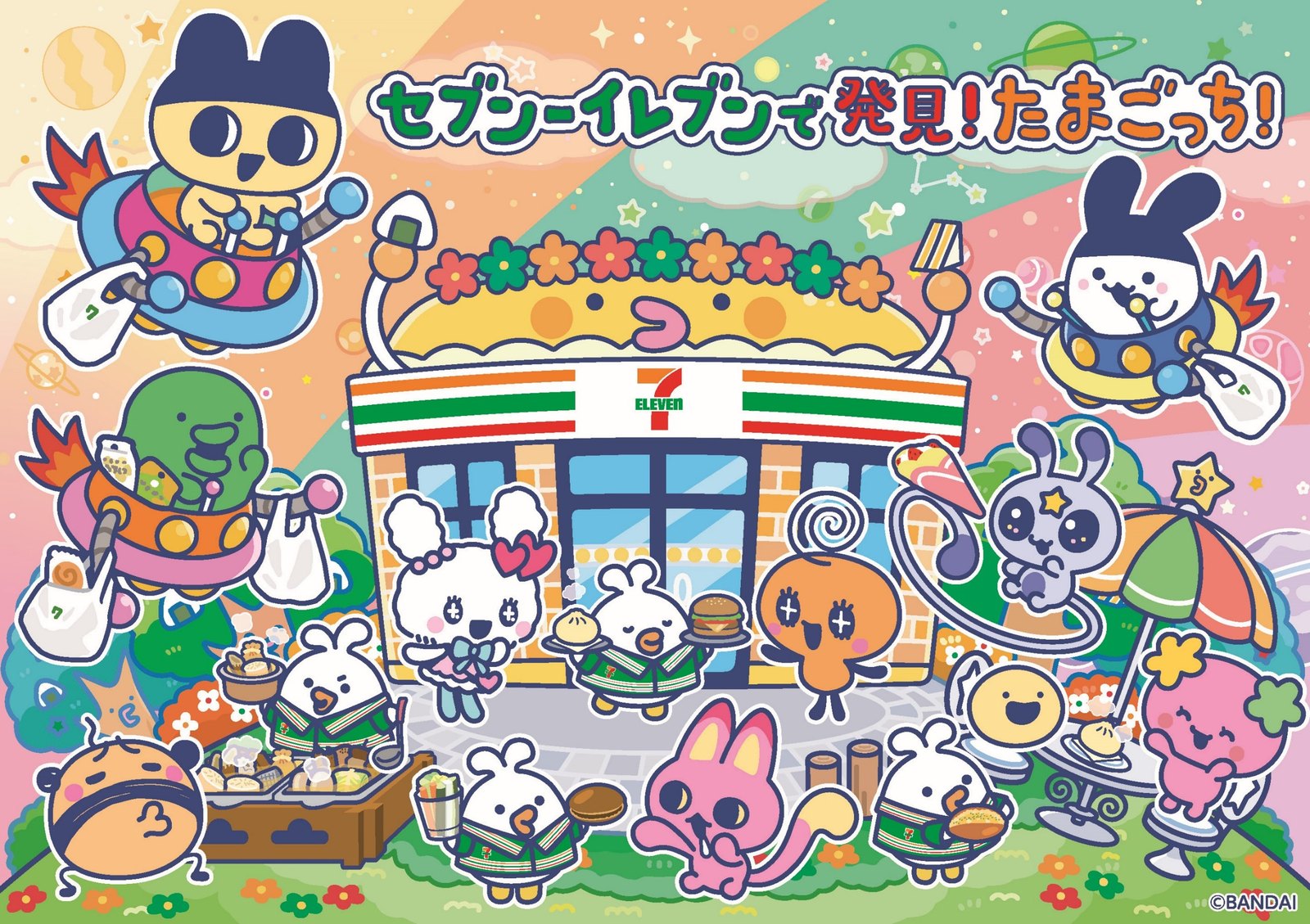
In the fair’s announcement image, Tamagotchi characters surround a Seven-Eleven store, shopping and eating. The store people drop by every day becomes a stage for the world of the work.
Suntory runs “TAG-LIVE!,” which sells cans with anime and idol labels from vending machines. In 2026, it added a feature that plays a favorite’s voice or music when a button is pressed. According to reports, sales have grown at a pace of about three times each year since 2024, and the company aims for more than ¥10 billion by 2028 (Gendai Business).
2. Turning your technology into products fans can easily choose
The printing company DNP offers print vending machines that let visitors order, pay for, and print bromides by themselves. It says one print takes about ten seconds and that the machines can be used not only in permanent stores but also at short-term events and pop-up shops (DNP).
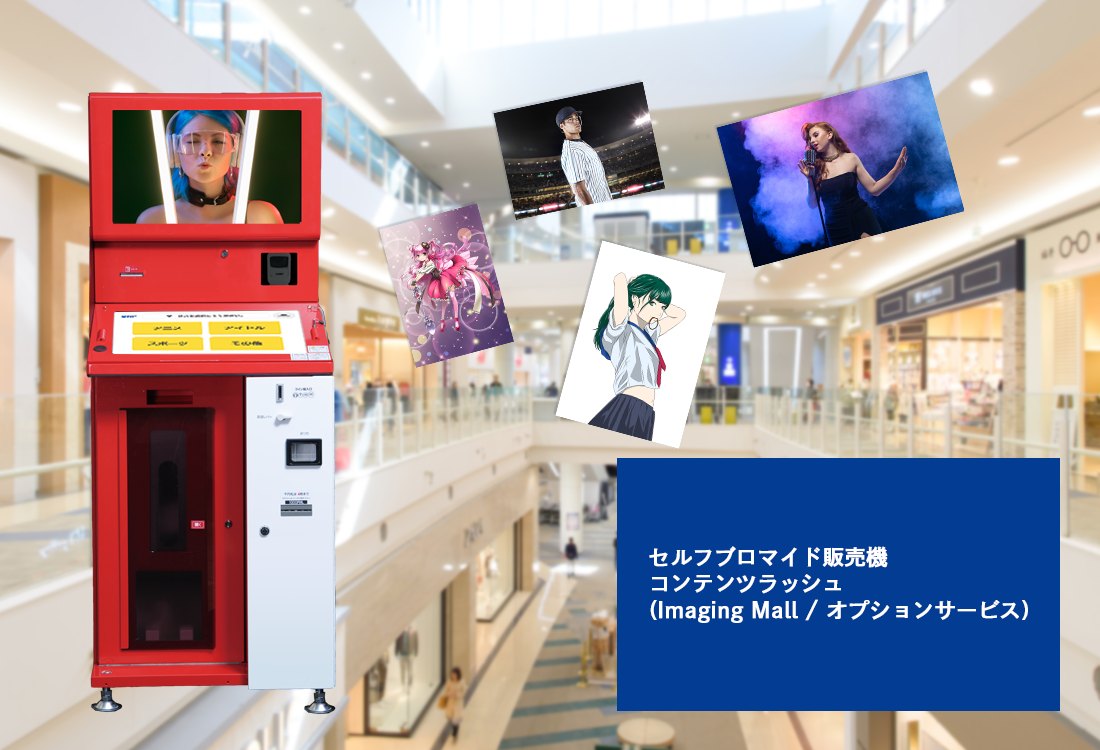
In the product page image, a red machine stands in a shopping center aisle. When you choose a photo you like on the screen, a bromide is printed on the spot.
In January 2026, FamilyMart launched “Famima Print Creators,” which lets individual creators sell their work through the multi-copy machines in its stores. Works cost ¥300 to ¥700 each and can be sold at stores nationwide without holding inventory (Impress Watch). Both put an existing printing system to work as a way to sell products to fans.
3. Adding time for fan activities to travel and everyday services
JR Central continues to run collaborations with works under its “Oshi Tabi” brand. In its collaboration with KING OF PRISM, running from November 13, 2026, to February 28, 2027, it prepared an original voice drama that can only be heard aboard the Tokaido Shinkansen (JR Central). It turns not just the destination but also the travel time into a moment to enjoy the work.

In the campaign visual, the characters wear railway uniforms. Combining the world of the work with the Shinkansen makes riding the train itself something to look forward to.
In addition, in July 2026 JCB launched insurance that protects the cost of oshikatsu trips. It covers cancellation fees for transportation and lodging incurred when a show is canceled or transportation is delayed. For domestic trips, the premium is ¥900 for ¥30,000 in travel costs (PR TIMES).
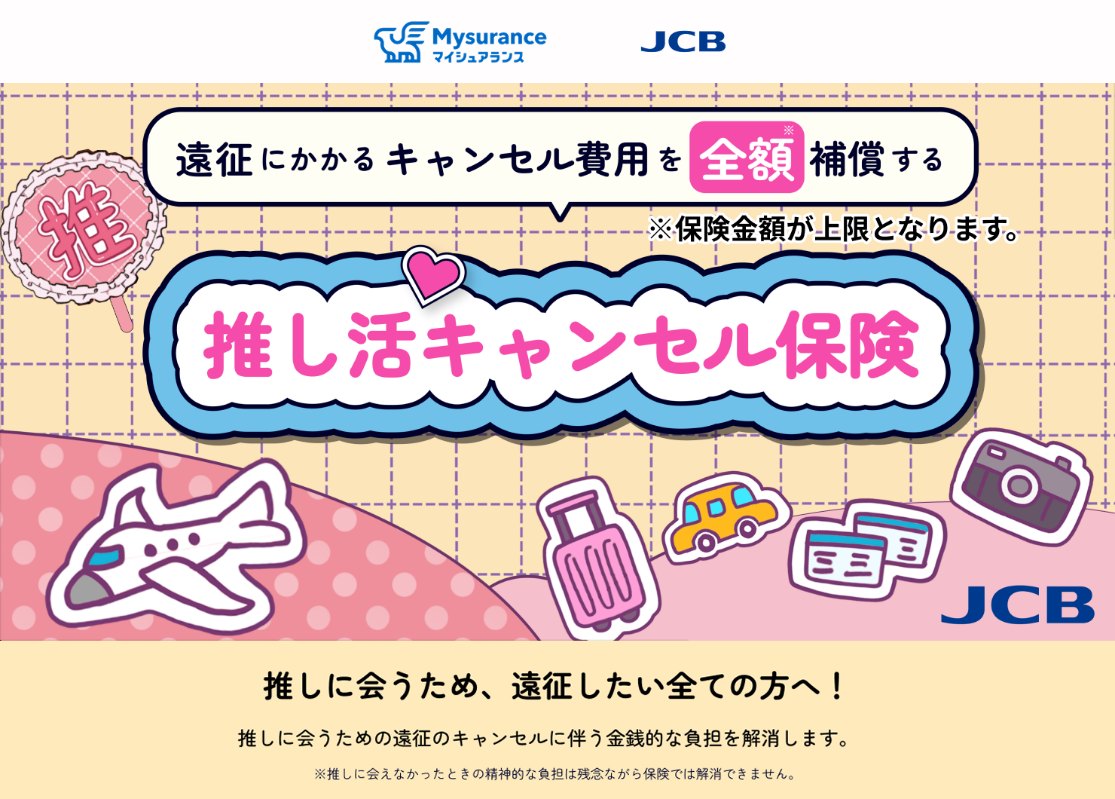
The announcement image includes illustrations of a plane and a suitcase along with the words “For everyone who wants to travel to see their favorite.” It tries to solve a worry of people who practice oshikatsu in the form of insurance.
Art Moving Center developed packing materials that hold figures and CDs according to their shape, and in November 2026 began a moving plan for fans (Art Moving Center).
4. Taking on work that supports fans and venues
Celebratory flowers on stands that fans send to shows are called “flower stands.” Episode 51 of The Oshi Lab podcast covered not only making the flowers but also checking venue rules, delivery, and removal. The published article says “everything from checking with the venue to removal is one project” (The Oshi Lab Podcast Episode 51).
If you are thinking of a business here, beyond the flowers themselves, candidates include services that coordinate the people pooling money and help with checking with venues. However, people who enjoy the time spent discussing designs with other fans may not need someone to take over that part. It is important to confirm with users which tasks they want to hand over.
Making use of stores and technology
- A convenience store's IP department
- Vending machines for fans
- Self-service print vending machines
Adding to everyday services
- Voice dramas only on the Shinkansen
- Cancellation insurance for trip costs
- Moving plans for fans
Other efforts from 2026 are introduced in our Oshikatsu Business Awards 2026.
By Industry: Ideas for Entering Oshikatsu Business
- 01Retail and convenience storesStores as places to meet a favorite, such as Seven-Eleven's IP department
- 02Food and beverage makersNew ways of selling, such as Suntory's TAG-LIVE! vending machines
- 03Printing and manufacturingPrinting on demand, such as DNP and Famima Print
- 04Transportation, travel, and lodgingTravel and stays for fans, such as JR Central and Hoshino Resorts
- 05Finance and insuranceProtecting fans' money, such as JCB and Mitsubishi UFJ Nicos
- 06Logistics and everyday servicesMoving and receiving merchandise, such as Art Moving Center and Packcity Japan
- 07Local governments and regionsLinking a work's setting to local industry, such as Saga and Shizuoka
Created by The Oshi Lab from 2026 examples
Let’s look at the four approaches above by industry. Look for hints starting with the industry closest to yours.
Retail and convenience stores
Stores people visit every day can become places to meet a favorite. Consolidating the point of contact with works, as Seven-Eleven did, makes it easier to partner with lesser-known works too. Besides store decorations and limited-edition products, you can create sections that carry fan merchandise.
Food and beverage makers
Besides collaborating with works through packaging and bonuses, you can change the way you sell itself. Suntory’s “TAG-LIVE!” is a system for selling cans with a favorite’s label from vending machines. Creating your own products together with fans is also covered in our article on oshikatsu marketing.
Printing and manufacturing
Like DNP’s print vending machines and Famima Print, existing technology can be put to work as a way to sell products to fans. Cases that protect merchandise and supplies for displaying it are also areas where manufacturers excel.
Transportation, travel, and lodging
Travel and stays are also part of oshikatsu. JR Central prepared a voice drama that can only be heard aboard the Shinkansen. In April 2026, Hoshino Resorts launched a plan at OMO7 Osaka for people going to concerts and events, including guest-only lockers and tickets for a bathhouse open late at night (PR TIMES).
Finance and insurance
Products that support the money side of oshikatsu are also increasing. JCB’s “Oshikatsu Cancellation Insurance” covers cancellation fees for trip costs, and Mitsubishi UFJ Nicos’s “Oen+ Card” is a prepaid payment app that can display designs of works and teams on the card (Mitsubishi UFJ Nicos).
Logistics and everyday services
As merchandise piles up, problems arise with moving and receiving deliveries. Art Moving Center developed packing materials that hold merchandise according to its shape, and in September 2026 Packcity Japan began “PU-katsu DO,” a fan-oriented campaign for receiving mail-order merchandise at parcel lockers (PR TIMES).
Local governments and regions
These efforts link a work’s setting and fans’ trips to local industry. Saga Prefecture drew about 500,000 visits over about eight months through its collaboration with Kingdom (PR TIMES), and in November 2026 Shizuoka Prefecture announced an industry plan centered on oshikatsu tourism (Shizuoka Shimbun).
How Companies Outside Entertainment Can Approach Entry
- 01Write down your strengthsExisting products, technology, and spaces
- 02Narrow down the usage situationWho uses it, when, and for what
- 03Test on a small scalePrototypes or time-limited offerings
- 04Check whether it can continueBoth sales and the effort to provide it
1. Write down your existing strengths
List what you can already offer: materials and processing technology for manufacturers, food and seating for restaurants, rooms and location for hotels. Before calling something “for oshikatsu,” think about the situations in which it would help fans.
2. Narrow down from “people who practice oshikatsu” to usage situations
Even among fans of the same work, people who enjoy watching streams at home and people who travel far for every show need different things. Try writing “who uses it, when, and to do what” in one sentence. Once you have candidates, ask actual fans about their recent behavior. Asking what they used, where they had trouble, and what they like about their current approach reveals hints for planning.
3. Test with prototypes or time-limited offerings
Test on a small scale, for example by having people use prototypes or renting out part of a facility for set times. In addition to feedback, check the price, conditions of use, and how easy it is to order or book. Voices saying “I want it” are important input, but whether people will actually buy at that price is a separate question.
4. Look at both sales and the effort to provide it
Beyond materials and purchasing, packing, guidance, shipping, and handling inquiries also cost money. Estimate both how many you are likely to sell and how many your team can handle.
Basics of Thinking About Costs and Profit
The budget you need depends on how much you can use existing products and facilities. For storage products, the items to consider are materials, processing, and inspection; for providing a space, equipment, reservations, and cleaning; for a collaboration with a work, licensing fees and checking materials.
As an example calculation, suppose a product sells for ¥3,000 excluding tax and materials, packing, and so on cost ¥1,800 per item. Each sale leaves ¥1,200. If planning and prototyping cost ¥120,000, you need to sell 100 items to recover that cost.
- ¥3,000
- Product price
- ¥1,200
- Amount left per sale
- 100 items
- Sales needed to recover ¥120,000 in planning and prototyping costs
A hypothetical example for illustration. In practice, rent, labor, and other costs are added to the calculation.
If your team can only produce up to 80 items, this price and cost structure will not recover the planning and prototyping costs. It is important to check expected sales and the number you can handle together.
Five Things to Check Before Entering
1. Conditions for using names and images
Using photos of people, characters from works, or logos on products or announcements requires confirmation and supervision by the rights holder. Include the time and cost of approvals in your plan. Products that do not use a work’s name do not need this step, but they need ways to show that they are meant for people who practice oshikatsu.
2. Inventory and supply conditions
The more varieties you offer, the more sales differ between them. Consider, together with delivery times, whether approaches such as testing with small quantities or making to order fit. Also note that “random” products, where you cannot tell which design you will get, easily lead to fan dissatisfaction. In a 2026 survey by Hamaru Strategy, 89.9% said they “strongly dislike or dislike” random goods (Anime! Anime!).
3. Preparing for resale
The more popular the work you partner with, the more likely products and bonuses are to be resold. In May 2026, on the first day of its “Chiikawa” Happy Meal, McDonald’s sold it only to people holding a purchase right distributed through its app (Inside). Decide on purchase limits and how items are received at the planning stage.
4. Advertising disclosure rules
Since October 1, 2023, promotion that hides the fact that it is advertising (stealth marketing) has been a violation of Japan’s Act against Unjustifiable Premiums and Misleading Representations (Consumer Affairs Agency). When you ask fans or influencers to introduce something, make it clear that it is advertising.
5. Respecting how fans enjoy themselves
Do not measure fans’ feelings by how much money they spend or how many times they take part. Make conditions for bonuses, extra fees, and how returns and changes are handled clear before people buy. Aim for guidance that lets people who do not buy or take part also feel comfortable.
Lab note: Most of the companies that entered in 2026 did not build a new business from scratch. Convenience store shelves, vending machines, printers, Shinkansen cars, insurance, and moving services: they fitted things they already had to some point in the day of a person who practices oshikatsu. The Oshi Lab believes the first question to ask is which of your company’s assets could help in a fan’s day.
Trends to Watch Heading Into 2027
Many of the efforts that began in 2026 will continue in 2027. The Oshi Lab summarizes themes likely to grow in 2027 in Oshikatsu Business Hit Forecast 2027, and event and release dates in the 2027 Oshikatsu Business Calendar. Use them as references when thinking about timing for your plans.
Applying It to Your Own Business
Start by writing in one sentence “what this business provides, to whom, and in what situation.” Once you can see whether you cannot decide on a target, do not know the demand, or lack people to do the work, it becomes easier to narrow down what to research next.
The Oshi Lab is a media outlet operated by KAZAORI Inc. that looks at oshikatsu from both cultural and business perspectives. If you would like to discuss an effort at your company, please use KAZAORI’s contact page.
FAQ
What is oshikatsu business?
It is the business of delivering products and services to people who support and enjoy a favorite person, work, or team. Besides official merchandise, it includes products that protect merchandise, places to gather, payments and insurance, and travel and lodging for attending shows.
How large is the oshikatsu market?
A survey by CDG and Oshicoco in January 2026 estimates it at about ¥4.1 trillion. Because surveys differ in their targets and definitions, check each survey's conditions before comparing figures.
Can a company outside the entertainment industry enter?
Yes. In 2026, convenience stores, beverage makers, printing companies, railway companies, credit card companies, moving companies, and others expanded efforts to make their existing products and facilities useful for fan activities.
Is a collaboration with a famous work necessary?
No. There are ways to enter without using a work's name, such as products that protect merchandise or providing places to gather. Using the names or images of works or people requires confirmation from the rights holder.
Where should a small company start?
Start by writing down the situations in which your existing products, technology, or spaces could help fans. Separate ideas that need new equipment or large inventory from ideas you can test on a small scale, and check what you can offer with your current team.


