
Oshi-Katsu Business Forecast 2027: The Oshi Lab's Top 10 Themes to Watch Next Year
In 2027, the business of oshi-katsu, the Japanese practice of actively supporting a favorite idol, character, or team, will shift from competing to win new fans to competing for a place in the daily lives of the fans who are already here. That is The Oshi Lab’s forecast, and we picked the ten themes we expect to grow next year.

This article forecasts the year 2027. The ranking is our forecast, not a settled future.
Three Keywords for Reading 2027
We forecast the oshi-katsu business of 2027 with three words.
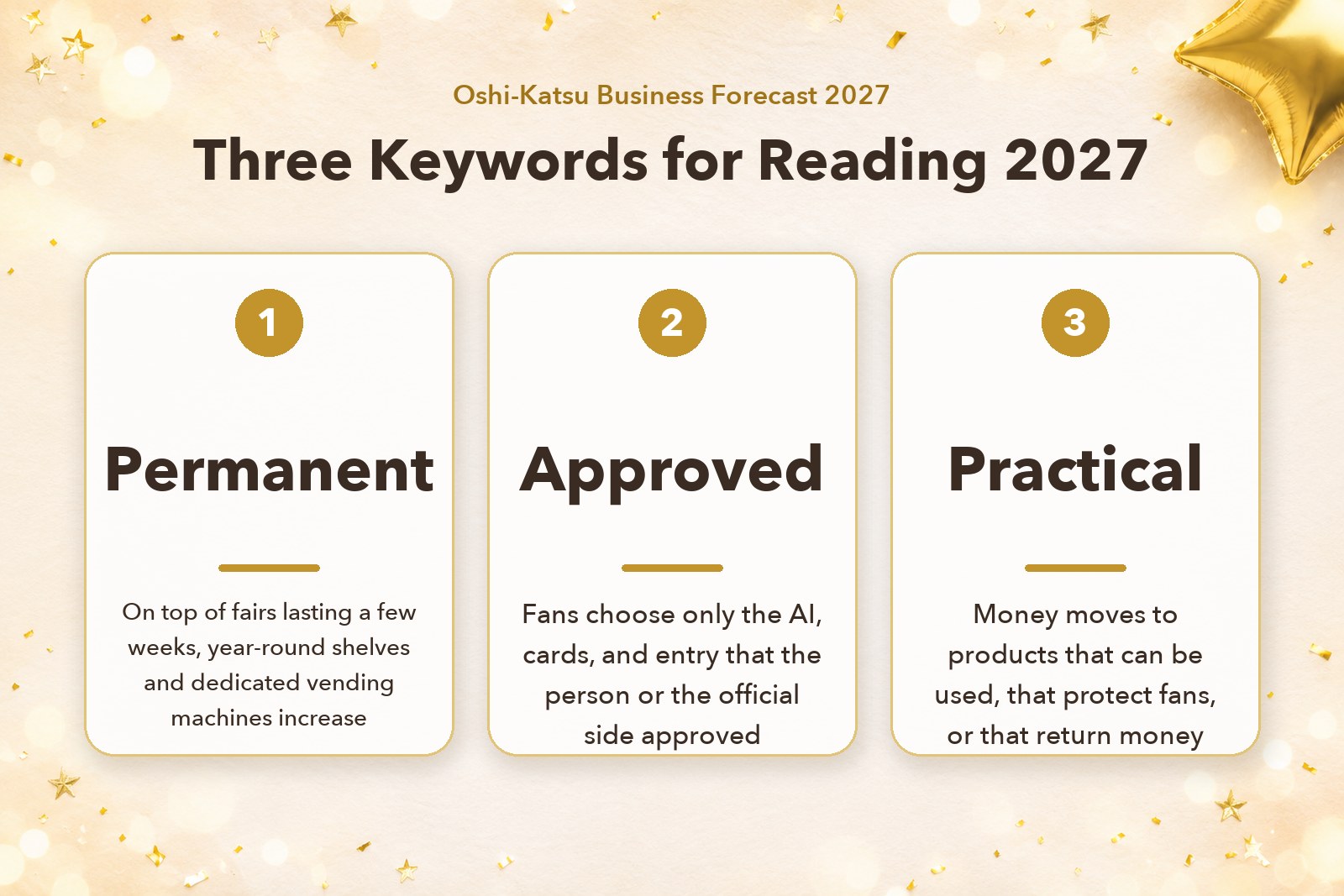
Each of the top 10 fits at least one of the three. We ranked them by the size of their effect on the oshi-katsu market. We looked at three things: the scale of the money and people involved, whether something is scheduled to move in 2027, and whether the theme answers a problem fans have. We covered products, services, programs, and surveys announced between January and mid-November 2026.
Six Premises That Will Shape 2027
Our forecasts rest on six premises that will shape next year’s market.
The oshi-katsu business in 2027Competing for a place in existing fans' daily lives
- Fans do not increase, and spending per person risesProjects that add occasions for existing fans grow
- Prices keep risingProducts that are also practical get picked
- Live shows get bigger and tickets cost moreCompensation and identity checks become essential
- Identity checks get stricterOfficial checks spread to cards, tickets, and limited sales
- More than half of people now use generative AIMore people let AI look things up, keep watch, and apply
- The overseas market is larger than the domestic oneEvents and sales channels for overseas fans increase
The first comes from a GEM Partners survey (in Japanese). The money fans spent on their oshi rose 32% in three years to about ¥3.4 trillion (roughly $23 billion). What grew was the amount each person spends, and the number of fans did not.
- About 38 million
- Fans with an oshi. Almost flat since 2022
- About ¥7,700
- Spent by one fan per month. About ¥5,500 around 2022
- About ¥3.4 trillion
- Total spent on oshi. Up 32% in three years
Figures as reported on November 9, 2026. Travel costs are not included.
Source: Nikkei Cross Trend (in Japanese)
The second, prices, comes from the outlook the Bank of Japan published in October (in Japanese). It expects consumer prices, excluding fresh food, to rise 2.6% in fiscal 2027. The third comes from a survey by Pia Research Institute (in Japanese). Japan’s live entertainment market reached ¥856.4 billion in 2025, a record high for the third year in a row. The institute’s analysis is that the reason for growth has moved from the number of shows to larger productions and higher ticket prices.
The fourth is a revision of Japan’s law against money laundering (in Japanese). From April 1, 2027, online identity checks can no longer rely on sending a photo of an ID document, and reading the IC chip becomes the rule. The revision covers transactions with financial institutions and similar businesses, but it also affects the process of applying for a card that carries an oshi. The fifth is generative AI. In a survey by the Mobile Society Research Institute (in Japanese), the share of people using generative AI rose from 27% to 51% in one year. We take up the sixth, the overseas market, in the second half of this article.
Oshi-Katsu Business Forecast 2027: The Top 10
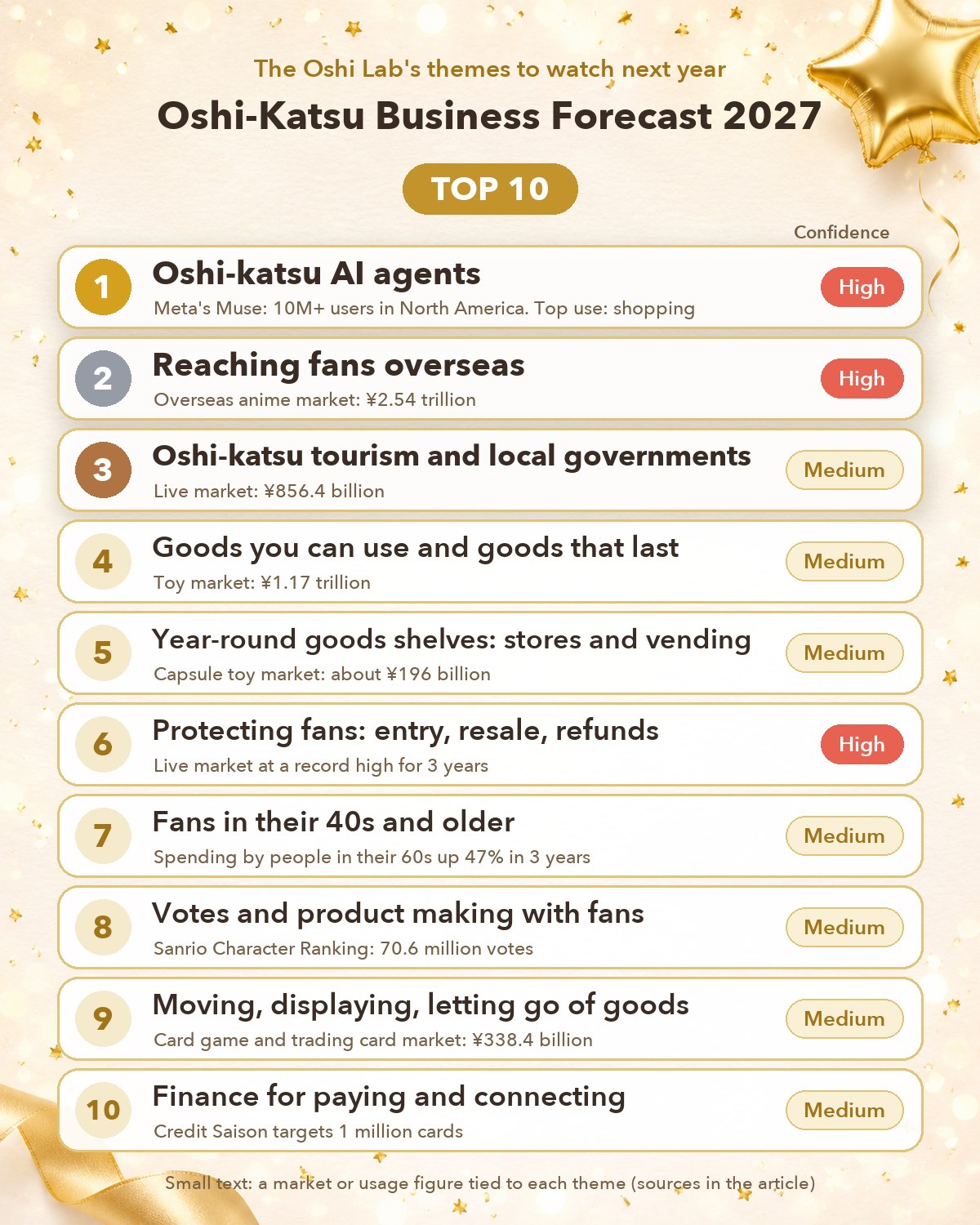
We ranked the themes by the size of their effect on the oshi-katsu market. The small text in the banner is a market or usage figure tied to each theme. Confidence is high where a start date or a rule is fixed, and medium where the moves of several companies point the same way.
No. 1: Oshi-Katsu AI Agents
Forecast
We forecast that 2027 will be the year when leaving shopping to AI starts to become normal. In oshi-katsu, more people will hand the job of watching for pre-orders and restocks to an AI agent. An AI agent is an AI that looks things up, makes reservations, and handles the steps of a purchase on a user’s behalf.
The trigger is Meta’s Muse. It launched in North America in September 2026, and more than 10 million people started using it in about a month and a half (in Japanese). Its most common use is shopping. More than 25% of the people who use Muse in a given week shop with it, and the average purchase is over $200 (in Japanese). On October 23 it became available in Japan as well (in Japanese), the first region outside North America (in Japanese).
In Japan too, many people already use AI for shopping. In a survey by the research company Excrie (in Japanese), 40.6% of people aged 15 to 69 use generative AI at least once a month. Of those, 69.9% have used it for shopping. And 61.3% of those shoppers went on to buy a product that AI had looked up or recommended.
In oshi-katsu, two uses will spread first.
- When pre-orders for an oshi’s product open, the agent sends a notice, and applies if the user allows it
- When sold-out goods are restocked, the agent finds them and sends a notice
- Gathering and delivering news about an oshiSorting release dates, events, and ticket information
- Watching for pre-orders and restocksSending a notice, and applying if the user allows it
- Agents dealing with each otherFinding fellow fans and arranging trades of goods
2027 and 2028 onward are The Oshi Lab's forecasts.
We expect agents dealing with each other to be widely used only from 2028 on. The way to confirm that the other side is acting for a real person, and the rules for trading, have not been settled.
Why we think so
- Alongside the launch in Japan, Meta says it will work on connections with the flea market app Mercari, the household finance app Money Forward ME, and the ticket seller Ticket Pia. Buying and selling goods and buying tickets are everyday parts of oshi-katsu. According to the company’s announcement, Muse makes reservations and negotiates on a user’s behalf and keeps working after the app is closed. It asks for the user’s approval before steps such as a purchase.
- Japanese companies are starting to prepare as well. In a survey by Stripe of large companies in Japan (in Japanese), about 60% were considering introducing a system in which AI goes as far as purchasing.
- On November 10, LY Corporation (in Japanese), the company behind LINE and Yahoo! JAPAN, released an app for its AI agent Agent i. The oshi-katsu agent added on September 24 sorts and delivers the latest news, events, and ticket information about an oshi.
- In a survey by the Mobile Society Research Institute (in Japanese), the share of people using generative AI rose from 27% to 51% in one year. Those who use it for private conversation or advice at least once a week were 22%.

What to watch in 2027
There are two points to watch. The first is whether the connections with Mercari and Ticket Pia begin, so that agents can handle goods and tickets. The second is whether online stores for goods accept pre-orders from agents. A purchase by an agent is hard to tell apart from bulk buying for resale. An article by The Next Web reports that the U.S. reservation site Resy asked its customers not to use automated agents. According to an article by Gizmodo Japan (in Japanese), Amazon and some other retailers do not accept purchases by agents either. We forecast that, for limited items, more sales will be combined with lotteries and identity checks.
What companies can do
We think there will be more moments when an agent searches before the fan does. What companies need is to be ready to be found by an agent.
- On the official site, set out the pre-order start date, restock plans, price, and stock status in text. Do not put them only inside an image
- In Instagram posts too, write the release date and a link to the sales page in text. Muse can also connect to Instagram (in Japanese)
- Decide how far to allow purchases from agents: how many items one person can buy, and whether an identity check is required
No. 2: Reaching Fans Overseas
Forecast
We forecast that in 2027 there will be more events that overseas fans can experience where they live, and more ways to buy official goods from abroad. The market for Japanese anime is already larger overseas than in Japan. The overseas market grew 17.2% in one year. We think overseas is where the oshi-katsu business has the most room to grow. In China, meanwhile, closures followed after shops multiplied too far. We expect that an expansion that only adds sales floors will not last.
Why we think so
In preliminary figures announced on October 30 by the Association of Japanese Animations (in Japanese), the anime industry market in 2025 was ¥4,449.1 billion (roughly $30 billion). Of that, the overseas market was ¥2,542.6 billion, above the domestic market of ¥1,906.5 billion.
GEM Partners’ “Anime Global White Paper 2026” (in Japanese) is a survey of about 15,000 people in 15 countries. In the nine major countries it tracks every year, the share of people who watch anime rose in every country between 2020 and 2025.
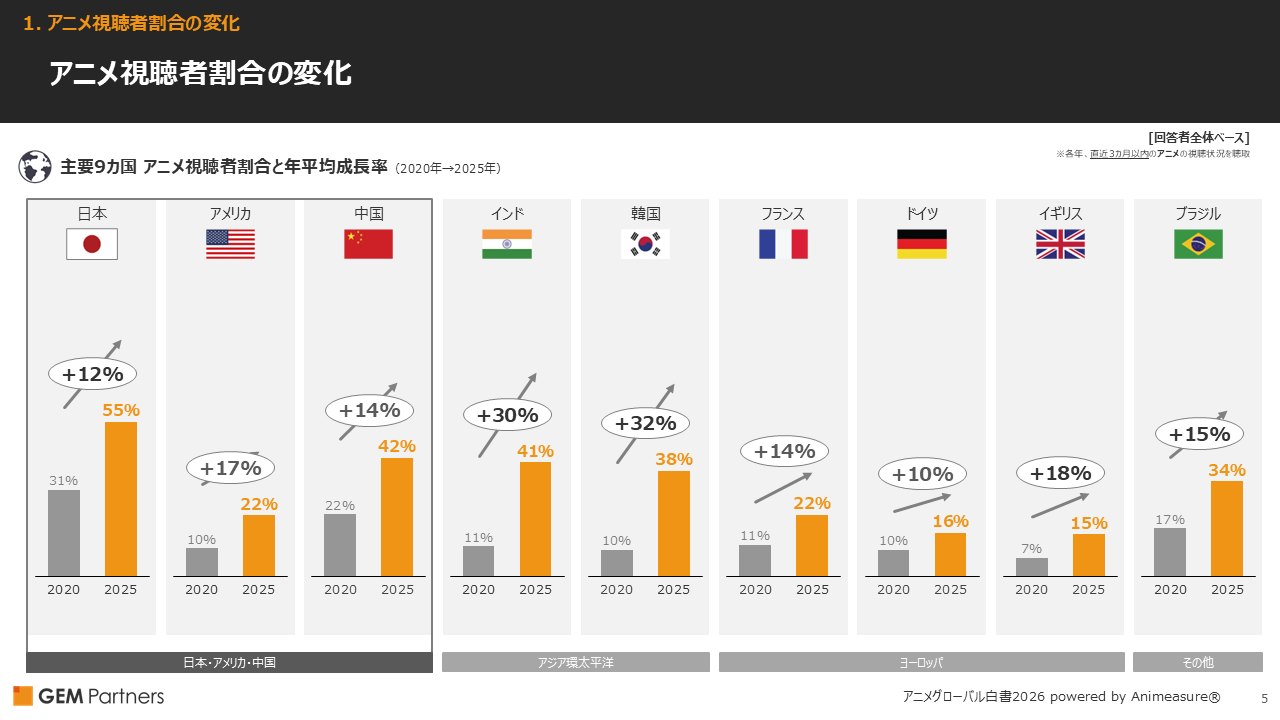
In the chart, the United States rises from 10% to 22%, India from 11% to 41%, and South Korea from 10% to 38%. According to the company’s announcement, the share of people who spent money on anime-related things also topped 10% in all nine countries.
| Country or field | What was published in 2026 |
|---|---|
| China’s goods market | The market for guzi, the word for anime and game merchandise, was 202.1 billion yuan in 2025 and is expected to reach 226.5 billion yuan in 2026. Meanwhile, at least 155 shops closed or planned to close in the first half of 2025, as International Business Daily reported (in Chinese) |
| Music in the United States | In its annual report, Goldman Sachs says the assumption that devoted fans spend “roughly 2x” the average listener is too conservative. It projects live music revenue of $39.6 billion in 2026, according to an article by Hypebot |
| A character from Hong Kong | Sales of the series that includes Labubu reached 3 billion yuan in 2024. In March 2026, the development of a feature film with Sony Pictures was announced (in Japanese) |
| Overseas fans who buy from Japan | In a survey by BEENOS (in Japanese), 82.0% of 375 overseas users of its cross-border shopping service had bought CDs or DVDs. About 70% were positive about traveling for a concert |
What to watch in 2027
Events held overseas by Japanese companies continue through 2027.
- The developer Mitsui Fudosan announced that it will start an immersive Pokémon experience in Europe in spring 2027 (in Japanese). It plans to tour several regions after that.
- Sony Music and Universal Music set up NINE BY NINE (in Japanese), a joint venture that will hold music festivals in Asia. The first event is planned for 2027.
- In April, the French media company Média-Participations opened “NARUTO – Konoha Land” (in Japanese) at a theme park in southern France.
- In June, Dai Nippon Printing launched “AN-IPPON” (in Japanese), a brand for overseas markets that pairs anime with Japanese crafts, and began selling it at stores in North America.
Japan’s Ministry of Economy, Trade and Industry has set a goal of growing the overseas market for Japanese content to ¥20 trillion by 2033.
What companies can do
In the BEENOS survey, the biggest problem overseas fans named was that official goods cannot be bought from abroad, or are hard to buy. Before opening a store overseas, the first thing to check is whether your existing official online shop can ship abroad.
No. 3: Oshi-Katsu Tourism and Local Governments
Forecast
We forecast that in 2027 more projects for fans who travel will be built by transport companies, lodging facilities, and local governments together. Fans call this kind of trip ensei, traveling a long way to see your oshi. On days with a large show, lodging and transport run short, so we also expect growth in exhibitions and pilgrimage projects that bring fans on days and to places without a show.
Why we think so
- In a survey by the Kanto Bureau of Economy, Trade and Industry (in Japanese), about 70% of fans who travel spend ¥30,000 or more on one trip, and about 60% answered that they “came to like the area” or “intend to visit again.” About 90% of local governments answered that oshi-katsu is effective for revitalizing the region, but more than half have not reached any concrete effort.
- In November, Shizuoka Prefecture (in Japanese) announced an industry plan with the promotion of oshi-katsu tourism as one of its pillars. It expects a total investment of ¥13 billion from fiscal 2026 to 2030. The city of Numazu continues its relocation consultations for fans of the titles set there, and the number of people who moved to the city in fiscal 2025 was 389, a record high (in Japanese).
- Venues are increasing too. In Nagoya, an arena for about 10,000 people is due to be completed in fall 2027 and to open in early 2028 (in Japanese).

What to watch in 2027
Fans raised three problems in the Kanto bureau’s survey: inconvenient transport, crowding, and a lack of local information. The point to watch is whether local governments that have not run oshi-katsu projects before start working on these three. In March, the anime event AnimeJapan will be held in Osaka for the first time. It will be a case of people gathering in a city other than Tokyo.
What companies can do
Do not plan with the local government alone. Bring in a transport company and lodging from the start. We think that giving fans a reason to stay on the days before and after a show, more than gathering people on the day itself, makes it easier to avoid crowding and to bring them back. We introduce cases from around Japan in oshi-katsu and local governments.
No. 4: Goods You Can Use and Goods That Last
Forecast
We forecast that in 2027, with prices still rising, goods that are also practical will grow more than goods that are only displayed. These are products with a use: you can drink them, bathe with them, pay with them, or carry them every day. We expect prices to center on a few hundred to a few thousand yen, and expensive goods to narrow to those that can explain a value that lasts.
Why we think so
- The toy market is growing. In statistics from the Japan Toy Association (in Japanese), the domestic market in fiscal 2025 was ¥1,166.4 billion, up 6.3% from the year before. Card games and trading cards came to ¥338.4 billion.
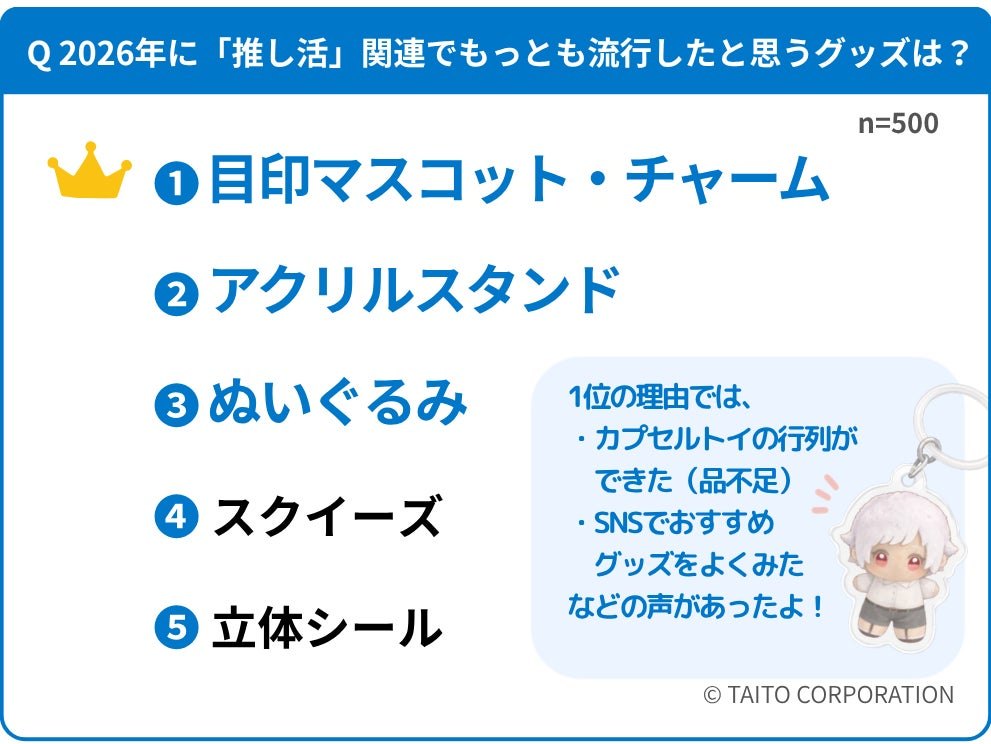
- In a survey by the arcade and game company Taito (in Japanese) of people aged 10 to 39, the top answer for the oshi-katsu item that was in fashion in 2026 was “marker mascots and charms.” They are low-priced products that attach to your belongings.
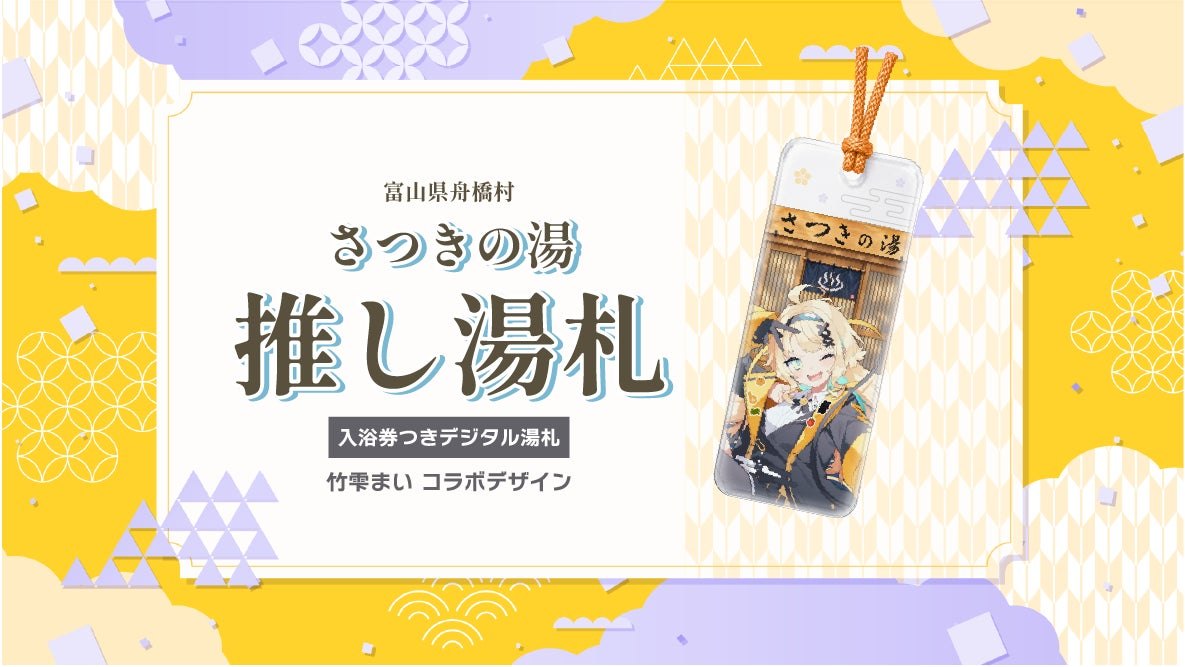
- In November, the village of Funahashi in Toyama Prefecture began selling the “Oshi Yufuda” (in Japanese) for ¥4,980. It is a VTuber’s digital bath token that comes with one bath ticket and a voice clip. The bath ticket has no expiry date.
What to watch in 2027
If prices rise as the Bank of Japan expects, the same budget buys fewer goods. The point to watch is whether products that let fans choose the design and that have a use increase, compared with products whose contents fans cannot choose. An expensive product that explains its value as an asset does not come with a promise that its price will rise.
What companies can do
Before making new goods, the shortcut is to consider whether an oshi’s design can be added to an everyday item or an experience you already offer. If you release an expensive product, let buyers check the basis of the price and the buyback terms before they purchase.
No. 5: Permanent Goods Shelves in Convenience Stores and Vending Machines
Forecast
We forecast that in 2027 convenience stores and vending machines will offer more places where fans can buy oshi-katsu goods all year round.
Tie-ups at Japanese convenience stores today are mostly “fairs” that last a few weeks. Collaboration products and limited goods are on the shelves only during the fair, and the sales floor goes back to normal when it ends. On top of fairs, we expect two things to spread.
- Convenience stores set up shelves that carry a title’s goods and toys all year
- Dedicated vending machines that sell oshi goods increase in shopping centers and at event venues
At the same time, sales floors that simply line up a title’s products will sell less easily. We expect fans to choose projects that give a reason to go to that store, such as designs that can be picked only there or products decided by a fan vote.
Why we think so
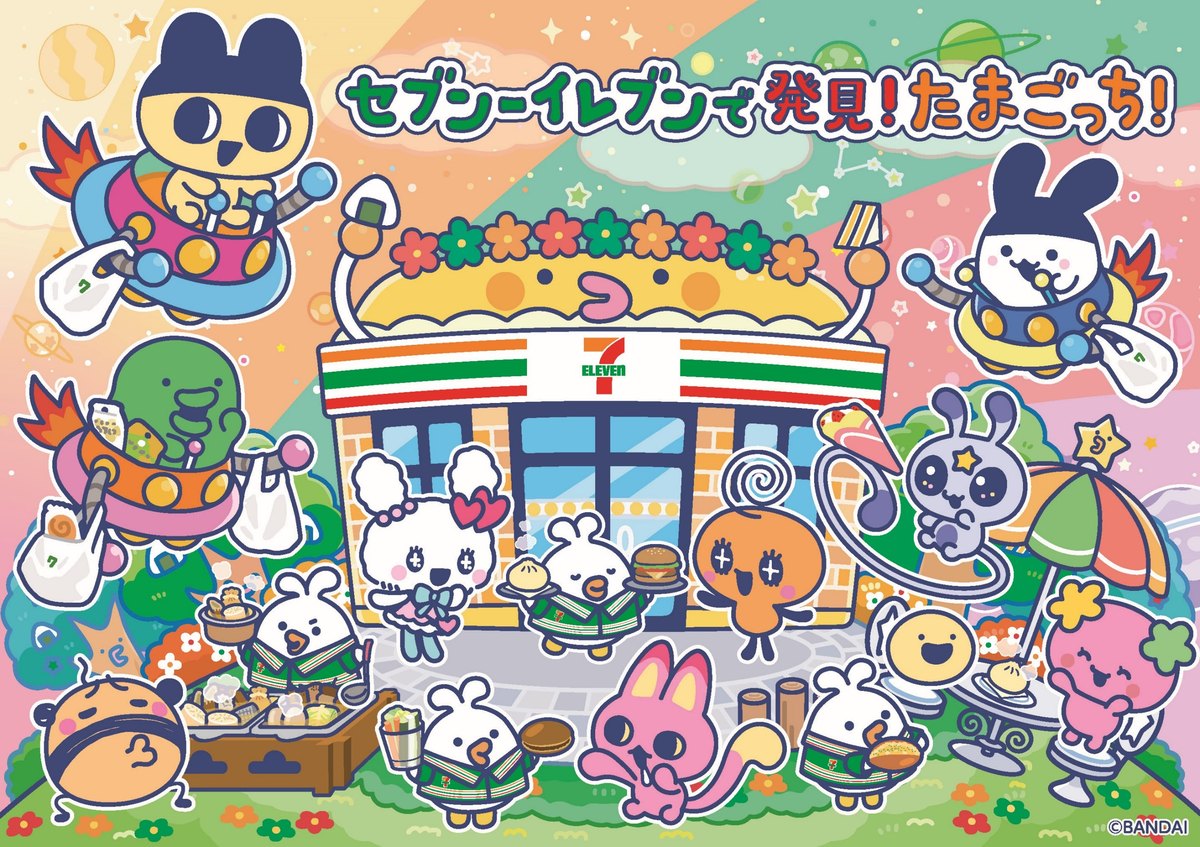
- One example of a fair is Seven-Eleven’s Tamagotchi fair (in Japanese). It marks the 30th anniversary of Tamagotchi, the virtual pet toy, and began rolling out at stores nationwide on November 13. It offers six collaboration foods such as crepes and steamed meat buns, limited goods given first come, first served to shoppers who buy certain sweets or drinks, a prize lottery, and a Tamagotchi sold only at Seven-Eleven (¥3,080 including tax). The main programs run until early December.
- Seven-Eleven Japan created an IP and Content Strategy Department in June 2026. IP here means the rights to a title or character. According to an article by AdverTimes. (in Japanese), it brought contact with rights holders into one place and moved from responding to projects that are brought in to proposing projects itself. Its toy sales in the first half of fiscal 2026 were about 2.5 times those of five years earlier. At four stores, in Tokyo, Hokkaido, Mito, and Oita, it plans to sell Tower Records products on trial for three months.
- Vending machines that sell oshi goods already exist: Suntory’s TAG-LIVE!. According to another AdverTimes. article (in Japanese), it began in 2023 with machines selling drink cans wrapped in a label with an oshi’s design. The label peels off and can be kept as a sticker. In 2026 it added machines that sell official goods such as acrylic stands and tin badges, and machines that sell acrylic cards. According to a Gendai Business article (in Japanese), its sales have grown about threefold every year since 2024, and it aims for ¥10 billion or more in 2028.
- In a survey by the Japan Capsule Toy Association (in Japanese), the capsule toy market in fiscal 2025 was about ¥196 billion, up 39.0% from the year before. The same survey also reports that the market for corporate collaboration items became saturated and their sales slowed.
What to watch in 2027
Seven-Eleven’s dedicated department enters its second year. The point to watch is whether shelves appear where a title’s products stay after a fair ends. Another sign is whether the stores carrying Tower Records products grow beyond four. For vending machines, the key is whether a company other than Suntory starts a service of the same kind.
What companies can do
Present the participating stores, the start date, and the designs that can be picked in a form fans can check before they leave home. We think that putting the same products in every store nationwide will wear thin, the way collaboration capsule toys did.
No. 6: Entry Checks, Anti-Resale Measures, and Compensation That Protect Fans
Forecast
We forecast that in 2027 entry by face recognition will increase at popular shows and large festivals. The higher ticket prices go, the larger the profit from resale, so organizers will tighten identity checks.
It will not yet become the standard for every large show, however. With face recognition, the applicant and every companion register a face photo in advance. That is easy to do for shows sold to fan club members and hard to do for shows sold through several ticket sellers. For most shows, we expect the mix of digital tickets, ID checks, and official resale services, where a ticket can be passed on at face value, to continue.
For lotteries for limited products, identity checks using Japan’s national ID card will spread. We expect more organizers to state on the sales page which costs come back when a show is canceled.
Why we think so
- Shows using face recognition increased in 2026. According to an article in Shukan Josei PRIME (in Japanese), the talent agency STARTO ENTERTAINMENT first used face recognition at a fan meeting in December 2025. The article reported that the agency expected to bring it to the Tokyo Dome shows of the group Arashi’s tour and to its summer concerts by junior performers. The music festival JAPAN JAM 2026 (in Japanese) admitted people with a digital ticket and face recognition. In October, the ticketing service TicketMe (in Japanese) also launched entry by face recognition.
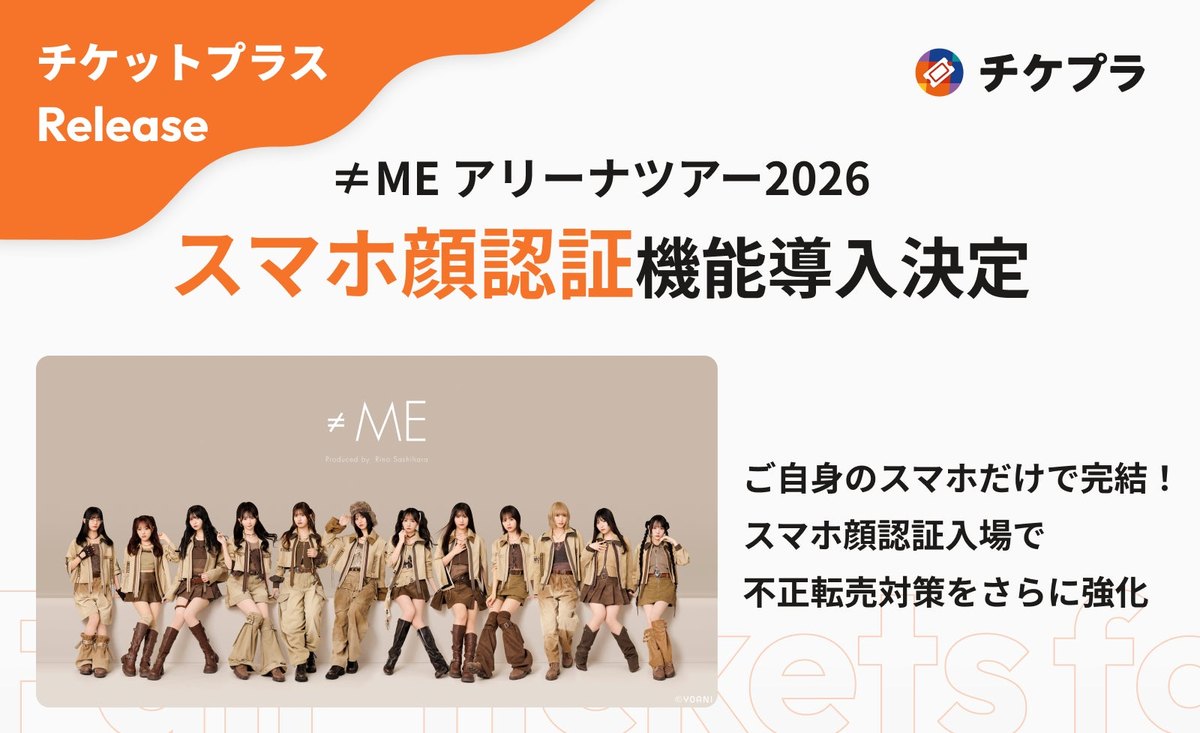
- The burden on organizers got lighter too. According to an article by Nikkei xTECH (in Japanese), the ticketing company Ticketplus added face recognition to its digital ticket app in December 2025. Because the check runs on the visitor’s own smartphone, the venue needs no dedicated equipment. In April, the company (in Japanese) announced that this method had been adopted for ≠ME Arena Tour 2026, the arena tour of the idol group ≠ME.
- The law, meanwhile, does not require face recognition. Japan’s law against ticket scalping asks organizers to make an effort to take measures such as identity checks at entry. In a notice dated June 12 (in Japanese), the Agency for Cultural Affairs and the Japan Sports Agency asked related organizations to consider identity checks at entry and the use of resale services. Which method to choose is left to the organizer. The stricter identity checks of April 2027 that we raised at the start also apply to financial transactions. They do not make face recognition mandatory for entry to a show.
- New rules now cover how face data is handled. Japan’s revised Act on the Protection of Personal Information (in Japanese) was promulgated on July 17, 2026, and creates new rules for handling data such as facial features. Its penalty provisions take effect on January 17, 2027, and the whole law is due to take effect by July 2028. We think organizers that require a face photo will need to review how they collect and store that data.
- In August, The Pokémon Company (in Japanese) introduced identity verification through the Digital Authentication App of Japan’s Digital Agency for sales and events of its trading card game.
- Responses to resale and to canceled shows moved forward too.
| Company or title | Response in 2026 |
|---|---|
| Mercari | The flea market app banned listings of the Chiikawa toys from McDonald’s Happy Meals. Almost no such listings were found on launch day (in Japanese) |
| Umamusume: Pretty Derby | After canceling its Los Angeles shows, it announced a policy of also covering cancellation costs for lodging and transport (in Japanese) |
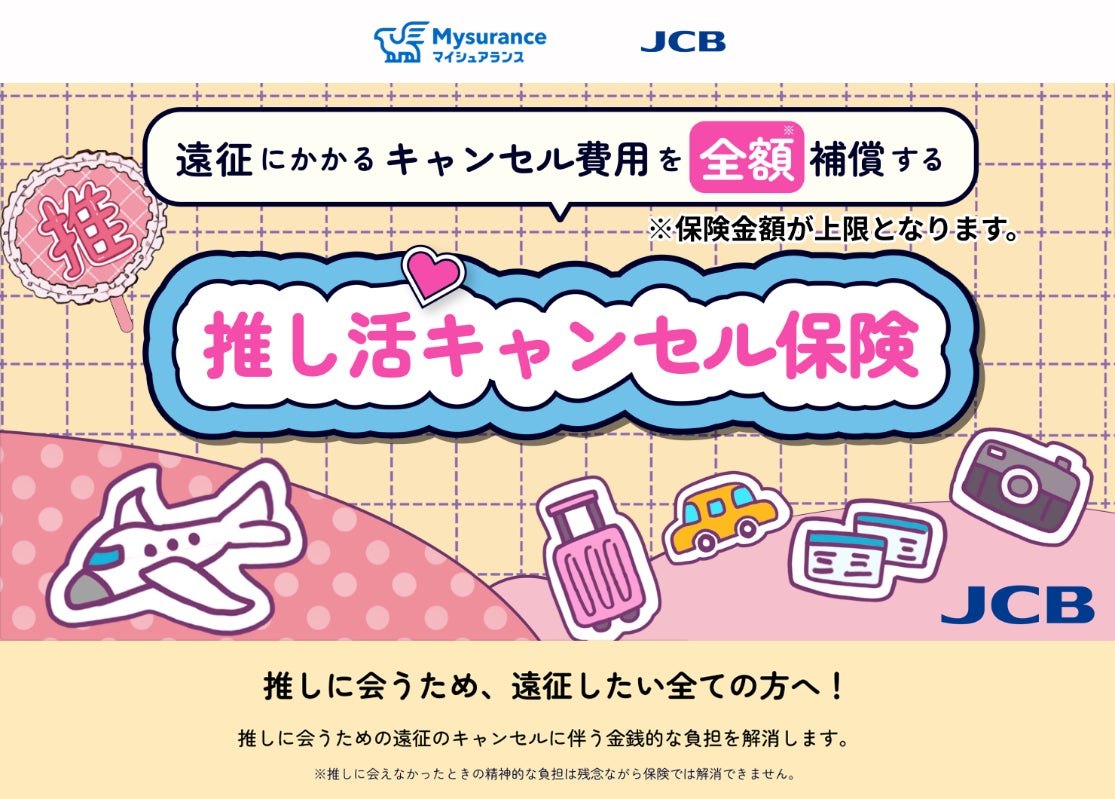
| JCB | Began selling “Oshi-Katsu Cancellation Insurance” (in Japanese) on July 7, which covers cancellation fees for travel costs |
What to watch in 2027
Once identity checks for financial transactions get stricter in April, more people will get used to confirming their identity through an IC chip. The same method then becomes easier to accept for tickets and limited sales. The point to watch is how fans apply for the large tours announced from spring on. If shows that require a face photo spread beyond sales to fan club members, face recognition moves closer to being the standard.
What companies can do
Show the method of identity checks, and the range of costs that come back in a cancellation, before selling the ticket. We explain the basics in what identity checks at events involve.
No. 7: Oshi-Katsu Among Fans in Their 40s and Older
Forecast
We forecast that in 2027 more seats, trips, and ways of supporting will be designed for fans in their 40s and older. As the price of live shows rises, we think this is the age group that finds it easiest to spend on expensive seats and trips. The number of supporters is smaller than among the young, however, and a service that depends on a few large supporters becomes unstable. We expect the services that survive to be those that offer ways to support in small amounts over a long time.
Why we think so
- In the GEM Partners survey, the money spent on oshi over three years grew 56% among people in their 20s and 47% among people in their 60s.
- In usage data from the creator support service FanPort (in Japanese), the average age of the 463 fans who had ever paid was 40.1. Fans in their 40s and older account for 74% of the total amount of support. The cumulative support per person among those 60 and older was 8.8 times that of people in their 20s, but only 34 people aged 60 and older had paid. The median amount of support was about ¥4,800.
- In a survey by Halmek (in Japanese), a publisher for women over 50, 81.8% of women aged 50 and older who have an oshi spend money on that oshi. That is 12 points more than the year before. The yearly amount per person was ¥110,348, slightly less than the year before.

What to watch in 2027
By headcount, the young are the majority. In the Leisure White Paper 2026 (in Japanese), 47.7% of teens and 45.0% of people in their 20s did oshi-katsu. The amount is carried by fans in their 40s and older. Whether to sell the same product to both groups or to design for them separately will be the dividing line for projects in 2027.
What companies can do
Do not simply extend a project made for young people to older ones. Decide first the amount and the procedure that fans in their 40s and older can keep up. The Halmek survey shows that the amount per person did not rise even as more people came to spend.
No. 8: Votes and Product Making That Fans Take Part In
Forecast
We forecast that in 2027 more projects will let fans take part in deciding restocks and new products. Voting will be at the center. The way of voting will move from one where buying more means more votes to one free vote a day, or to votes earned through actions such as visiting a store or playing a song. With prices rising, designs that make fans compete on how much they buy are harder to support.
Why we think so
| Program | Published figure |
|---|---|
| Sanrio Character Ranking (in Japanese) | A record 70,647,379 votes over 46 days of voting |
| USEN “Oshi-Katsu Request” (in Japanese) | 2.17 million registered users. More than 750,000 visited a store to make a request |
| Calbee’s Kataage Potato fan club (in Japanese) | About 68,000 members. A runoff vote decided the flavor of the 10th-anniversary product |
- Sanrio’s vote can be cast on the web once a day per character. Fans receive extra voting tickets according to the number of days they voted. USEN’s service is free, and visiting a participating store adds one request.
- In BANDAI SPIRITS’ “Gunpla Restock Council” (in Japanese), members earn voting rights according to their activity in the app. The more votes a model kit collects, the higher the chance of winning its sales lottery.

What to watch in 2027
The point to watch is how far the result was reflected in products, more than the number of votes. The key for 2027 is whether more companies report all the way to the point where the chosen product reaches the stores.
What companies can do
Before starting a vote, decide and announce what the result will be reflected in. We think a vote that ends with the announcement of the result loses participants the next time.
No. 9: Services for Moving, Displaying, and Letting Go of Goods
Forecast
We forecast that in 2027 moving, storage, framing, and secondhand companies will each release dedicated services for oshi-katsu goods. As the goods market has grown, so has the work that comes after buying: displaying, storing, carrying, and letting go. We expect official buybacks and exchanges to spread slowly, and private secondhand trading to grow first.
Why we think so
| Company | What happened in 2026 |
|---|---|
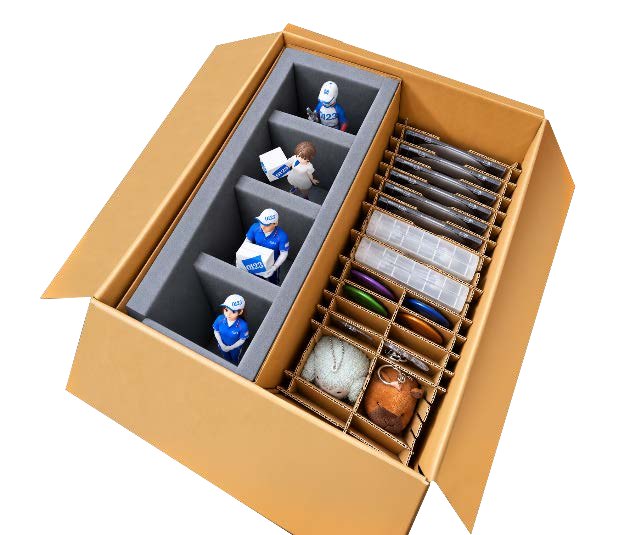
| Art Moving Center (in Japanese) | Launched its “Oshi-Katsu Pack” on November 1, with packing materials that hold figures and CDs according to their shape |
| The framing shop Gakubuchi no Takahashi (in Japanese) | Its framing service is doing well on oshi-katsu demand. It moved its main store within the city of Nagano on October 22 |
| The bookstore chain Bunkyodo (in Japanese) | Is turning floors two to four of its Mizonokuchi main store into the secondhand hobby shop Suruga-ya Mizonokuchi, set to open December 10 with about 300,000 items |
What to watch in 2027
Art Moving Center’s plan will go through its first March, Japan’s moving season. The points to watch are whether the number of uses is published and whether other moving companies release a plan of the same kind. Another is whether more bookstores and electronics retailers turn part of their floors over to secondhand hobby goods.
What companies can do
You can start with the packing, framing, and storage skills you already have, without developing a new product. We explain how fans pass goods to each other in how goods trading works.
No. 10: Finance for Paying and Connecting Through Your Oshi
Forecast
We do not expect oshi cards and payments to become a force that greatly expands the market in 2027. Even when the way of paying changes, the total amount fans spend is unlikely to grow. Two things will grow.
- Cards that send part of what a fan pays for everyday shopping to their oshi’s activities
- Services that handle payments, the fan club, and tickets on one set of member data
Because the effect on the market stops at better convenience, we placed this theme tenth.
Here is how the first one works. When you shop with a credit card, the store pays a fee to the card company. The card company normally returns part of it to the user as points. With an oshi card, part of that share goes to the oshi’s side. The amount the fan pays does not change. Simply switching your supermarket shopping or phone bill to that card turns it into funding for your oshi’s activities.
- 01A fan shops with the cardThe amount paid is the same as usual
- 02The store pays a fee to the card companyThis happens with any card
- 03The card company passes part of the fee to the oshi's sideNormally this share becomes the user's points
- 04It funds the oshi's activitiesSome cards also send limited perks based on use
Prepared by The Oshi Lab from Nudge's announcement of CIEL CARD.
Why we think so
- SBI Holdings and Fuji Media Holdings plan to set up a joint venture in January 2027 (in Japanese), each group holding 50%. As a first step, they are considering a subsidiary for a fan platform business that connects artists and fans throughout the year.
- Credit Saison set up a company-wide oshi-katsu division in August. According to an article by Payment Navi (in Japanese), it aims to work with 100 IPs and content titles in five years and to issue one million cards. The investment will be ¥10 billion or more (roughly $67 million).
- In October, Mitsubishi UFJ NICOS (in Japanese) launched Ouen+ Card, a payment app that can show a character on the card. Nudge’s CIEL CARD (in Japanese) passes to its partner part of the payment fee that would normally return to the user as points. The company has more than 200 partners, including artists, sports teams, and local governments. There is no annual fee.
- With the stricter identity checks in April, card applicants will be verified through the IC chip.

What to watch in 2027
The point to watch is whether fans’ effort decreases, more than the number of cards. The joint venture of SBI and Fuji Media Holdings is due to be established in January. Another is how much it reveals about a service that brings payments and fan clubs together.
What companies can do
Before making a card, the first thing to check is whether it can be connected to the member data of the fan club and of ticketing. We think a product that cannot state on the statement where the money goes back, and at what rate, will be chosen less often, however good its design. We compare the products in oshi-katsu and finance.
Runners-Up: Moves That Did Not Make the Top 10
Artist-approved AI
For AI that talks with fans as an oshi, we forecast that an “approved by the person” label becomes a condition for choosing an app. AI that imitates a voice or likeness without permission will be hard to keep running as a business.
- On August 7, a study group of Japan’s Ministry of Justice published a report (in Japanese) on the unauthorized use of likenesses and voices. On September 30, the Tokyo District Court ruled that a person’s voice is also protected by the right of publicity (in Japanese).
- On November 4, DeNA (in Japanese) officially launched the link between its live-streaming app Pococha and OSHIAI, an AI app for oshi-katsu. An approved AI is made only after the streamer agrees, and its name and introduction can be checked before it goes public.

A company releasing such an AI needs to decide first the scope of the person’s consent and the steps by which the person’s side checks it before it goes public. Companies that grow IP
We forecast that in 2027 titles made by finance and retail companies together with creators will begin to appear. Whether they become hits will not be known until 2028 or later, however. Some companies, like Seven-Eleven, have stated a policy of working with titles that are still growing. We expect more companies to partner with creators from an early stage.
- Credit Saison launched the Manga Saison story award (in Japanese), which invites original stories for manga. Entries are open until January 31, 2027, and the results are due in June of the same year. The grand prize is ¥2 million, and the grand prize and runner-up works are guaranteed to be made into manga.
- On October 27, Dentsu (in Japanese) launched its Content Data Solution, which shows a title’s position in the market and the traits of its fans with shared indicators.
- In February, the talent agency Asobisystem and the investment firm Midas Capital announced the founding of a new company, Asobidas (in Japanese). It works on AI-driven business in the oshi-katsu field and targets sales of ¥30 billion in 2030.

With the announcement of the award results in June, we will begin to see how the winning works are combined with cards and goods. Because results take time, we left this theme out of the top 10.
Compare the cost of licensing a title with the cost of partnering with a creator to grow one. If you choose to grow one, decide in advance how many years you will give it before results are expected.
Cheering ads on small screens, sports venues, and an oshi smartphone
The places where fans can run cheering ads have spread to screens smaller than a station billboard. A cheering ad is an advertisement that fans pay for to celebrate or support their oshi. In November, INFORICH (in Japanese) linked its cheering-ad app with the screens of the battery-sharing stands in 20 FamilyMart stores in Tokyo’s Shibuya ward. Cheering AD (in Japanese), a service of JR East Marketing & Communications, shows ads made by fans on the big screen at the match venues of the men’s volleyball team Osaka Bluteon. We forecast that in 2027 more cheering ads will use the small screens of stores and venues. We explain how these ads work in what cheering ads are.

We are also watching sports venues. Japan’s professional basketball league, the B.League, drew 443,372 people at the opening of the 2026-27 season, a record high (in Japanese). A smartphone chosen because of an oshi has appeared as well. The Xperia 10 VIII that Sony released in October (in Japanese) has Fan Sync, which changes the wallpaper and clock design to those of a title when a dedicated card is read.
Collaborations and Events Scheduled for 2027
We lined up the plans tied to the top 10, along with the major collaborations and events already announced, in order of date. The rank in parentheses is the related theme.
| When | What is planned |
|---|---|
| From December 2, 2026 | Universal Cool Japan 2027 (in Japanese) opens in stages. Five titles take part, and Fullmetal Alchemist and Daemons of the Shadow Realm begin in spring 2027 |
| December 10, 2026 | Suruga-ya Mizonokuchi is set to open (No. 9) |
| January 2027 | The joint venture of SBI and Fuji Media Holdings is set to be established (No. 10) |
| January 16 to February 14, 2027 | The Shizuoka stop of the 30th anniversary exhibition of the Detective Conan TV anime (in Japanese), which is touring Japan |
| January 17, 2027 | Penalty provisions of the revised Act on the Protection of Personal Information take effect (No. 6) |
| January 31, 2027 | Entries close for the Manga Saison story award |
| March 27 and 28, 2027 | Public days of AnimeJapan 2027 (in Japanese), held in Osaka for the first time, at Intex Osaka (No. 3) |
| April 1, 2027 | Identity checks for financial transactions become stricter (No. 6 and No. 10) |
| Spring 2027 | The immersive experience by Mitsui Fudosan and Pokémon starts in Europe (No. 2) |
| June 2027 | Results of the Manga Saison story award are due |
| Fall 2027 | The arena for about 10,000 people in Nagoya is due to be completed. It opens in early 2028 (No. 3) |
| During 2027 | The first music festival by NINE BY NINE. LUCUA Characters World (in Japanese) at the Lucua Osaka mall opens in full |
| 2028 | The year Suntory’s TAG-LIVE! aims for sales of ¥10 billion or more (No. 5) |
| Fiscal 2030 | The final year of Shizuoka Prefecture’s plan, a total of ¥13 billion over five years (No. 3) |

The collaboration between Universal Studios Japan and Fullmetal Alchemist is the first in 22 years, since 2005. For Daemons of the Shadow Realm, it is the first collaboration with a theme park.
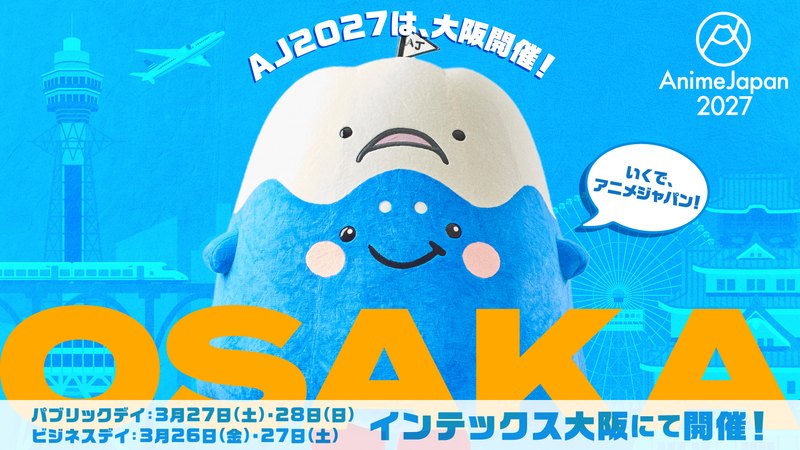
AnimeJapan was held in Tokyo for 13 years. In 2027 and 2028 it will take place in Osaka.
- SBI and Fuji Media Holdings joint venturePlanned establishment. Related to No. 10
- AnimeJapan held in Osaka for the first timePublic days on March 27 and 28. Related to No. 3
- Stricter identity checks take effectFor financial transactions. Related to No. 6 and No. 10
- Manga Saison story award resultsEntries close January 31. A runner-up theme
- Nagoya arena due to be completedAbout 10,000 people. Opens in early 2028. Related to No. 3
Plans and targets are as of each announcement and may change.
The plans and targets are as of the time each company or local government announced them, and they may change.
For plans from January to December, see the month-by-month tables in the Oshi-Katsu Business Calendar 2027.
Notes From The Oshi Lab: In 2027, Fans Will Choose the Companies That Remove One Piece of Effort
What the top 10 have in common is that each reduces effort or worry for fans. What AI agents reduce is the effort of searching. With a permanent sales floor, fans no longer have to watch the calendar and keep going back to the store. Compensation eases the worry when a show is canceled. We think the companies that grow in 2027 will be the ones that removed one problem for the fans who are already here.
This forecast has weak points too. The number of fans is flat, so if spending per fan falls, the market shrinks. In that case, what moves up the ranking is products that double as something practical, like No. 4’s goods you can use and goods that last. Face recognition and AI agents work because fans trust the operator and hand over their face photos and the steps of a purchase. If an accident with personal data happens, we expect the spread of No. 1 and No. 6 to slow down. The events overseas and each company’s numerical targets are also at the planning stage and may change.
When planning for 2027, decide first which moment in a fan’s life your product touches. There are five: paying, buying, traveling, applying, and storing. Whether you can remove one piece of effort or worry for fans at that moment is the first thing to check.
Related articles: Oshi-Katsu Business Calendar 2027 / How to read oshi-katsu market size / Oshi-katsu and finance / Oshi-katsu and local governments / Oshi-katsu marketing
FAQ
What ranks first in the Oshi-Katsu Business Forecast 2027?
The Oshi Lab forecasts oshi-katsu AI agents as No. 1. We expect more people to leave shopping to AI, and the use of AI to watch for pre-orders and restocks of an oshi's products to spread in 2027. More than 10 million people in North America have started using Muse, Meta's personal AI agent, and its most common use is shopping. It became available in Japan in October 2026. No. 2 is reaching fans overseas.
What are the keywords for the oshi-katsu business in 2027?
The Oshi Lab names three: permanent, approved, and practical. They refer to more sales floors where fans can buy all year round, to fans choosing only what the person or the official side has approved, and to products with a real benefit, such as being usable, being protected, or getting money back.
Will the oshi-katsu market keep growing in 2027?
The Oshi Lab forecasts a year in which the number of fans does not grow and the market grows through spending per person. In a GEM Partners survey, the number of fans has stayed flat at about 38 million, while the amount one fan spends per month rose from about ¥5,500 to about ¥7,700. The Bank of Japan expects prices to keep rising in fiscal 2027, and we expect fans to become choosier about what they spend on.
How were the ranking and the confidence levels decided?
We ranked the themes by the size of their effect on the oshi-katsu market. We looked at the scale of the money and people involved, whether something is scheduled to move in 2027, and whether the theme answers a problem fans have. Confidence is high where a start date or a rule is fixed, and medium where several moves point the same way.
Are the forecasts in this article confirmed?
No. They are not a settled future. The ranking and the outlook for 2027 are The Oshi Lab's forecasts. Each company's plans and targets are as of the time of announcement and may change.
Is oshi-katsu spreading outside Japan too?
In the preliminary figures of the Association of Japanese Animations, the overseas market made up ¥2,542.6 billion of the ¥4,449.1 billion anime industry market in 2025. In a GEM Partners survey, the share of people who watch anime rose from 2020 in all nine major countries it tracks.


