

Summer Wars Pilgrimage: Eight Ueda Locations That Bring the Jinnouchi Family's World to Life
Ueda Castle Ruins Park is home to the Higashi-Toraguchi Yagura-mon Gate, the model for the Jinnouchi family's gate. Here, you can trace the imposing entrance Kenji passes through with Natsuki in Summer Wars back to a real structure.
The Jinnouchi family home does not exist in one real-world location. Scenery from across Ueda—its gates, mountain views, station, and bus stops—comes together to create the film's world. This guide visits eight places that served as production models or hosted screenings and exhibitions after the film's release.
From gates and stations to streets and mountains: eight places to explore the film’s scenery and local activities
The gate at Ueda Castle Ruins Park and Sanada Shrine are grouped as one destination, as are Ueda Station and a ride on the Bessho Line. Moving your viewpoint from the gate to the streets and then the mountains reveals how the landscapes that connect on screen relate to one another. At the cinema and museum that held anniversary events, check current screening and exhibition schedules before visiting.
1. Ueda Castle Ruins Park (Higashi-Toraguchi Yagura-mon Gate and Sanada Shrine)
This castle park contains the Higashi-Toraguchi Yagura-mon Gate, model for the Jinnouchi family's main gate, and Sanada Shrine, where a prayer for the film's success was held around its release.
More about Ueda Castle Ruins Park (Higashi-Toraguchi Yagura-mon Gate and Sanada Shrine)2. Ueda Station and a ride on the Bessho Line
This is the gateway to a ride on the Ueda Electric Railway Bessho Line, where you can compare the station platform scenery and signs shown in the film.
More about Ueda Station and the Bessho Line3. Unnomachi Shopping Street
This shopping street appears in the scene where Wabisuke makes a U-turn and in the summer festival Ueda Wasshoi; a 15th-anniversary commemorative manhole cover is also installed here.
More about Unnomachi Shopping Street4. Iseyama Bus Stop
This real stop on Ueda Bus's Sugadaira Line is depicted in the film as the nearest stop to the Jinnouchi home.
More about Iseyama Bus Stop5. Toishi and Komeyama Castle Ruins
This mountain-castle site served as the setting for the Jinnouchi home and offers the sweeping view of Ueda that appears in the film.
More about Toishi and Komeyama Castle Ruins6. Ueda City Tourist Information Center
This visitor-information and local-products center near Ueda Castle Ruins Park is a convenient place to pick up a city-walking map or take a break.
More about Ueda City Tourist Information Center7. Ueda Eigeki
This downtown cinema has a history dating to the Taisho era. In summer 2024, it held a free screening to mark the film's 15th anniversary.
More about Ueda Eigeki8. Santomyuze Ueda City Museum of Art
This arts and cultural exchange complex in Ueda hosted an exhibition of Mamoru Hosoda's works in 2019, the film's 10th anniversary.
More about Santomyuze Ueda City Museum of Art
Ueda Castle Ruins Park | Compare the Jinnouchi gate with the real structure
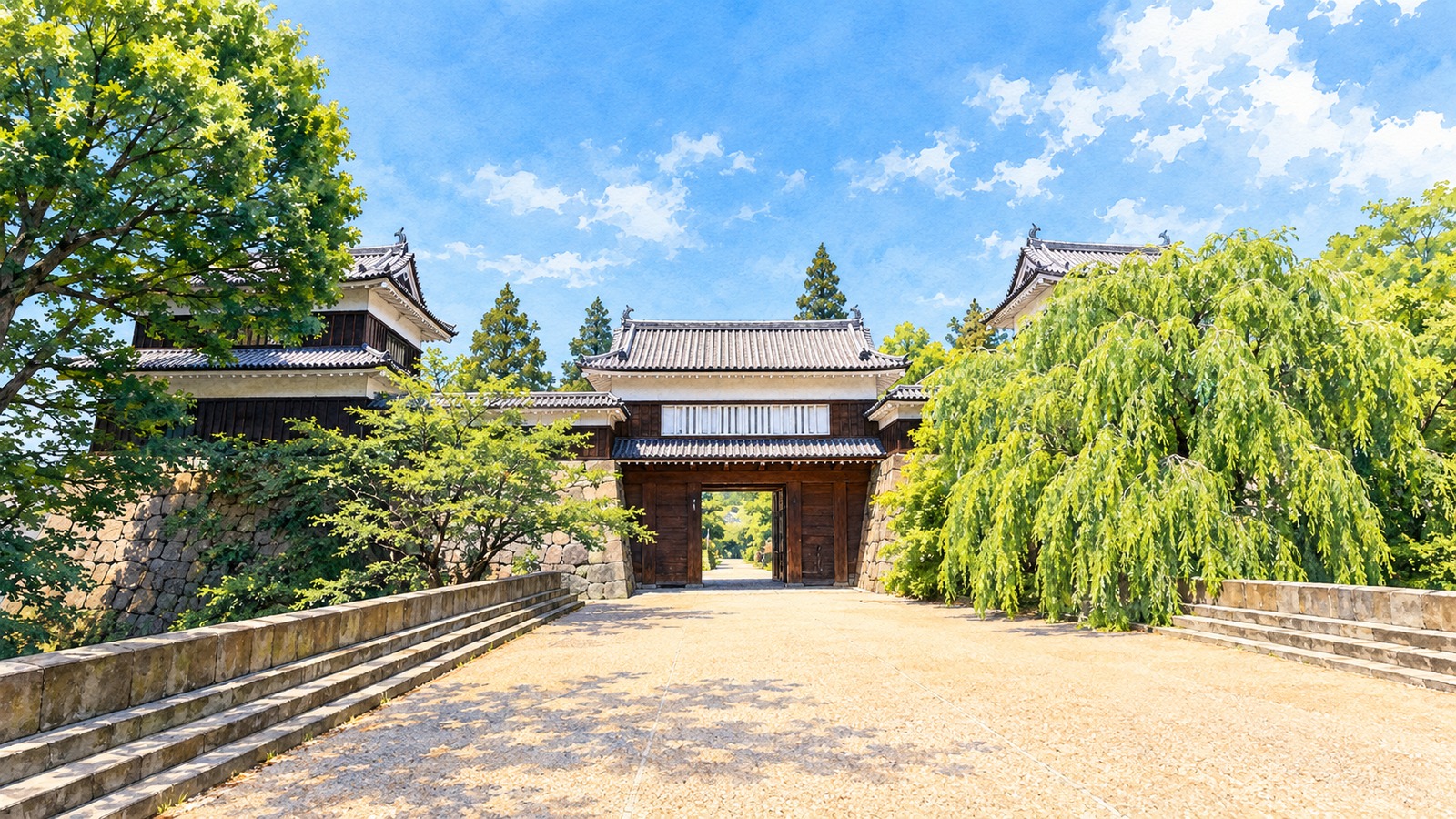
The model for the Jinnouchi family's gate is the Higashi-Toraguchi Yagura-mon Gate at Ueda Castle Ruins Park. The local official guide documents the connection between the film and the architecture. As you recall the scale of the house Kenji enters with Natsuki, you can take in the imposing gate up close.
Sanada Shrine, inside the park, hosted a prayer for the film's success. The gate's role as a visual model and the shrine's role in the local campaign around the film's release are two distinct connections to the work. In one park, you can encounter both architecture that informed production and the community's support for the film.
What you see on site is a castle gate, with an open area on the former main bailey and groves of trees beyond it. After seeing the gate, returning to the film makes it easier to imagine how a real castle entrance helped shape the fictional household's vast estate. It is an experience of bringing the building's form together with the story of the people who gather there.
Walking around the park at 6263-I Ninomaru is free; entry to the interior of the turret is separately charged. Regular visiting hours for the interior are 9:00 a.m. to 5:00 p.m. (last admission at 4:30 p.m.), with regular and winter closures. The gate's exterior and stone walls can be viewed freely from the park paths, so choose how much to see based on your available time.
- Address
- 6263-I Ninomaru, Ueda, Nagano
- Connection to the film
- A castle park with the Higashi-Toraguchi Yagura-mon Gate, model for the Jinnouchi family's main gate, and Sanada Shrine, where a prayer for the film's success was held around its release
- Hours and admission
- Park grounds are free; the turret interior is open 9:00 a.m.–5:00 p.m. (last admission 4:30 p.m.; admission fee applies; closed on certain days)
Sources: Shinshu Ueda Summer Wars Executive Committee · Shinshu Ueda Tourism Association
Ueda Station and the Bessho Line | The film’s journey and the real train’s destination
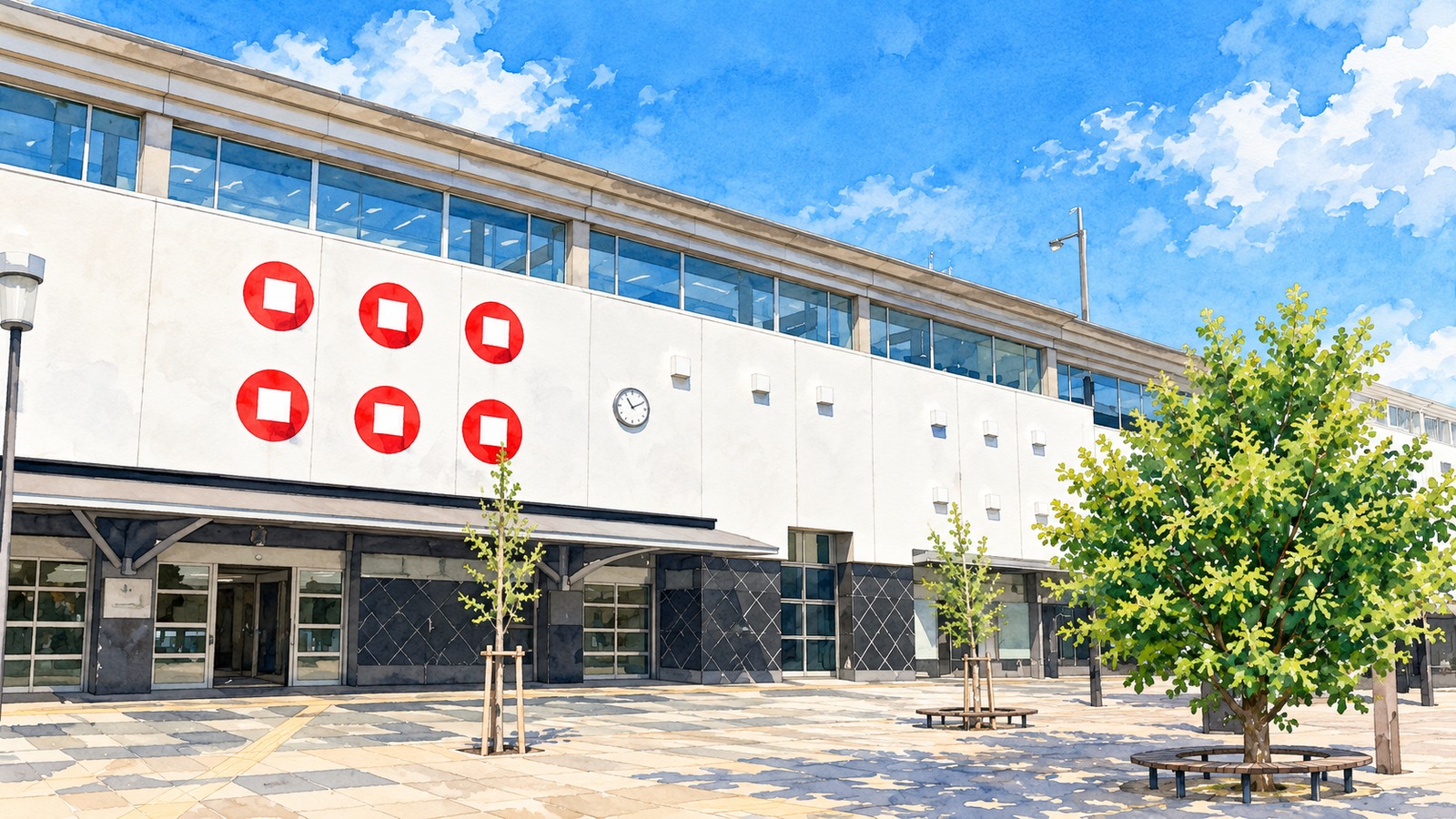
The official guide notes that the film depicts the gas tank visible from Ueda Station's outbound platform and the station's Ueda Wasshoi sign. From this real railway gateway, you can recall the scene in which Kenji and Natsuki arrive in Ueda.
In the film, the train is bound for Kakuma Onsen; in reality, the Bessho Line crosses the Chikuma River and heads to Bessho Onsen. The guide explains that the destination shown in the film is in the opposite direction from the real one.
Ueda Electric Railway currently publishes the Ueda Station timetable. The station is the starting point of the Bessho Line, which crosses the Chikuma River bridge on its way to Bessho Onsen.
Ueda Station is in Tenjin, Ueda. You can enjoy the visit in two ways: look at the station building and signs from outside the ticket gates, or buy a ticket, enter the Bessho Line platform, and take a ride.
- Address
- Ueda Station, Tenjin, Ueda, Nagano
- Connection to the film
- The gateway where Kenji and Natsuki arrive, with the station platform and signs shown in the film and a connection to the Ueda Electric Railway Bessho Line
- Visiting and riding
- The concourse outside the ticket gates and the station plaza are open to visitors (a ticket or platform admission ticket is required to enter the Bessho Line platform or ride).
Sources: Shinshu Ueda Summer Wars Executive Committee · Ueda Electric Railway
Unnomachi Shopping Street | Wabisuke’s return and the festival street
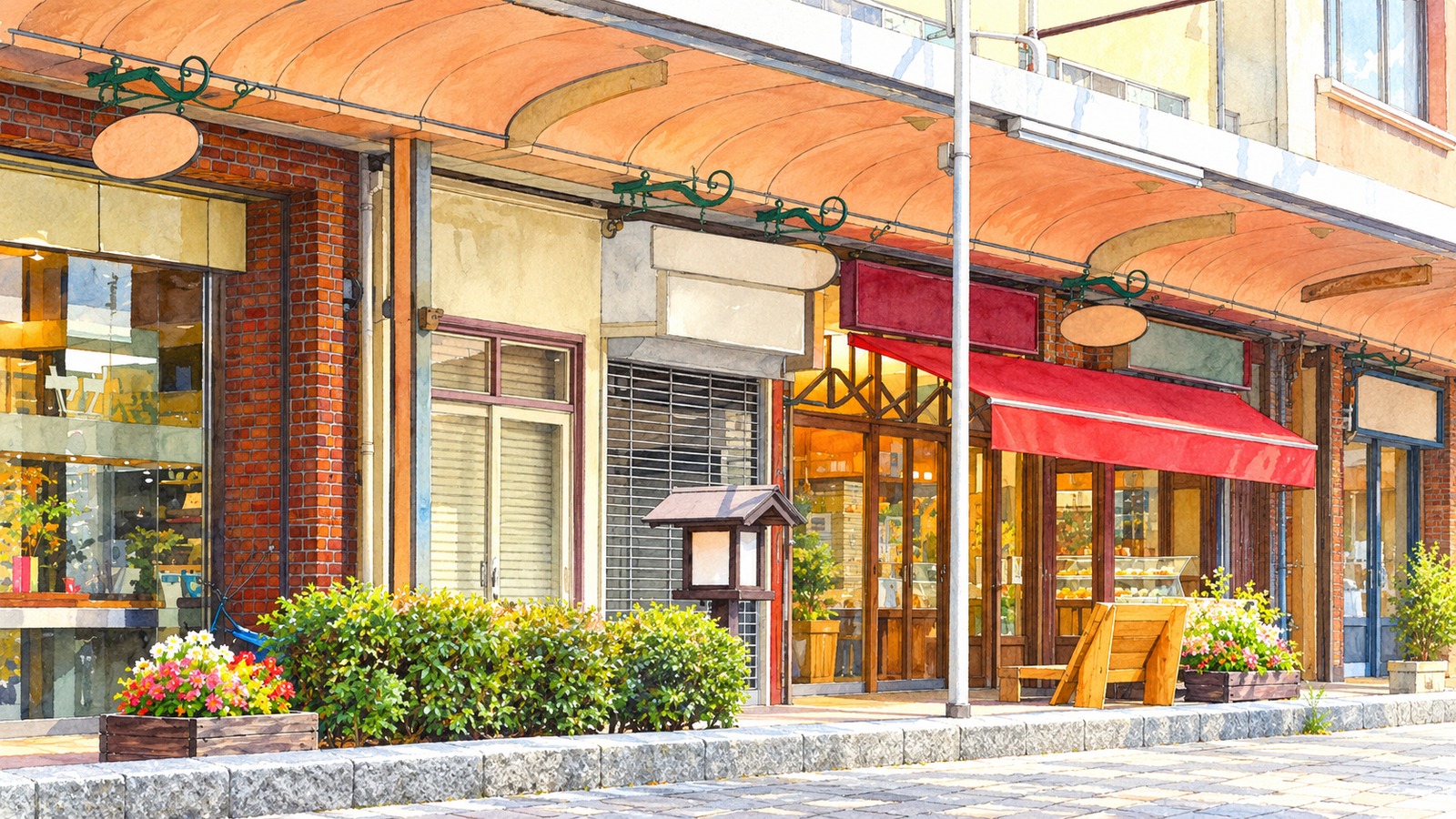
Unnomachi Shopping Street is associated with the scene in which Wabisuke learns of Sakae's death and hurriedly makes a U-turn. The official guide also notes that the bustle of Ueda's summer festival, Ueda Wasshoi, appears in the film. The street and the times when people gather help create the film's scenery alongside the scenes at the family estate.
For Wabisuke, the decision to turn back is an act of facing his relationship with his family. Recalling what he learned and why he chose to return alongside the movement of his car brings out the weight of the shopping-street scene. Today, you can stroll along the sidewalks and take in the arcade and streetscape.
A commemorative manhole cover for the film's 15th anniversary is another display on this shopping street's sidewalk. Its design brings together Avatar Kenji and King Kazma with cherry blossoms, the city's flower. Check the city guide for its precise location, then take in both the film's scenes and the imagery added to the city after its release.
If you shop or dine in the shopping district around Chuo 2-chome, plan your visit around each business's opening hours and regular closing days. This is a street where you can move between the energy of the summer festival and the feel of everyday life.
- Address
- Unnomachi Shopping Street, Chuo 2-chome, Ueda, Nagano
- Connection to the film
- A shopping street depicted in Wabisuke's U-turn scene and as a venue for Ueda Wasshoi, with a 15th-anniversary commemorative manhole cover also installed here
- Visiting
- The arcade sidewalks and commemorative manhole cover can be viewed at any time (individual shops set their own business hours).
Sources: Shinshu Ueda Summer Wars Executive Committee · Unnomachi Shopping Street · Ueda City Sewerage Division
Iseyama Bus Stop | A real stop on the story’s route home
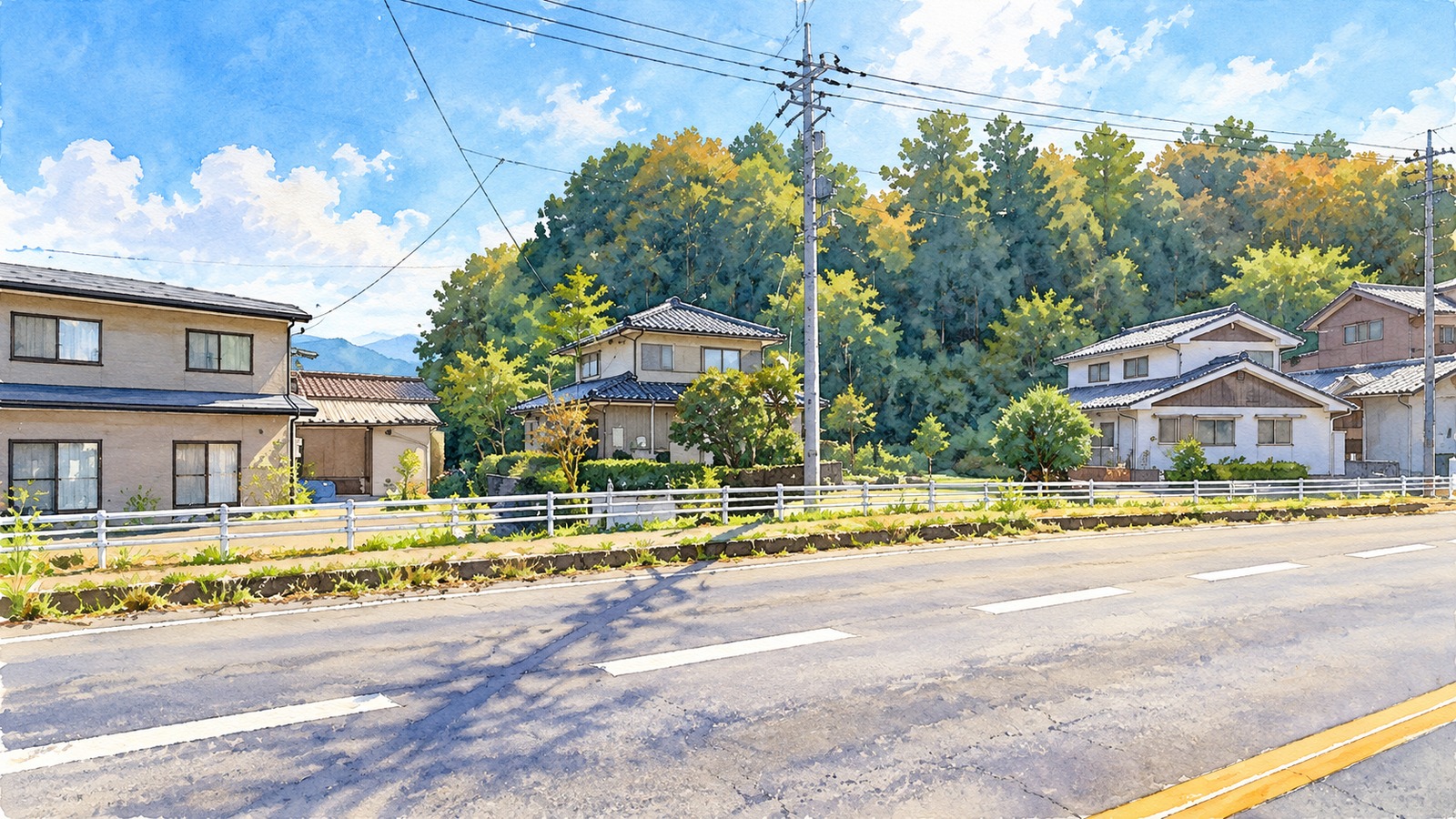
Iseyama is a real bus stop portrayed in the film as the nearest stop to the Jinnouchi home. You can confirm both the connection to the film described in the official guide and the current Ueda Bus schedule. Iseyama is included on the Sugadaira Line timetable revised on March 30, 2026.
A residential neighborhood spreads around the stop. Visitors can view the stop sign and the public scenery along the road.
The Iseyama stop in Ueno, Ueda, is used daily by local bus passengers. Ueda Bus's current timetable specifies the operating days and arrival and departure times for each service.
- Address
- Iseyama stop on Ueda Bus's Sugadaira Line, Ueno, Ueda, Nagano
- Connection to the film
- A real route-bus stop depicted as the nearest stop to the Jinnouchi home
- Visiting
- The stop sign can be viewed from the public sidewalk (nearby homes are private residences and are off-limits).
Sources: Shinshu Ueda Summer Wars Executive Committee · Ueda Bus
Toishi and Komeyama Castle Ruins | The hill where the Jinnouchi home is set, and the view over town
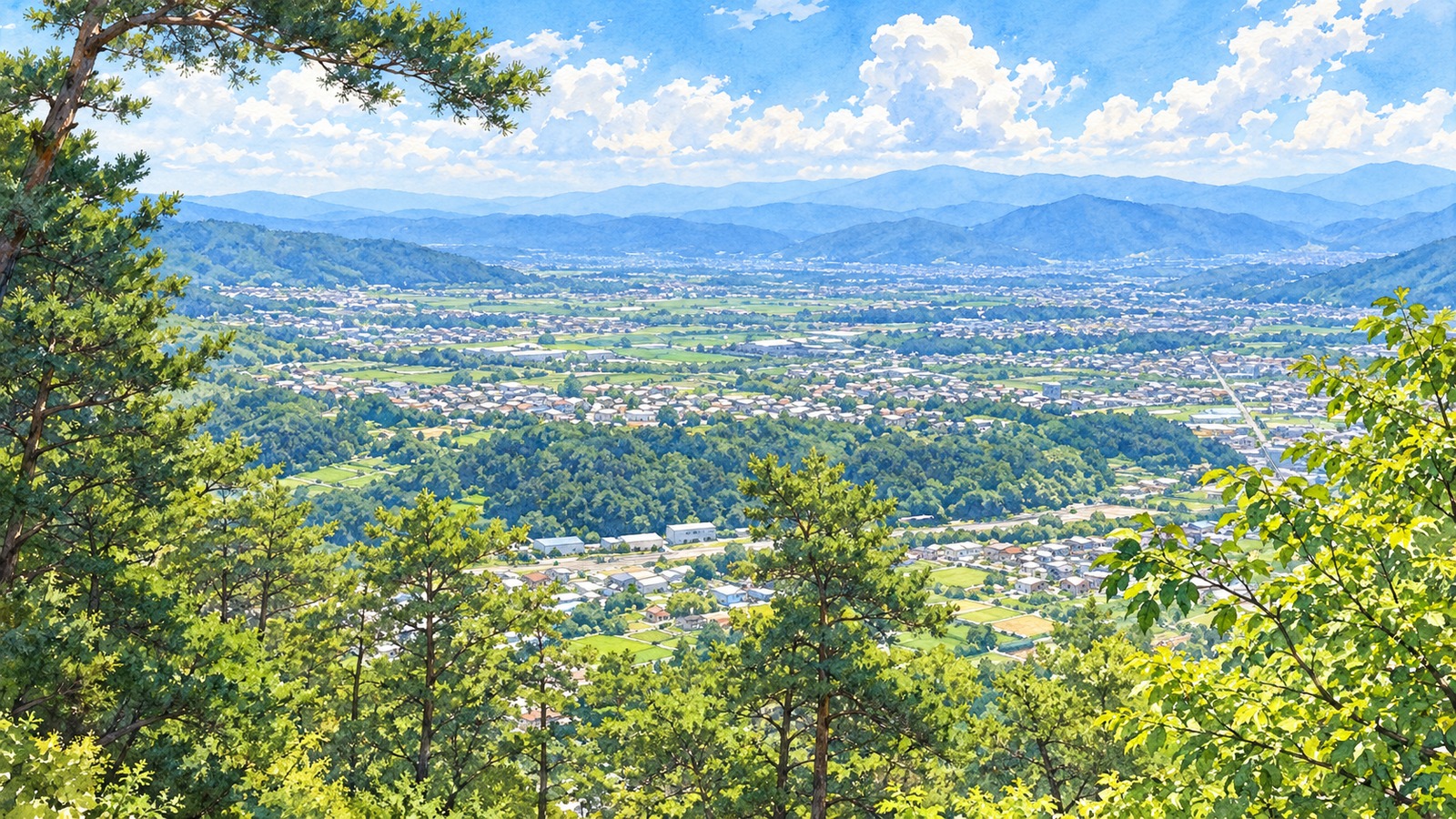
Toishi and Komeyama Castle Ruins are the setting for the Jinnouchi home. The official guide notes that the film depicts the view over the city from here. This is separate from Ueda Castle Ruins, whose gate served as a model, and helped shape the location of the estate and its surrounding scenery.
There is no Jinnouchi home on the hilltop, but climbing up and looking over the Ueda Basin gives you a sense of the elevation and breadth of the setting for the estate. You can see how the film's design connected the castle gate in town with the view from the mountain castle, bringing them together as one setting for the family home.
Unlike an easy walk on the flat streets downtown, this visit involves walking the approach to a mountain castle. The tourism association says the trailhead is about 450 meters from Iseyama Bus Stop; beyond it, a mountain path climbs to the castle ruins.
In the mountain-castle area of Ueno, Ueda, avoid pushing on when rain or snow makes the ground slippery, and follow the maintained trail and signs on site. This viewpoint lets you experience both the atmosphere of a mountain castle tied to the history of the Sanada clan and the setting of the film.
- Address
- Toishi and Komeyama Castle Ruins, Ueno, Ueda, Nagano
- Connection to the film
- Mountain-castle ruins that served as the setting for the Jinnouchi estate and correspond to the film's view over the Ueda Basin
- Access and notes
- About a 450-meter walk from Iseyama Bus Stop to the trailhead, followed by a hike up the mountain-castle trail
Sources: Shinshu Ueda Summer Wars Executive Committee · Shinshu Ueda Tourism Association
Ueda City Tourist Information Center | A place to record your trip and get up-to-date guidance
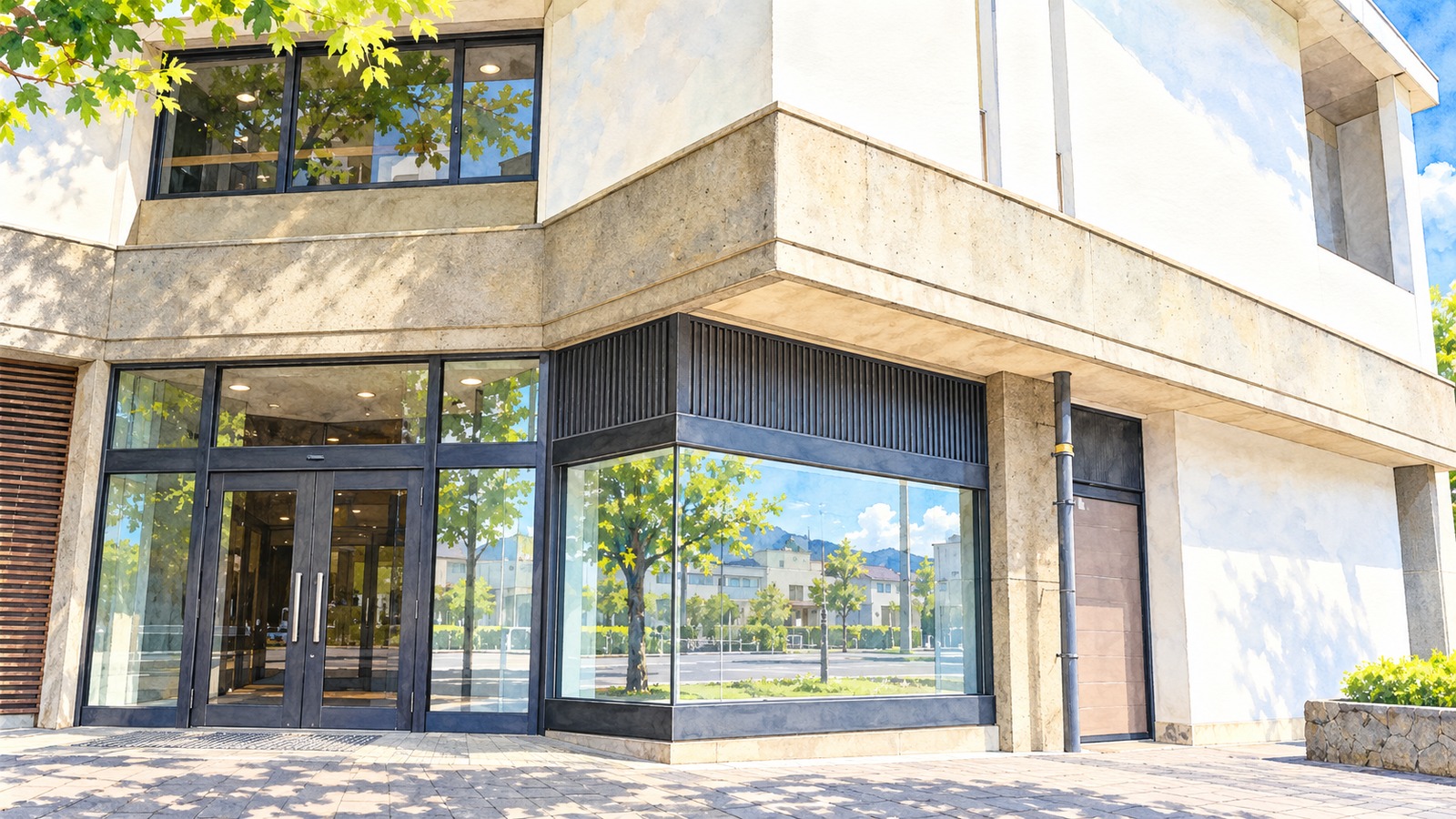
The official guide published around the film's release introduced Ueda City Tourist Information Center as the place to find a pilgrimage notebook with a cover illustrated by director Mamoru Hosoda. It has served as a hub where visitors inspired by the film can record their trip and get local information.
Today, you can choose local sweets and specialty products at the first-floor shop and get city maps and transportation information from the tourist information desk on the second floor. It is a short walk from the Higashi-Toraguchi Yagura-mon Gate at Ueda Castle Ruins Park, making it a useful place to check bus times and walking routes before heading to the mountain castle or shopping street.
The center is at 2-8-4 Ote. The second-floor information desk is open from 8:30 a.m. to 6:00 p.m. on weekdays and 9:00 a.m. to 6:00 p.m. on weekends and holidays. The first-floor shop is generally open from 9:30 a.m. to 6:00 p.m., with seasonal changes; the center closes over the New Year holidays. It is an easy stop to combine with a walk around the castle park.
- Address
- 2-8-4 Ote, Ueda, Nagano
- Connection to the film
- A tourism hub that housed the pilgrimage notebook with a cover illustrated by director Mamoru Hosoda around the film's release and provides city-walking maps
- Hours and closures
- Second-floor information desk: 8:30 a.m.–6:00 p.m. (9:00 a.m.–6:00 p.m. on weekends and holidays); first-floor shop: 9:30 a.m.–6:00 p.m.; closed over the New Year holidays
Sources: Shinshu Ueda Summer Wars Executive Committee · Shinshu Ueda Tourism Association
Ueda Eigeki | A place where the community revisited the film for its 15th anniversary
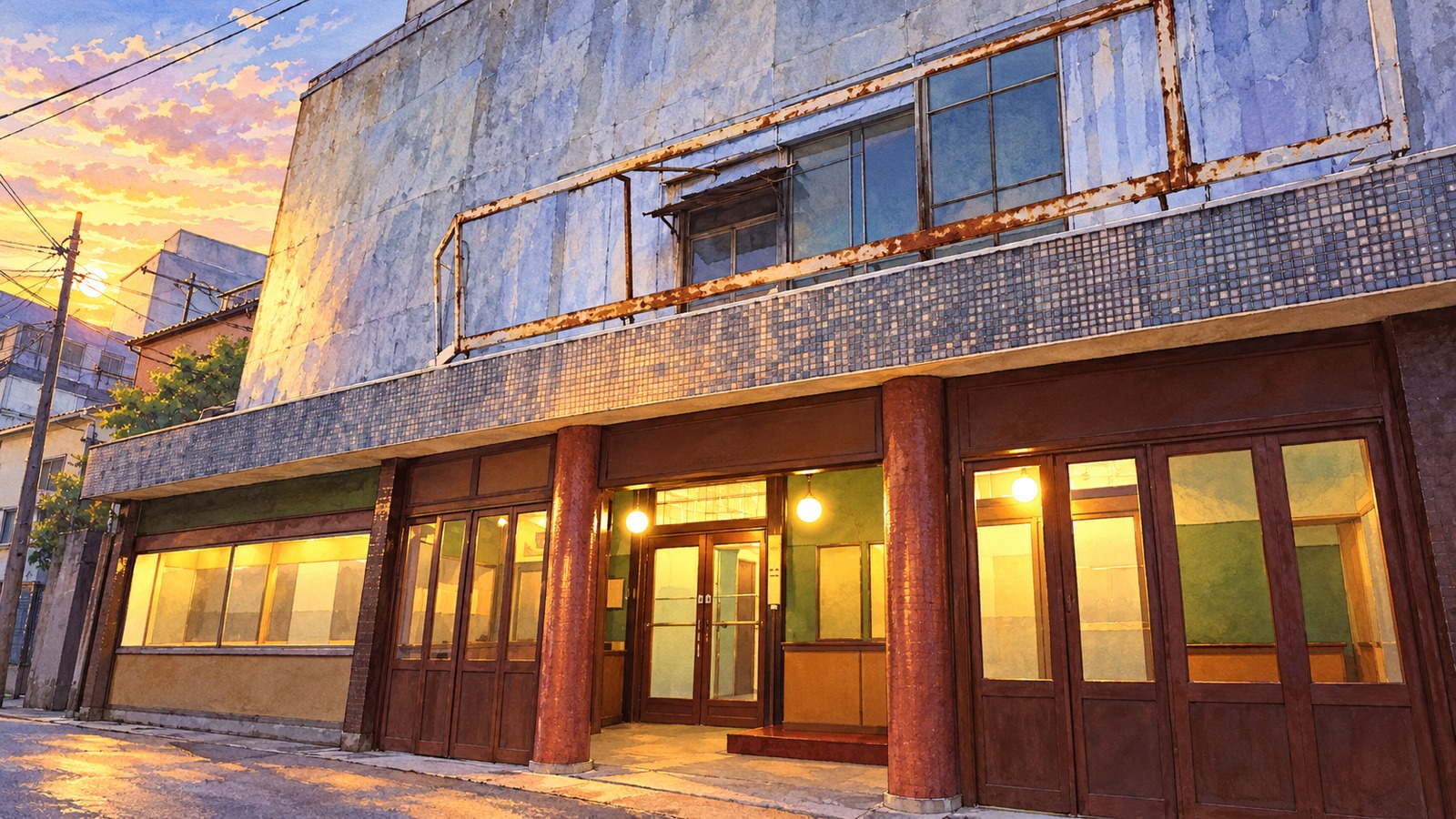
Ueda Eigeki held a free screening for the film's 15th anniversary on July 28, 2024. The Shinshu Ueda Tourism Association's project report records 250 attendees. It is a sign that, even 15 years after the film's release, the community has continued to value the chance to revisit it in the city where its story is set.
Watching the same film on a big screen in the city associated with it has a different resonance from rewatching it at home. When visitors who have walked around Ueda Castle Ruins, Ueda Station, and Unnomachi Shopping Street gather here, the real streets recalled by the on-screen scenery seem to open up in new ways.
This historic theater at 2-12-30 Chuo is now an independent cinema with a changing program of daily and weekly screenings. It is also just a short walk from Unnomachi Shopping Street. Check the theater's official listings for the film schedule and opening hours on your planned visit date.
- Address
- 2-12-30 Chuo, Ueda, Nagano
- Connection to the film
- A theater founded in the Taisho era that held a free 15th-anniversary screening on July 28, 2024, attended by 250 people
- Visiting
- Now operates a changing program of daily and weekly screenings (a short walk from Unnomachi Shopping Street)
Sources: Shinshu Ueda Tourism Association · Shinshu Ueda Tourism Association · NPO Ueda Eigeki
Santomyuze Ueda City Museum of Art | An exhibition that brought the creative process to the community
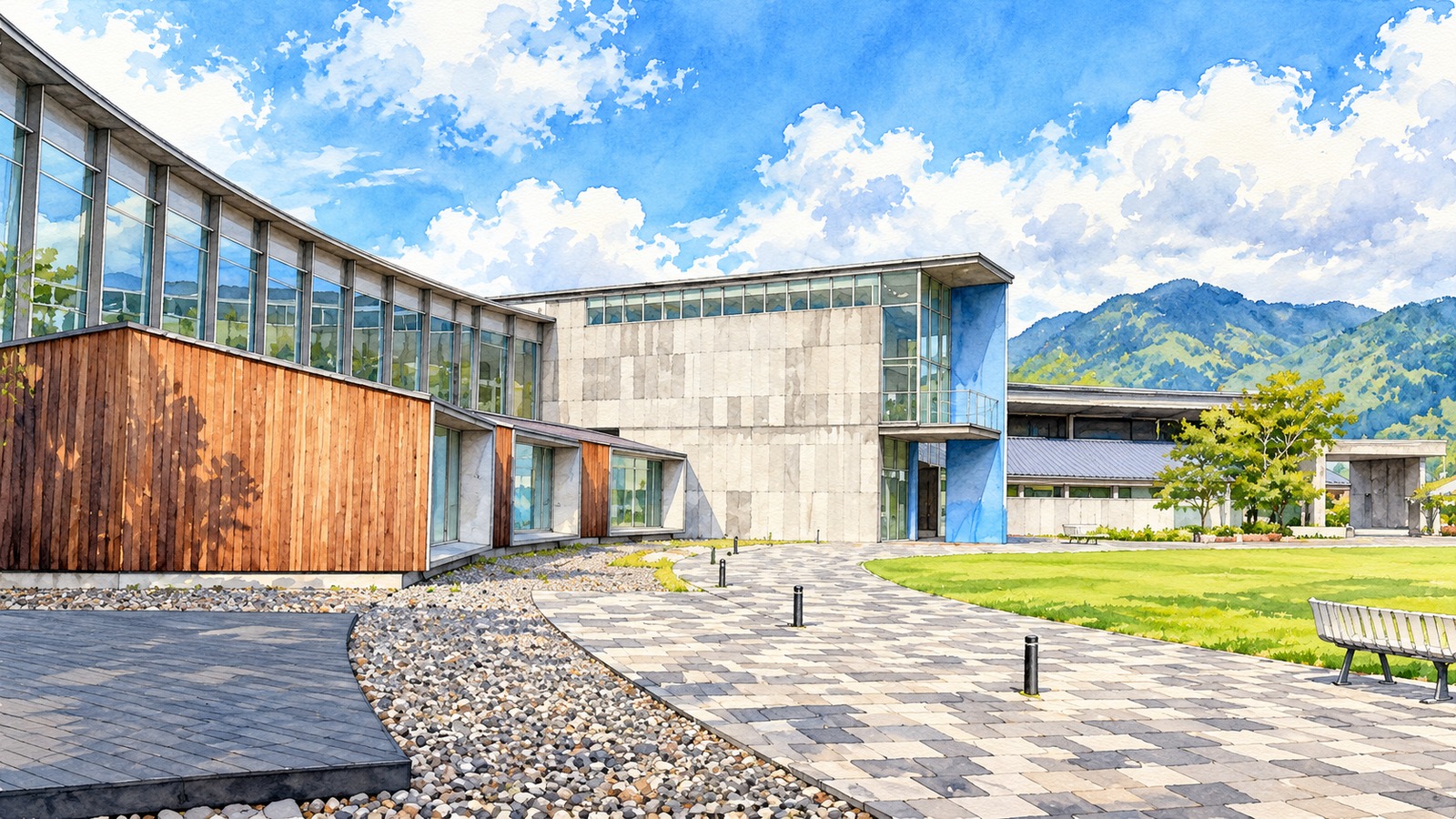
From July 6 to September 1, 2019, the Ueda City Museum of Art hosted an exhibition on Mirai and Mamoru Hosoda’s films, marking the 10th anniversary of Summer Wars. It introduced Hosoda’s creative worlds and process in Ueda, a place connected to Summer Wars.
The fact that an exhibition of a newer film was held in connection with Summer Wars' 10th anniversary shows how Ueda has expanded its interest from one film to animation production and visual art more broadly.
The museum is part of a cultural complex near the Chikuma River at 3-15-15 Tenjin, within walking distance of Ueda Station's Castle Exit. It now hosts seasonal special and collection exhibitions. Check the official site for current exhibitions, opening days, and admission before visiting.
- Address
- 3-15-15 Tenjin, Ueda, Nagano
- Connection to the film
- An arts and cultural exchange complex in Ueda that hosted a major exhibition of Mamoru Hosoda's films in summer 2019, the film's 10th anniversary
- Visiting and access
- Hosts seasonal special and collection exhibitions; within walking distance of Ueda Station's Castle Exit
Sources: Ueda City Museum of Art / Santomyuze · Ueda City Museum of Art / Santomyuze
Learn more about Summer Wars | Different strengths come together under one roof
The gate, mountain, station, and shopping street reveal that the Jinnouchi home was created by combining several real-world landscapes. The people who gather at the estate also bring their distinct strengths and relationships to bear as they face a crisis.
Kenji Koiso and Natsuki Shinohara | The boy brought to someone else’s home
Kenji Koiso is a 17-year-old high school sophomore in the physics club. He excels at math, although he failed to make the national team for the Mathematical Olympiad. The official character introduction explains that Kenji was working part-time maintaining OZ when his senior, Natsuki, invited him along. He is voiced by Ryunosuke Kamiki.
Natsuki Shinohara is 18, a senior in Kenji's kendo club, and one of Sakae Jinnouchi's great-grandchildren. She is voiced by Nanami Sakuraba. As she prepares to visit Ueda for Sakae's birthday, Natsuki asks Kenji to play her fiancé for pay, fulfilling her promise to bring a future husband the next time she came.
For Kenji, this means entering a home full of people he has never met. Before the global crisis, the story begins with the small anxiety of joining someone else's family.
Sakae Jinnouchi | Four generations gather for her 90th birthday
Sakae Jinnouchi is the 16th head of the Jinnouchi family, whose lineage stretches back to the Warring States period. Relatives spanning four generations, including her great-grandchildren, gather to celebrate her 90th birthday. The official introduction portrays her as a vigorous person versed in traditional martial arts and connected to influential people in politics and business.
According to Junko Fuji's official profile at the time, this was her first voice role in an animated film. Sakae accepts Kenji, who has suddenly arrived to play the fiancé, and leads the family through the crisis. She is the family head who brings people together and moves them to act.
When OZ is in trouble, Sakae calls on the relationships she has built over the years. The global network that connects people and the ties formed through a lifetime of knowing others both come into play in the same crisis. Remembering how her words continue to move the family after her death also changes the weight of the home as a setting.
Kazuma Ikezawa and Wabisuke Jinnouchi | Strengths inside and outside the screen
Kazuma Ikezawa is 13 and one of Sakae's great-grandchildren. Though he seems to spend much of his time shut away in his room, he is a world champion in online fighting games and controls King Kazma. The official profile describes him as a player sponsored by a global company. He is voiced by Mizuki Tanimura.
There is a sharp contrast between how Kazuma appears at home and his skill in OZ. His confidence in his abilities has affected his relationships in the past, and he continues to train under his mentor. The story shows not only his gaming skills but also the time he spends honing them and his interactions with family.
Wabisuke Jinnouchi is 41 and voiced by Ayumu Saito. He took family assets and disappeared for ten years, but returns for Sakae's birthday. He has been working on artificial intelligence research in the United States, and his work is connected to Love Machine. Natsuki also looks up to him, and his place in the family is complicated.
Thinking back to Wabisuke's U-turn in Unnomachi connects his work in science and technology with his decision to return home. No matter how capable a person is, questions of whose approval they seek and whom they return to can drive their actions. The film keeps technology and family from becoming separate concerns.
How OZ’s problem becomes a crisis for a real family
OZ is more than a place for games. In the film's world, people use the virtual space not only for shopping and communication but also for government procedures and infrastructure management. That means problems on screen directly affect daily life. After walking around Ueda, it is easier to understand a world where life outside the home is connected to online services.
Kenji had been working part-time maintaining OZ with his friend Sakuma. On the night he arrives at the Jinnouchi home, he receives a cryptic message made up of numbers on his mobile phone. Good at math, he works through the problem all night. The next morning, OZ's security is breached and Kenji is briefly suspected of being behind it. Solving a problem in his area of strength sets off a much larger chain of events than he expected.
The truth points to Love Machine, an artificial intelligence. Wabisuke created it because he wanted Sakae to recognize him. But after being blamed for the trouble his work caused so many people, he leaves the estate for a time. The difference between the motive behind creating the technology and the consequences it brings becomes a source of conflict within the family.
Just as Sakae's connections seem to have calmed the situation, she dies suddenly, and Kenji, Kazuma, and the others take on Love Machine. They lose once, and the enemy goes so far as to threaten a nuclear power plant by sending the Arawashi asteroid probe crashing into it. As time runs short, Wabisuke—called back by Natsuki—joins the family, encouraged by Kenji's words and Sakae's final message. The return scene in Unnomachi is where the crisis and the family's relationships converge again.
Bringing math, gaming, phone calls, and hanafuda together in one crisis
Kenji's mathematical ability, Kazuma's gaming skill, Sakae's network of contacts, and Natsuki's hanafuda: each person has a different strength. Bringing those distinct abilities together is what enables them to respond to the crisis.
The premise of a large family gathering under one roof makes those differences visible. Kenji, who has just arrived; Kazuma, a relative; and Wabisuke, who has been away for years, all return to the same place. After seeing the real gate and mountain scenery, you can better sense the scale of the home where they come together.
During the hanafuda match, the film carefully shows how the people around Natsuki respond as the cards are played. Moving between the player's expression and the reactions of those watching makes the family's united stand against the crisis clearer. This climax goes beyond technology: family members and people around the world lend their strength.
Mamoru Hosoda, Satoko Okudera, and Yoshiyuki Sadamoto, and the art of two worlds
Mamoru Hosoda directed and wrote the original story, Satoko Okudera wrote the screenplay, and Yoshiyuki Sadamoto designed the characters. Key members of the team reunited after 2006's The Girl Who Leapt Through Time, and the film was released in 2009. Animation was produced by Madhouse.
The story has two settings: a rural multigenerational family and OZ, a virtual society on the internet. Alongside art director Yoji Takeshige, Anri Kujo handled the art for OZ. The OZ character designs were created by Noriyuki Okazaki, Mina Okazaki, and Masaru Hamada. The production assigns distinct roles to the depiction of real scenery and the virtual space.
Recall the colors and depth of the gate and shopping streets you saw in Ueda, then watch the transition into OZ: the contrast between the two worlds becomes even more striking. The real scenery is reworked as the film's background art to match the characters' performances and the shifts into virtual space.
Hiroyuki Aoyama was animation director, Ryo Horibe was CG director, and Chikako Kamata handled color design. The work of drawing characters, creating three-dimensional imagery, and shaping the palette all come together in one film. Looking at the credits afterward makes clear how many specialties are involved in bringing a gate or streetscape onto the screen.
A viewing focused on the characters' expressions leaves a different impression from one attentive to the veranda, shoji screens, and summer light in the backgrounds. After seeing the actual width of the streets and the scale of the castle gate in Ueda, you can also notice what the film fits into each frame and where it places the characters.
The music is by Akihiko Matsumoto, and Tatsuro Yamashita performs the theme song, “Our Summer Dream.” Listening for how the score connects everyday life at the house with the crisis scenes can add another layer to a rewatch. When the song brings summer scenery to mind, revisit the film to see which characters and actions stayed with you.
Ueda carries the film forward | Exhibitions, screenings, and festival memories
Ten years after the film's release, the 2019 exhibition at Ueda City Museum of Art marked a milestone for the work. For the 15th anniversary in 2024, the Shinshu Ueda Tourism Association's project report records commemorative events connected with the bustle of Unnomachi and other parts of town. Even years after the film opened, the community has continued to create opportunities to encounter it in many places.
On July 27, 2024, 500 Avatar Kenji masks were handed out; the next day, 250 people attended a free screening at Ueda Eigeki; on August 5, fireworks were set to music. A series of events across the city marked the anniversary during the summer festival season.
Commemorative manhole covers installed on sidewalks including Unnomachi Shopping Street remain permanent spots to visit.
- The shape of the gate
Higashi-Toraguchi Yagura-mon Gate at Ueda Castle Ruins
The Higashi-Toraguchi Yagura-mon Gate at Ueda Castle Ruins Park was the model for the Jinnouchi home's imposing main gate.
- The hill where the home stands
Toishi and Komeyama Castle Ruins
The location of Toishi and Komeyama Castle Ruins and its view over the Ueda Basin echo the setting of the fictional estate.
- The road leading home
Ueda Station and Iseyama Bus Stop
The story depicts travel between Ueda Station and Iseyama Bus Stop and gives the train a destination different from the real one.
Sources: Official sources and venue information
From the release to the film’s continuing life in Ueda | Milestones for the film and the community
The timeline below traces milestones in the film's and the community's history, from its theatrical release in summer 2009 and screenings at international festivals to the Blu-ray release and the 10th- and 15th-anniversary events held in Ueda. It shows the film's reach at release and how the city has continued to carry it forward through summer festivals, cinemas, and museums.
- 2006
The Girl Who Leapt Through Time is released. Key members of its staff reunite for the next film, Summer Wars.Earlier history - 2009
Summer Wars is released. Its story brings together a rural multigenerational family and a virtual world, reaching audiences.Release - 2009
August 12 An official screening and press conference are held at the Locarno Film Festival. Mamoru Hosoda and Yoshiyuki Sadamoto attend, bringing a film made in Japan to an international audience.International - 2010
The film is featured at international festivals including Berlin and Annecy, bringing the story that connects a Japanese regional city with a virtual world to audiences around the world.International - 2010
August 1 The Blu-ray Standard Edition is released. A home-video edition becomes available on the film's release anniversary and Sakae's birthday, giving viewers a way to revisit the feature.Home video - 2019
July–September From July 6 to September 1, Ueda City Museum of Art holds an exhibition on Mirai and Mamoru Hosoda’s films to mark the 10th anniversary. The milestone broadens interest from watching the film to learning about the creators' work.Exhibition - 2024
July 27 As part of the 15th-anniversary events, 500 Avatar Kenji masks are handed out. The film's avatar becomes part of the way festivalgoers enjoy the city.Community - 2024
July 28 A free screening is held at Ueda Eigeki, attended by 250 people. The community gets a chance to revisit the film.Screening - 2024
August 5 Fireworks are set off to music, connecting the film's sound with summer events in Ueda.Community - 2024
〜2026 Commemorative manhole covers marking the 15th anniversary are installed around Ueda, and the city publishes their locations. They offer a way for later visitors to discover the film around town.Community
Sources: Official sources and venue information
Before and after your visit | Separate the Standard Edition feature from limited-edition extras
If you want to revisit the film before or after exploring the castle gate and shopping street, options include the Blu-ray Standard Edition with the feature and cast commentary, and the original theatrical teaser for a sense of the film's atmosphere. As you watch, picture the distances from the station to the castle park, shopping street, and mountain castle: the strong summer sun, towering cumulonimbus clouds, and lively room full of relatives come vividly into view.
Blu-ray for revisiting the feature and commentary at home
The standard home-video option is the Blu-ray Standard Edition (catalog no. VPXT-71092). In addition to the 115-minute feature, it includes teasers and trailers, cast audio commentary, Japanese subtitles, and stereo and 5.1-channel audio. You can first watch the film straight through and then revisit the same scenes with commentary from the cast. After visiting Ueda, listening to the commentary can bring stories from the recording sessions together with the real scenery and deepen your understanding of the film.
The first-press limited edition (catalog no. VPXT-71081) is a separate two-disc release, with extras including a guide video on storyboards, CG production, and the music, a background-art book, and original hanafuda cards.
Compare Ueda’s scenery and the film’s two worlds through the theatrical teaser
Before your trip, pay attention to the journey from Kenji's arrival at Ueda Station to the Bessho Line and bus rides that take him through the Jinnouchi gate. When you watch again at home, recall the real destination of the Bessho Line and the locations of Ueda Castle Ruins and Toishi and Komeyama Castle Ruins. The staging that links several real places into one estate becomes even more vivid. The contrast between OZ's vivid colors against a white backdrop and the estate nestled in the deep green of Shinshu also defines the film's visual style.
To follow the characters' actions, compare Sakae calling people across Japan, Kazuma controlling King Kazma, Wabisuke turning his car around in Unnomachi, and the late scenes where Natsuki and Kenji work together. Each brings a different strength, and together the large family becomes a force.
Source: Official sources and venue information
Oshi Lab note | A business perspective: A summer festival and a cinema turn an anniversary into distinct experiences
For Ueda's 15th-anniversary events, 500 Avatar Kenji masks were handed out on July 27, 2024, and 250 people attended the free screening at Ueda Eigeki the following day. Fireworks set to music followed on August 5. The same milestone became distinct experiences: something to wear around town, time to revisit the film, and a display in the night sky.
When local cinemas and shopping streets take part in a program, each can contribute its own strengths instead of every venue hosting the same display. It is also useful that the number of masks distributed and screening attendance were recorded separately. Those figures cannot be added together and reported as visitor totals, but they help show how many people took part in each experience. Records by venue can also inform future anniversary programs.
Sources: Official sources and venue information
Sources
- Official Summer Wars website — Natsuki Shinohara
- Shinshu Ueda Tourism Association — Ueda Castle Ruins Park
- Shinshu Ueda Tourism Association — Summer Wars 15th-anniversary events
- Shinshu Ueda Summer Wars Executive Committee
- Official Summer Wars website — Sakae Jinnouchi
- Unnomachi Shopping Street
- Official Summer Wars website — Kazuma Ikezawa
- Official Summer Wars website — Kenji Koiso
- Official Summer Wars website — Introduction
- Official Summer Wars website — Wabisuke Jinnouchi
- Studio Chizu
- Shinshu Ueda Tourism Association — Ueda City Tourist Information Center
- Ueda City Museum of Art / Santomyuze — exhibition on Mirai and Mamoru Hosoda’s films marking Summer Wars’ 10th anniversary
- Official Summer Wars website — Blu-ray and DVD
- Shinshu Ueda Tourism Association — Toishi and Komeyama Castle Ruins
- NPO Ueda Eigeki — Access
- Ueda Electric Railway
- Ueda City Sewerage Division
- NPO Ueda Eigeki — Summer Wars cheer screening in Shinshu Ueda announced
- Santomyuze — Exhibitions and visitor information for the Ueda City Museum of Art
- Official Summer Wars website — Director Mamoru Hosoda
- Shinshu Ueda Tourism Association — FY2024 activity report (as of March 31, 2025)
- Ueda Bus
- Summer Wars official news — Roppongi Anime Night
- Summer Wars official news — Television premiere announced
Event dates, hours, and ticket details reflect information available at the time of writing. Check official sites for the latest information before setting out.
FAQ
Can I visit the Jinnouchi family home as it appears in the film?
The Jinnouchi home is fictional. You can explore it as a setting assembled from places including the Higashi-Toraguchi Yagura-mon Gate at Ueda Castle Ruins, the Toishi and Komeyama Castle Ruins area where the home is set, and Ueda Station.
Does the Bessho Line go to Kakuma Onsen, as in the film?
Ueda Electric Railway's real Bessho Line goes to Bessho Onsen. Kakuma Onsen is the destination in the film's story and is in a different direction from the real line.
What information can I get at the tourist information center?
The official guide from around the film's release listed it as the location of a pilgrimage notebook. Today, the first-floor shop and second-floor tourist information desk can help you find local products, maps, and current visitor information.
Is there still a Summer Wars exhibition at the museum?
The exhibition held for the 10th anniversary in summer 2019 has ended. Check Santomyuze's official site for current exhibitions and opening days.
Does the Standard Edition Blu-ray include hanafuda cards?
The hanafuda cards and background-art book were extras for the first-press limited edition (VPXT-71081). The one-disc Standard Edition (VPXT-71092) contains the feature and video and audio extras.
Can I visit the Jinnouchi home from Iseyama Bus Stop?
The film portrays Iseyama as the nearest stop, but the Jinnouchi home is fictional. Please do not enter nearby residential areas. You can enjoy the view from the public trail leading from the bus stop toward the Toishi and Komeyama Castle Ruins.
Can I watch Summer Wars for free at Ueda Eigeki anytime?
The free screening was a 15th-anniversary event held on July 28, 2024. The theater normally operates as an independent cinema with paid screenings that change daily or weekly.


