

GeGeGe no Kitaro Pilgrimage: 10 Places to Meet Yokai in Sakaiminato, Chofu, and Beyond
Walk through Sakaiminato and you will encounter more than Kitaro: you will also meet yokai whose names may be new to you. Bronze figures along Mizuki Shigeru Road, the yokai cave in the museum, and a huge stained-glass artwork at the airport bring the creatures you know from the manga into the city in different forms.
In Chofu, where Shigeru Mizuki lived for many years, a park invites children to meet yokai through its play equipment, and a shrine has welcomed the anime cast to pray for the series. The route also reaches a bamboo grove and a steam locomotive museum used as live-action filming locations. Together, Mizuki’s hometown of Sakaiminato, his longtime home and creative base in Chofu, and the film locations make up 10 stops across Japan.
Ten places to encounter Kitaro and Mizuki’s work
Five destinations are in Sakaiminato, Tottori; three are in Chofu, Tokyo; and the live-action film locations are in Tochigi and Kyoto. Experiences vary from walking a whole street and exploring museum exhibits to visiting a natural bamboo grove or a railway museum. Temples and shrines remain places of worship, while the airport is open as a public transportation facility.
① Mizuki Shigeru Road
Mizuki Shigeru Road stretches from Sakaiminato Station toward Honmachi and is lined with 177 bronze yokai statues. Enjoy a daytime stroll, then return at night for the shadow projections of the yokai.
Explore Mizuki Shigeru Road② Mizuki Shigeru Museum
Reopened in April 2024, the Mizuki Shigeru Museum follows the artist’s life in six chapters, from his boyhood and wartime experience to the yokai and his best-known works.
Explore Mizuki Shigeru Museum③ GeGeGe Yokai Paradise
Next to the Mizuki Shigeru Museum, GeGeGe Yokai Paradise is a plaza where visitors can enjoy an Ichimoku-ren play structure, a giant Gashadokuro figure, shooting-gallery games, and yokai lattes.
Explore GeGeGe Yokai Paradise④ Yonago Kitaro Airport
At Yonago Kitaro Airport, visitors can encounter yokai in a huge stained-glass artwork in the departure hall, trick art on the observation deck, and a 48-meter wall mural.
Explore Yonago Kitaro Airport⑤ Shofuku-ji Temple
At Shofuku-ji in Sakaiminato, young Shigeru Mizuki followed Nononba to see the Six Realms painting of Buddhist heavens and hells. The temple preserves a formative setting where the boy first became curious about the unseen world.
Explore Shofuku-ji Temple⑥ Kitaro Square
Kitaro Square is a park in Chofu, the city where Shigeru Mizuki lived for more than 50 years. It has a house-shaped Kitaro slide and a climbing structure modeled on Nurikabe.
Explore Kitaro Square⑦ Kitaro Chaya Tea Shop
On Tenjin-dori in Chofu, Kitaro Chaya has a shop and takeout counter on the first floor, plus the nearby second-floor Kissa Hanare cafe. Visitors can enjoy yokai-themed sweets and merchandise at the two locations.
Explore Kitaro Chaya⑧ Fuda Tenjin Shrine
Fuda Tenjin Shrine in Chofu is said to have inspired the grove where Kitaro lives in the manga. Before the sixth TV anime series aired, Miyuki Sawashiro and other cast members visited the shrine to pray for its success.
Explore Fuda Tenjin Shrine⑨ Wakatake no Mori Wakayama Farm
At Wakayama Farm, a vast bamboo grove in Utsunomiya, the “Yokai Night Game” scene at the raccoon-dog palace was filmed for the live-action movie GeGeGe no Kitaro: The Thousand-Year Curse Song, released in 2008.
Explore Wakatake no Mori Wakayama Farm⑩ Kyoto Railway Museum
Kyoto Railway Museum preserves the roundhouse of the former Umekoji Steam Locomotive Museum, where a 2007 live-action GeGeGe no Kitaro scene was filmed: Kitaro and Mika Miura ride a yokai steam locomotive.
Explore Kyoto Railway MuseumMizuki Shigeru Road | See the statues by day and yokai shadows at night
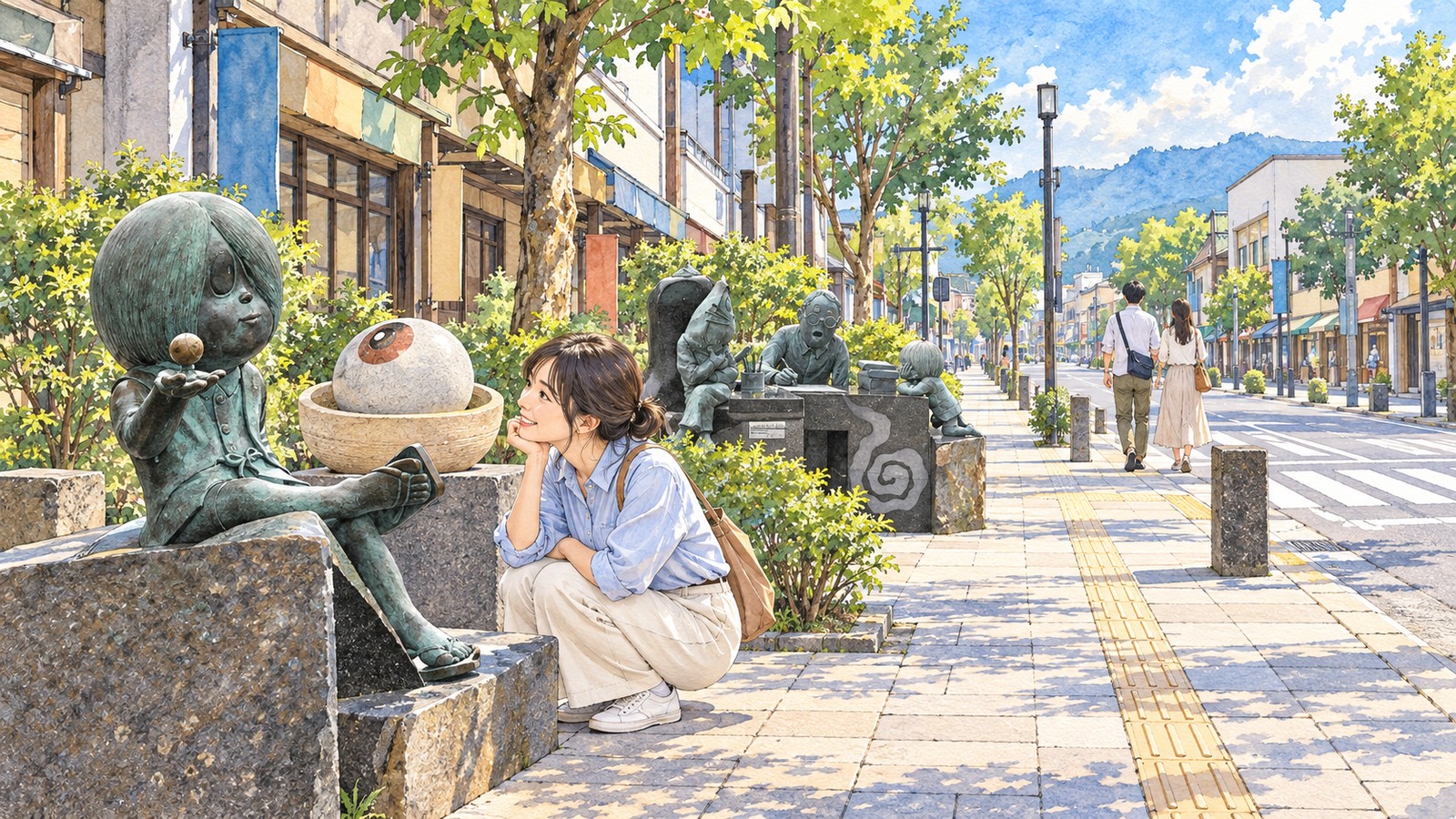
Mizuki Shigeru Road is a street where visitors can meet yokai. It stretches about 800 meters from Sakaiminato Station toward Honmachi. The street opened in July 1993 and underwent a major redevelopment in July 2018. According to the Sakaiminato Tourism Association, 177 bronze yokai statues line the route.
Alongside familiar figures such as Kitaro, Medama-Oyaji, and Nezumi-Otoko, the street introduces yokai whose names and designs you may be seeing for the first time. Instead of glancing at one statue and moving on, compare their expressions, poses, and the names on their pedestals as you walk. The small differences reveal the depth of Mizuki’s work.
After dark, visitors can enjoy yokai shadow projections and illuminations, which run from sunset until 10 p.m. By day, the yokai appear as three-dimensional bronze figures; at night, they emerge in light and shadow across the pavement. The fine details are easier to see in daylight, while the street takes on a dreamlike atmosphere in the evening breeze.
The pedestrian route is open around the clock, but the souvenir shops and restaurants along it have their own opening hours. This is also a local street used by residents in everyday life, with bronze statues and shops arranged along the sidewalks.
- Address
- From JR Sakaiminato Station to Honmachi, Sakaiminato, Tottori
- Connection to the work
- A roughly 800-meter street in the artist Shigeru Mizuki’s hometown, lined with 177 bronze yokai statues and nighttime yokai shadow projections
- Hours for walking and projections
- The sidewalk is open for walking 24 hours a day; yokai shadows and illuminations run from sunset to 10 p.m. (shops have individual business hours)
- Getting there
- Just outside Sakaiminato Station on the JR Sakai Line, nicknamed Kitaro Station
Source: Sakaiminato Tourism Association (in Japanese)
Mizuki Shigeru Museum | Trace the life that gave rise to the yokai
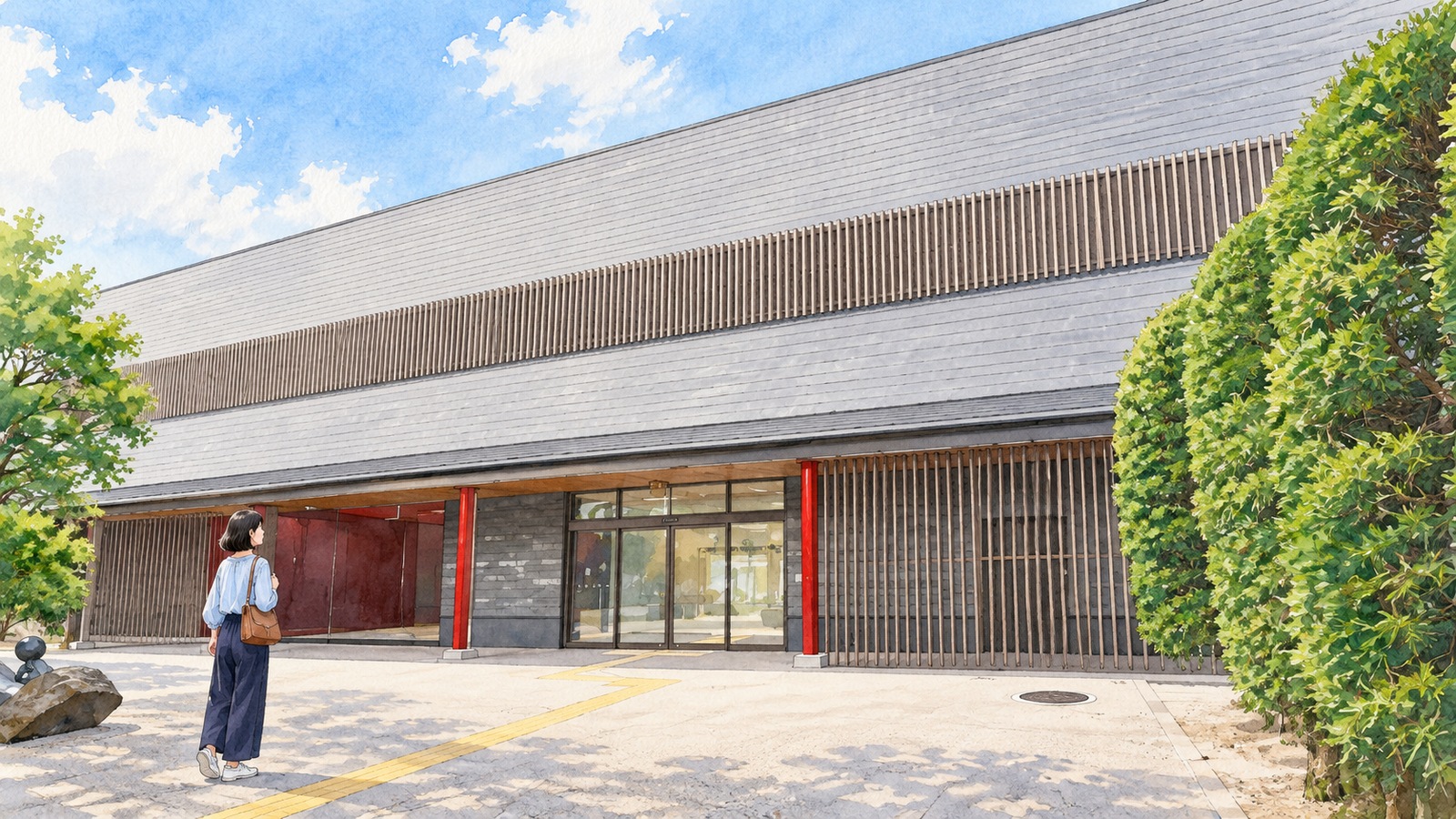
After rebuilding, the Mizuki Shigeru Museum reopened on April 20, 2024. Its permanent exhibition has six chapters: “Boyhood in Sakaiminato,” “War,” “Becoming a Manga Artist,” “Yokai,” “Best-Known Works,” and “Words.” Before or after seeing the character statues around town, visitors can learn about the artist whose life gave rise to them.
The “War” chapter presents Mizuki’s grueling military service through valuable historical materials. The Mizuki Theater also screens a film based on his book The War Stories I Tell My Daughter. It is an important place to learn what era the creator of such humorous yokai manga lived through and what he experienced at the front.
In the “Yokai” chapter, 43 creatures lurk in a dimly lit “Yokai Cave.” Beyond it, the museum displays detailed yokai illustrations, then leads into original art and materials from signature works such as GeGeGe no Kitaro, Akuma-kun, and Kappa no Sanpei. After experiencing the creatures’ presence in the cave, visitors can take a closer look at the artist’s brushwork on paper.
The final chapter presents words Mizuki left in his books and interviews. After following his long struggle to become a published manga artist and his memories of war, his plain, concise words carry added weight. Take your time and follow the museum’s six chapters in sequence.
The museum is at 5 Honmachi, Sakaiminato, Tottori. It is open from 9:30 a.m. to 5 p.m., with last admission at 4:30 p.m. General admission is ¥1,000. Special exhibitions that change over time are also held alongside the permanent displays.
- Address
- 5 Honmachi, Sakaiminato, Tottori
- Connection to the work
- A museum reopened in April 2024, with six sections on Shigeru Mizuki’s life, the Yokai Cave, and original GeGeGe no Kitaro artwork
- Hours and admission
- 9:30 a.m.–5 p.m. (last admission 4:30 p.m.); open year-round; ¥1,000 general admission
- Getting there
- About a 10-minute walk from Sakaiminato Station on the JR Sakai Line
Sources: Mizuki Shigeru Museum (Sakaiminato City) (in Japanese) / Mizuki Shigeru Museum (Sakaiminato City) (in Japanese) / Sakaiminato Tourism Association (in Japanese)
GeGeGe Yokai Paradise | Play among yokai and enjoy yokai treats
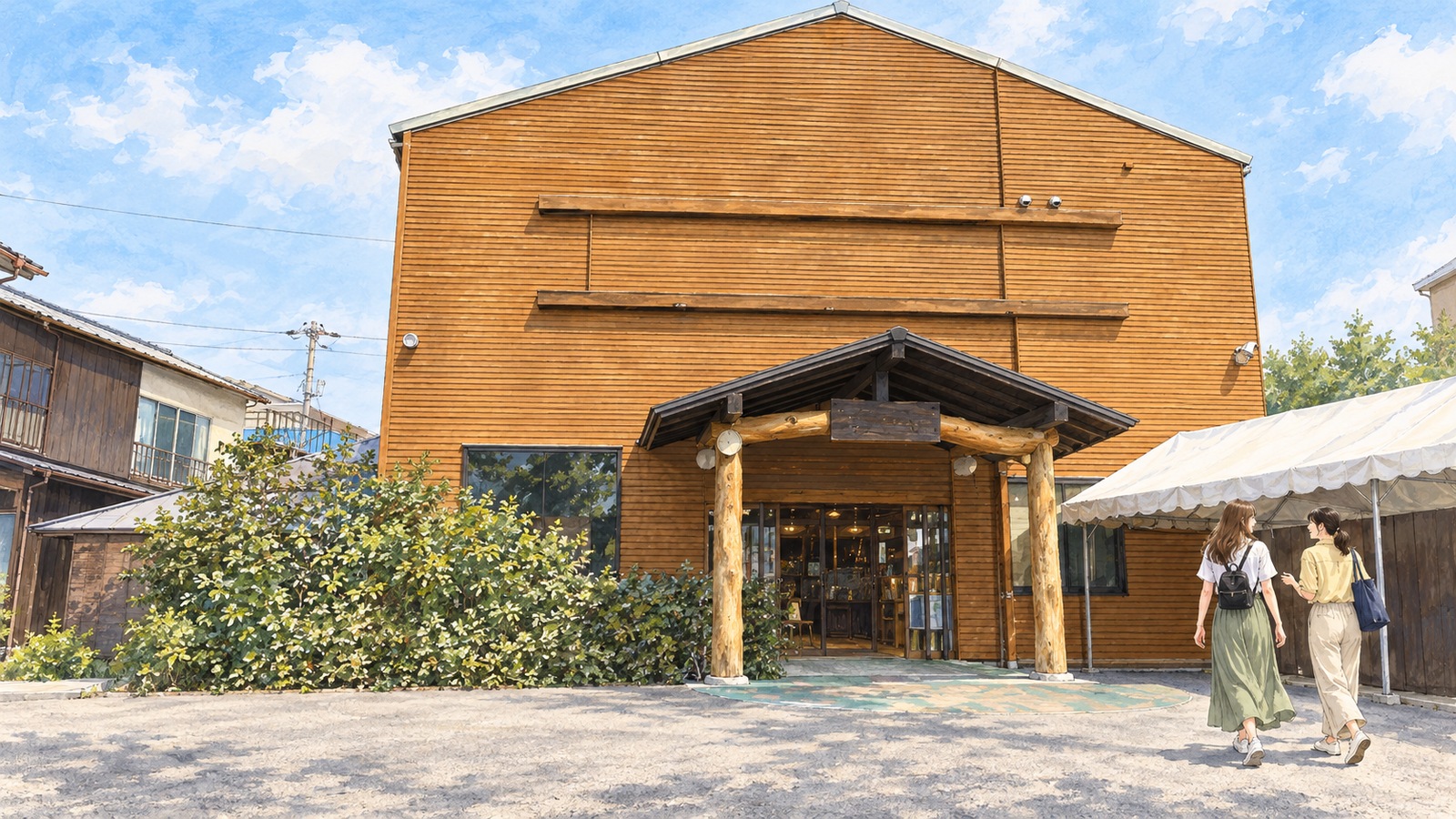
GeGeGe Yokai Paradise is a separate attraction just behind the Mizuki Shigeru Museum, where visitors can see and play in the world of Kitaro. At the entrance, they are greeted by a soft-play structure shaped like Ichimoku-ren and an imposing statue of Gashadokuro. It is a chance to shift from the focused time spent reading the museum displays to a more relaxed visit surrounded by yokai forms.
The Kitaro House in the plaza is a play structure that small children can climb inside. It is designed so children can experience, at their own height and scale, the treehouse-like home familiar from the anime and manga.
The shooting-gallery games in the festival corner and the “Yokai Latte,” topped with character art and served at the cafe, are popular staples. Visitors can do more than look at the figures and take photos: traditional games and limited menu items offer other ways to get to know the yokai. It is a place where everyone can choose how to spend their time.
The address is 138 Sakae-machi, Sakaiminato, Tottori. Regular hours are 9:30 a.m.–5 p.m. Admission to the plaza itself is free; food, games, and merchandise are priced separately.
- Address
- 138 Sakae-machi, Sakaiminato, Tottori
- Connection to the work
- A plaza next to the Mizuki Shigeru Museum with an Ichimoku-ren play structure, a giant Gashadokuro, festival games, and yokai lattes
- Hours and prices
- 9:30 a.m.–5 p.m.; free admission (food, shooting-gallery games, and merchandise cost extra; the Kitaro House is a play structure for young children)
Source: Source: GeGeGe Yokai Paradise / Yanoman (in Japanese)
Yonago Kitaro Airport | Encounter large yokai artwork at the start of your trip
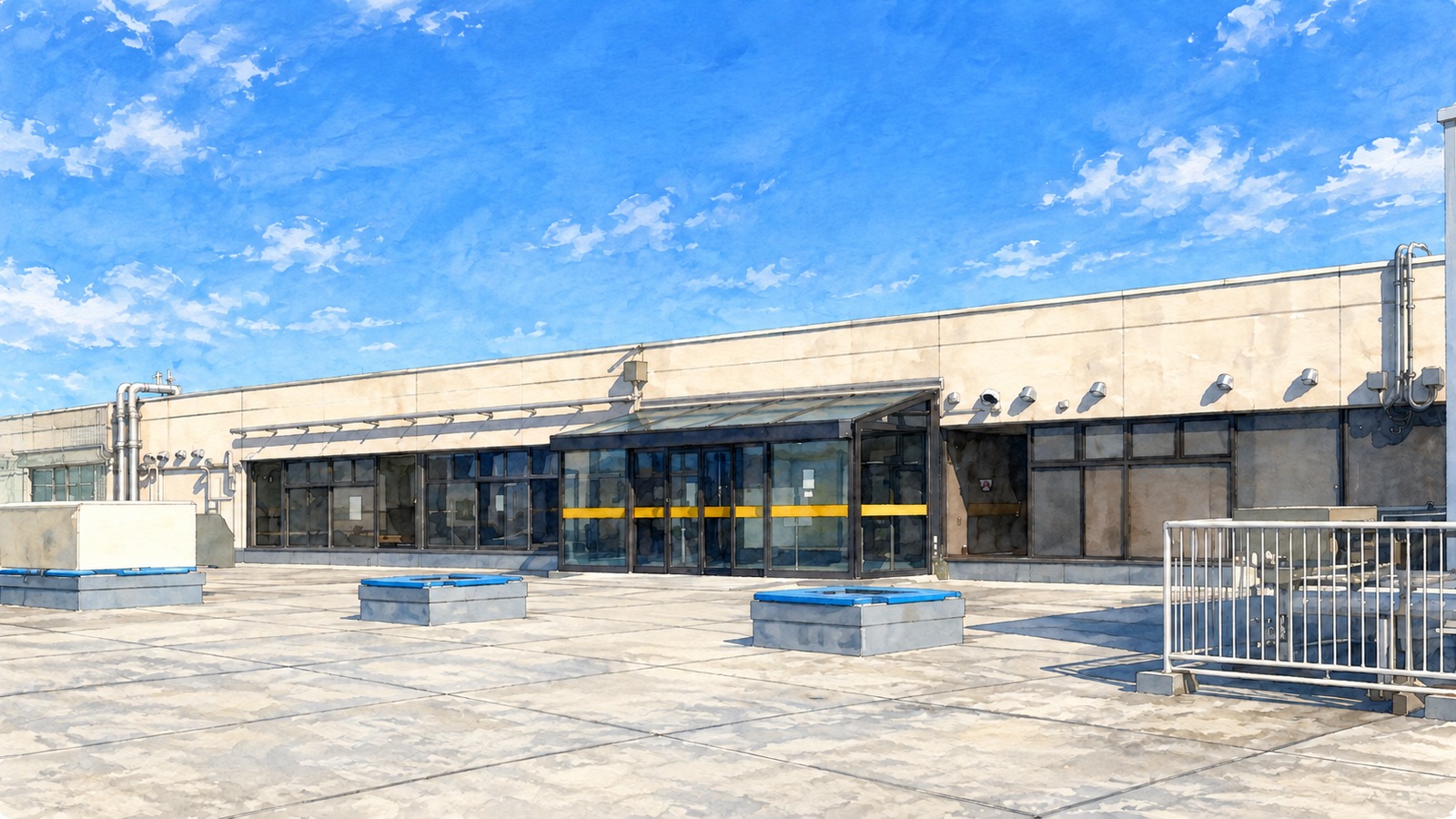
Yonago Kitaro Airport (Yonago Airport), the region’s gateway by air, features Kitaro and his companions throughout the terminal. The rooftop observation deck was renovated in October 2023. Its trick art lets visitors pose as if they are flying through the sky with Kitaro and Ichimoku-ren.
Another major attraction on the observation deck is a 48-meter wall artwork titled “Yokai of the Sky.” Huge yokai illustrations fill the open deck, where visitors can watch planes take off and land. The trick art and wall mural are displayed together in the same rooftop area.
On the second-floor departure level, the 2.8-meter-high, 10.2-meter-wide public artwork Forest of Yokai glows as a stained-glass display. Unlike the bronze figures on the street or ink drawings on paper, this monumental work expresses the yokai through richly colored glass and light. Stop by before or after walking along Mizuki Shigeru Road to see how much the choice of medium changes the effect.
The address is 1634 Sainokami-cho, Sakaiminato, Tottori. The terminal is open from 6 a.m. to 10 p.m. (individual shops have their own hours). All the artworks are in the public area before security screening, so visitors do not need a flight ticket to see them.
- Address
- 1634 Sainokami-cho, Sakaiminato, Tottori
- Connection to the work
- An airport with a nickname inspired by Kitaro, featuring Forest of Yokai stained glass in the departure hall and a 48-meter wall mural and trick art on the observation deck
- Opening hours and visitor access
- Terminal open 6 a.m.–10 p.m.; all displays are free to see in the public area before security screening
- Getting there
- About a 5-minute walk from Yonago Airport Station on the JR Sakai Line
Sources: Sakaiminato Tourism Association (in Japanese) / Yonago Airport Building Co., Ltd. (in Japanese)
Shofuku-ji Temple | The Six Realms painting young Shigeru saw with Nononba
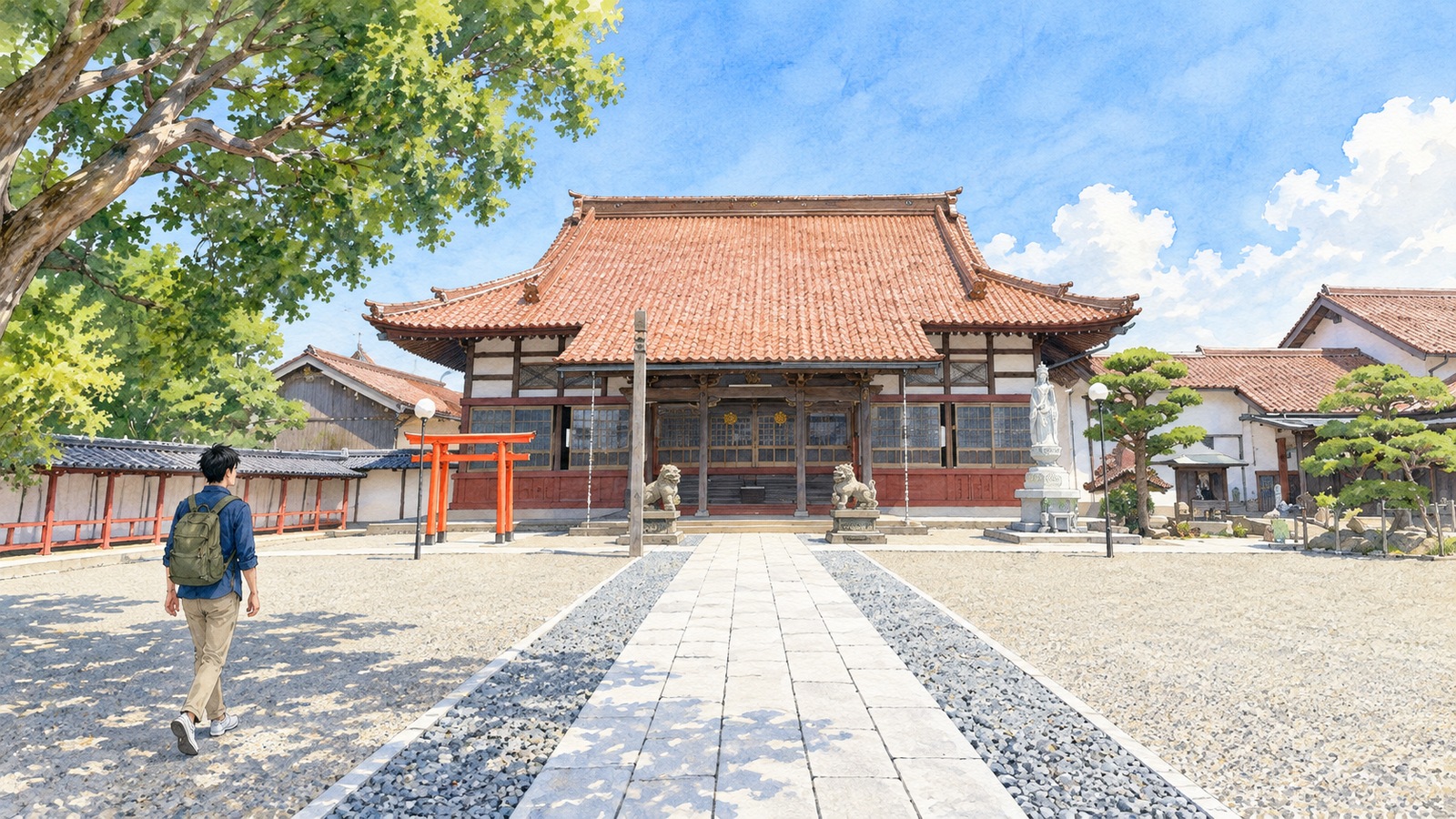
Shofuku-ji, a Soto Zen temple in Sakaiminato, is where young Shigeru Mizuki—then known as Shigeru Mura—used to go with Nononba (Fusa Kageyama), who led him by the hand. In the main hall, the Edo-period painting of Buddhist heavens and hells, the Six Realms, still hangs where the boy once studied it intently. Rather than a location directly depicted in the work, this is a place to visit as part of the formative landscape that drew the artist toward the unseen world.
The Sakaiminato Tourism Association says that young Shigeru gazed endlessly at the vividly colored painting and was deeply struck by the afterlife and the existence of yokai. Shofuku-ji also appears in the autobiographical manga and drama Nononba and Me, where memories of the artist’s childhood meet the real setting.
A stone monument in the temple grounds commemorates Shigeru Mizuki’s artistic achievements and his 80th birthday. Inside, visitors can also see a Japanese mirror associated with Nononba, donated by her family. Unlike a tourist attraction built around character figures, this place invites reflection on how stories from an older neighbor and a single Buddhist painting helped crystallize a rich imaginative world.
The address is 5016 Nakano-cho, Sakaiminato, Tottori. Visiting hours are 9 a.m.–5 p.m., though the main hall may be closed to visitors at times for services or temple business.
- Address
- 5016 Nakano-cho, Sakaiminato, Tottori
- Connection to the work
- The Soto Zen temple where young Shigeru Mizuki followed Nononba to look at the Six Realms painting of Buddhist heavens and hells
- Visiting hours
- 9 a.m.–5 p.m. (the main hall may be closed during services or temple business)
- Getting there
- About a 12-minute walk from Kamimichi Station on the JR Sakai Line
Source: Sakaiminato Tourism Association (in Japanese)
Kitaro Square | Find yokai play structures in Chofu
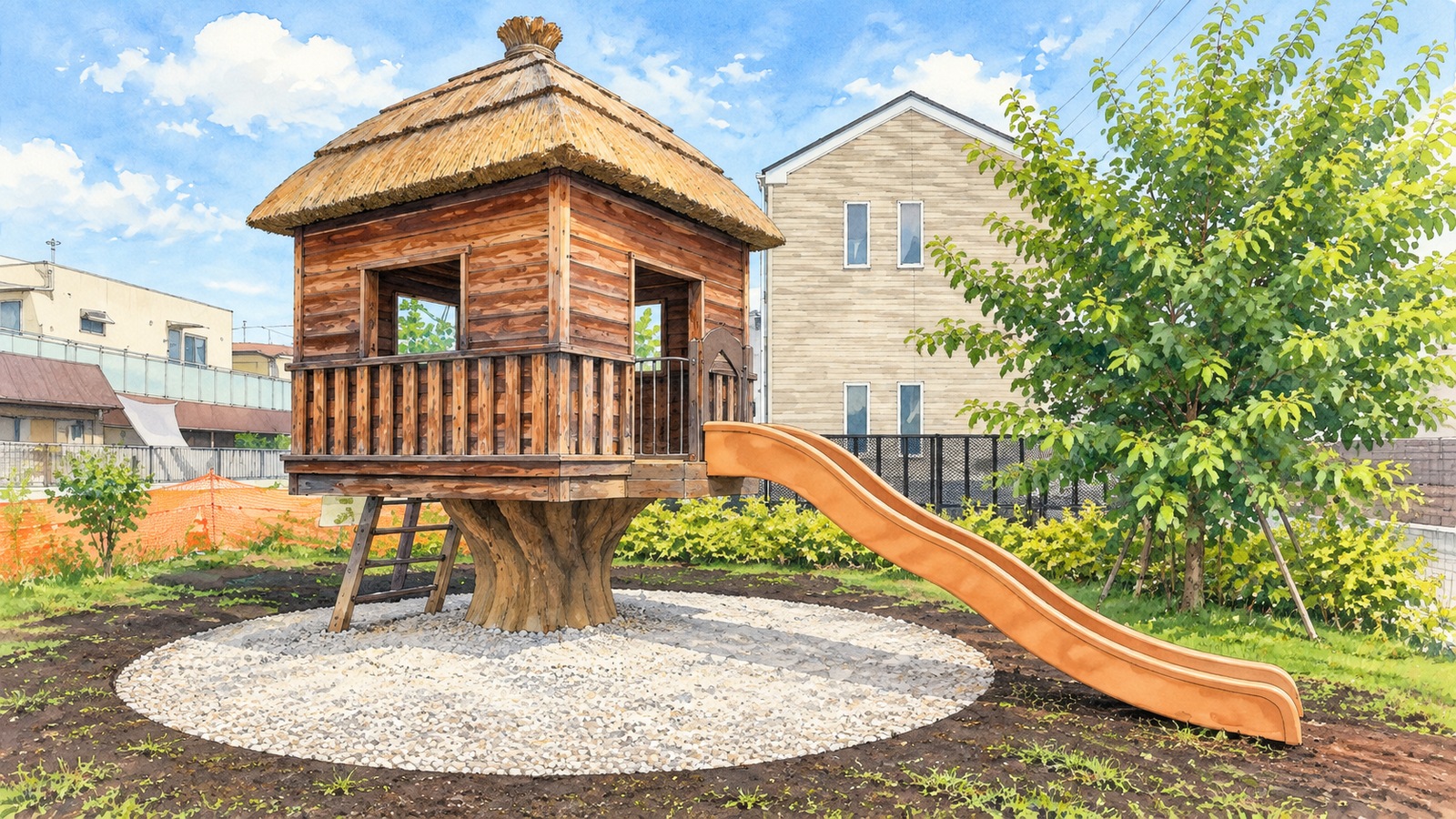
Kitaro Square in Chofu, Tokyo, is a park built on former Keio Line railway land. It opened on May 18, 2019. Shigeru Mizuki lived in Chofu for more than 50 years and created one celebrated work after another there, including GeGeGe no Kitaro, Kappa no Sanpei, and TV-kun. The park is a local landmark in the city known as the birthplace of Mizuki’s manga.
The grounds include a slide modeled on Kitaro’s house, a climbing structure shaped like Nurikabe, an Ichimoku-ren bench, and a Mizuki Zone where figures from Kappa no Sanpei peek out. Yokai drawn in the manga as a wall, a strip of cloth, or a hiding place have become three-dimensional play structures that children can climb and sit on.
The Kitaro statue near the entrance was donated by Toei Animation, and the symbol tree, a Japanese black pine (Kaizuka ibuki), was donated by Mizuki Productions. Walking from the plaza in front of Chofu Station toward the park, visitors can sense the close ties between the local community, the animation studio, and Mizuki Productions.
The address is 1-58-5 Shimoishihara, Chofu, Tokyo, alongside Tsurukawa Kaido and about a 12-minute walk from Chofu Station. Each play structure has posted age and use guidelines. The park is open to local families for everyday recreation.
- Address
- 1-58-5 Shimoishihara, Chofu, Tokyo
- Connection to the work
- A park built on former Keio Line land in Chofu, where Shigeru Mizuki lived for more than 50 years, with a slide shaped like Kitaro’s house and other yokai play structures
- Visitor information and access
- Free admission; about a 12-minute walk from Chofu Station on the Keio Line (along Tsurukawa Kaido)
Sources: Chofu City (in Japanese) / Chofu Tourism Association (in Japanese)
Kitaro Chaya | Enjoy yokai sweets on today’s Tenjin-dori
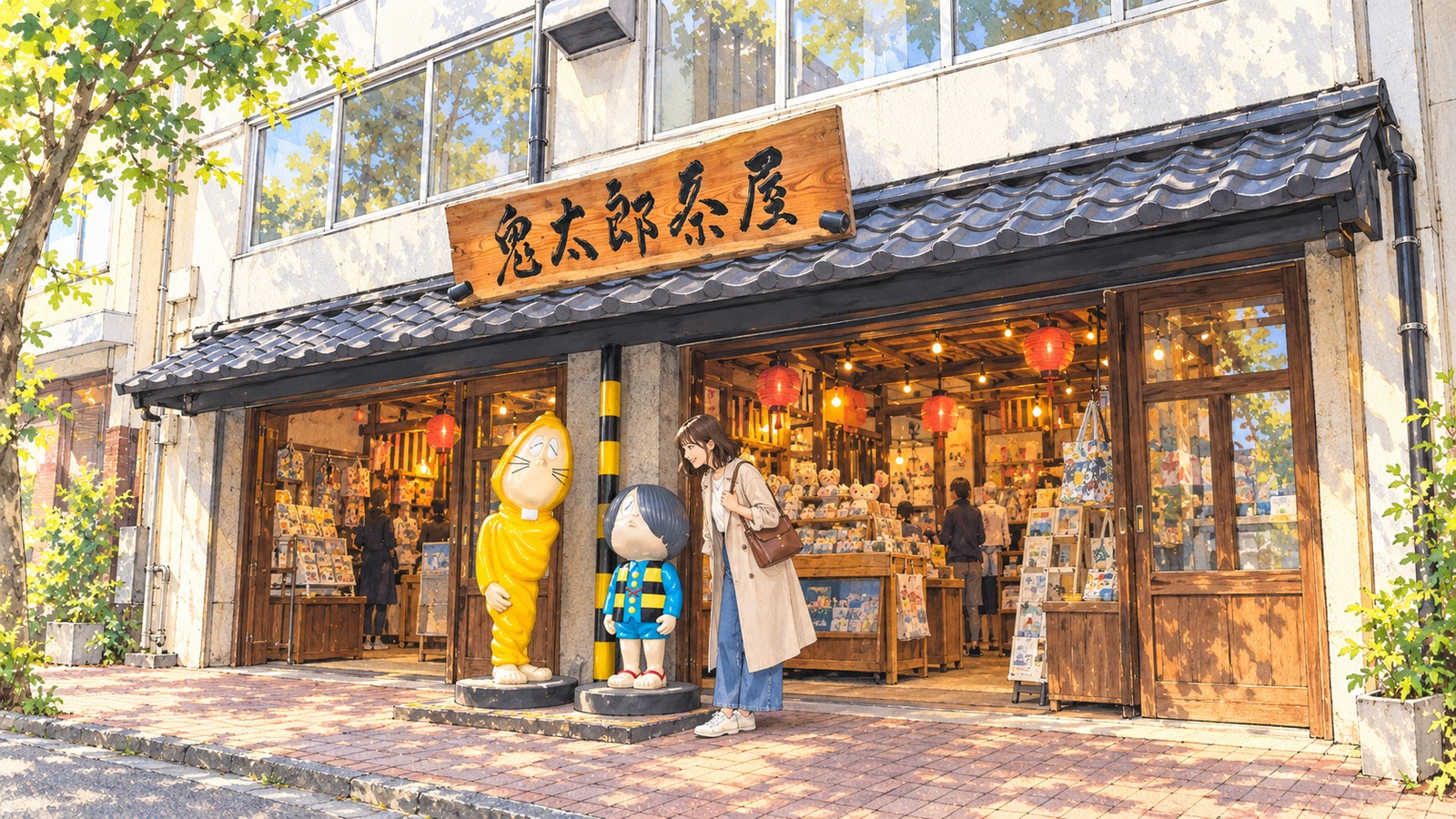
The long-running Kitaro Chaya has moved from the Jindaiji area to Tenjin-dori shopping street, near the north exit of Chofu Station. Today, visitors can combine two locations: the first-floor shop for yokai merchandise and takeout, and the nearby second-floor Kissa Hanare cafe.
The menu includes sweets that playfully bring the characters to life, such as doughnuts inspired by the “Hitodama Tempura” from GeGeGe no Kitaro, the “Ichimoku-ren Chaya Sundae,” and “Yokai Cream Anmitsu.” It is a stop along Tenjin-dori where you can enjoy the world of the series through both sight and taste while looking at the yokai monuments around the shopping street.
The main shop and takeout counter are on the first floor of the Eisho Building at 1-34-1 Fuda, Chofu, Tokyo. Kissa Hanare, where visitors can relax over sweets, is on the second floor of the DAIMON Building at 1-35-3 Fuda. The two locations have separate entrances, whether you are shopping for a souvenir or sitting down for a cafe visit.
The official hours are 10 a.m.–6 p.m. for the shop and takeout counter (last takeout orders at 5 p.m.) and 10 a.m.–5:30 p.m. for Kissa Hanare (last orders at 5 p.m.). Both are closed on Tuesdays, except when Tuesday is a public holiday.
Monuments of Kitaro and his companions are scattered along Tenjin-dori. The shopping street brings together limited-edition goods at the first-floor store and yokai sweets at the second-floor cafe, all along the same route.
- Address
- 1-34-1 Fuda, Chofu, Tokyo (first-floor Eisho Building; Kissa Hanare is on the second floor of DAIMON Building, 1-35-3 Fuda)
- Connection to the work
- A permanent shop on Tenjin-dori in Chofu selling yokai-themed sweets and official merchandise
- Hours and closing day
- Shop and takeout: 10 a.m.–6 p.m. (last orders at 5 p.m.); Kissa Hanare: 10 a.m.–5:30 p.m. (last orders at 5 p.m.); closed Tuesdays
Sources: Kitaro Chaya (in Japanese) / Kitaro Chaya (in Japanese) / Kitaro Chaya (in Japanese) / Kitaro Chaya (in Japanese) / Kitaro Chaya (in Japanese)
Fuda Tenjin Shrine | A shrine visited by the cast before Season 6
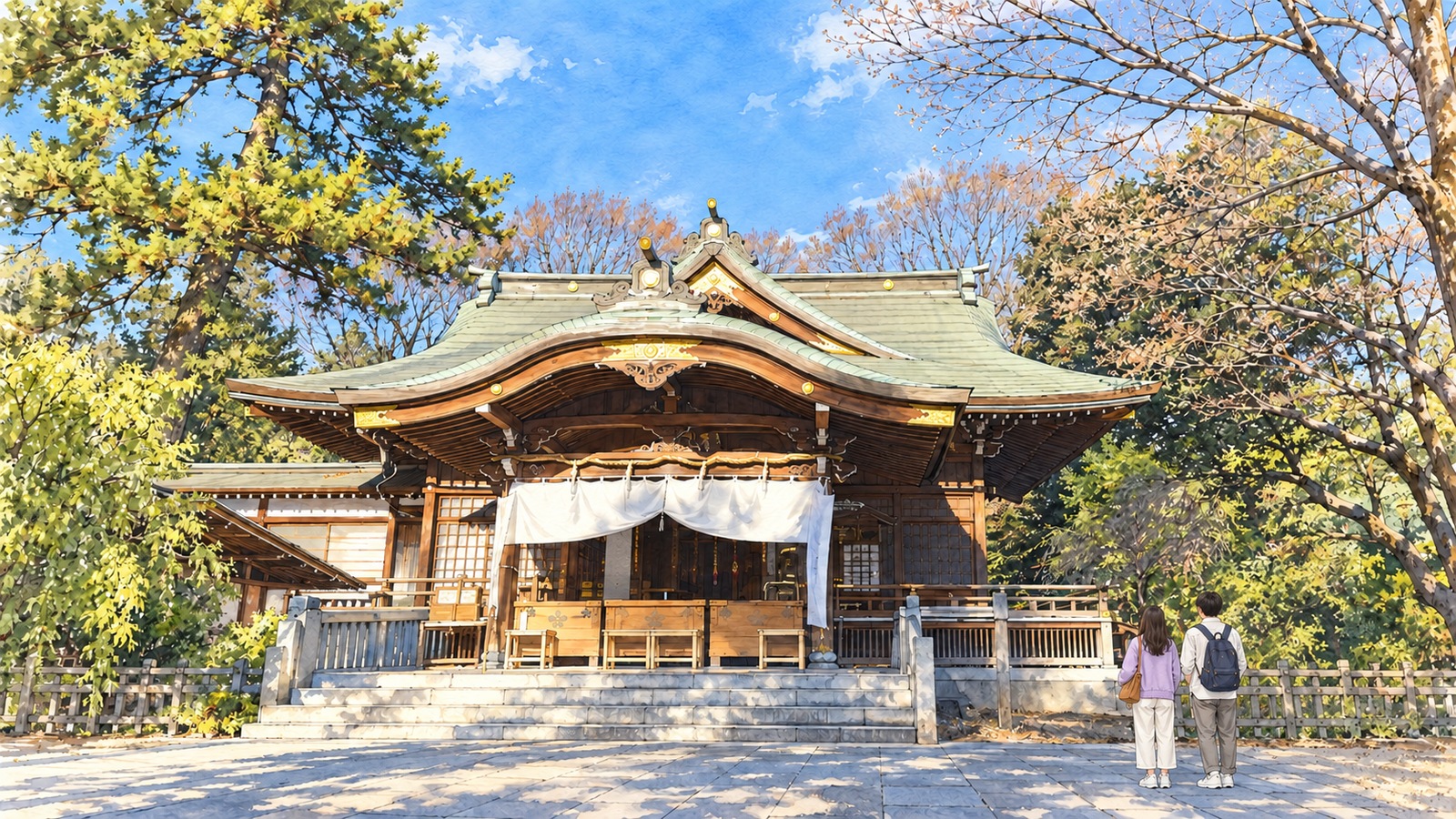
At Fuda Tenjin Shrine, beyond Tenjin-dori shopping street, Miyuki Sawashiro (Kitaro) and other lead cast and crew members, including Masako Nozawa (Medama-Oyaji), prayed for the series’ success before the sixth TV anime season began in spring 2018. Toei Animation’s official feature on the series records the visit. The production team came to the shrine in person to mark the start of the new season.
Chofu’s tourism association also notes the shrine’s connection to the original manga, which describes Kitaro as living in the grove behind Fuda Tenjin Shrine. Rather than searching for the exact location of Kitaro’s house, take in how the sacred grove of the local guardian shrine in the city where Shigeru Mizuki lived was used as a backdrop for the story.
Visit after hearing the conversations between Kitaro, voiced by Miyuki Sawashiro, and Medama-Oyaji, voiced by Masako Nozawa, in the sixth TV anime series. You can picture the atmosphere on the day the two actors who carried the series’ legacy walked to the worship hall. Alongside the statues and play structures elsewhere on the route, this shrine marks a moment in the anime’s history.
The address is 1-8-1 Chofugaoka, Chofu, Tokyo, about a five-minute walk from the north exit of Chofu Station. The woods behind the main sanctuary are sacred grounds and are not open for general walks. Visitors may enter the public approach and the area around the worship hall.
- Address
- 1-8-1 Chofugaoka, Chofu, Tokyo
- Connection to the work
- A shrine whose grove is said to have inspired Kitaro’s home in the original manga, and where the sixth-season anime cast prayed for the series’ success before the broadcast
- Visitor areas and access
- The approach and worship hall area are open to visitors (the woods behind the main sanctuary are sacred and closed); about a 5-minute walk from the north exit of Chofu Station on the Keio Line
Sources: Toei Animation (in Japanese) / Chofu Tourism Association (in Japanese)
Wakatake no Mori Wakayama Farm | The bamboo grove from The Thousand-Year Curse Song
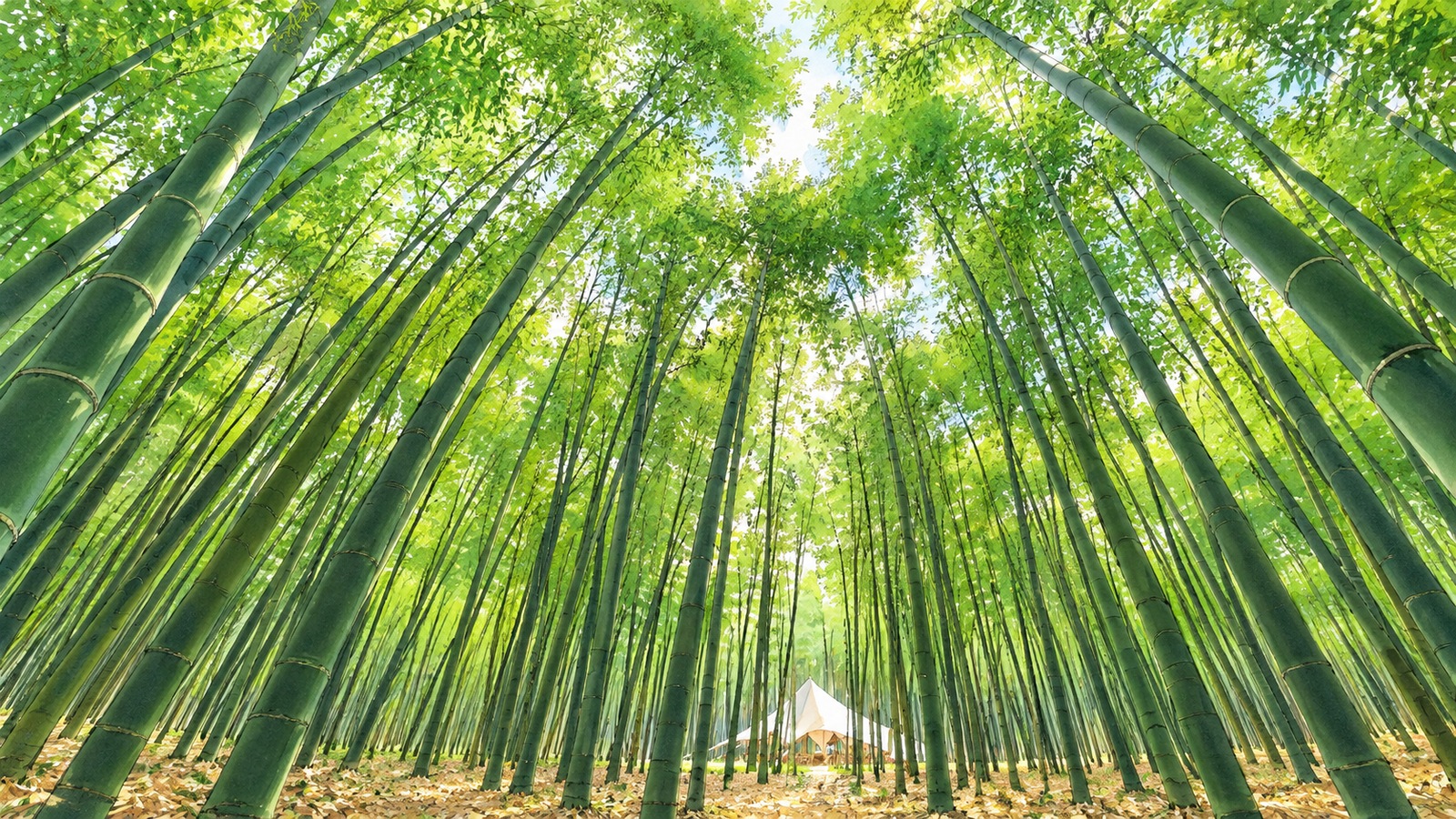
Wakatake no Mori Wakayama Farm in Utsunomiya, Tochigi, was a filming location for the live-action movie GeGeGe no Kitaro: The Thousand-Year Curse Song, released in July 2008. The Tochigi Film Commission’s records say the distinctive “Yokai Night Game” scene at the raccoon-dog palace was filmed in this expansive bamboo grove.
The palace set and yokai figures made for the film are not permanently installed at the farm. What visitors can experience is the scale of the real bamboo grove that filled the movie screen. Look up at the height and depth of the bamboo rising around you, with light filtering through the leaves, and imagine how this natural landscape became a gathering place for yokai in another world.
The movie was also filmed around the former underground quarry near Oya Museum in Utsunomiya. But Wakayama Farm is a signature stop for the bamboo-grove scene: it is a public site with maintained walking paths that can be explored safely year-round.
The address is 2018 Hoki-honcho, Utsunomiya, Tochigi. Hours are 9 a.m.–5 p.m. on weekdays and 9 a.m.–8 p.m. on weekends and public holidays (until 9 p.m. on weekends and holidays from June through August; last entry is 30 minutes before closing). Regular daytime admission is ¥900 for adults, and visitors can explore without an advance reservation.
Bamboo-grove illuminations are held on weekend and holiday evenings. They cost an additional ¥600 for adults on top of the regular admission. On weekdays, only daytime visits are available; the nighttime illumination runs on weekends.
- Address
- 2018 Hoki-honcho, Utsunomiya, Tochigi
- Connection to the work
- The bamboo farm where the “Yokai Night Game” at the raccoon-dog palace was filmed for the 2008 live-action movie GeGeGe no Kitaro: The Thousand-Year Curse Song
- Hours and admission
- Weekdays 9 a.m.–5 p.m.; weekends and holidays 9 a.m.–8 p.m. (until 9 p.m. June–August); daytime admission ¥900 for adults (weekend and holiday evening illumination costs an additional ¥600)
Sources: Tochigi Film Commission (in Japanese) / Wakatake no Mori Wakayama Farm / Wakatake no Mori Wakayama Farm
Kyoto Railway Museum | Visit the filming site of the steam locomotive bound for the underworld
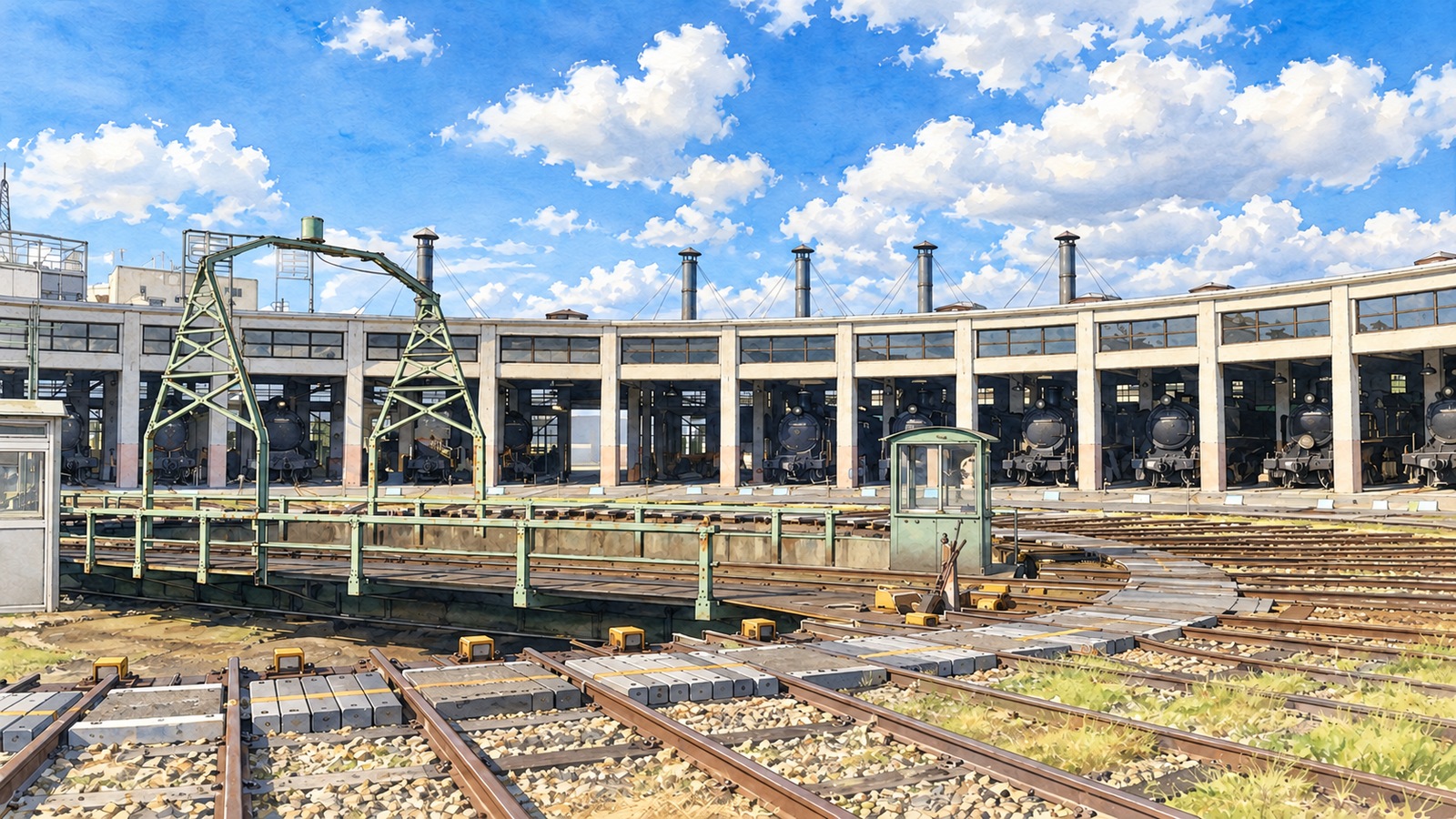
In the first live-action feature, GeGeGe no Kitaro, released in April 2007, Kitaro, played by Eiji Wentz, and Mika Miura, played by Mao Inoue, board the “Yokai Steam Locomotive” on its way to the underworld. Kyoto City’s Media Support Center lists the former Umekoji Steam Locomotive Museum as the filming location for this striking scene.
The former Umekoji Steam Locomotive Museum closed in 2015. The Kyoto Railway Museum opened in April 2016, inheriting the facilities and valuable rolling stock. Visitors can still see the Important Cultural Property roundhouse and turntable up close, along with the steam locomotives displayed inside. The history of the filming site continues in the museum that occupies it today.
Standing in front of the roundhouse, visitors can take in the imposing locomotives with their glossy black bodies and the beauty of the steel framework. The scene of a yokai train leaving an everyday rail line for another world feels all the more real because it was filmed among actual railway heritage.
The address is Kankiji-cho, Shimogyo-ku, Kyoto, about a two-minute walk from Umekoji-Kyotonishi Station. The museum is open from 10 a.m. to 5 p.m., with last admission at 4:30 p.m. General admission is ¥1,500. It is generally closed on Wednesdays and during the New Year holidays, but it opens on public holidays and during some school breaks, including spring and summer vacation.
Visitors can also ride in a passenger car pulled by a real steam locomotive on the SL Steam service for an additional ¥300 per adult. It is a rare chance to recall the film scene while feeling the steam and hearing the whistle up close.
- Address
- Kankiji-cho, Shimogyo-ku, Kyoto
- Connection to the work
- A museum that preserves and opens to visitors the Important Cultural Property roundhouse where the yokai steam locomotive scene was filmed for the 2007 live-action GeGeGe no Kitaro
- Hours and admission
- 10 a.m.–5 p.m. (last admission 4:30 p.m.); generally closed Wednesdays and during the New Year holidays; ¥1,500 general admission (the SL Steam ride is an additional ¥300 per adult)
- Getting there
- About a 2-minute walk from Umekoji-Kyotonishi Station on the JR Sanin Main Line
Sources: Kyoto City Media Support Center (Kyoto City Tourism Association) (in Japanese) / Shochiku (in Japanese) / Kyoto Railway Museum (in Japanese) / West Japan Railway Company (in Japanese) / Kyoto Railway Museum (in Japanese) / Kyoto Railway Museum
Getting to know Kitaro | The artist’s life and yokai that change with the times
Boyhood in Sakaiminato, a long creative life in Chofu, more than half a century of TV anime, and live-action films: the 10 places in this route are not linked by a single fictional setting. Learn how Shigeru Mizuki’s manga expanded across eras and media, and the yokai you encounter on the trip start to feel more vivid.
Shigeru Mizuki and his interest in the unseen world
Mizuki Shigeru, the creator, was born on March 8, 1922, and spent his boyhood in Sakaiminato, Tottori, surrounded by the sea and mountains. His encounter with the Six Realms painting at Shofuku-ji and the strange stories he heard from Nononba, who worked in the Mura family home, left a lasting impression. The words of someone close to him and the vividly colored Buddhist painting helped cultivate a boundless curiosity about the unseen world.
He was drafted into the military at 21 and sent to Rabaul in the South Pacific, where he suffered a serious injury and lost his left arm. He returned to Japan at 24. At the renovated Mizuki Shigeru Museum, his wartime experience has its own chapter, showing the harsh life behind the creator of humorous yokai manga. The museum traces both his view of the world, shaped by surviving a brutal battlefield, and the creative work that followed.
After the war, Mizuki struggled as a kamishibai storyteller and rental-manga artist, and for a time ran an apartment building called Mizuki-so in Kobe. He later moved to Chofu, Tokyo, married Fumie Iizuka in 1961, and founded Mizuki Productions in 1966. Kitaro Square and Tenjin-dori in Chofu recall a city where he lived and worked for more than 50 years.
The official Mizuki Productions chronology also records the assistants who supported him during his busiest years and artists such as Ryoichi Ikegami and Yoshiharu Tsuge who shared a desk with him.
The TV anime is more than the same story retold
The first TV anime season of GeGeGe no Kitaro aired in black and white from 1968 to 1969. Its stories often followed a clear moral pattern: Kitaro, a friend to humans, stood up to evil yokai. The second season, broadcast from 1971 to 1972, introduced color and made Neko-Musume a regular character. Its stories also expanded to address environmental destruction, pollution, and the sorrows of salaryman life during Japan’s rapid economic growth.
The third season, starting in 1985, focused on humans and yokai living together. It introduced the human girl Yumeko Tendou and became a major hit. The fourth season, starting in 1996, returned to the eerie tone and roots of the original manga. Novelist Natsuhiko Kyogoku drew attention for episodes he wrote and appeared in. The shift from cel animation to digital coloring partway through the run, beginning with Episode 64, was also a milestone in anime production.
The fifth season, starting in 2007, introduced settings such as Yokai Alley, where Kitaro and his companions live, and the Yokai 47 Warriors from across Japan. The sixth season, beginning in 2018, starts when 13-year-old Mana Inuyama sends a letter to the Yokai Post. It sharply explores the connections between yokai, social media, and the distortions of modern life. When you spot an illustration or piece of merchandise on your trip, check which season’s design it uses; the details show how the series has reached viewers across generations.
When comparing the seasons, notice not only how the characters are drawn but also how each era portrays humans. The stories ask about human desire and loneliness, and the difficulty of living alongside beings who are different from us, often as much as they explore the fearsomeness of yokai. Those themes help explain why new seasons have continued to appear for more than half a century.
The voices of Kitaro and Medama-Oyaji
Masako Nozawa voiced Kitaro in Seasons 1 and 2, Keiko Toda in Season 3, Yoko Matsuoka in Season 4, Minami Takayama in Season 5, and Miyuki Sawashiro in Season 6. The same Kitaro in the striped vest has received a different voice and personality in each era.
One especially striking casting choice came in Season 6: Masako Nozawa, who played Kitaro in Seasons 1 and 2, returned in 2018 as his father, Medama-Oyaji. For viewers who grew up with the anime and for new fans alike, the father and son’s voices connect 50 years of the series. Sawashiro and Nozawa also attended the success prayer at Fuda Tenjin Shrine in Chofu.
In Season 6, Toshiro Furukawa voiced Nezumi-Otoko, Umeka Shoji voiced Neko-Musume, and Yukiyo Fujii voiced Mana Inuyama, the human heroine. When you meet statues of the friends along Mizuki Shigeru Road or at Kitaro Square, their voices and banter may come to mind too. The figures become more than interesting sculptures; they bring back characters who live in the story.
Kitaro in live-action films and two filming locations
The first live-action feature, GeGeGe no Kitaro, released in April 2007, was directed by Katsuhide Motoki, who also co-wrote the screenplay with Daisuke Habara. Eiji Wentz played Kitaro, Mao Inoue played the human high school student Mika Miura, Yo Oizumi played Nezumi-Otoko, and Reina Tanaka played Neko-Musume.
The story begins when a neighborhood shrine near an apartment complex is demolished for redevelopment, awakening yokai who had been sleeping there. At the same time, the sealed “Yokai Stone” is brought into the human world. Nezumi-Otoko sells the stone to a pawnshop, where Mika’s father happens to acquire it. To protect Mika, her younger brother Kenta, and the yokai world, Kitaro takes on Kuko, a fox spirit living underground.
The Kyoto location—the former Umekoji Steam Locomotive Museum, now the Kyoto Railway Museum—appears in this 2007 film in the scene where Kitaro and Mika board the Yokai Steam Locomotive. By contrast, the bamboo grove at Wakayama Farm in Utsunomiya was used for the sequel, GeGeGe no Kitaro: The Thousand-Year Curse Song, released in July 2008. Knowing which scene from each live-action film was shot at which site makes a visit more rewarding.
One pleasure of visiting live-action filming locations is feeling the power of real landscapes and buildings combined with computer-generated effects and special makeup. Standing in front of a bamboo grove that reaches over your head or an Important Cultural Property roundhouse, you can see how strongly a real place supported the film’s fantasy.
A father and Mizuki’s first meeting in The Birth of Kitaro
The film The Birth of Kitaro: The Mystery of GeGeGe, released in November 2023, was made to mark the 100th anniversary of Shigeru Mizuki’s birth. Go Koga directed, Hiroyuki Yoshino wrote the screenplay, and Toko Yatabe designed the characters. Toshihiko Seki voiced Kitaro’s father, formerly Medama-Oyaji, and Hidenobu Kiuchi played the other protagonist, Mizuki.
The story unfolds in Nagura Village, a closed community still governed by old customs. Kitaro’s father enters the village to search for his missing wife. Mizuki, who works at a blood bank, arrives on a secret mission for the Ryuga family, a powerful clan that manipulates Japan’s political and business worlds from behind the scenes, while carrying ambitions of his own. As a succession struggle and a string of grisly deaths engulf the family, the two men meet by fate and join forces.
The employee named Mizuki in the film is a fictional character in the story; he does not directly reenact biographical events from the life of the original creator, Shigeru Mizuki.
Nagura Village, where the story takes place, is also fictional. After the film draws you into its human drama and supernatural horror, visit Shofuku-ji in Sakaiminato to see the Six Realms painting the artist encountered as a boy, or explore the Mizuki Shigeru Museum’s exhibits about his wartime experiences in Rabaul. Those places can lead you to the larger currents that shaped Mizuki’s work.
- Sakaiminato and Chofu
Learn about the artist’s experiences
At Shofuku-ji and the Mizuki Shigeru Museum, explore the artist’s childhood memories, wartime experience, and creative journey.
- Sakaiminato and Chofu
Enjoy the work around town
Encounter the work through the bronze figures on Mizuki Shigeru Road, the airport’s stained glass, the park’s play structures, and the tea shop’s yokai sweets.
- Kyoto and Utsunomiya
Revisit the live-action scenes
Visit the Kyoto Railway Museum, which preserves the former Umekoji roundhouse used in the 2007 film, and the bamboo grove at Wakayama Farm, used in the 2008 film.
Source: Official materials and visitor information
Milestones in the work and the places connected to it
This timeline follows Shigeru Mizuki’s birth and the establishment of his creative base in Chofu, the TV anime’s first through sixth seasons, the live-action films, the development of Sakaiminato and Chofu as places connected to the work, and the Mizuki Shigeru Museum’s renovation in 2024.
- 1922 | March 8Shigeru Mizuki is born. He spends his boyhood in Sakaiminato, is drafted in 1943, and returns to Japan in 1946.Person
- 1961He marries Fumie and settles in Chofu. In 1966, he establishes Mizuki Productions. The city where he lived and worked becomes a place connected to the work.Creative life
- 1968The first TV anime season begins. The second season, in 1971, introduces color and expands its stories to include social issues.Broadcast
- 1985The third season begins, exploring how humans and yokai can live together. In July 1993, Mizuki Shigeru Road opens in Sakaiminato.Community
- 1996The fourth season begins. The production later shifts to digital coloring, marking a change in how manga yokai are brought to television.Broadcast
- 2007 | April 28The live-action film starring Eiji Wentz is released. The fifth TV anime season also begins that year. On July 12, 2008, The Thousand-Year Curse Song, filmed at Wakayama Farm, is released.Film
- 2018The sixth season begins. In July, Mizuki Shigeru Road is redeveloped, changing how the town presents itself to visitors.Community
- 2019 | May 18Kitaro Square opens in Chofu. Yokai-inspired forms become part of an everyday park where children can play.Facility
- 2023 | November 17The Birth of Kitaro: The Mystery of GeGeGe is released. The film depicts the meeting between Kitaro’s father and Mizuki and opens another door into the series.Film
- 2024 | April 20The Mizuki Shigeru Museum reopens after renovation. On November 17, Blu-ray and DVD editions of The Birth of Kitaro are released.Exhibition
Source: Official materials and visitor information
What to read and watch before or after your trip | The manga and The Birth of Kitaro
Two works closely tied to the landscapes of Sakaiminato and Chofu are the Chuko Bunko collection of Shigeru Mizuki’s original manga, Definitive Edition: GeGeGe no Kitaro, and the 100th-anniversary film The Birth of Kitaro: The Mystery of GeGeGe.
Explore the original yokai in Definitive Edition: GeGeGe no Kitaro 1
An entry point for revisiting the original manga is Definitive Edition: GeGeGe no Kitaro 1: The Great Yokai War and the Great Sea Beast, published by Chuokoron-Shinsha in its Chuko Bunko paperback series. Volume 1 was published on January 20, 2023, runs 408 pages, and includes vivid color illustrations. (ISBN 9784122073142.)
See the yokai you know from the bronze statues and anime on the original manga’s pages, and you can take your time with the densely inked backgrounds and the work’s distinctive blend of humor and unease. You can also turn the pages to find out how the yokai you first encountered during your trip appear in the stories.
Standard and deluxe editions of The Birth of Kitaro: The Mystery of GeGeGe
The standard Blu-ray of The Birth of Kitaro: The Mystery of GeGeGe (catalog no. BIXA-1249) was released on November 17, 2024. This edition includes the feature and video extras with a collection of trailers. Watch the meeting between Kitaro’s father and Mizuki before visiting Sakaiminato or Chofu, and the depth of horror and human drama in Mizuki’s work may come into sharper focus.
The deluxe Blu-ray released the same day (catalog no. BIXA-1248) is a two-disc set that includes the original theatrical version as well as the “Shinsei Edition.” This version features 327 visual refinements and a new audio dub. It does not add new episodes or extend the runtime; it is for viewers who want to experience the image detail and sound that the production team pursued.
The deluxe edition also includes audio commentary by cast and staff, original animation footage of action scenes, and a booklet of image boards. The “Shinsei Edition” is rated R15+ in Japan, a different rating from the theatrical version included on the disc.
Source: Official materials and visitor information
The Oshi Lab’s research note | Showing the same yokai as statues by day and shadows at night
On Mizuki Shigeru Road, visitors can study the shape of the bronze statues during the day, then enjoy yokai shadow projections and illuminations on the pavement at night. The same street offers two different ways to experience the work depending on the time of day. This is distinct from the museum’s documentary displays: the encounter with yokai changes with the time and place.
One idea relevant to local businesses is that a town can renew an existing street without adding more statues. An evening display can give people a reason to walk around after sunset. Whether it also leads to overnight stays or higher sales for local shops is a separate question that needs to be checked. Visitor numbers during the day and evening, shop hours, and lighting costs are all useful when deciding whether to keep the display running.
Source: Official materials and visitor information
Sources
- Yonago Airport Building Co., Ltd. (in Japanese)
- Sakaiminato Tourism Association (in Japanese)
- Kitaro Chaya (in Japanese)
- Kitaro Chaya — Access — Kitaro Chaya — Chofu Station Area Tenjin-dori Shopping Street (in Japanese)
- Kitaro Chaya — Cafe — Kitaro Chaya — Chofu Station Area Tenjin-dori Shopping Street (in Japanese)
- Kitaro Chaya — Temporary closures in October and November — Kitaro Chaya — Chofu Station Area Tenjin-dori Shopping Street (in Japanese)
- Kitaro Chaya — Important: Change to business hours — Kitaro Chaya — Chofu Station Area Tenjin-dori Shopping Street (in Japanese)
- Shochiku (in Japanese)
- Toei Animation — Season 6 GeGeGe no Kitaro cast pray for the series’ success at Fuda Tenjin Shrine (in Japanese)
- Chofu Tourism Association (in Japanese)
- Chofu City (in Japanese)
- Chofu Tourism Association — Kitaro Square (in Japanese)
- Kyoto City Media Support Center (Kyoto City Tourism Association) (in Japanese)
- West Japan Railway Company (in Japanese)
- Mizuki Shigeru Museum (Sakaiminato City) (in Japanese)
- Sakaiminato Tourism Association — What to see and do at the renovated Mizuki Shigeru Museum: insights from the director (in Japanese)
- Mizuki Shigeru Museum — Hours, admission, and access (in Japanese)
- GeGeGe Yokai Paradise / Yanoman (in Japanese)
- Sakaiminato Tourism Association — Mizuki Shigeru Road guide map (in Japanese)
- Toei Animation — GeGeGe no Kitaro: The Kitaro seasons I’ve loved (in Japanese)
- Wakatake no Mori Wakayama Farm — Bamboo Forest at Wakayama Farm
- Wakatake no Mori Wakayama Farm — Access
- Tochigi Film Commission (in Japanese)
- Mizuki Productions — 100th anniversary: childhood to the years before marriage (in Japanese)
- Mizuki Productions — 100th anniversary: the busy manga artist years (in Japanese)
- Chuokoron-Shinsha (in Japanese)
- The Birth of Kitaro: The Mystery of GeGeGe — Deluxe Blu-ray (in Japanese)
- The Birth of Kitaro: The Mystery of GeGeGe — Standard Blu-ray (in Japanese)
- The Birth of Kitaro: The Mystery of GeGeGe — Official website (in Japanese)
- The Birth of Kitaro: The Mystery of GeGeGe Production Committee — Main trailer released (in Japanese)
- Kyoto Railway Museum — Visitor information (in Japanese)
- Kyoto Railway Museum — Roundhouse
- Kyoto Railway Museum — About the museum (in Japanese)
Dates, hours, and ticket prices are current as of writing. Check each official website for the latest information before your visit.
FAQ
When can I see the yokai shadow projections on Mizuki Shigeru Road?
According to the Sakaiminato Tourism Association, the yokai shadow projections and lights run from sunset until 10 p.m. After looking closely at the bronze statues during the day, you can return at night to enjoy the play of light and shadow.
Where is the Kitaro Chaya tea shop currently open?
It has moved from Jindaiji to Tenjin-dori near Chofu Station. The shop and takeout counter are on the first floor of the Eisho Building at 1-34-1 Fuda (10 a.m.–6 p.m.); the Kissa Hanare cafe is nearby on the second floor of the DAIMON Building at 1-35-3 Fuda (10 a.m.–5:30 p.m.).
Are the Mizuki Shigeru Museum and GeGeGe Yokai Paradise the same attraction?
They are next to each other but are separate facilities. The Mizuki Shigeru Museum is a paid museum with six sections about the artist’s life and yokai materials. GeGeGe Yokai Paradise is an independent plaza with play equipment, shooting-gallery games, and a cafe.
Can visitors enter the woods behind Fuda Tenjin Shrine?
No. The woods behind the main sanctuary are sacred grounds and are not open for general walks. Visitors may explore the public approach and the area around the worship hall.
Which area of the Kyoto Railway Museum was used in the live-action film?
The 2007 live-action GeGeGe no Kitaro was filmed at the former Umekoji Steam Locomotive Museum. Today, visitors can still see the Important Cultural Property roundhouse, turntable, and preserved steam locomotives. Rides on the SL Steam are available for an additional fee.
Does the standard Blu-ray of The Birth of Kitaro: The Mystery of GeGeGe include the “Shinsei Edition”?
No. The standard Blu-ray (BIXA-1249) does not include it. The two-disc deluxe Blu-ray (BIXA-1248) also includes the “Shinsei Edition,” which features 327 visual refinements and a new dub and is rated R15+ in Japan.
Is the bamboo grove illumination at Wakayama Farm held every day?
The illumination is held on weekend and holiday evenings. It costs an additional ¥600 for adults on top of the regular ¥900 admission. On weekdays, the grove is open for daytime visits only, from 9 a.m. to 5 p.m.


