
Takarazuka Revue Pilgrimage Guide: Grand Theater, Hana-no-Michi, Costumes & Former Music School
Watch a live stage production at the Takarazuka Grand Theater in Hyogo Prefecture, then step into the Takarazuka Revue Hall of Fame to inspect authentic stage-worn costumes and towering finale feathers up close. Walking along the Hana-no-Michi promenade linking the station and the theater also brings you face to face with bronze statues celebrating classic revue works.
In Tokyo's Hibiya district stands the Tokyo Takarazuka Theater, the company's second dedicated playhouse, while Ikeda City in Osaka Prefecture preserves the former residence of founder Ichizo Kobayashi alongside an archival library housing over a century of performance programs and posters. This guide walks through the theaters, costume exhibitions, former school building, and historical archives.
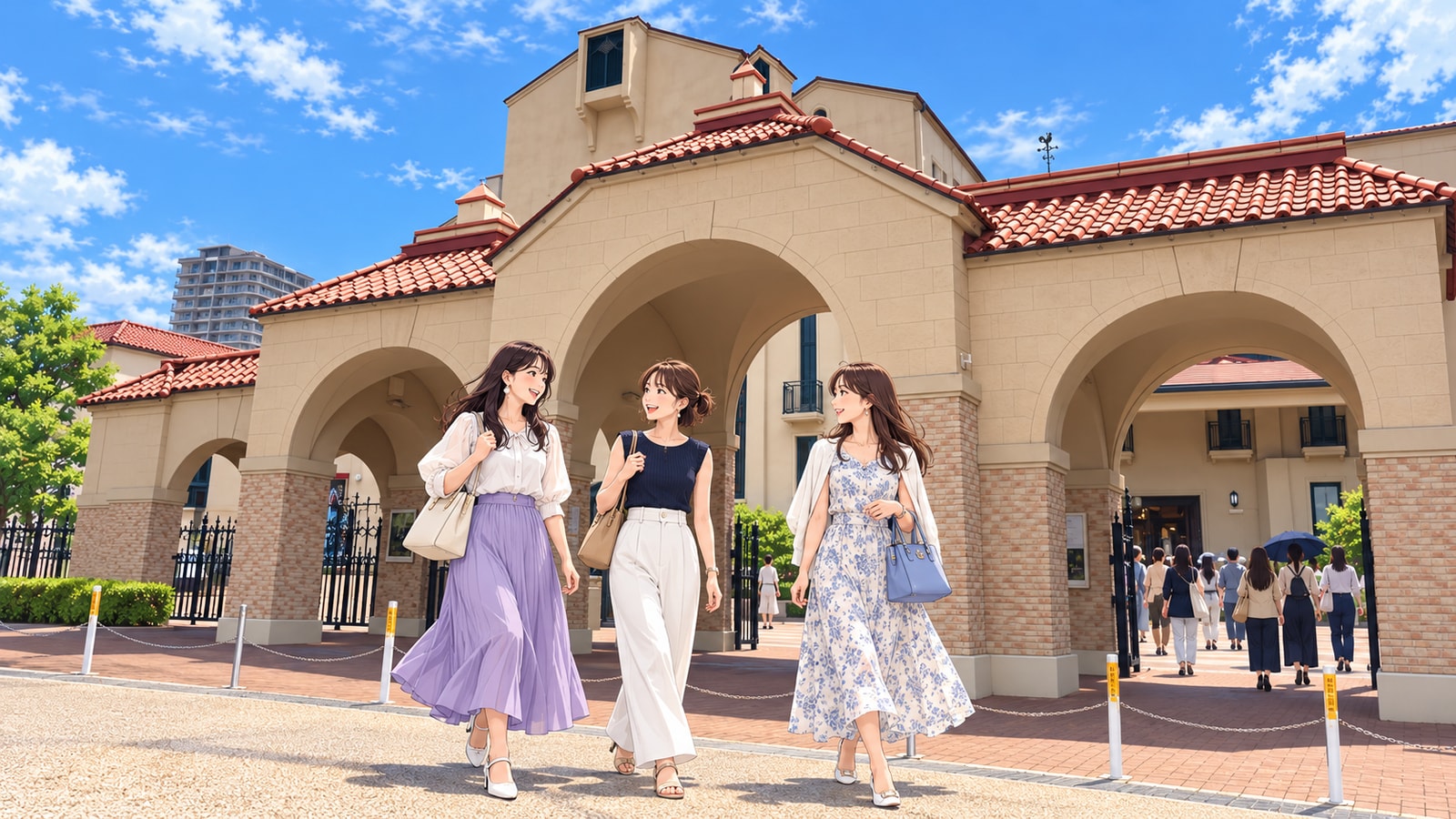
Theaters for Live Performances and Venues Preserving Costumes and School History
① Takarazuka Grand Theater Complex · 1-1-57 Sakaemachi, Takarazuka, Hyogo
The Grand Theater, Bow Hall, and Hall of Fame within a single complex.
Read the Complete Pilgrimage Guide & Access Notes for Takarazuka Grand Theater Complex (1-1-57 Sakaemachi, Takarazuka, Hyogo)② Hana-no-Michi Promenade · 1 Sakaemachi, Takarazuka, Hyogo
Public promenade featuring cherry trees and bronze statues of the Revue.
Read the Complete Pilgrimage Guide & Access Notes for Hana-no-Michi Promenade (1 Sakaemachi, Takarazuka, Hyogo)③ Takarazuka Municipal Cultural Creation Center & Sumire Museum · 6-12 Mukogawacho, Takarazuka, Hyogo
Former Music School building displaying graduation photos and posters.
Read the Complete Pilgrimage Guide & Access Notes for Takarazuka Municipal Cultural Creation Center & Sumire Museum (6-12 Mukogawacho, Takarazuka, Hyogo)④ Tokyo Takarazuka Theater · 1-1-3 Yurakucho, Chiyoda-ku, Tokyo
Tokyo's dedicated performance venue; auditorium entry requires a show ticket.
Read the Complete Pilgrimage Guide & Access Notes for Tokyo Takarazuka Theater (1-1-3 Yurakucho, Chiyoda-ku, Tokyo)⑤ Takarazuka Hotel · 1-1-33 Sakaemachi, Takarazuka, Hyogo
Exhibition gallery showcasing authentic stage costumes and props.
Read the Complete Pilgrimage Guide & Access Notes for Takarazuka Hotel (1-1-33 Sakaemachi, Takarazuka, Hyogo)⑥ Ichizo Kobayashi Memorial Museum · 12-27 Sakaehonmachi, Ikeda, Osaka
Former residence and achievement exhibits of the Revue's founder.
Read the Complete Pilgrimage Guide & Access Notes for Ichizo Kobayashi Memorial Museum (12-27 Sakaehonmachi, Ikeda, Osaka)⑦ Ikeda Bunko Library · 12-1 Sakaehonmachi, Ikeda, Osaka
Archival library where visitors can consult performance programs and posters.
Read the Complete Pilgrimage Guide & Access Notes for Ikeda Bunko Library (12-1 Sakaehonmachi, Ikeda, Osaka)
1Takarazuka Grand Theater Complex | The Grand Theater, Bow Hall, and the Hall of Fame
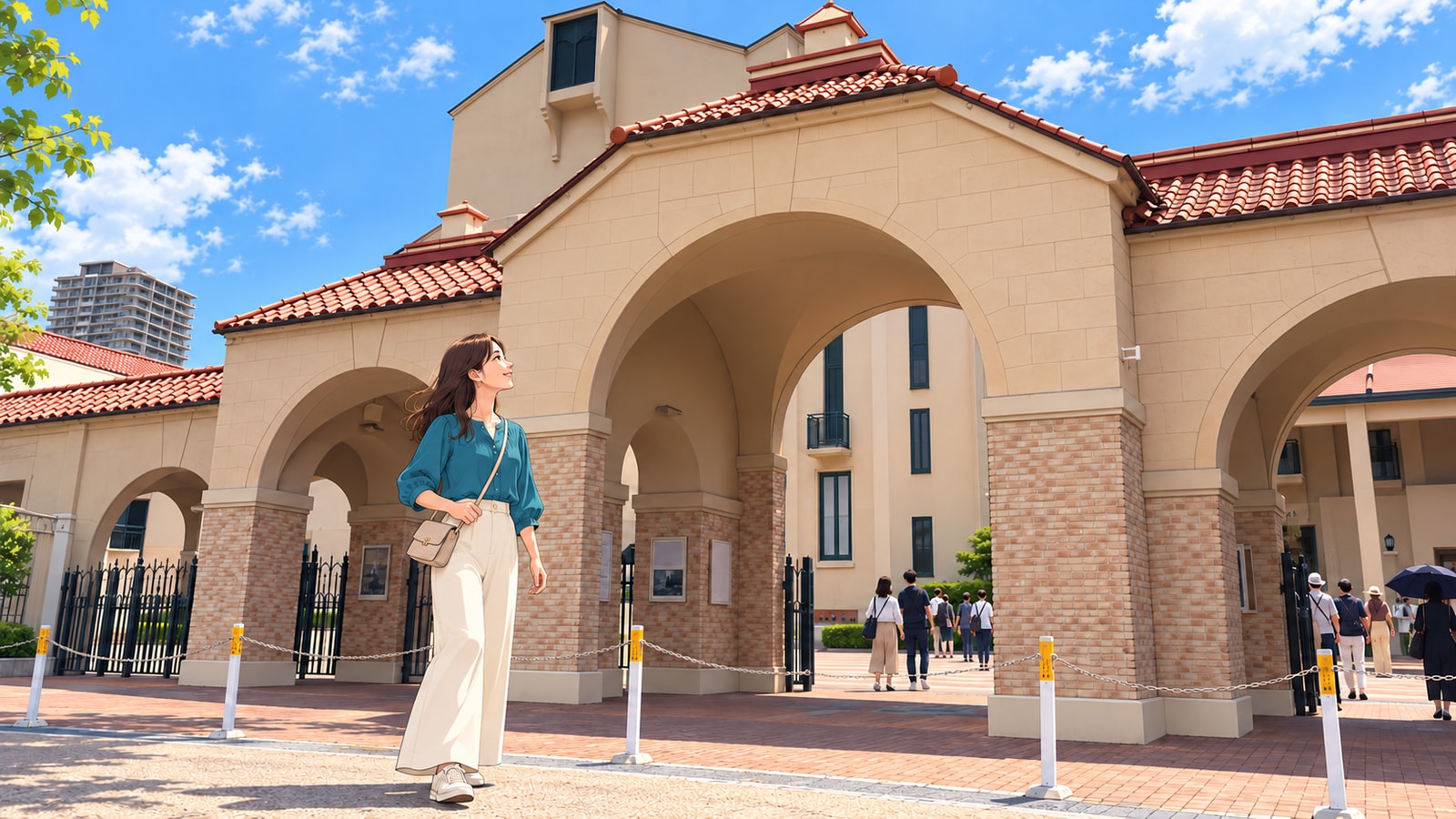
The home base of the Takarazuka Revue is the Takarazuka Grand Theater at 1-1-57 Sakaemachi, Takarazuka City, Hyogo Prefecture. Within the same integrated complex stand the intimate Takarazuka Bow Hall and the Takarazuka Revue Hall of Fame, which exhibits authentic costumes and hand props used on stage.
Takarazuka Grand Theater | Productions Staged with Live Orchestra on a Grand Scale
The original dedicated Grand Theater first opened in 1924. The current theater building inaugurated its stage in 1993 with the Star Troupe performances of 'Hojusho' and 'PARFUM DE PARIS.' Following a seating expansion in 2026, the auditorium now accommodates 2,619 seats.
The two-tiered auditorium uses a staggered seating layout designed so that the heads of patrons in the row ahead rarely block the view. A live orchestra performs the score from the pit, and the curved Silver Bridge (Ginkyo) thrusting between the orchestra pit and the front row had its curvature updated in 2005.
Takarazuka Bow Hall | An Intimate Theater Showcasing Rising Performers Up Close
Opened in 1978, Takarazuka Bow Hall is an intimate theater of roughly 500 seats whose name derives from the 'bow' of a ship. Serving as a proving ground for rising young stars and emerging stage directors, it stages independent productions separate from the Grand Theater in a space where every seat feels close to the performers.
Entering the auditorium of either theater requires a valid ticket for that specific performance. Because gate opening hours, restaurant schedules, and shop hours inside the complex vary according to the daily performance timetable, visitors should check the operating calendar for their date of attendance.
Sources: Takarazuka Revue — Grand Theater & Bow Hall / In-Theater Business Hours by Performance Period
Takarazuka Revue Hall of Fame | Stage-Worn Costumes, Props, and Grand Feathers
Situated across the second and third floors of the Grand Theater is the Takarazuka Revue Hall of Fame. The second-floor Hall of Fame Zone displays photographs and personal memorabilia of historic graduates and production staff, while the third floor showcases costumes, props, and grand finale feathers worn in recent productions.
On the second floor, visitors will also find a detailed LEGO block recreation of the Takarazuka Grand Theater during a grand finale. Through personal items belonging not only to founder Ichizo Kobayashi but also to the graduates and backstage creators who shaped the company, the floor traces the people behind a century of productions.
A large monitor on the third floor screens a roughly 10-minute stage digest, allowing visitors to see how the exhibited costumes and props move under stage lights during actual songs and dances. Set against a backdrop modeled after the Grand Staircase is a hands-on photo corner where guests can pose in front of full-scale finale feathers.
Visitors can hold replica 'shan-shan' hand ornaments crafted in the signature colors of each troupe specifically for the photo experience—'shan-shan' being the decorative ribbons and bouquets carried by performers during the finale parade. Authentic stage-used props are preserved inside display cases while guests take photos holding the dedicated experience replicas.
Bronze handprints of former top stars are also displayed on the third floor. The exhibition follows a one-way route from the second floor up to the third floor, and admission tickets are sold until 15 minutes before closing.
Exhibited costumes and props rotate with every new Grand Theater production. Admission is 500 yen (charged from elementary school age upward). The facility closes on theater dark days, and opening hours follow the daily performance schedule, offering a close-up look at physical stagecraft alongside live theatergoing.
Source: Takarazuka Revue Hall of Fame — Exhibitions & Admission
2Hana-no-Michi | TheRaised Cherry-Blossom Promenade Lined with Revue Bronze Statues
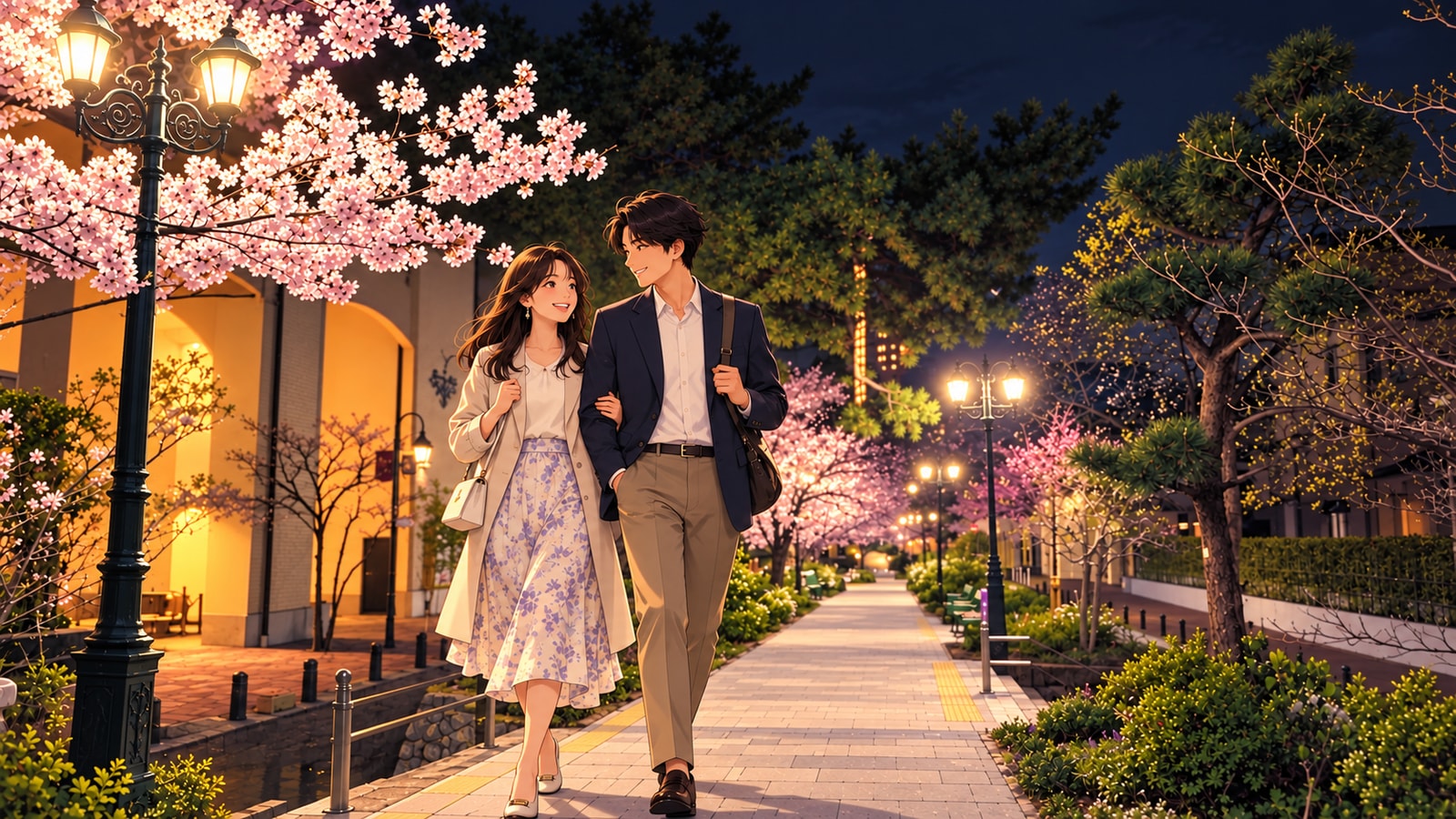
Hana-no-Michi ('Flower Path') is the pedestrian promenade linking Hankyu Takarazuka Station and the Takarazuka Grand Theater. Its central walkway is elevated a step above the flanking streets and is lined with seasonal flowerbeds, cherry trees, and bronze statues inspired by Takarazuka Revue productions.
Located in 1-chome Sakaemachi, Takarazuka City, the promenade is open to the public year-round, making it easy to stroll whether you are heading to a matinee or simply visiting to admire the plantings and sculptures.
Source: Takarazuka City — Hana-no-Michi Promenade
3Takarazuka Cultural Creation Center & Sumire Museum | Tracing History in the Former Music School Building
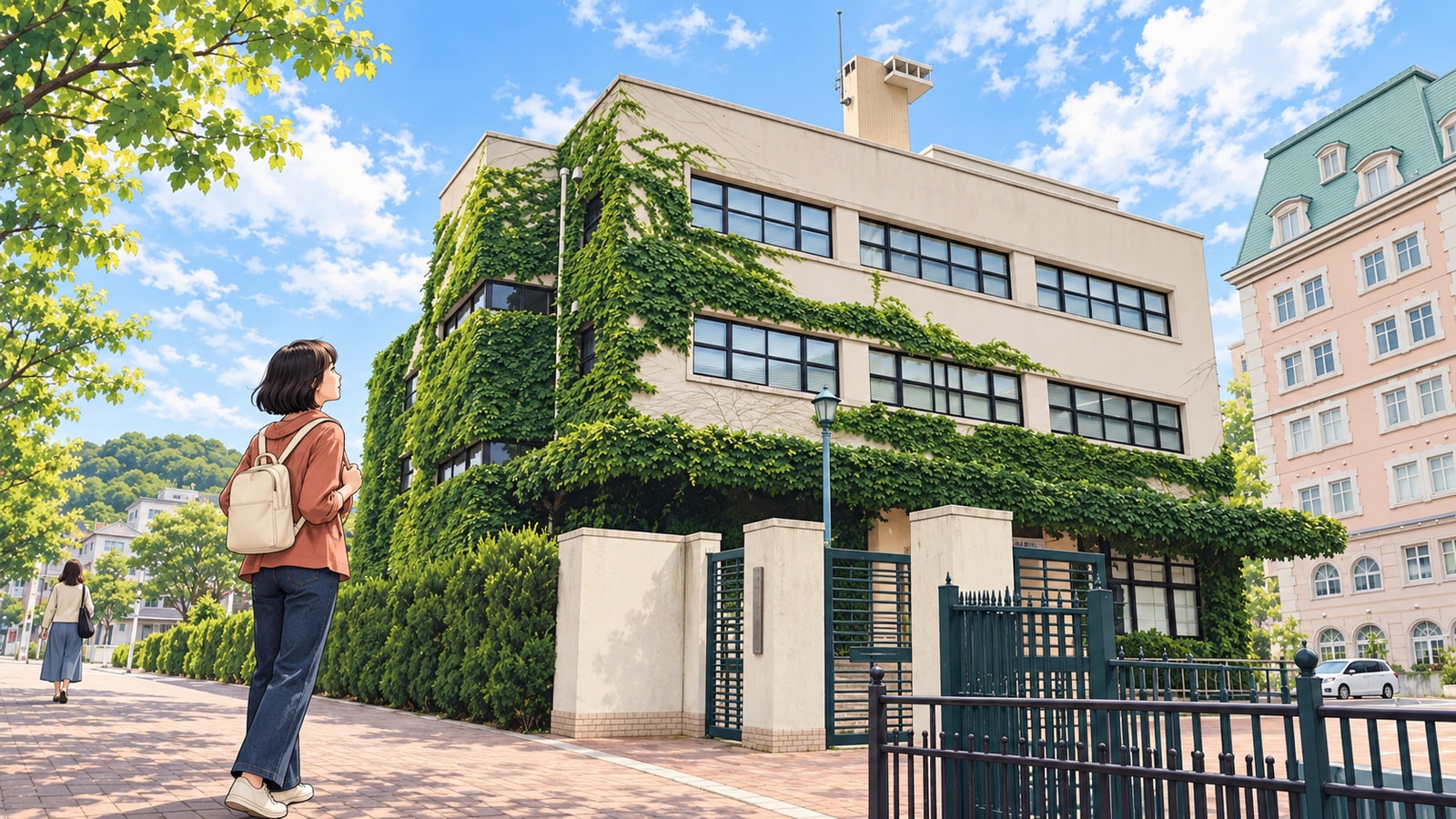
The Takarazuka Municipal Cultural Creation Center repurposes the historic former campus of the Takarazuka Music School. Constructed in 1935, the building served as the school's main campus from 1937 until 1998 and preserves its distinctive prewar modernist architecture today.
On the second floor, the Sumire Museum exhibits class graduation photographs, posters from past productions, archival video footage, and stage costumes. It serves as a museum where visitors can trace both the students who graduated from the school and the history of the performances they went on to create.
The school history section includes textbooks used in actual classes as well as monitor footage showing regular lessons and extracurricular training. Alongside the glamorous stage costumes worn after graduation, visitors can see through both printed teaching materials and moving images what students studied and how they rehearsed during their school years.
Around 880 performance posters are archived here, dating back to the inaugural opening of the original Takarazuka Grand Theater. Graduation photographs line up classmates who trained side by side, while the posters record the titles and principal casts staged at the theater—bringing school history and stage history together under a single roof.
On the third floor, former ballet and traditional Japanese dance studios remain intact, with their mirrors, wooden floors, and lesson barres maintained as close to their original working state as possible. The former auditorium used for entrance and graduation ceremonies now functions as a Cultural Exchange Hall; while the third-floor studios and hall are used for rented events and lessons, general museum visitors tour the second-floor exhibitions.
Sources: Takarazuka City — Teaching Materials, Lesson Footage & Preservation of the Former School Building / Current Use of the Former Campus
Located at 6-12 Mukogawacho, Takarazuka City, the Sumire Museum is open from 10:00 to 16:30 (last entry at 16:00) with general admission priced at 300 yen. It closes on Mondays (or opens if Monday is a national holiday), so visitors should time their trip to match museum hours.
Sources: Takarazuka City — History of the Former School Building / Sumire Museum Exhibitions & Opening Hours
4Tokyo Takarazuka Theater | The Dedicated Tokyo Home Base in Hibiya
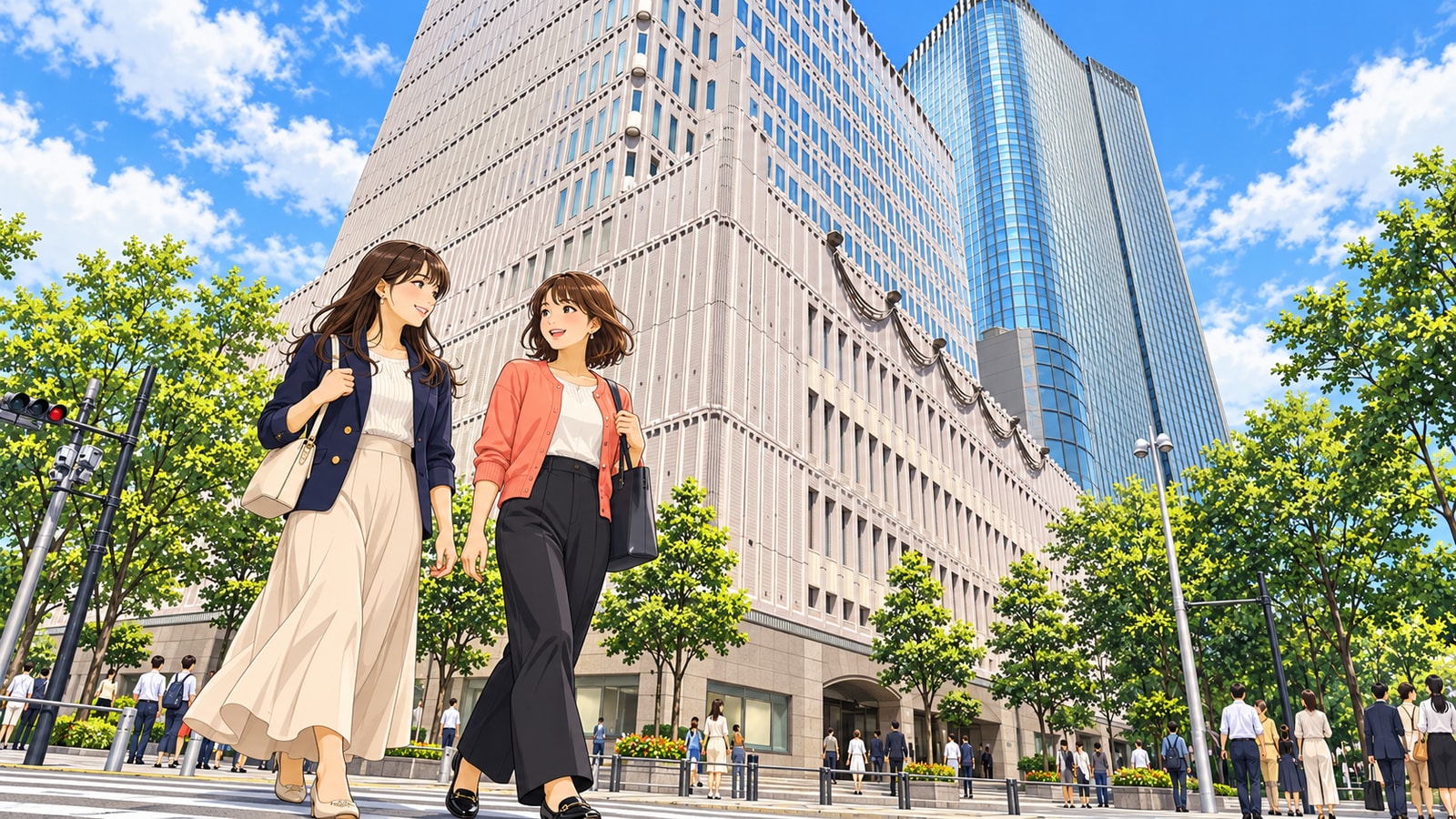
First opened in 1934, the Tokyo Takarazuka Theater serves as the Tokyo flagship venue for the Takarazuka Revue. Following a full reconstruction that began in 1998, the current theater building reopened in 2001.
Red carpeting spans the entrance lobby beneath a glittering chandelier, and the two-tiered auditorium seats 2,079 patrons in a staggered layout. Equipped with stage machinery matching that of the Takarazuka Grand Theater, it allows audiences in Tokyo to experience full-scale revue productions.
Located at 1-1-3 Yurakucho, Chiyoda-ku, Tokyo, auditorium admission requires a ticket for a scheduled performance. Theater information hours run from 10:00 to 18:00 (closed Mondays), and doors open according to each performance's timetable.
Source: Takarazuka Revue — History and Facilities of the Tokyo Takarazuka Theater
5Takarazuka Hotel | Exhibition Gallery Displaying Stage Costumes in 360 Degrees
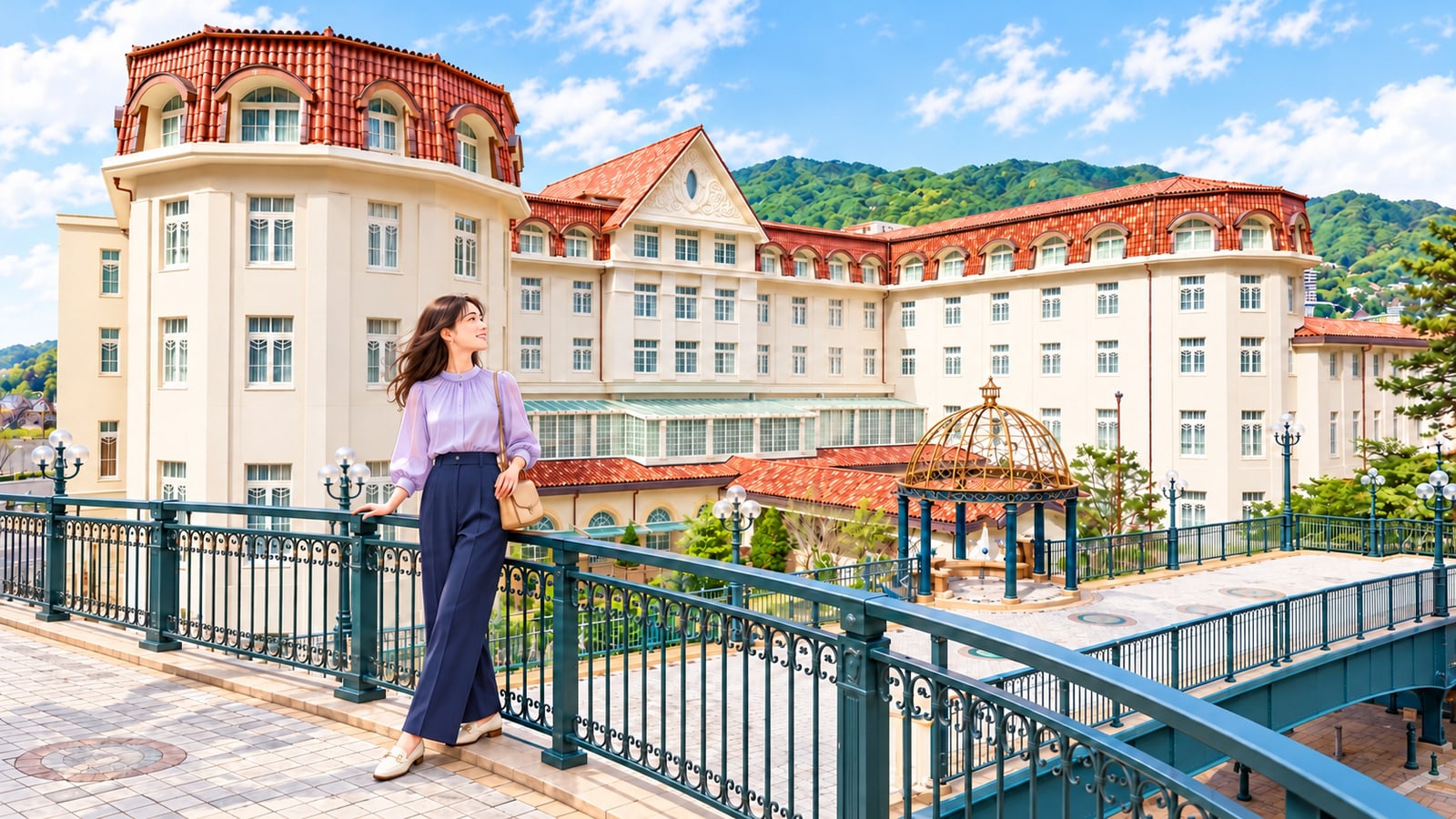
Standing immediately west of the Takarazuka Grand Theater is the Takarazuka Hotel, the official hotel of the Takarazuka Revue. On the first floor, LED panels display portraits of the current top combinations, while a dedicated exhibition gallery on the second floor presents authentic stage costumes, props, and performance photographs.
A highlight of the gallery is the ability to walk all the way around select costume cases to inspect the tailoring from 360 degrees. A monitor broadcasts the dedicated television channel 'TAKARAZUKA SKY STAGE,' and the displayed items rotate in step with theater productions. Visitors stopping by solely to view the gallery without dining or staying overnight can confirm accessible viewing areas at the hotel reception desk.
The hotel relocated to its present site adjacent to the Grand Theater in June 2020. Its architecture inherits signature motifs from the historic former hotel, including gabled roofs, botanical relief carvings, arched windows, and the iconic red-carpeted grand staircase. Located at 1-1-33 Sakaemachi, Takarazuka City, it is about a 4-minute walk from Hankyu Takarazuka Station.
Sources: Takarazuka Hotel — In-House Revue Exhibitions / Architectural Motifs Inherited from the Former Hotel / Location & Access
6Ichizo Kobayashi Memorial Museum | Gazoku Sanso, Where the Revue’s Founder Lived
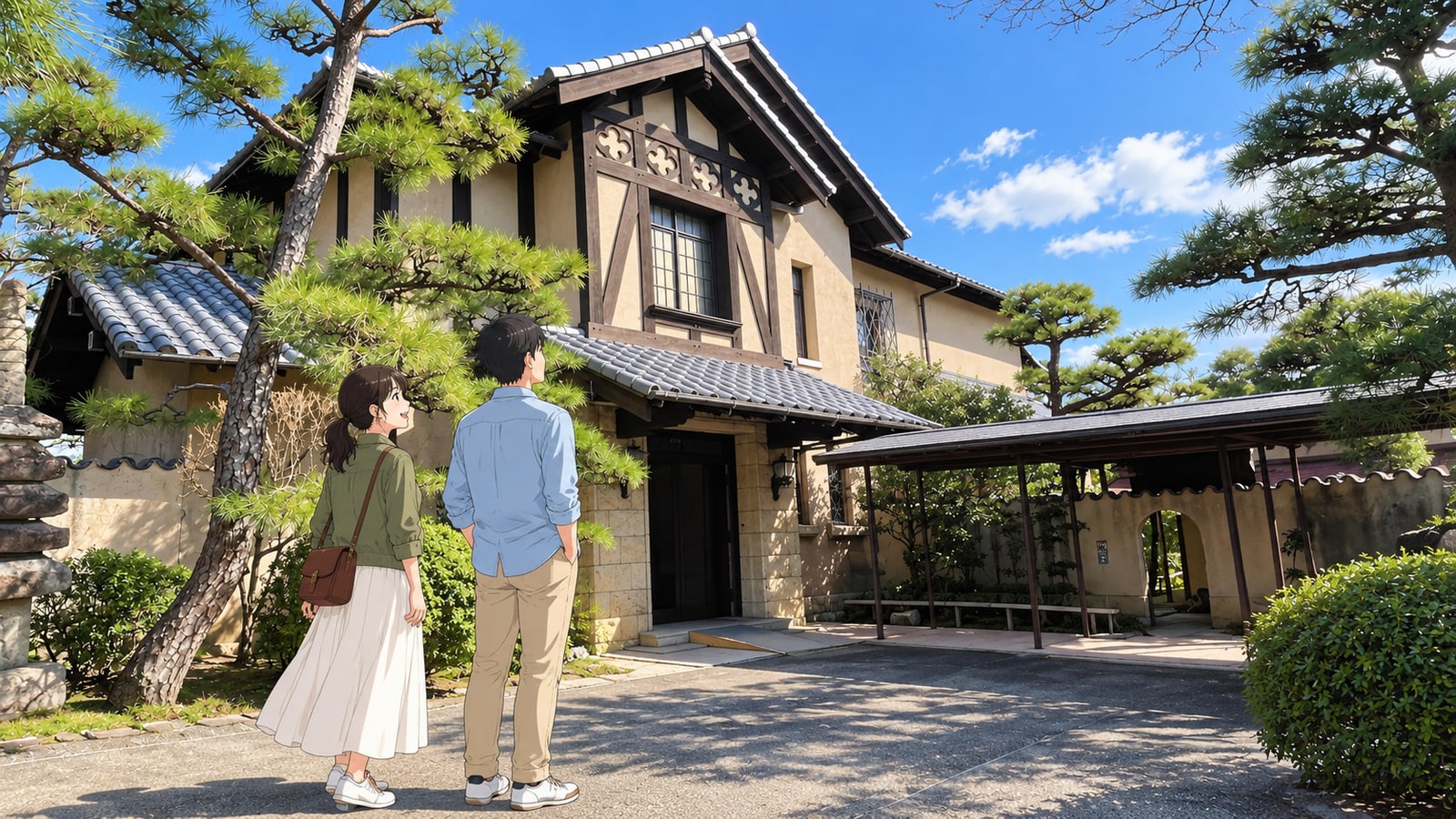
In Ikeda City, Osaka Prefecture, the Ichizo Kobayashi Memorial Museum centers on 'Gazoku Sanso,' the former residence of Takarazuka Revue founder Ichizo Kobayashi. Visitors can tour the living quarters where he resided alongside exhibitions introducing his wide-ranging business enterprises.
Kobayashi founded the Takarazuka Chorus (Takarazuka Shokatai) in 1913, marking the starting point of the Takarazuka Revue's history. Inside the museum, the rooms of his former residence offer a tangible look at the life of the entrepreneur who built both railway networks and the revue.
Located at 12-27 Sakaehonmachi, Ikeda City, the museum is open from 10:00 to 17:00 (last entry at 16:30, closed Mondays and designated holidays), with adult admission set at 300 yen.
Sources: Hankyu Culture Foundation — Memorial Museum Buildings & Exhibits / Visitor Information / Takarazuka City — The Enterprises of Ichizo Kobayashi
7Ikeda Bunko Library | Researching Revue History from the Very First Performance Programs
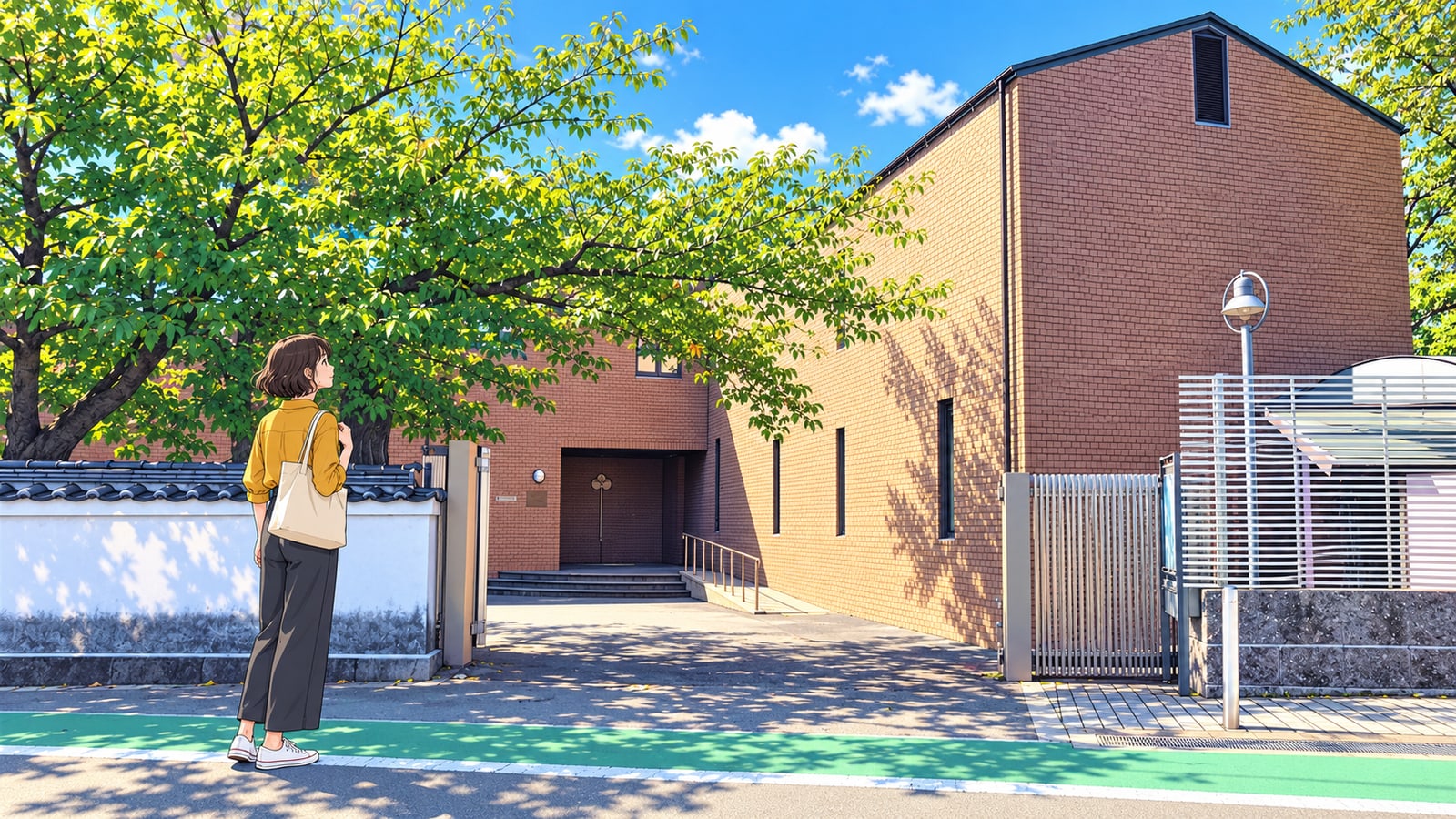
Ikeda Bunko Library houses Takarazuka Revue performance programs stretching from the inaugural 1914 staging to the present day, performance posters dating back to 1919, and every issue of the monthly magazine 'Kageki' from its first issue to the latest release. With more than 3,400 posters alone, the archive lets researchers trace how productions were visually presented across every era.
Search terminals in the reading room allow visitors to browse digital images of posters and records. Closed-stack materials are requested from library staff at the desk, while designated rare items require a letter of introduction and advance appointment. Photography and video recording inside the building are strictly prohibited.
Located at 12-1 Sakaehonmachi, Ikeda City, admission to Ikeda Bunko is free, and hours run from 10:00 to 17:00 (closed Mondays and the New Year period). Situated in the same Sakaehonmachi neighborhood as the Ichizo Kobayashi Memorial Museum, the two facilities can be visited together to pair the founder's residence with the company's stage archives.
Sources: Hankyu Culture Foundation — Takarazuka Revue Archival Holdings / Ikeda Bunko Reading Room Guidelines
Deeper into the Takarazuka Revue | Performers and Stagecraft Mechanisms
Here we look at how the male-role actors (otokoyaku), female-role actors (musumeyaku), Grand Staircase, and Silver Bridge seen in the theaters and galleries function during a live performance. After reviewing the structure of plays and revue shows, we explore the characters and costume design of 'The Rose of Versailles' and 'Elisabeth.'
Five Troupes and Senka | The Performers Who Carry Each Production
The Takarazuka Revue is an all-female musical theater company in which 'otokoyaku' perform male roles and 'musumeyaku' perform female roles. Every member graduates from the Takarazuka Music School before making her stage debut and being assigned to a troupe.
Productions are carried by five troupes—Flower (Hana), Moon (Tsuki), Snow (Yuki), Star (Hoshi), and Cosmos (Sora)—alongside the 'Senka' (Superior Members), a roster of specialist performers who belong to no single troupe and make special appearances across productions.
Source: Takarazuka Revue — Structure of the Troupes and Performers
Narrative Musical Plays and Song-and-Dance Revues
Many productions at the Takarazuka Grand Theater and Tokyo Takarazuka Theater follow a two-part double bill pairing a narrative play with a revue show—a dramatic story in Act I followed by a fast-paced song-and-dance revue in Act II. Even single-work full-length musicals conclude with a signature Takarazuka finale show.
In a standard main-theater double bill, the play runs roughly 90 minutes, followed by a 30-minute intermission and a 60-minute revue show, with exact running times posted for each production. Tickets are sold via the official online ticket store, and same-day tickets are offered at the box office whenever seats remain.
Source: Takarazuka Revue — First-Time Theatergoer's Guide
The Grand Staircase, Silver Bridge, and Mechanisms That Shift Stage Height and Direction
- Using Vertical Height
Grand Staircase (Okaidan)
Performers line the steps so even the back rows remain clearly visible.
- Stepping Close to the Audience
Silver Bridge (Ginkyo)
A narrow curved apron stage projecting between the orchestra pit and the audience.
- Moving Vertically
Stage Lifts (Seri)
Stage lifts that raise and lower floor sections to vary the height at which performers and sets appear.
- Rotating the Scene
Revolving Stage (Bon)
A revolving stage mechanism that rotates entire scenic setups.
Auditorium seats are arranged in a staggered pattern across two levels so sightlines remain open toward the stage. Live orchestral accompaniment is performed by the dedicated house orchestra at the Takarazuka Grand Theater and by contracted orchestras at the Tokyo Takarazuka Theater.
Sources: Takarazuka Grand Theater — Auditorium & Stage / Facilities of the New Grand Theater / Live Orchestral Performance at Both Theaters
From Ensemble Dances on the Grand Staircase to the Finale Parade
The Grand Staircase (Okaidan) at both the Takarazuka Grand Theater and Tokyo Takarazuka Theater currently consists of 26 steps. It first appeared in the 1927 revue 'Mon Paris,' when it had 16 steps.
A classic Takarazuka finale builds through a rocket line dance, an ensemble dance formation on the Grand Staircase, a duet dance by the top combination, and a grand parade uniting the entire cast. While exact arrangements vary by show, the 2021 Snow Troupe revue 'Fire Fever!' also highlighted this foundational sequence.
The vocalist who opens the finale parade with a solo song is called the 'Étoile.' As the top star descends the Grand Staircase wearing towering finale feathers (oohane) and the full company lines up along the Silver Bridge, the spatial focus shifts from the vertical height of the staircase right out to the front of the audience.
Stage costumes must not only project vivid color under theater lighting but also accommodate vigorous choreography and split-second quick changes. Smooth inner linings and hook-and-loop fasteners are built into the garments for rapid dressing—engineering details that coexist with the intricate beadwork visible inside the Hall of Fame.
Sources: Takarazuka Revue — Glossary of the Grand Staircase, Silver Bridge & Costumes / 'Fire Fever!' — Structure of the Finale
Manga Adaptations and Overseas Musicals: Signature Works Revived Across Generations
‘The Rose of Versailles’ | Depicting the Bond Between Fersen and Marie Antoinette
'The Rose of Versailles' (Berusaiyu no Bara) is a signature stage adaptation of Riyoko Ikeda's manga. First premiered by Takarazuka in autumn 1974, it marked its 50th anniversary in 2024 with the Snow Troupe production 'The Rose of Versailles — Fersen —.'
This version centers on the relationship between the Swedish nobleman Hans Axel von Fersen and Queen Marie Antoinette in revolutionary France. Sakina Ayakaze starred as Fersen opposite Aya Yumeshiro as Marie Antoinette, with Jun Asami as Oscar and Sen Agata as André. Shinji Ueda wrote and directed the production, joined by co-director Masazumi Tani.
Tracing the character dynamics through the Snow Troupe's 'Fersen' storyline (as staged in 2013 and revived in 2024), the Swedish aristocrat Fersen first meets Queen Marie Antoinette of France at a masquerade ball. Harboring deep devotion for the Queen, Fersen chooses to leave France in order to protect her royal standing.
Forming the second central pair are Oscar, commander of the Royal Guard, and André, who loves her. Transferring from the palace Royal Guard to the French Guards, Oscar stands with the citizens as revolution erupts. While Oscar accepts André's feelings and marches on the Bastille, Fersen hurries back to France to rescue the Queen, culminating in a prison reunion where he confronts Antoinette's resolve to live and die as Queen of France.
Source: Story Synopsis of the 2013 Snow Troupe 'Fersen' Production
Sources: 2024 Snow Troupe — Production Overview / 2024 Cast List
‘Elisabeth’ | The Empress and Tod, the Personification of Death
'Elisabeth' is a musical depicting Empress Elisabeth of Austria and Tod (Death), ruler of the underworld who takes human form. Originally created in Vienna, the musical received its Japanese premiere by the Takarazuka Revue in 1996, with Takarazuka elevating Tod to the central protagonist and creating new stage sets, costumes, and choreography for the Takarazuka edition.
Written by book and lyricist Michael Kunze with music by Sylvester Levay, the Takarazuka adaptation and staging are helmed by Shuichiro Koike. The 2026 Flower Troupe production marks the 30th anniversary of the Japanese premiere and the first Takarazuka revival in eight years.
In the 2026 Flower Troupe production, Sea Towaki stars as Tod, Misaki Hoshizora plays Elisabeth, and Asuka Seino portrays Emperor Franz Joseph. Shin Kiwami plays the narrator-assassin Luigi Lucheni, while the role of Crown Prince Rudolf alternates between Daiya Yuki and Raito Kiha.
The Takarazuka Grand Theater run is scheduled from October 17 to November 22, 2026, followed by the Tokyo Takarazuka Theater run from December 19, 2026 to February 7, 2027. Role-alternation dates and performance times are listed on each theater's official production page.
Sources: Characters and Structure of the Takarazuka Edition / 2026 Production Overview / 2026 Cast List / Takarazuka Grand Theater Schedule / Tokyo Takarazuka Theater Schedule
Tod’s Boots and the Empress’s Gowns | Costumes Newly Crafted for Every Revival
Jun Arimura is the costume designer behind Takarazuka's productions of 'Elisabeth.' For the 1996 premiere starring Maki Ichiro as Tod, Arimura restrained ornamentation on the main garment body and concentrated decorative detailing near the toes of Tod's boots.
For the 2018 Moon Troupe revival starring Ryo Tamaki as Tod, the costume incorporated fabric evocative of shattered stained glass, created by cutting out patterns in the outer cloth and sewing graduated fabric beneath. In the same production, Reikaaki's white Empress gown featured skirt embellishments made of tiny stones roughly one millimeter in diameter, while Act II costumes used slender vertical lines to express the character's psychological progression.
Even the single role of Tod requires more than a dozen distinct costumes within one production. Newly designed for every revival since the 1996 premiere, the costumes tailor their silhouettes and ornamentation to the specific star inhabiting the role that year.
Source: Interview with Costume Designer Jun Arimura
How the Persona of Tod Transforms with Each Otokoyaku Star
In the 2016 Cosmos Troupe production, Manato Asaka played the role of Tod. Director Shuichiro Koike noted that because Tod is a conceptual figure rather than a historical person with a fixed real-life appearance, each otokoyaku star brings a distinct vision of Tod to life; Asaka's portrayal paired dark-toned hair styling with Jun Arimura's custom costumes.
Even when the character name remains the same, changing the production year and principal cast transforms the visual synthesis of costume, hair, and acting. Archival posters and video recordings preserve how each generation of performers shaped the role.
Source: 2016 Production Press Conference — Remarks by Shuichiro Koike
From a Hot-Spring Resort Attraction to Two Dedicated Grand Theaters
The founder of the Takarazuka Chorus was railway entrepreneur Ichizo Kobayashi. As part of an initiative to draw railway passengers to the hot-spring town of Takarazuka, he formed the chorus in 1913 and staged its first all-girl performance the following year inside the Paradise Theater, a hall converted from an indoor swimming pool at the Shin-Onsen resort.
Both the Takarazuka Grand Theater and the Tokyo Takarazuka Theater have undergone reconstructions and temporary closures to become the buildings standing today. Following suspension of performances after the Great Hanshin-Awaji Earthquake, the Grand Theater reopened on March 31, 1995 with the Star Troupe production 'A Map Without Borders' (Kokkyo no Nai Chizu).
Sources: Takarazuka City — Footsteps of the Founder / Venue of the Inaugural Performance / Takarazuka Revue — History of the Theaters
- 1913Ichizo Kobayashi establishes the Takarazuka Chorus.Founding
- Apr 1, 1914Inaugural performance staged at the Paradise Theater.Live Performance
- 1921Two-troupe system of Flower and Moon Troupes established.Troupes
- Jul 19, 1924Original Takarazuka Grand Theater opens.Theater Venue
- 1927Tatsuya Kishida's revue 'Mon Paris' premieres.Revue
- Jan 1934Original Tokyo Takarazuka Theater opens.Theater Venue
- 1944Both theaters are closed and requisitioned during and after WWII.History
- Apr 1946Performances resume at the Takarazuka Grand Theater.Reopening
- 1955Tokyo Takarazuka Theater resumes performances with 'Gubijin.'Reopening
- Autumn 1974'The Rose of Versailles' premieres.Repertoire
- Mar 1978Takarazuka Bow Hall opens.Theater Venue
- Jan 1, 1993Current Takarazuka Grand Theater opens.Theater Venue
- Mar 31, 1995Grand Theater resumes performances after post-earthquake closure.Recovery
- 1996Japanese premiere of 'Elisabeth.'Repertoire
- Jan 1, 1998Cosmos Troupe (Sora-gumi) established.Troupes
- Jan 1, 2001Current Tokyo Takarazuka Theater opens.Theater Venue
- Apr 2014100th anniversary celebrated; Takarazuka Revue Hall of Fame opens.Special Exhibition
- Jun 2020Takarazuka Hotel relocates immediately west of the Grand Theater.Local Region
- 2026Grand Theater seating expansion brings capacity to 2,619 seats.Theater Venue
Reading 110 Years of History in ‘110 Years of Takarazuka Revue’
'110 Years of Takarazuka Revue' (Takarazuka Kageki 110-nenshi) is a commemorative volume published by Takarazuka Creative Arts in September 2024. Written and edited by Kumiko Yamamoto, it is a 352-page Takarazuka MOOK chronicling the company's history.
Source: National Institute of Informatics — Bibliographic Record of the 110-Year History
Lab Note | From a Business Perspective: Connecting Live Theater with Authentic Artifact Exhibitions
In Takarazuka, the live theater experience is surrounded by the Hall of Fame displaying authentic stage costumes and props, the former school building preserving student history, and an archival library where visitors can consult performance programs. By preserving physical stage artifacts and opening them for exhibition and research, the town creates compelling reasons to visit even outside performance hours.
Similarly, the gallery inside the official hotel places real stage costumes where guests dine and stay. Clearly communicating the public access scope and entry conditions for each theater, museum, and hotel gallery helps first-time visitors plan a rewarding itinerary.
Official Sources & Primary References
- Takarazuka Revue First-Time Visitor Guide
- 110 Years of Takarazuka Revue History
- Hankyu Culture Foundation — Ikeda Bunko
- Takarazuka City — Honorary Citizens
Exhibition dates, opening hours, admission fees, and ticket details are current at the time of writing. Always check the official websites for the latest schedule updates before setting out on your pilgrimage visit.
FAQ
What are the 'troupes' (Kumi) in the Takarazuka Revue?
They are the five performance divisions to which performers belong: Flower (Hana), Moon (Tsuki), Snow (Yuki), Star (Hoshi), and Cosmos (Sora). In addition, Superior Members (Senka) are veteran specialists who make special guest appearances across the troupes.
Do the Takarazuka Grand Theater and Bow Hall stage the same performances?
No, each venue stages separate productions. Bow Hall is an intimate theater of roughly 500 seats that serves as a stepping stone for rising young stars and directors.
Where can I see costumes worn on stage?
You can view authentic stage costumes at the Hall of Fame on the second and third floors of the Takarazuka Grand Theater, as well as in the exhibition gallery on the second floor of the Takarazuka Hotel. Exhibits rotate to match ongoing productions.
Can visitors enter the former Takarazuka Music School building?
Yes, the former school building now operates as the Takarazuka Municipal Cultural Creation Center. Inside the Sumire Museum on the second floor, visitors can view graduation photographs, historic posters, and costumes.
Can I watch Takarazuka Revue performances in Tokyo?
Yes, performances are staged at the Tokyo Takarazuka Theater in Hibiya (1-1-3 Yurakucho, Chiyoda-ku, Tokyo). A valid ticket for the specific performance is required to enter the auditorium.
Is a reservation required to read performance archives at Ikeda Bunko?
Admission is free, and closed-stack materials can be requested from staff at the counter. Designated rare materials require a letter of introduction and advance reservation. Photography and video recording are prohibited inside the library.
Where is the former residence of the founder of the Takarazuka Revue?
It is preserved as the Ichizo Kobayashi Memorial Museum in Ikeda City, Osaka Prefecture. Centered on his former residence Gazoku Sanso, visitors can tour the rooms where he lived and exhibits detailing his achievements.
Where can I purchase tickets for a performance?
Tickets can be purchased through the official online ticket service. When seats remain available, same-day tickets are also sold at the theater box office.
More in Pilgrimage

Film "Kokuhou" Pilgrimage Guide: Izushi Eirakukan, Biwako Otsukan, Kyoto Kaburenjo Theaters & Dojo-ji Temple

Love Live! Sunshine!! Pilgrimage Guide: Numazu's Coastline & the Two Sister Duos in Hakodate
