

Volleyball Pilgrimage in Japan: Haruko, the Olympics, and the SV.League
Every January, Tokyo Metropolitan Gymnasium in Sendagaya, Tokyo, hosts Haruko Volleyball, the high school tournament that crowns Japan’s top team. The 79th tournament in 2027 opens on January 4, with the boys’ and girls’ finals on January 10. Twenty-four matches are played across four courts on the first day, while from the semifinals onward a single specially built court is set up in the center of the arena.
From Tokyo Metropolitan Gymnasium, home of Haruko Volleyball, to Olympic and SV.League venues, the history of volleyball in Japan is spread across the country. The indoor ball court at Komazawa, where the “Witches of the Orient” won gold at the 1964 Tokyo Olympics, is a starting point. The former factory office in Kaizuka, Osaka, where the team was formed, and the 2021 Olympic venue also remain. Yokohama has two arenas that hosted the 2026 SV.League finals, and Hokkaido’s ballpark is set to host the All-Star Game in January 2027—for nine destinations in all.
Nine volleyball venues, from Haruko’s Tokyo Metropolitan Gymnasium to Komazawa, Ariake, Yokohama, Kaizuka, and Kitahiroshima
The five Tokyo destinations are spread across Sendagaya, Harajuku, Komazawa in Setagaya, and the waterfront areas of Ariake and Odaiba. Yokohama has two arenas, and Kaizuka in Osaka Prefecture is a town served by Kaizuka Station on the Nankai Main Line and Higashi-Kaizuka Station on the JR Hanwa Line. Kitahiroshima, Hokkaido, will host the SV.League All-Star Game in January 2027.
Dates, hours, and ticket details reflect information available at the time of writing. Check official websites for the latest updates before visiting.
① Tokyo Metropolitan Gymnasium
It has hosted Haruko Volleyball since 2011. The 79th tournament opens on January 4, 2027, with the boys’ and girls’ finals on January 10.
Explore Tokyo Metropolitan Gymnasium② National Yoyogi Stadium First Gymnasium
It hosted Haruko through 2010. On October 7, 2023, Japan’s men’s national team secured a place at the Paris Olympics here.
Explore National Yoyogi Stadium First Gymnasium③ Komazawa Olympic Park
On October 23, 1964, Japan’s women defeated the Soviet Union to win gold at the indoor ball court, which also has a free memorial gallery.
Explore Komazawa Olympic Park④ Ariake Arena
Volleyball was played here at the Tokyo Olympics in 2021. The arena has hosted public events since August 2022.
Explore Ariake Arena⑤ Shiokaze Park
A Tokyo metropolitan seaside park that hosted the temporary beach volleyball venue at the 2021 Tokyo Olympics.
Explore Shiokaze Park⑥ Yokohama BUNTAI
The successor to Yokohama Cultural Gymnasium, a volleyball venue at the 1964 Olympics. It hosted the SV.League Women’s Finals in April 2026.
Explore Yokohama BUNTAI⑦ Yokohama Arena
The arena where Osaka Bluteon won its first title in the SV.League Men’s Finals, held May 15–17, 2026.
Explore Yokohama Arena⑧ Kaizuka City History Exhibition Hall
The former office of the spinning mill where Nichibo Kaizuka, the “Witches of the Orient,” worked. Photos and materials about the team are on display.
Explore Kaizuka City History Exhibition Hall⑨ ES CON FIELD HOKKAIDO
A ballpark scheduled to host the SV.League All-Star Game on January 30, 2027. There will also be a collaboration with Haikyu!!
Explore ES CON FIELD HOKKAIDO
1Tokyo Metropolitan Gymnasium | Main arena where high school Japan No. 1 is decided at January’s Haruko Volleyball
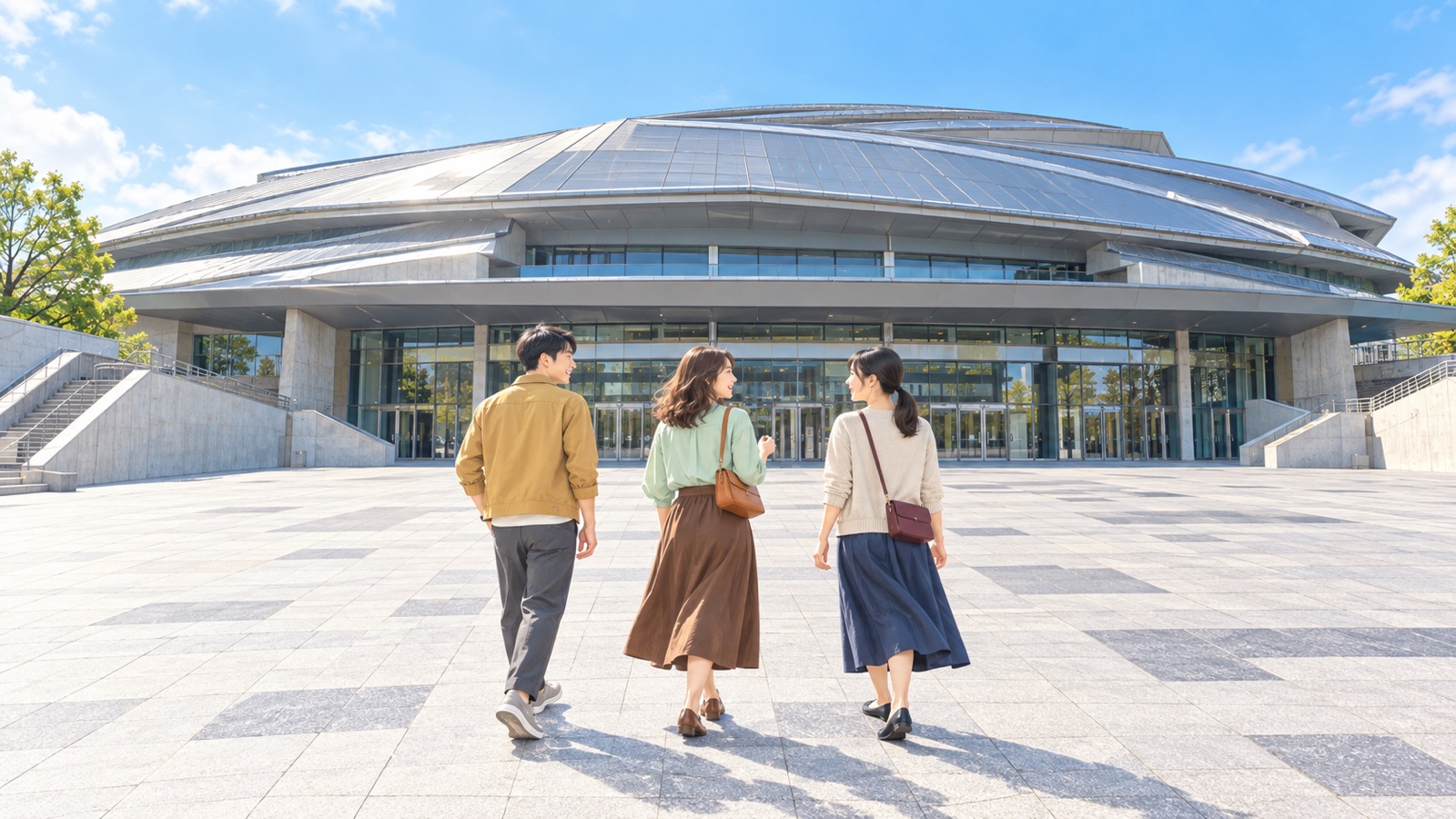
Tokyo Metropolitan Gymnasium, at 1-17-1 Sendagaya, Shibuya, Tokyo, replaced an earlier gymnasium that opened in October 1956. The old venue hosted gymnastics and water polo at the 1964 Tokyo Olympics. Full-scale reconstruction began in December 1986, and the new gymnasium opened in April 1990. It hosted table tennis at the 2021 Tokyo Olympics and Paralympics.
The main arena’s competition floor measures 3,220 square meters, with a ceiling 27 meters high. It seats up to 9,308 spectators and is large enough for four regulation volleyball courts at once. In 2016, the final Olympic volleyball qualification tournament for Rio de Janeiro was held here.
The main event in January is the All-Japan High School Volleyball Championship, commonly known as Haruko Volleyball. When the tournament moved from March to January in 2011, its venue also changed from National Yoyogi Stadium First Gymnasium to Tokyo Metropolitan Gymnasium.
The 2027 event is called the Japanet Cup Spring High School Volleyball. On Monday, January 4, the opening ceremony and first round will be held; Tuesday, January 5, has first- and second-round games; and the second round continues on Wednesday, January 6. The third round and quarterfinals conclude on Thursday, January 7, followed by a no-match day on the 8th. Four semifinal matches are scheduled for Saturday, January 9, and the boys’ and girls’ finals and closing ceremony for Sunday, January 10, on a single specially built court.
The organizers are the Japan Volleyball Association, All Japan High School Athletic Federation, Fuji Television, Sankei Shimbun, Sankei Sports, and the 28 FNS stations. At the 78th tournament in January 2026, 52 teams each for boys and girls—104 teams in all—competed in a knockout tournament. There is no third-place match. Sports Bull streamed every match, while Fuji TV broadcast the semifinals and finals over the air.
A signature feature of the 78th tournament was “Passion BOX,” where each school submitted a “passion performance” to cheer on its team. Fuji TV’s official volleyball social media featured each school’s support, and voting for favorite performances ran from January 5 to 14. The nearest stations are Sendagaya on the JR Sobu Line and Kokuritsu-Kyogijo on the Toei Oedo Line. The gymnasium is directly in front of Exit A4.
- Location
- 1-17-1 Sendagaya, Shibuya, Tokyo
- Connection to volleyball
- Main arena for the All-Japan High School Volleyball Championship, “Haruko Volleyball,” held every January since 2011
- Nearest stations
- Directly in front of Exit A4 at Kokuritsu-Kyogijo Station on the Toei Oedo Line; JR Sobu Line Sendagaya Station is also nearby
- Upcoming dates
- The 79th tournament is scheduled for January 4–7 and 9–10, 2027
Sources:Official documents and facility guide
2National Yoyogi Stadium First Gymnasium | Suspended roof that hosted Haruko through 2010 and Japan’s Paris Olympic qualifier
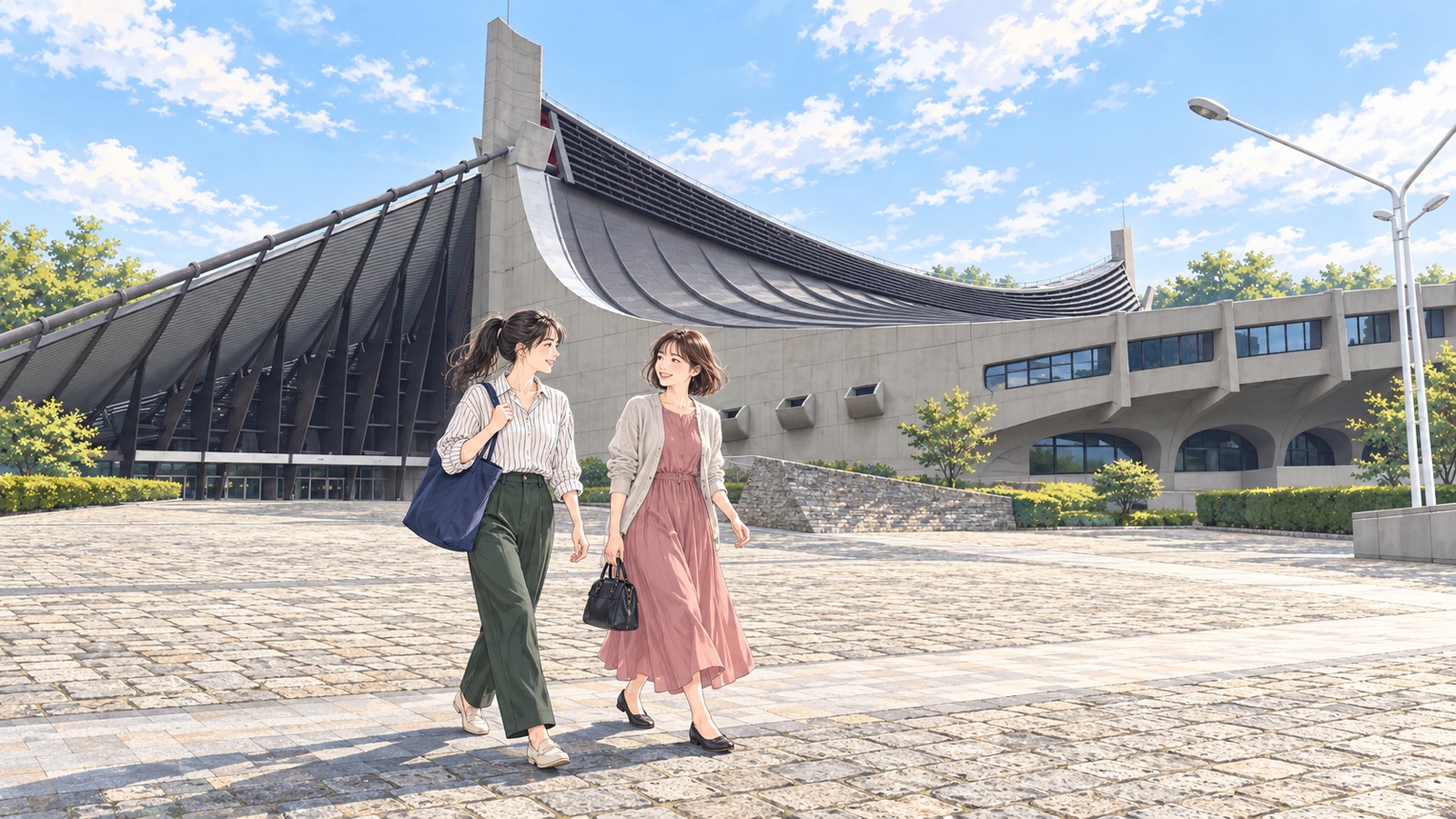
National Yoyogi Stadium at 2-1-1 Jinnan, Shibuya, Tokyo, was built for the 1964 Tokyo Olympics. It was designed by architect Kenzo Tange and others. The building is distinguished by a structure in which two main pillars are connected by suspension cables that support the entire roof. It was completed on August 31, 1964, just 39 days before the Olympics. The First Gymnasium hosted swimming and the Second Gymnasium hosted basketball during the Games.
After the Games, the First Gymnasium opened to the public as a pool in summer and an ice rink in winter. In November 1977, a temporary floor was installed over the rink for Volleyball World Cup ’77. The official history notes that this use of the floor, 13 years after the building was completed, opened the way for multipurpose events. Today, the building has a permanent floor year-round.
National Yoyogi Stadium First Gymnasium hosted Haruko Volleyball through 2010. The first- and second-floor stands have 8,636 seats. Temporary arena seating can add up to 4,124 seats, for a total of 12,898. Most spectators enter through Harajuku Gate on the north side, near Harajuku Station.
The men’s Olympic qualifier was held here from September 30 to October 8, 2023. Its official name was FIVB Road to Paris Volleyball Qualifier / World Cup 2023. Eight teams, including Japan, the United States, Slovenia, Serbia, and Türkiye, played a round robin, with the top two advancing to the Paris Olympics.
Japan defeated Slovenia in straight sets on October 7, 25–21, 25–22, and 25–18, securing qualification. Japan finished second behind the United States, and the men earned an Olympic place through qualification for the first time in 16 years. The women’s qualifier was also held at this venue, but Japan lost to Türkiye and Brazil and did not qualify. The women later accumulated world-ranking points in the 2024 Nations League and secured a place at the Paris Olympics. The nearest station is Harajuku on the JR Yamanote Line, about a five-minute walk away.
- Location
- 2-1-1 Jinnan, Shibuya, Tokyo
- Connection to volleyball
- Haruko Volleyball venue through 2010 and the gymnasium where Japan’s men secured a place at the Paris Olympics on October 7, 2023
- Access
- About a five-minute walk from Harajuku Station on the JR Yamanote Line
- Seating
- 8,636 seats in the first- and second-floor stands; up to 12,898 including temporary arena seats
Sources:National Yoyogi Stadium — History / National Yoyogi Stadium — First Gymnasium / National Yoyogi Stadium — Visitor information / Number Web — Moving Haruko Volleyball to January made it a true national championship / Japan Volleyball Association — FIVB Road to Paris Volleyball Qualifier / World Cup 2023, Men’s Tournament / Japan Volleyball Association — Results for the tournament / Japan Volleyball Association — Season review for the men’s and women’s national teams / Japan Volleyball Association — FIVB Olympic qualifier groups announced
3Komazawa Olympic Park General Sports Ground | Indoor ball court where the “Witches of the Orient” won gold, and a memorial gallery
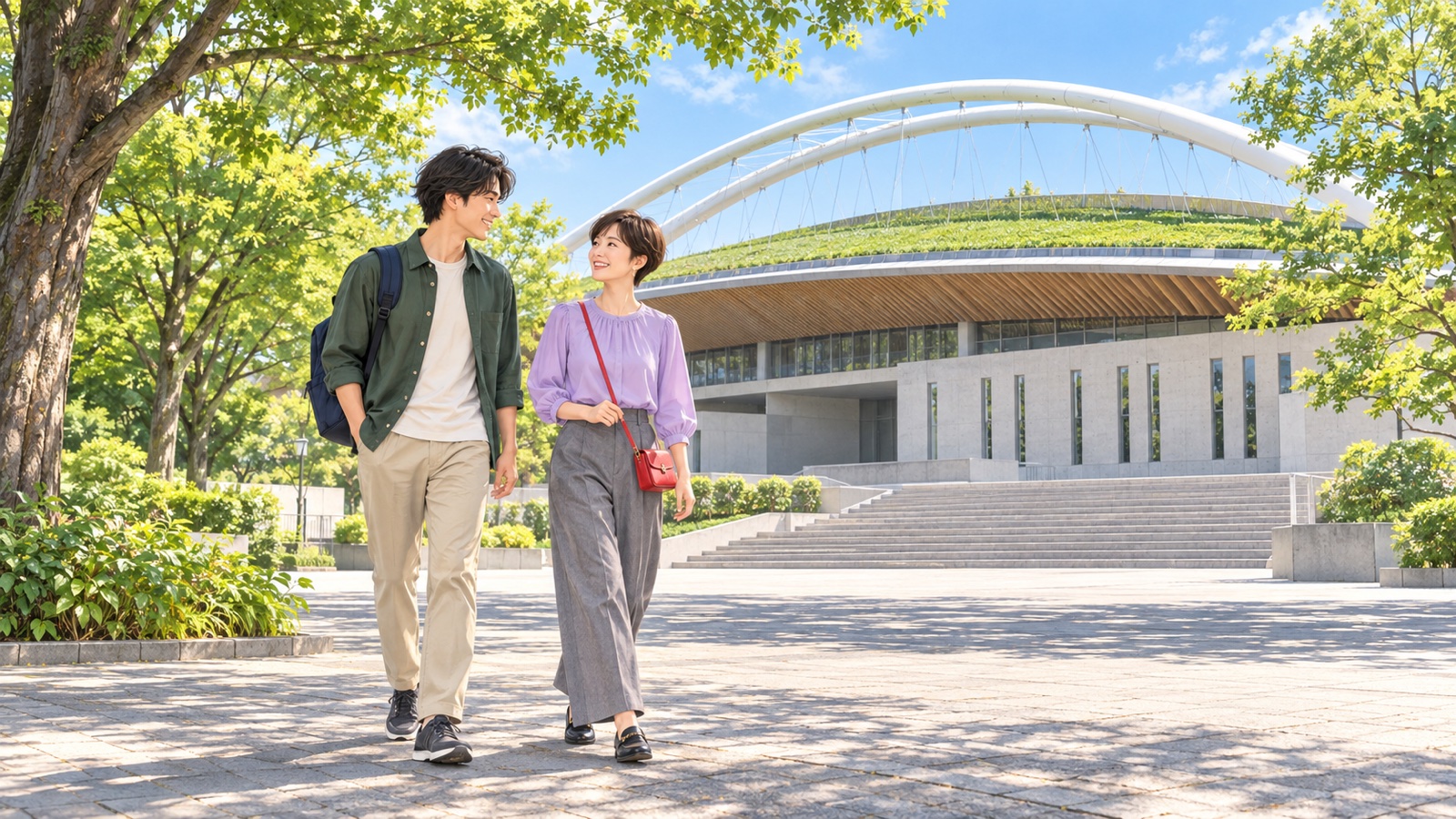
Komazawa Olympic Park in Setagaya, Tokyo, was the second venue for the 1964 Tokyo Olympics. Six facilities were built, including an athletics stadium, gymnasium, and indoor ball court. At the Olympics, the gymnasium hosted wrestling, the indoor ball court hosted volleyball, and the athletics stadium hosted soccer. Hockey was played at the First and Second Ball Courts and the auxiliary field.
Its connection with volleyball predates the Olympics. At the third Asian Games in 1958, a newly built court hosted volleyball. The park was also selected as a volleyball venue for the 1967 Tokyo Universiade.
The indoor ball court, the main volleyball venue, was rebuilt from fiscal 2014 through 2016 and reopened after renovation in July 2017. Its stands seat 2,358, including 800 temporary seats. It can hold two regulation six- or nine-player volleyball courts, or three sitting volleyball courts.
At 7:37 p.m. on October 23, 1964, Japan’s women faced the Soviet Union at this venue. Japan had already defeated the United States, Romania, South Korea, and Poland, and now faced the Soviet team for the gold medal. Japan fell behind early in the first set but won it 15–11, then took the second set 15–8.
Japan’s weapons were a floating serve that moved unpredictably near the receiver and its trademark rolling receive. In the third set, Japan reached match point at 14–9, but the Soviet team rallied. In the end, a serve by Emiko Miyamoto with her left arm disrupted the Soviet reception and forced an over-net fault. Japan won in straight sets, 15–13, to claim gold.
The television broadcast of the final recorded a 66.8% audience share, a figure still unbroken for a sports broadcast. Japan’s men placed third at the same Games, behind the Soviet Union and Czechoslovakia.
The same sports ground has the Tokyo Olympic Memorial Gallery. It opened in October 1993 along with the full renovation of the gymnasium, and its exhibits were updated in June 2013. Admission is free. It is open 9:30 a.m.–5:00 p.m. and generally closes on the first and third Mondays (or the following Tuesday if Monday is a holiday) and over the New Year holidays.
A gallery chapter titled “Komazawa, a Stage for Fierce Competition” introduces the Japanese women’s team’s victory. Exhibits include the team’s official uniform and tracksuits, four official tournament posters, and memorable scenes from the opening through closing ceremonies. Another chapter traces the history of the modern Olympics. Interactive features include a photo spot where visitors can hold an Olympic torch and a recreation of a Showa-era living room and veranda from the time of the Games.
Komazawa Gymnasium was renovated starting in April 2023 and reopened on July 6, 2025. The work added LED lighting for competitions and a floor made from domestic timber, and reused seating from the Tokyo 2020 Aquatics Centre in the stands. On reopening day, the gallery showed exhibits on the legacy of the 1964 Games and a special exhibition, “The History of Japanese Wrestling.” The nearest station is Komazawa-daigaku on the Tokyu Den-en-toshi Line, about a 15-minute walk away.
- Location
- 1-1 Komazawa Park, Setagaya, Tokyo
- Connection to volleyball
- Sports ground with the indoor ball court where Japan’s women defeated the Soviet Union for Olympic gold on October 23, 1964, and a memorial gallery
- Access
- About a 15-minute walk from Komazawa-daigaku Station on the Tokyu Den-en-toshi Line
- Memorial gallery
- The Tokyo Olympic Memorial Gallery is open 9:30 a.m.–5:00 p.m.; closed on the first and third Mondays and over the New Year holidays. Free admission.
Sources:Official documents and facility guide
4Ariake Arena | Venue for men’s and women’s volleyball at the 2021 Tokyo Olympics
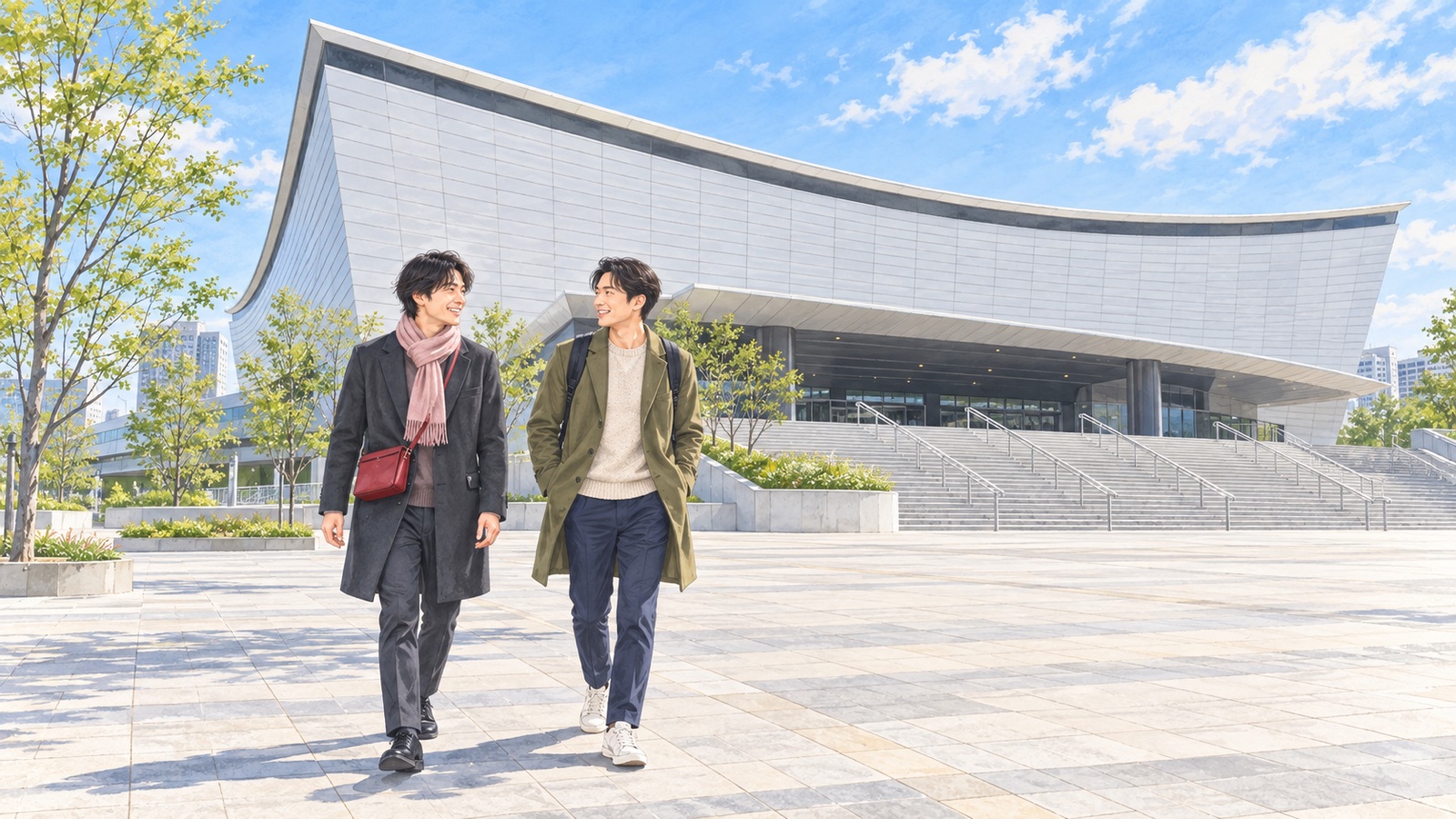
Ariake Arena, at 1-11-1 Ariake, Koto, Tokyo, is a new venue built by the Tokyo Metropolitan Government for the Tokyo 2020 Games. Its completion ceremony was held on February 2, 2020, and it had a capacity of 15,000 during the Games. It hosted volleyball at the Olympics and wheelchair basketball at the Paralympics.
The Tokyo 2020 Games were postponed for a year and held in 2021. Volleyball ran here from July 24 to August 7 for the men and from July 25 to August 8 for the women. Twelve teams each competed in round-robin pools of six, followed by quarterfinals, semifinals, and finals. Fifty-seven years after Komazawa in 1964, this was the second Olympic volleyball venue in Tokyo.
Temporary structures were removed after the Games, and the arena opened in August 2022. It is operated by Tokyo Ariake Arena Co., Ltd., whose lead company is the Dentsu Group. The main arena is about 4,100 square meters. It is now used for concerts and B.League basketball games. The nearest stations are Shin-Toyosu and Ariake-Tennis-no-mori on the Yurikamome Line, each about an eight-minute walk away.
- Location
- 1-11-1 Ariake, Koto, Tokyo
- Connection to volleyball
- Arena for indoor men’s and women’s volleyball at the Tokyo 2020 Games, held in 2021
- Access
- About an eight-minute walk from Shin-Toyosu or Ariake-Tennis-no-mori Station on the Yurikamome Line
- Facility size
- Main arena: about 4,100 square meters; capacity during the Tokyo 2020 Games: 15,000
Sources:Tokyo Metropolitan Government — Competition venues for the Tokyo 2020 Games (Ariake Arena) / Japan Volleyball Association — 32nd Olympic Games, Men’s Tournament / Japan Volleyball Association — 32nd Olympic Games, Women’s Tournament / Tokyo Metropolitan Government — Fact sheet for six metropolitan sports facilities / Ariake Arena — Company profile / Ariake Arena — Access
5Shiokaze Park | Seaside park that hosted the temporary beach volleyball venue at the 2021 Tokyo Olympics
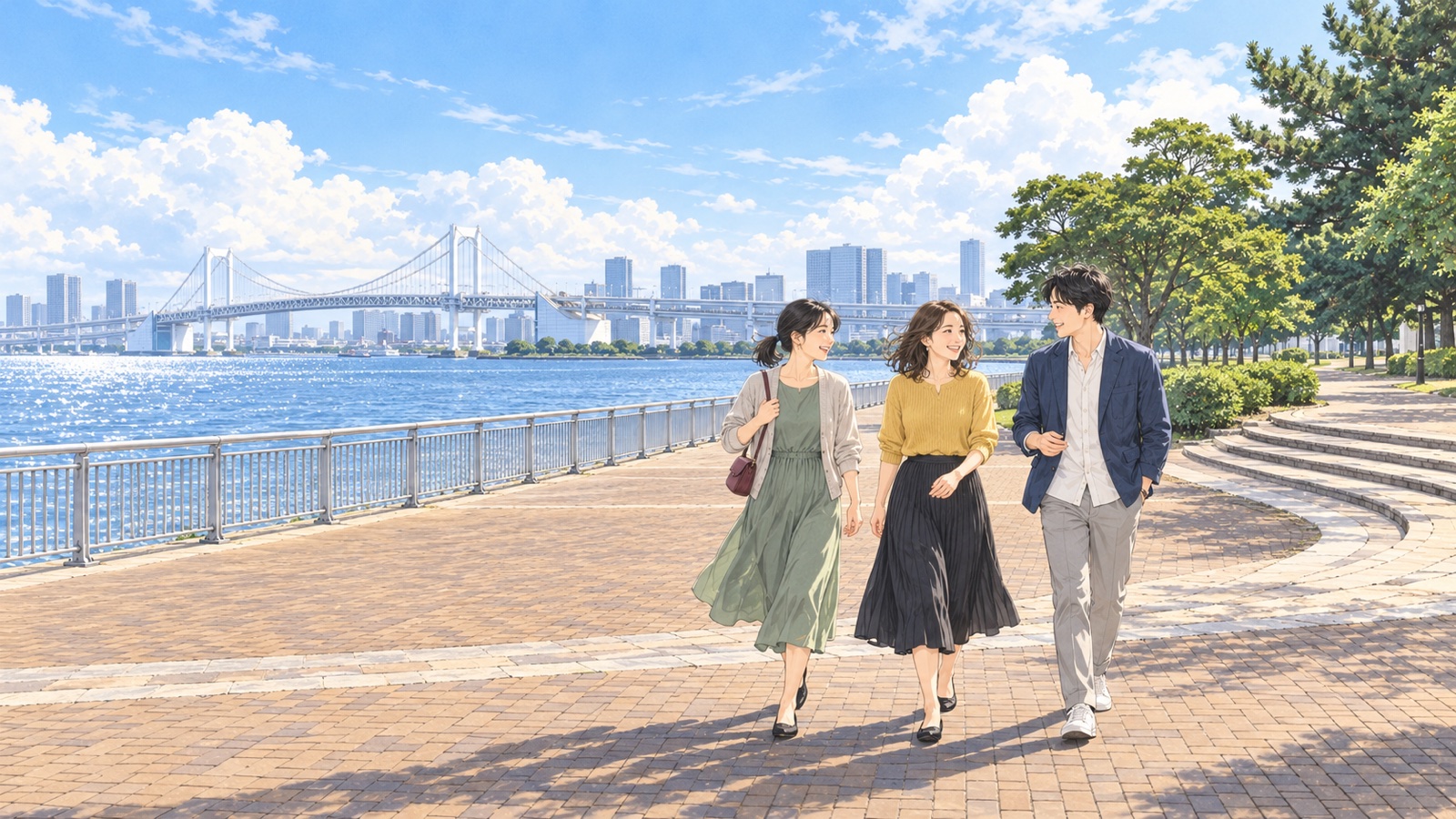
Shiokaze Park in Higashiyashio, Shinagawa, Tokyo, is a metropolitan waterfront park that opened on June 1, 1974. Beside Odaiba Marine Park and the Museum of Maritime Science, it has views across Tokyo Port with Rainbow Bridge in the background. Visitors can see the gantry cranes lining the Oi and Shinagawa container terminals across the water, as well as ships bound for the Izu and Ogasawara Islands.
A temporary beach volleyball venue was built in the park for the 2021 Tokyo Olympics, with a capacity of 12,000 during the Games. Park facilities closed during preparation work and event operations. After the venue was dismantled and the site restored, the park reopened. On July 21, 2022, visitors could again cross Shiokaze Bridge between its north and south areas.
The temporary venue is gone, and the site is now a seaside park with facilities such as a barbecue area. Together, indoor volleyball at Ariake Arena and beach volleyball at Shiokaze Park offer two places to trace the 2021 Olympic events. The nearest station is Daiba on the Yurikamome Line, about a five-minute walk away.
- Location
- 1 and 2 Higashiyashio, Shinagawa, Tokyo
- Connection to volleyball
- Waterfront park that hosted a temporary beach volleyball venue with a capacity of 12,000 at the 2021 Tokyo Olympics
- Access
- About a five-minute walk from Daiba Station on the Yurikamome Line
- Today
- Reopened after the temporary venue was dismantled and the site restored; a metropolitan seaside park with a barbecue area and walking paths
Sources:Tokyo Metropolitan Government — Competition venues for the Tokyo 2020 Games (Shiokaze Park) / Waterfront Park Navi — Shiokaze Park
6Yokohama BUNTAI | Built on the site of the 1964 Olympic volleyball venue; hosted the 2026 SV.League Women’s Finals
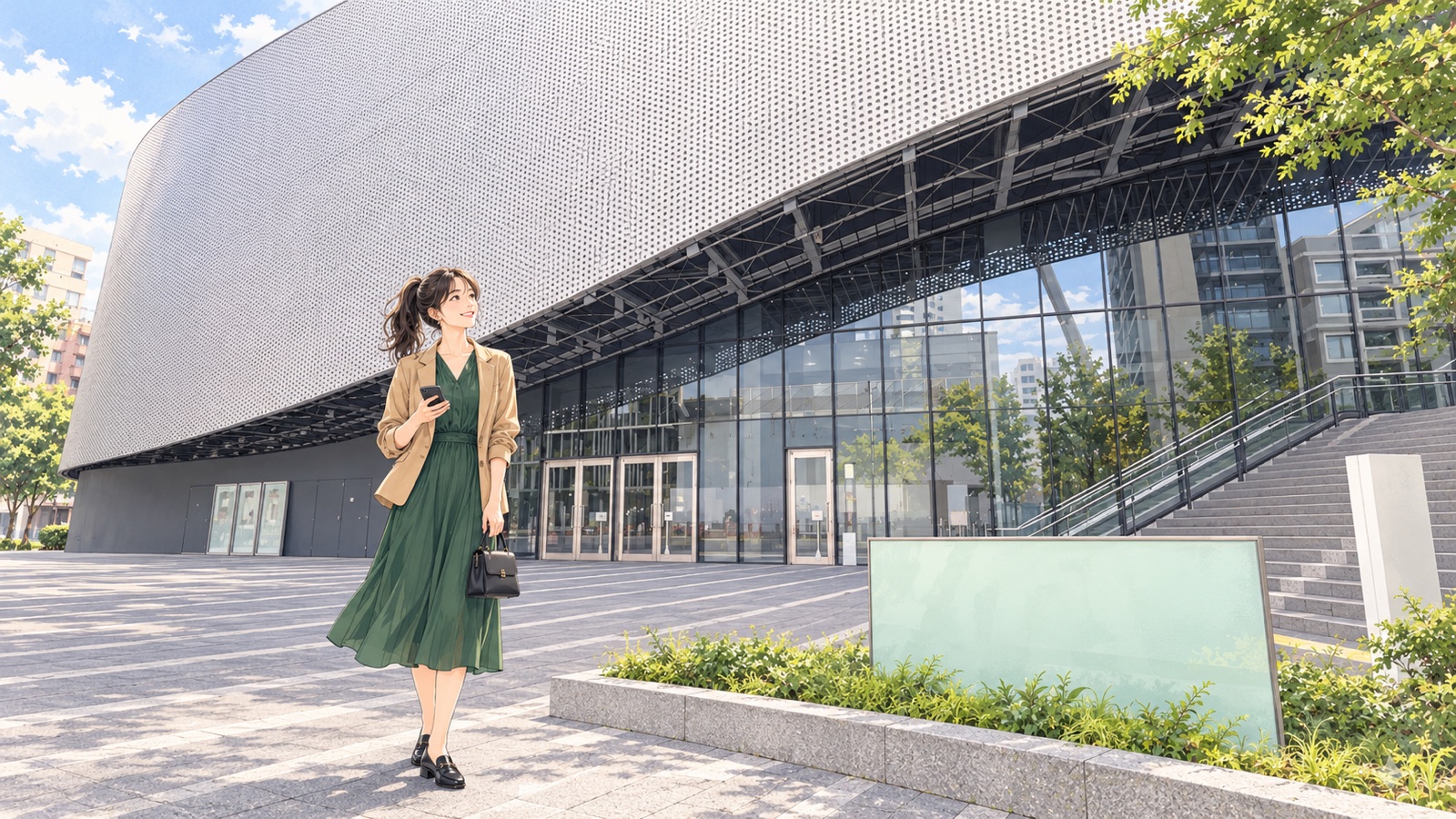
Yokohama BUNTAI in Furo-cho, Naka Ward, Yokohama, is an arena built as part of the redevelopment of the former Yokohama Cultural Gymnasium. The earlier venue was completed in 1962, designed by Kume Sekkei as a commemorative project for the centennial of the opening of Yokohama Port. In the year it opened, it was used for volleyball training ahead of the Tokyo Olympics, and it served as an Olympic volleyball venue in 1964.
The old gymnasium, affectionately known as “Buntai,” was loved for 58 years and closed on September 6, 2020. The new arena opened in April 2024, with about 5,000 seats and an arena floor of about 2,530 square meters. Its name was chosen to reflect residents’ submissions expressing their attachment to Yokohama, Buntai, and BUNTAI.
The SV.League Women’s Championship Finals were held here on April 25 and 26, 2026. In the Championship, top clubs from the regular season compete in a tournament to decide the season’s champion. SAGA Hisamitsu Springs, second in the regular season, reached the final after defeating Gunma Green Wings in the quarterfinals and PFU BlueCats Ishikawa Kahoku in the semifinals.
Their opponent was the previous year’s champion, Osaka Marvelous. SAGA Hisamitsu won both games: 3–2 in a full five sets in Game 1, then 3–0 in Game 2. The club claimed its first title as the second SV.League Women’s champion. SAGA Hisamitsu’s Minami Nishimura was named Championship MVP.
The floor for the final had a special Taraflex surface in two wood-grain colors with gold, the SV.League’s theme color. The same floor was used for the men’s final in May. The nearest station is Kannai on the JR Keihin-Tohoku and Negishi lines, about a six-minute walk from the south exit. Isezaki-chojamachi Station on the Yokohama Municipal Subway is about four minutes away.
- Location
- 2-7-1 Furo-cho, Naka Ward, Yokohama, Kanagawa
- Connection to volleyball
- Built on the former site of Yokohama Cultural Gymnasium, a 1964 Tokyo Olympic volleyball venue; hosted the SV.League Women’s Finals in April 2026
- Access
- About a six-minute walk from the south exit of Kannai Station on the JR Negishi Line, or four minutes from Isezaki-chojamachi Station on the Yokohama Municipal Subway
- Facility size
- Opened in April 2024; about 5,000 seats and an arena floor of about 2,530 square meters
Sources:Agency for Cultural Affairs — Modern cultural heritage: Yokohama Cultural Gymnasium / Yokohama City — Inside the new arena, Yokohama BUNTAI / Yokohama BUNTAI — Facility guide / Yokohama BUNTAI official website — Access /SV.LEAGUE — SAGA Hisamitsu Springs win the Championship (April 26, 2026) / SV.LEAGUE — Original floor for the Finals
7Yokohama Arena | Where Osaka Bluteon won its first SV men’s title in May 2026
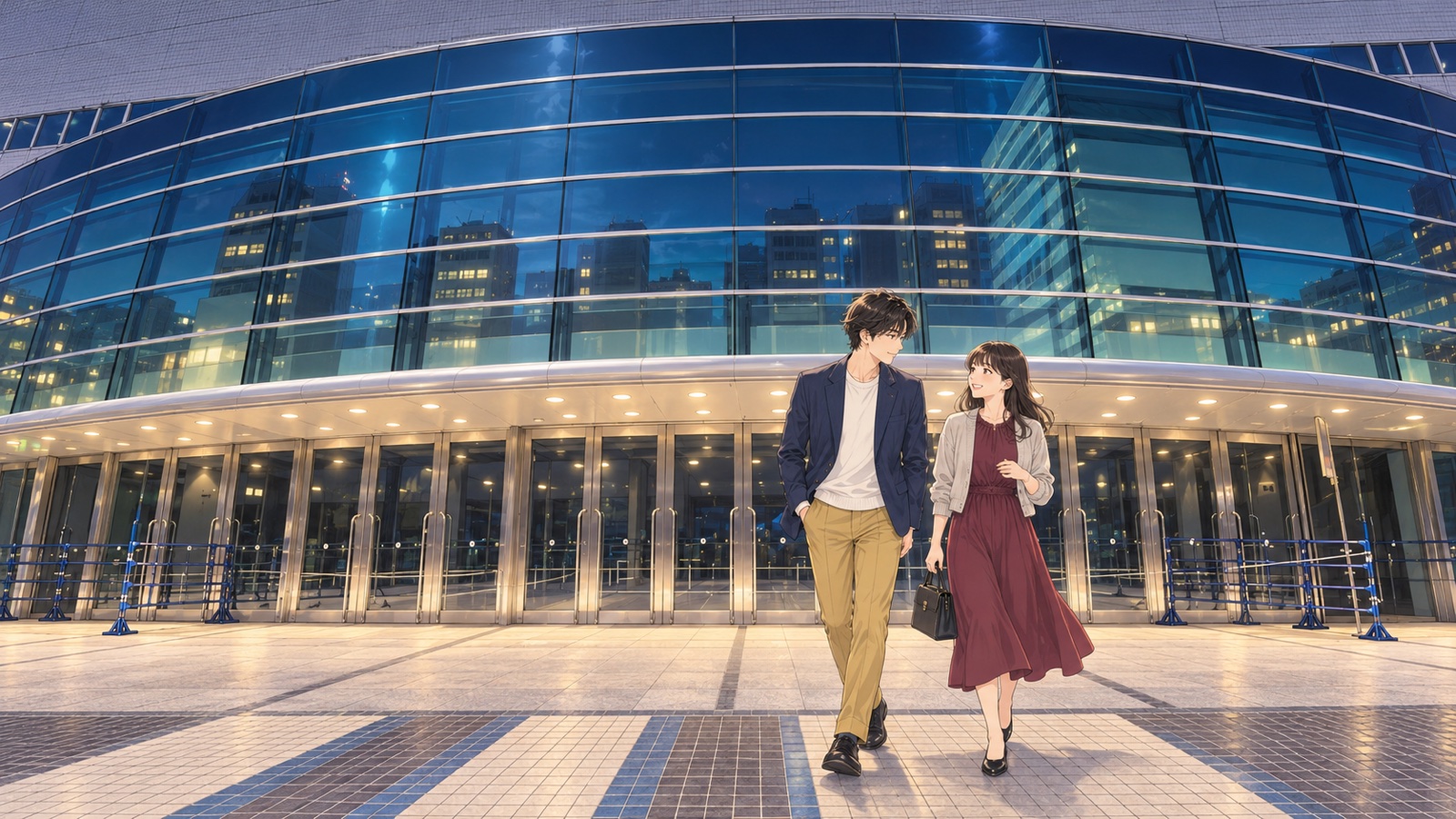
Yokohama Arena at 3-10 Shin-Yokohama, Kohoku Ward, Yokohama, was built as a project commemorating the city’s centennial and the 130th anniversary of the opening of Yokohama Port in 1989. It can hold up to 17,000 people. The arena is a four- to five-minute walk from Shin-Yokohama Station, served by the municipal subway, Sotetsu, Tokyu, JR Yokohama Line, and Tokaido Shinkansen.
The SV.League Men’s Championship Finals were held here from May 15 to 17, 2026. Under a best-of-three format, regular-season leaders Suntory Sunbirds Osaka faced Osaka Bluteon, the second-place team that had defeated JTEKT Stings Aichi in the semifinals. It was a final between two Osaka clubs.
Osaka Bluteon lost Game 1, 1–3, but came back to win Game 2 in five sets, 3–2. It won Game 3, 3–0, to become the second SV.League Men’s champion. Yuji Nishida was named Championship MVP. At the victory ceremony, the club received the trophy, championship banner, and ¥30 million in prize money.
- Location
- 3-10 Shin-Yokohama, Kohoku Ward, Yokohama, Kanagawa
- Connection to volleyball
- Venue for the SV.League Men’s Championship Finals on May 15–17, 2026, where Osaka Bluteon won its first title
- Access
- Four- to five-minute walk from Shin-Yokohama Station
- Maximum capacity
- 17,000 people
Sources:Yokohama Arena — Company information / Yokohama Arena — Access / SV.LEAGUE — 2025–26 Men’s Championship Finals / SV.LEAGUE — Osaka Bluteon win the Championship
8Kaizuka City History Exhibition Hall | Former office of a spinning mill displaying materials on Nichibo Kaizuka
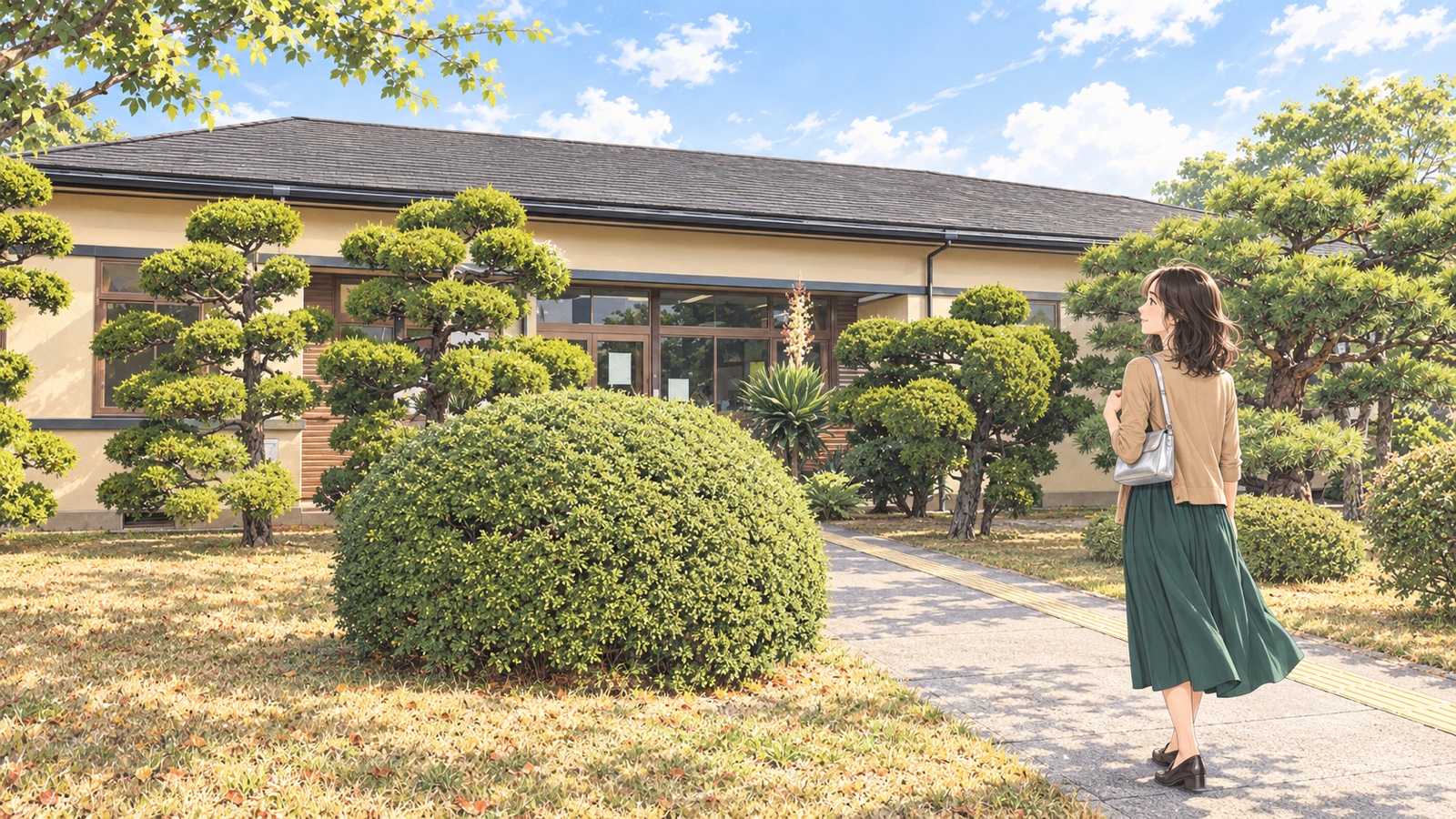
Kaizuka City History Exhibition Hall, at 138-1 Handa, Kaizuka, Osaka, is a spinning mill office built in 1935. It was built by Dainippon Spinning (later Nichibo, now Unitika) and used as the office of its Kaizuka mill. It was designed by Hashimoto Tsutomu Architects and built by Takenaka Corporation. The single-story wooden building has an L-shaped plan and about 325 square meters of floor space. In 2005, Unitika renovated the office and donated the section from the main gate to the front garden to the city.
Decorative cornices wrap around the building above and below the windows. Together with the gently sloping roof, they give the exterior a low, horizontal profile. The building was registered as a Tangible Cultural Property of Japan on May 15, 2007. Scratch tiles cover the lower windows on either side of the front entrance. The east entrance’s carriage porch is said to have been built in anticipation of a visit by Emperor Showa.
There are two exhibition rooms. Gallery A, built in 1935, displays modern and contemporary materials from Kaizuka and spinning equipment that supported local industry. Gallery B, built in 1945, displays materials on Nichibo Kaizuka, the team known as the “Witches of the Orient.” Photos show the players in competition, the spinning mill, and old scenes of Kaizuka. Part of the floor from the gym where the players practiced is also on display. A photo spot lets visitors pose with a torch used in the Tokyo 2020 Olympic Torch Relay.
Kaizuka City’s archives include a photo of a welcome party for Nichibo Kaizuka held in front of Kaizuka Station on the Nankai Line and in front of this factory office. The hall is open noon–6:00 p.m. on weekdays and 10:00 a.m.–4:00 p.m. on weekends and other days. It is closed Tuesdays and holidays, as well as over the New Year holidays, December 29–January 3. Higashi-Kaizuka Station on the JR Hanwa Line is about a five-minute walk to the northwest.
The factory’s history dates to the Taisho era. In 1916, Settsu Spinning, before its merger, bought land in Wakihama, now part of Kaizuka, for a factory, but construction did not proceed. In 1933, it agreed to exchange that land for about 49,000 tsubo of land in Handa, Kaizuka Town, along the Hanwa Electric Railway, now the JR Hanwa Line. The First Mill was completed in February 1935 and the Second Mill in April 1936, and operations began.
Of the roughly ¥3.91 million construction cost, the town of Kaizuka covered more than ¥240,000—about 40% of its general-account expenditures at the time. The women’s volleyball team formed at this mill would later become the core of the Japan national team known as the “Witches of the Orient.”
On the way home from the 1962 World Championship, the team played a goodwill match in Los Angeles. In Culver City, California, where they were invited, the players received a citywide welcome. Building on this connection, Kaizuka City and Culver City became sister cities on April 29, 1965.
- Location
- 138-1 Handa, Kaizuka, Osaka Prefecture
- Connection to volleyball
- Former office of the Dainippon Spinning Kaizuka Mill, where Nichibo Kaizuka, the “Witches of the Orient,” worked. Displays include team materials and part of the gym floor.
- Access
- About a five-minute walk northwest of Higashi-Kaizuka Station on the JR Hanwa Line
- Hours and closing days
- Weekdays noon–6:00 p.m.; weekends and other days 10:00 a.m.–4:00 p.m. Closed Tuesdays, holidays, and over the New Year holidays.
Sources:Official documents and facility guide
9ES CON FIELD HOKKAIDO | SV.League All-Star Game and Haikyu!! collaboration on January 30, 2027
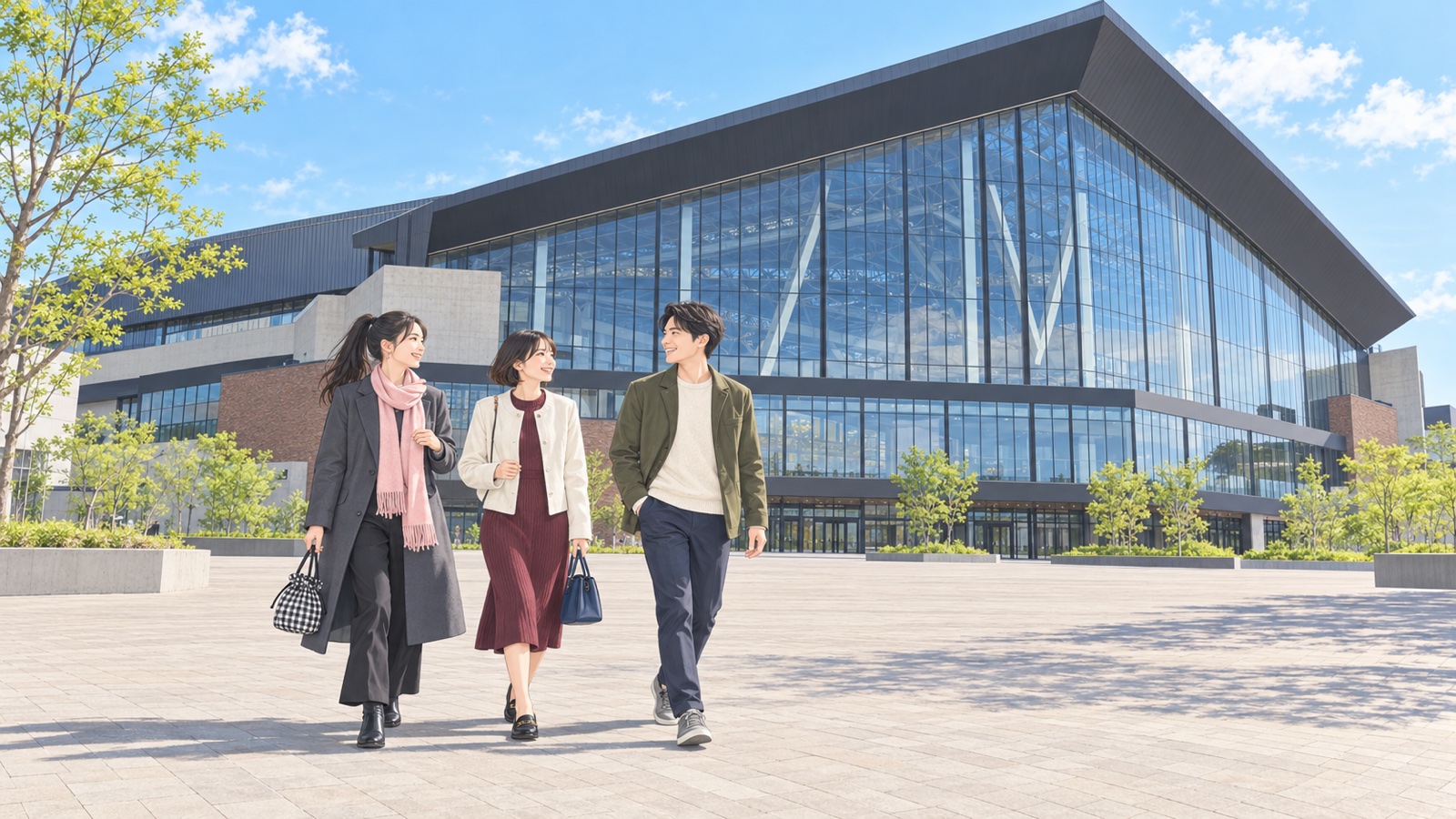
ES CON FIELD HOKKAIDO at 1 F Village, Kitahiroshima, Hokkaido, is home to the Hokkaido Nippon-Ham Fighters. The area, including the ballpark, opened in March 2023 as HOKKAIDO BALLPARK F VILLAGE. The “Emutto presents SV.LEAGUE ALL STAR GAMES 2026–27 HOKKAIDO” is scheduled to be held at the park on Saturday, January 30, 2027. The men’s game is scheduled for 1:30 p.m. and the women’s game for 5:30 p.m.
Each team will include 28 players selected through fan voting and league recommendations, plus two head coaches for each side. Fan voting began on October 16, 2026, and closes at 10:00 a.m. on November 16. Players are to be announced on November 20, with team assignments planned for mid-to-late December.
A collaboration with Shueisha’s manga Haikyu!! is planned at the venue. It will feature character photo spots and mascot-character greetings. Ayumu Murase, who voices protagonist Shoyo Hinata in the anime, will also appear. A newly recorded message by Murase is planned for the in-venue announcements.
Tickets are available through the SV.League’s official Ticket V and the Hokkaido Nippon-Ham Fighters’ official F Ticket. Arena seats and other sections use separate entry for the men’s and women’s games; for times outside the ticketed game, visitors can watch from unreserved seats.
- Location
- 1 F Village, Kitahiroshima, Hokkaido
- Connection to volleyball
- Ballpark scheduled to host the Emutto presents SV.LEAGUE ALL STAR GAMES 2026–27 HOKKAIDO on January 30, 2027
- Scheduled start times
- Men: 1:30 p.m.; women: 5:30 p.m.
- Planned features
- Haikyu!! manga collaboration with character photo spots and mascot greetings; appearance and in-venue announcements by Ayumu Murase, voice of Shoyo Hinata
Sources:SV.LEAGUE — All-Star Games 2026–27 Hokkaido official site / HOKKAIDO BALLPARK F VILLAGE — About F Village / SV.LEAGUE — Haikyu!! collaboration continues in the 2026–27 season (August 19, 2026)
Learn more | The coaches and players behind the “Witches of the Orient,” and the rolling receive
The central figures in the exhibits at Komazawa and Kaizuka are the women who practiced while working at a spinning mill in Kaizuka, Osaka. Records tell how a factory team became world champions, the people who supported it, and the technique they developed.
From workplace sports at a spinning mill to the formation of Nichibo Kaizuka
Volleyball was invented in the United States in 1895 as an activity that women and children could enjoy casually. It was introduced to Japan 18 years later, in 1913. The game spread in a distinctively Japanese form before its rules had settled, and team sizes changed from 16 to 12 to nine players.
In 1923, Dainippon Spinning adopted volleyball as a workplace sport to help employees refresh themselves. The first women’s team to make a name for itself was the Amagasaki Mill team, led by coach Setsuji Shimizu. It won the All-Japan Women’s General Championship three years in a row beginning in 1937. After the war, the Ashikaga Mill team won the All-Japan Business League tournament three years running from 1951.
On November 27, 1953, the company decided to establish a representative women’s team at its new Kaizuka Mill, with Hirobumi Daimatsu as coach. With Daimatsu’s goal of “a number-one team in Japan in two years,” the team commonly known as Nichibo Kaizuka was formed on March 15, 1954. It was made up mainly of recent graduates and struggled to place higher than eighth in national tournaments.
The results of intense practice came in 1955. A little over a year after its formation, the team won the All-Japan Women’s 9-Player Corporate Championship for the first time, then won the General Championship and National Sports Festival that same year. In 1958, it captured all four major titles at the time. By winning both the six- and nine-player divisions of the General Championship, it claimed five titles no team had ever held all at once.
With no domestic titles left to win, Daimatsu looked overseas. Japan mainly played nine-player volleyball, while most of the world played six-player volleyball. The team switched to six players and set its sights on the third World Championship in Brazil in 1960.
Sources:Kaizuka City — Volleyball before Nichibo Kaizuka / Kaizuka City — The birth of the Nichibo Kaizuka team
Hirobumi Daimatsu, Masae Kasai, and the Tokyo Olympic team
Dainippon Spinning changed its name to Nichibo on April 26, 1964, and the team became known as Nichibo Kaizuka. On August 31 that year, the Japan Volleyball Association announced the women’s Olympic team for Tokyo. Ten of the 12 players were from Nichibo Kaizuka. The other two were Ayano Shibuki of Yashica and Masako Kondo of Kurabo Kurashiki.
Hirobumi Daimatsu
Coach of Nichibo Kaizuka and Japan’s women’s team in 1964. He joined Dainippon Spinning in 1941 and became coach in 1953. He developed the rolling receive and floating serve, and the team recorded 175 consecutive wins before he retired in 1965.
Masae Kasai
Captain and setter for Nichibo Kaizuka and Japan’s national team. She joined the Ashikaga Mill in 1952 and transferred to the Kaizuka Mill in 1953. She competed at the Tokyo Olympics as both a player and coach, and later devoted herself to coaching recreational women’s volleyball after retiring in 1965.
Kinuko Tanida (now Kinuko Idogawa)
She practiced with Nichibo Kaizuka while attending Shitennoji High School in Osaka and joined the company after graduation. She won silver at the 1960 World Championship and gold in 1962, then played every match at the Tokyo Olympics.
Emiko Miyamoto
In the 1964 match against the Soviet Union, she delivered the final serve with her left arm at 14–13 in the third set. The serve led to a Soviet fault and secured the gold medal.
Yoshiko Matsumura (now Yoshiko Kanda)
A Nichibo Kaizuka player. In Kinuko Tanida’s recollection, she tried it repeatedly and was the first on the team to master the rolling receive.
Yasutaka Matsudaira
Coach of Japan’s men, who won bronze at the 1964 Tokyo Olympics. He became head coach in 1965 and led the men to gold at the 1972 Munich Olympics.
Shigeo Yamada
A coach who became the manager of Hitachi’s volleyball club after teaching physical education at Tokyo Metropolitan Mitaka High School. As head coach of Japan’s women, he led the team to gold at the 1976 Montreal Olympics.
Other Nichibo Kaizuka players selected for the national team included Yuriko Handa, Sata Isobe, Yuko Fujimoto, Katsumi Matsumura, Setsuko Sasaki, and Yoko Shinozaki. Photos of Sata Isobe (now Sata Maruyama) with her world championship medal and Tokyo Olympic gold medal appear on Kaizuka City’s “History of the Witches of the Orient” page.
Source:Official documents and facility guide
The rolling receive grew out of a roly-poly toy
The rolling receive that helped Japan win at the Tokyo Olympics was inspired by a roly-poly toy. According to Kinuko Tanida, players had previously slid across the floor like in baseball to receive the ball, then stood up slowly. In nine-player volleyball, teammates could cover for them, but in six-player volleyball, the player who received the ball had to get straight into the next play.
When Japan played six-player teams in Europe, its traditional overhand receive was penalized for dribbling or holding the ball. The team quickly worked on the forearm pass and then developed the rolling receive as a defensive technique that could surpass its European and American opponents.
Daimatsu only instructed the players to “roll across the gym floor and get right back up”; he did not demonstrate the move. The players developed an unfamiliar technique themselves through repeated practice. Their knees, elbows, and backs were covered in bruises from hitting the floor, and it is said they practiced with cushions and scarves wrapped around their bodies. Masae Kasai said it took about a year to master.
Sources:web Sportiva — Kinuko Idogawa (Tanida) recalls 1964 (page 2) / Kotobank — Hirobumi Daimatsu
From “Witches of the Orient” on a European tour to world champions in Moscow
At the 1960 World Championship in Brazil, Japan’s women lost to the Soviet Union, then the world’s top team, and finished second. Six of the 12 players on Japan’s team were from Nichibo Kaizuka. In recognition of this performance, Nichibo Kaizuka toured Europe on its own from August to October 1961. It won the Three Continents Championship in Czechoslovakia and also defeated the Soviet team in exhibition matches, finishing the tour with 22 straight wins.
During the tour, local media called the players “Witches of the Orient” and “Typhoon Girls of the Pacific.” When they returned to Kaizuka on October 17, the entire city turned out to cheer them in a parade. Kinuko Tanida recalled that the team’s treatment changed as it kept winning, and that she learned how important winning was.
For the fourth World Championship in the Soviet Union in October 1962, Japan relied on ten Nichibo Kaizuka players. In the final round, Japan defeated its longtime rival, the Soviet team, and won the tournament undefeated. The victory received major coverage in Japan, where the national team was described as “Japan team = Nichibo Kaizuka.”
Daimatsu and the main players had announced that they would retire after winning the world title. But after women’s volleyball was included as an official event at the Tokyo Olympics, they decided to continue until the Games in response to requests from those around them. The IOC approved volleyball for the Tokyo Olympics in a vote in June 1961; the board decided on June 6, 1962, that women would also compete.
Sources:Kaizuka City — Nichibo Kaizuka’s European tour and the fourth World Championship / Kotobank — Witches of the Orient (Encyclopedia of World History) / web Sportiva — Kinuko Idogawa (Tanida) recalls 1964 (page 3) / Kaizuka City — 1964 Tokyo Olympics
Tournament background | January’s Haruko, the men’s national team, the SV.League, and Haikyu!!
Haruko at Tokyo Metropolitan Gymnasium, the Olympic qualifier at Yoyogi, and the SV.League Finals in Yokohama are run by different organizers. This section traces the high school, national-team, and professional stages through how their tournaments work.
From a March selection tournament to the final national championship for third-year students
Haruko Volleyball began in 1970 and was held in March for 41 years. Along with the Inter-High in August and National Sports Festival in October, it is one of high school volleyball’s “triple crown” tournaments. Fuji TV broadcasts it nationwide, and many popular players, including Kana Oyama and Megumi Kurihara, have emerged from it. But because the tournament took place after third-year students had graduated, only first- and second-year students could compete. Some argued that the winning school could not be called the strongest team of the year.
Starting with the 2011 tournament, it moved to January so third-year students could compete. For them, it became their final national tournament in high school, while the nickname Haruko Volleyball remained.
Source:Number Web — Moving Haruko Volleyball to January made it a true national championship / web Sportiva — Haruko Volleyball 2015
From bronze at the 1964 Olympics to a place at the Paris Games
Japan’s men won bronze at the 1964 Tokyo Olympics. Yasutaka Matsudaira, who was a coach at those Games, became head coach in 1965 and created an “Eight-Year Plan for World Supremacy.” He recruited players at least 1.90 meters tall to build a taller team. Centered on quick attacks such as the A quick and B quick and the “one-man time difference” attack, he developed Japan’s combination style. The team won silver at the 1968 Mexico City Olympics and gold at Munich in 1972.
After winning silver in 1968 and 1972, Japan’s women won gold at the 1976 Montreal Olympics under coach Shigeo Yamada. In 1964, Yamada founded and coached Hitachi’s volleyball club, leading it to 18 Japan League titles.
Japan’s men, who qualified for the Paris Olympics at the Yoyogi qualifier in 2023, were led by coach Philippe Blain. At the 2024 Paris Olympics, the team reached the quarterfinals and finished seventh.
Sources:Kotobank — Yasutaka Matsudaira (Britannica International Encyclopedia) / Kotobank — Shigeo Yamada (Biographical Dictionary of 20th-Century Japan) / Japan Volleyball Association — Olympic records for the women’s team / Japan Volleyball Association — Season review for the men’s and women’s national teams / Japan Volleyball Association — FIVB Olympic qualifier groups announced
The 2026–27 SV.League season and events in Greater Tokyo and Thailand
The SV.League is Japan’s top men’s and women’s volleyball league, launched in the 2024–25 season. The 2025–26 champions decided in Yokohama were the second titleholders for both leagues. In the third season, 2026–27, the women’s season opens October 10 and the men’s on October 17. The women’s opening matchup is SAGA Hisamitsu Springs vs. Arisa Aichi. It will be held at Huamark Indoor Stadium in Thailand, the SV.League’s first official match overseas.
The 12 men’s clubs play each other four times, for 44 matches per club. The 14 women’s clubs are divided into East and West conferences of seven, for 38 matches per club. Starting this season, the league has designated Greater Tokyo as a priority area and increased the number of matches held there.
Sources:SV.LEAGUE — Osaka Bluteon win the Championship / SV.LEAGUE — Overview of the 2026–27 season (July 1, 2026) /SV.LEAGUE — 2026–27 season opening special site
Haikyu!! illustrations by Haruichi Furudate and the All-Star collaboration
Since its first season, the SV.League has used original illustrations by Haikyu!! creator Haruichi Furudate. They feature protagonist Shoyo Hinata, his Karasuno High School teammate Tobio Kageyama, and rivals from other schools, Atsumu Miya and Wakatoshi Ushijima. For the 2026–27 season, three new illustrations were created of Kotaro Bokuto, Kourai Hoshiumi, and Kiyoomi Sakusa.
A promotional video for the 2026–27 season, branded with Haikyu!!, is available on the SV.League’s official channel. At the January 2027 All-Star Game, character photo spots are planned at ES CON FIELD HOKKAIDO.
Sources:SV.LEAGUE — Haikyu!! collaboration continues in the 2026–27 season / SV.LEAGUE official website — Latest videos
From volleyball’s arrival in Japan through Haruko, the Olympics, and the SV.League
This timeline covers volleyball’s introduction to Japan in 1913 and the formation of Nichibo Kaizuka in 1954, through the 1964 Tokyo Olympics, Haruko Volleyball, the 2024 launch of the SV.League, and the 2026–27 season.
- 1895
Volleyball is invented in the United StatesSport - 1913
Volleyball is introduced to JapanSport - 1923
Dainippon Spinning introduces volleyball as a workplace sportFactory - 1935
February First building at the Kaizuka Mill is completedKaizuka - 1954
March 15 Women’s team Nichibo Kaizuka is formedKaizuka - 1961
August–October Goes undefeated in 22 matches on European tour; media call the team “Witches of the Orient”Witches of the Orient - 1962
October Wins the fourth World Championship in the Soviet UnionWitches of the Orient - 1964
October 23 Women win gold at Komazawa indoor ball court; men win bronzeOlympics - 1965
April 29 Kaizuka City and Culver City become sister citiesKaizuka - 1970
Haruko Volleyball begins as a March tournamentHaruko - 1972
Men win gold at the Munich OlympicsOlympics - 1976
Women win gold at the Montreal OlympicsOlympics - 1977
November Volleyball World Cup at National Yoyogi Stadium First GymnasiumVenue - 1993
October Tokyo Olympic Memorial Gallery opens at KomazawaExhibition - 2005
Former Kaizuka Mill office is donated to the city and becomes an exhibition facilityExhibition - 2011
January Haruko moves to January, and its venue changes to Tokyo Metropolitan GymnasiumHaruko - 2017
July Komazawa indoor ball court reopens after renovationsVenue - 2021
July–August Olympic volleyball at Ariake Arena and Shiokaze ParkOlympics - 2023
October 7 Men qualify for the Paris Olympics at YoyogiOlympics - 2024
April Yokohama BUNTAI opens on the former site of Yokohama Cultural GymnasiumVenue - 2026
April 26 SAGA Hisamitsu wins its first SV women’s title at Yokohama BUNTAISV.League - 2026
May 17 Osaka Bluteon wins its first SV men’s title at Yokohama ArenaSV.League - 2027
January 4 79th Haruko Volleyball scheduled at Tokyo Metropolitan GymnasiumHaruko〜January 10 - 2027
January 30 SV.League All-Star Game scheduled at ES CON FIELD HOKKAIDOSV.League
Sources:Kaizuka City — History of the Witches of the Orient (Nichibo Kaizuka) / Komazawa Olympic Park General Sports Ground — History / National Yoyogi Stadium — History / Osaka Society of Architects and Building Engineers, Kenchikujin — Kaizuka City History Exhibition Hall / Japan Volleyball Association — Olympic records / Haruko Volleyball official website — Tournament overview / SV.LEAGUE — All-Star special site
Oshi Lab note | A business perspective: Preserving company records and buildings as part of a city’s history
Kaizuka City presents the history of the “Witches of the Orient (Nichibo Kaizuka)” in six pages, from construction of the mill through Olympic gold and the sister-city partnership. Many of the photos show panels held by Unitika and medals owned by former players. The former office donated by Unitika is where a welcome party for the team was held; today it displays materials about the team.
Kaizuka City’s distinctive approach is to have the municipality take over photos and medals preserved by a company, along with the former office building, and display them as part of the city’s history. Even though the matches were held in Tokyo, preserving tangible items in the town where the players worked and practiced gives people drawn to the Games a place to visit.
Related Oshi Lab article:Partnerships between local governments and fan activities
Sources
- Haruko Volleyball official website — Tournament overview (79th tournament)
- Haruko Volleyball official website — Passion BOX
- Tokyo Metropolitan Gymnasium — History
- Tokyo Metropolitan Gymnasium — Main arena
- Tokyo Metropolitan Gymnasium — Major events
- Japan Volleyball Association — 2016 Rio Olympic World Qualification Tournament overview
- Tokyo Metropolitan Gymnasium — Access
- Number Web — Moving Haruko Volleyball to January made it a true national championship
- web Sportiva — Haruko Volleyball 2015
- LISAnavi — Haruko Volleyball 2026 opens
- National Yoyogi Stadium — History
- National Yoyogi Stadium — First Gymnasium
- Japan Volleyball Association — FIVB Road to Paris Volleyball Qualifier / World Cup 2023, Men’s Tournament
- Japan Volleyball Association — Season review for the men’s and women’s national teams
- Komazawa Olympic Park General Sports Ground — History
- Komazawa Olympic Park General Sports Ground — Indoor ball court
- Tokyo Olympic Memorial Gallery
- Tokyo Metropolitan Government — Komazawa Gymnasium reopening event
- Tokyo Metropolitan Parks Association — Komazawa Olympic Park
- Bunshun Online — “66.8% audience share”: the Witches of the Orient
- Japan Volleyball Association — Olympic records for the men’s team
- Japan Volleyball Association — Olympic records for the women’s team
- Tokyo Metropolitan Government — Competition venues for the Tokyo 2020 Games (Ariake Arena)
- Japan Volleyball Association — 32nd Olympic Games, Men’s Tournament
- Japan Volleyball Association — 32nd Olympic Games, Women’s Tournament
- Tokyo Metropolitan Government — Fact sheet for six metropolitan sports facilities
- Ariake Arena — Company profile
- Tokyo Metropolitan Government — Competition venues for the Tokyo 2020 Games (Shiokaze Park)
- Waterfront Park Navi — Shiokaze Park
- Agency for Cultural Affairs — Modern cultural heritage: Yokohama Cultural Gymnasium
- Yokohama City — Inside the new arena, Yokohama BUNTAI
- Yokohama BUNTAI — Facility guide
- Yokohama BUNTAI official website — Access
- SV.LEAGUE — SAGA Hisamitsu Springs win the Championship
- SV.LEAGUE — Original floor for the Finals
- Yokohama Arena — Company information
- SV.LEAGUE — 2025–26 Men’s Championship Finals
- SV.LEAGUE — Osaka Bluteon win the Championship
- Osaka Society of Architects and Building Engineers, Kenchikujin — Kaizuka City History Exhibition Hall (PDF)
- Kaizuka Volunteer Tourism Guide Association — History Exhibition Hall
- Kaizuka City — History Exhibition Hall (Registered Tangible Cultural Property of Japan)
- Kaizuka City — History Exhibition Hall closing days
- Kaizuka City — History of the Witches of the Orient (Nichibo Kaizuka)
- Kaizuka City — Volleyball before Nichibo Kaizuka
- Kaizuka City — Establishment of Dainippon Spinning’s Kaizuka Mill
- Kaizuka City — The birth of the Nichibo Kaizuka team
- Kaizuka City — European tour and the fourth World Championship
- Kaizuka City — Sister city, Culver City
- Kaizuka City — 1964 Tokyo Olympics
- web Sportiva — Kinuko Idogawa (Tanida) recalls 1964
- Unitika — Company history
- Kotobank — Witches of the Orient
- Kotobank — Hirobumi Daimatsu
- Kotobank — Masae Kasai
- Kotobank — Yasutaka Matsudaira
- Kotobank — Shigeo Yamada
- SV.LEAGUE — Overview of the 2026–27 season
- SV.LEAGUE — 2026–27 season opening special site
- SV.LEAGUE — All-Star Games 2026–27 Hokkaido official site
- SV.LEAGUE — Haikyu!! collaboration
- HOKKAIDO BALLPARK F VILLAGE — About F Village
- Japan Volleyball Association — FIVB Olympic qualifier groups announced
FAQ
What is Haruko Volleyball?
It is the nickname for the All-Japan High School Volleyball Championship. It began in 1970 as a March tournament for first- and second-year students only. In 2011, it moved to January, allowing third-year students to compete, and the venue changed from National Yoyogi Stadium First Gymnasium to Tokyo Metropolitan Gymnasium.
When and where is Haruko Volleyball in 2027?
The 79th All-Japan High School Volleyball Championship is scheduled for January 4–7 and 9–10, 2027, at Tokyo Metropolitan Gymnasium. The boys’ and girls’ semifinals are on January 9, with the finals and closing ceremony on January 10.
What was the team known as the “Witches of the Orient”?
The name refers to Nichibo Kaizuka, a women’s team formed in 1954 at Dainippon Spinning’s Kaizuka Mill in Osaka, and the Japan national team centered on its players. Hirobumi Daimatsu was coach and Masae Kasai was captain. The team won the 1962 World Championship and the 1964 Tokyo Olympics.
Where did Japan’s women win volleyball gold at the 1964 Tokyo Olympics?
The gold-medal match was held on October 23, 1964, at the indoor ball court in Komazawa Olympic Park. Japan defeated the Soviet Union in straight sets, 15–11, 15–8, and 15–13. The court was renovated and reopened in 2017 and is still used for sports.
Where can I see exhibits connected with the Witches of the Orient?
At the free Tokyo Olympic Memorial Gallery in Komazawa Olympic Park General Sports Ground, exhibits include the Japanese women’s victory and official uniforms. In Kaizuka, Osaka, the city’s History Exhibition Hall uses the former office of the mill where Nichibo Kaizuka worked to display team photos and materials.
Where was volleyball played at the 2021 Tokyo Olympics?
Indoor volleyball was held at Ariake Arena in Koto Ward: the men’s tournament ran July 24–August 7 and the women’s July 25–August 8. The temporary beach volleyball venue was built at Shiokaze Park in Shinagawa Ward.
Where were the SV.League finals held?
The 2025–26 Championship Finals were held at Yokohama BUNTAI for the women on April 25–26, 2026, and at Yokohama Arena for the men on May 15–17. SAGA Hisamitsu Springs won its first women’s title, and Osaka Bluteon won its first men’s title.
Where can I enjoy the SV.League and Haikyu!! collaboration?
Character photo spots and mascot greetings are planned for the SV.League All-Star Game at ES CON FIELD HOKKAIDO on January 30, 2027. Ayumu Murase, the voice actor for Shoyo Hinata, will also appear.


