'In the Megachurch' Review: Reading the Line Between Fandom and Faith Through a Business Lens
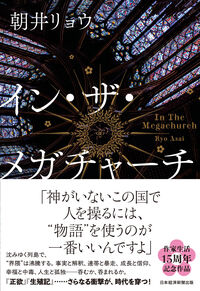
Looking at oshikatsu (the practice of actively supporting one’s favorite idol, character, or creator) not only from the side of the fans who give their support, but also from the side of those who build the mechanisms that gather that support—Ryo Asai’s novel In the Megachurch (published by Nikkei BP in September 2025) is a book that confronts both sides head-on.
About This Book
This book is a full-length novel published to commemorate the author’s 15th anniversary as a writer. It is set in the fandom economy, where fan devotion and commercial business intersect.
Moving back and forth among the perspectives of three narrators from different generations and personal circumstances, the novel explores the question: “What moves people’s hearts in the present age?”
There is a clear purpose behind having multiple narrators. Even within the exact same wave of enthusiasm, what is visible from the side of the supporter and what is visible from the side of the system builder look completely different. Told from only a single viewpoint, this subject matter could easily have been steered into either a “moving story of devotion” or a “cynical story of exploitation.” Instead, this novel portrays the same subject three-dimensionally from multiple angles. Every time a chapter changes, the reader is forced to step back and view from the outside the very enthusiasm they were empathizing with just moments before. That reading experience is the central mechanism of this work.
The Side That Supports (Fans)
- Experiences enthusiasm starting from a sense of personal discovery and free choice
- Views devotion and support from the inside as genuine personal feelings
- Can find it difficult to stop from the outside once feelings become real
The Side That Builds the System (Designers & Operators)
- Constructs mechanisms where fan devotion and business operations intersect
- Faces the split between answering fan enthusiasm and merely using it as a resource
- Carries responsibility for whether participation conditions create excessive burdens
Source: The Oshi Lab's summary of the article
The “megachurch” in the title refers to a church that has grown to a massive scale. Where is the dividing line between supporting a favorite and holding religious faith? For corporate professionals, the experiences of the different narrators offer material to reflect on how their own company’s initiatives are received by fans.
Ryo Asai describes the effect of choosing oshikatsu as his subject matter in the following way:
Readers begin reading the book as a familiar story about “liking something,” but before long, faith, politics, advertising, and collective fever come into view. This remark concisely captures why the novel does not stop at merely explaining oshikatsu.
A Striking Theme: The Feeling That “I Chose This Myself”
What made me pause again and again while reading was the way the novel depicts how the beginning of intense enthusiasm always looks like “one’s own free will.”
People who become swept up in enthusiasm were not forced into it by anyone. Rather, they feel that “I found this myself” and “I chose this myself.” Precisely because of that, their feelings become genuine—and at the same time, difficult to stop from the outside. Whether in religious faith or in oshikatsu, this underlying structure is the same.
The novel neither condemns this structure nor turns it into a heartwarming tale. Even when support is chosen by one’s own will, it is not necessarily separate from the conditions of participation or the influence of one’s surroundings. The brilliance of this book lies in making the reader experience both sides not as an abstract explanation, but as a living story.
Editor-in-Chief’s Perspective
We research oshikatsu as a business. Read from that perspective, this novel is a “story of fans” and, at the exact same time, a “story of system designers.”
With OSHI-MAP®, we diagnose a company’s “supportability” across seven axes. One of those axes is “non-exhausting design.” Mechanisms that move people’s hearts can work either to encourage healthy support or to intensify burdens. This novel shows that dividing line through storytelling.
Is a system designed to “use” fans’ enthusiasm, or is it designed to “respond to” their enthusiasm? Even with the exact same mechanism, its meaning changes completely depending on which purpose it serves. Fans’ enthusiasm is not a business resource; it is something entrusted to us by the fans. Reading this book, we reaffirmed this fundamental premise.
- 011. Compare Cross-Industry MechanismsExamine how fans gather and how information spreads to separate supportive elements from burdensome ones
- 022. Check for Hidden Burdens Beyond VoluntarinessVerify whether deadlines and bonus combinations create excessive financial or time pressure even when participation is voluntary
- 033. Provide Clear Ways to Rest or LeaveClearly communicate rules for muting notifications, taking a break, or canceling membership while respecting those who step back
Source: The Oshi Lab's summary of the article
The Oshi Lab Notes: Mechanisms That Encourage Participation and Operational Responsibility
- Compare mechanisms in other fields with your own company’s — Look at the pathways through which fans gather and how information spreads, and separate the elements that encourage participation from the elements that become a burden.
- Do not overlook burdens just because participation is voluntary — Even when individuals choose to participate on their own, check whether combinations of deadlines and bonuses are creating excessive financial spending or time burdens.
- Provide ways to rest or step away — Clearly communicate the conditions for muting notifications, pausing membership, or withdrawing, and respect people who do not continue participating.
Who Will Resonate With This Book
- People actively engaged in oshikatsu — For moments when you want to take a step back and look at what kind of system your own “love” exists within.
- Community and fan club operators — Allows you to vicariously experience through fiction both the responsibility and the fear of being entrusted with fans’ enthusiasm.
- Corporate professionals involved in fan marketing — Depicts the landscape of “what lies beyond when things go too far,” something that never appears in campaign proposal documents.
Conversely, if you read this book looking for clear-cut answers or an easy-to-understand villain, you may feel let down. Instead of handing down a verdict, this novel presents questions for the reader to keep thinking about.
Book Information
| Title | In the Megachurch (『イン・ザ・メガチャーチ』) |
| Author | Ryo Asai |
| Publisher | Nikkei Business Publications (Nikkei BP) |
| Release Date | September 2025 (September 3 in Hanmoto; September 5 in the publisher’s announcement) |
| ISBN | 978-4-296-12104-5 |
You can verify the release date, ISBN, and publisher via the bibliographic information on Hanmoto.com (in Japanese).
Purchase here: Amazon (in Japanese) / Rakuten Books (in Japanese)
Further Reading on The Oshi Lab
In What Is Oshikatsu Marketing?, we organize the basic structure of connecting fan enthusiasm to business operations. Reading it alongside this novel allows you to think further about the point at which a design meant to encourage participation turns into a burden or dependency.
Another piece we recommend reading alongside this review is What Is Fandom?. It lets you trace in clear terms the process by which a single person’s fondness transforms into community norms and an economic sphere. When you return to the novel afterward, the differences in what the three narrators are seeing become even clearer.
Three Recommended Books for Readers of In the Megachurch
| Book Title | Why We Recommend It |
|---|---|
| Seiyoku (『正欲』, lit. “Righteous Desire”) by Ryo Asai (in Japanese) | A signature work by Ryo Asai that cuts into the difficulty of the word “diversity.” Written before In the Megachurch, it tells a story from the side of “how society is designed.” |
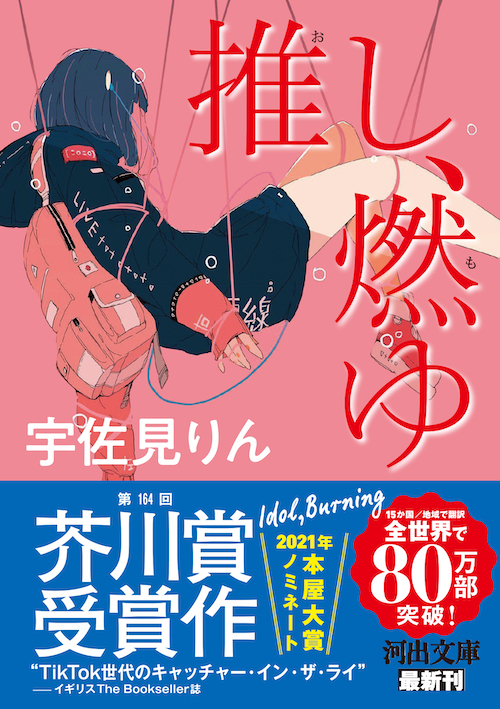
| Idol, Burning (『推し、燃ゆ』, Oshi, Moyu) by Rin Usami (in Japanese) | Portrays the raw urgency of the supporter’s side from an individual perspective. A book that forms a natural pair with In the Megachurch. |
| Introduction to the Fandom Economy (『ファンダムエコノミー入門』, Fandamu Ekonomi Nyumon), edited by Kokuyo Outdoor Learning Center (in Japanese) | An introductory guide that helps you organize the “fandom economy” you felt in the novel through concrete concepts and case studies. |
In Oshikatsu × Bookshelf, we take a deep dive into books about oshikatsu and fan culture one volume at a time.
Summary
The novel offers a way to reconsider fan engagement initiatives and the burdens they can place on fans. Rather than treating its fictional events as a formula for success, businesses can use it to question their purchase and participation conditions, including how clearly they explain pausing or leaving.
FAQ
What kind of novel is 'In the Megachurch'?
It is a full-length novel commemorating Ryo Asai's 15th anniversary as a writer (published by Nikkei BP in September 2025). Set within the fandom economy, it follows three narrators from different generations and circumstances to explore the question of what moves people's hearts today.
Can I enjoy it without prior knowledge of oshikatsu (fan activities)?
Yes, you can. Although the story is set in the fandom economy, what it portrays is the universal question of why people believe in and support something. For readers without personal experience in oshikatsu, it also offers a way to understand the intense devotion of someone close to them from the inside.
Who do you especially recommend this book to?
We especially recommend it to fan community managers and corporate professionals involved in fan marketing. Moving back and forth between the perspective of fans and the perspective of those who build systems to gather enthusiasm provides valuable material for reflecting on the responsibilities of planning and operations.