

Chihayafuru Pilgrimage: 10 Places in Fuchu, Omi, and Awara to Follow the Story of Karuta and Friendship
The station on the way to Omi Jingu, the cultural center where they learned karuta, and the cherry-blossom slope where Arata reunites with Chihaya: the settings of Chihayafuru extend beyond tatami match venues into the towns where its friends come and go.
Follow Chihaya Ayase, Taichi Mashima, and Arata Wataya as they take on competitive karuta at 10 places in Otsu, Fuchu, and Awara. This guide introduces scenery from the manga and anime, live-action filming locations, and venues where karuta is still played, explaining each place’s connection to the story.
From the town where they discover karuta to the tournament stage: 10 places to visit
Chihayafuru unfolds across three regions: Fuchu, Tokyo, where Chihaya and her friends discover competitive karuta; Otsu, Shiga, the setting for the national tournament; and Awara, Fukui, where Arata lives. Some places, such as shrines and greenways, are open for anyone to visit, while karuta practice venues, hotel guest rooms, and station platforms have their own access conditions. This route visits the three regions with a focus on permanent exhibits and areas currently open to the public.
1. Otsukyo Station
The JR Kosei Line station where the karuta club members get off on their way to a tournament at Omi Jingu, depicted on page 126 of volume 4, chapter 21.
Explore Otsukyo Station2. Omi Jingu and Omi Kangakukan
Visit Omi Jingu, where the team prays before a tournament, and Omi Kangakukan, in the same grounds, with original-art reproductions, film-cast autographs, and competition events.
Explore Omi Jingu and Omi Kangakukan3. Lake Biwa Hotel
The lakeside hotel where the club members stay, shown on pages 38–39 of volume 42, chapter 214; every guest room overlooks Lake Biwa.
Explore Lake Biwa Hotel4. Katamachi Cultural Center
The starting point where Chihaya and Taichi discover competitive karuta, with display models of the three elementary-school friends’ design manhole covers.
Explore Katamachi Cultural Center5. Bubaigawara Station and the shopping street
A station and shopping street full of everyday scenes that echo Chihaya and her friends’ commutes to school and practice.
Explore Bubaigawara Station and shopping street6. Okunitama Shrine
A historic shrine, including its auxiliary Miyanosume Shrine, that appears often in the story and can be reached on foot from Fuchu Station.
Explore Okunitama Shrine7. Baba Daimon Zelkova Tree-Lined Avenue
A leafy avenue leading to Okunitama Shrine, with a design manhole depicting Chihaya and Taichi at 1-41 Miyamachi.
Explore Baba Daimon Zelkova Tree-Lined Avenue8. Shimogawara Greenway
A peaceful walking route laid along the former Japan National Railways Shimogawara Line, running through Katamachi, Honmachi, and Miyanishicho.
Explore Shimogawara Greenway9. Arata Hill (Yamamuro Cherry-Blossom Avenue)
A sloping cherry-lined road in Yamamuro, Awara, Fukui, that inspired the scene where Chihaya and Arata reunite, marked with a stone monument shaped like a karuta card.
Explore Arata Hill10. Awaraonsen Station
The gateway to Awara and a station where scenes for the live-action film Chihayafuru: Part II were shot with Suzu Hirose and Shuhei Nomura.
Explore Awaraonsen StationOtsukyo Station | Where the club members get off on their way to a tournament
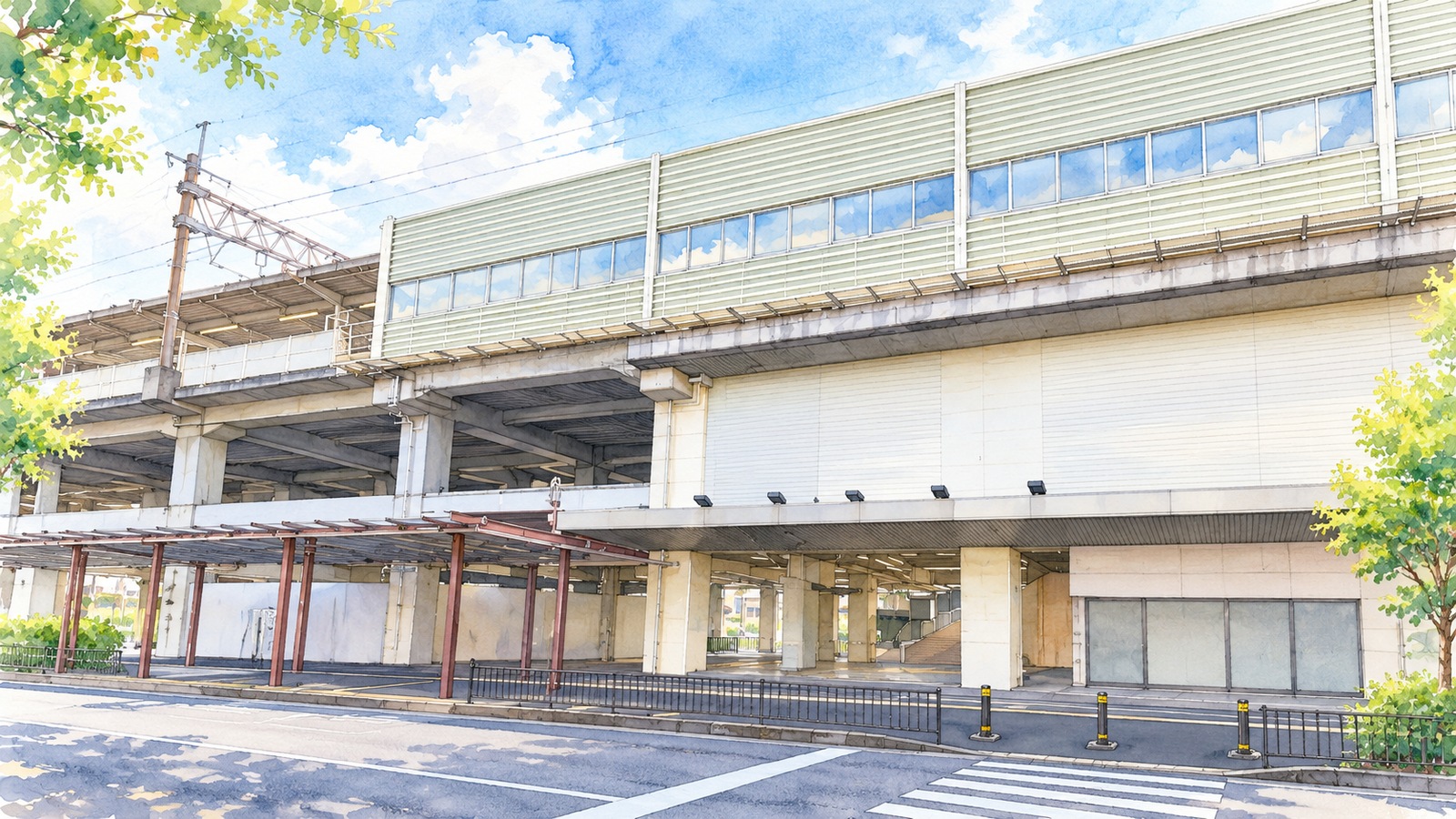
The official route guide from the Otsu Tourism Association identifies Otsukyo Station on the JR Kosei Line as the stop where the karuta club members get off on their way to Omi Jingu. The corresponding scene is on page 126 of volume 4, chapter 21. Before entering the tournament venue itself, this is a place to recall the time the friends spent traveling together.
If you read only the tournament scenes, the story may seem centered on the matches on tatami. But a high-school club’s tournament trip also includes getting off the train, taking in the atmosphere outside the station, and walking to the venue alongside teammates.
Note that Otsukyo Station on the JR Kosei Line and Omi-Jingu-mae Station on the Keihan Ishiyama-Sakamoto Line are separate stations on different railways. Check which train you are taking and the current access route so you can make your way to Omi Jingu without rushing.
The station is at 2-chome Ojikagaoka, Otsu, Shiga. It is an active station used by many passengers, so the areas to visit are outside the ticket gates and around the station plaza. A ticket or platform admission ticket is required to enter the platforms.
- Address
- 2-chome Ojikagaoka, Otsu, Shiga
- Connection to the story
- JR Kosei Line station where the karuta club members get off for the Omi Jingu tournament, volume 4, chapter 21, page 126
- Visiting and access
- The station’s public areas and plaza are open to visit; platform entry requires a train ticket or platform admission ticket. Omi Jingu is accessible on foot, by bus, or by transferring to the Keihan line.
Source: Otsu Tourism Association (in Japanese)
Omi Jingu and Omi Kangakukan | Visit the shrine and experience competitive karuta today
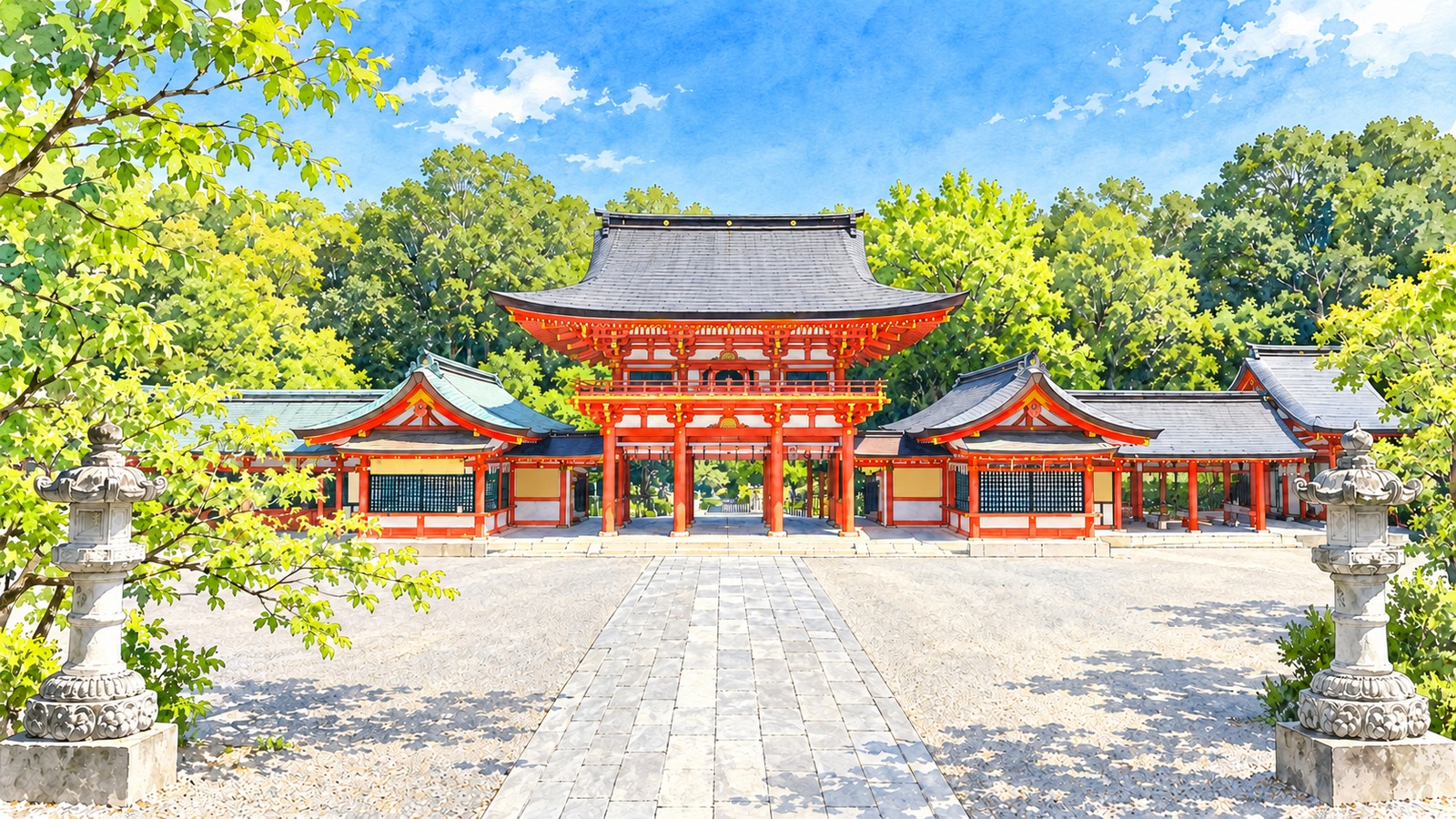
At Omi Jingu, a vermilion romon gate stands at the end of a tree-lined approach. This is where the club members pray and compose themselves before a tournament. Otsu’s official guide identifies the corresponding manga scene on page 101 of volume 4, chapter 21. After seeing the characters climb the steps with a desire to win, you can imagine the tension before the match as you walk the same path.
Omi Kangakukan, in the same shrine grounds, has reproductions of original artwork and autographs from the live-action film cast, and was also used as a filming location. Otsu’s official guide matches it with page 101 of volume 30, chapter 157. By continuing from the shrine to Kangakukan, visitors can experience both an exhibit related to the work and an actual competitive-karuta venue.
The official Otsu Akinotakai guide also welcomes general visitors to observe practice and describes opening sliding screens to explain how the game works. It is a special chance to connect the movements seen in the manga with the speed of sweeping away cards and the sound of hands striking the tatami. Practice schedules and observation hours vary by day, so confirm in advance.
The address is 1-1 Jingu-cho, Otsu, Shiga. Visiting the shrine grounds and viewing exhibits, practice or tournaments, or beginner programs at Kangakukan have separate conditions; access is offered according to the official event schedule.
- Address
- 1-1 Jingu-cho, Otsu, Shiga
- Connection to the story
- Shrine that hosts the national karuta tournament, with Omi Kangakukan in its grounds displaying original-art reproductions and film-cast autographs
- Visiting conditions
- The shrine grounds are open to visitors; Kangakukan exhibits and practice observation depend on the event schedule. About a nine-minute walk from Omi-Jingu-mae Station on the Keihan Line.
Sources: Otsu Tourism Association (in Japanese) / Omi Jingu (in Japanese) / All Japan Karuta Association (in Japanese) / Otsu Tourism Association (in Japanese) / Otsu Tourism Association (in Japanese)
Lake Biwa Hotel | The club members’ stay beyond the matches
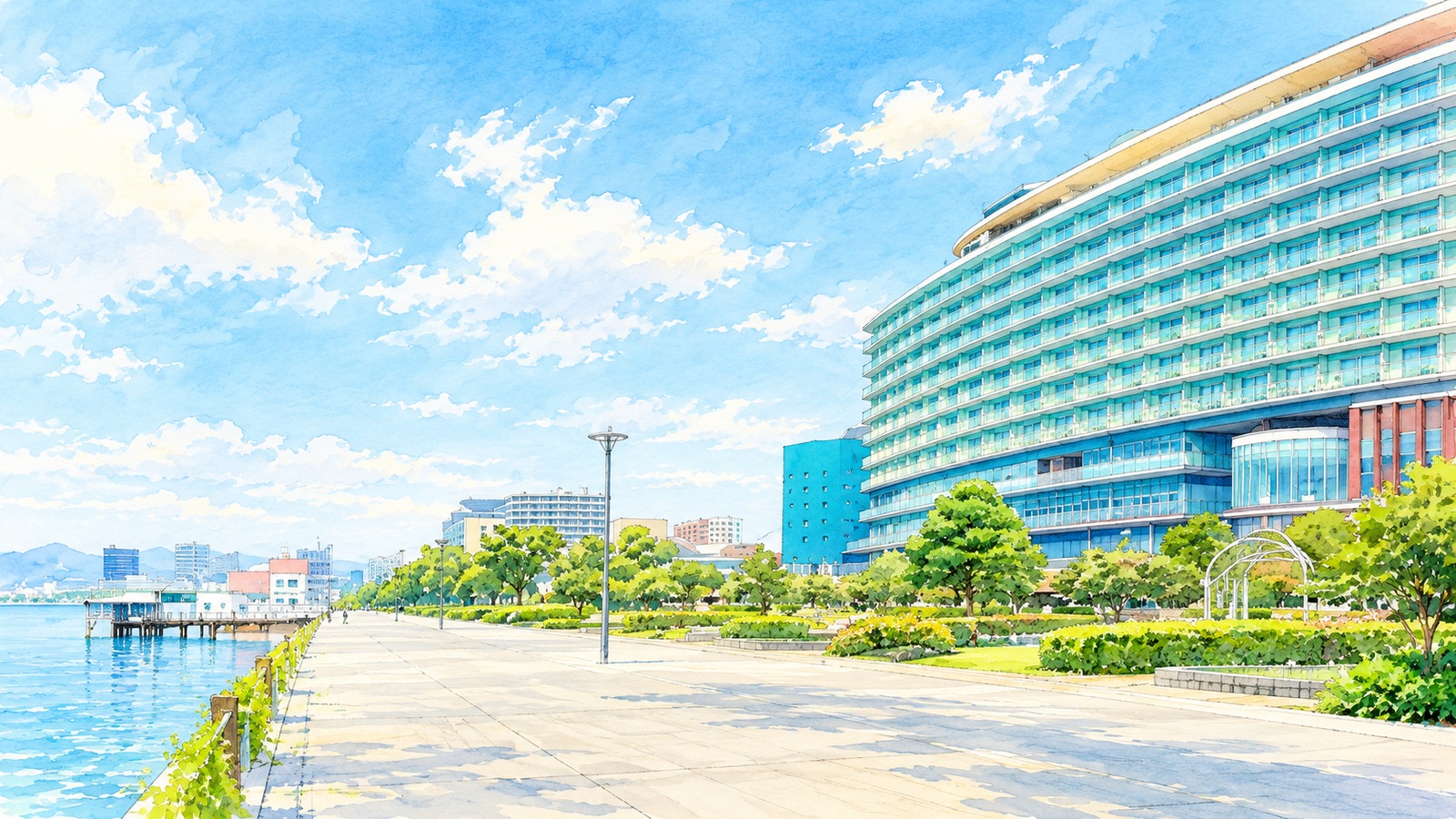
Set along the lakeshore, Lake Biwa Hotel is listed in Otsu’s official route guide as the karuta club members’ lodging in volume 42, chapter 214, pages 38–39. Separate from Omi Jingu, where the heated tournament matches unfold, it is a place to imagine the club members spending the night during their trip and preparing for the next day’s competition.
The tension of a match does not end on the tatami with the cards laid out. There is also the time spent traveling and staying overnight, eating with teammates in the same town, and getting ready. Adding a lakeside hotel to the pilgrimage route brings the journey to Otsu, where the club members temporarily move their everyday lives for a tournament, into sharper focus.
Lake Biwa Hotel today is known for its location, with calm lake views from every guest room. Visitors can stay overnight and enjoy the scenery, or reserve a table at a restaurant that is open to the public. Guest-room floors and the room depicted in the story are accessible only to hotel guests.
The address is 2-40 Hama-machi, Otsu, Shiga. Visitors can take a walk along the lakeside promenade to view the exterior, or dine at the restaurant or stay overnight. Photography is limited to public areas.
- Address
- 2-40 Hama-machi, Otsu, Shiga
- Connection to the story
- The hotel where the club members stay during the tournament, shown on pages 38–39 of volume 42, chapter 214
- Access and use
- View the exterior from the lakeside promenade, or visit the restaurant or stay as a guest (guest-room floors are for hotel guests only). About a five-minute walk from Keihan Biwako-Hamaotsu Station.
Sources: Otsu Tourism Association (in Japanese) / Keihan Hotels & Resorts — Lake Biwa Hotel (in Japanese) / Keihan Hotels & Resorts — Lake Biwa Hotel (in Japanese)
Katamachi Cultural Center | Where Chihaya and Taichi discover karuta
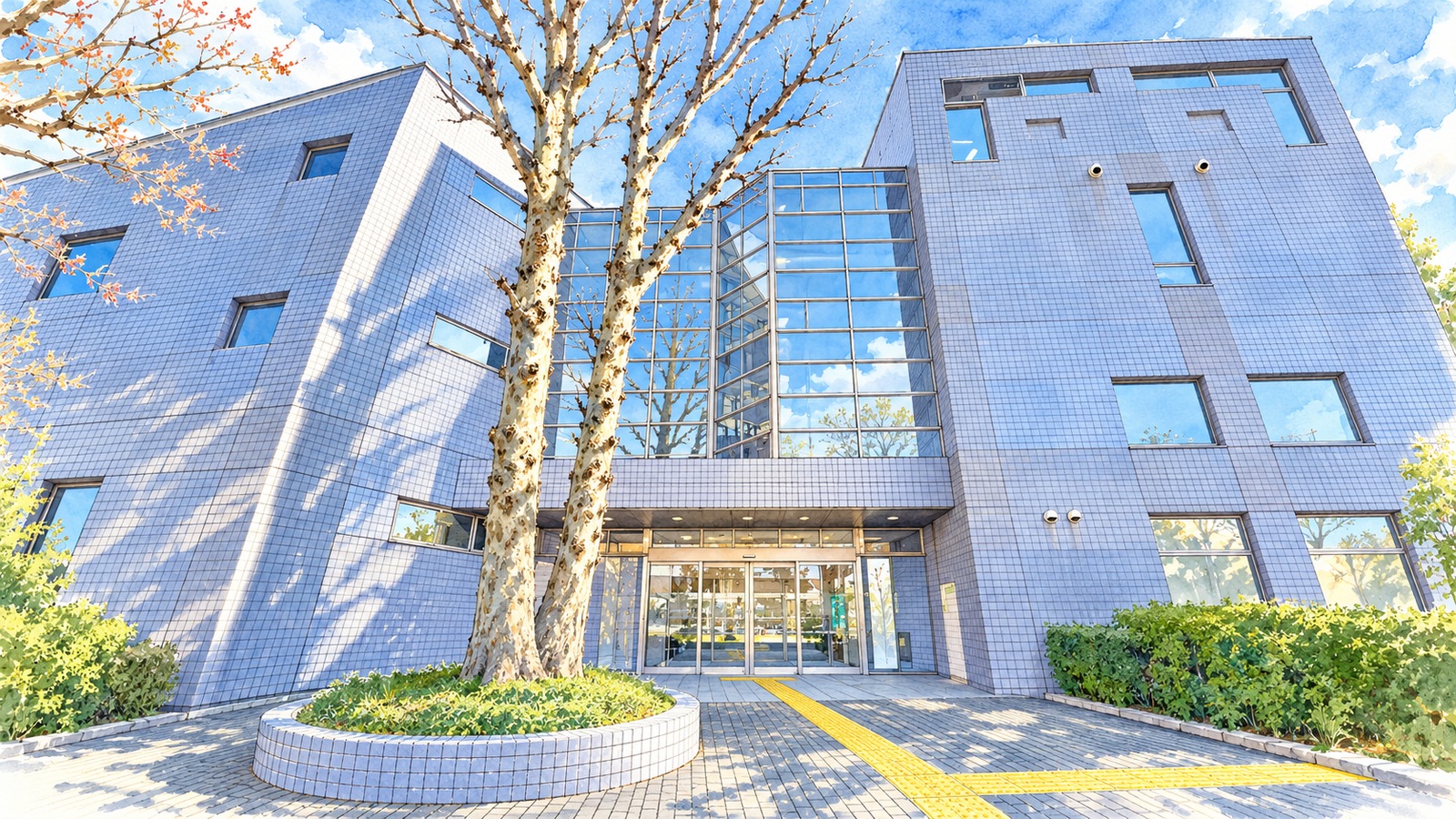
Fuchu City’s Katamachi Cultural Center is identified in the city’s official guide as the starting point where Chihaya and Taichi discover competitive karuta. The Fuchu Shirahaku-kai that they attend in the story is modeled on the real Fuchu Shiratae-kai, a karuta group active in Fuchu. It is a place where the story setting is closely tied to the region’s competitive-karuta culture.
Fuchu’s official materials also say that Hidewo Harada, the teacher who guides Chihaya and her friends, was modeled on Hidehiko Maeda, an eighth-dan and former chair of Fuchu Shiratae-kai. Behind the place where children face cards on tatami was a local mentor who practiced the game for years and helped train the next generation. This ordinary public facility makes the connection between the work and the real karuta community tangible.
Inside is a display model of the design manhole cover showing Chihaya, Taichi, and Arata as elementary-school students competing as a team. After seeing them compete against strong teams nationwide in high school, this image of the three friends as children brings you back to their early enthusiasm, when everything was just beginning.
The address is 2-17 Katamachi, Fuchu, Tokyo. The office counter is open weekdays from 8:30 a.m. to 5 p.m., while the community center is open 9 a.m. to 9 p.m.; hours depend on the facility’s use. The display model can be seen in the public exhibit area.
- Address
- 2-17 Katamachi, Fuchu, Tokyo
- Connection to the story
- A hub for the Fuchu Shiratae-kai modeled on the group Chihaya and Taichi join; display model of the three elementary-school friends’ design manhole cover
- Hours and access
- Office counter weekdays 8:30 a.m.–5 p.m. (community center 9 a.m.–9 p.m.; closed on some days). About a three-minute walk from Bubaigawara Station on the JR Nambu and Keio lines.
Sources: Fuchu City (in Japanese) / Fuchu City (in Japanese)
Bubaigawara Station and shopping street | Everyday corners close to the characters’ lives
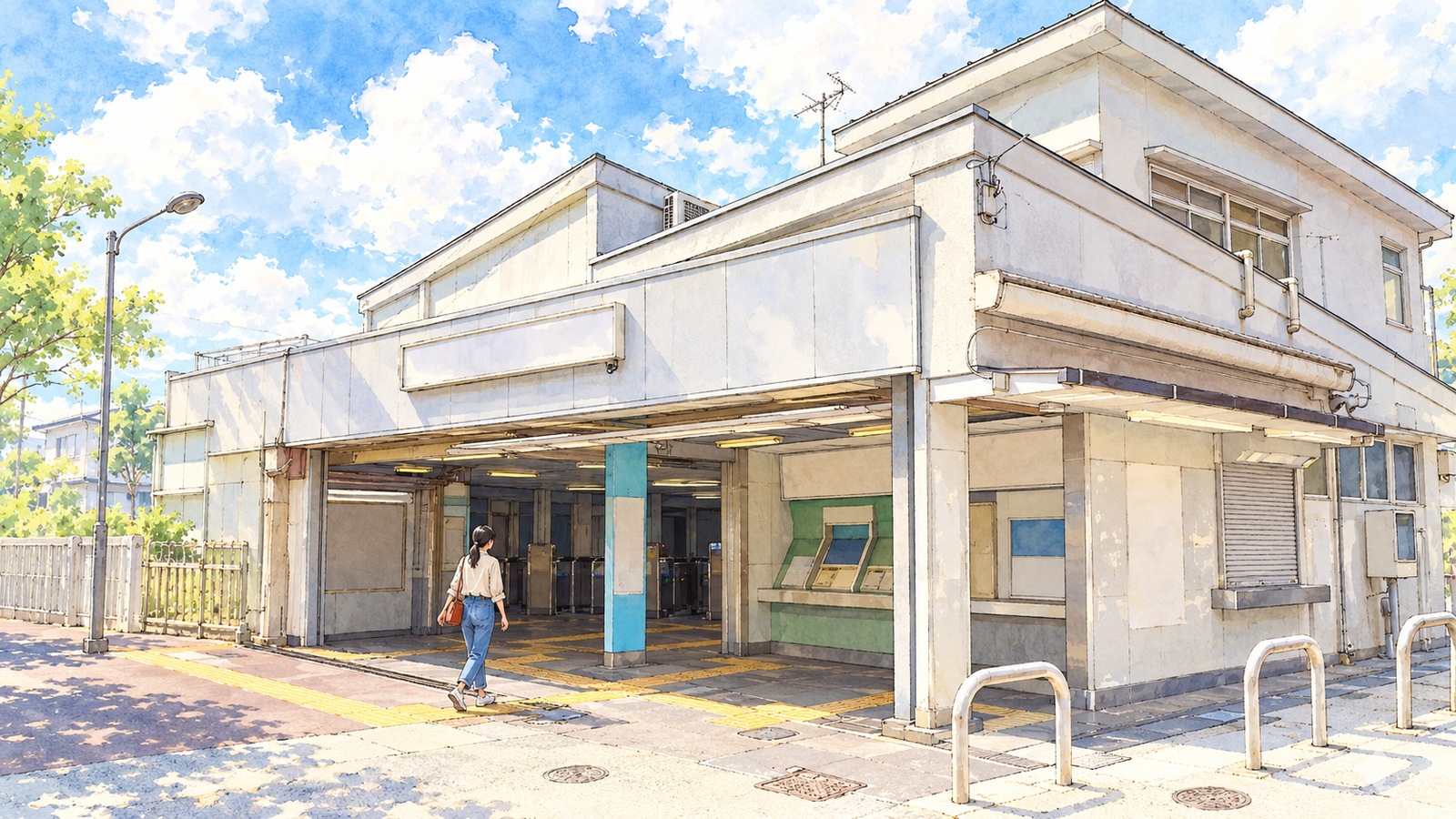
Bubaigawara Station, where the JR Nambu and Keio lines meet, and the shopping street around it are among the Fuchu scenes featured in the city’s official map. A Fuchu City guide video released in 2022 also highlights the area with newly recorded narration by Asami Seto, the voice of Chihaya. It offers a feel for everyday life, different from the spectacle of tournament venues.
As you leave the ticket gates and step into the shopping street, you enter the daily life of local residents going shopping, commuting, and heading to school. Chihaya and Taichi do not live only for matches. The real streets let you imagine the rhythms of their lives: walking here after practice, then heading their separate ways the next morning.
Restaurants and everyday shops line the station approach, and the neighborhood changes its character throughout the day. The street is a place to enjoy the everyday scenery of Fuchu, where the station and shopping district meet, while shopping or eating at open businesses.
The general location is around Bubaigawara Station in 2-chome Katamachi, Fuchu, Tokyo. If you enter the station platform, follow the railway companies’ ticket rules; for a neighborhood walk, stay outside the ticket gates on public streets. If you also visit the nearby Katamachi Cultural Center, check its opening hours.
- Address
- Around Bubaigawara Station, 2-chome Katamachi, Fuchu, Tokyo
- Connection to the story
- The station and shopping street that appear repeatedly in Chihaya and her friends’ daily commutes to school and practice, also featured in a city guide video narrated by Chihaya
- Walking conditions
- The shopping street and area outside the ticket gates are open to walk through; store hours vary.
Sources: Fuchu City (in Japanese) / Fuchu City Tourism Promotion Division (in Japanese)
Okunitama Shrine | Walk the grounds and see scenery from the story
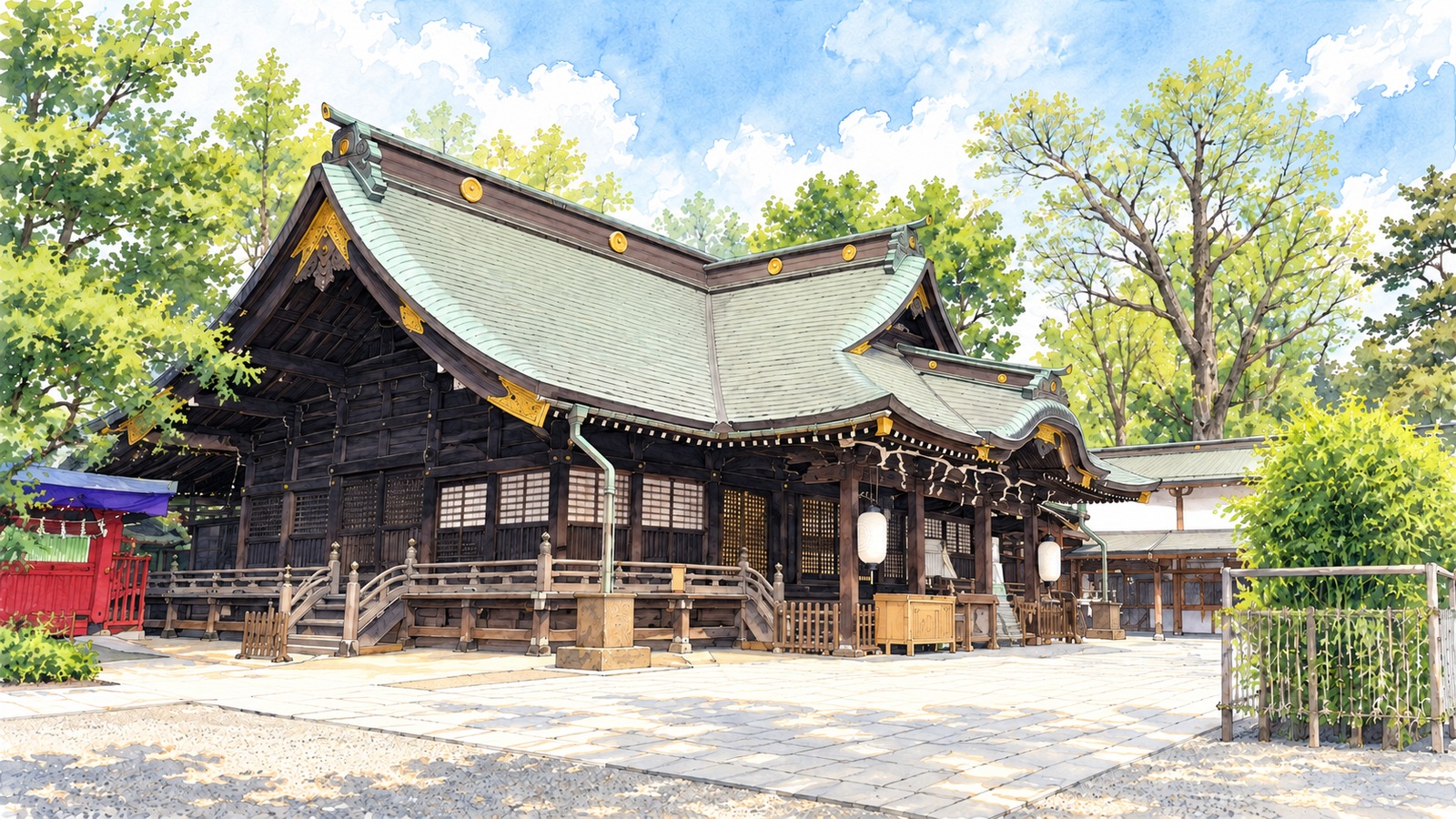
Okunitama Shrine in central Fuchu and its auxiliary Miyanosume Shrine are introduced in the city’s official video as places that appear repeatedly in the story. Walk along the broad approach to the worship hall, then visit Miyanosume Shrine within the grounds to experience the historic shrine and the scenery depicted in the story together.
Passing through the torii after walking beneath the zelkova trees, you leave the lively station area for the calm shrine grounds. As you walk the approach, imagine scenes where the characters spend time in Fuchu, around seasonal milestones or before and after matches. You can sense how close a great grove is to everyday life in this city.
Okunitama Shrine continues to welcome worshippers, prayer services, and local festivals. Public approaches and grounds are distinct from the interior of the worship hall, where prayers are held, and areas reserved for religious ceremonies. From public areas of the grounds, visitors can see the shrine building and trees.
The address is 3-1 Miyamachi, Fuchu, Tokyo. The shrine is about a five-minute walk from Fuchu Station on the Keio Line and Fuchu-Hommachi Station on the JR Nambu and Musashino lines. Baba Daimon Zelkova Tree-Lined Avenue continues north from the approach.
- Address
- 3-1 Miyamachi, Fuchu, Tokyo
- Connection to the story
- Historic Fuchu shrine that the characters visit around matches and seasonal milestones, along with the auxiliary Miyanosume Shrine
- Visiting and access
- The shrine grounds are open to visitors; about a five-minute walk from Fuchu Station on the Keio Line or Fuchu-Hommachi Station on the JR Line.
Sources: Fuchu City Tourism Promotion Division (in Japanese) / Okunitama Shrine (in Japanese)
Baba Daimon Zelkova Tree-Lined Avenue | Place Chihaya and Taichi’s image among the real trees
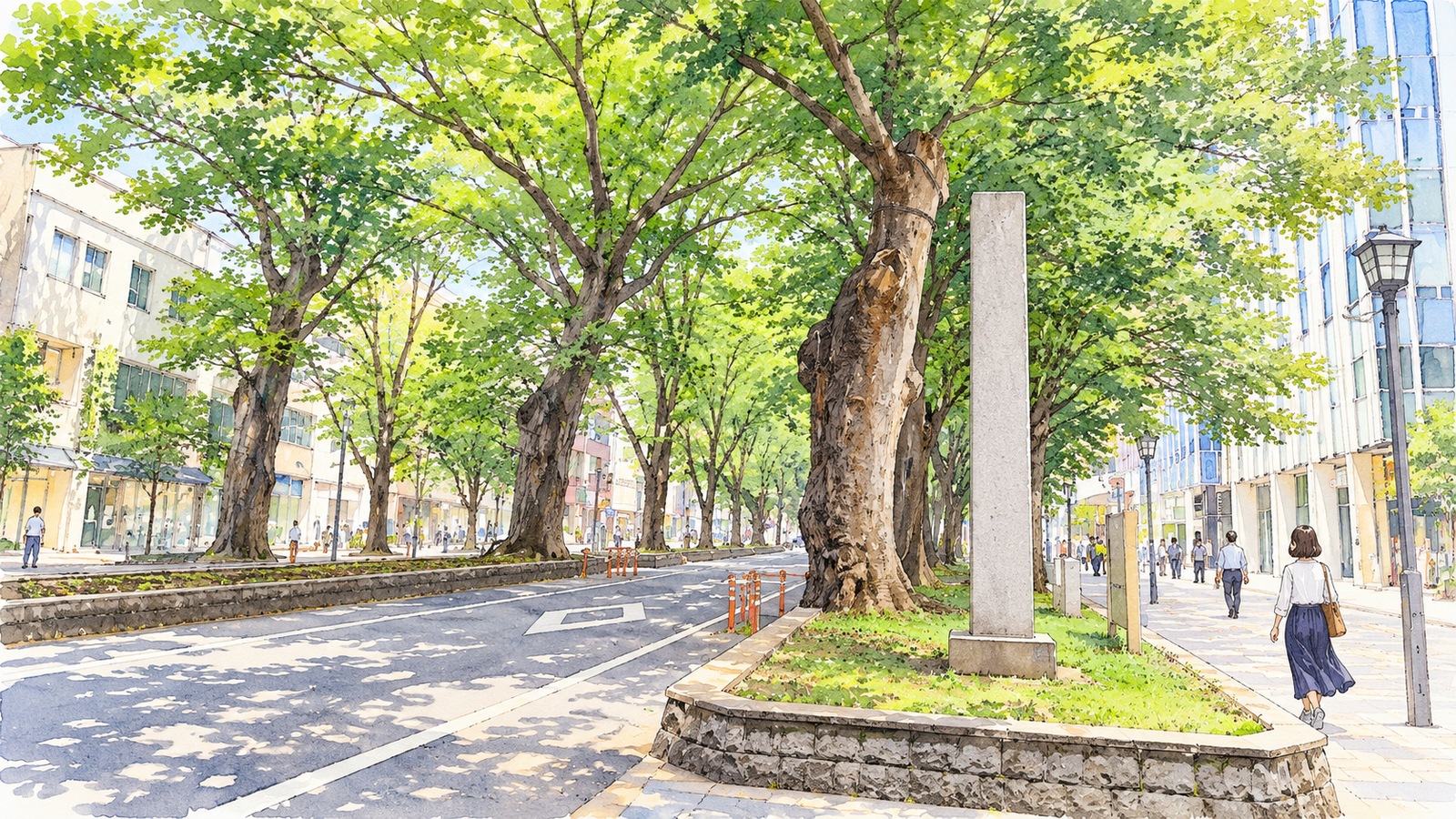
Baba Daimon Zelkova Tree-Lined Avenue, extending north from Okunitama Shrine, is another location featured in Fuchu City’s official video. Though it continues from the approach to the shrine, shopping facilities and routes to the station intersect nearby, creating a distinctly Fuchu scene of people walking beneath the trees.
Along this avenue, look for the official design manhole cover installed on the sidewalk near 1-41 Miyamachi. It depicts high-school students Chihaya and Taichi standing against the zelkova trees. You can see the illustration underfoot and the real avenue overhead in the same view. Compare it with the display model of the three elementary-school friends’ manhole cover at Katamachi Cultural Center to better sense the passage of time and the characters’ growth.
Rather than focusing only on the illustration underfoot, take in the zelkova trees and the depth of the avenue as well. The layered image of the work and the town can remain a vivid memory after your visit. The sidewalk is shared by pedestrians and cyclists.
The tree-lined avenue runs from around 1-chome Miyamachi toward Kotobuki-cho, Fuchu, Tokyo. The light filtering through the trees changes with the seasons, from fresh leaves to autumn color and bare winter branches.
- Address
- Sidewalk near 1-41 Miyamachi, Fuchu, Tokyo (Baba Daimon Zelkova Tree-Lined Avenue)
- Connection to the story
- Avenue leading to Okunitama Shrine, with an official design manhole cover depicting high-school students Chihaya and Taichi installed on the sidewalk
- Visiting conditions
- Open to visit anytime from the public sidewalk; a short walk from Fuchu Station on the Keio Line
Sources: Fuchu City Tourism Promotion Division (in Japanese) / Fuchu City (in Japanese)
Shimogawara Greenway | Everyday scenes from the story along the former railway
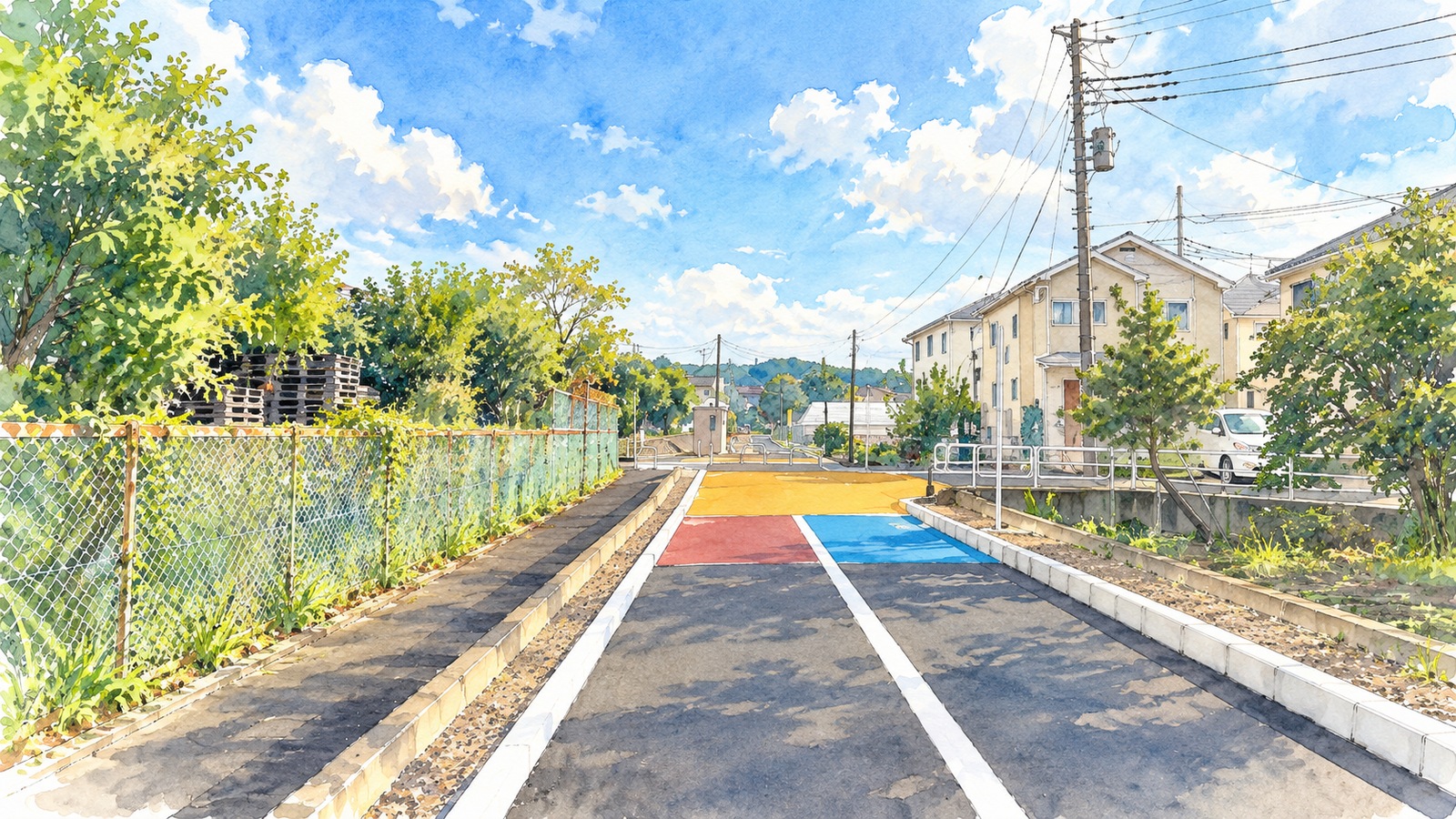
Shimogawara Greenway, built on the former tracks of the Japan National Railways Shimogawara Line, is a walking path that Fuchu City identifies as a setting from Chihayafuru. It winds through residential neighborhoods such as Katamachi, Honmachi, and Miyanishicho, offering a calmer walk than the station shopping streets or cultural center.
Trees line the gently curving path, whose shape recalls the railway that once ran here. It is a popular local walking route. Rather than searching for one specific manga panel, follow the scenery of Fuchu as a whole, where Chihaya and her friends walk between school and practice, and feel the quiet everyday life behind the story.
The greenway is a public path maintained under Fuchu City’s park ordinance and serves as a daily route for local residents on foot and by bicycle. The walking path has designated areas for pedestrians and cyclists, and is a pleasant place to enjoy the trees in the quiet neighborhood.
The lively area around Bubaigawara Station, the solemn grounds of Okunitama Shrine, and the broad avenue beneath the zelkova trees each have a different feel from this long, peaceful greenway. Visiting Fuchu’s destinations with their different roles in mind brings added depth to the town where the characters live.
- Address
- Katamachi, Honmachi, Miyanishicho, and other neighborhoods in Fuchu, Tokyo
- Connection to the story
- A walking path on the former JNR Shimogawara Line, part of the everyday Fuchu scenery where Chihaya and her friends walk between school and practice
- Walking conditions
- Open year-round as a city greenway, with separate areas for pedestrians and cyclists
Sources: Fuchu City (in Japanese) / Fuchu City code library (in Japanese)
Arata Hill | Model for the cherry-lined slope where Chihaya and Arata reunite
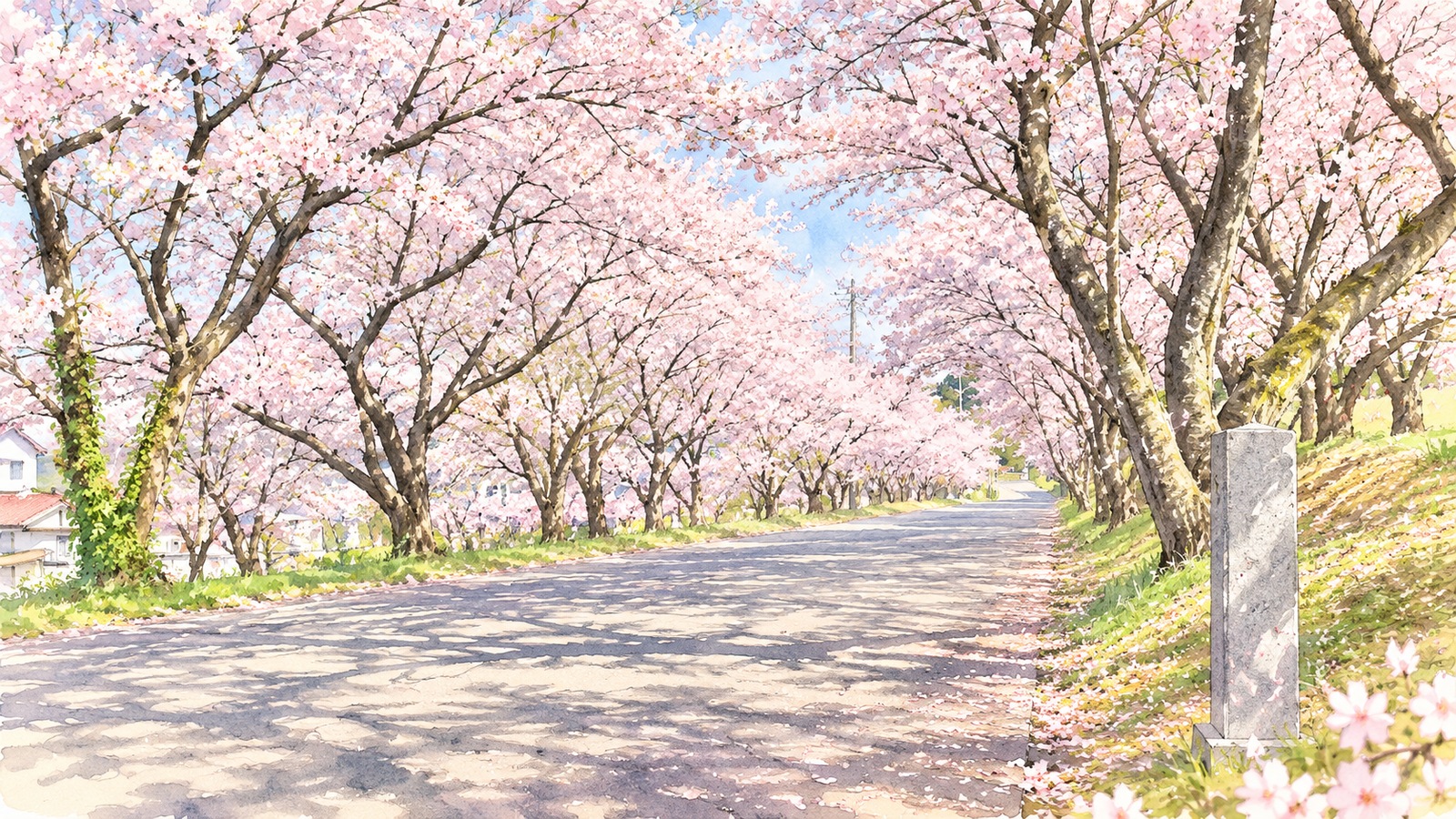
The cherry-lined slope in Yamamuro, Awara, Fukui, inspired the memorable scene where Chihaya and Arata reunite in the manga and anime. It is popularly called Arata Hill, after Arata Wataya, and a stone monument shaped like a poem card stands at the site. It was also used as a live-action filming location, connecting it closely to the work across different media.
As an elementary-school student, Arata moved from Fukui to Fuchu and introduced Chihaya and Taichi to the excitement of competitive karuta. After graduating from elementary school, he returned to Fukui. This slope, where he and Chihaya meet again after time apart, marks an important turning point in the three friends’ story.
The slope is a public road beside the grounds of Rengo’s Kanazu factory; the factory grounds and sports field are not visitor attractions. Cherry blossoms and lanterns are seasonal, limited to spring; at other times the slope is a peaceful avenue of trees.
The site is in Yamamuro, Awara, Fukui, about a five-minute walk from Awaraonsen Station. Parking is prohibited around the slope. If arriving by car, use the paid municipal lot at the station’s east exit, as indicated by Awara City.
- Address
- Yamamuro, Awara, Fukui (beside the Rengo Kanazu factory grounds)
- Connection to the story
- Cherry-lined slope that inspired the scene where Chihaya and Arata reunite, marked by a monument shaped like a karuta poem card
- Visiting and access
- View from the public sidewalk (no roadside parking; use the municipal lot at the station’s east exit). About a five-minute walk from Awaraonsen Station.
Sources: Awara City Tourism Association (in Japanese) / Awara City (in Japanese) / Awara City Tourism Association (in Japanese)
Awaraonsen Station | Compare the live-action filming location with the station today
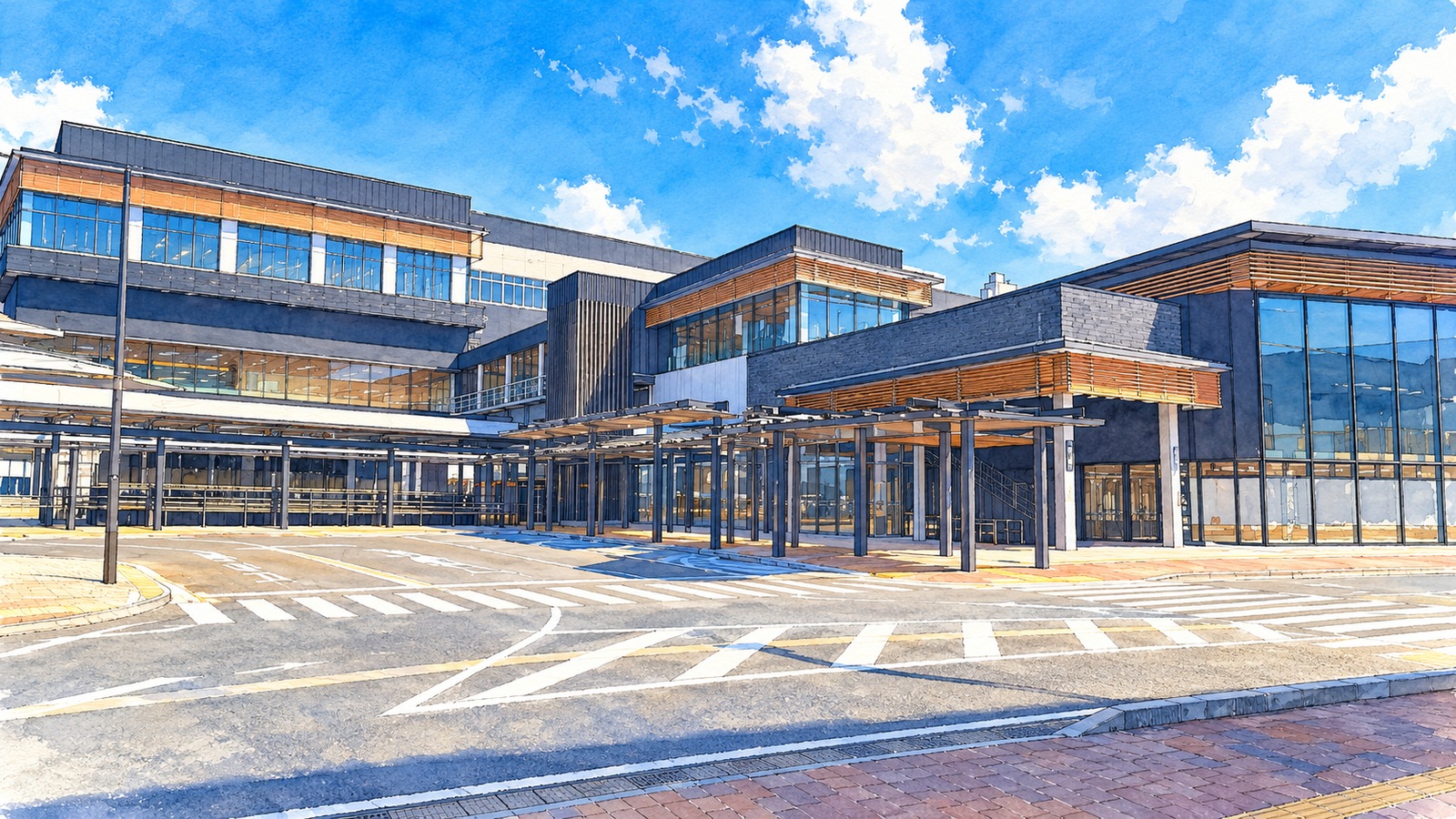
West Japan Railway’s FY2016 filming-location records document that the live-action film Chihayafuru: Part II was shot inside the Limited Express Shirasagi and at Awaraonsen Station. The record lists Suzu Hirose (Chihaya Ayase) and Shuhei Nomura (Taichi Mashima) as cast members, and the station served as a gateway to Fukui in scenes featuring the live-action versions of the two characters.
A location modeled on the manga or anime and a live-action film location have slightly different kinds of significance. Awaraonsen Station is where the cast and film crew actually entered and filmed. When rewatching the movie, pay attention to how train travel and stepping out at the station reflect the characters’ feelings.
Today, Awaraonsen Station has a new station building served by the Hokuriku Shinkansen and Hapi-Line Fukui. Its appearance and rail network have changed since filming in 2016, when the old station building stood and the Limited Express Shirasagi ran through to the area. It can be fun to compare the station remembered from the film with today’s modern plaza.
The station is at 1-chome Harumiya, Awara, Fukui. A railway ticket or platform admission ticket is required to enter the platforms; the public passage outside the ticket gates and station plaza are open to walk through. It is an easy place to stop on the way to or from Arata Hill, about a five-minute walk away.
- Address
- 1-chome Harumiya, Awara, Fukui
- Connection to the story
- Gateway to Awara, where Arata Wataya lives; filming location for the live-action film Chihayafuru: Part II
- Visiting and access
- Served by the Hokuriku Shinkansen and Hapi-Line Fukui. The public passage outside the ticket gates is open; platform entry requires a train ticket or platform admission ticket.
Sources: West Japan Railway (in Japanese) / Awara City (in Japanese)
Learn more about Chihayafuru | From the trio’s meeting to team competition and future paths
Fuchu is where the characters discover karuta, Omi is the place they travel to for tournaments, and Awara is the setting for retracing Chihaya’s connection with Arata. These three regions are linked by more than the desire to defeat someone. Continuing a club with friends, meeting a friend who lives far away, and thinking about the future are all shown alongside competitive karuta.
The meeting between Chihaya and Arata, drawn by Yuki Suetsugu
Yuki Suetsugu began serializing Chihayafuru in Kodansha’s Be Love magazine in 2007. At the start of volume 1, Chihaya Ayase is in sixth grade when she meets Arata Wataya, a transfer student from Fukui. Arata is usually quiet, but when he faces the cards on the tatami, his astonishing speed and concentration leave a strong impression on Chihaya.
Arata is in turn drawn to Chihaya’s natural hearing and her wholehearted response to each card. It is not a one-way relationship in which one character simply teaches the other; each awakens the other’s passion. Seeing the display model of the three elementary-school friends’ manhole cover at Katamachi Cultural Center brings to mind the story’s original spark, which later leads to the national tournament.
The manga followed the characters’ growth for 15 years, from volume 1 in May 2008 through the final volume 50, released in December 2022. After the main story ended, a new series, Chihayafuru plus Kimi ga Tame, began, following the Mizusawa High School karuta club after Chihaya and her friends have graduated. A new generation’s story begins in the same clubroom.
Chihaya, Taichi, Arata, and their Mizusawa High School teammates
In the TV anime, Asami Seto voices Chihaya Ayase, Mamoru Miyano voices Taichi Mashima, and Yoshimasa Hosoya voices Arata Wataya. For the characters as elementary-school students, Ayahi Takagaki voices young Taichi and Yuka Terasaki voices young Arata, carrying their voices forward from childhood to high school.
The friends who form the Mizusawa High School karuta club with Chihaya and Taichi are Kana Oe, who loves classical literature; Yusei Nishida, an experienced player; and Tsutomu Komano, skilled at data analysis. Their anime voice actors are Ai Kayano, Toru Nara, and Tsubasa Yonaga, respectively. Fuchu’s design manhole covers also depict Chihaya’s Mizusawa teammates. Knowing each person’s name and role before walking around the city makes the team-match scenes come vividly to mind.
At the National High School Karuta Championship, which leads into the third anime season, Mizusawa High defeated powerhouse Fujisaki High to win the team championship for the first time. In the individual competition that followed, Taichi won in Class B and Arata in Class A. When visiting Omi Jingu and Omi Kangakukan, remember the setting as both the site of a team victory and a stage where each character faced individual challenges.
Arata discovers team competition; Chihaya considers her future
After injuring her right finger during the national team tournament, Chihaya undergoes surgery and joins Taichi at Fujisaki High’s summer training camp. As she pursues her dream of becoming Queen, she also begins thinking about her future path and dream of becoming a teacher. It is a period when continuing karuta and choosing a future in life press on her at the same time.
Arata, who won the individual competition, sees the possibility of team-based karuta through Mizusawa High’s performance and decides to form a karuta club of his own. Pursuing strength alone is different from sharing a goal with teammates. Looking beyond the elementary-school trio to the high-school club reveals how karuta connects people.
If you have a chance to observe practice at Omi Kangakukan, you can look beyond the intense matches shown in the story to see how players build their skills through daily practice. For tourists, it is an experience during a trip; for the players on the tatami, it is serious, everyday training. Let your interest in the work be a starting point for learning about and respecting the real karuta community.
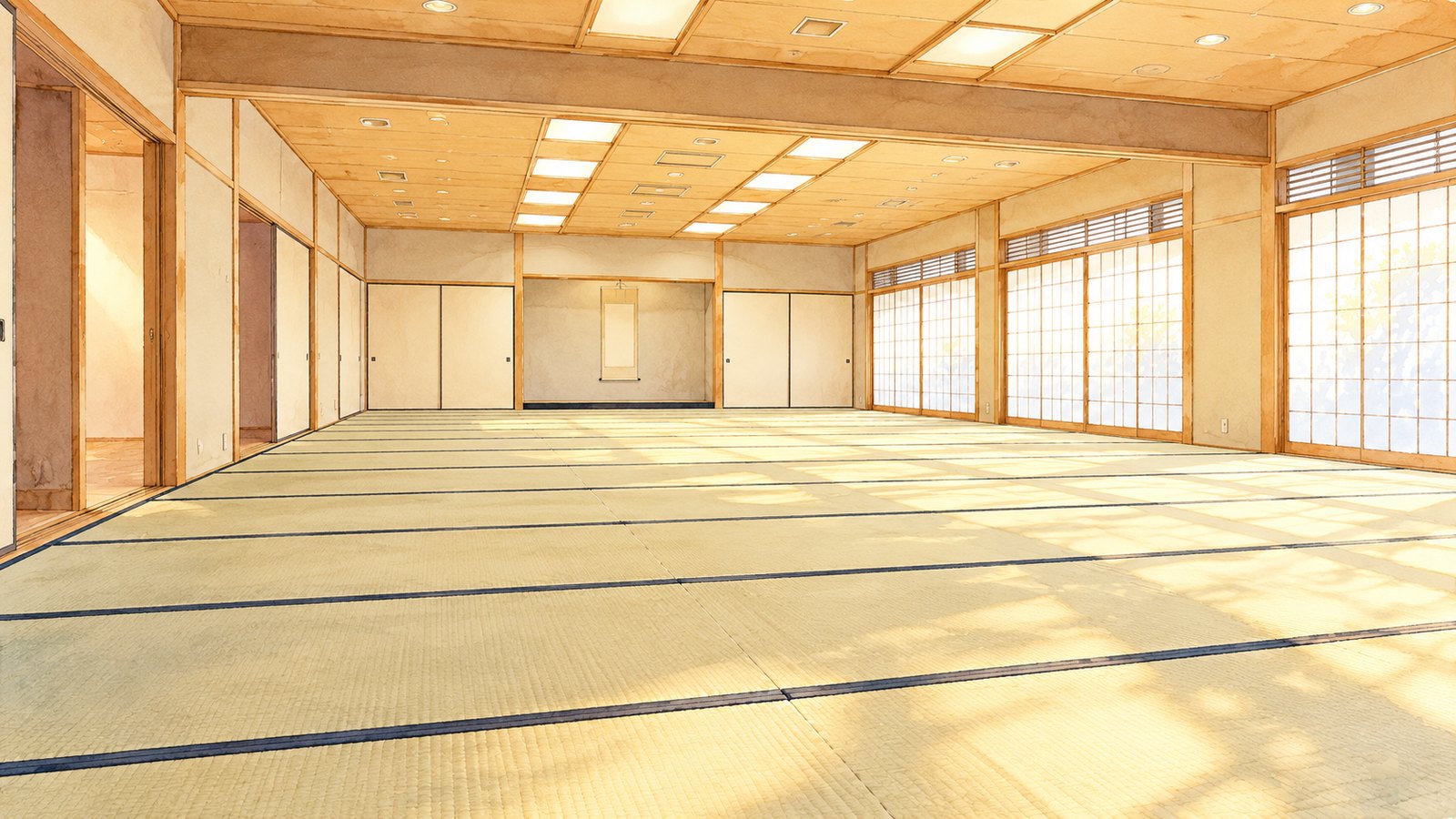
The final “fate match” with one card left
As Kodansha’s introduction to the series explains, the final situation with one card remaining in each player’s territory is called a “fate match” in the story. The tension of not knowing which card will be read, with the result undecided until the final instant, has produced memorable matches that keep readers turning the page.
You do not have to memorize every detail of competitive karuta’s rules to enter the story’s world; you can begin by following the characters’ expressions as they stake everything on the remaining cards. In the manga, read at your own pace through the panel layout and inner monologues; in the anime, hear the reader’s voice and cards being swept away; in the live-action films, watch the actors’ physical movements. Each medium offers its own way to experience the contest over the same poem.
Observing a match or taking part in an introductory program on site offers a way to learn about the real game through venue guidance and instructors’ explanations.
Another way to experience the story through voice cast, direction, and music
The TV anime series is directed by Morio Asaka, with character designs by Kunihiko Hamada and music by Kosuke Yamashita. Naoya Takayama handled series composition for season one, Masafumi Mima was sound director, and Madhouse produced the animation. Season three continued the same core directing, character-design, and animation-production team.
In a comment ahead of season three, Asami Seto, Chihaya’s voice actor, said she learned the season had been approved at an event in Fukui and wanted to reread the manga and portray the character carefully. Yoshimasa Hosoya, Arata’s voice actor, also recalled that even after time had passed since the series ended, many fans attended an event in Fukui, showing how eagerly they hoped for a continuation. A trip to Awara is a chance to reflect not only on the story’s setting but also on the exchanges between the cast and the local community that supported it.
Tsubasa Yonaga, who voices Tsutomu Komano, described the joy of playing the role again after a long time as “feeling young again.” Ai Kayano, who voices Kana Oe, spoke of the staff’s deep affection for the work, including director Asaka. The third season, broadcast about six years after the second, carries the passage of time for the production team and voice actors who have grown alongside the characters.
See the live-action films and Meguri as works from different periods
Suzu Hirose played Chihaya Ayase and Shuhei Nomura played Taichi Mashima in the live-action film series. The two films released in 2016, Chihayafuru: Part I and Part II, and the 2018 finale, Chihayafuru: Conclusion, were all directed and written by Norihiro Koizumi. Comparing the anime’s voice performances with the tense matches played by the live-action cast highlights the strengths of each approach.
You can play this video in the official video at the top of this page ↑
The TV drama Chihayafuru: Meguri, broadcast from July 2025, is an original story set 10 years after the live-action films. Norihiro Koizumi, who directed the films, participated as showrunner and created a new-generation story together with manga author Yuki Suetsugu.
Each destination has a different connection to the manga, anime, and live-action films. Arata Hill is both a model for the manga and anime and a live-action filming location, while Awaraonsen Station has documented filming for Chihayafuru: Part II. Understanding how each place is connected to the work makes it even more rewarding to return to the story.
- Meeting and everyday life
Fuchu, Tokyo
The city where three children discover the joy of competitive karuta at Katamachi Cultural Center and spend their days around Bubaigawara Station, the zelkova avenue, and Okunitama Shrine.
- Tournament and challenge
Otsu, Shiga
The setting of the decisive tournament, where the characters travel from Otsukyo Station to Omi Jingu and Omi Kangakukan and stay with teammates at Lake Biwa Hotel.
- Reunion and return to one’s roots
Awara, Fukui
Arata’s hometown, where he lives after introducing Chihaya to karuta; trace the reunion at the cherry-lined Arata Hill and the live-action filming location at Awaraonsen Station.
Source: Official materials and facility guides
From serialization to a new generation
This timeline brings together the manga’s journey from its 2007 debut to the final volume 50 in 2022, along with the TV anime, live-action films, sequel series, and initiatives in the regions that inspired the story.
- 2007Serialization began in Be Love. Volume 1 was published on May 13, 2008, bringing Chihaya and Arata’s first meeting as elementary-school students to readers in book form.Serialization
- 2009Won the second Manga Taisho Award. In 2010, it ranked No. 1 in the women’s category of Kono Manga ga Sugoi!, bringing wider recognition to a story about competitive karuta.Award
- 2011Won the 35th Kodansha Manga Award in the girls’ manga category, adding recognition for its portrayal of competition and personal growth.Award
- January 2013Season two of the TV anime began, bringing the story of the karuta club welcoming new members to the screen with voices and movement.Anime
- 2016The live-action films Part I and Part II were released. Filming at Awaraonsen Station and inside a train also became part of the record connecting the work with the region.Film
- 2018The live-action film Chihayafuru: Conclusion was released, carrying Chihaya and her friends’ story forward.Film
- October 2019The third TV anime season began, about six years after the previous season. It portrayed individual goals and future paths beyond the team tournament.Anime
- January 31, 2022A Fuchu guide video narrated by Chihaya was released, offering a way to experience the city and the story together.Community
- December 13, 2022The final volume 50 went on sale. The 15-year story reached its conclusion, and the special edition included a booklet of the final chapter’s storyboards.Conclusion
- April 12, 2024Volume 1 of Chihayafuru plus Kimi ga Tame was released, continuing the story at Mizusawa High School after Chihaya and her friends graduate.Sequel
- July 9, 2025The drama Meguri began, set 10 years after the films. It turns to a new generation in a different way from the manga sequel.Drama
- March 31, 2026The special Chihayafuru in Fuchu website closed. For a visit today, check current city and facility information about permanent exhibits and public access.Community
Source: Official materials and facility guides
Read and watch before and after the trip | Volume 1, the sequel, and official Fuchu guides
The following publications and media guide cover the manga’s starting point, the final volume’s special-edition contents, the sequel series, and the structure of video and tourism guides.
Original volume 1, the special edition of final volume 50, and the sequel Kimi ga Tame
The starting point is the standard edition of Chihayafuru volume 1. The print edition (Be Love KC) went on sale May 13, 2008; it is a 192-page, new-size paperback, ISBN 9784063192391. The e-book edition, which became available July 15, 2010, has a different release date.
A separate series, Chihayafuru plus Kimi ga Tame, follows the Mizusawa High School karuta club after Chihaya and her friends graduate. Volume 1 (released April 12, 2024; ISBN 9784065353226) stars Ritsuki Nagara, a first-year at Mizusawa High, who aims to win the national karuta championship and faces the cards wholeheartedly, even when things do not go as planned. It is a separate story from the original volume 1.
The final volume 50, published December 13, 2022, was also released in a special edition separate from the standard edition (ISBN 9784065307380, 208 pages before tax). It includes eight pages of color illustrations and a booklet containing all the storyboards for the final chapter. Kodansha notes that the special edition is not available as an e-book. This edition can be distinguished from the standard version by its inclusion of production materials.
Deepen your understanding of the settings through official videos and tourism route guides
On January 31, 2022, Fuchu City released a roughly six-minute guide video introducing locations connected with the manga, narrated with newly recorded lines by Asami Seto, Chihaya’s voice actor. Even if the video itself is no longer available, visitors can use Fuchu City’s official pages and design-manhole information to check the connections between Katamachi Cultural Center, Bubaigawara Station, the zelkova avenue, and the work.
The official route guide from the Otsu Tourism Association lists specific references: Otsukyo Station (volume 4, chapter 21, page 126), Omi Jingu (volume 4, chapter 21, page 101), Omi Kangakukan (volume 30, chapter 157, page 101), and Lake Biwa Hotel (volume 42, chapter 214, pages 38–39). Rewatching alongside the live-action film Chihayafuru: Conclusion gives a vivid sense of the story’s intensity through both the printed pages and the screen.
Source: Official materials and facility guides
Research memo | A business perspective: connecting karuta scenes with chances to try the sport
Fuchu, Omi, and Awara each have places connected with childhood, tournaments, reunion, and filming. At Omi Kangakukan in particular, visitors can learn about the karuta seen in the story by observing practice or taking part in an introductory program. It is a place where interest in the characters can become an entry point to experiencing the sport.
When sports organizations and tourism partners work together, they can schedule athletes’ practice separately from introductory sessions for visitors. A reservation-based program can also make it easier to prepare instructors and equipment. Alongside taking commemorative photos by a statue or illustration, offering a chance to try the difficulty and fun of the sport is one way to connect fans with the real competition.
Source: Official materials and facility guides
Sources
- Awara City — Access to Awara City (in Japanese)
- Awara City Tourism Association — Arata Hill (in Japanese)
- Awara City — Updated April 20, 2019: Nippon Tabigohan (in Japanese)
- Fuchu City — Design manhole covers featuring manga connected to Fuchu (in Japanese)
- Keihan Hotels & Resorts — Lake Biwa Hotel, a lakeside resort hotel with lake views from every room, 10 minutes from Kyoto (in Japanese)
- Lake Biwa Hotel — Restaurant list (in Japanese)
- West Japan Railway (in Japanese)
- All Japan Karuta Association (in Japanese)
- Fuchu City — Katamachi Cultural Center (in Japanese)
- Okunitama Shrine (in Japanese)
- Otsu Tourism Association — Explore, the sacred home of karuta: Otsu (in Japanese)
- Otsu Tourism Association — Experience competitive karuta at Omi Jingu, the sacred home of karuta (in Japanese)
- Otsu Tourism Association — Route through Otsu featured in the manga Chihayafuru (in Japanese)
- Otsu Tourism Association — Enjoy, the sacred home of karuta: Otsu (in Japanese)
- Fuchu City code library (in Japanese)
- Omi Jingu (in Japanese)
- Fuchu City Tourism Promotion Division (in Japanese)
- Awara City Tourism Association — HAPPY Hokuriku Awara, Fukui travel guide (in Japanese)
- Kodansha — Chihayafuru and related works (in Japanese)
- Kodansha — Chihayafuru (1) by Yuki Suetsugu (in Japanese)
- Nippon TV — Chihayafuru: Meguri cast and staff (in Japanese)
- Nippon TV — TV anime Chihayafuru, season one staff (in Japanese)
- Kodansha — Fuchu City × Chihayafuru: Manga IP case study, Vol. 63 (in Japanese)
- Nippon TV — Introduction (in Japanese)
- Nippon TV — Chihayafuru 2 (in Japanese)
- Kodansha — Chihayafuru reaches its conclusion with the release of volume 50; special 15-year anniversary projects (in Japanese)
- Nippon TV — Cast (in Japanese)
- Nippon TV — Ami Toma, Harana Nakanishi, Jun Saito, Taisuke Fujiwara, and Mone Kamishiraishi surprise Japan’s top high-school karuta team: Chihayafuru: Meguri student screening (in Japanese)
- Toho Movie Channel (YouTube)
- Official TV anime Chihayafuru 3 site (Nippon TV) (in Japanese)
- Kodansha — Chihayafuru plus Kimi ga Tame, Volume 1 (in Japanese)
- Kodansha — Chihayafuru (50), Special Edition (in Japanese)
Dates, hours, and ticket details reflect the information available when this article was written. Check each official site for the latest information before visiting.
FAQ
Can I visit Omi Jingu and Omi Kangakukan on the same trip?
They are within the same grounds, so you can visit them in one outing. Shrine access, Kangakukan exhibits, and use for practice or tournaments each have their own conditions and hours.
Is the Fuchu Shirahaku-kai in the story a real club?
It is modeled on the real Fuchu Shiratae-kai, a competitive karuta club active in Fuchu City. Katamachi Cultural Center has permanent public displays, including a sample of the design manhole cover.
Can visitors see the guest rooms at Lake Biwa Hotel?
Guest rooms are for hotel guests only. If you are not staying overnight, you can view the exterior from the lakeside or reserve a table at one of the restaurants while it is open.
Is there parking near Arata Hill?
Do not park on the slope or in the surrounding residential area or beside the factory. If driving, use the municipal lot at the east exit of Awaraonsen Station, free for the first hour; the hill is about a two-minute walk from the lot.
Are the Fuchu collaboration cafe and stamp rally still running?
The 2025 editions of the “Chihayafuru in Fuchu” cafe and sticker rally ran from August 29 to October 31, 2025. You can still enjoy permanent locations such as the displays at Katamachi Cultural Center and the city’s design manhole covers.
Are Otsukyo Station and Omi-Jingu-mae Station the same station?
No. They are different stations on different lines: Otsukyo is on the JR Kosei Line, while Omi-Jingu-mae is on the Keihan Ishiyama-Sakamoto Line.
Is Awaraonsen Station the same as the station shown during filming?
No. The current station is a new building served by the Hokuriku Shinkansen and Hapi-Line Fukui. It has changed from the former station and the route once served by the Limited Express Shirasagi.


