

Love Letter Pilgrimage: Eight Filming Locations in Otaru, Japan
The harbor of Otaru, seen from Asahi Observation Deck, appears in ‘Love Letter’ as the nighttime view from a glass artist’s workshop in Kobe. A building used as a library and a glassblowing studio also remain in the city. Visit locations where one city’s scenery played different places in the film.
A story that moves from a letter to a deceased fiancé to the memories of another person with the same name. Visit eight locations identified by the Otaru Film Commission in connection with scenes, and learn the role each plays in the film.
Eight Filming Locations in the Places Played by Otaru’s Scenery
Eight filming locations are scattered around Otaru, where you can compare the film’s scenes with what is there today. Historic stone buildings, an observation deck overlooking the harbor, a park on a hillside, and a glassblowing studio each played a role in the film; their current access conditions can help guide your trip.
1. Asahi Observation Deck
A hilltop viewpoint overlooking Otaru Port and the city, filmed as the night view seen through the window of Akiba’s glass workshop in Kobe.
Explore Asahi Observation Deck2. Tengu Mountain
One of Otaru’s signature viewpoints, reached by ropeway. The opening scene was filmed here, with Hiroko Watanabe standing in a field of white snow.
Explore Tengu Mountain3. Temiya Park and Otaru Temiya Park Athletic Field
The park and athletic field where scenes were filmed of young Itsuki Fujii putting a paper bag over young Itsuki Fujii’s head, and a track meet featuring about 300 local junior-high and high-school students.
Explore Temiya Park and Otaru Temiya Park Athletic Field4. Former Nippon Yusen Otaru Branch
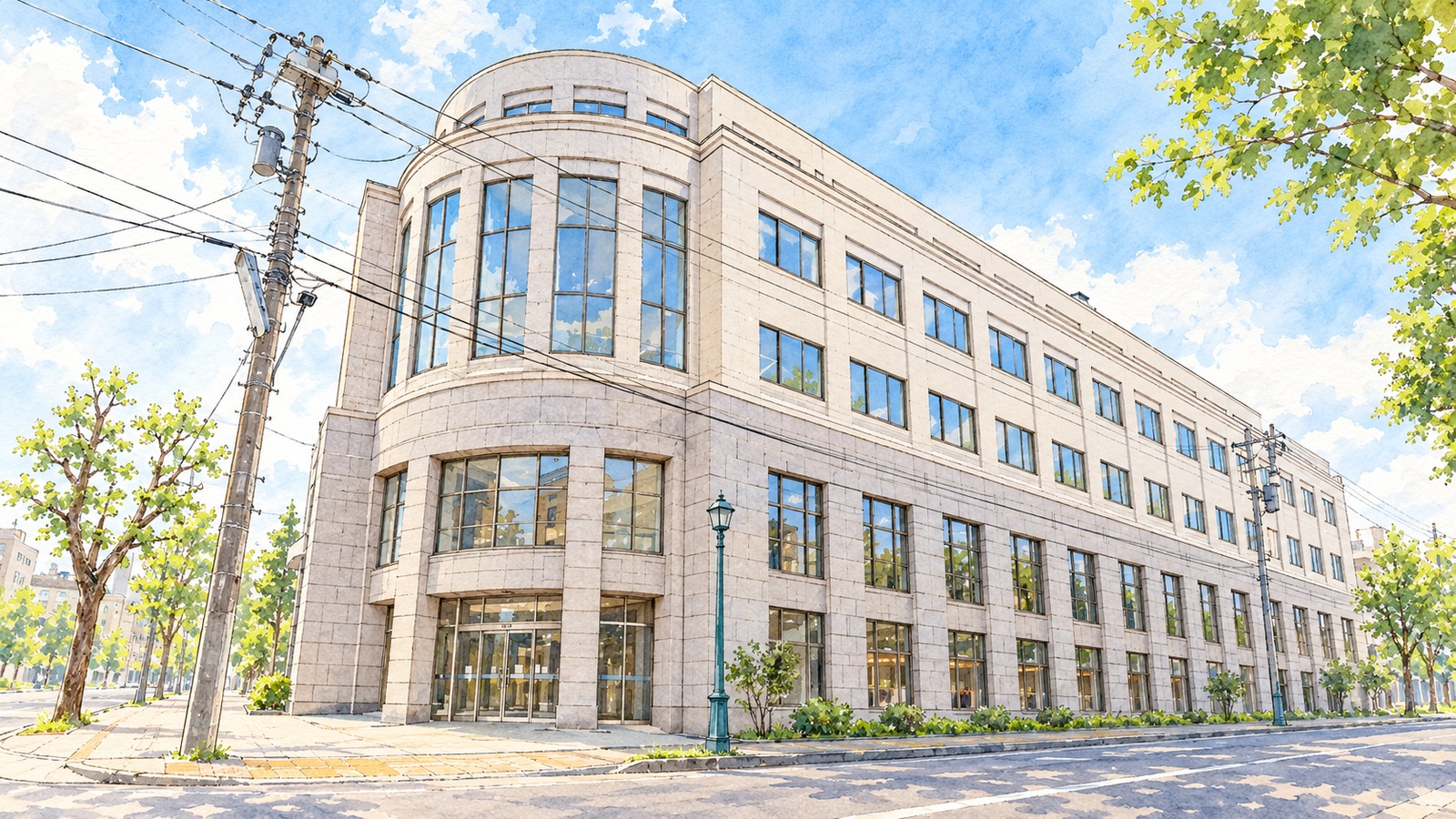
A stately stone building completed in 1906 and designated an Important Cultural Property of Japan. Its interior was filmed as Otaru City Library, where the adult woman Itsuki Fujii works.
Explore the Former Nippon Yusen Otaru Branch5. Ironai Intersection
The intersection of Nichigin-dori and Sakaimachi-dori, where a memorable scene was filmed: Hiroko Watanabe is returning to Kobe as Itsuki Fujii arrives by bicycle to mail a letter, and they pass each other on the street.
Explore Ironai Intersection6. Otaru City Hall Main Building
A historic government building that still serves residents. Its main building exterior and interior corridor appeared as the hospital Itsuki Fujii visits in the film.
Explore Otaru City Hall Main Building7. The Glass Studio in Otaru
A real glassblowing studio in the Tengu Mountain area, filmed as the Kobe workshop of Shigeru Akiba, the glass artist played by Etsushi Toyokawa.
Explore The Glass Studio in Otaru8. Former Suehiro Residence
A historic building in Otaru City where the scene was filmed of Hiroko Watanabe copying Itsuki Fujii’s old address from her yearbook and talking with Itsuki’s mother.
Explore the Former Suehiro Residence
Asahi Observation Deck | Otaru’s Night View Becomes the View from a Kobe Workshop
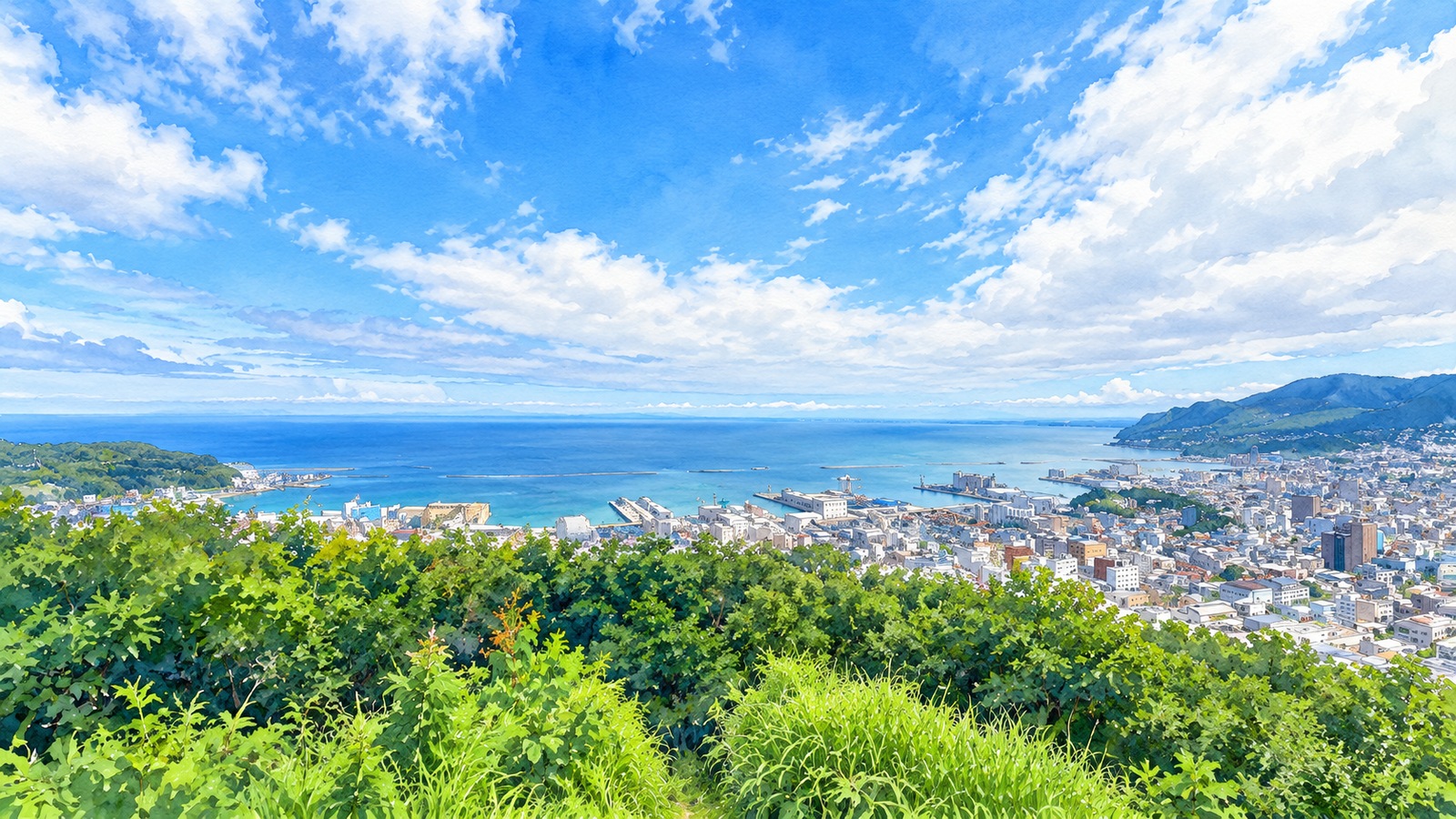
The Otaru Film Commission’s location guide explains that the night view from Asahi Observation Deck was filmed as the view from the Kobe workshop of Shigeru Akiba, a glass artist. In the story, the view over Otaru Port and the city becomes part of a night in Kobe.
After watching the film, stand at the observation deck and look at the city lights below as you recall the nighttime atmosphere around Akiba and Hiroko Watanabe. The workshop interior and exterior and the view from the observation deck were filmed separately, then connected through editing as one space.
Asahi Observation Deck is in Otaru, Hokkaido. The city’s visitor information says it is about a 15-minute drive from JR Otaru Station or about a 20-minute walk from the Shogyo Koko-mae bus stop on Chuo Bus. Parking is free, but the viewpoint is seasonal: the access road and walking path close during snowy months.
- Location
- Asahi Observation Deck, Asahi-cho and Tomioka side, Otaru, Hokkaido
- Connection to the film
- Hilltop viewpoint over Otaru Port and the city, filmed as the night view from the window of Shigeru Akiba’s glass workshop in Kobe
- Access and conditions
- Free admission and parking; the road closes in snowy months. About a 15-minute drive from JR Otaru Station.
Sources:Otaru Film Commission (Otaru City Tourism Promotion Office) / Otaru Film Commission / Otaru City
Tengu Mountain | Snow at the Beginning of the Film, and the Mountain Today
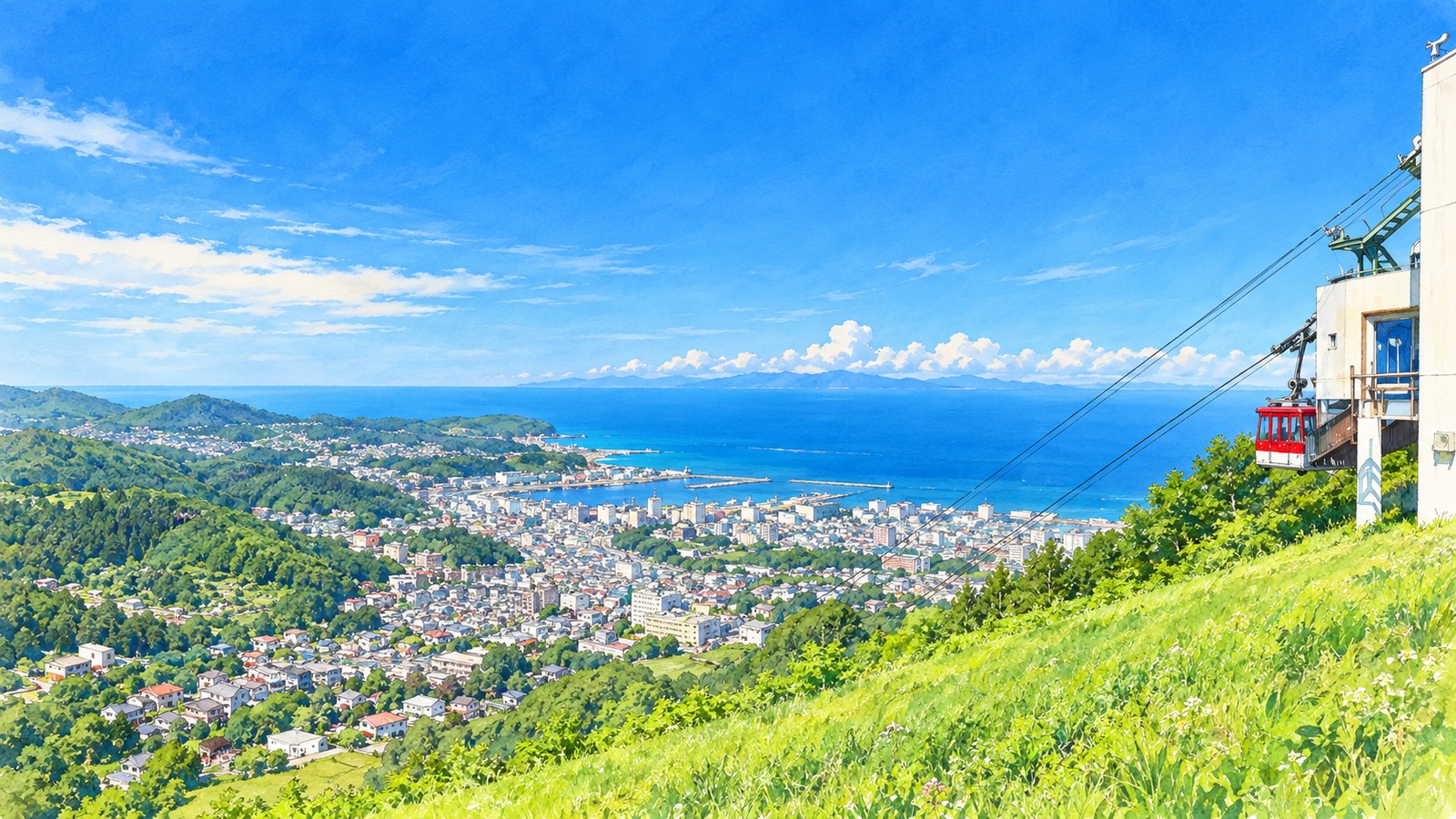
Otaru Tengu Mountain is where the film’s opening snowfield scene was shot: Hiroko Watanabe lies in the snow and quietly takes a breath. The Otaru Film Commission’s official map also introduces it as the location that opens the story, making it a way back into the film’s world and its memory of a completely white landscape.
From the summit, look over Otaru and the Sea of Japan and imagine how winter snowfall turns this slope into a blanket of silver. The mountain changes greatly with the seasons, and its present-day view can be experienced alongside the film’s opening shot.
Conditions and permitted areas differ between walks around the summit observation area and winter operation of the ski area. The visitor area is the observation space and walking paths by the ropeway’s upper station, separate from ski runs and restricted areas.
The ropeway’s lower station is at 2-16-15 Mogami, Otaru, Hokkaido. The 2026 summer season is scheduled for April 25 through November 3. Operating periods and hours differ from the winter season, and service may be suspended in strong winds or other severe weather.
- Location
- 2-16-15 Mogami, Otaru, Hokkaido (Tengu Mountain Ropeway lower station)
- Connection to the film
- Otaru viewpoint where the opening scene of Hiroko Watanabe standing in a white snowfield was filmed
- Operating season and notes
- Hours change between the summer season (late April to early November) and winter. Service may stop in severe weather; do not enter ski runs without permission.
Sources:Otaru Film Commission / Chuo Bus Tourism Development | Otaru Tengu Mountain
Temiya Park and Temiya Park Athletic Field | The Childhoods of the Two Itsukis
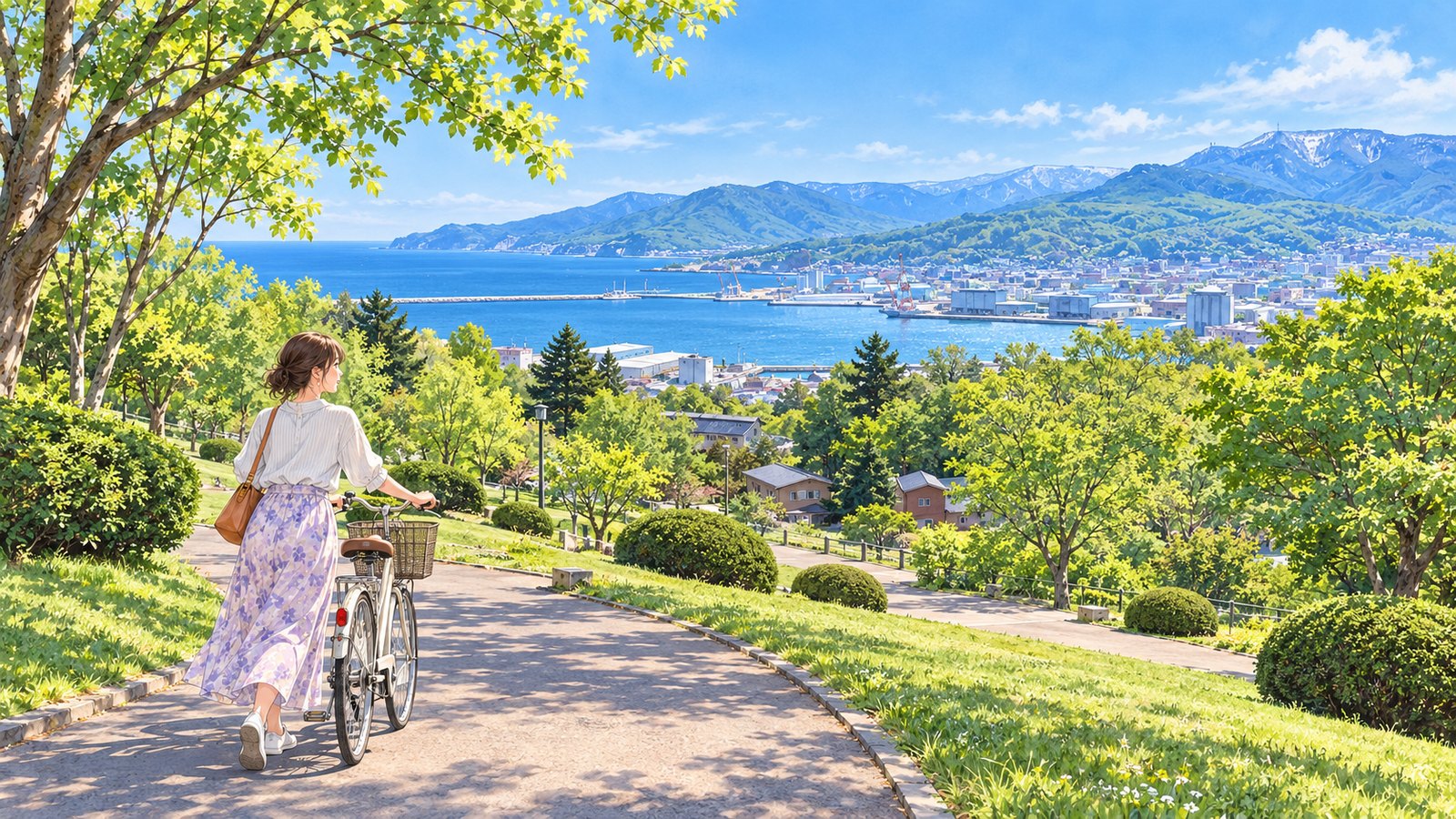
On a hill in Temiya Park, a memorable scene was filmed of young Itsuki Fujii riding a bicycle and mischievously putting a paper bag over young Itsuki Fujii’s head. It is a place to recall their junior-high years, when they were teased for sharing the same name yet spent time together.
At the adjacent Otaru Temiya Park Athletic Field, a scene was also filmed of young Itsuki competing in a track meet with a broken foot. According to the Otaru Film Commission, about 300 junior-high and high-school students from Otaru took part as extras, helping create the excitement of a school event.
Takashi Kashiwabara played Itsuki as a boy, and Miki Sakai played Itsuki as a girl. As you walk the park’s slopes and remember their exchanges, with clumsy feelings hidden behind blunt behavior, the emotions left unspoken come vividly back with the scenery.
The address is 2-5-1 Temiya, Otaru, Hokkaido. The park’s walking paths are open for public use, and the adjacent Otaru Temiya Park Athletic Field remains an active sports facility with a certified 400-meter track.
- Location
- 2-5-1 Temiya, Otaru, Hokkaido
- Connection to the film
- Park and athletic field where the hillside scene with the two young Itsukis and the track meet featuring about 300 local students were filmed
- Visiting conditions
- The park’s paths are open for walking; the track is closed to visitors during events and reserved use.
Sources:Otaru Film Commission (Otaru City Tourism Promotion Office) / Otaru Film Commission / Otaru City
Former Otaru Branch of Nippon Yusen | The Building That Played the Library Where Itsuki Worked
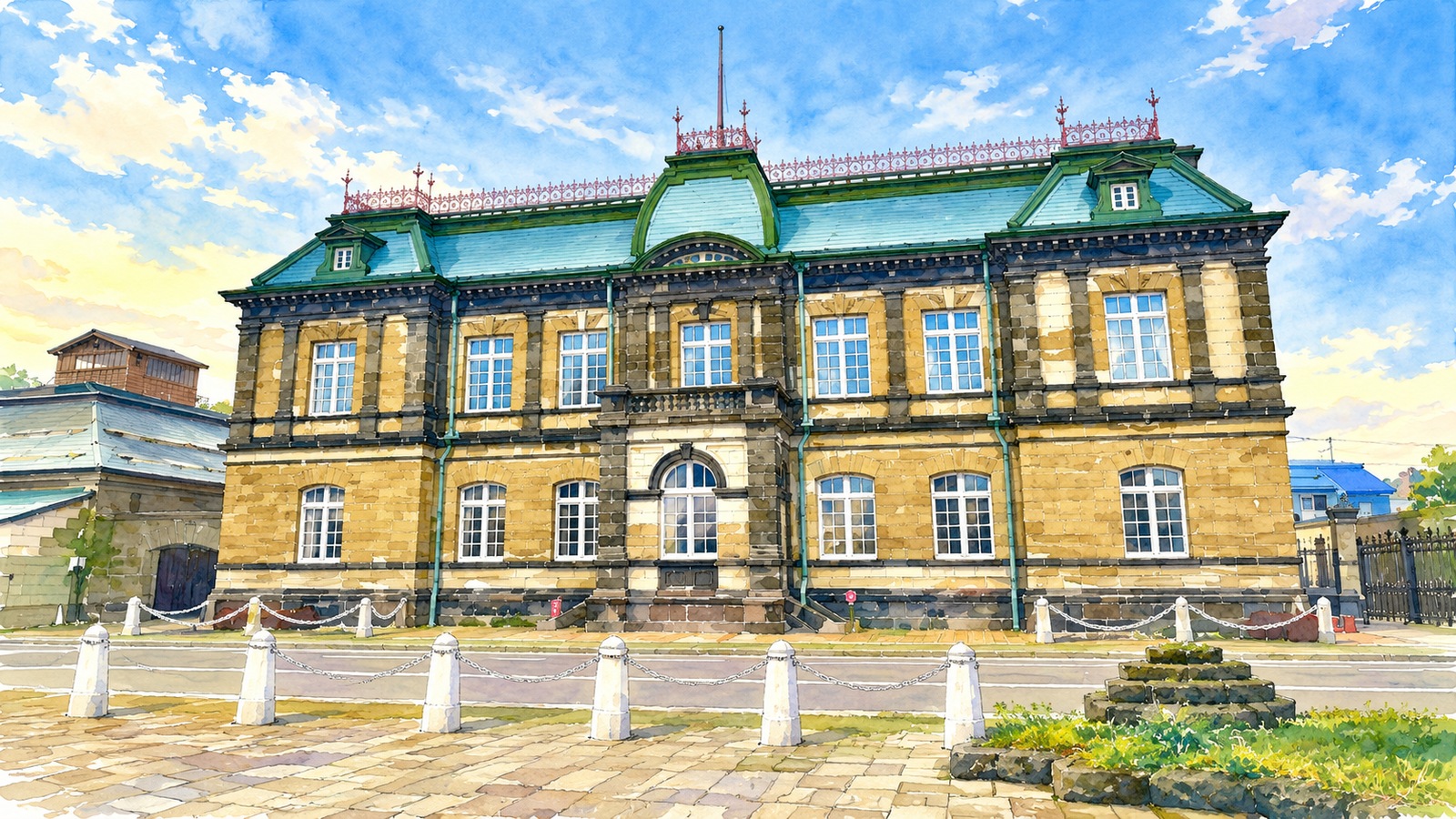
The former Otaru Branch of Nippon Yusen is a nationally designated Important Cultural Property. It was used in the film as the Otaru City Library where the adult female Itsuki Fujii worked. Completed in 1906, it is a two-story stone building in a revival style inspired by early modern European architecture, and it preserves the history of Otaru’s prosperous shipping era.
Standing inside, where soft light filters through tall windows beneath high ceilings, you can picture Itsuki, played by Miho Nakayama, working among the counter and shelves. The bookshelves and desk arrangements seen during filming were sets made for the movie, but the building’s substantial woodwork and stone design helped create the story’s quiet tone.
For Itsuki, who reads the unusual letter from Hiroko Watanabe in Kobe and slowly traces memories of junior high, the library is a calm, everyday workplace. Visiting the space where she spends her days brings the way the exchange of letters changes the lives of both women closer to view.
The address is 3-7-8 Ironai, Otaru, Hokkaido. It has reopened after preservation and repair work. Hours are 9:30 a.m. to 5 p.m.; it is closed Tuesdays (or the following weekday when Tuesday is a holiday) and during the year-end/New Year period, December 29 to January 3. Admission is ¥300 for adults, ¥150 for high school students and Otaru residents aged 70 or older, and free for junior-high students and younger.
- Address
- 3-7-8 Ironai, Otaru, Hokkaido
- Connection to the film
- A nationally designated Important Cultural Property completed in 1906; its interior was filmed as the Otaru City Library where the adult female Itsuki Fujii worked
- Hours and admission
- 9:30 a.m.–5 p.m.; closed Tuesdays and over the New Year holidays; ¥300 adults, ¥150 high school students, free for junior-high students and younger
Sources:Otaru Film Commission (Otaru City Tourism Promotion Office) / Otaru Film Commission / Hibiya Kadan, designated manager of the former Otaru Branch of Nippon Yusen
Ironai Crossing | The Street Corner Where Hiroko and Itsuki Pass Each Other
Ironai Crossing, where Nichigin-dori and Sakaimachi-dori meet, is where a scene was filmed in which Hiroko Watanabe, visiting Otaru before returning to Kobe, happens to pass Itsuki Fujii as she rides by on a bicycle to mail a letter. It is the setting for a memorable moment when two women, both played by Miho Nakayama in a dual role, briefly cross paths on an Otaru street.
The Otaru Film Commission’s map explains that the red, round post box in front of the main Otaru Post Office was a prop placed for filming and was not at the post box’s actual location. So visitors today will not find a round red post box standing in the same spot as in the film.
Even without the filming prop, the view across the intersection and the streets around the post office let you trace Hiroko’s line of sight from a taxi and Itsuki’s route as she rides past. Imagining where each woman came from and how far apart they passed makes the staging of this street corner easier to appreciate.
The approximate address is near the Otaru Post Office at Ironai 1-chome, Otaru, Hokkaido. It is an intersection on a main road in the city, where Nichigin-dori and Sakaimachi-dori meet; you can view the full crossing from the sidewalk.
- Address
- Ironai 1-chome, Otaru, Hokkaido (Nichigin-dori and Sakaimachi-dori intersection, near Otaru Post Office)
- Connection to the film
- Street corner where Hiroko, heading back to Kobe, and Itsuki, cycling to mail a letter, pass each other (the round post box shown in the film was a prop)
- Visiting conditions
- Open to view from the sidewalk at any time
Sources:Otaru Film Commission (Otaru City Tourism Promotion Office) / Otaru Film Commission
Otaru City Hall Main Building | The Present-Day Government Office That Played a Hospital
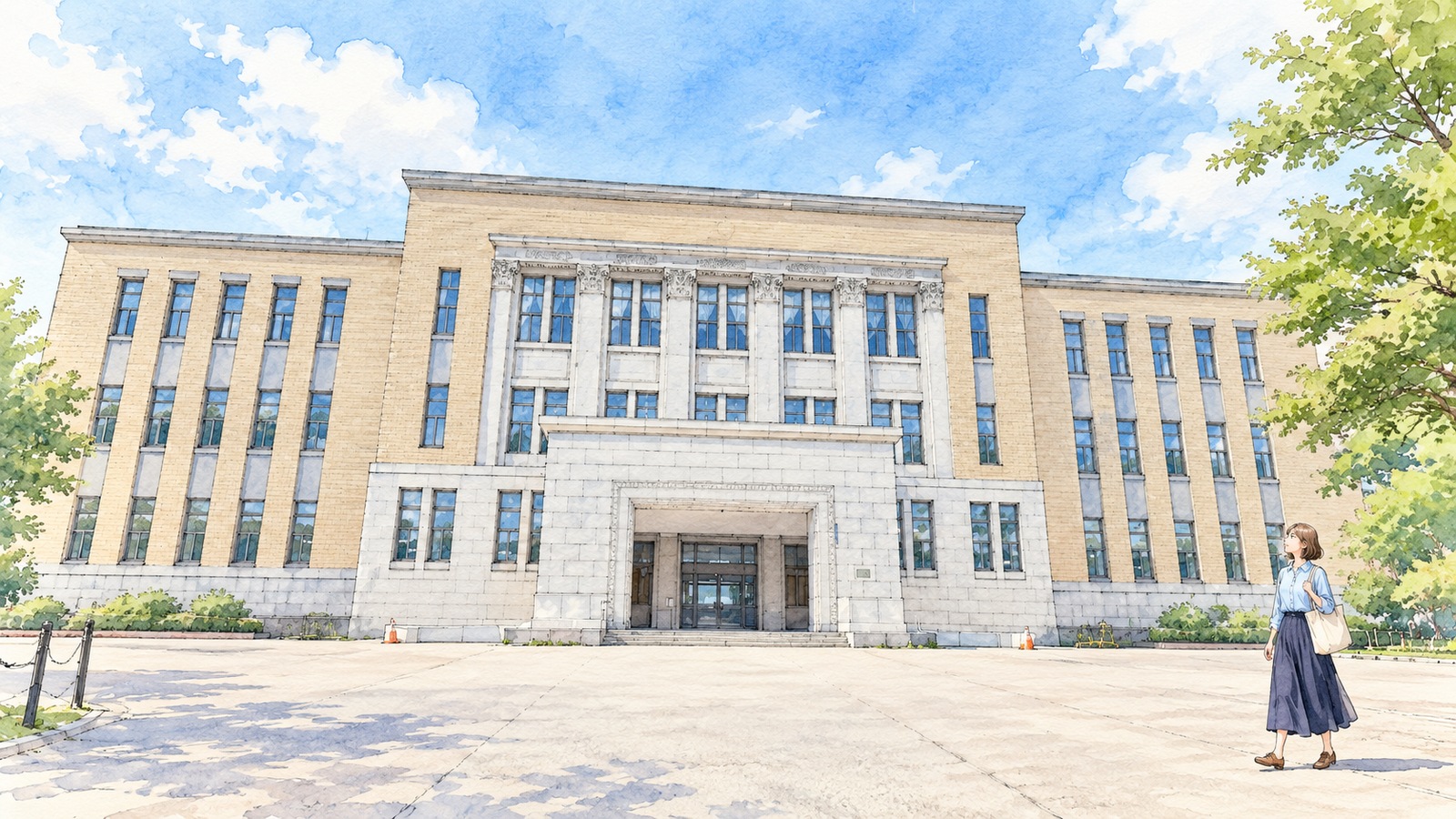
Otaru City Hall’s main building was used as the hospital where Itsuki visits for an examination. According to the Otaru Film Commission, scenes inside the hospital were filmed not only on the building’s exterior but also in a second-floor corridor and a basement infirmary. The location is closely tied to scenes of Itsuki waiting a long time after a cold worsens and a blizzard-night memory of her late father being rushed to hospital.
The building appears on screen as a hospital, but in real life it remains an active city hall handling residents’ paperwork and municipal business. Even from outside, its solid concrete facade and imposing main entrance convey how the film used the atmosphere of a real public building to portray family memories.
The pain of losing her father and the later scene in which her grandfather and mother carry Itsuki, feverish again, toward the hospital are important sequences that bring the family’s bonds into view in the second half of the story. Looking up at the main building from outside offers a quiet moment to reflect on what Itsuki’s family has lived through.
The address is 2-12-1 Hanazono, Otaru, Hokkaido, and office hours are weekdays from 9 a.m. to 5:20 p.m. The basement infirmary and work areas are not open to the public, so visitors should view the main building from outside.
- Address
- 2-12-1 Hanazono, Otaru, Hokkaido
- Connection to the film
- An active historic government building whose exterior and interior corridors were filmed as the hospital Itsuki visits
- Office hours and viewing area
- Weekdays, 9 a.m.–5:20 p.m.; as an active city hall, the exterior is the main visitor viewing area (the basement infirmary and offices are closed to the public)
Sources:Otaru Film Commission (Otaru City Tourism Promotion Office) / Otaru Film Commission / Otaru City
The Glass Studio in Otaru | Akiba’s Workshop and Glassmaking Today
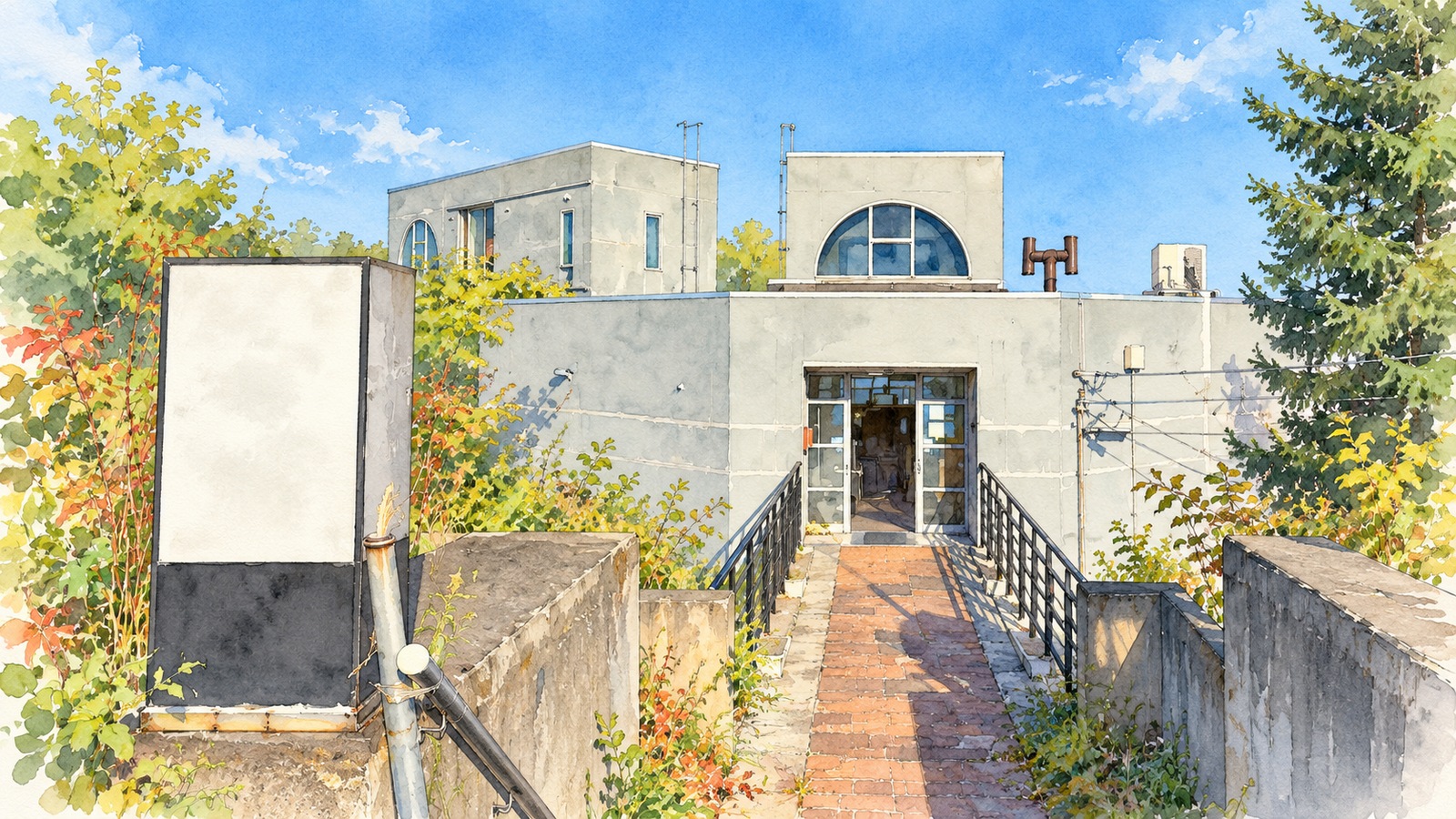
The Glass Studio in Otaru, near the foot of Mount Tengu, is a real glassblowing studio filmed as the Kobe workshop of glass artist Shigeru Akiba, played by Etsushi Toyokawa. It sits in the Mogami area, close to the Mount Tengu Ropeway’s lower station, and was paired with the night view from Asahi Observation Deck to create Akiba’s living space.
At an April 2025 event marking the film’s 30th anniversary and the release of its 4K remaster, Etsushi Toyokawa recalled that filming at this glass studio was where he first met Miho Nakayama, who played Hiroko Watanabe. His memory of her thoughtful words and consideration on their first day together adds another layer of meaning to a visit.
Today, the site operates as a shop and studio where visitors can see and buy handmade glassware. Glassblowing experiences are also available by advance reservation. This is not a facility preserving a film set: it is a working studio where the furnace is still lit and glass pieces are made.
The address is 2-16-16 Mogami, Otaru, Hokkaido. Hours are 10 a.m. to 6 p.m. from April through October, and 10 a.m. to 5 p.m. from November through March; it is closed Tuesdays. Different conditions apply to visiting the shop and taking a workshop, which requires advance booking.
- Address
- 2-16-16 Mogami, Otaru, Hokkaido
- Connection to the film
- A real glassblowing studio at the foot of Mount Tengu, filmed as the Kobe workshop of glass artist Shigeru Akiba, played by Etsushi Toyokawa
- Hours and closing day
- April–October, 10 a.m.–6 p.m.; November–March, 10 a.m.–5 p.m.; closed Tuesdays (advance reservation required for glassblowing experiences)
Sources:Otaru Film Commission (Otaru City Tourism Promotion Office) / The Glass Studio in Otaru / Otaru Tourism Association / Official Love Letter 4K Remaster site (distributed by TOHO NEXT)
Former Suhara Residence | The Letter Begins With an Address in a Yearbook
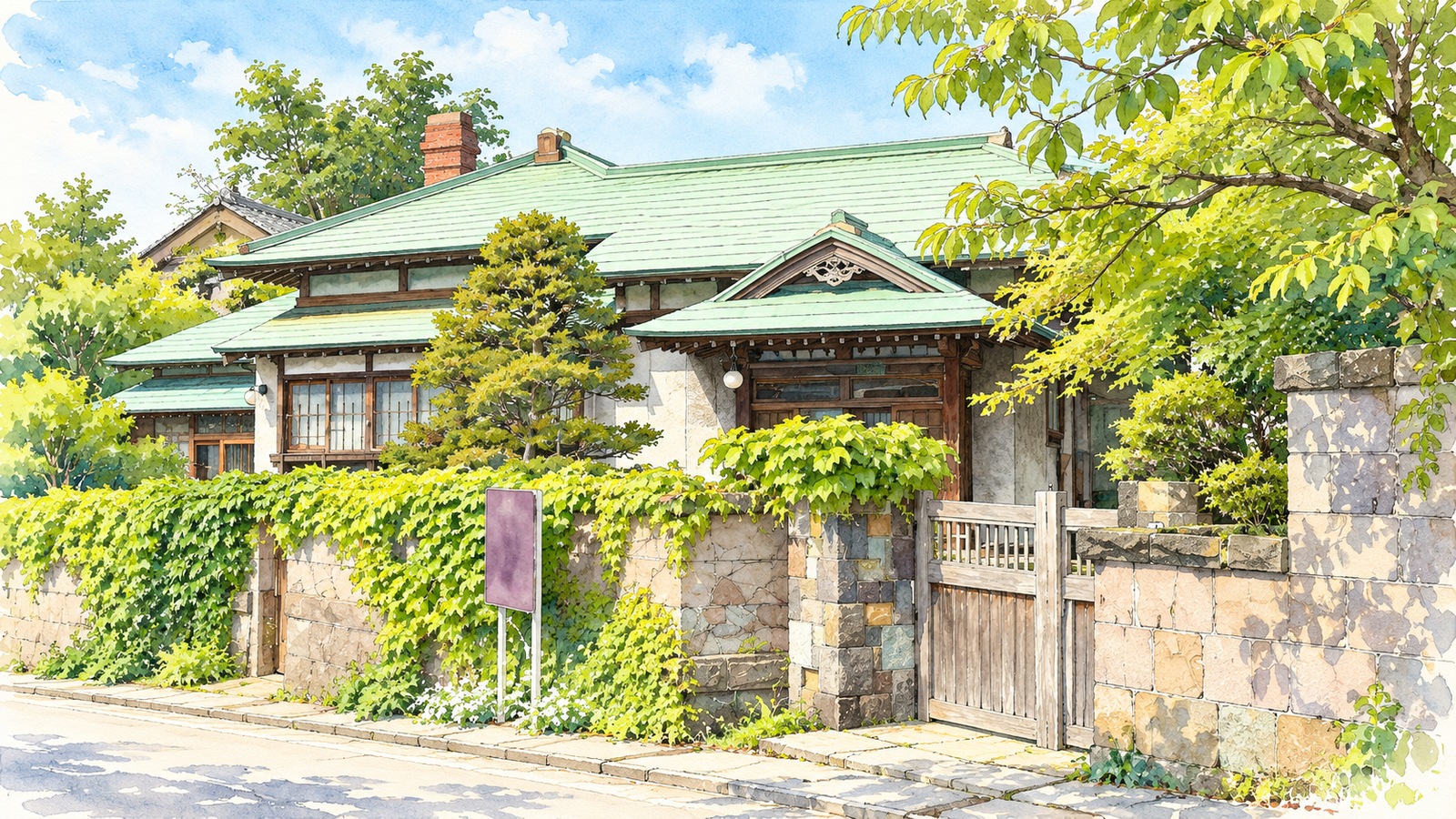
The former Suhara Residence stands partway up the slope leading to Suitengu Shrine. It was used for the scene in which Hiroko Watanabe copies the former Otaru address of her late fiancé, Itsuki Fujii, from his yearbook and speaks with Itsuki’s mother. The Otaru Film Commission’s individual location profile also identifies it as the place that prompted the first letter.
Hiroko’s letter—“How are you?”—to an old address she believed had disappeared when the road became a national highway begins her correspondence with another Itsuki Fujii, a woman with the same name. Looking up at the residence’s calm blend of Japanese and Western styles brings back the quiet before the story begins to move.
The former Suhara Residence is a historic Otaru building constructed during the Taisho era (1912–1926), and it is a city-run public facility rather than a private home. Its hillside garden and architectural details are also a valuable record of the port city’s residential culture.
The address is 8-1 Shinonome-cho, Otaru, Hokkaido, and admission is free. It opens to the public seasonally from spring to fall. In fiscal 2026, it is open from April 29 to October 18 on weekends, public holidays, and selected weekdays, 10:30 a.m.–4 p.m. The interior is closed to visitors during winter.
- Address
- 8-1 Shinonome-cho, Otaru, Hokkaido
- Connection to the film
- A historic Taisho-era building filmed for the scene where Hiroko copies Itsuki’s former address from a yearbook and speaks with Itsuki’s mother
- Public opening period and admission
- Open 10:30 a.m.–4 p.m. on weekends, public holidays, and selected weekdays from spring to fall (closed in winter); free admission
Sources:Otaru Film Commission (Otaru City Tourism Promotion Office) / Otaru Tourism Association
Learn More About Love Letter | One Name, Separate Memories
Walking around Otaru reveals real buildings that played different roles for the film: a glass workshop in Kobe, a municipal library, and a general hospital. The characters, too, include two women played by one actor, and a boy and a girl who share the name Itsuki Fujii but hold different memories. Seeing the places and the people together is one way into the story’s deeper layers.
Hiroko’s Letter and the Adult Female Itsuki Fujii
Two years after her fiancé, Itsuki Fujii, died in a mountain accident, Hiroko Watanabe still cannot let go of her feelings for him. On the way home from his third-year memorial service, she sees his junior-high yearbook and learns the Otaru address where he once lived. She sends a letter to a place she believes has since vanished beneath a national highway. That is where the story begins. The letter is less a practical request for a reply than a quiet question addressed to someone who has died.
A few days later, however, an unexpected reply arrives. Hiroko learns that a woman with the same full name as her fiancé lives in Otaru. This Itsuki Fujii was his classmate in junior high. Their exchange, begun with one letter, traces a past Hiroko never knew and awakens memories the other Itsuki had kept closed away.
Through the letters, Hiroko wants to learn what the boy she loved was like. For the Otaru Itsuki writing back, they become a chance to revisit, one by one, a noisy yet special junior-high life shaped by having the same name. The story quietly moves forward as the two women face different memories of the same person.
Miho Nakayama in a Dual Role, and the Two Students
Miho Nakayama played both Hiroko Watanabe in Kobe and the adult Itsuki Fujii living in Otaru. The female Itsuki works in the library filmed at the former Otaru Branch of Nippon Yusen; Hiroko appears in the scene opening the yearbook at the former Suhara Residence.
Miki Sakai played the girl Itsuki Fujii in junior high, while Takashi Kashiwabara played the boy Itsuki. The paper-bag scene on the slope at Temiya Park and the track meet at Temiya Park Athletic Field appear in flashbacks to their school years. The film shifts from the adult Itsuki’s letters to fresh images of the two teenagers.
At an April 2025 event marking the film’s 30th anniversary, Miki Sakai called it both the starting point of her career as an actor and a treasured work. She recalled how happy she was to play Itsuki, the same role Miho Nakayama—whom she had admired since childhood—played as an adult, and shared memories of the atmosphere on set.
For her performance in the film, Miho Nakayama won Best Actress awards from the Blue Ribbon Awards, Hochi Film Awards, Yokohama Film Festival, and Takasaki Film Festival. She distinctly portrayed two contrasting women: Hiroko, carrying grief, and Itsuki, living an unassuming life in Otaru, with differences in voice and manner.
Sakai also said at the anniversary event that people she met while traveling abroad sometimes greeted her with lines from Love Letter. Decades after its Japanese release, the film continues to be deeply loved by audiences overseas, including across Asia, drawing a wider range of travelers to its Otaru locations.
Etsushi Toyokawa’s Memory of Waiting for Snow as Shigeru Akiba
Etsushi Toyokawa, who played glass artist Shigeru Akiba, recalled that Love Letter was his third collaboration with director Shunji Iwai, following a television drama and the short film Undo. He joined the Otaru shoot in the latter half of this feature film’s production and said at the 30th-anniversary event that he felt the focused atmosphere of a long location shoot firsthand.
The TV drama Toyokawa mentioned was “Lunatic Love,” an episode of Tales of the Unusual. Undo, which followed, was a short film shot on 16 mm and co-starring Tomoko Yamaguchi. Unlike those earlier projects, made intensively over a short period, Love Letter was filmed in Hokkaido over about two months in winter.
One especially vivid memory was waiting on set for 12 hours to film a scene that needed snow. A snow machine had been prepared, but while cast and crew waited patiently, real snow began to fall. Behind the beautiful snowy landscape on screen was a long stretch of work shaped by the weather.
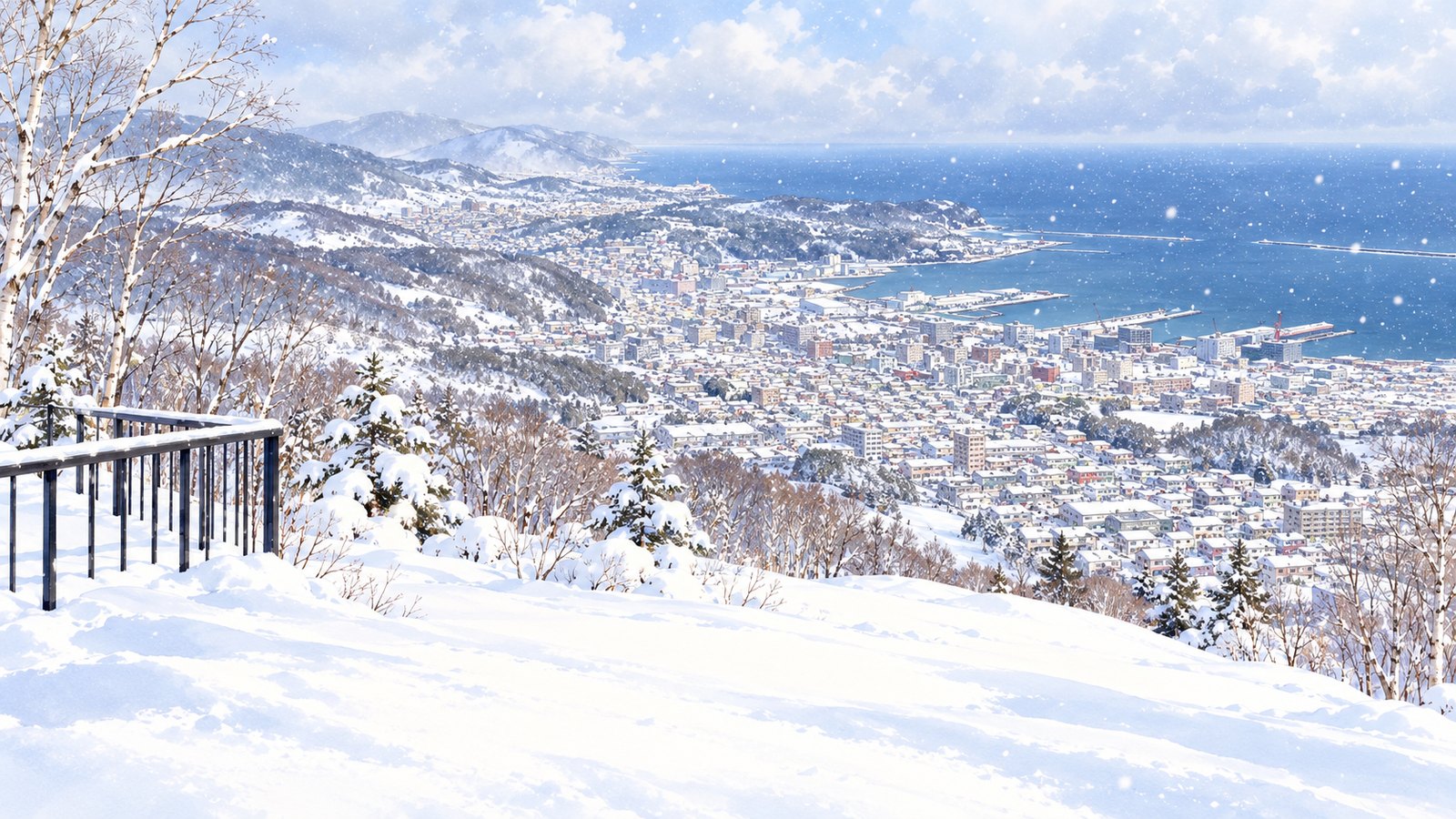
Knowing how the crew waited 12 hours for snow changes how you see the place today: even the harbor on a clear day or the green mountain can bring to mind the weight of the fleeting moment the film captured.
Shunji Iwai Tells a Story Through Letters in His First Feature
Shunji Iwai, who wrote the original story and screenplay and directed the film, had been making television dramas, music videos, and other visual works since 1988. Love Letter (1995) was his theatrical feature-film debut. It was also his first feature shot on 35 mm film, which he recalled demanded a distinctive tension and concentration compared with video production.
Iwai said he struggled to make the quiet subject of letters exchanged between two people work as a feature film, and remained unsure whether it was coming together until shortly before completion. The editing that connects people far apart in Kobe and Otaru through written letters, voices, and junior-high flashbacks took shape through careful trial and error.
Iwai also recalled that when Miho Nakayama said at their first meeting that she felt a little uncomfortable with film, he told her, “Let’s learn to love movies together.” At the first screening of the completed film, Nakayama cried; seeing her tears finally gave the director a sense of relief that the film was truly finished.
The People Behind the Architecture, Light, and Sound
The crew who shaped the film’s visual world included cinematographer Noboru Shinoda, lighting director Hiroki Nakamura, production designer Terumi Hosoishi, and sound recordist Masato Yano. Making Otaru’s historic buildings read on screen as a library, hospital, and Kobe glass workshop took more than choosing locations: it also required shaping the light through the windows, arranging the interiors, and recording subtle ambient sounds.
The shadows cast by the tall windows at the former Otaru Branch of Nippon Yusen bring Noboru Shinoda’s camera work and Hiroki Nakamura’s lighting to mind; the quiet rooms of the former Suhara Residence recall Terumi Hosoishi’s production design.
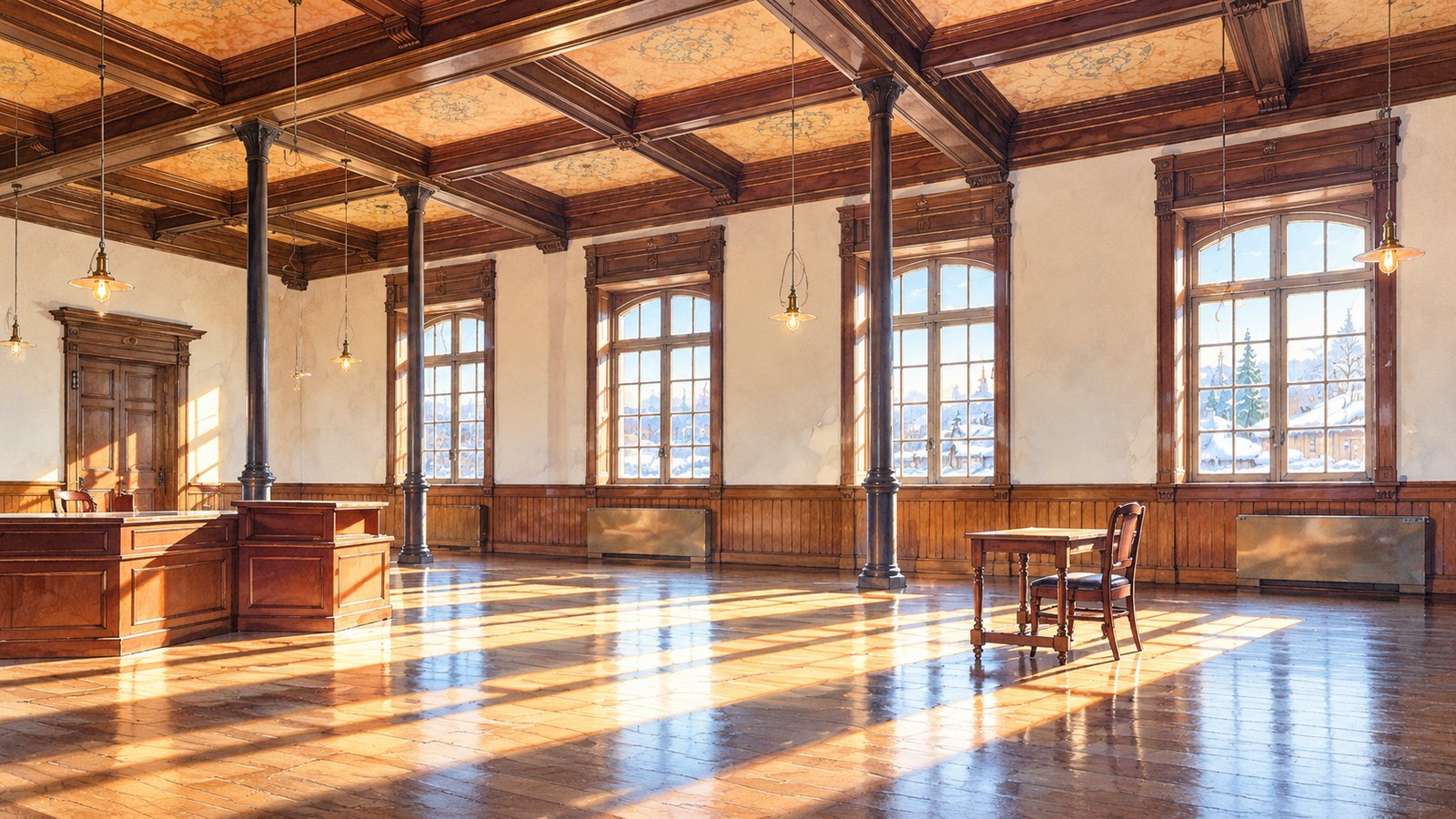
The music that quietly wraps around the story’s emotions was composed by REMEDIOS. Its clear piano- and string-based sound is inseparable from the journey through memories prompted by the letters. Listening again to the original soundtrack after the film can bring Otaru’s slopes and snowy mountains vividly back with the melodies.
Otaru’s real street corners are everyday places filled with wind from the harbor, passing cars, and people talking. Listening to the sounds of the present while remembering the music and silence in the film is another rewarding way to walk its locations.
What Changed in the 4K Remaster, 30 Years Later?
For the 2025 30th-anniversary 4K remaster, director Shunji Iwai said he adjusted image tones and details that had not been fully refined when the 1995 film print was completed. The sound was also rebuilt from the original Dolby SR into 5.1-channel digital surround, while the dialogue in the center channel was carefully kept close to the texture of the original film audio.
The remaster aimed to make the film easier to see and hear in modern theaters while preserving the image texture and sound of its original release. Just as Otaru’s historic buildings are passed on to new generations after preservation and repair, careful restoration has carried the film to new audiences.
Iwai said that he and Miho Nakayama had talked about visiting the Otaru locations together for the film’s 30th anniversary, and spoke of his grief and shock at her sudden death at the end of 2024. At the April 4, 2025 opening-day event for the 4K remaster, Etsushi Toyokawa, Miki Sakai, and Iwai appeared together and shared their affection for the film and their enduring feelings for Nakayama.
- The adult Itsuki’s workplace
Former Otaru Branch of Nippon Yusen
A stone building completed in 1906 appears as the city library where the adult Itsuki Fujii works. It is now open as an Important Cultural Property.
- Family memories and the present
Otaru City Hall Main Building
The exterior, second floor, and basement infirmary were filmed as hospital scenes. The building now operates as an active city hall.
- A Kobe setting in the film
Glass studio and Asahi Observation Deck
The glass studio in Mogami and a night view from Asahi Observation Deck were filmed separately, then joined in the film as the Kobe surroundings where Akiba lives.
Sources:Official materials and facility information
Thirty Years Since Its Release | A Film Passed On Through Time
The timeline below traces the film’s milestones, from its 1995 theatrical release and reception in Japan and overseas, through repeated revival screenings in South Korea, to the 2025 30th-anniversary 4K remaster and home-video release.
- 1988
Shunji Iwai began making screen works such as television dramas and music videos, building experience before moving into feature films.Beginnings - 1995
March 25 Love Letter opened in theaters. Iwai’s feature debut introduced audiences to Miho Nakayama in a dual role and to the film’s Otaru locations.Release - 1995
The film was ranked No. 3 among Japanese films in Kinema Junpo’s annual top ten and No. 1 in its readers’ Japanese-film top ten. Both the film and its performances received high praise.Recognition - 1996
March It received the Outstanding Picture Award at the 19th Japan Academy Film Prize. Etsushi Toyokawa won the Outstanding Supporting Actor Award and Popularity Award; Miki Sakai and Takashi Kashiwabara received Newcomer of the Year awards; and REMEDIOS won the Outstanding Music Award.Awards - 1999
The film had its South Korean premiere and drew more than 1.4 million admissions. This is one milestone in its cross-border journey, as recounted in the official 30th-anniversary introduction.Overseas - 2012
November 22 The Otaru Film Commission published location-by-location information connecting scenes with real places. The materials, including the glass studio and former Suhara Residence, linked the film’s memories to the city itself.Local archive - 2025
January The ninth revival screening in South Korea drew more than 100,000 admissions. It gave a new generation an opportunity to encounter the film beyond its original release.Overseas - 2025
March 11 The 4K remaster screening for the 30th anniversary of the Japanese release was announced, bringing the restored film back to theaters with adjusted picture and sound.30th anniversary - 2025
April 4 Toyokawa, Sakai, and Iwai appeared at the 4K remaster’s opening-day event. They spoke directly to the audience about filming and their feelings for Nakayama.Anniversary event - 2025
December 3 The 4K remaster Blu-ray and original soundtrack were released, giving viewers a new way to revisit the film and its music at home.Home release
Sources:Official materials and facility information
Watch and Listen Before or After Your Visit | Two Women and the Film’s Sound
Following the perspectives of Miki Sakai and Takashi Kashiwabara as the two students, and Miho Nakayama as the two adult women, brings out the meaning of scenes in the library at the former Otaru Branch of Nippon Yusen and at the former Suhara Residence.
Choosing the 4K Remaster Blu-ray and Soundtrack
King Records released the home-video edition Love Letter 4K Remaster Blu-ray on December 3, 2025 (catalog no. KIXF-2102; suggested retail price ¥6,380, tax included). Although “4K Remaster” appears in the title, this is a standard Blu-ray Disc made from a 4K-restored master. It can be played on an ordinary Blu-ray player; a dedicated UHD Blu-ray player is not required.
A separate release is Love Letter ORIGINAL SOUNDTRACK, featuring REMEDIOS’s score, also released by King Records on December 3, 2025 (catalog no. KICS-4236; suggested retail price ¥2,750, tax included). It is sold separately from the film’s Blu-ray.
Special Videos and the Location Map Reveal the Filmmaking
For the 30th-anniversary 4K remaster’s theatrical release, a 4K digital cinema package (DCP) was produced. Depending on each theater’s equipment, it was screened in 4K or converted to 2K.
After walking to the Glass Studio in Otaru, Ironai Crossing, and Asahi Observation Deck, watching the special feature or the film again reveals how editing smoothly connects shots filmed at separate locations into one story world.
You can play this video in the official video at the top of this page ↑
Sources:Official materials and facility information
The Oshi Lab Note | A Business Perspective: Preserving What Buildings Were and What They Played
In Love Letter, the former Otaru Branch of Nippon Yusen appears as a library, Otaru City Hall’s main building as a hospital, and Otaru’s glass studio and Asahi Observation Deck as parts of Kobe. Buildings and places took on roles beyond their everyday use. Visitors need to know these connections to find the film’s locations.
A film commission needs to record more than a title: it should note which room or exterior stood in for what. Records of a filming prop such as the post box, or a night view filmed separately, also explain differences between the film and what visitors see today. Keeping each location’s production role on record makes it possible to interpret both the facility’s history and the film’s craft, even after renovation or a change of use.
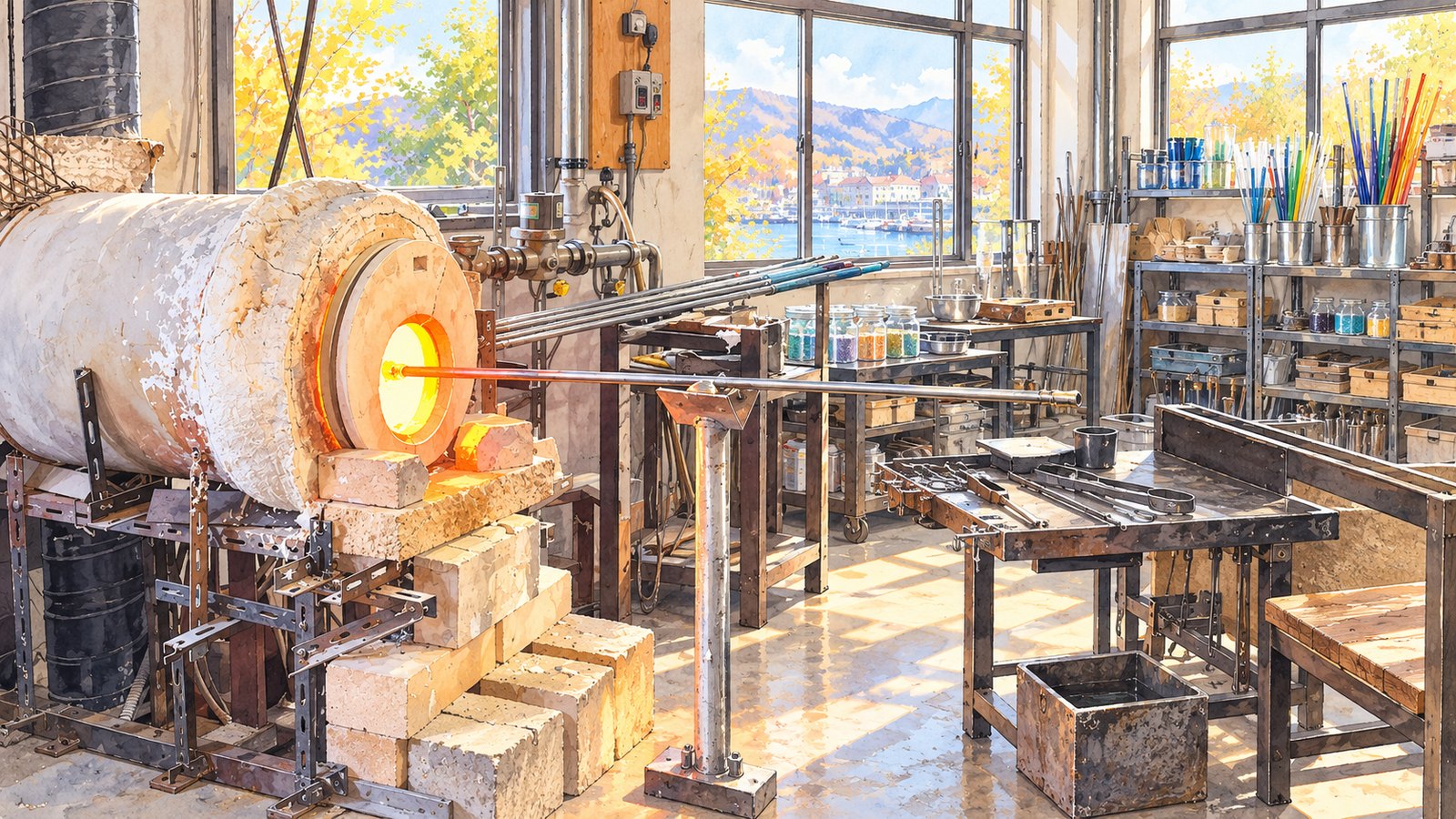
Sources:Official materials and facility information
Sources
- Otaru City
- King Records
- Otaru City Hall Main Building
- En-Toshi Market (official Shunji Iwai products)
- Otaru Film Commission (Otaru City Tourism Promotion Office) — Location Photos and Location Map | Official Otaru Film Commission Website
- Otaru Film Commission — Love Letter Location Map
- Otaru Film Commission — Love Letter Location Map (continued)
- Official Love Letter 4K Remaster site (distributed by TOHO NEXT) — Official Love Letter 4K Remaster website, released April 4, 2025
- Official Love Letter 4K Remaster site (distributed by TOHO NEXT) — News
- The Glass Studio in Otaru
- Otaru Tourism Association — The Glass Studio in Otaru | Otaru Barrier-Free Guide
- Otaru Tourism Association — Former Suhara Residence 2026 public opening: April 29–October 18 on weekends and public holidays (some weekdays)
- Otaru City — City sports facilities
- Chuo Bus Tourism Development — Otaru Tengu Mountain
- Hibiya Kadan, designated manager of the former Otaru Branch of Nippon Yusen
- Otaru Film Commission
- Toho MOVIE Channel (YouTube)
- King Records — Love Letter ORIGINAL SOUNDTRACK
- King Records official channel — Soundtrack listening video
Dates, opening hours, and ticket information reflect the time of writing. Check each official site for the latest information before your visit.
FAQ
Are all the Love Letter locations in Otaru portrayed as being in Otaru?
The library where Itsuki works, the hospital, and the slopes where she lives are set in Otaru. The Glass Studio in Otaru and the night view from Asahi Observation Deck were filmed as Shigeru Akiba’s glass workshop in Kobe and its surroundings.
Is the building used as the library where the adult female Itsuki works still a library?
The filming location was the former Otaru Branch of Nippon Yusen, a historic building completed in 1906. Its interior was filmed as the library. Today it is a paid public historic site designated an Important Cultural Property, closed on Tuesdays.
Can I still see the red round post box at Ironai Crossing?
The red round post box in front of the Otaru main post office was a prop placed for filming and is no longer there. Today you can enjoy the streets where Nichigin-dori and Sakaimachi-dori meet from the sidewalk.
Can visitors tour the former Suhara Residence in winter?
The former Suhara Residence is open to the public seasonally from spring through fall. In fiscal 2026 it is open on weekends, public holidays, and selected weekdays from April 29 through October 18; it is closed in winter.
Can I watch the 4K remaster Blu-ray on a regular Blu-ray player?
Yes. King Records’ Love Letter 4K Remaster (catalog no. KIXF-2102) is a standard Blu-ray Disc made from a 4K-restored master. You do not need a UHD Blu-ray player.
Can visitors see the rooms filmed as a hospital inside Otaru City Hall’s main building?
The building is an active city hall, so filming locations such as the basement infirmary are not open to the public. Visitors can view the exterior of the main building.
Can I visit Mount Tengu or Asahi Observation Deck during the snowy winter season?
The Mount Tengu Ropeway operates on different schedules in summer and winter, and service may stop in strong winds or other severe weather. The road and walking path to Asahi Observation Deck close during snowy months.
More in Pilgrimage

Chibi Maruko-chan Pilgrimage: 10 Places in Shimizu and Shizuoka Where Maruko Comes to Life

Chihayafuru Pilgrimage: 10 Places in Fuchu, Omi, and Awara to Follow the Story of Karuta and Friendship
