

Chibi Maruko-chan Pilgrimage: 10 Places in Shimizu and Shizuoka Where Maruko Comes to Life
At Chibi Maruko-chan Land, you can walk through the Sakura family’s living room and the Grade 3, Class 4 classroom. Around Shizuoka, you can also find decorative manhole covers featuring Maruko. This is a trip to places that recreate the world of the series and street corners that depict its characters.
Chibi Maruko-chan is set in Shimizu Ward, Shizuoka City, where its creator, Momoko Sakura, was born. Some shrines and rivers are modeled on real scenery. This guide introduces 10 places connected to the series—including shops, permanent attractions, and manhole covers—through their origins and what visitors can see.
Sources:Shizuoka Prefecture | Anime location map
Everyday Shimizu and Maruko in the city: 10 places to visit
From an interactive attraction near Shimizu Port to a long-established confectionery shop, local shrines and riverside areas, a shopping arcade, and decorative manhole covers on sidewalks in Shizuoka City, explore how each place connects to the series. Shrines, riverbanks, and shopping streets are still places where local people live and work. This route lets you enjoy both seasonal events and the everyday townscape.
① Chibi Maruko-chan Land
A permanent museum recreating the Sakura family’s living room and the Grade 3, Class 4 classroom, with Momoko Sakura’s original drawings and a golden Maruko statue in the pose from the first volume’s cover.
More about Chibi Maruko-chan Land② Oiwake Yokan Main Store
A long-established Shimizu confectionery shop that makes bamboo-leaf-wrapped steamed yokan, a favorite of Maruko’s grandmother in the series and a treat Momoko Sakura enjoyed since childhood.
More about Oiwake Yokan Main Store③ Awashima Shrine
The model for the shrine where Maruko and her friends gather to play after school. A large camphor tree, known as the “tree of Kokuzo-san,” stands on the grounds.
More about Awashima Shrine④ Along the Tomoe River
A riverside in Shimizu Ward where Maruko walks with her grandfather, Tomozou. In the film A Boy from Italy, it is also depicted as the setting for the lantern festival.
More about the Tomoe River⑤ Shimizu Ekimae Ginza Shopping Street
An arcade street that hosts the Shimizu Tanabata Festival, which also appears in the series. It evokes the everyday shopping scenes in Shimizu where Maruko and her family live.
More about Shimizu Ekimae Ginza Shopping Street⑥ Sidewalk north of Shizuoka City Museum of History
On the sidewalk, find the Aoi Ward sewerage centennial manhole, showing Maruko and Tomozou walking through Sumpu, with the Tatsumi Yagura turret of Sumpu Castle Park in the background.
More about the sidewalk north of Shizuoka City Museum of History⑦ Creator-donated manhole in front of Shin-Shizuoka Cenova
A decorative manhole cover donated to Shizuoka City by creator Momoko Sakura in 2018. It shows a smiling Maruko with Mount Fuji, Suruga Bay, and tea.
More about the creator-donated manhole in front of Shin-Shizuoka Cenova⑧ Manhole covers around Granship
A commemorative manhole cover representing Suruga Ward, installed on a sidewalk around Granship near Higashi-Shizuoka Station. It shows Maruko and Tama-chan holding hands.
More about the manhole covers around Granship⑨ Around JR Shizuoka Station
Compare two commemorative manhole covers near the station: Maruko and Tomozou in the north-exit plaza on the Aoi Ward side, and Maruko and Tama-chan by the south exit on the Suruga Ward side.
More about the area around JR Shizuoka Station⑩ Manhole cover in front of Miho Lifelong Learning Exchange Center
A commemorative manhole cover representing Shimizu Ward, installed in front of the exchange center near Miho-no-Matsubara. It shows Hanawa-kun against the backdrop of international port Shimizu and its sparkling waterfront.
More about the manhole cover in front of Miho Lifelong Learning Exchange Center
Chibi Maruko-chan Land | Step into the Sakuras’ home and Grade 3, Class 4
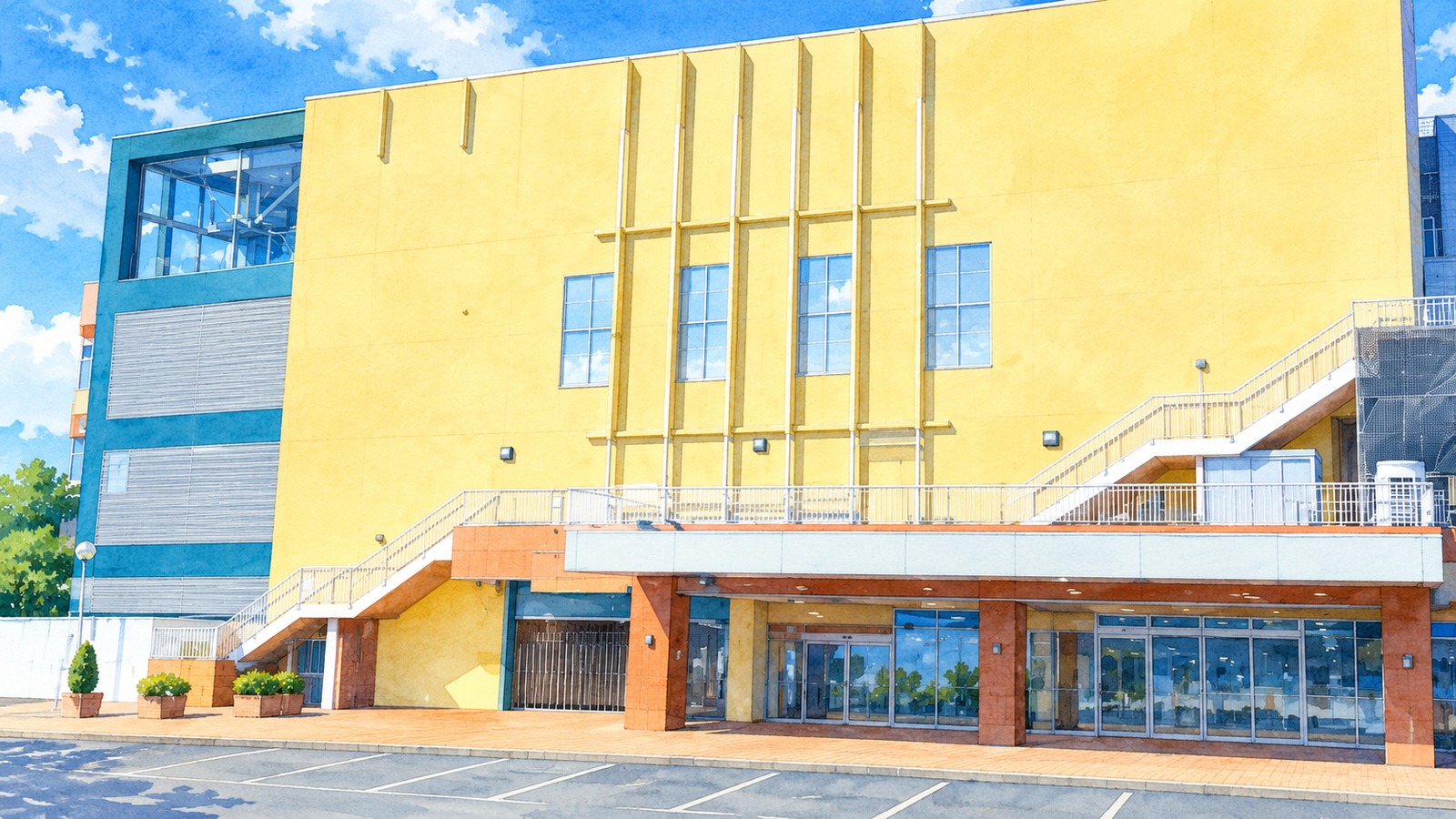
Chibi Maruko-chan Land, on the third floor of S-Pulse Dream Plaza, is a permanent museum where you can walk through familiar spaces from the series, including the Sakura family’s living room and kitchen, the Grade 3, Class 4 classroom, and a park. As you move from room to room, dialogue and scenes appear, creating the feeling of stepping right into a four-panel comic or a television anime scene. Looking across the classroom’s shoe lockers, blackboard, and rows of desks can bring to mind Maruko and her classmates spending time after school.
The museum also features exhibits of creator Momoko Sakura’s personal belongings and original drawings, as well as animation cels. A library offers manga, essays, and books published in translation overseas, and a theater screens past anime works. Together, these exhibits trace the series through both writing and animation production. The displays and theater program change over time.
The “Golden Maruko” statue stands in the free-admission area, welcoming visitors in the same pose as the cover of the first Ribon Mascot Comics volume. Even before entering the paid exhibit, you can compare the pose on the book cover with the three-dimensional statue. A Hanawa-kun manhole cover commemorating the sewer system’s 100th anniversary is also installed on a sidewalk around Dream Plaza, so you can see it along with the indoor exhibits.
The address is 13-15 Irifune-cho, Shimizu-ku, Shizuoka (third floor of S-Pulse Dream Plaza). It is open from 10 a.m. to 8 p.m. (last admission 7:30 p.m.) year-round. Admission to the paid area is ¥1,200 for adults (junior high school and older), ¥700 for children (ages 3 through elementary school), and free for children age 2 and younger. You can make use of both the free area with the shop and Golden Maruko statue and the paid exhibit, fitting your visit to your travel schedule.
- Address
- Third floor, S-Pulse Dream Plaza, 13-15 Irifune-cho, Shimizu-ku, Shizuoka
- Connection to the series
- Permanent museum with recreations of the Sakura family’s living room and Grade 3, Class 4 classroom, Momoko Sakura’s original drawings, and the Golden Maruko statue in the pose from the first volume’s cover
- Hours and admission
- 10 a.m.–8 p.m. (last admission 7:30 p.m.; open year-round); paid area: ¥1,200 adults, ¥700 children (free area also available)
Sources:Dream Plaza (Chibi Maruko-chan Land) / Dream Plaza (Chibi Maruko-chan Land) / Shizuoka City Waterworks and Sewerage Bureau
Oiwake Yokan Main Store | Taste Grandma’s favorite
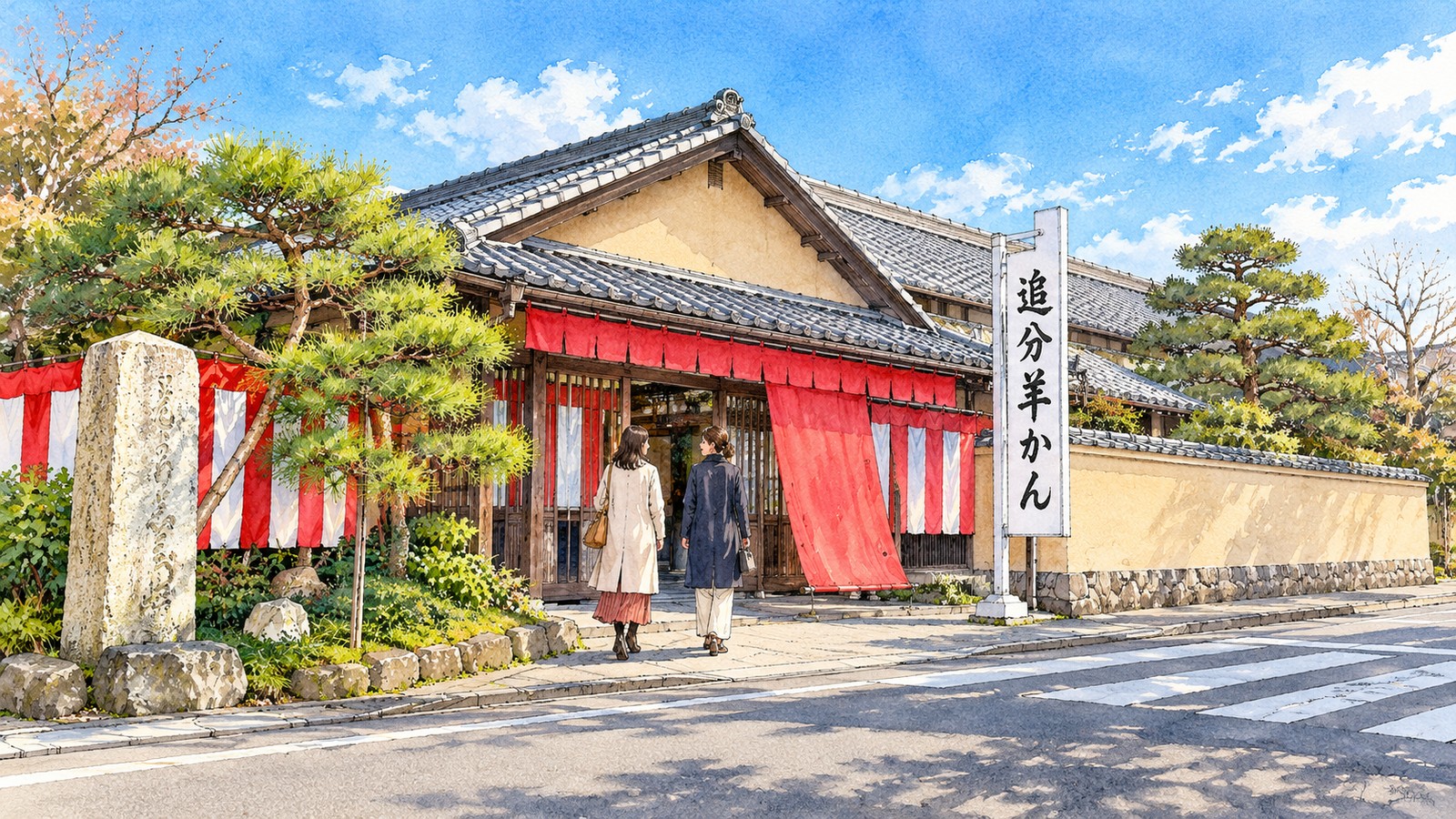
Oiwake Yokan is a Shimizu specialty featured in Shizuoka Prefecture’s official anime-location guide as a Japanese confection that Maruko’s grandmother likes in the series. Creator Momoko Sakura also enjoyed it since childhood, bringing together a character’s favorite treat and the creator’s memories of her hometown.
The pleasure of visiting the main store is not limited to looking at scenery while walking past shrines and riverbanks: you can buy and taste a confectionery that has been made in the area for generations. The aroma and chewy texture of the bamboo-leaf-wrapped steamed yokan make the ordinary family gathering around tea in the Sakuras’ living room feel closer. Whether you take it home as a souvenir or share it with family, the experience itself connects with the atmosphere of the series.
The main store is at 2-13-21 Oiwake, Shimizu-ku, Shizuoka. It is open from 9:30 a.m. to 3:30 p.m. and closed on Sundays and Mondays. It is open only on Saturdays over the weekend, as the long-established shop continues its daily business in a residential neighborhood.
- Address
- 2-13-21 Oiwake, Shimizu-ku, Shizuoka
- Connection to the series
- Long-established confectionery shop making bamboo-leaf-wrapped steamed yokan, a favorite of Maruko’s grandmother in the series and a treat Momoko Sakura enjoyed since childhood
- Hours and closing days
- 9:30 a.m.–3:30 p.m.; closed Sundays and Mondays
Sources:Shizuoka Prefecture Anime Location Map (Shizuoka tourism guide) / Oiwake Yokan Co., Ltd.
Awashima Shrine | An after-school playground and a giant camphor tree
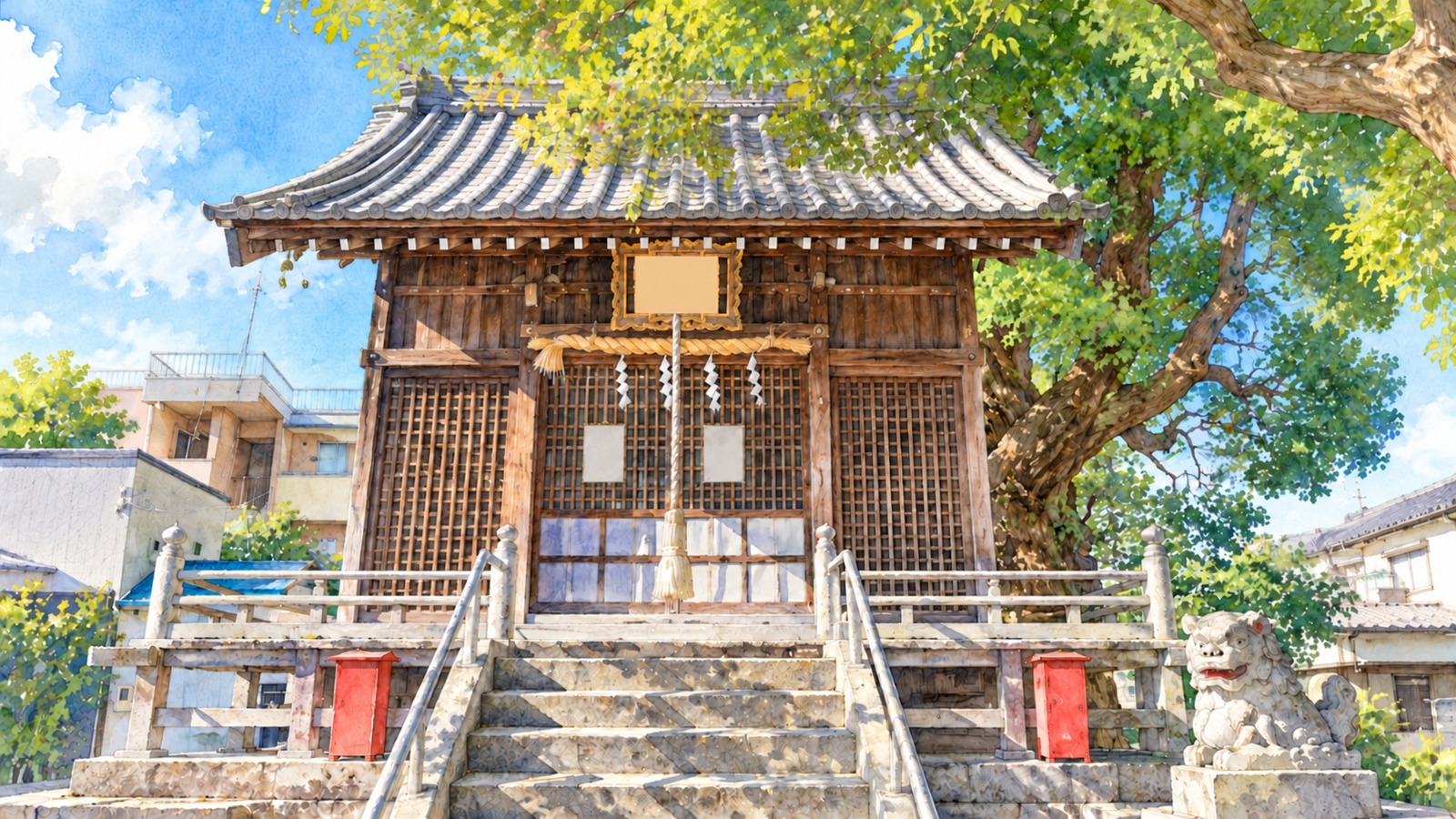
Awashima Shrine is listed in Shizuoka Prefecture’s anime-location guide as the model for the shrine where Maruko and her friends gather to play after school. The large camphor tree on the grounds is associated with “Kokuzo-san’s tree” from the series. Looking up into the shade of its branches can bring to mind children running around after school.
The time between the end of school and going home at dusk is an important part of children’s everyday lives. The quiet grounds of Awashima Shrine hold memories of the series as a place to spend those after-school hours. As you walk and look at the broad trunk and branches, you may picture the casual conversations between Maruko, Tama-chan, and their friends.
The shrine is at 1-4 Awashima-cho, Shimizu-ku, Shizuoka, just a short walk from Irieoka Station on the Shizutetsu Line. Visitors can view the shrine building and camphor tree from the grounds, which are open to worshippers, and experience the quiet of a shrine cared for by the local community.
- Address
- 1-4 Awashima-cho, Shimizu-ku, Shizuoka
- Connection to the series
- Shrine modeled on the place where Maruko and her friends gather after school, with a large camphor tree on the grounds that appears as “Kokuzo-san’s tree”
- Worship and access
- Grounds open for worship; a short walk from Irieoka Station on the Shizutetsu Line
Sources:Shizuoka Prefecture Anime Location Map (Shizuoka tourism guide)
Along the Tomoe River | Walks with Tomozou and Kawada’s cleanup work
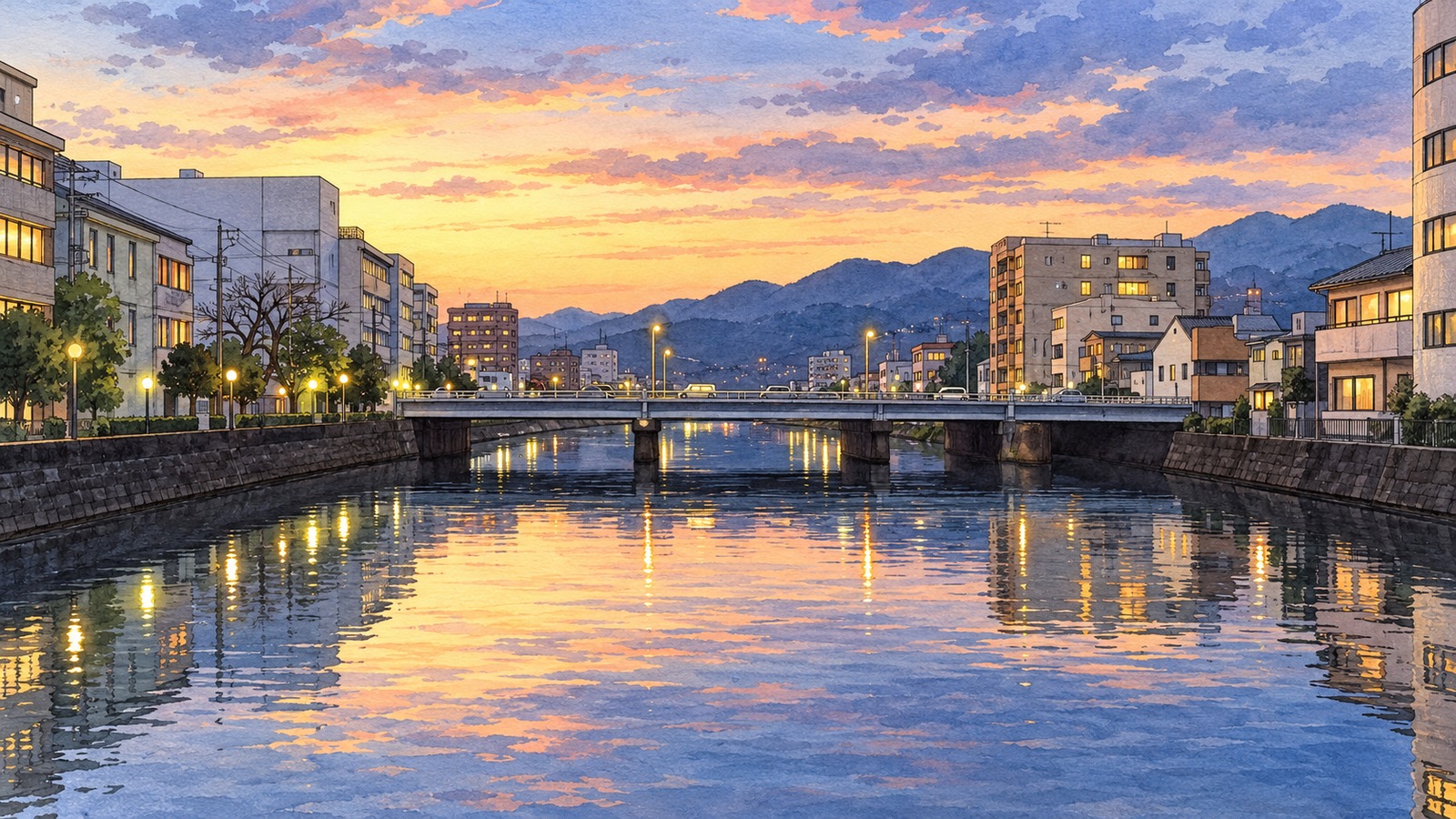
The Tomoe River flows through Shimizu. It is where Maruko walks alongside her grandfather, Tomozou, and where Kawada-san in the series works hard to clean the river and care for its fish. In the same riverside landscape, the relaxed walks of grandfather and granddaughter overlap with the efforts of local people to keep the river clean, evoking the gentle pace of everyday life in Shimizu.
The 2015 film Chibi Maruko-chan: A Boy from Italy also features the Tomoe River Lantern Festival, a summer event, in a memorable scene. The view of lanterns floating on the river was also chosen for the film’s key art. It is a place where you can picture two different moments: the calm daytime view of a walking route and the river aglow on a festival night once a year.
Public sidewalks run along the Tomoe River in Shimizu Ward, where you can walk and look at the gently flowing water and bridges. It is a peaceful riverside path for remembering Tomozou’s walks as he composes a haiku in his heart and the scenery Kawada-san watches over.
- Address
- Public sidewalks along the Tomoe River, Shimizu-ku, Shizuoka
- Connection to the series
- Riverside where Maruko and Tomozou take walks and where the Tomoe River Lantern Festival is depicted in the film A Boy from Italy
- Walking conditions
- Public paths along the river are open at all times (the lantern festival is held each summer)
Sources:Shizuoka Prefecture Anime Location Map (Shizuoka tourism guide) / Nippon Animation
Shimizu Ekimae Ginza Shopping Street | Tanabata excitement and everyday shopping
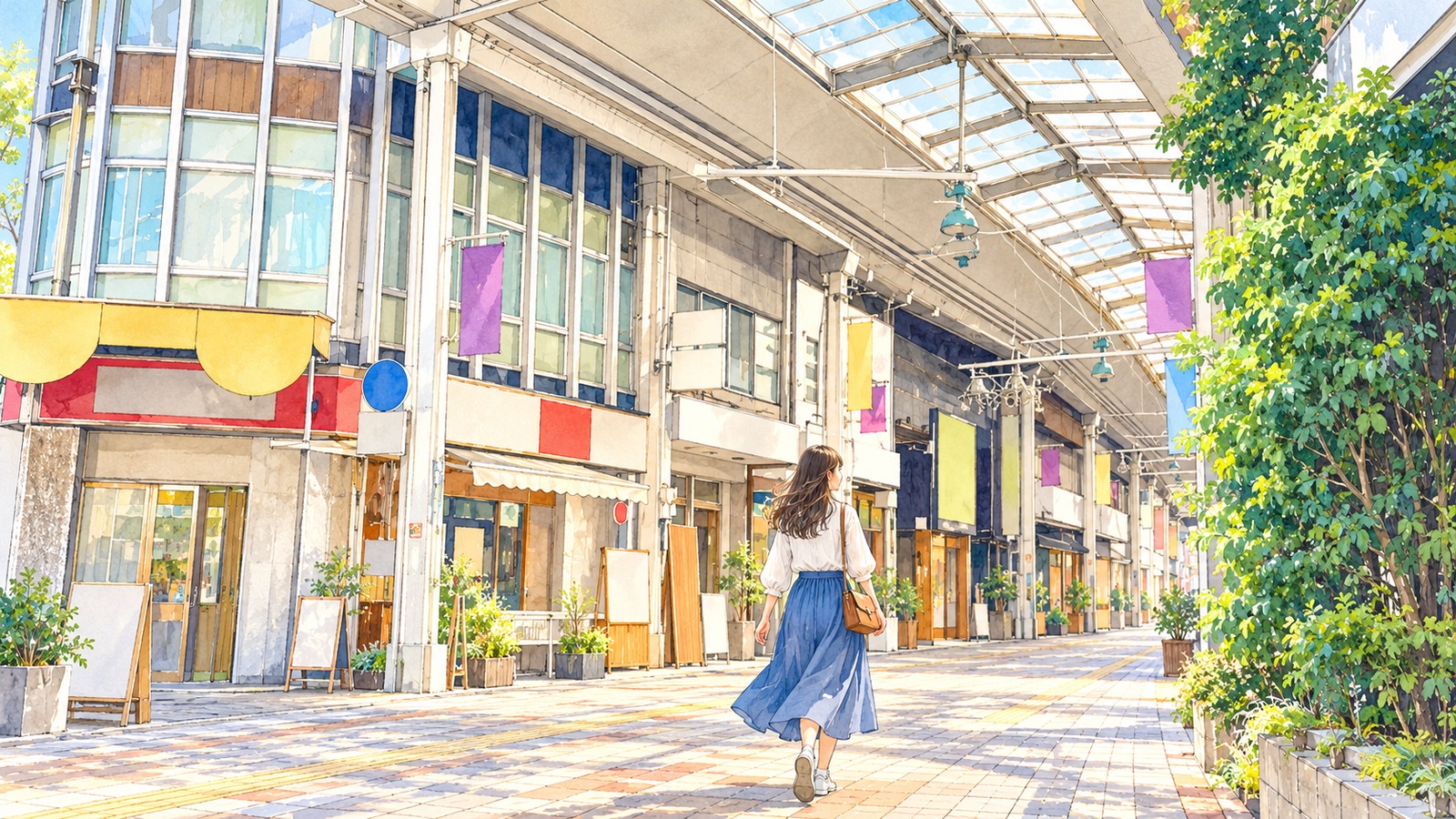
Shimizu Ekimae Ginza Shopping Street, near JR Shimizu Station, is listed in Shizuoka Prefecture’s anime-location guide as the shopping street where the Shimizu Tanabata Festival, which also appears in the series, is held. Tanabata decorations sway in the arcade, where families and friends share memories of visiting festival stalls at night.
Of course, you can visit during the Tanabata Festival, but even on an ordinary day, walking through the arcade lined with traditional shops and restaurants gives you a feel for the Sakuras’ shopping trips and daily life in town. This is a place to encounter both the seasonal festival depicted in the series and the everyday local businesses that continue in Shimizu today.
The location is around 5-22 Masago-cho, Shimizu-ku, Shizuoka. The arcade passage is open for public access, while individual shops have their own hours and closing days. A manhole cover donated by Momoko Sakura in 2018 is also installed around the west exit of nearby JR Shimizu Station.
- Address
- Around 5-22 Masago-cho, Shimizu-ku, Shizuoka
- Connection to the series
- Arcade shopping street near JR Shimizu Station and venue for the Shimizu Tanabata Festival, which also appears in the series
- Walking and access
- The arcade passage is open to the public (shop hours vary); a short walk from the Ejiri Exit of JR Shimizu Station
Sources:Shizuoka Prefecture Anime Location Map (Shizuoka tourism guide)
Sidewalk north of Shizuoka City Museum of History | Maruko and Tomozou share the city’s history
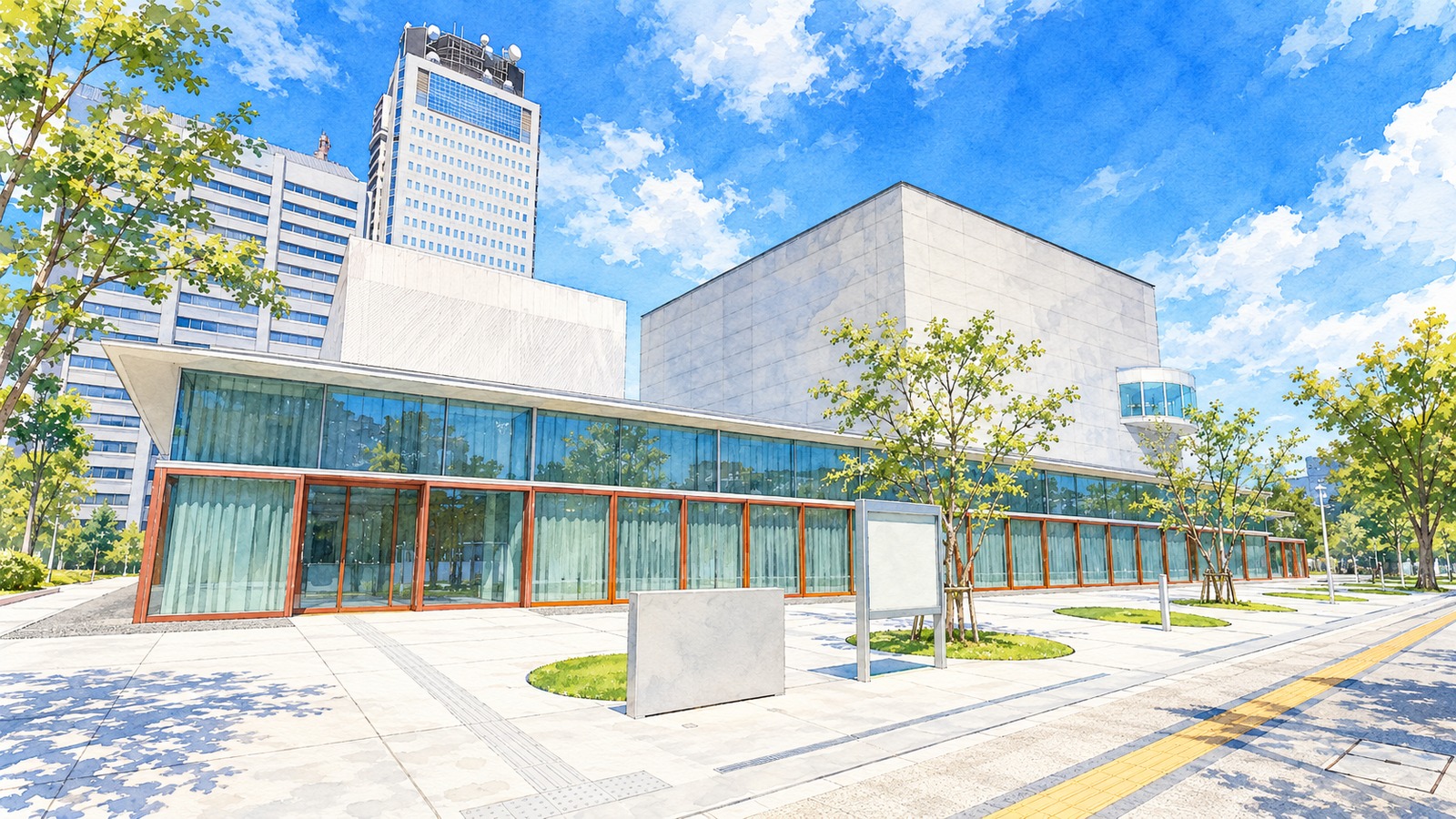
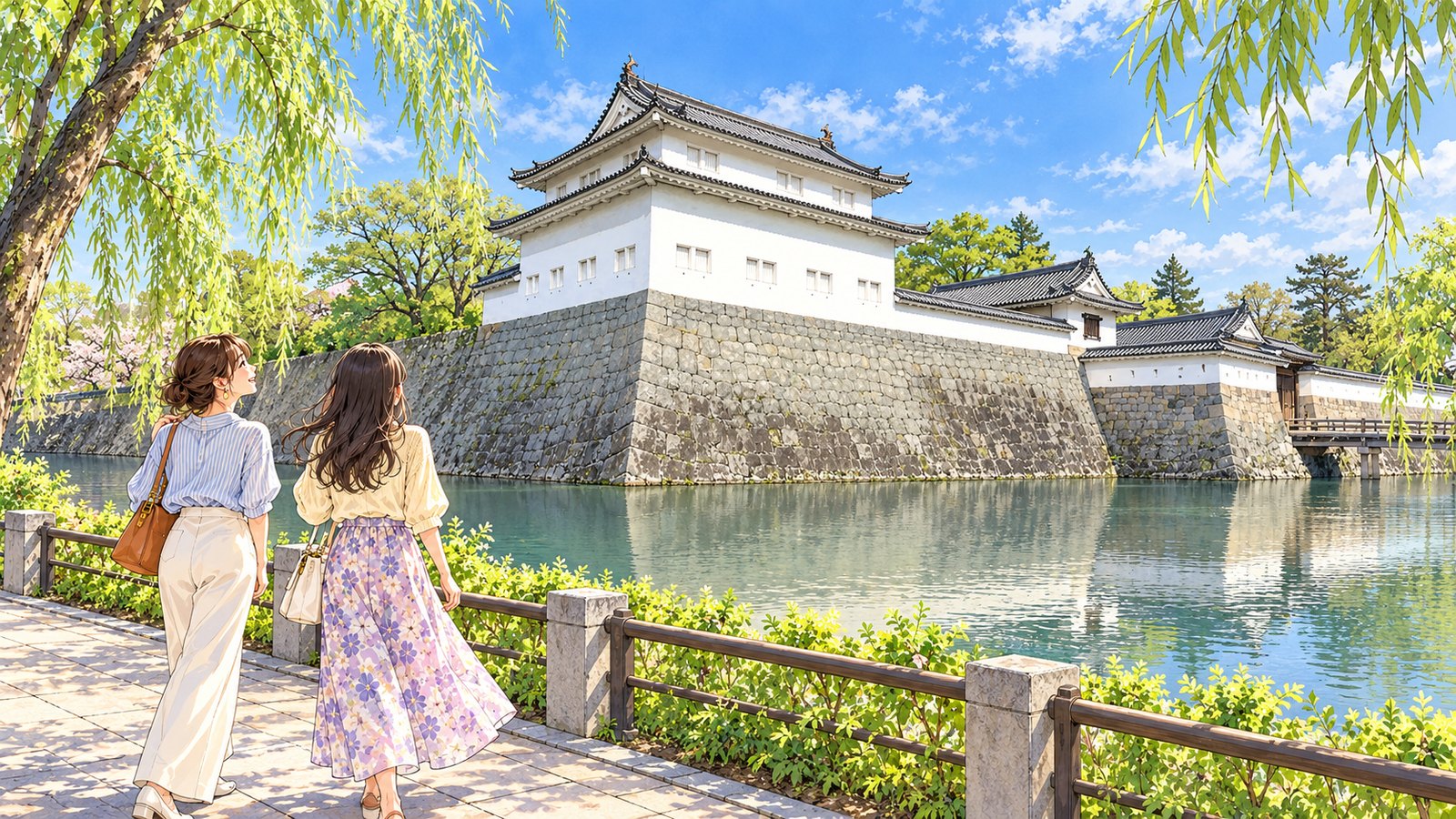
On the sidewalk north of Shizuoka City Museum of History is a decorative manhole cover installed in 2023 to mark the 100th anniversary of Shizuoka City’s sewer service. The Aoi Ward design shows Maruko and Tomozou walking together through Sumpu. Shizuoka City’s Waterworks and Sewerage Bureau also describes the location, with the Tatsumi Yagura turret of Sumpu Castle Park in the background. Here you can enjoy the design underfoot and the historic castle-town scenery together.
The pairing of grandfather and granddaughter evokes the passing down of Sumpu’s history and culture across generations. The walk of the two characters imagined along the Tomoe River is depicted here as a symbol sharing Aoi Ward’s history. Rather than modeling a particular scene from the anime, this permanent spot expresses the region’s story through the relationship between characters.
The cover is installed on the sidewalk north of Shizuoka City Museum of History at 4-16 Otemachi, Aoi-ku, Shizuoka. It is outdoors on a public sidewalk, so there is no museum admission fee to view it. You can compare the details of the design with the Tatsumi Yagura behind it from the same place.
- Address
- 4-16 Otemachi, Aoi-ku, Shizuoka (sidewalk north of Shizuoka City Museum of History)
- Connection to the series
- Location of the Aoi Ward manhole celebrating the sewer system’s 100th anniversary, showing Maruko and Tomozou walking through Sumpu with the Tatsumi Yagura of Sumpu Castle Park in the background
- Visiting conditions
- Viewable at any time, free of charge, on an outdoor public sidewalk
Sources:Shizuoka City Waterworks and Sewerage Bureau / Shizuoka City Waterworks and Sewerage Bureau
In front of Shin-Shizuoka Cenova | A design gifted to Shizuoka by the creator

On the sidewalk in front of Shin-Shizuoka Cenova, a shopping complex directly connected to Shizuoka Railway’s Shin-Shizuoka Station, you can find a special manhole cover donated to Shizuoka City in 2018 by the series’ creator, Momoko Sakura. Maruko appears alongside motifs unique to Shizuoka, including tea, Mount Fuji, and Suruga Bay. The cover has a different story from the sewer system’s 100th-anniversary covers installed in 2023.
The city still has both designs made as part of a municipal anniversary project and one the creator herself donated out of affection for her hometown. That gives Shizuoka’s manhole-cover walk an added layer of meaning. Here, visitors can see for themselves the smiles Momoko Sakura—who continually expressed her attachment to her hometown through manga and essays—left at the feet of people walking through the city.
The cover is on a public sidewalk in front of Shin-Shizuoka Cenova, Takajo 1-chome, Aoi Ward, Shizuoka City. Unlike an indoor display in the shopping complex, it is outdoors on the sidewalk; use the layout map published by the Shizuoka City Waterworks and Sewerage Bureau to locate it.
- Address
- Sidewalk in front of Shin-Shizuoka Cenova, Takajo 1-chome, Aoi Ward, Shizuoka City, Shizuoka Prefecture
- Connection to the series
- Location of the design manhole donated to Shizuoka City in 2018 by creator Momoko Sakura, featuring Maruko with Mount Fuji, Suruga Bay, tea, and a smile
- Visiting and access
- On an outdoor public sidewalk and viewable at any time; directly connected to Shizuoka Railway’s Shin-Shizuoka Station
Sources:Shizuoka City Waterworks and Sewerage Bureau / Chibi Maruko-chan official site (Nippon Animation / Sakura Production)
Around Granship | Maruko and Tama-chan hold hands
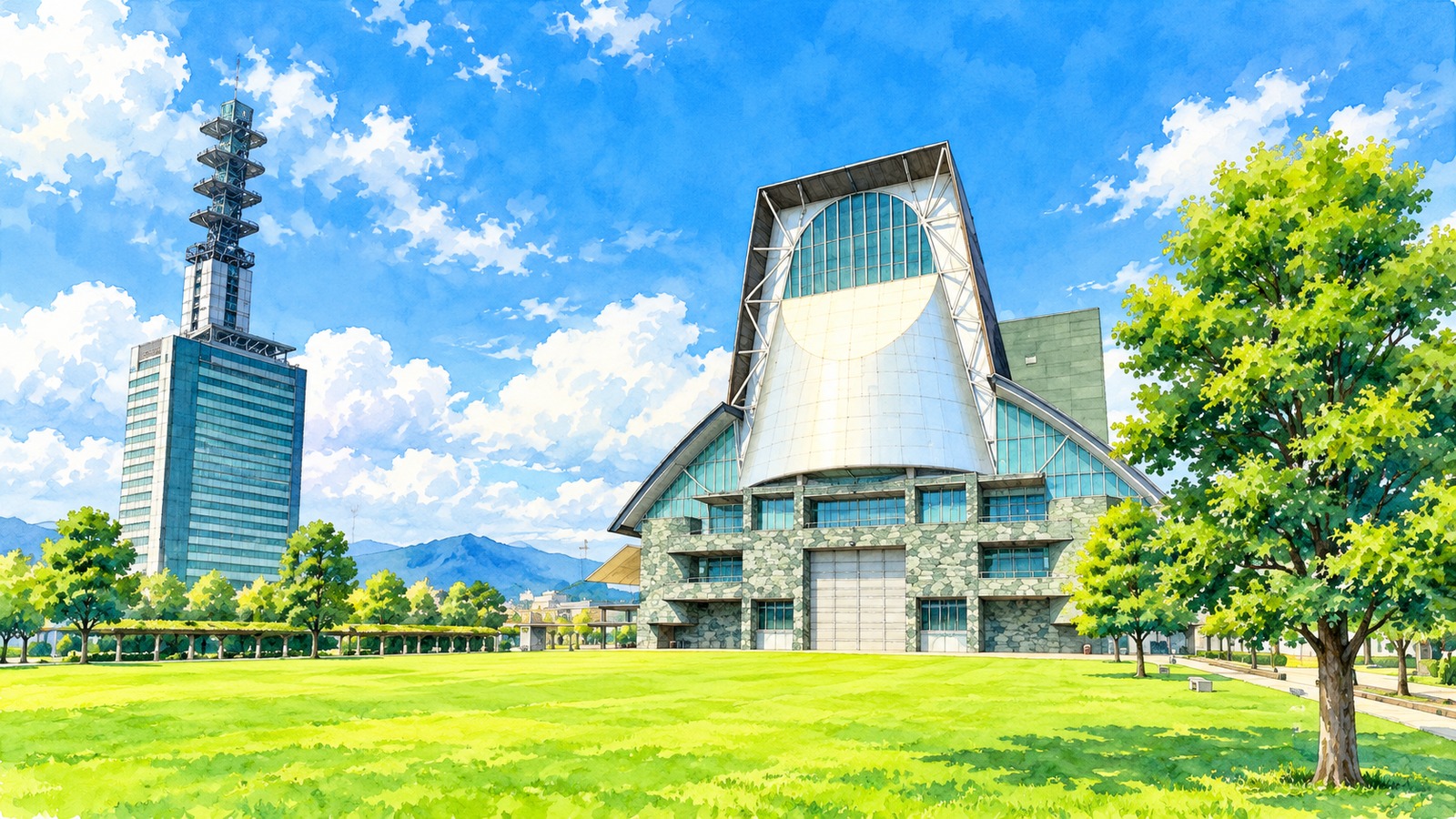
On the sidewalks around Granship, a multipurpose cultural complex by the south exit of JR Higashi-Shizuoka Station, stands a manhole cover designed for Suruga Ward to mark the sewer system’s 100th anniversary in 2023. It shows Maruko and her best friend Tama-chan smiling as they hold hands, a design that expresses Suruga Ward’s image as a place where many different people gather and connect.
While Aoi Ward’s “Maruko and Tomozou” represents the passing down of history across generations, Suruga Ward depicts human connection through the friendship of “Maruko and Tama-chan.” Rather than featuring only the protagonist, the design overlays the bonds between characters with each ward’s distinctive character.
The cover is on an outdoor sidewalk around Granship in Higashi-Shizuoka 2-chome, Suruga Ward, Shizuoka City. It is on the pedestrian route from the station to the venue shown on the layout map published by the Shizuoka City Waterworks and Sewerage Bureau. You can view it freely from outside without a ticket to an event inside the hall.
- Address
- Sidewalk around Granship, Higashi-Shizuoka 2-chome, Suruga Ward, Shizuoka City, Shizuoka Prefecture
- Connection to the series
- Location of the Suruga Ward manhole cover commemorating the sewer system’s 100th anniversary, depicting Maruko holding hands with her best friend Tama-chan
- Visiting and access
- On an outdoor public sidewalk and viewable at any time; a short walk from the south exit of JR Higashi-Shizuoka Station
Sources:Shizuoka City Waterworks and Sewerage Bureau / Shizuoka City Waterworks and Sewerage Bureau
Around JR Shizuoka Station | Compare north and south designs at one station
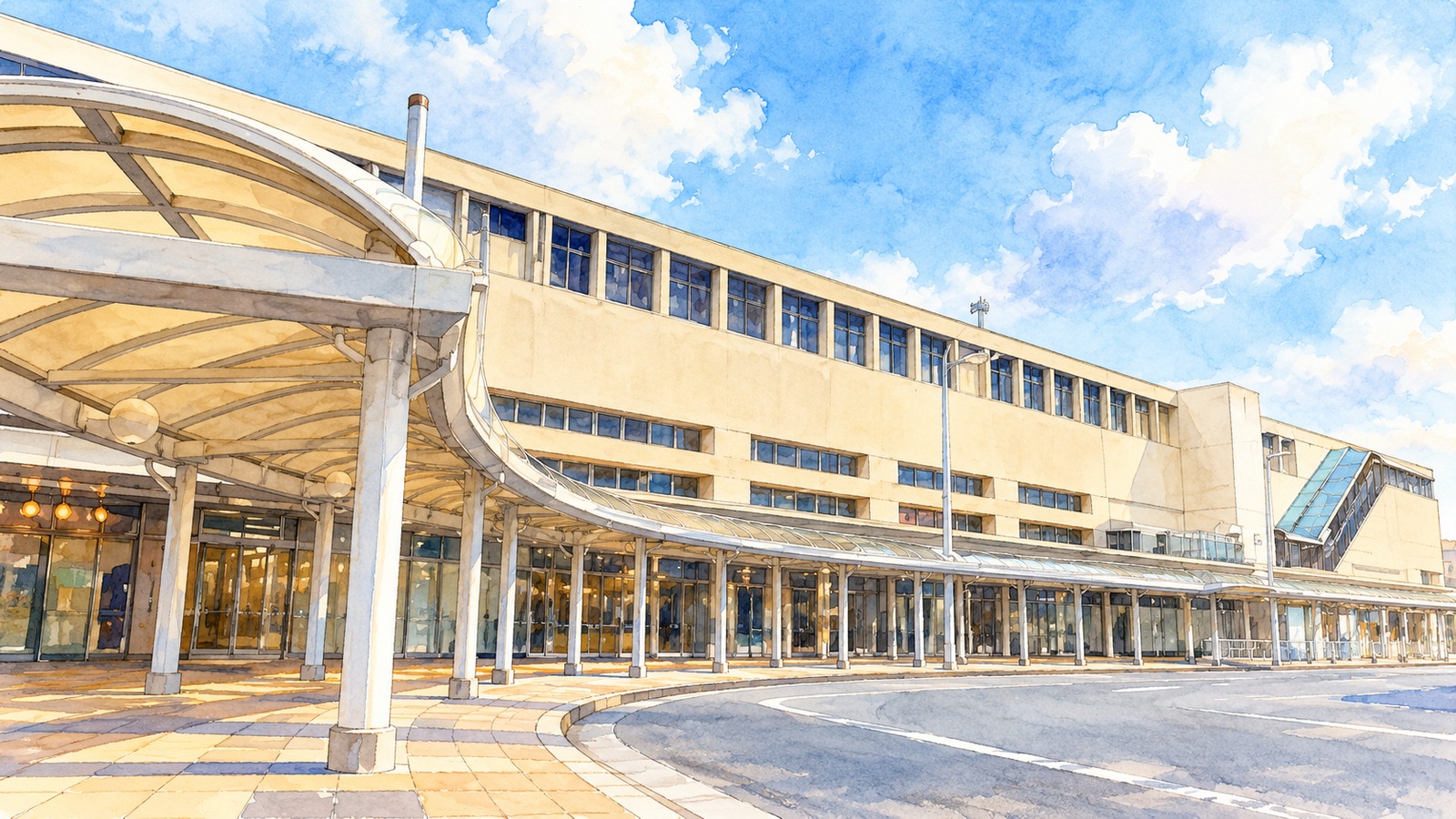
Around JR Shizuoka Station, the gateway to the city, commemorative sewer manhole covers are installed by both the north exit (Aoi Ward) and south exit (Suruga Ward). According to the Shizuoka City Waterworks and Sewerage Bureau, the north-side cover is near the statue Ai, while the south-side one is about a two-minute walk along Ishida Kaido. Simply walking from one side of the station to the other lets you compare designs from two wards.
On the station’s north side, you’ll find Aoi Ward’s “Maruko and Tomozou”; head south and you’ll encounter Suruga Ward’s “Maruko and Tama-chan.” The location lets you experience the ward boundary and differences in theme around Shizuoka Station. Along with variations in color, the designs show time with a grandfather and time with a best friend in distinct compositions.
The covers are on sidewalks around JR Shizuoka Station, spanning Kurogane-cho in Aoi Ward and Minami-cho in Suruga Ward. Both are on public walkways outside the ticket gates, making them easy to visit just after arriving by Shinkansen or local train, or before departing.
- Address
- Sidewalks around the north and south exits of JR Shizuoka Station, from Kurogane-cho, Aoi Ward, to Minami-cho, Suruga Ward, Shizuoka City, Shizuoka Prefecture
- Connection to the series
- Station-front location where you can compare two commemorative manhole covers: “Maruko and Tomozou” by the north exit (Aoi Ward) and “Maruko and Tama-chan” by the south exit (Suruga Ward)
- Visiting conditions
- Viewable at any time from the public area outside the ticket gates: the north-exit plaza (near the statue Ai) and the sidewalk along Ishida Kaido by the south exit
Sources:Shizuoka City Waterworks and Sewerage Bureau / Shizuoka City Waterworks and Sewerage Bureau
In front of Miho Lifelong Learning Exchange Center | Hanawa-kun and waterside conservation
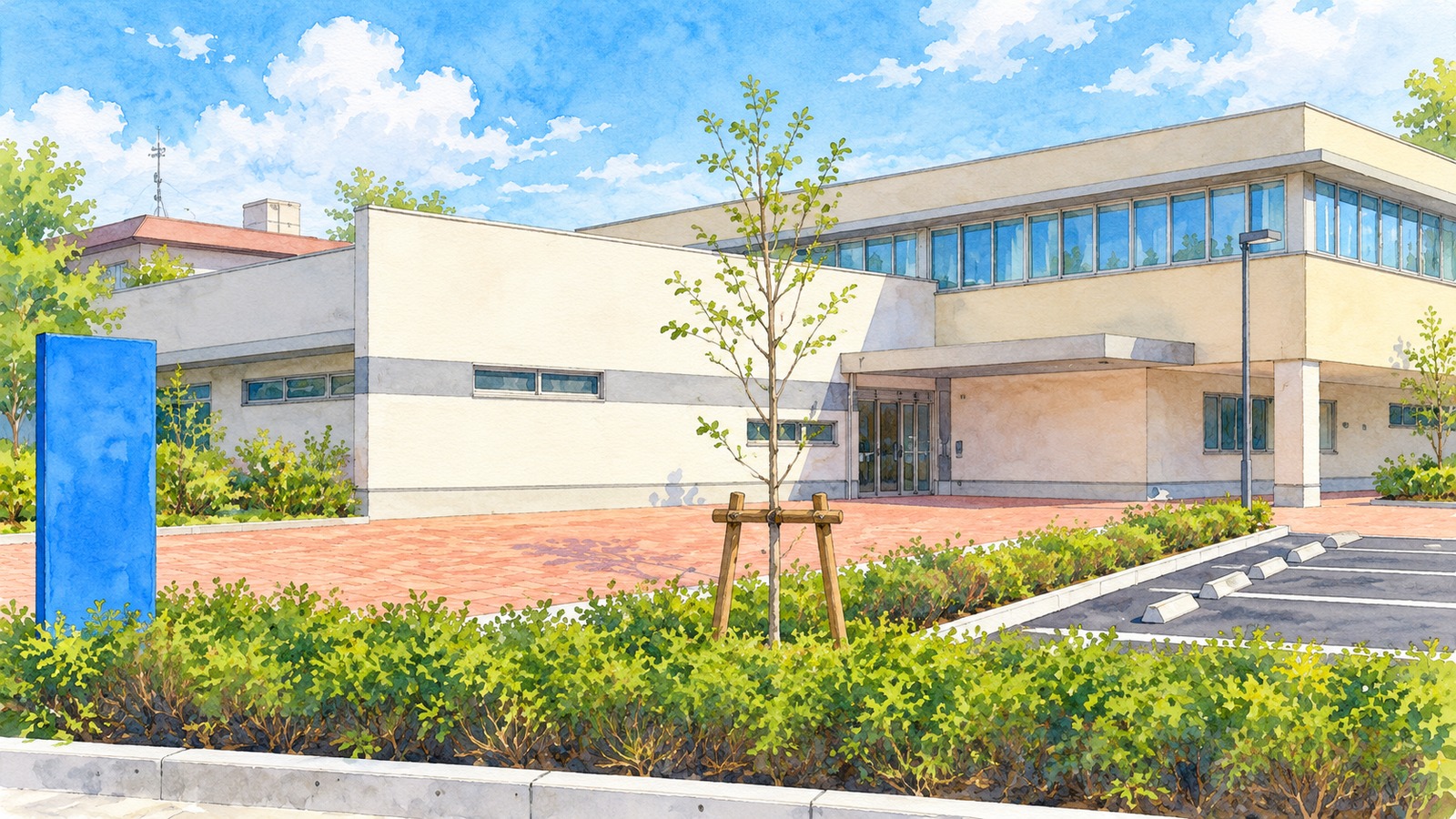
The manhole cover in front of Miho Lifelong Learning Exchange Center on the Miho Peninsula is one of the designs installed for Shimizu Ward. It entrusts Hanawa-kun with the image of Shimizu Port, a cosmopolitan international port, and the sparkling waters behind him carry the message that sewer systems protect the clean water quality of rivers and seas. The design brings together the character’s glamorous personality and the role of essential infrastructure in daily life within a single circle.
After walking along the Tomoe River, seeing this cover in Miho naturally draws your attention to the connections in the water that flows from the city’s river into Suruga Bay. Hanawa-kun, familiar from the series, provides a starting point for learning about the history of Shimizu as a port town and the work of protecting its water environment.
The cover is on the sidewalk near Miho Lifelong Learning Exchange Center in Miho, Shimizu Ward, Shizuoka City, about a 10-minute walk from the scenic Miho-no-Matsubara. It is on an outdoor public sidewalk, so you can stop by while exploring Miho-no-Matsubara.
- Address
- Sidewalk in front of Miho Lifelong Learning Exchange Center, Miho, Shimizu Ward, Shizuoka City, Shizuoka Prefecture
- Connection to the series
- Location of the Shimizu Ward manhole cover commemorating the sewer system’s 100th anniversary, featuring Hanawa-kun against the backdrop of international port Shimizu and its sparkling waters
- Visiting and access
- On an outdoor sidewalk and viewable at any time; about a 10-minute walk from scenic Miho-no-Matsubara
Sources:Shizuoka City Waterworks and Sewerage Bureau / Shizuoka City Waterworks and Sewerage Bureau
Learn more about Chibi Maruko-chan | The people who portrayed everyday life and those who bring it to life in voices and song
Visiting the shrine, confectionery shop, riverside, and shopping street shows how the series’ settings connect to specific moments with family and friends. The city’s decorative manhole covers also depict relationships between characters as symbols of local history and community. Behind these places are the life of Momoko Sakura, who created the original manga, and the work of the production team, which continues to bring the series to audiences through voice acting, music, and exhibition spaces.
Momoko Sakura’s Shimizu and the beginning of the manga
Series creator Momoko Sakura was born on May 8, 1965, in the former city of Shimizu, now part of Shimizu Ward in Shizuoka City. She made her debut as a manga artist in 1984 with Oshiete yarunda Arigataku Omoe! and began serializing Chibi Maruko-chan in the August 1986 issue of Ribon (Shueisha). Walking through Shimizu also offers a chance to experience the atmosphere of the place where the creator spent her girlhood and found the roots of her work.
One distinctive feature of the series is how local flavors the creator herself had enjoyed since childhood, such as Oiwake Yokan, overlap with the sweets favored by Maruko’s grandmother in the story. As you walk while checking how local tourism guides connect the places to the series, you can see how close observation of everyday life crystallized into humorous stories.
After viewing original manuscripts and personal belongings at Chibi Maruko-chan Land, step out into Shimizu itself and move freely between the lines drawn by the creator’s pen and the streets that remain today. Learning how the series came to be in the exhibition and feeling the present-day breeze of Shimizu outdoors complement each other on this trip.
The same road holds different stories because family and friends are there
Maruko walking beside Tomozou along the Tomoe River, Oiwake Yokan that her grandmother looks forward to, and classmates meeting at a shrine after school. Even on the same streets and in the same places in Shimizu, a story’s character changes greatly depending on who shares the moment.
The protagonist’s real name is Momoko Sakura (commonly called Maruko). The Sakura family has six members: older sister Sakiko, father Hiroshi, mother Sumire, grandfather Tomozou, and grandmother Kotake. Her classmates in Grade 3, Class 4 include many distinctive friends, among them her best friend Tamae Honami (Tama-chan) and Kazuhiko Hanawa (Hanawa-kun).
In the current official TV anime cast, Kokoro Kikuchi voices Maruko, Bin Shimada voices Tomozou, Naoko Watanabe voices Tama-chan, and Masami Kikuchi voices Hanawa-kun. Other family members are voiced by Yusaku Yara as Hiroshi, Teiyu Ichiryusai as Sumire, Yuko Sasaki as Kotake, and Machiko Toyoshima as Sakiko. Imagining their conversations brings the living room and school-route scenes to life even more vividly.
It is because anyone who knows the series can recall a warm story from these relationships that Shizuoka City’s commemorative manhole covers feature “Maruko and Tomozou,” “Maruko and Tama-chan,” and “Hanawa-kun.” The design intentions described in the city’s official guide resonate with episodes from the series.
Kokoro Kikuchi carries the voice forward after performing alongside TARAKO
The role of Maruko in the TV anime passed from TARAKO, who voiced her for many years after the series began airing in 1990, to Kokoro Kikuchi, beginning with the episode broadcast on April 21, 2024. The official announcement said Kikuchi was selected after several rounds of auditions. Watching past installments alongside current episodes conveys the journey of the voices that have supported the series in each era.
Before taking over the role of Maruko, Kokoro Kikuchi appeared as Ohanachan in “Maruko Helps a Ghost,” broadcast on August 19, 2018. In her official comment upon taking the role, she recalled that TARAKO was always at the heart of the bright, cheerful atmosphere in the recording studio. The major role was passed on with those cherished memories of performing together in the same studio.
Knowing Kikuchi’s words—“I want to cherish how much I love Chibi Maruko-chan and give it my all”—helps frame the change in voice actors as a sincere passing of the torch that carries the series into the future. There is pleasure in listening both to classic episodes marked by TARAKO’s voice and to new episodes delivered each week today.
Kanako Nomura’s art bridges the anime and the exhibition space
At the entrance to Chibi Maruko-chan Land, Kanako Nomura, art director for the TV anime, created line-art pieces inspired by geometric patterns Momoko Sakura liked, as well as the school and streets of Shimizu. Rather than simply turning flat illustrations into three-dimensional displays, the entrance space is thoughtfully designed to let visitors naturally step into the world of the story.
The exhibition guides visitors through the rooms of the Sakura home while following the characters’ dialogue, translating the rhythm of reading manga panels into a spatial experience. With the Grade 3, Class 4 classroom and a park recreated inside, everyone can safely experience the atmosphere of a classroom after school without entering the grounds of an active elementary school.
The current TV anime is made by a team that includes director Jun Takagi, character designer Hideyuki Funakoshi, music composer Nobuyuki Nakamura, and sound director Hiroyuki Hayase. Knowing that art, direction, music, and voice acting all come together to create each week’s broadcast makes the warmth of the background art’s lines and colors stand out even more as you explore the Land.
Memories of the opening and theme songs passed down in song
Inside Chibi Maruko-chan Land, displays feature motifs such as a train, elephant, boat, and shaved ice from “Yume Ippai,” the first opening theme from 1990, as well as a zone recreating the world of an opening from the 2000s. A video presentation of “Odoru Ponpokorin,” about one minute and 30 seconds long, is also shown every 10 minutes. Music and images bring back memories of the era when you watched in front of the television.
In 1990, creator Momoko Sakura also made her debut as a lyricist with “Odoru Ponpokorin,” the first ending theme. Sung by B.B.Queens, the song won the 32nd Japan Record Awards that year and became a signature hit loved across generations for lyrics that distill the manga’s humor and a light, lively rhythm.
Since then, a wide range of artists have continued to sing the theme songs through the eras. In the current official TV anime credits, Ado performs the opening theme “Odoru Ponpokorin” (lyrics by Momoko Sakura, music by Tetsuro Oda, arrangement by Hyadain), while Hikaru Utada wrote, composed, and performs the ending theme “Pappa Paradise.” In 2019, Momoiro Clover Z also appeared dancing with Maruko and friends in an animated dance video for “Odoru Ponpokorin.” The different voices and arrangements from each broadcast period are another point to enjoy.
You can play this video in the official video at the top of this page ↑
Three designs that go beyond repeating the same characters
Shizuoka City installed commemorative manhole covers in 2023 to mark the sewer system’s 100th anniversary. The set consists of three basic designs, each in three color variations, for nine designs in total at nine locations. Each ward has a clear theme: “passing history down” in Aoi Ward, “exchange among diverse people” in Suruga Ward, and “an international port and beautiful waterfront” in Shimizu Ward. The pleasure of exploring the covers lies in learning why a particular character was chosen for each ward.
For example, “Maruko and Tomozou,” on the sidewalk north of Shizuoka City Museum of History, is positioned with Tatsumi Yagura of Sunpu Castle Park in the background, letting you take in the design at your feet and the castle-town scenery in one view. The Hanawa-kun design for Shimizu Ward, at Miho Lifelong Learning Exchange Center and around Dream Plaza, also takes on a clearer meaning when you learn that the sewer system protects river and sea water quality—not only the port town’s glamour, but the role behind the sparkling water in the background.
It is also important to distinguish the history of the two covers Momoko Sakura donated to Shizuoka City in 2018 (in front of Shin-Shizuoka Cenova and by the west exit of JR Shimizu Station) from that of the nine commemorative covers installed for the sewer system centennial in 2023. Understanding both stories—one a gift from the creator to her hometown, the other a public design marking a city milestone—lets you see the small discs underfoot as cultural assets of the city.
A Boy from Italy brings new encounters to familiar Shimizu
Released on December 23, 2015, the film Chibi Maruko-chan: A Boy from Italy was a theatrical feature written by Momoko Sakura herself to mark the 25th anniversary of the TV anime. Children from five countries around the world visit Shimizu, and Andrea, a boy from Italy, stays with Maruko’s family. The fresh perspective of a visitor from elsewhere is layered over the familiar Sakura household and streets of Shimizu.
The film was directed by Jun Takagi, who also works on the TV series. The nighttime scenes of the Tomoe River Lantern Festival in the film have a fantastical quality quite different from the river’s daytime appearance on Maruko’s usual walks with Tomozou. After walking along the real Tomoe River in Shimizu, watching the film again makes the contrast between everyday riverside life and the festival night even more moving.

Travelers who visit Shimizu on a pilgrimage are also visitors encountering the city’s everyday life from the outside, much like Andrea and the other children. What will move them on their first walk through the shopping streets and shrine grounds, and which scenes will they take home in their memories? Overlapping the film’s story with your own trip makes time spent walking through Shimizu richer.
- Shizuoka City, Aoi Ward
Maruko and Tomozou
A design representing bonds between generations and passing the history and culture of the former Sunpu Castle town on to the next era.
- Shizuoka City, Suruga Ward
Maruko and Tama-chan
A design that layers the friendship of two girls holding hands over a city where diverse people gather and connect.
- Shizuoka City, Shimizu Ward
Hanawa-kun and the waterfront
A design connecting the vibrancy of international port Shimizu with the beautiful rivers and sea protected by the sewer system.
Sources:Official materials and facility guides
From manga to voice, song, and cityscape | Milestones in the series
The timeline below traces major milestones, from the birth of creator Momoko Sakura in the former city of Shimizu to the manga’s serialization in Ribon, the TV anime, the opening of Chibi Maruko-chan Land, decorative manhole covers around Shizuoka City, and the series’ 35th anniversary.
- 1965
May 8 Momoko Sakura was born in the former city of Shimizu. She spent her girlhood in a city that would later become closely linked to the setting of her work.Birth - 1984
She made her manga-artist debut with Oshiete yarunda Arigataku Omoe! Her warm, humorous snapshots of everyday life began reaching readers.Debut - 1986
Serialization of Chibi Maruko-chan began in the girls’ manga magazine Ribon. Everyday moments with family and friends have since been widely read and passed down through the manga.Serialization begins - 1987
July 15 The first volume of Ribon Mascot Comics was released. The pose of the Golden Maruko statue at Chibi Maruko-chan Land is based on the cover illustration of this volume.Collected volume - 1990
January 7 The Chibi Maruko-chan TV anime began airing. The manga’s characters reached living rooms across Japan with voices, movement, and music.TV anime - 1990
Momoko Sakura made her lyricist debut with “Odoru Ponpokorin.” The song won the Japan Record Award and remains beloved as one of the series’ signature songs.Theme song - 1999
Chibi Maruko-chan Land opened inside S-Pulse Dream Plaza. Shimizu gained a permanent attraction where visitors can walk through and experience the world of the series.Permanent attraction - 2015
December 23 The film Chibi Maruko-chan: A Boy from Italy was released, depicting friendships with children from around the world and Shimizu scenery such as the Tomoe River Lantern Festival.Theatrical film - 2018
August 15 Creator Momoko Sakura passed away. Her diverse work in manga, essays, lyrics, and original drawings continues to reach many readers and viewers.In memoriam and legacy - 2018
Two decorative manhole covers donated by Momoko Sakura to Shizuoka City were installed in front of Shin-Shizuoka Cenova and JR Shimizu Station, becoming new landmarks for exploring the city.Donated covers - 2023
To mark the 100th anniversary of Shizuoka City’s sewer system, nine designs (at nine locations) were installed across the city’s three wards. Each design conveys a ward’s character through relationships between the series’ characters.Centennial covers - 2024
April 21 Episodes featuring Maruko voiced by Kokoro Kikuchi began airing. New episodes continue to build on the history shaped by TARAKO’s voice.Voice actor transition - 2025
January 7 The TV anime marked its 35th anniversary. Generations continue to enjoy the series through its manga, television episodes, permanent museum, and decorative manhole covers around town.35th anniversary
Sources:Official materials and facility guides
Read and watch before or after your trip | From a cover pose to a riverside scene
The following selection includes the first volume of Chibi Maruko-chan from Ribon Mascot Comics, published in 1987, and videos released on the series’ official website and official YouTube channel.
Ribon Mascot Comics: Chibi Maruko-chan, Vol. 1 | The origin of the Golden Maruko statue
Shueisha’s Ribon Mascot Comics paperback Chibi Maruko-chan, Vol. 1, written by Momoko Sakura, was released on July 15, 1987. This 176-page, new-format paperback is the first volume (ISBN 4-08-853413-1 / 9784088534138; list price ¥484, tax included). Its publication date and format differ from the e-book edition, which became available on September 25, 2013, so check whether bibliographic details refer to the paperback or e-book.
The cover illustration for this first volume shows the same pose as the Golden Maruko statue in the free area of Chibi Maruko-chan Land. Visiting after looking at the book cover lets you compare the flat illustration and the three-dimensional statue in person. Reading about the Sakura family’s home and classroom conversations before entering the exhibits also lets the experience of following dialogue in speech bubbles overlap with walking through the space yourself.
Official YouTube channel “Chibi Maruko-chan Channel” and “Odoru Ponpokorin” videos
The series’ official website and its official YouTube channel, “Chibi Maruko-chan Channel,” are reliable places to watch anime footage. Enjoy the enduring popularity of the songs, from the 2019 animated dance video for “Odoru Ponpokorin” featuring Momoiro Clover Z dancing with Maruko and friends, to Ado’s version of the current TV opening and the original 1990 recording.
The 2015 film Chibi Maruko-chan: A Boy from Italy is also closely connected to the riverside scenery along the Tomoe River. Following the story of Andrea, a boy from Italy who visits the Sakura family, brings together the perspectives of visitors and hosts and makes a walk along Shimizu’s river and streets even more resonant.
Sources:Official materials and facility guides
Research note | A business perspective: Using character relationships to communicate about sewer systems
Shizuoka City’s sewer system centennial manhole covers connect relationships between characters to themes from each ward: a legacy passed across generations with Tomozou, exchange with Tama-chan, and Hanawa-kun alongside the international port and water environment. Rather than simply displaying popular illustrations, these designs use the series’ characters to communicate the purpose of a public works project.
The covers donated by the creator in 2018 have a different history from those installed by the city for its anniversary project. Explaining that difference can help fans learn not only about the creator’s relationship with her hometown but also about what the community is trying to communicate today. For municipal projects, pairing opportunities to take photos and collect items with explanations of why a design was chosen can help connect tourism with public outreach.
Sources:Official materials and facility guides
Sources
- Shueisha
- Oiwake Yokan Co., Ltd.
- Chibi Maruko-chan official site (Nippon Animation / Sakura Production) — “Kokoro Kikuchi to voice Maruko in Chibi Maruko-chan! Original-story celebration begins with the April 21 (Sunday) broadcast in the series’ 35th anniversary year!”
- Chibi Maruko-chan official site (Nippon Animation / Sakura Production) — Character profiles
- Dream Plaza (Chibi Maruko-chan Land) — Visitor guide
- Dream Plaza (Chibi Maruko-chan Land) — Chibi Maruko-chan Land
- Chibi Maruko-chan official site (Nippon Animation / Sakura Production) — “The Chibi Maruko-chan anime marks its 35th anniversary! Anniversary logo and first commemorative project announced!”
- Nippon Animation
- Shizuoka Prefecture Anime Location Map (Shizuoka tourism guide)
- Chibi Maruko-chan official site (Nippon Animation / Sakura Production) — Broadcast information
- Chibi Maruko-chan official site (Nippon Animation / Sakura Production) — “Regarding distribution of Chibi Maruko-chan manhole cards”
- Shizuoka City Waterworks and Sewerage Bureau — “Installation of Chibi Maruko-chan decorative manhole covers for the 100th-anniversary sewer system project” (Shizuoka City official website)
- Dream Plaza (Chibi Maruko-chan Land) — Welcome to Chibi Maruko-chan Land
- Shizuoka City Waterworks and Sewerage Bureau — List of colorful sewer manhole covers (as of March 2024)
- Chibi Maruko-chan official website
- Chibi Maruko-chan Channel (official YouTube channel)
- Shimizu Tomoe River Lantern Festival Committee
- Amazon.co.jp — Chibi Maruko-chan: A Boy from Italy [Blu-ray]
Dates, opening hours, and ticket information reflect the time of writing. Check each official website for the latest information before visiting.
FAQ
Are all 10 places featured in the series as real-life models?
Oiwake Yokan’s main store, Awashima Shrine, the Tomoe River, and Shimizu Ekimae Ginza Shopping Street are model locations or settings shown in the series. Chibi Maruko-chan Land is a permanent attraction where you can experience the world of the series, while the final five places are decorative manhole-cover locations in Shizuoka City.
Is there a free area at Chibi Maruko-chan Land?
The museum exhibits on the third floor of S-Pulse Dream Plaza are ticketed (¥1,200 for adults and ¥700 for children ages 3 through elementary school). The area around the entrance, including the gift shop and the Golden Maruko statue in the pose from the first volume’s cover, is free to visit.
Is the Oiwake Yokan main store open on weekends?
The main store is open from 9:30 a.m. to 3:30 p.m. and is closed Sundays and Mondays. It is open on Saturdays only during the weekend.
Can I see the Tomoe River Lantern Festival or Shimizu Tanabata Festival year-round?
Both are local traditional events held during designated periods each summer. The riverside paths and shopping street are part of everyday life for the rest of the year; festival lanterns and decorations appear during the seasonal events.
Who currently voices Maruko in the TV anime?
TARAKO voiced Maruko for many years after the series began airing in 1990. Kokoro Kikuchi, selected through an audition, took over the role beginning with the broadcast on April 21, 2024.
How is the manhole cover in front of Shin-Shizuoka Cenova different from the covers installed in 2023?
The cover in front of Shin-Shizuoka Cenova is a special design donated to Shizuoka City in 2018 by series creator Momoko Sakura. Covers by the history museum, around Granship, and near JR Shizuoka Station, among others, were installed in 2023 for the city sewer system’s 100th anniversary and comprise nine designs across three wards.
Do I need to enter the JR Shizuoka Station ticket gates to see the nearby manhole covers?
No. Both the cover near the Ai statue at the north exit and the one about a two-minute walk along Ishida Kaido from the south exit are on public sidewalks outside the ticket gates, so you can visit without a train ticket or platform admission ticket.


