

Godzilla Minus Zero Locations & 16 Sites: Ibaraki, Ginza, Hibiya [Oshi-Katsu x Seichi Junrei]
Godzilla Minus Zero, released on November 3, 2026, was shot in four municipalities in Ibaraki Prefecture. The Tsukuba Naval Air Group Memorial Museum in Kasama became the weather bureau and a hospital in the film, and the former Kashima Naval Air Group site in Miho became a research institute and a train station. At these two sites and at a roadside station in Daigo, a “Filming Locations Exhibition” of costumes and props from the film runs through June 27, 2027.
Godzilla Minus Zero follows Koichi Shikishima, a former kamikaze pilot, and his wife Noriko as they face Godzilla again two years after the previous film, Godzilla Minus One. This article covers 16 places: first the new film’s filming locations and current events, then the official Godzilla statues in Tokyo, the settings of Shin Godzilla and the original 1954 film, and finally the facilities where you can see special-effects materials.
16 Places to Visit, From Godzilla Minus Zero Filming Locations to Settings of Past Films
① Tsukuba Naval Air Group Memorial Museum
The former headquarters building that became the weather bureau and a hospital in Godzilla Minus Zero. The Filming Locations Exhibition runs through June 27, 2027.
More on Tsukuba Naval Air Group Memorial Museum② Oyama Lakeside Park
A wartime ruin on Lake Kasumigaura where the Murakami Institute and Shimosone Station scenes were shot. A venue for the Filming Locations Exhibition.
More on Oyama Lakeside Park③ Roadside Station Okukuji Daigo
The venue for the Daigo exhibition and a puzzle game. A Godzilla statue stands at WEST through November 29.
More on Roadside Station Okukuji Daigo④ Fukuroda Falls
Godzilla appears in the waterfall viewing tunnel for “Daigo Light.” Daily through January 31, 2027.
More on Fukuroda Falls⑤ Kirakuyama Fureai no Oka
The film shot its mountain scenes, set near Matsumoto, in the walking woods on the grounds. No film exhibits.
More on Kirakuyama Fureai no Oka⑥ SL Exhibit at Koganei Park
The passenger car Suhafu 32, where the interior of the Shikishima family’s train was filmed. Displayed next to a C57 locomotive.
More on SL Exhibit at Koganei Park⑦ SEIKO HOUSE (Wako)
Ginza’s clock tower, destroyed again and again on screen from the 1954 original to Godzilla Minus Zero.
More on SEIKO HOUSE (Wako)⑧ Hibiya Godzilla Square
The Shin Godzilla statue in front of Toho’s headquarters. Two more statues from other eras stand nearby.
More on Hibiya Godzilla Square⑨ Shinjuku Toho Building
A Godzilla Head about 50 meters above ground. It roars on the hour from noon to 8 p.m. daily.
More on Shinjuku Toho Building⑩ Yatsuyama Bridge
The bridge where Godzilla took his first steps ashore in the 1954 original. Also a Shin Godzilla filming location.
More on Yatsuyama Bridge⑪ Kamata Station East Exit and the Nomi River
The district where Shin Godzilla closed roads to film, and the river the creature swims up in the movie.
More on Kamata Station East Exit and the Nomi River⑫ Tamagawa Sengen Shrine
The command post for “Operation Taba” in Shin Godzilla. Godzilla ema (votive plaques) and amulets are available.
More on Tamagawa Sengen Shrine⑬ Tatara Beach at Kannonzaki Park
A beach that once had a “Godzilla slide,” now with a footprint-shaped bench and an information board.
More on Tatara Beach at Kannonzaki Park⑭ Mt. Mihara on Izu Oshima
The setting for the ending of the 1984 Godzilla. The “Godzilla Rock” formed in the 1986 eruption.
More on Mt. Mihara on Izu Oshima⑮ Eiji Tsuburaya Museum
A suit recreating the original Godzilla and a special film. The hometown of special-effects director Eiji Tsuburaya.
More on Eiji Tsuburaya Museum⑯ Nijigen no Mori
A life-size Godzilla attraction. A Godzilla Minus Zero special exhibition opens December 12.
More on Nijigen no MoriPlaces ① to ⑥ are the Godzilla Minus Zero filming sites and events tied to its release, ⑦ to ⑨ are in Ginza, Hibiya and Shinjuku, ⑩ to ⑭ are settings from earlier films, and ⑮ and ⑯ are exhibition facilities. Event dates come from the organizers’ announcements.
1Tsukuba Naval Air Group Memorial Museum | The Former Headquarters That Became the Weather Bureau and a Hospital in Godzilla Minus Zero
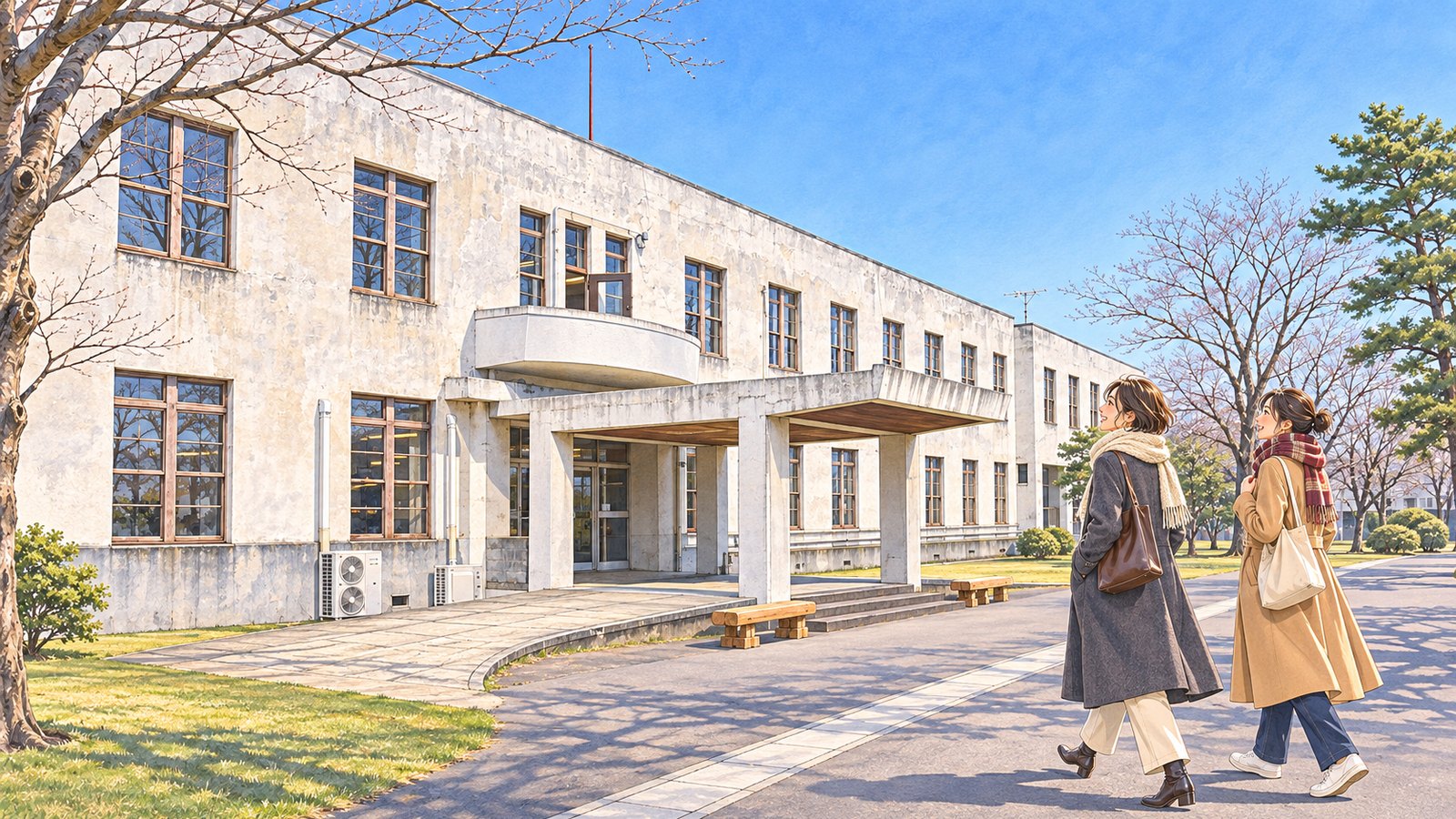
The Tsukuba Naval Air Group Memorial Museum in Kasama, Ibaraki Prefecture, is open in the former headquarters building of a naval air group, built in 1938. In Godzilla Minus Zero, this building served as the exterior of the Central Meteorological Observatory. It is where the forecaster Makoto Aoyama (Masami Nagasawa), dispatched from the observatory, works.
Inside, rooms were dressed as Dr. Ogata’s (Jun Kunimura) office and Gilbert’s office. The scene set in a hospital right after Godzilla’s attack was also filmed here, with extras from around the prefecture playing the injured. Ibaraki Prefecture also named this museum as one of the main filming locations for the previous film, Godzilla Minus One.
From November 7, 2026, through June 27, 2027, the special exhibition “Touring the Sacred Sites: The Godzilla Minus Zero Filming Locations Exhibition” is on view. It features sets recreating the shoot, along with large props and costumes used in filming. Since November 15, Makoto Aoyama’s costume has been displayed here. The first phase of the exhibition runs through the end of February and the second phase starts in March, so some items will be swapped out partway through.
During the exhibition, admission is a special rate of ¥700 for adults and ¥600 for children. Visitors receive a bonus gift at entry. A stamp for the stamp rally “Filming Location Tour Operation” (through February 28, 2027), which covers four facilities in the prefecture, is also available here.
- Location
- 654 Asahicho, Kasama, Ibaraki Prefecture
- Connection to the work
- A live-action filming location for Godzilla Minus Zero (weather bureau exterior, hospital, Dr. Ogata’s office, and more). Also used in Godzilla Minus One
- Dates
- Filming Locations Exhibition: November 7, 2026 – June 27, 2027. Closed every Tuesday
- Admission
- During the exhibition: ¥700 for adults, ¥600 for children
- Access
- About 10 minutes from Tomobe IC on the Kita-Kanto Expressway
Sources: Ibaraki Film Commission: Godzilla Minus Zero special site (in Japanese)
Tsukuba Naval Air Group Memorial Museum: official site (in Japanese)
Ibaraki Prefecture: “Ibaraki x Godzilla Minus One” tie-in events (November 1, 2023) (in Japanese)
You can play this video in the official video at the top of this page ↑
2Oyama Lakeside Park (Former Kashima Naval Air Group Site) | The Lake Kasumigaura Wartime Ruin Where the Murakami Institute and Shimosone Station Were Filmed
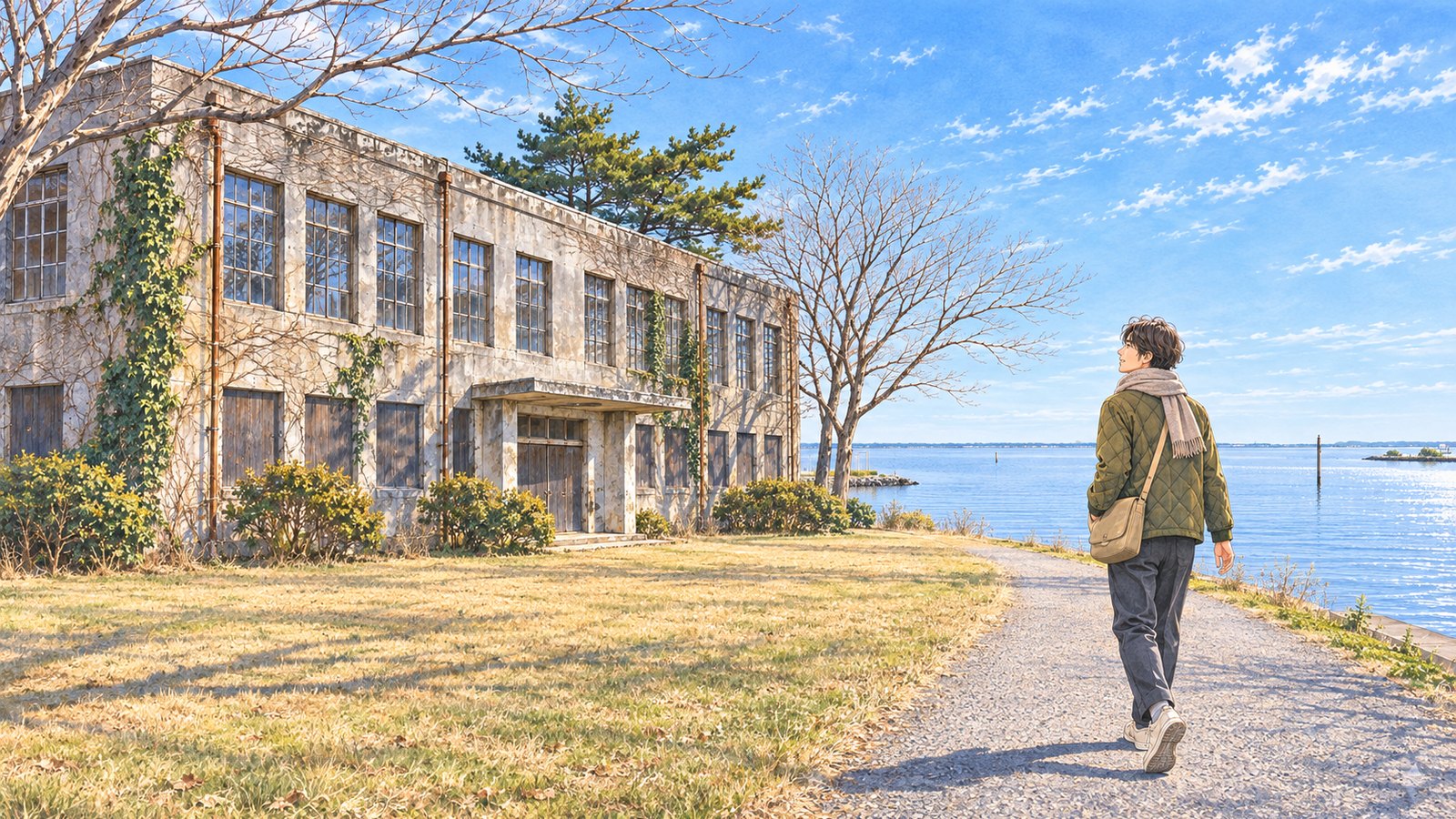
Oyama Lakeside Park in Miho, Ibaraki Prefecture, occupies the site of the Kashima Naval Air Group on the southern shore of Lake Kasumigaura. It was built in 1938 as a training base for seaplanes, and buildings such as the headquarters survive in a form close to how they looked then.
In Godzilla Minus Zero, it served as the exterior of the research institute of the biologist Kanji Murakami (Min Tanaka). The shipbuilding company and Shimosone Station scenes were also filmed in the park. A green screen was set up in the parking lot in front of the neighboring Oyama Slope, where the scene of a house hit by disaster and the final scene were shot.
This is also a venue for the Filming Locations Exhibition. However, the three film costumes that were on display here were taken off view on November 13 for use at other venues. No date has been set for their return. Guided tours are offered at 10 a.m. and 2 p.m. on days the park is open, with staff explaining as they take you through areas normally closed to visitors, such as the second floor of the headquarters building.
The park is open mainly on Saturdays and Sundays and is closed on weekdays. From December through February, it is open from 9 a.m. to 4 p.m., with last admission at 3 p.m.
- Location
- 2014-8 Oyama, Miho, Inashiki District, Ibaraki Prefecture
- Connection to the work
- A live-action filming location for Godzilla Minus Zero (Murakami Institute exterior, shipbuilding company, Shimosone Station, and more). Also used in Godzilla Minus One
- Dates
- Filming Locations Exhibition: November 7, 2026 – June 27, 2027. Open mainly Saturdays and Sundays (closed December 29 – January 3)
- Admission
- Normally ¥800 for adults, ¥300 for children. Prices may change during special exhibitions
- Access
- About 30 minutes from Inashiki IC on the Ken-O Expressway. Free parking available
Sources: Ibaraki Film Commission: Godzilla Minus Zero special site (in Japanese)
Former Kashima Naval Air Group Site: official site (in Japanese)
Former Kashima Naval Air Group Site: notice of exhibit changes (November 13, 2026) (in Japanese)
3Roadside Station Okukuji Daigo EAST | Daigo’s Filming Locations Exhibition and the Godzilla Statue at WEST
In Daigo, Ibaraki Prefecture, the auditorium of the former Kaminomiya Elementary School served as a filming location for Godzilla Minus Zero. It stands beside a wooden school building that opened in 1885. In the film, it is an elementary school in Matsumoto, Nagano Prefecture, and Koichi Shikishima and Akiko visit Noriko at the auditorium, which has become a first-aid station.
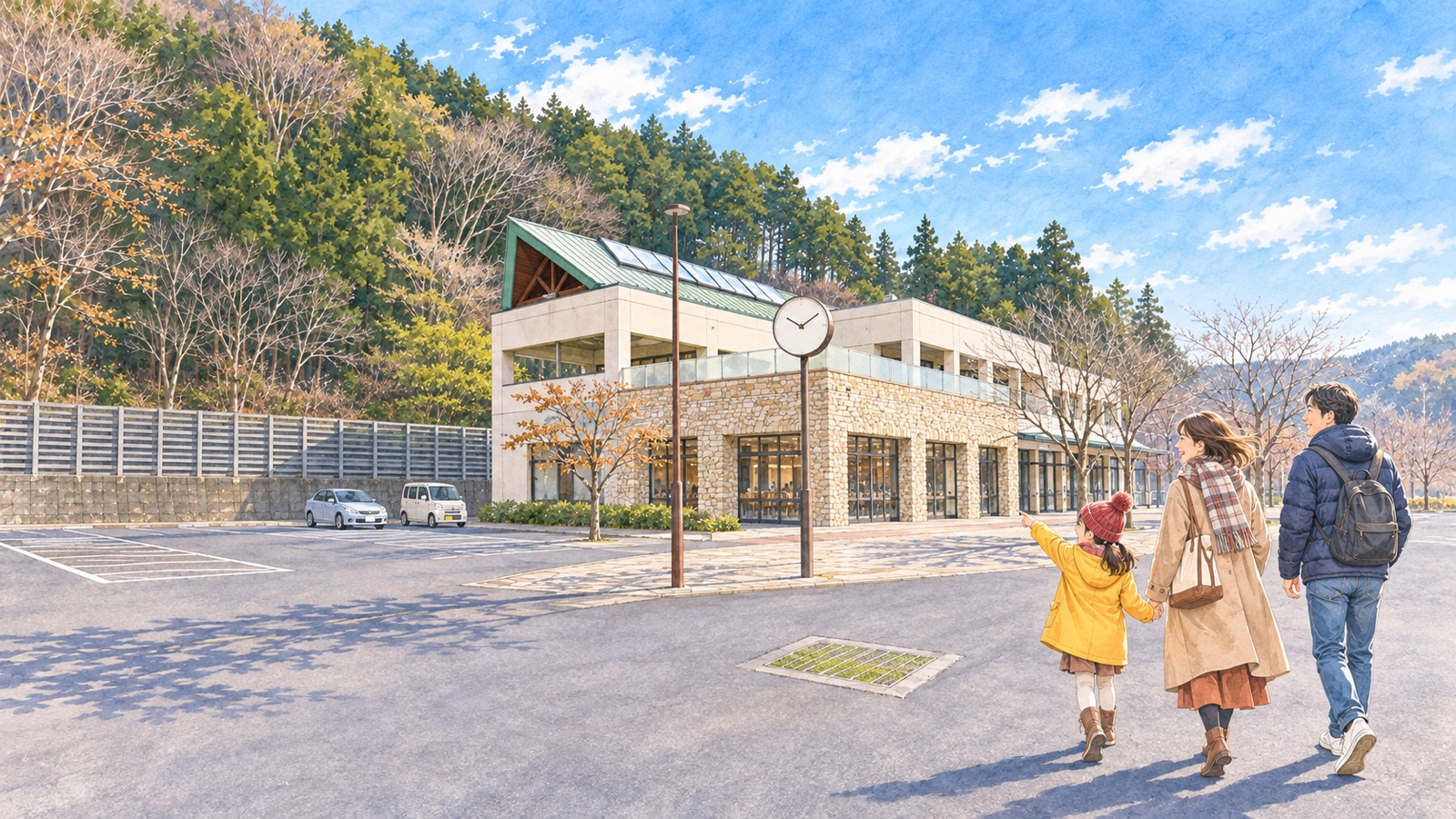
The old school building is not normally open to the public. Instead, Roadside Station Okukuji Daigo EAST is the venue for the Filming Locations Exhibition. Since November 15, the costume of Sumiko Ota (Sakura Ando), the Shikishima family’s neighbor, has been on display here. The second floor hosts a live-action puzzle game tied to the film’s story.
At Roadside Station Okukuji Daigo WEST, which opened just on October 10, a Godzilla statue is on display from November 9 through 29, in the first-floor information center. According to the Ibaraki Film Commission, Daigo is the only place in the prefecture where you can see the statue.
- Location
- EAST: 2830-1 Ikeda, Daigo, Kuji District, Ibaraki Prefecture. WEST: 866-3 Daigo, Daigo
- Connection to the work
- Venue for the Filming Locations Exhibition, standing in for the Daigo filming location (the auditorium of the former Kaminomiya Elementary School, which is closed to the public)
- Dates
- Filming Locations Exhibition and puzzle game: November 7, 2026 – June 27, 2027. Statue: November 9–29 (9 a.m.–8 p.m., until 3 p.m. on the last day)
- Closed
- EAST is closed on January 1
Sources: Ibaraki Film Commission: Godzilla Minus Zero special site (in Japanese)
Daigo Town Tourism Association: Roadside Station Okukuji Daigo WEST opens October 10, 2026 (in Japanese)
4Fukuroda Falls | Godzilla Appears in the Waterfall Viewing Tunnel for “Daigo Light”
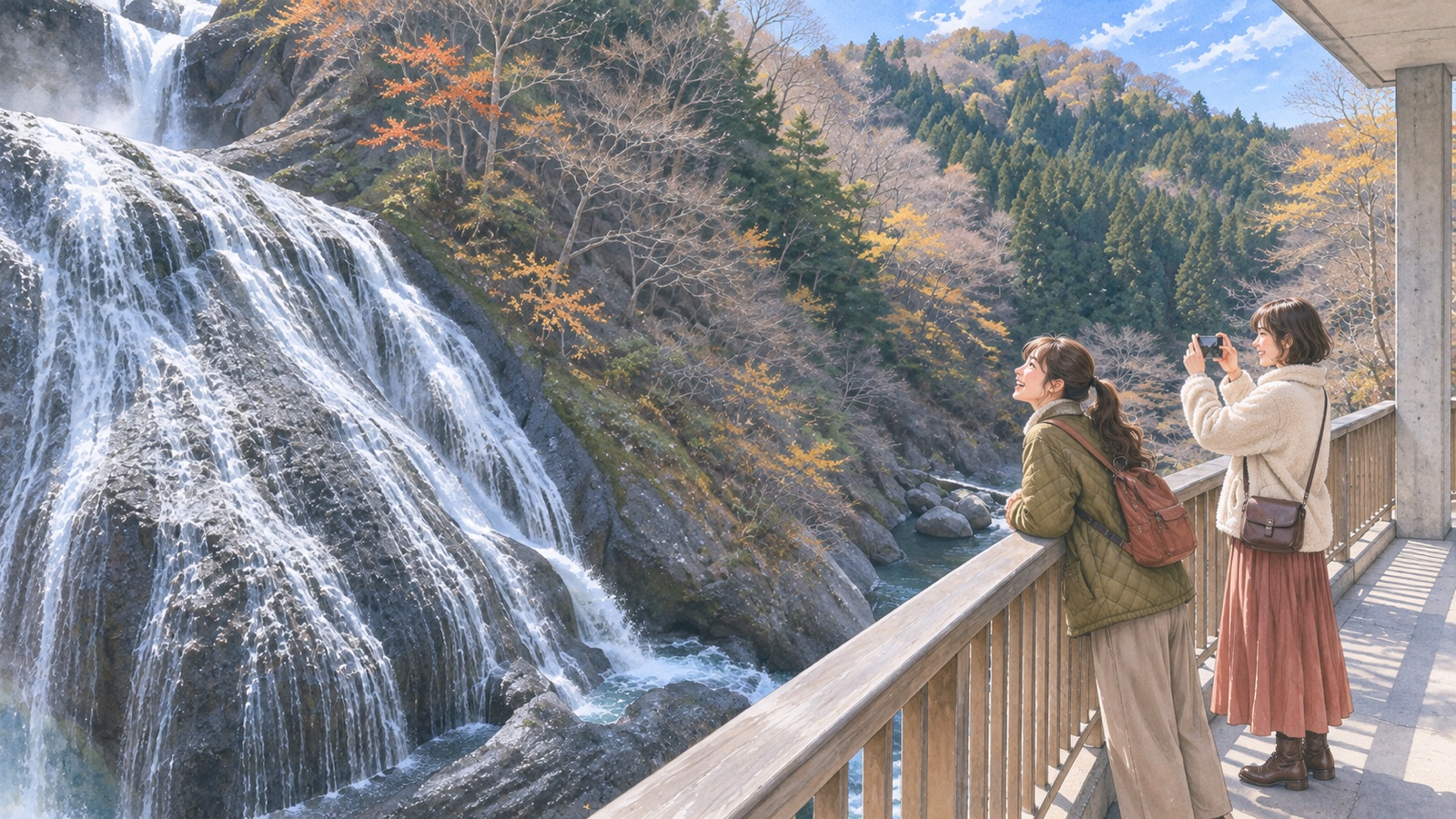
Fukuroda Falls is 120 meters high and 73 meters wide. Every year, Daigo holds “Daigo Light,” an event that lights up the falls. In 2026, from November 7 through January 31, 2027, it is a collaboration with Godzilla Minus Zero.
The setting is the tunnel leading to the falls’ viewing platform. The passage, decorated as a “tunnel of light,” gets a Godzilla display this time. The Daigo Town Tourism Association explains that the idea came from the filming of the movie at facilities in town.
The tunnel of light is open from 8 a.m. to 8 p.m. through November 30, and from 9 a.m. to 7 p.m. starting December 1. The illumination of the falls starts at 4:30 p.m. and ends at 8 p.m. in November and at 7 p.m. in December and January. Tunnel admission is ¥500 for adults and ¥300 for children. Depending on the cold, the tourism association says you may be able to see the frozen falls lit up.
- Location
- Fukuroda, Daigo, Kuji District, Ibaraki Prefecture
- Connection to the work
- Venue (the waterfall viewing tunnel) for the collaboration between Godzilla Minus Zero and “Daigo Light”
- Dates
- November 7, 2026 – January 31, 2027, daily
- Hours and admission
- Tunnel of light: 8 a.m.–8 p.m. in November, 9 a.m.–7 p.m. from December. Adults ¥500, children ¥300
Sources: Daigo Town Tourism Association: Daigo Light, Fukuroda Falls Illumination (in Japanese)
Ibaraki Film Commission: Godzilla Minus Zero special site (in Japanese)
5Kirakuyama Fureai no Oka | The Walking Woods Filmed as a Mountain Near Matsumoto
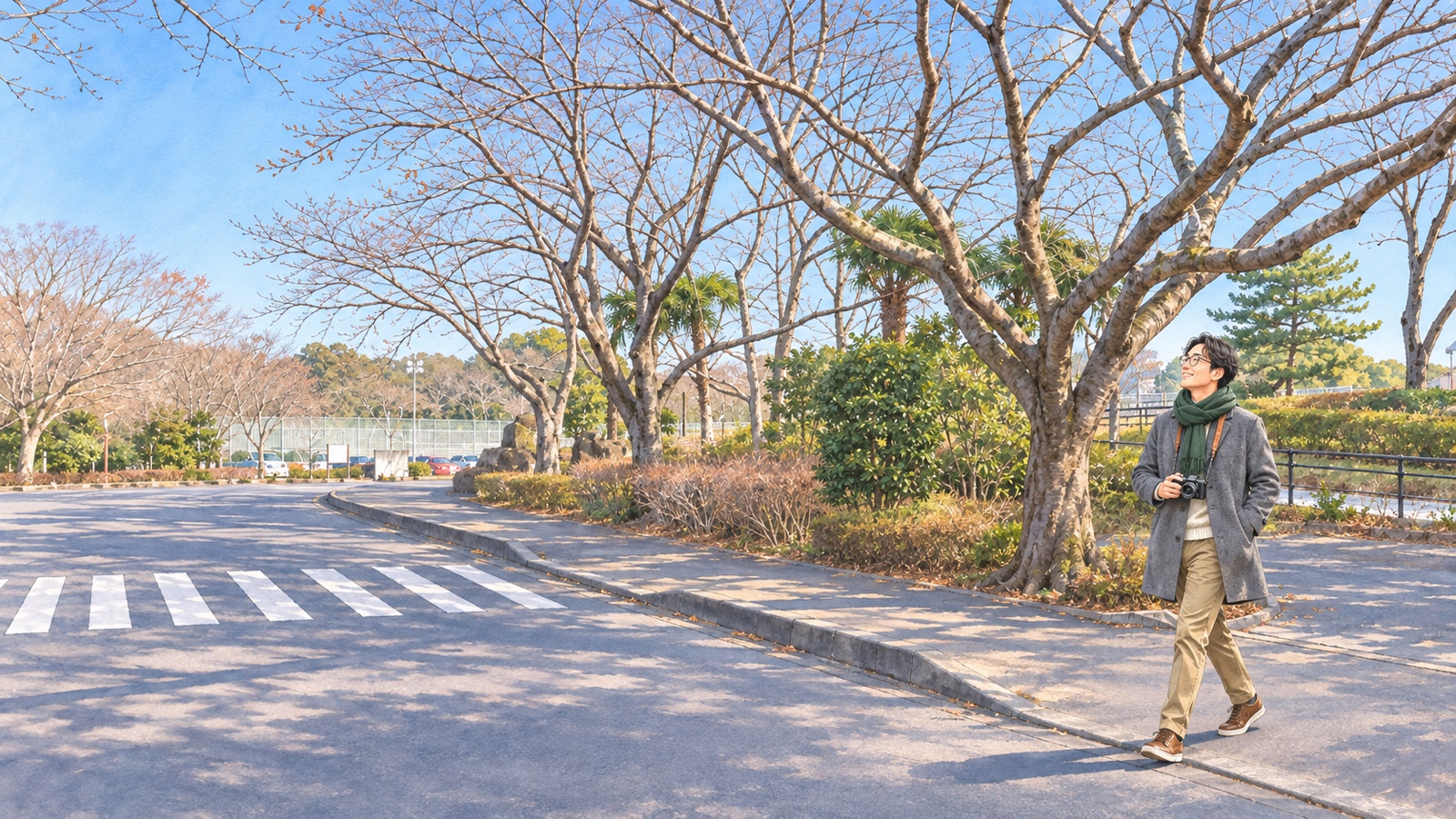
Kirakuyama Fureai no Oka in Tsukubamirai, Ibaraki Prefecture, is a city welfare complex. Centered on two halls, it also has tennis courts, a gateball court and walking woods. It is managed by the city’s Council of Social Welfare.
Godzilla Minus Zero was filmed in the walking woods on the grounds. The setting is a mountain near Matsumoto. A scene of observing events from the mountains and a scene of people fleeing from the outskirts of Matsumoto were shot with extras.
It is not a venue for the Filming Locations Exhibition, and there are no film exhibits. What you can see is the woods used for the shoot itself. Producer Kazuaki Kishida says that because Takashi Yamazaki’s films make heavy use of VFX, comparing the scenes in the movie with the real filming locations is fun.
- Location
- 530 Kamyu, Tsukubamirai, Ibaraki Prefecture
- Connection to the work
- A live-action filming location for Godzilla Minus Zero (set as a mountain near Matsumoto)
- On site
- No film exhibits. Sukoyaka Fukushikan is open 9 a.m.–5 p.m.
- Access
- About 15 minutes from Tsukubamirai Smart IC on the Joban Expressway
Sources: Ibaraki Film Commission: Godzilla Minus Zero special site (in Japanese)
Tsukubamirai City Council of Social Welfare: facility use guide (in Japanese)
6SL Exhibit at Koganei Park | The Passenger Car Suhafu 32, Where the Shikishima Family Rides
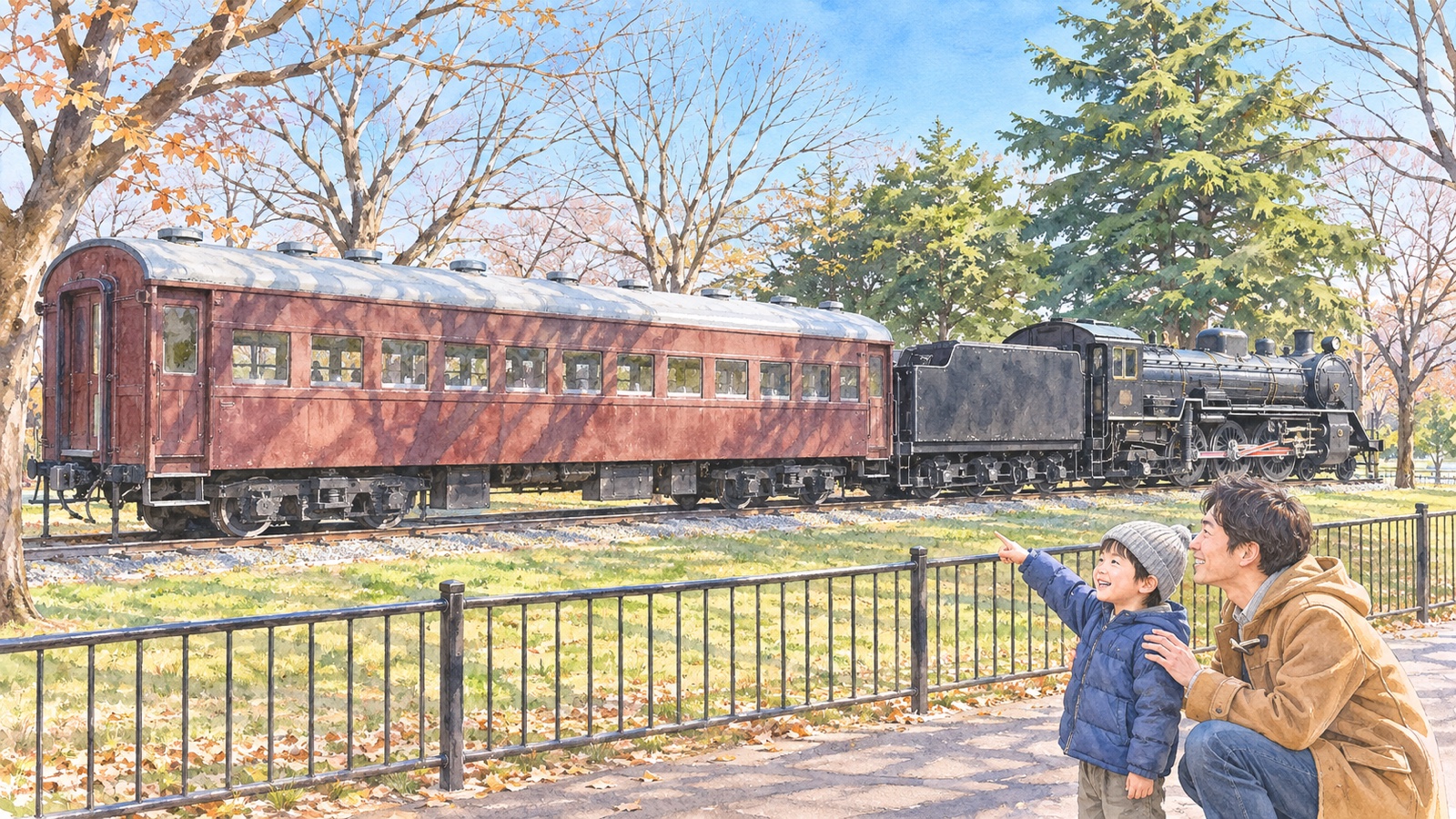
Tokyo Metropolitan Koganei Park displays a C57 steam locomotive next to an old passenger car, Suhafu 32. The scene in Godzilla Minus Zero in which Koichi Shikishima, Noriko and Akiko travel by train was filmed inside this car.
Tetsuya Yamada of the production department says the team searched for a car like those used on the Chuo Line from Tokyo to Niigata in 1949 (Showa 24). There was one more car of the same type, but it had been repainted and looked too clean, so the one at Koganei Park was chosen. The car actually ran until 1974, and JR lends it to the Tokyo Metropolitan Government.
Filming took place over eight days, from September 12 to 19, 2025, with the actual shoot taking one day. The car was covered with scaffolding and black cloth, and a green screen for compositing was placed outside the windows. Specialists from a JR group company helped replace the window glass and touch up the paint. The locomotive was not used. The D51 in the film was created with CG based on footage shot at the Kyoto Railway Museum.
The exhibit area is enclosed by a fence, but you can see the car and locomotive from the park path outside. You normally cannot enter the car, though it is sometimes open on event days.
- Location
- Sekinocho, Koganei, Tokyo (inside Tokyo Metropolitan Koganei Park)
- Connection to the work
- A live-action filming location for Godzilla Minus Zero (the interior of the train the Shikishima family rides)
- On site
- Viewable from outside the fence. Check the park’s information for days the car is open
Sources: MOVIE WALKER PRESS: The Koganei Park Passenger Car Becomes a Pilgrimage Site! Behind the Scenes of Godzilla Minus Zero (in Japanese)
Tokyo Metropolitan Park Association: Koganei Park (in Japanese)
7SEIKO HOUSE (Wako) | The Ginza Clock Tower Destroyed Again and Again, From the Original to Godzilla Minus Zero
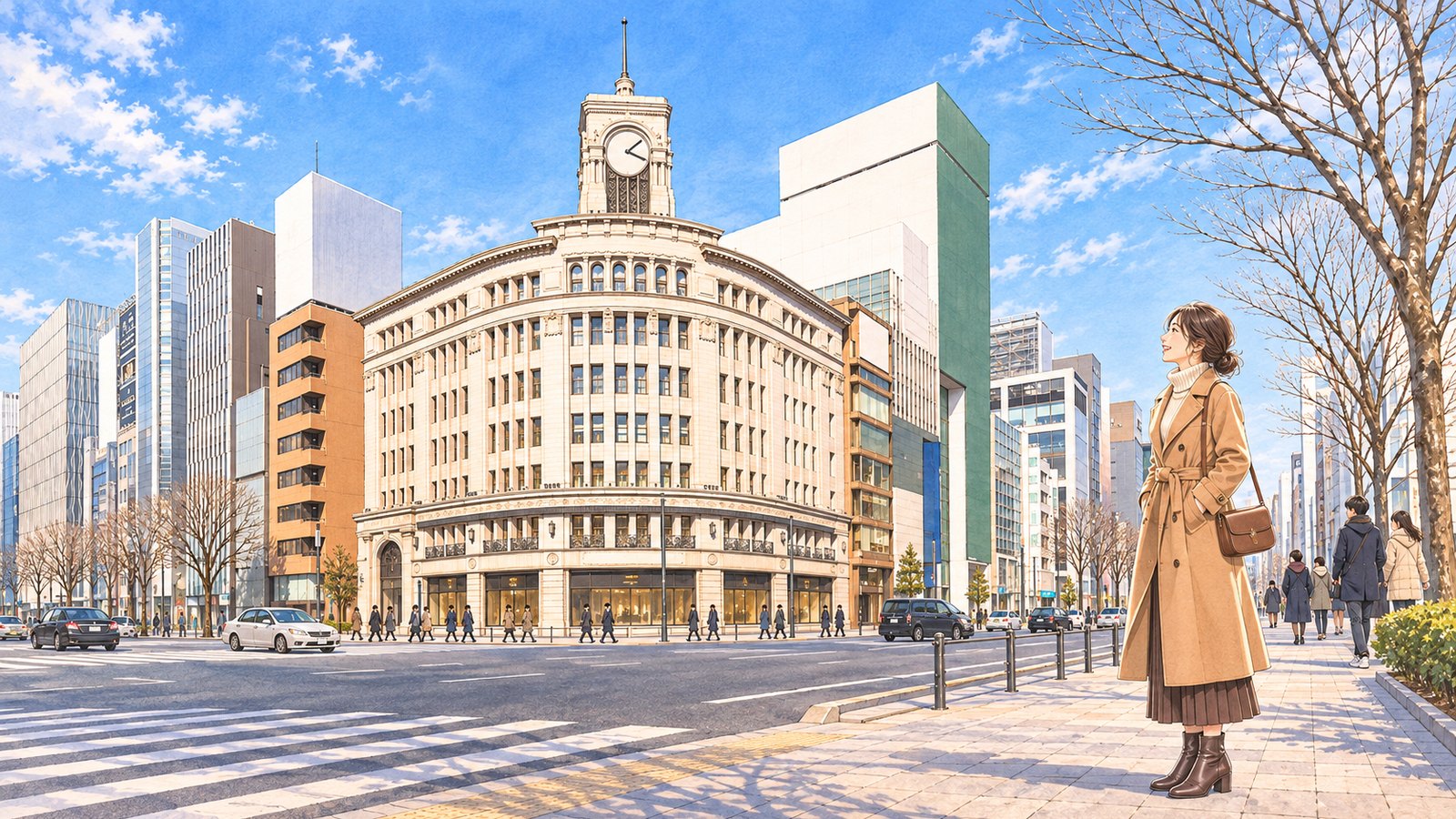
The clock tower at the Ginza 4-chome intersection was completed in 1932. It is the second building, constructed as the headquarters of Hattori Watch Store, the predecessor of Seiko. Today it is called “SEIKO HOUSE” and houses the Wako main store.
In the 1954 original Godzilla, the monster who appears in Ginza destroys this clock tower. Ginza was attacked again in Godzilla Minus One in 2023. The Nippon Gekijo theater in neighboring Yurakucho was also destroyed, in the original as well as in the 1984 Godzilla and Godzilla Minus One.
Godzilla Minus Zero also has a Wako scene. At the opening-day stage greeting, the host said Makoto Aoyama’s behavior at Wako had moved him, and Masami Nagasawa, who plays her, replied that she enjoyed filming scenes where she gets covered in dirt. For the shoot, a full-scale Wako was built inside a studio.
At the Japan Premiere on October 19, the cast and director moved to the “KK Line,” the old expressway that runs above Ginza, and walked an 83-meter red carpet. Director Takashi Yamazaki laughed on the spot that although he had wrecked the place completely, it had recovered well. You can look up at the clock tower from the sidewalk at the intersection.
- Location
- 4-5-11 Ginza, Chuo Ward, Tokyo
- Connection to the work
- A setting in Godzilla (1954), Godzilla Minus One and Godzilla Minus Zero
- On site
- The exterior can be seen from the sidewalk
- Access
- Right by Ginza Station on the Tokyo Metro
Sources: Seiko Group: The History of Seiko and the Clock Tower (in Japanese)
Toho: Godzilla Minus Zero opening-day stage greeting (in Japanese)
MOVIE WALKER PRESS: Red Carpet in Ginza for Godzilla Minus Zero (in Japanese)
8Hibiya Godzilla Square | The Shin Godzilla Statue in Front of Toho’s Headquarters
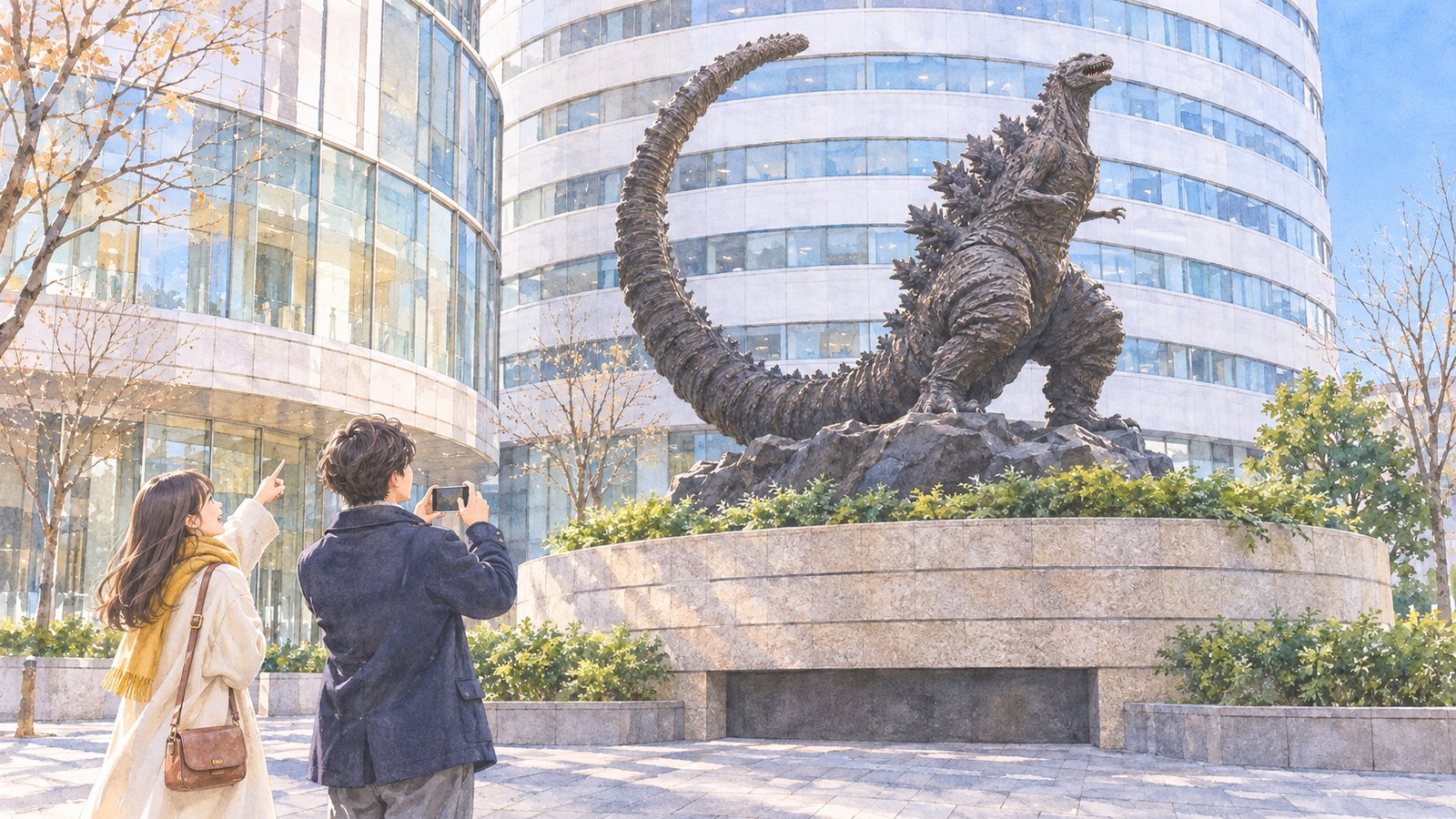
Hibiya Godzilla Square is a plaza in front of the Toho headquarters building. On a pedestal at its center stands a Godzilla statue based on the 2016 film Shin Godzilla. The statue was unveiled in March 2018. It is about 3 meters tall, and inside it are sealed the storyboards and the final script used in the filming of the original.
Two more Godzilla statues from other eras stand within walking distance. At TOHO Cinemas Hibiya in neighboring Tokyo Midtown Hibiya, a statue from 1995 is in the fourth-floor lobby. It was made for the release of Godzilla vs. Destoroyah and used to stand in this plaza. At the “TOHO entertainment STORE” on the third floor of Hibiya Chanter, there is a statue 192 centimeters tall, modeled on Godzilla vs. King Ghidorah (1991).
The plaza is near a road and a parking garage entrance. Toho asks visitors to take great care when taking photos.
- Location
- 1-2-2 Yurakucho, Chiyoda Ward, Tokyo (in front of Hibiya Chanter)
- Connection to the work
- An official plaza and Godzilla statue set up by Toho
- Hours
- The plaza is outdoors and can be seen at any time. Shopping at Hibiya Chanter is 11 a.m.–8 p.m.
- Access
- Right by Hibiya Station on the Tokyo Metro
Sources: Toho: Godzilla Sightseeing Map, Tokyo Edition (in Japanese)
MOVIE WALKER PRESS: Unveiling of Hibiya Godzilla Square (March 2018) (in Japanese)
Hibiya Chanter: business hours (in Japanese)
9Shinjuku Toho Building | The Godzilla Head About 50 Meters Up, and Godzilla Road
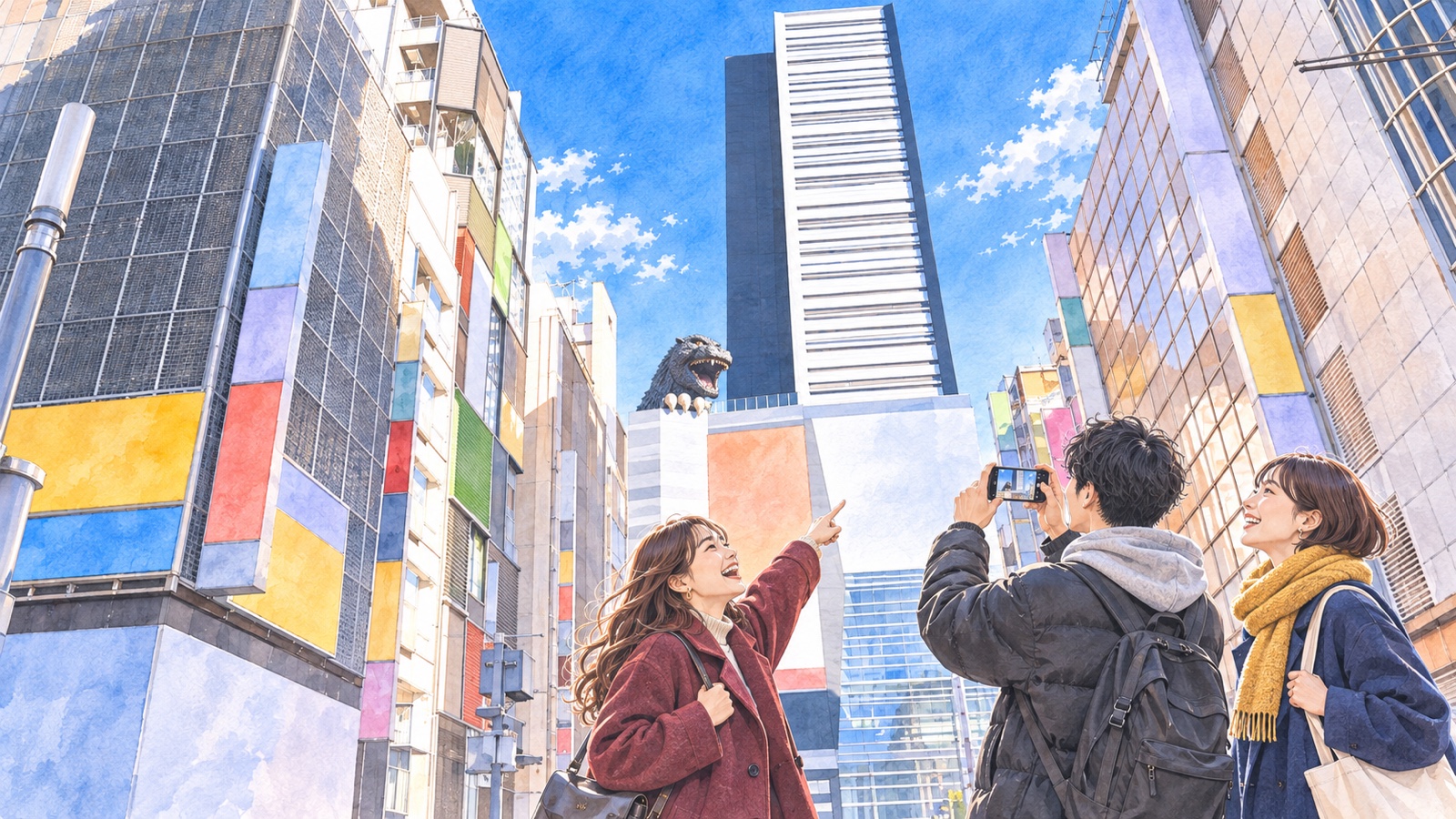
At the Shinjuku Toho Building in Kabukicho, Shinjuku, Godzilla’s head looks down at the street from a rooftop terrace. The “Godzilla Head” sits about 50 meters above ground, the same height as Godzilla in the 1954 original. It roars every hour on the hour from noon to 8 p.m. daily.
The building opened in 2015 on the site of the Shinjuku Koma Theater. That year, Godzilla received a special resident certificate from Shinjuku Ward and was appointed Shinjuku Tourism Ambassador. The street running straight from the east exit of Shinjuku Station to the building was named “Godzilla Road” in 2016.
On the sidewalk in front of the building, two manhole covers with Godzilla designs sit side by side. The designs are from Godzilla vs. Mothra and Shin Godzilla, and they were installed in May 2021. The Hotel Gracery Shinjuku on the eighth floor has a lounge with a window view of the Godzilla Head, and you can use it without staying at the hotel.
Within walking distance, the first floor of Shinjuku Marui Annex houses “Godzilla Store Tokyo,” the first official shop. A statue about 2.3 meters tall, modeled on the Godzilla of Godzilla Minus One, stands at the entrance.
- Location
- 1-19-1 Kabukicho, Shinjuku Ward, Tokyo
- Connection to the work
- A life-size Godzilla Head. The base of Shinjuku Tourism Ambassador Godzilla
- Hours
- Roar performances take place on the hour, daily from 12 p.m. to 8 p.m. Godzilla Store Tokyo is open 11 a.m.–8 p.m.
- Access
- About 5 minutes on foot from the east exit of JR Shinjuku Station
Sources: Toho: Godzilla Sightseeing Map, Tokyo Edition (in Japanese)
Shinjuku Tourism Promotion Association: Shinjuku Godzilla Spots (in Japanese)
Godzilla Store Tokyo (in Japanese)
10Yatsuyama Bridge | The Bridge Where Godzilla Took His First Step Ashore in 1954
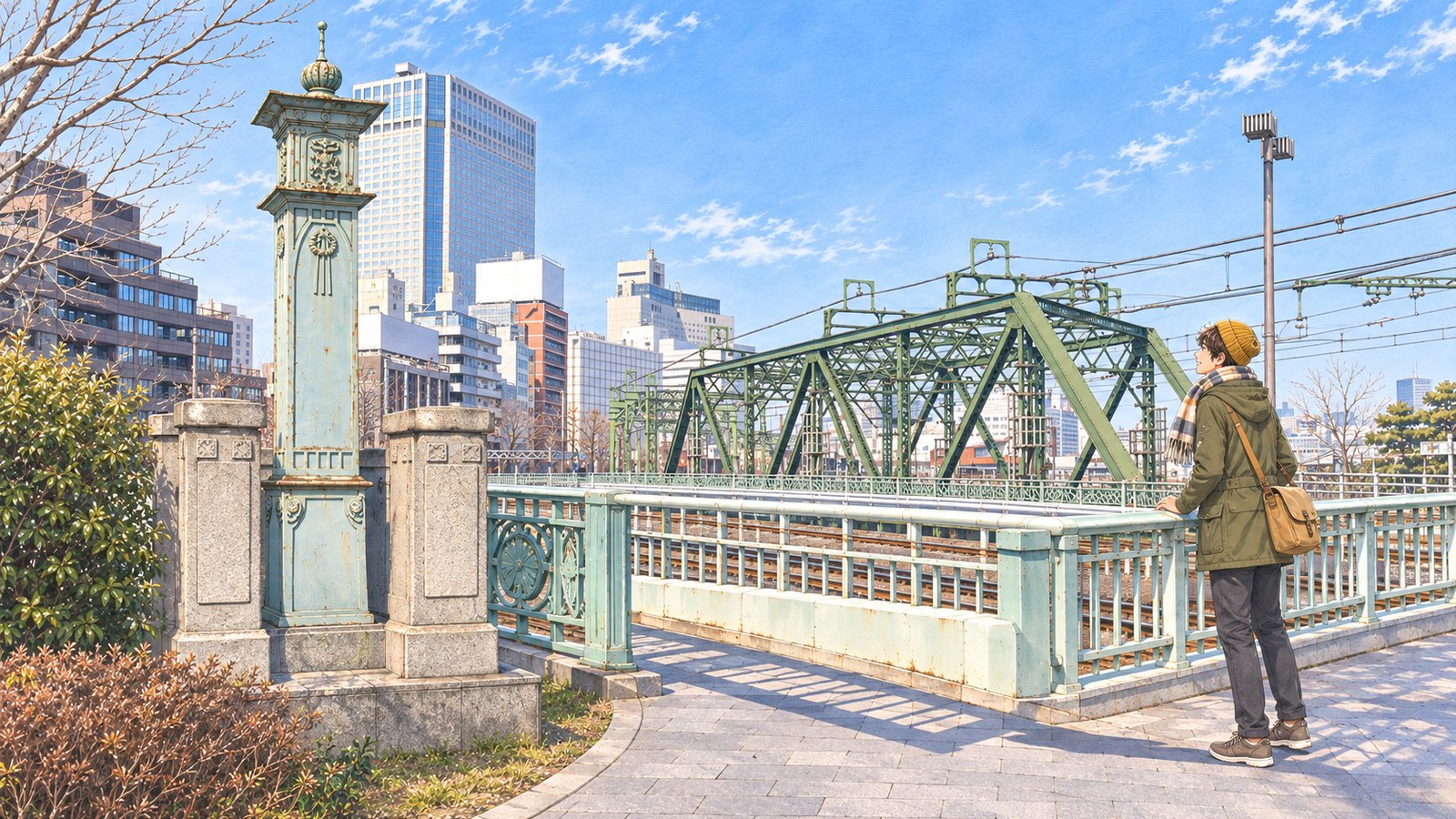
Yatsuyama Bridge, south of Shinagawa Station, carries the Tokaido road over the JR tracks. In the 1954 original Godzilla, this is where the monster rising from Tokyo Bay first set foot on land. The Shinagawa Tourism Association also introduces the bridge as “Godzilla’s landing point.”
The bridge was built in the fifth year of Meiji (1872) and rebuilt in 1913, 1930 and 1985. The present spring-green bridge is the fourth. The bridge standing in 1954, when the original film was released, was the third, built in 1930.
Shin Godzilla (2016) also filmed around Yatsuyama Bridge. Tokyo Location Box, the Tokyo Metropolitan Government’s film commission, lists it among the places it helped with filming. Just south of the bridge is a Keikyu railway crossing, and from the sidewalk you can see the tracks and the national highway overlapping.
- Location
- Kitashinagawa, Shinagawa Ward, Tokyo
- Connection to the work
- The landing point in Godzilla (1954). A Shin Godzilla filming location
- Access
- 4 minutes on foot from Kitashinagawa Station on the Keikyu Line, 9 minutes on foot from JR Shinagawa Station
Sources: Shinagawa Tourism Association: Yatsuyama Bridge (in Japanese)
Tokyo Location Box: the film Shin Godzilla (in Japanese)
11Kamata Station East Exit and the Nomi River | The Landing District Shin Godzilla Filmed With Roads Closed
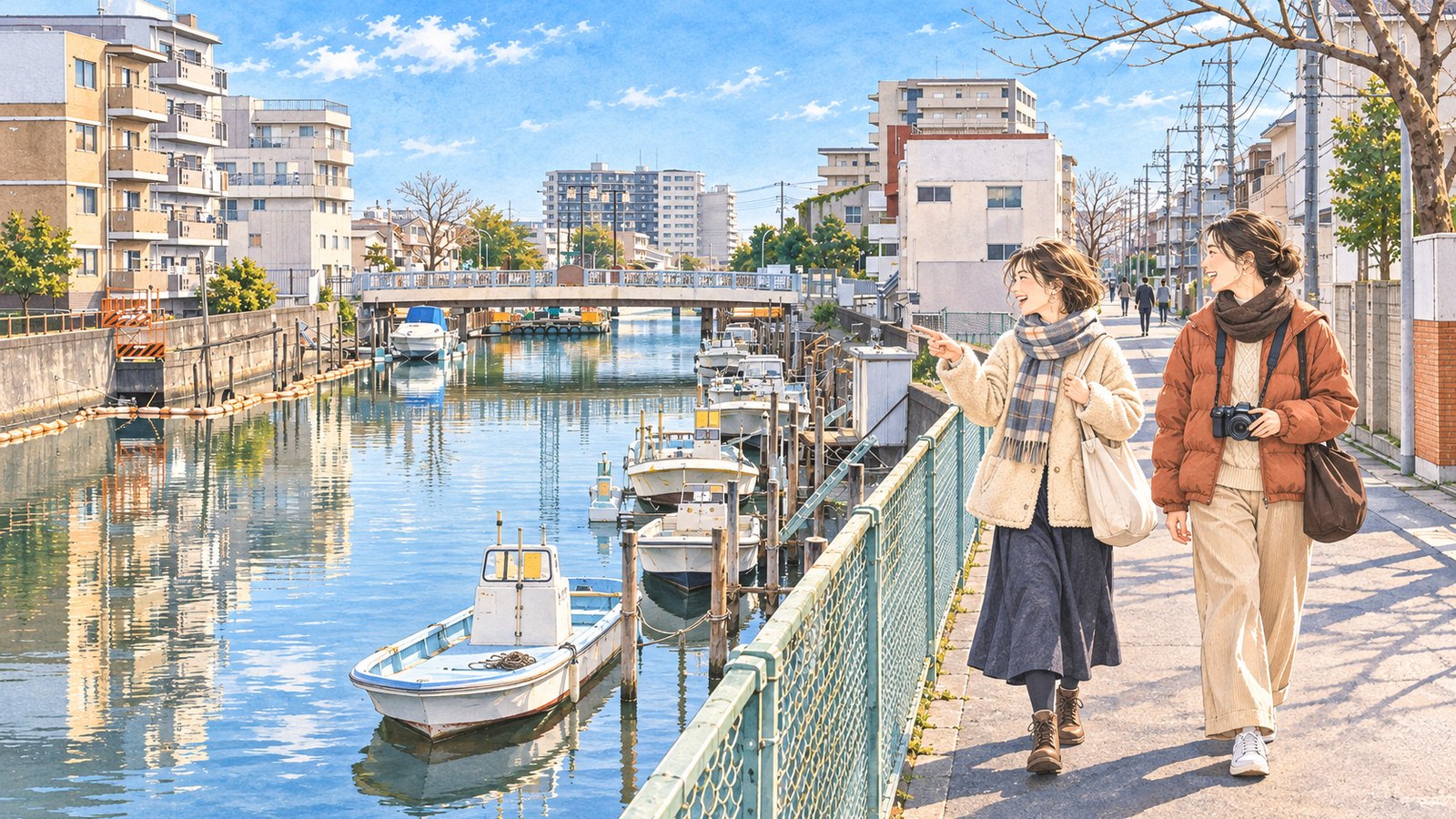
In Shin Godzilla, the giant unidentified creature comes ashore in Tokyo by swimming up a river. That river is the Nomi River, which flows through Ota Ward, and the first neighborhood it wrecks on its way is Kamata.
Around the east exit of Kamata Station, filming took place with roads closed on a large scale. Tokyo Location Box records that important scenes of the film were shot here. The same film also used a Tokyo Metropolitan Government Bureau of Sewerage facility, the Tachikawa Regional Disaster Management Base and the Tokyo International Forum.
The Nomi River flows within walking distance of Kamata Station. A path runs along the bank, and small boats are moored there. Buildings crowd both banks, so from the bridges you can check how wide the river the creature traveled in the film really is.
- Location
- Around Kamata 5-chome, Ota Ward, Tokyo
- Connection to the work
- A Shin Godzilla filming location (shot with roads closed around the station’s east exit)
- Access
- Right by the east exit of JR and Tokyu Kamata Station
Sources: Tokyo Location Box: the film Shin Godzilla (in Japanese)
12Tamagawa Sengen Shrine | The Hilltop Shrine That Became the Command Post for “Operation Taba”
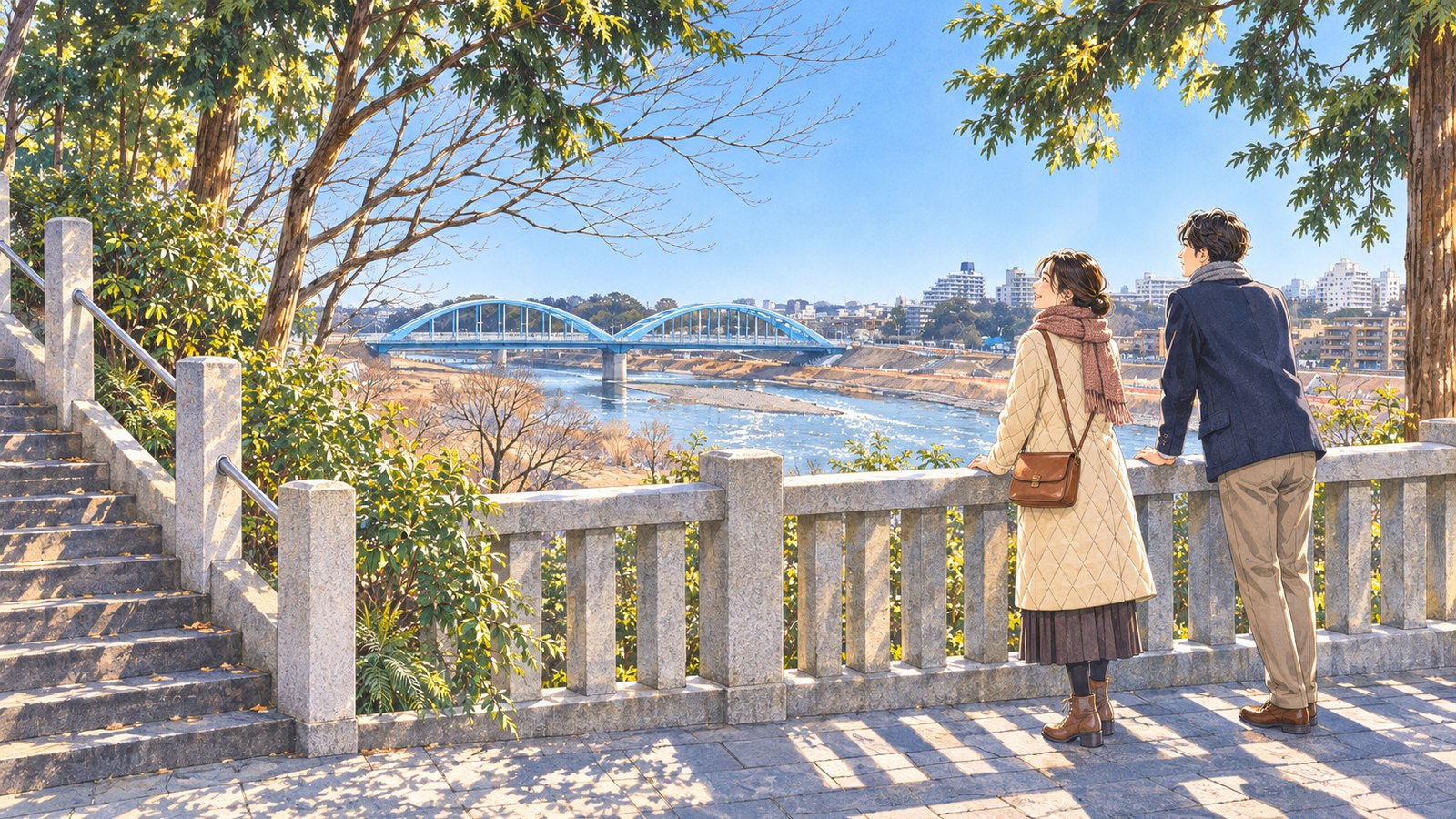
Tamagawa Sengen Shrine, close to Tamagawa Station on the Tokyu Line, was used as a command post in “Operation Taba” in Shin Godzilla. It is the film’s big operation in which the Self-Defense Forces try to stop Godzilla from crossing the Tama River.
The shrine’s official website has a section titled “Our Shrine and Shin Godzilla.” Because the shrine is not destroyed by Godzilla in the film, fans reportedly keep visiting it as “the shrine that escaped Godzilla’s destruction and removes misfortune.” To commemorate this, a set of a Godzilla ema (votive plaque) and an amulet, along with a tenugui towel, is available at the shrine office.
The grounds are on high ground, and from the lookout you can see down to the Tama River. The arch of Maruko Bridge over the river is also clearly visible from here.
- Location
- 1-55-12 Denenchofu, Ota Ward, Tokyo
- Connection to the work
- Used as the command post for “Operation Taba” in Shin Godzilla. Godzilla ema and amulets are available
- Access
- About 2 minutes on foot from Tamagawa Station on the Tokyu Line
Sources: Tamagawa Sengen Shrine: Amulets (Our Shrine and Shin Godzilla) (in Japanese)
Tamagawa Sengen Shrine: Guide to the Grounds (in Japanese)
13Tatara Beach at Kannonzaki Park | A Footprint on the Beach of the “Godzilla Slide”
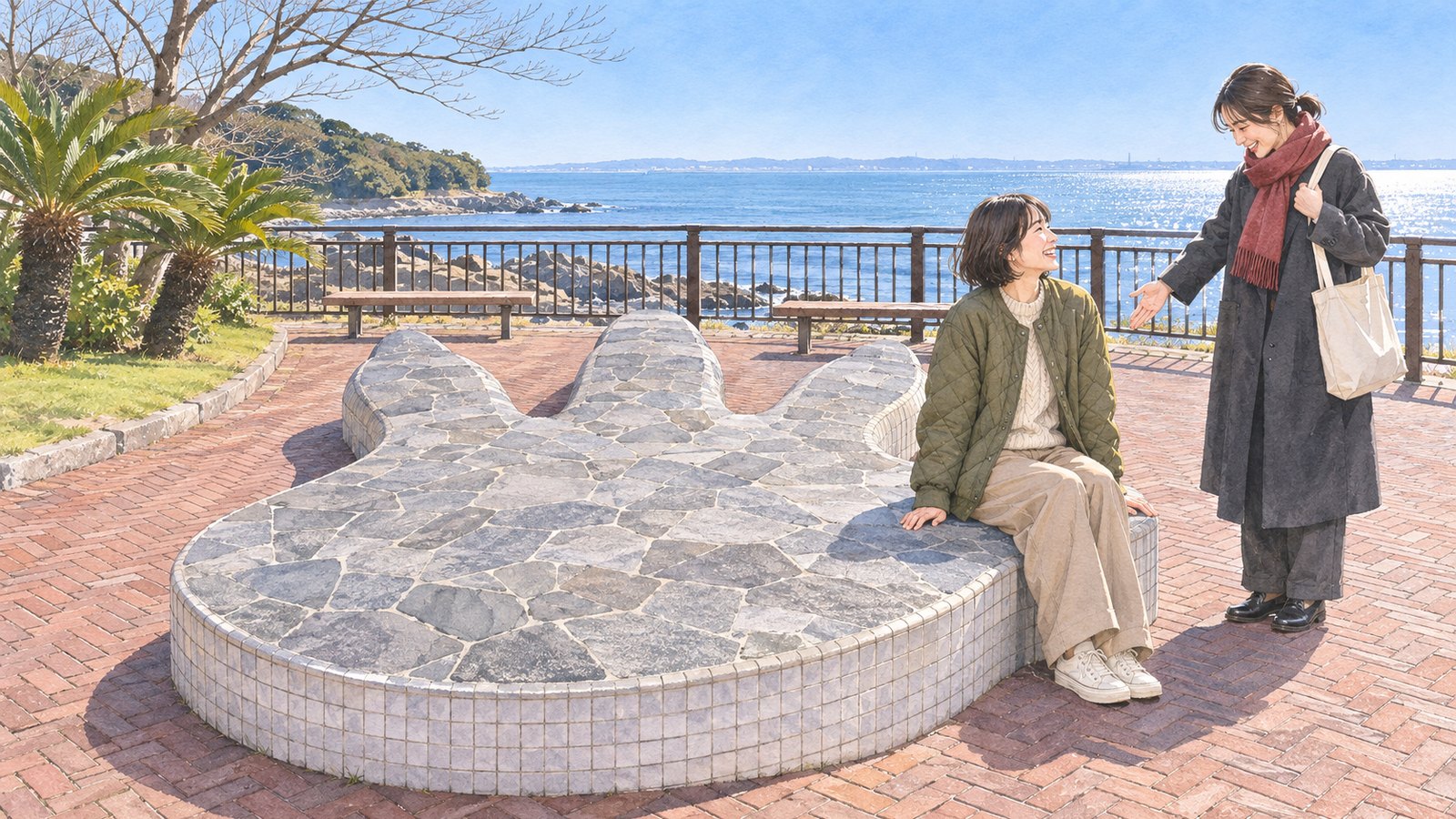
Kanagawa Prefectural Kannonzaki Park in Yokosuka, Kanagawa Prefecture, has a large bench shaped like a Godzilla footprint. It stands at the Tatara Beach observation plaza. Kanagawa Prefecture installed it to commemorate Godzilla’s 70th anniversary, and it opened for use on April 25, 2025. An information board titled “Kannonzaki and Godzilla” was installed along with it.
The beach’s connection to Godzilla goes back to 1958, when a local company installed a “dinosaur slide” to make the area a sightseeing spot where children could play. As school excursions and families filled the beach, the children reportedly began calling it the “Godzilla slide.” The slide was removed in 1973.
In 1995, a campaign to revive it began, centered on the youth division of the Yokosuka Chamber of Commerce and Industry. In 1999, with Toho’s cooperation, a “Godzilla Slide” was built at Kurihama Flower Park in the city. The footprint bench preserves that history on the original beach.
At the park’s cape stands Kannonzaki Lighthouse, built as Japan’s first Western-style lighthouse.
- Location
- 4-chome Kamoi, Yokosuka, Kanagawa Prefecture (west of the Kannonzaki Nature Museum)
- Connection to the work
- A footprint monument and information board commemorating Godzilla’s 70th anniversary
- Hours
- The observation plaza is outdoors and can be seen at any time. The prefectural parking lot is open 8 a.m.–5 p.m.
Sources: Kanagawa Prefecture: Kanagawa Prefectural Kannonzaki Park Renews the “Tatara Beach Observation Plaza” (PDF) (in Japanese)
Kanagawa Prefectural Kannonzaki Park: park map and facilities (in Japanese)
Yokosuka City Tourist Information: Kannonzaki Lighthouse (in Japanese)
14Mt. Mihara on Izu Oshima | The Crater Where the 1984 Godzilla Fell, and the Lava “Godzilla Rock”
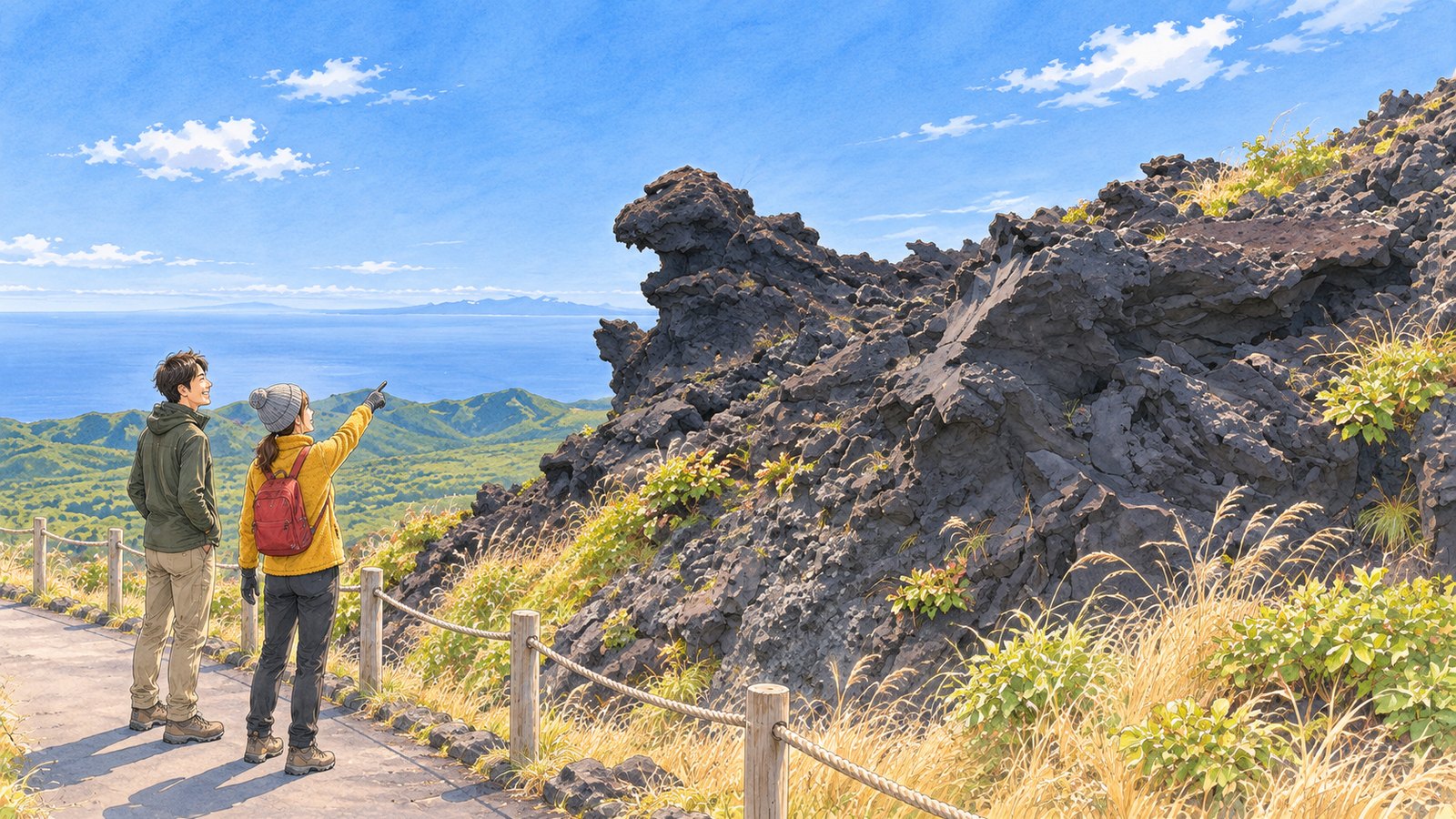
The 1984 film Godzilla ends on Mt. Mihara on Izu Oshima. A plan is devised to lure Godzilla to the crater by exploiting his tendency to be drawn to the calls of migratory birds. Godzilla, who had rampaged through Tokyo, crosses to the island, falls into the crater and disappears.
Two years after the film, in 1986, Mt. Mihara erupted. The lava that flowed out cooled and hardened, and one rock shaped like Godzilla remains. It is called “Godzilla Rock,” and many people take photos of it on the path to the summit.
The summit crater is a vertical shaft about 300 to 350 meters in diameter and about 200 meters deep. A trail also runs around the crater rim.
- Location
- Oshima, Tokyo (walking trail from the Mt. Mihara summit entrance)
- Connection to the work
- The setting for the ending of Godzilla (1984). The “Godzilla Rock” formed in the 1986 eruption
- Caution
- An active volcano. Check volcanic activity before climbing
Sources: Izu Oshima Navi: Mt. Mihara Trekking (in Japanese)
eiga.com: Godzilla (1984) film information (in Japanese)
15Eiji Tsuburaya Museum | The Special-Effects Director’s Hometown, Displaying the Original Godzilla Suit
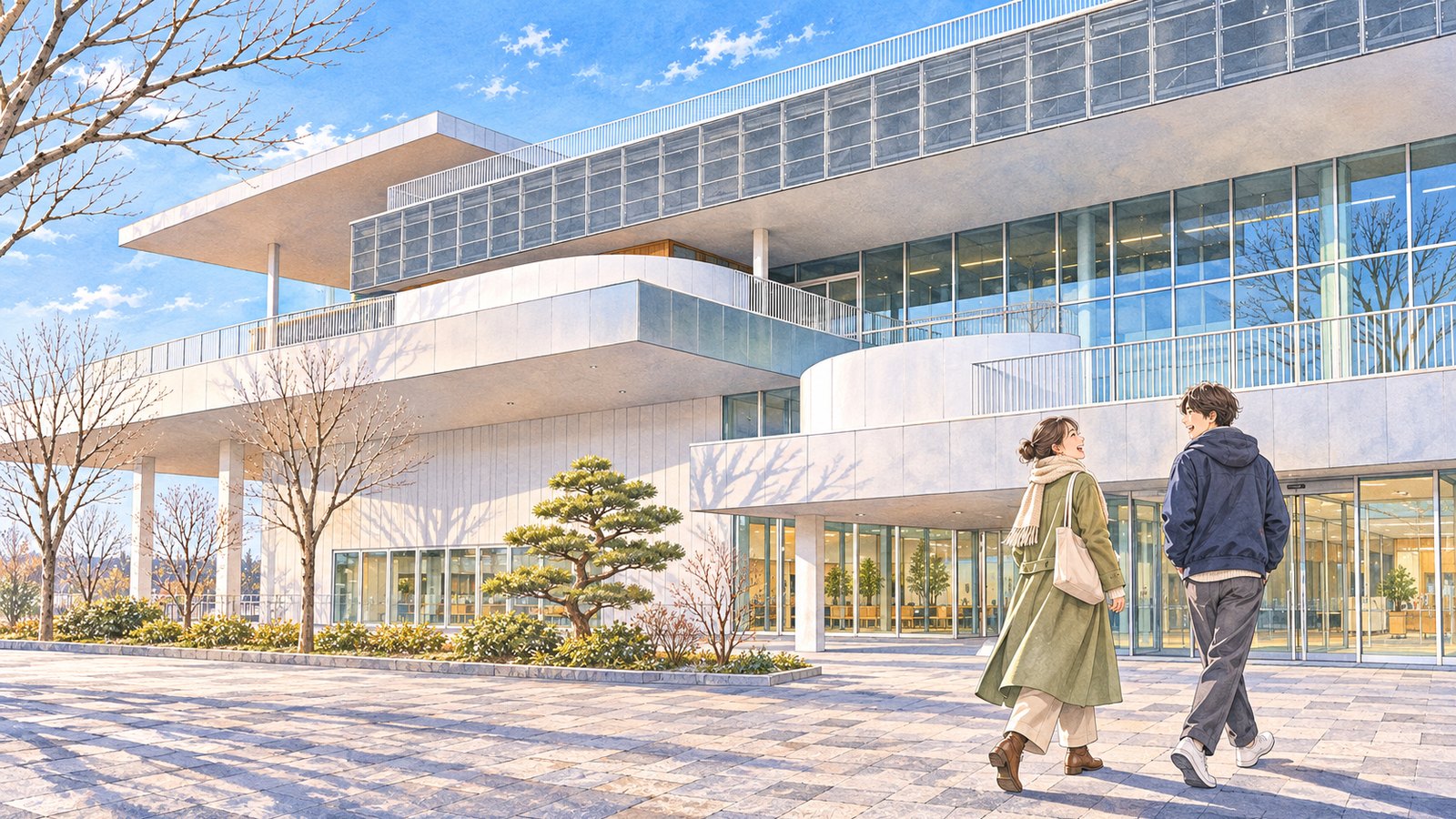
Sukagawa, Fukushima Prefecture, is the town where the special-effects director Eiji Tsuburaya was born. Tsuburaya handled the special effects for the 1954 Godzilla and was later called the “god of special effects.” On the fifth floor of the civic center “tette” is the Eiji Tsuburaya Museum, which presents his career.
The centerpiece of the exhibits is a suit recreating the original Godzilla. Overseen by the sculptor Yuji Sakai, it was used to film the special video “Dream Challenge: Godzilla Appears in Sukagawa,” shown in the museum. In the video, about 14 minutes long, Godzilla appears in the town of Sukagawa. There is also a “special-effects studio” that recreates Toho’s studio in miniature.
Many of the exhibits are not in glass cases. Photography is allowed, but video recording and the use of flash or tripods are prohibited. To coincide with the release of Godzilla Minus Zero, a corner collecting Godzilla books was also set up.
The city also has the Sukagawa Tokusatsu Archive Center, which preserves special-effects miniatures and materials. Admission to both is free, and both are closed on Tuesdays and Wednesdays.
- Location
- 4-1 Nakamachi, Sukagawa, Fukushima Prefecture (fifth floor of tette)
- Connection to the work
- A memorial facility for Eiji Tsuburaya, who handled the special effects for Godzilla (1954)
- Hours and admission
- 9 a.m.–5 p.m. Closed Tuesdays, Wednesdays and December 29 – January 3. Free
Sources: Eiji Tsuburaya Museum: Floor Guide (in Japanese)
Eiji Tsuburaya Museum: Godzilla Appears in Sukagawa (in Japanese)
Sukagawa Tokusatsu Archive Center: Visitor Information (in Japanese)
16Nijigen no Mori “Godzilla Interception Operation” | Godzilla Minus Zero Special Exhibition From December 12
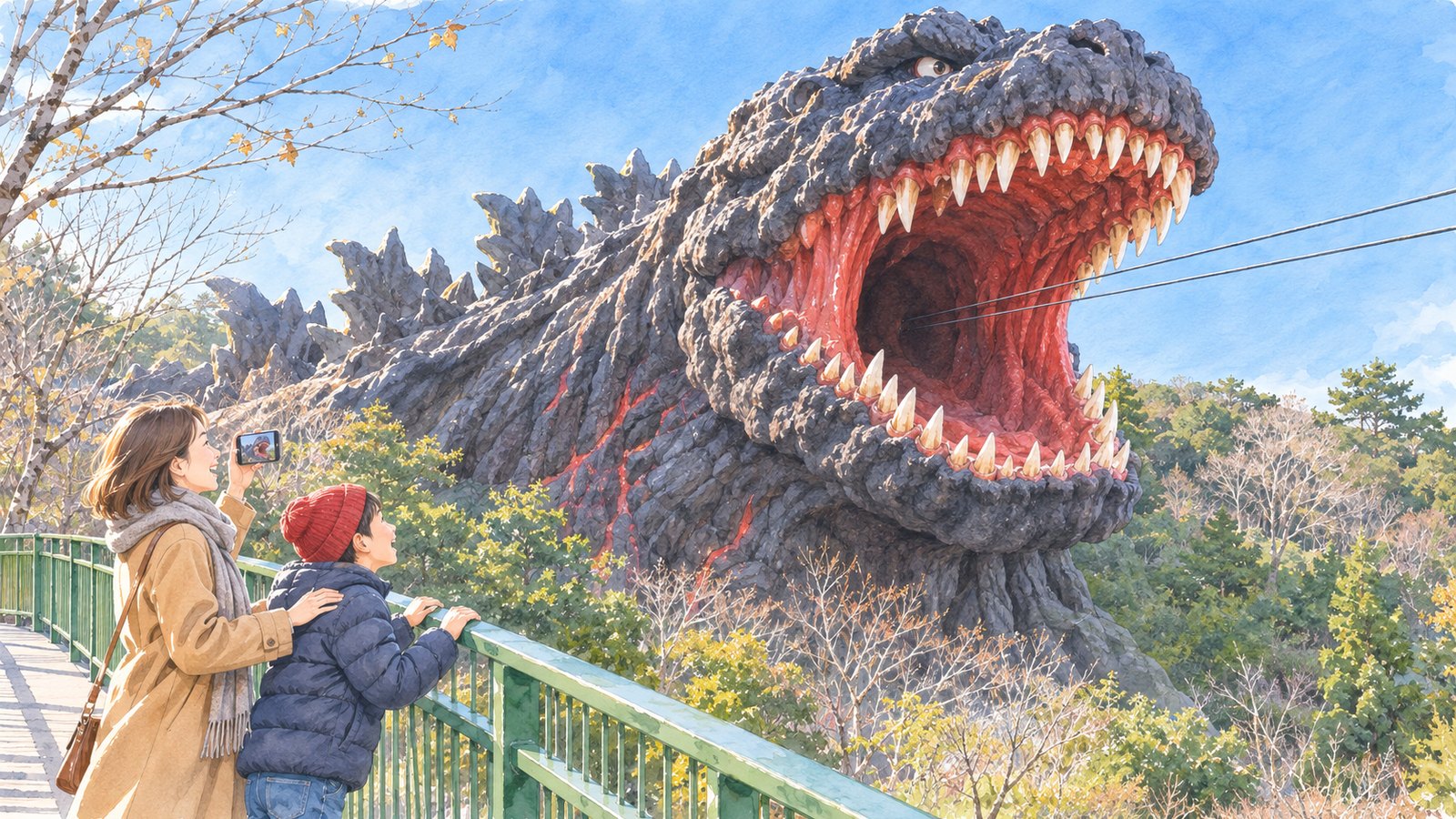
Nijigen no Mori on Awaji Island in Hyogo Prefecture has an attraction using a life-size Godzilla, the “Godzilla Interception Operation.” Its setting casts you as a member of a research center monitoring a Godzilla that has landed on Awaji Island and stopped moving. There is a zipline course that takes you into Godzilla’s body through its mouth, and another course that slides along its side.
Inside the area is the permanent Godzilla museum “Godzilla Museum.” From December 12, 2026, through December 12, 2027, it hosts the “Godzilla Minus Zero Special Exhibition.” Panels of scene photos from the film and statues are on display, and an interview video with director Takashi Yamazaki is shown.
The special exhibition is open to holders of a Gold Ticket or higher. Buying at the on-site counter costs ¥500 more per ticket, so buying in advance on the official website is recommended.
- Location
- Kusumoto, Awaji, Hyogo Prefecture (inside Hyogo Prefectural Awaji Island Park)
- Connection to the work
- A life-size Godzilla attraction and the permanent Godzilla Museum
- Dates
- Godzilla Minus Zero Special Exhibition: December 12, 2026 – December 12, 2027
- Admission
- The Gold Ticket costs ¥4,800 to ¥5,600 for adults (varies by season)
Sources: Nijigen no Mori: Godzilla Interception Operation (in Japanese)
Nijigen no Mori: Announcement of the “Godzilla Minus Zero Special Exhibition” (in Japanese)
Learn More About Godzilla Minus Zero and the Series
The following sections cover the new film’s story and how the Godzilla films have used real places over the years.
Godzilla Minus Zero Takes Place Two Years After the Previous Film
Godzilla Minus Zero is read in Japanese as “Gojira Mainasu Zero.” Takashi Yamazaki, who directed the previous film, again serves as director, screenwriter and VFX supervisor. It opened on November 3 in 448 theaters nationwide: 383 standard theaters and 65 IMAX theaters.
The story begins two years after the deadly fight with Godzilla. The protagonist, Koichi Shikishima, is a former kamikaze pilot who survived the war. Noriko, who was attacked by Godzilla in the previous film, survived and became Koichi’s wife. Just as they have gained an everyday life at last, disaster looms again.
Koichi Shikishima
Played by Ryunosuke Kamiki. A former kamikaze pilot who survived the war and fought Godzilla two years earlier. In this film, he acts to protect his family.
Noriko Shikishima
Played by Minami Hamabe. Koichi’s wife. She was attacked by Godzilla in the previous film and miraculously survived.
Makoto Aoyama
Played by Masami Nagasawa. A weather forecaster dispatched from the weather bureau to the Major Disaster Response Bureau. She first appears in this film.
Kenji Noda
Played by Hidetaka Yoshioka. He continues from the previous film and serves as head of the Major Disaster Response Bureau in this one.
Kanji Murakami
Played by Min Tanaka. A biologist scarred by the war. He first appears in this film.
Sumiko Ota
Played by Sakura Ando. The Shikishima family’s neighbor, who runs an orphanage.
At the opening-day stage greeting, Kamiki said that while Shikishima in the previous film acted out of guilt, in this one he acts to protect his family. At 11 a.m. on opening day, box office receipts were 201 percent of the previous film’s opening day (excluding the earliest screenings).
Sources: Toho: Godzilla Minus Zero opening-day stage greeting (in Japanese)
Godzilla Minus Zero: official site (in Japanese)
Ibaraki’s Surviving Wartime and Postwar Buildings Became the Landscape of 1949
Filming in Ibaraki Prefecture took place in four locations: Kasama, Tsukubamirai, Daigo and Miho. Producer Kazuaki Kishida explains that the reason was how well the buildings had been preserved. Many wartime and postwar buildings have been renovated inside even when their exteriors survive, so they cannot capture the atmosphere of the time as it was. Ibaraki still had buildings preserved down to their interiors.
The Tsukuba Naval Air Group Memorial Museum and the former Kashima Naval Air Group site were also used in the previous film, Godzilla Minus One. When that film was released, Ibaraki Prefecture held an exhibition at the prefectural government building. This time, the venues have moved to the filming locations themselves, and the run has been extended to about eight months.
Many residents took part in the shoot as extras. Kishida thanked the participants, who kept the content completely secret until release, and called this effort “Operation Silence.”
Sources: Ibaraki Film Commission: Godzilla Minus Zero special site (in Japanese)
Ibaraki Prefecture public relations magazine “Hibari,” November 2026 issue, Feature 2 (in Japanese)
Released in About 100 Countries at Nearly the Same Time
Godzilla Minus Zero was released in about 100 countries around the world at nearly the same time as in Japan. Japanese films are usually released in Japan first and reach overseas theaters several months later. This time, the overseas release was decided from the planning stage.
The initial aim was a simultaneous worldwide release on November 3, but the day of the week on which new films open differs from country to country. So the film was released in each country within a week of the Japanese release. It was also the first Japanese film to receive IMAX’s “Filmed For IMAX” certification.
The trigger was the previous film. Godzilla Minus One grossed more than ¥7.65 billion and became the first Asian film to win the Academy Award for Best Visual Effects, at the 96th Academy Awards.
72 Years of Destroying Real Cities
The original Godzilla opened on November 3, 1954. The date is now called “Godzilla Day.” Godzilla came ashore at Yatsuyama Bridge in Shinagawa and destroyed the clock tower in Ginza.
Shin Godzilla (2016) had Hideaki Anno as chief director and Shinji Higuchi as director. It is set in the southern districts of Tokyo: Kamata, Shinagawa and the Tama River. Filming at the front of Kamata Station was done with roads actually closed.
The two films by director Takashi Yamazaki return to the period right after the war. Much of the cityscape was created with VFX, and the filming also used buildings and vehicles surviving from that era, such as the wartime ruins in Ibaraki and the passenger car at Koganei Park.
Besides the 16 places in this article, Toho also introduces Terminal 3 at Haneda Airport. In the atrium of the departure lobby, there is a monument of the original Godzilla about 40 meters long.
First, an official record book collecting Shin Godzilla materials.
For the previous film, Godzilla Minus One, a materials book came out to coincide with the release of the sequel.
There is also a novel version that Takashi Yamazaki wrote himself.
To look into the whole series, an encyclopedia is handy to have.
Sources: Toho: Godzilla Sightseeing Map, Tokyo Edition (in Japanese)
Tokyo Location Box: the film Shin Godzilla (in Japanese)
Godzilla and the Pilgrimage Sites Through Time
- November 3, 1954The first film, Godzilla, opens. Godzilla lands at Yatsuyama Bridge and destroys the Ginza clock towerFilm
- 1958A “dinosaur slide” appears on Tatara Beach at Kannonzaki. Children call it the “Godzilla slide”Local
- 1984Godzilla opens. The ending is set on Mt. Mihara on Izu OshimaFilm
- 1986Mt. Mihara erupts. One of the hardened lava rocks comes to be called “Godzilla Rock”Local
- 1999With Toho’s cooperation, a “Godzilla Slide” is built at Kurihama Flower Park in YokosukaLocal
- 2015The Shinjuku Toho Building opens. Godzilla receives a special resident certificate from Shinjuku Ward and becomes Shinjuku Tourism AmbassadorOfficial site
- 2016Shin Godzilla opens. Filmed around the east exit of Kamata Station and Yatsuyama BridgeFilm
- March 2018A new Godzilla statue is unveiled at Hibiya Godzilla SquareOfficial site
- November 3, 2023Godzilla Minus One opens. The following year, it wins the Academy Award for Best Visual EffectsFilm
- April 25, 2025A Godzilla footprint monument is installed at the Tatara Beach observation plaza in Kannonzaki ParkLocal
- September 2025Godzilla Minus Zero is filmed in the passenger car at Koganei ParkFilm
- October 19, 2026Japan Premiere. Red carpet on the KK Line in GinzaFilm
- November 3, 2026Godzilla Minus Zero opens in 448 theaters nationwideFilm
- November 7, 2026The Filming Locations Exhibition opens at three venues in Ibaraki. The Fukuroda Falls collaboration beginsEvent
- December 12, 2026The Godzilla Minus Zero Special Exhibition opens at the Godzilla Museum on Awaji Island (through December 12, 2027)Event
- January 31, 2027Last day of the Daigo Light collaboration at Fukuroda FallsEvent
- June 27, 2027Last day of the Filming Locations Exhibition in IbarakiEvent
This timeline runs from the 1954 original to the events that end in 2027. The last three rows are the periods you can still visit.
Lab Notes | A Business Perspective: Open Filming Locations From the Day of Release
Ibaraki Prefecture opened its Filming Locations Exhibition on November 7, four days after the film’s release. Before release, it had not revealed which scenes were shot in the prefecture. It opened the special site on November 6, three days after the release, and posted the in-film setting for each location. The schedule let people who had seen the film visit that same weekend.
Splitting the venues across three municipalities is also a useful example for other regions. Daigo, whose filming location was a closed former school building, made the roadside station the venue and paired it with the Fukuroda Falls event. Even when the filming site itself cannot be shown, a nearby attraction can serve as the place that receives visitors.
Sources: Ibaraki Film Commission: Godzilla Minus Zero special site (in Japanese)
About the sources
Exhibition dates, opening hours and tickets are current as of the time of writing. Please check each official website for the latest information before you visit. Exhibits change over time.
FAQ
Where can I visit the filming locations of Godzilla Minus Zero?
In Ibaraki Prefecture, you can tour the actual buildings used in filming at the Tsukuba Naval Air Group Memorial Museum (Kasama) and Oyama Lakeside Park (Miho). You can also visit the walking woods at Kirakuyama Fureai no Oka (Tsukubamirai) and the passenger car at Koganei Park in Tokyo. The former Kaminomiya Elementary School in Daigo is not normally open to the public.
How long does the “Touring the Sacred Sites: The Godzilla Minus Zero Filming Locations Exhibition” run?
From November 7, 2026, through June 27, 2027. The venues are the Tsukuba Naval Air Group Memorial Museum, Oyama Lakeside Park and Roadside Station Okukuji Daigo EAST. Exhibits are swapped out over time, and the Tsukuba Naval Air Group Memorial Museum switches to its second-phase display in March.
Where can I see the costumes from the film?
Since November 15, Makoto Aoyama’s costume has been on display at the Tsukuba Naval Air Group Memorial Museum and Sumiko Ota’s costume at Roadside Station Okukuji Daigo EAST. The three costumes at Oyama Lakeside Park were taken off view on November 13.
Is Oyama Lakeside Park open on weekdays?
It is open mainly on Saturdays and Sundays and is closed on weekdays. From December through February, it is open from 9 a.m. to 4 p.m., with last admission at 3 p.m. It is closed from December 29 through January 3.
Can I see the Godzilla at Fukuroda Falls during the day?
The tunnel of light in the waterfall viewing tunnel is open from the morning. It is open from 8 a.m. to 8 p.m. through November 30, and from 9 a.m. to 7 p.m. from December 1 through January 31. The illumination of the falls starts at 4:30 p.m.
Which film does the Godzilla statue at Hibiya come from?
The statue at Hibiya Godzilla Square is based on the 2016 film Shin Godzilla. The statue in the fourth-floor lobby of TOHO Cinemas Hibiya was made in 1995 for Godzilla vs. Destoroyah, and the statue on the third floor of Hibiya Chanter is modeled on Godzilla vs. King Ghidorah (1991).
When does the Godzilla Head in Shinjuku roar?
It roars on the hour, every hour, from noon to 8 p.m. daily. You can hear it from Godzilla Road, which runs from the east exit of Shinjuku Station to the building.
When does the Godzilla Minus Zero special exhibition on Awaji Island start?
It runs from December 12, 2026, through December 12, 2027. It is held at the Godzilla Museum in the “Godzilla Interception Operation” area of Nijigen no Mori, and you can enter with a Gold Ticket or higher.
More in Pilgrimage

Film "Kokuhou" Pilgrimage Guide: Izushi Eirakukan, Biwako Otsukan, Kyoto Kaburenjo Theaters & Dojo-ji Temple

Amachan Pilgrimage Guide: Kuji's Kosode Coast, Costume Exhibits & Sanriku Railway Filming Stations
