

Come Come Everybody Pilgrimage: 10 Places in Okayama, Osaka, Shiga & Kyoto
The riverbank along the Asahi River in Okayama City is where the scene of Yasuko practicing on a bicycle was filmed. Walk beside the river for a view of the broad riverbed seen in Come Come Everybody. Western-style houses, a former school, and shopping streets also connect to scenes depicting three generations of everyday life.
This guide visits 10 locations in Okayama, Osaka, Shiga, and Kyoto. Follow the places that appear in the lives of three generations, from buildings filmed for their exteriors to shopping streets that inspired a storefront.
Places That Reflect Three Generations of Daily Life | 10 Locations to Visit
The former Sugiyama family residence and the surrounding temple town are treated as one historic district, as are several filming stretches along the Kamo River, which can be visited as a single riverside walk. This trip combines active shopping and residential streets with cultural properties and public facilities, following each site’s visitor guidelines.
① Asahi River riverbank
Walk along the river in Okayama City where Yasuko practiced riding a bicycle; the east bank has cherry trees and a pedestrian path.
Explore the Asahi River riverbank② Former Okayama Kaikosha (General Ground Club)
A Western-style building from the Meiji period within Okayama Prefectural Sports Park. Its exterior was used as the location for an officers’ club during the Allied occupation.
Explore the Former Okayama Kaikosha (General Ground Club)③ Omotecho Shopping Street
An arcade in central Okayama City with a long-established Japanese confectionery shop whose storefront helped inspire the design of Tachibana.
Explore Omotecho Shopping Street④ Tondabayashi Jinaimachi and the Former Sugiyama Family Residence
A historic district where filming took place at the Important Cultural Property, the former Sugiyama family residence, as well as at locations used for the Kijima family home and its townscape.
Explore Tondabayashi Jinaimachi and the Former Sugiyama Family Residence⑤ Former Toyosato Elementary School Buildings
These historic school buildings are open to the public. They were used to film the scene in Episode 6 where Minoru attends a university German lecture.
Explore the Former Toyosato Elementary School Buildings⑥ Daijo Shrine
A shrine in Gokasho where Yasuko and Kinu’s first shrine visit of the year was filmed in Episode 6, and Isamu and the baseball team prayed for a place at Koshien in Episode 10.
Explore Daijo Shrine⑦ Kitano Tenmangu Shrine
At this Kyoto shrine, Rui saw a stall selling imagawayaki at the monthly Tenjin market, inspiring her decision to start making the pastries herself.
Explore Kitano Tenmangu Shrine⑧ Around Kamishichiken
The streets where Rui, Joichiro, and Hinata lived after moving to Kyoto were filmed here, as was the route Joichiro cycled back along.
Explore the Kamishichiken area⑨ Kyoto Prefectural Kamo River Park
This riverbank along the Kamo River was used for scenes of Joichiro practicing on a bicycle and young Hinata going to summer-vacation radio calisthenics.
Explore Kyoto Prefectural Kamo River Park⑩ Toei Kyoto Studio Park
This Kyoto film theme park became the setting for Hinata, who grew up dreaming of period dramas, to find work supporting films and events.
Explore Toei Kyoto Studio Park
Asahi River Riverbank | Where Yasuko Practiced Riding a Bicycle
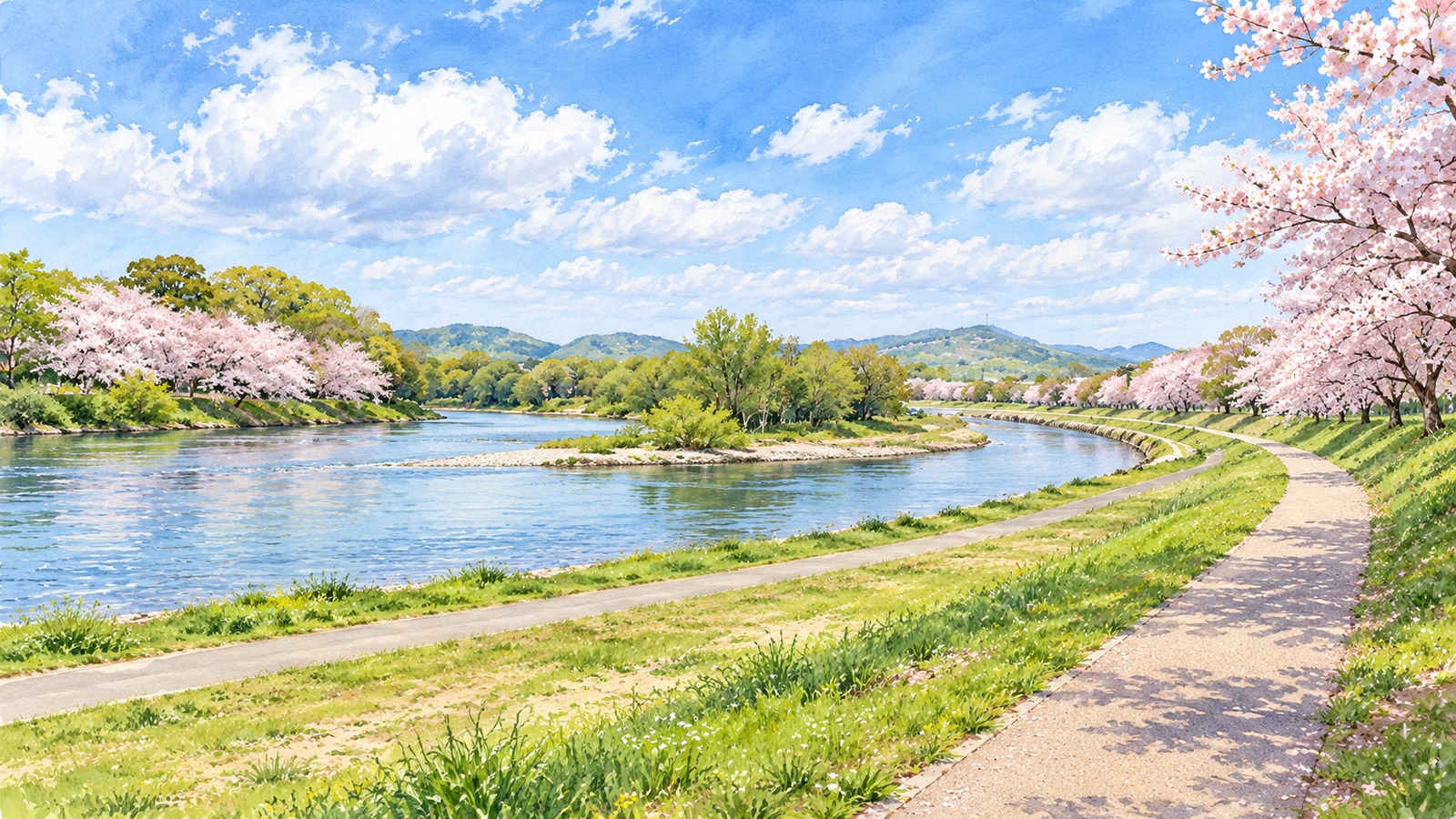
The Asahi River riverbank in Okayama City is where scenes of Yasuko practicing on a bicycle were filmed. The connection to the series is also recorded in Okayama Prefecture’s tourism guide. Here, where Okayama—the story’s setting—overlaps with the actual filming location, visitors can recall Yasuko’s daily life as a girl.
The time it takes to learn to ride a bicycle is ordinary, embodied learning, far removed from the great events of history. Walking beside the river, you can picture Yasuko practicing against the wide-open landscape. Watching the scene before your visit, then walking the riverbank, lets you experience the breadth of her city at your own pace.
A prefectural feature recommends the Asahi River’s east bank for walks and mentions its roughly one-kilometer cherry-tree avenue. Cherry blossoms are a seasonal spring view, but the path is pleasant throughout the year, with calm water and a wide sky.
The walking area is a public path on the riverbank. Along this peaceful stretch of water, where pedestrians and cyclists pass, you can quietly revisit the time in the story that flowed beside the river.
- Location
- Asahi River’s east bank, Okayama City, Okayama Prefecture
- Connection to the series
- The riverbank where scenes were filmed of Yasuko, the first-generation heroine, repeatedly practicing to ride a bicycle as a girl
- Walking conditions
- The public riverbank path is open for walks at all times; the east bank has a cherry-tree avenue about 1 km long
Source:Okayama Prefecture Tourism Federation (in Japanese)
Former Okayama Kaikosha | The Song Yasuko Heard and the Place Rui Returned To
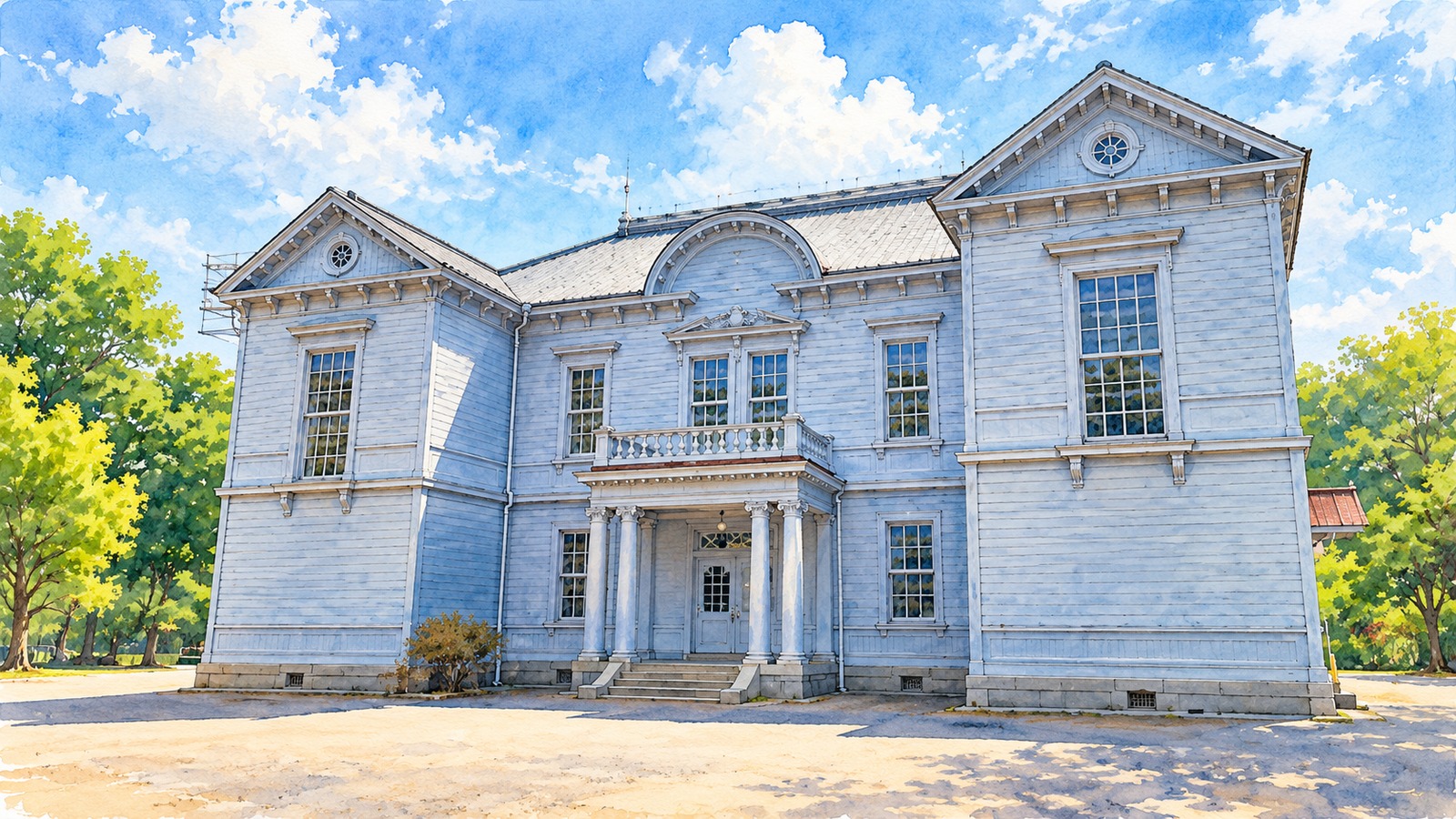
The former Okayama Kaikosha, inside Okayama Prefectural Sports Park, was filmed as the exterior of an officers’ club used by the Allied occupation forces. It is linked to the story scene in which Robert invites Yasuko, and she tearfully listens to Teiichi sing “On the Sunny Side of the Street.” This Western-style building holds a memory of music that reaches forward to the scenes of Rui singing in a later generation.
The prefectural guide notes that the gate at the entrance was a filming set and that the interior scenes were recorded elsewhere. The officers’ club seen in the drama was created by combining the real building’s exterior with an indoor set filmed at another location.
Today, Cutie Pie Cafe occupies the first floor, while the second floor is used for meetings and other purposes. You can have tea at the cafe and reflect on which scenes in the drama were supported by this Meiji-era building.
The building is inside the prefectural sports park at 2-1 Izumicho, Kita Ward, Okayama City. The cafe is open from 11 a.m. to 4 p.m. and closed on Tuesdays (or the following day when Tuesday is a public holiday). Visitors can stop by to see the exterior from the park and use the first-floor cafe.
- Location
- Inside Okayama Prefectural Sports Park, 2-1 Izumicho, Kita Ward, Okayama City, Okayama Prefecture
- Connection to the series
- A Meiji-era Western-style building used for exterior filming of an officers’ club during the Allied occupation
- Hours and closing days
- The exterior can be viewed from the park; Cutie Pie Cafe on the first floor is open 11 a.m.–4 p.m. and closed Tuesdays (or the following day when Tuesday is a public holiday)
Sources:Okayama Prefecture Tourism Federation (in Japanese) / Okayama Prefecture Tourism Federation (in Japanese) / Okayama Prefectural Sports Park (in Japanese)
Omotecho Shopping Street | A Starting Point for Imagining Tachibana’s Storefront
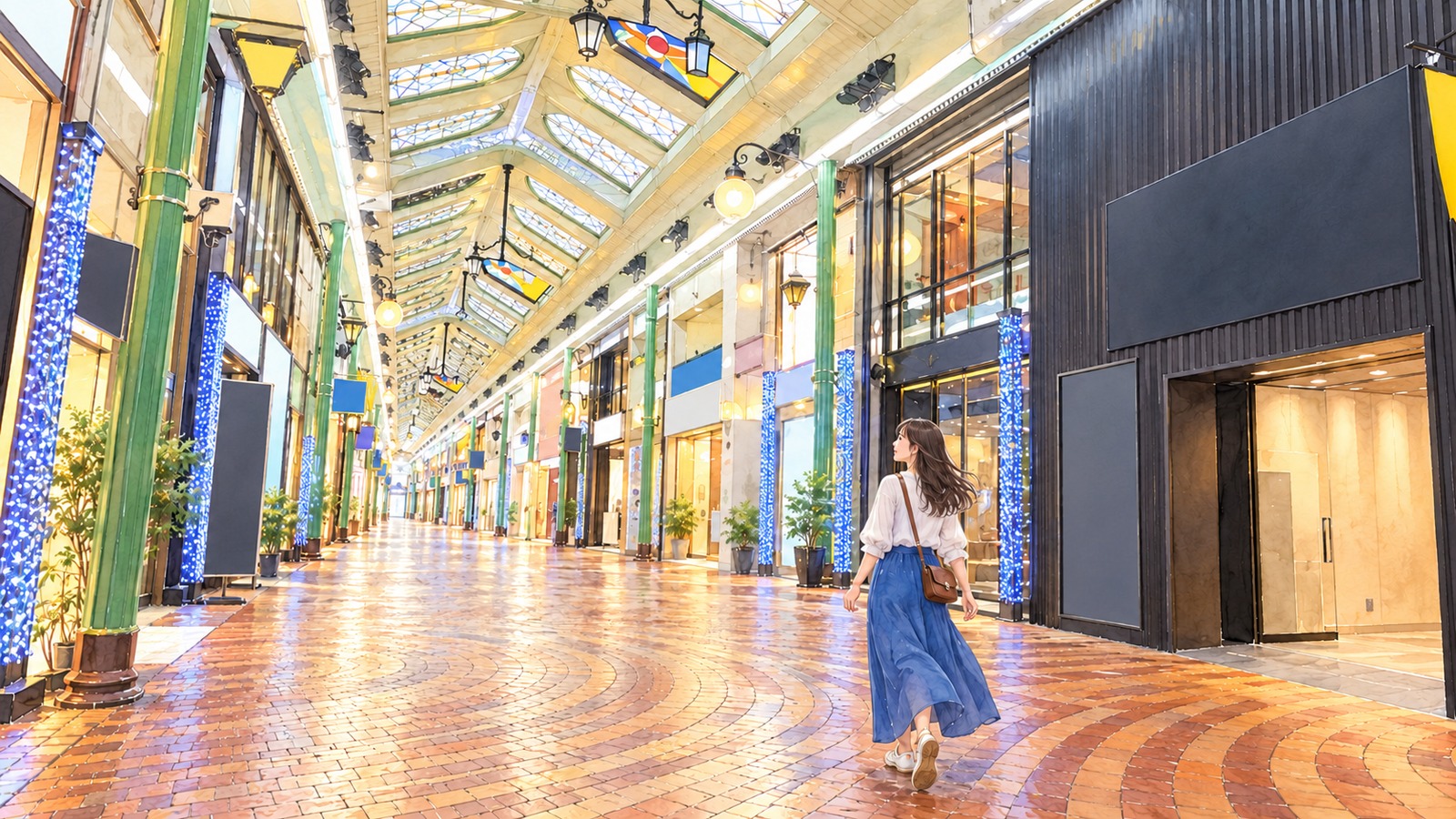
An official Okayama Prefecture feature says that Omotecho Shopping Street has a long-established Japanese confectionery shop whose storefront inspired the design of Tachibana. This is not a location where the shop set from the series was filmed as it appears on screen. Rather, the real street and local businesses provided a reference when the story’s confectionery shop was created.
In the series, Japanese sweets are both a product to sell and something closely tied to family work and memory. Walk through the arcade and notice how shops open onto the street and how shoppers stop by; it brings the role of a storefront into focus. The prefectural feature suggests that the atmosphere of this shopping street, rooted in the former castle town, offers a clue to the world of the series.
The shopping street stretches across central Kita Ward, Okayama City, and its arcade is open for anyone to walk through. It is a place to reflect on the shops and confectionery culture that continue today, and on how the series’ own shop was designed.
- Location
- Omotecho Shopping Street, Kita Ward, Okayama City, Okayama Prefecture
- Connection to the series
- An arcade with a long-established confectionery shop whose storefront helped inspire the design of Tachibana, Yasuko’s family shop
- Walking conditions
- The arcade is open to pedestrians; individual shops have their own business hours
Sources:Okayama Prefecture Tourism Federation (in Japanese) / Okayama Omotecho Shopping Street (in Japanese)
Tondabayashi Jinaimachi and the Former Sugiyama Family Residence | Historic Streets as the Kijima Family Home
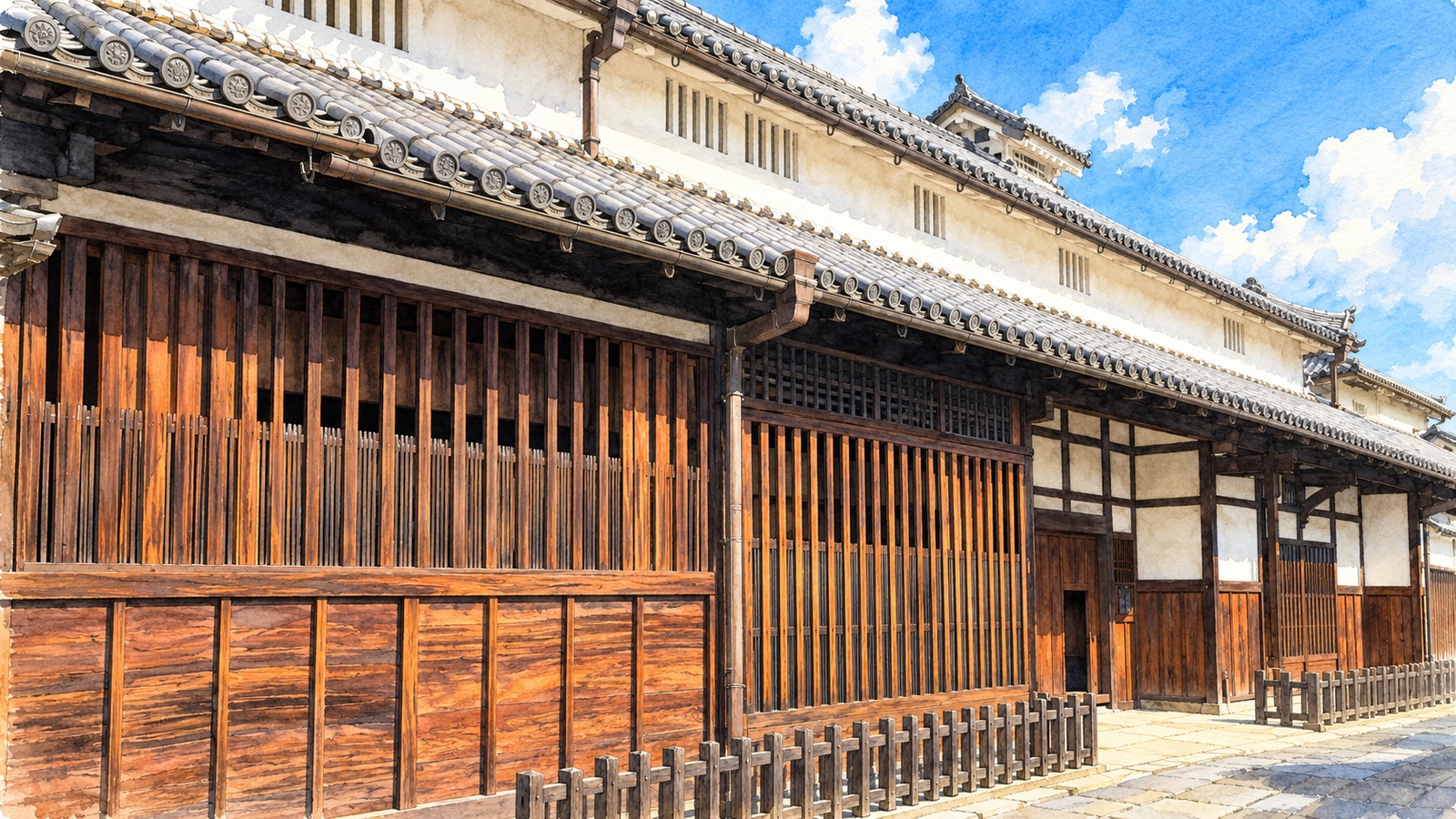
In Tondabayashi Jinaimachi, Osaka Prefecture, the former Sugiyama family residence was used for the exterior and entrance of the Kijima family home. Tondabayashi City records filming there over two days in June 2021 and again in January 2022. The historic district as a whole is a single area to visit, including a dusk scene filmed in front of the Nakamura family residence.
This is an example of a part of a story set in Okayama being created with a historic building in Osaka. Look at the front of the house and its entrance, then return to the series to recall how the characters move in and out of the home. Placing the history of the actual residence alongside the fictional Kijima family’s story offers a glimpse into the depth of period research and location selection.
The former Sugiyama family residence is an Important Cultural Property open to the public. People still live in other houses in the surrounding temple town, so take care not to enter private homes outside the public facilities. The district offers both a walk through historic streets and a visit to a cultural property open to the public.
The former Sugiyama family residence, at 14-31 Tondabayashicho, Tondabayashi City, is open from 10 a.m. to 5 p.m. and closed on Mondays (or the following day when Monday is a public holiday). Admission is ¥400 for adults and ¥200 for elementary and junior high school students; children not yet in school enter free. There is no dedicated parking lot, so follow local directions to municipal parking and other options.
- Location
- 14-31 Tondabayashicho, Tondabayashi City, Osaka Prefecture, and surrounding sites in Tondabayashi Jinaimachi
- Connection to the series
- A historic district where filming took place at the Important Cultural Property, the former Sugiyama family residence, as well as at locations used for the Kijima family home, its entrance, and a townscape at dusk
- Hours and admission
- Former Sugiyama family residence: 10 a.m.–5 p.m. (closed Mondays; if Monday is a public holiday, closed the following day); ¥400 for adults and ¥200 for elementary and junior high school students
Sources:Tondabayashi City (in Japanese) / Tondabayashi City (in Japanese) / Four sites in Tondabayashi Jinaimachi (in Japanese)
Former Toyosato Elementary School Buildings | The University German Lecture Minoru Attended
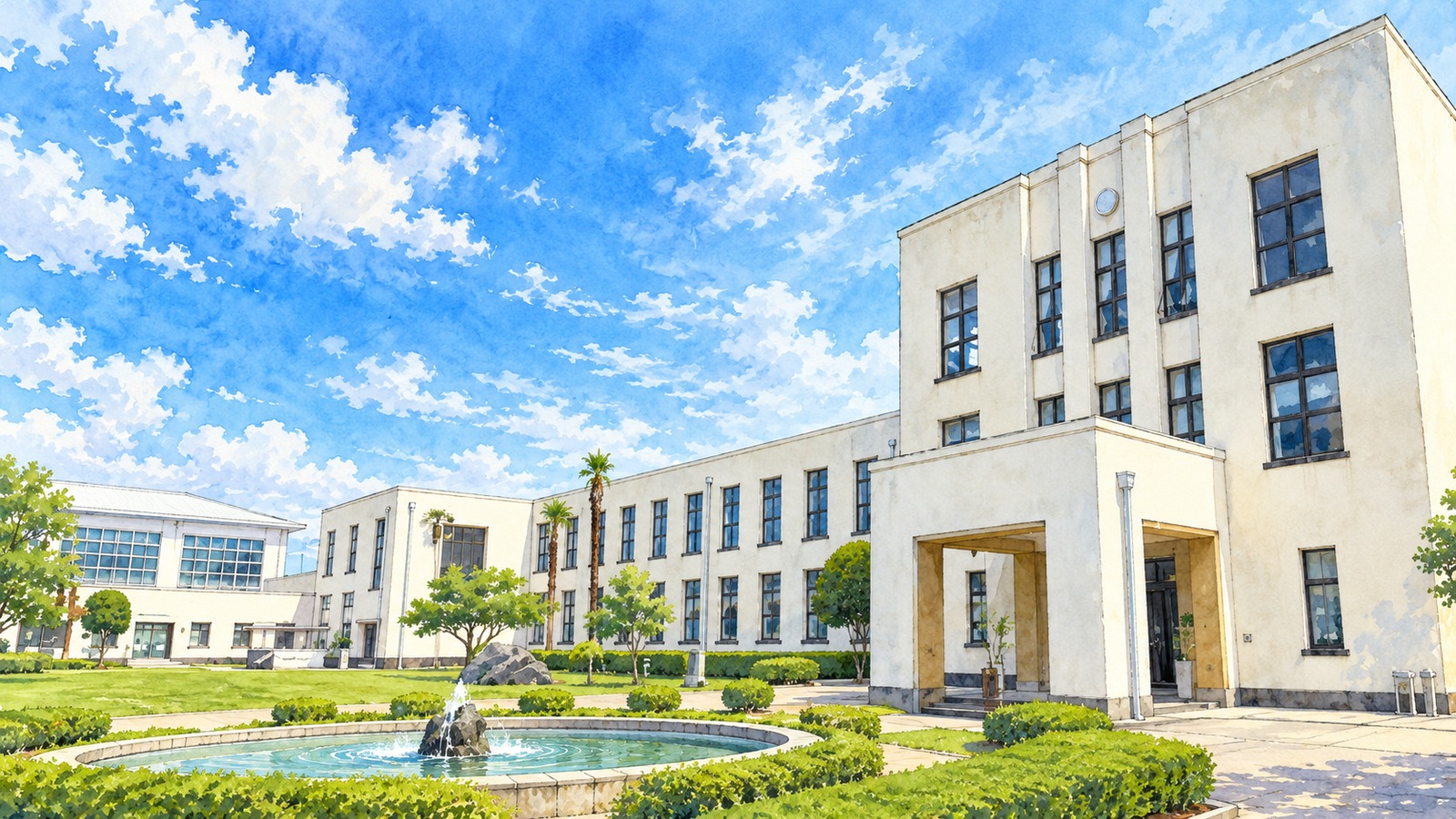
The former Toyosato Elementary School buildings in Shiga Prefecture were used in Episode 6 for the scene where Minoru attends a German lecture at university. The Shiga Location Office records the episode and the character’s actions at the site. Although the building is named after an elementary school, in the series it stands in for the university Minoru attends.
In a series where English radio lessons play a major role, this scene depicts a different part of prewar student life: studying another foreign language. Remembering Hokuto Matsumura as Minoru, visitors can consider how the early Showa-era school architecture supports the atmosphere of a place of learning.
Today, the buildings are a historic and cultural facility open to the public, separate from the active school attended by children. The opening hours were revised on April 1, 2026, and the buildings are now open from 10 a.m. to 5 p.m.
The former school buildings in Ishibata, Toyosato, Inukami District, are closed on Mondays and during the year-end and New Year period, according to the Toyosato Tourism Association; substitute closing days may apply when Monday is a public holiday. Some rooms are rented for events, so check which areas are open on the day of your visit.
- Location
- Ishibata, Toyosato, Inukami District, Shiga Prefecture
- Connection to the series
- Historic early Showa-era school buildings used to film the Episode 6 scene where Minoru attends a university German lecture
- Opening hours and closing days
- 10 a.m.–5 p.m. (revised April 1, 2026); closed Mondays and during the year-end and New Year period (substitute closing days may apply when Monday is a public holiday)
Sources:Shiga Location Office (in Japanese) / Toyosato Tourism Association (in Japanese)
Daijo Shrine | Yasuko and Kinu’s New Year Visit, and Isamu’s Team Praying for a Win
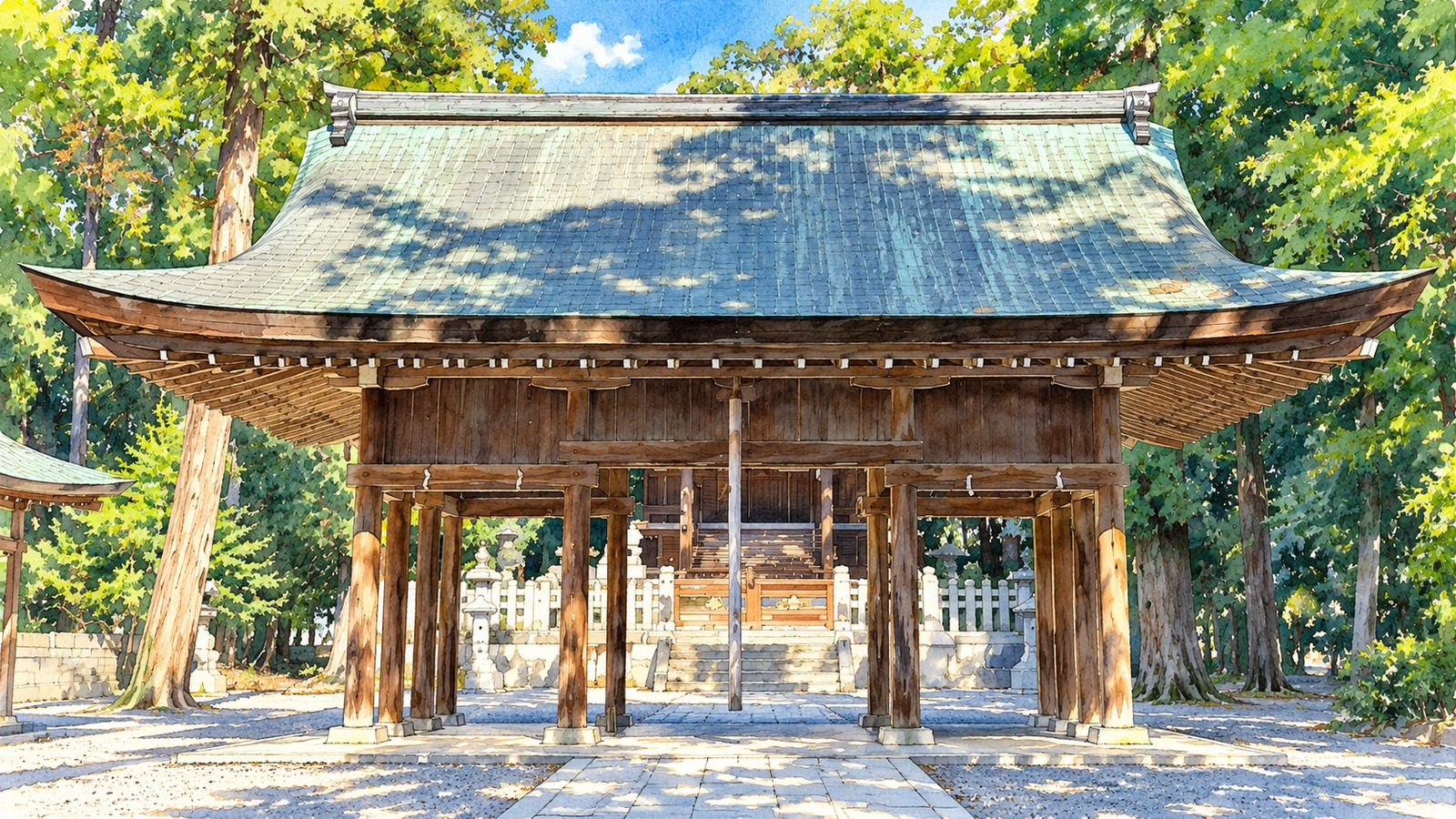
Daijo Shrine was used in Episode 6 for a scene of Yasuko and Kinu visiting for the first time that year in furisode, and in Episode 10 for a scene of Isamu and the baseball team praying for a place at Koshien. The grounds of one shrine hold both a New Year moment between friends and a moment when a group hopes to reach a shared goal.
Yasuko was played by Mone Kamishiraishi, Kinu by Karin Ono, and Isamu by Nijiro Murakami. Recalling the characters and what they did brings out how a shrine can serve as the setting for a turning point in life or a hope for the future. Rewatching the scenes before your visit can help you see who was praying for what as you walk through the grounds.
The shrine is at 66 Gokasho-Kondocho, Higashiomi City. The Shiga Prefecture Shrine Agency’s profile also records its traditions as an old shrine. Visitors can pay their respects in its quiet grounds, long cared for as the local guardian shrine.
- Location
- 66 Gokasho-Kondocho, Higashiomi City, Shiga Prefecture
- Connection to the series
- The shrine where Yasuko and Kinu’s New Year visit in furisode was filmed in Episode 6, as well as Isamu and his baseball teammates praying for a place at Koshien in Episode 10
- Visiting conditions
- The grounds are open for worship; shrine ceremonies and services take priority during events
Sources:Shiga Location Office (in Japanese) / Shiga Prefecture Shrine Agency (in Japanese)
Kitano Tenmangu Shrine | The Moment That Inspired Rui to Make Imagawayaki
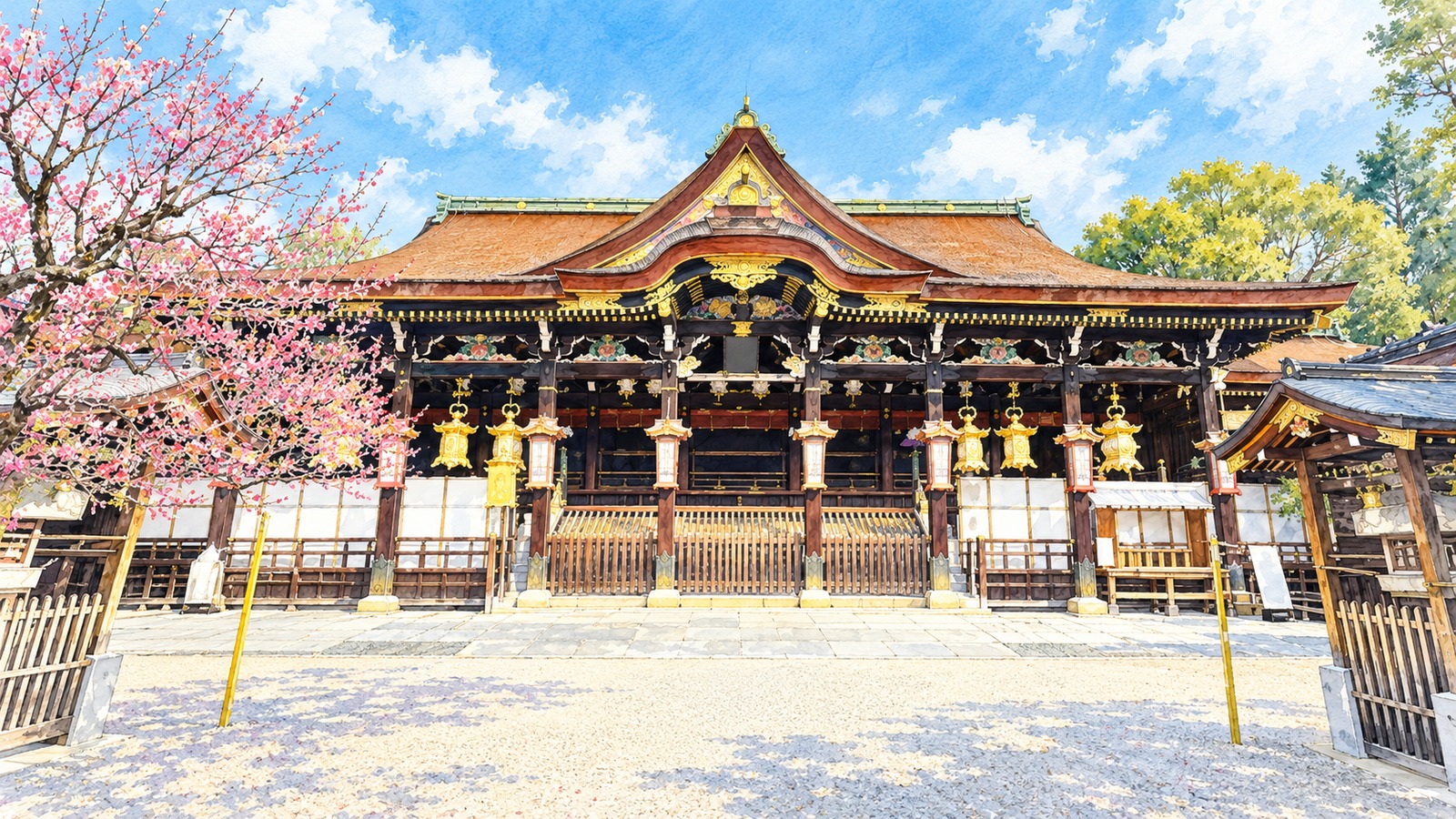
At Kitano Tenmangu Shrine, a scene was filmed in which Rui sees a stall selling imagawayaki at the Tenjin market and feels moved to take up the work herself. The Kyoto Media Support Center’s records also connect the specific character action with the filming location. It is the moment when a job that will support Rui’s life begins with something she saw in Kyoto.
Imagawayaki brings together the pleasure of eating and the work of simmering sweet bean paste and cooking the cakes on a griddle. Recall Rui’s encounter at the stall, and the later scenes in the “Otsuki” shop come into focus as the result of a choice to build a life through daily work. The memories of bean paste that began with Yasuko’s generation in Okayama become a doorway to Rui’s new work in Kyoto.
The shrine is at Bakurocho, Imadegawa-dori, Kamigyo Ward, Kyoto City. Current gate hours are 7 a.m.–5 p.m.; prayer requests are accepted from 9 a.m.–4 p.m. The grounds look different on ordinary worship days and on the monthly Tenjin market, held on the 25th, so check the guidance for your visit date before going.
- Location
- Bakurocho, Imadegawa-dori, Kamigyo Ward, Kyoto City, Kyoto Prefecture
- Connection to the series
- The shrine where Rui, the second-generation heroine, sees imagawayaki at a Tenjin market stall and decides to start making them herself
- Gate hours and market days
- 7 a.m.–5 p.m. (prayer requests: 9 a.m.–4 p.m.); the Tenjin market is held on the 25th of each month
Sources:Kyoto Media Support Center (in Japanese) / Kyoto Media Support Center (in Japanese) / Kitano Tenmangu Shrine (in Japanese)
Around Kamishichiken | The Neighborhood Where Rui, Joichiro, and Hinata Lived
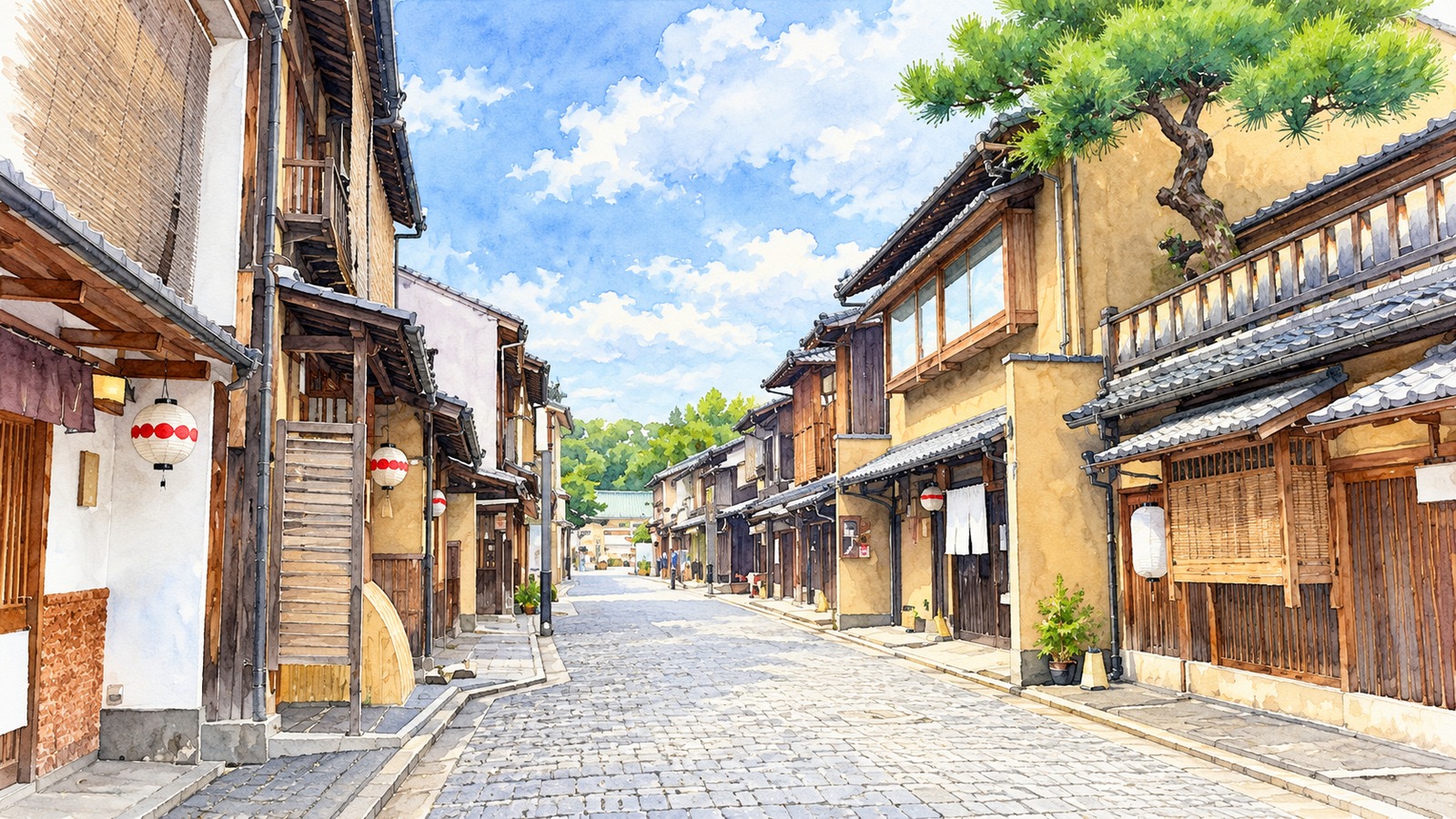
The area around Kamishichiken is where scenes of Rui, Joichiro, and Hinata’s neighborhood were filmed. Kyoto City’s filming guide also records the scene in which Rui collapses and Joichiro hurries back by bicycle. Here, stone-paved streets continue through an area with the atmosphere of Kyoto’s traditional geiko district, and can be remembered as the route home to the family.
Once you know why Joichiro, played by Joe Odagiri, is rushing back, the distance and turns along the road begin to feel like part of the landscape that holds a family’s time together. If nearby Kitano Tenmangu is where Rui finds the inspiration to begin her work, these streets are the everyday setting where family life accumulates.
A useful reference point is Mashincho, Imadegawa-dori, west of Shichihonmatsu, Kamigyo Ward, Kyoto City. The set for the “Otsuki” imagawayaki shop was used during filming; today, visitors can view the stone-paved streets of the geiko district and its machiya townhouses from public roads.
- Location
- Around Mashincho, Imadegawa-dori, west of Shichihonmatsu, Kamigyo Ward, Kyoto City, Kyoto Prefecture
- Connection to the series
- The geiko district where scenes of the neighborhood shared by Rui, Joichiro, and Hinata after their move to Kyoto were filmed, along with the road Joichiro cycled back along
- Visiting conditions
- The stone-paved streets can be viewed from public roads (in the area beside Kitano Tenmangu’s east gate)
Sources:Kyoto Media Support Center (in Japanese) / Kyoto Media Support Center (in Japanese)
Kyoto Prefectural Kamo River Park | Joichiro’s Practice and Hinata’s Exercises
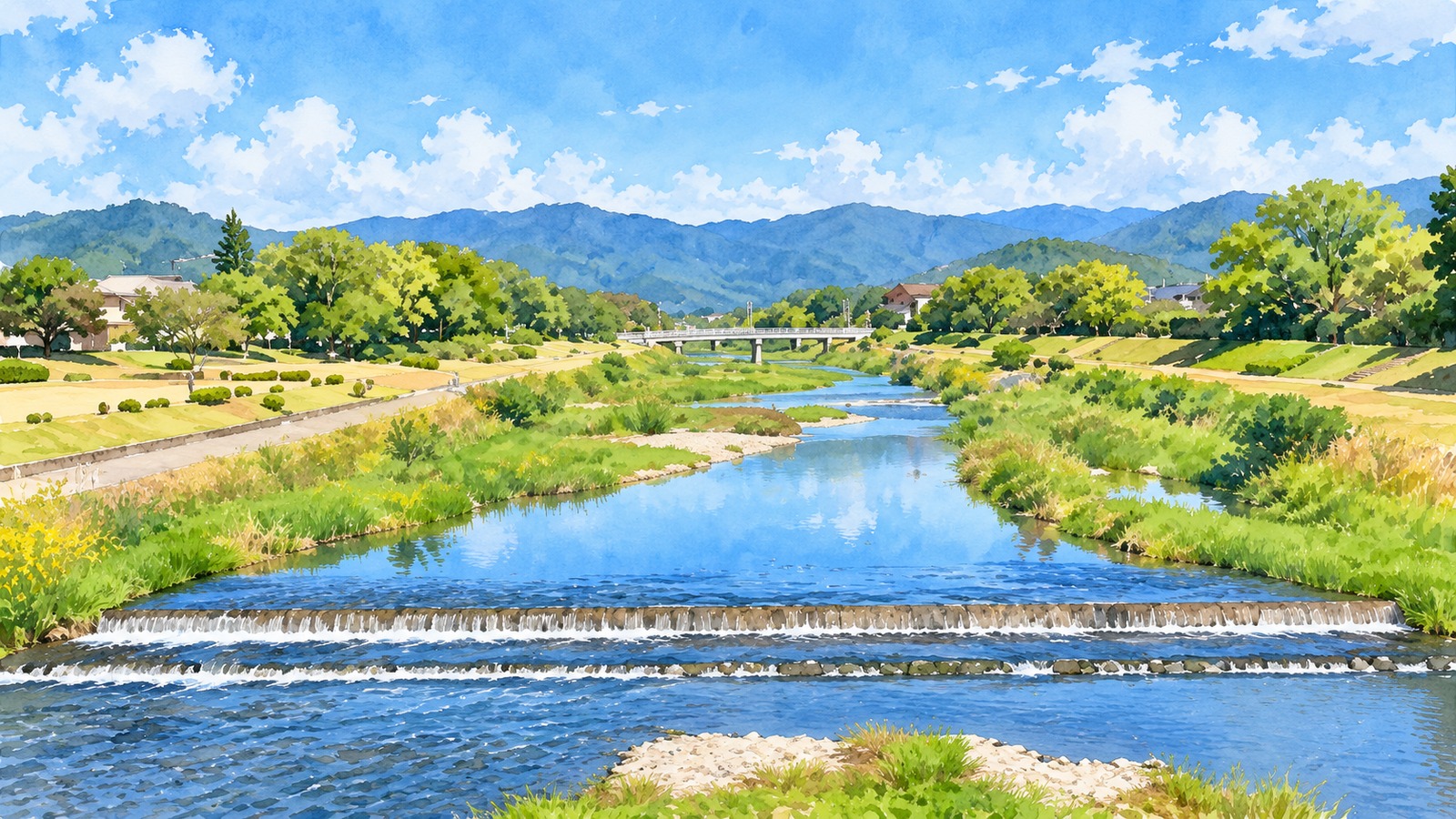
The riverbank along the Kamo River was used for scenes of Joichiro practicing on a bicycle and young Hinata doing radio calisthenics. Chise Niitsu plays Hinata as a child. What remains at the river’s edge is the movement of family life and memories of a child’s summer vacation.
Yasuko’s bicycle practice was filmed by Okayama’s Asahi River, while Joichiro’s practice was filmed by Kyoto’s Kamo River. Remembering how characters from different generations experience the same activity lets visitors compare the three-generation story through riverside landscapes. The two rivers in Okayama and Kyoto each reflect the family’s life in a different era.
Kyoto City’s guide points to riverbanks around Aoi Bridge and Izumoji Bridge, and between Kitaoji Bridge and Kitayama Bridge. Walk along the river around several of these bridges as one connected route to experience the breadth of everyday life in the Kyoto chapters.
The area remains a public park where local residents come to relax, with riverside paths in place. It is a peaceful waterside walk where you can listen to the Kamo River while recalling scenes of radio calisthenics and bicycle practice.
- Location
- Along the Kamo River in Kyoto City, around Aoi Bridge–Izumoji Bridge and Kitaoji Bridge–Kitayama Bridge
- Connection to the series
- The riverside park where scenes of Joichiro practicing on a bicycle and young Hinata going to radio calisthenics during summer vacation were filmed
- Walking conditions
- Public riverbank park, open for walks at all times
Source:Kyoto Media Support Center (in Japanese) / Kyoto Media Support Center (in Japanese)
Toei Kyoto Studio Park | Hinata Moves from Watching Movies to Helping Make Them
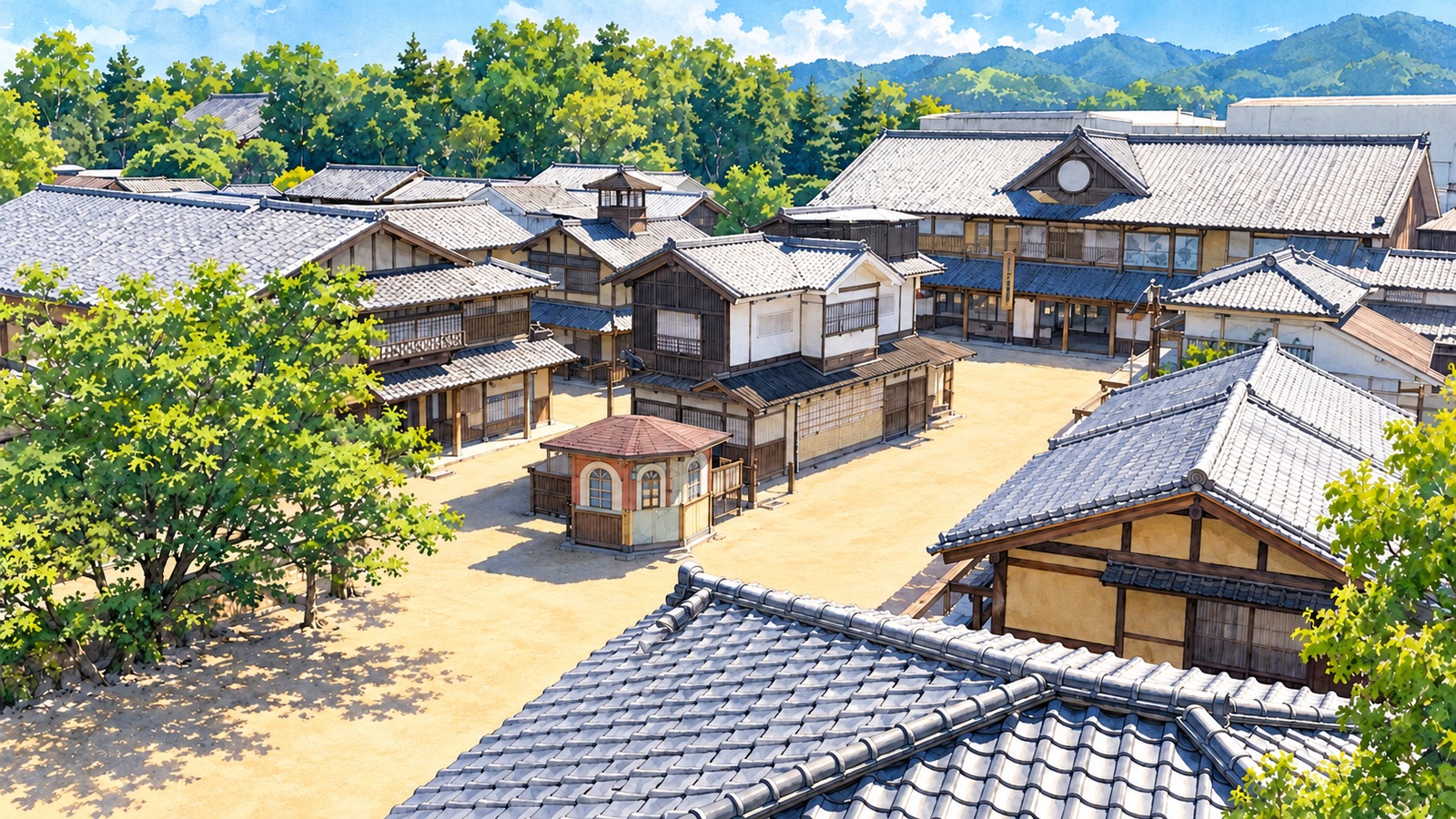
Toei Kyoto Studio Park was filmed as the setting for “Joei Uzumasa Eigamura,” where Hinata gets a job. A girl who loved watching period dramas steps into work supporting productions and events. The Kyoto Media Support Center lists the park as a location featured in the series.
Here, the world of period dramas in the story overlaps with the work of making those films. The series turns a light on both the characters on screen and the people behind the scenes who support filming and planning. Visit with Hinata’s efforts, played by Rina Kawaei, in mind, and your interest may extend to the open sets and Kyoto’s filming culture.
The address is 10 Uzumasa Higashihachiokacho, Ukyo Ward, Kyoto City. The site is currently a paid theme park and cultural experience facility. Check its official calendar for daily hours and ticket prices. The facility was renovated in 2026, so not all the open sets and signs seen during filming remain exactly as they appeared in the series.
Enjoy the publicly accessible areas and attractions while learning about the studio’s history and period-drama town sets. With the series in mind, you can discover new details about filmmaking in the present-day park.
- Location
- 10 Uzumasa Higashihachiokacho, Ukyo Ward, Kyoto City, Kyoto Prefecture
- Connection to the series
- The film park where Hinata, the third-generation heroine, finds work after growing up dreaming of period dramas, and begins supporting films and events
- Admission and access
- Paid theme park (hours and admission follow the official calendar); about a five-minute walk from JR Uzumasa Station or Randen Uzumasa-Koryuji Station
Sources:Kyoto Media Support Center (in Japanese) / Kyoto Media Support Center (in Japanese) / Toei Kyoto Studio Park Co., Ltd. (in Japanese) / Toei Kyoto Studio Park Co., Ltd. (in Japanese)
Learn More About Come Come Everybody | Words, Flavors, and Music That Connect Three Lives
Visiting these 10 places reveals more than the roles played by buildings and streets. It also brings forward actions repeated across generations: riding a bicycle, making sweet bean paste, singing, and watching period dramas. Even as times and locations change, memories from one generation reappear in a different form in the next. Knowing more about the characters and the production helps trace those connections in greater detail.
Yuki Fujimoto’s Story of Three Generations Across a Century
This is the 105th NHK morning drama series, an original script by Yuki Fujimoto, who also wrote Chiritotechin. Written directly for television rather than based on a specific novel, it connects the lives of three generations across about 100 years through everyday motifs including English lessons on the radio, sweet bean paste, baseball, jazz, and period dramas.
Yasuko, played by Mone Kamishiraishi, was born on March 22, 1925—the day radio broadcasting began in Japan—at Tachibana, a Japanese confectionery shop in Okayama. Her daughter Rui, played by Eri Fukatsu, begins her story in Osaka in the 1950s, while her granddaughter Hinata, played by Rina Kawaei, enters the story in Kyoto in the 1960s. Rather than showing the three women living side by side in the same era, the story passes the choices and words of one generation to the next like a baton.
The weekly titles on Complete Blu-ray Box 1 specify the story’s years. Week 1 is “1925–1939,” Week 2 “1939–1941,” Week 3 “1942–1943,” and Week 4 “1943–1945.” The timeline then continues through the postwar years: Week 5, “1946–1948”; Week 6, “1948”; and Week 7, “1948–1951.” Compare the broadcast weeks with the story’s dates to see how a century of time is woven into six months of television.
Even as the story moves from Okayama to Osaka and Kyoto, the sound of a pot simmering azuki beans, radio lessons, and jazz melodies carries through. When visiting filming locations, following Yasuko’s life in Okayama, Rui’s life in Kyoto, and Hinata’s workplace as one family history gives the story greater depth.
The Times of Minoru, Isamu, Kinu, Robert, and Yasuko
Seen through the characters, the scenes filmed in Shiga show Minoru studying German at university, Isamu praying with his baseball teammates for a place at Koshien, and Yasuko and Kinu going to a New Year shrine visit in furisode. Hokuto Matsumura, Nijiro Murakami, and Karin Ono play the young people, each with a different role and relationship. Against the approach of wartime, the series gives their learning and friendships a tangible setting.
Tatsumasa Murase plays Robert, an officer in the Allied occupation forces. The scene in which he invites Yasuko to the officers’ club leads to a time when she reconnects with music and English and her emotions begin to stir. The Western-style exterior of the former Okayama Kaikosha, combined with interior scenes filmed on a separate set, evokes the atmosphere of postwar Okayama.
Keeping track of who spent what kind of time at each location makes the images that come to mind on a visit more vivid. At the former Toyosato school buildings, picture the university lecture; at Daijo Shrine, the New Year visit and prayer for victory; at the former Okayama Kaikosha, the exterior that leads to the sound of jazz. Return to the series and look again at how each building connects to its scenes.
Connecting the Film Yasuko and Minoru Watched to Hinata’s Work
The episode guide for Complete Box 1 identifies the in-story film Natsume Kibinojo: The Sword of Chivalry as the period drama Yasuko and Minoru watched on a date. Period dramas are not a new element introduced only in Hinata’s generation. The memory of entertainment shared by her grandparents at the cinema echoes across time into the future where Hinata works at Toei Kyoto Studio Park.
The same box set also includes two versions of “Owarai Sokeisen,” a comedy routine in which the Nakagawa Brothers portray Entatsu and Achako. Popular entertainment—jazz, period films, and fast-paced manzai comedy—helps shape the atmosphere of the eras in which the characters live.
These films and comedy performances within the series reveal another layer of production that is hard to see just by visiting locations. After imagining the behind-the-scenes work at Toei Kyoto Studio Park, watch the in-story film and special comedy segment at home. You can see how the real production team and performers carefully created the entertainment the characters enjoyed.
From Teiichi’s Song to Rui’s
At the officers’ club, Yasuko hears “On the Sunny Side of the Street,” sung by Masanori Sera as Teiichi Yanagisawa, the owner of the café Dippermouth Blues. An official Okayama Prefecture feature also describes the connection in the story between Yasuko crying as she listens and Rui, grown up, later singing the song while thinking of her mother. The jazz standard becomes a thread that brings a parent and child’s memories back to life.
Only the building’s exterior was filmed at the former Okayama Kaikosha. But after seeing the Western-style building in person, rewatching the series makes the tension of stepping inside the club and Teiichi’s song ringing through the room feel more naturally connected.
The bonus features on Complete Blu-ray Box 1 include a special edit of the “Sunny Side” performance, cut to show only the stage. It lets viewers focus on Masanori Sera’s singing and playing, hearing the song outside the flow of the main story.
The Team Behind the Theme Song and Jazz
The score was composed by Takahiro Kaneko, also known as a member of Kome Kome Club. AI sings the theme song “Aludebaran,” written and composed by Naotaro Moriyama and arranged by Neko Saito. The song was written for the series. Yu Shirota narrates in both English and Japanese, supporting a story in which radio and music guide people’s lives through both voice and sound.
The directors include Mojiri Adachi, Shinichiro Hashizume, Takashi Fukagawa, Kazufumi Matsuoka, Daisuke Futami, and Shinichiro Ishikawa. Reijiro Horinouchi and Ken Sakurai served as executive producers, with Yuya Kasai, Kana Hashimoto, and Asuka Saito as producers. As an NHK Osaka morning drama, this story of a century was woven by a large team working across many roles.
Complete Blu-ray Box 2 includes behind-the-scenes features on the jazz and opening sequence, a version of the opening without credits, and a director’s cut of the session between Joichiro and Tommy Kitahore (Taichi Saotome). After enjoying the human drama, viewers can turn to the craft behind the jazz performance and the stop-motion-style opening.
From Imagawayaki and the Film Park to a Career
The stall Rui saw at the Tenjin market at Kitano Tenmangu became her starting point for choosing work making imagawayaki. Toei Kyoto Studio Park becomes a workplace for Hinata, who loves period dramas. The two Kyoto sites trace how something first encountered on a street corner or on screen can eventually become work that supports one’s own life.
The storefront inspiration at Omotecho Shopping Street in Okayama, the machiya townhouses in Tondabayashi Jinaimachi, and the stone-paved streets of Kyoto’s Kamishichiken also served as locations for bringing businesses and family life to the screen. When you look at a building or street on your trip, consider what was made there, who worked there, and who waited for someone to come home; the meaning of the landscape begins to take shape in more dimensions.
Films and promotional videos created within the story are closely connected to the scenes at Toei Kyoto Studio Park. Complete Box 3 includes about 10 minutes of the in-story movie Yojutsu Shichihenge: Duel in the Hidden Village, as well as two commercials for Joei Eigamura. They offer a chance to see what kinds of productions the film park in the series was making.
- An action passed down
Learning to ride a bicycle
Yasuko practiced beside Okayama’s Asahi River, while Joichiro practiced beside Kyoto’s Kamo River. The same action recurs across generations and places.
- Food and work
Sweet bean paste and imagawayaki
The memory of bean paste from Tachibana, the confectionery shop in Okayama, passes through a stall at Kitano Tenmangu and on to Rui’s imagawayaki shop.
- From entertainment to production
Period dramas and the film park
The memory of a period drama Yasuko and Minoru watched at the cinema connects to Hinata’s work at Toei Kyoto Studio Park.
Source:List of official materials and site information
From Filming to Broadcast | Milestones That Reached Three Generations
This timeline follows the location shoot in Tondabayashi Jinaimachi in June 2021, the series premiere that November, the start of the Kyoto chapters in January 2022, and the final episode in April, followed by the release of the complete box sets. It shows how filming in each region lined up with broadcast weeks and how the episodes were divided among the three complete Blu-ray boxes.
- 2021
June A two-day location shoot takes place in Tondabayashi Jinaimachi. Historic buildings, including the former Sugiyama family residence, stand in for homes and streets in the series.Filming - 2021
November 1 The 105th NHK morning drama series premieres. The story of three generations, beginning with Yasuko, reaches viewers.Broadcast - 2021
November 12 The Shiga Location Office reports on filming for Week 2, recording specific scenes and sites from Episodes 6, 8, and 10.Local locations - 2021
December 17 Broadcast through Week 7, included in Complete Box 1, reaches a milestone, making it possible to revisit Yasuko’s era as a single set of episodes.Broadcast - 2021
December 20 Broadcast of Week 8 begins. The story moves into the episodes covered by Box 2 of the home-video release.Broadcast - 2022
January Filming returns to Tondabayashi Jinaimachi. The historic streets continue to serve as a location as the series airs.Filming - 2022
January 26 The Kyoto chapters begin airing. Kitano Tenmangu, Kamishichiken, and Kamo River Park connect to scenes from Rui and Hinata’s lives.Broadcast - 2022
February 14 Week 16, included in Complete Box 3, begins airing, bringing Hinata’s growth and the film-park storyline to the fore.Broadcast - 2022
April 8 All 112 episodes finish airing with the finale of Week 23. The 100-year story passed down from Yasuko to Rui and Hinata reaches its conclusion.Broadcast - 2022
April 22 Complete Blu-ray Box 1 and DVD Box 1 are released, making it possible to revisit the series and bonus footage, including songs and in-story films.Home video
Source:List of official materials and site information
Before and After Your Trip: Three Complete Blu-ray Boxes and the Official Theme Song Video
Before and after visiting these 10 locations in Okayama, Osaka, Shiga, and Kyoto, you can return to the story through the complete home-video sets and official theme song video. The boxes and videos are organized by story era, music, and in-story films, so you can choose what you want to revisit.
Choose an Era or Bonus Feature to Revisit from the Three Complete Boxes
The Blu-ray release consists of three boxes: Box 1, Box 2, and Box 3. The NHK Enterprises product numbers are 25353AA (catalog number NSBX-25353), 25354AA (NSBX-25354), and 25355AA (NSBX-25355), respectively; each is a four-disc set. DVD boxes with the same content are also available (catalog number NSDX-25356 and others), so check your playback equipment and the episodes included before choosing.
Box 1 includes 525 minutes of episodes from Weeks 1 through 7, plus 142 minutes of bonus footage, a 24-page special booklet, and Japanese subtitles for accessibility. It also includes a special edit of Saturday Studio Park, featuring Mone Kamishiraishi, Masahiro Komoto, and Hokuto Matsumura, along with the full-color footage of Santa’s dance. After visiting locations in Okayama, Osaka, and Shiga, you can return to Yasuko’s story in greater depth.
Box 2 contains Weeks 8–15 (525 minutes of episodes) and 60 minutes of bonus footage, including behind-the-scenes looks at the jazz and opening sequence, Joichiro and Tommy’s session, and the in-story period drama Kettai Samurai—enjoy the music and the beginning of the Osaka and Kyoto chapters. Box 3 covers Week 16 through the finale (600 minutes of episodes) and includes 93 minutes of bonus footage: an interview with Rina Kawaei, a record of the final filming day, the in-story film Yojutsu Shichihenge: Duel in the Hidden Village, Joei Eigamura commercials, and a wrap-up collection featuring 34 cast members.
Listen Again to AI’s Official “Aldebaran” Video, the Song Connecting Three Generations
AI’s official video for “Aldebaran,” the theme song she sings, is another way to return to the story while traveling or after you get home. Written and composed by Naotaro Moriyama, the song played each morning alongside Yasuko, Rui, and Hinata as they faced difficulties in their respective eras and kept moving forward.
Listen again after walking the Asahi or Kamo River, seeing the Western-style former Okayama Kaikosha, or visiting Kamishichiken and Toei Kyoto Studio Park. The lyrics bring the three generations’ expressions and the streets around them vividly to mind. The Universal Music official YouTube video lets you hear again the theme song that carried the century-spanning story.
Source:List of official materials and site information
Lab Notes | Business Perspective: Tell the Story of the Film Park’s Work Through a Character’s Career
Toei Kyoto Studio Park is shown as the place where Hinata, who dreamed of period dramas, moves into work supporting productions and events. The girl who enjoyed watching completed films becomes someone who helps bring them to audiences. The park is not only a filming location; it is also a place to show the work the facility itself does.
When planning a facility program, one approach is to go beyond pointing out locations used for filming and connect the work Hinata did with an introduction to real production and operations. Bonus footage of the in-story films and park commercials also offers a way to explain what happens behind the screen. Along with recreating famous scenes, showing the roles of the people who work there can help visitors understand the facility more deeply.
Source:List of official materials and site information
Sources
- NHK Enterprises — NHK Morning Drama Come Come Everybody: Complete Blu-ray Box 2, 4 discs (in Japanese)
- NHK Enterprises — NHK Morning Drama Come Come Everybody: Complete Blu-ray Box 3, 4 discs (in Japanese)
- NHK Enterprises — NHK Morning Drama Come Come Everybody: Complete Blu-ray Box 1, 4 discs (in Japanese)
- Kyoto Media Support Center — Around Kamishichiken (in Japanese)
- Toei Kyoto Studio Park — Official visitor information (in Japanese)
- Kyoto Media Support Center — Come Come Everybody (Kyoto chapters) (in Japanese)
- Okayama Prefectural Sports Park (in Japanese)
- Okayama Omotecho Shopping Street (in Japanese)
- Kyoto Media Support Center — Kyoto Prefectural Kamo River Park (in Japanese)
- Shiga Prefecture Shrine Agency (in Japanese)
- Okayama Prefecture Tourism Federation — A Walk Through Okayama, the Setting of Come Come Everybody (in Japanese)
- Kitano Tenmangu Shrine (in Japanese)
- Tondabayashi City — Tondabayashi Trip Guide (in Japanese)
- Okayama Prefecture Tourism Federation — Visiting the historic Okayama Kaikosha, featured in an important scene of the morning drama Come Come Everybody (in Japanese)
- Toei Kyoto Studio Park — Hours and admission (in Japanese)
- Toyosato Tourism Association (in Japanese)
- Kyoto Media Support Center — Toei Kyoto Studio Park (in Japanese)
- Four sites in Tondabayashi Jinaimachi (in Japanese)
- Shiga Location Office (in Japanese)
- Tondabayashi City — Tondabayashi Jinaimachi was a filming location for NHK’s serial morning drama Come Come Everybody (in Japanese)
- Kyoto Media Support Center — Kitano Tenmangu Shrine (in Japanese)
- Kyoto Media Support Center — A trip to locations featured in Come Come Everybody (in Japanese)
- STARTO ENTERTAINMENT
Event dates, opening hours, and ticket information are current as of writing. Check each official website for the latest information before your visit.
FAQ
Were all of the Okayama scenes in the series filmed in Okayama?
No. The Kijima family home’s exterior was filmed in Tondabayashi Jinaimachi, Osaka Prefecture, and the university lecture scenes Minoru attends were filmed in the former Toyosato Elementary School buildings in Shiga Prefecture. You can visit both the story settings and the actual filming locations.
Can I see the stage where Teiichi sang in the former Okayama Kaikosha?
The former Okayama Kaikosha was used for the officers’ club exterior. The gate was a filming set, and the indoor stage was recorded at a different location. Today, the first floor is a cafe and the second floor is used as meeting rooms for rent.
Does a visit to the former Toyosato Elementary School buildings include classrooms at an active school?
The visit is to the historic former school buildings, which are open to the public. As revised on April 1, 2026, opening hours are 10 a.m.–5 p.m.; the buildings are closed Mondays and during the year-end and New Year period.
Can I see the same sets at Toei Kyoto Studio Park that were used during filming?
The facility was renovated in 2026, and not all the open sets or signs seen during filming remain as they were. Check the official guide for the period-drama streets and interactive exhibits currently open to visitors.
Can I watch every episode with Complete Blu-ray Box 1 alone?
The complete series is divided among three boxes. Box 1 contains the main episodes and bonus footage for Weeks 1–7, centered on the Okayama chapters. The later weeks, including the Osaka and Kyoto chapters, are in Boxes 2 and 3.
Is Omotecho Shopping Street an actual filming location from the series?
An official Okayama Prefecture feature describes the street as home to a long-established confectionery shop whose storefront helped inspire Tachibana, Yasuko’s family shop. You can also enjoy walking through this street, where castle-town commerce continues today.
Can I visit Kitano Tenmangu Shrine and Kamishichiken on the same day?
Kamishichiken is directly beside the east gate of Kitano Tenmangu Shrine, so you can continue your walk between them on foot.


