

STU48 Pilgrimage: Concerts in Hiroshima and Music Video Sites Across Setouchi
Climb the stone steps in Onomichi to see the streets where STU48 danced in ‘Kaze wo Matsu.’ The ‘Kurayami’ music video shows harbors and beaches on Omishima and Hakatajima. The videos offer a reason to walk the Setouchi shorelines and hills in person.
STU48 is an idol group based in the seven prefectures of the Seto Inland Sea region. Its name also comes from the initial letters of Setouchi. This guide introduces performance venues in Hiroshima and music-video locations around the region, explaining which scenes connect to each place and what you can see there.
Sources:Official STU48 | About STU48
Places to visit through performances and music videos
1. Ueno Gakuen Hall
Venue for five concerts marking the group’s ninth anniversary in April 2026.
Explore Ueno Gakuen Hall2. Senkoji Temple
Yuri Torobu introduced her visit in a personal series guiding readers around Onomichi.
Explore Senkoji Temple3. Miyaura Port
A port on Omishima that Ryokan Sawaki identifies as a filming location for ‘Kurayami.’
Explore Miyaura Port5. Mitarai Preservation District for Groups of Historic Buildings
The town in the past-and-present story scenes of ‘Omoideseru Koi wo Shiyou.’
Explore the Mitarai Preservation District6. Hill Overlooking History Park
Chiho Ishida identified it as the location of a drone shot for the same music video.
Explore Hill Overlooking History Park7. Chichibugahama Beach
Filming location for the group dance and cover jacket of ‘Mubou na Yume wa Sameru Koto ga Nai.’
Explore Chichibugahama Beach8. Ushimado Olive Garden
A garden overlooking the sea at Ushimado that appears in the same music video.
Explore Ushimado Olive Garden9. Kuroshima Venus Road
A sandbar visible at low tide, where the vocal scenes for ‘Setouchi no Koe’ were filmed.
Explore Kuroshima Venus Road
1Ueno Gakuen Hall | Hiroshima venue for the ninth-anniversary milestone
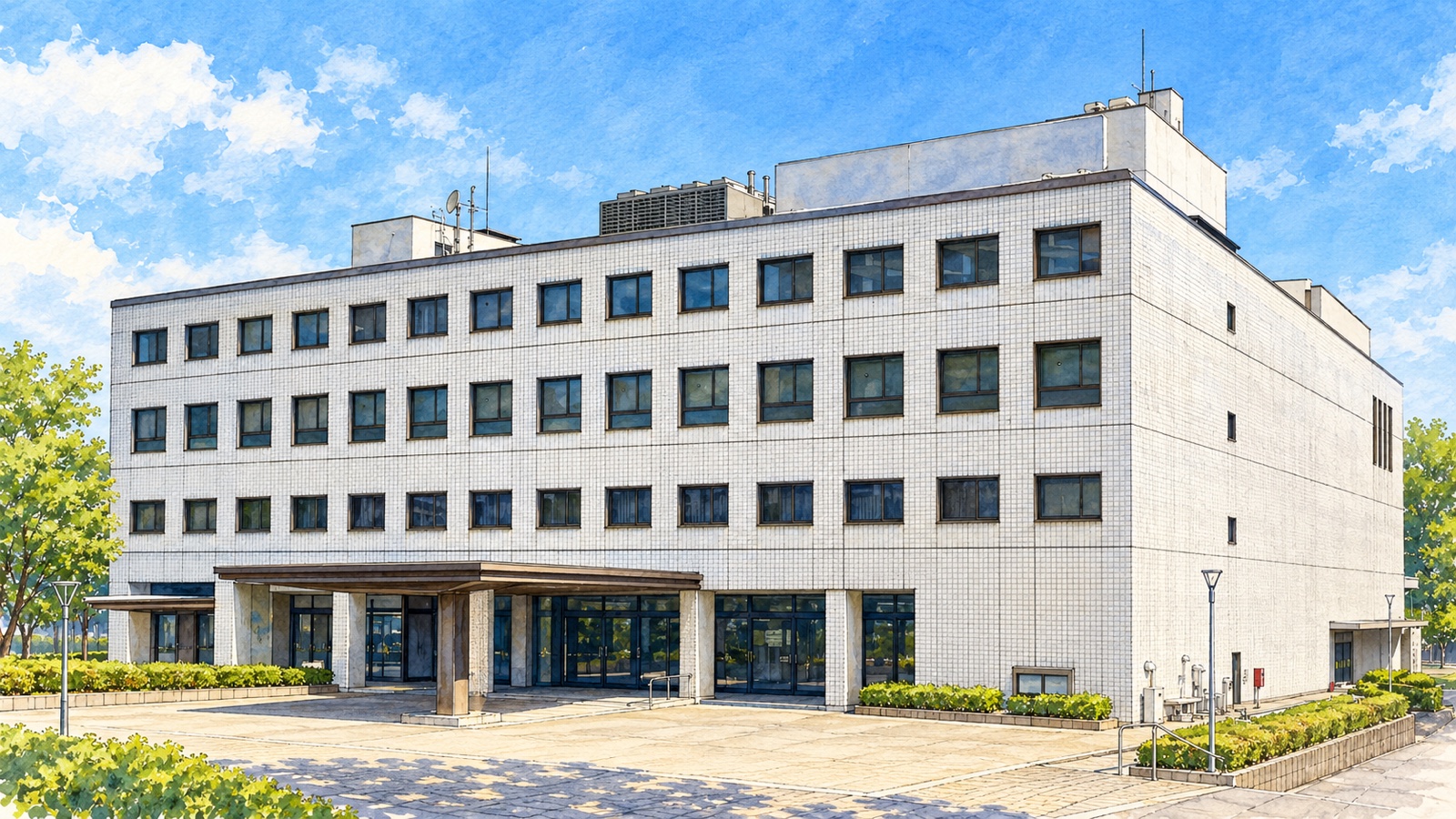
Ueno Gakuen Hall hosted the ninth-anniversary concerts from April 3 to 5, 2026. Five shows were held over three days as part of an anniversary program that continued with a concert at Tokyo’s Kanadevia Hall on May 30.
The first show on April 5 was THE 48 SHOW: Path; the second was THE STU SHOW: Horizon. At the same hall, the group separated a show following the history of the 48 Group from one that put STU48 itself at the center.
At the final Tokyo concert, they opened with ‘Bokutachi wa Sindbad da,’ performed ‘Shukkou’ sixth in the set, sang ‘Kurayami’ in the second half, and closed the encore with ‘Setouchi no Koe.’ In their tenth year, the members performed an early coupling song, their debut song, and their first original song.
At this concert, the group announced that Azumi Okada and Akari Fukuda would step down from their roles as captain and vice-captain. They were not leaving the group; the change was intended to make each member responsible for taking the lead. It was also Chiho Ishida’s final anniversary concert, the day before her graduation concert.
The ninth-anniversary concerts have ended. The hall is about a two-minute walk from the west exit of Hakushima Station on the Astram Line. This is Hiroshima Prefectural Cultural Center in Hakushima-kitamachi.
- Location
- 19-1 Hakushima-kitamachi, Naka Ward, Hiroshima City, Hiroshima
- Connection to the group
- Venue for all five ninth-anniversary concerts, held April 3–5, 2026
- Nearest station
- About a two-minute walk from the west exit of Hakushima Station on the Astram Line
Sources:Ueno Gakuen Hall | Access
STU48 | April 5 anniversary concerts
STU Co., Ltd. | Report on the ninth-anniversary Tokyo concert
2Senkoji Temple | Hillside temple visited by Yuri Torobu in Onomichi
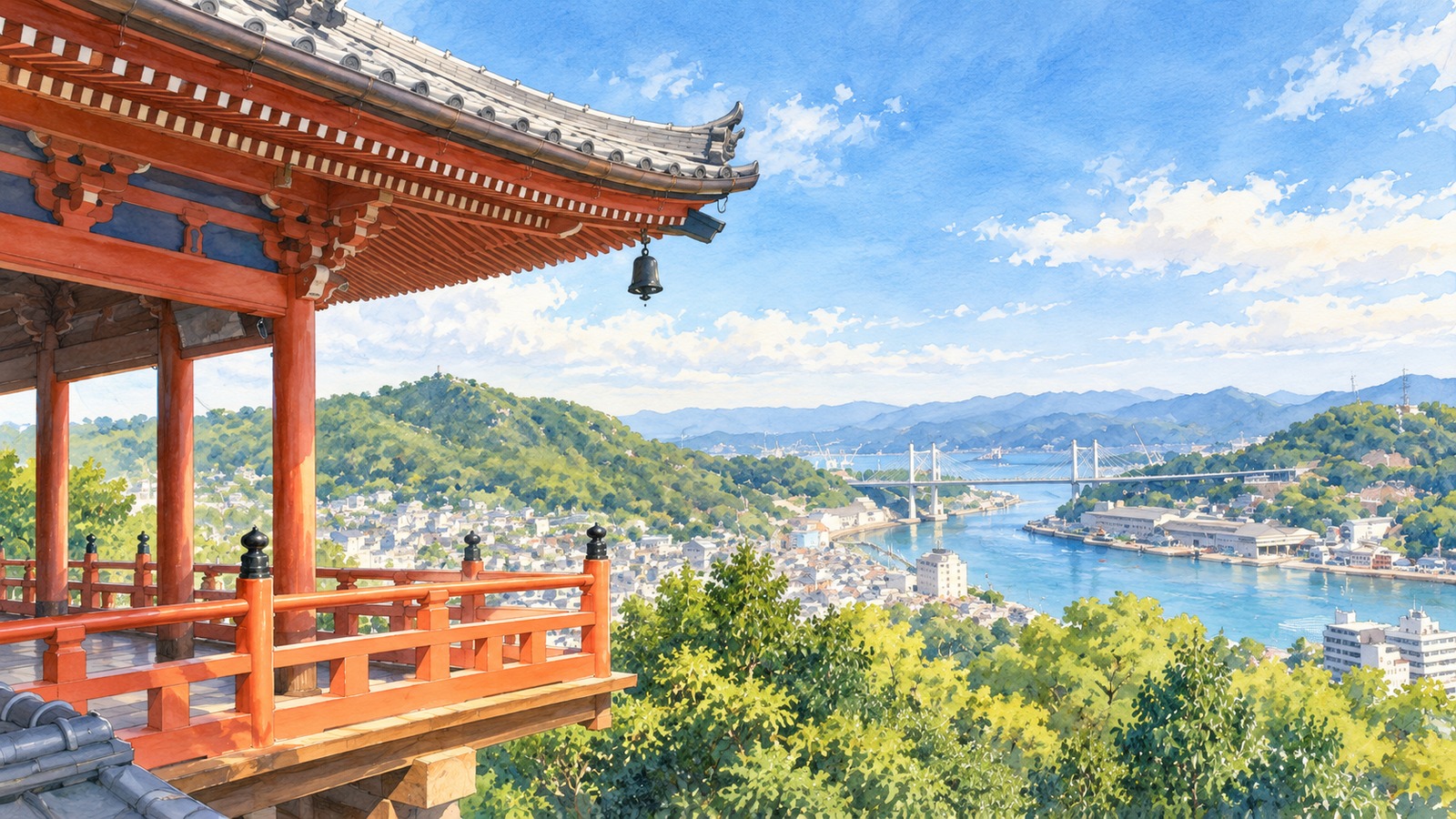
If ‘Kaze wo Matsu’ inspires you to walk around Onomichi, visit Senkoji Temple, introduced by former member Yuri Torobu. In her April 2019 personal series, she wrote that she prayed at the vermilion main hall and chose a Daigan Joju amulet, wishing for success in that year’s activities. She revisited the town she had explored with friends since middle and high school, now introducing it as the setting for STU48’s music video.
Senkoji is a temple on the hillside overlooking the Onomichi Channel. Knowing both the stairway movements in the video and the time she spent in town gives you another reason to climb the hill.
The temple is open from 9:00 a.m. to 5:00 p.m. From in front of JR Onomichi Station, take an Onomichi Bus to Nagareguchi, then walk about five minutes from the summit station of the Senkoji Mountain Ropeway along the Literary Path. The observatory and Senkoji Park at the summit are separate from the temple grounds, so set ‘Senkoji Temple’ as your destination on the map. As you climb the stone steps, enjoy how the view of the port changes with each person’s pace.
- Location
- 15-1 Higashidocho, Onomichi, Hiroshima
- Connection to the group
- Temple that Yuri Torobu introduced visiting in her personal series in 2019
- Visiting hours
- 9:00 a.m.–5:00 p.m.
- Access
- About a five-minute walk from the summit station of the Senkoji Mountain Ropeway
Sources:Yuri Torobu | Visiting Onomichi, the setting of ‘Kaze wo Matsu’
Official Senkoji Temple | Visiting hours
Official Senkoji Temple | Location and access
Onomichi Bus | How to reach the base station of the Senkoji Mountain Ropeway
3Omishima, Miyaura Port | Scenes from ‘Kurayami’ and island life
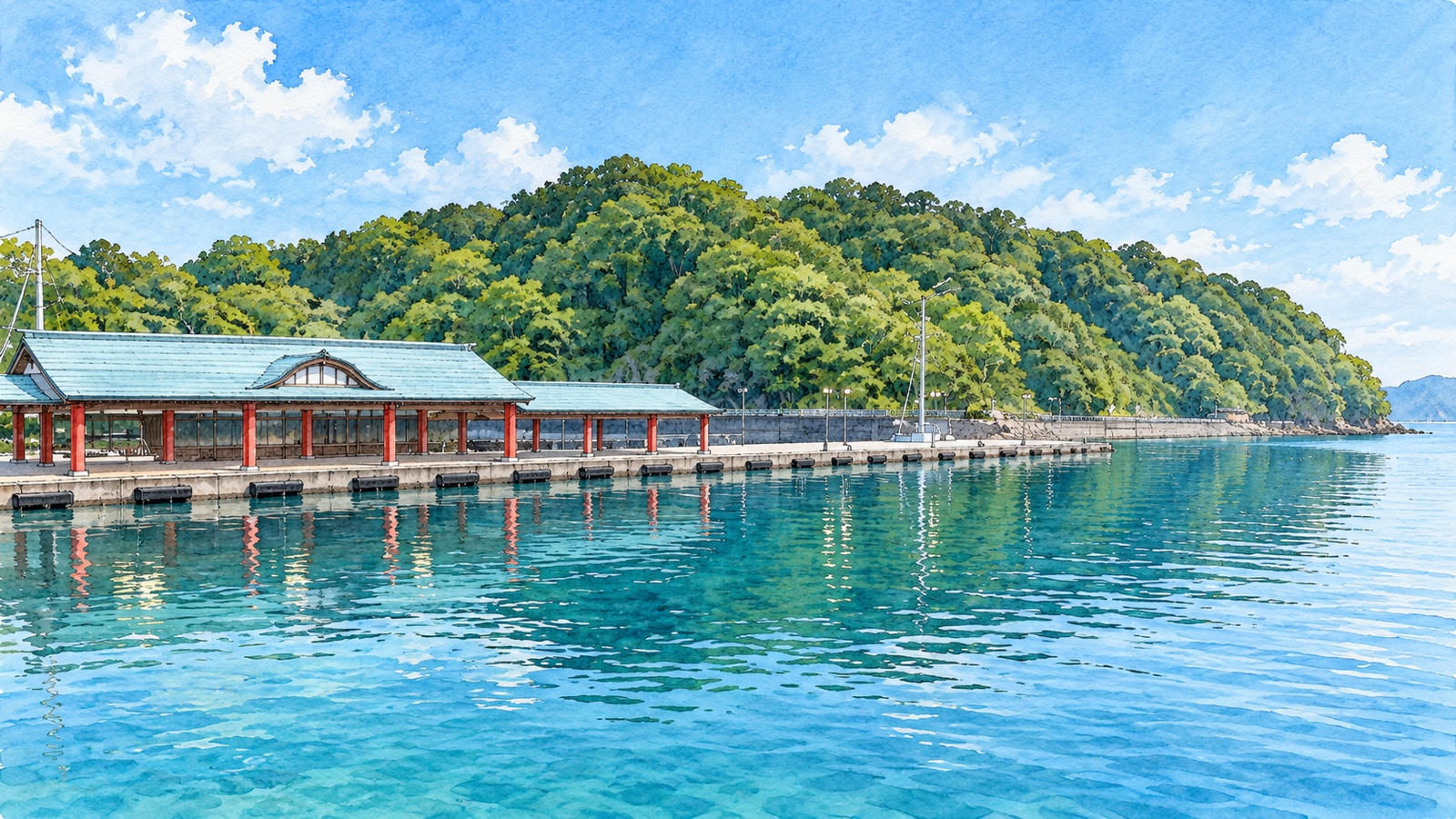
The ‘Kurayami’ music video was filmed over two days on Omishima and Hakatajima in Ehime Prefecture. Ryokan Sawaki on Omishima specifically identifies Miyaura Port and its surroundings as filming locations.
The inn’s account lists Miyaura Port, the shoreline with a view of the torii leading to Oyamazumi Shrine, okonomiyaki restaurant Otorii, the bus stop in front of the Omishima branch office, Dai Beach, and the mikan grove in front of the inn. The restaurant interior and grove are not places to enter while looking for video scenes.
Ryokan Sawaki also hosted STU48 members for an episode of Imo TV broadcast in December 2017. It was a sea-kayaking challenge from Imabari, via Omishima, to Hiroshima. The inn’s staff wrote that they only learned from the broadcast why everyone looked so tired when they arrived; the next morning, the members set off full of energy. Omishima is linked not only to a music video but also to a show documenting a physically demanding sea crossing.
If you arrive by bus from Fukuyama, take the Shimanami Liner to Omishima Bus Stop, then transfer to a local bus for Miyaura Port. The port is in a village on the island’s west side, away from the expressway bus stop. From Imabari, check the Setouchi Bus schedule for services to Miyaura Port.
Since October 1, 2026, all Shimanami Liner buses between Fukuyama and Imabari require reservations. Plan the reservation for your coach and the transfer to the island bus as parts of the same itinerary.
A one-way trip from Fukuyama Station to Omishima Bus Stop costs ¥2,400, or ¥2,160 with the online-payment discount. To Hakatajima Bus Stop, the fare is ¥2,600, or ¥2,340 with the online discount. The local bus to Miyaura Port is a separate leg; the expressway coach fare alone will not take you to the port.
- Location
- Around Miyaura Port, Omishima-cho Miyaura, Imabari, Ehime
- Connection to the group
- Filming location for the debut single ‘Kurayami’ music video; a local inn identifies places around the port
- Access
- Transfer from the expressway Shimanami Liner at Omishima Bus Stop to a local bus for Miyaura Port
Sources:Chugoku Bus | Shimanami Liner
Setouchi Bus | Timetable for Omishima routes
Official STU48 | ‘Kurayami’ music video announcement
Ryokan Sawaki | Omishima locations in the music video
4Dai Beach | White sands on Omishima seen in ‘Kurayami’
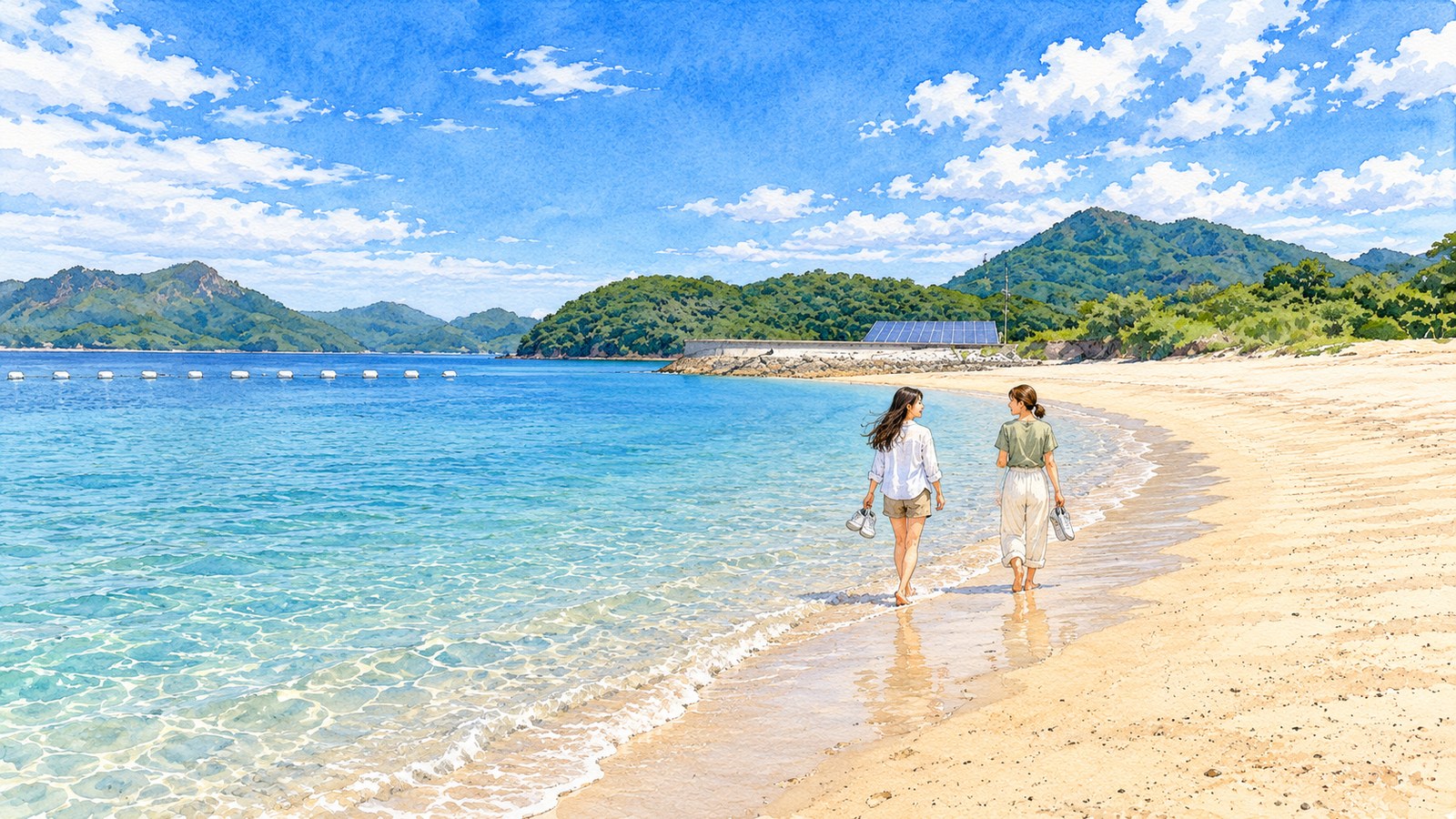
One of the locations Ryokan Sawaki lists for ‘Kurayami’ is Dai Beach in Dai, Omishima-cho. It is about three kilometers south of Miyaura Port, or less than a five-minute drive.
Calm water stretches out beyond the white-sand beach, with Dai Campground next door. The campground operates from July 1 to August 31, and changing rooms and warm showers are available only during that season. If you visit in winter, think of it as a place to look out over the island shoreline from the music video, not as a swimming beach.
From Miyaura Port, take the Setouchi Kotsu bus toward Munakata Port, get off at Nitta after about six minutes, and walk about five minutes. During the campground season, free parking for 29 cars is also available.
- Location
- Dai, Omishima-cho, Imabari, Ehime
- Connection to the group
- Beach identified by a local inn as a ‘Kurayami’ music-video location
- Access
- About six minutes from Miyaura Port on the Setouchi Kotsu bus toward Munakata Port; get off at Nitta and walk about five minutes
Sources:Ryokan Sawaki | Omishima locations in the music video
Imabari City | Dai Campground
5Mitarai Preservation District | Town in the drama scenes of ‘Omoideseru Koi wo Shiyou’
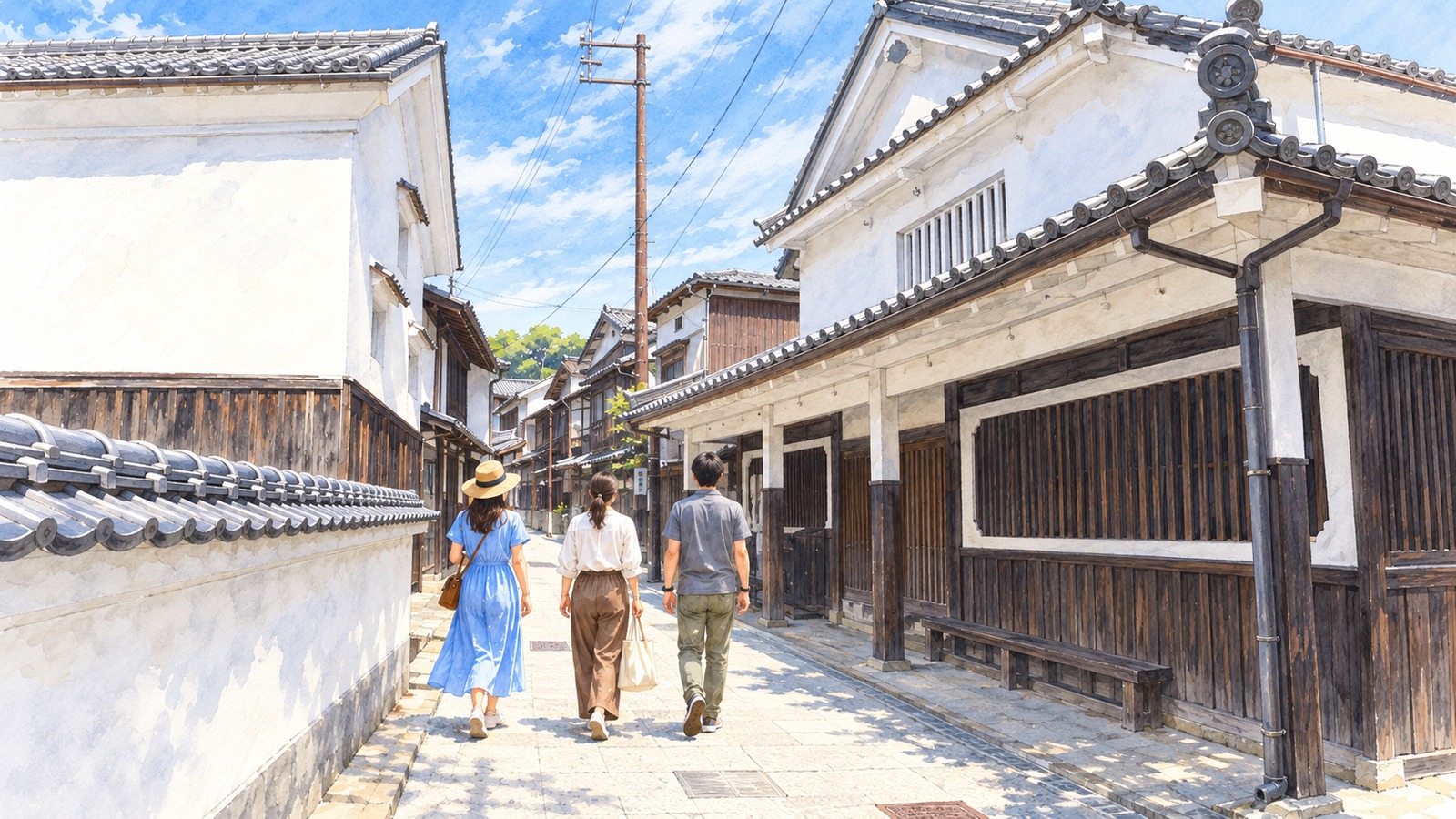
The drama scenes for ‘Omoideseru Koi wo Shiyou’ (2020) were filmed in the Mitarai Preservation District on the eastern side of Osakishimojima. Second-generation trainees played the past, while first-generation and third-generation draft members portrayed the present, creating a story that moves between different times in the same people’s lives. Yumiko Takino said she was returning to Mitarai for the first time since filming there soon after joining STU48.
Mitarai flourished as a port town where boats waited for the tide and wind during the Edo period. It was designated a National Important Preservation District for Groups of Traditional Buildings in 1994. On the narrow land, built up through repeated reclamation, merchants’ houses, teahouses, inns for sailors, shrines, and temples stand together, with lanes running like a network. Structures that supported port life remain, including the large breakwater, stone bridges, a high lantern, and gangi steps.
By car, it is about an hour and a half from Kure IC on the Hiroshima-Kure Road. By bus, take the Setouchi Sanko Okinu–Rosai Hospital Line from in front of JR Hiro Station toward Okinu Tenmangu Shrine and get off at Mitarai Port.
- Location
- Mitarai, Yutaka-cho, Kure, Hiroshima
- Connection to the group
- Filming location for the drama scenes in the fifth single ‘Omoideseru Koi wo Shiyou’ music video
- Inquiries
- Mitarai Rest Area
Sources:Official STU48 | Interview with members about the fifth single
Kure City | Mitarai Preservation District
Kure City | Current bus information for Mitarai Rest Area
Kure City | Public transportation service information
6Hill Overlooking History Park | The overlook where the music video’s drone shots were filmed
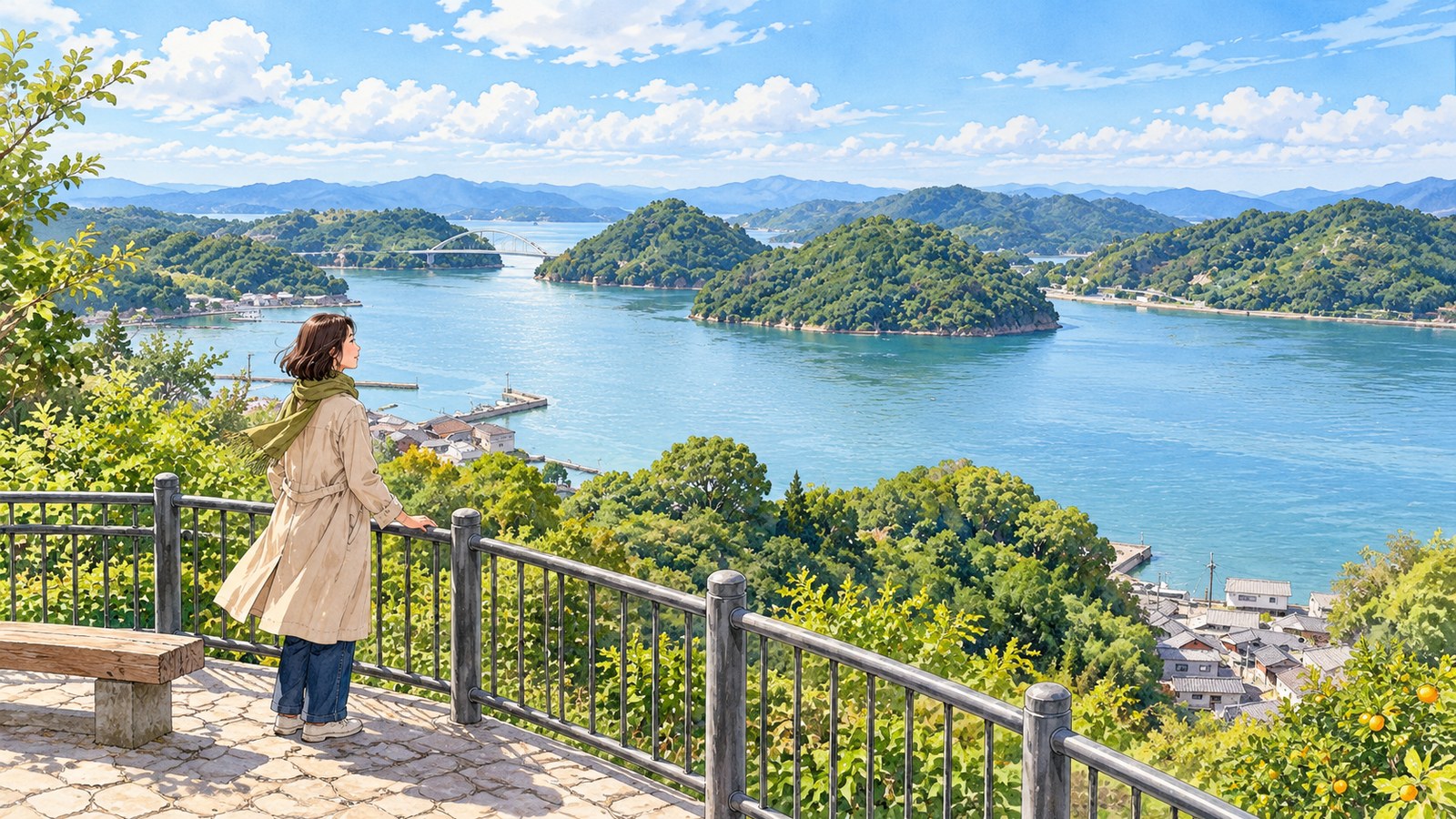
When Chiho Ishida looked back on filming the fifth single ‘Omoideseru Koi wo Shiyou,’ she recommended Hill Overlooking History Park for its view down over Mitarai. From here you can see the Seto Inland Sea and bridges linking the islands; Ishida said that footage filmed with a drone from this spot was also used in the music video.
The park was created on a rise overlooking the district after Mitarai was designated a preservation district for traditional buildings. The view reaches beyond the historic streets to the Kurushima Strait and the mountains of Shikoku. A walking path through the mikan groves offers views of the islands in every season.
From Mitarai Port bus stop, it is an uphill walk of about 30 minutes. After exploring the historic streets, you can see both the lanes in the drama scenes and the overhead view captured by the drone.
- Location
- Mitarai, Yutaka-cho, Kure, Hiroshima
- Connection to the group
- Park identified by a member as the location of drone footage for the ‘Omoideseru Koi wo Shiyou’ music video
- Access
- About a 30-minute walk from Mitarai Port bus stop
Sources:Official STU48 | Interview with members about the fifth single
Dive! Hiroshima | Hill Overlooking History Park
7Chichibugahama Beach | Sands where the group dances in ‘Mubou na Yume wa Sameru Koto ga Nai’

The music video for the 2020 fourth single ‘Mubou na Yume wa Sameru Koto ga Nai’ was filmed at Chichibugahama Beach in Mitoyo, Kagawa, and Ushimado Olive Garden in Okayama. At Chichibugahama, 16 selected members dance on the beach at low tide, leading a large group of dancers.
Filming took place barefoot on the beach in the middle of winter in December 2019. Choreographer Tomohiko Tsujimoto recalled that they did more than 100 takes. Nana Okada said they filmed the dance repeatedly as the tide changed between morning, evening, and night. The artist photos and cover photos were also shot at Chichibugahama, with a sunset scene used for the theater edition.
Chichibugahama Beach stretches for about one kilometer. When low tide coincides with sunset and the wind is calm, pools of water reflect the sky, creating what is called the ‘Mirror of the Sky.’ Free parking is available for 300 regular vehicles. The sunset shuttle bus from Kotohira does not run from mid-December through February.
- Location
- 273-1 Nio Otsu, Nio-cho, Mitoyo, Kagawa
- Connection to the group
- Dance scenes in the ‘Mubou na Yume wa Sameru Koto ga Nai’ fourth-single music video and cover-photo location
- Best time to visit
- A calm evening when low tide coincides with sunset
Sources:Oricon News | Music video filming at Chichibugahama and Ushimado Olive Garden
Mitoyo Tourism and Exchange Bureau | Chichibugahama Beach
8Ushimado Olive Garden | The other filming location for the same music video
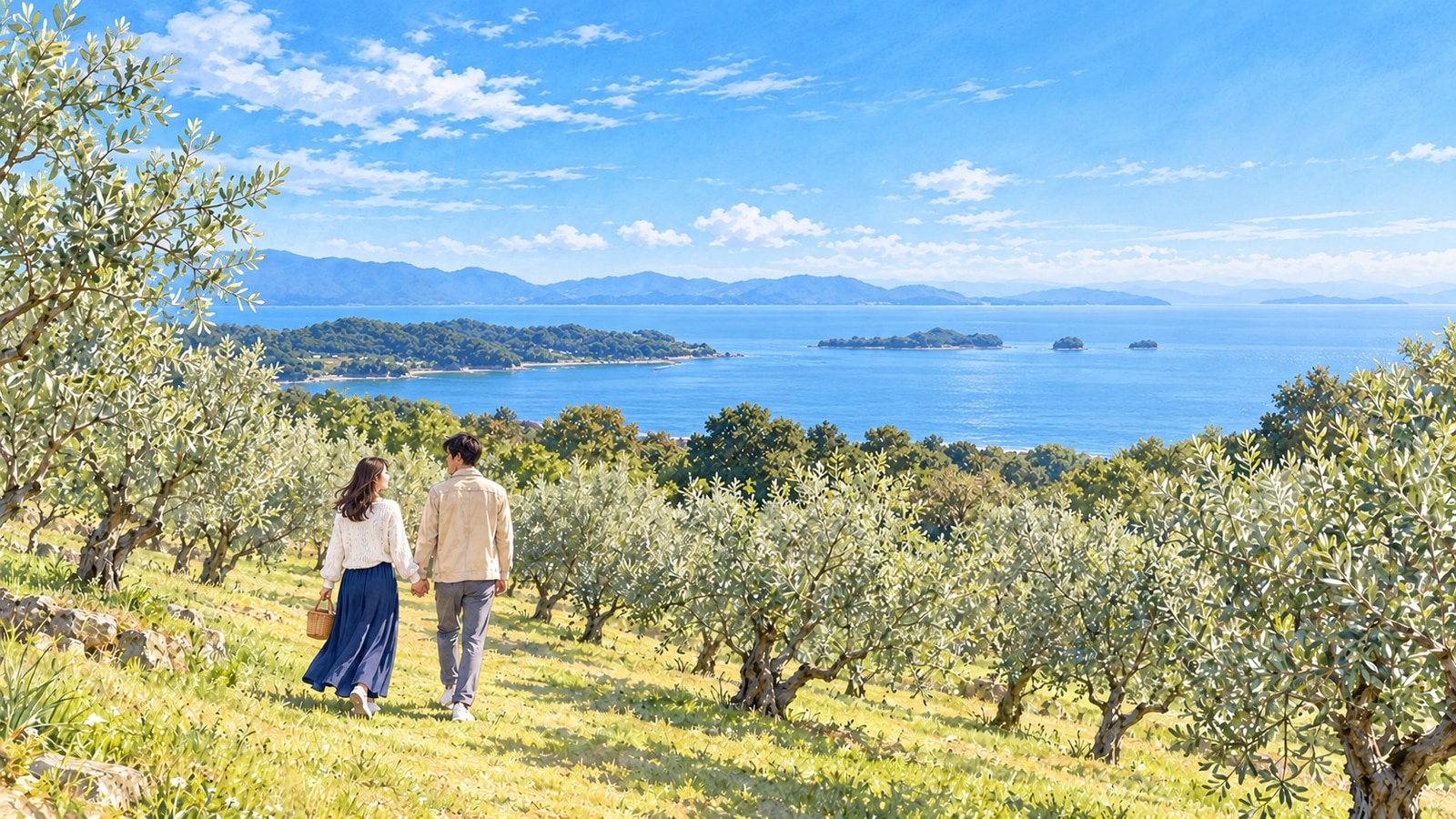
The other filming location for ‘Mubou na Yume wa Sameru Koto ga Nai’ is Ushimado Olive Garden in Setouchi City, Okayama. Unlike the sunset beach at Chichibugahama, the music video also shows views from the garden on the hill.
The final scene, where Yumiko Takino kicks over a picture frame, was filmed at Ushimado Olive Garden. Takino said it was raining that day. From a large group dance on the beach to one member knocking down a frame alone in the rain—the video moves between these two locations. When you revisit it after your trip, notice where the scenes shift from one place to the other.
Ushimado Olive Garden is the company-owned farm of Nippon Olive Co., Ltd., which opened in 1942. It grows about 2,000 olive trees across roughly 10 hectares. From the hilltop, you can see the sea and islands around Ushimado, sometimes called the ‘Aegean Sea of Japan.’ The shop sells olive products and local souvenirs, and there is a café on the second floor.
Admission is free, and the garden is open from 9:00 a.m. to 5:00 p.m. (hours may change by season). It has no regular closing days. Take a bus bound for Ushimado from JR Oku Station for about 20 minutes, get off at Olive Garden Entrance, then walk uphill for about 30 minutes.
- Location
- 412-1 Ushimado, Ushimado-cho, Setouchi, Okayama
- Connection to the group
- Filming location for the fourth-single music video ‘Mubou na Yume wa Sameru Koto ga Nai’
- Admission
- Free; 9:00 a.m.–5:00 p.m. (hours may change by season)
Sources:Oricon News | Music video filming at Chichibugahama and Ushimado Olive Garden
Setouchi City Travel Guide | Ushimado Olive Garden
9Kuroshima Venus Road | A path appearing at low tide in ‘Setouchi no Koe’
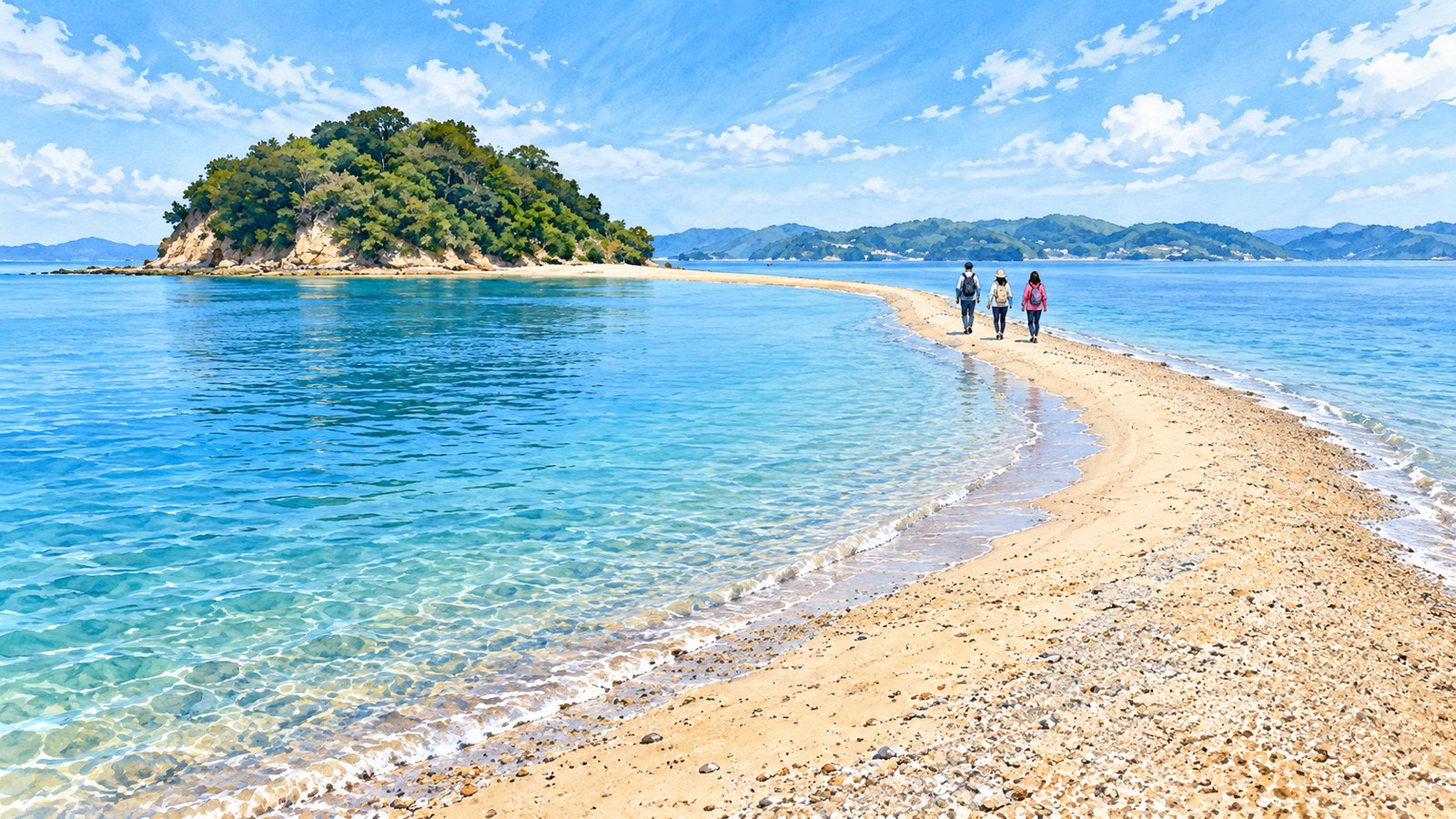
The music video for STU48’s first original song, ‘Setouchi no Koe,’ was filmed over five days at tourist sites in the seven Setouchi prefectures. One location was Kuroshima Venus Road in Setouchi City, Okayama: at low tide, one sandbar connects three islands—Kuroshima, Nakanokojima, and Hashino Kojima. The members’ vocal scenes were filmed along this path.
You can play this video in the official video at the top of this page ↑
Kuroshima is an island off Ushimado Port, about a 10-minute boat ride away. The sandbar appears only around low tide on days when the tide recedes far enough. Hotel Limani’s official calendar lists walkable dates and tour times. Plans in October and November and in March and April take 50 minutes; from May through September they take 70 minutes. All plans are for groups of at least two adults. You can plan your visit to Ushimado after choosing a date that matches the sea conditions.
Visitors reach the island by Hotel Limani shuttle boat, sea kayak, or charter boat; advance reservations are required. The Setouchi City Tourism Association can answer questions about charter and ferry services.
- Location
- Kuroshima, Ushimado-cho, Setouchi, Okayama
- Connection to the group
- One of the filming locations for STU48’s first original song, ‘Setouchi no Koe’
- Access
- About 10 minutes by boat from Ushimado; reservations required
Sources:Oricon News | Filming locations for the ‘Setouchi no Koe’ music video
Setouchi City Travel Guide | Kuroshima Venus Road
Hotel Limani | Boat plans and tide calendar
One group based across seven prefectures around one sea
Their debut release also featured songs representing all seven prefectures
STU48 formed on March 31, 2017, and has been based across seven prefectures: Hyogo, Okayama, Hiroshima, Yamaguchi, Tokushima, Kagawa, and Ehime. The standard edition of their debut single, ‘Kurayami,’ came in seven types, A through G, each including a prefecture-specific version of ‘STU48.’
Type A represents Hyogo, B Okayama, C Hiroshima, D Yamaguchi, E Tokushima, F Kagawa, and G Ehime. The bonus DVDs also include live documentaries from the group’s first seven-prefecture tour. The prefecture names were built not only into how the group described its area of activity, but also into the structure of its debut release and videos.
Sources:STU48 | Contents of the debut single
Sources:Official STU48 | Group and shipboard theater history
STU Co., Ltd. | Formation and the Group’s Ninth Anniversary
‘Setouchi no Koe’ and a Video Sung by Local Residents
STU48’s first original song, ‘Setouchi no Koe,’ has an official ‘Hometown Version’ in addition to the music video featuring the members. In this version, people from 28 towns across the seven Setouchi prefectures sing the song.
Source:STU48 Official | ‘Setouchi no Koe’ Hometown Version
From the Title ‘Kurayami’ to a Song of Hope
In an interview around the group’s debut, Yumiko Takino said that the title ‘Kurayami’ (‘Darkness’) made her imagine a dark song, but she found hope in its lyrics. In her hometown, the nights were not as bright as in the city, and she hoped STU48 could become a warm light within that darkness.
Nana Okada was drawn to lyrics about people’s worries more than to the glamour associated with idols. Hina Iwata said the joys and struggles of pursuing a dream resonated with her own feelings. The song gives voice, through the early members’ own words, to both the uncertainty before their debut and their hope of moving forward.
Yumiko Takino
At the time of their debut, she said the title ‘Kurayami’ had made her expect a dark song, but the lyrics gave her hope. She was the center for the first-generation and Draft 3rd Generation version of ‘Omoideseru Koi wo Shiyou.’
Chiho Ishida
She recalled filming ‘Kaze wo Matsu’ by dancing up more than 100 stone steps. In 2020, she also streamed dance performances from home every day as ‘Ouchiho Koen.’
Akari Fukuda
A first-generation member who visited the shipyard before the shipboard theater was complete and spoke with the workers. During the final ‘Arigatou! STU48-go Tour,’ she made more opportunities to talk with the crew.
Kokoa Kai
A first-generation member, she returned to STU48 in March 2026 after activities with KLP48 in Malaysia and became the center for the 14th single, ‘Fuyufuku ni Kigaetara.’
Hina Iwata said that the venues on the group’s first tour across the seven prefectures often brought the audience close to the stage, and seeing their smiles helped her dance with confidence. Kanon Isogai remembered members crying at a hometown performance. The tour footage on the debut edition’s DVD matters not only because of the places it visits, but also because it captures the members’ first encounters with local audiences.
Takino, the debut song’s center, spoke of both the joy and pressure of being entrusted with the role. The finished music video may make the members look at ease amid the island scenery, but the interviews show that it was filmed soon after the group formed. When watching the video at a harbor or beach, look beyond matching the scenery and notice the expressions of the members who made the group’s first work.
Sources:Rakuten Books | Member Interview on the Debut Single’s Release
STU48 Official | Member Profiles
The History of the Shipboard Theater STU48-go
The Idea of Bringing a Theater to the Port
The shipboard theater STU48-go was converted from a ferry that carried both passengers and vehicles. It began performances on April 16, 2019. The vessel was 77.8 meters long, 12.5 meters wide, and had a capacity of 300. Its home port was Hiroshima International Ferry Port, and it could travel to ports around the Setouchi region.
After its first show, ‘GO!GO! little SEABIRDS!!,’ the theater began presenting ‘Bokutachi no Koi no Yokan,’ organized by Nana Okada, on January 11, 2020. Okada said she wanted the show to bring out each member’s appeal, with the bond and affection between the members as an underlying theme. The choreography featured frequent eye contact and pairs dancing together.
The shipboard theater’s final performances took place at its home port in Hiroshima on May 23, 2021. It had held 191 shows in about two years. The daytime show was ‘Boku no Taiyo’ by the second-generation research students; the evening show was ‘Bokutachi no Koi no Yokan’ by first-generation and Draft 3rd Generation members. The vessel no longer operates as a theater.
Sources:STU48 Official | Shipboard Theater Archive
ORICON NEWS | Report on the Final Performance in 2021
The Unfinished Ship in the White Coveralls of ‘Shukkou’
‘Shukkou,’ a B-side on ‘Kaze wo Matsu,’ was filmed aboard STU48-go while it was being refitted. All 33 members took part in white coveralls. Before the audience area and stage were complete, the ship itself became the setting for their first video there.
‘Shukkou’ was chosen as the final song at the shipboard theater’s last performance in 2021. Photos from the shows and commemorative group photos appeared on screen, and three foghorn sound effects marked the close. The same song connects the ship when it was still unfinished with the vessel that had hosted two years of performances.
Sources:King Records | Filming Aboard the Ship Before Its Refit Was Complete
ORICON NEWS | Shipboard Theater’s Final Performance
People Kept the Ship Safe Even on Nights Without a Show
In a comment for the theater’s final performance, Akari Fukuda recalled visiting the shipyard before completion and talking with the workers. After the theater opened, she learned that on days without performances, crew members stayed aboard overnight to manage and maintain the vessel.
During the final ‘Arigatou! STU48-go Tour,’ the members made more opportunities to speak with the crew. The shows were supported not only by the lighting and sound staff. The work of keeping the ship seaworthy and mooring it at port made it possible to welcome audiences aboard.
Sources:ORICON NEWS | Akari Fukuda Reflects on Interactions with the Crew
Key Milestones in the Group, Videos, and Performances
- March 31, 2017STU48 formsFormation
- 2017Music video released for the first original song, ‘Setouchi no Koe’Video
- August 2017Hometown Version featuring people from 28 Setouchi towns releasedVideo
- December 2017‘Kurayami’ music video releasedVideo
- January 31, 2018First single, ‘Kurayami,’ releasedMusic
- Late 2018‘Kaze wo Matsu’ music video, filmed in Onomichi, releasedVideo
- February 13, 2019Second single, ‘Kaze wo Matsu,’ releasedMusic
- April 2019Performances begin aboard STU48-goTheater
- January 2020‘Bokutachi no Koi no Yokan’ performances beginPerformance
- January 2020Music video filmed at Chichibugahama and Ushimado released: ‘Mubou na Yume wa Sameru Koto ga Nai’Video
- September 2, 2020‘Omoideseru Koi wo Shiyou’ releasedMusic
- May 23, 2021Performances aboard STU48-go endHistory
- April–May 2026Ninth-anniversary concerts held in Hiroshima and TokyoPerformance
- October 7, 202614th single, ‘Fuyufuku ni Kigaetara,’ releasedMusic
- October 17–18, 2026National tour dates in Hiroshima held at BLUE LIVE HIROSHIMAPerformance
- March 19–22, 202710th-anniversary revival performances scheduledPerformance
Sources:STU48 Official | First Single
STU48 Official | Second Single
Shipboard Theater Archive
Official Report on the Ninth Anniversary
Visit the Scenery After Watching the Music Videos Again
In ‘Kurayami,’ Notice the Distance Between the Islands and the Members
This official music video for ‘Kurayami’ was filmed on Omishima and Hakatajima. Released in December 2017, the song came out as the group’s debut single on January 31 of the following year. Along with the locations around Miyaura Port, the video lets you see how the islands’ harbors, roads, and storefronts connect within a single song.
STU48 Official | ‘Kurayami’ Music Video
In ‘Kaze wo Matsu,’ Watch How the Camera Is Passed Along
Viewed as one continuous shot, ‘Kaze wo Matsu’ might look as if it was filmed entirely by a drone in flight. But an interview with the production team explains how a person caught the airborne camera, carried it by hand for close-up shots, and sent it back into the air. The camera passed three times between aerial and handheld filming. The distant view over the town and the perspective moving close to people are linked without a visible cut.
Filming took three days, including technical rehearsals. They shot five takes on each of the two production days. In the terraced town, buildings could block the radio signal to the aircraft, so the pilot had to move close to the drone. To solve this, the pilot rode on a chair while four crew members carried it up the stairs as they filmed.
The camera was a DJI Inspire 2 fitted with an X7 and a 24 mm lens, recording in 6K at 24 frames per second. The ground operator carrying the aircraft could not see the live footage during filming; a separate crew member controlled the camera’s direction and focus. The one time that operator climbed the stairs, they paused the controls and the ground operator aimed the camera by judging the lens direction.
The movement looks seamless on screen, but on location the pilot, camera operator, and ground crew passed the work between them. The camera approaches the members’ faces at the end of a narrow lane, then rises to a view over the town. The shoot was designed to move between those two distances with one camera.
Source:VIDEO SALON | Behind the Scenes of ‘Kaze wo Matsu’
The Dance That Took Until the Ninth Take
The choreography was by Tomohiko Tsujimoto. For this first attempt at contemporary dance, he also incorporated gestures reminiscent of Onomichi’s cats. Yumiko Takino said choreography rehearsals began about a week before filming. On days when she could not meet Tsujimoto, she sent him videos as they refined the choreography.
Chiho Ishida recalled that she was slow climbing more than 100 steps while dancing and worried that she was holding up the members behind her. Takino said there were takes where the members completed the dance but the camera work did not go well, so everyone cheered on the drone. It took both the members’ movements and the camera crew’s movements coming together to make one complete take.
The special website published the selected ninth take as well as takes 1, 2, 4, 5, 6, 8, and 10. Takes 3 and 7 were omitted because parts of the filming did not go well. Filming took place on December 2 and 3, 2018. The time of day is also listed beside each take number, preserving a record of repeated filming in the same town.
The single was originally scheduled for release in August 2018, but was postponed because of torrential rain in western Japan and released on February 13, 2019. Takino said that the extra time had let the members gain experience through tours and other activities, so they could show fans how much they had grown. The song’s title, ‘Kaze wo Matsu’ (‘Waiting for the Wind’), and the wait for its release come together in the members’ recollections.
STU48 Official | ‘Kaze wo Matsu’ Music Video
King Records | Filming Takes and Member Interview
In ‘Omoideseru Koi wo Shiyou,’ See Different Times in the Same Place
Released on September 2, 2020, ‘Omoideseru Koi wo Shiyou’ was a single featuring all 44 members at the time. The group made three music videos for the same song: one featuring first-generation and Draft 3rd Generation members, one featuring the second-generation research students, and a Mix version combining the two.
The first-generation and Draft 3rd Generation members portray the present, while the second-generation research students portray the past. Yumiko Takino and Momoka Rissen are the respective centers. The two groups are not simply presented as different people; the story connects them as the same characters at different points in time.
The drama scenes were filmed in Mitarai’s historic preservation district on Osakishimojima in Kure, Hiroshima Prefecture. The first-generation and Draft 3rd Generation dance scenes were filmed at Kure Port, where the video also uses a shot of the members reflected in a large puddle left by rain just before filming.
Chiho Ishida mentioned the Hill Overlooking History Park, one of the locations, and noted that drone footage from there was also used in the video. Mitarai is a different destination from Onomichi and Omishima, but here, too, an overhead view of a port town provides a backdrop for the story.
Even in an official group interview, the members did not all interpret the letter in the video the same way. The letter appears to be one that had been given to a boy in the past, yet it is in Takino’s hands in the present. Asked about the romance’s outcome since no return of the letter is shown, Takino left it to viewers to decide. This prop links the three versions while leaving part of the story unexplained.
Source:STU48 Official | Member Interview on the Fifth Single
Finding Ways to Connect Even When It Was Hard to See the Audience’s Response
In 2020, the group also held a ‘Drive in LIVE,’ where audiences watched from inside their cars. By tuning to a designated frequency, people could hear the live show through their car speakers. Chiho Ishida said that when members called out from the stage, the audience answered by switching on turn signals and windshield wipers. Takino recalled seeing the cars’ headlights illuminate the venue at night.
Around the same time, Ishida streamed dance performances from home every day as ‘Ouchiho Koen.’ Kaede Yabushita said that missing fans while unable to meet them made her want members to propose ideas themselves instead of leaving everything to the staff. As the routine of meeting fans at the shipboard theater changed, the group tried two different ways to connect: live shows through car windows and streams from home.
Source:STU48 Official | Interview Looking Back on Activities in 2020
Sixteen Members on 16 mm Film in 2026
The 14th single, ‘Fuyufuku ni Kigaetara,’ was released on October 7, 2026. Center Kokoa Kai returned to STU48 in March that year after activities with KLP48 in Malaysia. It is the first title track to place a member who has been with the group since its formation at the center.
Director Noboru Wada chose to shoot this music video on 16 mm film. Rather than filming actual Setouchi scenery on location, he placed 16 members in a space shaped by water and light. The first half is framed in 4:3, showing each member’s face and gaze. In the final chorus, the frame expands to 16:9 as the members dance together in their stage costumes.
The costumes also change from summer clothes to winter clothes and then stage outfits. According to choreographer CRE8BOY, the chorus begins with the members in winter clothes, looking a little more mature; the later bouncing moves with raised hands express carefree summer memories. The seasons progress through changes in clothing and gestures rather than changes of location.
Kai said the melody, including the sound of a bell, made her feel winter approaching. The group took a different approach from ‘Kaze wo Matsu,’ which follows the members up Onomichi’s steps, focusing instead on the expressions of the members now in the group. The group’s videos about Setouchi have changed in this way, too.
Both Type A and Type B of the single include ‘Aou Sora.’ The third track is ‘18-sai Saikyo Setsu’ on Type A and ‘Akaneiro no Love Letter’ on Type B; the Theater Edition includes ‘Kimi wo Namae de Yonda Hi.’ These B-sides let listeners hear today’s members in different combinations from the 16 who perform the title track.
Source:King Records | Filming and Choreography for ‘Fuyufuku ni Kigaetara’
Reviving Past Performances for the Tenth Anniversary
Tenth-anniversary revival performances are scheduled for March 19–22, 2027, at BLUE LIVE HIROSHIMA. According to the announcement on October 18, 2026, the program will select performances from the group’s past shows and tours. Details, including which shows will be revived, had not been announced at the time.
Source:STU48 | Announcement of the Tenth-Anniversary Revival Performances
The 2026 Tour Began with the First Song
‘Kurayami’ was also the opening song of the national tour, which began at Takamatsu festhalle on June 26, 2026. It was followed by ‘Shizen Touta Shugi’ and ‘Genten.’ Serika Ozaki said the order was meant to remind fans of when they first came to like the group. The members sang ‘Setouchi no Koe’ during the encore and closed the 25-song set with ‘Omoideseru Koi wo Shiyou.’ The songs from the harbors and beaches in this article are not confined to past videos; they are still performed live today.
At that show, Serika Ozaki and Rio Okamura were happy to wear the ‘Kurayami’ costumes for the first time. Sayaka Takao recalled that she had listened to the song for encouragement when she was working as an adult. Someone who once listened from the audience now sings in those costumes. Reading the names of the members in the original video alongside those performing today reveals how different generations have carried the same song forward.
The new costumes had their own variations. According to Aoi Hyodo, the outfits used four colors with different fabric combinations, customized for each of the 16 performers. For Ako Sogabe, a fourth-generation trainee, this was both her first tour and the first time she wore a costume made just for her. In one show, members sang an early song while a new member took the stage on her first tour.
A Setouchi trip can pair a visit to a region where a favorite music video was filmed with a live show on another day. You can enjoy hearing a song you remember from a beach or hillside in the audience without visiting every location at once. Even when the performers differ from those in the video, the trip lets you compare the voices and dancing of different eras.
Source:STU Co., Ltd. | Report on the National Tour’s Opening Date
Research Note | A Business Perspective: Make the Land and Its Residents Part of the Work
STU48’s ‘Kaze wo Matsu’ uses Onomichi’s slopes and stairways, showing the members moving through a town with steep changes in elevation. The director said he was conscious that places where the members worked hard could become sacred sites for fans. The Hometown Version of ‘Setouchi no Koe’ features people from 28 towns across seven prefectures singing the song. These are two different ways of bringing a region into a work: using the shape of the land as a condition of the dance, and inviting local residents to join as singers.
When planning a regional partnership, consider not only which scenery to film but also what role the place and its residents can play. If the terrain shapes the performance and residents’ voices remain in the work, the project can express a deeper relationship than simply naming a destination. When asking people to appear or help with filming, it is worth discussing how the finished work will be shared locally as well. This offers a way to treat a place as more than material for attracting tourists: leave a record that lets the people involved explain their relationship to the work.
Sources:VIDEO SALON | Director Mitsuishi on the Filming Concept
STU48 | Regional Content on the Debut Edition
STU48 | ‘Setouchi no Koe’ Sung by People from 28 Towns in Seven Prefectures
Videos: STU48 Official YouTube Channel; jacket images: STU48 Official | Debut Single Special Page.
Sources
FAQ
Can I still see a performance aboard STU48-go?
Performances aboard the shipboard theater ended on May 23, 2021. For current appearances, check the STU48 official schedule for land-based venues.
Was Senkoji Temple a filming location for ‘Kaze wo Matsu’?
Senkoji is where former member Yuri Torobu described visiting in her series introducing Onomichi. It does not identify the temple’s main hall as a music video filming location.
How are Miyaura Port and Dai Beach connected?
Both are on Omishima, and local inn Sawaki identifies them as filming locations for the debut single ‘Kurayami.’ The port and beach are some distance apart, so travel between them by local bus or another means.
Can you walk the Kuroshima Venus Road at any time?
The sandbar appears around low tide on days with a sufficiently low tide. Reserve a boat from Ushimado to the island in advance, and check tide levels and boat operations on the day.
Can I visit all nine Setouchi locations in one day?
They are spread across Hiroshima City, Onomichi, Omishima, Mitarai, Chichibugahama, and Ushimado. It works better to choose one song and region to focus on, such as Onomichi, Omishima, Mitarai, or Ushimado.
What should I check to photograph the sky reflected on the water at Chichibugahama?
Look for a time when low tide coincides with sunset and the wind is light. The sky reflects in pools left on the beach at low tide, so check tide times and the weather with the Mitoyo Tourism and Exchange Authority before visiting.
Can I reach Mitarai’s historic district by public transportation?
From Hiro Station, take the Setouchi Sanko bus on the Okichu–Rosai Hospital line toward Okichu Tenmangu and get off at Mitarai Port. This is the historic preservation district in Mitarai, Yutaka-cho, Kure, where the drama scenes for ‘Omoideseru Koi wo Shiyou’ were filmed.


