Idol, Burning Book Review: Akari’s 'Spine' and the Distance That Sustains Fandom
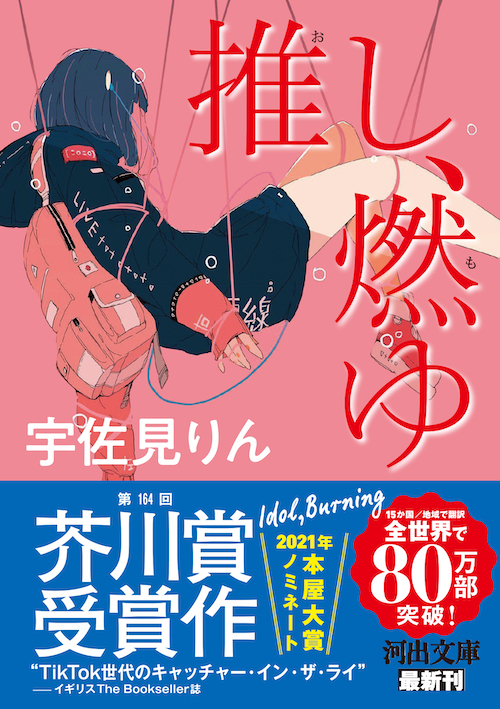
“My oshi burned”—meaning my favorite idol went up in flames in a massive online scandal. It was in January 2021 that the novel opening with this famous line won the prestigious Akutagawa Prize. Idol, Burning (original Japanese title: Oshi, Moyu, by Rin Usami, published by Kawade Shobo Shinsha) depicts the daily life of Akari, a high school girl devoted to supporting an idol.
More than five years after its initial publication, in an era when oshikatsu (fan activities supporting a favorite idol or character) is called a 4-trillion-yen market, we are rereading this novel from the perspective of businesses involved in the fan economy. Without generalizing the experience of a single fictional character to all fans, we reflect on how fandom intersects with daily life in ways that sales figures alone cannot capture.
About This Book
The protagonist, high schooler Akari, continues to support her oshi (the idol she is devoted to), Masaki, after he becomes the target of an online firestorm for allegedly punching a fan. Unable to find a place where she belongs either at school or at home, interpreting her oshi and writing about him on her blog is her only means of connecting with the world.
There is a passage in the book where Akari describes supporting her idol as “my center, or maybe my spine.” Using the language of the physical body, she conveys the sensation that cheering for her oshi is what holds her life upright. This brief passage is also featured as an excerpt from page 37 of the hardcover edition in Kawade Shobo Shinsha’s preview leaflet (in Japanese).
The story begins right at the moment of the scandal. Akari’s everyday struggles—school and part-time jobs that never go smoothly, and the emotional distance within her family—are depicted in parallel with her fan activities. What makes the book so compelling is not the plot twists and turns themselves, but the prose. Through Akari’s visceral physical sensations, the weight and urgency of a life built around having an oshi come through vividly. As for the major turning point that arrives toward the ending, we will leave that unspoiled here.
Author Rin Usami spoke about the distance between the protagonist and her oshi in these terms:
Precisely because no reply or reciprocation is promised, Akari can pour her affection into him without directly carrying the burden of another person’s life. For Akari, that safe distance serves as a kind of support that is entirely different from real-life interpersonal relationships.
Key Takeaway: Akari’s Fandom Is Not “Consumption”
Akari buys CDs and attends live events in person, yet at the very center of her fandom is interpretation. Akari listens intently to everything her oshi says, researches the context, and writes it all down on her blog in her own words. For her, this act alone is how she makes sense of the world.
The portrayal of Akari prompts us to think about the limits of companies viewing oshikatsu purely in terms of financial expenditure. You cannot tell from purchase totals alone what actually sustains a person on the inside. While a novel cannot be treated as the factual reality of all fans as a whole, it offers an important clue for looking toward lived experiences that do not show up in numerical data.
For Akari, losing her oshi does not mean “losing a hobby”—it means losing the very method by which she interprets the world. The raw urgency of this novel is concentrated in that single point.
Seen Only Through Purchase Data
- Appears simply as a fan who continuously spends money on CDs and live events
- Measures the relationship by expenditure and market metrics alone
- Misses what actually sustains the person in their daily life
Seen Through Lived Experience in the Novel
- Centers on listening closely, researching context, and writing blog interpretations
- Relies on an unreciprocated, safe distance as a lifeline ("her spine")
- Losing the oshi means losing her very method for understanding the world
Source: The Oshi Lab’s summary of the article
Editor-in-Chief’s Perspective
Precisely because my work involves speaking about oshikatsu in the language of “consumption” and “markets,” this novel makes me check my posture and straighten up every single time I read it.
If you look at Akari’s behavior strictly through purchasing data, she might simply look like a fan who consistently spends money. Yet what the story actually portrays is the lived experience of what she leans on just to get through each day. Rather than using her metaphor of the “spine” to explain the psychology of every fan, we should treat it as a clue for reading the specific urgency of Akari’s situation.
That is why, whenever we work with companies on oshikatsu projects, we use the guiding motto: “Fan passion is not a resource to be extracted, but something entrusted to our care.” Standing on that principle, we also need to ask whether promotional messages encouraging participation might inadvertently increase the burden of spending or time on fans. I believe that people involved in the fan business should read this novel before they read any market-size report.
The Oshi Lab Notes: Understanding the Experience Behind the Spending
- Do not measure the relationship by purchase amount alone — Taking a cue from how Akari interprets her oshi and puts him into words, pay attention to non-purchasing actions such as watching content and keeping personal records.
- Think carefully about how hiatuses, graduations, or changes are communicated — Do not take oshi loss (grief after losing a favorite) lightly; clearly organize the facts that management must explain, points of contact for inquiries, and how archived records will be handled.
- Do not make fans carry the burden of crisis response — When problems arise, the company itself should take responsibility for verifying facts and offering explanations, avoiding operational practices that rely on fans to defend the talent or spread messages on their behalf.
- 01Look beyond purchase amountsRecognize non-spending engagement such as watching, interpreting, and keeping personal records
- 02Communicate endings and changes with careTake oshi loss seriously by clarifying official facts, inquiry contacts, and archive handling
- 03Keep crisis response on the company's shouldersHandle fact-checking and public explanations internally rather than asking fans to defend or message
Source: The Oshi Lab’s summary of the article
Who This Book Will Resonate With
- People who have an oshi — You can read while reflecting on where Akari’s experience overlaps with your own and where it differs. Because reading it can potentially feel heavy or painful, we recommend picking it up when you have plenty of emotional breathing room.
- People who “don’t get” oshikatsu — It is the shortest route to understanding why someone can become so deeply absorbed, not as an abstract theory, but as a physical, lived sensation.
- People working in the fan business — To understand what may actually be happening on the inside behind industry phrases like “highly engaged, high-value fans.”
If you open this book expecting a bright, sun-filled story about the joys of fandom, you will find yourself in for a heavy, demanding read. Even so, the reason this work continues to stand as the defining masterpiece of “oshikatsu literature” is that after painting the shadows in full, it never once mocks or trivializes the earnest urgency of the person who loves an idol.
Book Information
| Title | Idol, Burning (Oshi, Moyu) |
| Author | Rin Usami |
| Publisher | Kawade Shobo Shinsha |
| Publication Date | September 2020 (Hardcover) / July 26, 2023 (Kawade Bunko paperback edition featured here) |
| Paperback ISBN | 978-4-309-41978-7 |
| Award | 164th Ryunosuke Akutagawa Prize |
The book cover image and purchase links featured on this page are for the Kawade Bunko paperback edition. You can also verify the edition details and ISBN on Kawade Shobo Shinsha’s official book page (in Japanese).
Where to buy: Amazon Japan (Kawade Bunko Paperback) (in Japanese) / Rakuten Books (in Japanese)
Read Alongside Our Other Articles
Our glossary guide What Is an Online Firestorm (Enjou)? breaks down the mechanisms by which a scandal involving an oshi also becomes a personal crisis for fans themselves. It offers a helpful framework for reading the incident at the beginning of the novel without reducing fan reactions to a simple binary of condemnation versus blind defense.
Making an oshi a pillar of support in your life can coexist with respecting healthy boundaries with the real human being behind the persona. Reading Distance from Your Oshi alongside Oshi Loss allows us to think about the value of having multiple pillars of support in life, without reducing Akari’s intense urgency to mere personal weakness.
3 Recommended Books for Readers of Idol, Burning
| Book Title | Why We Recommend It |
|---|---|
| Kaka (by Rin Usami) (in Japanese) | Her debut novel and winner of the Yukio Mishima Prize; the stylistic origin point of Idol, Burning. |
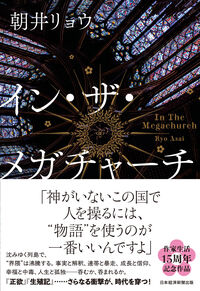
| In the Megachurch (In za Megachachi, by Ryo Asai) (in Japanese) | The opposite shore from individual urgency (Idol, Burning)—depicting the structural side of those who gather and channel fan passion (Read our book review here). |
| The Art of Putting What You Love into Words (“Suki” o Gengoka Suru Gijutsu, by Kaho Miyake) (in Japanese) | A practical guide to putting Akari’s style of “interpretive fandom” into practice yourself (Read our book review here). |
In our Oshikatsu Bookshelf series, we take a deep dive into books on oshikatsu and fan culture one volume at a time.
Summary
Oshi, Moyu offers businesses a way to consider the lives and feelings behind fan spending. Rather than reducing fans to a single customer profile drawn from fiction, use it to reconsider responsibilities such as explaining changes in activities and responding to inquiries.
FAQ
What kind of novel is Idol, Burning (Oshi, Moyu)?
It is the story of Akari, a high school girl who continues to support her favorite idol—her oshi—even after he becomes the center of an online firestorm for allegedly hitting a fan. Written by Rin Usami and published by Kawade Shobo Shinsha in 2020, it won the 164th Akutagawa Prize and is widely regarded as a defining work of 'oshikatsu literature' (fiction about fan devotion).
What does the phrase 'my oshi is my spine' mean?
It is an expression used by the protagonist, Akari, to compare supporting her idol to the center or spine of her life. The novel portrays the act of interpreting her oshi and putting those thoughts into words as almost the only way she has to connect with the world.
Can people who don't participate in fandom still read and enjoy it?
Yes. While the depictions of fan activities (oshikatsu) are finely detailed, at its core this is a story about someone who cannot stand upright without having something to lean on. It is a novel we can recommend to anyone who wants to understand the intense devotion of someone close to them, or anyone who knows the fear of losing their own source of support.