Review of Suki o Gengoka Suru Gijutsu: Moving Beyond 'Amazing!' to Your Own Words
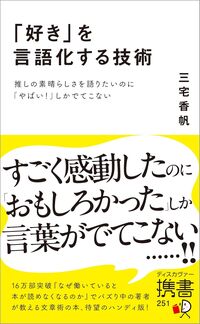
“I want to talk about how wonderful my oshi is, but all that comes out is ‘Yabai!’ (‘Amazing!’ or ‘I can’t even!’).” This subtitle accompanying book critic Kaho Miyake’s Suki o Gengoka Suru Gijutsu (“The Art of Putting What You Love into Words,” published under the Discover Keisho imprint in 2024) directly captures the frustration of not being able to articulate why we love the things and people we support.
This book introduces practical writing techniques for moving past that initial, speechless “yabai!” Its publisher announced in March 2026 that the title had surpassed 300,000 copies.
About This Book
Author Kaho Miyake is a book critic who is herself an avid fan of the Takarazuka Revue and idols. The book breaks down the process of putting what you love into words across specific occasions: social media posts, casual conversations with friends, fan letters, and long-form reviews. From there, it uses concrete sample sentences to teach readers how to craft words that are genuinely their own.
The central message at the heart of the book is simple: talking about your oshi is talking about your own life. Even when an impression feels ordinary or cliché at first glance, tracing back what specifically made you react gives you a foothold for conveying your personal experience.
As a practical handbook, its structure is welcoming and approachable. It starts with mindset shifts—“you don’t have to try to write well” and “step away from stock phrases for a moment”—before progressing step by step into concrete methods. A common pitfall of writing guides is finishing the book and still feeling unable to write, but this book avoids that trap by including plenty of examples of the author’s own passionate fan commentary. Readers can follow along and model their own writing directly on her examples as they read.
Kaho Miyake expresses the very first question that gets a stuck “yabai!” impression moving again as follows:
Before searching for impressive-sounding phrasing, try asking “why” toward your own reaction. When you trace whose specific action surprised you, or what memory from your own past it brought back, words emerge that are genuinely yours rather than borrowed expressions.
- 01Notice the initial "Yabai!" reactionRecognize the moment your heart is moved before trying to sound polished
- 02Ask "Why did I feel that way?"Trace the specific action that surprised you or the personal memory it evoked
- 03Jot down a note before checking social mediaRecord even a single memorable scene or line before reading others' eloquent posts
- 04Shape it for the occasionAdapt your notes for social media posts, casual chats, fan letters, or long reviews
Source: The Oshi Lab’s summary of the article
Standout Insight: Jot Down Your Own Notes Before Looking at Others’ Impressions
Among all the techniques in this book, the habit you can put to use most immediately starting today is jotting down your own impressions before looking at anyone else’s reactions.
After a live concert or a movie, many of us immediately open social media to read what other people thought. When we come across a clever or eloquent phrasing online, it is easy to want to overwrite our own feelings with that expression.
Instead, try reversing the order: write down your own notes first, and look at social media afterward. Your note does not have to be a long essay—simply saving a single memorable scene or line of dialogue lets you compare what you felt in the moment with the impressions you read later, and gives you a starting point for retracing your memories.
Editor-in-Chief’s Perspective
At The Oshi Lab, we read this book as a guide to understanding the process through which fans turn their personal experiences into words. When companies invite feedback or impressions from fans, the book also offers clues on how to ask what fans noticed and where their hearts were moved.
When considering “Promoters (whether support is spreading through fan word of mouth),” the final axis of the seven-part OSHI-MAP® framework, we want to look not just at the raw number of posts, but at what kinds of experiences fans are actually describing. That said, this book is not intended to compare or prove the effectiveness of word of mouth against advertising.
What companies can do is not decide what words fans should use, but prepare an environment where fans feel comfortable sharing their honest impressions. When inviting fan reactions, brands should avoid steering people toward pre-scripted praise, respect brief comments as well as differing interpretations, and leave ways to participate even for fans who choose not to post publicly. On that foundation, the impressions gathered can be used to improve products and experiences.
- 01Do not measure enthusiasm by eloquence or lengthRespect short comments and the choice not to post without ranking fans by word count
- 02Ask about concrete experiencesOffer prompts like which scene stood out so fans can retrace their own memories
- 03Clarify terms for sharing and brand useMake permissions and publication scope clear when setting up hashtags or comment spaces
Source: The Oshi Lab’s summary of the article
Notes from The Oshi Lab: Creating a Space Where Fans Can Speak in Their Own Words
- Do not measure enthusiasm by verbal skill — Respect short impressions as well as the choice not to post at all, and avoid ranking fans by how much they write.
- Ask about concrete experiences — Prepare prompts that help fans trace their own memories, such as asking which specific scene left the strongest impression.
- Clearly state the conditions for posting and secondary use — When setting up feedback hashtags or submission forms, make sure fans can clearly see what permissions apply and where their words might be featured if the company introduces them.
Who This Book Will Resonate With
- Fans who want to move beyond saying “Yabai!” — This is an ideal read for anyone who wants to convey their oshi’s appeal to people around them or try writing an impression blog or event report.
- People who want to preserve memories of their oshi — Putting feelings into words is not only for communicating with others. It is also an archiving technique for what you love, preserving what you felt at that venue for your future self.
- Corporate marketers looking to encourage fan word of mouth — It serves as a practical guide for professionals thinking about how to design welcoming prompts and spaces that make it easier for fans to talk about their experiences.
Book Information
| Title | Suki o Gengoka Suru Gijutsu: Oshi no Subarashisa o Kataritai noni “Yabai!” Shika Detekonai (“The Art of Putting What You Love into Words: When You Want to Talk About How Wonderful Your Oshi Is, But Only ‘Amazing!’ Comes Out”) |
| Author | Kaho Miyake |
| Publisher | Discover Twenty-One (Discover Keisho imprint) |
| Edition Reviewed Here | Discover Keisho paperback edition, released July 31, 2024 |
| ISBN | 978-4-7993-3083-8 |
This book is the compact paperback (keisho) edition of the 2023 title Oshi no Subarashisa o Kataritai noni “Yabai!” Shika Detekonai. On the publisher’s book page (in Japanese), the publisher notes that the content is identical apart from the physical trim size. If you already own the earlier edition, please check the edition details before purchasing. The announcement of the book surpassing 300,000 copies can also be confirmed on the same page.
Where to buy: Amazon (in Japanese) / Rakuten Books (in Japanese)
Related Reading on The Oshi Lab
In What Is Fukyo (Fan Proselytizing)?, we organize the language and interpersonal distance involved in sharing an oshi’s appeal with someone who does not know them yet. It serves as a practical companion for turning the techniques in this book not into pushy recommendations, but into natural openings that spark another person’s curiosity.
Reading What Is Oshi-Gatari (Talking About Your Oshi)? alongside this review helps clarify how talking about your oshi is less about crafting polished prose and more about deciding how much of your personal experience to share and with whom. For the corporate perspective, you can supplement these pieces with What Is Oshikatsu Marketing?.
Three Recommended Books for Readers of This Title
| Book Title | Why We Recommend It |
|---|---|
| Naze Hataraite Iru to Hon ga Yomenaku Naru no ka (“Why Working Makes Us Unable to Read Books,” by Kaho Miyake) (in Japanese) | A major bestseller by the same author. Its examination of social structures that leave people no time for what they love connects directly to the issue of fandom burnout (oshikatsu fatigue). |
| Yomitai Koto o, Kakeba Ii. (“Just Write What You Want to Read,” by Hironobu Tanaka) (in Japanese) | A modern classic on writing whose core principle—write what you yourself want to read—applies directly to talking and writing about your oshi. |
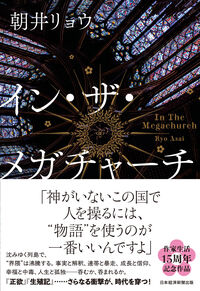
| In the Megachurch (In za Megachachi, by Ryo Asai) (in Japanese) | What happens when articulated fan passion becomes an entire economic zone? Experience that structure next through fiction (read our book review here). |
In Oshikatsu × Bookshelf, we take a deep dive into books on fandom and oshikatsu culture one title at a time.
Summary
For businesses, this book offers a way to understand how fans put their experiences into words. It encourages attention to the time each person needs to find their own expression, rather than simply seeking more reviews.
FAQ
What kind of book is Suki o Gengoka Suru Gijutsu?
It is a practical guide by book critic Kaho Miyake on how to talk about the appeal of your oshi (favorite idol, character, or creator) in your own words, published as a Discover Keisho paperback edition in 2024. The publisher announced in March 2026 that the book had surpassed 300,000 copies in print.
Can I put its advice into practice even if I am not confident in my writing?
Yes. The book walks through step-by-step methods tailored to different situations, including short social media posts, casual conversations, and fan letters. Techniques such as jotting down your own impressions before looking at other people's reactions also serve as a useful reference for companies designing approachable prompts and submission formats when inviting fan feedback.
Is this book also useful for corporate marketers?
It is a helpful reference for understanding what moves fans emotionally and how they put those feelings into words. While it can help teams design better prompts and spaces for gathering impressions, it is not a book that proves word of mouth is more effective than advertising. Reading it alongside What Is Oshikatsu Marketing? can help you think through how to apply these insights to marketing initiatives.