

Haruki Murakami Pilgrimage: 9 Places from Waseda and Jingu to Ashiya, Tonomine, Hiroshima, and Kure
The International House of Literature at Waseda University in Tokyo, commonly known as the Haruki Murakami Library, holds manuscripts and books deposited or donated by the author, along with tens of thousands of records. Visitors can explore the tunnel-like stairway bookshelves and an audio room where donated records can be played, all free of charge. To the south, Meiji Jingu Stadium is where Murakami watched the April 1978 season opener from the outfield and thought, “Maybe I can write a novel.”
In Ashiya, Hyogo Prefecture, a branch library that Murakami often visited as a boy still stands. Among filming locations for adaptations of his works, you can visit Tonomine Highlands in Kamikawa, Hyogo, where Watanabe and Naoko walk in the film Norwegian Wood. Waseda’s Okuma Garden was also a filming location for the same movie. Drive My Car features the Hiroshima City Naka Incineration Plant and International Conference Center Hiroshima, the port town of Mitarai in Kure, and the Akinada Bridge. Nine places connected to the writer’s life and works are included.
Nine places linked to the writer and his works, from Waseda, Jingu, and Ashiya to Tonomine Highlands, Hiroshima, and Kure
Haruki Murakami’s novels often feature unnamed cities and fictional institutions. This itinerary includes places he has discussed in essays and interviews, public facilities, and locations used in film adaptations.
① Haruki Murakami Library
Literary museum in Waseda Campus Building 4, renovated for this purpose. Visit the stairway bookshelves and recreated study free of charge.
More about the Haruki Murakami Library② Meiji Jingu Stadium
At a spring 1978 Swallows vs. Hiroshima game, Murakami was sitting in the outfield grass stands when he found the inspiration to begin writing his debut novel.
More about Meiji Jingu Stadium③ Ashiya Library
The Ashiya library Murakami frequented as a teenager. Its stone building recalls the old library in Hear the Wind Sing.
More about the Ashiya library④ Tonomine Highlands
Susuki grasslands where scenes with Watanabe and Naoko were filmed for the movie Norwegian Wood.
More about Tonomine Highlands⑤ Hiroshima City Naka Incineration Plant
Filming location for Drive My Car. The glass “Ecorium” corridor on the second floor is open to visitors without a reservation.
More about Hiroshima City Naka Incineration Plant⑥ Okuma Garden
Garden where scenes of Watanabe and Midori walking were filmed for Norwegian Wood.
More about Okuma Garden⑦ International Conference Center Hiroshima
Conference center in Peace Memorial Park. It served as the venue for the theater festival Kafuku participates in in Drive My Car.
More about International Conference Center Hiroshima⑨ Akinada Bridge
A 1,175-meter suspension bridge connecting the mainland with Shimokamagari Island. Driving scenes for Drive My Car were filmed here.
More about Akinada Bridge
1### Waseda University International House of Literature | The Haruki Murakami Library, with stairway bookshelves and records
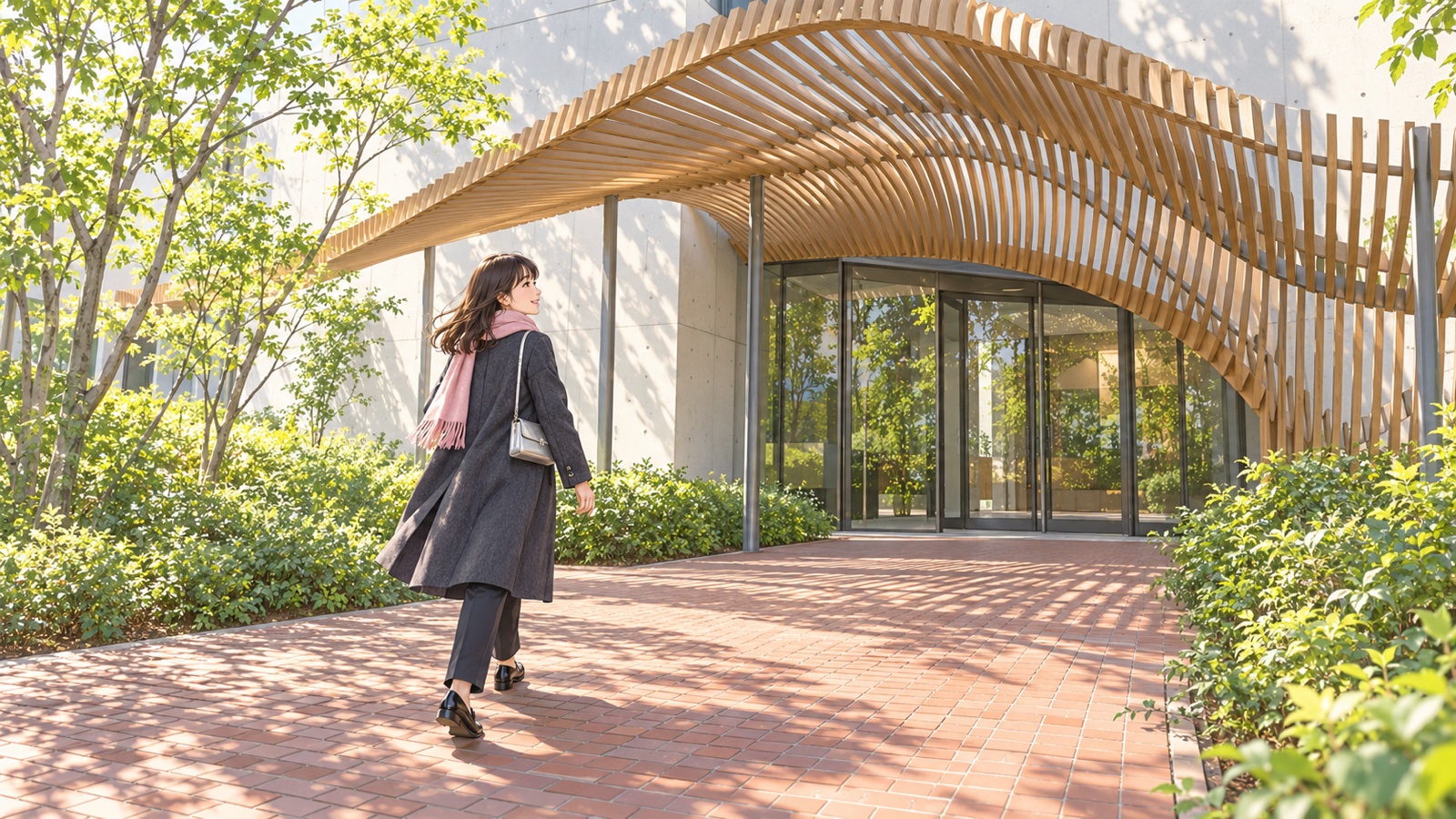
The International House of Literature at Waseda University, commonly known as the Haruki Murakami Library, opened on October 1, 2021, after Waseda Campus Building 4 was renovated. Murakami enrolled in Waseda’s First Faculty of Literature in 1968 and graduated in 1975. Architect Kengo Kuma designed the renovation, and the approximately ¥1.2 billion cost was funded by a donation from Tadashi Yanai, founder of Fast Retailing, the company behind Uniqlo.
The university announced plans to establish an international center for literary studies in November 2018. Murakami, Yanai, Kuma, and others attended the opening press conference on September 22, 2021. Murakami said, “I hope it can become a base for sharing new culture.” The library houses translations in many languages, as well as manuscripts, letters, and audiovisual materials deposited or donated to the university.
The building has five floors above ground and one basement floor; visitors mainly explore from B1 through the second floor. The feature that catches the eye on entering is the arched “stairway bookshelves” connecting the first floor and B1. Bookshelves line both sides of this tunnel-like space, and the books selected by BACH, led by Yoshitaka Haba, rotate over time.
The first-floor Gallery Lounge displays covers of Murakami’s works from his 1979 debut through 2021; many are first editions donated by the author. There is also a drawing Murakami made himself of the Sheep Man from A Wild Sheep Chase and a “Cocoon Chair” reading seat shaped like the cocoon made by the Little People in 1Q84.
The first-floor audio room plays records donated by Murakami, primarily jazz. Hiroshi Onodera, audio adviser and former editor-in-chief of Stereo Sound, selected and tuned the equipment. The room has also hosted record-listening sessions featuring Stan Getz, introduced by Murakami himself.
On B1, “Mr. Murakami’s Study” recreates the author’s actual study. The turntable, amplifier, and Hans J. Wegner chair are the same models used in the real room; visitors view the exhibit from outside. The adjacent lounge displays the grand piano used at the jazz cafe Peter Cat and a Saturn-like neon sign used in the stage production Kafka on the Shore.
Orange Cat, the B1 cafe also known as “Toko Neko,” is run by students and was named by Murakami. The name refers to Peter, his orange-colored pet cat, who inspired the name of his jazz cafe Peter Cat.
The second-floor exhibition room has hosted special exhibitions such as the 2023 “Anzai Mizumaru: His Work with Haruki Murakami” and the 2024 record-cover exhibition “The Wonderful World of David Stone Martin.” The studio on the same floor has hosted two recordings of Tokyo FM’s Murakami Radio.
As a special program for the library’s fifth anniversary, the exhibition “How Craftsmanship Breathes Life into Stories” is scheduled to run in the second-floor gallery from November 19, 2026, through May 23, 2027. It will present 12 deluxe editions of the essay What I Talk About When I Talk About Running, crafted over more than 10 years by three artisans based in Denmark—a copperplate engraver, a letterpress printer, and a bookbinder—as well as a pair of running shoes Murakami actually wore.
The library is open from 10 a.m. to 5 p.m. and is closed on Wednesdays and certain other days. Admission is free and reservations are not required, but groups of 21 or more must book in advance. The research library on the third floor is available three days a week to eligible users.
- Address
- Building 4, Waseda Campus, 1-6-1 Nishi-Waseda, Shinjuku-ku, Tokyo
- Connection to the writer’s work
- University facility housing manuscripts, first editions, and records deposited or donated by Haruki Murakami
- Hours and closing days
- 10 a.m.–5 p.m.; closed Wednesdays and other days; free admission, no reservation required
- Highlights
- Stairway bookshelves, audio room, recreated “Mr. Murakami’s Study,” and Orange Cat cafe
Sources:Official materials and facility guides
2### Meiji Jingu Stadium | The outfield where a double made him think, “I can write a novel”

Meiji Jingu Stadium at 3-1 Kasumigaoka-cho, Shinjuku-ku, Tokyo, is the home field of the Tokyo Yakult Swallows. On a clear afternoon, April 1, 1978, Haruki Murakami watched the Central League season opener between the Swallows and Hiroshima from a grassy slope in the outfield, drinking beer. He wrote that the outfield had no seats at the time and few spectators.
At 29, Murakami was running the jazz cafe Peter Cat, which he and his wife had opened in Kokubunji in 1974, after moving it to Sendagaya, closer to central Tokyo.
In the bottom of the first, the Swallows’ leadoff hitter, Dave Hilton, hit the first pitch from Hiroshima starter Yoshio Sotokoba into left field for a double. Murakami later recalled that at the sound of the bat he thought, “Maybe I can write a novel.” After the game, he took the train to Shinjuku to buy manuscript paper and a fountain pen. Thus began Hear the Wind Sing, his debut novel, which won the Gunzo New Writers’ Prize the following year, in 1979.
He wrote bit by bit at the kitchen table late at night after closing the cafe, finishing his first draft in about six months, around the end of baseball season. When revising, he tried writing the opening in English on an Olivetti typewriter and “translating” it into Japanese; he has said that this process led to his distinctive style. That year, the Swallows won the Central League for the first time, then defeated the Hankyu Braves to become Japan Series champions.
In spring 1979, an editor from Gunzo called to tell him that Hear the Wind Sing had been shortlisted for the new-writer award. In 1980, he wrote its sequel, Pinball, 1973, at the same kitchen table. He later sold the cafe and became a full-time writer.
Regarding redevelopment around the outer gardens, on a radio program broadcast June 25, 2023, he appealed for the preservation of both the loop route where he used to run and “the lovely Jingu Stadium, just as it is.”
- Address
- 3-1 Kasumigaoka-cho, Shinjuku-ku, Tokyo
- Connection to the writer’s work
- The stadium where Murakami decided to begin writing his debut novel, Hear the Wind Sing, while watching the season opener on April 1, 1978
- Highlights
- The outfield where he saw Hilton hit a double, and the surrounding Jingu Gaien running course
Source:Literary Hub / web Sportiva / Associated Press
3### Ashiya City Library, Uchide Branch | The registered cultural property library he visited as a boy

Haruki Murakami was born in Kyoto, grew up in Nishinomiya, Hyogo Prefecture, and moved to Ashiya at around age 12. As a boy, he often used Ashiya City Library; its Uchide Branch building is registered as a national tangible cultural property. His debut novel, Hear the Wind Sing, features an “old library,” and local guides have introduced this branch as a place that brings it to mind.
Murakami has said that the atmosphere of the former Ashiya City Library resembles the Komura Memorial Library in Kafka on the Shore. Uchide Park lies behind the branch. In Hear the Wind Sing, it is depicted as “the park with the monkey cage.” The cage where monkeys were once kept still remains in the park.
The exterior, built from roughly laid granite blocks, evokes an Italian Renaissance palace. The building originally housed a bank in Osaka. It was purchased by gold-vault and Buddhist-altar dealer Yohee Matsuyama and moved to its current site in 1930. Ashiya City bought the land and building in 1952, and opened the site as its municipal library in 1954.
It was registered as a national tangible cultural property on January 8, 2009. Interest in the city’s modern architecture had grown after four museums at the foot of Mount Rokko jointly held the “Hanshinkan Modernism” exhibition in 1997; that interest helped lead to the registration.
The mouth of the Ashiya River, about one kilometer south of the library, is the sea that the narrator “I” and his friend “the Rat” first head toward in Hear the Wind Sing. In 1970, a beach remained south of the seawall, but land reclamation beginning in 1971 changed the coastline. A Wild Sheep Chase depicts a roughly 50-meter remnant of the old shoreline.
- Address
- Uchide-Kozuchi-cho, Ashiya, Hyogo Prefecture
- Connection to the writer’s work
- Branch library Murakami visited as a boy, recalling the old library in Hear the Wind Sing
- Architectural feature
- National tangible cultural property built of granite and moved to its current site in 1930
- Highlights
- The former monkey cage in Uchide Park behind the library and the mouth of the Ashiya River about one kilometer to the south
Sources:Kobe Shimbun — Ashiya / Ashiya City — Modern architecture / Ashiya Public Relations
4### Tonomine Highlands | The susuki grasslands Watanabe and Naoko walked through in Norwegian Wood
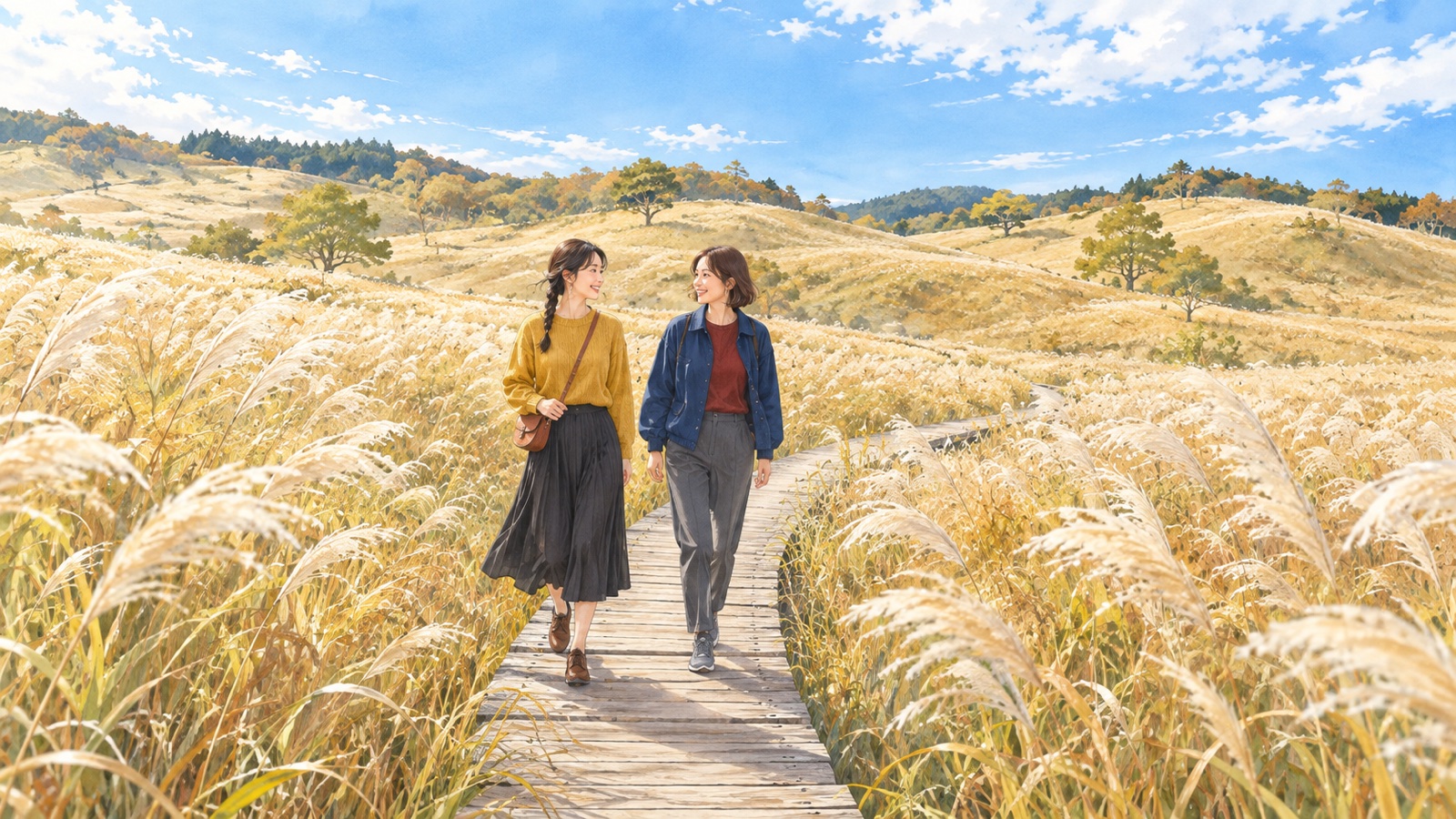
Tonomine Highlands in Kawakami, Kamikawa, Kanzaki District, Hyogo Prefecture, was a filming location for the movie adaptation of Norwegian Wood, the novel published in 1987. Kenichi Matsuyama played protagonist Watanabe, and Rinko Kikuchi played Naoko, his girlfriend who is struggling with her mental health and recuperating. The scene where Watanabe and Naoko part ways was used on the film poster, helping bring the highlands to wider attention in Japan and abroad. The film was directed by Tran Anh Hung.
Filming took place in three sessions, from autumn through winter 2008 and again the following summer. Kazuhisa Yamashita, then an assistant manager in Kamikawa Town’s Regional Development Division, led location scouting and coordination. He handled everything from permits and equipment procurement to coordination with local residents, and later chronicled the process in his book I Am in the Movie under the name Ryuji Yamaga.
For the winter shoot, preparations assumed that the roughly 90-hectare plateau would be covered in snow. But rain melted it, leaving dead susuki grass exposed. The crew was told that failing to shoot would cause losses of more than ¥20 million, and they anxiously hoped for snow. The next day, the highlands were covered in a world of white. Yamashita described the scene in his book as a “miracle.”
Tonomine Highlands is part of the Setsuhiko Mineyama Prefectural Natural Park and is one of the Kansai region’s major susuki grasslands. The usual viewing season runs from mid-October to mid-November, with the fields turning golden around early November. The elevation is about 800–900 meters; in summer, the plateau is covered in green grass.
At Tonomine Nature Exchange Center, near the entrance to the highlands, displays include a filming-location map and photographs from the shoot. The adjoining observation terrace looks out over the grasslands. Admission is free, but from mid-September to mid-November, a cash fee of ¥500 per passenger vehicle applies for nature conservation management and parking. In 2026, the highland bus from JR Teramae Station runs on twelve dates between October 24 and November 14, with online reservations required at least three days in advance.
- Address
- 801 Kawakami, Kamikawa, Kanzaki District, Hyogo Prefecture
- Connection to the work
- Filming location for scenes of Watanabe and Naoko walking in the film Norwegian Wood
- Highlights
- About 90 hectares of susuki grassland and Tonomine Nature Exchange Center, with location photographs and maps on display
- Access and fees
- Free admission; passenger-car parking costs ¥500 from mid-September to mid-November; a reservation-only bus runs from JR Teramae Station in autumn
Sources:Kobe Shimbun — Tonomine Highlands / TANOSU / Waseda University — Biography
5### Hiroshima City Naka Incineration Plant | The building Misaki takes Kafuku to in Drive My Car
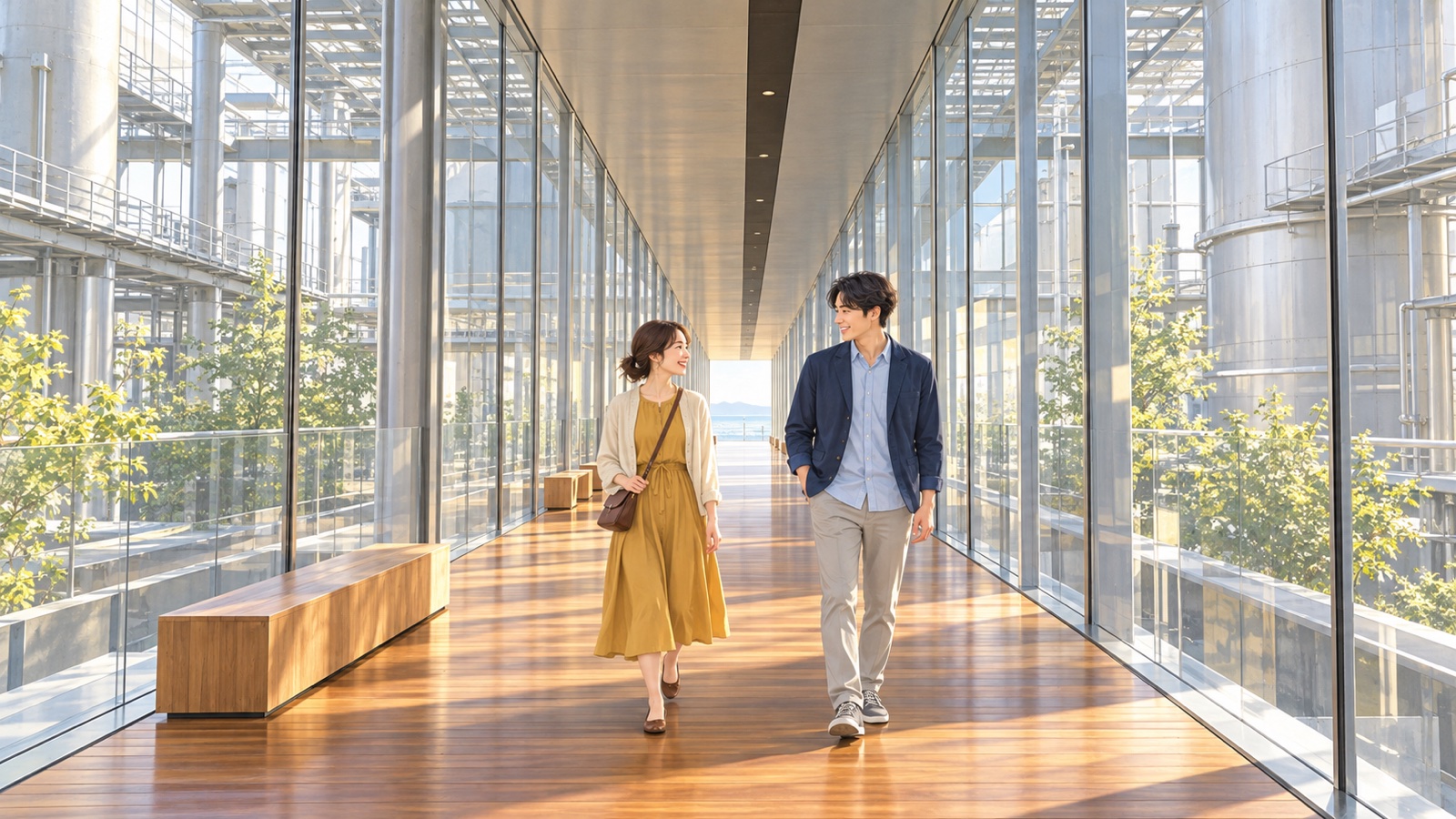
Naka Incineration Plant at 1-5-1 Minami-Yoshijima, Naka-ku, Hiroshima, is a waste-treatment facility designed by architect Yoshio Taniguchi. It was used as a filming location for Ryusuke Hamaguchi’s 2021 film Drive My Car, based on a story in the collection Men Without Women. Hidetoshi Nishijima plays Yusuke Kafuku, a stage actor and director who has lost his wife, and Toko Miura plays Misaki, the chauffeur who drives Kafuku’s red Saab. The film runs about three hours and incorporates Chekhov’s play Uncle Vanya.
In the film, the Naka plant is a place Misaki likes and takes Kafuku to visit. The building was also used on the film poster. The story was set in Tokyo, while filming was initially planned for Busan, South Korea. The COVID-19 pandemic forced the production to abandon plans to shoot in Busan, and in mid-September 2020, Hamaguchi and his team visited Hiroshima. Ms. Nishizaki of the Hiroshima Film Commission showed them the plant during a location scout; she was also a great admirer of the building.
The plant stands along the extension of the “Axis of Peace,” which connects the Atomic Bomb Dome with the cenotaph, and its second floor is open to preserve that axis. Hearing this, the director was struck by the thought, “Even a garbage plant embodies the principles of peace,” which became a major reason to film in Hiroshima. About two-thirds of the movie was filmed in Hiroshima Prefecture.
The exterior, the central glass corridor “Ecorium” on the second floor, and the greenery on the south side are open to visitors daily from 9 a.m. to 4:30 p.m., except December 29 through January 3; no application is required. The Seto Inland Sea stretches out in front of the Ecorium. The neighboring green space and seawall at the plant, commonly known as Yoshijima Fishing Park, are a fishing area and were also used for filming. From the south exit of JR Hiroshima Station, take Hiroshima Bus route 24 to Minami-Yoshijima and walk about five minutes.
- Address
- 1-5-1 Minami-Yoshijima, Naka-ku, Hiroshima, Hiroshima Prefecture
- Connection to the work
- Facility Misaki takes Kafuku to in the film Drive My Car
- Visiting hours
- The second-floor glass corridor “Ecorium” and green space are open daily from 9 a.m. to 4:30 p.m., except during the year-end and New Year holidays; no reservation required
- Access
- Take Hiroshima Bus route 24 from the south exit of JR Hiroshima Station to Minami-Yoshijima, then walk about five minutes
Sources:Daily Sports / Shukan Josei PRIME — Hiroshima / Dive! Hiroshima — Filming location / Hiroshima City — Plant tours / Hiroshima City — Naka Ward edition
6### Waseda University’s Okuma Garden | The garden where Watanabe and Midori walk in Norwegian Wood

Okuma Garden, next to Okuma Auditorium on Waseda Campus, was a filming location for the 2010 movie Norwegian Wood. Scenes of Watanabe and Midori, a student at the same university, walking side by side and Midori lying down on a bench were filmed here. Midori is played by Kiko Mizuhara. The garden scenes were filmed at the end of production, and the wrap party was held at Okuma Garden House facing the garden.
Director Tran Anh Hung visited the campus and chose Waseda, judging that it matched the atmosphere of the novel. In Classroom 453 of Building 34 on Toyama Campus, a scene was filmed in which student activists burst into a lecture; Shigesato Itoi played the professor. The entrance to the former Building 33 was used for a scene where Watanabe speaks to Midori and she responds curtly. It was the first scene Mizuhara acted in front of a camera.
Okuma Garden was created between 1830 and 1844, during the Tenpo era, as a daimyo garden for the Ii family of the Hikone domain and the Matsudaira family of the Takamatsu domain. Shigenobu Okuma bought it as a second residence in 1874. After his death in 1922, it was donated to the university. The garden was devastated in the air raids of May 1945, but today it has largely returned to its former appearance.
The former gatekeeper’s lodge of the Okuma residence, completed in 1902 and considered the oldest building at the university, remains in the garden. The garden is open on days when classes are held: 9 a.m.–5 p.m. from April through September and 9 a.m.–4:30 p.m. from October through March. The film’s Japan premiere was held in neighboring Okuma Auditorium on November 23, 2010.
- Address
- Next to Okuma Auditorium, Waseda Campus, 1-104 Totsuka-machi, Shinjuku-ku, Tokyo
- Connection to the work
- Filming location for scenes of Watanabe and Midori walking in the movie Norwegian Wood
- Opening hours
- 9 a.m.–5 p.m. on days classes are held; until 4:30 p.m. from October through March
- Highlights
- Lawn and former gatekeeper’s lodge of the Okuma residence, completed in 1902
Sources:Waseda Weekly — Filming location / Waseda Weekly — Okuma Garden
7### International Conference Center Hiroshima | The theater festival venue where Kafuku is introduced to Misaki
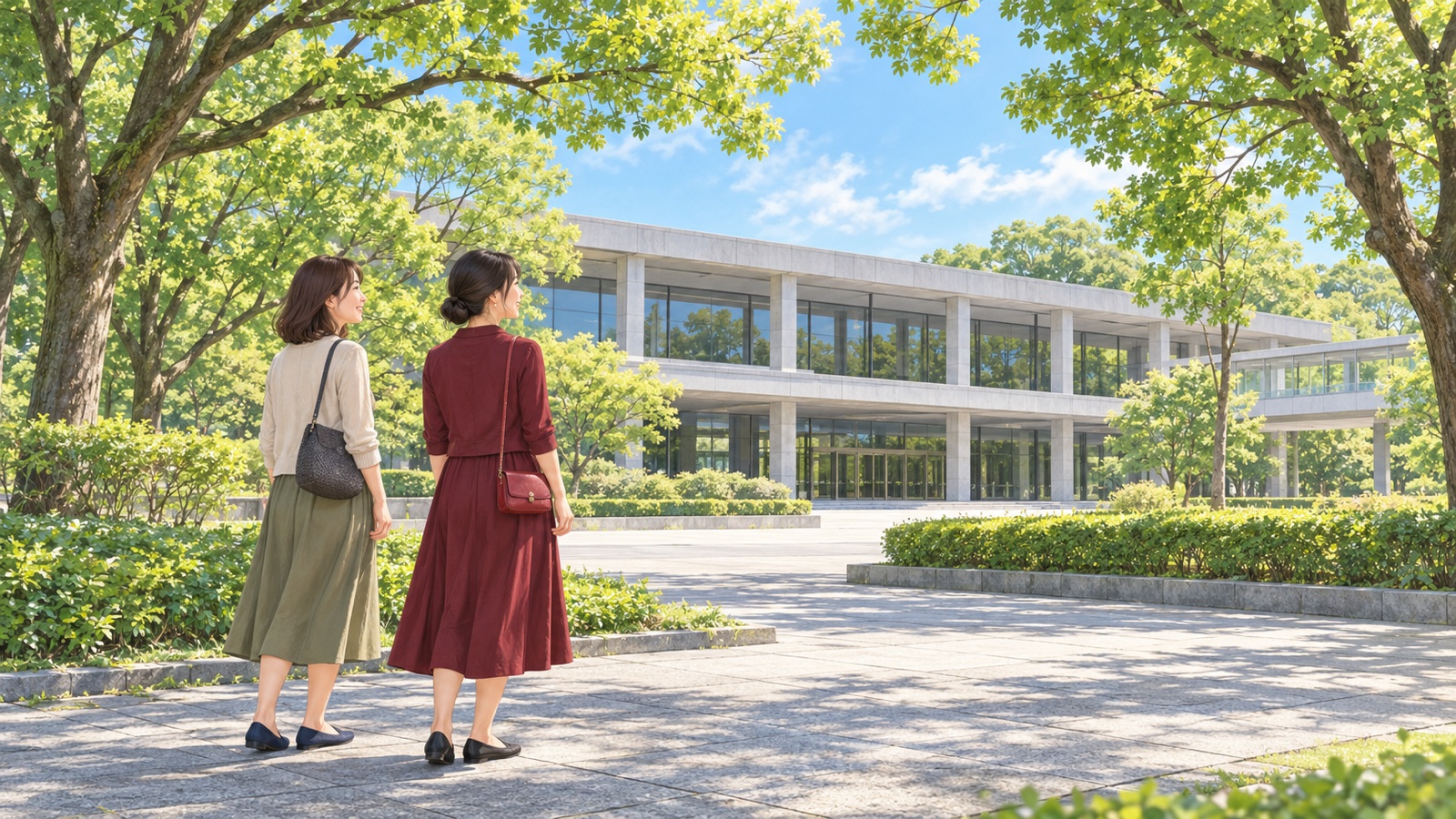
International Conference Center Hiroshima, at 1-5 Nakajima-cho, Naka-ku, Hiroshima, stands in Peace Memorial Park and appears as the international theater festival venue in Drive My Car. Kafuku is introduced to his chauffeur, Misaki, here, and auditions and rehearsals for the festival also take place in the building. The red Saab stops in front of the conference center as well.
A venue with a hall was needed for the theater festival. JMS Aster Plaza in Kako-machi, Naka Ward, was also considered, but the conference center was chosen because it has a rotary that allows a car to pull up in front of the building.
The building replaced Hiroshima City Public Hall, designed by Kenzo Tange and built in 1955, in 1989, the centennial year of Hiroshima City’s municipal government. It has also been selected as one of Japan’s Top 100 Public Buildings. The large Phoenix Hall has 1,504 seats and is still used for performances and conferences.
The actors’ outdoor rehearsals were also filmed in the park. The fallen leaves covering the stage during the climactic rehearsal were gathered with help from the park’s cleaning staff on the day of filming. Director Hamaguchi also took care with the distance from the Atomic Bomb Memorial Mound.
- Address
- Inside Peace Memorial Park, 1-5 Nakajima-cho, Naka-ku, Hiroshima, Hiroshima Prefecture
- Connection to the work
- Venue of the international theater festival Kafuku attends in Drive My Car
- Highlights
- The rotary where the red Saab arrives and departs, and Peace Memorial Park, where the outdoor rehearsal was filmed
Sources:Jorudan — Hiroshima filming locations / Dive! Hiroshima — Filming location / tsunagu Japan / International Conference Center Hiroshima — Facility guide / International Conference Center Hiroshima — Halls / Daily Sports
8### Mitarai Historic Preservation District, Kure | The island port town where Kafuku stays during his time in Hiroshima
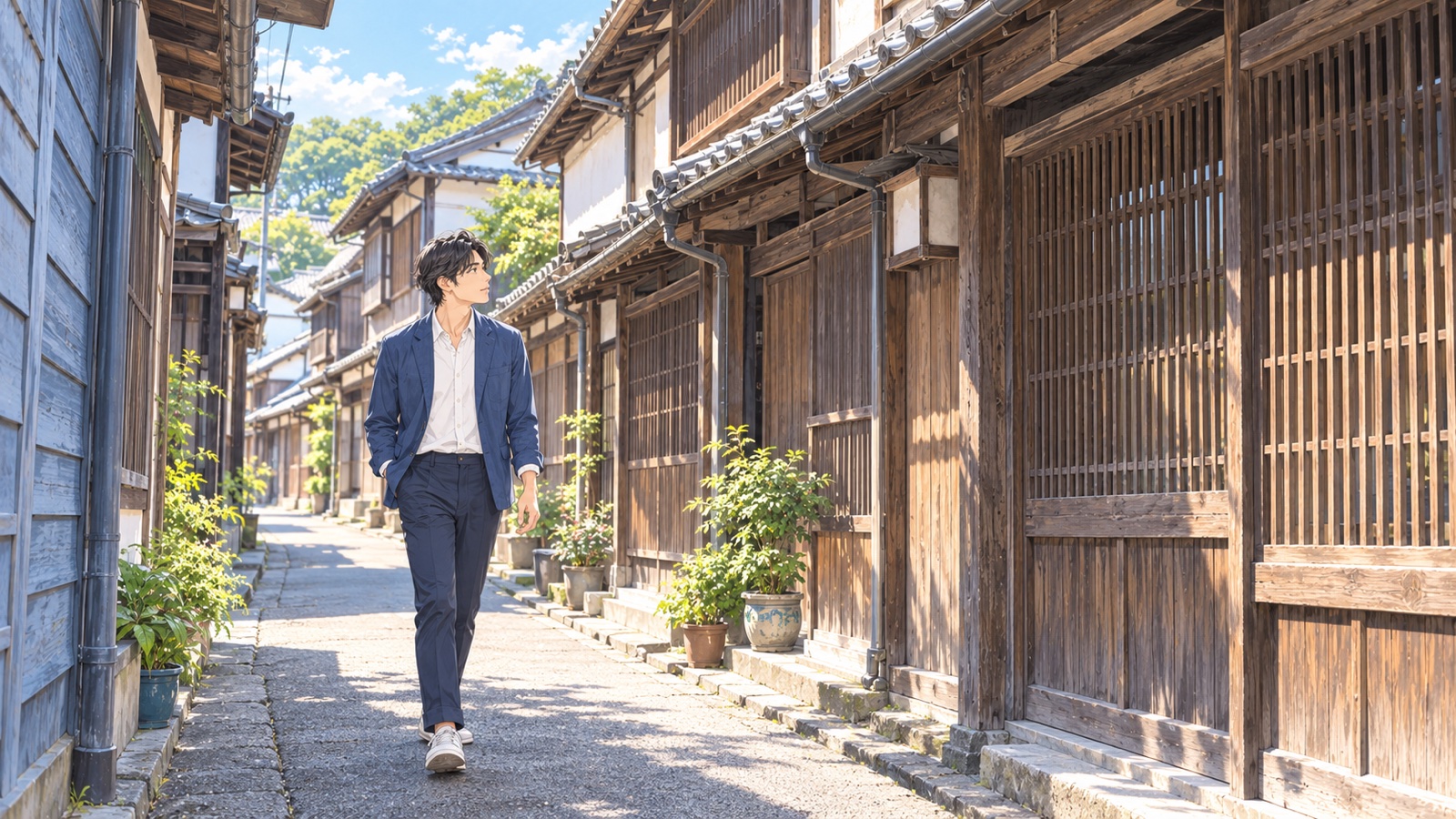
Mitarai in Toyotama-cho, Kure, Hiroshima Prefecture, is a port town on Osakishimojima Island in the Seto Inland Sea. In Drive My Car, it appears as the town where Kafuku stays during the theater festival. Misaki drives him in the red Saab between the rehearsal venue and the inn on the island.
Kangetsuan Shinho, a private inn limited to one group per day and housed in a building from the Edo period, was used as Kafuku’s lodging. The filming began after members of the film crew saw the view from the inn and asked, “Can we film here?”
Mitarai took shape in the mid-17th century and flourished in the Edo period as a port where ships waited for favorable winds and tides. It continued to serve as a port of call in the Seto Inland Sea until the early Showa period, and in 1994 was designated a national Important Preservation District for Groups of Traditional Buildings. Its harbor retains the great breakwater, stone bridge, tall lighthouse, stone steps, and stone seawall. Narrow lanes weave among merchants’ homes, teahouses, and sailors’ inns.
The Sanyo Bus Tobishima Liner was discontinued on March 31, 2024. For public transport access, take a train from JR Kure Station to JR Hiro Station, then a Setouchi Sanko bus to Mitarai Port.
- Address
- Mitarai, Toyotama-cho, Kure, Hiroshima Prefecture; Osakishimojima Island
- Connection to the work
- Port town where Kafuku stays during his time in Hiroshima in Drive My Car
- Highlights
- The private inn Kangetsuan Shinho used for filming and the lanes of the preserved district, where the great breakwater, tall lighthouse, and stone steps remain
- Access
- Train from JR Kure Station to JR Hiro Station, then a Setouchi Sanko bus to Mitarai Port; check current timetables
Sources:Kure City Newsletter / Dive! Hiroshima — Mitarai / tsunagu Japan / Jorudan — Hiroshima filming locations
9### Akinada Bridge | Gateway to the Tobishima Kaido, where the red Saab crosses to the island
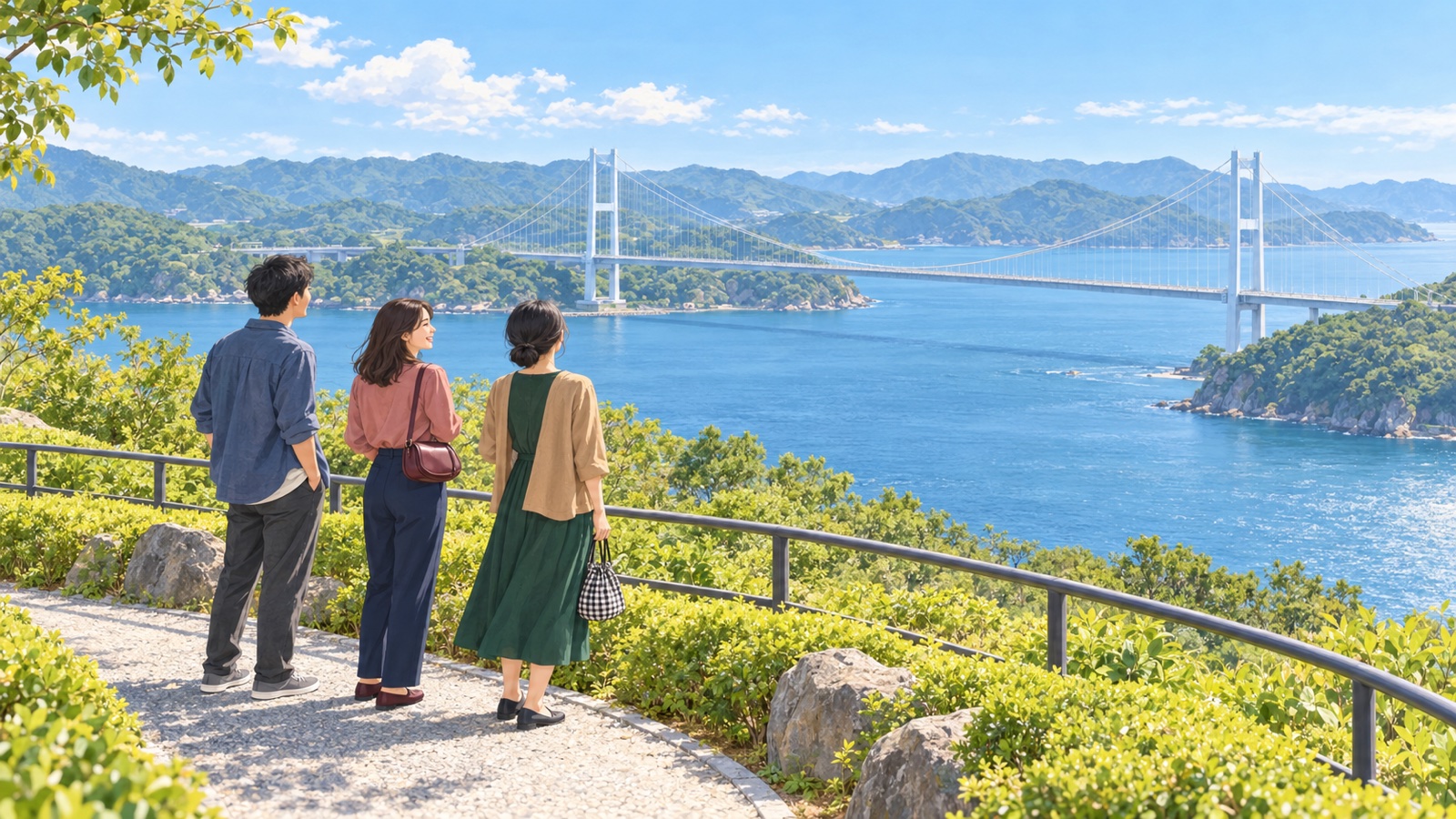
Akinada Bridge is a suspension bridge connecting the mainland at Kawajiri-cho, Kure, with Shimokamagari Island. In the film, it appears in a scene where Misaki drives Kafuku in the red Saab toward the inn on the island.
The bridge opened on January 18, 2000. It is 1,175 meters long, and its towers are 119 meters high. Among prefectural-road bridges in Japan, excluding the Honshu–Shikoku bridges, it is the largest suspension bridge.
The bridge is the gateway to the Akinada Tobishima Kaido, a route linking islands by bridges; the route continues to Osakishimojima, where Mitarai is located. Director Hamaguchi said it had become difficult to freely film cars driving in Tokyo and that he prioritized locations where a car could be driven. Crossing the bridge requires a toll.
- Address
- Between Kawajiri-cho and Shimokamagari Island, Kure, Hiroshima Prefecture
- Connection to the work
- Filming location for the scene in Drive My Car where the red Saab heads toward the inn on the island
- Highlights
- Toll suspension bridge, 1,175 meters long, at the gateway to the Akinada Tobishima Kaido
Sources:Hiroshima Prefecture — Akinada Bridge / Kure City Newsletter / Jorudan — Hiroshima filming locations / tsunagu Japan
Learn more about the works | From the early trilogy to Drive My Car
These places are connected to works from different periods, from Murakami’s debut to film adaptations. Below are their storylines, main characters, and how each setting is portrayed.
Summaries of six works connected to the locations
Hear the Wind Sing
Murakami’s 1979 debut novel. It follows 18 days in the summer of 1970, when the college student “I” returns from Tokyo to his seaside hometown and spends time with his friend, the Rat.
Pinball, 1973
The sequel to Hear the Wind Sing, written the following year at the kitchen table while Murakami was running a jazz cafe. “I” and the Rat appear again.
A Wild Sheep Chase
A novel that won the Noma Literary New Face Prize in 1982. It features the Sheep Man and depicts a remnant of the old shoreline in “I”’s hometown, cut off by land reclamation.
Norwegian Wood
The 1987 novel looks back on the university years of 37-year-old “I,” Watanabe, and his days with Naoko, his former girlfriend, and Midori, a student at the same university. It was adapted into a film in 2010.
Kafka on the Shore
The 2002 novel alternates between the story of 15-year-old Kafka Tamura, who runs away from home and takes shelter in a private library in Takamatsu, and the journey of Mr. Nakata, an elderly man who can talk to cats.
Drive My Car
A story in the 2014 collection Men Without Women. The widowed actor Kafuku and his taciturn driver Misaki exchange words in the car.
Sources:Waseda University — Biography / Kobe Shimbun — Ashiya / Literary Hub
“I” and the Rat, Watanabe and Naoko and Midori, Kafuku and Misaki
“I” and the Rat
The narrator “I” and his friend the Rat from the early trilogy. The sea they first head toward is at the mouth of the Ashiya River.
Watanabe
The narrator of Norwegian Wood. In the film, he is played by Kenichi Matsuyama.
Naoko
Watanabe’s girlfriend, who struggles with her mental health and recuperates. In the film, she is played by Rinko Kikuchi.
Midori
A student at the same university as Watanabe. In the film, she is played by Kiko Mizuhara.
Yusuke Kafuku
Stage actor and director. In the film, two years after the death of his wife, Oto Kafuku, he travels to Hiroshima for a theater festival. Played by Hidetoshi Nishijima.
Misaki Watari
Kafuku’s taciturn chauffeur, who drives his red Saab. Played by Toko Miura; she shows Kafuku the Naka Incineration Plant as a place she likes.
Sources:Official film website / Waseda Weekly — Filming location / Kobe Shimbun — Tonomine Highlands / Dive! Hiroshima — Filming location
Unnamed cities in the novels and settings changed for the films
The hometown of “I” in the early trilogy is depicted without a name. The city’s long, narrow shape between the sea and mountains resembles Ashiya, which extends about 2.5 kilometers east to west and 9.6 kilometers north to south. The film Hear the Wind Sing, released December 19, 1981, was directed by Kazuki Omori, a junior-high-school classmate of Murakami’s, and filmed in Kobe and the Hanshin area.
The novel Norwegian Wood also does not name the university. In its film adaptation, real landscapes were used for locations left unspecified in the book. Tran Anh Hung chose Waseda’s campus, while Ryusuke Hamaguchi chose Hiroshima and the islands of the Seto Inland Sea.
The short story Drive My Car is set in Tokyo; the Hiroshima theater festival is a plotline added for the film. When the story first appeared in a magazine in 2013, Misaki’s hometown was named after a real town in Hokkaido. After a local resident pointed this out, the collected edition changed it to the fictional “Kamijunitaki Village.” The film shot scenes from Misaki’s hometown in Akabira, Hokkaido. The Uncle Vanya performed in the film is a multilingual production mixing Japanese, Mandarin, Korean Sign Language, and other languages; the film as a whole uses nine languages.
Sources:Official materials and facility guides
Creative background | Writing and running, two film adaptations, and a fifth-anniversary exhibition
The writer’s daily habits, on-location filming for two movies, and the fifth-anniversary program at Waseda’s International House of Literature come together here.
Writer Haruki Murakami | A novelist who has kept running since autumn 1982
After becoming a full-time writer, Murakami began running in autumn 1982, around the time he finished A Wild Sheep Chase. Since then, running and writing have been inseparable parts of his life. His original memoir What I Talk About When I Talk About Running, published by Bungeishunju on October 15, 2007, recounts experiences including his first full marathon in Athens, the Boston Marathon, the 100-kilometer Saroma Lake Ultramarathon, and triathlons.
In 1981, he was also recognized for translating My Lost City, a collection of works by F. Scott Fitzgerald. He moved his base to Europe in 1986, and Norwegian Wood, published the following year, received acclaim around the world.
Sources:Bungeishunju — Books / Waseda University — Biography
The film Norwegian Wood | Murakami’s notes on the first draft of the screenplay
Vietnamese-born director Tran Anh Hung, who lives in France, has said that he read the French translation of the novel around 1994 and was deeply moved by it. After he showed Murakami the first draft of the screenplay, Murakami returned it with a memo full of comments. The cinematographer was Lee Ping-bing, who is from Taiwan.
In September 2010, the film had its world premiere in the competition section of the Venice International Film Festival, where the audience gave it an extended standing ovation. Jonny Greenwood, guitarist for British rock band Radiohead, composed the music. He said he wanted the score to express the imperfections of characters who had not yet fully grown up. The film opened on December 11 across about 300 theaters nationwide.
Sources:Eiga.com — Venice / Eiga.com — Music
The film Drive My Car | 179 minutes combining elements from three stories
Director Ryusuke Hamaguchi chose “Drive My Car” from the collection Men Without Women and also incorporated elements from “Scheherazade” and “Kino,” two other stories in the same book. He has said that he added “Scheherazade” to fill out the portrayal of the wife and “Kino” while considering where the protagonist would end up.
The producer asked him to keep the film to 140 minutes, but the finished movie runs 179 minutes. The car scenes took longer than expected, and Hamaguchi also prioritized creating circumstances in which the actors could give strong performances. In addition to the screenplay, he prepared documents describing the characters’ pasts and feelings to tell the actors about Misaki’s history and the relationship between Kafuku and his wife.
Filming in Hiroshima took place around November 2020 at Peace Memorial Park, the Naka Incineration Plant, and the Ujina area. In July 2021, the film became the first Japanese movie to win the screenplay award at the Cannes Film Festival. The following year, it received four Academy Award nominations, including Best Picture and Adapted Screenplay, and won the award for International Feature Film.
You can play this video in the official video at the top of this page ↑
Sources:Bungakukai — Interview / Bunshun Online — Part 1 / Bunshun Online — Part 2 / Hiroshima City — Awards / Kure City Newsletter / Film official website — Trailer
Jazz cafes and radio | Libraries and music connect the works with the facilities
Libraries and records appear repeatedly in Haruki Murakami’s works. Before becoming a writer, he ran the jazz cafe Peter Cat; since 2018, he has also worked as a disc jockey on the radio program Murakami Radio.
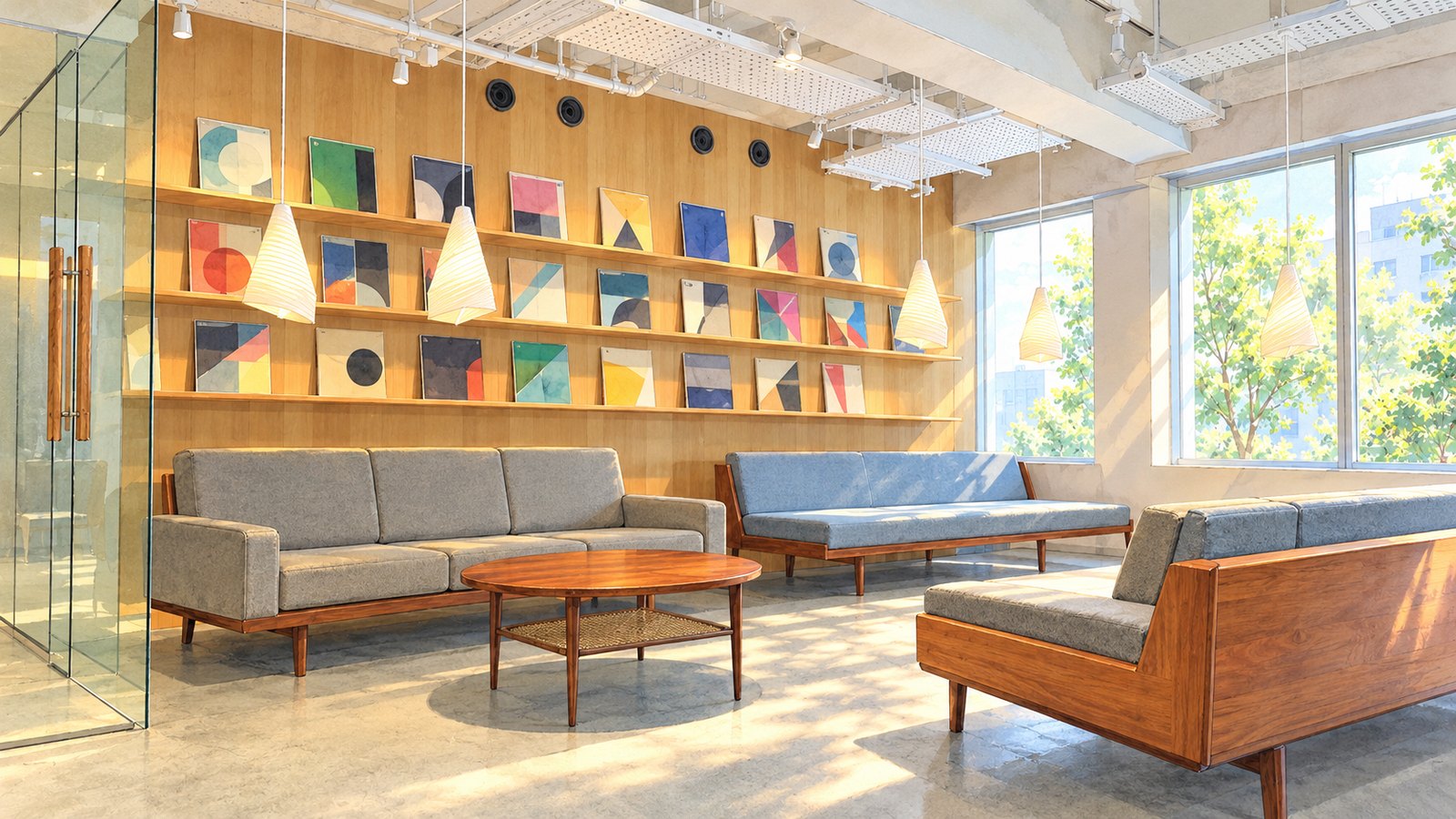
The plan for the recreated study at the Waseda library is to gradually fill the record shelves along both walls with records donated by Murakami. In spring 2022, the collection exhibition “Engraving Sound and Words: Jazz and Literature” was also held.
Sources:Bijutsu Techo / International House of Literature — Exhibition archive / Waseda University — Biography
October 2026 public recording and November broadcast and discussion
On October 1, 2026, the fifth anniversary of the library’s opening, a public recording of TOKYO FM’s Murakami Radio: A Night of Translation Special — Learning the Subjunctive through Music was held at the Ono Memorial Auditorium on Waseda Campus, co-hosted with TOKYO FM. Haruki Murakami and Miu Sakamoto appeared, with translator and library adviser Motoyuki Shibata as a guest. The episode is scheduled to air on TOKYO FM at 2 p.m. on November 3.
On November 27, former track-and-field athlete Dai Tamesue and library adviser Robert Campbell are scheduled to discuss “A Runner’s Loneliness and Fleeting Joy.”
Sources:International House of Literature — Fifth anniversary / International House of Literature — Murakami Radio / International House of Literature — Fifth-anniversary exhibition
From his debut through the fifth anniversary of the Haruki Murakami Library
This timeline organizes milestones from Murakami’s birth in 1949 and his 1979 debut through major novel publications, film adaptations, the opening of Waseda University’s International House of Literature, and its fifth-anniversary program.
- 1949
January 12 Born in KyotoWriter - 1974
Opens the jazz cafe Peter Cat in KokubunjiMusic - 1978
April 1 Decides to write a novel while watching the season opener at Jingu StadiumWriter - 1979
Wins the Gunzo New Writers’ Prize for Hear the Wind SingNovel - 1981
December 19 Kazuki Omori’s film Hear the Wind Sing is releasedFilm - 1982
Wins the Noma Literary New Face Prize for A Wild Sheep Chase; begins running in autumnNovel - 1987
Publishes Norwegian WoodNovel - 2007
October 15 Publishes What I Talk About When I Talk About RunningMemoir - 2009
January 8 Ashiya City Library’s Uchide Branch is registered as a national tangible cultural propertyFacility - 2010
December 11 Tran Anh Hung’s film Norwegian Wood is releasedFilm - 2021
July Drive My Car wins the screenplay award at the Cannes Film FestivalFilm - 2021
October 1 Waseda University’s International House of Literature opensFacility - 2022
Drive My Car wins the Academy Award for International Feature FilmFilm - 2024
December 17 Receives an honorary doctorate from Waseda UniversityWriter - 2026
November 19 The International House of Literature’s fifth-anniversary special exhibition is scheduled to openFacility
Sources:Official materials and facility guides
Research note | A business perspective: Separating the preservation of research materials from reader spaces
Waseda University’s International House of Literature is a research facility that preserves manuscripts and books, while also opening its stairway bookshelves, audio room, and cafe inspired by a jazz cafe to the public. It serves both visitors researching a writer’s materials and readers who want to spend time with books and music they enjoy.
The research library is open on limited days and has a different access policy from the public areas. A useful model is not to make every rare item freely accessible, but to combine a system for consulting materials with places where people can comfortably spend time. Bringing the writer’s favorite music and memories of his cafe into the space can give readers a reason to visit even if they do not have specialist knowledge of the materials.
Related research article:Travel companies and tourism-product design
Sources
- International House of Literature official website
- Bijutsu Techo
- Literary Hub
- Kobe Shimbun — Ashiya
- Kobe Shimbun — Tonomine Highlands
- Kobe Shimbun — Opening press conference
- Kobe Shimbun — Kazuki Omori
- Hiroshima City — Plant tours
- Hiroshima City — Awards
- Shukan Josei PRIME — Hiroshima
- Shukan Josei PRIME — Akabira
- Daily Sports
- Dive! Hiroshima — Filming location
- Dive! Hiroshima — Mitarai
- Jorudan — Hiroshima filming locations
- tsunagu Japan
- Kure City Newsletter
- Hiroshima Prefecture — Akinada Bridge
- International Conference Center Hiroshima — Facility guide
- International Conference Center Hiroshima — Halls
- Official film website
- Bungakukai — Interview
- Bunshun Online — Part 1
- Bunshun Online — Part 2
- Bunshun Online — Film-within-the-film
- Eiga.com — Venice
- Eiga.com — Music
- Jorudan — Hear the Wind Sing
- Waseda Weekly — Filming location
- Waseda Weekly — Okuma Garden
- Bungeishunju — Books
- Waseda University — Opening
- International House of Literature — Floors
- International House of Literature — About
- International House of Literature — Exhibition archive
- International House of Literature — Fifth-anniversary exhibition
- International House of Literature — Fifth anniversary
- International House of Literature — Murakami Radio
- Waseda University — Biography
- Ashiya City — Modern architecture
- Ashiya Public Relations
- TANOSU
- Hiroshima City — Naka Ward edition
- web Sportiva
- Associated Press
- Waseda University International House of Literature official channel — Fifth-anniversary program video
- Kodansha — Hear the Wind Sing
- Bungeishunju — Men Without Women
Dates, opening hours, and ticket information reflect the time of writing. Check each official website for the latest information before visiting.
FAQ
Do I need a reservation to visit the Haruki Murakami Library?
Admission is free and no reservation is required. The library is open from 10 a.m. to 5 p.m. and is closed on Wednesdays and certain other days. Groups of 21 or more must book in advance.
What can I see at the Haruki Murakami Library?
Visitors can see the stairway bookshelves connecting the first floor and basement, an audio room where you can listen to records donated by Murakami, a gallery lounge displaying covers of his books from his debut onward, and a recreated study.
Why is Meiji Jingu Stadium connected to Haruki Murakami?
Murakami wrote that while watching the April 1978 Central League season opener between the Swallows and Hiroshima from the outfield grass, he thought, “Maybe I can write a novel,” at the moment Dave Hilton hit a double. He went on to write his debut, Hear the Wind Sing.
How is the Ashiya library connected to his works?
Murakami often used Ashiya City Library as a boy. The Uchide Branch is a stone building that recalls the old library in Hear the Wind Sing. He has also said that the atmosphere of the former Ashiya City Library resembles the library in Kafka on the Shore.
When is the best time to see the susuki grass at Tonomine Highlands?
The usual viewing season is from mid-October to mid-November, with the fields turning golden around early November. Parking is charged in autumn, and a reservation-only highland bus from JR Teramae Station operates during part of the season.
Can visitors see the filming locations from Drive My Car?
The exterior of Hiroshima City’s Naka Incineration Plant and its second-floor Ecorium corridor are open daily from 9 a.m. to 4:30 p.m., except during the year-end and New Year holidays; no reservation is required. For unaccompanied tours of the waste-treatment facilities, individuals and groups of fewer than 10 can register without a reservation at the sixth-floor office from 9 a.m. to 4 p.m. (last admission), Monday through Friday, excluding public holidays, December 29 through January 3, and August 6.
What other Drive My Car filming locations are there besides the Naka Incineration Plant?
In Hiroshima, International Conference Center Hiroshima inside Peace Memorial Park served as the theater festival venue, and outdoor rehearsals were filmed in the park. In Kure, the film features the streets of Mitarai, where Kafuku’s lodging is located, and Akinada Bridge, where the car crosses to the island.
What exhibition is coming up at the Haruki Murakami Library?
The fifth-anniversary exhibition “How Craftsmanship Breathes Life into Stories” is scheduled to run in the second-floor gallery from November 19, 2026, through May 23, 2027. It will present 12 deluxe editions of What I Talk About When I Talk About Running made by three artisans based in Denmark, as well as running shoes Murakami wore.


