

Onomichi Trilogy Pilgrimage: 10 Film Locations from Misode Tenmangu to Takehara and Saiganji
Onomichi, Hiroshima Prefecture, is a port town where temples and homes cluster along the hillsides above the Onomichi Strait. Film director Nobuhiko Obayashi was born here and set three films in his hometown: Tenkosei (Exchange Students), The Girl Who Leapt Through Time, and Lonely Heart. Released between 1982 and 1985, the three films are known as the Onomichi Trilogy.
In Tenkosei, two middle school students tumble down the stone steps of Misode Tenmangu Shrine and swap bodies. The Girl Who Leapt Through Time was filmed not only at Ushitora Shrine but also among the historic streets of Takehara, west of Onomichi. The temple where the protagonist of Lonely Heart lives is Saiganji, overlooking the Onomichi Strait. Ten places are included, from lookout points and a film museum associated with the New Onomichi Trilogy to a cinema opened with donations from local residents.
Ten places, from the stone steps of Misode Tenmangu and Fumyo Pavilion in Takehara to Saiganji and Cinema Onomichi
Many filming locations in Onomichi are concentrated in the hillside district east of JR Onomichi Station. Misode Tenmangu Shrine, Sabo Common, and Ushitora Shrine are near the lower station of the Senkoji Ropeway. The Takehara Historic Preservation District is about a 15-minute walk from JR Takehara Station on the Kure Line. Dates, opening hours, and ticket information reflect the time of writing. Check each official website for the latest information before visiting.
① Misode Tenmangu Shrine
Shrine with the stone steps where Kazuo and Kazumi tumble down while embracing in Tenkosei, switching bodies.
More about Misode Tenmangu Shrine② Sabo Common
Waffle shop opened in 1977. The seats outside the shop were used for a scene where Kazuo and Kazumi face each other in Tenkosei.
More about Sabo Common③ Ushitora Shrine
Historic shrine said to have been founded in 806. Its grounds were the filming location in The Girl Who Leapt Through Time where Kazuko, returned to the past, sees her parents.
More about Ushitora Shrine④ Saihoji Temple and Fumyo Pavilion
Temple with a stage-style Kannon hall overlooking Takehara’s historic streets; its stone steps feature prominently in The Girl Who Leapt Through Time.
More about Saihoji Temple and Fumyo Pavilion⑤ Ebisu-do Hall
Hall dedicated to the guardian deity of commerce, at the north end of Honmachi Street in the Takehara Historic Preservation District. It appears in The Girl Who Leapt Through Time.
More about Ebisu-do Hall⑥ Horikawa
Takehara soy-sauce brewery founded in 1919. It was used for filming The Girl Who Leapt Through Time, and the adjacent okonomiyaki restaurant served as a waiting room.
More about Horikawa⑦ Saiganji Temple
Temple that appears as the family home of Hiroki, the high-school protagonist of Lonely Heart, with many scenes filmed in the main hall and on the stone steps.
More about Saiganji Temple⑧ Fudoiwa Viewpoint
Rocky lookout near the summit of Mount Jodoji. Filming location for Futari, part of the New Onomichi Trilogy, and Obayashi’s final film, Labyrinth of Cinema.
More about Fudoiwa Viewpoint⑨ Onomichi Motion Picture Museum
Exhibition space in a renovated Meiji-period storehouse. Displays include materials from director Yasujiro Ozu’s Tokyo Story and posters for films connected to Onomichi.
More about Onomichi Motion Picture Museum⑩ Cinema Onomichi
112-seat independent theater opened in October 2008 in a renovated former Onomichi Shochiku theater, using donations from local residents.
More about Cinema Onomichi
1### Misode Tenmangu Shrine | The 55 stone steps Kazuo and Kazumi tumbled down in Tenkosei

Misode Tenmangu Shrine in Nagae 1-chome, Onomichi, enshrines Sugawara no Michizane. According to tradition, Michizane stopped in Onomichi while traveling to Dazaifu in Kyushu and left one sleeve of his kimono for the people who had treated him kindly. The shrine takes its name from the sleeve, which became its sacred object.
The approach to the main shrine consists of 54 steps made from single stones, each five meters long. Only the remaining step was deliberately joined, through the stoneworker’s consideration. To the right at the top sits a sacred ox, an attendant of Tenjin; beyond the pond to the left of the worship hall stands a large stone calligraphy brush.
These steps are the setting for a memorable scene in Tenkosei (released April 17, 1982), the first film in the trilogy. Kazumi Saito, who attended the same kindergarten as Kazuo Saito, transfers into his middle-school class. Annoyed by her following him around, Kazuo tumbles down the shrine steps with Kazumi on their way home. Their bodies switch. Kazuo is played by Toshinori Omi, and Kazumi by Satomi Kobayashi.
Neighboring Daizanji Temple shared the shrine grounds with Misode Tenmangu until the Meiji era. The separation of Buddhism and Shinto turned them into separate religious sites. The narrow stairway lane Senkoji Shindo behind Hodoji Temple was also a filming location for Tenkosei. A scene was filmed there in which the two, after switching bodies, stop to talk on their way to school.
Take a bus heading east from JR Onomichi Station for about five minutes, get off at Nagaeguchi, then walk about five minutes. The stone steps remain almost as they were when the film was shot.
- Address
- 11-16 Nagae 1-chome, Onomichi, Hiroshima Prefecture
- Connection to the work
- Filming location for the scene in Tenkosei where Kazuo and Kazumi tumble down the steps
- Highlights
- 55 stone steps, the sacred ox attendant of Tenjin, and a stone calligraphy brush
- Access
- About five minutes by bus from JR Onomichi Station to Nagaeguchi, then about a five-minute walk
Sources:Dive! Hiroshima (Hiroshima Prefecture official tourism site) — Misode Tenmangu Shrine / Nippon Tabimagazine — Misode Tenmangu Shrine / Eiga.com — Tenkosei / Onomichi Tourism Association — Daizanji Temple / Nippon Tabimagazine — Senkoji Shindo / MOVIE WALKER PRESS — Filming locations for Tenkosei
2### Sabo Common | The spot outside where the two talk in Tenkosei, and waffles since 1977

In front of the Senkoji Ropeway station, Sabo Common is a cafe that opened in 1977 as a waffle specialty shop. Guided by a belief in simple flavors that leave an impression, it continues to serve freshly baked waffles.
In 1981, during the filming of Tenkosei, director Obayashi often held meetings at the shop. Through that connection, the outdoor tables were used for a scene where Kazuo and Kazumi talk. The interior also appears in a scene where Kazumi returns from buying a swimsuit with her mother, played by Wakaba Irie. Waffles appear in the film, too, and the interior has hardly changed since filming.
At the time of a 2020 interview, owner Osamu Otani had supported Obayashi’s crew in production and location coordination. His involvement continued from Tenkosei through Obayashi’s final film, Labyrinth of Cinema. The shop opened in 1977, the same year Obayashi became a feature-film director with HOUSE. Otani called the two of them “in a sense, classmates.”
The menu includes butter waffles, cinnamon butter waffles, and waffles topped with ice cream. Drinks include soda made with lemons from Onomichi. The cafe is open from 10:30 a.m. to 5:30 p.m. on weekdays and 10 a.m. to 6 p.m. on weekends and holidays. It is closed Tuesdays and open on holidays.
- Address
- In front of the Senkoji Ropeway station, 1-2-2 Nagae, Onomichi, Hiroshima Prefecture
- Connection to the work
- Cafe where the outdoor tables and interior were used for filming Tenkosei
- Hours
- Weekdays 10:30 a.m.–5:30 p.m.; weekends and holidays 10 a.m.–6 p.m.
- Closing day
- Tuesdays; open on holidays
Sources:Sabo Common — About the shop / Sabo Common — Menu / Onomichi Tourism Association — Common / MOVIE WALKER PRESS — Sabo Common and Tenkosei / MOVIE WALKER PRESS — Osamu Otani and Director Obayashi
3### Ushitora Shrine | Where Kazuko meets her younger self and parents in The Girl Who Leapt Through Time

Ushitora Shrine stands beside the lower station of the Senkoji Ropeway and is said to be the oldest shrine in Onomichi. Tradition dates its founding to Daido 1 (806), and it has long served as the local guardian shrine. Around the main sanctuary grows a camphor tree said to be 900 years old and designated a natural monument of Hiroshima Prefecture.
The shrine was a filming location for The Girl Who Leapt Through Time (released July 16, 1983), the second film in the trilogy. High-school student Kazuko Yoshiyama collapses in her school laboratory after smelling lavender and is troubled by strange experiences of traveling through time. The scene where Kazuko travels back in time and meets her younger self and parents was filmed in the shrine grounds. The role was Tomoyo Harada’s first leading role in a film.
Scenes at Kazuko’s high school were filmed at nearby Onomichi Municipal Nagae Elementary School. In late March 1983, the crew filmed during Tomoyo Harada’s spring break, bringing in extras to play high school students. A horizontally opening mirror, also seen in the ending, remains in the gymnasium. The scene where she collapses in the laboratory was filmed on a set. Nagae Elementary School closed in 2025 when it merged into the new Onomichi Minato school. Check the current access conditions for the former school grounds before visiting.
Ushitora Shrine was also a filming location for Futari (1991), the first of the New Onomichi Trilogy. The shrine has also performed safety-prayer rituals for Obayashi’s films shot in Onomichi. A ritual was held on July 1, 2018, while his final film, Labyrinth of Cinema, was being filmed. From JR Onomichi Station, take an eastbound bus about five minutes to Nagaeguchi, then walk about three minutes.
- Address
- 3-5 Nagae 1-chome, Onomichi, Hiroshima Prefecture
- Connection to the work
- Filming location for The Girl Who Leapt Through Time and Futari, and a shrine where prayers are held for Obayashi’s films
- Highlights
- Camphor tree said to be 900 years old and designated a natural monument of Hiroshima Prefecture
- Access
- About five minutes by bus from JR Onomichi Station to Nagaeguchi, then about a three-minute walk
Sources:Dive! Hiroshima (Hiroshima Prefecture official tourism site) — Ushitora Shrine / Nippon Tabimagazine — Ushitora Shrine (Onomichi) / Eiga.com — The Girl Who Leapt Through Time (1983) / MOVIE WALKER PRESS — The Girl Who Leapt Through Time and Nagae Elementary School
4### Saihoji Temple and Fumyo Pavilion | Steps repeatedly seen in The Girl Who Leapt Through Time, overlooking Takehara
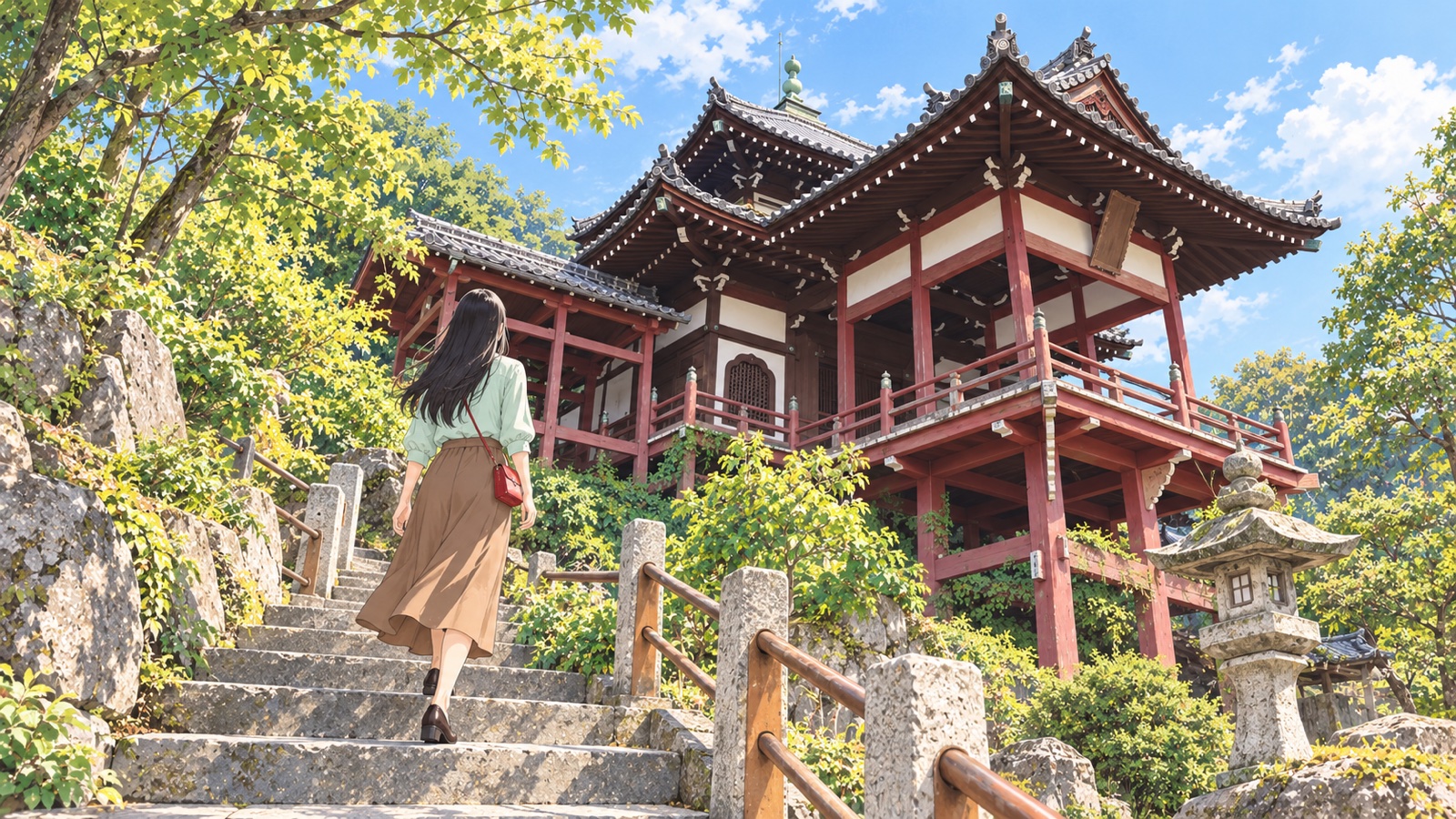
The Girl Who Leapt Through Time was filmed in Takehara City, west of Onomichi. Takehara prospered as a manor of Kyoto’s Shimogamo Shrine during the Heian period and is known as “Little Kyoto of Aki.” The town developed through salt production during the Edo period. Its Takehara Historic Preservation District, lined with stately homes, is designated a national Important Preservation District for Groups of Traditional Buildings.
Saihoji Temple stands on high ground overlooking the historic streets. It was founded in a nearby town in 1560 and moved to its present location after a fire in 1602. A large stone wall in front of the grounds resembles a castle. Fumyo Pavilion, the Kannon hall on raised ground beside the main hall, was built in 1758 and has a stage-like structure similar to Kyoto’s Kiyomizu-dera Temple. It enshrines a wooden Eleven-Faced Kannon statue designated an important cultural property of Hiroshima Prefecture, and the temple is designated an important cultural property of Takehara City.
The steps at Saihoji appear repeatedly in The Girl Who Leapt Through Time, which brought the temple wide recognition after the film’s release in 1983. From Fumyo Pavilion, you can see the whole town of Takehara; it is said that visitors to Takehara always climb up here.
It is about a 14-minute walk from Takehara Station on the JR Kure Line. The roof of Fumyo Pavilion is visible from across town, making it a useful landmark while walking through the historic district.
- Address
- 3-10-44 Honmachi, Takehara, Hiroshima Prefecture
- Connection to the work
- Filming location for the stone steps that repeatedly appear in The Girl Who Leapt Through Time
- Highlights
- Fumyo Pavilion, a stage-style Kannon hall built in 1758, and its view over Takehara’s historic streets
- Access
- About a 14-minute walk from Takehara Station on the JR Kure Line
Sources:Takehara Tourism Guide — Saihoji Temple and Fumyo Pavilion / Takehara Tourism Guide — Takehara Historic Preservation District / Japan Tourism Agency Multilingual Guide Database — Saihoji Temple and Fumyo Pavilion / Kinki Nippon Tourist — The steps at Saihoji Temple, Takehara
5### Ebisu-do Hall | The familiar hall at the north end of Honmachi Street in The Girl Who Leapt Through Time
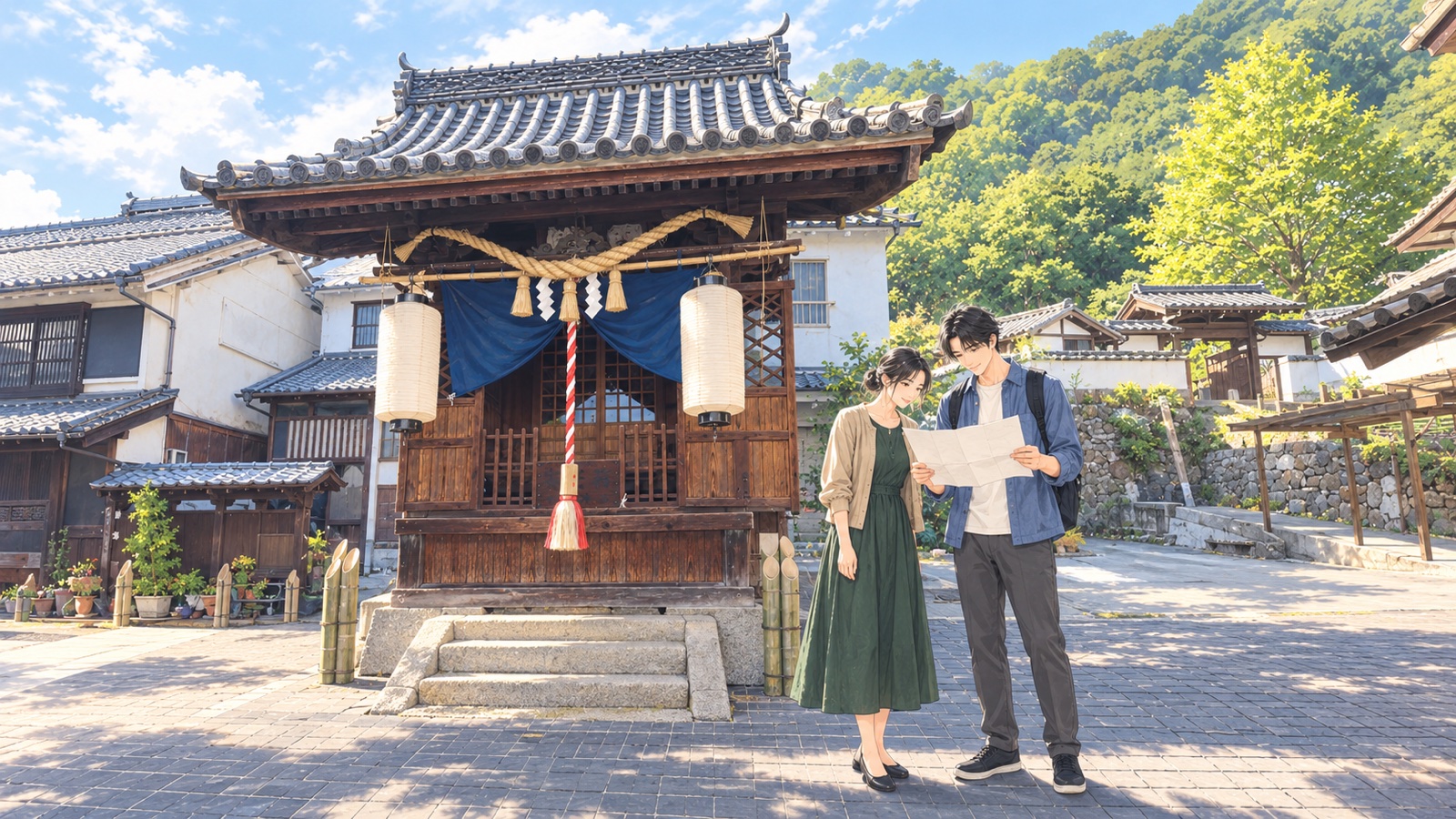
Ebisu-do Hall is a small hall at the north end of Honmachi Street, which passes through the historic preservation district. When salt production flourished, this area was called Kamiichi and Shimoichi. Ebisu-do has long been enshrined as a guardian of commerce in Kamiichi.
A festival praying for business prosperity is held each October and continues as a town event. The site is also popular with fans as a filming location for The Girl Who Leapt Through Time.
Honmachi Street is said to have retained the same width since the Edo period. It is about a 17-minute walk from Takehara Station on the JR Kure Line.
- Address
- At the north end of Honmachi Street, Honmachi 3-chome, Takehara, Hiroshima Prefecture
- Connection to the work
- Hall in the historic preservation district that appears in The Girl Who Leapt Through Time
- Festival
- Festival praying for business prosperity held every October
- Access
- About a 17-minute walk from Takehara Station on the JR Kure Line
Sources:Takehara Tourism Guide — Ebisu-do Hall / Dive! Hiroshima (Hiroshima Prefecture official tourism site) — Ebisu-do Hall / Takehara Tourism Guide — Highlights of the Takehara Historic Preservation District / Lonely Planet — Takehara’s historic streets and Ebisu-do Hall
6### Horikawa | Soy-sauce brewery founded in 1919 and filming location for The Girl Who Leapt Through Time

Horikawa, at Honmachi 3-chome in Takehara, is a soy-sauce brewery founded in 1919. It was a filming location for The Girl Who Leapt Through Time. Its three popular soy sauces are also available by mail order.
Okonomiyaki Horikawa, opened next door by the brewery, served as a waiting room for the cast and crew during filming. Fans of Obayashi’s films also visit the restaurant. In the interior, renovated from a soy-sauce storehouse more than 200 years old, you can try Takehara-yaki, a local specialty.
The brewery is about 85 meters from Saihoji Temple and a 14-minute walk from Takehara Station on the JR Kure Line.
- Address
- 3-8-21 Honmachi, Takehara, Hiroshima Prefecture
- Connection to the work
- Filming location for The Girl Who Leapt Through Time; the neighboring okonomiyaki restaurant served as a waiting room during filming
- Highlights
- Restaurant renovated from a soy-sauce storehouse more than 200 years old and local Takehara-yaki
- Access
- About a 14-minute walk from Takehara Station on the JR Kure Line and about 85 meters from Saihoji Temple
Sources:TV Tokyo, Adomachi Land of the City — Takehara, Hiroshima: Horikawa / TV Tokyo, Adomachi Land of the City — Takehara: Horikawa Soy Sauce Brewery / Takehara Tourism Guide — Okonomiyaki Horikawa
7### Saiganji Temple | The temple where Hiroki of Lonely Heart lives, with steps overlooking the Onomichi Strait

Saiganji Temple in Yoshiura-cho, Onomichi, was a filming location for Lonely Heart (released April 13, 1985), the third film in the trilogy. The temple in the movie is also named Saiganji, and the protagonist, Hiroki Inoue, is the chief priest’s only son. Most of the film was shot at the temple, where, it is said, you can still strongly feel the scenery seen on screen.
Hiroki, a second-year high-school student who loves photography, admires Yuriko Tachibana, who plays Chopin’s “Tristesse” at the girls’ school next door. Watching her through a telephoto lens, he secretly gives her the nickname “Sabishinbo.” On the day of the main hall’s big cleaning, Hiroki scatters photographs of his mother Tatsuko as a girl, and a girl with a clown-like face appears. She introduces herself as “Sabishinbo.”
The main hall is where Doryo, Hiroki’s father and the temple priest, played by Nenji Kobayashi, continues chanting sutras. The reception room was used in the New Year scene when Tatsuko’s old friend Terue Ameno and her daughter Yukimi visit. Terue is played by Kirin Kiki and Yukimi by Satomi Kobayashi.
In the final scene, Hiroki is an adult with a shaved head. During filming, Toshinori Omi asked Saiganji’s chief priest, Jisho Okada, how many times a week he went to the barber. The priest said he shaved his own head in the bath and laughed, “A shaved head looks cool.” He also said he would shave Omi’s head if it were for the final scene. On the day of filming, everyone took a turn cutting a little hair in the temple grounds, like a sumo wrestler’s retirement ceremony. After Yasuko Tomita made her cut, clippers were used, and the priest shaved the head at the end.
The grounds contain the grave of Kazuo Satsuya, art director on Obayashi’s films. It is there because Satsuya, who died in January 1993, had left instructions that he wanted to be buried in Onomichi. The director’s words of farewell are inscribed on the gravestone. It is near the spot where scenes of Sabishinbo entering and leaving were filmed.
Climb the stone steps seen in the film for a view of the Onomichi Strait from the temple grounds. The temple parking lot holds about five or six cars, and the surrounding roads are narrow. It is about a 20-minute walk from JR Onomichi Station.
- Address
- 24-13 Yoshiura-cho, Onomichi, Hiroshima Prefecture
- Connection to the work
- Filming location for the temple where protagonist Hiroki Inoue of Lonely Heart lives
- Highlights
- Stone steps overlooking the Onomichi Strait and the grave of art director Kazuo Satsuya
- Access
- About a 20-minute walk from JR Onomichi Station
Sources:Dive! Hiroshima (Hiroshima Prefecture official tourism site) — Saiganji Temple / Eiga.com — Lonely Heart / MOVIE WALKER PRESS — Lonely Heart and Saiganji Temple / MOVIE WALKER PRESS — Grave of Kazuo Satsuya
8### Mount Jodoji’s Fudoiwa Viewpoint | The farewell scene in Futari and the Onomichi Strait in Labyrinth of Cinema
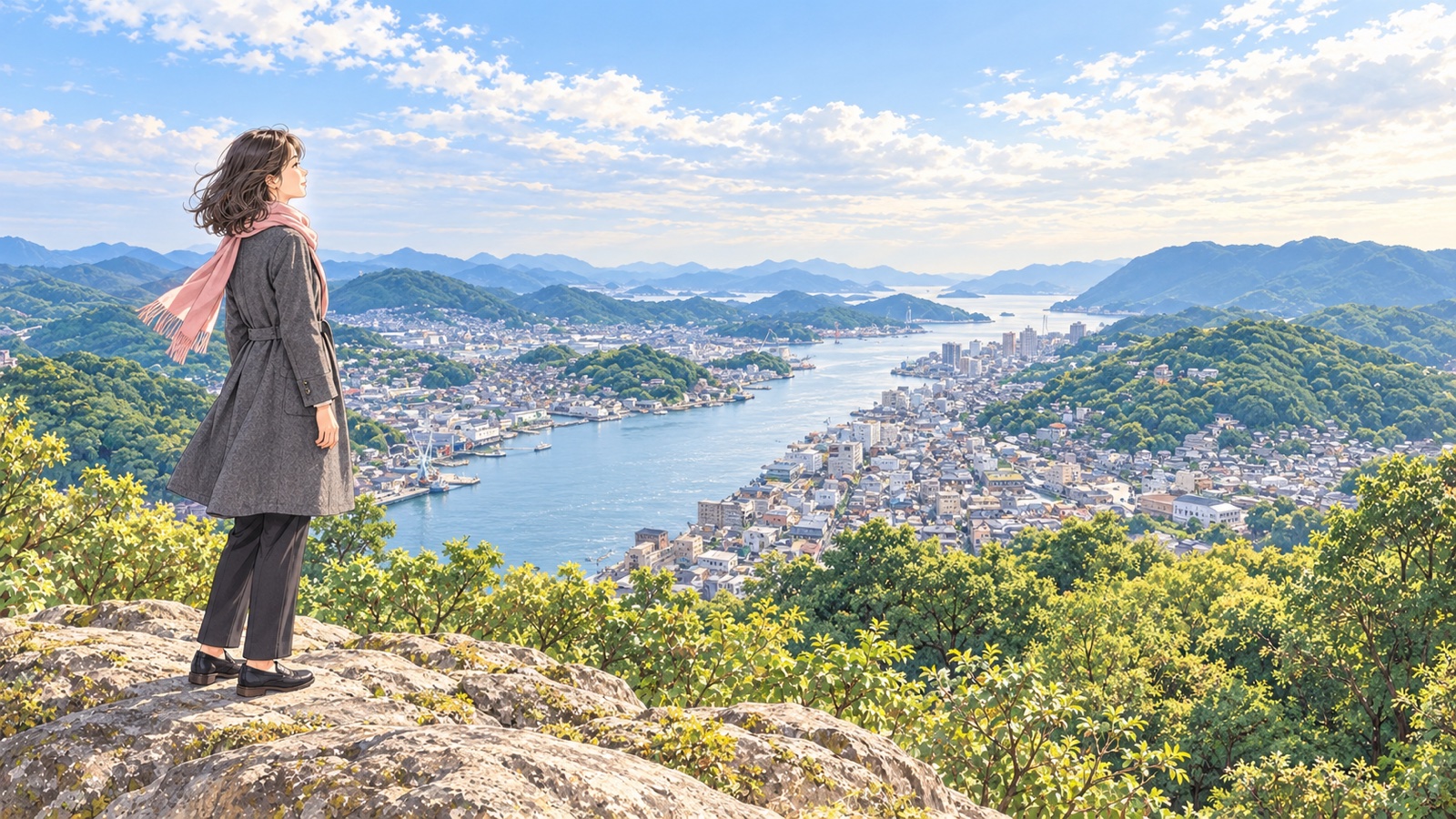
Mount Jodoji is one of Onomichi’s three mountains, along with Mount Senkoji and Mount Saikokuji. Near its 178.8-meter summit are Jodoji Mountain Viewpoint and Fudoiwa Viewpoint. From here, you can see Onomichi’s townscape and strait, the shipyards on Mukaishima, and islands along the Shimanami Kaido. Fudoiwa takes its name from the image of Fudo Myoo carved into the rock’s side.
Fudoiwa Viewpoint was a filming location for Futari (released May 11, 1991), the first film in the New Onomichi Trilogy. Based on a novel by Jiro Akagawa, it follows 14-year-old Mika Kitao, played by Hikari Ishida, as she grows up under the watch of her older sister Chizuko’s ghost after Chizuko dies in an accident. The farewell scene between Mika and Tomoya (Toshinori Omi), the young man she has feelings for, was filmed at this viewpoint.
At the time of filming, there was no railing, and the two sat and talked on a massive rock jutting out from the cliff. Safety fencing now surrounds the area. The same view also appears in Obayashi’s final film, Labyrinth of Cinema.
It takes about 30 minutes to walk roughly 800 meters along Kannon no Komichi from the east side of Jodoji Temple. The viewpoint is about a three-minute descent from Jodoji’s inner sanctuary. If driving, there is free parking for about five cars near the summit, but vehicles larger than a standard passenger car cannot pass. The footing is rough, so avoid visiting in bad weather.
- Address
- Near the summit of Mount Jodoji, Ozaki-cho, Onomichi, Hiroshima Prefecture
- Connection to the work
- Filming location for the scene in Futari where Mika and Tomoya part
- Highlights
- Panoramic view of the Onomichi Strait, Mukaishima, and islands along the Shimanami Kaido
- Access
- About a 30-minute walk on Kannon no Komichi from the east side of Jodoji Temple
Sources:Onomichi Tourism Association — Jodoji Mountain Viewpoint and Fudoiwa Viewpoint / MOVIE WALKER PRESS — Futari and Fudoiwa Viewpoint / Eiga.com — Futari (1991)
9### Onomichi Motion Picture Museum | Materials from Tokyo Story, which 15-year-old Obayashi watched being filmed
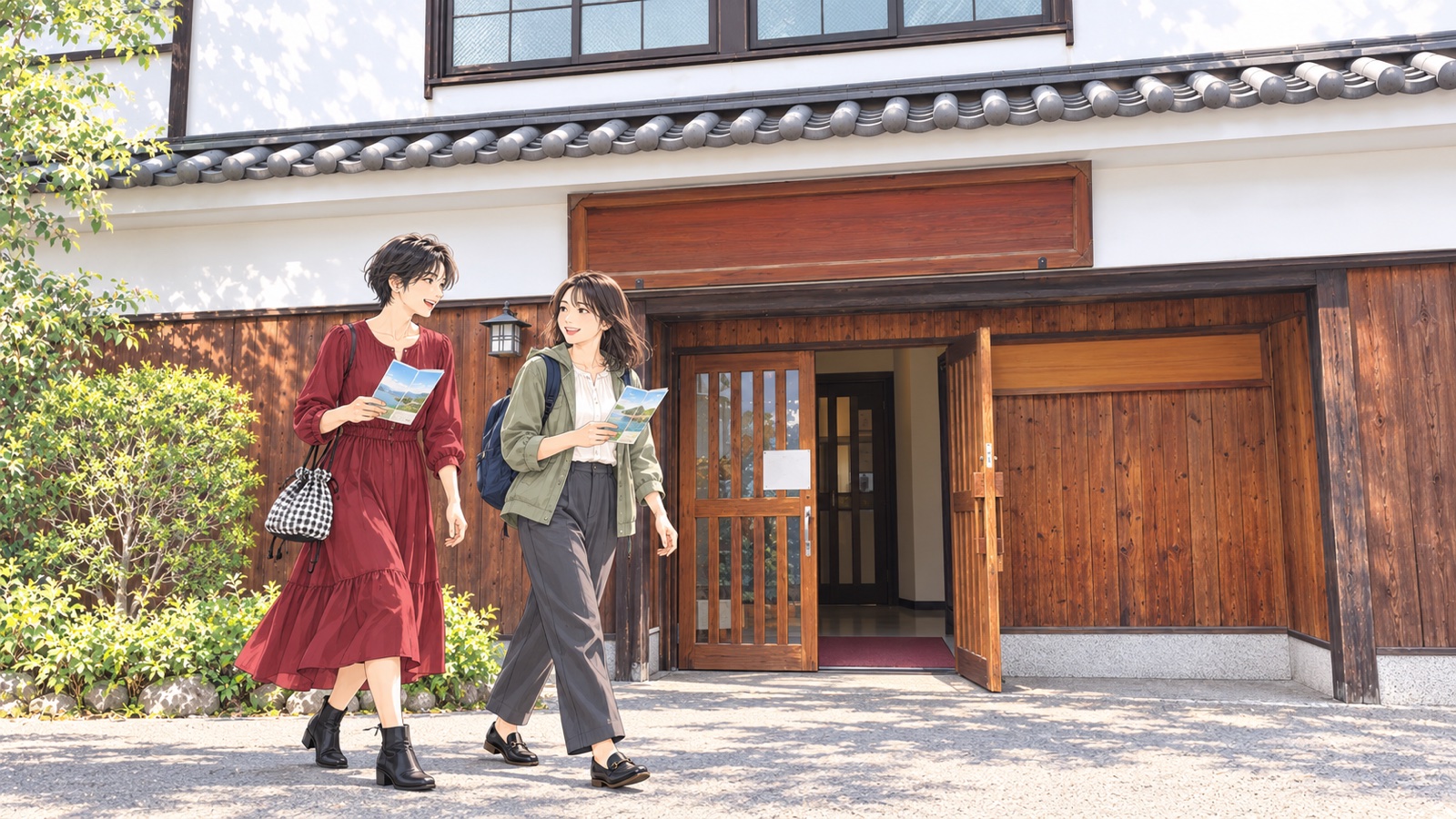
Onomichi Motion Picture Museum in Kubo, Onomichi, opened in April 2000 in a former Meiji-era storehouse converted into a museum. Its displays focus on posters and filming-scene panels from Tokyo Story (1953), directed by Yasujiro Ozu and filmed in Onomichi.
Materials from Hiroshima-born director Kaneto Shindo and others are also displayed, along with old Nikkatsu movie posters and film pamphlets. The projector at the entrance was actually used in a movie theater. The mini theater screens digests of films such as Tokyo Story.
Nobuhiko Obayashi was 15 when Tokyo Story was filmed. He watched the shoot on location and was deeply moved by it. About 30 years later, the boy who had watched the Ozu crew would make Tenkosei in the same town.
The museum is open from 10 a.m. to 6 p.m. (last admission 5:30 p.m.) and closed on Tuesdays (or the following day when Tuesday is a holiday). Admission is ¥520 for adults and free for junior high school students and younger. A combined ticket with the Onomichi History Museum is also available for ¥520. It is about a 15-minute walk from JR Onomichi Station.
- Address
- 1-14-10 Kubo, Onomichi, Hiroshima Prefecture
- Connection to the work
- Exhibits materials from Tokyo Story, which 15-year-old Nobuhiko Obayashi watched being filmed
- Hours and closing days
- 10 a.m.–6 p.m.; last admission 5:30 p.m.; closed Tuesdays
- Admission and access
- ¥520 adults; free for junior high school students and younger; about a 15-minute walk from JR Onomichi Station
Sources:Onomichi City — Onomichi Motion Picture Museum / Onomichi Tourism Association — Onomichi Motion Picture Museum / MOVIE WALKER PRESS — Young Obayashi and Tokyo Story
10### Cinema Onomichi | A station-front theater reopened after seven years with ¥27 million in public donations
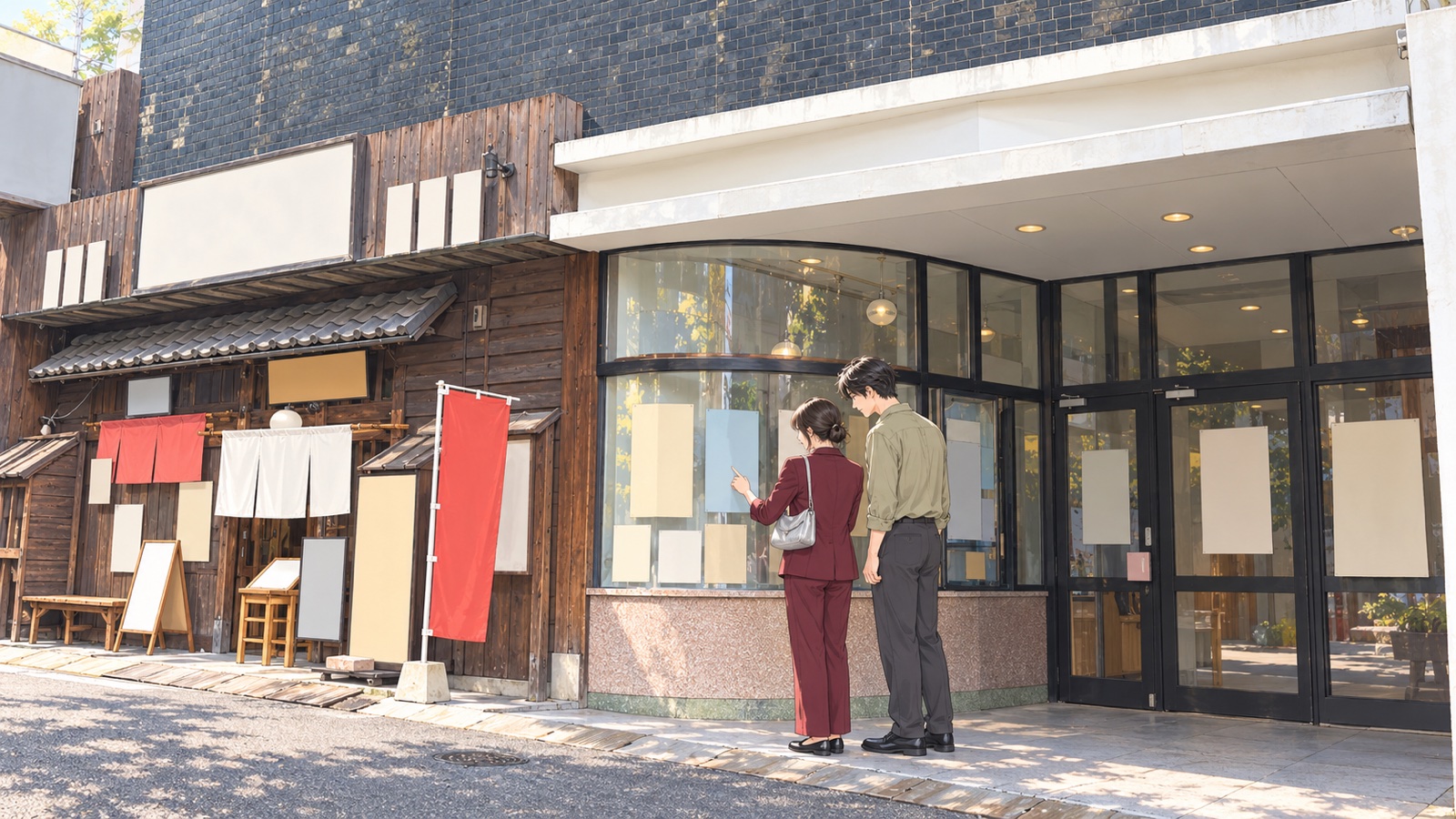
The Cinema Onomichi building in front of JR Onomichi Station has a long history. In 1947, the theater Daiichi Gekijo became the Shochiku-operated Onomichi Shochiku. The building was replaced with the current reinforced-concrete structure in 1962, and the theater continued operating under the name Onomichi Shochiku even after Shochiku withdrew from Onomichi in 1973. In 2001, Onomichi Shochiku, the last movie theater in the city, closed, and Onomichi was left without a cinema.
In 2004, Seijun Kawamoto, an Onomichi native in her twenties at the time, called on film fans to help “find a way to open a cinema in Onomichi.” With her colleagues, she visited independent theaters around the country and studied the management of Fukaya Cinema in Fukaya, Saitama, a city with a population similar to Onomichi’s. They formed the group “Let’s Build a Cinema in Onomichi” and held screenings every two months in public halls and shopping streets.
On October 18, 2008, Cinema Onomichi opened in the renovated former Onomichi Shochiku, funded by ¥27 million in grassroots donations from local residents. The opening film was It’s Only Talk, directed by Ryosuke Hashiguchi. It was the first theater in western Japan to be operated by a nonprofit organization. Today, it remains the city’s only movie theater, screening films on a single screen with 112 seats.
To coincide with the summer when the Ozu crew came to Onomichi, the theater screens Tokyo Story most summers. It also holds film workshops for local children, and received the 2017 Kobayashi Wasaku Award and the 2018 Hiroshima Culture Award. Tickets are generally sold at the box office on the day of the screening; visits just to tour the theater are not accepted.
- Address
- 6-2 Higashigosho-cho, Onomichi, Hiroshima Prefecture
- Connection to the work
- The city’s only permanent movie theater, renovated from the former Onomichi Shochiku with donations from local residents
- Facilities and tickets
- One screen with 112 seats; tickets generally sold at the box office on the day
- Nearest station
- 30-second walk from JR Onomichi Station
Sources:Cinema Onomichi — History leading to the opening / Cinema Onomichi — Theater information and access / Cinema Onomichi — How to buy tickets / Onomichi Tourism Association — Cinema Onomichi
Learn more about the works | Three films about body-swapping, time travel, and a temple priest’s son’s first love
The three films are not connected by a shared storyline. Each stars a middle or high school student living in Onomichi, and Obayashi adapted novels or children’s literature for the screen.
The stories and source works of Tenkosei, The Girl Who Leapt Through Time, and Lonely Heart
The source for Tenkosei is Tsune Yamanaka’s children’s book I Am You, You Are Me. Kazuo and Kazumi, whose bodies have switched, are bewildered by the unbelievable situation but begin living within each other’s family and friend circles, trying to become one another. The film runs 112 minutes and was distributed by Shochiku. Toshinori Omi and Satomi Kobayashi received the New Actor Award at the 6th Japan Academy Film Prize.
The Girl Who Leapt Through Time is based on Yasutaka Tsutsui’s science-fiction novel of the same name. The story begins after school on a Saturday. After losing consciousness in the laboratory, Kazuko wakes one morning to discover that the same classes as the day before are beginning again. Ryōichi Takayanagi plays her classmate Kazuo Fukamachi, and Toshinori Omi plays another classmate, Goro Horikawa.
Produced by Haruki Kadokawa and distributed by Toei, the film runs 104 minutes. Tomoyo Harada sings the theme song “The Girl Who Leapt Through Time,” written and composed by Yumi Matsutoya. Masataka Matsutoya was music director. Harada received the New Actor Award at the 7th Japan Academy Film Prize.
You can play this video in the official video at the top of this page ↑
Lonely Heart is based on Tsune Yamanaka’s Nandaka Hen Teko. The screenplay was written by Wataru Kenmochi, Tadashi Naito, and director Obayashi. The clown-costumed girl Sabishinbo turns out to be Hiroki’s mother Tatsuko as a girl. The film was distributed by Toho, runs 112 minutes, and features a theme song sung by Yasuko Tomita. It was highly praised by director Akira Kurosawa and film critic Juso Futaba.
Yuriko, whom Hiroki admires, takes a boat to school in Onomichi. The school-commute scenes show Fukumoto Ferry, which used to depart from Tsuchido Port. After more than 135 years of service, Fukumoto Ferry was discontinued after its final run on March 31, 2025, because of aging facilities. The Onomichi Tourism Association has preserved footage of its final day.
Two routes of the Onomichi ferry service still operate across the Onomichi Strait: one linking Onomichi Station and Tomihama on Mukaishima, and the other linking Tsuchido and Kaneyoshi on Mukaishima. Both trips take about four to five minutes one way, and the adult fare is ¥100.
Sources:Eiga.com — Tenkosei / Eiga.com — The Girl Who Leapt Through Time (1983) / MOVIE WALKER PRESS — Story of The Girl Who Leapt Through Time / Eiga.com — Lonely Heart / Eiga.com — Reviews and cast of Lonely Heart / MOVIE WALKER PRESS — Fukumoto Ferry and Lonely Heart / Traffic News — Closure of Fukumoto Ferry / Onomichi Tourism Association — Ferries across the Onomichi Strait
The actors who appeared in the trilogy and its two authors
Toshinori Omi
Actor who appeared in all three films of the trilogy. He played Kazuo Saito in Tenkosei, Goro Horikawa in The Girl Who Leapt Through Time, and Hiroki Inoue in Lonely Heart. He also played Tomoya in Futari and Isami Kondo in Labyrinth of Cinema.
Satomi Kobayashi
Played Kazumi Saito, the transfer student who switches bodies with Kazuo in Tenkosei. In Lonely Heart, she appeared as Yukimi, the daughter of Tatsuko’s old friend.
Tomoyo Harada
Played Kazuko Yoshiyama, the high-school student who travels through time in The Girl Who Leapt Through Time. It was her first starring role in a film, and she also sang the title song.
Yasuko Tomita
She appeared in Lonely Heart at the age of 16 when it was released. She played four roles, including Yuriko Tachibana, whom Hiroki admires, and the clown-costumed Sabishinbo, and also sang the theme song.
Tsune Yamanaka
Children’s author. His I Am You, You Are Me was the source for Tenkosei, while Nandaka Hen Teko inspired Lonely Heart.
Yasutaka Tsutsui
Author of The Girl Who Leapt Through Time. He wrote the science-fiction novel of the same name about a girl who travels through time after smelling lavender.
Sources:Eiga.com — Tenkosei / Eiga.com — The Girl Who Leapt Through Time (1983) / Eiga.com — Lonely Heart / MOVIE WALKER PRESS — Yasuko Tomita’s four roles / Eiga.com — Labyrinth of Cinema
Production and background | Nobuhiko Obayashi and the people of Onomichi who supported filming
The trilogy was filmed with help from Obayashi’s friends in Onomichi and local shops. This section traces the director’s career and the people who supported the productions.
The career of Nobuhiko Obayashi, born in Onomichi in 1938
Nobuhiko Obayashi was born on January 9, 1938, and began making films as a child. In college, he became a pioneer of independent filmmaking, and Tabeta Hito (1963) received a Special Jury Prize at the Belgium International Experimental Film Festival. He later directed many commercials featuring international stars, including Charles Bronson in ads for Mandom.
He became a feature-film director with HOUSE in 1977, and the three films he made in his hometown became widely known as the Onomichi Trilogy. Over the course of 40 years, Obayashi continued to make films set in Onomichi, producing 17 in all.
Sources:Eiga.com — Nobuhiko Obayashi / MOVIE WALKER PRESS — 17 films set in Onomichi
Art director Kazuo Satsuya and the director’s friends supported Tenkosei
Obayashi’s friends in Onomichi helped with the 1981 filming of Tenkosei. None had experience making films, and they are said to have taken on a role similar to a present-day film commission. Osamu Otani of Sabo Common was about a decade younger than the other friends; he joined as a runner, learning from his seniors as he helped out.
Art director Kazuo Satsuya visited Onomichi for location scouting before filming. At the time, art directors were also responsible for set dressing. Although Otani was not given the screenplay, he received requests such as, “We need a worn-out cushion.” In the pre-internet era, Otani and his colleagues searched for the necessary items by telephone.
For a typical film, a prop company transports a collection of props from Tokyo by truck. Obayashi believed that filming outside Tokyo mattered precisely because each place had different decorative objects. Both old and newly built structures were filmed as part of the town’s changing landscape.
Word of mouth spread Tenkosei’s reputation, especially among teenagers and people in their twenties, until it was hailed as a “bible of youth.” Filming in Onomichi continued afterward, and Satsuya often received calls asking him to show the crew places they had missed on earlier shoots.
Sources:MOVIE WALKER PRESS — The people who supported filming Tenkosei / MOVIE WALKER PRESS — Sabo Common and Osamu Otani
The success of Lonely Heart and Futari in the New Onomichi Trilogy
Lonely Heart attracted not only younger audiences but also adults who had not previously been interested in Obayashi’s films, and it swept the film awards. Its success raised the popularity of Obayashi’s films and drew tourists to Onomichi as a pilgrimage destination.
During Japan’s economic bubble, requests came in one after another for idol films, literary adaptations, and movies based on popular manga. Even as his popularity grew, opportunities to film in Onomichi gradually decreased. Filmmaking there became active again with Futari in 1991, shot in Onomichi over about two months. The New Onomichi Trilogy began with this film.
For an accident scene in Futari, a large truck could not enter the narrow side road. The crew therefore built a truck about one-quarter the length of a real one for filming. Scenes at Mika’s school were shot at Tsuchido Elementary School, Obayashi’s alma mater. Students at the school continued taking classes in which they watched Futari and researched its filming locations; the director attended their presentation in 2007.
After Kazuo Satsuya died in 1993, Osamu Otani began working on location as part of the production department. During the filming of Obayashi’s April Fish (1995), he spent his days going back and forth between the shop and the set. He reportedly bought a mobile phone, still expensive at the time, to stay in touch.
Sources:MOVIE WALKER PRESS — The success of Lonely Heart and the New Onomichi Trilogy / MOVIE WALKER PRESS — Filming locations for Futari and Tsuchido Elementary School / Eiga.com — Futari (1991)
Labyrinth of Cinema, Obayashi’s first Onomichi location shoot in 20 years, and character names from the trilogy
Obayashi’s final film, Labyrinth of Cinema, was filmed in his hometown of Onomichi for the first time in 20 years. Set at the seaside Setouchi Kinema cinema in Onomichi, which is about to close, it follows three young people who attend an all-night “Japanese War Films Festival” on the theater’s final day and enter the world of the screen.
The three journey through the Boshin War, the Second Sino-Japanese War, and the Battle of Okinawa before arriving in Hiroshima on the eve of the atomic bombing. There, they race to save members of the Sakura-tai traveling theater troupe. The film runs 179 minutes and was distributed by Asmik Ace.
The cast includes Kazumi Saito (Riko Narumi), Kazuko Yoshiyama (Hirona Yamazaki), and Yuriko Tachibana (Takako Tokiwa)—all names of heroines from the trilogy. Toshinori Omi plays Isami Kondo, and Nenji Kobayashi, who played the priest in Lonely Heart, also appears. On the first day of filming, a scene was shot at the passenger pier where Noriko (Rei Yoshida), one of the heroines, arrives by boat in Onomichi and sets off on a bicycle.
After the film screened at the 2019 Tokyo International Film Festival, Obayashi died on April 10, 2020, at the age of 82, before its release. That was the original planned release date. The film opened on July 31, 2020. It began screening at 17 theaters, which were packed day after day, and expansion to 69 theaters was announced.
Sources:Eiga.com — Labyrinth of Cinema / 32nd Tokyo International Film Festival — Labyrinth of Cinema / MOVIE WALKER PRESS — Filming locations for Labyrinth of Cinema / MOVIE WALKER PRESS — Death of director Nobuhiko Obayashi
From the filming of Tokyo Story to Fukumoto Ferry’s final run: Onomichi and Obayashi’s films
Milestones from 1953, when 15-year-old Obayashi watched the Ozu crew filming, through the trilogy’s releases, the cinema’s closure and reopening, and the release of Obayashi’s final film.
- 1938
January 9 Nobuhiko Obayashi is bornDirector - 1947
Daiichi Gekijo becomes the Shochiku-operated Onomichi ShochikuMovie theater - 1953
Tokyo Story is released; 15-year-old Obayashi watches it being filmed in OnomichiFilm - 1977
Becomes a feature-film director with HOUSE; Sabo Common opensDirector - 1982
April 17 Tenkosei is released (filmed in 1981)Trilogy - 1983
March The Girl Who Leapt Through Time is filmed at Nagae Elementary SchoolTrilogyLate March - 1983
July 16 The Girl Who Leapt Through Time is releasedTrilogy - 1985
April 13 Lonely Heart is releasedTrilogy - 1991
May 11 Futari, the first film in the New Onomichi Trilogy, is releasedFilm - 1993
January Art director Kazuo Satsuya dies; his grave is at Saiganji TempleFilm - 2000
April Onomichi Motion Picture Museum opensFacility - 2001
Onomichi Shochiku closes, leaving the city without a movie theaterMovie theater - 2003
January 15 Onomichi Film Commission is establishedCommunity - 2004
“Let’s Build a Cinema in Onomichi” is formedMovie theater - 2008
October 18 Cinema Onomichi opensMovie theater - 2018
July 1 Safety-prayer ritual held at Ushitora Shrine during filming of Labyrinth of CinemaFilm - 2020
April 10 Nobuhiko Obayashi dies at age 82Director - 2020
July 31 Obayashi’s final film, Labyrinth of Cinema, is releasedFilm - 2025
March 31 Fukumoto Ferry, seen in Lonely Heart, makes its final runCommunity
The Onomichi Film Commission, established in 2003, coordinates filming requests. Its office is in the Onomichi City Tourism Division, where it provides location information, accompanies location scouts, and helps recruit extras.
Sources:Eiga.com — Nobuhiko Obayashi / Cinema Onomichi — History leading to the opening / MOVIE WALKER PRESS — Young Obayashi and Tokyo Story / Sabo Common / Eiga.com — Tenkosei / MOVIE WALKER PRESS — Filming The Girl Who Leapt Through Time / Eiga.com — The Girl Who Leapt Through Time (1983) / Eiga.com — Lonely Heart / Eiga.com — Futari (1991) / MOVIE WALKER PRESS — Kazuo Satsuya / Onomichi Tourism Association — Onomichi Motion Picture Museum / About the Onomichi Film Commission / Nippon Tabimagazine — Ushitora Shrine / Eiga.com — Labyrinth of Cinema / Onomichi Tourism Association — Fukumoto Ferry’s final day
Research note | A business perspective: Onomichi brings filming, viewing, and preservation together in one town
In Onomichi, the director’s friends supported the filming of Tenkosei, and visitors can still stop by Sabo Common, one of the locations. The Film Commission has coordinated filming since 2003. Cinema Onomichi, opened with donations from local residents, provides a place to screen films, while the motion picture museum preserves the record.
Onomichi’s distinctive feature is that a permanent cinema and a facility exhibiting film materials are in the same town as the filming locations. The cafes and shop owners who helped with filming continue to operate today, keeping the memories of that time alive.
Related research article:Travel companies and tourism-product design
Sources
- Dive! Hiroshima (Hiroshima Prefecture official tourism site) — Misode Tenmangu Shrine
- Dive! Hiroshima — Ushitora Shrine
- Dive! Hiroshima — Saiganji Temple
- Dive! Hiroshima — Ebisu-do Hall
- Onomichi Tourism Association — Daizanji Temple
- Onomichi Tourism Association — Common
- Onomichi Tourism Association — Jodoji Mountain Viewpoint and Fudoiwa Viewpoint
- Onomichi Tourism Association — Onomichi Motion Picture Museum
- Onomichi Tourism Association — Cinema Onomichi
- Onomichi Tourism Association — Ferries across the Onomichi Strait
- Onomichi City — Onomichi Motion Picture Museum
- Onomichi Film Commission
- Sabo Common
- Cinema Onomichi — History leading to the opening
- Cinema Onomichi — Theater information
- Takehara Tourism Guide — Saihoji Temple and Fumyo Pavilion
- Takehara Tourism Guide — Ebisu-do Hall
- Takehara Tourism Guide — Okonomiyaki Horikawa
- Takehara Tourism Guide — Takehara Historic Preservation District
- Japan Tourism Agency Multilingual Guide Database — Saihoji Temple and Fumyo Pavilion
- TV Tokyo — Adomachi Land of the City, Hiroshima: Takehara and Horikawa
- TV Tokyo — Adomachi Land of the City, Takehara: Horikawa Soy Sauce Brewery
- Eiga.com — Tenkosei
- Eiga.com — The Girl Who Leapt Through Time (1983)
- Eiga.com — Lonely Heart
- Eiga.com — Futari (1991)
- Eiga.com — Labyrinth of Cinema
- Eiga.com — Nobuhiko Obayashi
- Eiga.com — Lonely Heart broadcast
- MOVIE WALKER PRESS — Visiting locations from Obayashi’s films (pages 1–7)
- MOVIE WALKER PRESS — From Tenkosei to Labyrinth of Cinema (pages 1–4)
- Nippon Tabimagazine — Misode Tenmangu Shrine
- Nippon Tabimagazine — Senkoji Shindo
- Nippon Tabimagazine — Ushitora Shrine (Onomichi)
- Kinki Nippon Tourist — The steps at Saihoji Temple, Takehara
- Lonely Planet — Takehara’s historic streets
- 32nd Tokyo International Film Festival — Labyrinth of Cinema
- Sabo Common — Menu
- Traffic News — Closure of Fukumoto Ferry
- Kadokawa Cinema Collection official YouTube channel
- Asmik Ace official YouTube channel
FAQ
Which films make up the Onomichi Trilogy?
They are three films Nobuhiko Obayashi shot in his hometown: Tenkosei (Exchange Students) in 1982, The Girl Who Leapt Through Time in 1983, and Lonely Heart in 1985. Later, he made films known as the New Onomichi Trilogy, beginning with Futari in 1991.
Where are the steps where the two characters tumble down in Tenkosei?
They are at Misode Tenmangu Shrine in Nagae 1-chome, Onomichi. The approach has 54 steps made from single stones, each five meters long, and one deliberately joined step. Take an eastbound bus from JR Onomichi Station for about five minutes to Nagaeguchi, then walk about five minutes.
Was The Girl Who Leapt Through Time filmed only in Onomichi?
In addition to Ushitora Shrine and Nagae Elementary School in Onomichi, filming took place in Takehara City’s historic preservation district. Locations include the steps at Saihoji Temple, Ebisu-do Hall on Honmachi Street, and Horikawa soy-sauce brewery. Nagae Elementary School closed in 2025 when it merged into the new Onomichi Minato school. Check the current access conditions for the former school grounds before visiting.
Where was Lonely Heart filmed?
At Saiganji Temple in Yoshiura-cho, Onomichi. Most of the film was shot at the temple, which appears as the home of protagonist Hiroki Inoue. Climbing the steps shown in the film offers a view of the Onomichi Strait from the grounds.
Did any actors appear in all three films?
Toshinori Omi appeared in all three: as Kazuo Saito in Tenkosei, Goro Horikawa in The Girl Who Leapt Through Time, and Hiroki Inoue in Lonely Heart. He also played Tomoya in Futari and Isami Kondo in Labyrinth of Cinema.
Can I ride the ferry seen in Lonely Heart when Yuriko goes to school?
Fukumoto Ferry, seen in the school-commute scene, was discontinued after its final run on March 31, 2025. Two Onomichi ferry routes still connect the station area and Tomihama on Mukaishima, and Tsuchido and Kaneyoshi on Mukaishima.
Is there a movie theater in Onomichi?
Cinema Onomichi is a 30-second walk from JR Onomichi Station. After the city lost its movie theater in 2001, local residents raised ¥27 million to open it on October 18, 2008. It has one screen with 112 seats, and tickets are generally sold at the box office on the day.
What is Obayashi’s final film about?
Labyrinth of Cinema was filmed in Onomichi for the first time in 20 years. Three young people enter the war eras shown on screen at the closing Setouchi Kinema cinema. Characters with names from the trilogy—including Kazumi Saito, Kazuko Yoshiyama, and Yuriko Tachibana—also appear.


